Biodiversity Heritage Library - Program news and collection highlights from BHL
  • Home
  • News
  • Featured Books
    • All Featured Books
    • Book of the Month Series
    • BHL at 20
  • User Stories
  • Campaigns
    • Fossil Stories
    • Garden Stories
    • Monsters Are Real
    • Page Frights
    • Her Natural History
    • Earth Optimism 2020
  • Tech Blog
  • Visit BHL
Home
News
Featured Books
    All Featured Books
    Book of the Month Series
    BHL at 20
User Stories
Campaigns
    Fossil Stories
    Garden Stories
    Monsters Are Real
    Page Frights
    Her Natural History
    Earth Optimism 2020
Tech Blog
Visit BHL
  • Home
  • News
  • Featured Books
    • All Featured Books
    • Book of the Month Series
    • BHL at 20
  • User Stories
  • Campaigns
    • Fossil Stories
    • Garden Stories
    • Monsters Are Real
    • Page Frights
    • Her Natural History
    • Earth Optimism 2020
  • Tech Blog
  • Visit BHL
Biodiversity Heritage Library - Program news and collection highlights from BHL
Blog Reel, User Stories

BHL Valued by Historians

Many people tend to think of BHL as a resource for scientists. While it’s true that scientists use BHL to find species descriptions and data about earth’s flora and fauna, they are not the exclusive beneficiaries of this wealth of knowledge.

BHL contains more than half a millennia’s worth of records about the discovery of life on our planet. It is valuable both for the raw data it provides and for the context and history it relates. It is not just a repository of biodiversity information. It also captures the evolution of our understanding, appreciation, and interactions with the natural world.
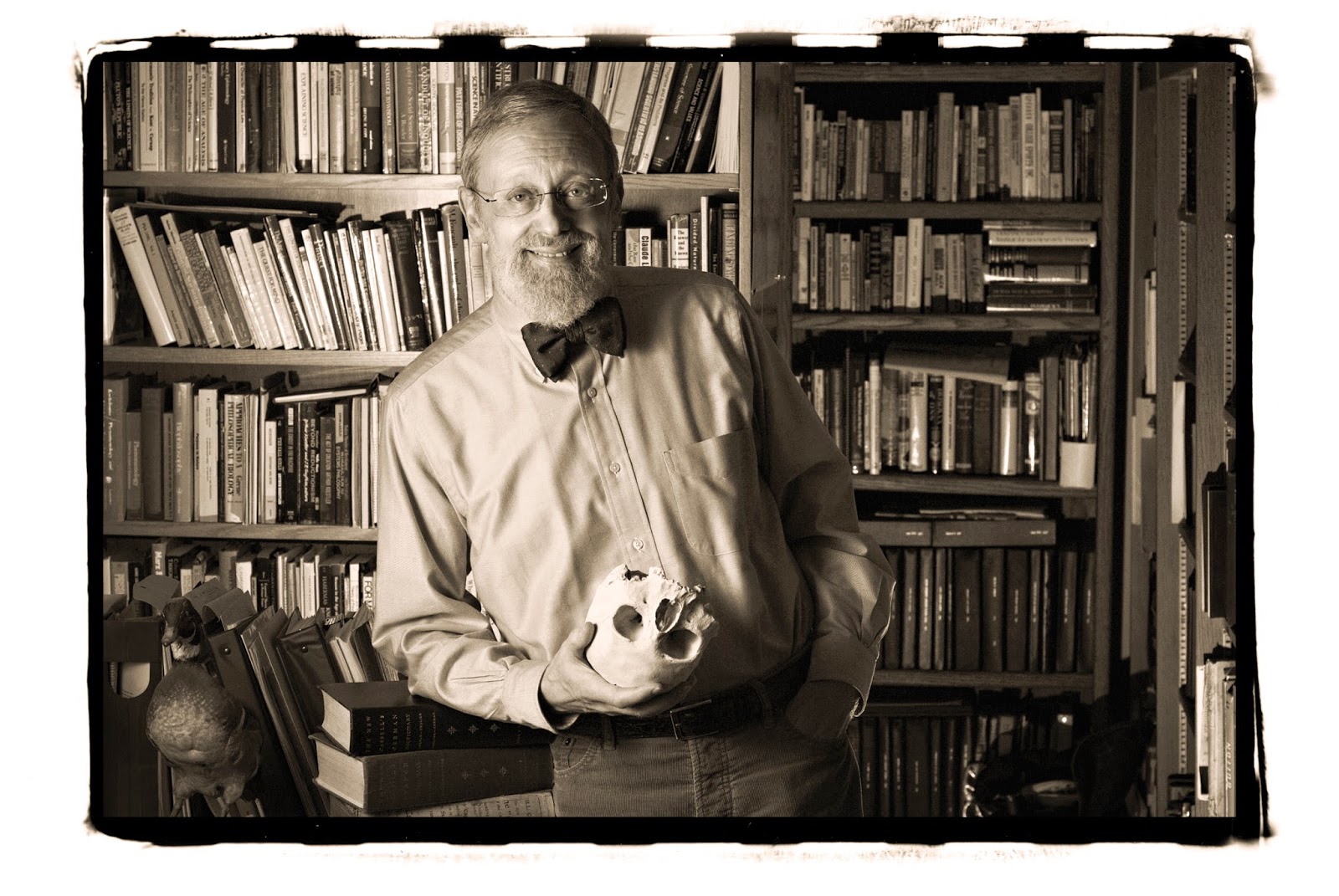
View Full Size Image
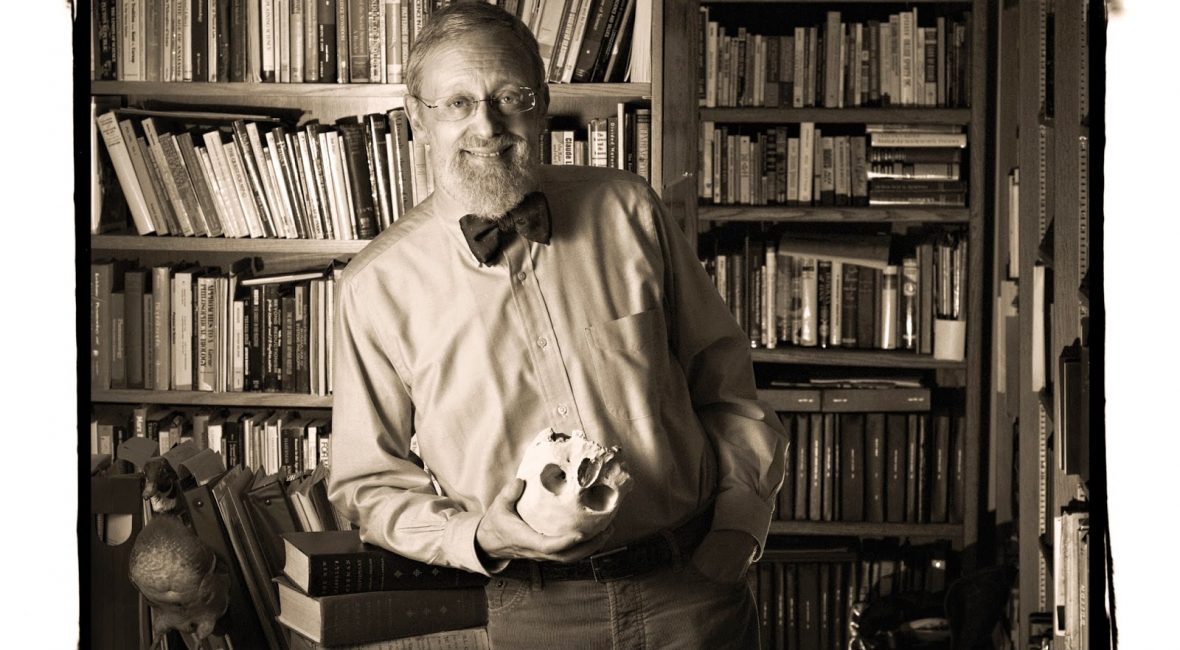
Dr. Paul Farber, Distinguished Professor of the History of Science at Oregon State University.

Dr. Paul Farber is a Distinguished Professor of the History of Science at Oregon State University. He has been active in his field since the 1970s, when he received his Ph.D., though his love of the subject first blossomed during his undergrad years. Recently, a colleague asked him to help prepare an 800 page manuscript on the history of nineteenth-century German biology for publication as a book.

“I had read a draft of the manuscript and thought it was absolutely brilliant. Since the person is someone to whom I feel greatly indebted, there was no question that I would do it,” recalls Dr. Farber. “When I began, I came across simple formatting issues (getting the manuscript to conform to the guidelines of the Press that had accepted it). But, then, I discovered there were MANY footnotes that were incomplete. Some of the citations were mere last names and a date. Many references were to fairly obscure journals, and all the names of the journals were just abbreviations (sometimes short versions).”

Decoding such a conundrum of bibliographic references may seem nearly impossible. But thankfully for Dr. Farber, a serendipitous Google search led him to BHL.

“The BHL was like a knight in shining armor, or the cavalry coming over the hill, to rescue me!!” lauds Farber. “I was able to go to complete runs of minor journals and hunt down many references, or use the BHL to find related works, and through their bibliographies get clues as to what I was hunting.”

Thanks to the open, digital nature of BHL, Dr. Farber was able to conduct all of his research locally. “The ability to find full runs of obscure journals makes it possible to work from the Pacific Northwest without traveling to a major library somewhere else,” explains Farber. “Without the BHL the project would have been enormously more difficult. In the future, I will use [it] to locate material and download sources that are not available to me at my university library. It will be a first stop in any future historical research!”

Whether it be a scientist cataloging new species, an artist seeking inspiration from the natural world, a policy maker crafting conversation reform, an historian lecturing in a classroom, or a curious youngster investigating local fauna for the first time, BHL provides a robust knowledge corpus that enables anyone, anywhere to explore a breadth of questions about natural history and biodiversity.

What will you discover?

Explore BHL and our Flickr today. Connect with us on Facebook and Twitter to learn more about biodiversity and our collections.

Special Thanks to Dr. Paul Farber for providing fascinating insight on the application of BHL within the humanities. Do you have a story to tell about your experience using BHL? Tell us about it by writing to [email protected]!
September 11, 2014by ulib-libraryjobs
BHL News, Blog Reel

Post Life & Literature: Themes and Outcomes

View Full Size ImageIf you happened to be living under a rock for the past two weeks and missed our blog posts, tweets, and posts on Facebook, you might have missed the fact that last week was the Life and Literature Conference, an event hosted by BHL with the express purpose of generating conversations about the priorities for biodiversity literature digitization, particularly as it pertains to BHL, for the next 4-5 years. The conference, which took place November 14-15, 2011, in Chicago, IL, brought together interested parties in a variety of disciplines, including science, education, informatics, and the humanities. Lively discussions and insightful presentations ensued both days, with dozens of live tweets (hashtag #lifelit) constantly streaming for those who could not participate in person.

The conference was divided into four panel discussions, followed on the second day by break-out sessions that allowed attendees to delve deeply into the various topics discussed during panel sessions, ultimately leading to an outline of the various areas deemed most important for BHL to focus on in the next 4-5 years. The four panel sessions included “Research, Informatics, and the Published Record;” “Publishers, Aggregators, and Authors – New Models and Access;” “Learning and Education;” and “Building Collaborative Networks for Science and the Humanities through Scientific Literature.” A synopsis of the four panels can be found on the Life and Literature site, as well as a list of each of the presenters and their biographies. Session presentations are being loaded to the BHL wiki and can be accessed on the Presentations page. Notes from the sessions can be found on the Life and Literature website. You can also view interviews of conference attendees on the website.

View Full Size ImageIn order to facilitate a discussion with the audience during panel and breakout sessions, BHL staff used an application called Titan Pad, which provides a collaborative environment that allows anyone to access a document to view, edit, or make comments in real time. There were Titan Pad pages for each of the panels and breakouts, and live notes, as well as live discussion, occurred via those avenues. These pages remain live, and we encourage anyone interested to continue the discussion in the weeks to come!

While many ideas and themes resulted from the discussion generated at the conference, perhaps the most recurring topic involved the connection between science and the humanities. Presentations by speakers at the Humanities panel highlighted some of the possible intersections between art and science, and each breakout session touched upon the various ways that BHL could partner with the humanities and make the biodiversity illustrations already in BHL more accessible. The BHL Flickr site, which currently houses more than 20,000 images, was a huge success, and attendees discussed additional ideas about how BHL could further promote its illustrations and engage the arts and humanities communities. Such ideas as specific image searching interfaces, image-specific collections, and collaborations with artist communities were discussed, and BHL staff outlined some art-related grant projects currently in the works.

The winner of the Life and Literature Code Challenge was also presented at the conference. The Code Challenge asked users to create applications that would use, disseminate, or display BHL data in new and meaningful ways. The winner? Ryan Schenk, with his application Synynyms. Synynyms works as a taxonomic name aggregator, finding all of the different names given to a species over the years and displaying the frequency of each name variety throughout history. The names are provided by the Encyclopedia of Life, and the publications come from, you guessed it, BHL! Congratulations to Ryan, and thanks for sharing such an awesome tool with us!

View Full Size ImageLast, but certainly not least, two new members of the BHL family were announced, Cornell University Library and the United States Geological Survey (USGS) Libraries. With these new members joining the fold the BHL consortium is now 14 members strong! Stay tuned for more information about BHL’s newest members to come in future posts.

The Life and Literature conference was also surrounded by a variety of other important BHL meetings, including a BHL Global Meeting (see previous post on the event), a BHL Staff meeting, and a meeting devoted to a discussion on the digitization of biodiversity literature in Africa. Watch for posts on the latter two meetings in the days to come.

As we think about the outcomes of the conference, we are excited to explore the possibilities for the future and inform our development through user feedback. For BHL to serve its purpose, it must meet the needs of its user community, and events like Life and Literature allow us to gather and assess those needs. However, if you couldn’t make it to Life and Literature, or if you did but still have more thoughts on BHL’s future, you can still share them! Contribute your ideas through our Titan Pad discussions, by submitting feedback to our website, or posting your ideas via twitter (@biodivlibrary) and Facebook! We’re waiting to hear from you, and thanks to everyone who made Life and Literature such an exciting and successful venture!

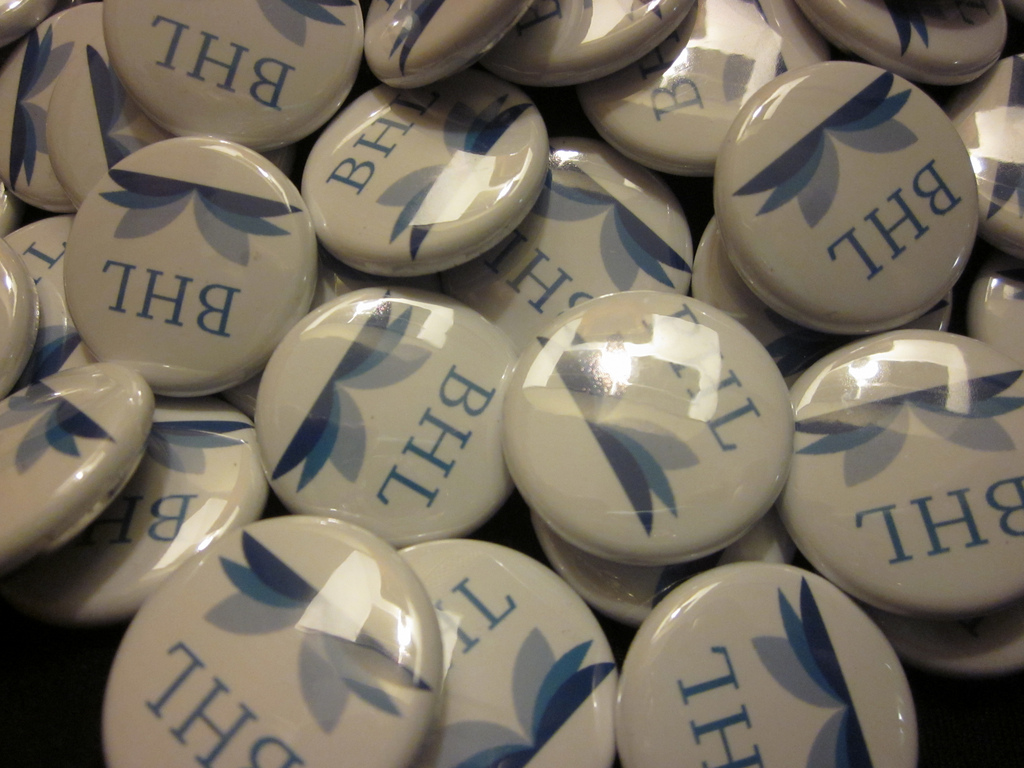
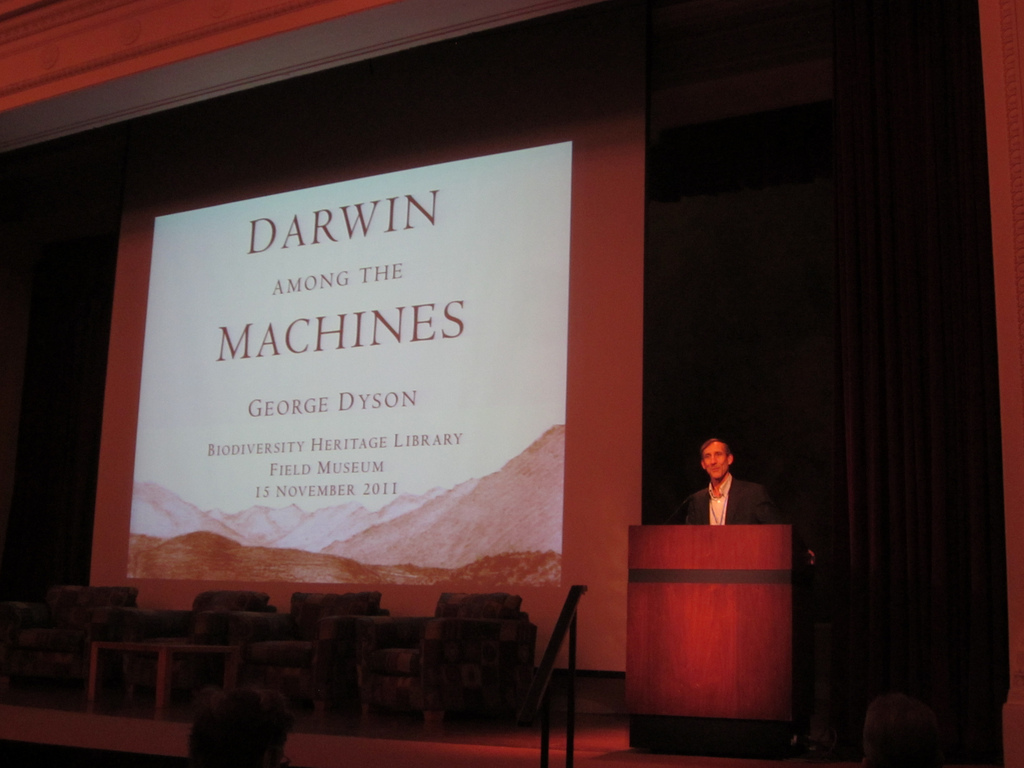
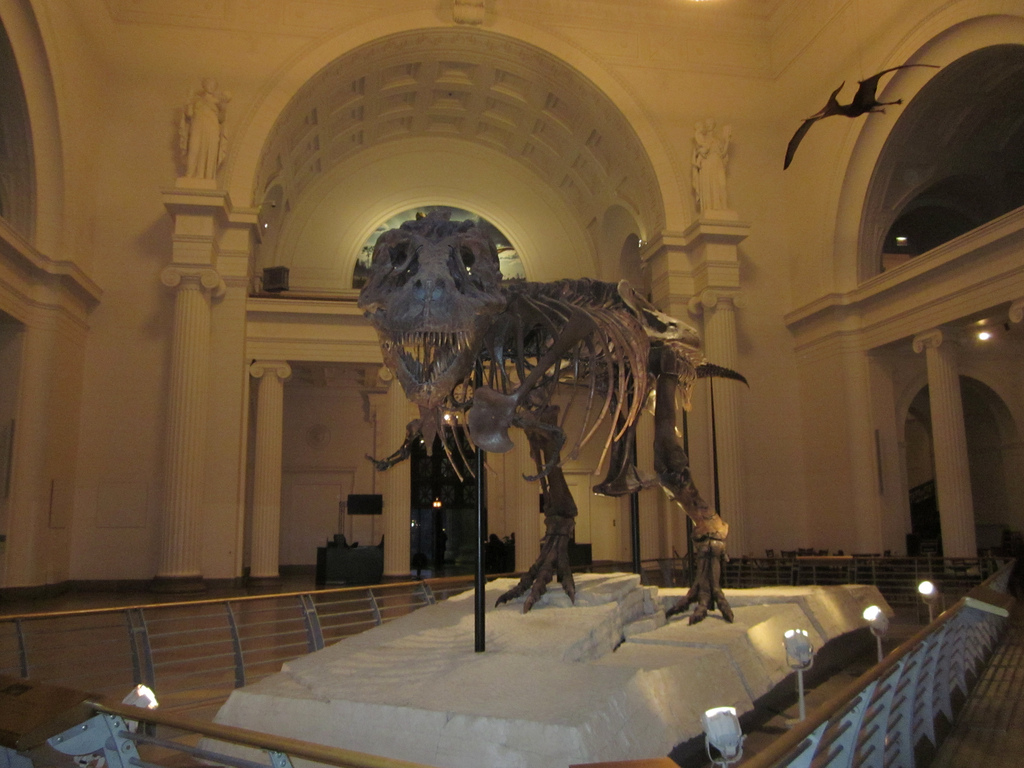
(Images: All images courtesy Martin Kalfatovic. Top: BHL Buttons presented at the Life and Literature Conference; Middle: George Dyson delivering the second plenary speech at Life and Literature; Bottom: SUE – the largest, most complete T-Rex skeleton ever discovered, on display at the Field Museum, the Life and Literature Conference venue)

November 22, 2011by Grace Costantino

Help Support BHL

BHL's existence depends on the financial support of its patrons. Help us keep this free resource alive!

search

About BHL

The Biodiversity Heritage Library (BHL) is the world’s largest open access digital library for biodiversity literature and archives. BHL operates as a worldwide consortium of natural history, botanical, research, and national libraries working together to digitize the natural history literature held in their collections and make it freely available for open access as part of a global “biodiversity community.”

Join Our Mailing List

Sign up to receive the latest news, content highlights, and promotions.

Subscribe Now

Subscribe to Blog via Email

Enter your email address to subscribe to this blog and receive notifications of new posts by email.

Join 319 other subscribers

Subscribe to Blog Via RSS

Subscribe to the blog RSS feed to stay up-to-date on all the latest BHL posts.

Access RSS Feed

Inspiring Discovery through Free Access to Biodiversity Knowledge.

The Biodiversity Heritage Library makes it easier than ever for you to access the information you need to study and explore life on Earth…for free, anytime, anywhere.


64+ Million Pages of
Biodiversity Literature Online.

EXPLORE

Tools and Services
to Transform Research.

EXPLORE

300,000+
Illustrations on Flickr.

EXPLORE

ABOUT | HARMFUL CONTENT | PRIVACY | SITE MAP | TERMS OF USE