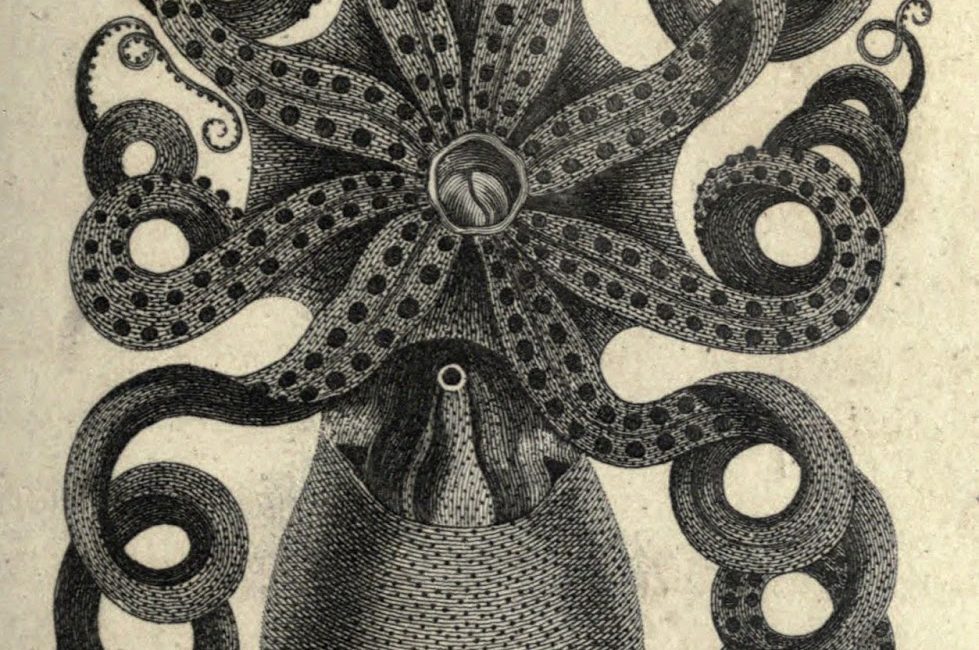
“…A very formidable animal, and possess[ing] such a degree of strength as to make it dangerous to attack it without great precaution. Such is the ferocity and violence with which it defends itself, that even the strongest Mastiff can hardly subdue it without a long and doubtful contest. It has even been known to attack a person while swimming, and to fasten itself with dangerous force round the body and limbs.”
Such a description conjures up images of a great behemoth, perhaps with sharp fangs, great talons, and fiery red eyes. It was given by George Shaw in a lecture to the Royal Institute and published in 1809.
It is a description of the Curled Octopus (Eledone cirrhosa), reaching a total size of 5-15 inches. Not quite the beast the description implies…
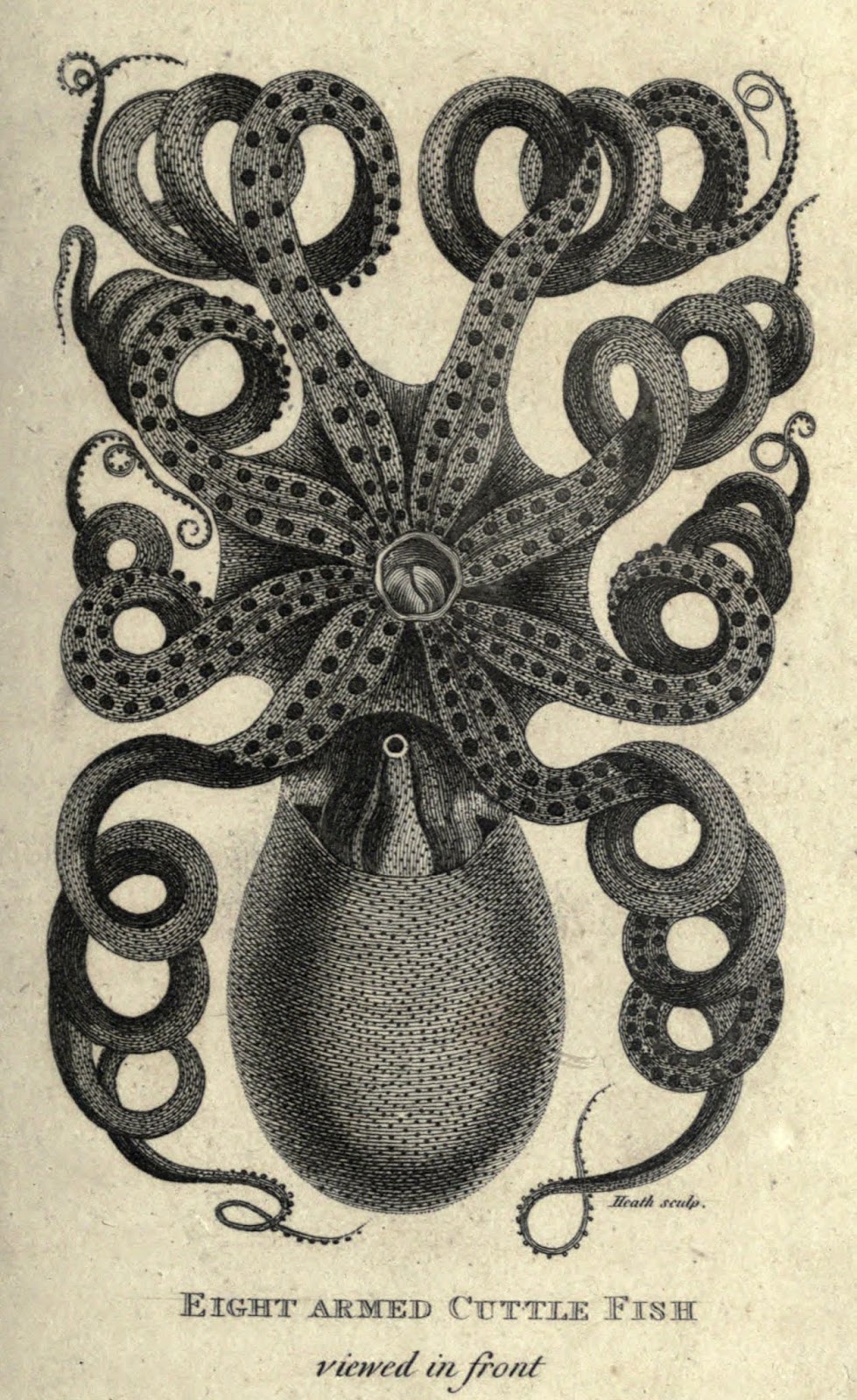 |
| “Eight Armed Cuttle Fish” aka Curled Octopus. Shaw, George. Zoological Lectures Delivered at the Royal Institution by George Shaw. v. 2. 1809. http://biodiversitylibrary.org/page/21511926. |
The octopus, like the squid (aka kraken), has long held an unwarranted reputation as a monster. “Their strangely repulsive appearance, and the fictional stories of their attacks, have built up in the popular mind a picture of the ‘devil fish’ which no amount of accurate description is ever likely to cut down to authentic size,” mused Frank W. Lane in Kingdom of the Octopus (1962).
“Ever since people started writing about such things – and probably when they only talked about them – they have never been content simply to name and describe the octopus, but have insisted on passing judgment upon it,” wrote James Artz of the American Museum of Natural History (Ellis, pg. 257).
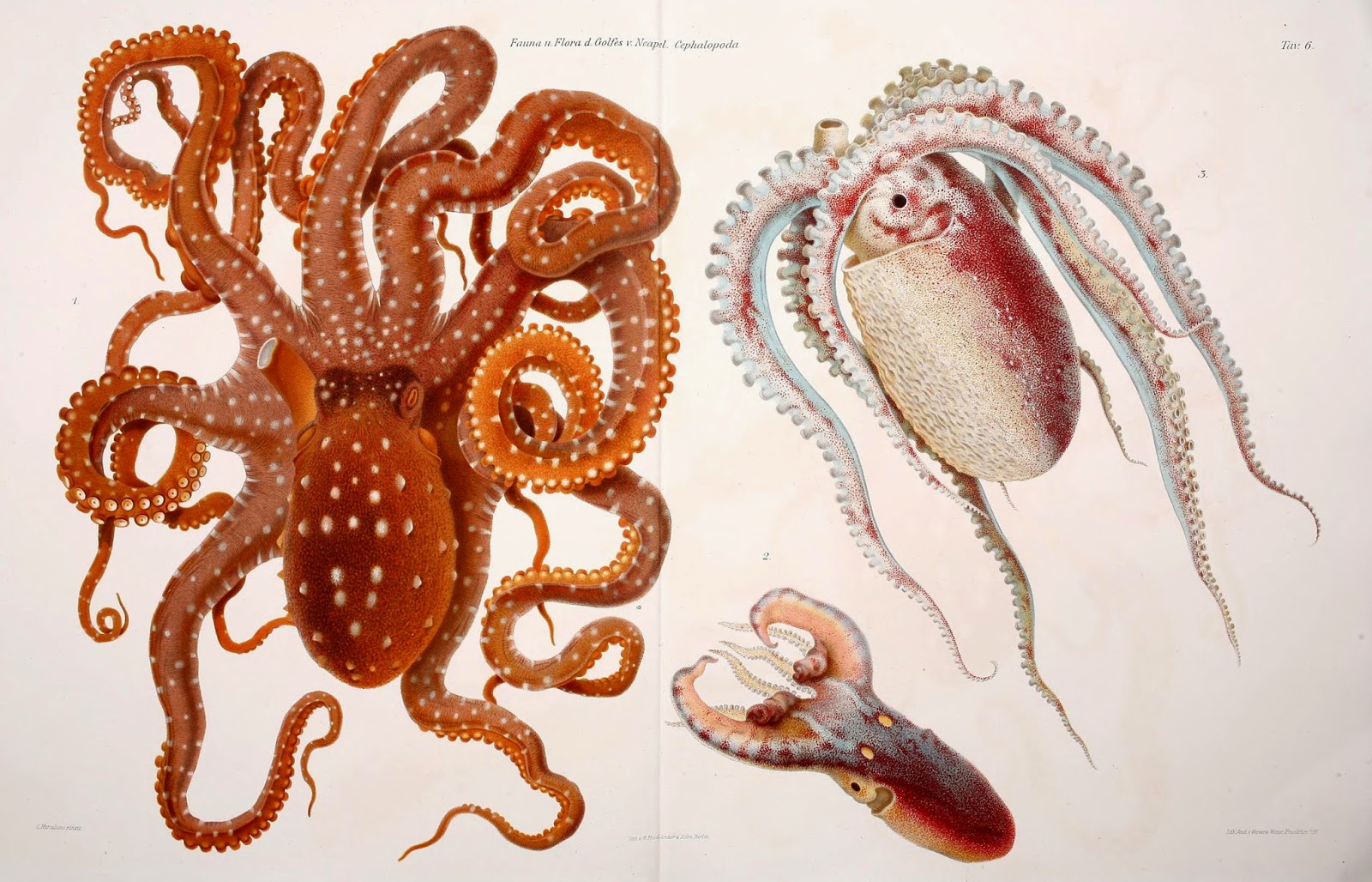 |
| Amazing Mollusca from the Gulf of Naples: Octopus macropus, Tremoctopus violaceus, and Ocythoe tuberculata. Jatta, Giuseppe. I Cefalopodi viventi nel Golfo di Napoli (sistematica) : monografia. 1896. http://biodiversitylibrary.org/page/35424286. |
Accounts of the Octopus’ “vile” personality can be found throughout hundreds of years’ worth of literature, even well into the twentieth century and by respected scientists.
The Octopus as Monster
In the first century AD, Pliny the Elder positions the octopus (which he labels a polyp, along with squids) as a gruesome monster, writing, “no animal is more savage in causing the death of a man in the water; for it struggles with him by coiling round him and it swallows him with its sucker-cups and drags him asunder by its multiple suction” (Ellis, pg. 261).
Not surprisingly, Denys de Montfort, the personality behind the legendary kraken image, could not resist the opportunity to contribute to the growing octopus lore in the early nineteenth century. Within Histoire Naturelle Générale et Particulière des Mollusques, he describes an episode where an octopus attacked and nearly succeeded in drowning his dog on the beach. He and his dog were finally able to subdue the monster by tearing off its arms…Given Montfort’s demonstrated history of untruths, his account is hardly to be believed.
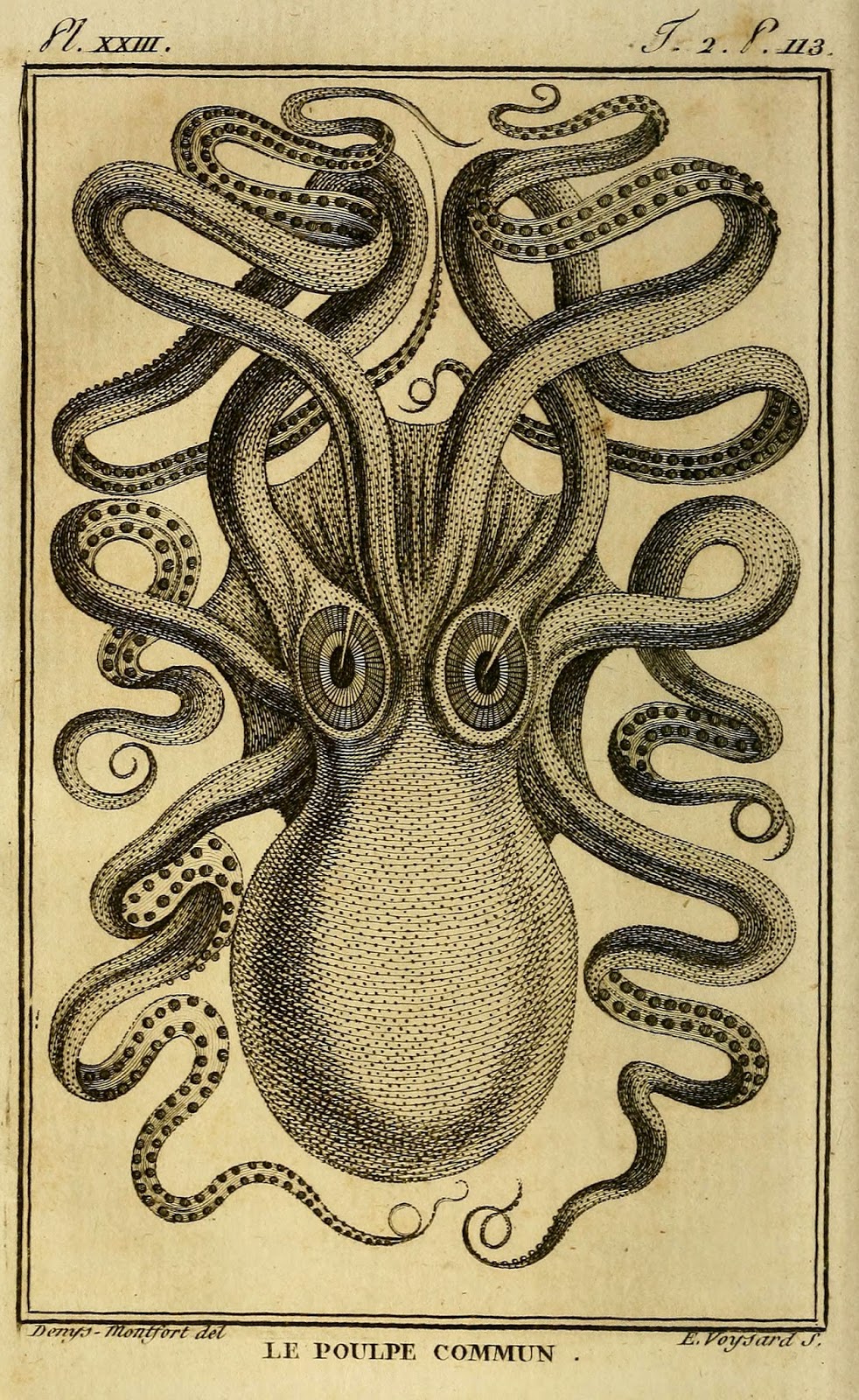 |
| “The Common Octopus.” Montfort, Denys. Histoire naturelle, générale et particulière des mollusques : animaux sans vertèbres et a sang blanc. v. 2. 1801. http://biodiversitylibrary.org/page/35755415. |
Perhaps the most sensational, and damaging, account of the octopus was presented by Victor Hugo in Toilers of the Sea (1866). Within it, Hugo describes his protagonist’s (Gillat) encounter with an octopus in a cave, which does its utmost to annihilate him. Hugo writes of the beast’s attack: “The hydra incorporates itself with the man; the man becomes one with the hydra. The spectre lies upon you…the devil-fish, horrible, sucks your life blood away…Powerless, you feel yourself gradually emptied into this horrible pouch, which is the monster itself.”
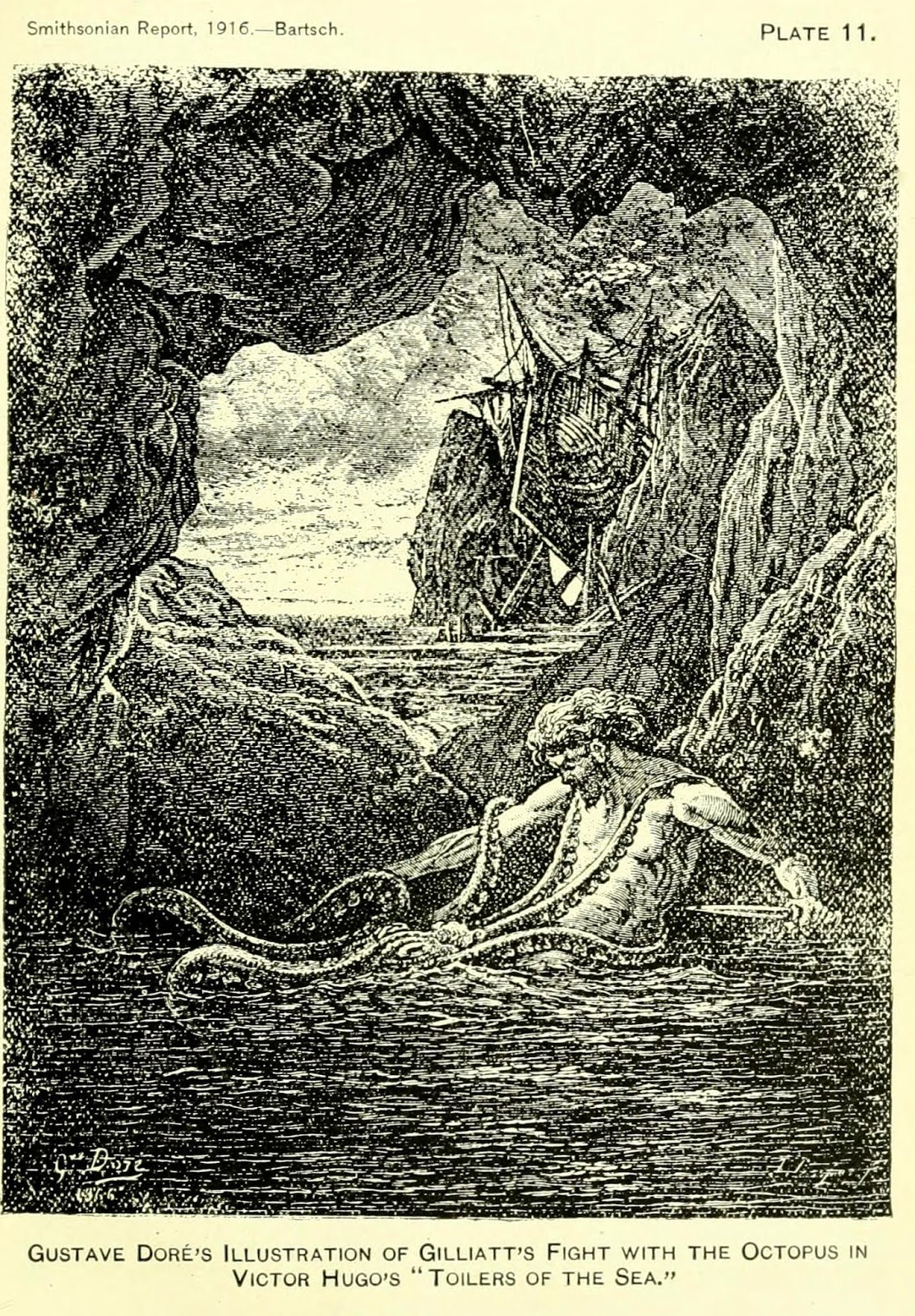 |
| Gillat’s struggle with the “monster” octopus, as described in Toilers of the Sea. Annual Report of the Board of Regents of the Smithsonian Institution. 1916. http://biodiversitylibrary.org/page/14187072. |
Henry Lee and Addison Verrill, both of whom wrote extensively on squid and octopus, boldly challenged Hugo’s passages, outlining the multiple fallacies included. In Cephalopods of the North-eastern Coast of America, Verrill writes, “The description of the ‘poulpe’ or devil-fish by Victor Hugo…is quite as fabulous and unreal as any of the earlier accounts, and even more bizarre. His description represents no real animal whatever.”
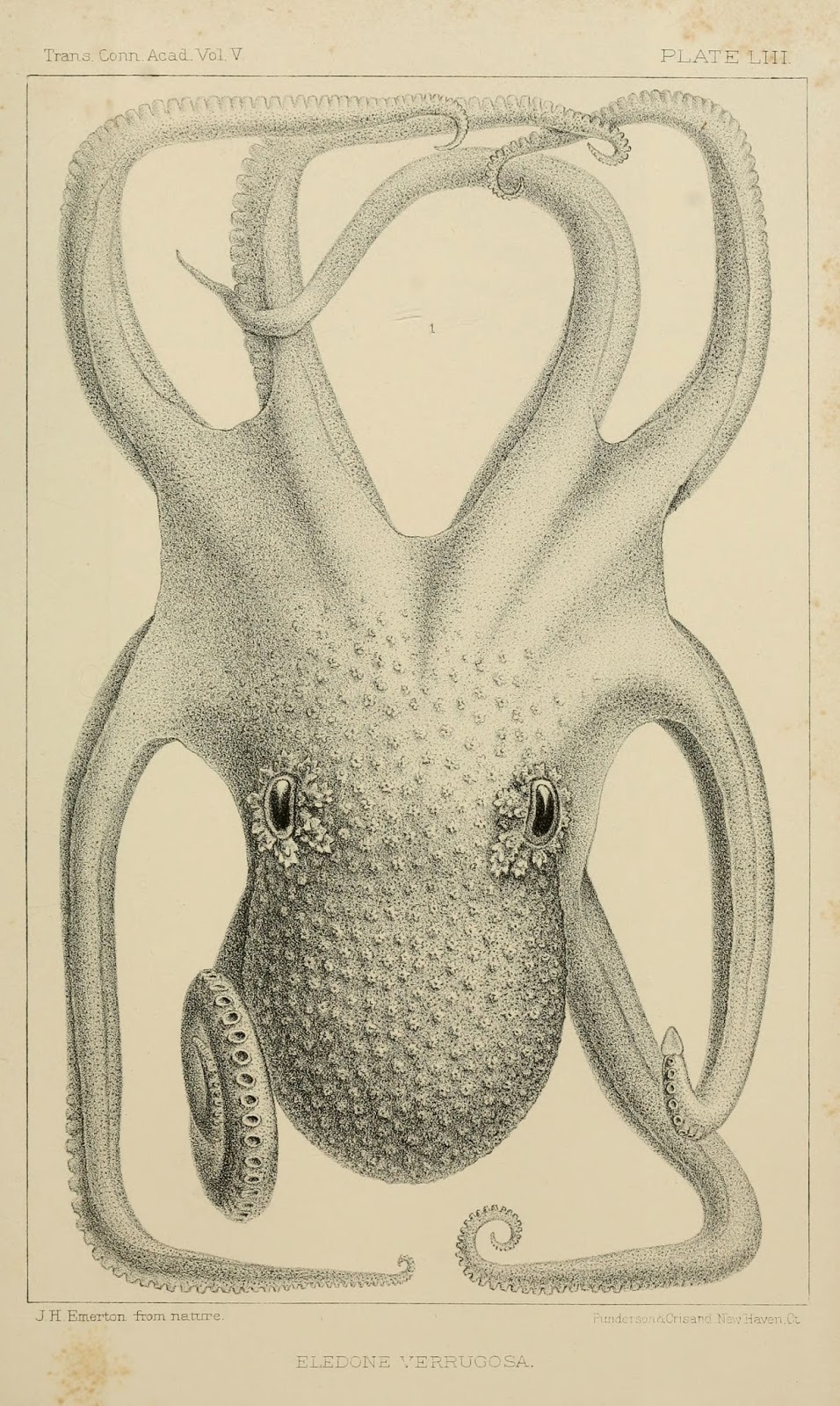 |
| Graneledone verrucosa. Verrill, A.E. Cephalopods of the North-eastern Coast of America. v. 2. 1881. http://biodiversitylibrary.org/page/11826821. |
Unfortunately, such melodramatic accounts, popular among the public, helped to further secure the octopus’ reputation as a monster, despite the counterarguments against them.
Similar descriptions of the octopus as a monster continued into the twentieth century. For instance, a 1907 fieldbook from Florence Merriam Bailey, American ornithologist and nature writer, whilst in California, deems the octopus a “horrible creature,” describing an episode where a friend was attacked by one in Bermuda. “Their strength is tremendous & they put out [[strikethrough]] au [[/strikethrough]] arms and grasp you and hold on with suction discs & then draw the object up and cut it across the back of the neck with thin knives.”
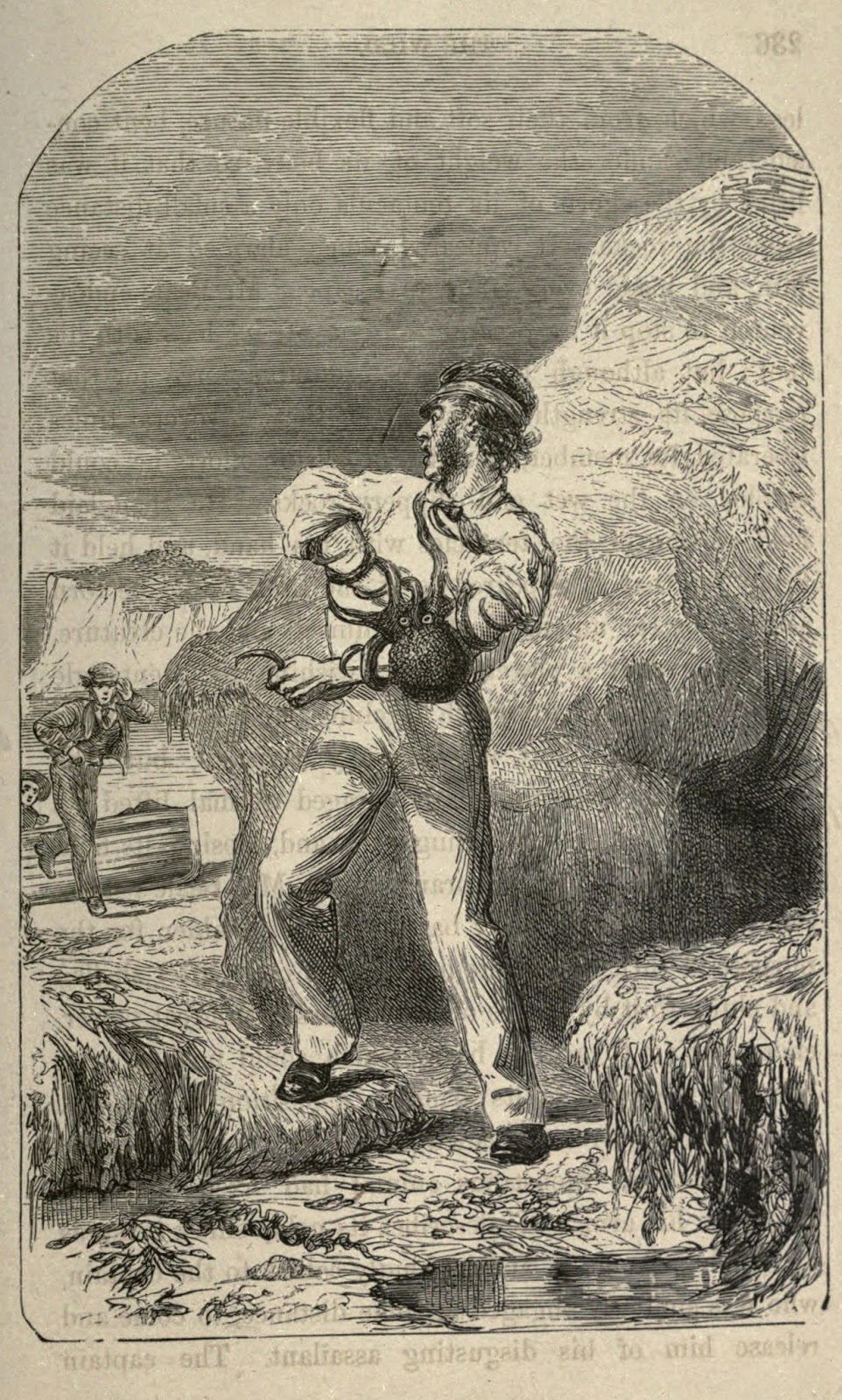 |
| Thomas Beale, surgeon on a British whaling voyage in 1835, claimed he was attacked by an octopus on the beach on the Bonin Islands, south of Japan. Gosse, Philip Henry. The Romance of Natural History. 1864. http://biodiversitylibrary.org/page/23537396. |
A 1919 National Geographic article by John Oliver La Gorce, called “Devil-Fishing in the Gulf Stream,” presents the mollusk as “most repulsive, having a large, ugly head, a fierce-looking mouth…two diabolical eyes…capable of sending forth a demonic glare when angered…When challenged [it] will fight to the last, doing its best to pull the object of its wrath beneath the surface of the waters.”
But while natural history has been cruelly unkind to the octopus, presenting the creature itself as a monster, this cephalopod also served to inspire one of mythology’s greatest beasts – The Hydra.
The Hydra: A Case of Mistaken Identity
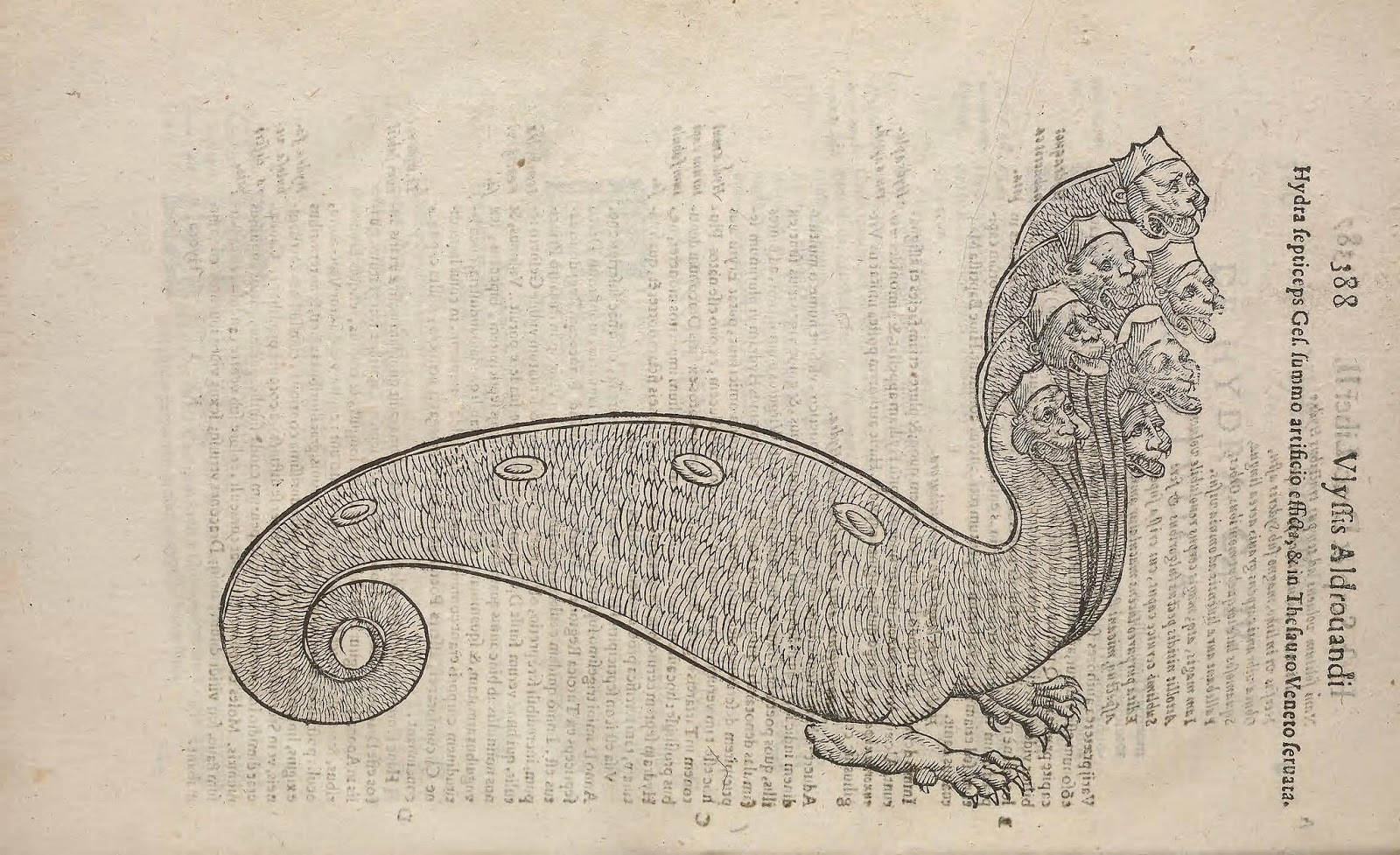
The Hydra is a “mythical” beast most commonly described as having nine heads, each of which will regenerate if decapitated. The Greek hero Hercules was commanded to kill a Hydra as his second labor. The marble tablet in the Vatican depicting this exploit interprets the hydra as a strikingly octopus-like monster.
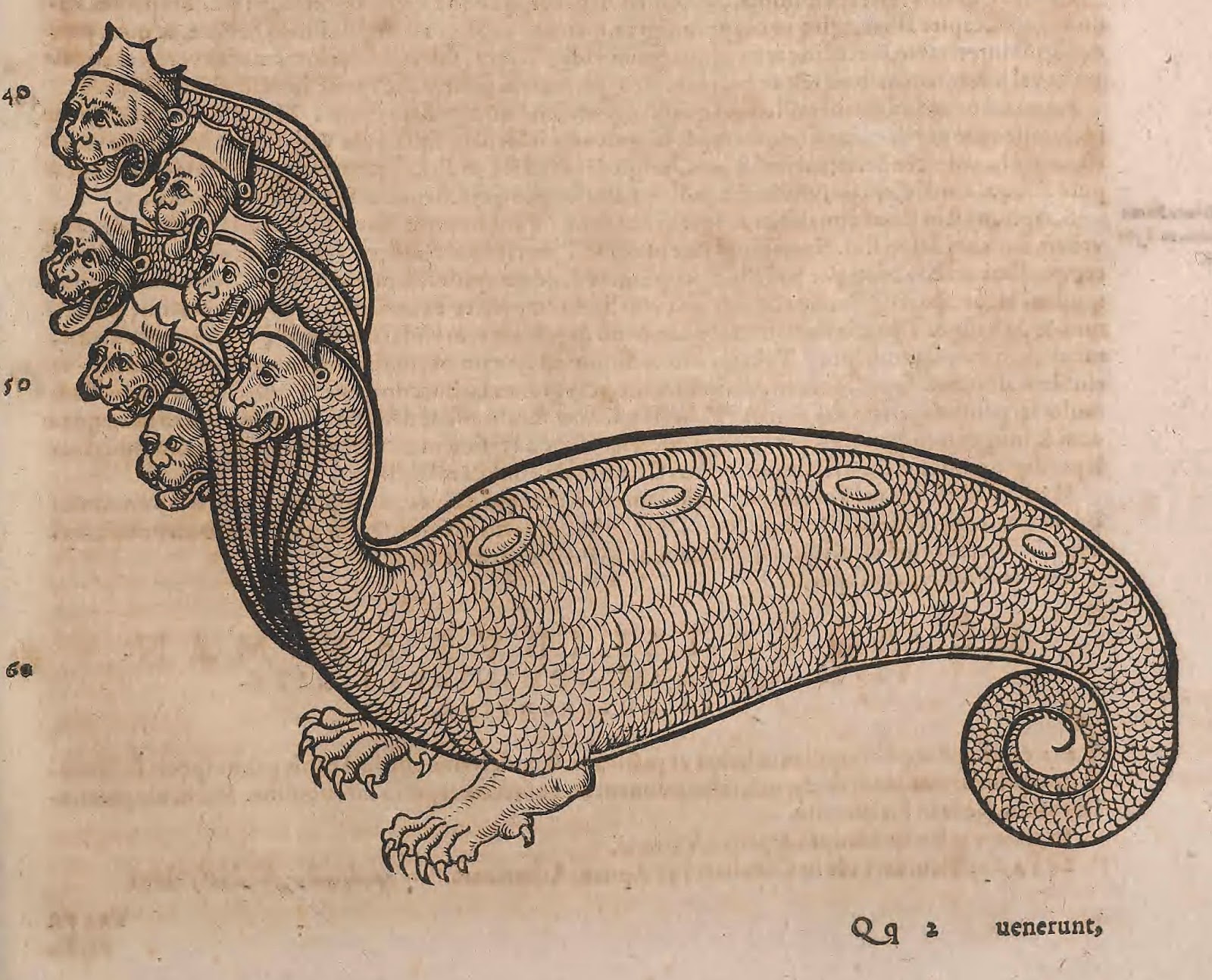 |
| The Hydra, as illustrated by Gessner. Notice the suction-cup like spots on its body…very octopus-like. Gessner, Conrad. Historia Animalium. 2nd Ed. 1604. http://biodiversitylibrary.org/page/42166090. |
In the book Sea Fables Explained, Henry Lee writes that the Lernean Hydra was simply a huge Octopus. Many scholars have postulated that hydra are based on octopus. After all, their many tentacles could be misinterpreted as heads, and octopus can regenerate lost limbs, possibly explaining the unending head supply of the hydra.
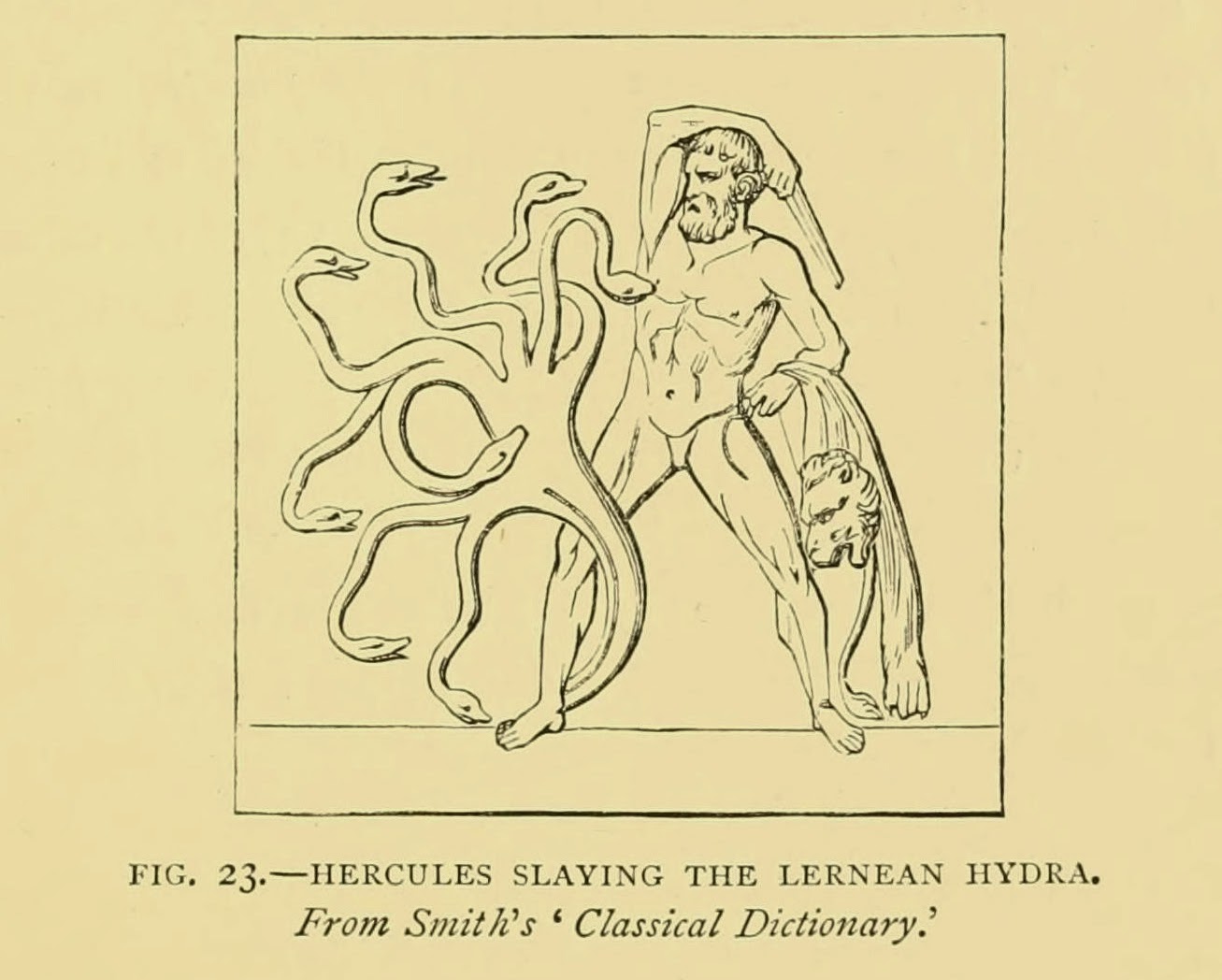 |
| Hercules slaying the Lernean Hydra, as depicted on a marble tablet in the Vatican. Lee, Henry. Sea Fables Explained. 1883. http://biodiversitylibrary.org/page/10985663. |
Well into the eighteenth century, many naturalists believed the hydra to be a real creature. Albertus Seba, a famed apothecary from Amsterdam, boasted an extensive cabinet of curiosities, filled with many magnificent biodiversity specimens. From 1734-65, Seba published an account of his cabinet in Locupletissimi rerum naturalium thesauri accurata descriptio, et iconibus artificiosissimis expressio, per universam physices historiam. This work included an image of a hydra, based on a specimen held by the Burgomeister of Hamburg. While Linnaeus later proved this particular specimen to be a fake, an amalgamation of snake skins and weasel heads with possible religious overtones, exaggerated accounts of an octopus likely inspired such monsters in the first place.
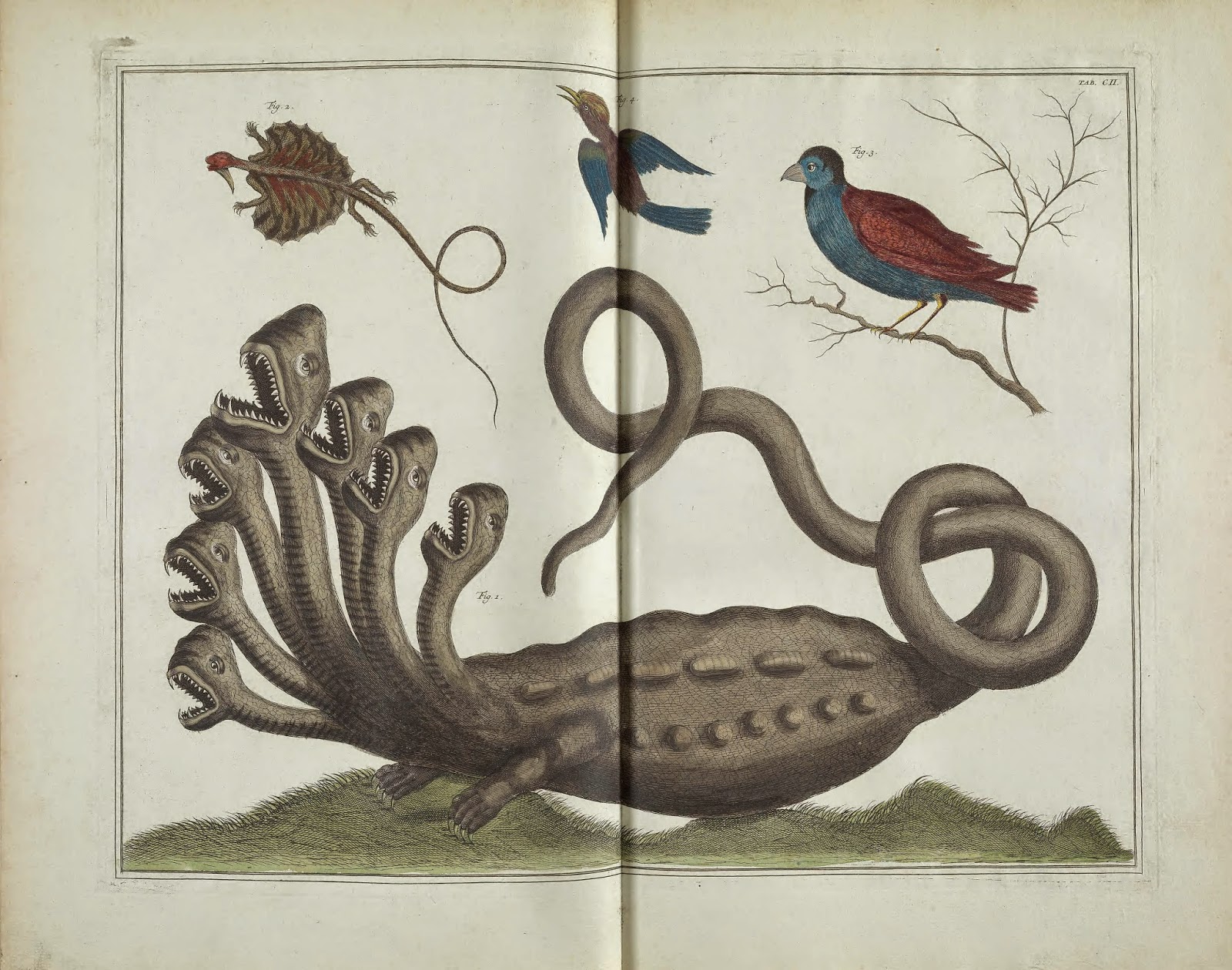 |
| The Hydra! Seba, Albertus. Locupletissimi rerum naturalium thesauri accurata descriptio, et iconibus artificiosissimis expressio, per universam physices historiam. v. 1. 1734. http://biodiversitylibrary.org/page/41047754. |
An Undeserved Reputation and the Monster that Isn’t
The octopus’ “monster” reputation is completely unwarranted. It is hardly necessary to emphasize the fact that the hydra, though inspired by a real animal, is not itself a real species. Debunking longstanding conceptions of the octopus itself as a terrible, vicious monster, however, has proven more difficult.
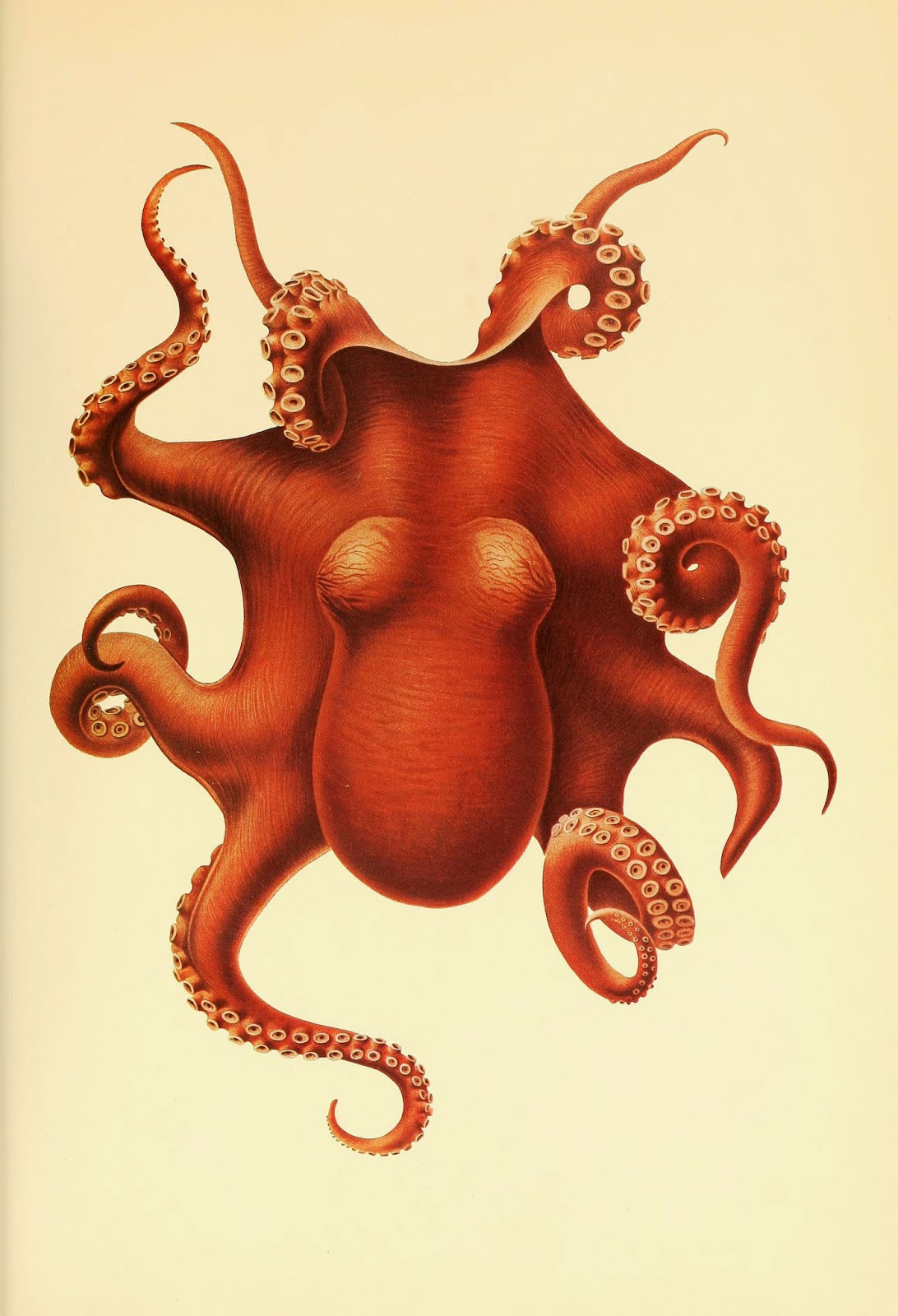 |
| Benthoctopus levis. Chun, Carl. The Cephalopoda. 1975. http://biodiversitylibrary.org/page/32124297. |
“The octopus is, in fact, a gentle, curious creature with a surprising ‘intelligence,’” argues marine biologist Richard Ellis of the American Museum of Natural History (Ellis, pg. 261). Around 300 species are recognized, constituting over a third of all cephalopods. They are perhaps the most intelligent invertebrate, demonstrating complex problem-solving abilities and the use of tools.
Octopus range in size from the minute Octopus wolfi, measuring about 0.6 inches in length, to the Giant Pacific Octopus (Enteroctopus dofleini), with a radial span of 20ft (and possibly as much as 32ft) – certainly large enough to inspire some fantastic monster myths. The only octopus species truly dangerous to humans are the three (or perhaps four) species of Blue-Ringed Octopus, which are some of the world’s most venomous marine animals and capable of killing humans.
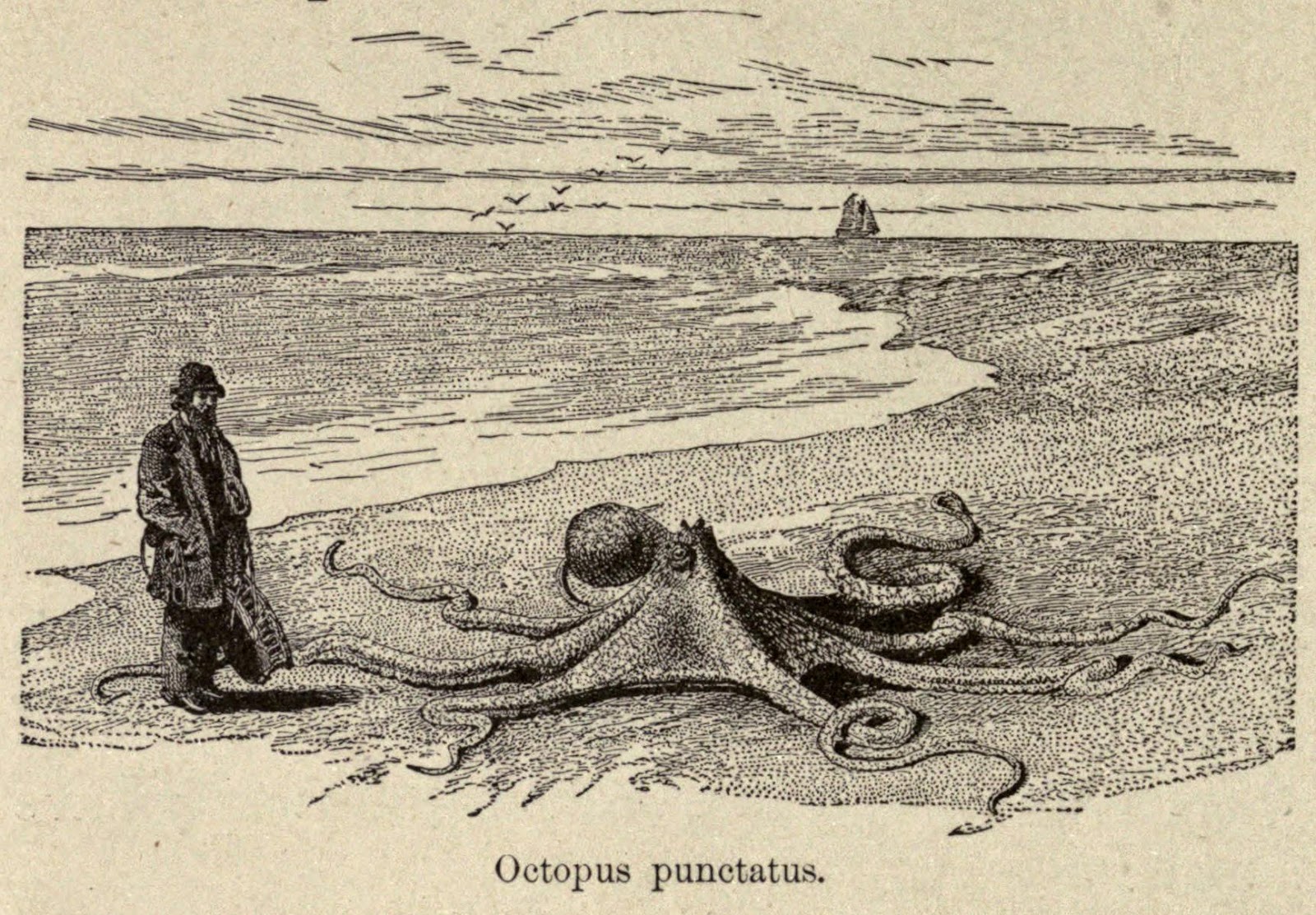 |
| Giant Octopus. Holder, C.F. Along the Florida Reef. 1899. http://biodiversitylibrary.org/page/23386919. |
So, in the case of the octopus, it is more a story of the monster that isn’t. These cephalopods most definitely are not, as Victor Hugo asserts in Toilers of the Sea, “the concrete forms of evil,” but are in fact a wonderfully diverse, spectacularly intelligent, and reportedly shy group.
So, are monsters real? In the case of the octopus, no.
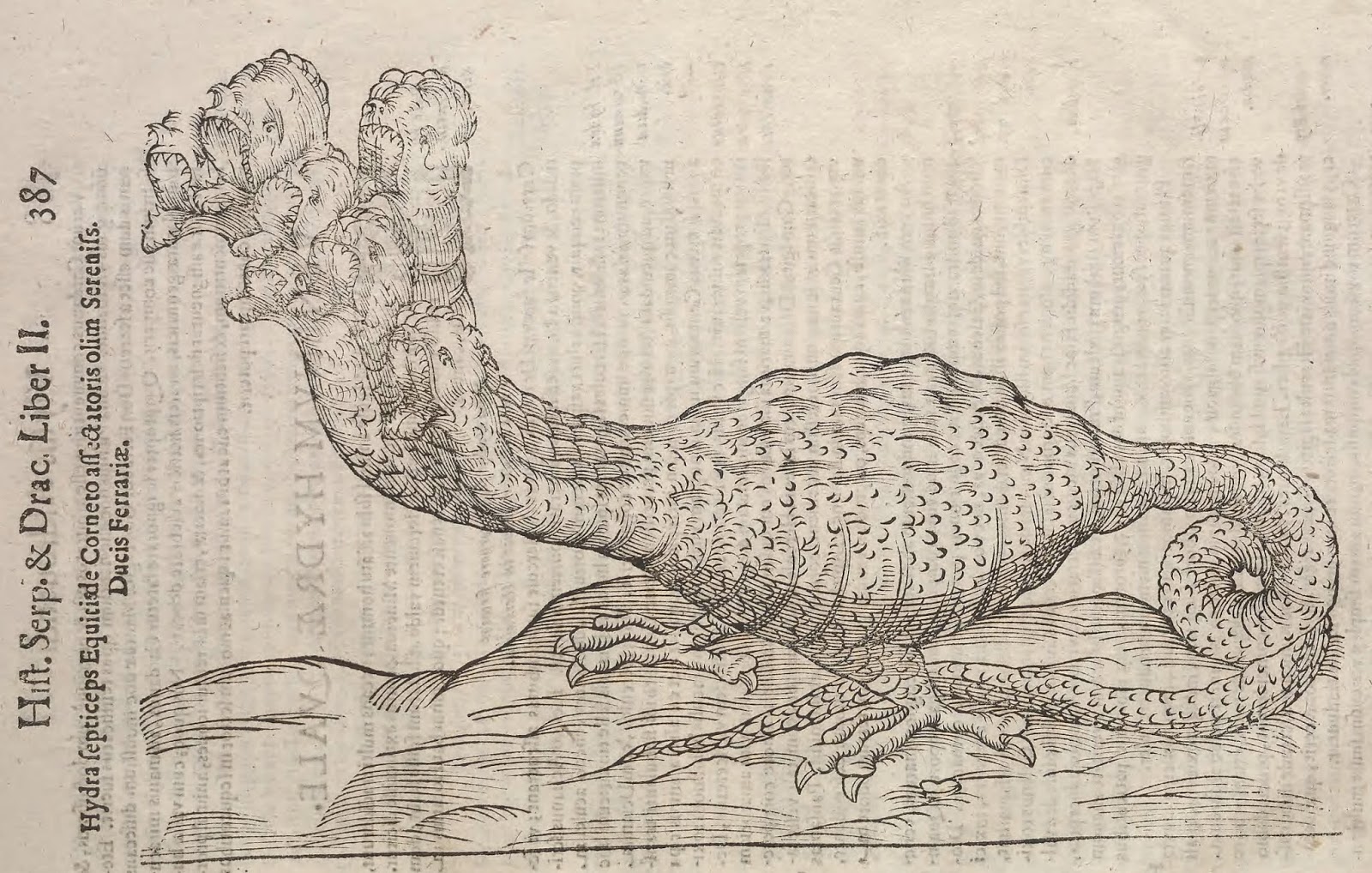 |
| Hydra. Aldrovandi, Ulisse. Serpentum, et draconum historiæ libri duo. 1640. http://biodiversitylibrary.org/page/41765442. |
- Follow our blog and #bhlMonstersRreal on Twitter and Facebook all week to learn more about monsters and the animals that inspired them.
- Browse historic illustrations of octopi and squid-inspired monsters and the animals that they’re based on in Flickr.
- Browse the books that portray these historic monsters in BHL.
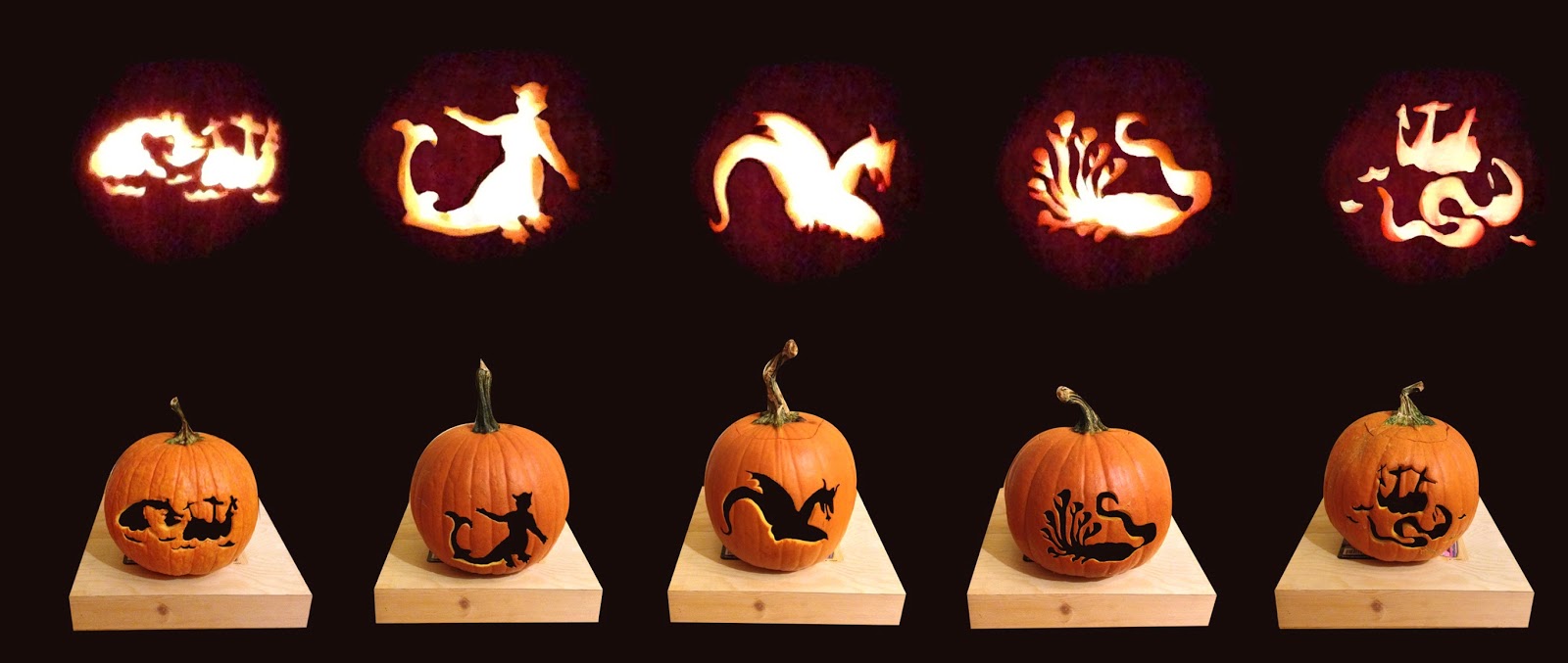
- Carve a Hydra in your Halloween Pumpkin this year! Share your carvings with us on Facebook and Twitter!
- See some of our favorite monsters come to life on the Smithsonian Libraries’ Tumblr!
Reference:
- Ellis, Richard. Monsters of the Sea. New York: Alfred A. Knopp, Inc., 1994. Print.