Biodiversity Heritage Library - Program news and collection highlights from BHL
  • Home
  • News
  • Featured Books
    • All Featured Books
    • Book of the Month Series
    • BHL at 20
  • User Stories
  • Campaigns
    • Fossil Stories
    • Garden Stories
    • Monsters Are Real
    • Page Frights
    • Her Natural History
    • Earth Optimism 2020
  • Tech Blog
  • Visit BHL
Home
News
Featured Books
    All Featured Books
    Book of the Month Series
    BHL at 20
User Stories
Campaigns
    Fossil Stories
    Garden Stories
    Monsters Are Real
    Page Frights
    Her Natural History
    Earth Optimism 2020
Tech Blog
Visit BHL
  • Home
  • News
  • Featured Books
    • All Featured Books
    • Book of the Month Series
    • BHL at 20
  • User Stories
  • Campaigns
    • Fossil Stories
    • Garden Stories
    • Monsters Are Real
    • Page Frights
    • Her Natural History
    • Earth Optimism 2020
  • Tech Blog
  • Visit BHL
Biodiversity Heritage Library - Program news and collection highlights from BHL
Blog Reel, User Stories

Resolving a 180 Year Old Taxonomic Mystery

Hardwicke’s bloodsucker is an agamid lizard found in western and central India. It is a small, stocky, and pot-bellied lizard with a short tail that is currently recognized under the scientific name Brachysaura minor. This species, however, has a rather convoluted taxonomic history.

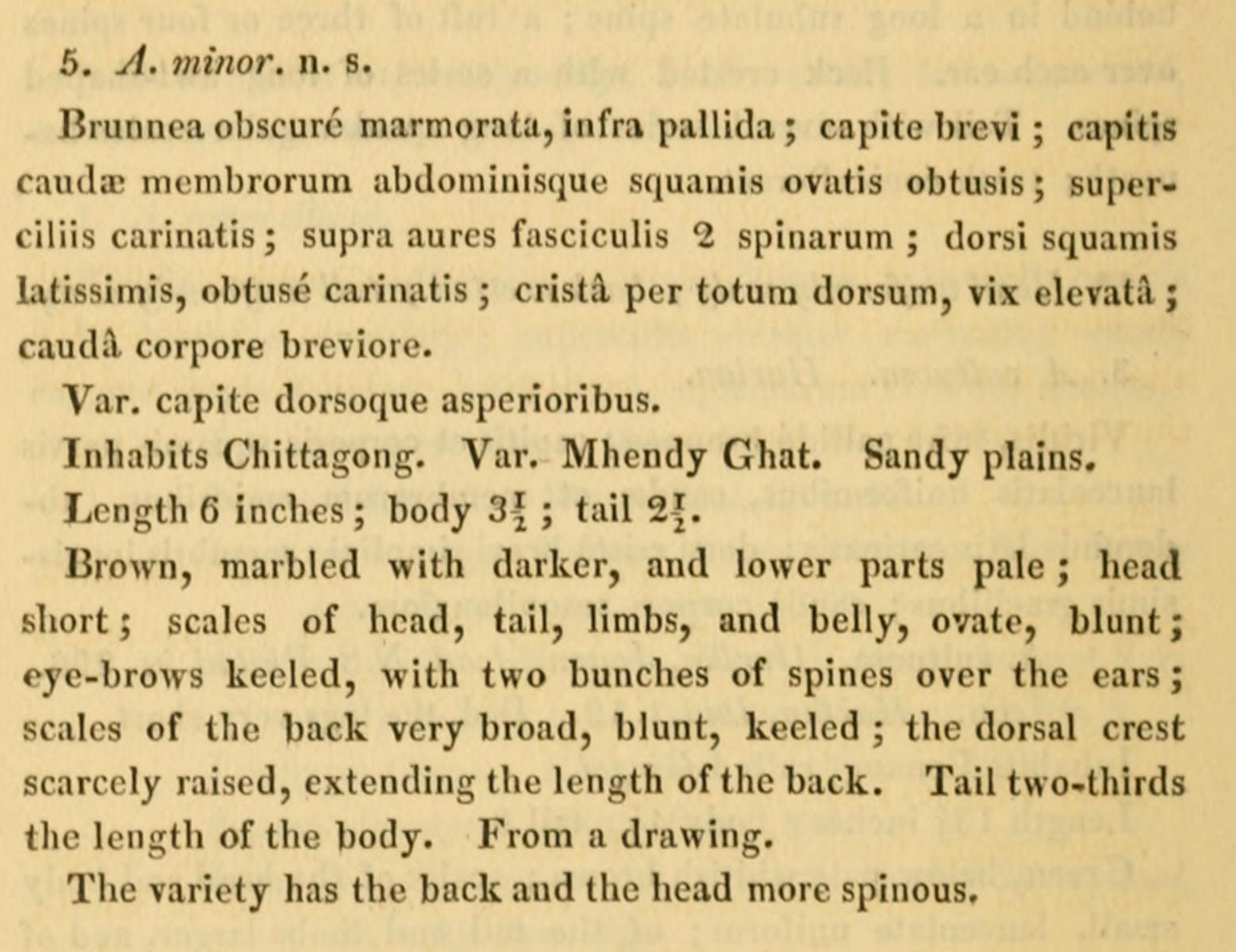
The first scientific description of the species comes from Hardwicke and Gray in 1827 and is based on a color sketch by Hardwicke which now resides in the Archives of the Natural History Museum, London.  They named the species Agama minor. Later, in 1856, Blyth provided a new name and description for what was likely the same species, calling it Brachysaura ornata. He did not refer to Hardwicke and Gray’s previous description. Over the years, the description, name and placement of the species was questioned by many, and it has subsequently been placed in the additional genera Charasia and Laudakia as well.

In 1999, Manthey and Schuster placed the species back within the genus Brachysaura, and it has since be most commonly referred to as Brachysaura minor – the only species within the Brachysaura genus.

View Full Size Image
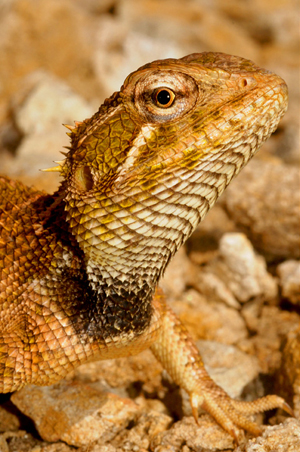
Close up of Calotes minor, a species with a confusing taxonomic history. Photo credit: Varad Giri.

A recent study has called this placement into question. Using molecular and morphological data, V. Deepak, Raju Vyas, Varad B. Giri, and K. Praveen Karanth analyzed the identity and systematic position of Brachysaura minor. Their results, published in the paper “A Taxonomic Mystery for More than 180 Years: The Identity and Systematic Position of Brachysaura minor (Hardwicke and Gray, 1827)” (Vertebrate Zoology. 65(3): 371-381), suggest that Brachysaura is actually nested within the genus Calotes, and that the species should henceforth be referred as Calotes minor. They also note that one of the previous primary impediments to placing this species within the Calotes genus is the fact that, compared to other members of the genus, this species has a very short tail. However, the researchers note that, unlike other members of this genus, this species is ground-dwelling, and in other ground-dwelling agamids, reduced tail length is a common characteristic. Thus, the authors propose that the length of the tail is an adaptation related to the species’ habitat and not a justification for placement in a new genus. Not only does the paper propose a new placement for Brachysaura minor, but by re-evaluating other specimens that were previously believed to be representatives of this species, the authors also suggest that members of Agaminae are limited to a distribution in arid regions of Western India.
View Full Size Image
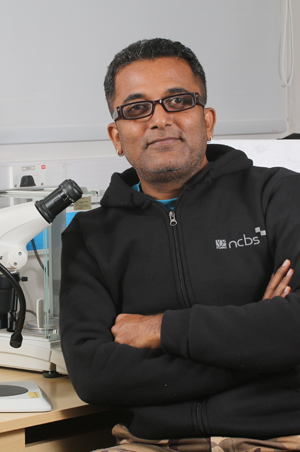
Dr. Varad Giri. Photo credit: Zeeshan Mirza.

According to co-author Dr. Varad B. Giri, a Post Doctoral Fellow at the National Centre for Biological Sciences in Bangalore, India, this paper would not have been possible without the Biodiversity Heritage Library.

Varad has been studying the taxonomy of Indian reptiles and amphibians since 2000. While exploring records in the Reptile Database, he discovered links to literature in BHL and was introduced to our open access digital library. The discovery had profound effects on his work.

“For a taxonomist like me, BHL is an amazing resource. One of the vital things of taxonomy is to understand the morphological characters of known species. With this knowledge, one can do a proper diagnosis of the species known or hitherto unknown to science. One way to do this is by referring to the type specimens, but most of the types of Indian amphibians and reptiles are in museums abroad and thus are difficult to access. The other way is to refer to the original descriptions, which were again inaccessible as they were published in old journals. BHL has made this latter thing possible by putting all of the historical literature online where one can access it with ease. I strongly feel that if BHL would not have been available, I would not have performed good taxonomic work with such ease due to a lack of historical literature. BHL has a big positive impact on my research.”

When he is working on a paper, Varad uses BHL several times a day. He usually downloads relevant papers using BHL’s custom PDF service, which allows him to select precisely the pages he wishes to save. This feature is one of his favorites on BHL. When appropriate, Varad will also download entire books as PDFs and, having now been exposed to the many illustrations available from BHL through his interaction with BHL staff, he also plans to download relevant images in the future.

While the ability to perform full-text search is a feature that Varad would like to see added to BHL, he notes that BHL’s general search is quite effective and has in fact exposed him to many relevant items that he was previously unaware of.

While BHL’s many value-add features make Varad’s experience with our library all the more positive, the most important thing that BHL provides him with is access to the literature that he needs to conduct his research. Research like the taxonomic placement of Brachysaura minor (or should we say Calotes minor?).

View Full Size Image
The original description of Calotes minor. This paper was downloaded using BHL! The Zoological Journal. v. 3 (1827-1828). http://biodiversitylibrary.org/page/27485744. Digitized by Smithsonian Libraries.
“BHL is doing a wonderful service for researchers like me, who work with limited resources in developing countries like India. For our recent paper dealing with a 180 year old taxonomic mystery, we needed to refer to many historical articles. Without the help of BHL, this would have taken more time or been very difficult. There are many such publications pertaining to Indian amphibians and reptiles where we will need BHL!”

We are certainly thrilled to hear about the lasting and ongoing impact that BHL will have on Varad’s research and his investigation into taxonomic mysteries. For, after all, as Varad told us, “To properly solve the mystery, one has to clearly understand the history.” We couldn’t have said it better ourselves!

Do you use BHL to support your work? Want to be featured on our blog? Write us at [email protected]!
February 11, 2016by michelle.underhill
Blog Reel, Featured Books

Book of the Week: The Fate of the Vulture in South Asia

View Full Size ImageThere’s no denying that, when it comes to vultures, most people feel no love lost if they fail to see them circling the skies in search of carcasses to feast upon. This sentiment is almost universally held, and so, when the infamous Indian vulture populations, which had become a staple throughout the country, started disappearing from the skies, roadsides, and roofs of the country, not many people took notice. Not, that is, until it was, quite possibly, too late.

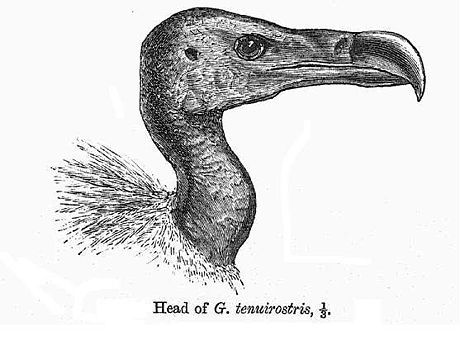
Today, all three vulture species of South Asia (slender-billed (Gyps tenuirostris), white-backed (Gyps bengalensis), and long-billed (Gyps indicus)) are critically endangered. And the culprit? Diclofenac, a mild painkiller given to lifestock. The pain killer, though harmless to humans and livestock, has a devastating effect on vultures. After feeding on carcasses that have ingested the drug, vultures develop visceral gout – “untreatable kidney failure that causes a crystallized bloom across their internal organs. Death occurs within weeks.” The current predicament these birds now find themselves in is poignantly captured in a recent article by Meera Subramanian entitled “India’s Vanishing Vultures.”

Two years after the cause of the problem – Diclofenac – was determined, the Indian government officially banned the sale of the drug for veterinary purposes. However, locals say that this has not stopped its use. Today, vulture population numbers have dropped by 97%. While fifteen years ago there were an estimated 15 million vultures in the Indian subcontinent, today those numbers are closer to 60,000.

People are trying to make a difference. Reporter Meera Subramanian wrote of her experience visiting the Pinjore Vulture Conservation Breeding Center, where Vibhu Prakash and a small team of researchers are attempting to breed captive vultures. One of three breeding centers constructed as part of the Vulture Recovery Plan that was enacted by the Indian government in 2004, it is the only center that “comes anywhere close to having twenty-five breeding pairs of each of the three Gyps [vulture] species.” The fact that vultures produce only 1 egg per breeding cycle doesn’t help matters. Since the center opened, only seventeen vultures have been successfully bred.

In light of this article and the alarming rate of decline for this species, we have selected as our book of the week The Fauna of British India, Including Ceylon and Burma: Birds, v. 3 (1895), by Eugene William Oates. Within this volume, Oates succinctly describes each of these vultures species (beginning with pg. 322), with the descriptions recounting a time when the species were plentiful and commonplace, a state which, unfortunately, we do not find today. The truth of the matter is, unless drastic changes are made quickly, accounts such as these may be the only manner in which future generations, or even this generation, can enjoy or learn about these creatures.

The status of the three vulture species in India and Southern Asia is tragic, and only time will tell if the efforts of individuals like Vibhu Prakash will save these species. Sadly, until the use of diclofenac is completely abandoned, it’s unlikely that we will see significant progress towards the salvation of this species. We can only hope that raising awareness of this creature, and demonstrating how important the scavaging activities of these birds actually are to the
welfare of the humans that share their habitat (see Subramanian’s article for more explicit information on the critical role these species play in the ecological health of their environemnt), will bring about a determination in the hearts of humans that may eventually serve as a revival for the species.

July 14, 2011by ulib-libraryjobs
Blog Reel, Featured Books

Book of the Week: A BHL Superstar

View Full Size Image

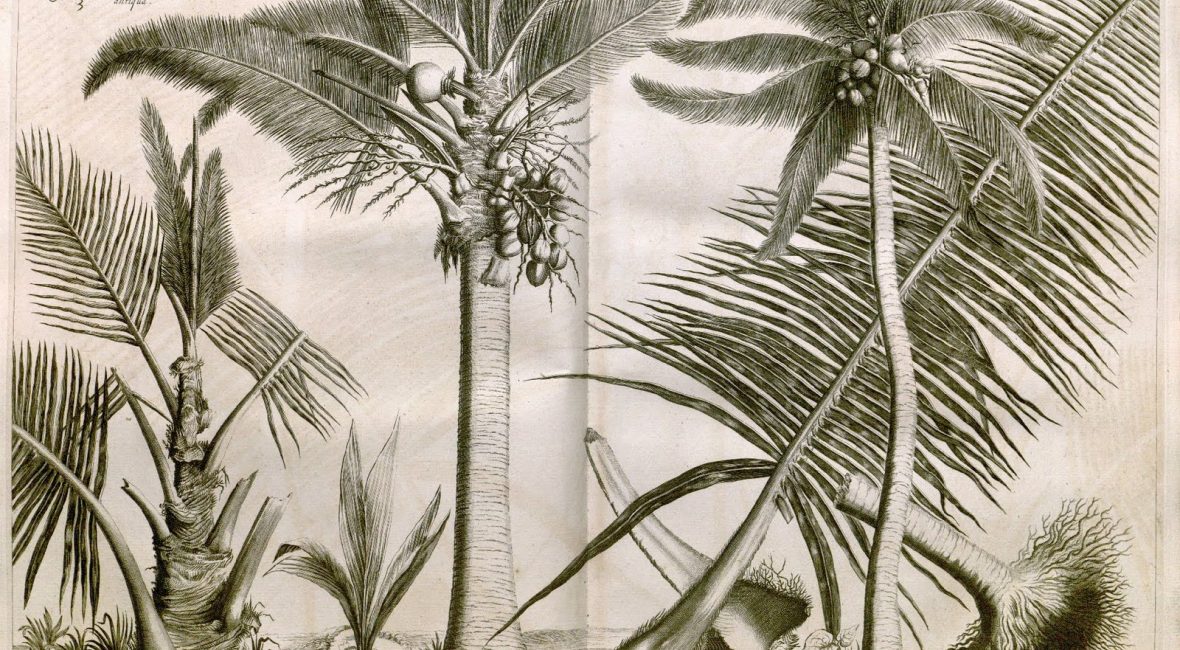
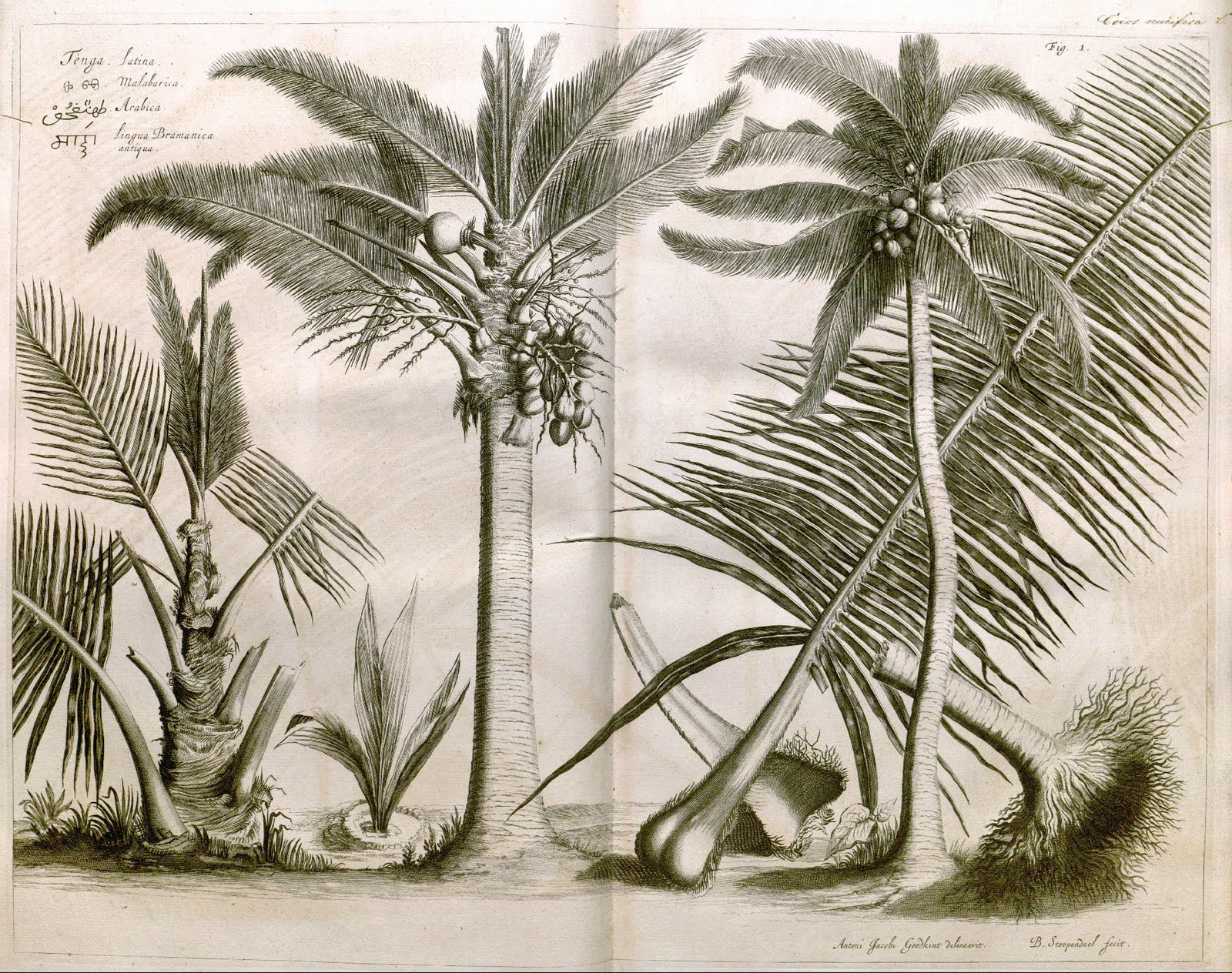
It’s one of the most frequently downloaded books from BHL. It was compiled over thirty years, in twelve volumes, and contains 794 copper plate engravings. It depicts and describes the flora of Asia and the tropics, focusing on the medicinal properties of the flora in the Indian state of Kerala. Species names are recorded in such languages as Konkani, Arabic, Malayalam, and Latin. It contains the type illustrations of many species, and was first published in Amsterdam in 1678-1693. Edited by nearly a hundred physicians, professors of medicine and botany, amateur botanists, technicians, illustrators, engravers, officials and clergymen, the work was conceived of by the then-governor of the Dutch administration in Kochi, Hendrik van Rheede.

Enough talk! What is it, you ask?

Answer: Hortus Indicus Malabaricus, one of the most important early works on the medicinal properties of various flora.

Hortus Indicus Malabaricus has also been the recent focus of a special publication of Samagra, a journal published by the Centre for Research in Indigenous Knowledge, Science and Culture. This special issue discusses the recent discovery of the previously unidentified creator of the first volume’s Frontispiece (now identified as the Dutch Golden Age artist Gerard de Lairesse), a discussion of the contributions of the Hungarian Theologians involved with the work, as well as an analysis on the medicinal plants described within the work.

Spend some time exploring one of the most popular works in BHL, and read what modern-day researchers are still discovering about the work in the special issue of Samagra, entitled, appropriately, “Hortus Malabaricus: Special Issue.” The exotic East and its flora await you!

February 24, 2011by michelle.underhill

Help Support BHL

BHL's existence depends on the financial support of its patrons. Help us keep this free resource alive!

search

About BHL

The Biodiversity Heritage Library (BHL) is the world’s largest open access digital library for biodiversity literature and archives. BHL operates as a worldwide consortium of natural history, botanical, research, and national libraries working together to digitize the natural history literature held in their collections and make it freely available for open access as part of a global “biodiversity community.”

Join Our Mailing List

Sign up to receive the latest news, content highlights, and promotions.

Subscribe Now

Subscribe to Blog via Email

Enter your email address to subscribe to this blog and receive notifications of new posts by email.

Join 319 other subscribers

Subscribe to Blog Via RSS

Subscribe to the blog RSS feed to stay up-to-date on all the latest BHL posts.

Access RSS Feed

Inspiring Discovery through Free Access to Biodiversity Knowledge.

The Biodiversity Heritage Library makes it easier than ever for you to access the information you need to study and explore life on Earth…for free, anytime, anywhere.


64+ Million Pages of
Biodiversity Literature Online.

EXPLORE

Tools and Services
to Transform Research.

EXPLORE

300,000+
Illustrations on Flickr.

EXPLORE

ABOUT | HARMFUL CONTENT | PRIVACY | SITE MAP | TERMS OF USE