Biodiversity Heritage Library - Program news and collection highlights from BHL
  • Home
  • News
  • Featured Books
    • All Featured Books
    • Book of the Month Series
    • BHL at 20
  • User Stories
  • Campaigns
    • Fossil Stories
    • Garden Stories
    • Monsters Are Real
    • Page Frights
    • Her Natural History
    • Earth Optimism 2020
  • Tech Blog
  • Visit BHL
Home
News
Featured Books
    All Featured Books
    Book of the Month Series
    BHL at 20
User Stories
Campaigns
    Fossil Stories
    Garden Stories
    Monsters Are Real
    Page Frights
    Her Natural History
    Earth Optimism 2020
Tech Blog
Visit BHL
  • Home
  • News
  • Featured Books
    • All Featured Books
    • Book of the Month Series
    • BHL at 20
  • User Stories
  • Campaigns
    • Fossil Stories
    • Garden Stories
    • Monsters Are Real
    • Page Frights
    • Her Natural History
    • Earth Optimism 2020
  • Tech Blog
  • Visit BHL
Biodiversity Heritage Library - Program news and collection highlights from BHL
Blog Reel, User Stories

Life is Short but Snakes are Long

Portrait version of the Biodiversity Heritage Library logo.

“Life is short but snakes are long.”

While some may recognize this as a quote from author David Quammen, it’s also the name of a place you can go to get some very cool information about snake natural history and herpetology research.
View Full Size Image
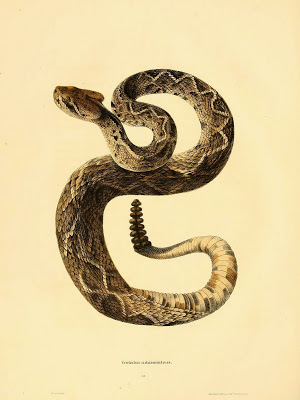
Eastern Diamondback Rattlesnake (Crotalus adamanteus). Holbrook, John Edwards. North American Herpetology. v. 2. 1838. http://biodiversitylibrary.org/page/3688392.

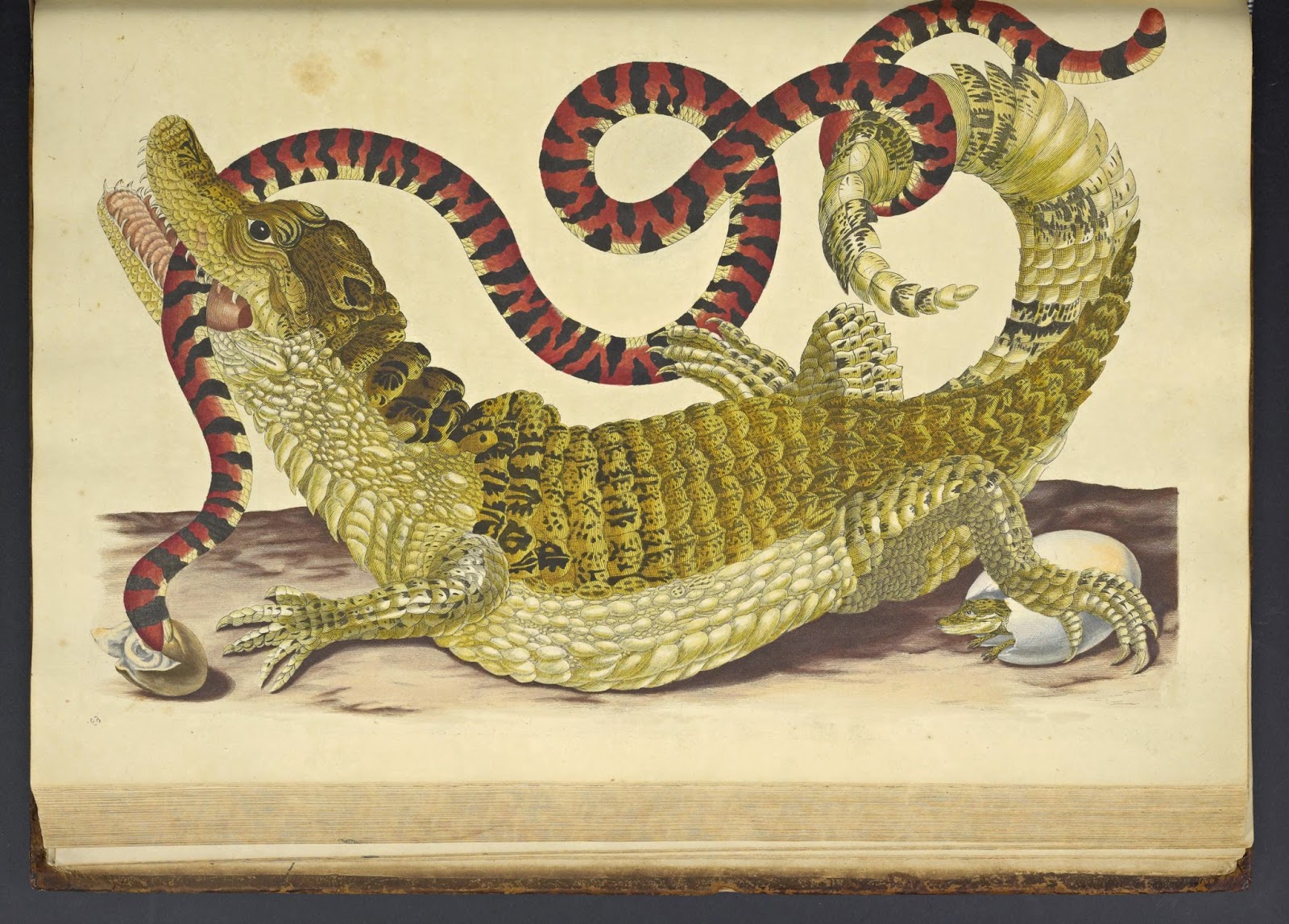
For instance, did you know that at least 15 species of spitting cobras in the genus Naja are capable of spitting their venom through the air as a defensive measure, and that some of them can aim “at targets the size of a human face with >90% accuracy up to 8 feet away”? Or that all 41 species of rattlesnakes are native to the Americas and are subject to “round-ups,” often rodeo-style, in many states? Or that the Aniliidae family contains just a single species – Anilius scytale or the American pipesnake – and that it was illustrated by Maria Sibylla Merian, a remarkable woman best known for documenting the metamorphosis of insects? Or how about this one: Snakes have two penises. Yeah, go read more about that!
View Full Size Image
Anilius scytale struggling with a caiman. Merian, Maria Sibylla. Over de voortteeling en wonderbaerlyke veranderingen der Surinaemsche insecten. 1719. http://biodiversitylibrary.org/page/43328638.

All of this information, and much, much more, is available on the blog Life is Short, but Snakes are Long. The mastermind behind that blog is Andrew M. Durso, a PhD student in the Biology department at Utah State University.
View Full Size Image
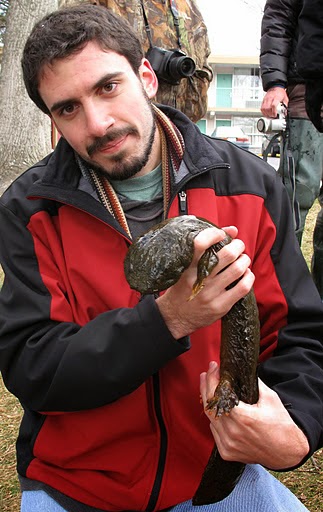
Andrew M. Durso, holding a Hellbender, Cryptobranchus alleganiensis.

Studying snake and lizard ecology, physiology, and behavior, Andrew has been active in professional herpetology since high school. A fascination with the natural history of snakes, and a recognition of the need to education the public about snake and larger ecosystem conservation issues, compelled Andrew to start his blog as an outlet to share his research – research that is made significantly easier thanks to the Biodiversity Heritage Library.

Andrew uses BHL weekly, reading pertinent titles online or downloading whole books or sections of books as part of his personal EndNote library. He’s even printed illustrations from BHL as decorative artworks for his home. These illustrations also often pop-up in his blog posts.

“I think BHL is one of the most important and useful resources online right now,” lauds Andrew. “Judging by how often I use it, I’d say it has an impact on my research commensurate with that of Google Scholar or Web of Science. It’s allowed me to discover and access literature that I would never have been aware of or have had access to otherwise.”

With such enthusiasm about accessing this literature on BHL, it’s no surprise that Andrew’s response to our question on what he would like to see improved on BHL was for us to add “more literature!” He also expressed a desire to see our scientific name finding tool and synonym harmonization continue to improve. As we implement multiple methods for improving our OCR (through projects such as Purposeful Gaming and Mining Biodiversity) and identifying the species in our illustrations (through Art of Life and Zooniverse), we expect to see the number of names recognized throughout BHL continually increasing.

Effective biodiversity research requires access to a multitude of natural history books and articles, but what if you had to single-out one title that had most impacted your research? Could you do it?

Andrew Durso can. Without question, his single-favorite item in BHL is Duméril, Bibron, and Duméril’s 1834-54 nine-volume masterpiece, Erpetologie Générale on Histoire Naturelle Compléte des Reptiles (which we profiled on our blog just a few weeks ago!).
View Full Size Image
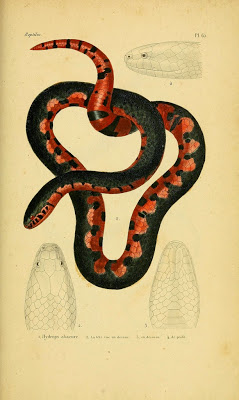
Mud snake (Farancia abacura). Duméril, André Marie Constant. Erpétologie générale ou Histoire naturelle complète des reptiles (1834-53). http://biodiversitylibrary.org/page/31895886.

“I have three prints on my living room wall from BHL’s copy of this book, and it includes some of the most gorgeous artwork I’ve ever seen,” affirms Andrew. “It is also the only book that contains more original descriptions of reptiles than Linnaeus’s Systema Naturae. This monumental work gives a comprehensive scientific account of all then-known amphibians and reptiles, including their anatomy, physiology, systematics, distribution, and associated literature. As such, it is one of the classical monuments of descriptive zoology.”

Be sure to check out Andrew’s blog for other awesome information about snakes and herpetology research! Do you use BHL to support your own research? Want to tell us about it? Send an email to [email protected]!
June 18, 2015by ulib-libraryjobs
Blog Reel, Featured Books

Book of the Week: Amphibians and Reptiles Galore!

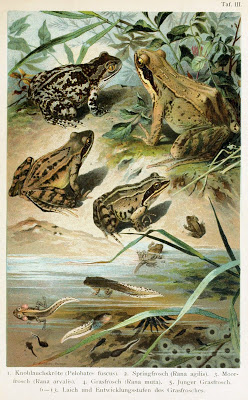
So often with scientific illustration, one finds that the depiction of species or specimens are limited to the isolated rendering of the subject in question, devoid of any habitat or environmental context that gives the reader a clear picture of what life is truly like for the animal in the wild. So, when we came across the illustrations in Deutschlands Amphibien und Reptilien. Eine Beschreibung und Schilderung sämmtlicher in Deutschland und den angrenzenden Gebietan vrokommenden Lurche und Kreichthiere (1897) by Bruno Dürigen, we knew we had to highlight them. Plus, the plethora of reptile and amphibian species displayed seemed equally worthy of attention. So, enjoy these selected illustrations from our book of the week, learn more about the species depicted in each in EOL, and imagine what life might be like in the wild for our cold-blooded friends. Plus, don’t forget to take a look at the book in BHL to see all of the other illustrations that are not highlighted in this post!

View Full Size Image

1) Common Spadefoot (Pelobates fuscus/i>)
*More references in BHL

2) Agile Frog (Rana dalmatina, previously Rana agilis)
*More references in BHL.

3) Moor FrogRana arvalis
*More references in BHL.

4) European Frog (Rana temporaria, previously Rana muta)
More references in BHL.

5) Young European Frog

6) Spawn and Stages of Development of the European Frog

View Full Size Image

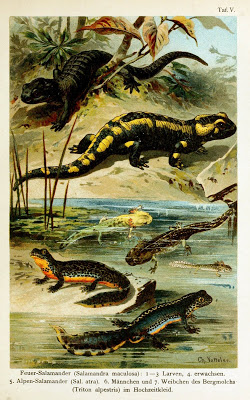
1) Fire Salamander (Salamandra maculosa)

1-3) Larval Stage

4) Adult
*More references in BHL.

5) Alpine Salamander (Salamandra atra)
*More references in BHL.

6) Male and 7) Female Alpine Newt (Mesotriton alpestris), previously Triton alpestris)
*More references in BHL.

View Full Size Image

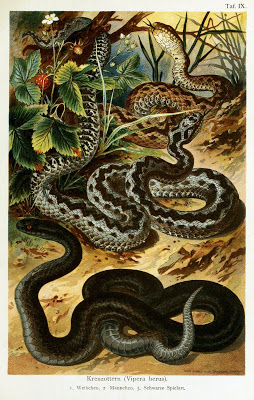
Adder (Vipera sachalinensis, previously Vipera berus)

2) Male
3) Black Species Type
*More references in BHL.

This week’s book of the week, Deutschlands Amphibien und Reptilien. Eine Beschreibung und Schilderung sämmtlicher in Deutschland und den angrenzenden Gebietan vrokommenden Lurche und Kreichthiere (1897) by Bruno Dürigen, was contributed by the Smithsonian Institution.

March 24, 2011by michelle.underhill

Help Support BHL

BHL's existence depends on the financial support of its patrons. Help us keep this free resource alive!

search

About BHL

The Biodiversity Heritage Library (BHL) is the world’s largest open access digital library for biodiversity literature and archives. BHL operates as a worldwide consortium of natural history, botanical, research, and national libraries working together to digitize the natural history literature held in their collections and make it freely available for open access as part of a global “biodiversity community.”

Join Our Mailing List

Sign up to receive the latest news, content highlights, and promotions.

Subscribe Now

Subscribe to Blog via Email

Enter your email address to subscribe to this blog and receive notifications of new posts by email.

Join 319 other subscribers

Subscribe to Blog Via RSS

Subscribe to the blog RSS feed to stay up-to-date on all the latest BHL posts.

Access RSS Feed

Inspiring Discovery through Free Access to Biodiversity Knowledge.

The Biodiversity Heritage Library makes it easier than ever for you to access the information you need to study and explore life on Earth…for free, anytime, anywhere.


64+ Million Pages of
Biodiversity Literature Online.

EXPLORE

Tools and Services
to Transform Research.

EXPLORE

300,000+
Illustrations on Flickr.

EXPLORE

ABOUT | HARMFUL CONTENT | PRIVACY | SITE MAP | TERMS OF USE