Biodiversity Heritage Library - Program news and collection highlights from BHL
  • Home
  • News
  • Featured Books
    • All Featured Books
    • Book of the Month Series
    • BHL at 20
  • User Stories
  • Campaigns
    • Fossil Stories
    • Garden Stories
    • Monsters Are Real
    • Page Frights
    • Her Natural History
    • Earth Optimism 2020
  • Tech Blog
  • Visit BHL
Home
News
Featured Books
    All Featured Books
    Book of the Month Series
    BHL at 20
User Stories
Campaigns
    Fossil Stories
    Garden Stories
    Monsters Are Real
    Page Frights
    Her Natural History
    Earth Optimism 2020
Tech Blog
Visit BHL
  • Home
  • News
  • Featured Books
    • All Featured Books
    • Book of the Month Series
    • BHL at 20
  • User Stories
  • Campaigns
    • Fossil Stories
    • Garden Stories
    • Monsters Are Real
    • Page Frights
    • Her Natural History
    • Earth Optimism 2020
  • Tech Blog
  • Visit BHL
Biodiversity Heritage Library - Program news and collection highlights from BHL
Blog Reel, Featured Books

Origins of Australian Ornithology : The Evolution of Australia’s Bird Reference Books

Welcome to Bird Week!

It is bird week from the 21st -27th of October. During this week, we would like to share with you some of the wonderful rare reference books on Australian birds and the stories behind them. These books have been digitised by the Biodiversity Heritage Library and are freely available in open access. The scientific reference works showcased this week include books from 1781 through to 1931. Ornithologists used these books to describe new species found within Australia and added to the growing number of previously undescribed birds during this time.

mathews_Final.jpg

Title page. Latham, John. A General Synopsis of Birds. (1781-1785). Digitised in BHL by Smithsonian Libraries.

A General Synopsis of Birds consists of three volumes each with two parts, published from 1781 to 1785, with supplements in 1787 and 1801. Latham worked from descriptions by explorer William Dampier and Sir Joseph Banks, who sailed on the first voyage to Australia as the naturalist aboard Captain James Cook’s Endeavour from 1768 -1771. All volumes have been digitised by Smithsonian Libraries and can be viewed in BHL.

Eggs.jpg

Plate XX. North, Alfred John. Descriptive Catalogue of the Nests and Eggs of Birds found in Australia and Tasmania. (1889). Digitised in BHL by Museums Victoria.

A Descriptive Catalogue of the Nests and Eggs of Birds found in Australia and Tasmania (1889) was published by Alfred John North, who described a number of birds for the first time. This publication contains a detailed description of the eggs of each species that were accessible to North, supplemented with descriptions of such other distinct varieties as occasionally occur. The history of the details of the eggs is often described as unknown, with a few exceptions taken from Gould’s Handbook to the Birds of Australia. The full book is available on BHL thanks to Museums Victoria.

blog BHL Lewin.jpg

Plate XXIII. Lewin, John. A Natural History of the Birds of New South Wales. 3rd edition (1822). Digitised in the BHL by Museums Victoria.

John Lewin relocated to Australia from England in 1800, keen to visit the colony of New South Wales. His first book on birds, Birds of New Holland, was published in London in 1808. Unfortunately, as the books were shipped back to Australia from London for distribution, they were lost, possibly at sea. Only six copies are known to exist. Lewin decided to begin a second edition. However, his copper illustration plates were still in England, hence he needed to start again from scratch. The second edition was renamed The Birds of New South Wales with their Natural History and was published in 1813. It is recognised as the first illustrated book published in Australia. The third and fourth editions, published under the title A Natural History of the Birds of New South Wales, were published in 1822 and 1838 respectively and have been digitized in BHL by Museums Victoria.

bird heads

[Plate VI]. Gould, John. A Synopsis of the Birds of Australia, and the Adjacent Islands. (1837-38). Art by Elizabeth Gould. Digitised in the BHL by Museums Victoria.

Acclaimed ornithologist Gould received bird specimens in London from his brothers-in-law in Australia, which he used to publish his Synopsis of the Birds of Australia (1837-38). The illustrations are predominantly of bird heads, all hand-painted by Gould’s wife, Elizabeth. Only basic descriptions of Australian birds were used, as Gould intended to publish this work in order to get to Australia to research and illustrate birds in the wild with his wife. Gould noted that on his return from Australia, these pages would be removed and further knowledge of Australian species and their habitats would be recorded.

Gould_book.jpg

Photograph of the cover of one of the volumes of Gould’s Birds of Australia, from the library collections of the Melbourne Museum of Museums Victoria. The Birds of Australia (1840-1848) has also been digitised in BHL by Smithsonian Libraries

In a letter dated 15th February 1839, while in Australia, Elizabeth Gould wrote “[John] has already done more in obtaining nests and eggs, making skeletons of the various forms of birds, etc., and in getting information of their habits, than has been hitherto done, and will, I hope, be enabled to produce an interesting work on our return.”

On arrival back to England, John Gould published The Birds of Australia between 1840 and 1848. The book encompasses 600 species of birds, of which 200 were first described by Gould. Elizabeth produced 84 of the illustration plates for The Birds of Australia, but sadly, she died in 1841, before the book was completed and only one year after the Goulds’ return from Australia. The remainder of the plates were primarily created by painter Henry Constantine Richter, which were made after sketches by Elizabeth. While in Australia, Elizabeth also created many botanical illustrations and wrote that these helped to “render the work on ‘Birds of Australia’ more interesting…I trust we shall be enabled to make our contemplated work of sufficient interest to ensure it a good sale.”

A good sale it was. The Birds of Australia was bound in seven volumes, costing subscribers £115 — the equivalent to around 18K AUD or 12K USD in today’s money. But the significant contribution this book made to the science of ornithology far exceeds its monetary value.

What_bird.jpg

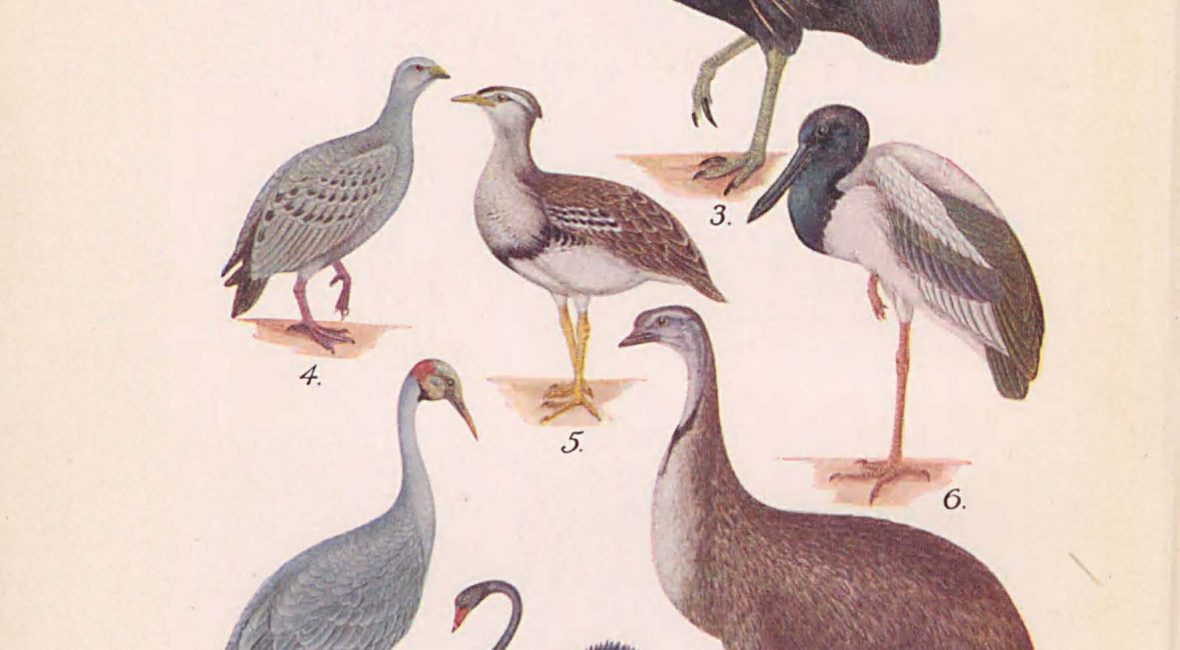
Plate I. Cayley, W, Neville. What Bird is that? (1931). Digitised in BHL by Museums Victoria.

What Bird is that? A Guide to the Birds of Australia (1931) was the first comprehensive field guide that was intended as a bird identification book in Australia. During the early 20th century, there was a growing interest in amateur ornithology, and Cayley had hoped that his book would encourage nature lovers to extend their knowledge and appreciation of Australian birdlife. In addition to being an ornithologist, Cayley was also a prolific artist and produced the 36 plates contained in the book. Subsequent editions were published up until the 1990s and it became a classic ornithological work in Australia.

October 21, 2019by Joel Richard
BHL News, Blog Reel

A New Scanner for Digitizing Australia’s Biodiversity Heritage

Portrait version of the Biodiversity Heritage Library logo.
View Full Size Image
New Zeutschel OS 16000 scanner purchased by BHL Australia. Book being digitized is: The animal kingdom of the Baron Cuvier, enlarged and adapted to the present state of zoological science. 1839. By Baron Georges Cuvier. Photo Credit: Nicole Kearney.

In 2011, Australia joined the Biodiversity Heritage Library and, led by Museums Victoria, began to digitize the rare books, historic journals and archival material related to Australia’s biodiversity, and to make them openly available online.

There are now 15 Australian organizations contributing to BHL and over 300 worldwide. These include museums, herbaria, royal societies, field naturalists clubs and government organizations.

Just this week the number of volumes digitized for BHL by Australian organizations surpassed 1,000, amounting to over 200,000 pages. The great majority of this digitization work was done by the BHL Australia team at Melbourne Museum. We have a fabulous team of volunteers who scan the pages and prepare the digitized books for upload online.

View Full Size Image
BHL Australia volunteers with Museums Victoria CEO Lynley Marshall (center) in front of the new BHL Australia scanner. Photo Credit: Nicole Kearney.

In the 6 years we have been doing this work, there have been dramatic advances in digitization technology, both in hardware and in software. We are therefore very excited to announce that BHL Australia has just purchased a new scanner.

View Full Size Image
Museums Victoria CEO Lynley Marshall scanning the first page for BHL Australia on the new scanner. Photo Credit: Nicole Kearney.

To celebrate the arrival of the new scanner, the Museums Victoria (MV) library hosted an Open House on 24 May, inviting MV staff to learn more about BHL, see a display of rare books from the MV collection, and see the new scanner.

View Full Size Image
Visitors exploring rare books from the MV collection during the Open House. Book on display is: Thesaurus rerum naturalium. 1734-1765. By Albertus Seba. Photo Credit: Nicole Kearney.

The scanner, a Zeutschel OS 16000, will increase both the quality and quantity of our scanning work, and will automate much of our post processing. This will allow us to further expand our project and to make even more of Australia’s biodiversity heritage literature available online, so stay tuned for the next 200,000 pages!

Peruse the BHL Australia collection.

BHL Australia is funded by the Atlas of Living Australia.

May 30, 2017by ulib-libraryjobs

Help Support BHL

BHL's existence depends on the financial support of its patrons. Help us keep this free resource alive!

search

About BHL

The Biodiversity Heritage Library (BHL) is the world’s largest open access digital library for biodiversity literature and archives. BHL operates as a worldwide consortium of natural history, botanical, research, and national libraries working together to digitize the natural history literature held in their collections and make it freely available for open access as part of a global “biodiversity community.”

Join Our Mailing List

Sign up to receive the latest news, content highlights, and promotions.

Subscribe Now

Subscribe to Blog via Email

Enter your email address to subscribe to this blog and receive notifications of new posts by email.

Join 319 other subscribers

Subscribe to Blog Via RSS

Subscribe to the blog RSS feed to stay up-to-date on all the latest BHL posts.

Access RSS Feed

Inspiring Discovery through Free Access to Biodiversity Knowledge.

The Biodiversity Heritage Library makes it easier than ever for you to access the information you need to study and explore life on Earth…for free, anytime, anywhere.


64+ Million Pages of
Biodiversity Literature Online.

EXPLORE

Tools and Services
to Transform Research.

EXPLORE

300,000+
Illustrations on Flickr.

EXPLORE

ABOUT | HARMFUL CONTENT | PRIVACY | SITE MAP | TERMS OF USE