Biodiversity Heritage Library - Program news and collection highlights from BHL
  • Home
  • News
  • Featured Books
    • All Featured Books
    • Book of the Month Series
    • BHL at 20
  • User Stories
  • Campaigns
    • Fossil Stories
    • Garden Stories
    • Monsters Are Real
    • Page Frights
    • Her Natural History
    • Earth Optimism 2020
  • Tech Blog
  • Visit BHL
Home
News
Featured Books
    All Featured Books
    Book of the Month Series
    BHL at 20
User Stories
Campaigns
    Fossil Stories
    Garden Stories
    Monsters Are Real
    Page Frights
    Her Natural History
    Earth Optimism 2020
Tech Blog
Visit BHL
  • Home
  • News
  • Featured Books
    • All Featured Books
    • Book of the Month Series
    • BHL at 20
  • User Stories
  • Campaigns
    • Fossil Stories
    • Garden Stories
    • Monsters Are Real
    • Page Frights
    • Her Natural History
    • Earth Optimism 2020
  • Tech Blog
  • Visit BHL
Biodiversity Heritage Library - Program news and collection highlights from BHL
BHL News, Blog Reel

2020 BHL Annual Meeting — Global and Virtual

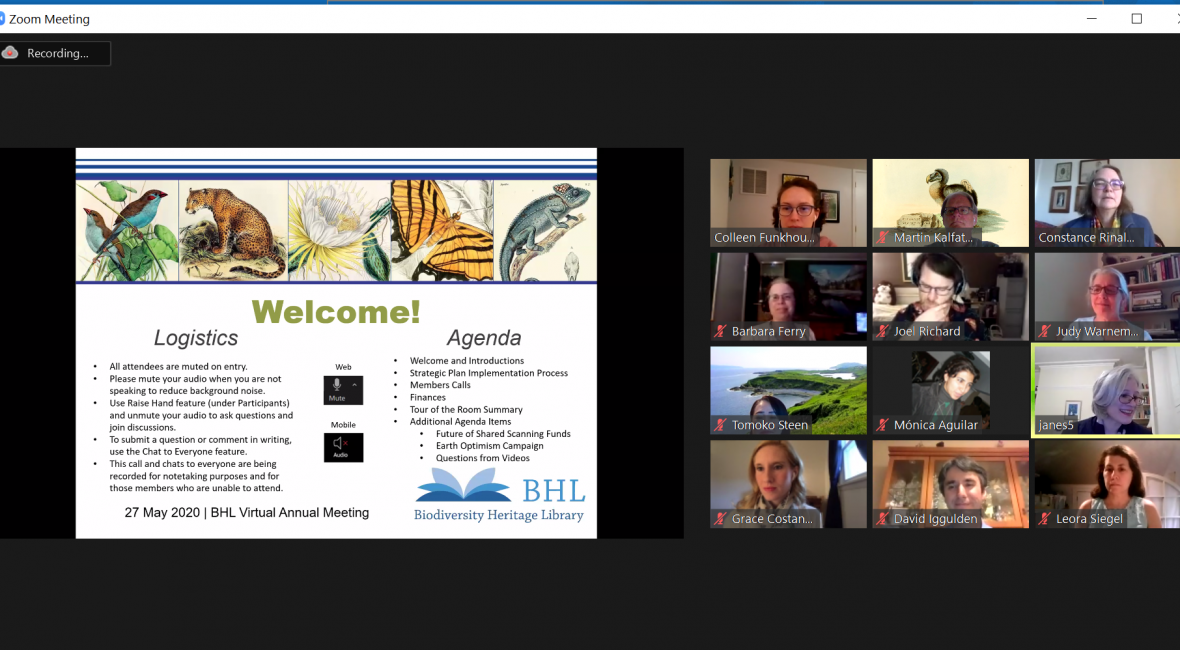
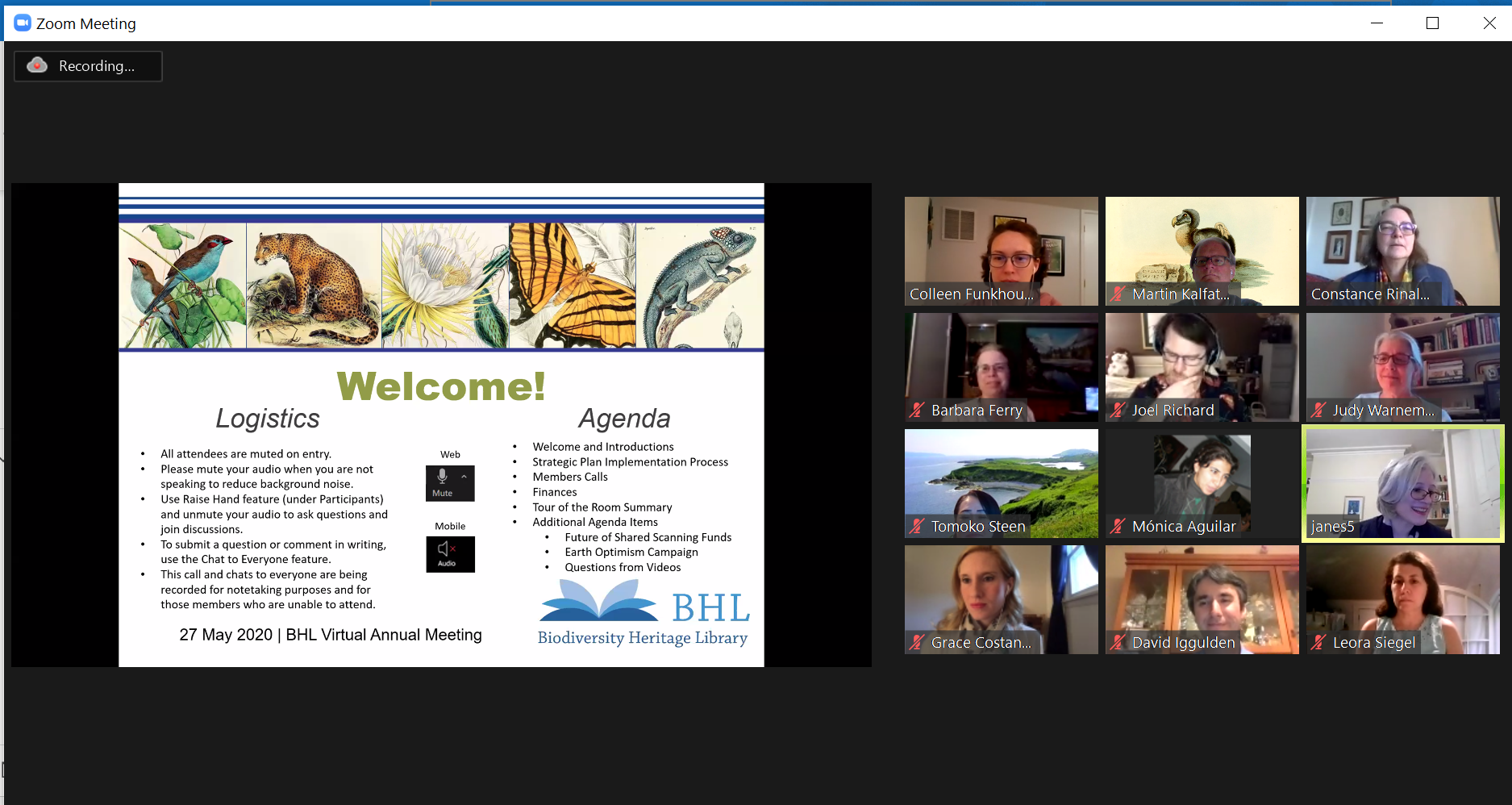
video conference screen showing a collage of people's faces and a welcome slide

The 2020 BHL Annual Meeting went virtual this year. In addition to pre-recorded presentations from the Executive Committee and Secretariat, three video calls with partners were hosted in mid- to late-May. A total of 38 participants joined at least one of the three calls, with 22 joining the third and final call on 27 May 2020.

Like many organizations around the world, the Biodiversity Heritage Library was compelled to move the 2020 BHL Annual Meeting to a virtual environment. In consultation with our prospective 2020 hosts, the Muséum national d’histoire naturelle in Paris, the BHL Executive Committee made the difficult, yet necessary, decision on 11 March 2020 to move to a virtual meeting rescheduled from April to May.

The 2020 BHL Virtual Annual Meeting was conducted over the course of May 2020. The Executive Committee and Secretariat staff provided pre-recorded video presentations which were made available to the BHL partner community in early May. Three video calls were hosted at various time zones in mid- to late-May to allow for the widest participation and the least inconvenience for partners. These three calls brought together 38 participants from 24 institutions and organizations, representing eight countries, and provided an opportunity for interaction and discussion even while separated by (in some cases great) distances. Some participants even came to more than one call!

As BHL Members’ Council Chair Constance Rinaldo noted in her inspiring opening remarks:

“This is BHL’s natural ecosystem, these are our strengths, BHL is virtual, BHL is global, our partners collaborate and are interconnected. BHL is resilient. It makes critical information available thanks to all our partners’ efforts to digitize for open access … Social distancing, collaborating virtually, opening up science. Again, BHL has it covered. In this time, we have the opportunity to leverage BHL’s strengths. The virtualness and interconnectivity we already have allows us to demonstrate our resilience.”

Business Meeting Reports

To accommodate a virtual meeting with a globally dispersed audience, the Executive Committee and Secretariat’s business meeting reports were provided via a series of pre-recorded presentations that participants could watch on their own schedules prior to the business meeting calls.

The series opened with a presentation by Constance Rinaldo (Chair, BHL Members’ Council and Librarian of the Ernst Mayr Library, Harvard University) on the state of the BHL as we enter 2020 (2020: The State of the Biodiversity Heritage Library). Martin R. Kalfatovic (BHL Program Director and Associate Director, Digital Programs and Initiatives Division at Smithsonian Libraries) followed with a report covering BHL’s 2019 program activities, a financial update, and anticipated projects in 2020 (2019 Biodiversity Heritage Library – The Year of the Old Normal).

BHL Secretariat staff Bianca Crowley (BHL Collections Manager) and Grace Costantino (BHL Outreach and Communication Manager) provided respectively a BHL Collection Management Update (Collections Management Overview – Stewarding a River of Content) and a BHL Outreach update (Biodiversity Heritage Library Outreach – Highlights from 2019).

Joining the Annual Meeting for the first time, Joel Richard (BHL Technical Coordinator and Head of Web Services & IT at Smithsonian Libraries) provided an overview of the BHL Tech Team’s work and presented the goals of the 2020 BHL Technical Priorities as determined by the BHL Executive Committee in December 2019 (2020 Technical Priorities).

The series also included a message from incoming BHL Program Manager Colleen Funkhouser, who started her position on 30 March 2020, and some final thoughts from the BHL Executive Committee.

Business Meeting Calls

During the three video calls, participants discussed a variety of business topics, including the strategic plan and implementation process, planning for future Member calls, and feedback from partners on BHL’s strengths and opportunities for improvement. Partners were also encouraged to submit additional agenda items in response to the pre-recorded presentations or other topics for discussion, which the Executive Committee and Secretariat addressed during each call.
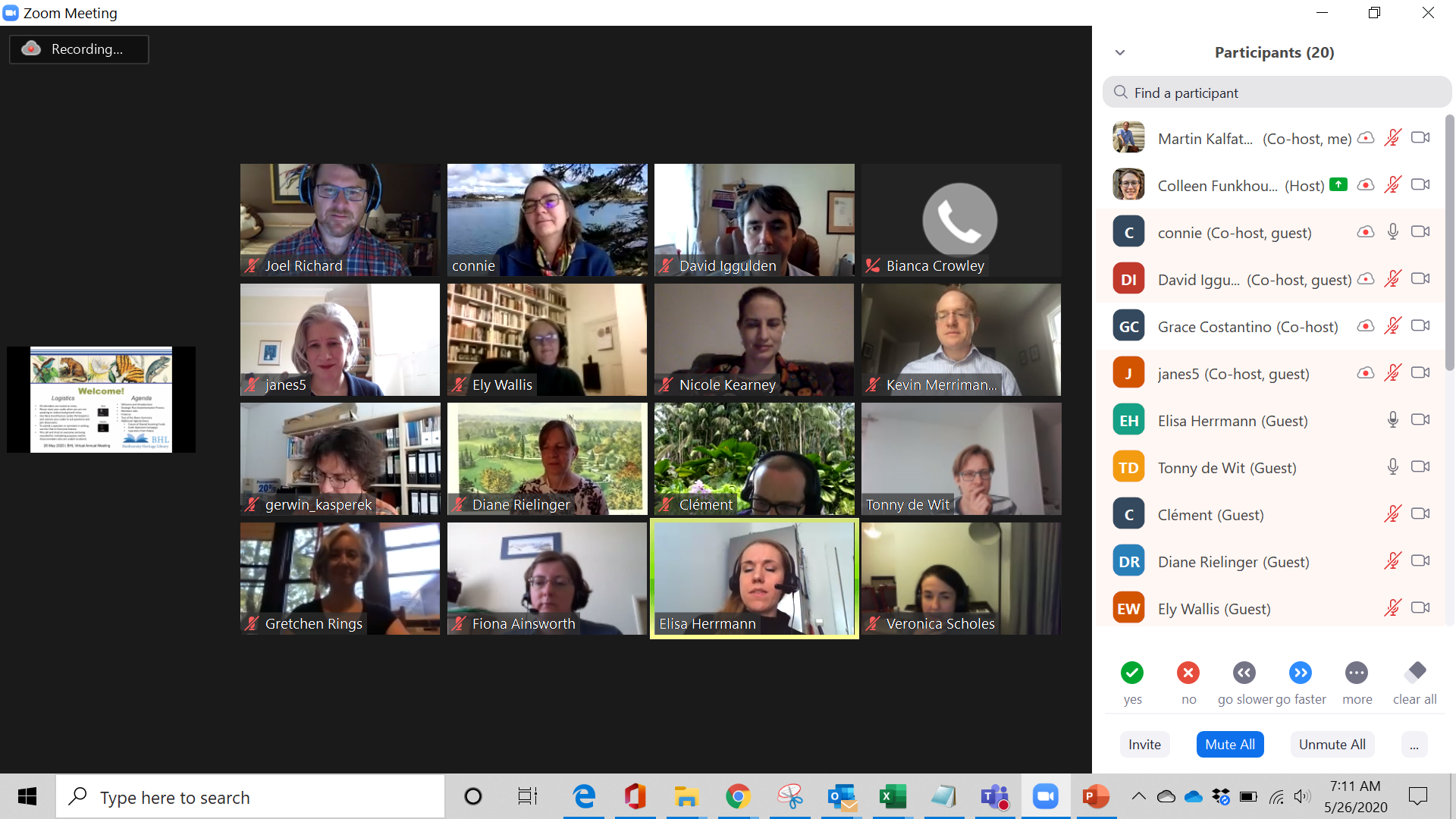
Video conferencing screen showing a grid of people's faces in video screens and a welcome slide

Twenty participants joined the second BHL Virtual Annual Meeting call on 26 May 2020.

Strategic Plan and Plan Implementation

Last year, BHL undertook an ambitious, collaborative process to draft its next five-year strategic plan. Development work on the plan successfully involved Members and Affiliates in this process, which was launched in earnest at the 2019 Annual Meeting. After receiving initial feedback from partners at the meeting, working groups were formed to draft each individual goal and related objectives, which were combined and further refined under the Executive Committee’s leadership to create the 2020-2025 BHL Strategic Plan, which was approved by Member vote in April 2020.

The 2020 business meeting calls provided an opportunity to launch the implementation process for the recently-approved strategic plan. On the three video calls, Jane Smith (Vice-Chair, BHL Members’ Council and Head of Library and Archives at the Natural History Museum, London) led the participants through the outline for implementing the new strategic plan. There will be ongoing engagement as the implementation takes shape.
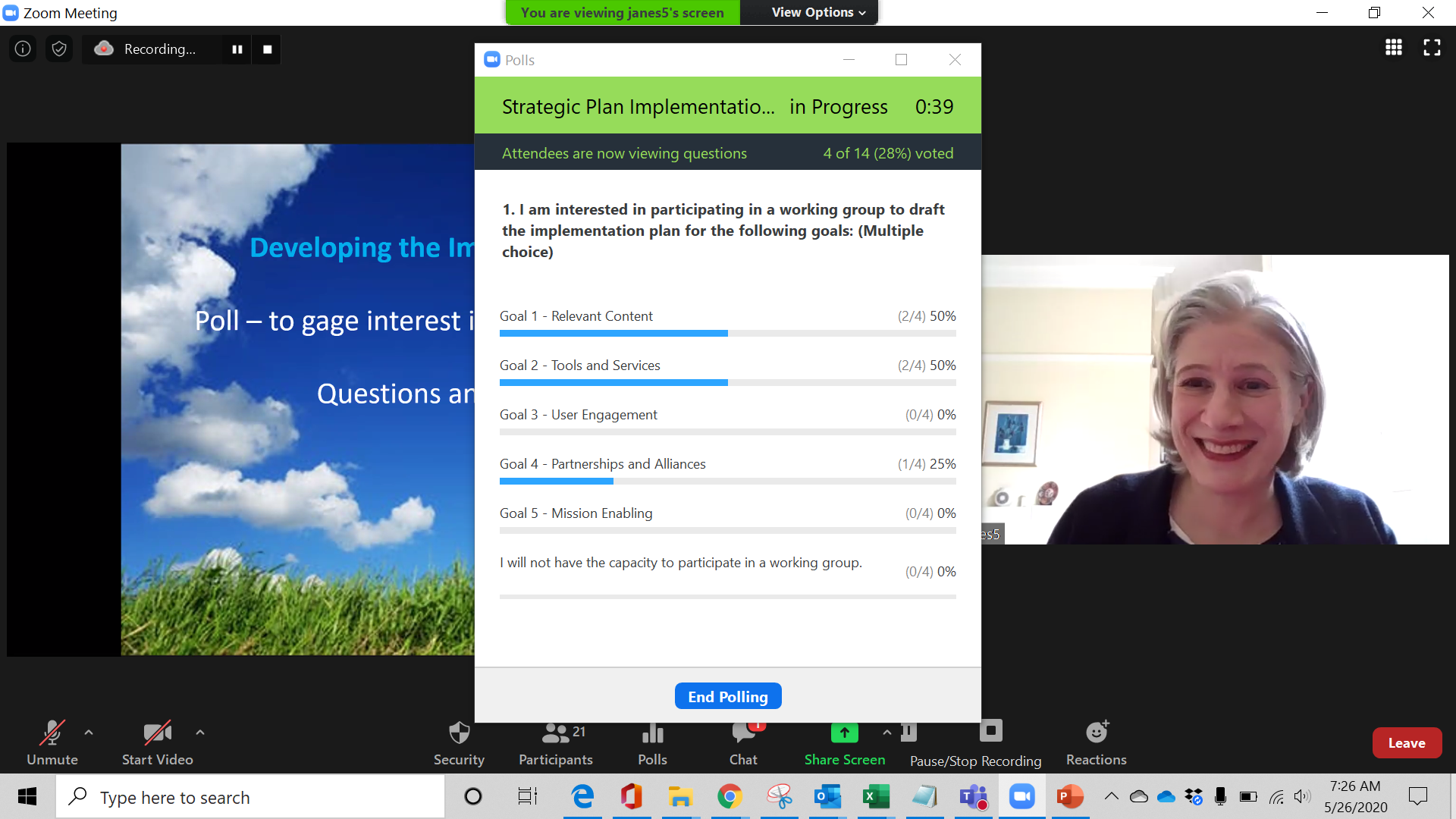
An on-screen poll in a video conference in front of a video feed of a woman's face

Jane Smith (Vice-Chair, BHL Members’ Council and Head of Library and Archives at the Natural History Museum, London) led the participants through the outline for implementing the 2020-2025 strategic plan during the three Virtual Annual Meeting calls. A poll was used to gauge interest in participating in working groups for the various plan goals.

Member Call Planning

David Iggulden (Secretary, BHL Members’ Council and Head of Data & Digital in the Library, Art & Archives at the Royal Botanic Gardens, Kew) led a discussion on changing the frequency, format, and constituency of the current quarterly BHL Member calls. Meeting participants’ input will be evaluated by the Executive Committee and action taken in July to implement changes.
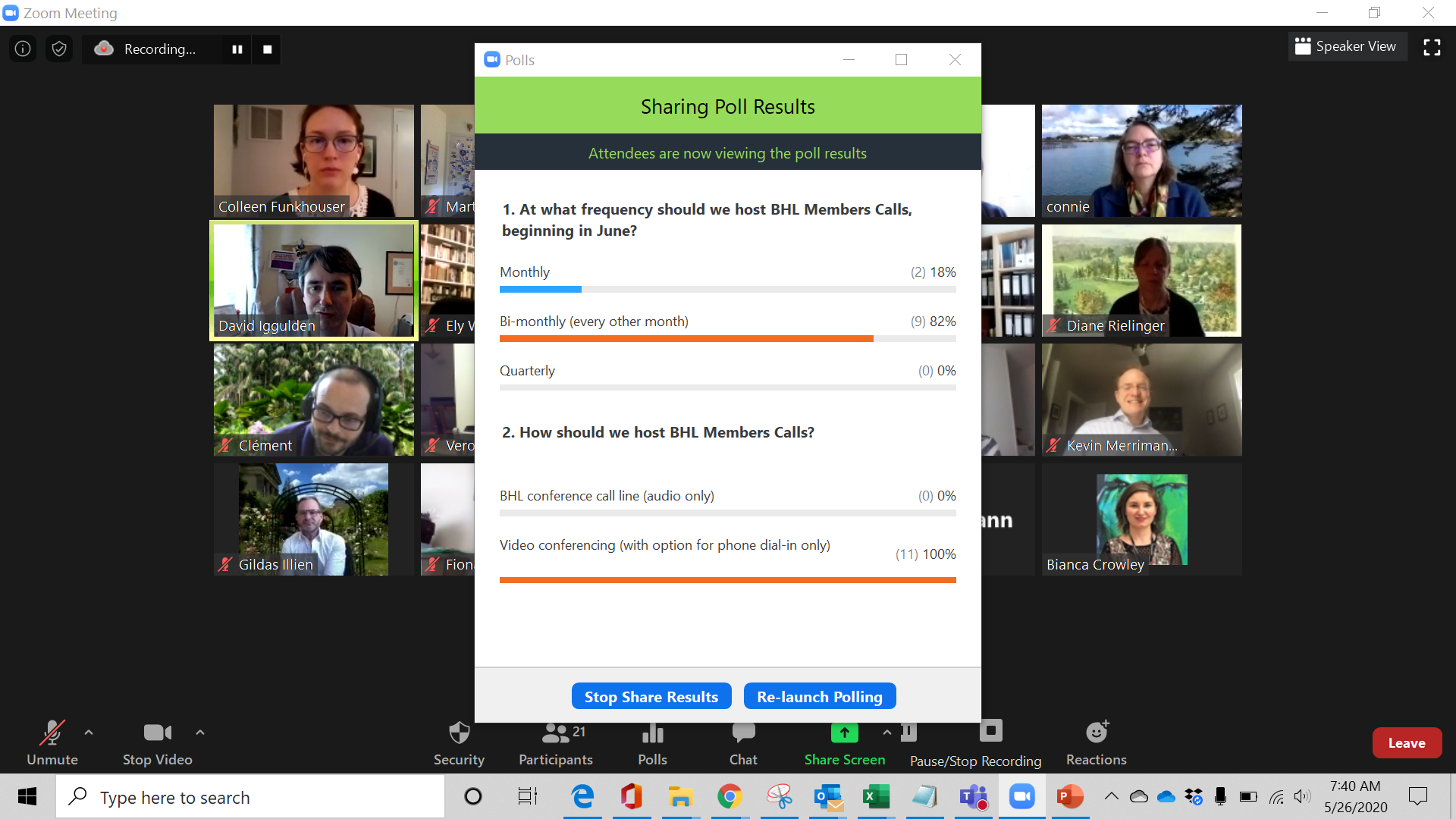
An on-screen poll for a video conferencing call with a grid of people's faces on video screens behind

David Iggulden (Secretary, BHL Members’ Council and Head of Data & Digital in the Library, Art & Archives at the Royal Botanic Gardens, Kew) led a discussion on implementing changes to the BHL Member calls. Polls were used to gather input from participants on each call.

Tour of the Room, Tour of the World

To engage our partners in the vision and future of BHL, a new component of the annual meeting was planned. Partners were given two questions: “Why is BHL important to your institution?” and “What is one thing you would change about BHL to make your participation in the program more relevant?” Written responses were requested ahead of the meeting, with the original plan to conduct a “tour of the room” during the meeting and have partners present their thoughts.

In our virtual environment, this became a “tour of the world” as participants engaged with Constance Rinaldo’s summary of the remarks. This valuable exercise will provide important feedback and guidance as BHL moves forward.
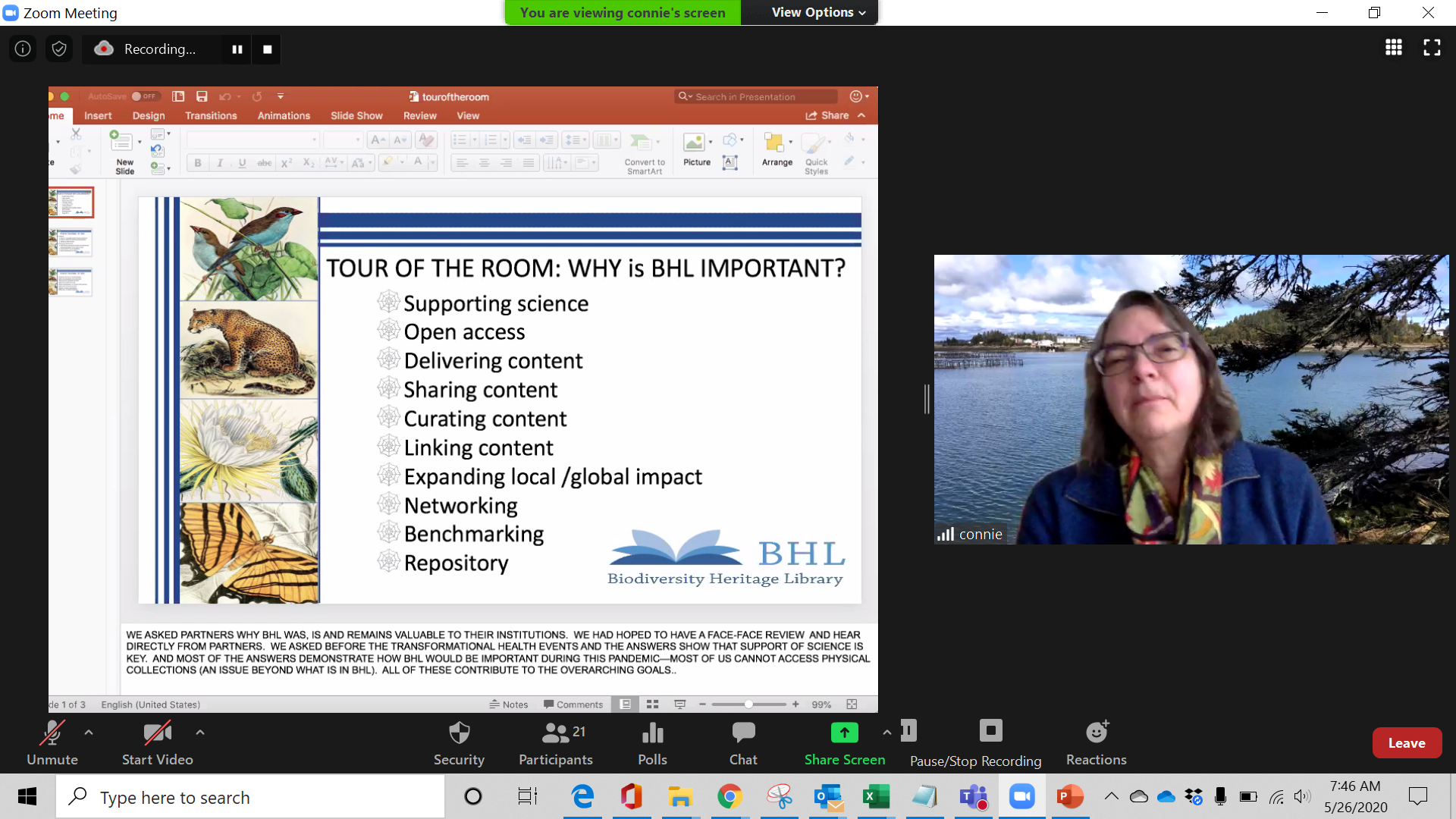
Screenshot from a video conference call showing a slide with "why BHL is important"

Constance Rinaldo (Chair, BHL Members’ Council and Librarian of the Ernst Mayr Library, Harvard University) led the group on a “tour of the room”/ “tour of the world”, sharing partners’ responses to two questions: “Why is BHL important to your institution?” and “What is one thing you would change about BHL to make your participation in the program more relevant?”.

2021 BHL Annual Meeting

While we were not able to travel to Paris this year, the BHL Executive Committee and Secretariat would like to note with much appreciation the excellent planning put in by Gildas Illien (Director of Libraries and Deputy Director of Collections at the Muséum national d’Histoire naturelle, Paris) and his staff, particularly Clément Oury and Chloé Besombes, prior to our move to a virtual environment for 2020. We are also pleased to announce that the Muséum national d’Histoire naturelle has kindly offered to host the 2021 BHL Annual Meeting in Paris. More details on that will come later in the year.

Final Thoughts from the BHL Executive Committee

The BHL Executive Committee closed the meeting with some final thoughts. Jane Smith noted that: “BHL at this time more than ever is a key resource for our staff and visitors who support their scholarship, their teaching, and also citizen science as well as general public interest in the natural world.” David Iggulden reminded us that: “BHL has very much shown how we can provide invaluable remote access to our collections at this time and continue to support research even when physical access is not possible … and now really is the time to remind all your colleagues about BHL and all that they can find there so please help us in spreading the word.”
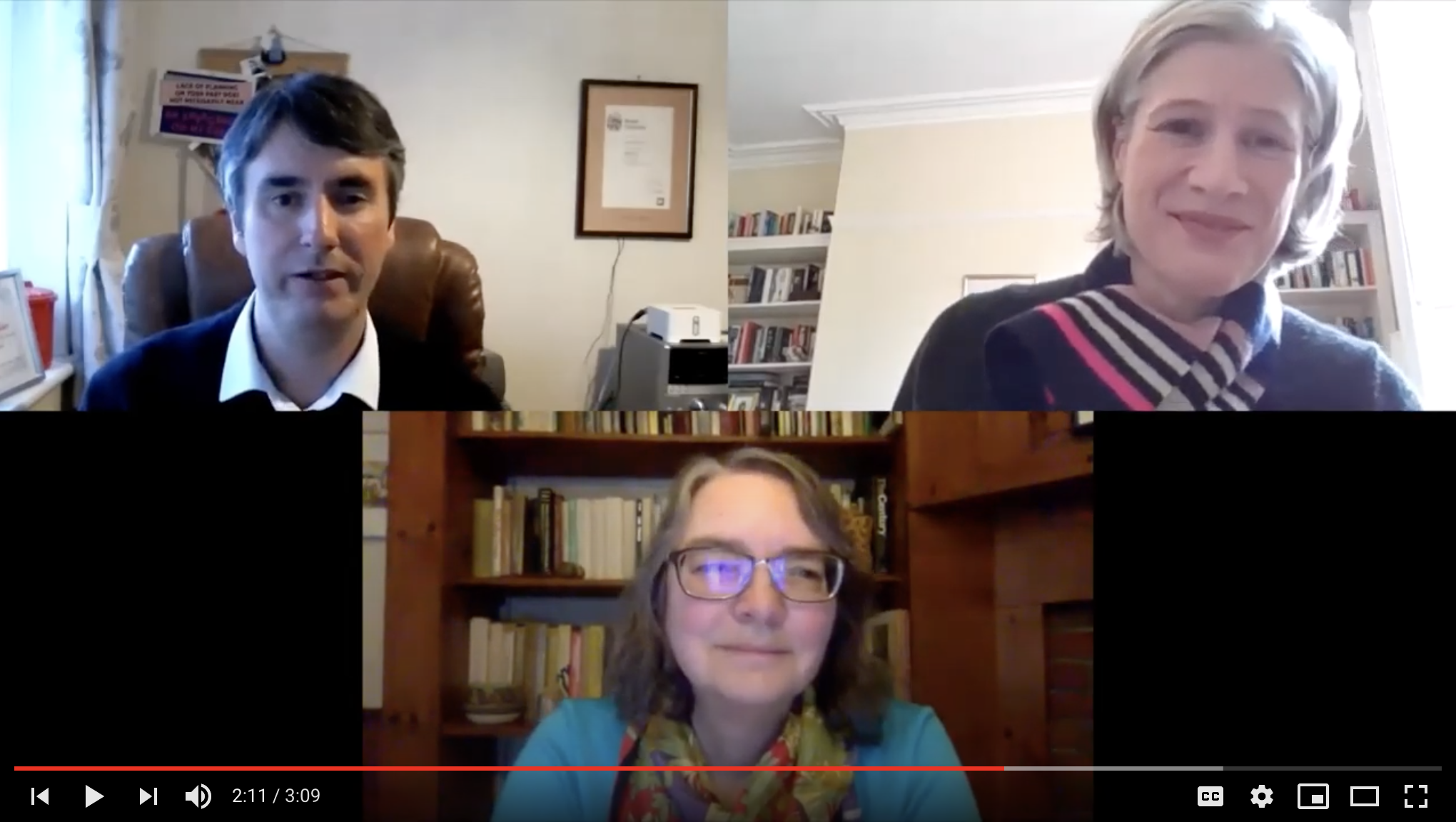
Video conference all screenshot with three people's faces on screen

The BHL Executive Committee (Top Left: David Iggulden (Secretary); Top Right: Jane Smith (Vice-Chair); Bottom: Constance Rinaldo (Chair)) shared some final thoughts at the conclusion of the pre-recorded BHL Business Meeting reports.

Business Meeting Reports: Links to the PPTs

  • Constance Rinaldo (Chair, BHL Members’ Council and Librarian of the Ernst Mayr Library, Harvard University): 2020: The State of the Biodiversity Heritage Library
  • Martin R. Kalfatovic (BHL Program Director and Associate Director, Digital Programs and Initiatives Division at Smithsonian Libraries):2019 Biodiversity Heritage Library – The Year of the Old Normal
  • Joel Richard (BHL Technical Coordinator and Head of Web Services & IT at Smithsonian Libraries): 2020 Technical Priorities
  • Bianca Crowley (BHL Collections Manager): Collections Management Overview – Stewarding a River of Content
  • Grace Costantino (BHL Outreach and Communication Manager): Biodiversity Heritage Library Outreach – Highlights from 2019

June 16, 2020by
BHL News, Blog Reel

Biodiversity Heritage Library Adds the National Agricultural Library as a New Member

View Full Size Image

The Biodiversity Heritage Library is pleased to welcome the National Agricultural Library (NAL) as a new Member. Since joining the consortium as an Affiliate in 2014, NAL has contributed over 2 million pages to the BHL collection. NAL represents BHL’s 19th Member.

The National Agricultural Library (NAL) holds more than 8 million items, representing one of the largest collections of materials devoted to agriculture in the world. By statute, NAL is the primary depository of publications and information concerning the research and other activities of the U.S. Department of Agriculture (USDA).

“The National Agricultural Library collection is a true national treasure,” affirms BHL Program Director Martin R. Kalfatovic. “Through membership in BHL, NAL has demonstrated a strong commitment to providing free and open access to this significant collection. We look forward to continuing our collaborative efforts to build BHL’s online collection and share these valuable resources with the world.”

View Full Size Image
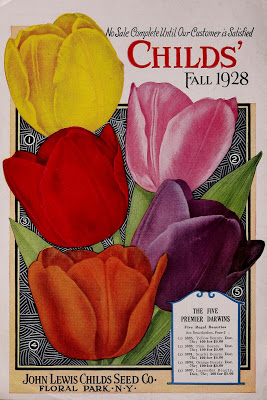
Childs’ Fall Catalog. 1928. Digitized by the U.S. Department of Agriculture, National Agricultural Library from the Henry G. Gilbert Nursery and Seed Trade Catalog Collection. http://s.si.edu/2xatpAG.

As a Member, the National Agricultural Library will strengthen BHL’s coverage of agricultural topics, providing increased access to historic USDA and other high demand, public domain items from its collection. In particular, the Library will continue to digitize material from its Henry G. Gilbert Nursery and Seed Trade Catalog Collection, which consists of over 200,000 American and foreign catalogs from the late 18th century to the present. To date, NAL has contributed over 33,000 catalogs from this collection to BHL. The catalogs can be viewed in BHL as part of the Seed & Nursery Catalogs collection.

“The National Agricultural Library is excited to become a Member of the Biodiversity Heritage Library and collaborate more closely with the other Member institutions,” says NAL Director Paul Wester. “NAL views BHL as a key avenue through which the library shares its wide-ranging collections of agricultural, natural and allied sciences with a national and international audience.”

The Biodiversity Heritage Library now consists of 19 Members and 18 Affiliates. Explore our consortium today.

September 12, 2017by Grace Costantino
BHL News, Blog Reel

BHL Adds University of Toronto Libraries as a New Member

View Full Size Image

The Biodiversity Heritage Library is pleased to welcome the University of Toronto Libraries (UTL) as a new Member. UTL is the first Canadian library to join the Biodiversity Heritage Library as a Member.

The University of Toronto Libraries system is the largest academic library in Canada. Ranked fourth among North American peer institutions by the Association of Research Libraries, the UTL system is particularly strong in the sciences and includes 10 dedicated science libraries. Among these is the Gerstein Science Information Centre, Canada’s largest standalone science and health library. Additionally, the Thomas Fisher Rare Book Library holds rich collections on the history of science and medicine, including an exhaustive collection of original works by Charles Darwin.

“The University of Toronto Libraries is thrilled to become a Member of the Biodiversity Heritage Library,” asserts Neil Romanosky, UTL’s Associate Chief Librarian for Science Research and Information and Director of the Gerstein Science Information Centre. “Given the rapid rate of extinction of species across the globe, we see membership in BHL as an important opportunity to support the search for knowledge by preserving our wealth of historic biodiversity materials and sharing them more widely.”

View Full Size Image
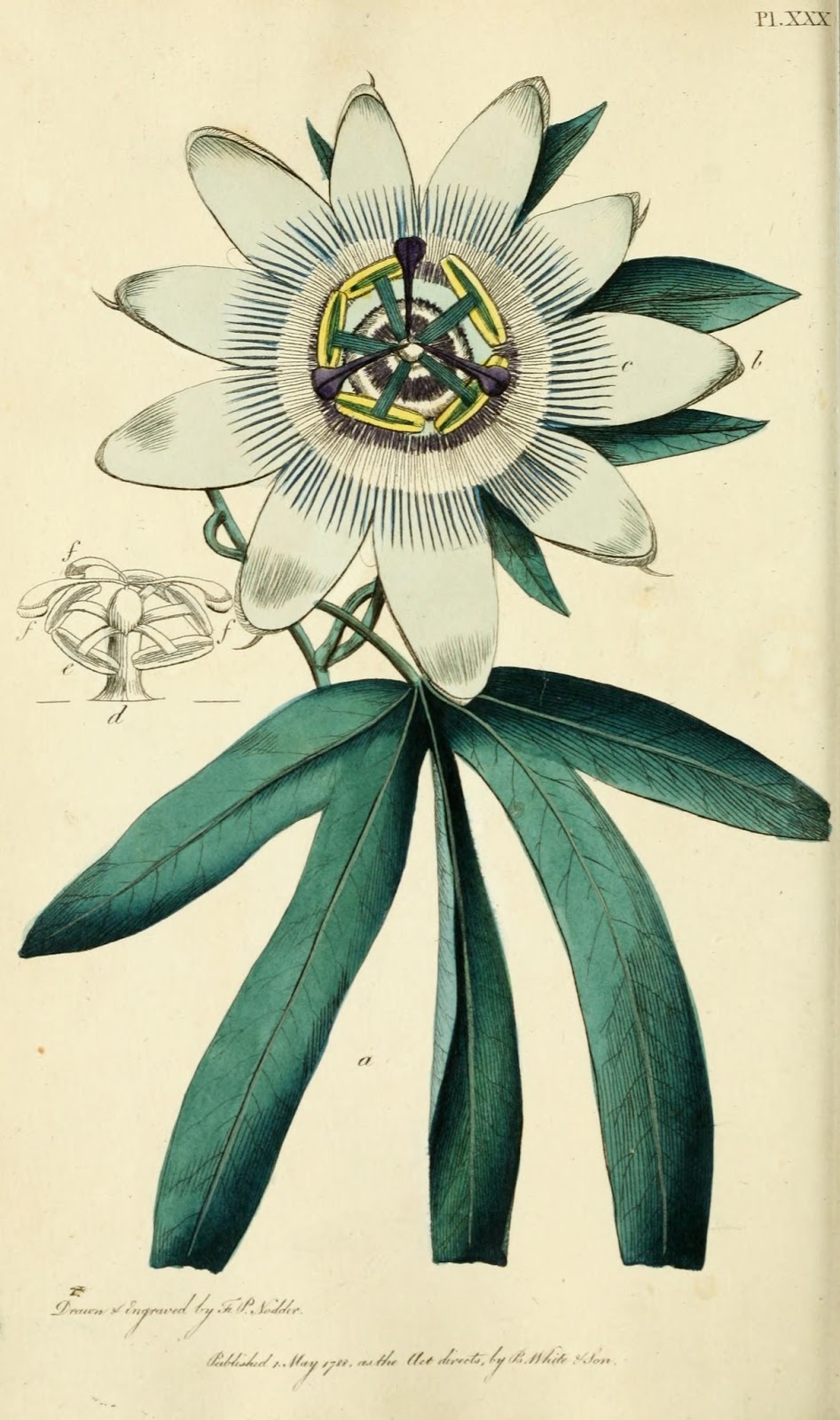
Martyn, Thomas. Thirty-eight plates, with explanations; intended to illustrate Linnaeus’s System of vegetables, and particularly adapted to the Letters on the elements of botany [by J.J. Rousseau] By Thomas Martyn. (1799). Art by Frederick Polydore Nodder. http://www.biodiversitylibrary.org/page/32193301. Digitized by University of Toronto Libraries from the Thomas Fisher Rare Book Library.

As a BHL Member, the University of Toronto Libraries will enhance BHL’s collection by contributing rare and unique material from its holdings of over 12 million print volumes. As the host of an Internet Archive (IA) scanning center, the Libraries has already digitized a large portion of its collection. Over 3.3 million pages of natural history literature from UTL are currently available in BHL.

“The University of Toronto Libraries and BHL share a commitment to open access and the promotion of digital scholarship through global partnerships and the development of innovative tools and technology,” affirms BHL Program Director Martin R. Kalfatovic. “We look forward to the expertise and leadership that UTL will bring to the BHL consortium as we work together to build our online collection, enhance our services, and empower researchers around the world through free access to biodiversity knowledge.”

The BHL consortium now consists of 18 Members and 15 Affiliates.

January 23, 2017by Grace Costantino
BHL News, Blog Reel

Biodiversity Heritage Library Welcomes Muséum national d’Histoire naturelle as a New Member

View Full Size Image

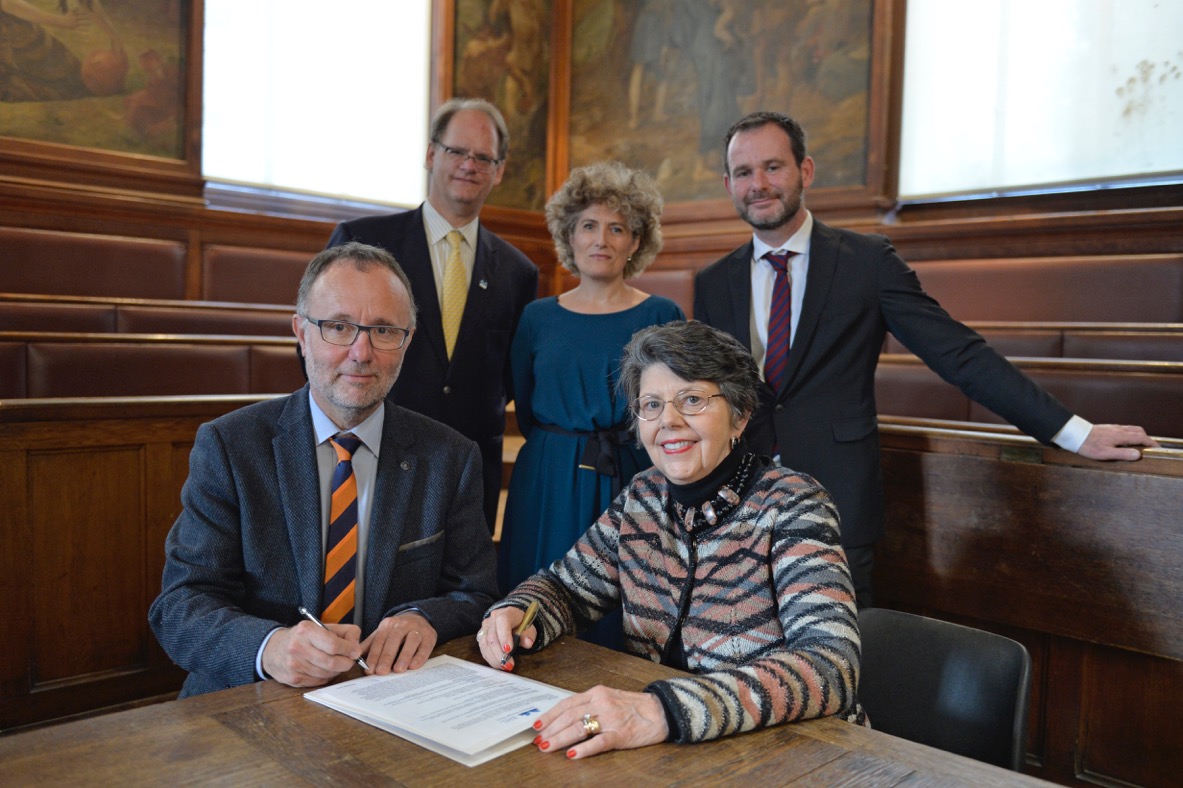
The Biodiversity Heritage Library is pleased to welcome the Muséum national d’Histoire naturelle (MNHN) as a new Member. As BHL’s 17th Member, MNHN will expand the breadth of BHL’s collection and service to the global scientific community.

The Muséum’s membership came into effect at a ceremony in Paris at the Muséum national d’Histoire naturelle on 2 December 2016. During the ceremony, Dr. Bruno David, President of the Muséum, signed a certificate of membership on behalf of MNHN, and Dr. Nancy E. Gwinn, Chair of the BHL Members’ Council and Director of Smithsonian Libraries, co-signed the certificate on behalf of the BHL consortium.

View Full Size Image
Ceremony and Certificate of Membership Signing at the Muséum national d’Histoire naturelle on 2 December 2016. From left to right: Dr. Bruno David (President of the Muséum), Martin R. Kalfatovic (BHL Program Director), Laurence Bénichou (Head and Publications Manager, Museum Science Press, MNHN), Dr. Nancy E. Gwinn (Chair of the BHL Members’ Council and Director of Smithsonian Libraries), Gildas Illien (Director of Libraries and Documentation, MNHN). Image copyright: MNHN – JC Domenech.

Established in 1793, “le Muséum” – as it is simply known in France – is the national natural history Museum of France. The MNHN Library holds more than 2 million items reflecting the vast spectrum of the Muséum’s research activities. The library has been digitizing its collections for well over a decade, often in connection with European and international digital collaborations including BHL Europe. Over 500,000 pages of primarily natural science literature have been digitized to date.

“The Muséum is committed to facilitating its global service to research by developing international partnerships and enhancing its digital strategies. It has invested significant effort and resources into developing a comprehensive digitization program,” asserts Dr. Bruno David, President of the MNHN. “BHL has become a standard resource for natural scientists around the world and it provides services that are extremely popular within our own research communities in France. Participation in BHL will allow us to increase the visibility of our collections, contribute to the international dissemination of taxonomic research, and participate in a global effort to promote open access, open science, and open data.”

As a BHL Member, MNHN will enhance BHL’s collection by contributing rare and unique material from the Muséum’s library, including the entire collection of MNHN scientific publications from 1802 to 2000. (Materials published after 2000 are available through other portals.) The library will also contribute to the expansion of global collection development strategies and facilitate partnerships with other institutions in France and throughout Europe.

“We have had a relationship with Muséum national d’Histoire naturelle for many years through BHL Europe, and this year we are excited to see that relationship expand through membership,” affirms BHL Program Director Martin R. Kalfatovic. “For the past decade, we have been working diligently to build global partnerships that allow us to enhance the comprehensiveness of our collections and support research across the globe. We look forward to working with our MNHN colleagues to increase our impact on the European and international research communities.”

Explore the full BHL consortium here.

December 5, 2016by ulib-libraryjobs
BHL News, Blog Reel

Biodiversity Heritage Library Adds BHL Australia as a New Member

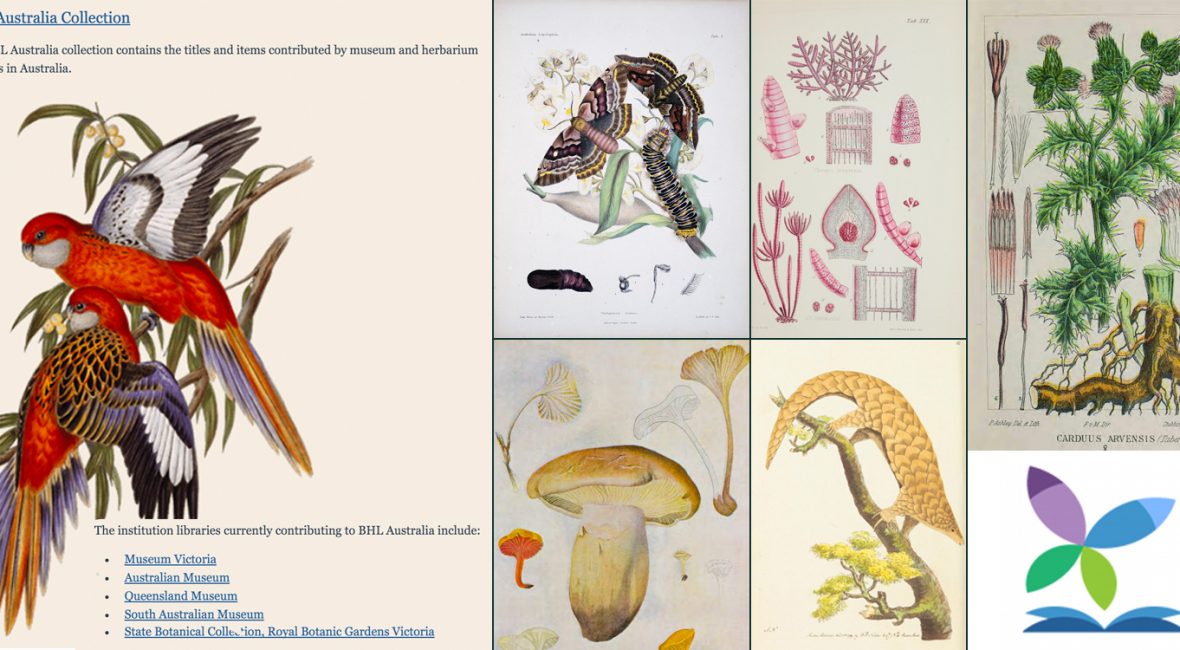
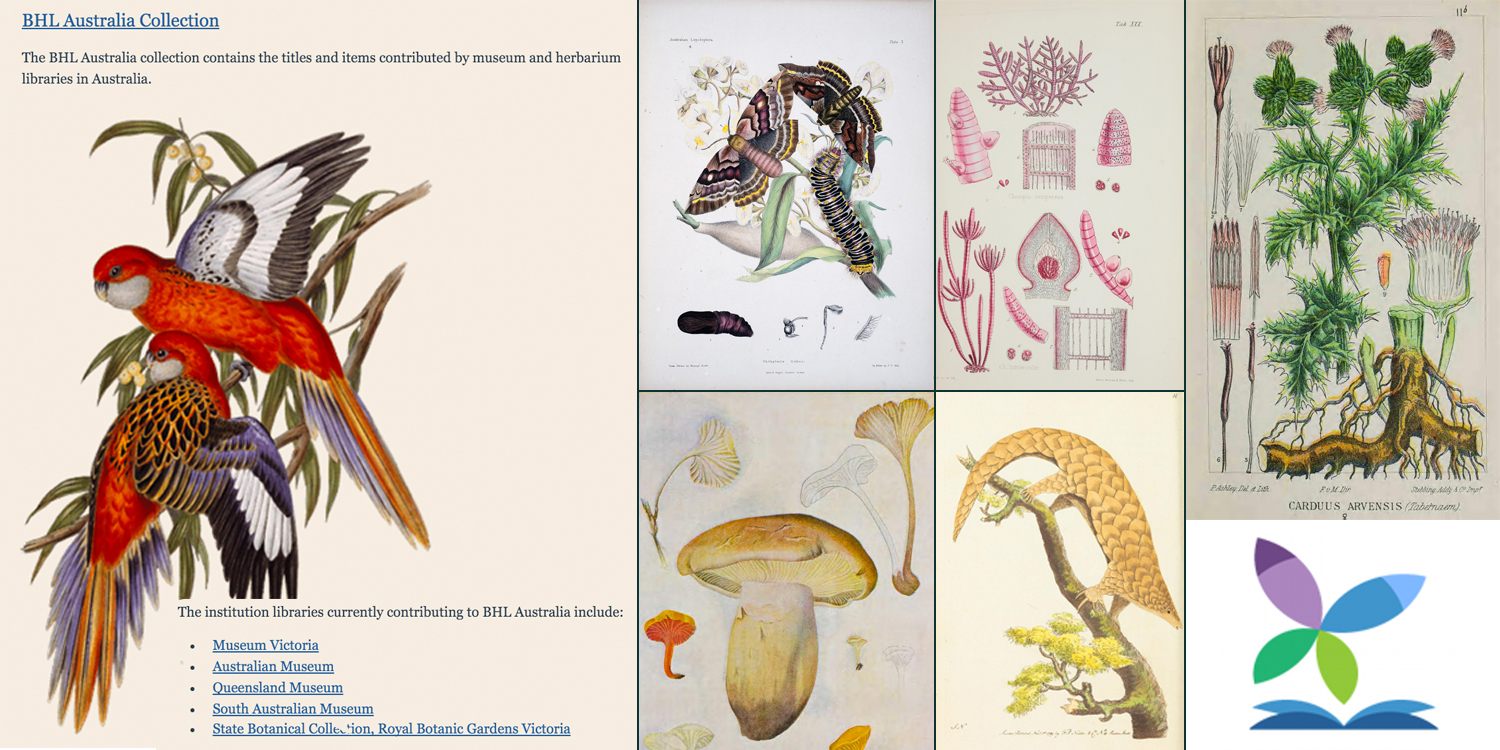
The Biodiversity Heritage Library is pleased to welcome BHL Australia as a new Member. BHL Australia was founded in 2010 by the Atlas of Living Australia with Museum Victoria as the Lead Agency undertaking the daily work of running the project. To date, five institutions participate in the BHL Australia program, including Museum Victoria, Australian Museum, Queensland Museum, South Australian Museum, and Royal Botanic Gardens Victoria. Over the past six years, these institutions have contributed journal titles, rare books, monographs and field notebooks to the BHL collection, amounting to over 156,000 pages. BHL Australia represents BHL’s 16th Member.

View Full Size Image

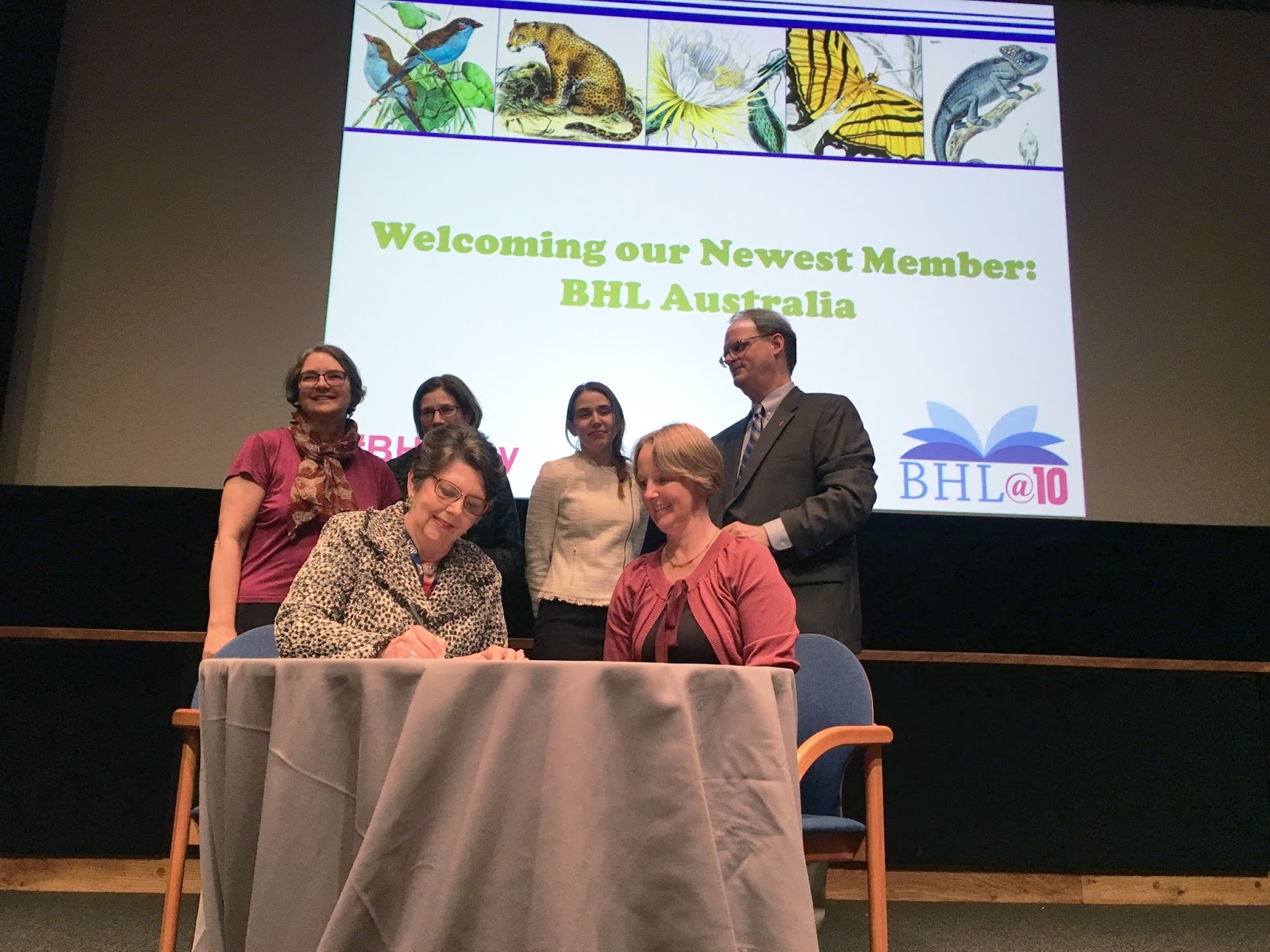
A three-way Memorandum of Understanding has been signed between BHL, the Atlas of Living Australia and Museum Victoria. Dr. Elycia Wallis, Project Lead and Manager of Online Collections at Museum Victoria, will be the official representative to the BHL Members’ Council on behalf of BHL Australia.

View Full Size Image
Dr. Nancy E Gwinn (left), Director of Smithsonian Libraries and Chair of the BHL Members’ Council, and Dr. Elycia Wallis, BHL Australia Project Lead and Manager of Online Collections at Museum Victoria, signing the BHL MOU. Back Row, Left to Right: Constance Rinaldo (Librarian of the Ernst Mayr Library of the Museum of Comparative Zoology, Harvard University | Vice-Chair, BHL Members’ Council); Jane Smith (Head of Library and Archives, Natural History Museum, London | Secretary, BHL Members’ Council); Carolyn Sheffield (Program Manager, BHL); Martin R. Kalfatovic (Associated Director, Digital Programs and Initiatives, Smithsonian Libraries | Program Director, BHL).

As BHL Members, BHL Australia will continue to digitize content from Australian library collections as well as work to establish new partnerships with institutions around the continent. The BHL Australia project team, which includes a Project Coordinator, Digitization Coordinator, Technical Officer, and a group of dedicated digitization volunteers, will continue to provide support, expertise, and guidance to all of the participating institutions as well as the BHL family around the world, ensuring the ongoing growth and success of the BHL program.

“I am personally very excited that BHL Australia has now become a full Member of BHL,” said Project Lead, Dr. Elycia Wallis. “Our Australian project has grown into a great success, and I look forward to the new challenges of actively contributing to the wider governance of the consortium.”

Since 2012, BHL’s consortium has operated within a tiered structure comprised of Members and Affiliates. While Affiliates can contribute content, provide technical services, and participate in select committees, participation at the full Member level allows for greater institutional impact, including the right to vote on strategic directives, help govern the BHL program and use central digitization funds. Those participating at the Member level also commit to an annual fee that helps support BHL’s financial stability.

“BHL Australia has been a key partner in the BHL family for many years and has been integral to the success of our global expansion and technical development,” affirmed Martin R. Kalfatovic, BHL Program Director. “For example, our current website is based on designs developed by the BHL Australia team. We are thrilled to welcome BHL Australia as a Member and look forward to continuing our collaborative efforts to provide free and open access to the world’s biodiversity literature.”

Explore the BHL Australia collection today.

About Atlas of Living Australia 
The Atlas of Living Australia is a free, online resource that aggregates biodiversity data and information from a number of sources including museum and herbarium specimen collections; government and university research departments; and citizen science projects small and large. It currently provides access to over 60 million specimen records. The Atlas of Living Australia is federally funded as a part of Australia’s National Research Infrastructure for Australia (NCRIS).

About Museum Victoria 
Museum Victoria, located in Melbourne in south-eastern Australia, is Australia’s largest public museum organization. It houses a collection of over 17 million objects, documents, photographs and specimens. It has three public museums: Scienceworks; the Immigration Museum; and Melbourne Museum, which also features the Bunjilaka Aboriginal Cultural Centre. The World Heritage-listed Royal Exhibition Building is situated adjacent to Melbourne Museum. Museum Victoria’s library has a collection that dates back to the founding of the institution in 1854 and beyond.

May 4, 2016by ulib-libraryjobs
BHL News, Blog Reel

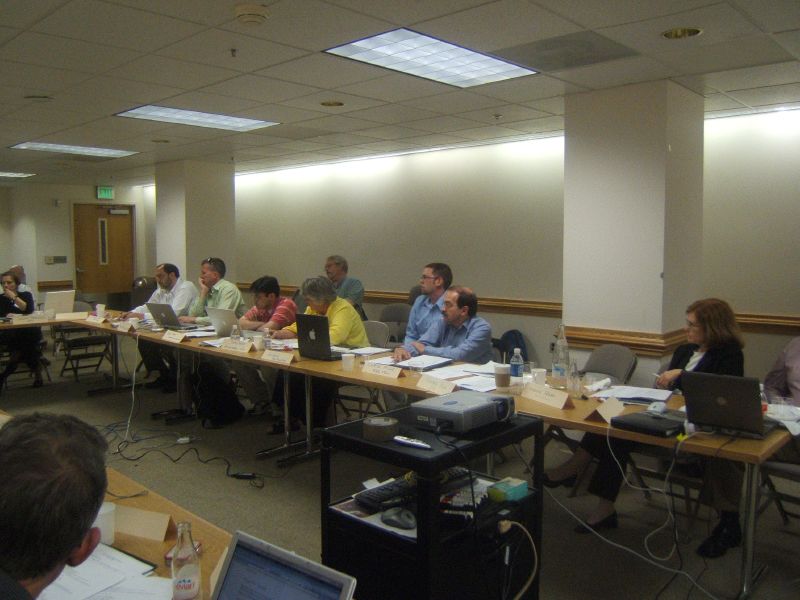
Anniversary of the first organizational meeting for the BHL

View Full Size Image
Graham Higley (left, Natural History Museum;
and Tom Garnett (right, future
BHL Program Director, Smithsonian Libraries)

On June 12, 2006, representatives from the first ten partners of the just forming Biodiversity Heritage Library met in Washington at the Smithsonian Institution to plan for the formation of the BHL.

Representatives from the Smithsonian Libraries; the Missouri Botanical Garden; the Natural History Museum (London); the Marine Biological Laboratory / Woods Hole Oceanographic Institution Library; the American Museum of Natural History; the Royal Botanic Gardens, Kew; the Ernst Mayr Library of the Museum of Comparative Zoology; and the Field Museum attended the meeting. Representatives from the two remaining founding institutions, Harvard Botany Libraries and the New York Botanical Garden, were unable to attend.

Also attending the meeting were Brewster Kahle of the Internet Archive, the longtime BHL partner in digitization activities; staff from OCLC; and representatives from a number of technology firms interested in the nascent work of the BHL.

Since 2006, BHL has grown from a group of ten founding institutions to a worldwide consortium of 23  Members and Affiliates in the US and the UK and global nodes in Europe, China, Brazil, Africa, Egypt, Mexico, Singapore, and Australia. We look forward to the next nine years, and hope to add many millions more pages to our library. Can we reach 100 million pages by 2024?

* * * * *
View Full Size Image
Rear left, Chris Freeland, Founding BHL Techinical Director

* * * * *

View Full Size Image
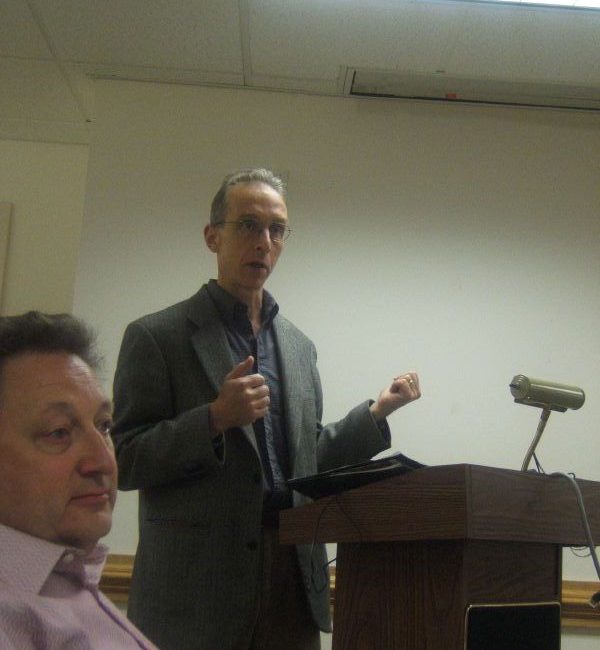
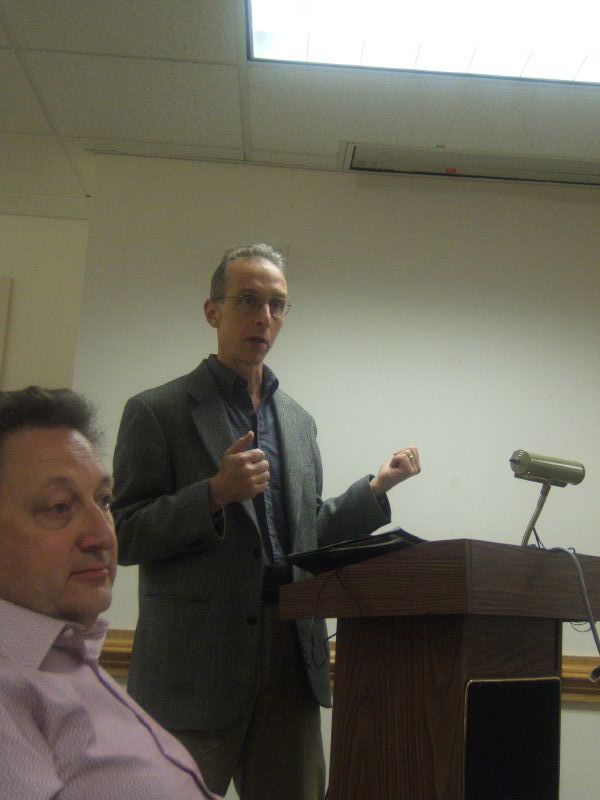
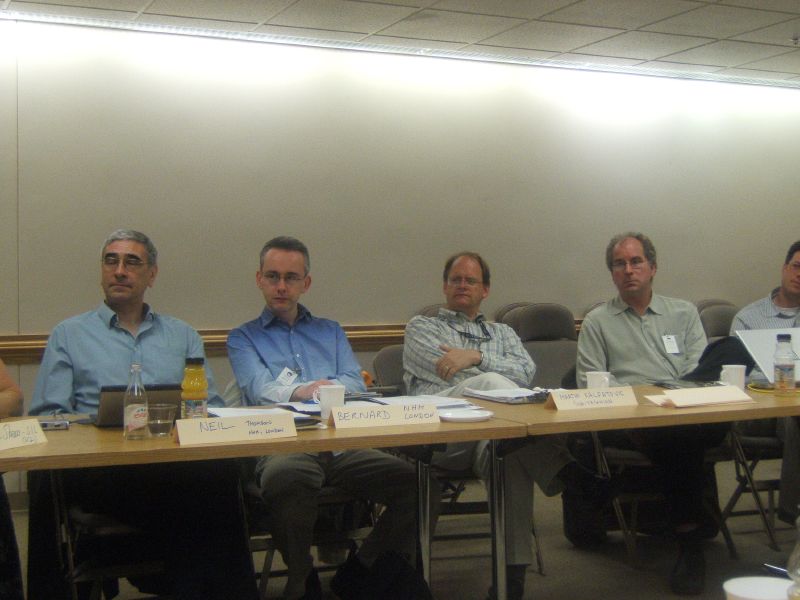
(left to right) Neal Thompson and Bernard Scaife (NH London),
Martin R. Kalfatovic (Smithsonian Libraries) and Brewster Kahle (Internet Archive)
* * * * *
View Full Size Image
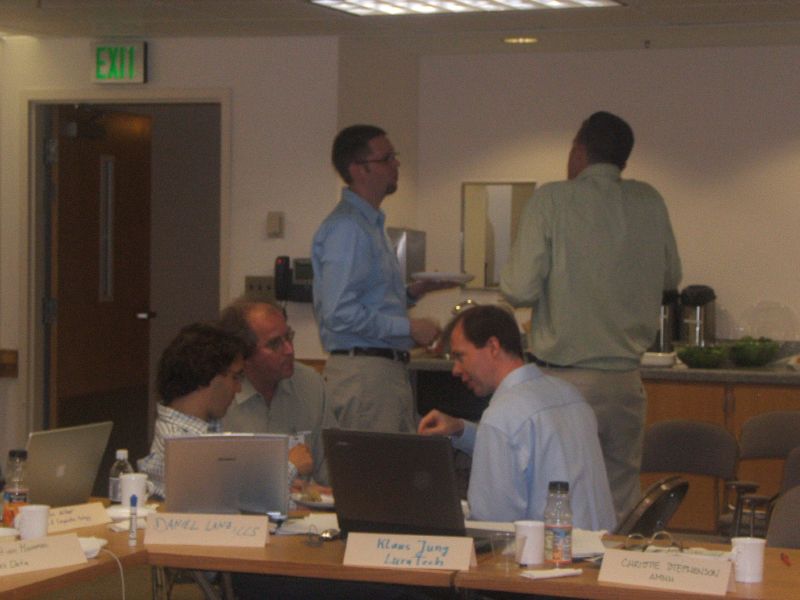
Attendees at the first organizational meeting for BHL.
June 12, 2015by
BHL News, Blog Reel

National Agricultural Library (NAL) Joins BHL!

We are pleased to announce that the USDA National Agricultural Library (NAL) has joined the Biodiversity Heritage Library as a BHL Affiliate. BHL has already ingested over 845,000 pages of NAL-digitized content made openly available within the Internet Archive. This formal partnership will allow us to strengthen our collection of agricultural-related content through direct collaboration with NAL.

View Full Size Image

The National Agricultural Library (NAL) comprises one of the largest collections of materials devoted to agriculture in the world. Collection concentrations include the fields of agriculture, forestry, horticulture, entomology, poultry science, animal science, nutrition, botany, natural history and agricultural history. By statute, NAL is the primary depository of publications and information concerning the research and other activities of the U.S. Department of Agriculture (USDA).

As of October 2014, the total number of individual items in the NAL collection is 8.1 million. This includes a wide variety of formats such as books, journals, audiovisuals, motion pictures, photographs, posters, maps, manuscripts (papers of individuals and organizations), and objects. A large portion of this significant collection is held nowhere else in the world and constitutes a true national treasure.

View Full Size Image
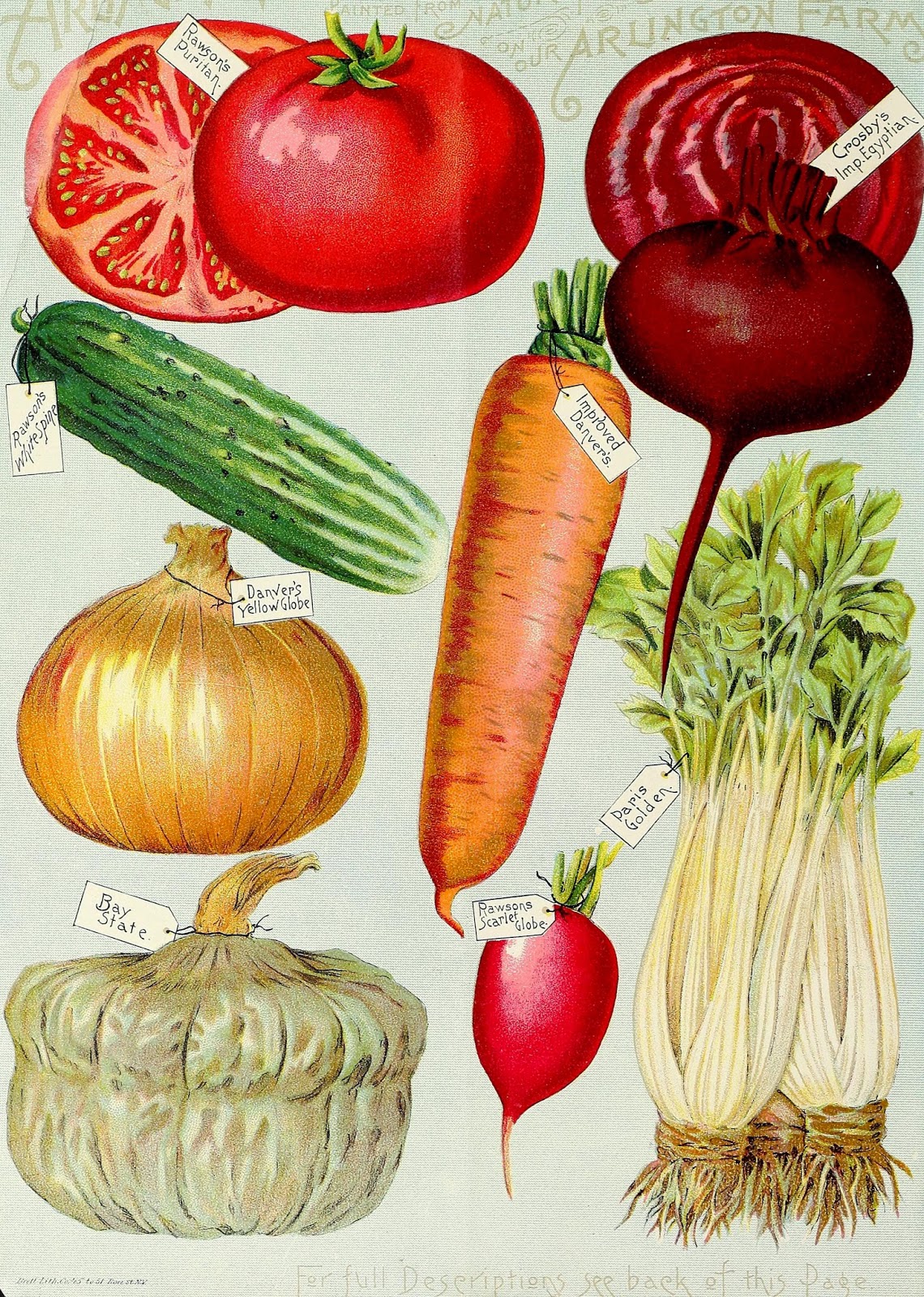
Illustrated Hand-Book: Rawson’s Vegetable and Flower Seeds. 1894. An image from just one of the 1000s of seed catalogs that NAL and other BHL partner libraries have digitized for BHL.

The National Agricultural Library is committed to digitization both as a method to increase access and to prolong the life of the increasingly fragile print originals. NAL is actively digitizing historic USDA and other high demand, public domain items from its collection. Many of these items, both serial and monograph, fit within the scope of BHL, and, when the subject area is appropriate, the digital copies will be added to our collection. For example, NAL is currently digitizing non-USDA seed catalogs in cooperation with other BHL members for inclusion in BHL.

“Our approach is not to think of these activities as small discrete projects but rather as a long journey of digitization that will take many years,” explained Christopher Cole, Business Development Manager at the National Agricultural Library and NAL representative to BHL. “The BHL provides a venue for NAL to work with other institutions to pool our digital collections and enables us to cast a wider net and reach more users.”

NAL represents BHL’s fifth affiliate institution. BHL Affiliates are institutions or organizations that wish to participate in BHL outside of the membership dues-paying structure. Affiliates can contribute content, provide technical services, and participate in BHL committees, task forces, and working groups.

In addition to its affiliates, BHL currently consists of 16 member libraries. BHL Members may contribute content to BHL, participate in appropriate groups and committees, provide technical services, contribute financial support, vote on strategic directives, and generally help govern the BHL program. Visit BHL to learn more about BHL Members and Affiliates.

We are excited to welcome the National Agricultural Library to the BHL family and look forward to the valuable contributions they will make to our library. Follow us on Twitter and Facebook to receive updates about BHL Member and Affiliate contributions and events.

October 22, 2014by ulib-libraryjobs
Page 1 of 212»

Help Support BHL

BHL's existence depends on the financial support of its patrons. Help us keep this free resource alive!

search

About BHL

The Biodiversity Heritage Library (BHL) is the world’s largest open access digital library for biodiversity literature and archives. BHL operates as a worldwide consortium of natural history, botanical, research, and national libraries working together to digitize the natural history literature held in their collections and make it freely available for open access as part of a global “biodiversity community.”

Join Our Mailing List

Sign up to receive the latest news, content highlights, and promotions.

Subscribe Now

Subscribe to Blog via Email

Enter your email address to subscribe to this blog and receive notifications of new posts by email.

Join 319 other subscribers

Subscribe to Blog Via RSS

Subscribe to the blog RSS feed to stay up-to-date on all the latest BHL posts.

Access RSS Feed

Inspiring Discovery through Free Access to Biodiversity Knowledge.

The Biodiversity Heritage Library makes it easier than ever for you to access the information you need to study and explore life on Earth…for free, anytime, anywhere.


64+ Million Pages of
Biodiversity Literature Online.

EXPLORE

Tools and Services
to Transform Research.

EXPLORE

300,000+
Illustrations on Flickr.

EXPLORE

ABOUT | HARMFUL CONTENT | PRIVACY | SITE MAP | TERMS OF USE