Biodiversity Heritage Library - Program news and collection highlights from BHL
  • Home
  • News
  • Featured Books
    • All Featured Books
    • Book of the Month Series
    • BHL at 20
  • User Stories
  • Campaigns
    • Fossil Stories
    • Garden Stories
    • Monsters Are Real
    • Page Frights
    • Her Natural History
    • Earth Optimism 2020
  • Tech Blog
  • Visit BHL
Home
News
Featured Books
    All Featured Books
    Book of the Month Series
    BHL at 20
User Stories
Campaigns
    Fossil Stories
    Garden Stories
    Monsters Are Real
    Page Frights
    Her Natural History
    Earth Optimism 2020
Tech Blog
Visit BHL
  • Home
  • News
  • Featured Books
    • All Featured Books
    • Book of the Month Series
    • BHL at 20
  • User Stories
  • Campaigns
    • Fossil Stories
    • Garden Stories
    • Monsters Are Real
    • Page Frights
    • Her Natural History
    • Earth Optimism 2020
  • Tech Blog
  • Visit BHL
Biodiversity Heritage Library - Program news and collection highlights from BHL
Blog Reel, Campaigns, Featured Books, Monsters Are Real

Monsters Are Real…

They just look a little different in the light of day. 

“HIC SUNT DRACONES.”

This phrase translates from the Latin as “here are dragons.” It is etched on the eastern coast of Asia on one of the oldest terrestrial globe maps, the Lenox Globe, dating to 1510.

Though the phrase itself is found on only one other historical artifact, a 1504 globe crafted on an ostrich egg, the depiction of monsters and mythological beasts are common on early maps. They crop up most commonly in the unexplored reaches of the oceans, warning would-be explorers of the perils of these unknown territories.
View Full Size Image
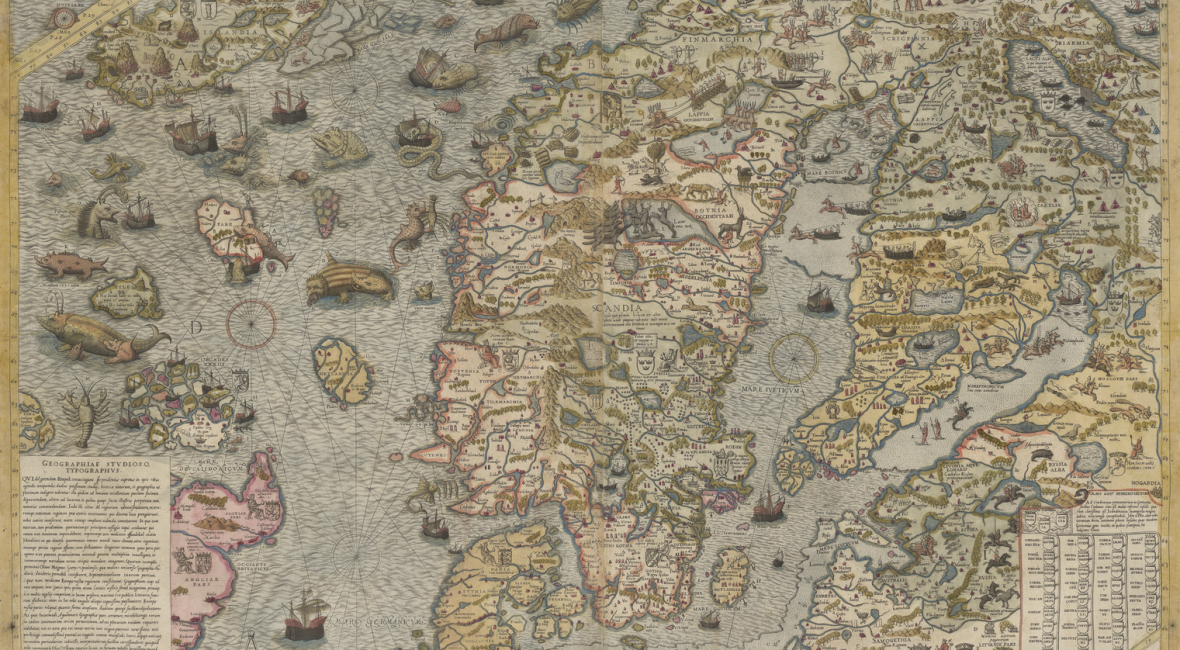
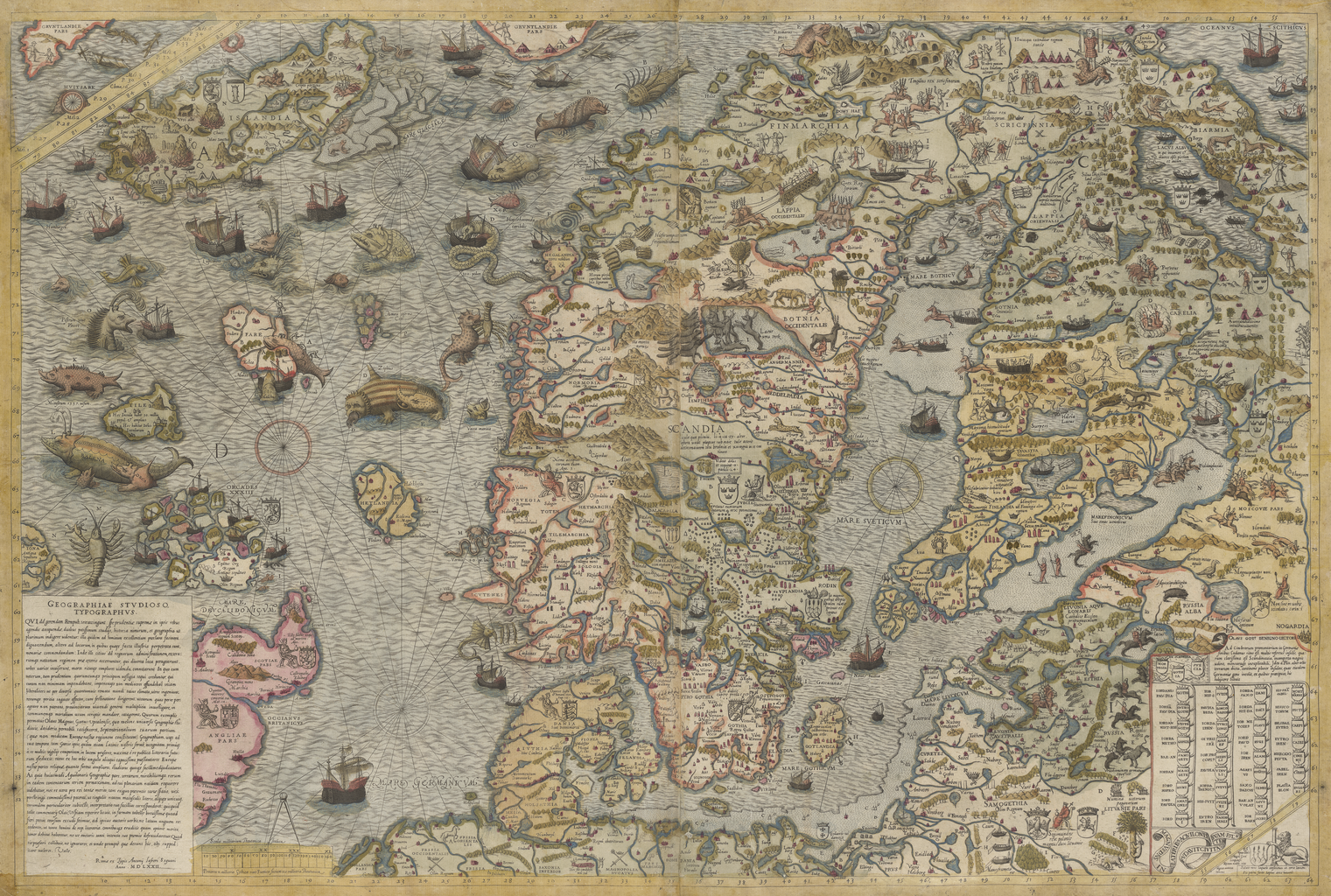
Olaus Magnus’ Cart Marina. Drafted 1527-39. 2nd Edition via World Digital Library. http://dl.wdl.org/3037.png

One of the most famous of these maps is Olaus Magnus’ Carta Marina, drawn in 1527-39. A detailed map of Scandinavia-one of the oldest ever created-it depicts the Norwegian Sea as so teaming with monsters that it would seem impossible to escape these waters uneaten.

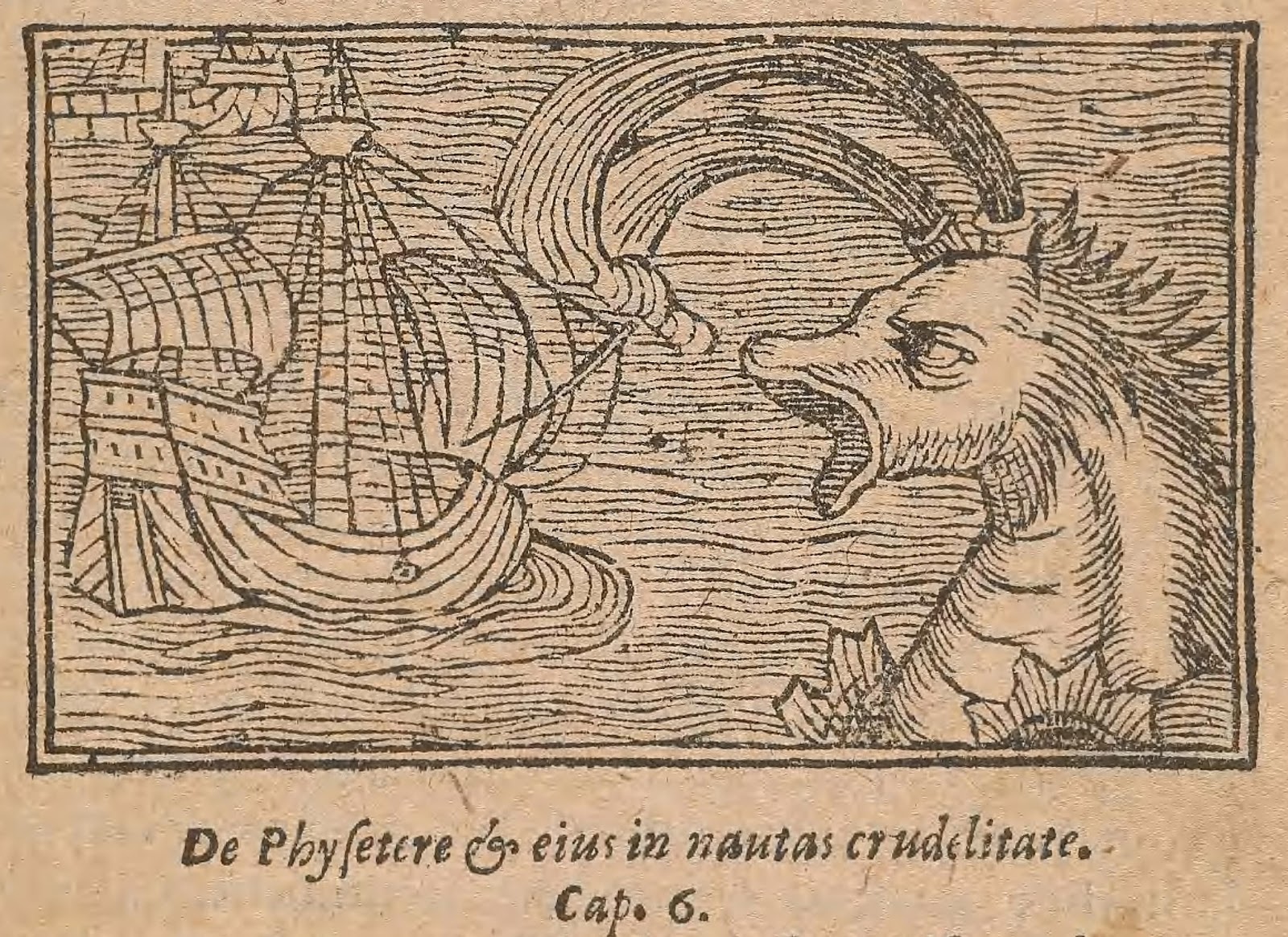
Magnus (1490-1557) was the Catholic archbishop of Sweden and a prominent historian. His travels brought him farther north than any of his contemporary European intellectuals, lending a great deal of perceived credibility to his accounts and publications. In 1555, Magnus published Historia de Gentibus Septentrionalibus (“A Description of the Northern Peoples”), which not only related the history, customs, and beliefs of the Scandinavian people, but also reprinted and described the creatures found on Carta Marina. His standing and reputation secured the widespread acceptance of his stories.
View Full Size Image
Physeter, or Leviathan, from Magnus, Olaus. Historia de Gentibus Septentionalibus (1555). http://biodiversitylibrary.org/page/41862918

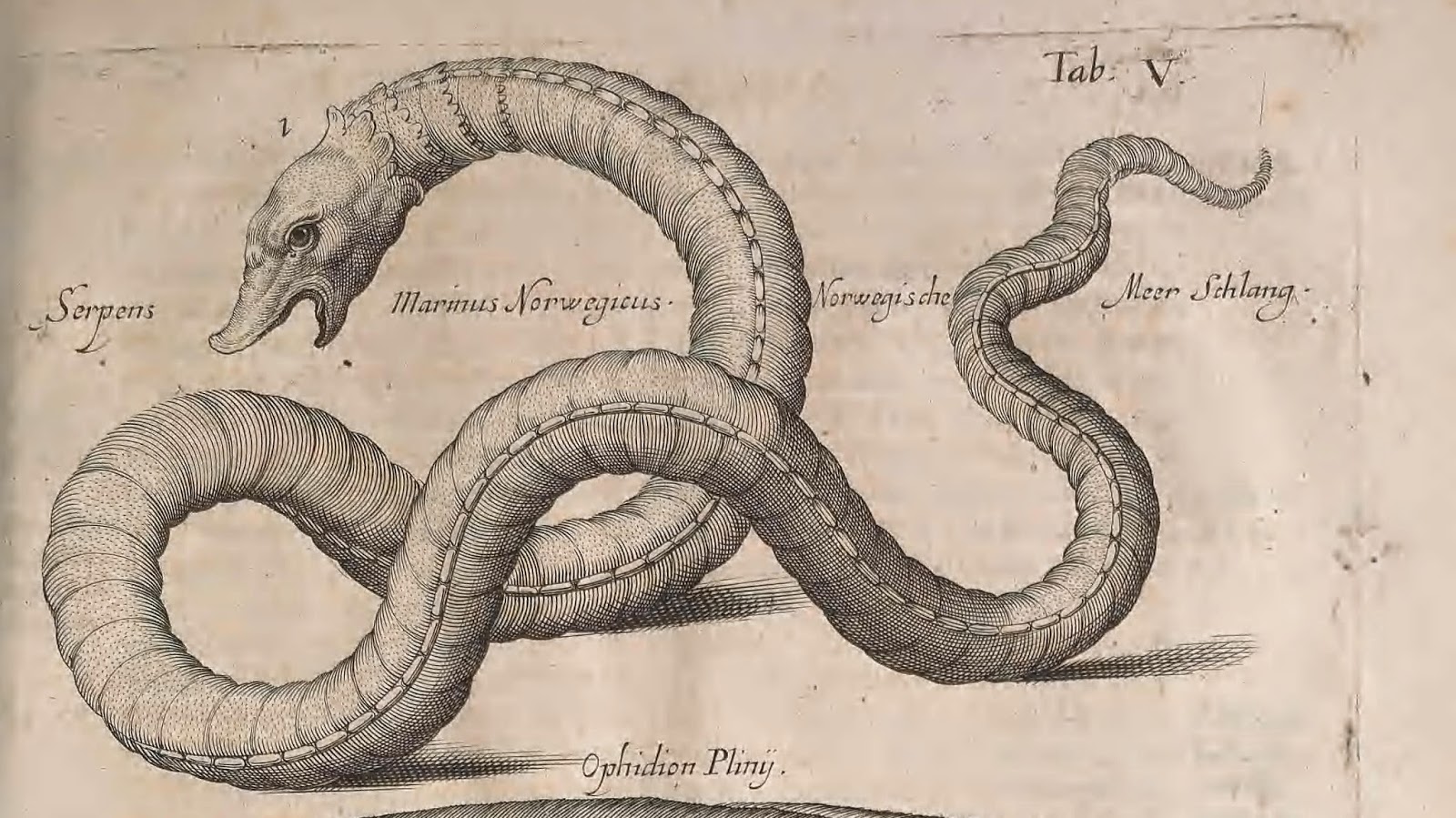
Olaus’ descriptions and drawings were copied repeatedly, with little to no modification, for centuries by such historical titans as Conrad Gessner (whose Historia Animalium, replete with Magnus’ drawings, is the first modern zoological work attempting to describe all known animals), Edward Topsell, Ulisse Aldrovandi, and John Jonstonus. Such repurposing ensured that these creatures were ingrained in the public mind as truth. And over the centuries, many new monsters were added to the mix as well.
View Full Size Image
Sea Serpent, after Magnus. Jonstonus, Joannes. Historiae naturalis de quadrupetibus libri. 1650. http://biodiversitylibrary.org/page/44040030.

Creating Myth from Reality

Where did the accounts of monsters come from in the first place? Were they simply fairytales invented to scare curious minds and small children?

Henry Lee, who wrote extensively on sea creatures and monsters, emphasized that many classical monsters are not simply pure myth. In his publication Sea Fables Explained (1883), he wrote, “…the descriptions by ancient writers of so-called ‘fabulous creatures’ are rather distorted portraits than invented falsehoods, and there is hardly any of the monsters of old which has not its prototype in Nature at the present day.”
View Full Size Image
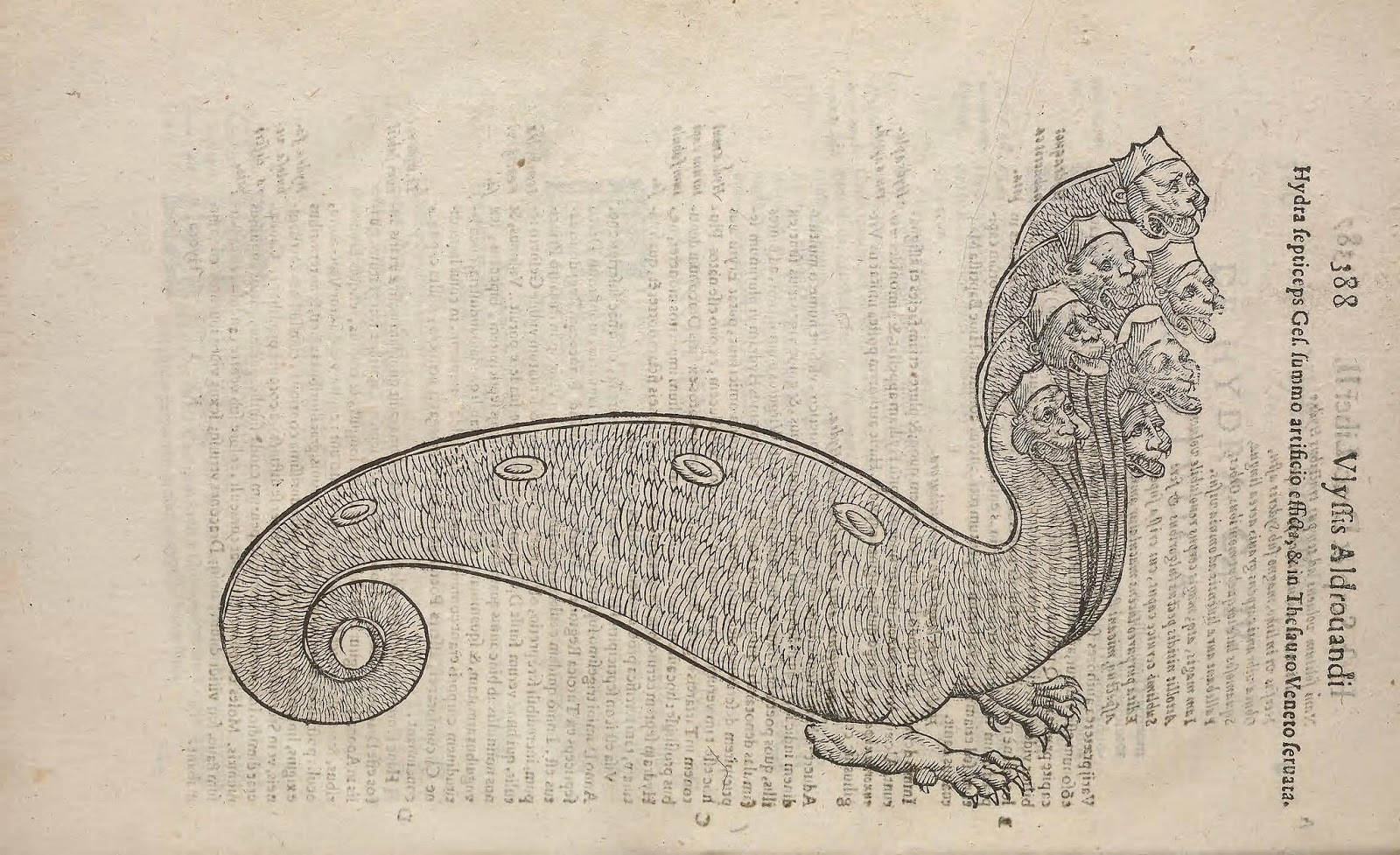
Hydra, after Gessner. Aldrovandi, Ulisse. Serpentum, et draconum historiæ libri duo. 1640. http://biodiversitylibrary.org/page/41765441.

How did these “distorted portraits” come about? By the 1500s, extensive European oceanic exploration was still limited, and the fauna that called these places home remained virtually unknown. Publications by Magnus and those who copied him represented some of the first attempts to systematically aggregate and describe these animals. More often than not, their information came not from first-hand observations, but from sailors’ accounts of mysterious encounters while at sea. Less often, the decomposing remains of a washed-up carcass also fueled confidence in the existence of these terrible beasts.

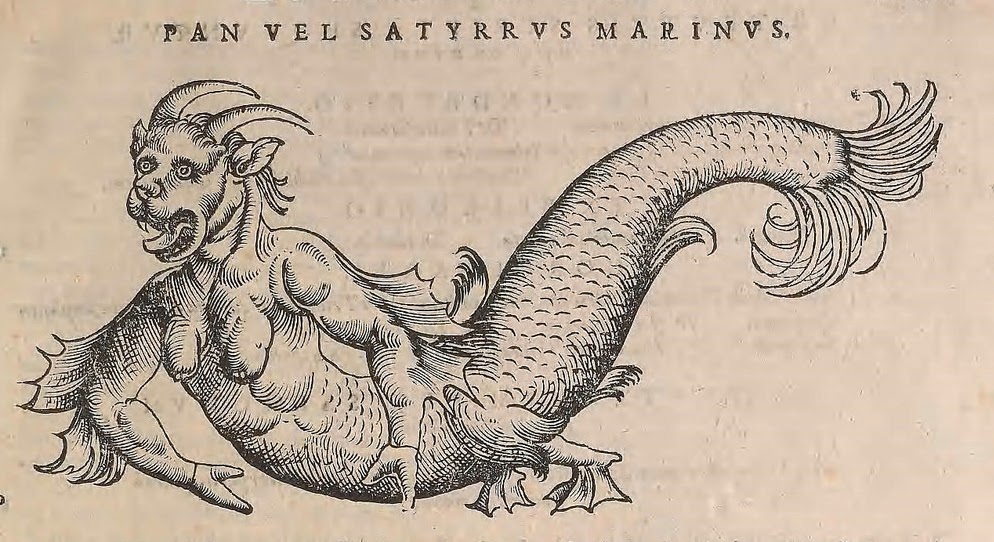
Sailors, or those unlucky beachgoers who had the misfortune to stumble upon a rotting basking shark, had no experience with such creatures. So, they explained them with what they did have experience with – myths and legends. If they enlivened their accounts with some embellishments, that simply made for a better story. And so, an oarfish became a 200 foot long sea serpent. A giant squid became a blood-thirsty kraken. A manatee became a mermaid. Olaus and others like him gobbled up the stories and published them alongside authentic species. The more the stories were circulated and published, the more likely people were to mistake what they did see for a monster. And the cycle continued.
View Full Size Image
“Sea Devil.” Gessner, Conrad. Historia Animalium. 2nd ed. (1604). http://biodiversitylibrary.org/page/42166652.

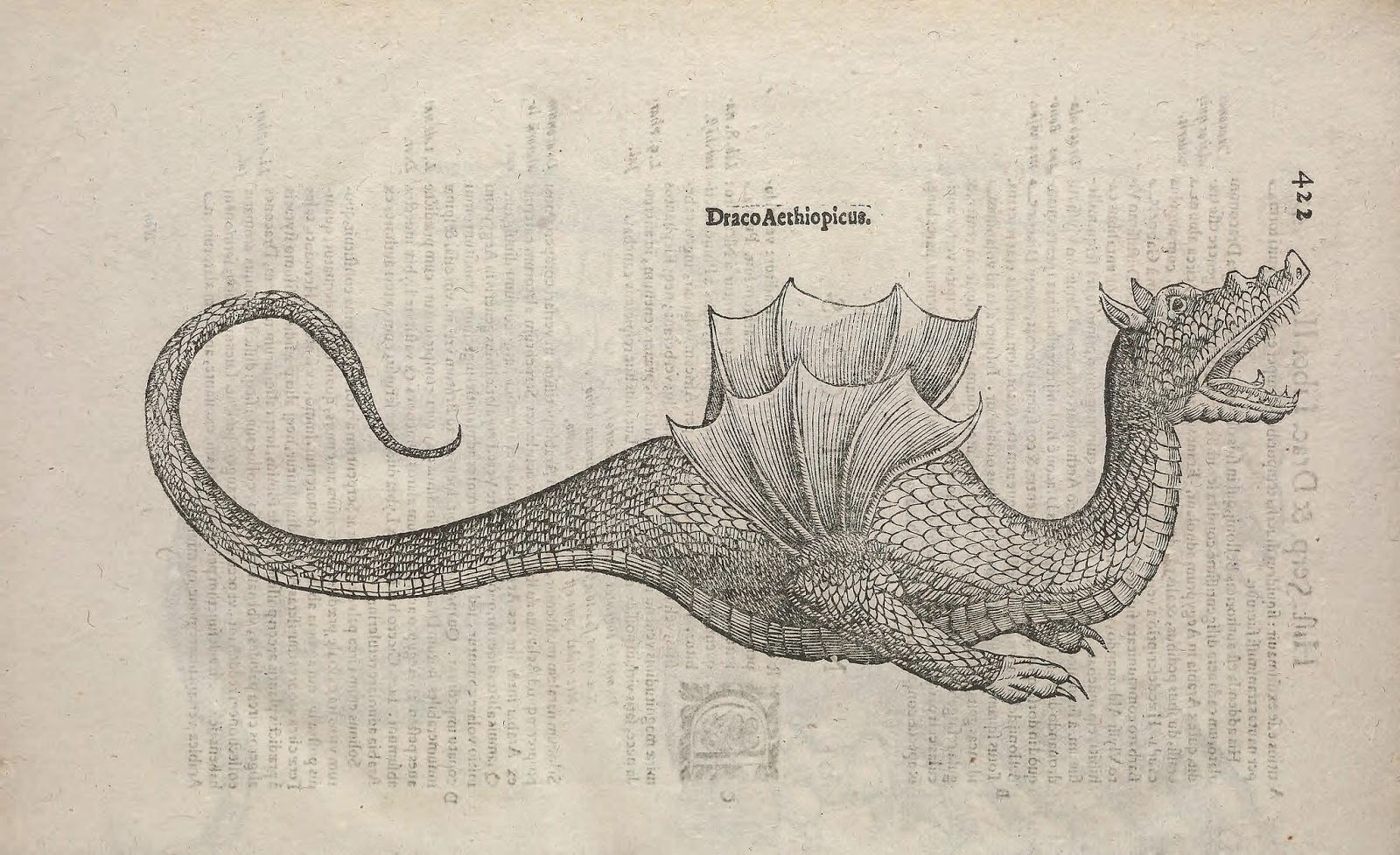
The atmosphere of the day also fed people’s willingness to believe such tales. The 1500s were rampant with superstition. The Scientific Revolution would not start to make headway until later in the seventeenth century. There was no division between magic and reality – the two simply coincided. Thus, there was no reason that mythical beasts could not be real. And even when scientists began to embrace the scientific method, they still struggled to reconcile previous beliefs in the supernatural with science. It would take hundreds of years of dedicated scientific study and exploration to overturn classical and common opinion. In the case of some creatures (i.e. sea serpents), sightings and questions of authenticity still remain.
View Full Size Image
Dragon. Aldrovandi, Ulisse. Serpentum, et draconum historiæ libri duo. 1640. http://biodiversitylibrary.org/page/41765475.

Are Monsters Real?

So what’s the moral of the story? The animals that inspired such hair-raising tales as the sea serpent, leviathans, and hydra, and authenticated stories of mermaids and the kraken, are real. They just received some creative embellishments (and sometimes blatant artistic fraudulence) along the way. And in a world just beginning to turn away from superstition, but still inclined to embrace elements of mysticism, it’s not surprising that the tales were accepted. Besides, who doesn’t love a good monster story?
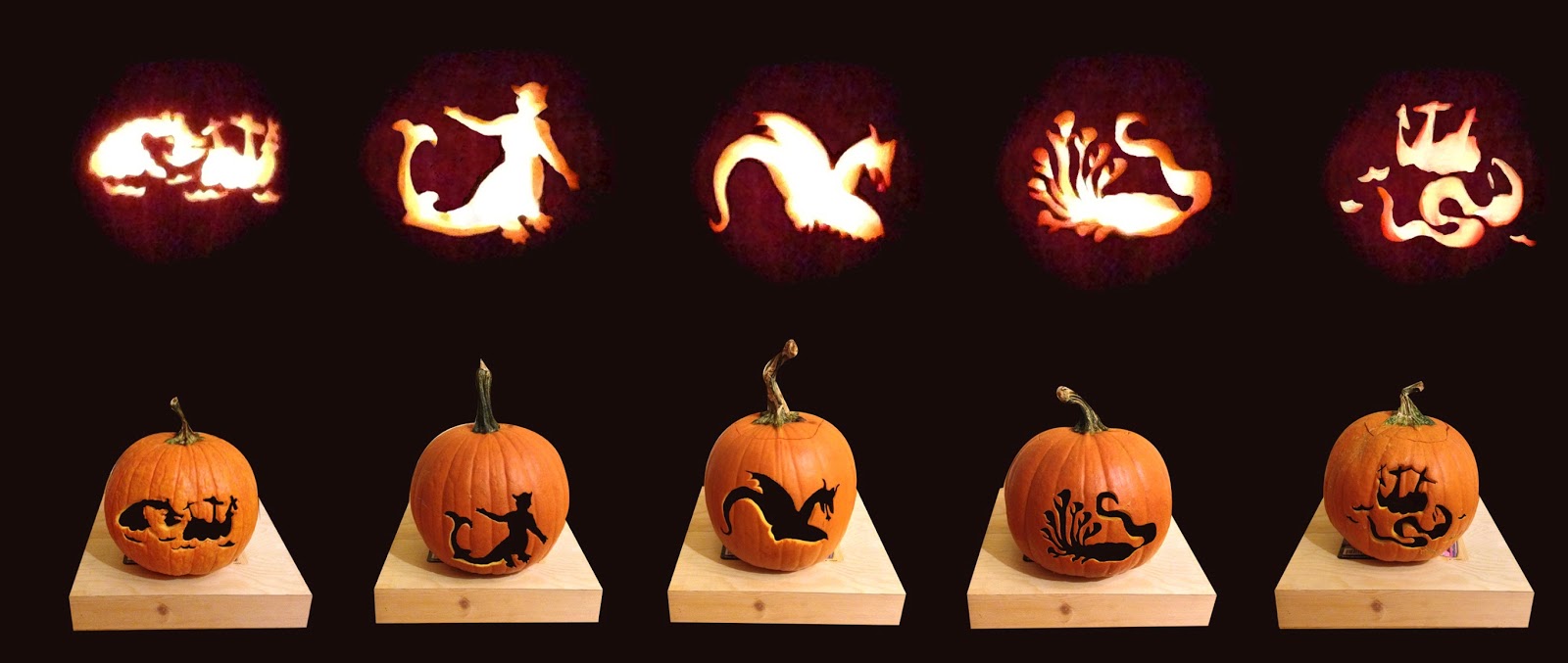
View Full Size Image
Pumpkins you can carve from the BHL patterns, based on historic monster images! Get yours today!

Monsters Are Real…Learn More!

  • Follow our blog and #bhlMonstersRreal on Twitter and Facebook (or go directly to BHL’s Twitter and Facebook) this week as we explore the stories, people, books, and animals that inspired some of history’s most legendary monsters.
  • Browse the books that fueled such beliefs in the BHL Monsters Are Real collection.
  • Enjoy centuries’ worth of monster images in our Flickr collection.
  • See some of our favorite monsters come to life on the Smithsonian Libraries’ Tumblr.
  • Finally, get free pumpkin carving patterns inspired by some of our favorite historical drawings. See them dance on YouTube! Share your BHL carved pumpkins with us on Twitter and Facebook and we’ll reshare! They’ll make for a ghoulishly good time!
October 27, 2014by ulib-libraryjobs
Blog Reel, Featured Books

Monsters, the Scientific Revolution, and Physica Curiosa

Schott, Gaspar. Physica Curiosa (1662).

From Superstition to Scientific Reasoning

The seventeenth century was a time of great advancement for science, but it also presented a curious juxtaposition between superstition and science. A part of Europe’s Early Modern period and the birth of the Baroque cultural movement, the 1600s also encompassed the early years of the Scientific Revolution, when superstition and religion gave way to scientific reasoning. Furthermore, the Enlightenment, which attempted to replace ideas based on faith or tradition with scientific method, began to take hold later in the century.

View Full Size Image
Monsters! Physica Curiosa.

By the end of the 17th century, electricity, the telescope and microscope, calculus, universal gravitation, Newton’s Laws of Motion, air pressure and calculating machines had entered the scene. And yet, as with all great shifts in cultural thinking, the transition from superstition to science was not instantaneous. Many of the era’s great thinkers attempted to reconcile previous beliefs with new discoveries. Case in point: Monsters.

Monsters and the 16th and 17th Centuries

View Full Size ImageMany of the publications of the 17th century, while beginning to embrace scientific method and conclusions based on experiments, still also accepted fantastical explanations for marvelous occurrences. Books depicting monsters were extremely popular, and many recycled the same illustrations repeatedly, introducing them to new generations (case in point: Gessner hydra, 1560; Aldrovandi hydra, 1640; Joannes Jonstonus hydra, 1657). Furthermore, global exploration had begun on an unprecedented scale, and those that traveled published accounts of biodiversity from regions they visited. However, they recorded not only the creatures they saw with their own eyes, but also those described by locals – many of which were beings of myth and folklore. While fantastic to us today, for most during this time, there was no division between magic and reality – they simply coincided. Thus, these fabulous beasts could be a reality. Many were based on briefly-glimpsed real creatures given religious or superstitious twists. What’s more, many “monsters” heralded during the time were actually humans or animals with deformities.

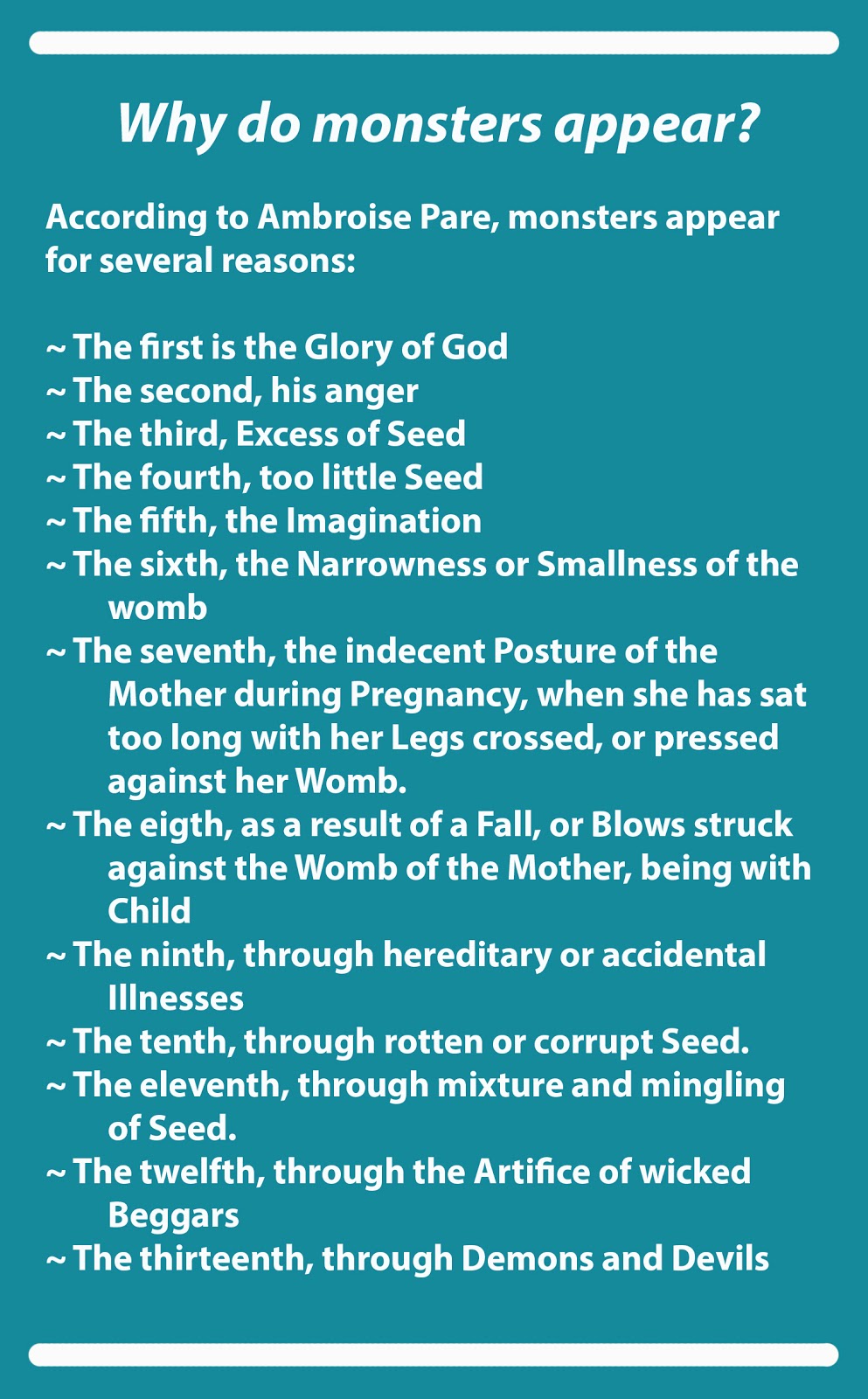
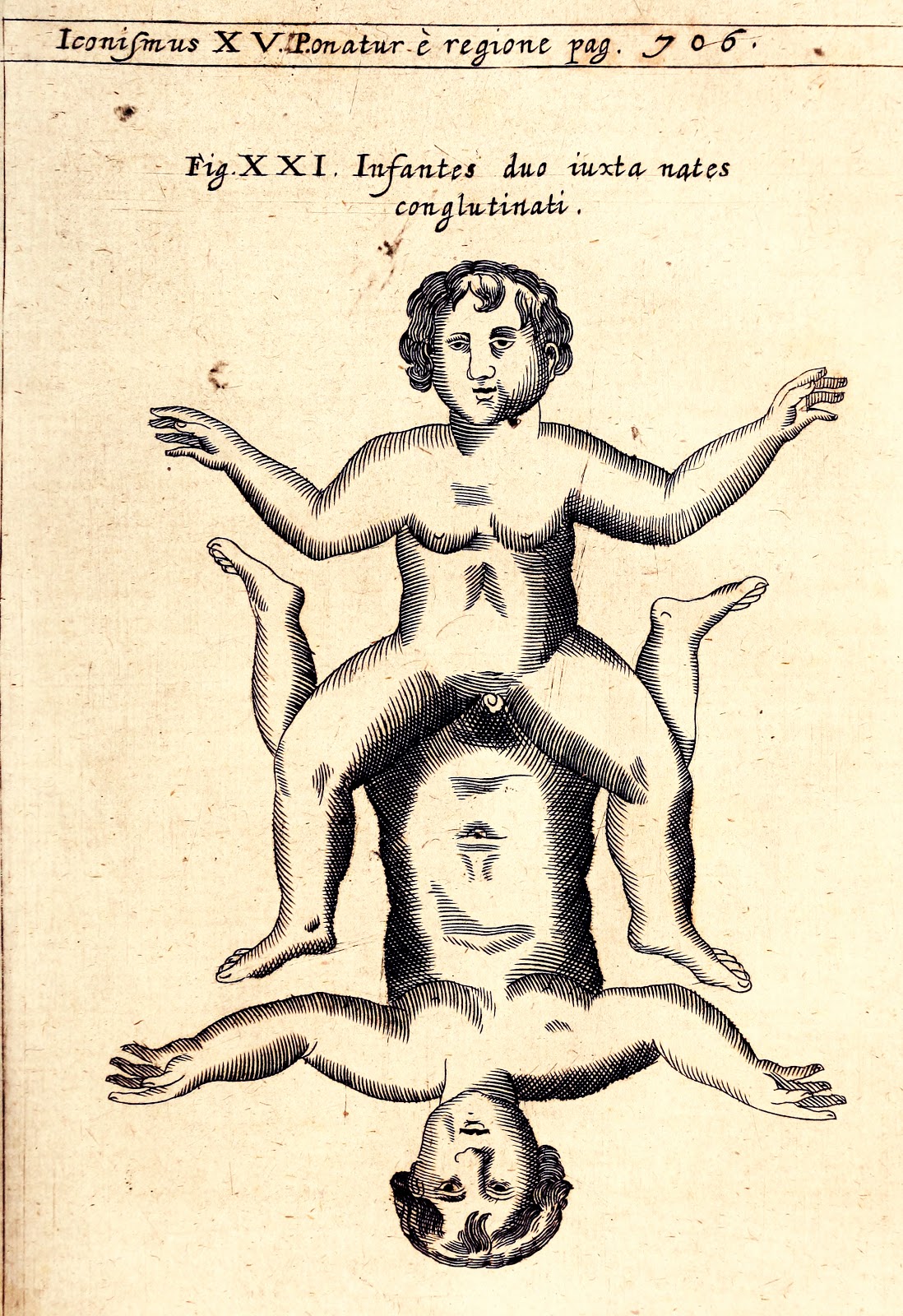
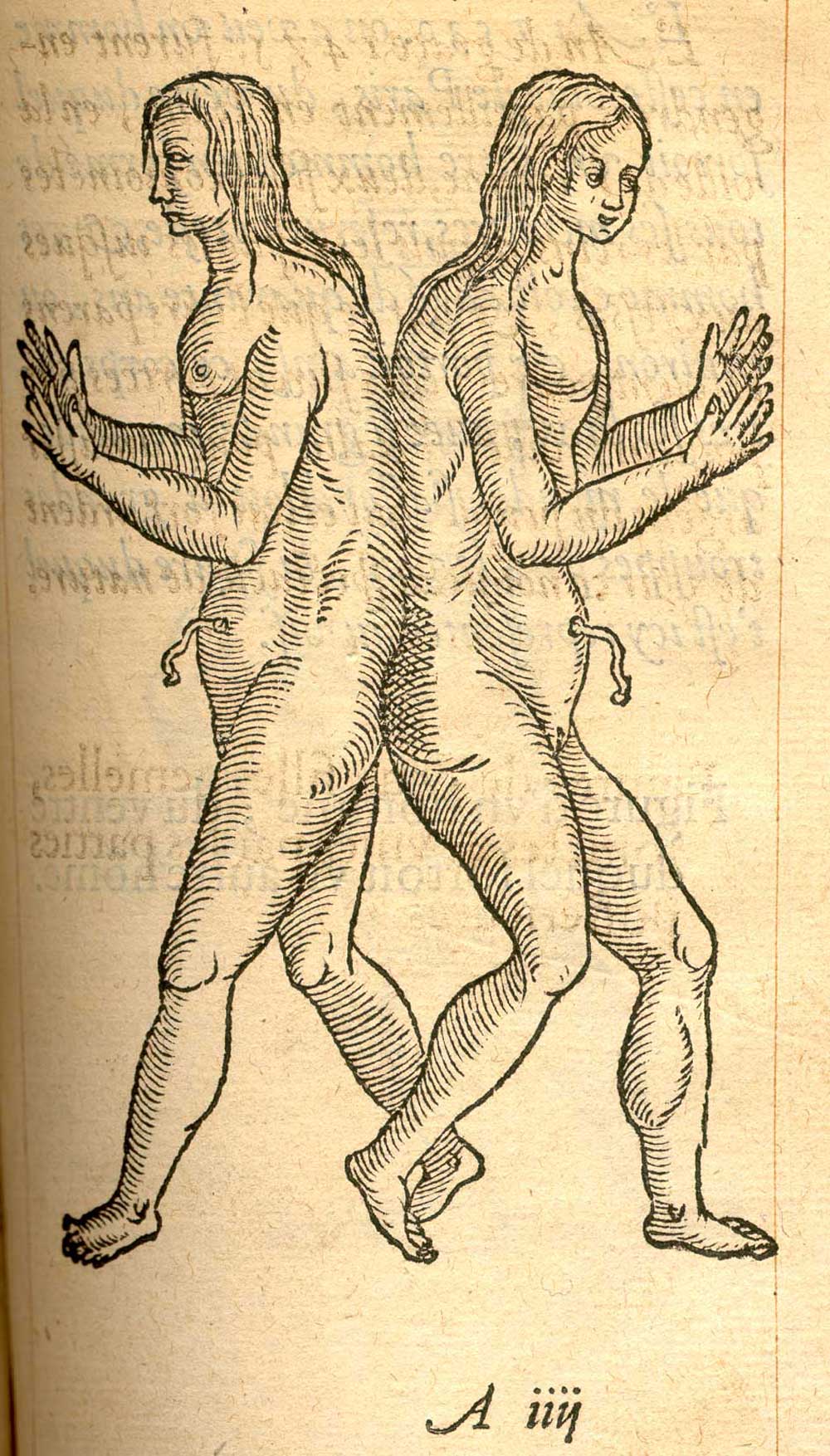
For example, Ambroise Paré, a surgeon of the 1500s, authored “the” monster book of the Renaissance: Des Monstres et Prodiges (1573). Translating to “Monsters and Marvels,” the work depicted malformed humans and animal-human hybrids. Conjoined twins were a popular example of human “monsters.” For instance, Paré illustrates a pair of 15th century female pygopagus conjoined twins that were exhibited in Italian cities for curious spectators.

View Full Size Image
Conjoined Twins. Physica Curiosa.

Gaspar Schott: Jesuit, Mathematician, Natural Historian, Monster Authority

An exceptional example of the “monsters” proliferated during the 17th century can be found in Gaspar Schott’s Physica Curiosa. Schott (1608-1666), a German scientist and Jesuit, specialized in the fields of physics, mathematics, and natural philosophy. He wrote extensively on the mechanical developments of his time, and produced the first published account on Otto von Guericke’s experiments on vacuums. His most famous works include Magia Universalis, Technica Curiosa, and Physica Curiosa – essentially encyclopedias magical, mechanical, and natural history knowledge. Schott was a great compiler, and relied on an extensive library for his own research. Most of Schott’s publications are aggregations of the writings and research existing on various topics.

Physica Curiosa

View Full Size Image
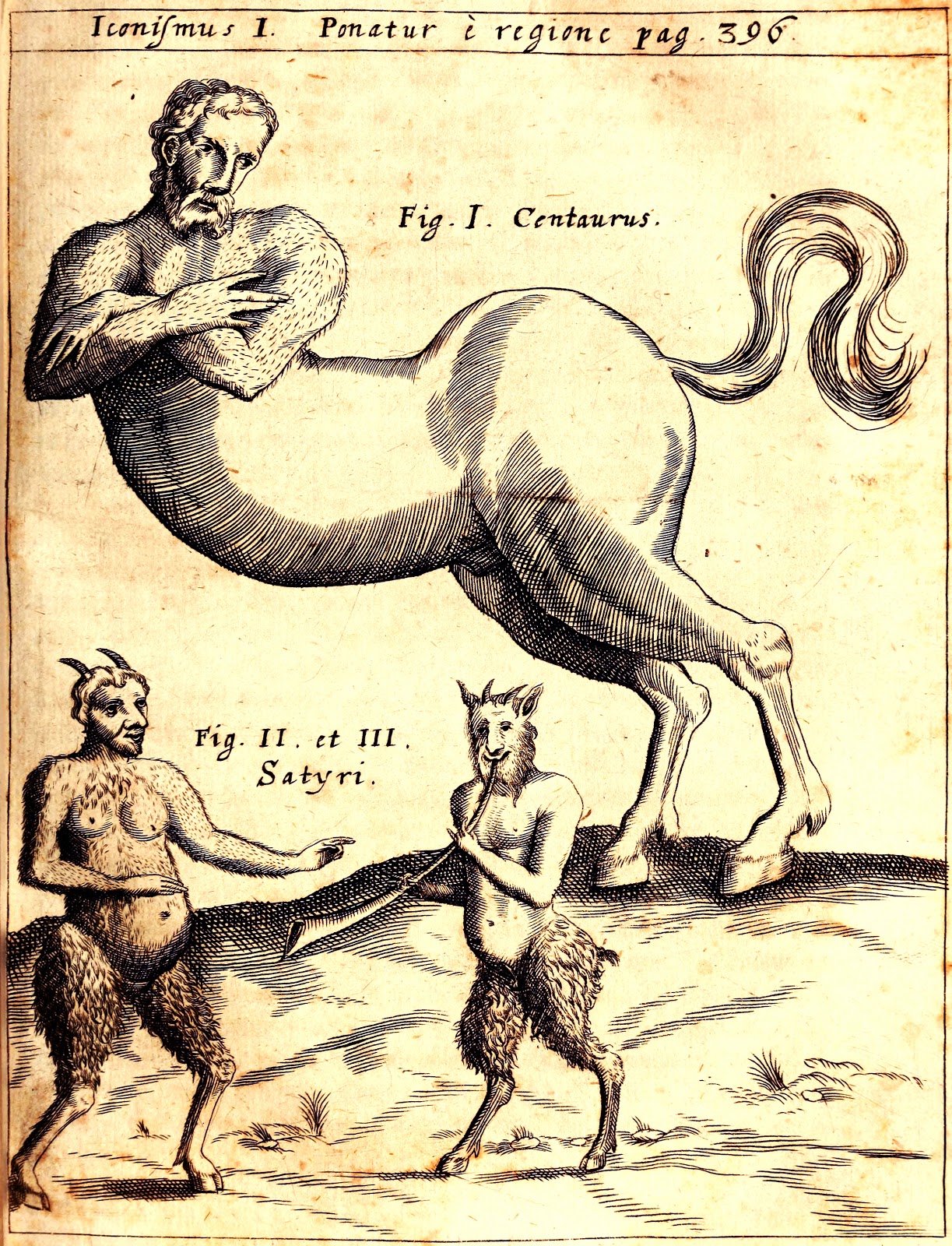
Centaur and Satyrs, Physica Curiosa.

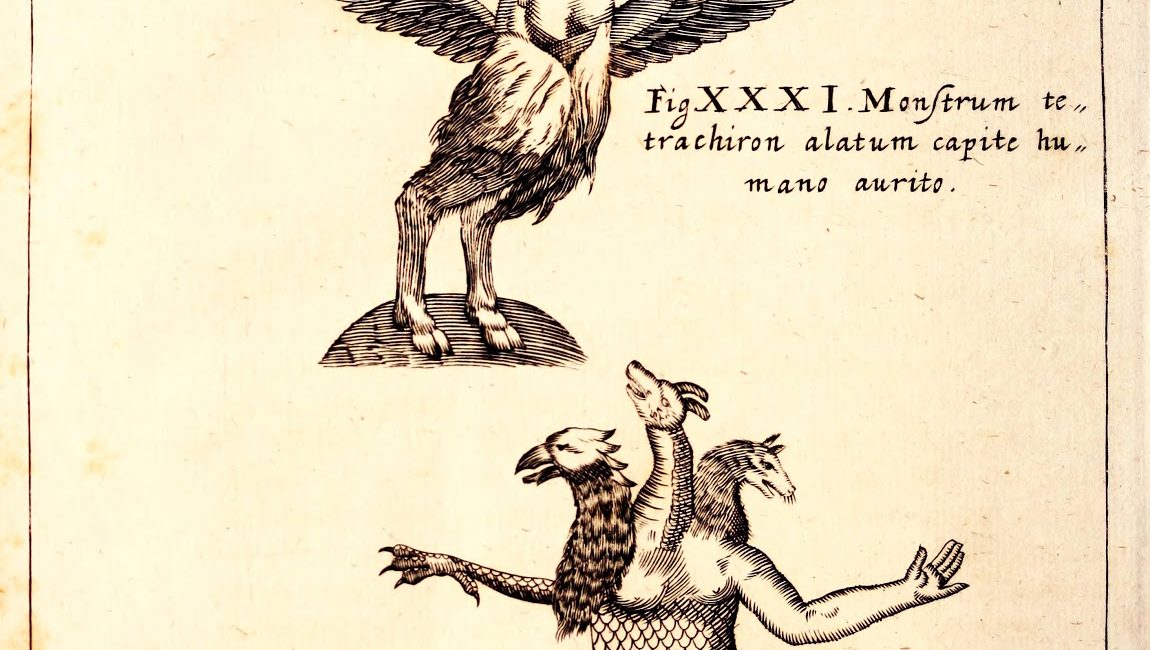
Physica Curiosa is an encyclopedia of the natural sciences of the age. In keeping with Schott’s character, it compiles many of the illustrations and literature previously published. As with many natural history publications of the era, it depicted fantastical creatures alongside real ones. Divided into twelve books, the first six books (digitized by the Smithsonian Libraries) are devoted to “miraculous” subjects, including Demons and Angels, spectres, demonic possessions, human and beastly monsters, and portents. The last six books deal with the “marvels” of nature – real creatures from exotic locales, such as elephants and rhinos.

Physica Curiosa‘s target audience was other scholars, educators, and the rich nobility of the time, as this was the demographic that could afford the publication. Though books were beginning to be more prolifically published in relation to the previous century, they were still made by hand and very expensive. The illustrations in this work are copper engravings, which were very practical for scientific illustration as they allowed for much more detail than wood blocks. A single printing of 500-1,000 copies concluded the run of this publication.

Monsters

View Full Size Image
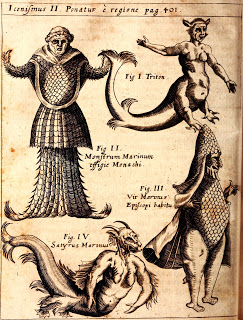
Monk Fish (Upper Left), Bishop Fish (Lower Right), Sea Devils (Upper Left, Lower Right).

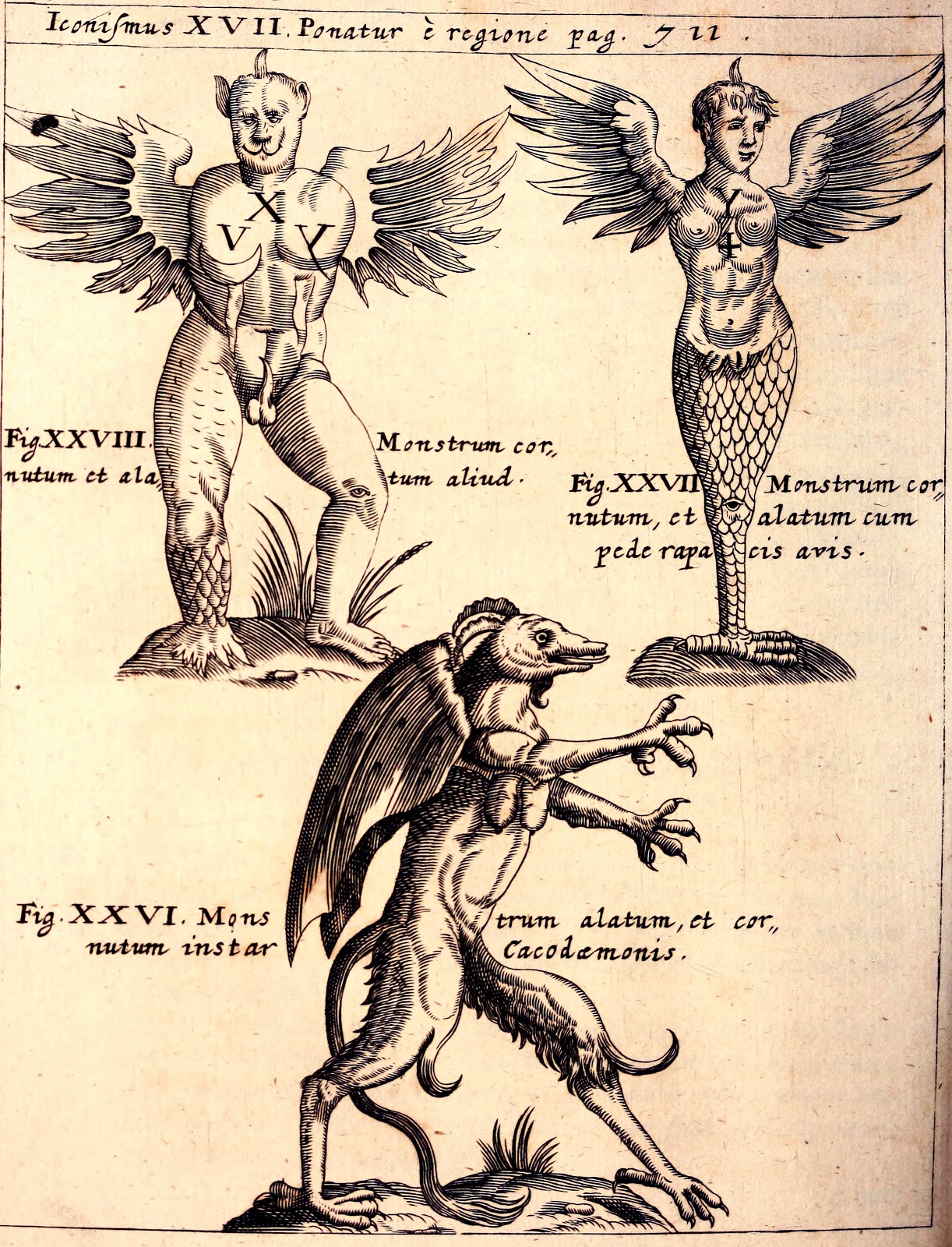
Physica Curiosa begins with a discussion of diabolical magic – that of demons. In his publication Magia Universalis, Schott wrote that magic was once an honorific practice, but that legitimate magic was corrupted after the flood. The remaining natural magic was likely the result of a pact with a demon and was prohibited. He also asserts that demons are the cause of many of the world’s “monsters.”

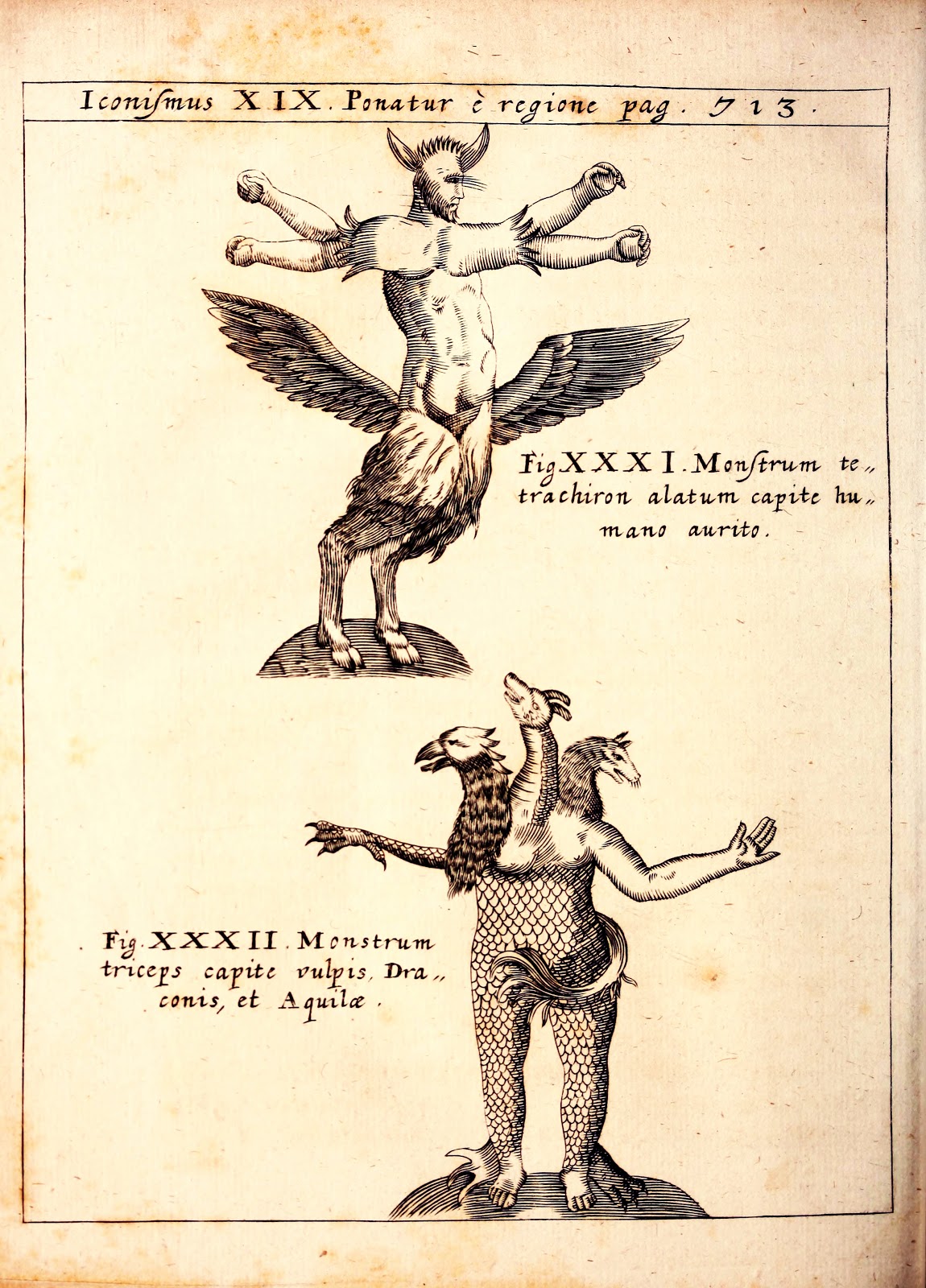
Physica Curiosa not only depicts deformed humans as monsters, but also Centaurs, Satyrs, Monk and Bishop Fish, and Sea Devils, to name a few. Human deformities as monsters has been discussed at length, but many other creatures presented by Schott exemplify the practice of misrepresenting real creatures, or imposing religious elements on natural entities. For example, the monk and bishop fish, which were popular beings illustrated throughout the 16th-17th centuries, demonstrate how religious tensions resulted in the association of clerical figures with monsters. Nevertheless, many authors still purported these creatures to be real. In the late 1600s, Johann Zahn wrote that the bishop fish he illustrated in Specula Physico-Mathematico-Historica was fished out of the Baltic Sea in 1531.

The Sea Devil was also a popular monster, which Conrad Gessner, in the 16th century, recorded as having been captured in both Norway and Rome. Historians today postulate that this creature was actually based on the monk seal. Seals were extremely disliked by both fisherman and farmers as nuisances. Aristotle recorded accounts of seals raiding orchards, which Gessner and Ulisse Aldrovandi maintained.

Reality…Kind of

While Schott clearly saw a distinction himself between fantastical creatures and those found in the natural world (as evidenced by the division within his book), he still asserts some incredible beliefs associated with real animals. For instance, he claims that “both fish and bird are made from water,” barnacle geese are born from rotting wood, and that angels may have carried men and animals to the New World and distant islands. This demonstrates the tie between magic and science that still permeated Baroque Europe.

Impact on Science

View Full Size Image
Mermaids, Demons and Monsters, oh my!

It may seem, with extensive conversations about diabolical magic, demons, and monk fish, that Physica Curiosa is little more than a perpetuation of the superstition that characterized the Dark Ages. But believe it or not, Physica Curiosa played an important part in the development of scientific reasoning. For instance, while it still purports some “mystical” explanations for certain miraculous events, Schott also condemns a great deal of the accepted superstitions of the time. For instance, he discredits the use of divining rods to locate treasure, rejects the notion that a corpse bleeds in the presence of its murderer, and condemns drinking the blood of one’s beloved in order to cure infatuation. Indeed, within Physica Curiosa, Schott writes regarding many accepted beliefs, “I do not approve of all, because I know that some are doubtful, if not false; others superstitious; others perhaps even manifestly false.” Schott also acknowledges that many unexplained phenomena may indeed be scientifically true when he “implores the reader not to be so inhuman as to refuse to believe anything unless he sees it with his own eyes, [as] many things which antiquity thought fabulous are now proved true by frequent experiment.”

Thus, Physica Curiosa represented a critical step along the journey of accepting science over superstition. Furthermore, this work and the others of its time, by aggregating the fanciful beliefs of the era in a single publication, presented an excellent body of work against which those of the Enlightenment could react. By comprehensively recording what was accepted as truth during the time, the authors made it easier for future scholars to pinpoint and address widespread, unscientific doctrine.

In conclusion, the sixteenth and seventeenth centuries were a fascinating time in history, as we watch science battle superstition, and see scholars like Schott struggle to make sense of their cultures and their reasoning. Monsters were a inherent part in this discovery process. Deciphering truth from myth, and exploring medical and natural explanations for the unexplained, is what science is all about.

Physica Curiosa Illustrations

You can see more books about the Curious and the Bizarre in BHL. See a collection of fascinating “monster” illustrations in Flickr. See illustrations from the first six parts of Physica Curiosa in Flickr.

Special thanks to Lilla Vekerdy, Head of Special Collections, Smithsonian Libraries, for her consultation on this post. The Smithsonian Libraries’ collection contains 16 books by Schott. The version of Physica Curiosa digitized for BHL is from the Smithsonian Libraries’ collection.

References

  • Gillispie, CC. “Schott, Gaspar.” Dictionary of Scientific Biography. New York: Charles Scribner’s Sons, 1980.
  • Thorndike, L. A History of Magic and Experimental Science. New York and London: Columbia University Press, 1923. 596-608.
  • Michon, Scott. “Sea Monsters.” Strange Science, 16 May 2013. 17 May 2013. http://www.strangescience.net
May 24, 2013by michelle.underhill

Help Support BHL

BHL's existence depends on the financial support of its patrons. Help us keep this free resource alive!

search

About BHL

The Biodiversity Heritage Library (BHL) is the world’s largest open access digital library for biodiversity literature and archives. BHL operates as a worldwide consortium of natural history, botanical, research, and national libraries working together to digitize the natural history literature held in their collections and make it freely available for open access as part of a global “biodiversity community.”

Join Our Mailing List

Sign up to receive the latest news, content highlights, and promotions.

Subscribe Now

Subscribe to Blog via Email

Enter your email address to subscribe to this blog and receive notifications of new posts by email.

Join 319 other subscribers

Subscribe to Blog Via RSS

Subscribe to the blog RSS feed to stay up-to-date on all the latest BHL posts.

Access RSS Feed

Inspiring Discovery through Free Access to Biodiversity Knowledge.

The Biodiversity Heritage Library makes it easier than ever for you to access the information you need to study and explore life on Earth…for free, anytime, anywhere.


64+ Million Pages of
Biodiversity Literature Online.

EXPLORE

Tools and Services
to Transform Research.

EXPLORE

300,000+
Illustrations on Flickr.

EXPLORE

ABOUT | HARMFUL CONTENT | PRIVACY | SITE MAP | TERMS OF USE