

While there are plenty of accounts on the natural history of Latin America, many of the best-known stories are from the point of view of outsiders, especially those from the age of extensive European exploration. The new exhibition “Latino Natural History” aims to turn the focus to a few notable naturalists of Latin American origin, and recognizing the work they did to further the study of the world’s flora and fauna.
Some of the featured naturalists, like Puerto Rican American ornithologist and artist Louis Agassiz Fuertes, were greatly celebrated by their peers and beyond. However, many of the remaining naturalists would go unrecognized in their lifetime, or over time their names would be buried under those of more well-known scientists. The reasons for the imbalance in recognition were as varied as the countries these scientists are all from.
 |
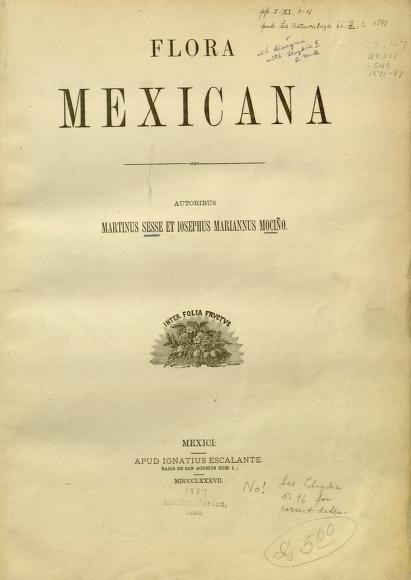
| Flora Mexicana wasn’t published until nearly 70 years after Mociño’s death. |
For some of these naturalists, political turmoil would keep their work from being published in their lifetime. For example, José Mociño was a Mexican botanist and explorer who joined the Royal Botanical Expedition to New Spain directed by Spain’s Martin de Sessé y Lacasta. Mociño’s work during the expedition was quite extensive; he would eventually be assigned to oversee the remaining tasks of the expedition when Sessé died in 1808. However, his political affiliations during the Napoleonic Wars would result in his exile, and the expedition’s findings would go unpublished until decades after Mociño’s death. Instead, what the scientific community had to rely on were the accounts of Prussian explorer Alexander Humboldt and his travels through Latin America.
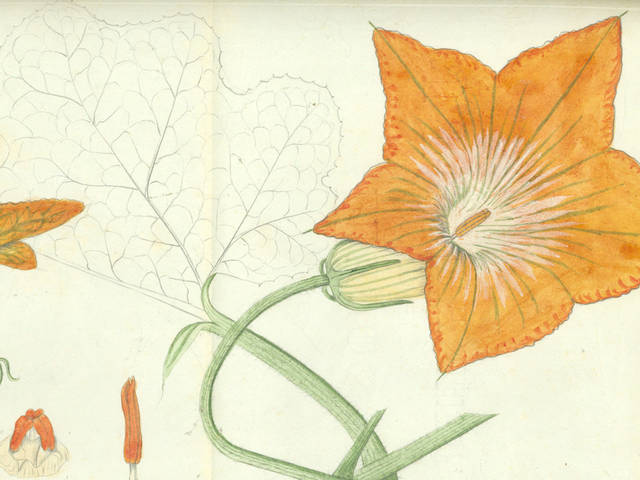 |
| Cucurbita moschata | Stahl Collection, U.S. National Herbarium, National Museum of Natural History, Smithsonian Institution |
Others would be hindered by a lack of financial support. Puerto Rican naturalist Agustín Stahl is best known for the time and effort he put into the study of Puerto Rico’s flora. His Studies of the flora of Puerto Rico was the first detailed work on the subject. However, the watercolors which were meant to be included in the six installments would remain unpublished because Stahl didn’t have the funds to print them. As a result, Studies remains incomplete, but today Stahl is recognized as one of the fathers of Puerto Rican natural science. He is even commonly attributed as the man who introduced the idea of decorating Christmas trees to the island.
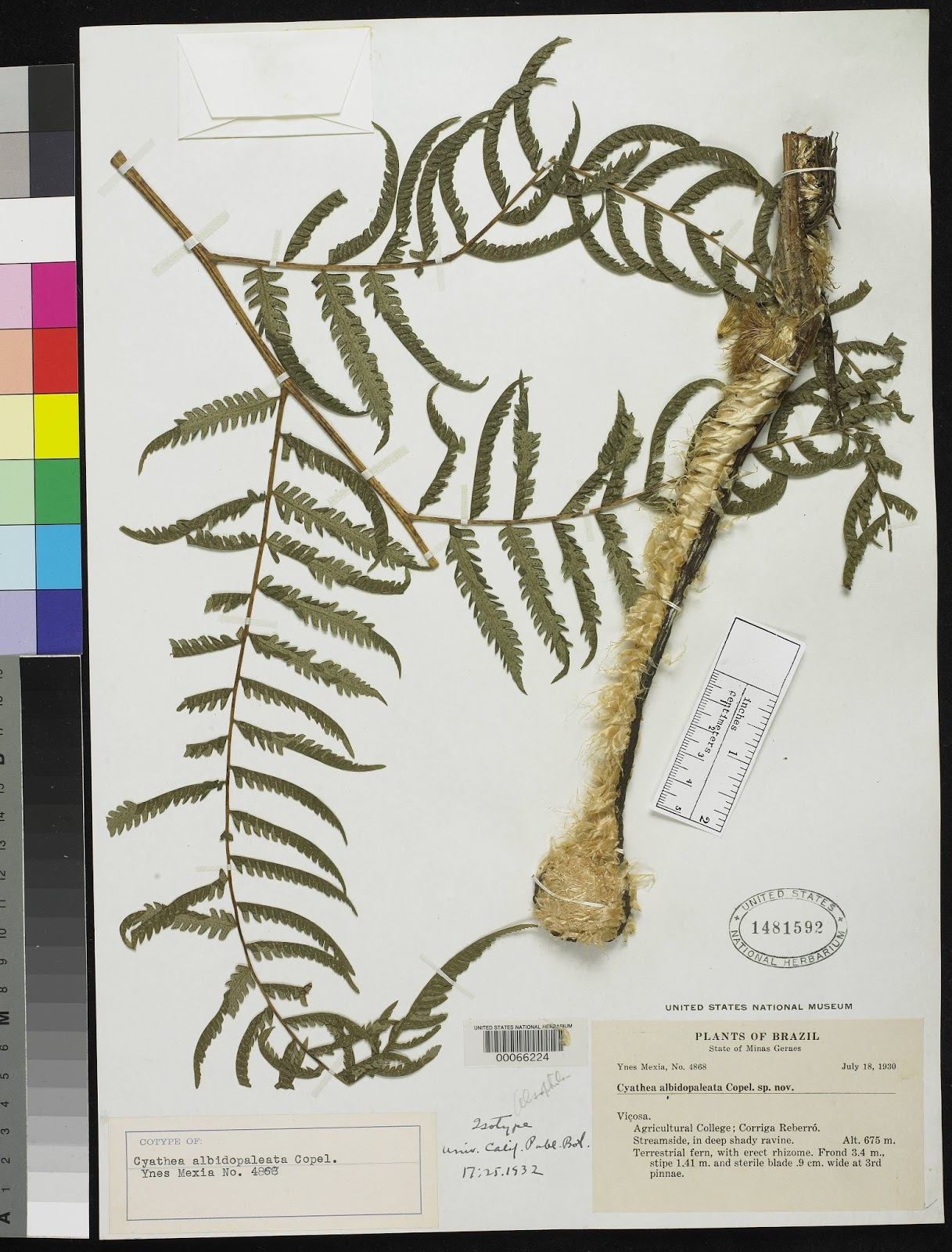 |
| Cyathea albidopaleata. Collector: Ynes Mexia | Smithsonian Institution, National Museum of Natural History, Department of Botany |
The exhibition also features Latinos and Latinas who overcame personal obstacles to become successful in their fields. Ynes Mexia, Mexican-American plant collector, didn’t join the scientific community until well into middle age. Mexia’s life would start in Washington, D.C., and would take her to Texas, and Mexico, where she would eventually marry and settle down. Along the way she’d experience personal struggles with anxiety which she wouldn’t overcome until she left Mexico and settled in San Francisco, California. There she’d discover an interest in botany, and her prolific plant collection resulted in the discovery of 500 new species.
Although the careers of these Latinos and Latinas were often met with obstacles, it’s not to say it was all doom and gloom. Several of the naturalists in the exhibition were members of the greater scientific community and were well-respected by their contemporaries. Many of the scientists even had new species and museums named after them. Although some of these names may be unfamiliar thanks to the test of time and selective history, their contributions to the world of natural science are undeniable.
The exhibition is by no means comprehensive, but I hope you enjoy discovering all the stories we’ve featured here.
