Biodiversity Heritage Library - Program news and collection highlights from BHL
  • Home
  • News
  • Featured Books
    • All Featured Books
    • Book of the Month Series
    • BHL at 20
  • User Stories
  • Campaigns
    • Fossil Stories
    • Garden Stories
    • Monsters Are Real
    • Page Frights
    • Her Natural History
    • Earth Optimism 2020
  • Tech Blog
  • Visit BHL
Home
News
Featured Books
    All Featured Books
    Book of the Month Series
    BHL at 20
User Stories
Campaigns
    Fossil Stories
    Garden Stories
    Monsters Are Real
    Page Frights
    Her Natural History
    Earth Optimism 2020
Tech Blog
Visit BHL
  • Home
  • News
  • Featured Books
    • All Featured Books
    • Book of the Month Series
    • BHL at 20
  • User Stories
  • Campaigns
    • Fossil Stories
    • Garden Stories
    • Monsters Are Real
    • Page Frights
    • Her Natural History
    • Earth Optimism 2020
  • Tech Blog
  • Visit BHL
Biodiversity Heritage Library - Program news and collection highlights from BHL
Blog Reel, Featured Books

Beyond Shells: The Birth of Malacology

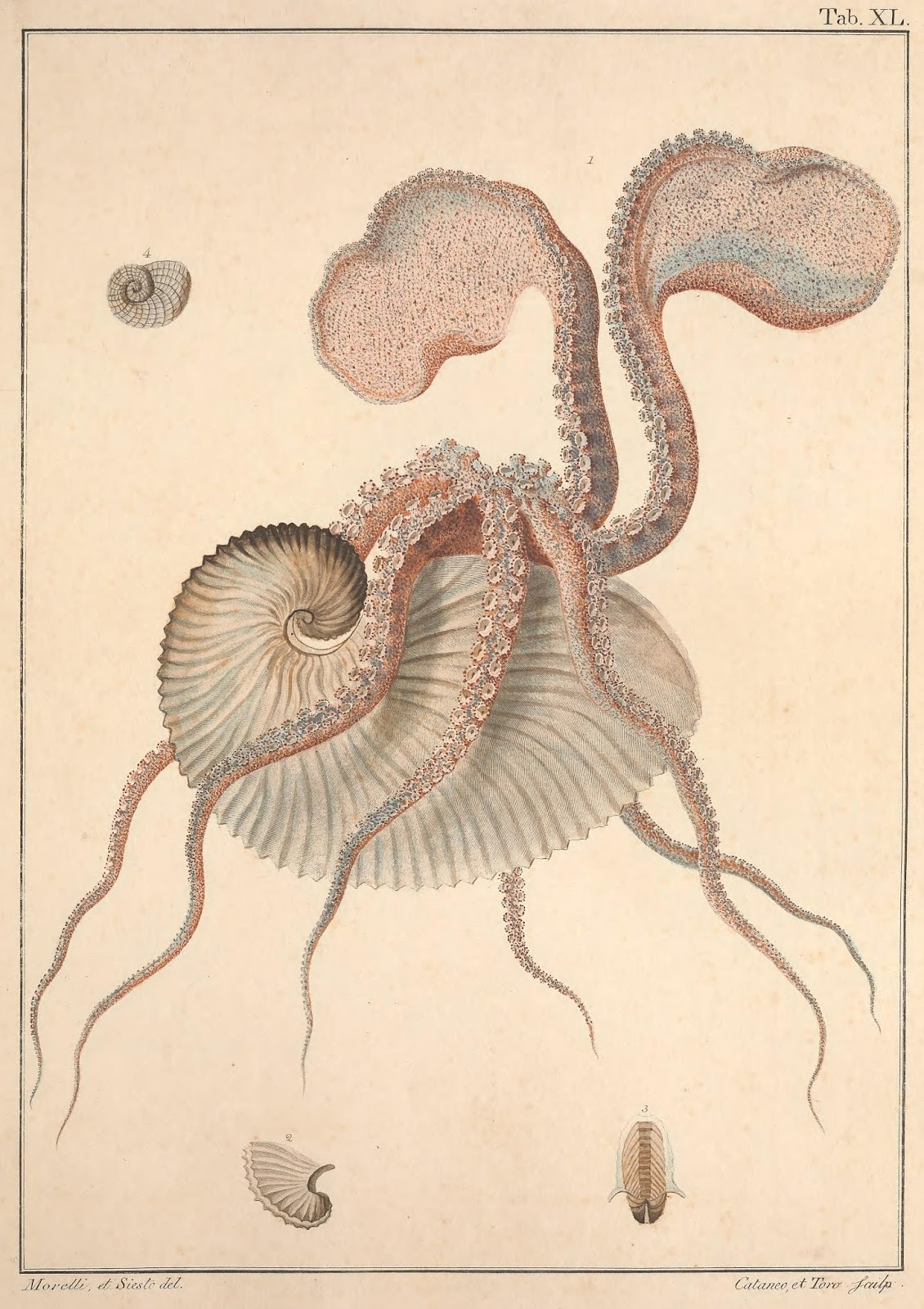
Until the late 18th century, the study of mollusks was based largely on shells. Very little research or published information existed about molluscan anatomy and soft tissues. Giuseppe Saverio Poli, recognized by many as the father of malacology, changed this with his monumental publication, Testacea utriusque Siciliae eorumque historia et anatome (1791-1827).

Poli, born in 1746 in Molfetta, Italy, studied classics, theology, and natural sciences at the University of Padua. In 1774, he traveled to London during an appointment at the Royal Military Academy, where he met physician and collector William Hunter, who suggested that he study the mollusks of the Mediterranean.
View Full Size Image
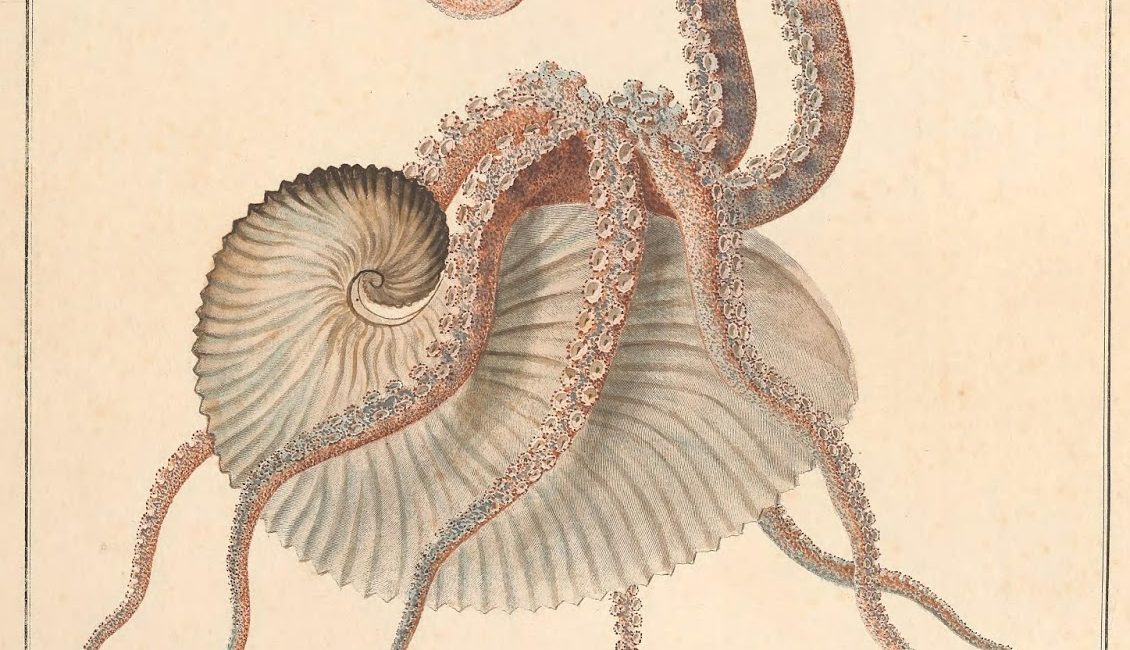
External morphology of a female paper nautilus (Argonauta argo) with egg case. Poli, Giuseppe Saverio. Testacea utriusque Siciliae. (1791-1827). http://biodiversitylibrary.org/page/44020354.

In the midst of a turbulent time in European history, with the outbreak of the Napoleonic wars at the beginning of the nineteenth century, Poli published his groundbreaking treatises on the comparative anatomy and classification of mollusks of Naples and Sicily, complete in three volumes under the title Testacea utriusque Siciliae eorumque historia et anatome. The first two volumes were published under Poli’s supervision in 1791 and 1795, but the outbreak of civil war in 1799 delayed the publication of the third, which was eventually published posthumously in two parts from 1826-27. The first part of volume three lists Poli as the author but provides annotations by Stefano Delle Chiaje, while the second part was authored by Delle Chiaje and describes the remaining species illustrated by Poli.
View Full Size Image
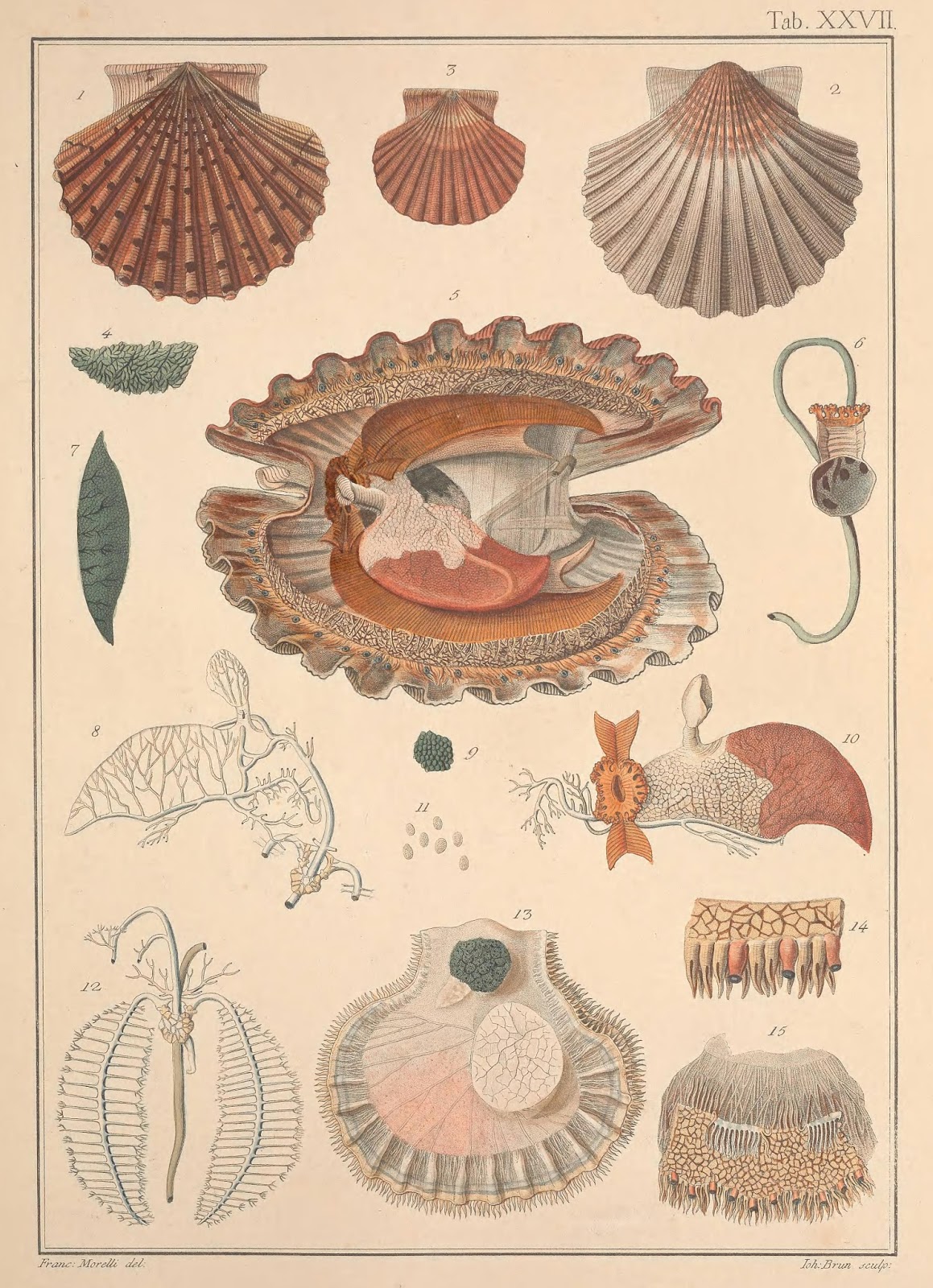
Shell morphology and internal and external anatomy of Mediterranean scallop (Pecten jacobaeus). Poli, Giuseppe Saverio. Testacea utriusque Siciliae. (1791-1827). http://biodiversitylibrary.org/page/44020302.

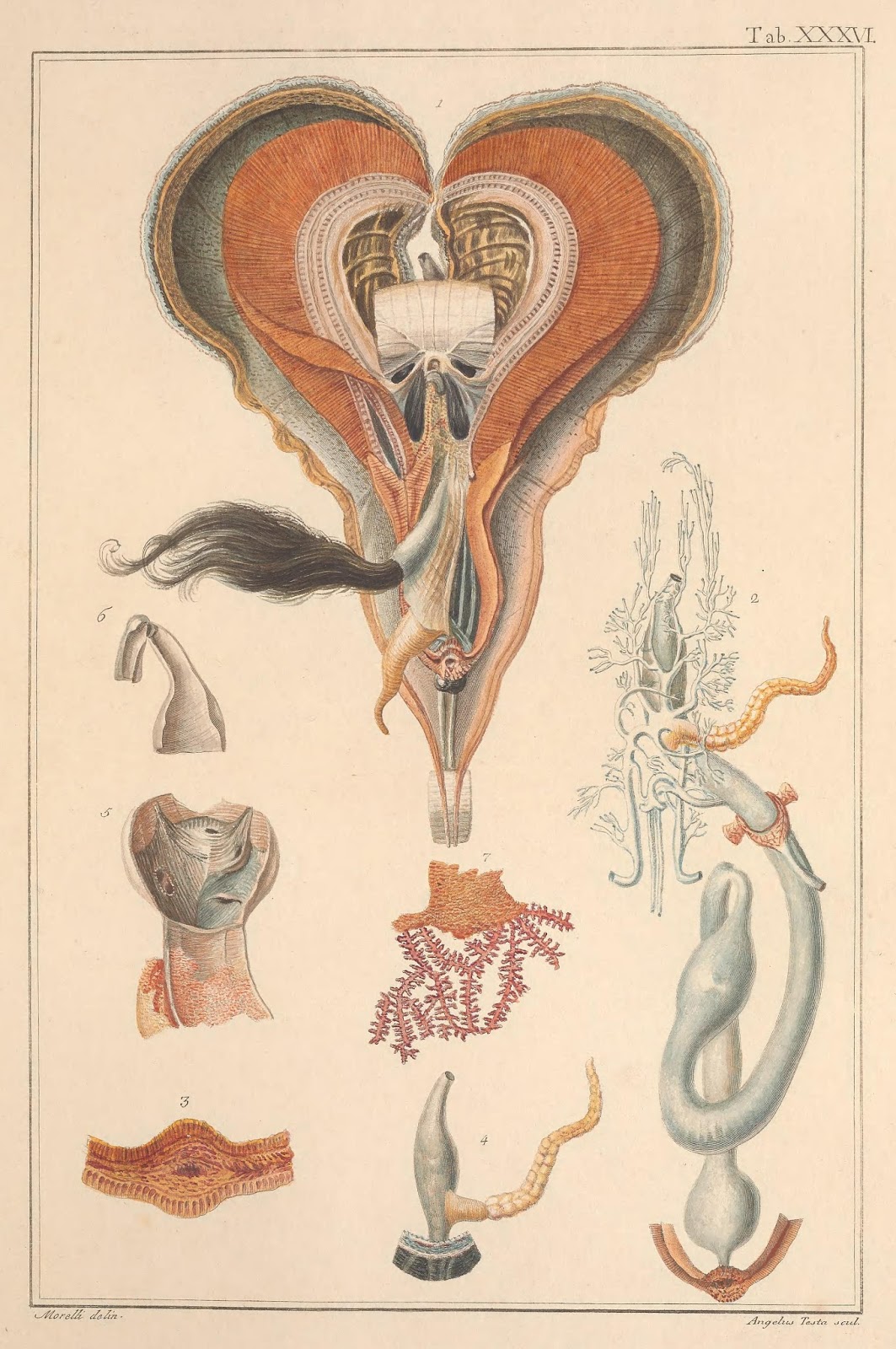
Testacea utriusque Siciliae is not only exquisitely illustrated with engraved colored plates featuring matching line-drawing versions with labels, but it also provided significant and novel insights about mollusks. While most of his contemporaries studied mollusks only through the lens of their shells, Poli recognized the importance of the information available in the soft tissues and documented molluscan morphology in great detail. Many of his observations were new to science; Poli was the first author to identify structures on the mantle edge of some bivalve mollusks as eyes.

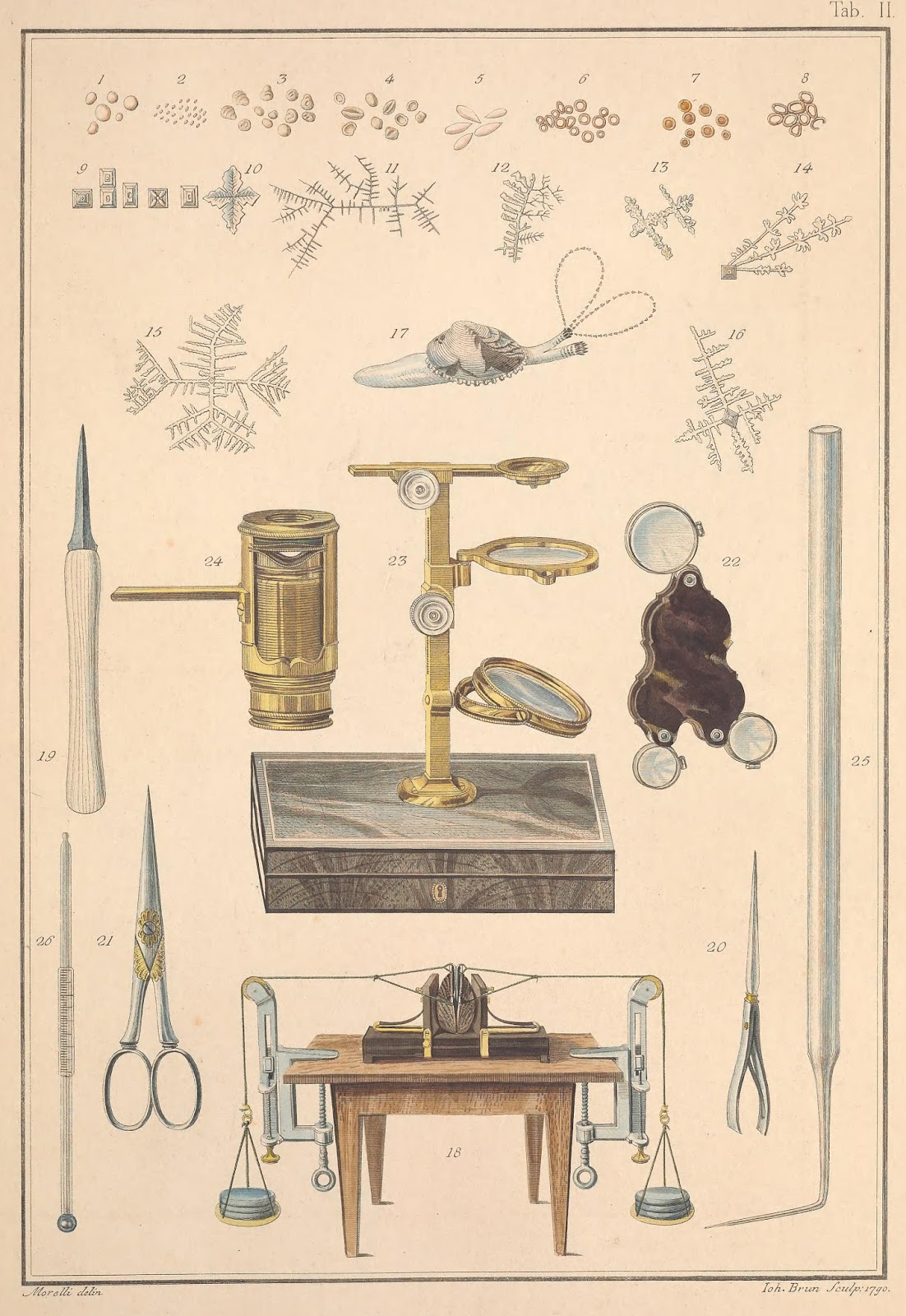
Testacea utriusque Siciliae was also the first treatise on molluscan biochemistry and physiology. A variety of tools, developed by Poli himself, were used to study reproduction and digestion, measure the contractile force of adductor muscles, trace blood flow and study blood composition, and describe the crystalline structure and chemical composition of shells in mollusks.
View Full Size Image
Instruments used by Poli, including dissecting tools, microscopes, and tools to measure the contractile force of adductor muscles in clams. Poli, Giuseppe Saverio. Testacea utriusque Siciliae. (1791-1827). http://biodiversitylibrary.org/page/44020202.

Finally, Testacea utriusque Siciliae was the first work to propose a classification system for mollusks based on soft anatomical characteristics. The predominant classification system of the day was based on the structure of the shells.
View Full Size Image
External morphology and dissections of the Mediterranean pen shell (Pinna nobilis). Poli, Giuseppe Saverio. Testacea utriusque Siciliae. (1791-1827). http://biodiversitylibrary.org/page/44020338.

In short, Testacea utriusque Siciliae established molluscan comparative anatomy as a distinct discipline, secured Poli’s position as the father of malacology, and provided an essential foundation for the work of future malacologists.

You can view this monumental publication for free in BHL, digitized by Smithsonian Libraries.

Information for this post based on the essay “At the Dawn of Malacology: The Salient and Silent Oeuvre of Giuseppe Saverio Poli” by Ilya Tëmkin from Natural Histories (2012).
August 20, 2015by michelle.underhill
BHL News, Blog Reel

Newest In-Copyright Additions to our Collection

Did you know that there is modern literature in our collection?

We have permission with over 165 licensors to provide nearly 400 in-copyright titles for free and open access under a Creative Commons BY-NC-SA 4.0 license. In other words, we have contemporary titles in our collection that you are free to use so long as you attribute the content to the copyright holder, use the content for educational or personal use only (commercial use is NOT allowed) and share the content under the same license (CC-BY-NC-SA 4.0). You can even create derivatives of the content for reuse so long as you adhere to the terms of the license.

BHL is pleased to announce the recent acquisition of 4 new in-copyright titles that we are in the process of adding to our collection:

View Full Size Image

The San Diego Shell Club [http://www.sandiegoshellclub.com/]
Since 1961, the San Diego Shell Club has been promoting research and appreciation of Mollusca through “lectures, club meetings and field trips,” as well as through their peer-reviewed publication, The Festivus. The Club has relationships with natural history museums in southern California including the San Diego Natural History Museum, Natural History Museum of Los Angeles and the Santa Barbara Museum of Natural History.

  • BHL is looking forward to providing back-issues of The Festivus through 2013 in our collection soon. Please monitor our recent additions page to track its progress. The San Diego Shell Club offers copies of their current volume for a very affordable fee via their website.
View Full Size Image

California Botanical Society [http://calbotsoc.org/madrono/]
Dedicated to the advancement of Western American botany, the California Botanical Society has been operating since 1913. Through its peer-reviewed publication, annual banquet, research support, graduate student support and community outreach it continues to play a major role in promoting scientific study and raising awareness about this important niche area of botany.

  • Digitization of Madroño; a West American journal of botany is actively in progress with over 50 volumes and counting. The California Botanical Society agreed to provide in-copyright volumes for the BHL collection under a 3 year “moving wall” or embargo meaning that for 2015 we will complete digitization up through the 2012 volume. Every year thereafter, we will digitize one more volume such that the 2013 volume will be available in 2016 and so on.

Work in progress…and if you are wondering why the current series of volumes for this title is out of sequence, it is because we are still in the process of digitizing the title, modifying the metadata, and ensuring we have all volumes present and accounted for. Sequencing volumes in their proper order takes manual curation of the items in our collection. Thanks, in advance, for your patience. Notice other titles with volumes out of order? Please let us know and thanks! We’ll get to it when we can.

The Royal Society of Queensland [http://www.royalsocietyqld.org/index.htm] began with the publication of its first Proceedings in 1884 as a successor to the Philosophical Society of Queensland. Over 150 years later, the Society is not only the oldest scientific institution in Queensland but is still producing its Proceedings on an annual basis. Entirely run by volunteers, the Society “seeks to increase awareness of the sciences in Queensland” by promoting “original research and the application of scientific method and knowledge to policy-making and decision-making.”

  • Proceedings of the Royal Society of Queensland. BHL digitized early volumes of the Society’s publication in 2009 and is in the process of digitizing through 1955. Please stay tuned for more volumes to appear in the coming weeks.
  • The earliest volumes of the Society were published as the Transactions of the Philosophical Society of Queensland vol.1 (1859) to vol.3 (1872) and will be digitized to BHL as well. These early volumes are proving tricky to track down within our BHL consortium partner holdings but where there’s a will, there’s a way…

Would you like to contribute any in-copyright content to the BHL? If we hold the content in one of our partner libraries we would be happy to digitize it under a CC-BY-NC-SA 4.0 license and make it available via our website. Please see our Permissions page for more information and contact us [http://biodiversitylibrary.org/contact].

July 16, 2015by [email protected]
Blog Reel, Featured Books

Book of the Week: Malacozoaires, ou, Animaux mollusques

View Full Size Image
There are approximately 100,000 species
of molluscs.

Have you ever collected seashells from the sea shore? Ever wonder where they come from or the former inhabitants? Well, they come from Molluscs. Molluscs are invertebrates that include squid, octopuses, cuttlefish, nudibranchs, snails, slugs, limpets, sea hares, mussels, clams, oysters, scallops, and other lesser known creatures.

Molluscs, belong to the phylum Mollusca, a major division of invertebrates with over 100,000 species, second to Arthropods. Their ability to survive is inspiring. They can be found at all latitudes and in both tropical and temperate regions. There are generally 10 recognized classes of molluscs: Aplacophora, Bivalvia, Cephalopoda, Polyplacophora, Gastropoda, Monoplacophora, Pleistomollusca, Polyplacophora, Rostroconchia, Scaphopoda, and Helcionelloida. Rostroconchia and Helcionelloida are both extinct.

Aplacophora and Monoplacophora are only found in the deep sea. The most diverse class is the Gastropods, which include slugs, sea butterflies, conchs, oyster borers, coweries, and snails. Gastropods account for more than a third of all living molluscs and there are between 60,000 and 80,000 living species. Class Cephalopoda including squid, cuttlefish, and octopuses are among the neurologically most advanced of all invertebrates. All Molluscs produce eggs.

View Full Size Image
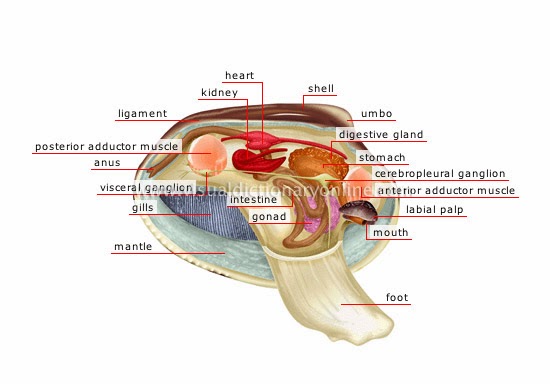
Anatomy of a Bivalve Shell Image: Merriam-Webster’s Visual Dictionary Online 

Molluscs are distinguished by their anatomy, which generally consist of a head-foot and visceral mass. They secrete a hard shell that covers and protects the visceral mass (area that contains the internal organs) and mantle, a layer of epidermal soft tissue that covers the visceral mass. This calcium shell protects them from harsh environments and predators. The nervous system of the Mollusc is similar with two nerve cords. The exception is Bivalvia, which has three. In addition, their body structures range in a variety of ways. It is difficult to apply one characteristic to all classes of Molluscs. Aplacophorans are the only species that do not have a well-developed foot.

View Full Size Image
Some molluscs don’t have a head.

As mentioned earlier, the shell is created by the protein conchiolin secreted from the mantle. The shell consists of three layers: periostracum (outer layer) of organic matter, mainly conchiolin; a middle layer of columnar calcite; and an inner layer of laminated calcite, often times nacreous also known as mother of pearl. The first two layers also contain chitin, a derivative of glucose found in the natural world.

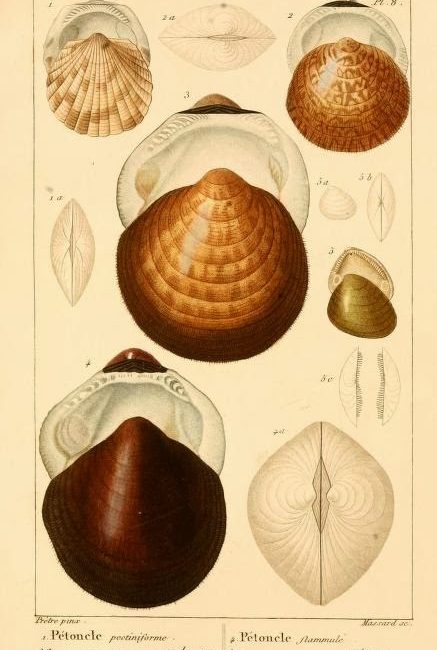
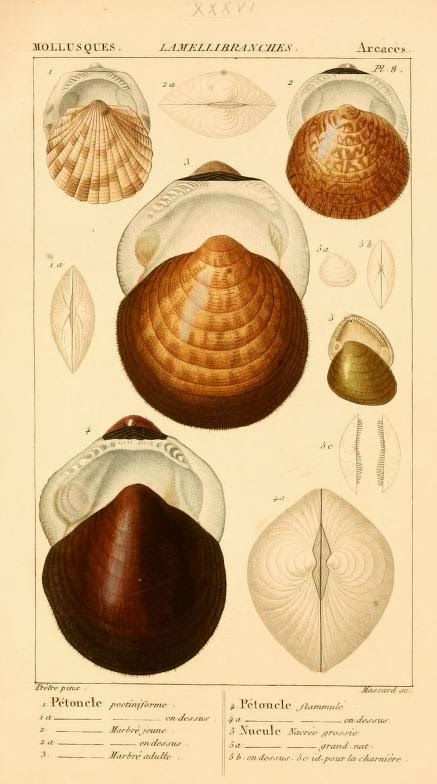
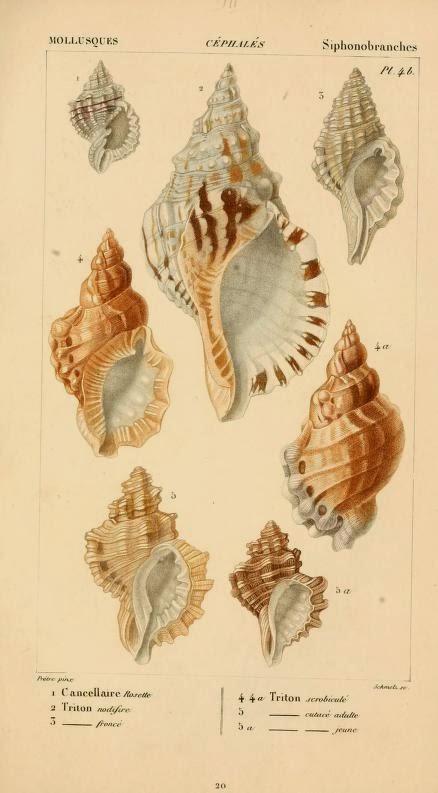
Published between 1829-1830, Malacozoaires, ou, Animaux mollusques (English translation: Malacozoaires, or Shell Fish Animals) was written by French zoologist and anatomist Henri Marie Ducrotay de Blainville, curator and professor of invertebrate zoology at the Muséum national d’Histoire naturelle and a member of the French Academy of Sciences. De Blainville like many scientists, longed to give order to the natural world. Malacozoaires, ou, Animaux mollusques is the result of this desire. This monograph provides several orders and genera for species studied in France. While there is significantly more information about mollusks today, his book was a start to understanding the unknown.

If French comes natural to you and vous parlez ou lisez francais, read Malacozoaires, ou, Animaux mollusques.

Check out the beautiful shells from the book at the BHL Flickr here.

References:

EOL Rapid Response Team (n.d.). Mollusca (Mollusks).Encylopedia of Life. Retrieved from http://eol.org/pages/2195/details

Hayward, PJ (1996). Handbook of the Marine Fauna of North-West Europe“>. Oxford University Press. p. 484–628.

Porter, S. (2007). “Seawater Chemistry and Early Carbonate Biomineralization”. Science 316 (5829): 1302.

Unknown (n.d.). Henri Marie Ducrotay de Blainville. Wikipedia. Retrieved from http://en.wikipedia.org/wiki/Henri_Marie_Ducrotay_de_Blainville

Unknown (n.d.). Mollusca. Wikipedia. Retrieved from http://en.wikipedia.org/wiki/Mollusca

December 19, 2013by gworthey
Blog Reel, User Stories

Taxonomic research on Southeast Asian land snails

Portrait version of the Biodiversity Heritage Library logo.

As part of our regular BHL and Our Users series, we’re pleased to introduce Barna Páll-Gergely, a PhD student in the Department of Biology at Shinshu University in Japan.  Barna has had a lifelong interest in shells and land snails and has graciously agreed to answer some questions about how BHL has impacted his research.

BHL and Our Users: Barna Páll-Gergely

View Full Size Image

What is your title, institutional affiliation, and area of interest?
I graduated from University of Pécs, a Hungarian university, and am now a PhD student in Japan, at Matsumoto, Shinshu University.  I am interested in the taxonomy and evolution of some land snail groups, mainly from South-east Asia.

How long have you been in your field of study?
I started collecting shells at the age of five, as many of us do.  I then worked on land snails for about 10 years, starting in the secondary school.

When did you first discover BHL?
A museum curator friend of mine showed it to me about two years ago.

What is your opinion of BHL and how has it impacted your research?
It provides wonderful possibilities for taxonomists who need to regularly use the very old literature.  BHL provides access to the kind of literature which can often be found only in large, old museum libraries. I also have access to recent papers because I am studying in a Japanese University, but without BHL I would be in big trouble with accessing the old sources.

How often do you use BHL?
I have to check some things almost every day, and during the literature search period (when I start working on a new taxonomic group), I use it practically all day.

How do you usually use BHL (read the titles online/download whole PDFs/Select Pages to Download for a custom PDF/etc.)
I usually download whole publications for my “literature collection”, and at the same time I produce smaller pdf files with the information I need for a specific subject. It is easier to handle smaller files when I just need to check something such as the exact page number of a citation.

What are your favorite features/services on BHL?
I can search for scientific names, and people’s names. This is a very big help.

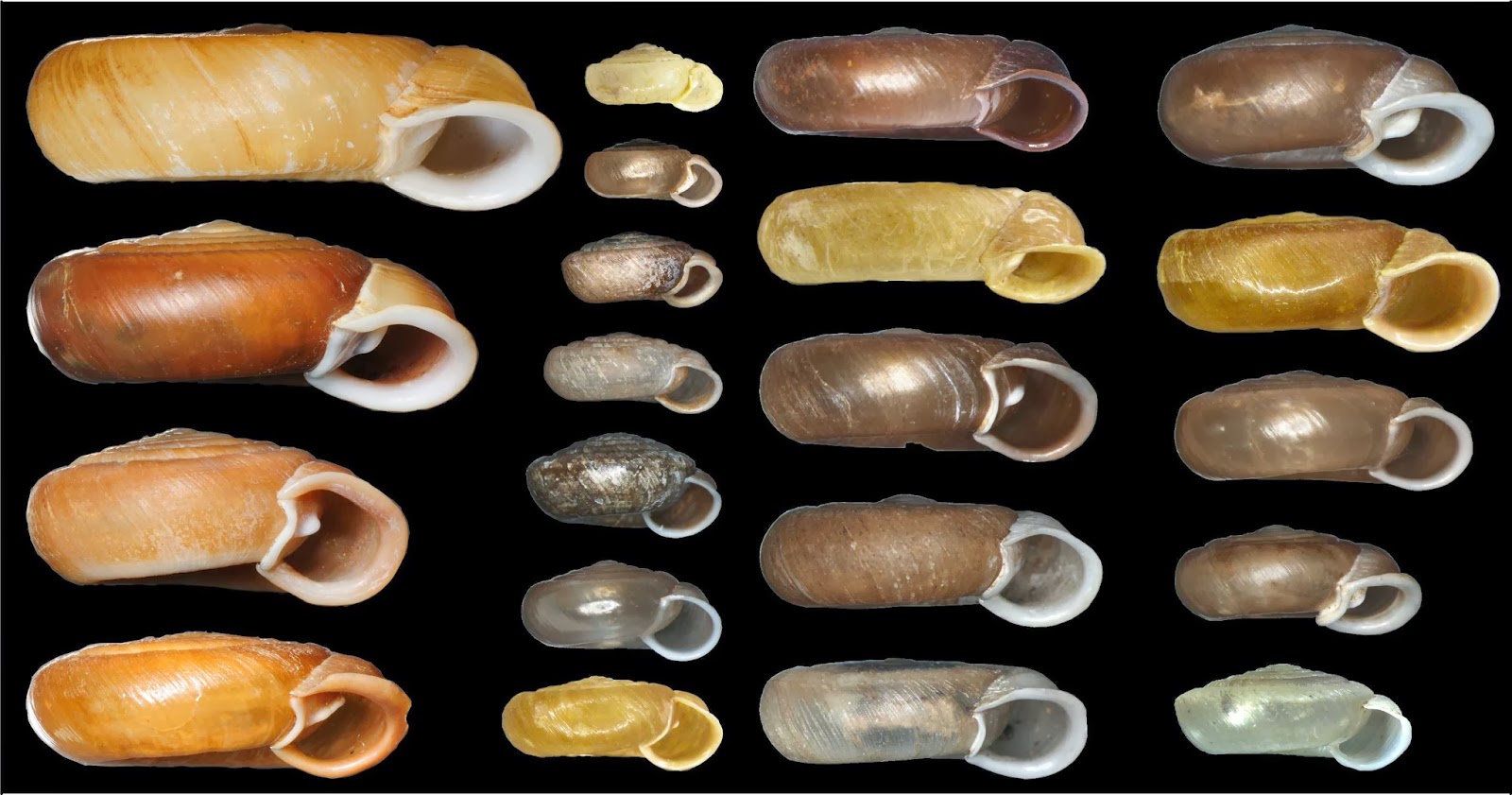
When I started to deal with the land snail family Plectopylidae, I just typed “plectopylis” into the search field and I could read and download many old literature. Without this possibility (scientific or authors name as a search option) finding all relevant literature would have taken maybe two times longer, and more importantly, there would have been a risk of overlooking some sources.  This was very helpful while I was working with my colleagues on the the description of new species and subspecies shown in the image below.

View Full Size Image
New species and subspecies of the land snail family Plectopylidae from China
and Vietnam (Páll-Gergely & Hunyadi, 2013). This family was neglected
since the beginning of the 20th Century
.

If you could change one thing about BHL, what would it be, or what developmental aspect would you like the BHL team to focus on next?
In many cases the plates of figures and the blank pages in-between appear marked as “text” on the left-hand navigation menu.  It would be great to enumerate them. The other thing is that selecting pages of a single publication and finding the plates at the end of each volume takes a long time. Sometimes it would be more user-friendly to provide a way to automatically group these together for download.

View Full Size Image
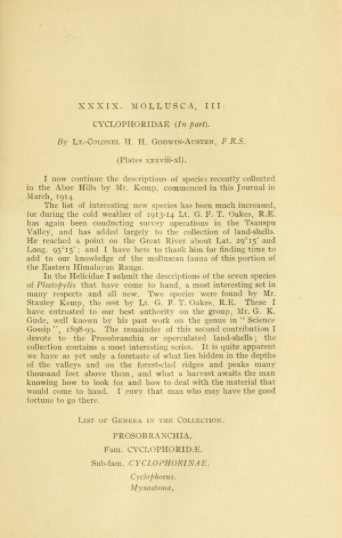
Godwin-Austen, H.H. 1917 Zoological
results of the Abor Expedition, 1911–12.
XLVII Mollusca, VII. Cyclophoridae
(in part) Records of the Indian Museum 8:
493—580. 
http://biodiversitylibrary.org
/item/41753#pag e/677/mode/1up

If you had to choose one title/item in BHL that has most impacted your research, or one item that you prefer above any other in BHL, what would it be and why?
There are many relevant sources I like, for example I am really fascinated by monographs like Kobelt’s Cyclophoridae or the Mollusca of India  by Godwin-Austen. On the other hand, discovering something unusual, or let’s say, “funny” is always a good moment.  My actual favourite is a part in Godwin-Austen’s “Zoological results of the Abor Expedition” (1917), after the description of Rhaphaulus miriensis: “After getting as far as writing the above description I left my work room for lunch, leaving the shell on a slide resting on plasticine. On taking up work again I found it crushed. Thus one of the most interesting shells found recently on the Eastern Frontier has to be rediscovered.”

Literature mentioned:
Kobelt W. 1902 Das Tierreich. Mollusca: Cyclophoridae R. Friedländer und Sohn, Berlin 662pp.

Godwin-Austen, H.H. 1882–1920 Land and Freshwater Mollusca of India, including South Arabia, Baluchistan, Afghanistan, Kashmir, Nepal, Burma, Pegu, Tenasserim, Malaya Peninsula, Ceylon and other islands of the Indian Ocean; Supplementary to Masers Theobald and Hanley’s Conchologica Indica Taylor and Francis, London, 257pp, 442pp.

Godwin-Austen, H.H. 1917 Zoological results of the Abor Expedition, 1911–12. XLVII Mollusca, VII. Cyclophoridae (in part) Records of the Indian Museum 8: 493—580.

Páll-Gergely, B. & Hunyadi, A. (2013): The family Plectopylidae Möllendorff 1898 in China (Gastropoda, Pulmonata). — Archiv für Molluskenkunde 142 (1): 1–66.


October 15, 2013by sayeedmd
Blog Reel, User Stories

BHL Use Case: Facilitating the Study of Mollusca in southern Africa

Portrait version of the Biodiversity Heritage Library logo.

Imagine that you live in a developing country and you’re studying a rare species of Mollusca. You need to verify the identity of a species you uncovered while performing some field work, but to do so you need to view a publication from the 1700s. Unfortunately, you do not have access to a library that holds the volume you need. What is a scientist to do?

Cue the Biodiversity Heritage Library! BHL is helping to improve the efficiency of scientific research around the world, particularly in developing countries, by providing free, global access to natural history literature, much of which can be found in only a few select libraries in the developing world.

Scientists everywhere feel the value of BHL, especially those in developing countries, like BHL user Dr. Dai Herbert, who graciously agreed to take some time out of his busy schedule to tell us how BHL has impacted his research on the Mollusca of southern Africa.

BHL and Our Users: Dr. Dai Herbert

View Full Size Image

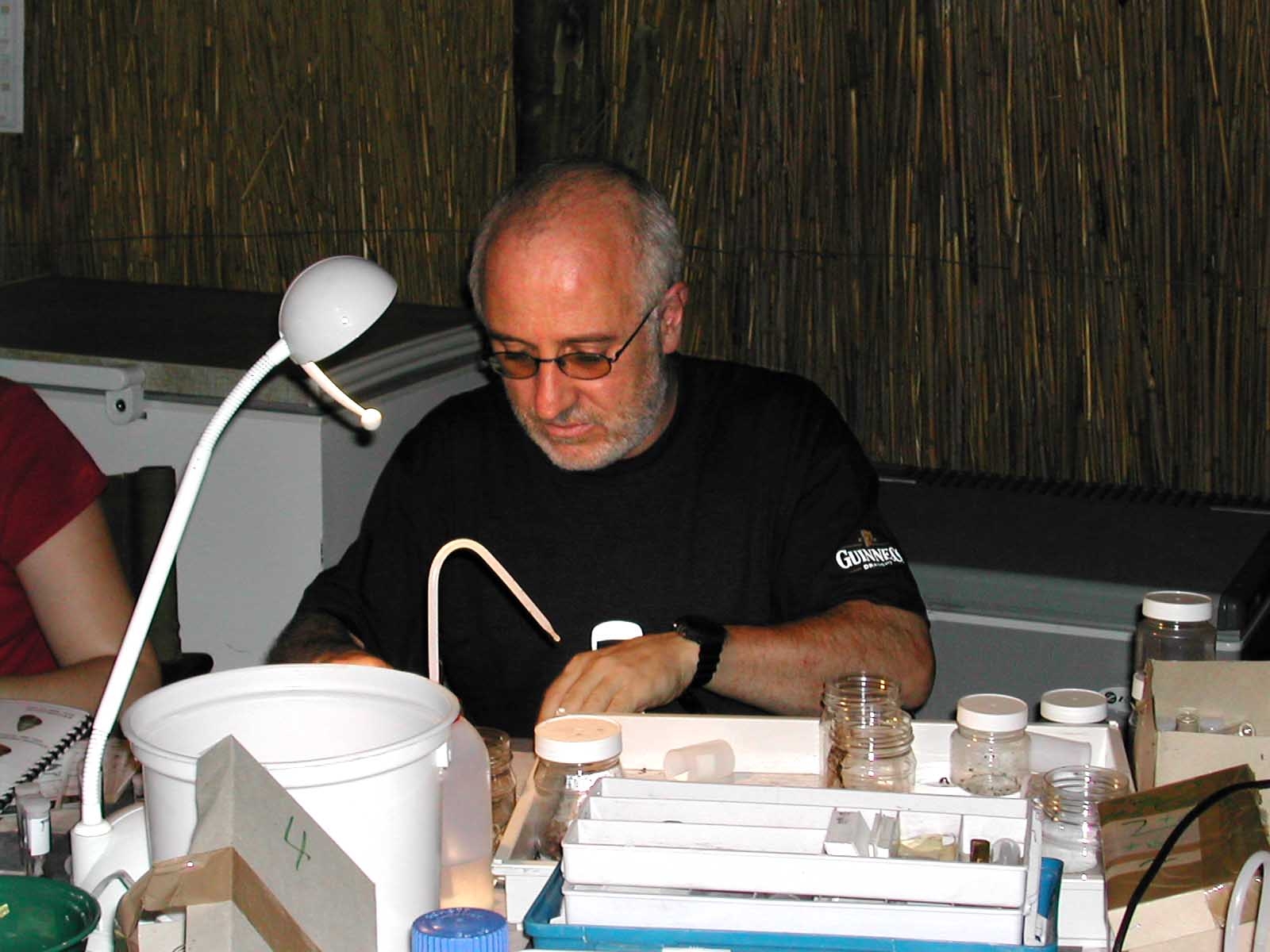
What is your title, institutional affiliation, and area of interest? Chief Curator: Mollusca, KwaZulu-Natal Museum, Pietermaritzburg and Honorary Professor, University of KwaZulu-Natal, Pietermaritzburg.

My field of interest is molluscan diversity and biogeography in southern Africa, with an emphasis on taxonomy and systematics. In work of this nature it is essential that one is fastidious and painstaking about accuracy. Consequently one often needs to go back to original sources to check information and these can sometimes be old and rare literature resources.

How long have you been in your field of study? Heavens, it’s a long time now – over 30 years.

When did you first discover BHL? I can’t remember exactly when I first came across BHL, but I have been making progressively more and more use of it over the last five years.

What is your opinion of BHL and how has it impacted your research? BHL is a tremendous and extremely valuable resource. As I mentioned previously, I frequently need to refer to the older literature, but before the advent of the internet and the BHL, this was usually a very frustrating task because much of the relevant material was not available in South Africa. This represented a considerable stumbling block and hindrance. The BHL has greatly alleviated this problem. Far more often than not, I am able to find what I need on the BHL. This resource has done an enormous amount to enhance the capacity of developing countries to undertake taxonomic research on their biota. I am extremely grateful to those who set up and manage this resource. Keep up the good work!

How often do you use BHL? This is variable and depends upon how much time I have for research (i.e. how much nonsense the bureaucrats and administrators thrust my way), but hardly a week goes by when I don’t use it. When fully engaged in a project, I might use it almost daily.

How do you usually use BHL (read the titles online/download whole PDFs/Select Pages to Download for a custom PDF/etc.)? Normally I search for the reference or journal by title, download the pdf and print the section that I need to refer to. I guess I’m still a little old fashioned in that I like to have a hard copy of original descriptions and I then scribble my own notes on these and store them for reference.

What are your favorite features/services on BHL? The advanced search facility and the pdf download option.

If you could change one thing about BHL, what would it be, or what developmental aspect would you like the BHL team to focus on next? BHL works well – the big issue is to get as much of the older literature scanned as possible.

If you had to choose one title/item in BHL that has most impacted your research, or one item that you prefer above any other in BHL, what would it be and why? This is impossible for me to say. I use many titles of considerable importance to my research.

Learn more about Dr. Herbert on the KwaZulu-Natal Museum website.

Interested in sharing how the BHL has helped facilitate your research? We would love to hear from you! Send us an email to [email protected]. With continuous input from our users, we can ensure that our development priorities continue to transform BHL into a tool that best meets the needs of our user community!

January 15, 2013by michelle.underhill

Help Support BHL

BHL's existence depends on the financial support of its patrons. Help us keep this free resource alive!

search

About BHL

The Biodiversity Heritage Library (BHL) is the world’s largest open access digital library for biodiversity literature and archives. BHL operates as a worldwide consortium of natural history, botanical, research, and national libraries working together to digitize the natural history literature held in their collections and make it freely available for open access as part of a global “biodiversity community.”

Join Our Mailing List

Sign up to receive the latest news, content highlights, and promotions.

Subscribe Now

Subscribe to Blog via Email

Enter your email address to subscribe to this blog and receive notifications of new posts by email.

Join 319 other subscribers

Subscribe to Blog Via RSS

Subscribe to the blog RSS feed to stay up-to-date on all the latest BHL posts.

Access RSS Feed

Inspiring Discovery through Free Access to Biodiversity Knowledge.

The Biodiversity Heritage Library makes it easier than ever for you to access the information you need to study and explore life on Earth…for free, anytime, anywhere.


64+ Million Pages of
Biodiversity Literature Online.

EXPLORE

Tools and Services
to Transform Research.

EXPLORE

300,000+
Illustrations on Flickr.

EXPLORE

ABOUT | HARMFUL CONTENT | PRIVACY | SITE MAP | TERMS OF USE