Biodiversity Heritage Library - Program news and collection highlights from BHL
  • Home
  • News
  • Featured Books
    • All Featured Books
    • Book of the Month Series
    • BHL at 20
  • User Stories
  • Campaigns
    • Fossil Stories
    • Garden Stories
    • Monsters Are Real
    • Page Frights
    • Her Natural History
    • Earth Optimism 2020
  • Tech Blog
  • Visit BHL
Home
News
Featured Books
    All Featured Books
    Book of the Month Series
    BHL at 20
User Stories
Campaigns
    Fossil Stories
    Garden Stories
    Monsters Are Real
    Page Frights
    Her Natural History
    Earth Optimism 2020
Tech Blog
Visit BHL
  • Home
  • News
  • Featured Books
    • All Featured Books
    • Book of the Month Series
    • BHL at 20
  • User Stories
  • Campaigns
    • Fossil Stories
    • Garden Stories
    • Monsters Are Real
    • Page Frights
    • Her Natural History
    • Earth Optimism 2020
  • Tech Blog
  • Visit BHL
Biodiversity Heritage Library - Program news and collection highlights from BHL
Blog Reel, User Stories

Getting Fishy with BHL: Empowering Discoveries and Connections Around Museum Collections

Man in a white shirt standing in front of a dried fish specimen.
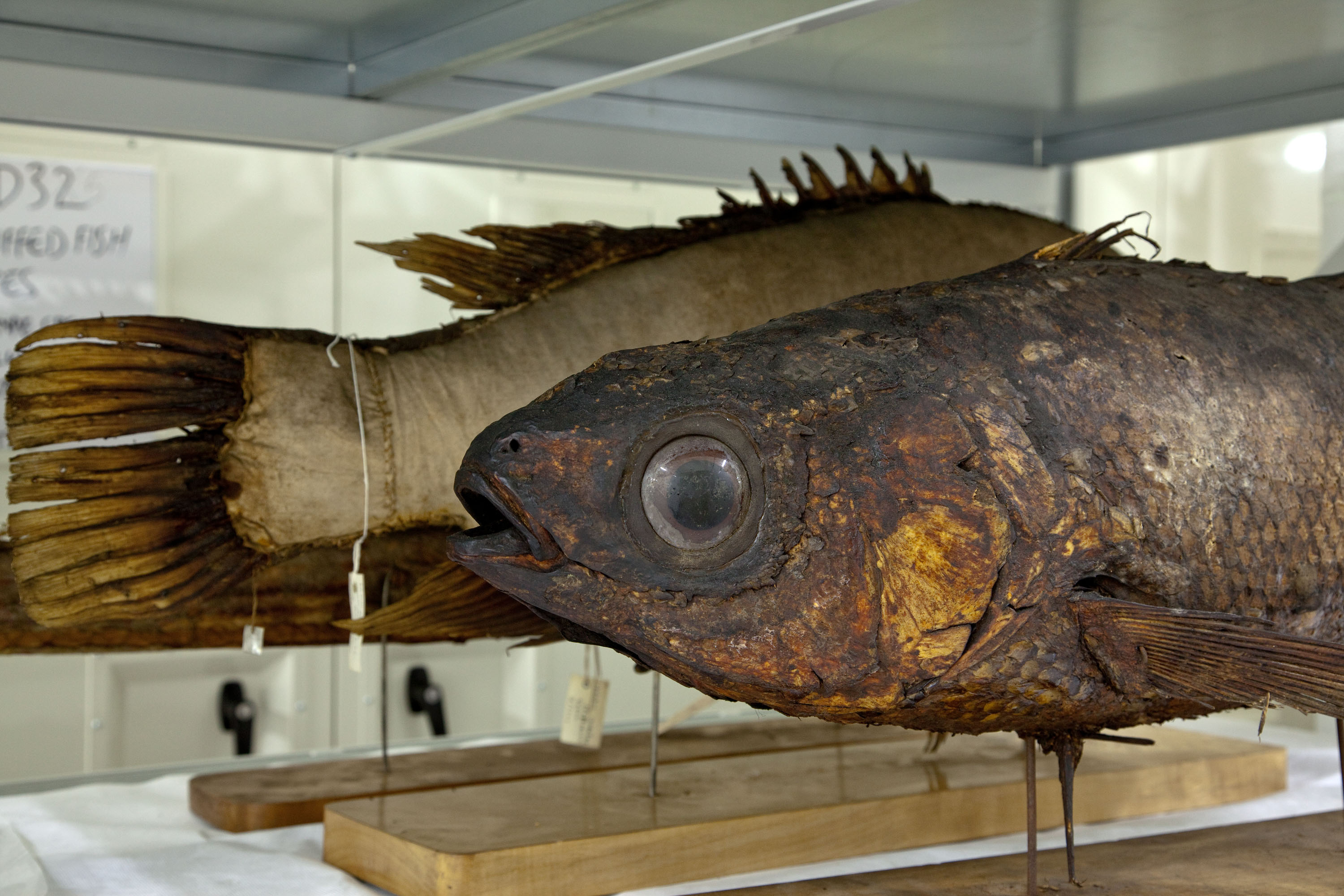
Photograph of a fish specimen.

Type specimen of Cubiceps capensis in the Natural History Museum of London’s dry specimen store, which houses most of the Museum’s skeletons, skins and stuffed fishes. Many specimens in the collection are well over 100 years old. James Maclaine, senior curator of fishes at the Museum, often uses BHL when conducting research on specimens in the collection. Photo by: Kevin Webb, NHM Photo Unit.

Twitter is a popular communication channel amongst the scientific community. Scientists use the platform to communicate with colleagues and share their research findings with both other scientists and the public.[1]

Twitter may also be a valuable source of data for researchers. For example, ecologists from the University of Gloucestershire found that “Twitter-mined” data is useful for phenological studies, such as winged-ant emergence or the appearance of house spiders in the fall.[2]

Twitter conversations can also spark unexpected discoveries. For example, a recent @BioDivLibrary Twitter conversation helped uncover a connection between the scientific literature and a museum’s collections.

It began with Boops boops, a fish — commonly called a bogue — native to the eastern Atlantic. @BioDivLibrary posted an illustration of the species in response to a tweet from Deborah Paul (@idbdeb), who shared the species as an example of a name uncovered while experimenting with parsing taxon names as part of the recent BHL data mining workshop at the University of Illinois.

?

Boops boops #SciArt from “A history of the fishes of the British Islands”, v. 1 (1868), in #BHLib via @SILibraries ➡️ https://t.co/A37BOVJ4Ru pic.twitter.com/HZVxA1ntoT

— BHL (@BioDivLibrary) June 18, 2019

The illustration, published in A History of the Fishes of the British Isles (1862-65), was based on a specimen collected in October 1842 and deposited in the Museum of the Royal Cornwall Institute at Truro. The text also mentions a second specimen, which was presented to the British Museum by a “W.P. Cocks, Esq.”. Paul tweeted an inquiry to see if anyone could help track down the current location of the specimen.

… and did you see this?! https://t.co/WzTtJjf6iN ~ specimen collected October 1842 ~ deposited Museum of the Royal Cornwall Institute at Truro ~ Wonder where it is now? Any help @NHM_Digitise? Who has Boops boops specimen from 1842? @ASIHCopeia @SPNHC @GBIF @DiSSCoEU @iDigBio? pic.twitter.com/TuJ09ueKGK

— Deborah Paul (@idbdeb) June 19, 2019

@NHM_Digitise called on James Maclaine (@beardiddley), senior curator of fishes at the Natural History Museum in London, for help tracking down the specimens. Pulling from a reference in Albert Gunther’s Catalogue of the Fishes in the British Museum, Maclaine responded that the Museum likely held the “W.P. Cocks, Esq.” specimen (with the label reading “Cork” instead of “Cocks”) and proceeded to tweet a picture of the specimen itself.

We do have one of the other ones in the reference I think (assuming W.P.Cocks and W.P.Cork are the same person!). From Albert Gunther’s Catalogue of Fishes, 1859, vol.1, p.419. pic.twitter.com/uZ5gibJmOm

— James Maclaine (@beardiddley) June 20, 2019

Here’s what the Cocks/Cork specimen looks like! The missing one will probably be dried too. pic.twitter.com/sFdaUMn5jW

— James Maclaine (@beardiddley) June 20, 2019

Beyond providing an example of the kinds of discoveries possible on the Twitterverse, this conversation also highlights the value of scientific literature for providing information on museum collections.

“Sadly, despite their many other qualities, the Victorians weren’t great at recording some details which we now would consider essential, so it is often difficult to determine the history of a 19th century fish specimen,” shares Maclaine.

When information is missing on specimen labels, the literature may be able to help fill in the gaps. For Maclaine and others managing collections, having access to this literature through BHL is incredibly valuable.

Can I just say as well, I LOVE BHL, I use it nearly every day!

— James Maclaine (@beardiddley) June 20, 2019

Maclaine finds BHL’s collections particularly useful when researching type specimens, the specific specimen used to describe a new species and the “typical” example of that species.

“Types are the most important part of our collection and are essential to any research on the species that they represent,” explains Maclaine. “However, many currently lurk unrecognized on our shelves, and it’s part of my job to find them, correctly identify them as types, and then update our records accordingly. This is where BHL comes in.”
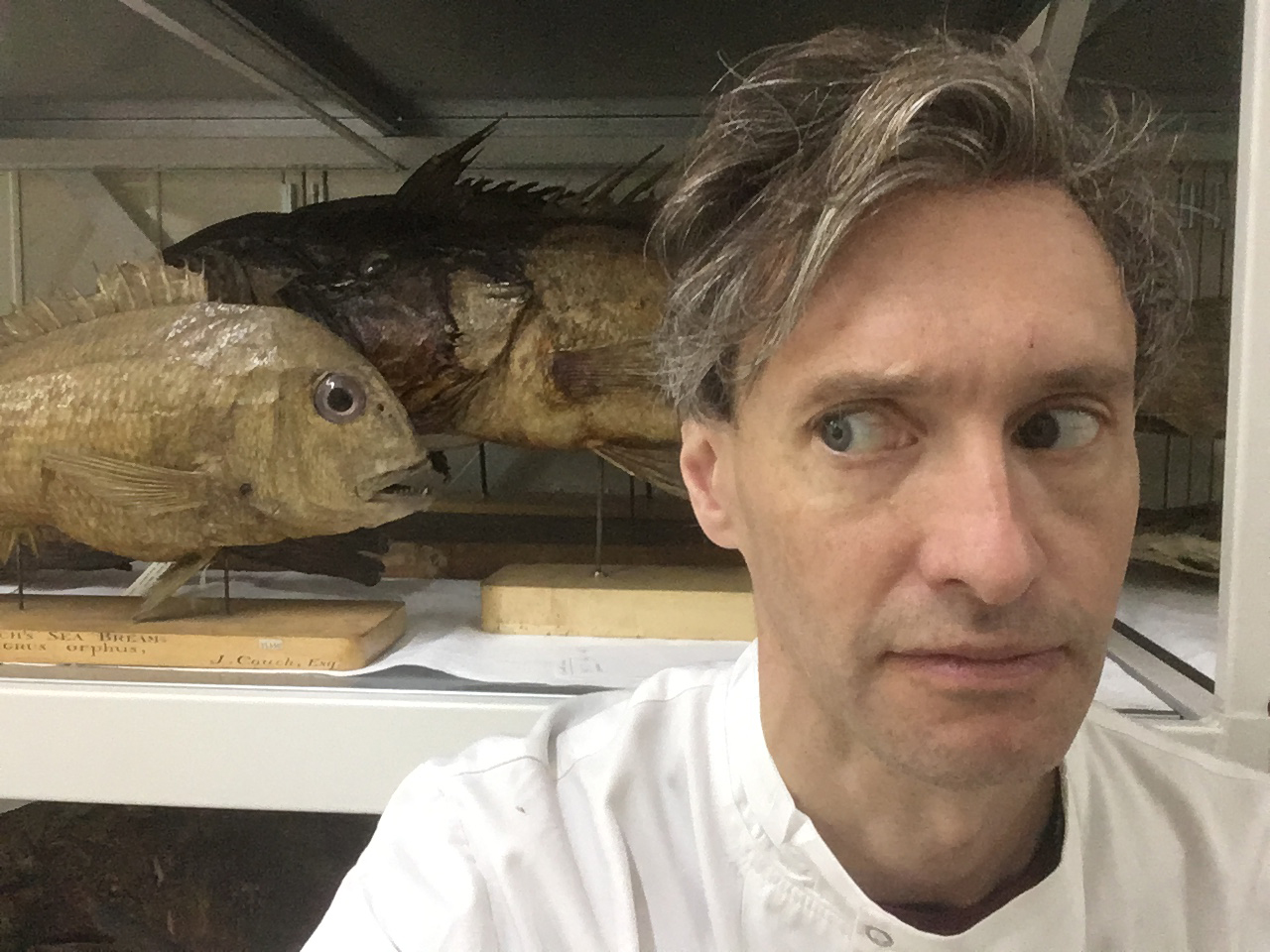
Man in a white shirt standing in front of a dried fish specimen.

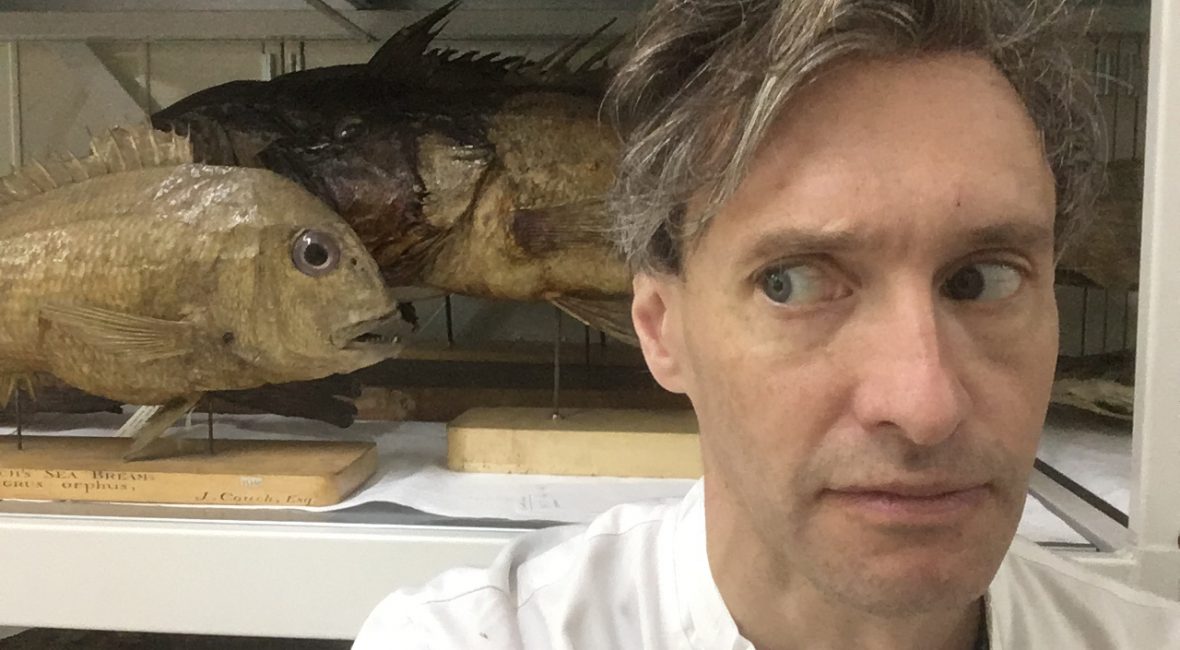
James Maclaine, senior curator of fishes at the Natural History Museum in London, with a seabream collected from Cornwall by naturalist Jonathan Couch in 1843. The specimen is housed in the Museum’s dry specimen store. Photo by: James Maclaine.

Maclaine uses BHL sometimes several times each day, using the taxonomic name finding feature to locate literature on specific species, downloading relevant documents as PDFs, and linking to useful references using page permalinks.

“BHL has been fundamentally useful in two ways,” asserts Maclaine. “Firstly, it’s very easy to quickly get old references. Secondly, being able to download them is very helpful too. When investigating potential type specimens, I often have to go back to those first original species descriptions in the 19th century journals, which is now so quick and easy to do online. If I’m lucky, the species author will give a collecting locality, a collector and a measurement. If all three of those and the species name tie up with the specimen, I can be fairly certain that it was used when the species was described and is a type.”

Maclaine first discovered BHL via Eschmeyer’s Catalog of Fishes, a fish taxonomy database of all known fish names, the history of those names and where they were first published.

“One day I noticed a blue hyperlink next to a reference with the message ‘See ref. at BHL’, and that was that,” recalls Maclaine.
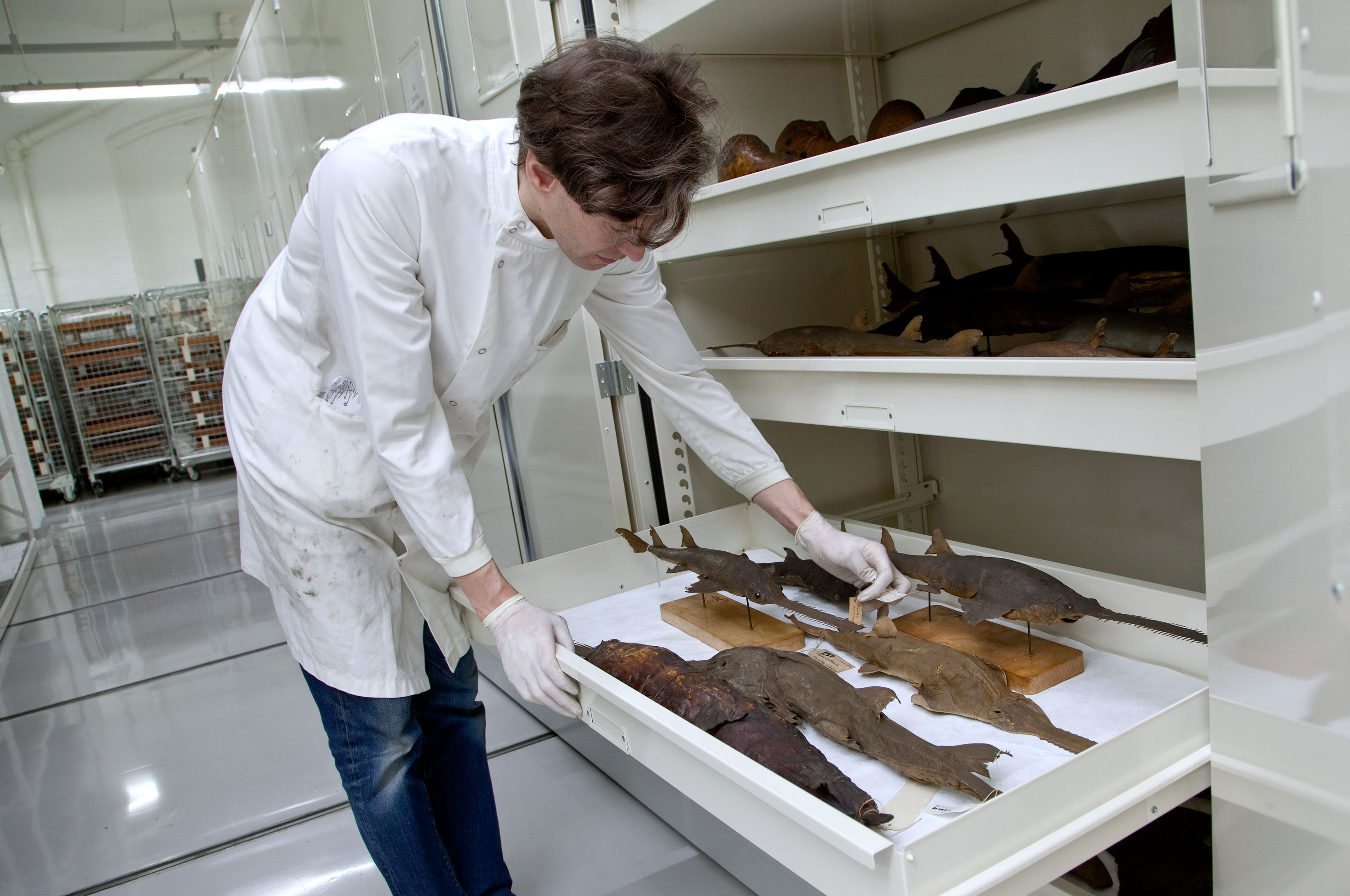
Man inspecting fish specimens in a museum drawer.

James Maclaine, senior curator of fishes at the Natural History Museum in London, inspecting specimens in the Museum’s dry specimen store, which houses most of the Museum’s skeletons, skins and stuffed fishes. Photo by: Kevin Webb, NHM Photo Unit.

As the manager of the fish collection at the Natural History Museum, Catalogue of the Fishes in the British Museum (1859-1868) is one of the most useful books in BHL’s collection for Maclaine’s work. In fact, it was this title that led him to the “W.P. Cocks, Esq.” specimen that he shared on Twitter.

Managing a 250+ year old collection means that Maclaine is responsible for ensuring that the information available for the specimens in his care is correct and up-to-date. BHL not only helps him provide reliable data for current researchers, but is also a valuable contributor to the legacy he will leave for future researchers.

“I have to think of all the generations of curators and researchers who will come after me and think, will what I’m doing be clear and comprehensible hundreds of years after I’m dead?” says Maclaine. “So, it’s great that I can now download the relevant references and then attach them to the specimen record so that everyone can see what I’ve done and why. I think the only bad thing about BHL is that it means I now spend less time in our Museum Library, another fantastic and irreplaceable resource!”
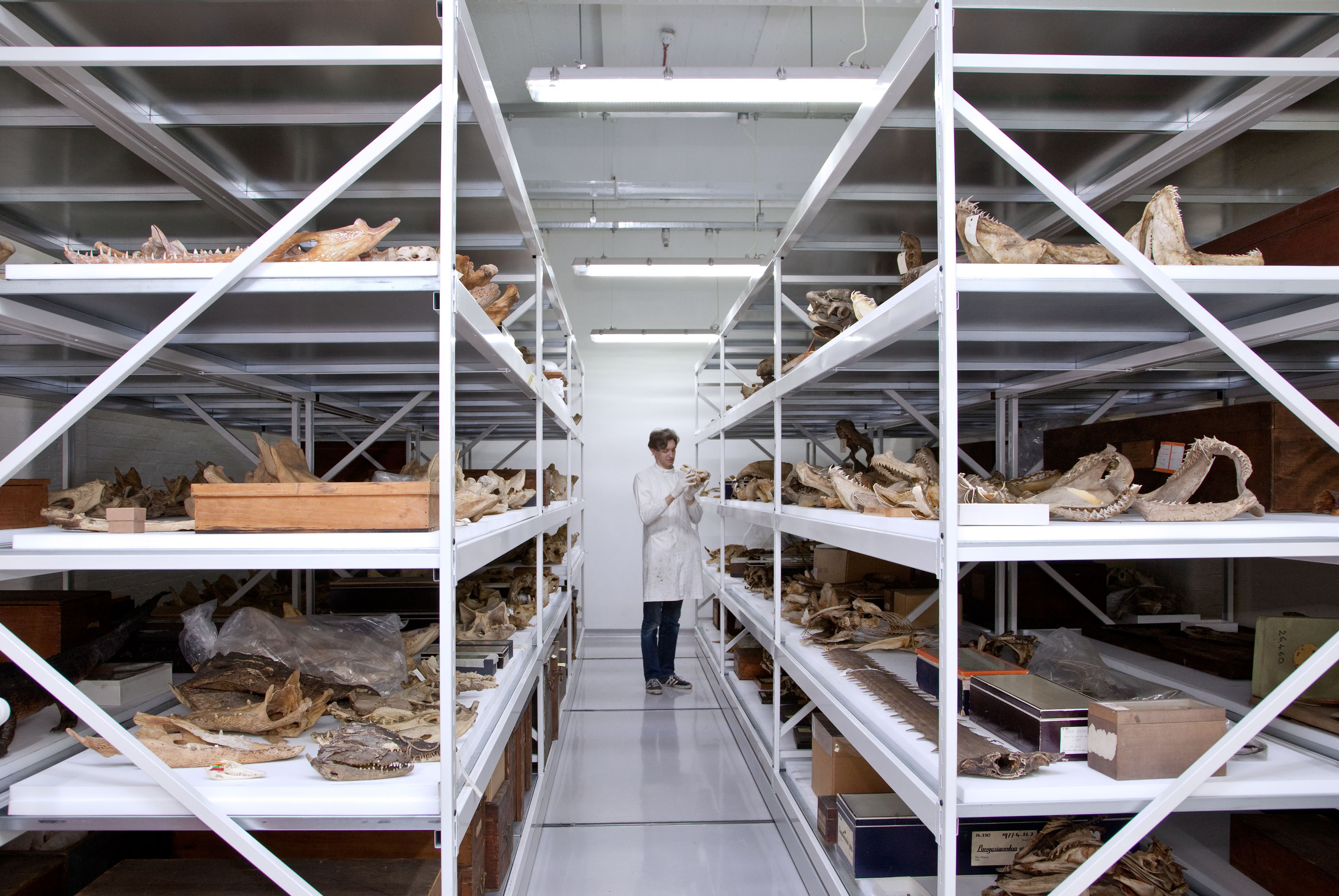
Man standing in a storage room for fish specimens.

James Maclaine, senior curator of fishes at the Natural History Museum in London, inspecting specimens in the Museum’s dry specimen store, which houses most of the Museum’s skeletons, skins and stuffed fishes. Photo by: Kevin Webb, NHM Photo Unit.

By making their literature digitally available, our Partners have ensured that anyone, anywhere can access important collections data. We’re proud to be a part of empowering new discoveries and connections, whether that be through a Twitter conversation or the diligent work of a museum collections manager.
References

[1] Phys.org. 2016. “New Study Reveals How Scientists Use Social Media.” Social Sciences, October 12. Accessed on July 9, 2019. https://phys.org/news/2016-10-reveals-scientists-social-media.html.

[2] Adam G. Hart, William S. Carpenter, Estelle Hlustik-Smith, Matt Reed, Anne E. Goodenough. “Testing the potential of Twitter mining methods for data acquisition: Evaluating novel opportunities for ecological research in multiple taxa.” Methods in Ecology and Evolution, 2018; DOI: 10.1111/2041-210X.13063.

September 5, 2019by michelle.underhill
Blog Reel, User Stories

Cetaceans and Cephalopods: Supporting the Work of Collections Managers One Specimen at a Time

Have you ever been to a museum and wondered about the history of the specimens on display?

If you have, then you’d probably be interested in talking to the museum’s collections managers, as their jobs include not only caring for and improving accessibility to the collections, but also serving as a living knowledge repository for information about the history of the collections.

View Full Size Image
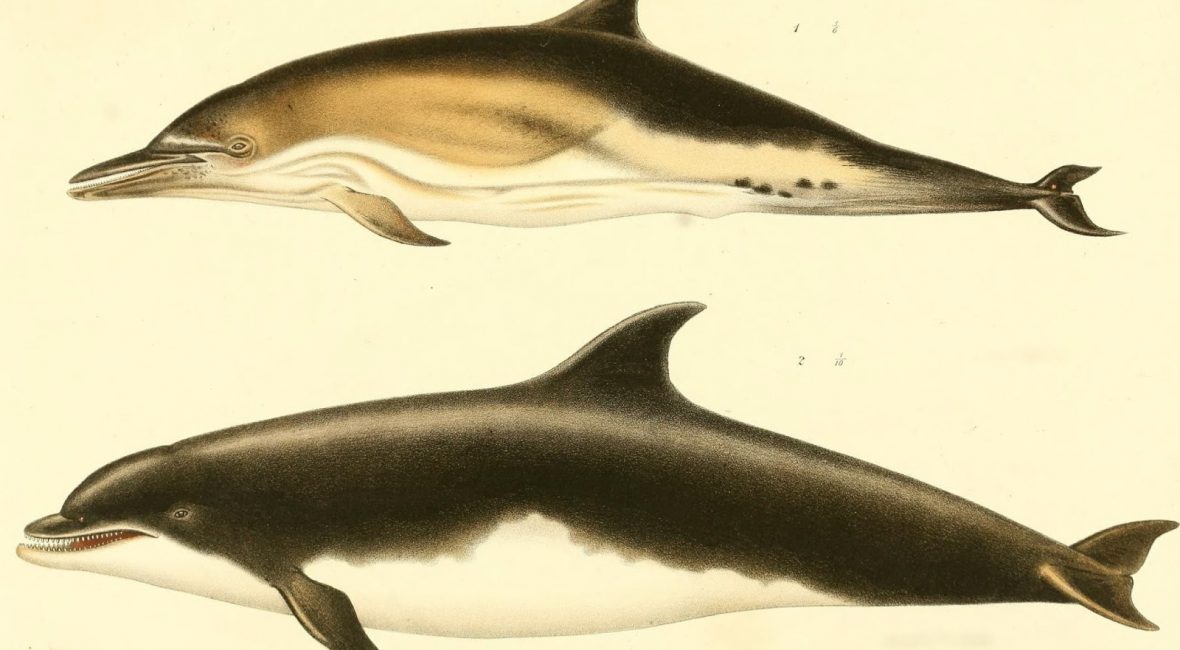
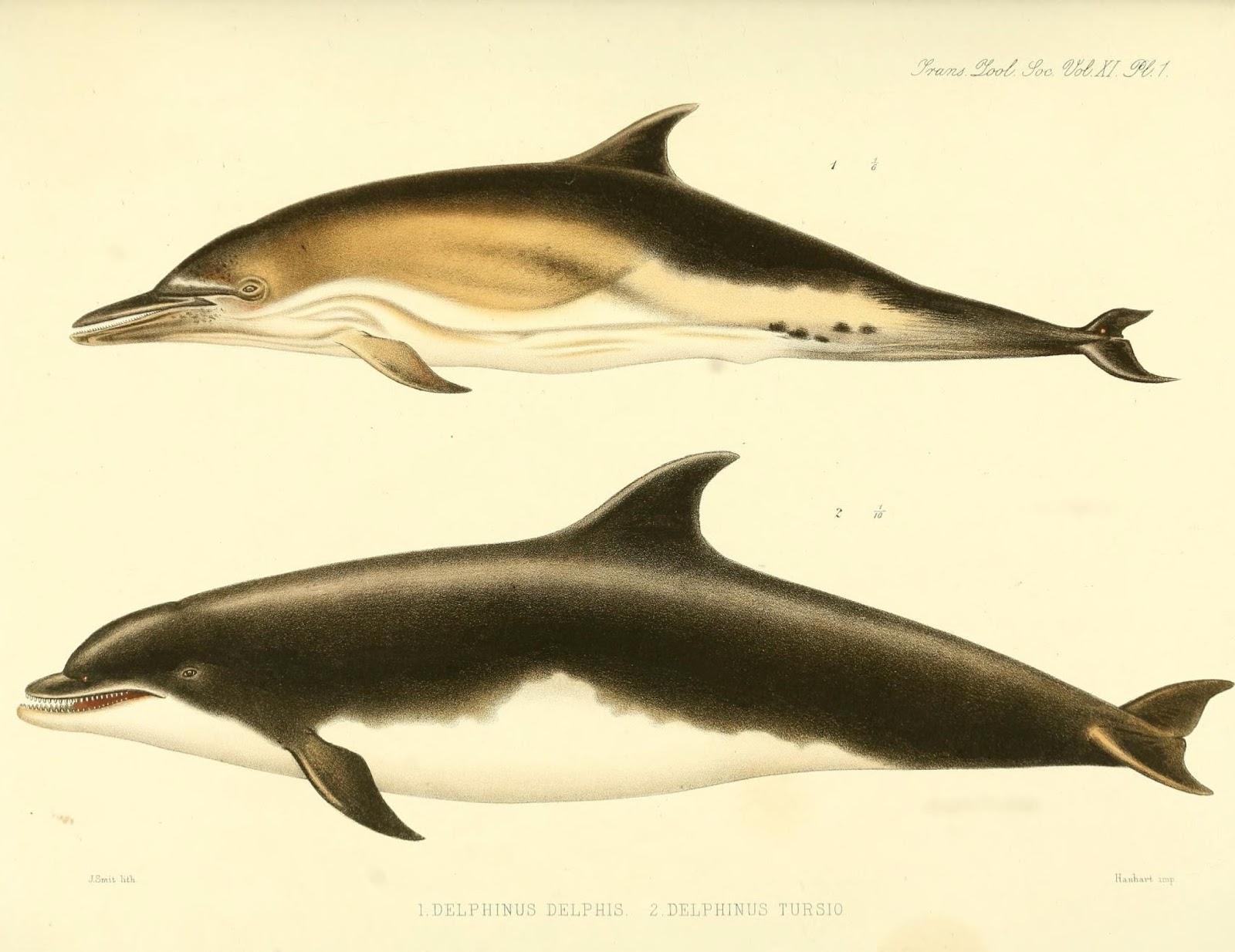
William Flower’s drawing of the bottlenose dolphin (lower). The skeleton from this individual is on display in the Oxford University Museum of Natural History. Flower, W. H. (1880), I. On the External Characters of two Species of British Dolphins (Delphinus delphis, Linn., and Delphinus tursio, Fabr.). The Transactions of the Zoological Society of London, 11: no 1. Digitized by the Natural History Museum, London. http://www.biodiversitylibrary.org/page/28725656.

Take the Oxford University Museum of Natural History, for example. Amongst the many treasures on display in that museum are five whale skeletons suspended from the roof. Where did those specimens come from? Mark Carnall, Collections Manager for the Life Collections at the museum, knows that these specimens are linked to some very prestigious individuals in the world of ‘whaleologists’, including Daniel Frederick Eschricht and William Henry Flower. Curious? Learn more in Mark’s blog post for More than a Dodo.

View Full Size Image
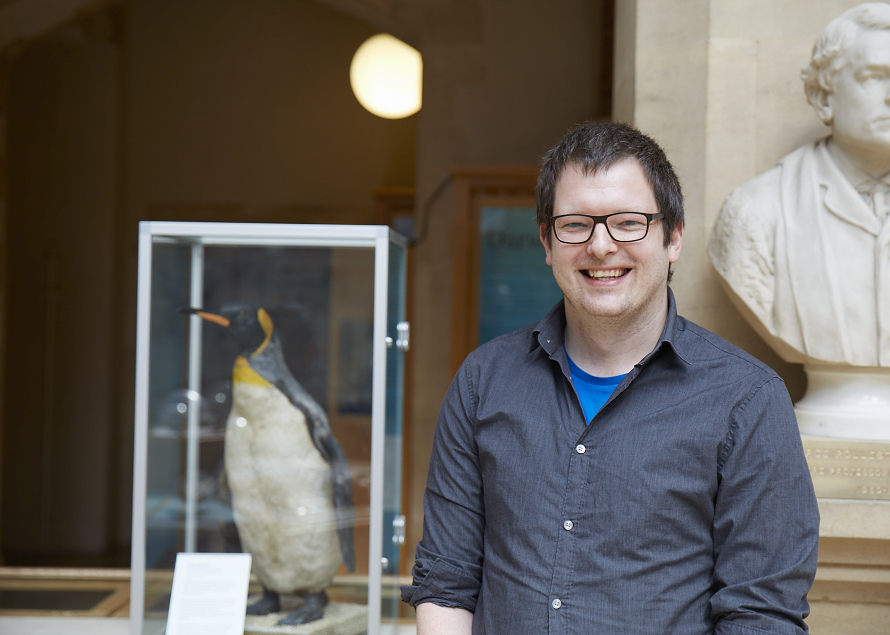
Mark Carnall. Image by John Cardwell courtesy Oxford University Museum of Natural History.

As a collections manager for the Oxford University Museum of Natural History, and during his tenure at other major UK museums, Mark has spent a great deal of time researching the history of the specimens in his care. BHL plays an important role in this research.

“Having worked at some of the older UK natural history museums, including the Grant Museum of Zoology at University College London, the Natural History Museum London and currently the Oxford University Museum of Natural History, I’ve been very fortunate in that some of the early references to the specimens that I curate are ‘THE’ original works when it comes to unravelling the physiology, taxonomy and ecology of major groups of animals, and it is rare that these aren’t already on BHL,” says Mark.


View Full Size Image
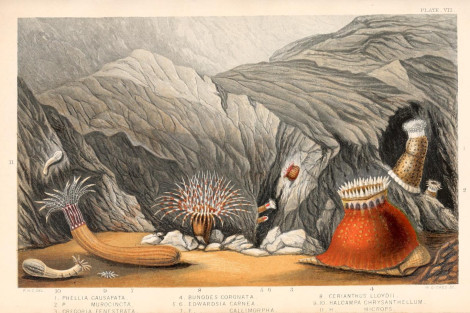
British Sea-Anemones, showing many of the species in the Oxford University Museum of Natural History series. Gosse, Philip Henry. Actinologia britannica (1860). Digitized by Smithsonian Libraries. http://biodiversitylibrary.org/page/12042290.

Mark first discovered BHL when looking for references and citations for specimens during his time at University College London. Today, he uses BHL about once a week as part of his research to answer inquiries about the museum’s collections. This research can be very time-intensive, and thus having online access to relevant publications is very important.

“As a collections manager, my role is dictated by priorities in improving accessibility to the collections, so often there isn’t much time for going in to depth with the history of specimens,” explains Mark. “Some specimens could be researched for weeks or months; however, with easy access to biodiversity heritage publications through BHL, it means that I can do some of this research on the fly rather than earmark it to return to later.”

In addition to discovering publications as part of his research process, Mark also discovers additional content of personal interest through BHL’s social media activities.

“One of my favourite features of BHL is the ‘curated content’ such as the blog posts that BHL users and staff write about discoveries or fascinatingly esoteric publications,” says Mark. “I am also a huge fan of the Flickr sets. As a collections manager, I’m always thinking about how people can access our specimens and content. A dry item by item database is fine for people who know what they are specifically looking for, but it doesn’t facilitate browsing such a vast amount of content or expose people to new knowledge or information. I’ve spent more than a few evenings starting by browsing a Flickr album I’ve been directed to by a BHL blog and ending up reading papers completely unrelated because making those fluid connections is so easy. The BHL social media team is also fantastic at raising awareness about the latest content on BHL. Additionally, I really appreciate that it’s clear how to reuse and credit resources, be it from reusing an image on Twitter to a bibliographic reference.”

When it comes to favorite content, Mark has a soft spot for the cephalopod material.

“I’m a huge cephalopod nerd,” admits Mark. “For such an interesting group there’s actually a paucity of published material. Browsing through BHL images, however, I’ve gone from sea monsters to beautifully illustrated plates (see for yourself), which I would have otherwise not stumbled upon or overlooked in the hunt for a taxon description.”


View Full Size Image
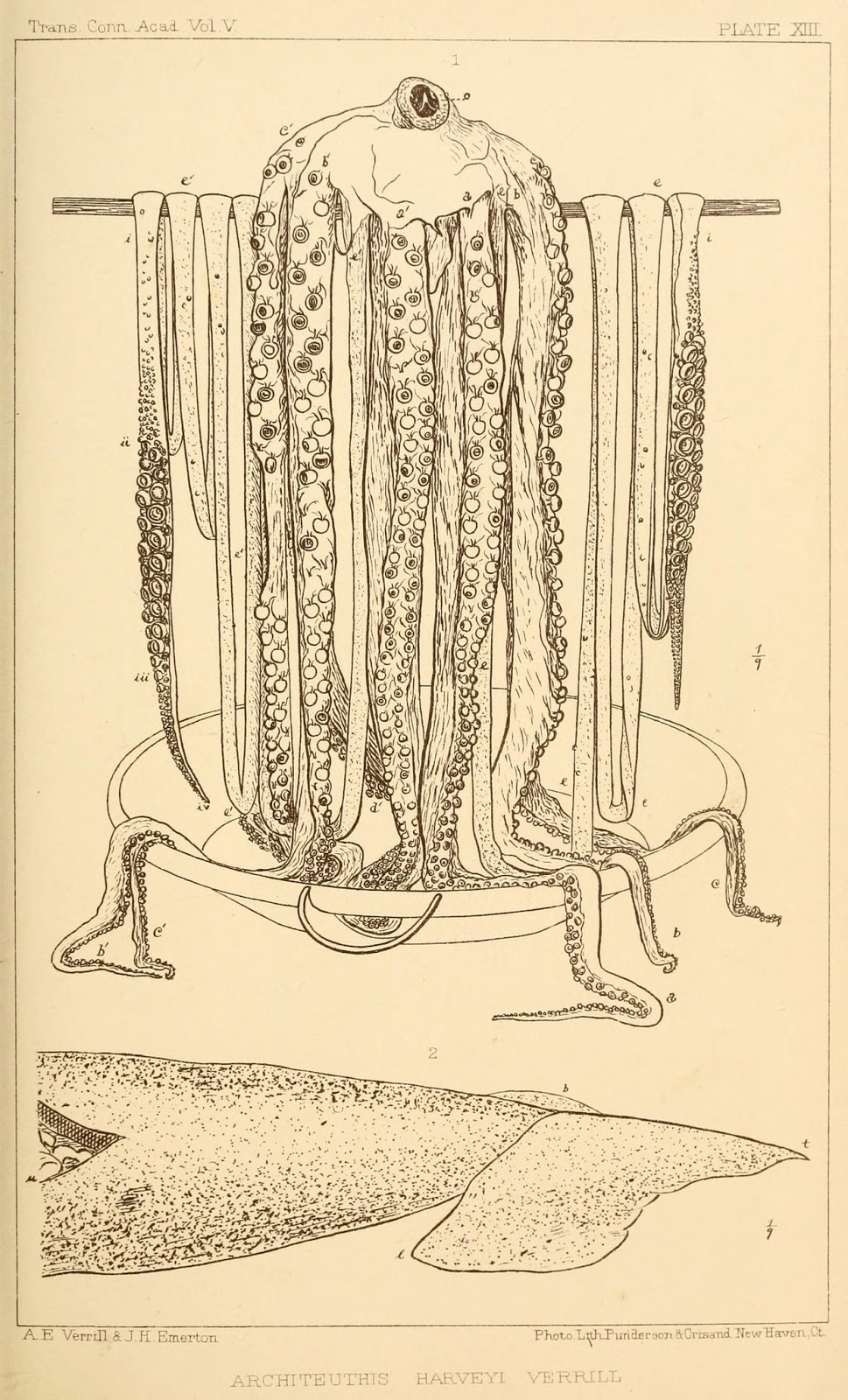
The rather sad-looking but earliest bona fide remains of a giant squid. Verrill, A.E. The cephalopods of the north-eastern coast of America. (1879-1881). Digitized by MBLWHOI Library. http://www.biodiversitylibrary.org/page/11826545.

Currently, his favorite item on BHL is the poem Spirula spirula by C. W. Johnson in the Nautilus (1926). According to Mark, “It’s a quirky (but accurate at the time) poem about the ram’s horn squid and formally captures a geekery and whimsy that you just don’t see as much in modern formal science publishing.”

While the historic collections and curated content on BHL are extremely valuable to Mark, he would love to see the amount of content from the mid-twentieth century expanded. This content, especially that from the 1930s-1970s, can be extremely difficult to access but can contain very valuable information for research.

You can help us obtain permission to include this content in BHL! If you or an organization you work with owns the copyright to a biodiversity-related publication, you can help us broker permission to digitize the work. Learn more on our website.

So, the next time you’re at a museum, take a moment to think about the history of the specimens on display and the people who work so hard to care for and preserve knowledge about those pieces. And just maybe, indulge your curiosity by searching for some related publications or browsing related images in BHL. You never know what kind of history you might dig up.

______________________________________

This post may contain the personal opinions of BHL users or affiliated staff and does not necessarily represent the official Biodiversity Heritage Library (BHL) position on these matters.

November 10, 2016by ulib-libraryjobs

Help Support BHL

BHL's existence depends on the financial support of its patrons. Help us keep this free resource alive!

search

About BHL

The Biodiversity Heritage Library (BHL) is the world’s largest open access digital library for biodiversity literature and archives. BHL operates as a worldwide consortium of natural history, botanical, research, and national libraries working together to digitize the natural history literature held in their collections and make it freely available for open access as part of a global “biodiversity community.”

Join Our Mailing List

Sign up to receive the latest news, content highlights, and promotions.

Subscribe Now

Subscribe to Blog via Email

Enter your email address to subscribe to this blog and receive notifications of new posts by email.

Join 319 other subscribers

Subscribe to Blog Via RSS

Subscribe to the blog RSS feed to stay up-to-date on all the latest BHL posts.

Access RSS Feed

Inspiring Discovery through Free Access to Biodiversity Knowledge.

The Biodiversity Heritage Library makes it easier than ever for you to access the information you need to study and explore life on Earth…for free, anytime, anywhere.


64+ Million Pages of
Biodiversity Literature Online.

EXPLORE

Tools and Services
to Transform Research.

EXPLORE

300,000+
Illustrations on Flickr.

EXPLORE

ABOUT | HARMFUL CONTENT | PRIVACY | SITE MAP | TERMS OF USE