Biodiversity Heritage Library - Program news and collection highlights from BHL
  • Home
  • News
  • Featured Books
    • All Featured Books
    • Book of the Month Series
    • BHL at 20
  • User Stories
  • Campaigns
    • Fossil Stories
    • Garden Stories
    • Monsters Are Real
    • Page Frights
    • Her Natural History
    • Earth Optimism 2020
  • Tech Blog
  • Visit BHL
Home
News
Featured Books
    All Featured Books
    Book of the Month Series
    BHL at 20
User Stories
Campaigns
    Fossil Stories
    Garden Stories
    Monsters Are Real
    Page Frights
    Her Natural History
    Earth Optimism 2020
Tech Blog
Visit BHL
  • Home
  • News
  • Featured Books
    • All Featured Books
    • Book of the Month Series
    • BHL at 20
  • User Stories
  • Campaigns
    • Fossil Stories
    • Garden Stories
    • Monsters Are Real
    • Page Frights
    • Her Natural History
    • Earth Optimism 2020
  • Tech Blog
  • Visit BHL
Biodiversity Heritage Library - Program news and collection highlights from BHL
BHL News, Blog Reel

Inspiring Discovery at the 2016 BioBlitz and Biodiversity Festival in Washington, D.C.

BHL participated in BioBlitz 2016 in Washington, D.C. on 20-21 May. A BioBlitz focuses on finding and identifying as many species as possible in a specific area over a short period of time. In this special edition of the BioBlitz, held in conjunction with the National Park Service’s centenary, the D.C. BioBlitz was accompanied by a two-day Biodiversity Festival on the National Mall at Constitution Gardens. The event was co-hosted by the National Park Service and National Geographic.

View Full Size Image
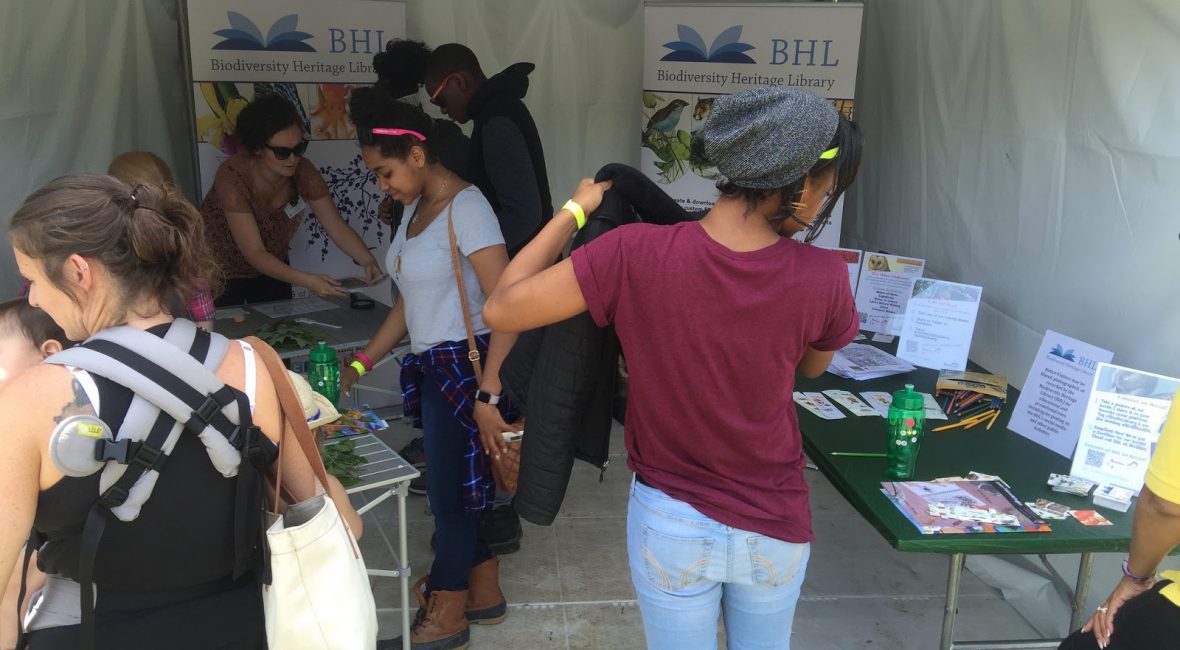
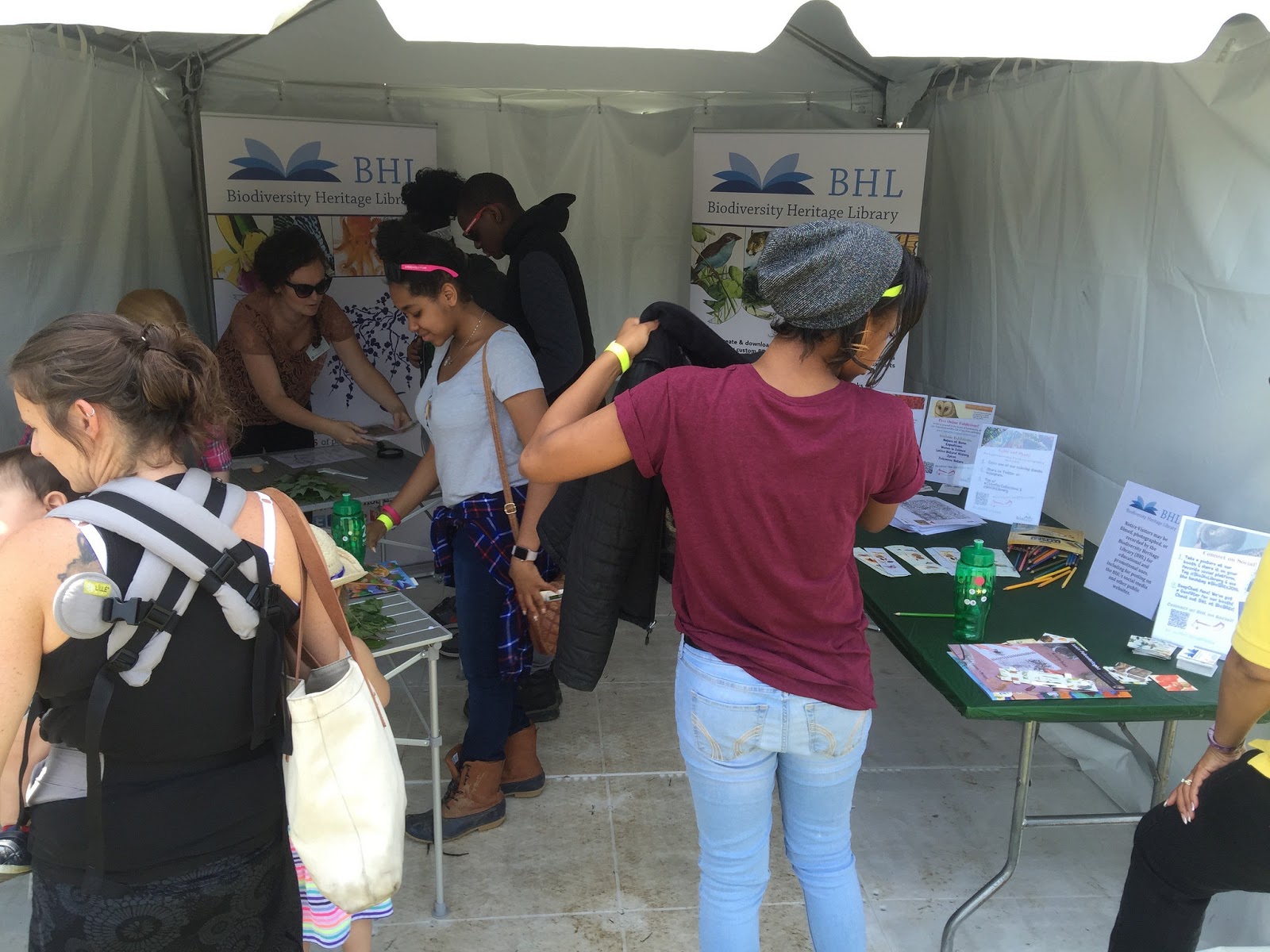
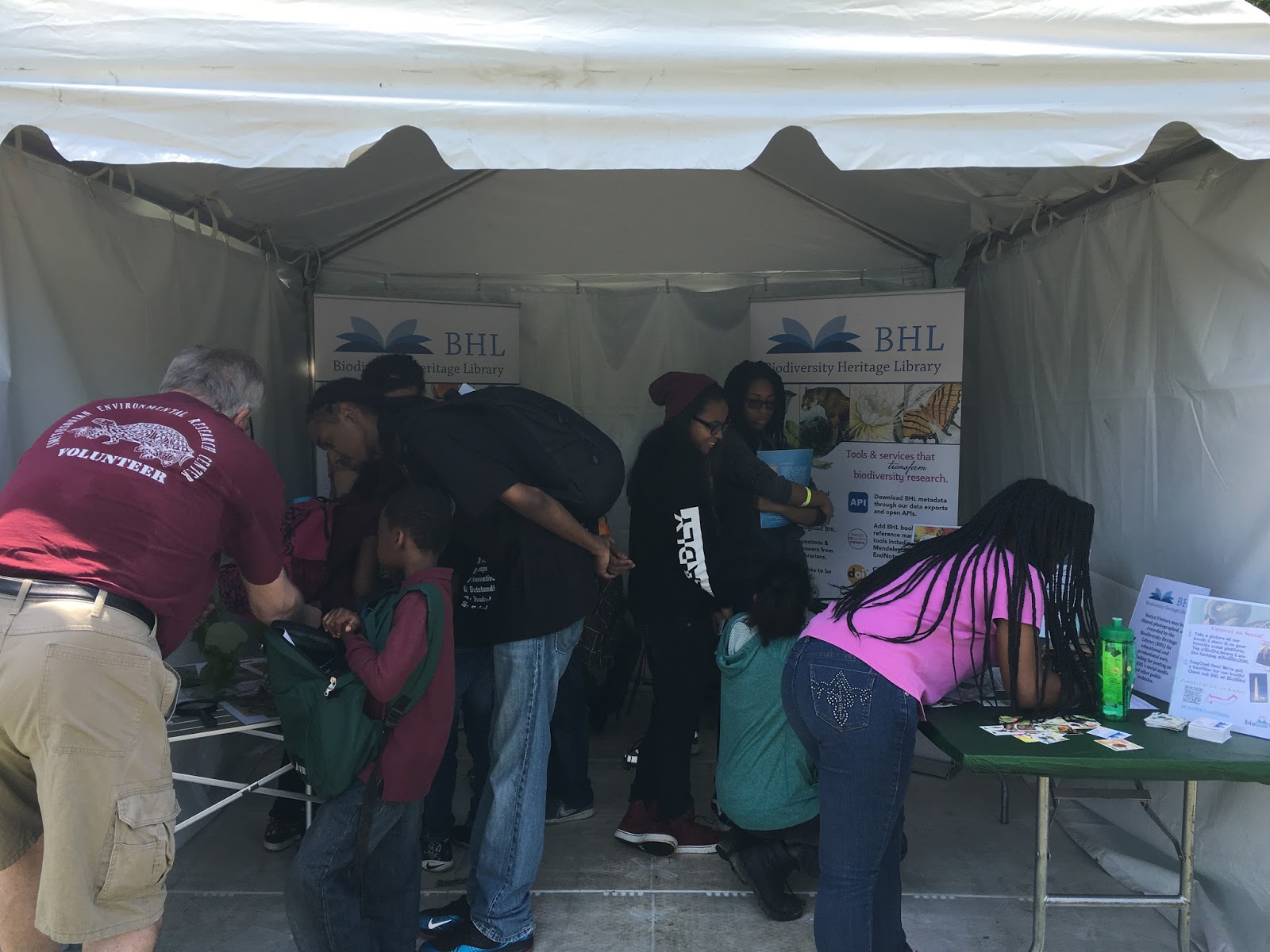
Visitors at the BHL booth at the BioBlitz 2016 Biodiversity Festival on 20 May. Image Credit: Gil Taylor.

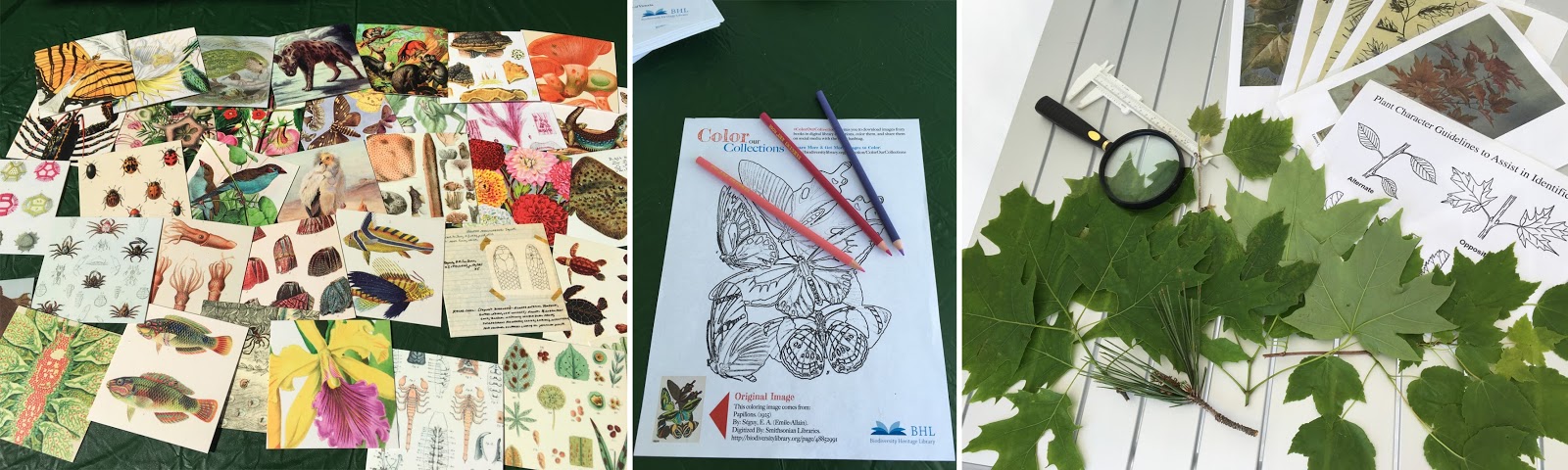
BHL and Smithsonian Libraries’ staff hosted a booth at the Festival that featured hands-on activities including coloring projects, online exhibitions, and a plant ID challenge that demonstrated how BHL can help visitors identify nature around them. Booth volunteers interacted with over 320 people during the course of the 2-day event and had a unique opportunity to expose young people (K-12) to the rich variety of free resources that BHL has to offer.

View Full Size Image
BHL cards, coloring pages, and plant ID challenge at the BioBlitz 2016 Biodiversity Festival booth. Image Credits: Grace Costantino.

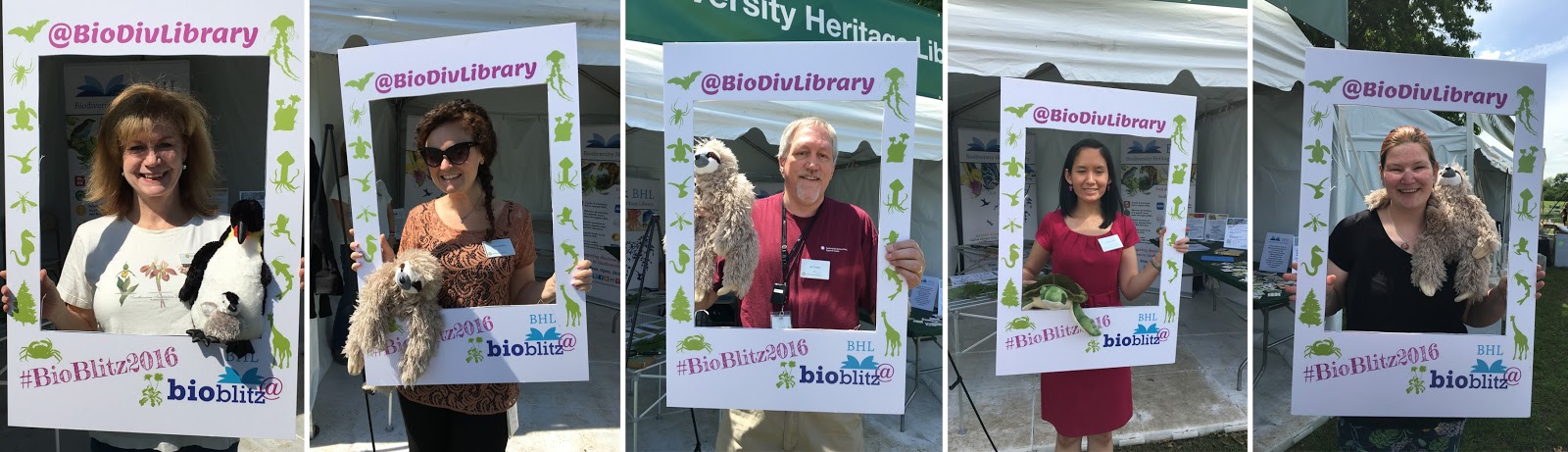
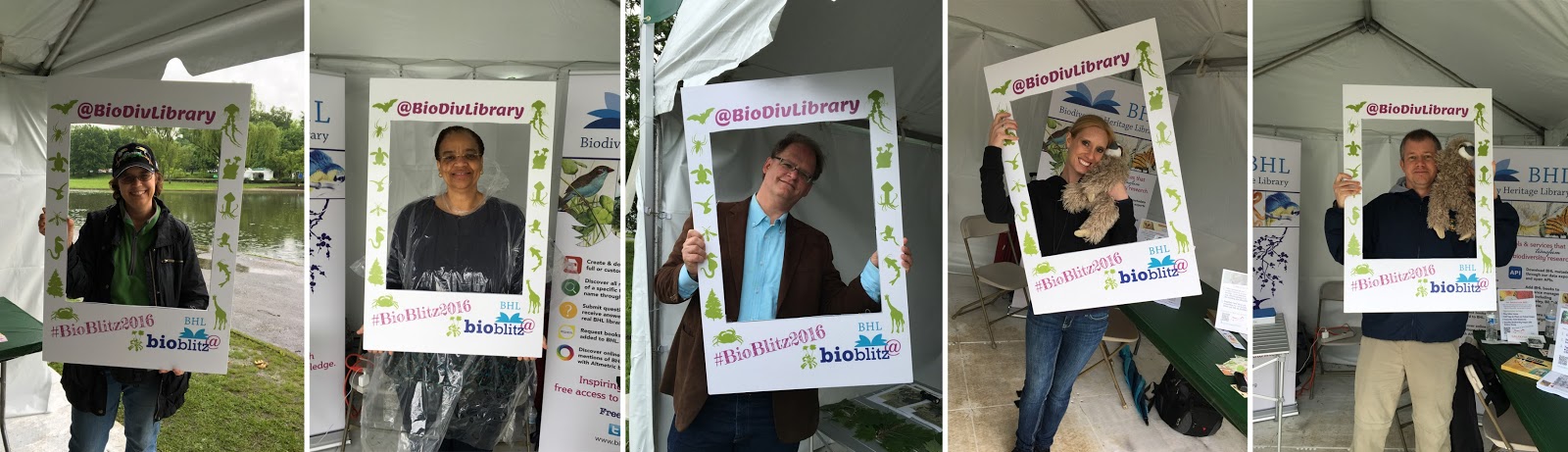
BHL staff at the booth included Martin R. Kalfatovic (BHL Program Director) and Grace Costantino (BHL Outreach and Communication Manager). Smithsonian Libraries staff at the booth included Sara Cardello (Education Specialist), Polly Lasker (Librarian), Gil Taylor (Supervisory Librarian), Bonnie White (Library Technician), Krista Aniel (Management Support Specialist), Barbara Ferry (Department Head, Natural and Physical Sciences Library), Hollis Gentry (Geology Specialist), and Michael O’Connor (Cataloger).

View Full Size Image
Booth Volunteers, from Left to Right: Polly Lasker, Sara Cardello, Gil Taylor, Krista Aniel, Bonnie White. Image Credits: Grace Costantino.
View Full Size Image
Booth Volunteers, from Left to Right: Barbara Ferry, Hollis Gentry, Martin Kalfatovic, Grace Costantino, Michael O’Connor. Image Credits: Grace Costantino.

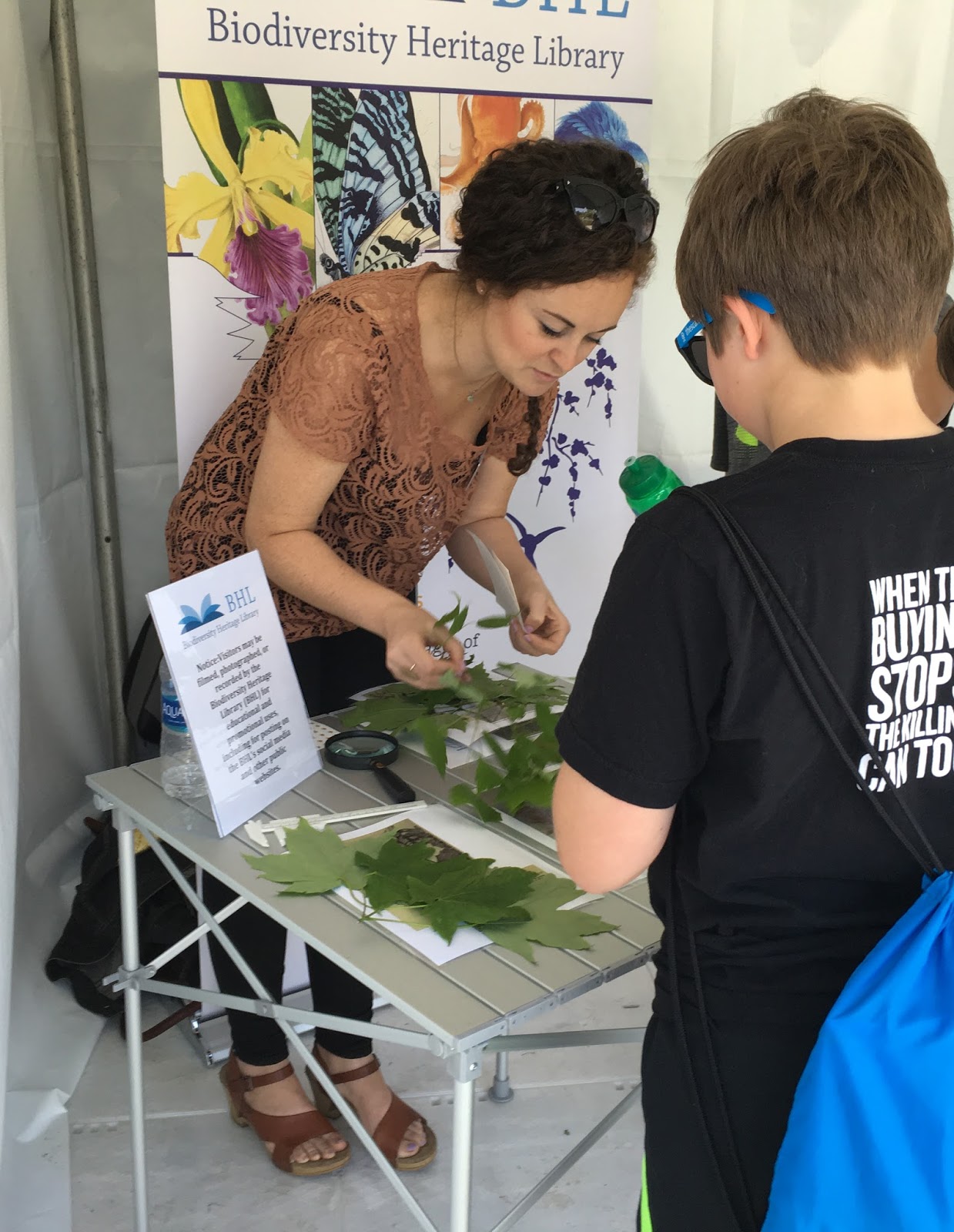
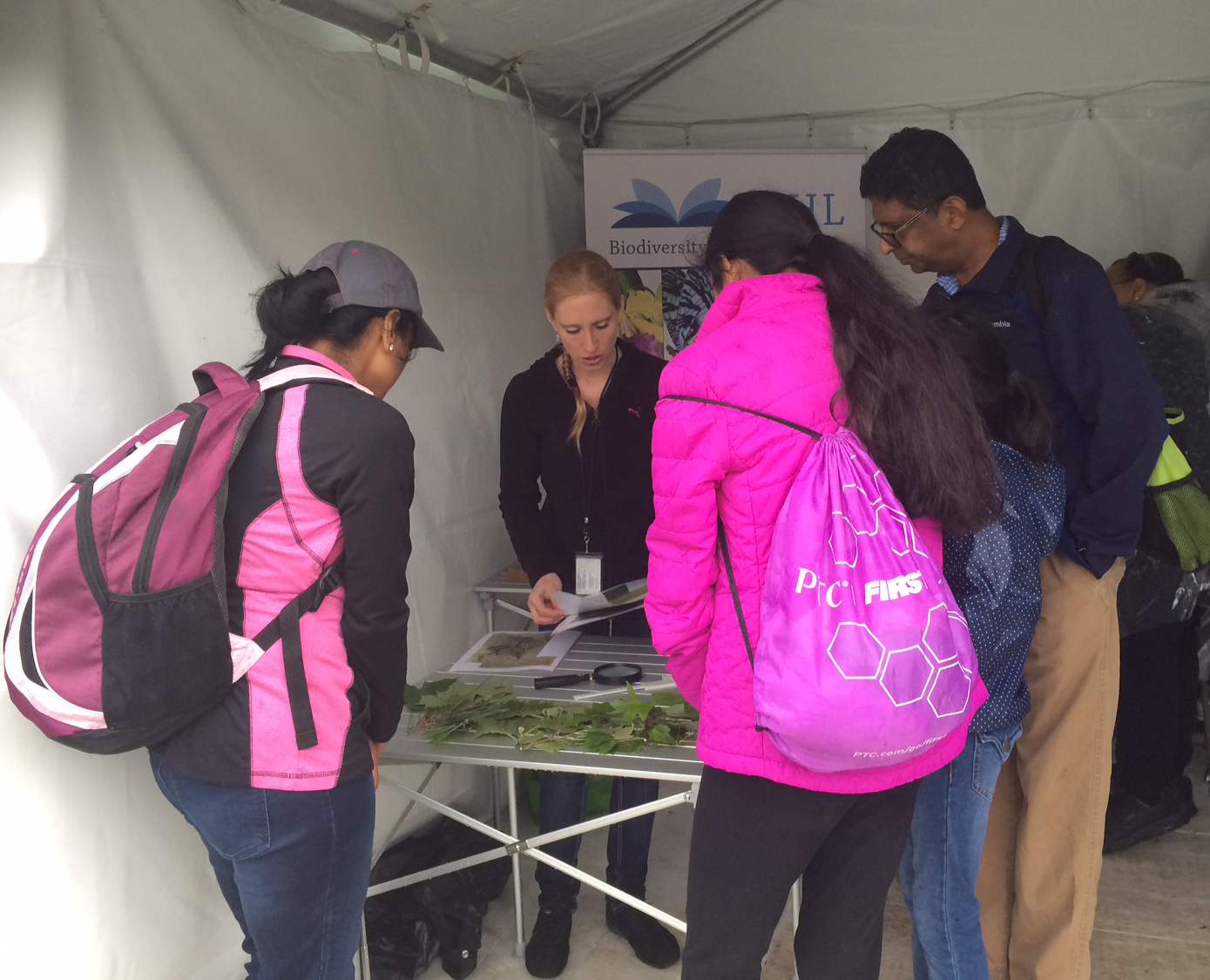
Each booth was instructed to have a hands-on activity that participants could complete as part of the Festival’s Biodiversity University. By completing five activities at the Festival, visitors received their Biodiversity University Bachelor’s degree. Ten activities earned them a Master’s and twenty activities a doctorate. BHL’s activity was a plant ID challenge in which visitors used a book in BHL (A Guide to the Trees by Alice Lounsberry) to identify leaves from five trees native to the D.C. region. Over 200 students completed the activity, earning a sticker towards their Biodiversity University diploma!

View Full Size Image
Sara Cardello guiding visitors through the plant ID challenge at the BHL booth. Image Credit: Grace Costantino.

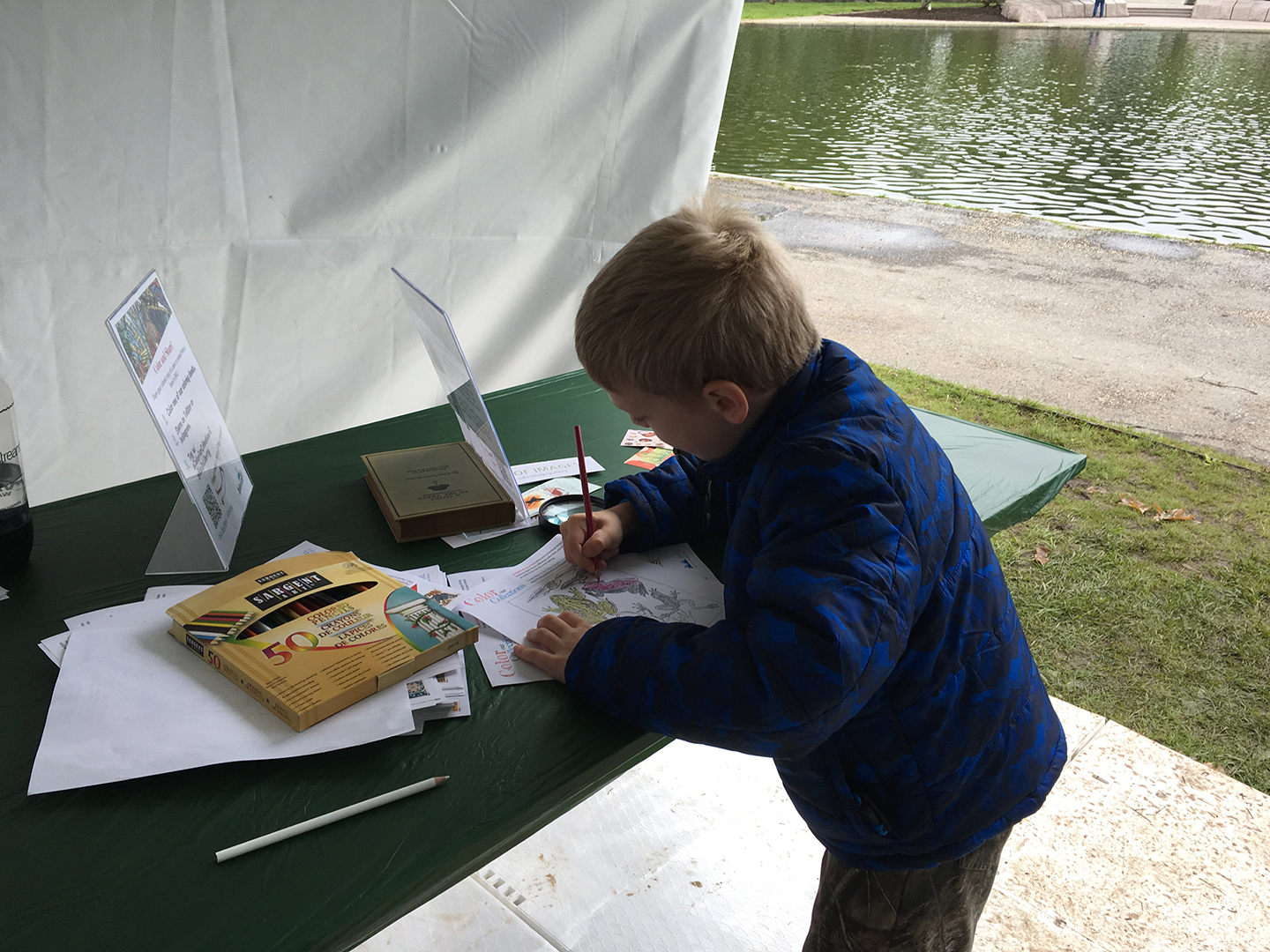
Additional BHL booth activities included coloring pages from BHL’s Color Our Collections coloring book and a chance to explore BHL’s online exhibitions (particularly Early Women in Science) and citizen science opportunities (including Flickr image tagging, field note transcription, Science Gossip, and online games).

View Full Size Image
Visitor coloring a BHL coloring page at the BHL booth. Image Credit: Grace Costantino.

The BioBlitz in D.C. was the cornerstone event of over 250 BioBlitzes happening around the country this year. So far this year, over 61,000 observations of over 6,800 species in 126 parks around the U.S. have been made. The largest percentage of observations were made of plants, followed by birds, insects, fungi, reptiles, mammals, mollusks, arachnids, and amphibians. Learn more about the observations made to date.

View Full Size Image
Grace Costantino guiding visitors through the plant ID challenge at the BHL booth. Image Credit: Barbara Ferry.

We were thrilled to have the opportunity to participate in the BioBlitz and show visitors how BHL’s free resources can be a valuable tool to help them identify and learn more about biodiversity. We’d also like to extend a special thanks to all of the Smithsonian Libraries staff that volunteered at the booth. The BioBlitz and Biodiversity Festival were an excellent opportunity for us to inspire discovery through free access to biodiversity knowledge.

View Full Size Image
Gil Taylor (left) guiding visitors through the plant ID challenge at the BHL booth. Image Credit: Grace Costantino.
View Full Size Image
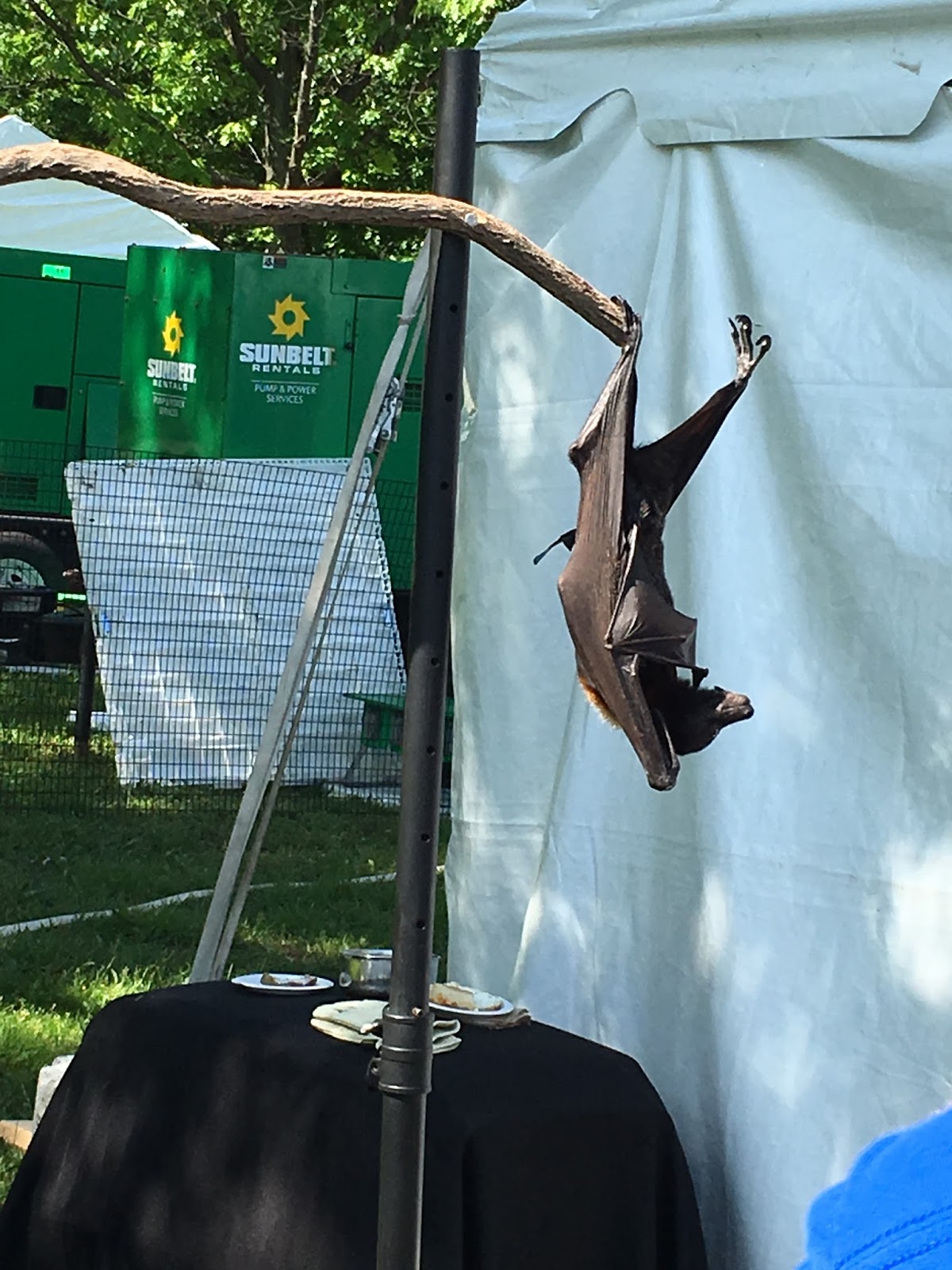
Malayan Flying Fox at the Organization for Bat Conservation #SavetheBats booth at the BioBlitz 2016 Biodiversity Festival. Image Credit: Grace Costantino.
View Full Size Image
Our neighbors at the BioBlitz 2016 Biodiversity Festival booth. Image Credit: Grace Costantino.
May 24, 2016by michelle.underhill
BHL News, Blog Reel

BioBlitz 2016 in Washington, D.C.

View Full Size Image

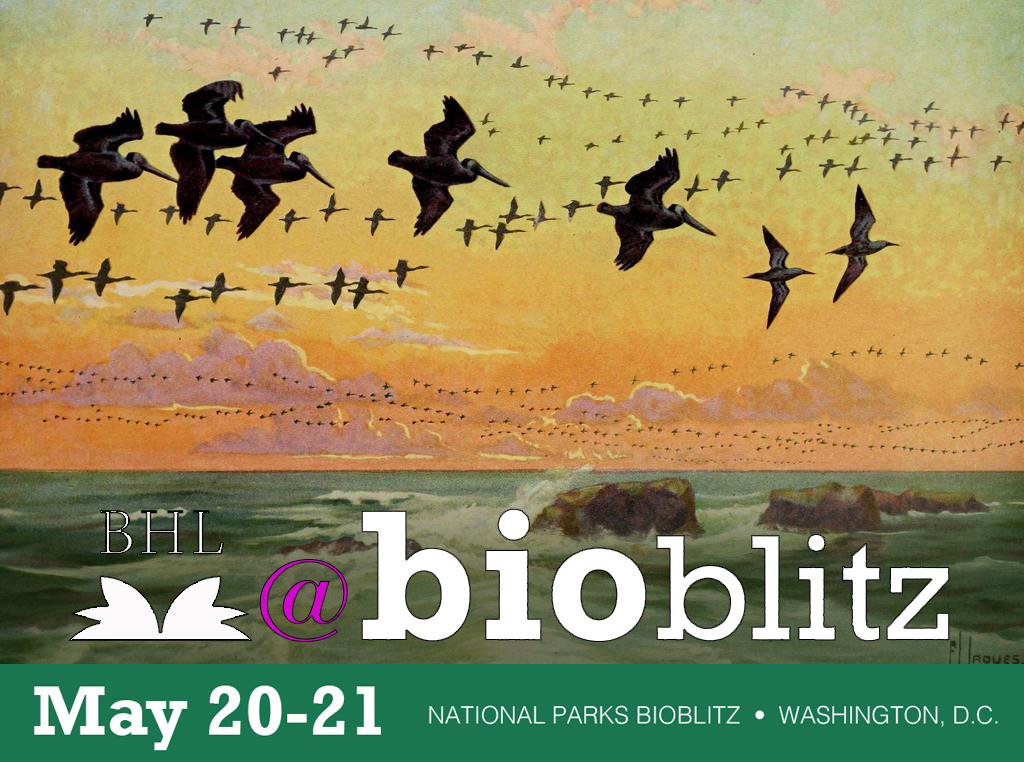
BioBlitz 2016 is coming to the National Mall in Washington, D.C. May 20-21, and BHL is participating!

According to the National Geographic website:

“A BioBlitz is an event that focuses on finding and identifying as many species as possible in a specific area over a short period of time. At a BioBlitz, scientists, families, students, teachers, and other community members work together to get an overall count of the plants, animals, fungi, and other organisms that live in a place.”

For the past ten years, National Geographic and the National Park Service have hosted BioBlitzes in various national parks each year. This year’s event is particularly special, as 2016 marks the National Park Service’s centennial. To celebrate, over 250 BioBlitzes are happening throughout the country this year.

The cornerstone BioBlitz is in Washington, D.C., May 20-21, and it will be accompanied by a two-day Biodiversity Festival on the National Mall at Constitution Gardens. The Festival, open 9am-5pm EDT, May 20-21, will feature hands-on science exhibits, food and art, as well as family-friendly entertainment and activities.

The Biodiversity Heritage Library (BHL) is participating in the Biodiversity Festival with a booth showcasing BHL’s free online biodiversity collections. 

The booth will demonstrate how these resources can be used to help identify and learn more about the plants, animals, fungi, and other organisms that visitors might encounter both during the BioBlitz and around their own homes. We’ll also have fun hands-on activities including coloring projects, online games, and image tagging which will help make it easier for people to find images of organisms from around the world.

Follow #BioBlitz2016 on social media to learn more about the BioBlitz and other planned activities around the country. If you’re in the Washington, D.C. area, we hope you’ll plan to participate in the BioBlitz and stop by our booth at the Biodiversity Festival:

WHERE: Constitution Gardens, National Mall 17th and Constitution Avenue, NW, Washington DC
DATES: Friday and Saturday, May 20 and 21
TIME: 9 a.m. to 5 p.m. Friday and Saturday

Learn more on the National Geographic website.

May 11, 2016by michelle.underhill
Blog Reel, Featured Books

Book of the Week: Wild Animals of North America

Here in the Washington, D.C. area, where the BHL Secretariat is housed, North American wildlife is a hot topic with the grand opening of the new National Zoo American Trail exhibit. The exhibit features some of the most iconic American species, including the Bald Eagle, Gray Wolf, North American Beaver, and the Otter. We’ve been celebrating the exhibit all week on Twitter and Facebook, and we thought it only natural to further commemorate American fauna with our book of the week. To do so, we’ve selected Wild Animals of North America (1918), contributed by the American Museum of Natural History.

Wild Animals of North America

Edward W. Nelson, American naturalist and ethnologist, penned Wild Animals of North America for the National Geographic Society over the course of two magazine issues: The November 1916 issue, which focused on Larger Mammals of North America, and the May 1918 issue, devoted to North America’s smaller mammals. These issues were enhanced by famed painter Louis Agassiz Fuertes, who also illustrated the spectacular Album of Abyssinian Birds and Mammals from Paintings (which we featured as a book of the week in 2011). Agassiz, who had done previous work for the Society on The Book of Birds, crafted over five dozen stunning portraits of the animals described within the text for this title.
View Full Size Image
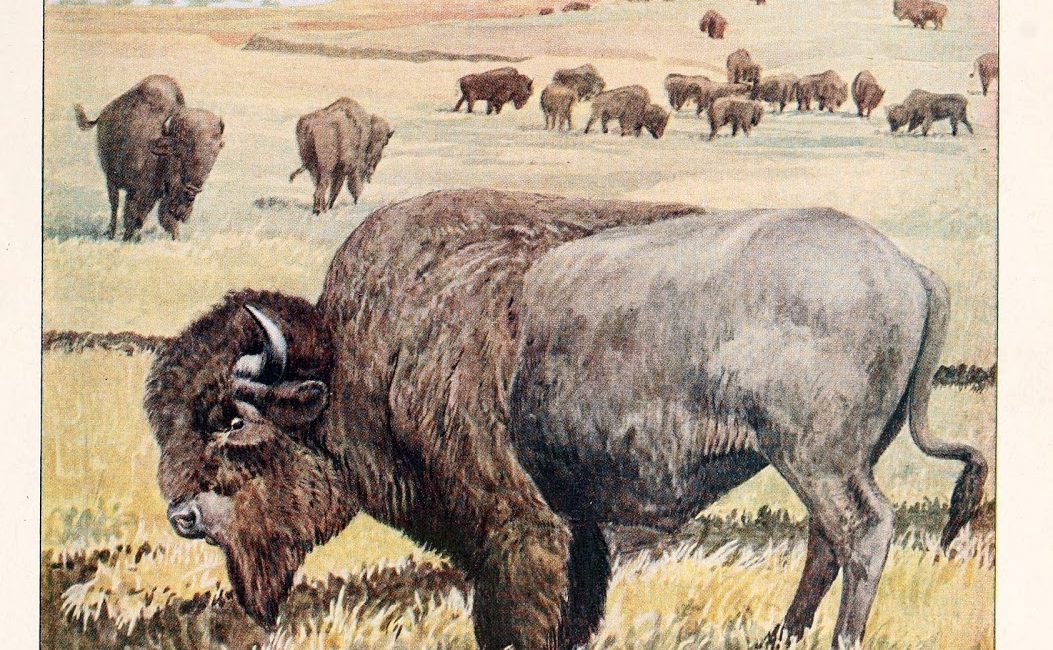
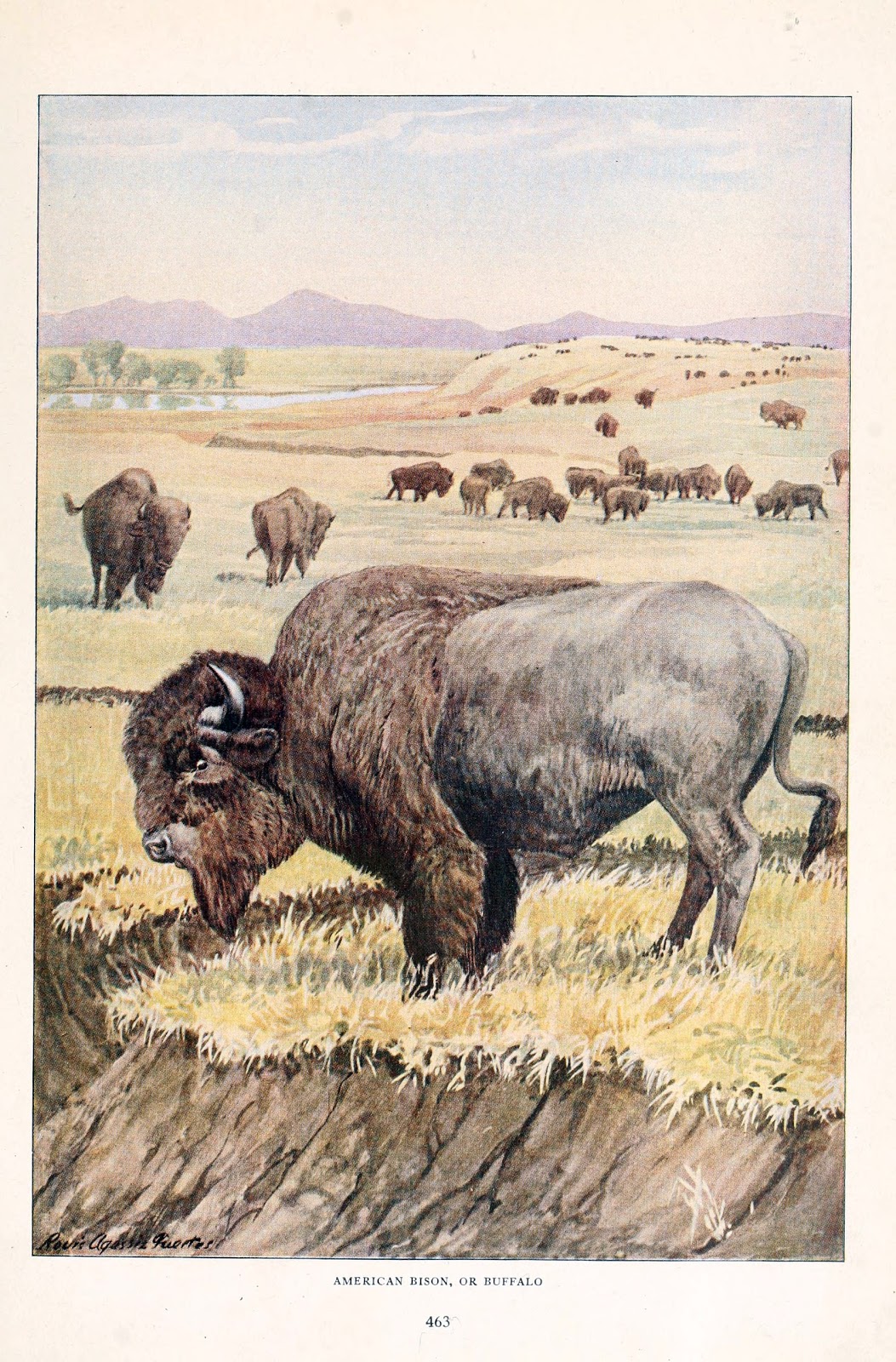
North American Buffalo

National Geographic clearly understood the importance of this work, expending $100,000 for the production of the two original magazine articles which sired this book. The success of the issues prompted the Society to combine them into the comprehensive Wild Animals of North America.

Wild Animals presents 119 “animal biographies,” which present not just pictures and scientific facts about the species, but also entertaining anecdotes about Americans’ interaction with these creatures.

Take, for instance, the account of the American Buffalo. Nelson writes that,

A number of men now living were privileged to see some of the great herds of the West before they were finally destroyed. Dr. George Bird Grinnell writes:

‘In 1870, I happened to be on a train that was stopped for three hours to let a herd of buffalo pass. We supposed they would soon pass by, but they kept coming. On a number of occasions in earlier days, the engineers thought that they could run through the herds, and that, seeing the locomotive, the buffalo would stop or turn aside : but after a few locomotives had been ditched by the animals the engineers got in the way of respecting the buffaloes’ idiosyncrasies.’

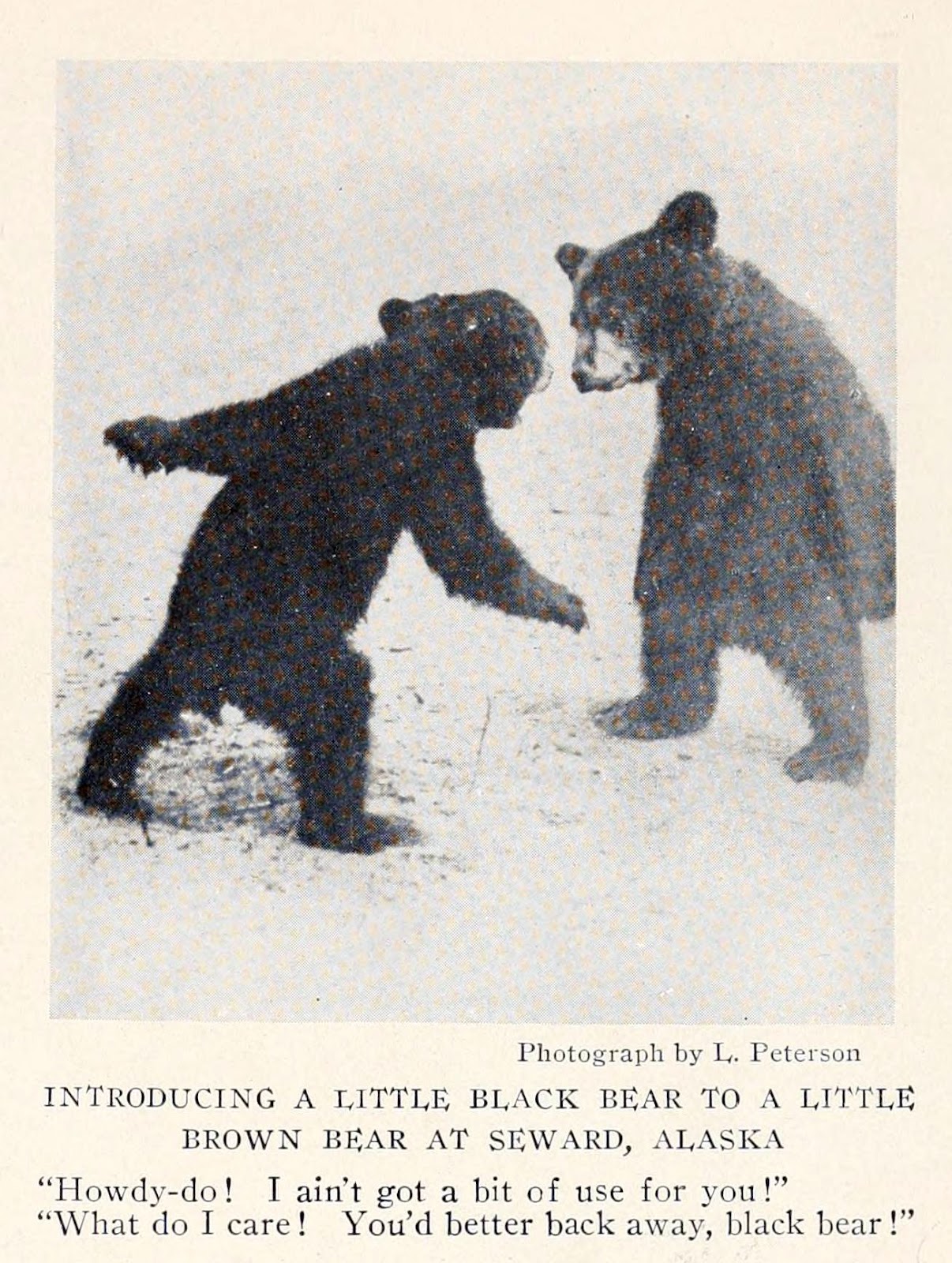
And one of our favorite excerpts from the book is a photograph and caption depicting the introduction of black and brown bear cubs:
View Full Size Image
Black and Brown Bear Cubs Being Introduced

Species Highlights

For this post, we’ve selected a few of the our favorite of the 119 species Nelson describes, accompanied by Fuertes’ enticing paintings. We’ve provided additional links and images for those species below which are also found in the new American Trail exhibit. See a full list of species you’ll encounter in the exhibit by visiting the zoo’s website.

See all of the images from our book of the week on Flickr, and check out select illustrations on Pinterest.

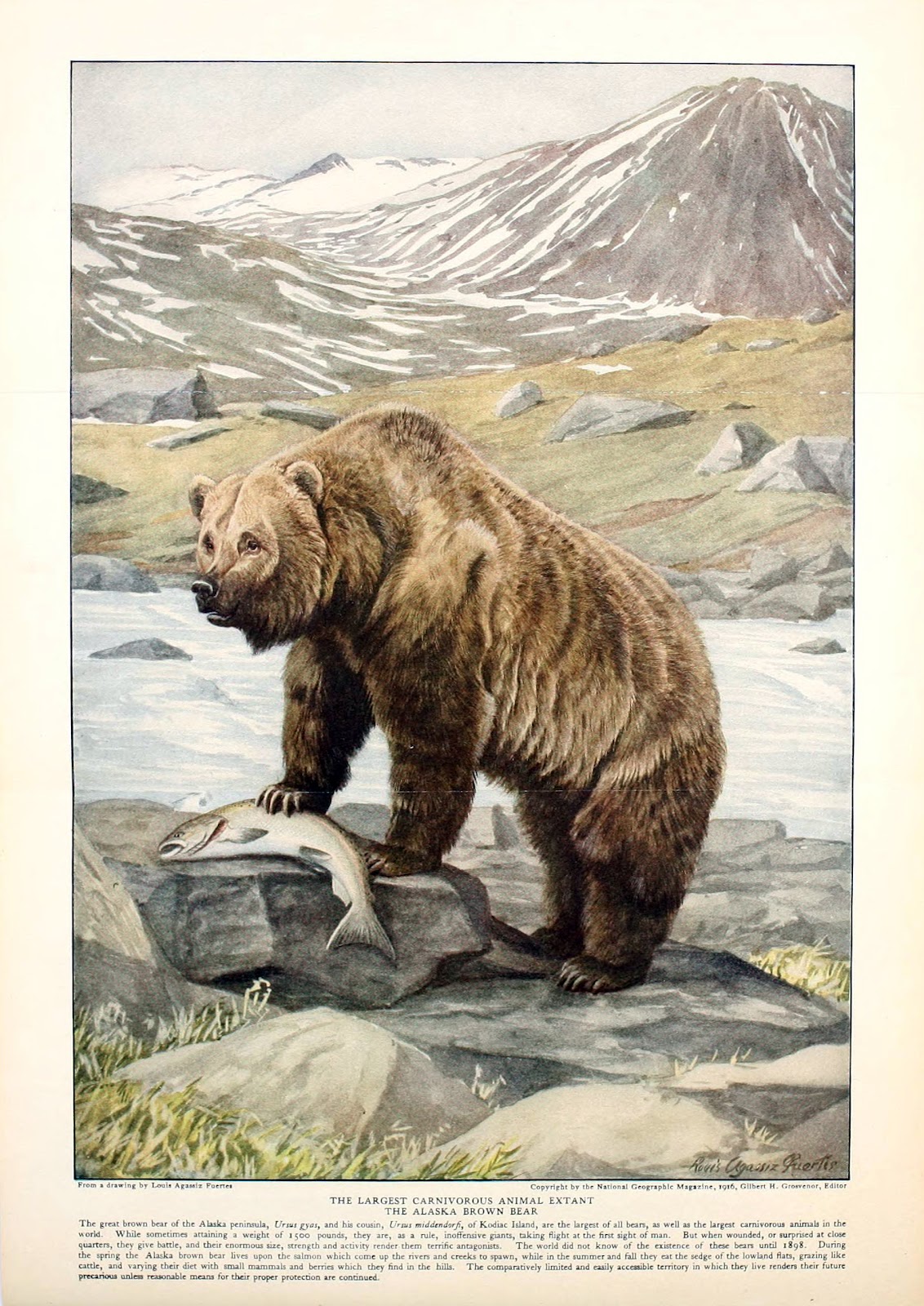
Alaskan Brown Bear

“The great brown bear of the Alaskan peninsula, Ursus [arctos], and his cousin, Ursus middendorffi, of Kodiac Island, are the largest of all bears, as well as the largest carnivorous animals in the world. [The Polar Bear, of roughly the same size, is documented as the largest bear alongside the Kodiak]. While sometimes attaining a weight of 1500 pounds, they are, as a rule, inoffensive giants, taking flight at the first sight of man. But when wounded, or surprised at close quarters, they give battle, and their enormous size, strength and activity render them terrific antagonists.

“The world did not know of the existence of these bears until 1898.

“During the spring the Alaska brown bear lives upon the salmon which come up the rivers and creeks to spawn, while in the summer and fall they eat the sedge of the lowland flats, grazing like cattle, and varying their diet with small mammals and berries which they find in the hills.”
View Full Size Image
The Alaskan Brown Bear


View Full Size Image
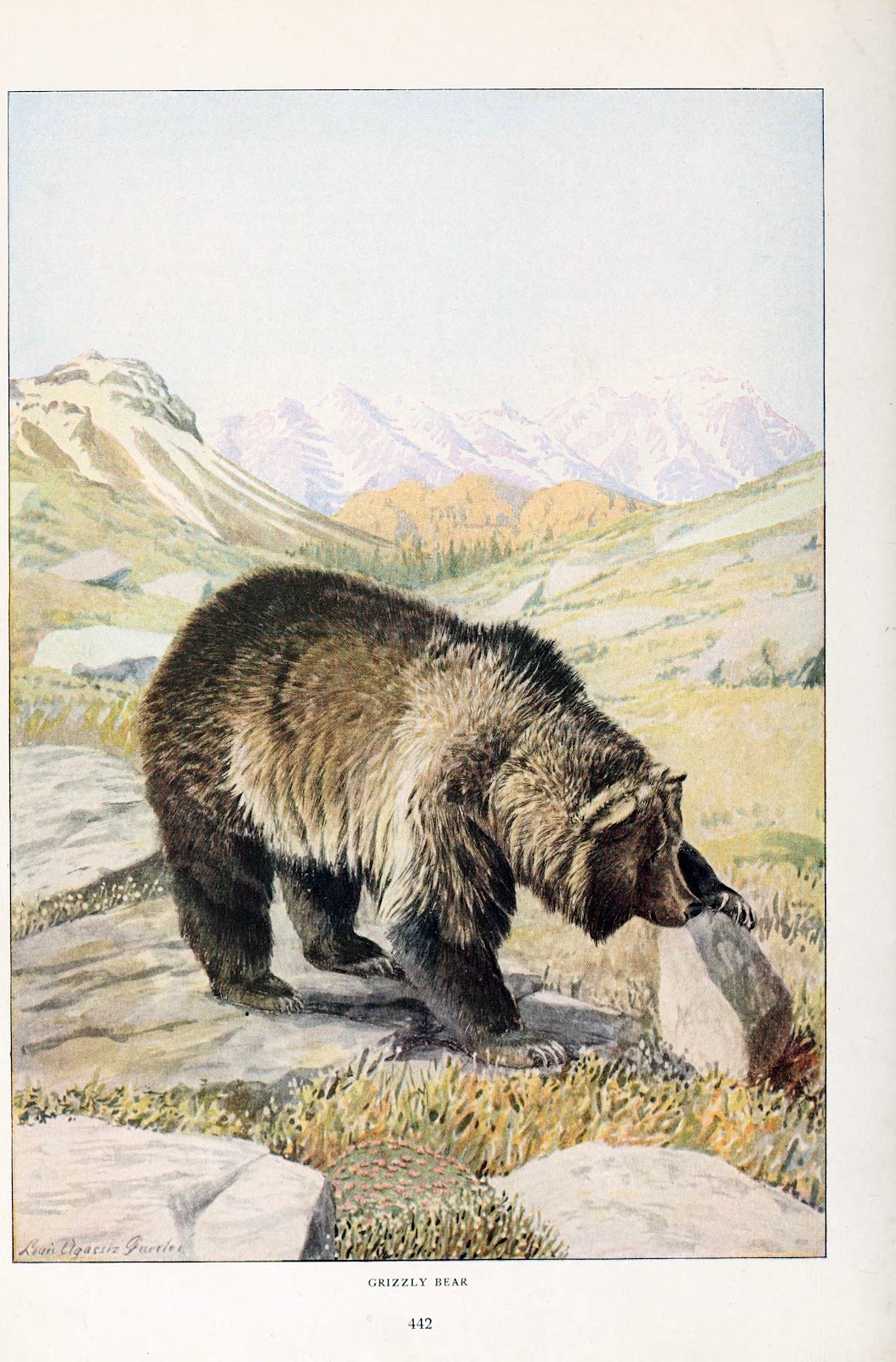
The Grizzly Bear


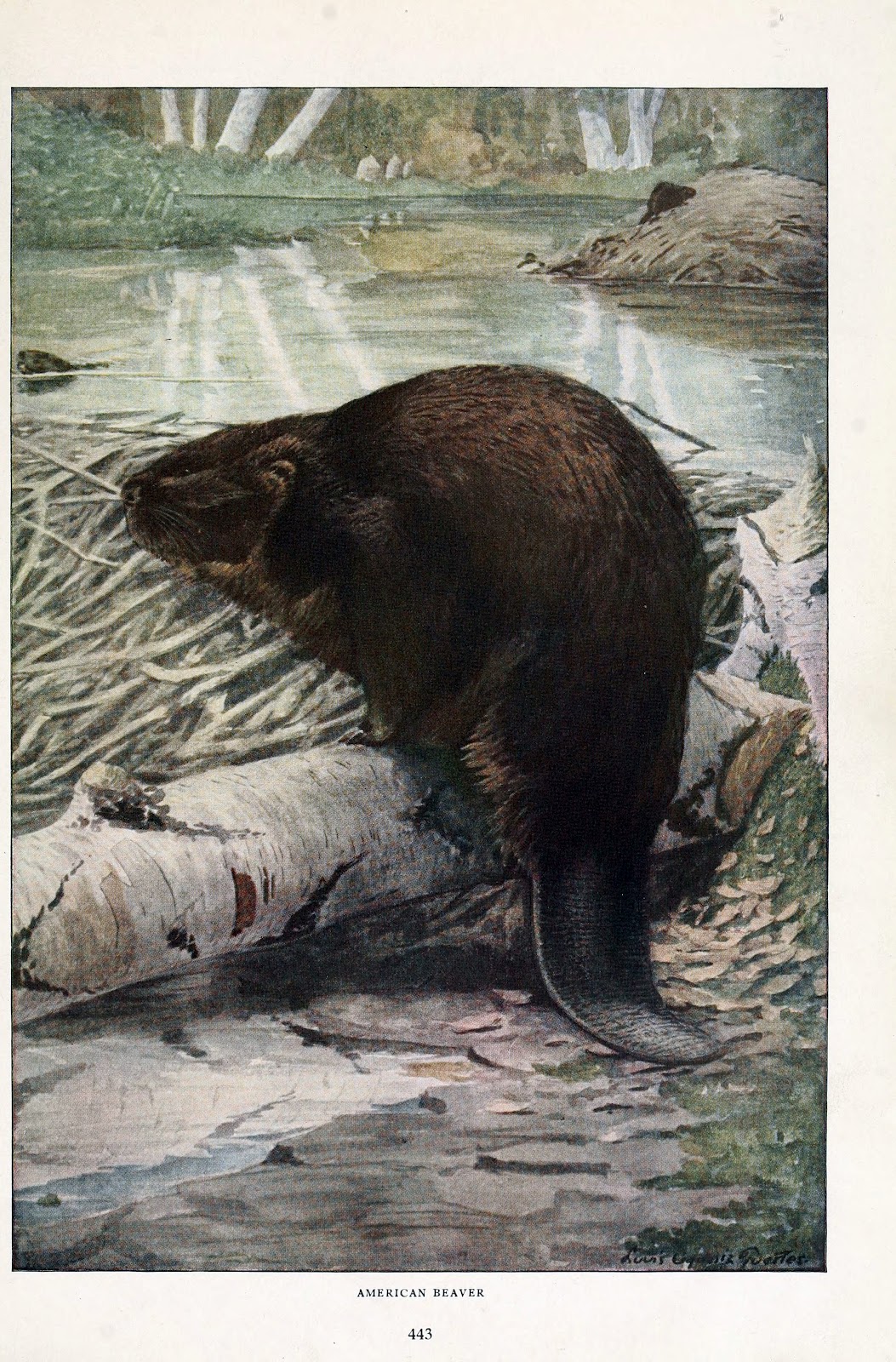
 North American Beaver

“Beavers belong to the rodent family – a group of animals notable for their weak mental powers. The beaver is the striking exception to the rule, and its extraordinary intelligence, industry, and skill have long excited admiration….

“[Beavers] are very proficient in building narrow dams of sticks, mud, and small stones across small streams for the purpose of backing up water and making ‘beaver ponds.’ In the border of these ponds a conical lodge is usually constructed of sticks and mud…The mud used by beavers in building dams and houses is scooped up and carried against the breast, the front feet being used like hands.”
View Full Size Image
North American Beaver

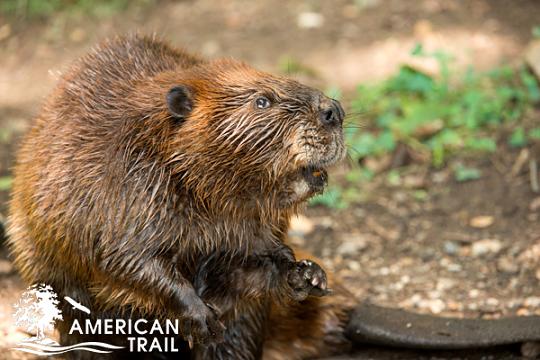
Three North American beavers are featured as part of the new American Trail exhibit. One, by the name of Willow, “is easily identifiable by a notch in her tail.”
View Full Size Image
North American Beaver from the American Trails exhibit


Moose

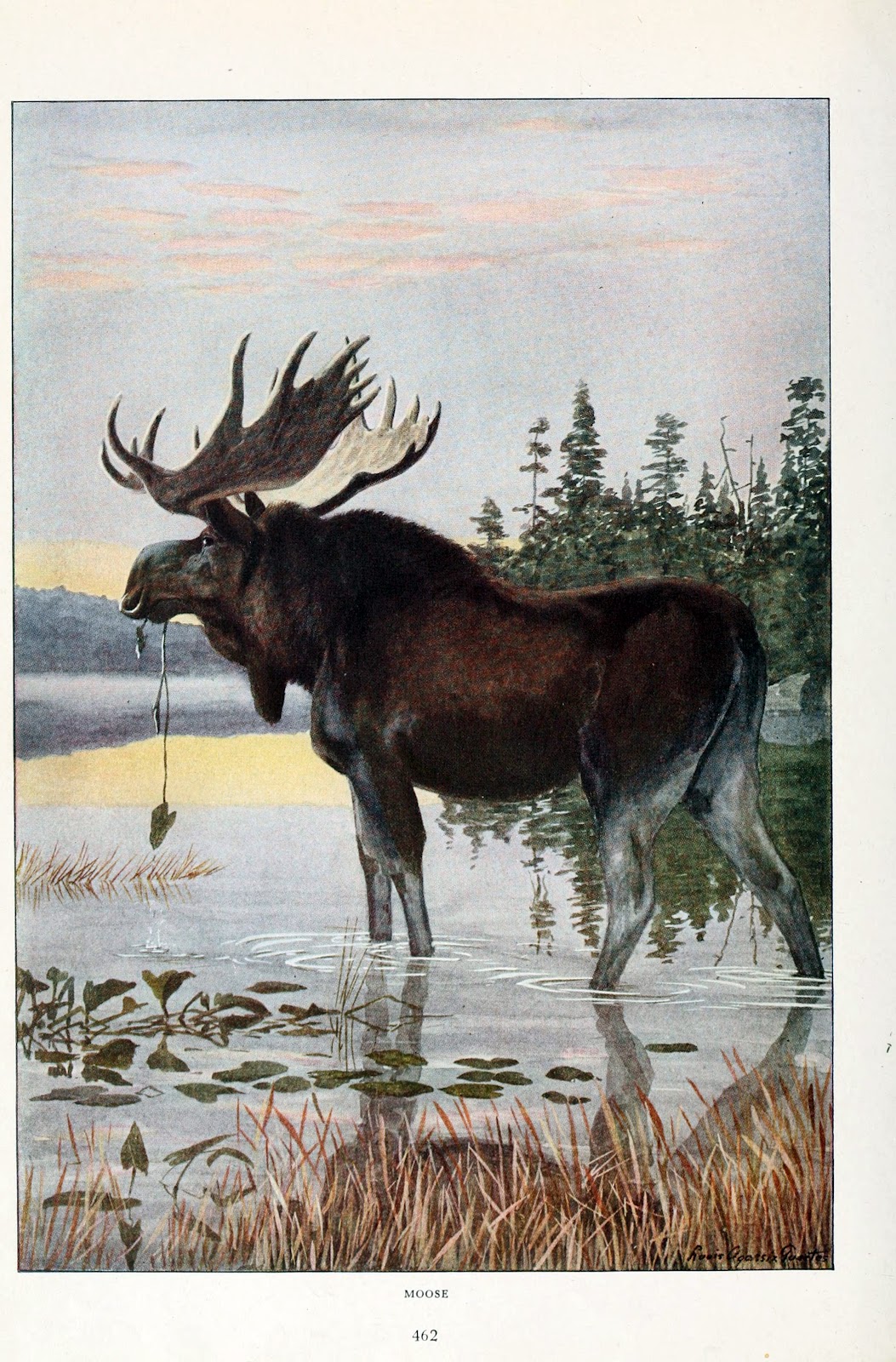
“The moose is a large, grotesquely formed animal, with the most impressive individuality of any of our large game. Its great head, with oddly formed nose, huge palmated antlers, pendulous bell under the neck, short body, and disproportionately long legs unite to lend the impression that it may be a strange survivor from some remote geologic period.

“Although taller than an ordinary horse, weighing more than half a ton, and adorned with wide-spreading antlers, the bull moose stalks with ghostly silence through thickset forests.”
View Full Size Image
Moose

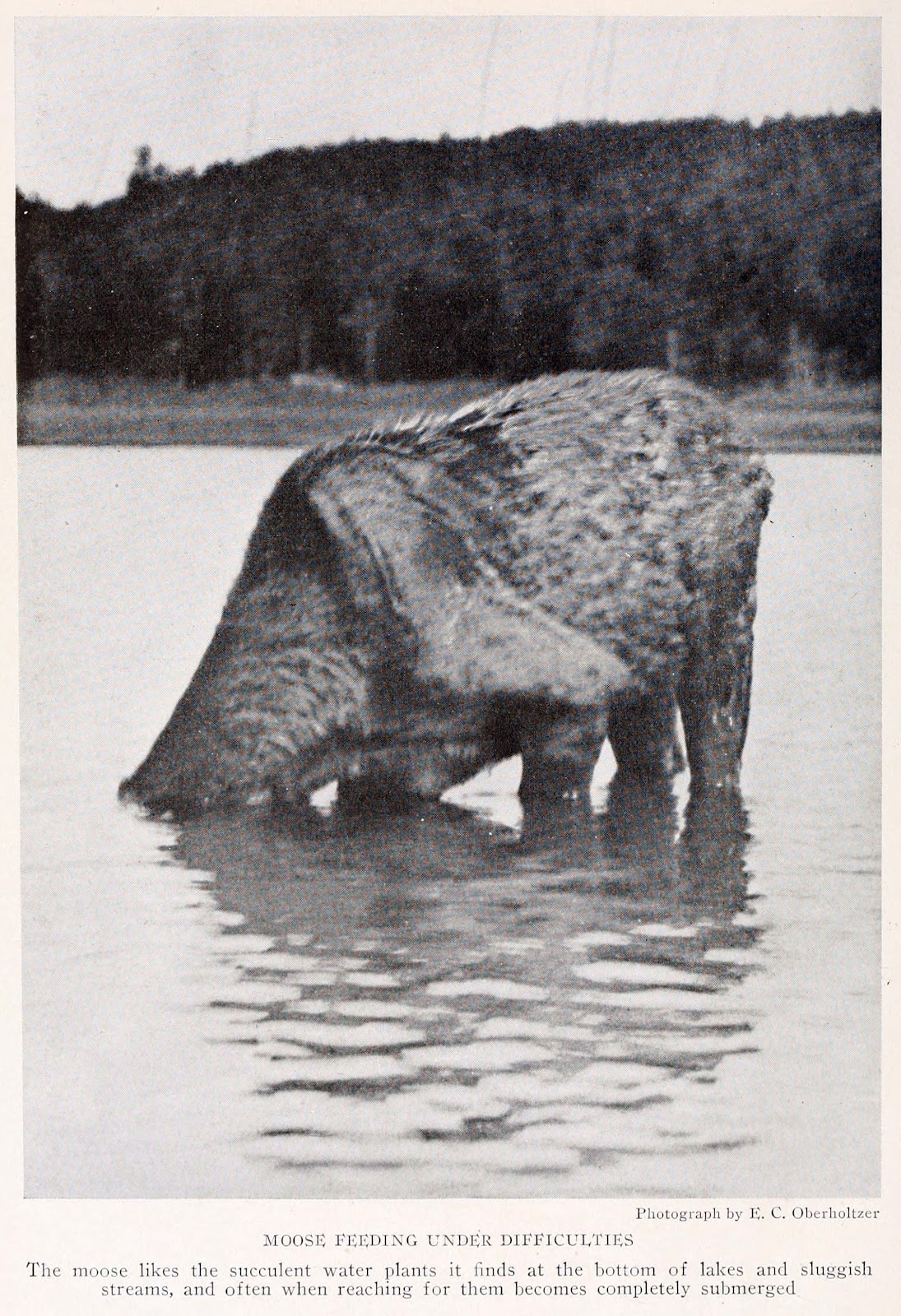
“In summer it loves low-lying, swampy forests interspersed with shallow lakes and sluggish streams. In such places it often wades up to its neck in a lake to feed on succulent water plants, and when reaching to the bottom becomes entirely submerged.”
View Full Size Image
Moose submerged in water, foraging for food.


Steller Sea Lion

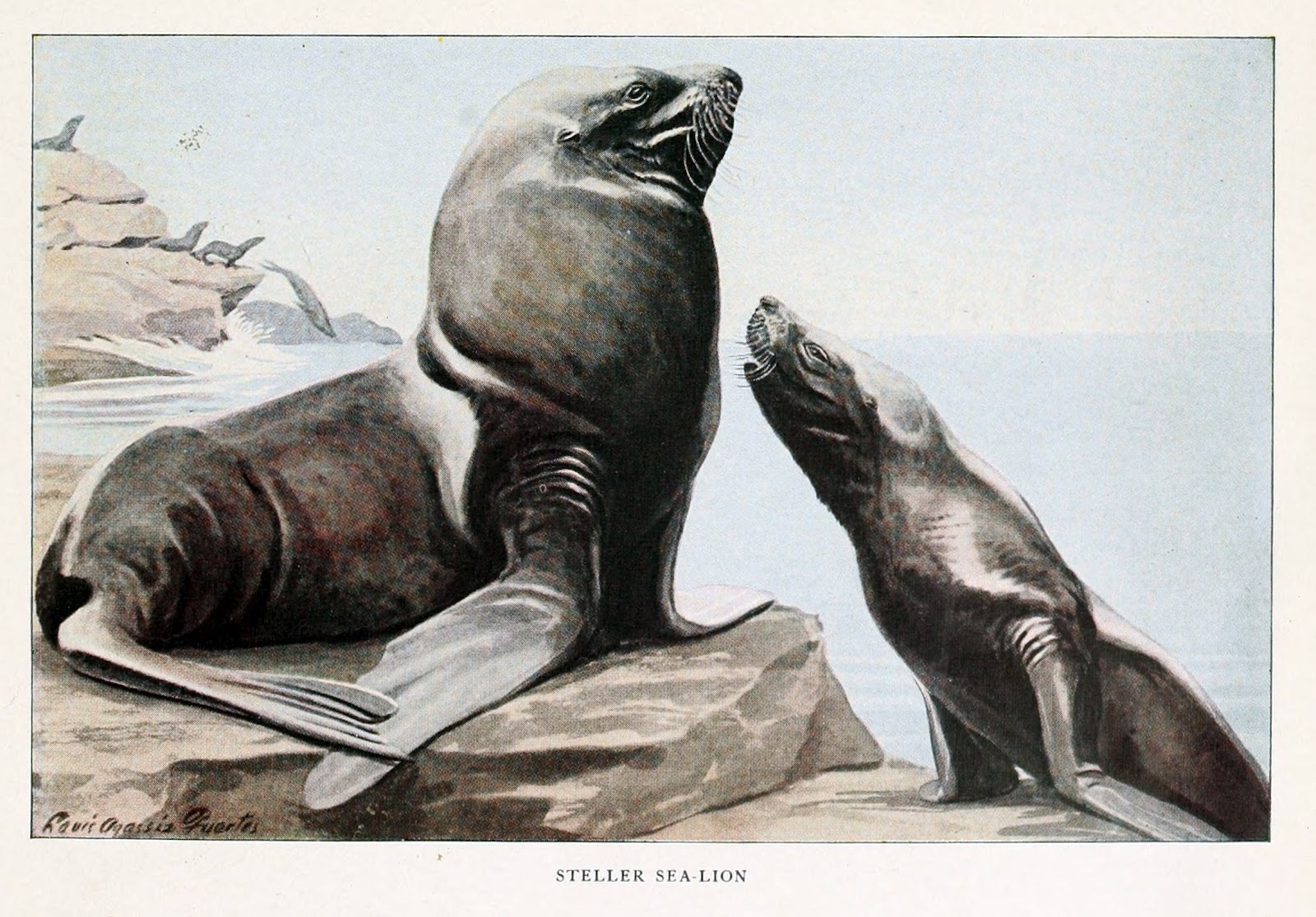
“Sea-lions are near relatives of the fur seals and have a nearly similar distribution, both in far southern and northern seas…The Steller Sea Lion is the largest member of the group, the old bulls weighing from 1,200-1,500 pounds.

“They are preeminently animals of the most rugged of shorelines and the stormiest of seas, being superbly powerful beasts with extraordinary vitality. The ease with which they pass through a smother of pounding seas to mount their rugged resting places is an admirable exhibition of skill and strength. The males have a bellowing roar, on the rocks in savage unison with the booming of the sea against the base of their refuge…

“It is reported that an umbrella opened and closed suddenly in the faces of the old sea-lions appears to terrify them more than any other weapon and is used successfully in drives.

“At sea they have only a single known enemy to fear – the fierce killer whale.”
View Full Size Image
Steller Sea Lion

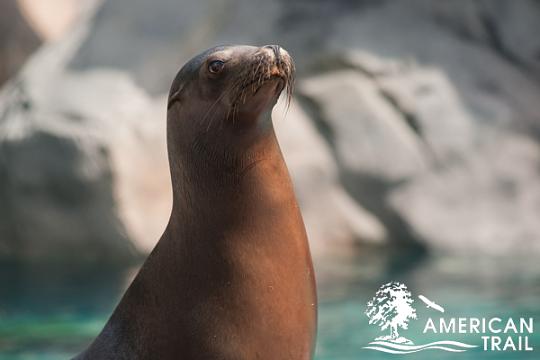
The American Trail exhibit features four of the Steller Sea Lion’s smaller cousin – the California Sea Lion. Two of them, Calli and Sophie, were rescued from the wild after being orphaned. A third, named Sophie, is Calli’s first pup.
View Full Size Image
Sea Lion from the American Trail exhibit


Threatened Species Day

Today is threatened species day – a day set aside to raise awareness about the predicament facing thousands of species throughout the world today. It was originally established to commemorate the death of the last Tasmanian Tiger at the Hobart zoo in 1936.

While many North American species can be found on the Threatened and Endangered Species List, some of our most iconic, including the Gray Wolf and Bald Eagle – which were once doomed to possible extinction – have miraculously recovered and are no longer among those listed as threatened. Human conservation efforts had much to do with these status reversals, proving that when we come together to conserve, we can make a major impact. Let’s hope similar efforts can help restore the future for the species that still remain threatened.

Explore images of IUCN Endangered and Critically Endangered species on our Flickr page.

Learn how you can help conservation efforts with some ideas from the World Wildlife Foundation’s “Campaign for Change.”

September 7, 2012by michelle.underhill
Blog Reel, Featured Books

Book of the Week: An Experiment in Illustrations

This week we’re going to do our book of the week a little differently. We came across this awesome tool on the National Geographic website called Backyard Bird Identifier. By answering some simple questions about a bird that you have seen in either the U.S. or Canada, the application tells you the possible species. We thought that was pretty cool, so we decided to see if this tool could identify birds based on answers that we give solely by looking at the illustrations and associated descriptions in one of the books in our collection. For our experiment, we chose the book Bird-Life: A Guide to the Study of Our Common Birds (1900), by Frank M. Chapman; illustrated by Ernest Seton Thompson. From this book, we chose six illustrations and, answering the questions in the Backyard Bird Identifier using these illustrations and accompanying descriptions, we found out whether the tool could accurately identify the bird. The six illustrations, as well as the answers we gave to the questions, are given below.

View Full Size Image

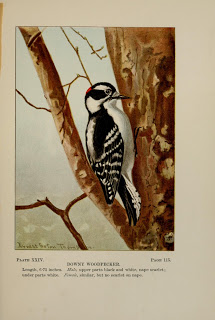
1) Downy Woodpecker (Dryobates pubescens medianus)
Question One: Where did you see the bird?
Answer: Country: United States
Region: Northeast, Virginia
Question Two: When did you see the bird?
Answer: October
Question Three: What color is the bird?
Answer: Black, White, Red
Question Four: How large is the bird?
Answer: 7-11 inches
Application returned 39 results (each possible match has an accompanying picture so that you can determine which of the results was your bird).
Results: Downy Woodpecker was among the possible identities.

View Full Size Image

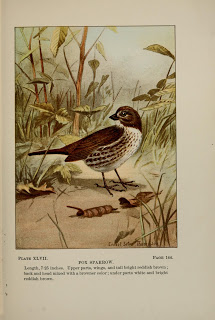
2) Fox Sparrow (Passerella iliaca)

Question One: Where did you see the bird?
Answer: Country: Canada
Region: East, Quebec
Question Two: When did you see the bird?
Answer: May
Question Three: What color is the bird?
Answer: Brown, White, Red
Question Four: How large is the bird?
Answer: 7-11 inches
Application returned 42 results.
Results: Fox Sparrow was among the possible identities.

View Full Size Image

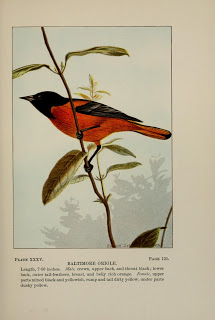
3) Baltimore Oriole (Icterus galbula)

Question One: Where did you see the bird?
Answer: Country: United States
Region: Northeast, Maryland
Question Two: When did you see the bird?
Answer: May
Question Three: What color is the bird?
Answer: Black, Yellow, Orange
Question Four: How large is the bird?
Answer: 7-11 inches
Application returned 38 results.
Results: Baltimore Oriole was among the possible identities.

View Full Size Image

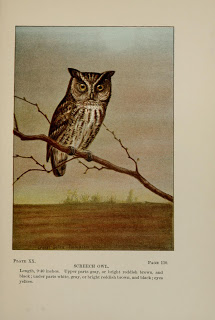
4) Eastern Screech Owl (Megascops asio)

Question One: Where did you see the bird?
Answer: Country: United States
Region: Northeast, Virginia
Question Two: When did you see the bird?
Answer: August
Question Three: What color is the bird?
Answer: Black, Gray, Red, Brown, White, Yellow
Question Four: How large is the bird?
Answer: 7-11 inches
Application returned 44 results.
Results: Eastern Screech Owl was among the possible identities.

View Full Size Image

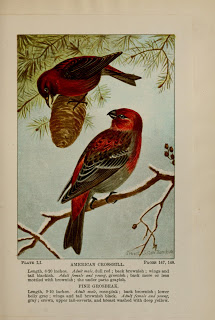
5) American Crossbill (Loxia curvirostra minor)
Question One: Where did you see the bird?
Answer: Country: United States
Region: Northeast, New York
Question Two: When did you see the bird?
Answer: January
Question Three: What color is the bird?
Answer: Black, Gray, Red, Brown
Question Four: How large is the bird?
Answer: 7-11 inches
Application returned 22 results.
Results: American Crossbill was not one of the possible identities.


6) Black and White Warbler (Mniotilta varia)

Question One: Where did you see the bird?
Answer: Country: United States
Region: South, North Carolina
Question Two: When did you see the bird?
Answer: April
Question Three: What color is the bird?
Answer: Black, White
Question Four: How large is the bird?
Answer: 6 inches or less
Application returned 32 results.
Results: Black and White Warbler was not among the possible identities.

So, at the end of the experiment, we were successfully able to bring up the identity of the bird in 4 out of 6 cases. Not too bad, considering we were working from a book and illustrations of the species. Try out the tool on your own, preferably from live bird studies :-), and let us know how successful your endeavors are. And be sure to take the time to look at the lovely illustrations in our book of the week. Maybe even try identifying other birds in the book using this tool. If you do, be sure to let us know how it goes! Happy bird identifying!

This week’s book of the week, Bird-Life: A Guide to the Study of Our Common Birds(1900), by Frank M. Chapman; illustrated by Ernest Seton Thompson, was contributed by the American Museum of Natural History.

June 16, 2011by michelle.underhill

Help Support BHL

BHL's existence depends on the financial support of its patrons. Help us keep this free resource alive!

search

About BHL

The Biodiversity Heritage Library (BHL) is the world’s largest open access digital library for biodiversity literature and archives. BHL operates as a worldwide consortium of natural history, botanical, research, and national libraries working together to digitize the natural history literature held in their collections and make it freely available for open access as part of a global “biodiversity community.”

Join Our Mailing List

Sign up to receive the latest news, content highlights, and promotions.

Subscribe Now

Subscribe to Blog via Email

Enter your email address to subscribe to this blog and receive notifications of new posts by email.

Join 319 other subscribers

Subscribe to Blog Via RSS

Subscribe to the blog RSS feed to stay up-to-date on all the latest BHL posts.

Access RSS Feed

Inspiring Discovery through Free Access to Biodiversity Knowledge.

The Biodiversity Heritage Library makes it easier than ever for you to access the information you need to study and explore life on Earth…for free, anytime, anywhere.


64+ Million Pages of
Biodiversity Literature Online.

EXPLORE

Tools and Services
to Transform Research.

EXPLORE

300,000+
Illustrations on Flickr.

EXPLORE

ABOUT | HARMFUL CONTENT | PRIVACY | SITE MAP | TERMS OF USE