Biodiversity Heritage Library - Program news and collection highlights from BHL
  • Home
  • News
  • Featured Books
    • All Featured Books
    • Book of the Month Series
    • BHL at 20
  • User Stories
  • Campaigns
    • Fossil Stories
    • Garden Stories
    • Monsters Are Real
    • Page Frights
    • Her Natural History
    • Earth Optimism 2020
  • Tech Blog
  • Visit BHL
Home
News
Featured Books
    All Featured Books
    Book of the Month Series
    BHL at 20
User Stories
Campaigns
    Fossil Stories
    Garden Stories
    Monsters Are Real
    Page Frights
    Her Natural History
    Earth Optimism 2020
Tech Blog
Visit BHL
  • Home
  • News
  • Featured Books
    • All Featured Books
    • Book of the Month Series
    • BHL at 20
  • User Stories
  • Campaigns
    • Fossil Stories
    • Garden Stories
    • Monsters Are Real
    • Page Frights
    • Her Natural History
    • Earth Optimism 2020
  • Tech Blog
  • Visit BHL
Biodiversity Heritage Library - Program news and collection highlights from BHL
Blog Reel, Featured Books

The National Park Service, Historic Surveys, and the Hunt for Documentation

View Full Size Image
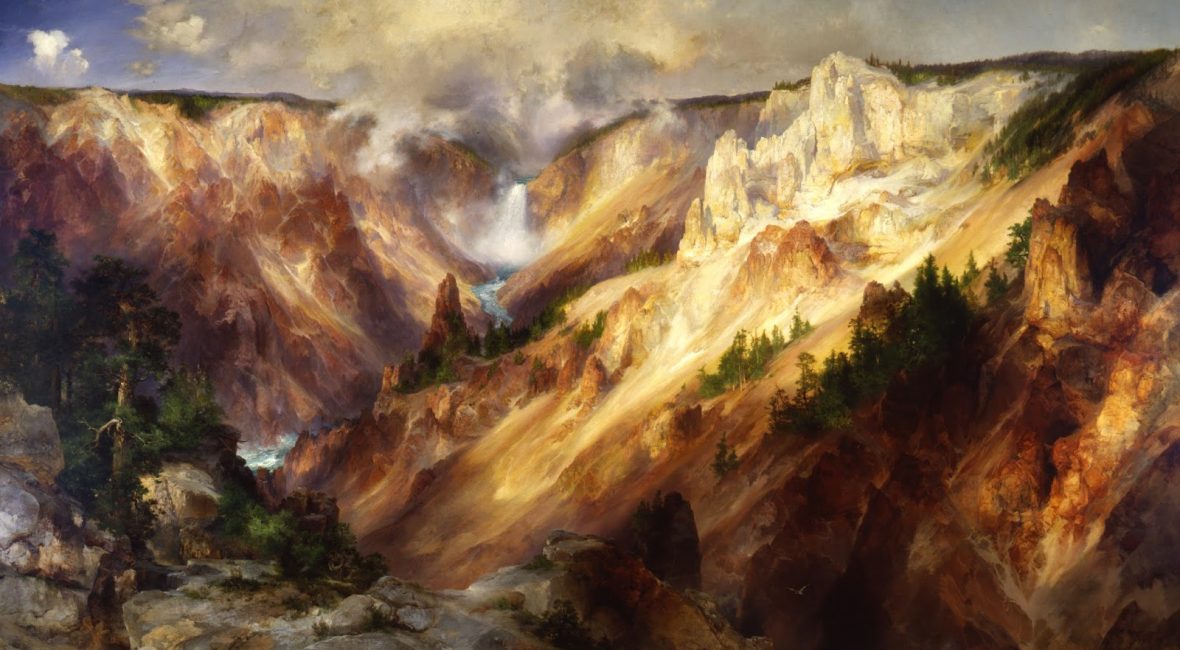
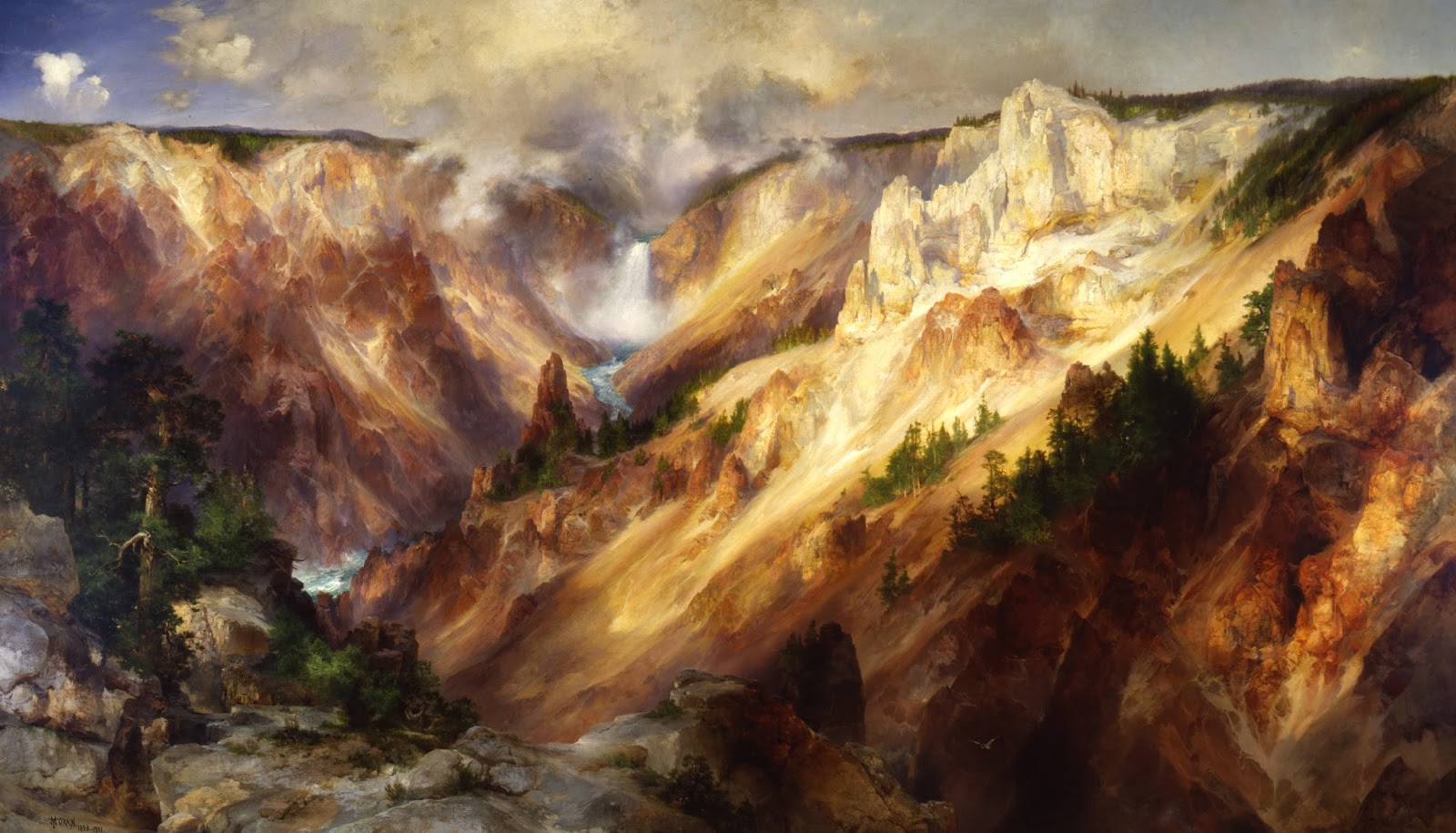
“The Grand Canyon of the Yellowstone” by Thomas Moran, artist for Hayden Survey 1871. Smithsonian American Art Museum, Gift of George D. Pratt. Courtesy of Wikipedia Commons.

This year is the National Park Service’s Centennial anniversary. In recognition, we thought we would take a look at one of the geological surveys that inspired the founding of Yellowstone National Park. In recent months, researchers in increasing numbers have looked for specimens and field documentation relating to Yellowstone, specifically from the Hayden Geological Survey of 1871. This survey is important for a number of reasons. It was the first federally funded survey, and was instrumental in introducing the American public to Yellowstone’s natural wonders. It inspired Congress to establish Yellowstone as the first national park in 1872.

Smithsonian is a repository for specimens and documentation from the Hayden Geological Survey and numerous others relating to the U.S. territories during the nineteenth century. However, it can be surprisingly challenging to find the documentation and specimens from these surveys. This challenge is not unique. Any researcher who has worked with historic material can attest to the challenges of locating materials as decades and centuries pass. Smithsonian Institution was the main repository for the Hayden Geological Survey, but field notes and specimens can end up in many other places. Expedition members may have taken specimens and documentation back to their home institutions, specimens may have been loaned to researchers, others may have been kept as personal mementoes.

The Hayden Survey of 1871 provides an example, because it not only demonstrates the importance of the primary documentation (these specimens and field notes provide a baseline of description for studying Yellowstone’s changing environment), but also how documentation scatter, even when it relates to such a well-known survey. The challenges discussed are prime reasons Natural Sciences institutions around the world are working diligently to make their materials and description available online, so that even if the materials are physically separated, they can be reconnected digitally.

Where are the specimens?

Leslie Hale, Curator at the Division of Mineral Sciences, National Museum of Natural History, shared some of her experience trying to locate these materials for researchers. “By all accounts, every rock they picked up on every Yellowstone expedition of the 1870’s allegedly came here. But I have only located a few drawers full…. I have been able to identify rocks collected in [subsequent Hayden surveys] ’72, ’73, and ’78, but none that I am certain are from that so-important first trip in 1871. There are specimen labels, but that’s it, no field notebooks or any other ancillary documentation.”
View Full Size Image
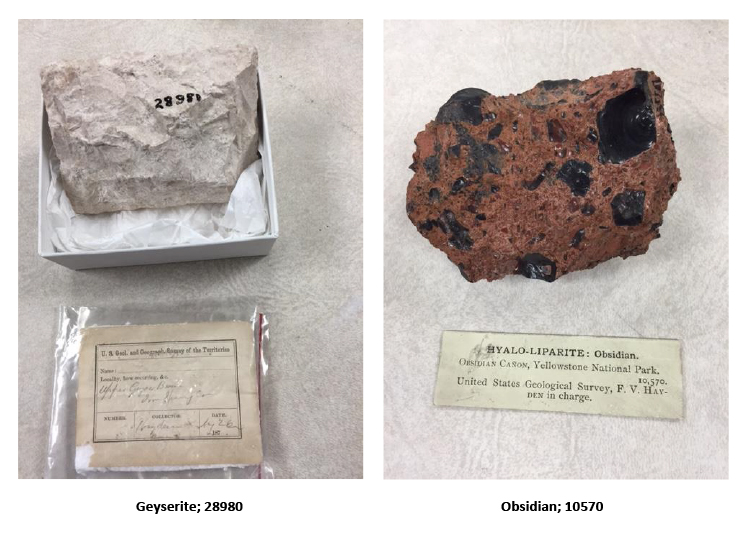
Geyserite (Catalog number 28980) from upper geyser basin and Obsidian (Catalog number 10570) collected at Yellowstone during the Hayden Geological Surveys. Specimens are part of the Volcanology and Petrology collection at the Department of Mineral Sciences, National Museum of Natural History.

It turns out that the specimens can have a pretty interesting journey of their own, due to changing norms in scientific disciplines and institutions over the decades. During much of the Smithsonian’s history, curator positions could be honorary and thus not always a paid position. Leslie shared, “It was not uncommon for them [curators] to remove specimens as payment. I believe that is what happened to most of these specimens.”

So where are these specimens now? Some went to other institutions, most likely with Survey participants. Some are now in private collections as some institutions have sold off portions of their rock and mineral collections (as did, for example, the Philadelphia Academy of Sciences in 2011).

Where are the field notes?

Hayden used his field notes to compose an extensive report that described the expedition work in the Yellowstone area during 1871. The notes were subsequently lost. This loss has been particularly troubling since other publications prepared from the field notes or Hayden’s personal recollections years later contain errors that cannot be checked against the original source.
 

View Full Size Image
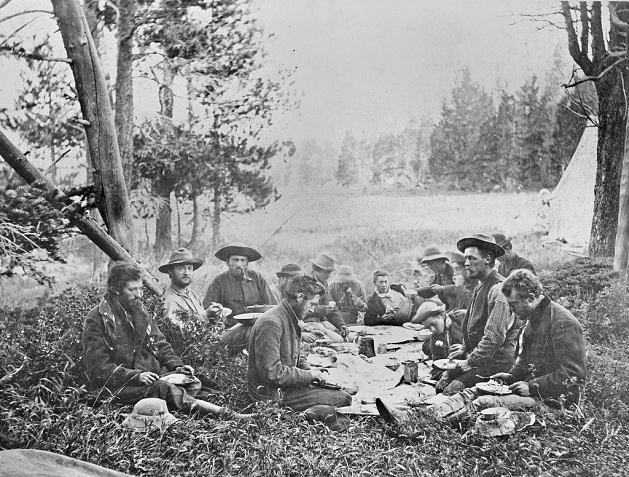
Hayden Survey participants at dinner during 1872. Includes West, Carrington, Taggart, William H. Jackson, Jay Cox, Clifford De V. Negley, and William Henry Holmes. Smithsonian Institution Archives. Record Unit 95, Box 56, Folder 2. 1872.

Luckily other field notes and letters from the expedition exist. However these cannot provide as full a picture as the expedition leader’s notes. In 1999, a book was published by University of Nebraska Press entitled Yellowstone and the Great West: Journals, Letters, and Images from the 1871 Hayden Expedition, which pieced together a description of the expedition from the diaries of George Nelson Allen (geologist) and Albert C. Peale (mineralogist) and correspondence by expedition members. In order to create a comprehensive narrative, Merrill (the book’s editor) relied on correspondence from expedition members found in numerous archives across the country, including the Library of Congress, U.S. Geological Survey Field Registry Library (Colorado), National Archives, Academy of Natural Sciences in Philadelphia, and Oberlin College Archives (Ohio) just to name a few.

This published work only serves to demonstrate how much was lost with Hayden’s notes. According to a review published during 2000 in ISIS, a journal of the history of science society, the selected diary entries and correspondence demonstrate that Hayden was significantly involved in the expedition’s scientific work, far more than initially believed. The fate of Hayden’s field notes was not unique for the survey. Journals from the survey in general are difficult to locate or were also lost. According to the book’s preface, Allen’s and Peale’s journals are the only known unpublished journals to still exist.

Where are the publications?

In 1872, Hayden used his field notes to compose a single report covering the 1871 survey, entitled Preliminary report of the United States Geological Survey of Montana, and portions of adjacent territories : being a fifth annual report of progress, which is available in Internet Archive and will shortly be available in BHL. His final report documented several years’ worth of his surveys in the field.
View Full Size Image
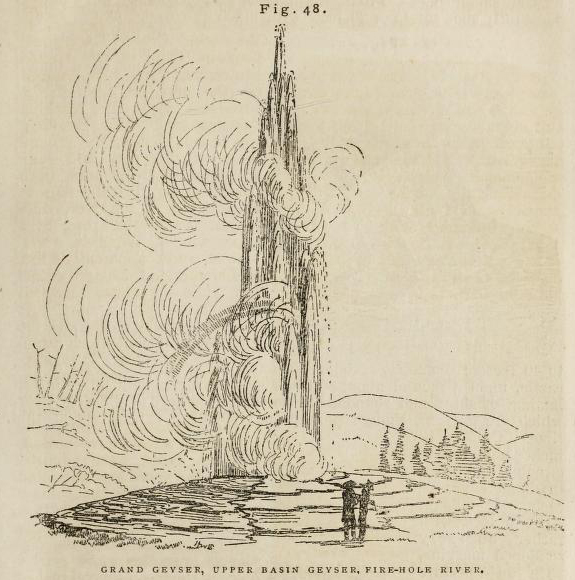
Illustration of the Grand Geyser, the tallest predictable geyser known. It was named by Dr. F.V. Hayden in 1871. Preliminary report of the United States Geological Survey of Montana, and portions of adjacent territories : being a fifth annual report of progress. (1872).

Also available through BHL is a Catalogue and index of the publications of the Hayden, King, Powell, and Wheeler surveys (1904), which provides a list of publications relating to the study of specimens in numerous fields collected during the Survey.

The rest of the story…

The survey of 1871 was one of several that Hayden directed as part of the U.S. Geological and Geographical Survey of the Territories during 1867-1879. He was one of four men, (Clarence King, George Wheeler, and John Wesley Powell) who defined exploration of the western U.S. territories during the 1860’s and 1870’s. Reports describing his explorations and those of Powell, Wheeler and King can be found on the Biodiversity Heritage Library.
View Full Size Image
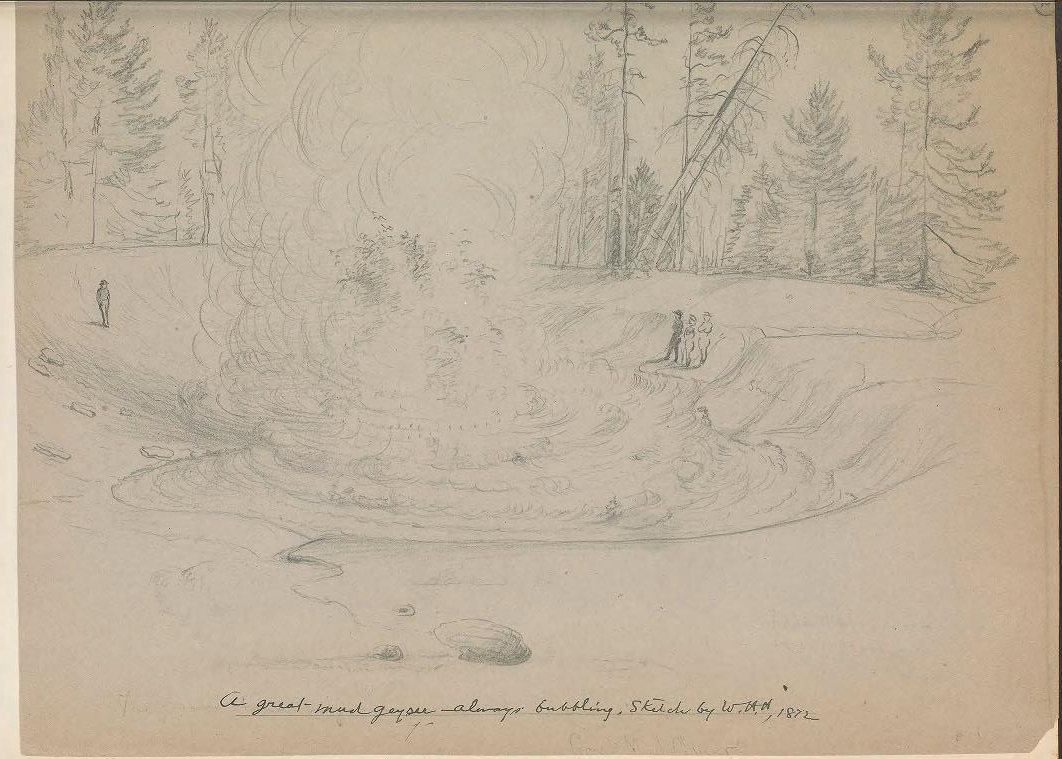
Sketch by William Henry Holmes, drawn during 1872 Hayden Geological Survey. Random records of a lifetime, 1846-1931 [actually 1932]. Digitized by Smithsonian Libraries for The Field Book Project.

Primary source materials from later Hayden surveys to Yellowstone can be found in Smithsonian Institution holdings, including The William Henry Holmes autobiography (typewritten manuscripts detailing Holmes’ life and work), which are held by the American Art and Portrait Gallery Library. Holmes was appointed as the artist-topographer on the Hayden Survey in 1872. In 1874 he was appointed assistant geologist, and he served in this capacity during the 1878 Hayden Survey. Two of Holmes’ volumes have been digitized and are currently available in Internet Archive (vol. 2 | vol. 3). The third volume specifically deals with the 1872 and 1878 Hayden Surveys. Both volumes will be added to the BHL collection soon.
View Full Size Image
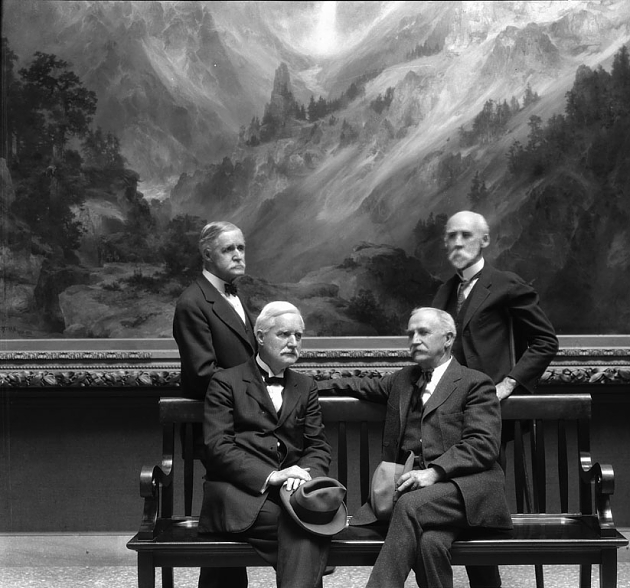
William Henry Holmes with other members of the Hayden Survey, at the U.S. National Museum, circa 1930. Smithsonian Institution Archives, Record Unit 311, Box 27, Folder 7.

The story of the 1871 survey highlights the risks to documentation, even from a historically important expedition that appealed to the public of its day and produced important changes in the nation, including our first national park. Documentation can end up in seemingly disparate locations; through online consortiums these materials are being made available in new ways, restoring important historic context, sometimes lost for decades.
August 25, 2016by ulib-libraryjobs
BHL News, Blog Reel

Inspiring Discovery at the 2016 BioBlitz and Biodiversity Festival in Washington, D.C.

BHL participated in BioBlitz 2016 in Washington, D.C. on 20-21 May. A BioBlitz focuses on finding and identifying as many species as possible in a specific area over a short period of time. In this special edition of the BioBlitz, held in conjunction with the National Park Service’s centenary, the D.C. BioBlitz was accompanied by a two-day Biodiversity Festival on the National Mall at Constitution Gardens. The event was co-hosted by the National Park Service and National Geographic.

View Full Size Image
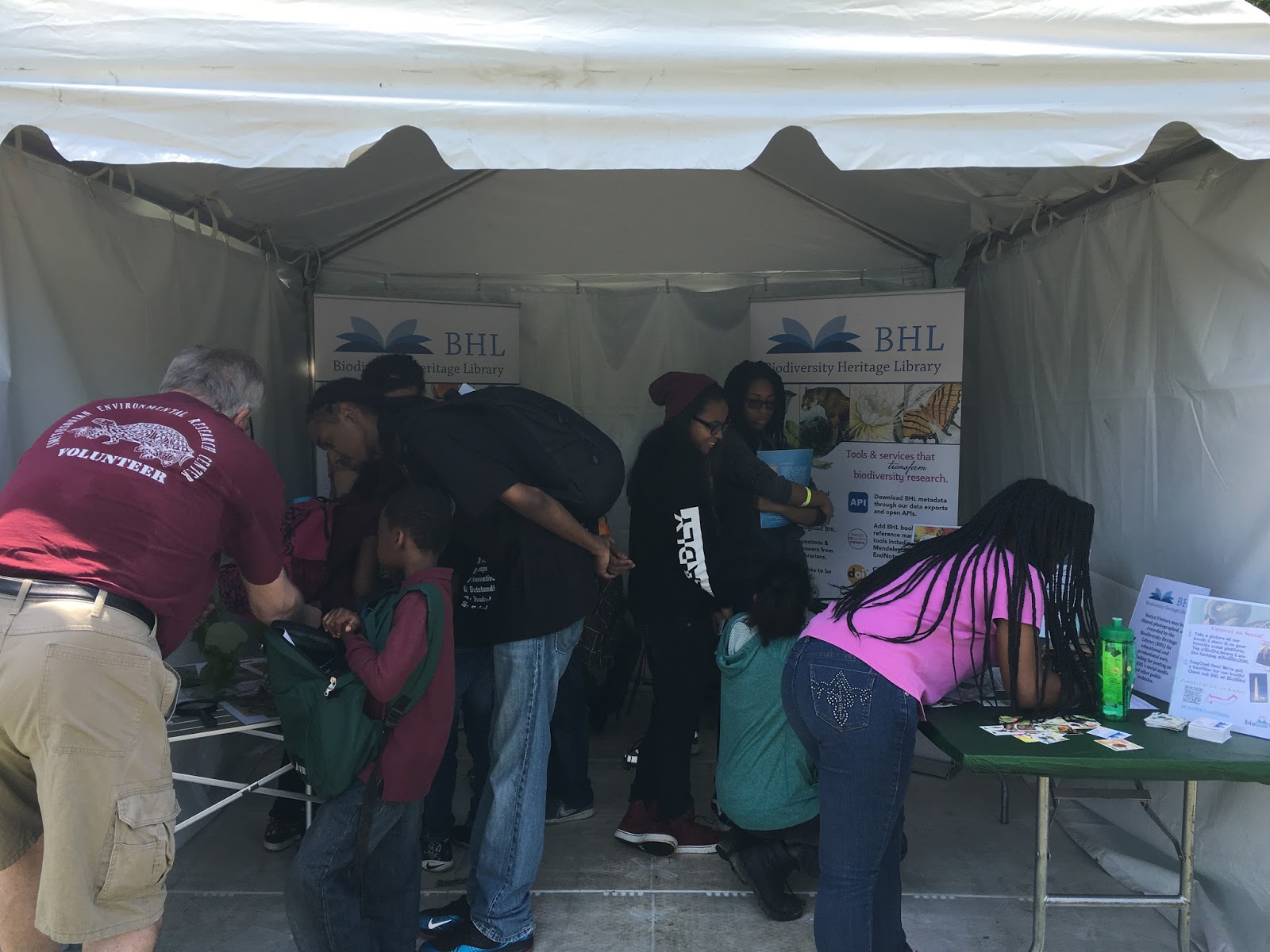
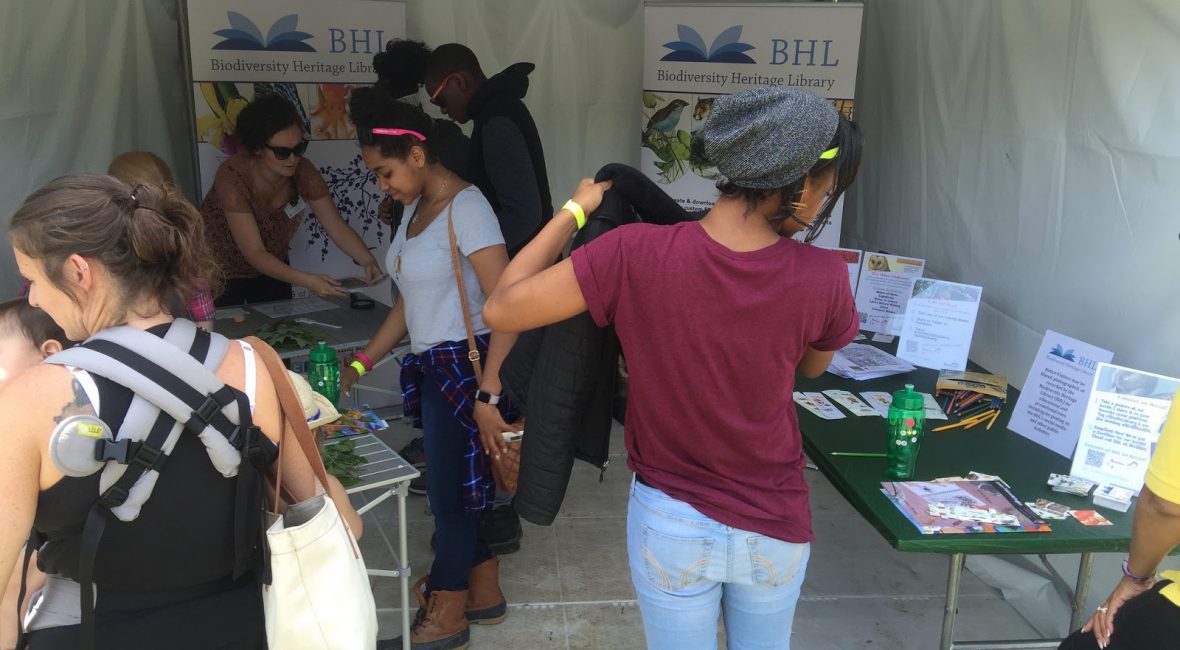
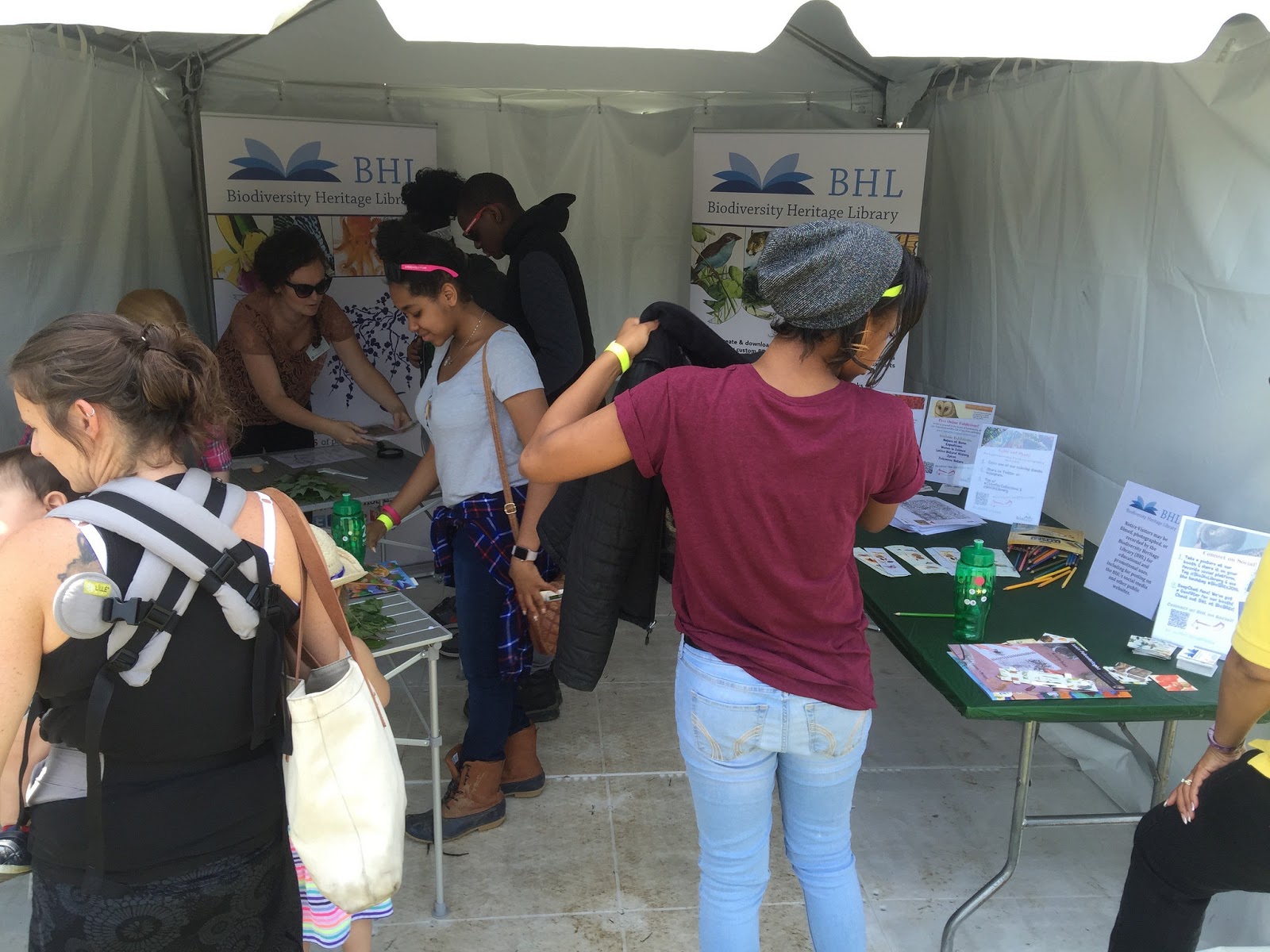
Visitors at the BHL booth at the BioBlitz 2016 Biodiversity Festival on 20 May. Image Credit: Gil Taylor.

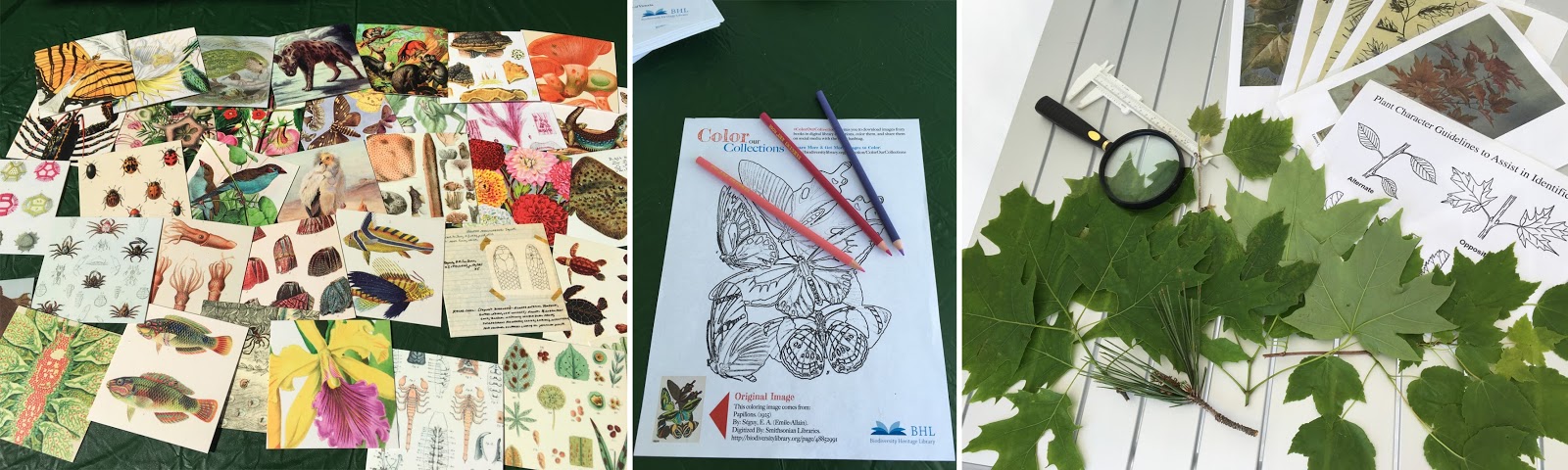
BHL and Smithsonian Libraries’ staff hosted a booth at the Festival that featured hands-on activities including coloring projects, online exhibitions, and a plant ID challenge that demonstrated how BHL can help visitors identify nature around them. Booth volunteers interacted with over 320 people during the course of the 2-day event and had a unique opportunity to expose young people (K-12) to the rich variety of free resources that BHL has to offer.

View Full Size Image
BHL cards, coloring pages, and plant ID challenge at the BioBlitz 2016 Biodiversity Festival booth. Image Credits: Grace Costantino.

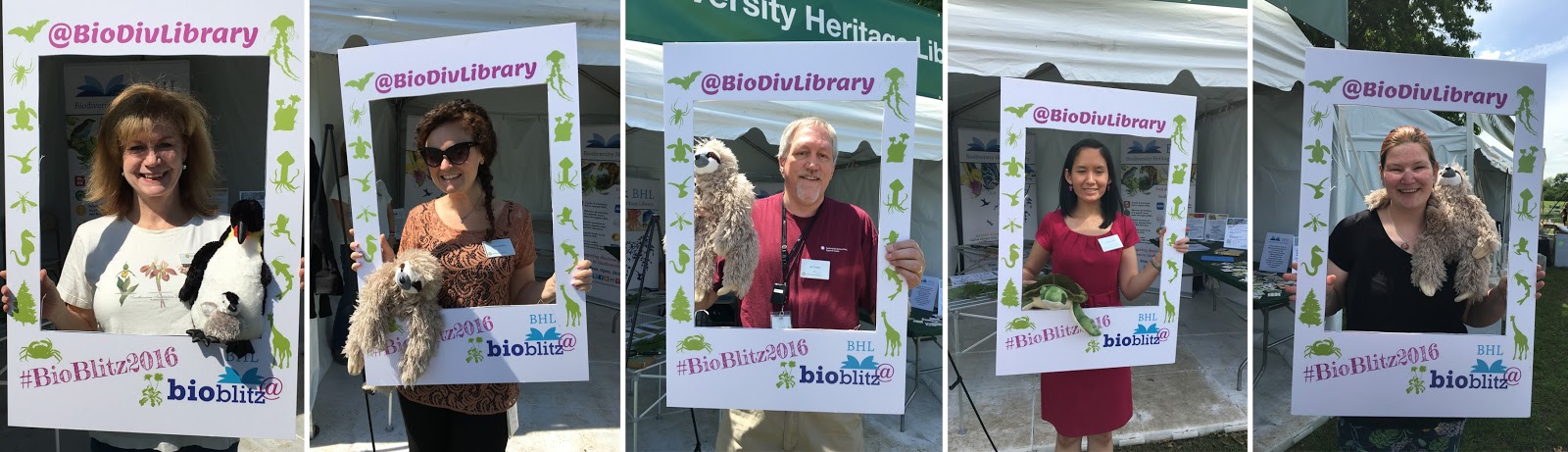
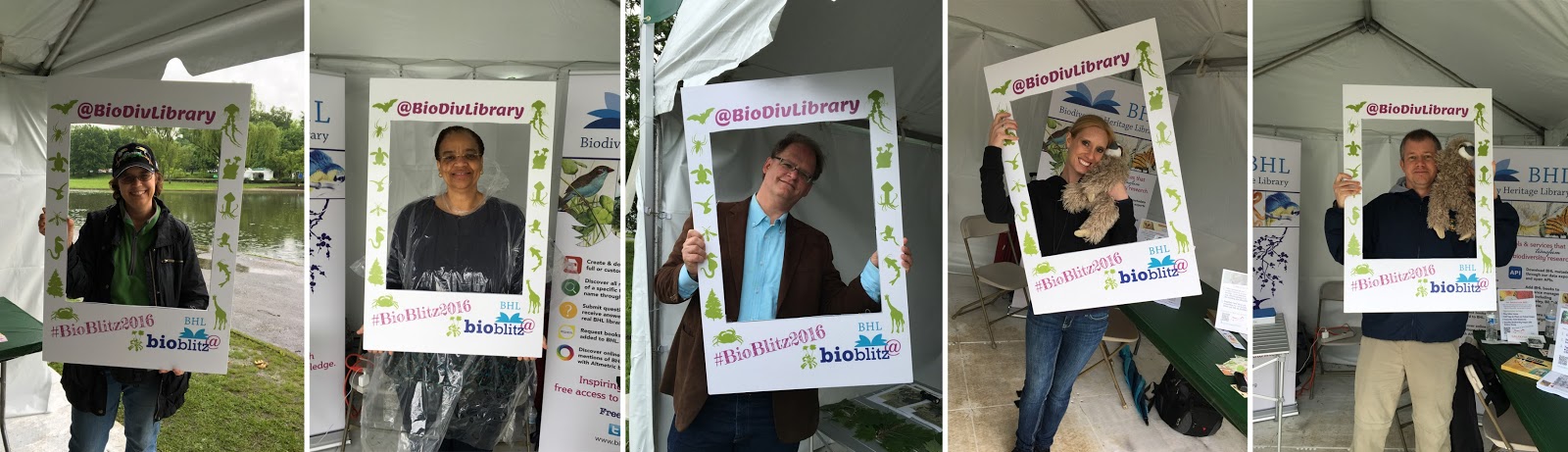
BHL staff at the booth included Martin R. Kalfatovic (BHL Program Director) and Grace Costantino (BHL Outreach and Communication Manager). Smithsonian Libraries staff at the booth included Sara Cardello (Education Specialist), Polly Lasker (Librarian), Gil Taylor (Supervisory Librarian), Bonnie White (Library Technician), Krista Aniel (Management Support Specialist), Barbara Ferry (Department Head, Natural and Physical Sciences Library), Hollis Gentry (Geology Specialist), and Michael O’Connor (Cataloger).

View Full Size Image
Booth Volunteers, from Left to Right: Polly Lasker, Sara Cardello, Gil Taylor, Krista Aniel, Bonnie White. Image Credits: Grace Costantino.
View Full Size Image
Booth Volunteers, from Left to Right: Barbara Ferry, Hollis Gentry, Martin Kalfatovic, Grace Costantino, Michael O’Connor. Image Credits: Grace Costantino.

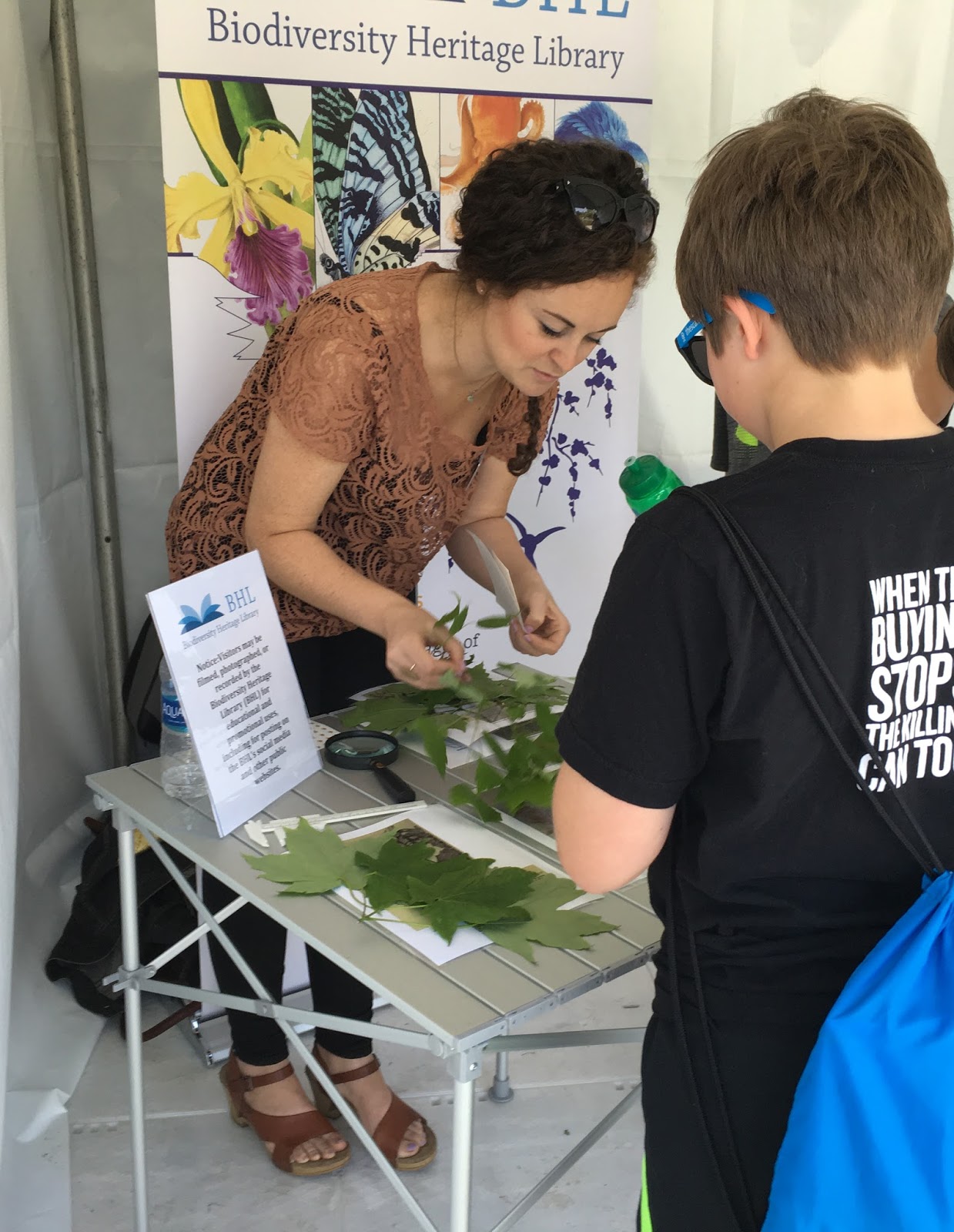
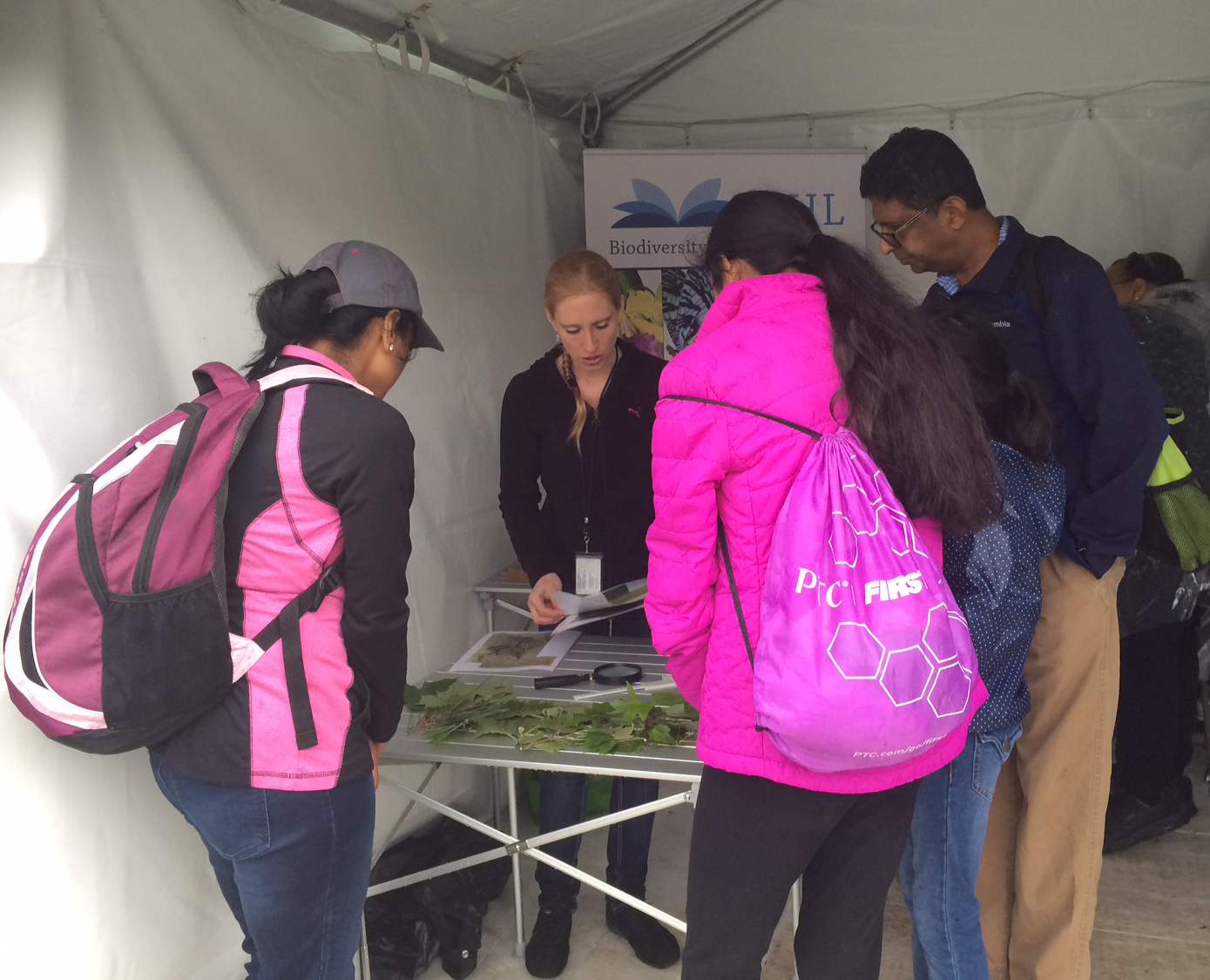
Each booth was instructed to have a hands-on activity that participants could complete as part of the Festival’s Biodiversity University. By completing five activities at the Festival, visitors received their Biodiversity University Bachelor’s degree. Ten activities earned them a Master’s and twenty activities a doctorate. BHL’s activity was a plant ID challenge in which visitors used a book in BHL (A Guide to the Trees by Alice Lounsberry) to identify leaves from five trees native to the D.C. region. Over 200 students completed the activity, earning a sticker towards their Biodiversity University diploma!

View Full Size Image
Sara Cardello guiding visitors through the plant ID challenge at the BHL booth. Image Credit: Grace Costantino.

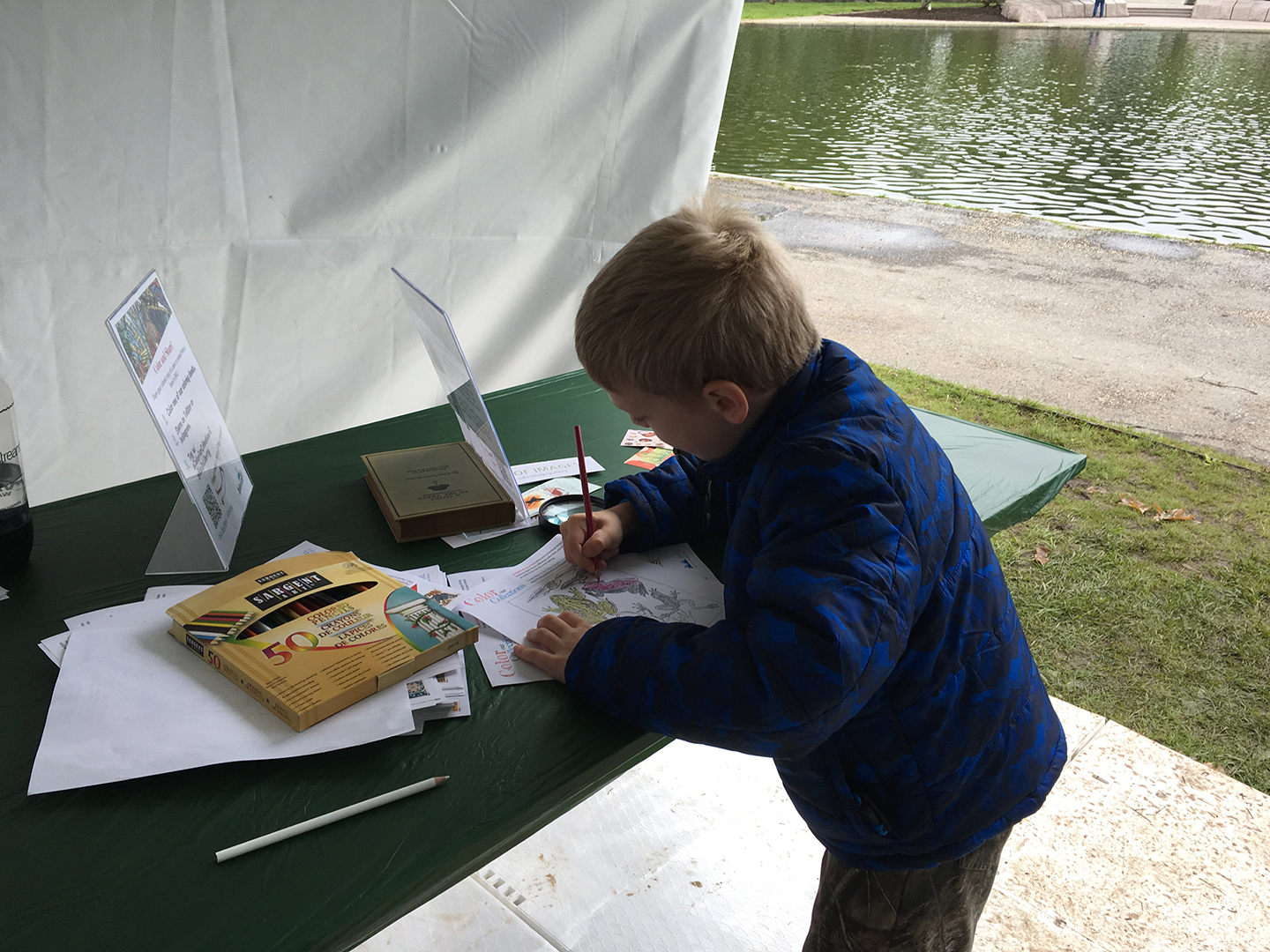
Additional BHL booth activities included coloring pages from BHL’s Color Our Collections coloring book and a chance to explore BHL’s online exhibitions (particularly Early Women in Science) and citizen science opportunities (including Flickr image tagging, field note transcription, Science Gossip, and online games).

View Full Size Image
Visitor coloring a BHL coloring page at the BHL booth. Image Credit: Grace Costantino.

The BioBlitz in D.C. was the cornerstone event of over 250 BioBlitzes happening around the country this year. So far this year, over 61,000 observations of over 6,800 species in 126 parks around the U.S. have been made. The largest percentage of observations were made of plants, followed by birds, insects, fungi, reptiles, mammals, mollusks, arachnids, and amphibians. Learn more about the observations made to date.

View Full Size Image
Grace Costantino guiding visitors through the plant ID challenge at the BHL booth. Image Credit: Barbara Ferry.

We were thrilled to have the opportunity to participate in the BioBlitz and show visitors how BHL’s free resources can be a valuable tool to help them identify and learn more about biodiversity. We’d also like to extend a special thanks to all of the Smithsonian Libraries staff that volunteered at the booth. The BioBlitz and Biodiversity Festival were an excellent opportunity for us to inspire discovery through free access to biodiversity knowledge.

View Full Size Image
Gil Taylor (left) guiding visitors through the plant ID challenge at the BHL booth. Image Credit: Grace Costantino.
View Full Size Image
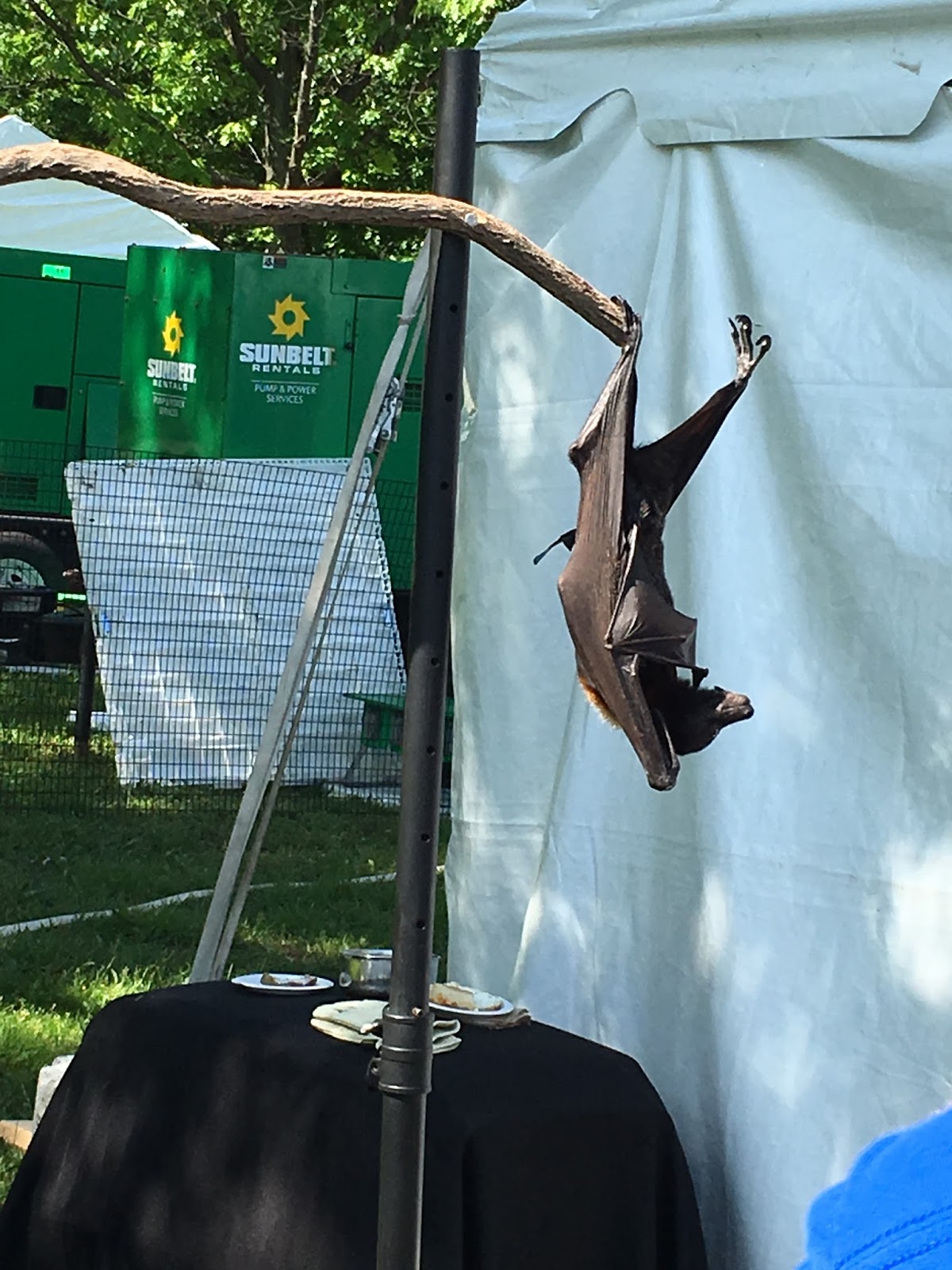
Malayan Flying Fox at the Organization for Bat Conservation #SavetheBats booth at the BioBlitz 2016 Biodiversity Festival. Image Credit: Grace Costantino.
View Full Size Image
Our neighbors at the BioBlitz 2016 Biodiversity Festival booth. Image Credit: Grace Costantino.
May 24, 2016by michelle.underhill
BHL News, Blog Reel

BioBlitz 2016 in Washington, D.C.

View Full Size Image

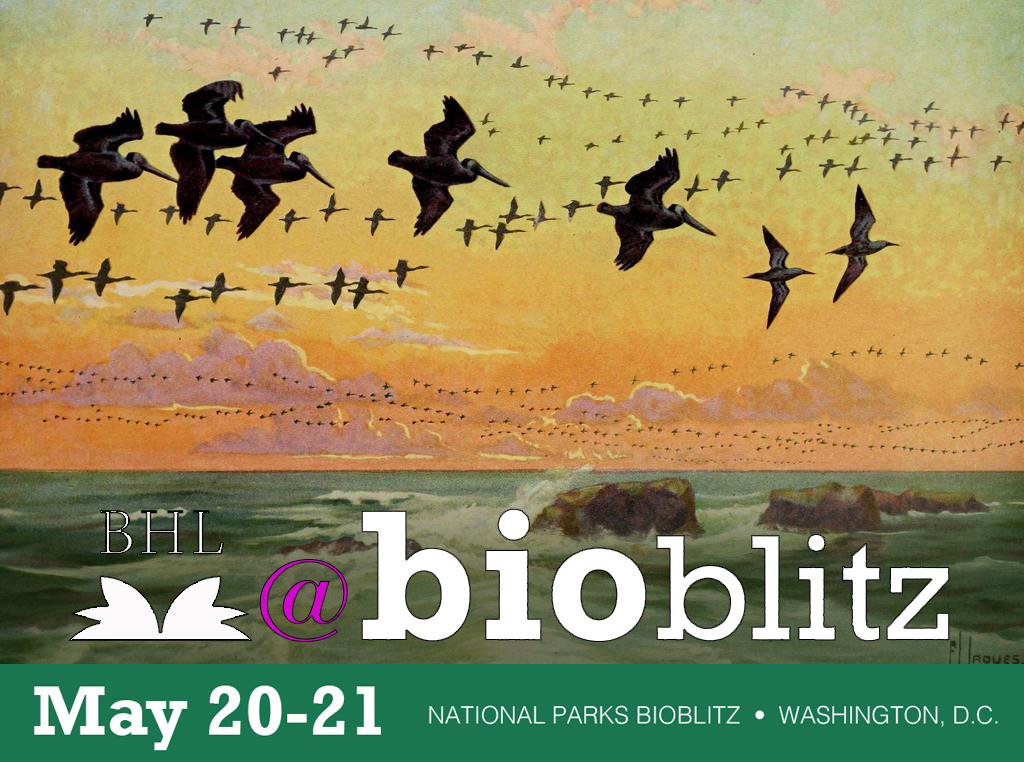
BioBlitz 2016 is coming to the National Mall in Washington, D.C. May 20-21, and BHL is participating!

According to the National Geographic website:

“A BioBlitz is an event that focuses on finding and identifying as many species as possible in a specific area over a short period of time. At a BioBlitz, scientists, families, students, teachers, and other community members work together to get an overall count of the plants, animals, fungi, and other organisms that live in a place.”

For the past ten years, National Geographic and the National Park Service have hosted BioBlitzes in various national parks each year. This year’s event is particularly special, as 2016 marks the National Park Service’s centennial. To celebrate, over 250 BioBlitzes are happening throughout the country this year.

The cornerstone BioBlitz is in Washington, D.C., May 20-21, and it will be accompanied by a two-day Biodiversity Festival on the National Mall at Constitution Gardens. The Festival, open 9am-5pm EDT, May 20-21, will feature hands-on science exhibits, food and art, as well as family-friendly entertainment and activities.

The Biodiversity Heritage Library (BHL) is participating in the Biodiversity Festival with a booth showcasing BHL’s free online biodiversity collections. 

The booth will demonstrate how these resources can be used to help identify and learn more about the plants, animals, fungi, and other organisms that visitors might encounter both during the BioBlitz and around their own homes. We’ll also have fun hands-on activities including coloring projects, online games, and image tagging which will help make it easier for people to find images of organisms from around the world.

Follow #BioBlitz2016 on social media to learn more about the BioBlitz and other planned activities around the country. If you’re in the Washington, D.C. area, we hope you’ll plan to participate in the BioBlitz and stop by our booth at the Biodiversity Festival:

WHERE: Constitution Gardens, National Mall 17th and Constitution Avenue, NW, Washington DC
DATES: Friday and Saturday, May 20 and 21
TIME: 9 a.m. to 5 p.m. Friday and Saturday

Learn more on the National Geographic website.

May 11, 2016by michelle.underhill

Help Support BHL

BHL's existence depends on the financial support of its patrons. Help us keep this free resource alive!

search

About BHL

The Biodiversity Heritage Library (BHL) is the world’s largest open access digital library for biodiversity literature and archives. BHL operates as a worldwide consortium of natural history, botanical, research, and national libraries working together to digitize the natural history literature held in their collections and make it freely available for open access as part of a global “biodiversity community.”

Join Our Mailing List

Sign up to receive the latest news, content highlights, and promotions.

Subscribe Now

Subscribe to Blog via Email

Enter your email address to subscribe to this blog and receive notifications of new posts by email.

Join 319 other subscribers

Subscribe to Blog Via RSS

Subscribe to the blog RSS feed to stay up-to-date on all the latest BHL posts.

Access RSS Feed

Inspiring Discovery through Free Access to Biodiversity Knowledge.

The Biodiversity Heritage Library makes it easier than ever for you to access the information you need to study and explore life on Earth…for free, anytime, anywhere.


64+ Million Pages of
Biodiversity Literature Online.

EXPLORE

Tools and Services
to Transform Research.

EXPLORE

300,000+
Illustrations on Flickr.

EXPLORE

ABOUT | HARMFUL CONTENT | PRIVACY | SITE MAP | TERMS OF USE