Biodiversity Heritage Library - Program news and collection highlights from BHL
  • Home
  • News
  • Featured Books
    • All Featured Books
    • Book of the Month Series
    • BHL at 20
  • User Stories
  • Campaigns
    • Fossil Stories
    • Garden Stories
    • Monsters Are Real
    • Page Frights
    • Her Natural History
    • Earth Optimism 2020
  • Tech Blog
  • Visit BHL
Home
News
Featured Books
    All Featured Books
    Book of the Month Series
    BHL at 20
User Stories
Campaigns
    Fossil Stories
    Garden Stories
    Monsters Are Real
    Page Frights
    Her Natural History
    Earth Optimism 2020
Tech Blog
Visit BHL
  • Home
  • News
  • Featured Books
    • All Featured Books
    • Book of the Month Series
    • BHL at 20
  • User Stories
  • Campaigns
    • Fossil Stories
    • Garden Stories
    • Monsters Are Real
    • Page Frights
    • Her Natural History
    • Earth Optimism 2020
  • Tech Blog
  • Visit BHL
Biodiversity Heritage Library - Program news and collection highlights from BHL
Blog Reel, Campaigns, Earth Optimism 2020

Beyond Walden: What Henry David Thoreau Teaches Us About Nature and Connection

April 2020 marks the 50th anniversary of Earth Day. Organizations around the world have commemorated the occasion by participating in the global Earth Optimism movement — an initiative spearheaded by the Smithsonian to “turn the conservation conversation from doom and gloom to optimism and opportunity”.

Throughout 2020, the Biodiversity Heritage Library (BHL) and our partners are joining the movement by sharing conservation success stories from and made possible by the BHL collection. Follow our blog for conservation stories — past and present — and visit our website for more information and to explore our Earth Optimism book collection.

———————

Thoreau the writer.  Thoreau the philosopher.  Thoreau the naturalist.  Thoreau the citizen.

The myriad of Henry David Thoreau’s titles demonstrates the fusion of interests that propelled his path toward becoming one of the key naturalist figures in history. Classic works like Walden and Civil Disobedience brought Thoreau literary renown as he proclaimed the philosophies of Transcendentalism and environmentalism. As a naturalist, his records of field specimens amassed in journals both while living at Walden Pond and long after. Though praised for his place in the American literary canon, he also made significant contributions to the scientific community. His field notes and data are now helping scientists learn more about species’ resilience, the effects of climate change, and the historical landscape of New England.

Thoreau’s identities are interdependent. Without his grace with words, little attention might be devoted to his findings and philosophies. If he had not had a passion for nature and study, he might never have gone to Walden Pond in the first place. Yet, it is not simply living and surviving at Walden Pond that makes Thoreau a great naturalist. His immersion in nature throughout New England and the relationships he formed with members of the Penobscot Nation in Maine sculpted his understanding and passion for the ecosystem.
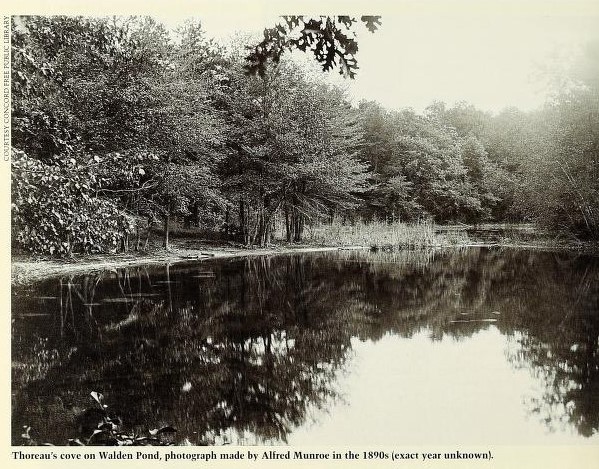
cove (3).jpg

A cove at Walden Pond where Thoreau lived 1845-1847. Miller-Rushing, Abraham J., and Richard B. Primack. “The Impact of Climate Change on the Flora of Thoreau’s Concord.” Arnoldia 66, no. 3. 2009.  Contributed in BHL by Smithsonian Libraries with permission from The Arnold Arboretum of Harvard University. CC-BY-NC-SA.

Blending art and science

Thoreau lived alone at Walden Pond outside the town of Concord, Massachusetts from 1845-1847. He practiced self-reliance by building shelter, farming, fishing and spending long hours in observation of his surroundings. Thoreau proves himself dedicated to his task of environmental study at all times, even during social hours with friends like writer Ralph Waldo Emerson. Thanks to Emerson’s Biographical Sketch of Thoreau, we learn that when the two went walking:

“… [Thoreau] carried an old music-book to press plants; in his pocket, his diary and pencil, a spy-glass for birds, microscope, jack-knife, and twine. He wore a straw hat, stout shoes, strong gray trousers to brave shrub-oaks and smilax, and to climb a tree for a hawk’s or a squirrel’s nest. He waded into the pool for the water-plants, and his strong legs were no insignificant part of his armor.” (Biographical Sketch of Thoreau, 20)

Thoreau’s book Notes on New England Birds goes on to showcase the very data he collected on such walks (maybe even with Emerson in tow!). His trademark lyricism is reflected in his field notes, such as this observation of a red-winged blackbird’s nest:

“What Champollion can translate the hieroglyphics on these eggs? It is always writing of the same character, though much diversified. While the bird picks up the material and lays the egg, who determines the style of the marking? When you approach, away dashes the dark mother, betraying her nest, and then chatters her anxiety from a neighboring bush…” (Notes on New England Birds, 251)

While the text maintains his melodious tone, it actually serves as critical data for the first records of animals in the area. For each of the birds, Thoreau records incremented updates over many years, illustrating changes in behaviors and migration. His notes reveal much more than a studious rigor, illuminating the true joy he experienced as a participant in nature. Thoreau takes an anthropomorphic approach to his notes on the birds, personifying each creature as an individual entity representative of its greater species:

“The loon comes in the fall to sail and bathe in the pond, making the woods ring with its wild laughter in the early morning…” (Notes on New England Birds, 3)

In Catalogue of Herbarium of Henry D. Thoreau, we see a less aesthetic side to his data collection. These handwritten notes on specimens from Thoreau’s herbarium show methodical organization and notes on each plant — Latin names and all. According to the Thoreau Society, he studied botany when he was at the Concord Academy and went on to collect about 900 plant specimens to dry and add to his herbarium. Through these two data sets, we see Thoreau’s scholastic pendulum swing between the art and science, emphasizing the multifaceted nature of his purpose.
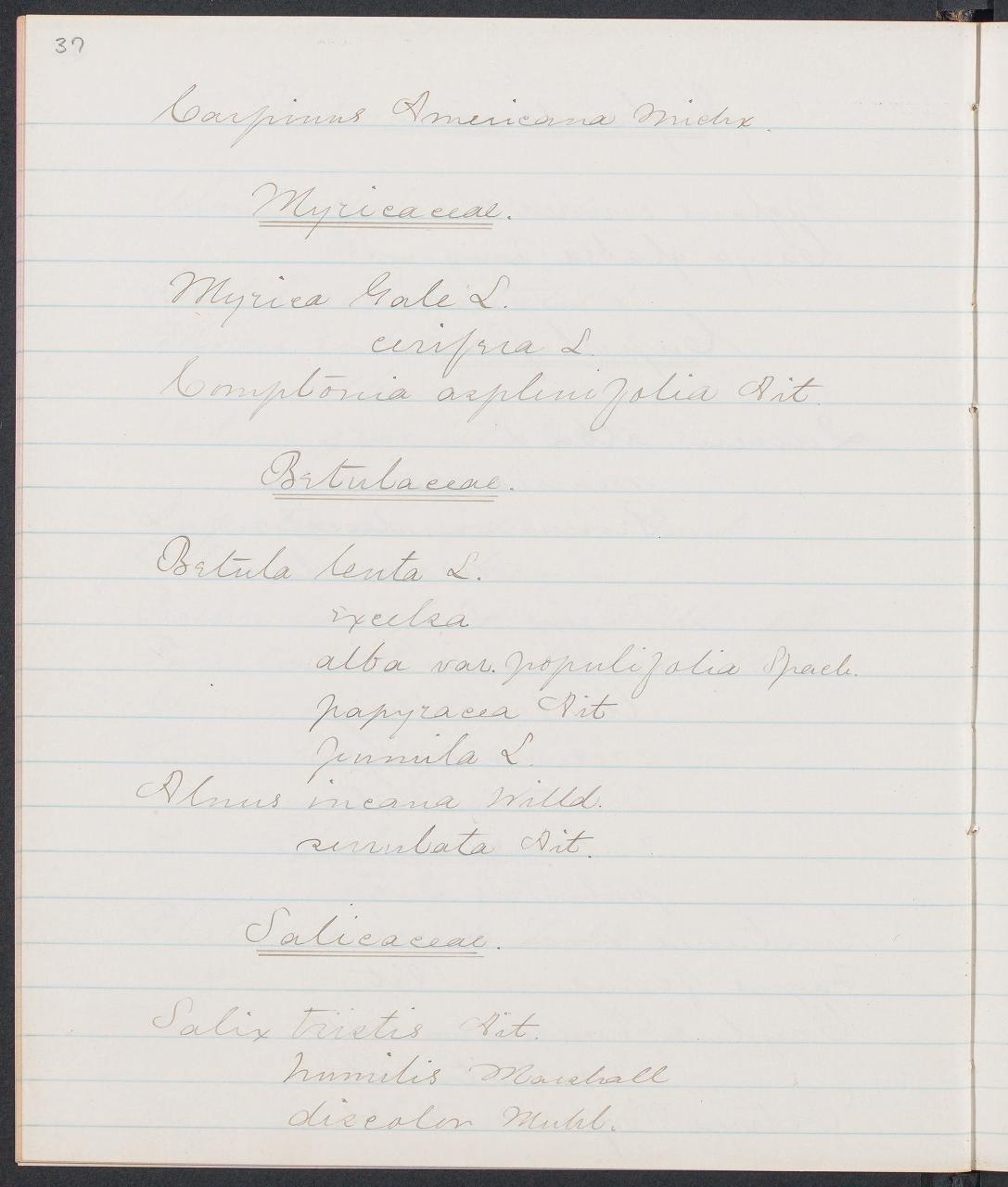
Catalogue Herbarium.jpg

A page of Thoreau’s handwritten notes from the catalogue of his herbarium. Thoreau, Henry David. Catalogue of the Herbarium of Henry D. Thoreau, Bequeathed to Boston Society of Natural History. Contributed in BHL by Harvard University Botany Libraries.

Data that lives on

While Thoreau’s herculean efforts set precedents for the fields of biology and botany, his data itself remains relevant to current research. Works by other authors exemplify his contributions to modern science, such as the 1974 publication by Richard Jefferson Eaton entitled A Flora of Concord. This book documents the plants and ferns that grew naturally in Concord from Thoreau’s time to present day. Without Thoreau’s data on flora and animals, scientists would not have access to such an extensive look at species’ respective survivals and declines over time.

The detail of Thoreau’s field journals has provided scientists with evidence that allow them to evaluate changes in animal and plant behavior over a wide span of time. “The Impact of Climate Change on the Flora of Thoreau’s Concord“, by Abraham J. Miller-Rushing and Richard B. Primack, boasts that Concord flora is “one of the best-documented floras in the country,” in thanks to the initial work of Thoreau along with another local, Alfred Hosmer. Since 1830, the floras have been inventoried five times, serving as an immense case study of the effects of a changing habitat, climate, topography, and other factors on native plants.
flora concord.jpg

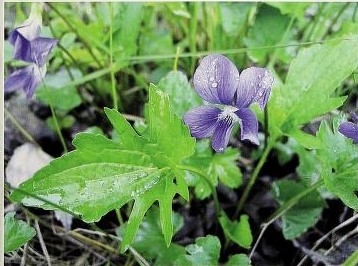
Britton’s violet (Viola brittoniana) is one of many wildflowers native to Concord. Miller-Rushing, Abraham J., and Richard B. Primack. “The Impact of Climate Change on the Flora of Thoreau’s Concord.” Arnoldia 66, no. 3. 2009.  Contributed in BHL by Smithsonian Libraries with permission from The Arnold Arboretum of Harvard University. CC-BY-NC-SA.

The painstaking work that Thoreau endured is emphasized by his commitment to tracking plants even through the brutal New England winters. Miller-Rushing and Primack note: “From 1852 to 1858, he hiked around Concord and made regular observations of the first flowering times of over 500 different species of plants in an effort to create a calendar of the natural events in Concord.” Thoreau and Hosmer documented plant occurrences as well as flowering and fruiting times, which have sensitive biological responses to alterations in climate. Their catalogs are allowing scientists to examine how and why certain species respond differently to changes in environment and compare the findings in Concord with those in other parts of the world. Such evidence provides a case study into the effects of climate change and loss of natural habitat on organisms’ behavior and survival.

The Penobscot Nation and Thoreau

Other books by Thoreau include information on the topography of New England infused with introspective narratives, such as Cape Cod and The Maine Woods. The Maine Woods documents Thoreau’s time spent with people of the Penobscot Nation, now one of Maine’s tribal governments. His time in Maine marks a formative period in his growth not only as a scientist but as a champion of the environment.

According to the Penobscot Nation’s Cultural & Historic Preservation Department, Thoreau did not always have a sincere respect for Native American culture. He was interested in Native Americans, but thought they were on the decline, as did most of society at the time. Starting in 1846, Thoreau made three trips to Maine and became increasingly well-acquainted with the Penobscot Nation. While canoeing with tribe members Joseph Attean (sometimes spelled Aitteon) (1829-1870) and Joseph Polis (1809-1884) as guides, Thoreau came to know Native American people as individuals and teachers, rather than as a fascination he had held since youth.

Attean, the last hereditary and first elected Chief of the Penobscot Nation, guided Thoreau on his second trip through Maine. Attean helped him develop more respect for the significance of Penobscot culture, though Thoreau still held on to lingering prejudices and stereotypes about Native Americans. Polis worked as the guide on his final trip. A Penobscot leader and representative for the tribe in official state and federal business, Polis expanded Thoreau’s worldview while bestowing on him an invaluable education on the land. Thoreau’s appreciation for the Penobscot Nation seemed to solidify thanks to his time with Polis. Thoreau describes a conversation while canoeing with Polis, writing:

“I told him that in this voyage I would tell him all I knew, and he should tell me all he knew, to which he readily agreed.” (The Maine Woods, 172)

We cannot fully embrace Thoreau’s contribution to science without honoring the guidance that Attean and Polis provided both in his scientific and spiritual journey. Thoreau’s maturation is evident in The Maine Woods and integral to our understanding of his impact on environmentalism. Thoreau’s relationships with Attean and Polis advanced his knowledge of Maine’s landscape and his intimacy with nature. He acknowledges their tribe’s expertise and connection to the land, saying:

“Nature must have made a thousand revelations to them which are still secrets to us.” (The Maine Woods, 185)
Penobscot river.jpg

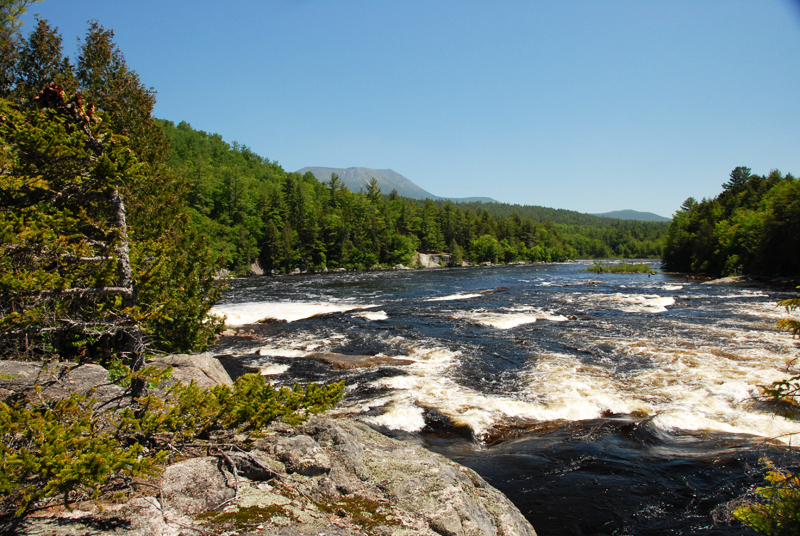
The Penobscot River in Maine. Maine Office of Tourism. “Penobscot River.”

While Walden may be Thoreau’s most famous work, The Maine Woods is the culmination of his identities at their prime. We see Thoreau’s ability to relate not only with nature, but with other people and cultures. For a man who chose to live in the woods for two years, Thoreau seemed to maintain a desire to engage with those around him throughout his life. His relationships with people like Emerson, Attean, and Polis take Thoreau out of the context of his achievements and reveal a person who sought genuine connection with people and the environment.

Thoreau’s scientific contributions and the ways in which they helped him grow in cultural awareness illustrate the importance of environmental research. The more Thoreau learned about his ecosystem, the more he fell in love with it and could show others how to develop a similar appreciation. The environment is still benefiting from Thoreau’s work today, as his data helps to advance research and his reflections motivate people to care for the earth as he did. A literary and scientific reading of Thoreau’s collection allows us to discover not only the effort behind his achievements, but the impetus for his life’s work.

References and Further Reading

Eaton, Richard Jefferson. A Flora of Concord. Series Publication: Museum of Comparative Zoology 4. Cambridge: Museum of Comparative Zoology: Harvard University, 1974.

Kucich, John J. “Lost in the Maine Woods: Henry David Thoreau, Joseph Nicolar, and the Penobscot World.” The Concord Saunterer 19/20 (2011): 22-52. Accessed July 9, 2020. www.jstor.org/stable/23395210.

Miller-Rushing, Abraham J., and Richard B. Primack. “The Impact of Climate Change on the Flora of Thoreau’s Concord.” Arnoldia 66, no. 3 (2009): 2–9.

Penobscot Cultural and Historic Preservation. “Historic Preservation.” Accessed February 8, 2020. http://www.penobscotculture.com/.

Schneider, Richard J. “Life and Legacy: Thoreau’s Life.” The Thoreau Society. Accessed February 8, 2020. http://thoreausociety.org/life-legacy.

Thoreau, Henry David. Catalogue of the Herbarium of Henry D. Thoreau, Bequeathed to Boston Society of Natural History, n.d.

Thoreau, Henry David. Notes on New England Birds. Edited by Francis H. Allen. Boston: Houghton, Mifflin and Company, 1910.

Thoreau, Henry David. The Maine Woods. Edited by Sophia E. Thoreau and William Ellery Channing. Boston: Ticknor and Fields, 1864.

Thoreau, Henry David, and Ralph Waldo Emerson. The Succession of Forest Trees, and Wild Apples, with a Biographical Sketch of Thoreau. The Riverside Literature Series 27. Boston: Houghton, Mifflin and Company, 1887.
July 23, 2020by Joel Richard
Blog Reel, Featured Books

Notes accompanying collection of useful plants made by W. J. Fisher at [Kodiak] in 1899

In honor of Native American Heritage Month, we would like to highlight a field book that documents Native American knowledge of natural resources. The field book was created by William J. Fisher, who lived in southern Alaska from 1879 until his death in 1903.

Fisher’s notebook documents his final years collecting and looks at the relationship between the Alutiiq (Aleut) and their plants by recording medicinal and food uses for 48 specimens. Only a handful of the specimen entries include the taxonomic names of plants; instead, entries focus on recording the Russian and Sugpiat/Alutiiq names of plants, how the plants were used, and plant distribution. Detail varies, as seen below in entries three and forty-seven.

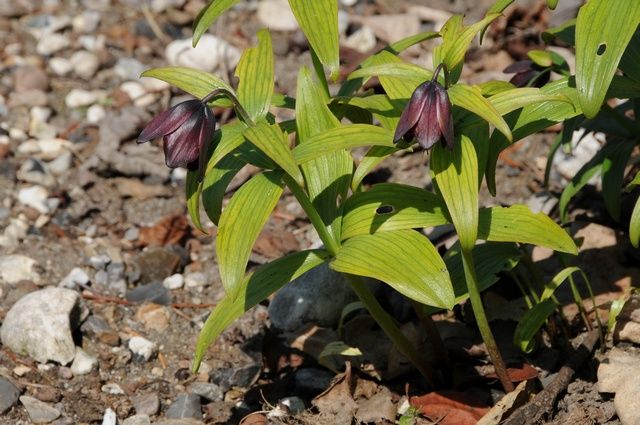
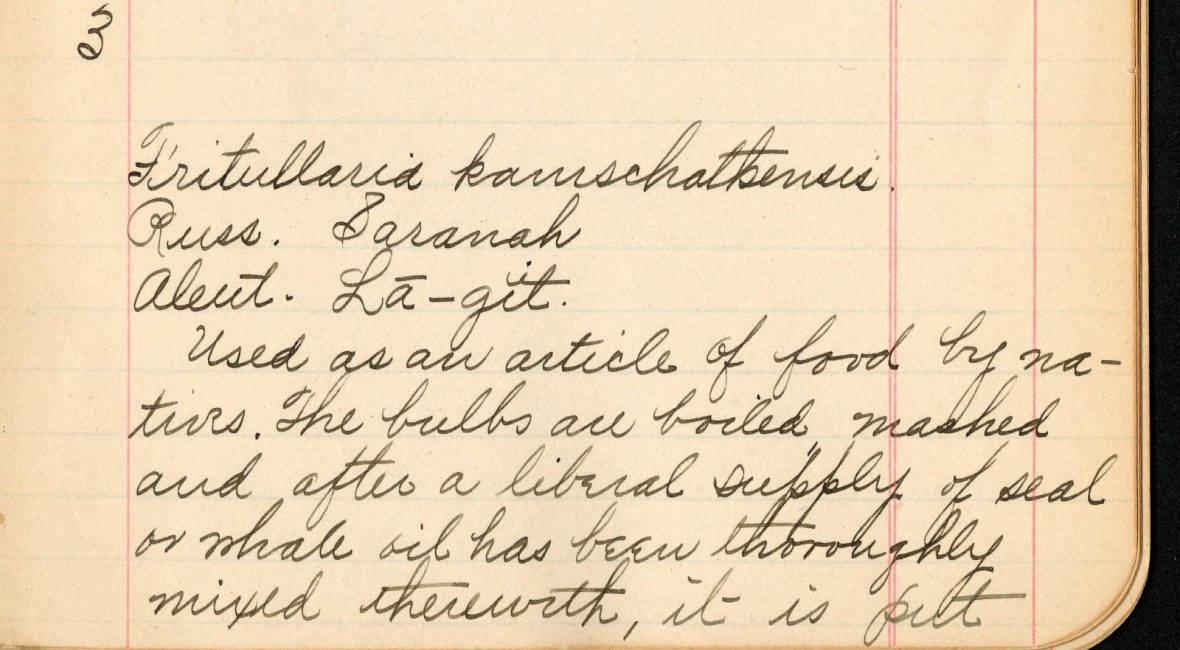
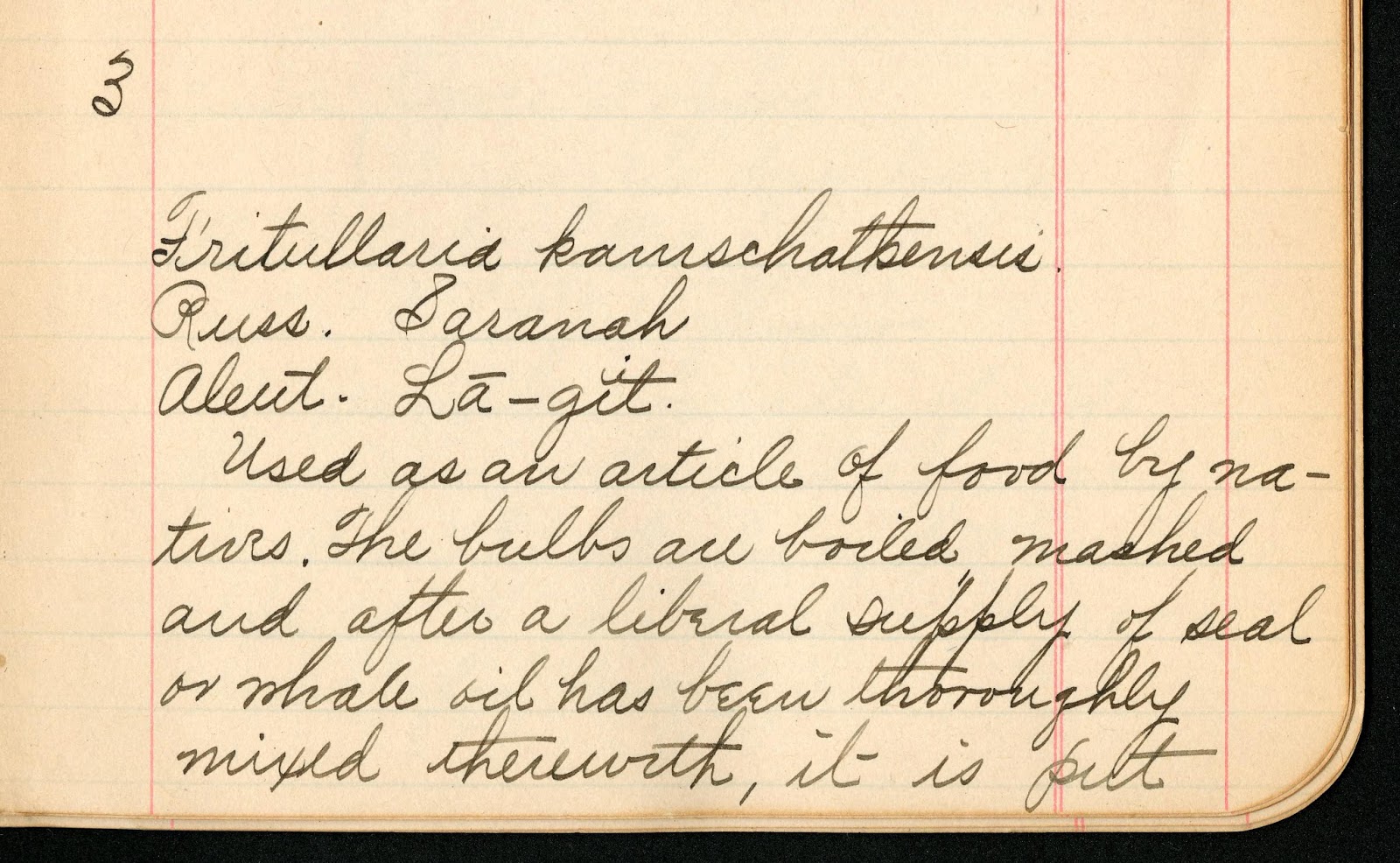
Entry three describes Fritullaria kamschathensis [Fritillaria camschatcensis], also known as the Kamchatka Fritillary, and lists general use and preparation: “Used as an article of food by natives. The bulbs are boiled mashed and after a liberal supply of seal or whale oil has been thoroughly mixed therewith, it is put away for winter’s use.”

View Full Size Image
Specimen entry three from “Notes accompanying collection of useful plants made by W. J. Fisher at [Kodiak] in 1899,” Smithsonian Institution Archives, SIA Acc. 12-038. http://www.biodiversitylibrary.org/page/46428854. Digitized by Smithsonian Institution Archives.
View Full Size Image
Image of Fritillaria camschatcensis from Encyclopedia of Life, provided by Biopix. http://eol.org/data_objects/19162439.

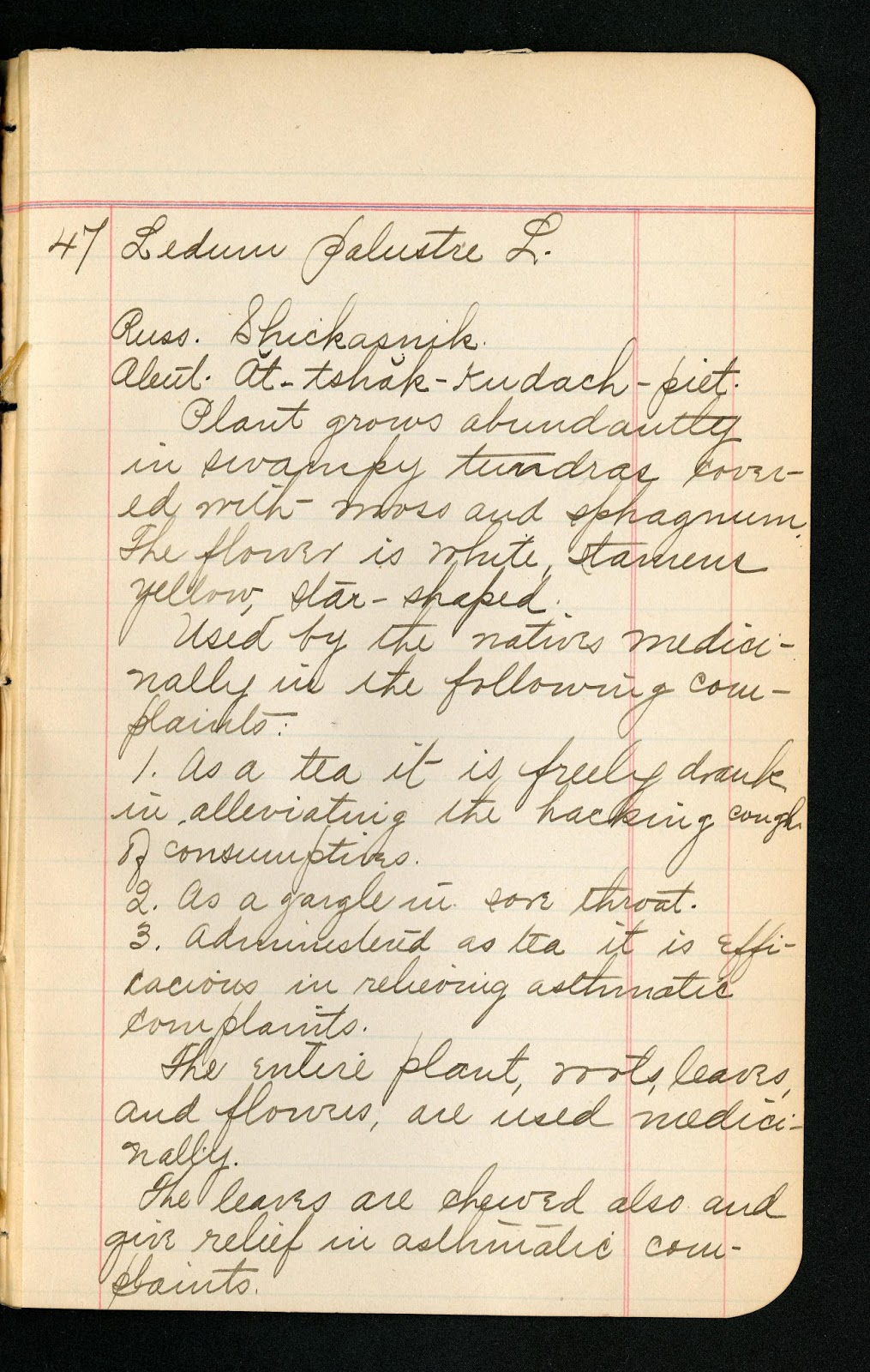
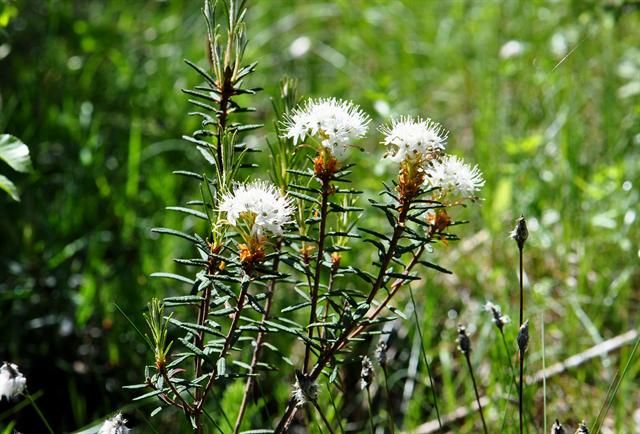
Entry forty-seven for Ledum palustre [Rhododendron tomentosum], also known as Northern Labrador Tea (also pictured below), takes up an entire page describing the plant’s habitat, the appearance of its flowers, and multiple local medicinal applications: “(1) As a tea it is freely drunk in alleviating the hacking cough of consumptives. (2) As a gargle in sore throat. (3) Administered as tea it is efficacious in relieving asthmatic complaints.”

View Full Size Image
Specimen entry forty-seven, from “Notes accompanying collection of useful plants made by W. J. Fisher at [Kodiak] in 1899,” Smithsonian Institution Archives, SIA Acc. 12-038. http://www.biodiversitylibrary.org/page/46428831. Digitized by Smithsonian Institution Archives.
View Full Size Image
Image of Rhododendron tomentosum (Northern Labrador Tea), from Encyclopedia of Life. Image by Biopix. http://eol.org/data_objects/19183248.

Fisher’s ethnographic focus while collecting plants is clear. The field book provides detailed information regarding local names and knowledge, but leaves out basic information often found in botany field books like date and detailed locality information. This lack of information may relate to a note Fisher wrote on the title page: “dried plants with Mr. Kearney, alcoholics in seed collection.” “Mr. Kearney” was Thomas Henry Kearney (1874-1956), a botanist with the Bureau of Plant Industry at the US Department of Agriculture (USDA). Kearney was in Alaska to work with Frederick Coville from April 1898 – August 1899, and along the Northwest Coast from Puget Sound to the Bering Strait in 1899. He then served as a member of the Harriman Alaska Expedition of 1899.

It is unclear how the two men became acquainted. Fisher had a relationship with the Smithsonian Institution; Coville as a USDA employee worked with Smithsonian, and perhaps he introduced the two. Whatever the reason, Kearney’s field notes for his work in Alaska are also available on BHL through the Smithsonian Field Book Project, and they provide a tantalizing overlap in content and geographical coverage.

A field book at the end of a collecting career

Fisher’s field book is also interesting because it document’s his collecting focus and interests as they evolved over a lifetime. Fisher’s initial scientific interest was in marine biology. During the 1870’s he was a curator of conchology at the California Academy of Sciences and served as a marine biologist for the U.S. Fish Commission on several cruises in the Pacific headed by William Healey Dall.

In 1879, Fisher accepted a position as tidal recorder in St. Paul, now known as the city of Kodiak, Alaska. After accepting the position, he wrote to Dall, who was affiliated with the Smithsonian Institution, and offered to collect natural history specimens. The offer was accepted, and Fisher was instructed that the museum was also interested in ethnographic artifacts from the region.

The town of St. Paul where Fisher settled was originally established by the Russians as a center for fur trading. By the time Fisher arrived, it was a town of approximately 500 residents, primarily of Russian and Native Alaskan heritage. According to an article in Arctic Anthropology (no. 1, 1992) the community was still significantly mixed regarding the adoption of European culture in terms of religion, language, and beliefs.

Fisher initially focused on collecting natural history specimens, but as he began to correspond with Smithsonian’s Secretary Spencer Baird, his interest and collecting shifted to ethnography. He even began to commission works by Native Alaskans. Fisher’s main source of income was his position as tidal recorder; Smithsonian was frequently unable to finance his work. This lack of funding apparently did not dim Fisher’s enthusiasm, but it did lead to financial hardship. During an extended collecting trip to Bristol Bay in the summer of 1885, his assistant successfully petitioned for Fisher’s job. Fisher’s collecting came to an end by the 1890’s; the ethnobotany field notes document the end of his work with the Smithsonian Institution.

Interested in learning more? We encourage you to learn about the William J. Fisher collection at the National Museum of Natural History, which was highlighted as part of a book Looking Both Ways: Heritage and Identity of the Alutiiq People, in the online exhibit featuring artifacts created by the Alutiiq people and collected by Fisher during his years in Alaska.

Other resources include:

Aron L. Crowell, 1992, Postcontact Koniag Ceremonialism on Kodiak Island and the Alaska Peninsula: Evidence from the Fisher Collection. Arctic Anthropology 29(1):18-37. Retrieved on November 16, 2016 from https://www.jstor.org/stable/40316240?seq=3#page_scan_tab_contents

Highlights of the William J. Fisher collection at the National Museum of Natural History: http://naturalhistory.si.edu/arctic/features/fisher/collect.html

The field books of William Healey Dall, available on Biodiversity Heritage Library: http://www.biodiversitylibrary.org/search?searchTerm=Dall+%22field+notes%22#/titles

Field Book Project blog post by Sonoe Nakasone: http://nmnh.typepad.com/fieldbooks/2012/02/sharing-culture-through-plants.html

November 22, 2016by ulib-libraryjobs
Blog Reel, Featured Books

Conservation, Alaska, and John Muir

“I am hopelessly and forever a mountaineer…I care to live only to entice people to look at Nature’s loveliness.” – John Muir

He has been praised as “saving the American soul from total surrender to materialism.” Remembered as the Father of the National Parks, he was instrumental in establishing the Yosemite and Sequoia National Parks. He founded the Sierra Club, one of the largest and most influential conservation organizations in the United States. Though born in Scotland, he is acclaimed as “one of the patron saints of twentieth-century American environmental activity.” His travel notes, amassed within the publication Travels in Alaska, represent an extremelyheartfelt account of the Alaskan frontier. He is none other than John Muir, one of the most important nature advocates America has ever known.

A Personal Journey Towards American Preservation

View Full Size Image
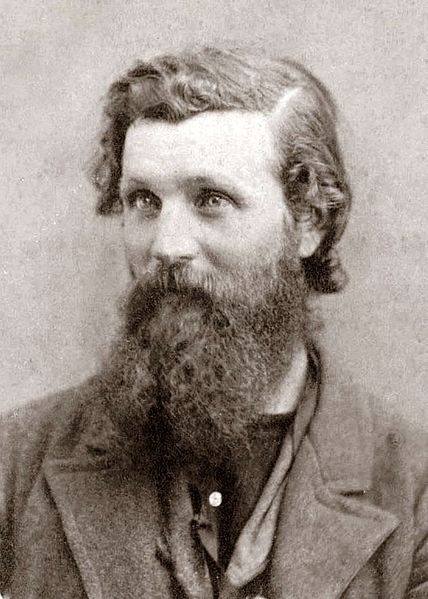
John Muir

Born in Dunbar, East Lothian, Scotland, in 1838, Muir moved to Wisconsin with his family in 1849. Just before his 29th birthday, following an accident in a sawmill that nearly cost him his sight, Muir embraced his true calling in life – the study and conservation of nature. That same year, Muir embarked on his first wild adventure – a 1,000 mile walk from Indiana to Florida, documented in his book A Thousand Mile Walk to the Gulf. However, it was his subsequent trip to California that sparked the true passion of Muir’s career – the untamed beauty of the American mountain wilderness.

In March, 1868, Muir had his first encounter with Yosemite, an experience that shaped the rest of his life. On seeing the rugged peaks of the Sierra Nevada Mountains, Muir exclaimed, “No temple made with hands can compare with Yosemite…The grandest of all special temples of nature.” Muir spent the rest of his years in the shadows of mountainous peaks, devoting his life to studying nature and raising awareness about the implications of human activities. He formed relationships with Ralph Waldo Emerson, Theodore Roosevelt and Louis Agassiz. He worked diligently to limit grazing activities in Yosemite, which eventually led to the introduction of a bill that established Yosemite as a national park. His assertion, backed by Louis Agassiz, that the valley in Yosemite was the result of glacial activity, not, as was formerly purported, an earthquake, helped establish his name in the scientific community.

Preservation, not Conservation

Though known for his conservation work, Muir identified himself as a preservationist, rather than a conservationist. The distinction resulted from a fall-out with his former friend, Gifford Pinchot. Pinchot, a renowned conservationist, focused on managing natural resources for sustainable commercial use. Muir ardently opposed this view, believing that nature should be preserved in-tact, not managed for human consumption. To Muir, nature was a spiritual experience, not one to be exploited.

Celebrating American Indian and Alaska Native Heritage Month with Muir

Muir visited Alaska for the first time in 1879. He returned to “nature’s last frontier” repeatedly over the next 30+ years of his life, amassing a mountain of notes on his travels. His study of Alaskan glaciers was instrumental in the development of theories on landscape formation via glacial activity. Muir viewed the native people of Alaska and their reverential relationship with the Earth as an inspirational example of co-dependency with nature. He spent the last months of his life aggregating his notes into his book Travels in Alaska, which was completed posthumously by Marion Randall Parsons. In celebration of National American Indian and Alaska Native Heritage Month, we highlight this tender account of one man’s journeys through the Alaskan wilderness.

“To the lover of pure wilderness, Alaska is one of the most wonderful countries in the world.”

 The Glaciers that Move Mountains

View Full Size Image
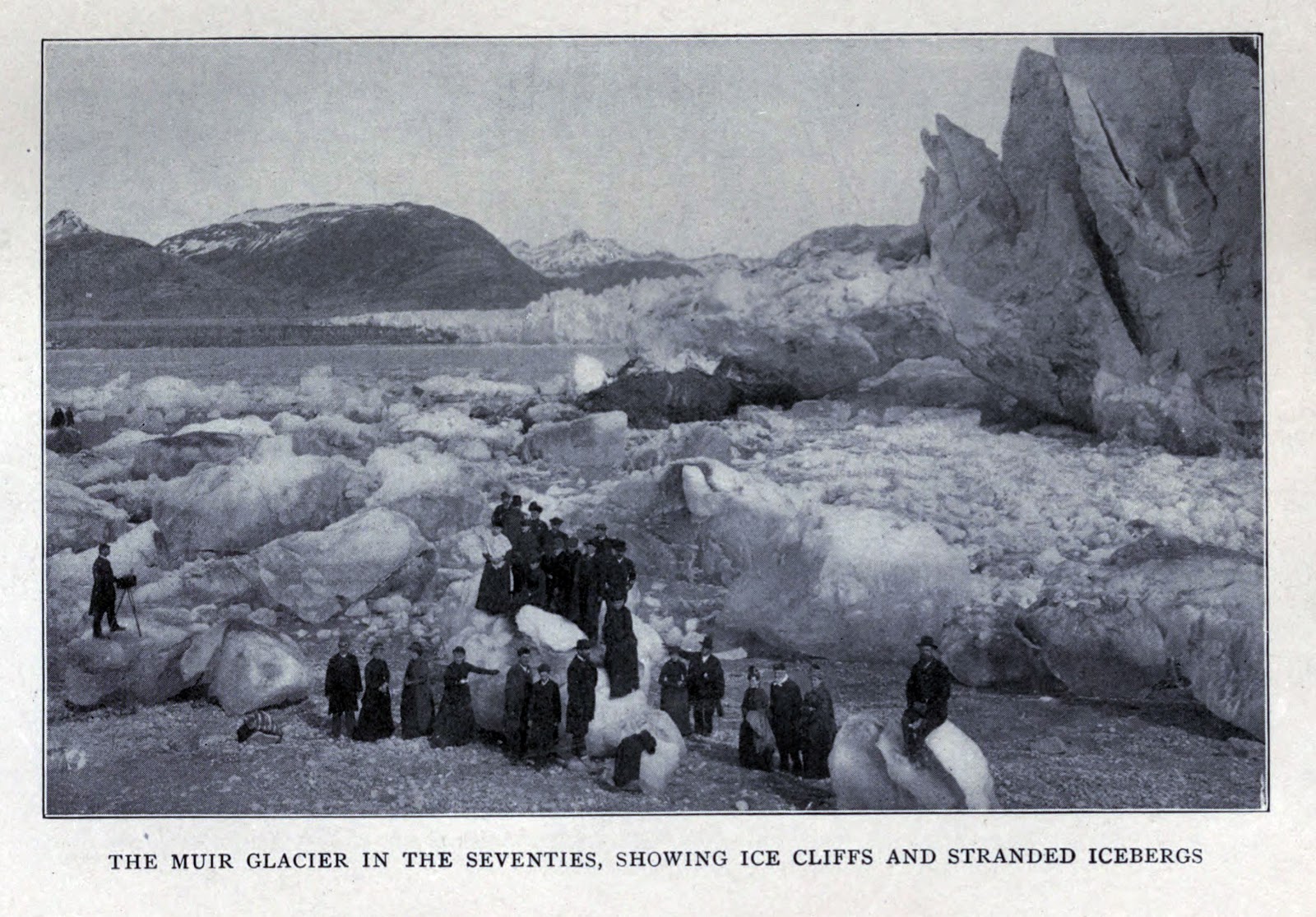
Muir Glacier in Glacier Bay

Glacier Bay covers 1,375 square miles, and the Glacier Bay National Park and Preserve represents the largest UNESCO protected biosphere in the world. Muir first encountered Glacier Bay during his first trip to Alaska. Long-interested in the impact of glacial activity on landmasses, Muir was eager to validate Agassiz’s earlier theory that much of the earth had once been covered by glaciers, and that their movement and retreat was responsible for many of the land features we see today. On a brisk Sunday morning, venturing out from his camp alone and burdened by damp clothes and tired limbs, Muir climbed 1,500 feet to catch his first glimpse of Glacier Bay:


“This was my first general view of Glacier Bay, a solitude of ice and snow and newborn rocks, dim, dreary, mysterious. I held the ground I had so dearly won for an hour or two, sheltering myself from the blast as best I could, while with benumbed fingers I sketched what I could see of the landscape, and wrote a few lines in my notebook. Then, breasting the snow again, crossing the shifting avalanche slopes and torrents, I reached camp about dark, wet and weary and glad.”


At the time of his first visit, the Bay was 44 miles from the sea. Muir returned to the Bay in 1899 with the Harriman Alaskan Expedition. This trip was instrumental in documenting the extreme retreat of the Bay, which now stands at 65 miles from the sea. This represents the fastest documented glacial retreat in history.

Alaska Through Native Eyes

View Full Size Image
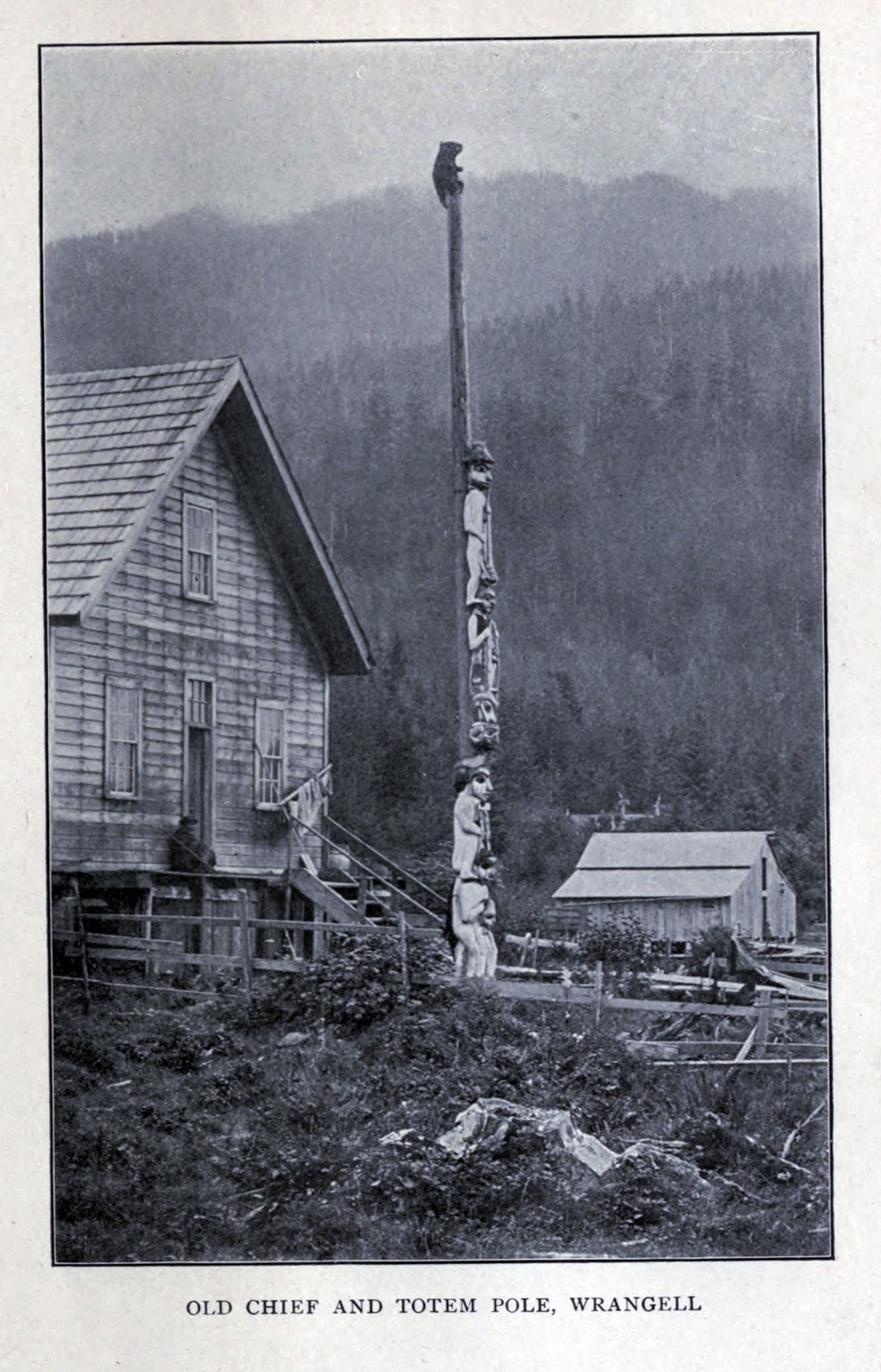
Totem Pole at Stickeen Village

During his voyages through Alaska, Muir encountered many of the indigenous people of the land – namely, the Thlinkit (Tlingit) tribes. The Tlingit people have occupied the Alaskan territory for approximately 10,000 years. Muir wrote that the Tlingit people were compassionate and honorable, validating this assertion with a recount of the valor of one of their chiefs. 20-30 years before Muir’s arrival, a war ensued between a Tlingit tribe and the Sitka tribe. The fighting lasted through the summer months, preventing any tribal members from gathering food supplies for the winter. As the cold months approached, it became apparent that the tribes would starve if the fighting did not cease.


“At this crisis one of the Stickeen chiefs came out of his block-house fort into an open space midway between their fortified camps, and shouted that he wished to speak to the leader of the Sitkas.

When the Sitka chief appeared he said: ‘My people are hungry. They dare not go to the salmon-streams or berry-fields for winter supplies, and if this war goes on much longer most of my people will die of hunger. We have fought long enough; let us make peace. You brave Sitka warriors go home, and we will go home, and we will all set out to dry salmon and berries before it is too late.’

The Sitka chief replied: ‘You may well say let us stop fighting, when you have had the best of it. You have killed ten more of my tribe than we have killed of yours. Give us ten Stickeen men to balance our blood-account; then, and not till then, we will make peace and go home.’

‘Very well,’ replied the Stickeen chief, ‘You know my rank. You know that I am worth ten common men and more. Take me and make peace.’

This noble offer was promptly accepted; the Stickeen chief stepped forward and was shot down in sight of the fighting bands. Peace was thus established, and all made haste to their homes and ordinary work. That chief literally gave himself a sacrifice for his people. He died that they might live.”


View Full Size Image
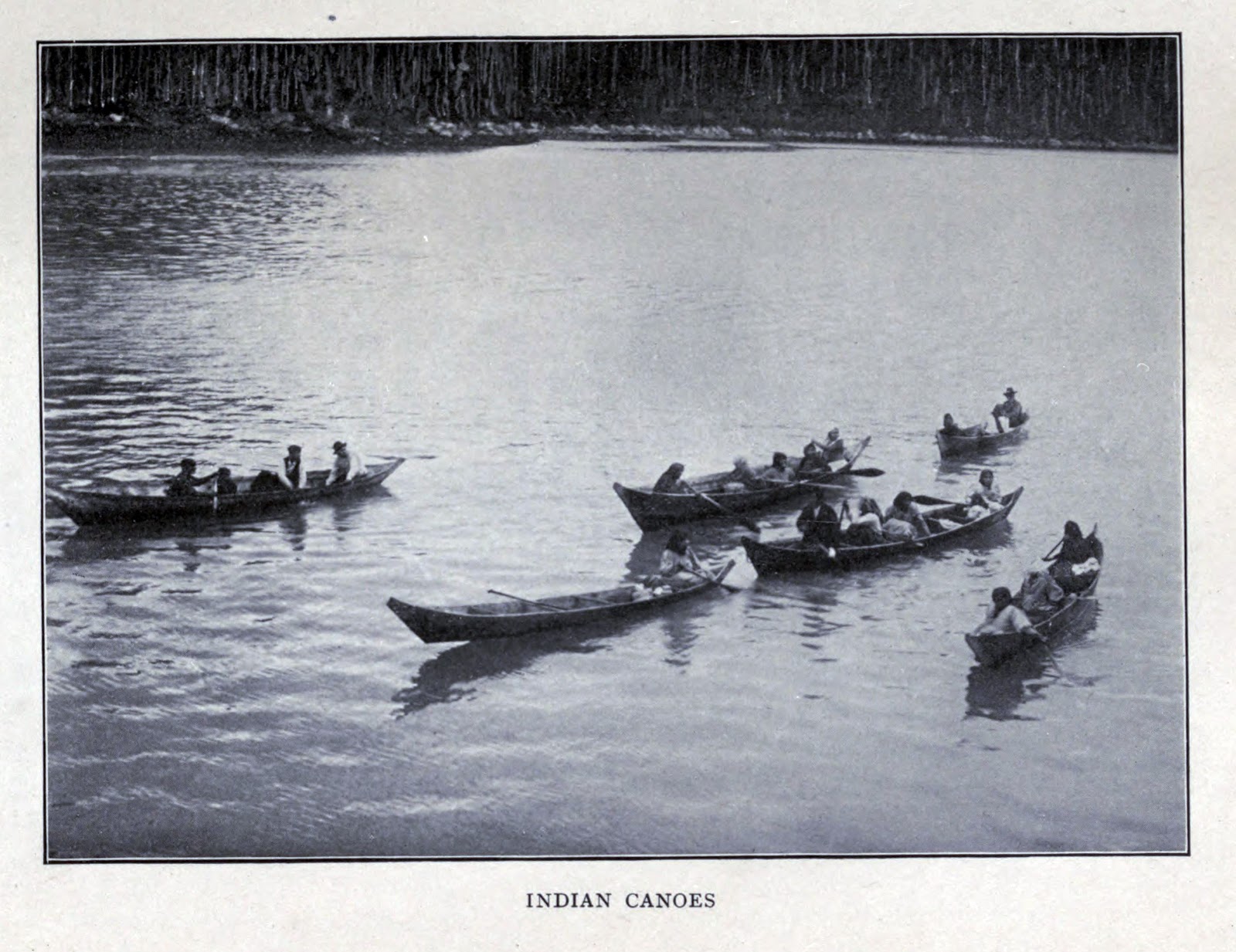
Native Alaskans in Canoes near Wrangell Island

Over the course of his visits to Alaska, Muir established a friendship with a member of the Stickeen tribe named Toyatte. Killed trying to bring peace in a feud between his and a neighboring tribe, Muir wrote at his death, “Thus died for his people the noblest old Roman of them all.” Of Toyatte, Muir revealed,

He often deplored the fact that he had no son to take his name at his death, and expressed himself very grateful when I told him that his name would not be forgotten, – that I had named one of the Stickeen glaciers for him.

A Legacy Not Forgotten

John Muir died of pneumonia at age 76. His legacy, however, remains in the parks he tirelessly worked to preserve, in the 12 books and over 300 articles he penned, in his captivating accounts of the Alaskan wilderness, and through the Sierra Club, which to this day works to continue the cause Muir dedicated his life to achieving – the humble appreciation and passionate enjoyment of nature. And today, as such a man would have desired, Muir slumbers “among trees planted by his own hand.”

We hope you enjoyed this post. Interested in guest-blogging for BHL? We’d love that! Natural history, biodiversity and conservation topics are especially welcomed. Email us your ideas at[email protected]

November 29, 2012by michelle.underhill

Help Support BHL

BHL's existence depends on the financial support of its patrons. Help us keep this free resource alive!

search

About BHL

The Biodiversity Heritage Library (BHL) is the world’s largest open access digital library for biodiversity literature and archives. BHL operates as a worldwide consortium of natural history, botanical, research, and national libraries working together to digitize the natural history literature held in their collections and make it freely available for open access as part of a global “biodiversity community.”

Join Our Mailing List

Sign up to receive the latest news, content highlights, and promotions.

Subscribe Now

Subscribe to Blog via Email

Enter your email address to subscribe to this blog and receive notifications of new posts by email.

Join 319 other subscribers

Subscribe to Blog Via RSS

Subscribe to the blog RSS feed to stay up-to-date on all the latest BHL posts.

Access RSS Feed

Inspiring Discovery through Free Access to Biodiversity Knowledge.

The Biodiversity Heritage Library makes it easier than ever for you to access the information you need to study and explore life on Earth…for free, anytime, anywhere.


ABOUT | HARMFUL CONTENT | PRIVACY | SITE MAP | TERMS OF USE