Biodiversity Heritage Library - Program news and collection highlights from BHL
  • Home
  • News
  • Featured Books
    • All Featured Books
    • Book of the Month Series
    • BHL at 20
  • User Stories
  • Campaigns
    • Fossil Stories
    • Garden Stories
    • Monsters Are Real
    • Page Frights
    • Her Natural History
    • Earth Optimism 2020
  • Tech Blog
  • Visit BHL
Home
News
Featured Books
    All Featured Books
    Book of the Month Series
    BHL at 20
User Stories
Campaigns
    Fossil Stories
    Garden Stories
    Monsters Are Real
    Page Frights
    Her Natural History
    Earth Optimism 2020
Tech Blog
Visit BHL
  • Home
  • News
  • Featured Books
    • All Featured Books
    • Book of the Month Series
    • BHL at 20
  • User Stories
  • Campaigns
    • Fossil Stories
    • Garden Stories
    • Monsters Are Real
    • Page Frights
    • Her Natural History
    • Earth Optimism 2020
  • Tech Blog
  • Visit BHL
Biodiversity Heritage Library - Program news and collection highlights from BHL
BHL News, Blog Reel

BHL at Biodiversity Next

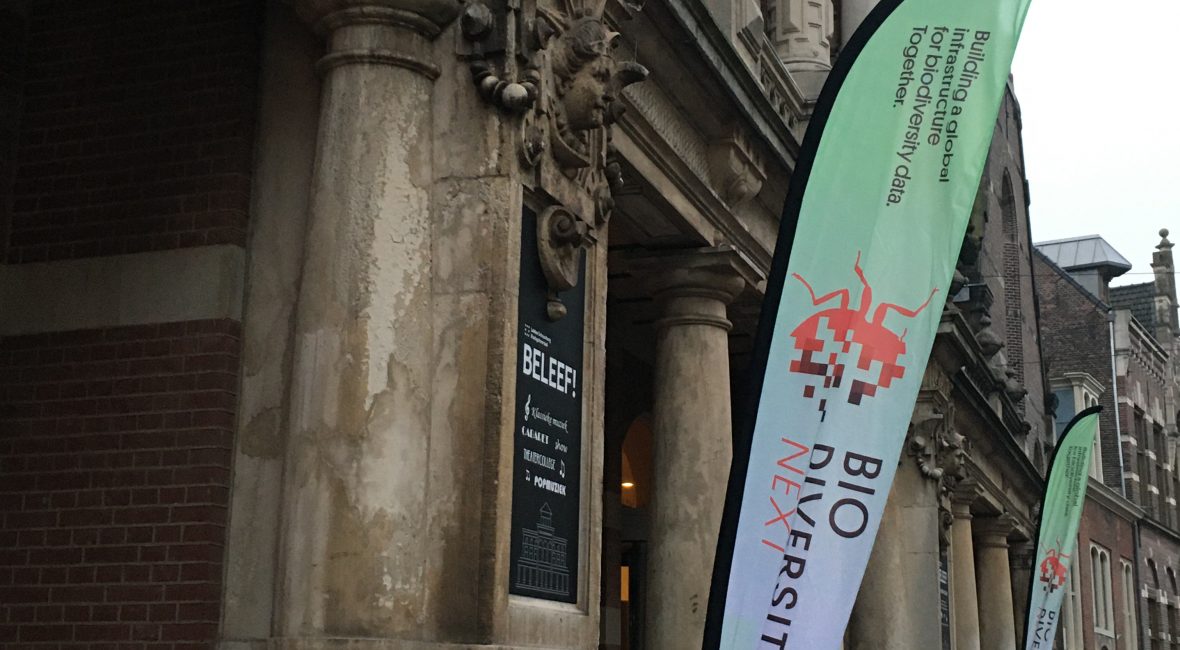
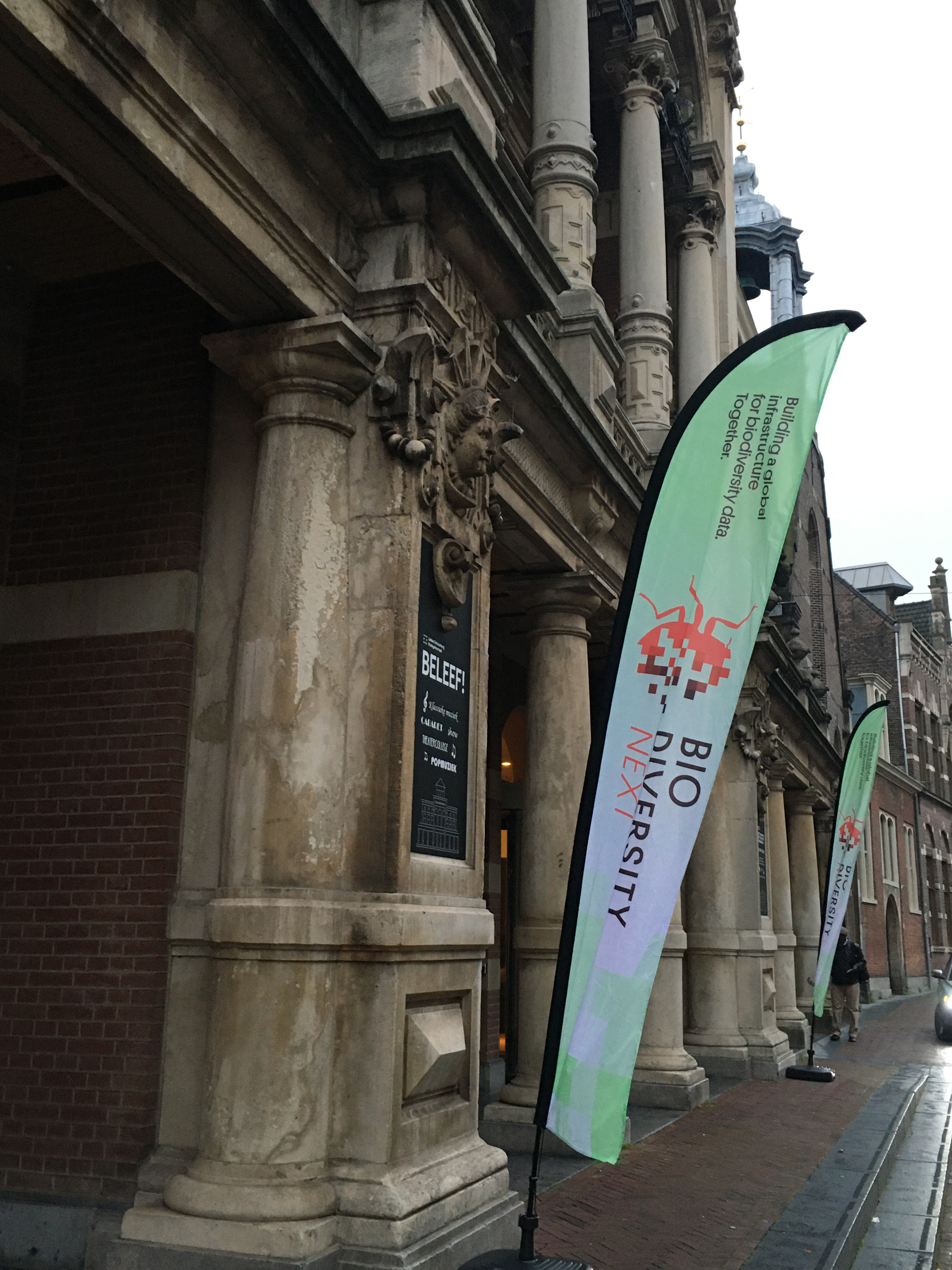
Biodiversity_Next banners

Biodiversity_Next main conference venue, Stadsgehoorzaal, in Leiden, Netherlands. Photo Credit: Grace Costantino.

In October 2019, more than 700 people from over 75 countries gathered in Leiden, the Netherlands for Biodiversity_Next, a joint conference by GBIF, DISSCo, iDigBio, CETAF, TDWG, and LifeWatch Eric. The first conference of its kind to bring together so many major international biodiversity organizations, the conference aimed to promote innovation in biodiversity and geodiversity information management and applications; encourage collaboration across these communities to enhance data standards and management practices; and foster the development of the skill sets necessary to embark on data-intensive scientific research and solutions.

Hosted by the Naturalis Biodiversity Center, a BHL Affiliate, in collaboration with the Netherlands Biodiversity Information Facility, the main conference ran from 22-25 October 2019, with pre-conference workshops occurring 20-21 October, as well as organization-specific meetings for GBIF, CETAF, and TDWG being held in conjunction with the conference.

BHL colleagues from around the world traveled to Leiden for Biodiversity_Next. Eighteen BHL-affiliated representatives from our partner community, representing 13 institutions from nine countries, attended the conference. Dr. Elycia Wallis, Engagement Manager at the Atlas of Living Australia and the BHL Member representative for BHL Australia, served as a key member of the Programme Committee.

Each conference day began with a plenary session featuring diverse speakers ranging from scientists to policy makers and even artists. From the policy perspective, Ana Maria Hernandez Salgar outlined major findings from the recent IPBESGlobal Assessment, while Jorge Soberón described efforts by the Mexican biodiversity agency CONABIO (a BHL Member) to make data useful for politicians and policy makers, and Maxwell Gomera of the UN Environment Program examined the importance of finding solutions that protect both wildlife and people and the value of using storytelling to reach policy makers in profound ways. On the science side, Paul Hebert of the International Barcode of Life Consortium described advances and ambitions in DNA barcoding and global bio-surveillance, while Carrie Seltzer spoke about the diverse and impactful ways that iNaturalist engages people in the biodiversity data system through citizen science.

The plenary sessions also brought in representatives from the world of art and design. Dutch artist Theo Jansen shared his work for the past 30 years creating “beach animals” constructed of PVC pipes that move using wind energy, while Dutch artist Jalila Essaidi described her work to create bio-art, from “bulletproof human skin” created using synthetic spider silk to clothing made from fabric produced from manure.

Beyond the plenary sessions, more than 300 speakers presented over 350 talks as part of over 60 sessions and workshops related to science, policy, standards, and infrastructure. Several major themes emerged across many of the sessions, including the importance of adopting FAIR data principles; the need to link together the many diverse biodiversity data systems; the importance of unique identifiers for data, including DOIs and ORCIDs; and the possibilities of using Wikidata as a source of and way to connect various identifiers.

BHL colleagues were very active in the conference, with 11 BHL-affiliated staff presenting or moderating 16 talks or sessions. See the full list of BHL-affiliated staff presentations at the end of this post. Additionally, members of the BHL Executive Committee (EC), including Constance Rinaldo (EC Chair, Ernst Mayr Library, Harvard University) and Martin Kalfatovic (BHL Program Director, Smithsonian Libraries), as well as colleagues from the Muséum national d’Histoire naturelle, represented BHL at the various organizational meetings, including GBIF, TDWG, and CETAF.

BHL was also highlighted frequently throughout the conference, with many talks discussing the importance of historic literature for science today, the need to integrate BHL data into other biodiversity data services like GBIF and the Catalogue of Life, and the importance of incorporating reciprocal links between BHL and these various data systems. These concepts were distinguished as a high value priority by many of the session presenters.

“Biodiversity_Next was an inspiring and exciting opportunity to hear from more than 700 colleagues representing organizations all over the world,” said Constance Rinaldo, Chair of the BHL Executive Committee. “As a representative to GBIF and TDWG and by leading a symposium, I came away fully understanding the impact of collaboration among biodiversity organizations and data integration: this is the key to the future of biodiversity science.”

BHL Symposium

The Biodiversity Heritage Library organized a Symposium as part of Biodiversity_Next. Entitled Improving Access to Hidden Scientific Data in the Biodiversity Heritage Library, the session featured presentations offering examples of and ideas about how BHL data can be used to empower research and how enhanced data delivery methods can facilitate real-time computing.
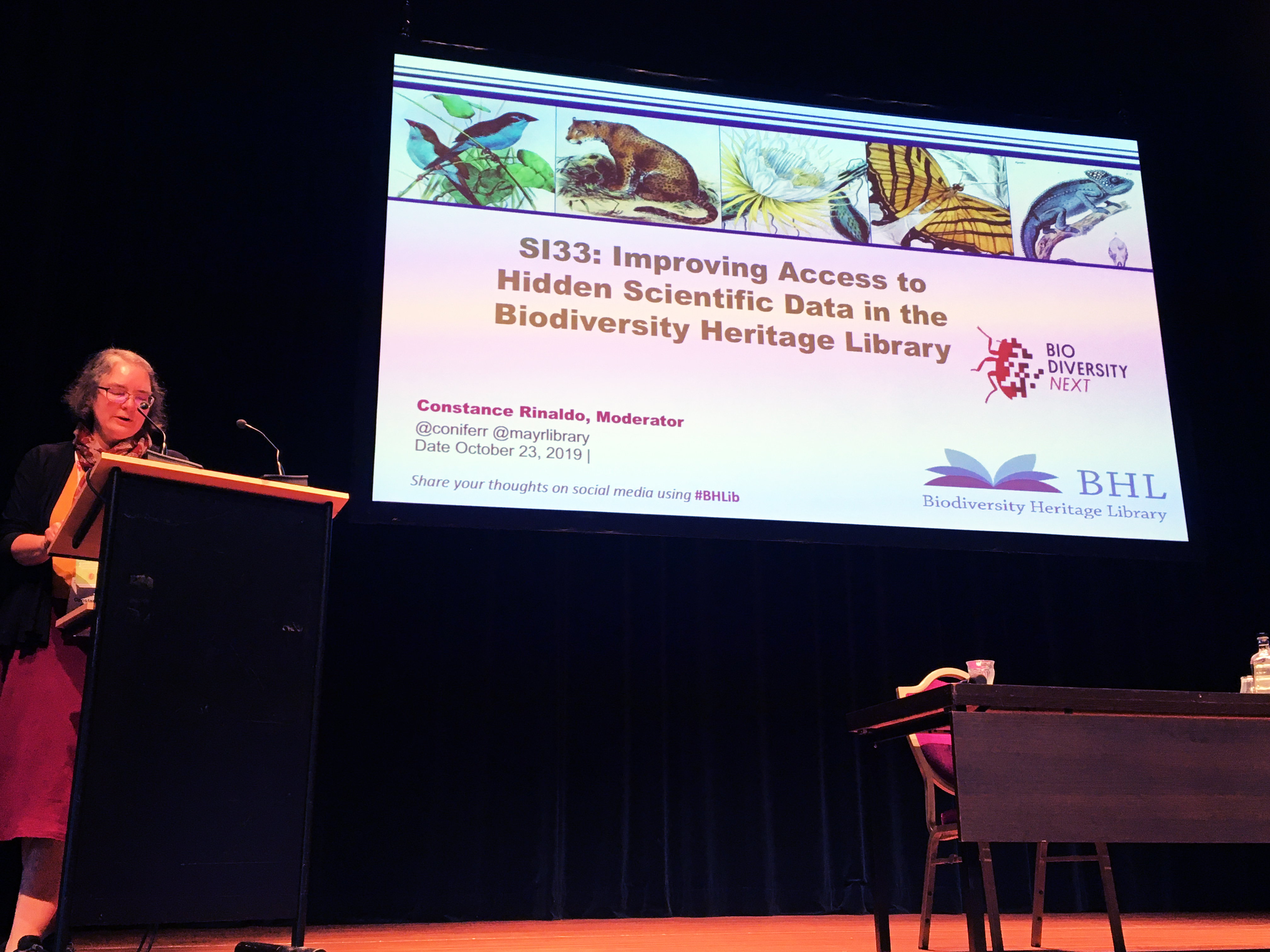
Woman standing at a podium

Constance Rinaldo introducing the BHL Symposium at Biodiversity_Next. Photo Credit: Grace Costantino.

The Symposium was moderated by Constance Rinaldo (Chair, BHL Executive Committee) and included the following presentations:

  • “Introduction to the Symposium: Improving Access to Hidden Scientific Data in the Biodiversity Heritage Library” (Presented By: Constance Rinaldo — Ernst Mayr Library, Harvard University). Abstract | Slides
  • “BioStor Next (a.k.a. Text-Mining BHL: Towards New Interfaces to the Biodiversity Literature” (Presented By: Roderic Page — University of Glasgow | BioStor). Abstract | Slides
  • “It’s Not Always FAIR: Choosing the Best Platform for Your Biodiversity Heritage Literature” (Presented By: Nicole Kearney — BHL Australia, Museums Victoria). Abstract | Slides
  • “Finding Scientific Names in Biodiversity Heritage Library, or How to Shrink Big Data” (Presented By: Dmitry Mozzherin — University of Illinois, Champaign). Abstract | Slides
  • “Extracting Data From Legacy Taxonomic Literature: Applications for Planning Field Work” (Presented By: Francisco Andres Rivera-Quiroz — Naturalis Biodiversity Center). Abstract | Slides
  • “BHL and Specimen Collection Data: The Needle in the Festuca Stack” (Presented By: Martin Kalfatovic — Smithsonian Libraries). Abstract | Slides
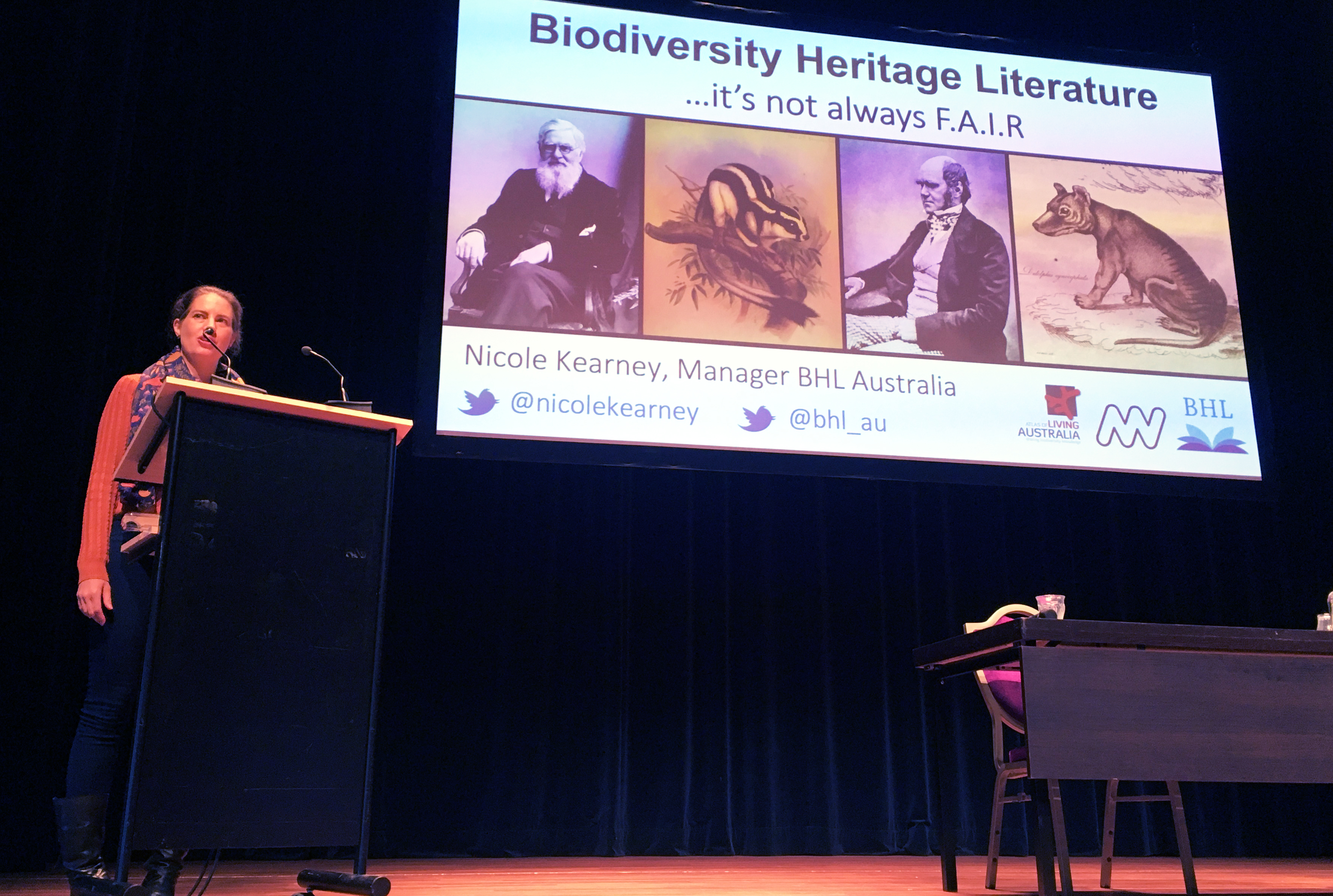
Woman standing at a podium.

Nicole Kearney presenting during the BHL Symposium at Biodiversity_Next. Photo Credit: Grace Costantino.

Topics covered within the Symposium presentations included exploring the types of data—from scientific names and geographic localities to species treatments and specimen codes—that can be extracted from the literature; methods to extract that data, including recent work to improve the speed and effectiveness of the Global Names algorithm for identifying taxonomic names in the BHL corpus; applications for that data, including helping to inform field work; recent work by BHL to improve access to the content in its collection, including full text search and the utilization of transcriptions for archival materials; the value of linking BHL literature collections with other databases like GBIF; and the importance of and the role BHL can play in the assignment of DOIs for historic literature.

You can explore more details about each of the presentations in this @BioDivLibrary Twitter thread.

Beyond the Conference

Beyond the sessions and workshops, there were several opportunities for networking and tours around the conference.
people gathered in a cafe

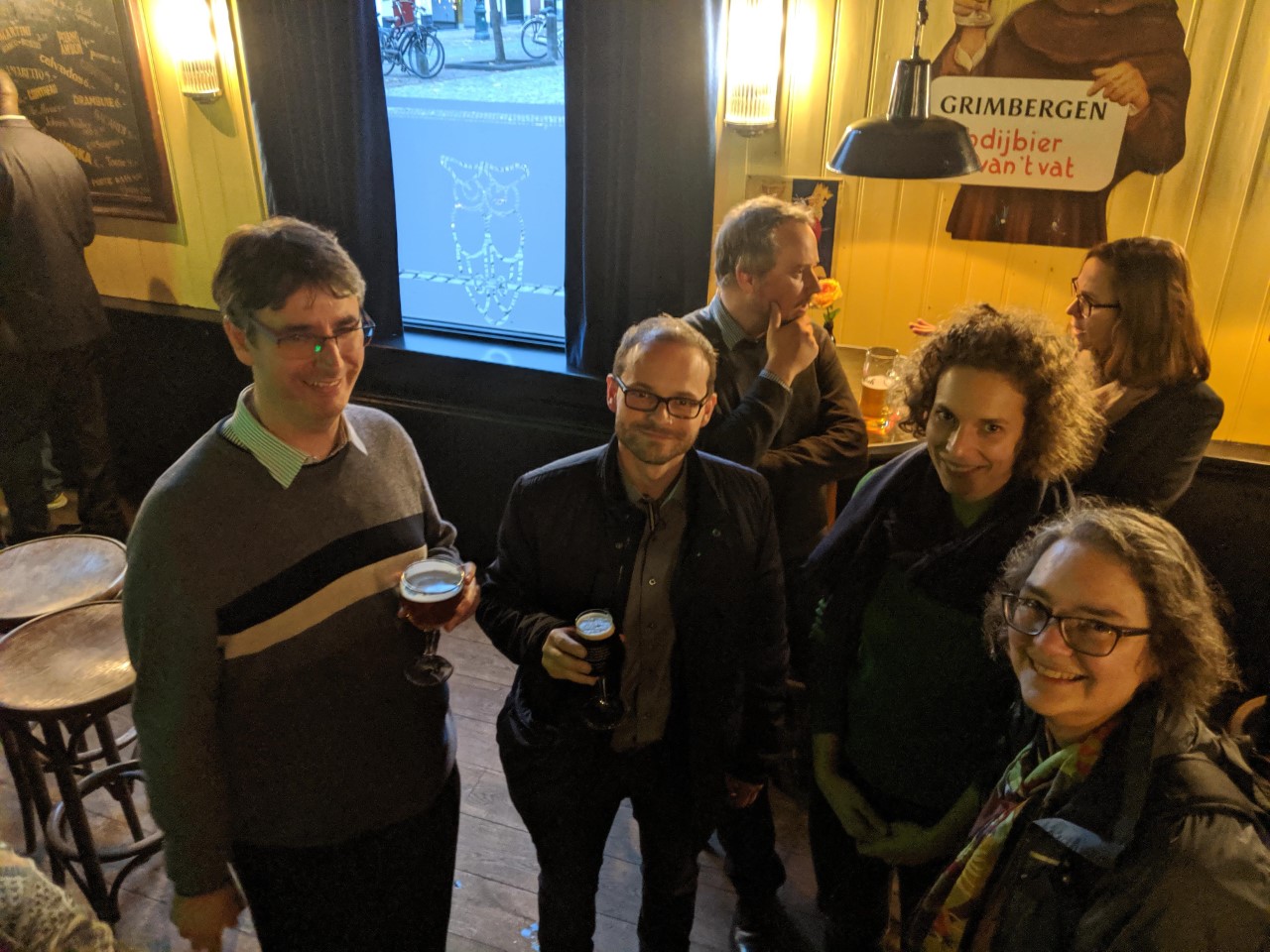
BHL colleagues gathered for the informal get-together at a local Leiden venue. Left to Right: David Iggulden (Library, Art & Archive, Royal Botanic Gardens, Kew); Clément Oury (Muséum national d’Histoire naturelle); Jiří Frank (National Museum, Prague); Chloé Besombes (Muséum national d’Histoire naturelle); Jana Hoffmann (Museum für Naturkunde Berlin); Constance Rinaldo (Ernst Mayr Library, Harvard University). Photo Credit: Martin Kalfatovic.

On Monday, 21 October, the day before the start of the main conference, BHL colleagues gathered for an informal get-together at a local Leiden venue. The gathering was an excellent opportunity for colleagues—some of which had never met in person—to connect.
large group of people at a party

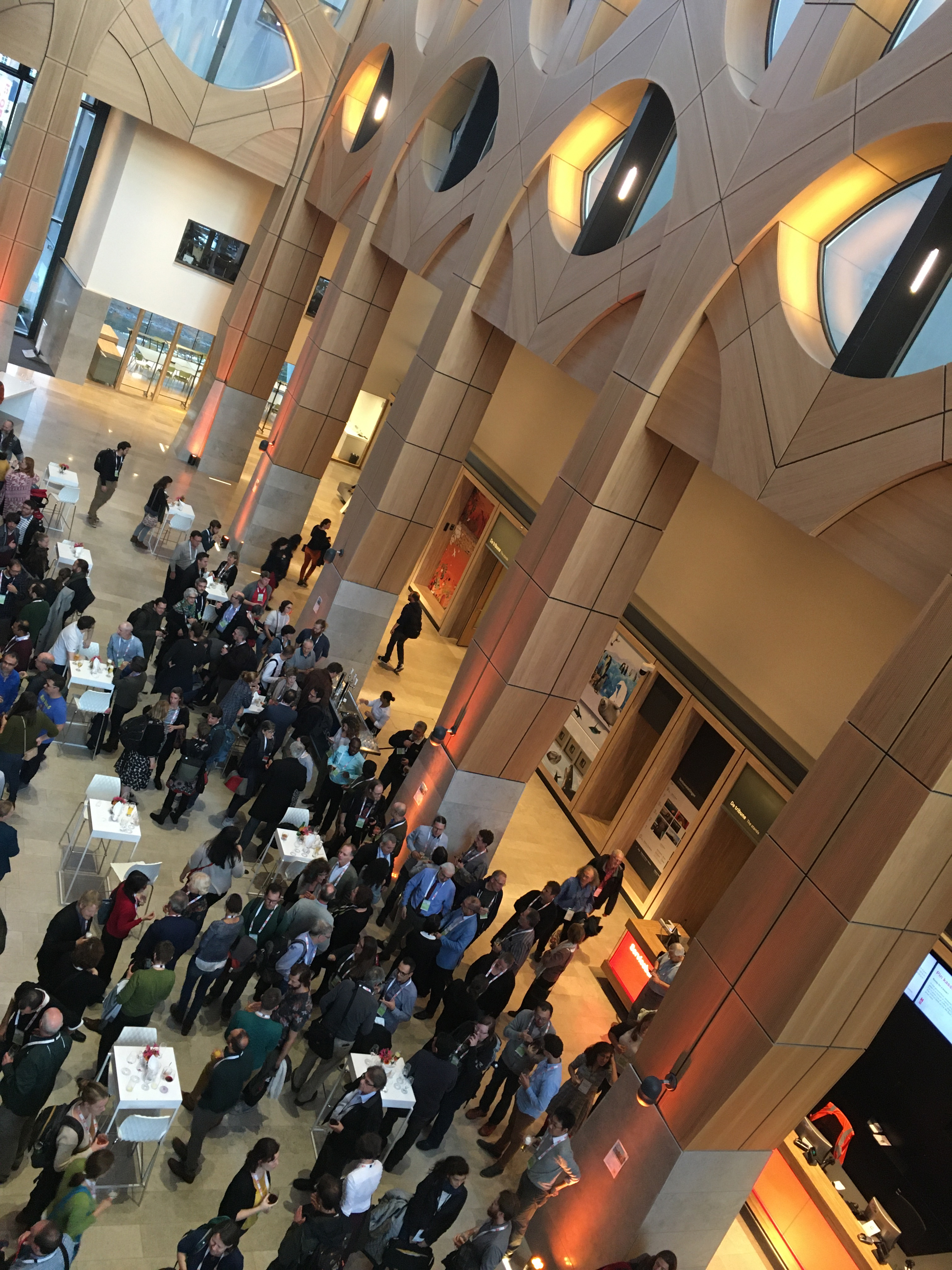
Attendees at the Biodiversity_Next reception hosted in the Naturalis Biodiversity Center. Photo Credit: Grace Costantino.

Biodiversity_Next also hosted a reception the evening of the first conference day at the newly-opened Naturalis Biodiversity Center. Hundreds of attendees had a unique opportunity to explore the museum’s exhibits and network with representatives from around the world.

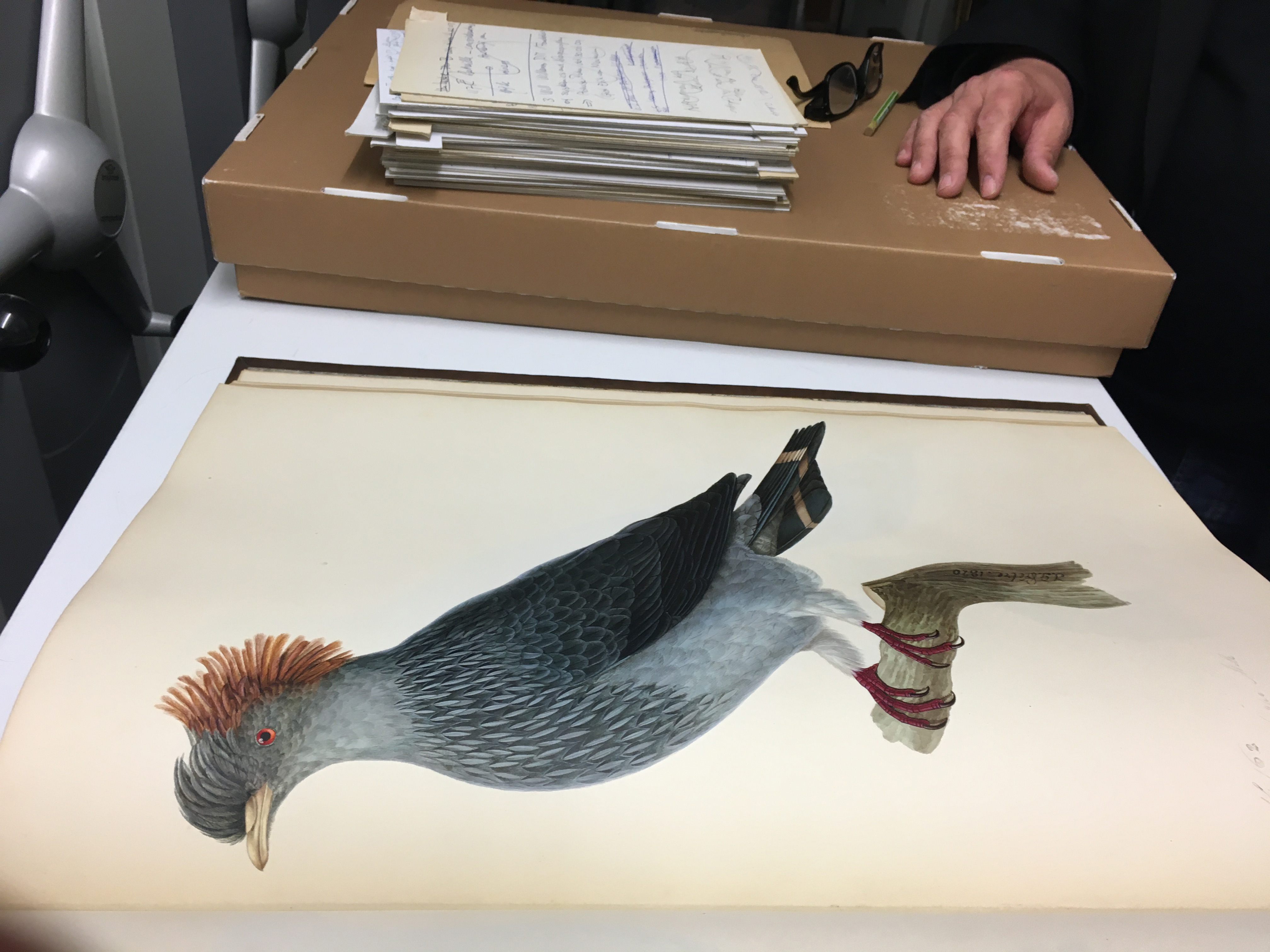
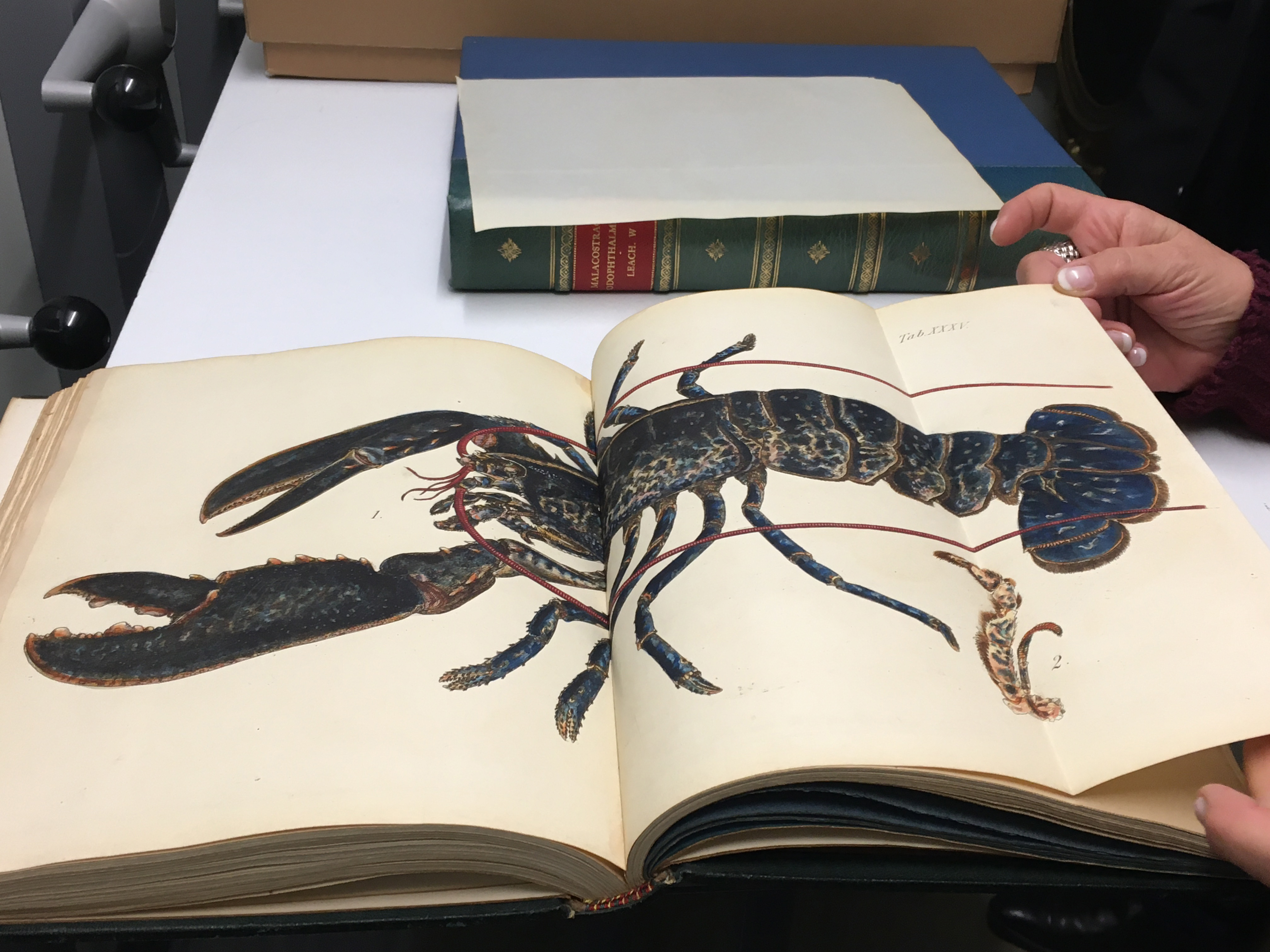
The Library of the Naturalis Biodiversity Center, a BHL Affiliate, also arranged tours of the general and special collections for several BHL colleagues. Godard Tweehuysen, Librarian and Information Specialist at Naturalis, showcased several special and unique items from the collection, including a copy of Les Pigeons (1808) by Coenraad Jacob Temminck (the first director of Rijksmuseum van Natuurlijke Historie—today Naturalis) with the original artwork by Pauline Courcelles and a special proofprint copy of Malacostraca Podophthalmata Brittanniae (1815-1875), which Naturalis has digitized for BHL and featured on the BHL blog.
drawing of a pigeon in a book

Original artwork from Les Pigeons (1808) in the Naturalis Library collection. Photo Credit: Grace Costantino.
drawing of a lobster in a book,

Proofprint copy of Malacostraca Podophthalmata Brittanniae (1815-1875) in the Naturalis Library collection. Photo Credit: Grace Costantino.

Looking ahead, during the Biodiversity_Next closing ceremony, conference organizers made an exciting announcement. A follow-up to the Biodiversity_Next conference will be held in Arlington, Virginia, USA in September 2020. The Biodiversity Summit is a joint meeting organized by iDigBio, GBIF, TDWG, and the Smithsonian’s National Museum of Natural History. Scheduled for 20-25 September 2020, the Summit will be an excellent opportunity to reconnect, continue the momentum fueled by Biodiversity_Next, and further strengthen collaborations to advance biodiversity information science and offer real, innovative, and attainable solutions to tackle today’s climate and environmental challenges.

We were privileged to be a part of such an exciting, constructive, and collaborative opportunity as Biodiversity_Next and look forward to coming together again in 2020 for the Biodiversity Summit! Until then, we’ll continue to work with the biodiversity community to incorporate data from the literature into the broader network of systems and services supporting the work of researchers, policy makers, citizen scientists and beyond.

Presentations and Moderated Sessions by BHL-Affiliated Staff from BHL Consortium Institutions

  • “The European Journal of Taxonomy: Enhancing Taxonomic Publications for Dynamic Data Exchange and Navigation” (Presented By: Laurence Bénichou — Muséum national d’Histoire naturelle). Abstract
  • “People of Collections: Facilitators of Interoperability?” (Presented By: Chloé Besombes — Muséum national d’Histoire naturelle). Abstract
  • “Hazards and Disasters in the Geological and Geomorphological Record: A Key to Understanding Past and Future Hazards and Disasters and Their Impact on Life” (Presented By: Jiří Frank — National Museum, Prague). Abstract
  • BHL Presentation as part of “Biodiversity Informatics 101: Preparing for Biodiversity_Next and Beyond” (Presented By: David Iggulden — Library, Art & Archives, Royal Botanic Gardens, Kew). Abstract
  • “BHL and Specimen Collection Data: The Needle in the Festuca Stack” (Presented By: Martin Kalfatovic — Smithsonian Libraries). Abstract | Slides
  • “It’s Not Always FAIR: Choosing the Best Platform for Your Biodiversity Heritage Literature” (Presented By: Nicole Kearney — BHL Australia, Museums Victoria). Abstract | Slides
  • “If Wikipedia Is the Gateway to Biodiversity Knowledge, How Do We Open the Gate?” (Presented By: Nicole Kearney — BHL Australia, Museums Victoria). Abstract | Slides
  • “Mesoamerica’s Crop Wild Relatives: A New Approach for Conservation Planning” (Presented By: Patricia Koleff — CONABIO). Abstract
  • “Planning Landscape Connectivity in Mexico Under Global Change” (Presented By: Patricia Koleff — CONABIO). Abstract
  • “Biodiversity Data Management: Regional Challenges” (Presented By: Lawrence Monday — National Museums of Kenya). Abstract
  • “Introduction to the Symposium: Improving Access to Hidden Scientific Data in the Biodiversity Heritage Library” (Presented By: Constance Rinaldo — Ernst Mayr Library, Harvard University). Abstract | Slides
  • “Lessons Learned From Managing Millions of Records to Create the World Flora Online” (Presented By: William Ulate — Missouri Botanical Garden). Abstract
  • “Sharing Species Pages in the Atlas of Living Costa Rica Using Plinian Core” (Presented By: William Ulate — Missouri Botanical Garden). Abstract
  • “Building a Global Infrastructure for Biodiversity Data. Together” — Plenary Panel Discussion (Moderated By: Elycia Wallis — BHL Australia, Atlas of Living Australia). Abstract
  • “A Fireside Chat – Reflections on the Conference” — Closing Ceremony Panel Discussion (Moderated By: Elycia Wallis — BHL Australia, Atlas of Living Australia). Abstract
  • “Contributed Papers: Data Extraction, Literature and Collections” (Moderated By: Elycia Wallis — BHL Australia, Atlas of Living Australia). Abstract
November 12, 2019by michelle.underhill
Blog Reel, Featured Books

Magnificent Crustacea: Leach and Sowerby’s Malacostraca Podophthalmata Brittanniae

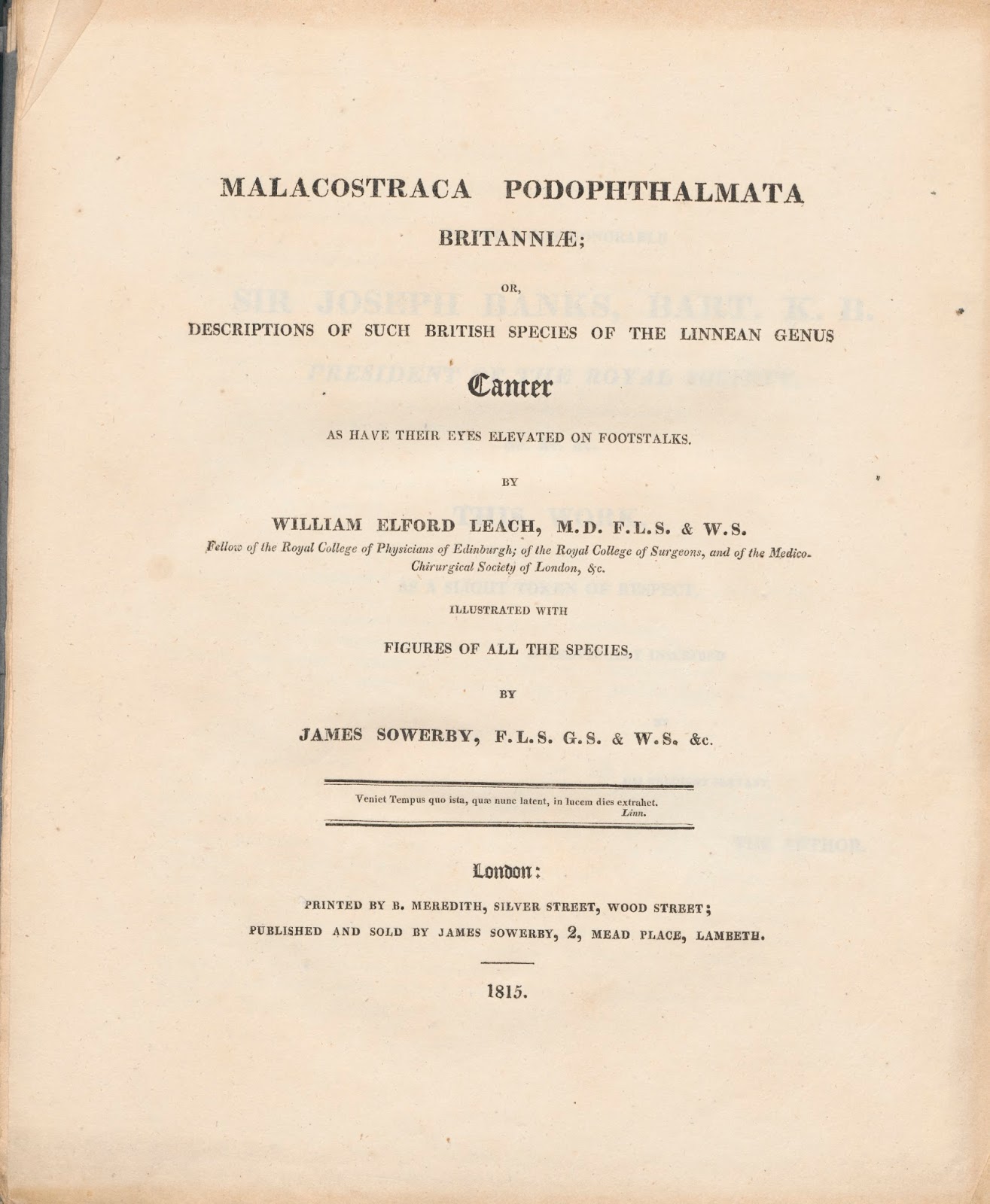
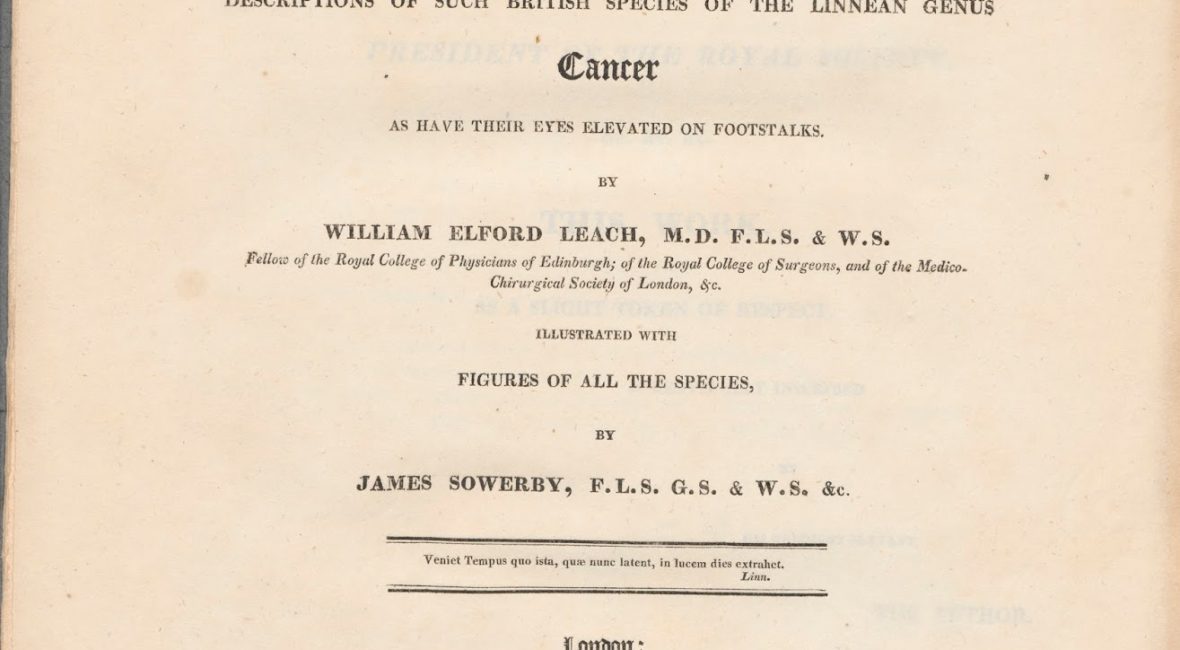
William Elford Leach. Malacostraca Podophthalmata Brittanniae. Title page. Naturalis, RBR Holt 00626. http://s.si.edu/2iVddtH.

Without a doubt, Malacostraca Podophthalmata Brittanniae (1815-1875) is one of the most beautiful publications dedicated to Crustacea. This work, a very special proofprint copy of which has recently been digitized and made available on BHL by the Naturalis Library, was the work of two well-known names in British natural history: the young zoologist William Elford Leach (1791-1836) and the experienced naturalist and engraver James Sowerby (1757-1822). The background and personal history of both gentlemen had a great influence on the coming about of the publication.

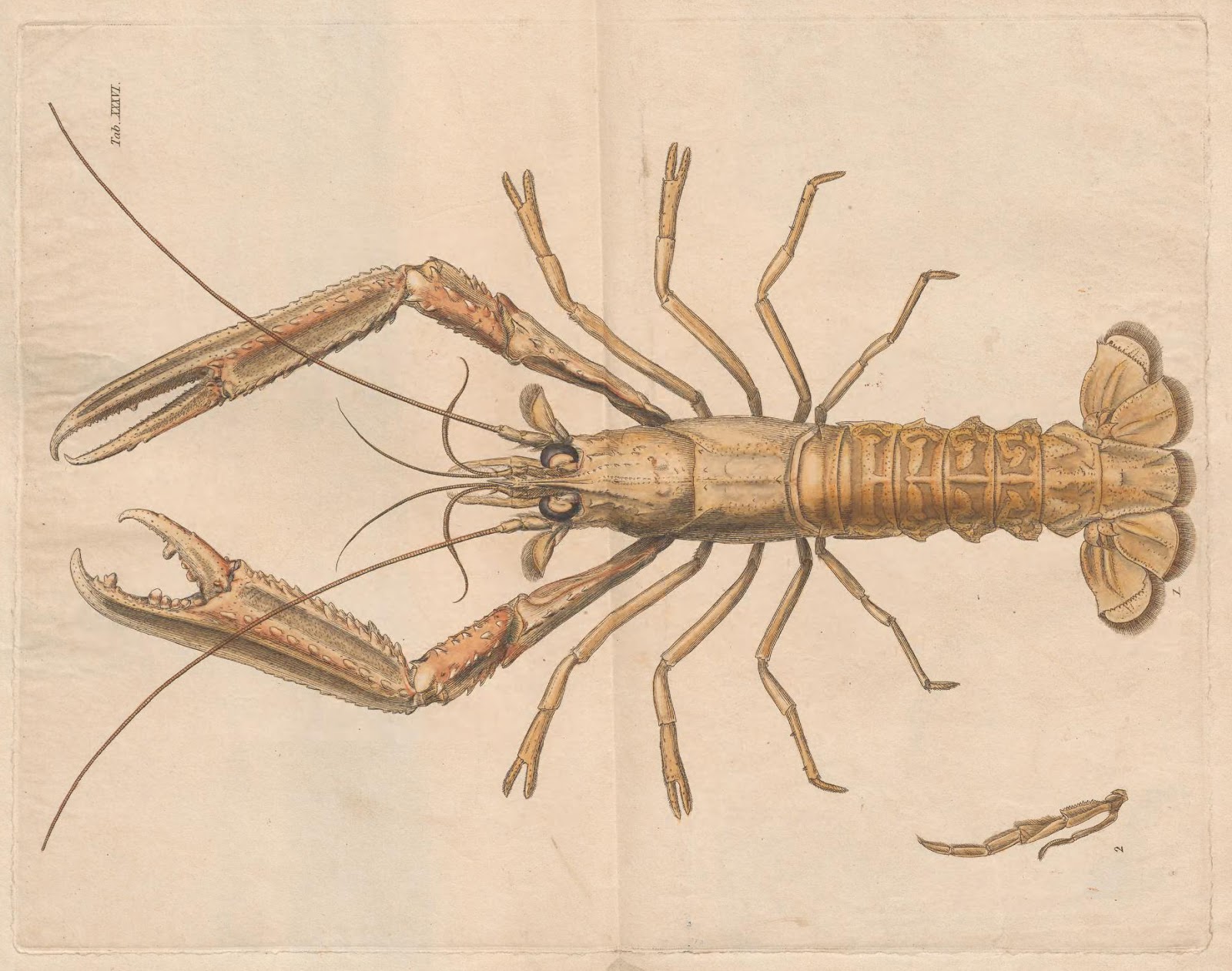
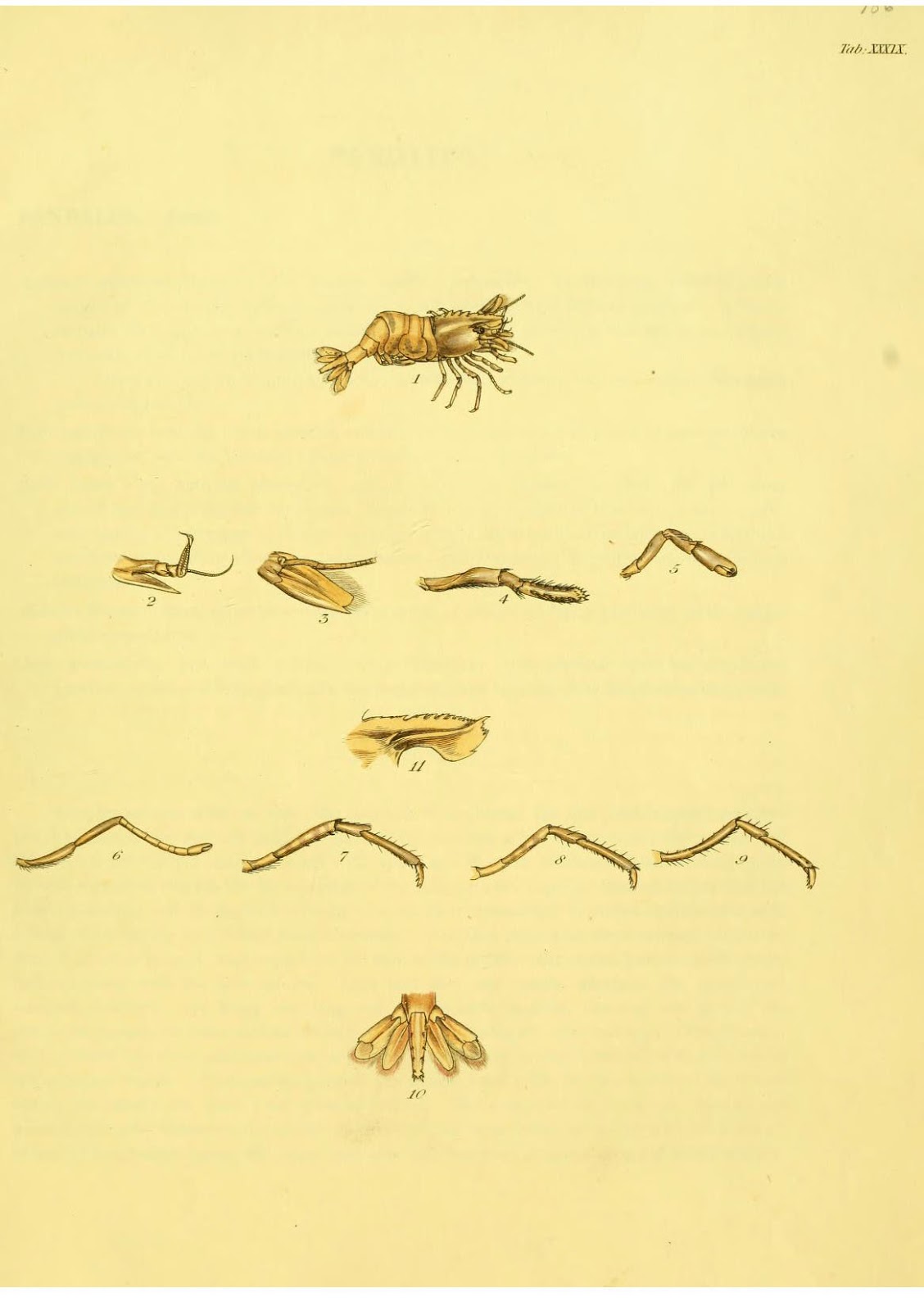
Illustration by James Sowerby for Malacostraca Podophthalmata Brittaniae, by William Elford Leach. Tab. XXXVI. Naturalis, RBR Holt 00732. http://s.si.edu/2Bmxmnu.


William Elford Leach

William Elford Leach was one of the great British zoologists of the beginning of the nineteenth century. He started his career as assistant librarian at the British Museum and was responsible for the zoological collections. He was given the task of reorganizing the collections of Hans Sloane, which formed the basis of the museum.

Of the old carcinological collection, not much was left by the nineteenth century. Because of its deplorable condition, Leach’s predecessors were forced to destroy much of the collection materials, and as a result, of the hundreds of crustaceans left by Sloane in the eighteenth century, only one specimen has survived to this day. The core of the current carcinological collections of the British Museum is formed by specimens collected under Leach’s supervision. Not only did material from all over the world come in through his scientific contacts, he also donated his personal collection to the museum.

Leach’s merits go beyond collection building alone. He was a gifted taxonomist with a large scientific network who was therefore aware of the developments in systematics on the European continent. He shared this knowledge with his colleagues in Great Britain, organized the collections on a more scientific basis, and wrote a series of articles about it.

The scientific names that Leach introduced were sometimes unusual and not appreciated by all. He named for instance countless genera after a certain Caroline. Leach used her (latenized) name playfully as an anagram to create genus names like Ricenela and Cirolana. Nevertheless, his work ethic was highly praised and his scientific productivity was second to none.

Sadly, Leach’s career lasted only a decade. In 1821, he suffered a nervous breakdown from which he would never recover. A year later he departed from the museum. As a thank you for the enormous collections he had left behind, he received a pension from the British Museum. He did not fare much better after that. He traveled to France and Italy and died of cholera in 1836.

James Sowerby

Leach was a scientific innovator and brought the zoology in Great Britain to a higher level. Part of his success lay in his collaboration with a gifted artist. For the illustrations in Malacostraca Podophthalmata Brittanniae, he relied on the detailed and colorful imagination of James Sowerby.

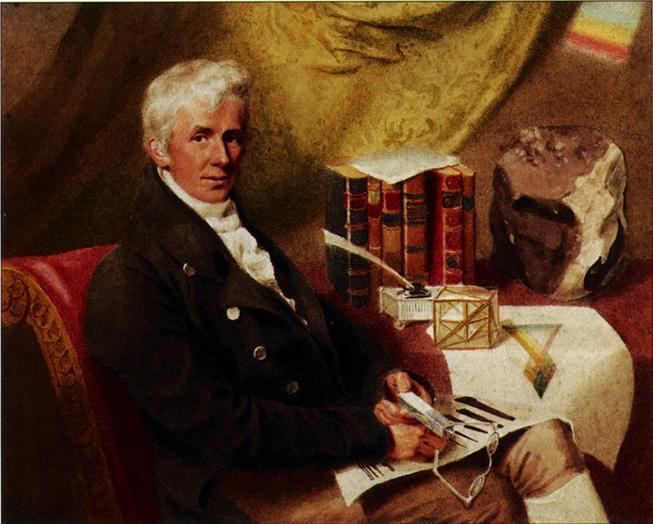
Portrait of James Sowerby, by Thomas Heaphy. 1816. Wikimedia Commons. https://commons.wikimedia.org/wiki/James_Sowerby#/media/File:James_Sowerby_by_Heaphy_(1816).jpg.

Sowerby was well known because of his extensive contributions to botanical masterpieces such as A Specimen of the Botany of New Holland.

Unlike most of his contemporaries, he was an artist who actively engaged in scientific work. He maintained correspondence with naturalists and urged them to send material that he could use for detailed studies. The colors that Sowerby used in his work are vivid and meant to appeal to a large audience. In 1809, he published a theory in which he stated that the basic colors red, yellow and blue offer all possibilities for botanical, zoological and geological imagination because these colors were given by nature.

Gold-plated Crabs and The Special Collection of Bibliotheca Carcinologica

The Bibliotheca Carcinologica, a unique collection in the Naturalis Library of approximately 8,000 publications and a large reprint collection, holds two special copies of Malacostraca Podophthalmata Brittanniae. This collection was amassed by a former curator, Lipke Bijdeley Holthuis (1921-2008), who for more than half a century was the leading expert in his field of crustacean taxonomy. He was particularly interested in collecting books that had been handed down by his famous predecessors.

L.B. Holthuis presented with his book (co-authored by Pietsch) about Lamotius. Photo: T.W. Pietsch, 2007, retouched by B. Kroonenberg.

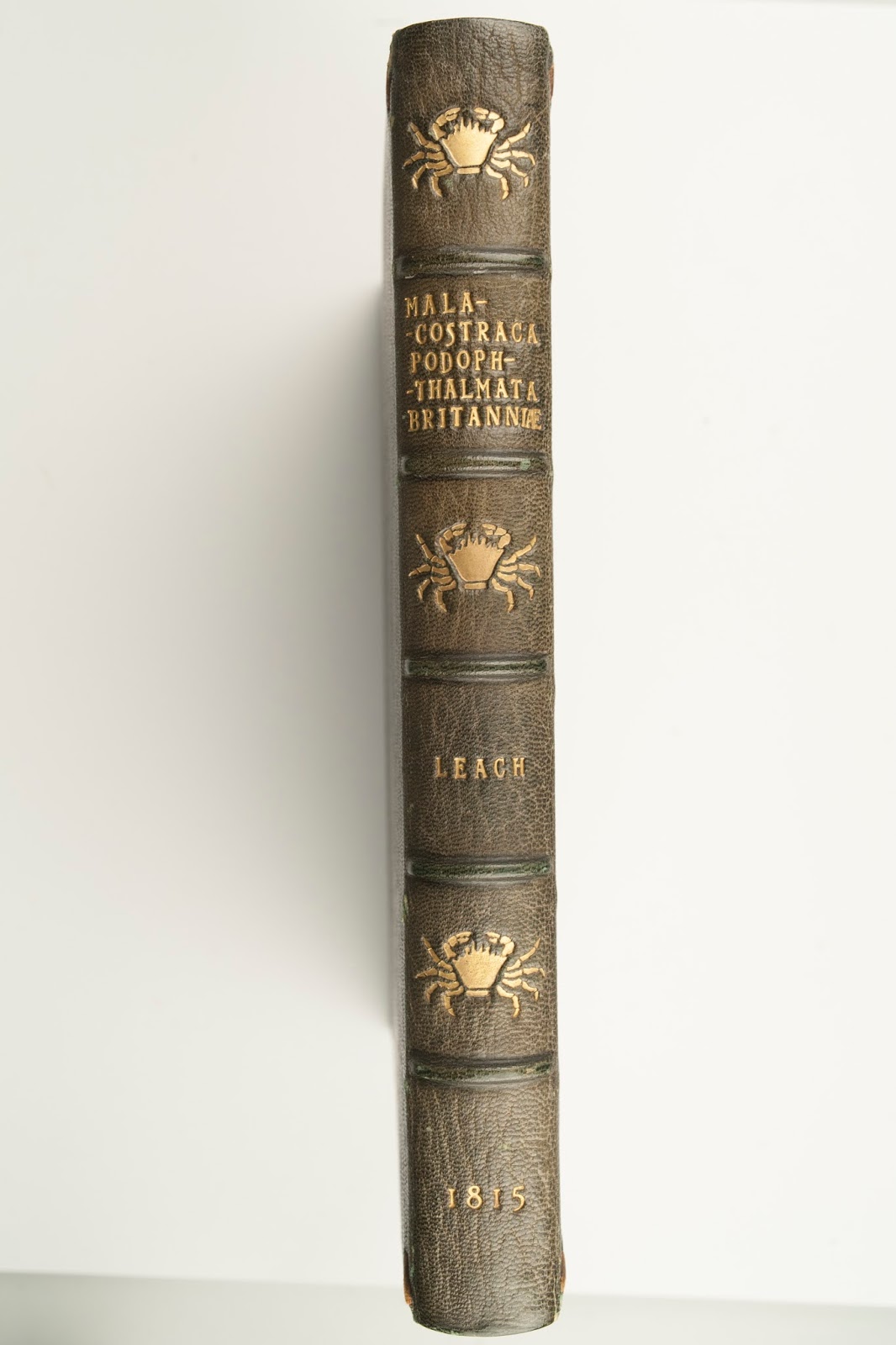
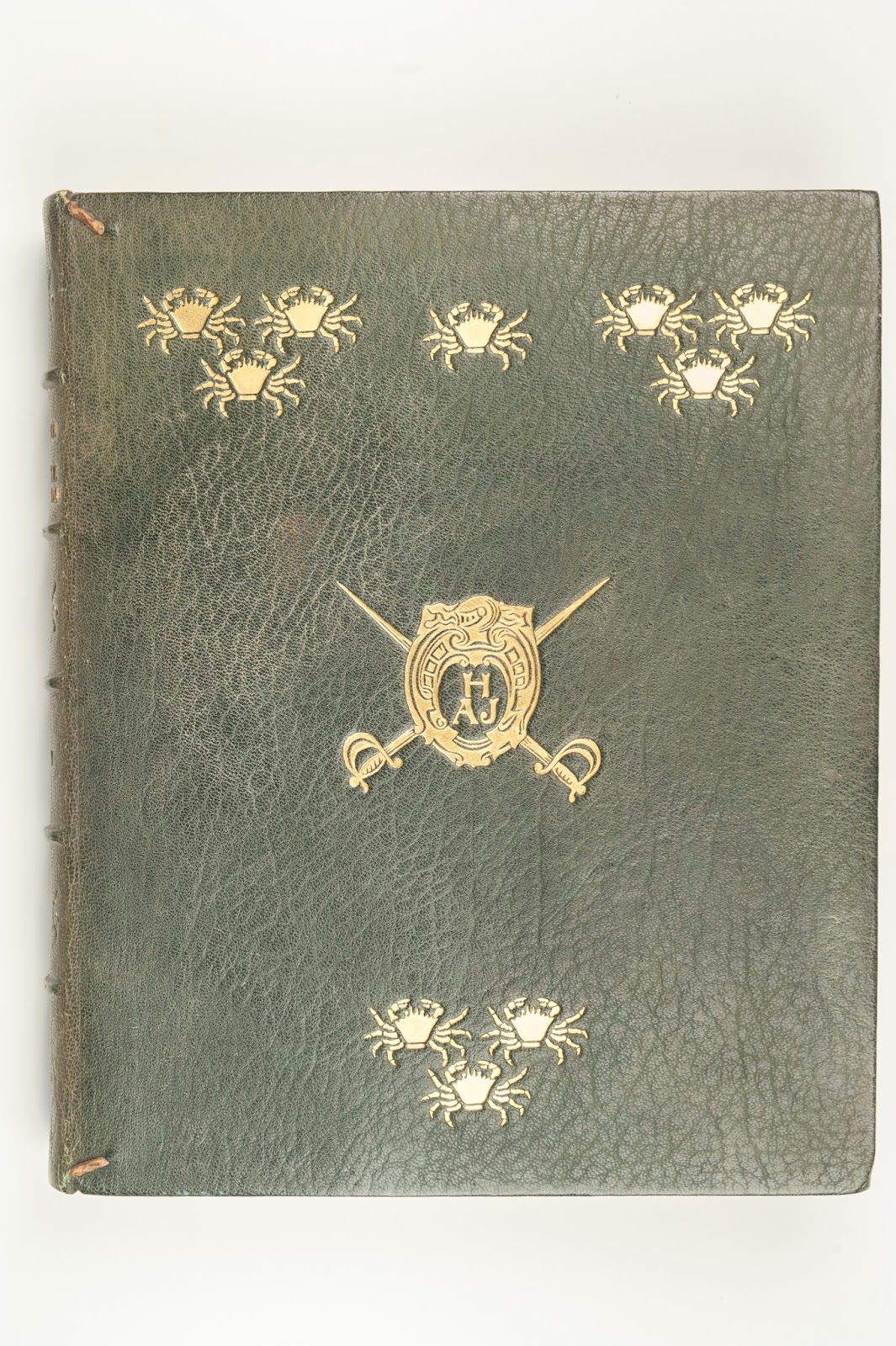
The Bibliotheca Carcinologica’s first copy of Malacostraca Podophthalmata Brittanniae was specially bound for the British collector Henry Arthus Johnstone. It features a band of green morocco decorated with gilded crabs and Johnstone’s coat of arms.

Private binding from the library of Henry Arthur Johnstone for William Elford Leach’s Malacostraca Podophthalmata Brittanniae. Naturalis, RBR Holt 00626.


Private binding from the library of Henry Arthur Johnstone for William Elford Leach’s Malacostraca Podophthalmata Brittanniae. Naturalis, RBR Holt 00626.

Johnstone’s library contained much natural history and was sold in its entirety to a London bookseller in 1921. Subsequently, the books have spread all over the world.

A beautiful binding and a good provenance are of course desirable, but for Holthuis it was of greater importance that a copy was complete, and that in addition all information that provides insight into the publication’s history was preserved. At the back of Johnstone’s copy of Malacostraca Podophthalmata Brittanniae are the covers of the original seventeen plus the two later issues, revealing exact publication dates and an alternate original title, as well as providing insight into the intention of William Elford Leach with regards to the publication.

On the cover of the first issue, Leach wrote that he wanted to publish twelve or fourteen episodes. He asked British naturalists to help make the publication as complete as possible and encouraged them to accurately analyze all the ‘rubbish’ that dredgers collected from the seabed. Apparently, his call was successful, because on the cover of the thirteenth issue, Leach indicates that the discovery of new species made it impossible to complete the work in fourteen episodes. The new goal was to complete it within eighteen or nineteen episodes.

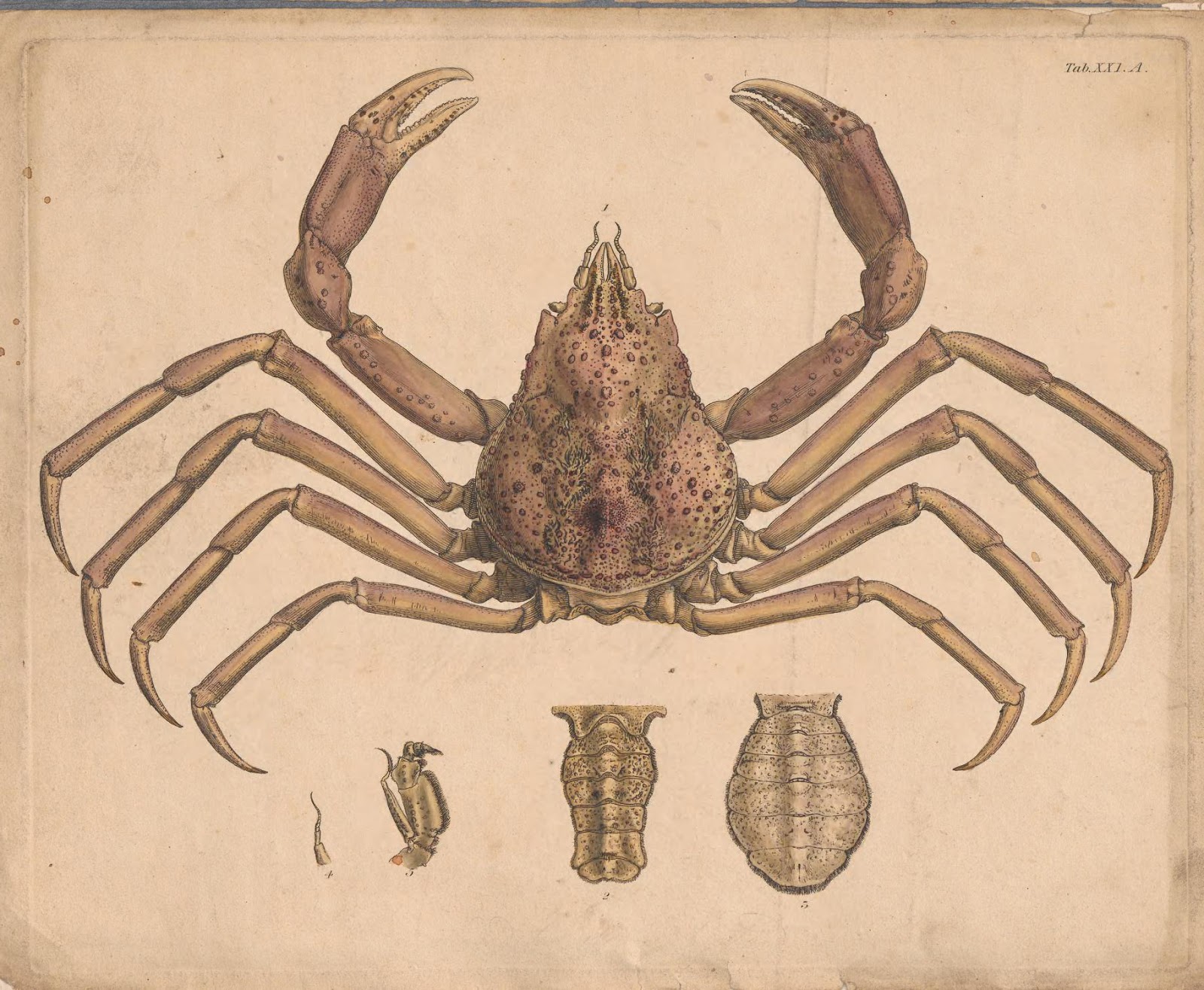
Illustration by James Sowerby for Malacostraca Podophthalmata Brittaniae, by William Elford Leach. Tab. XXIA. Naturalis, RBR Holt 00732.http://s.si.edu/2ysE5H4.

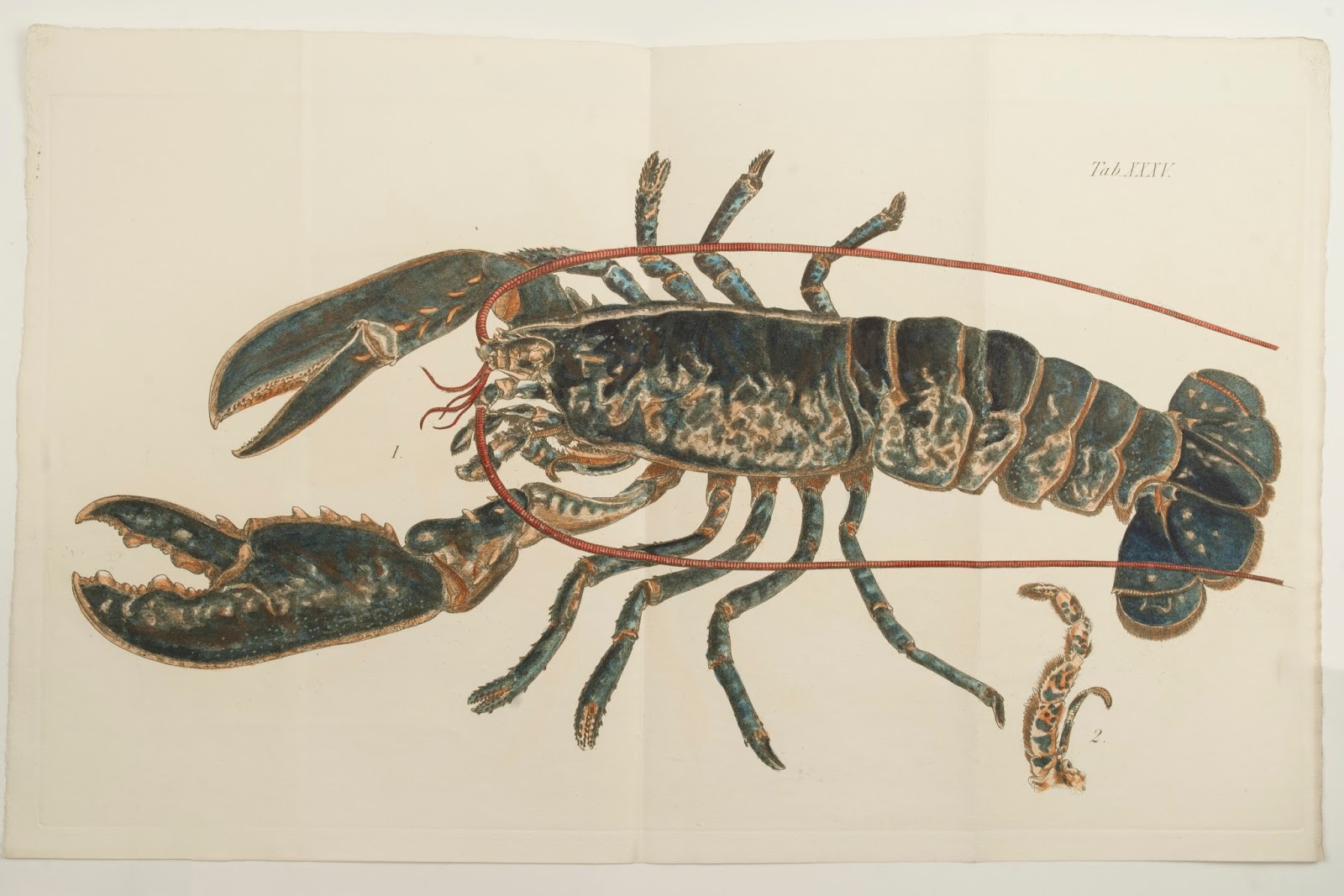
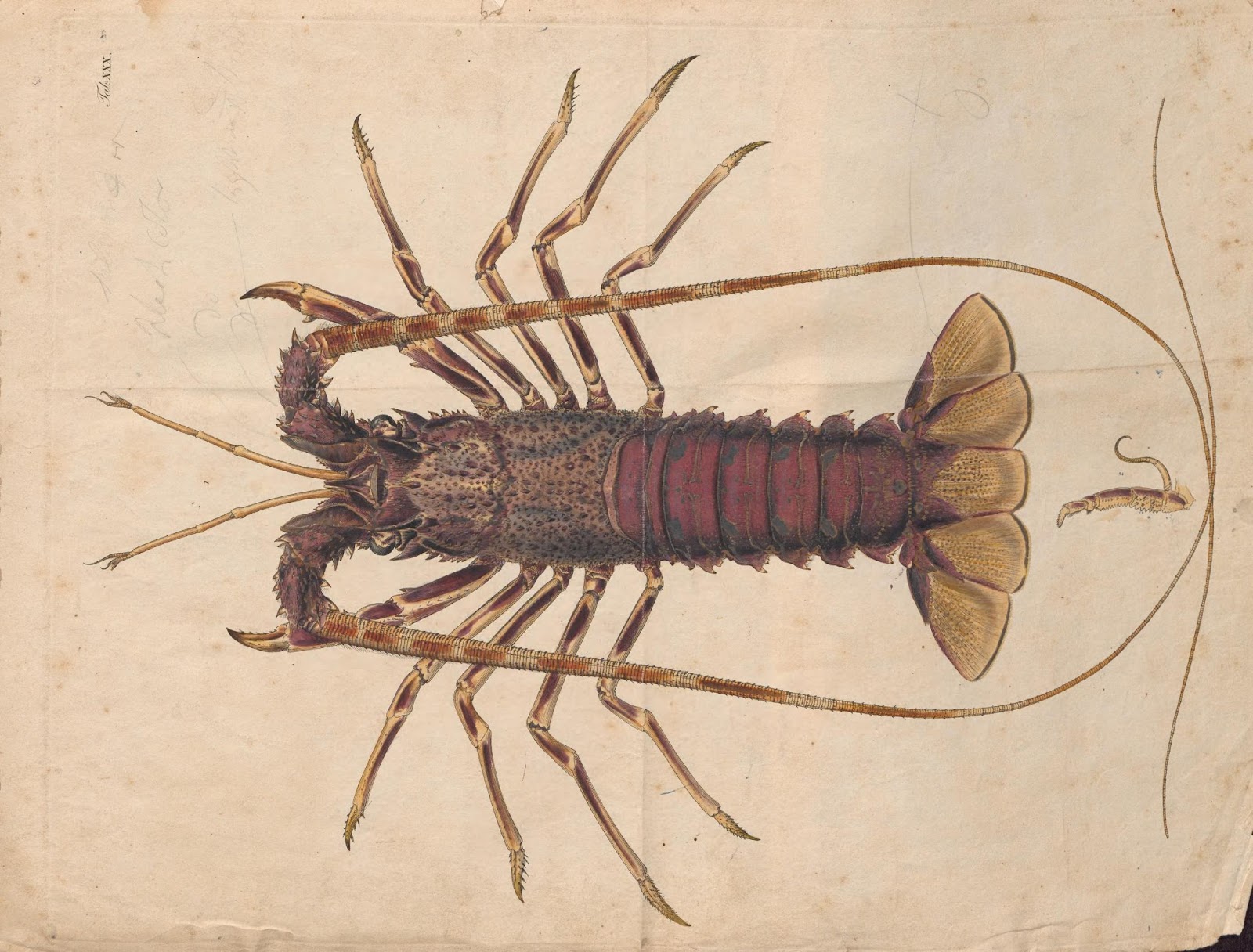
After the seventeenth episode that appeared on March 1, 1820, the publication ceased. Leach was unable to continue his work after his breakdown. Malacostraca Podophthalmata Brittanniae was finally completed by George Brettinham Sowerby (1812-1884) over half a century later after the publisher Bernard Quaritch had bought up the stock remnants. Quaritch was sensitive to the wish of James Sowerby’s descendant to finish the publication according to the original plan. In one additional episode published in 1875 as nos. XVIII and XIX, six more plates plus a beautiful plate of a European lobster (Homarus gammarus), which had previously been unfinished, were published.

European lobster (Homarus gammarus). G.B. Sowerby, Malacostraca Podophthalmata Brittaniae. Tab. XXXV. Naturalis, RBR Holt 00732. http://s.si.edu/2nRuVnp.

Printing Proofs

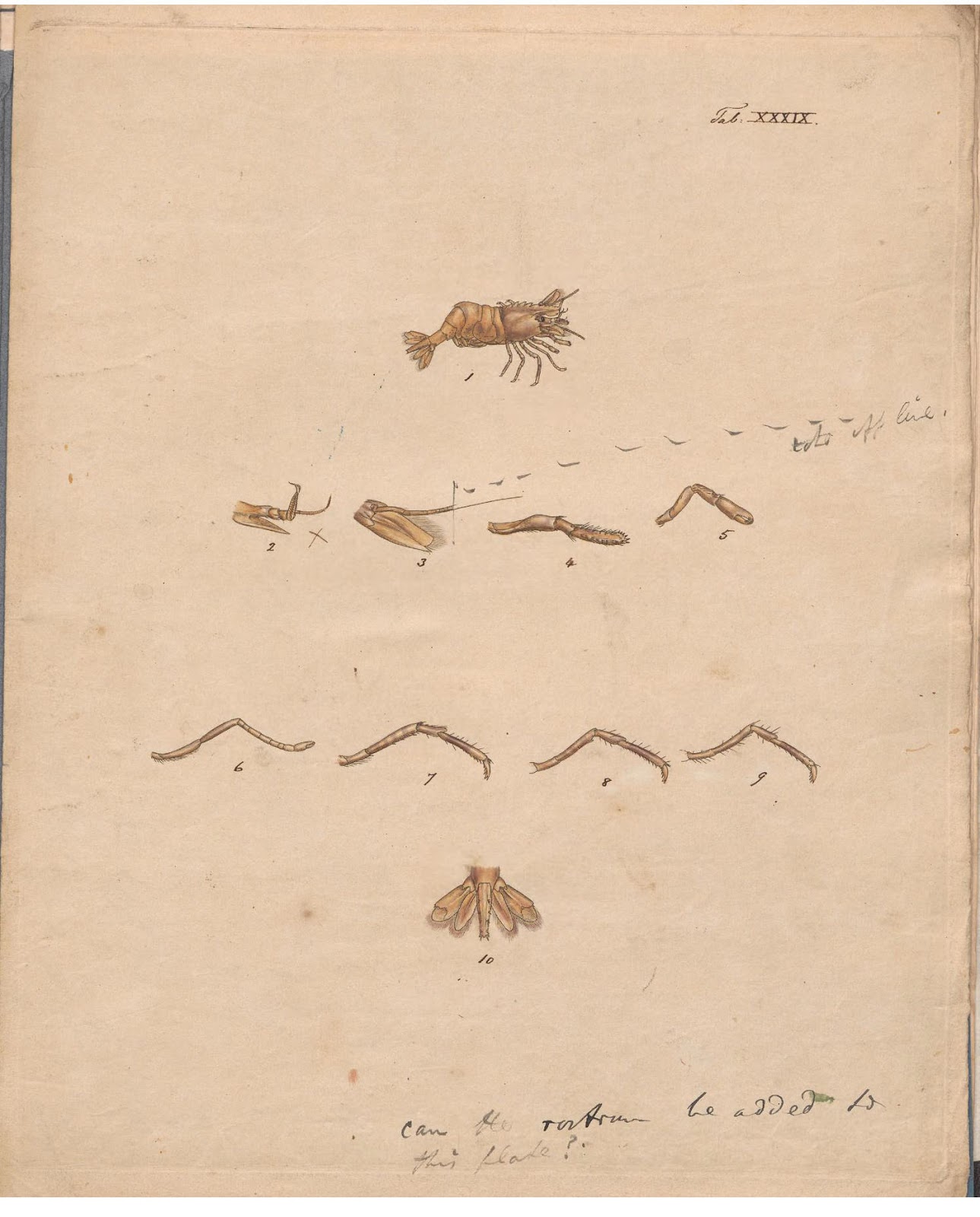
More than thirty years after Holthuis had acquired the fine copy from the library of Henry Arthur Johnstone, he bought a very expensive complete set of nineteen separate episodes of Malacostraca Podophthalmata Brittanniae. On the surface, it is not immediately clear why he would do this: after all, the copy he already had in his possession was complete, with all of the plates and the original covers of the episodes. Further analysis shows that this second copy purchased by Holthuis represents the proofs that William Elford Leach used to provide direction for the publication. On plate XXXIX, for example, he writes: ‘Can the rostrum be the added to this plate?’

Proof print. Illustration by James Sowerby for Malacostraca Podophthalmata Brittaniae, by William Elford Leach. Tab. XXXIX. Naturalis, RBR Holt 00732. http://s.si.edu/2AvYOQ0.

The rostrum is a pointed, forward-looking deformity of the armor of a crustacean, which sometimes provides usable distinctive indication for taxonomic classification. No wonder Leach asked Sowerby if he could show that in detail. On the plate in Johnstone’s copy of the title, the rostrum of Spirontocaris spinus is indeed added.

William Elford Leach, Malacostraca Podophthalmata Brittaniae. Tab. XXXIX. Ernst Mayr Library, Museum of Comparative Zoology, Harvard University. http://s.si.edu/2kpJ46u.

Other instructions from Leach have also been neatly followed up. The proofs have no direct meaning for the nomenclature; after all, these are unpublished trials with no published names. However, they do provide a good insight into the way Leach and Sowerby worked together and which colors they had in mind.

This unique proofprint copy has recently been digitized for BHL by the Naturalis Library. You can explore it in BHL for free.

Illustration by James Sowerby for Malacostraca Podophthalmata Brittaniae, by William Elford Leach. Tab. XXX. Naturalis, RBR Holt 00732. http://s.si.edu/2kti99F.


Naturalis Library

The library holds a large collections of scientific, taxonomic literature on zoology, geology, botany and palaeontology. It caters to everyone interested in researching biodiversity, geodiversity and evolution. The library is almost 200 years old and contains around 200,000 books, journals, drawings, prints, icones and many other archived materials.

This blog is largely based on the chapter: Alex Alsemgeest, ‘Malacostraca Podophthalmata Brittanniae: de drukproeven van het mooiste kreeftenboek. In: A. Alsemgeest en C. Fransen (eds.), In krabbengang door kreeftenboeken: de Bibliotheca Carcinologica L.B. Holthuis (Leiden: Naturalis Biodiversity Center, 2016), p. 123-127.

December 14, 2017by ulib-libraryjobs
Blog Reel, User Stories

19th Century Butterflies: Reconstructing a Collection’s History with BHL

The Naturalis Biodiversity Center, a recent BHL Affiliate, is home to one of the largest natural history collections in the world, consisting of over 37 million specimens. Additionally, Naturalis has contributed nearly 200,000 pages to the BHL collection since 2016.

Over 900,000 of the museum’s 37+ million specimens are butterflies, some dating back to the 18th century. Approximately 18,000 drawers are required to store this vast Lepidoptera collection.

The Naturalis butterfly collection is not only vast, it is also rich in type specimens, which are indexed through type catalogs combining historical and taxonomical research. Recently, researchers set about compiling such a catalog for the museum’s South East Asian Adoliadini (Lepidoptera, Nymphalidae) type specimens.

In order to create this catalog, which was published last year (Gassó Miracle, M.E. & T. Yokochi, 2016, Lepidoptera Science 67(2)), the authors needed to access and compare all existing taxonomic descriptions for the specimens, identify synonyms, contrast plates and photographs, and verify geographic distribution.

“For all of this, specialized literature is essential,” asserts Eulàlia Gassó Miracle, Curator of Butterflies at the Naturalis Biodiversity Center and co-author of the Adoliadini type catalog.

In order to sort out confusion regarding the origin, labeling, and taxonomy for the specimens, Eulàlia and her co-authors consulted more than 80 journals and books. More than half of them were available through the Biodiversity Heritage Library.

“BHL helped us to revise the taxonomy and the history of the specimens,” explains Eulàlia.

View Full Size Image
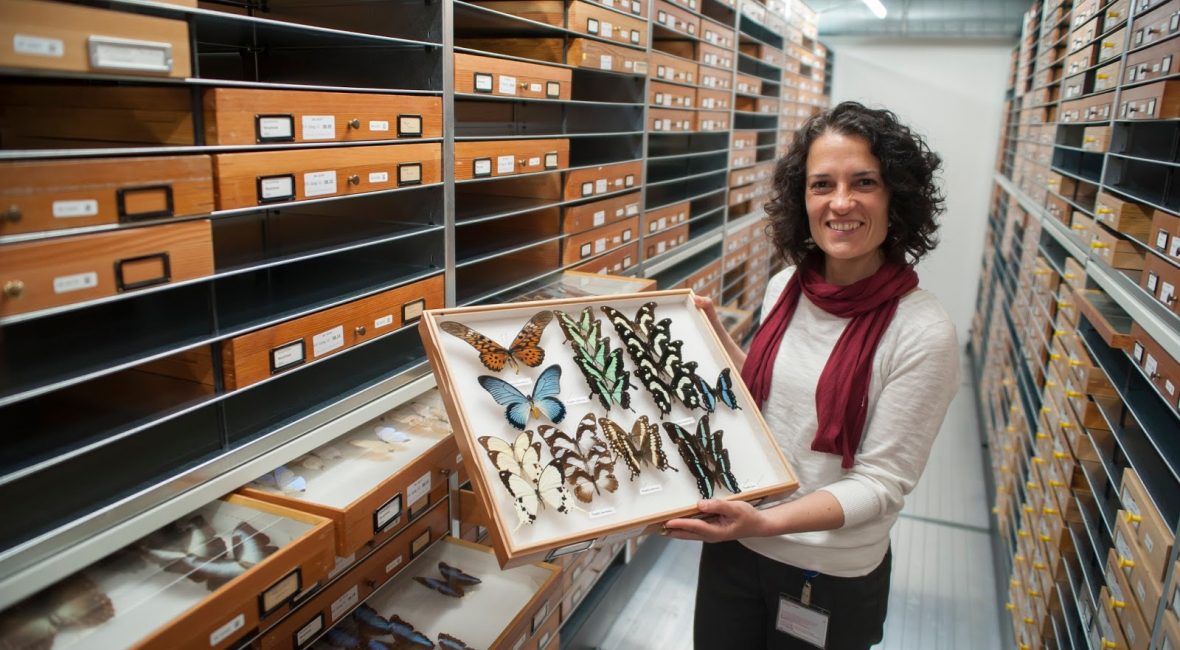
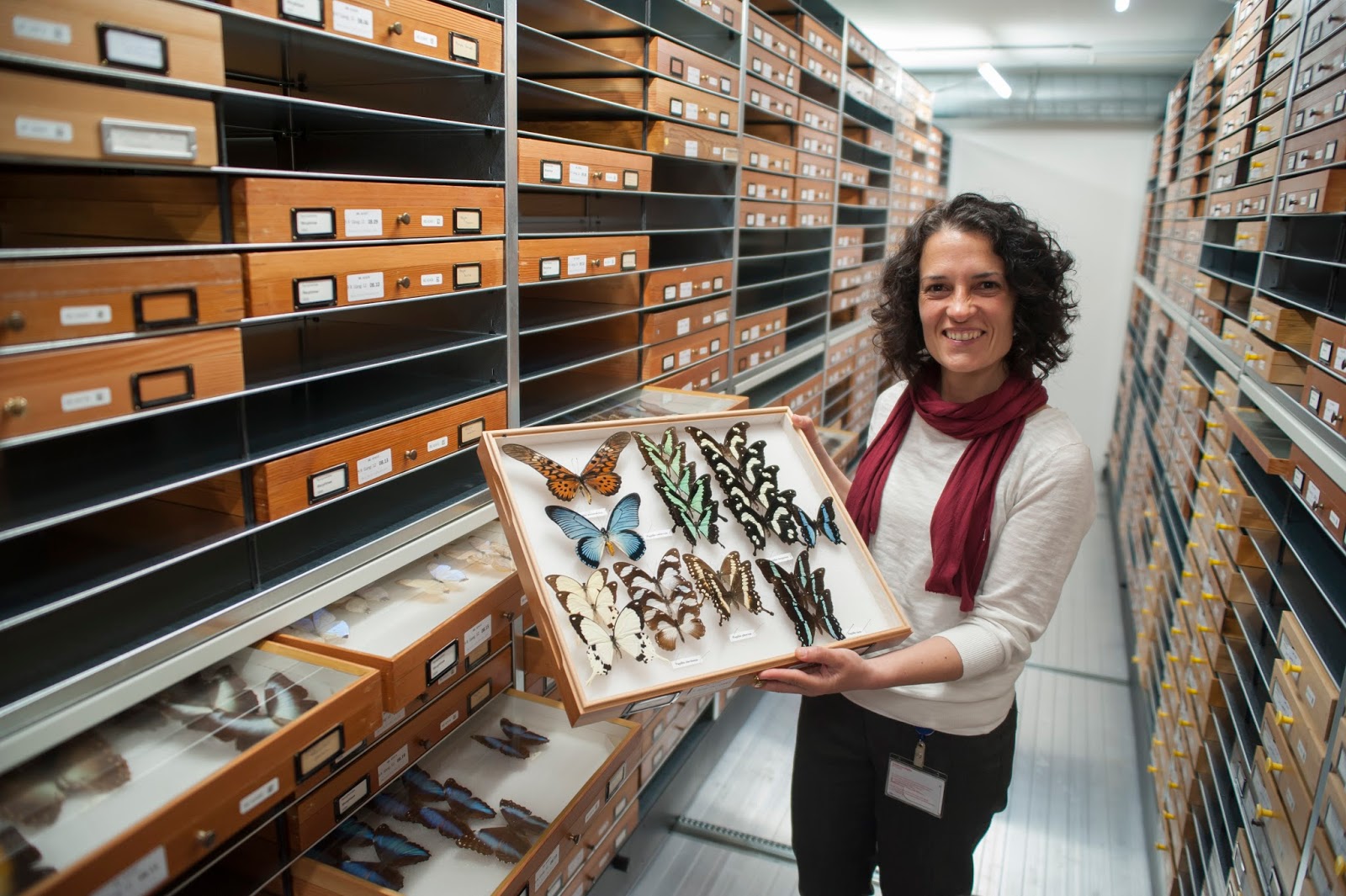
Eulàlia Gassó at the Naturalis butterfly collection. Photo by Henk Caspers.

BHL has been one of Eulàlia’s “most valued research tools” for the past decade.

“Although I have the privilege of access to most of the literature I need, either at the library of the Naturalis Biodiversity Center or the Leiden University Library, the BHL collection allows me to work in a flow from…well, anywhere,” explains Eulàlia. “BHL has also made available rare and unique publications from the 18th and 19th century, much needed for my research, that I cannot find in The Netherlands.”

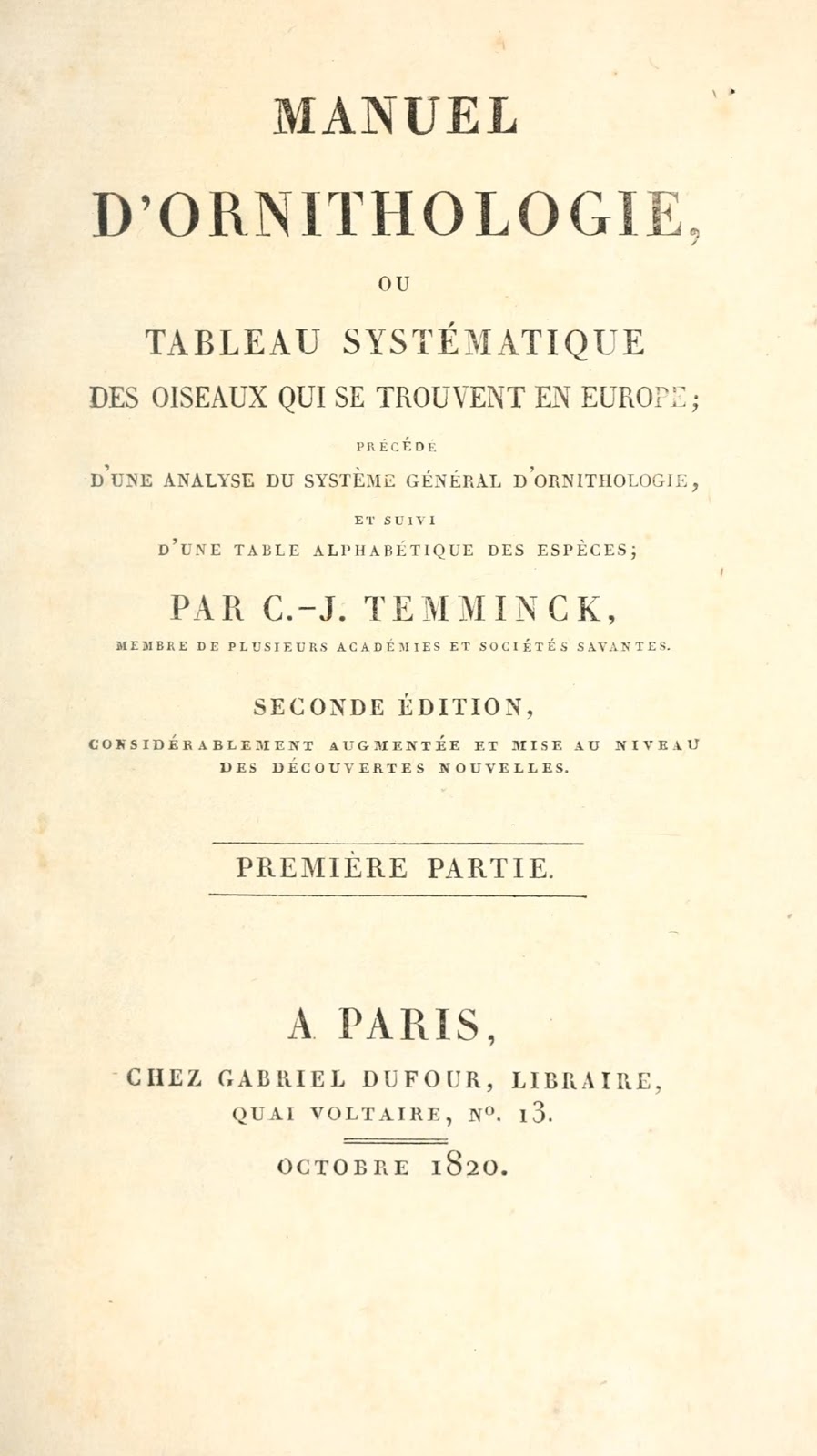
Eulàlia first discovered BHL while looking for works by C.J. Temminck, zoologist and first director of the Rijksmuseum van Natuurlijke Historie (RMNH, now Naturalis Biodiversity Center). Since then, she has used it to support her work as collections manager in various departments at the museum as well as her research on the history of 19th century natural history.

View Full Size Image
Title page of Manuel d’ornithologie, ou Tableau systématique des oiseaux qui se trouvent en Europe (Vol. 1, 2nd ed., 1820), by C.J. Temminck. Digitized by University Library, University of Illinois Urbana Champaign. http://biodiversitylibrary.org/page/33457859.

“As the curator of a natural history collection that is centuries old, I am also terribly curious about its former curators and curatorial practices,” says Eulàlia. “For this, again, BHL is a constant source of information and images. I share some of my findings and musings in my personal blog, the Museum Chronicles. For my historical research on the life and work of Temminck, accessing online his works and those of his peers has uncluttered my desk, helped organize my thoughts, given me access to new works – and with them, new insights – In a word, BHL helps me progress.”

Eulàlia uses BHL daily, either reading titles online or taking advantage of the custom PDF generation feature to download content. BHL’s high resolution image download feature, which Eulàlia discovered thanks to an @BioDivLibrary tweet, helps her compare illustrations with specimens. To further facilitate her research, Eulàlia is anxious to see full text search added to the BHL website. Happily, this is a feature that is currently in development.

BHL’s collections not only serve as a daily resource for Eulàlia’s research, but they also help her start each day with a little piece of natural history beauty.

View Full Size Image
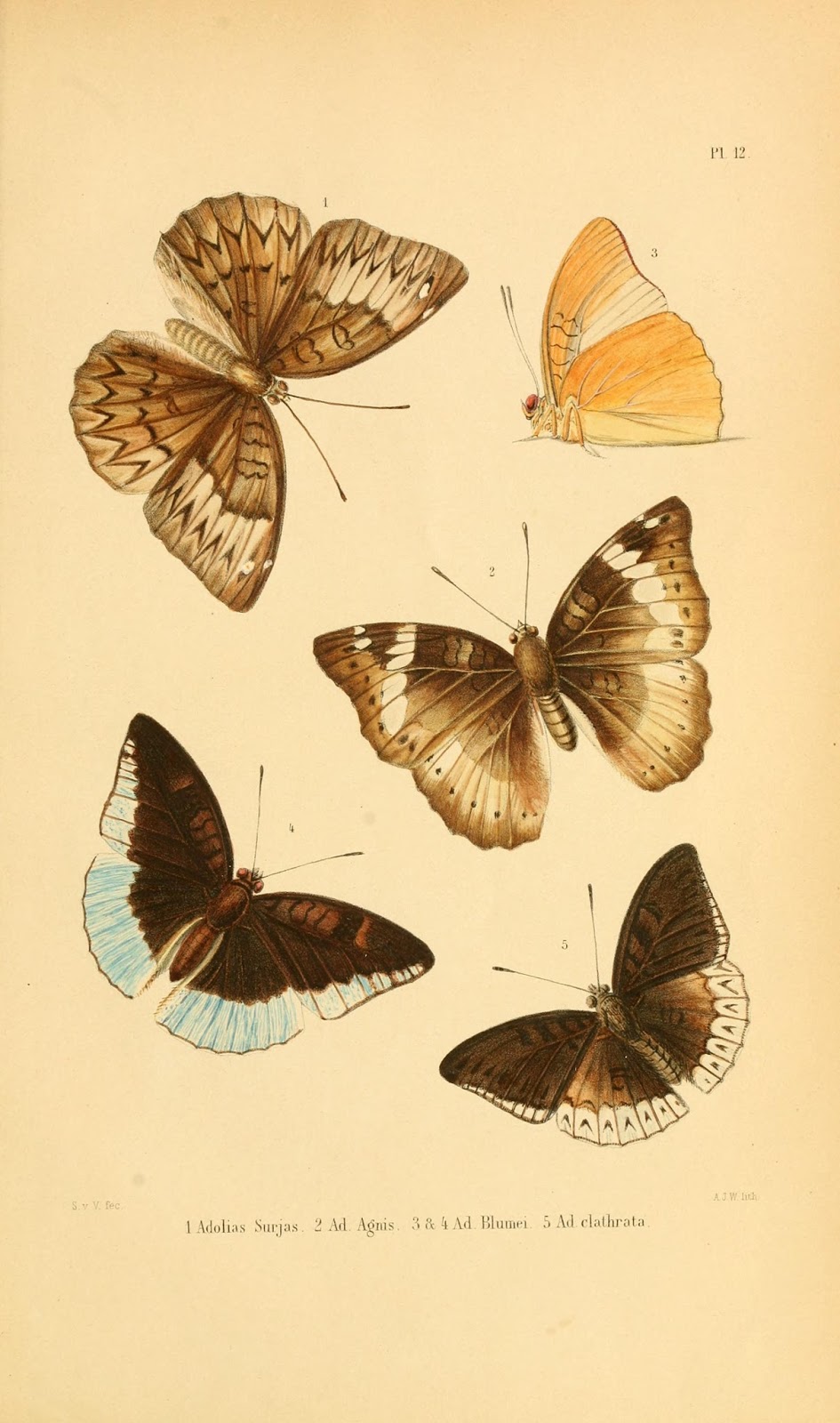
Plate 12 of Snellen van Vollenhoven’s work on Adolias butterflies. The type specimens are deposited at Naturalis Biodiversity Center. Digitized by Smithsonian Libraries. http://biodiversitylibrary.org/page/10840001.

“Recently, one of my favorite items is the article of Snellen van Vollenhoven on Adolias butterflies, one that I have read and examined repeatedly while validating the status of his type specimens,” says Eulàlia. “Plate 12 is so beautiful, it is the first thing I see when starting my computer.”

Indeed, we’re firm believers that every day is better with a little bit of #SciArt. So, whether you need to brighten your day with a little natural history eye candy or reconstruct the history of a type collection, BHL has you covered.

______________________________________

This post may contain the personal opinions of BHL users or affiliated staff and does not necessarily represent the official Biodiversity Heritage Library (BHL) position on these matters.

March 9, 2017by ulib-libraryjobs
BHL News, Blog Reel

BHL participates in the GBIF-CoL-EOL-BHL-BOLD Summit at Naturalis

View Full Size Image
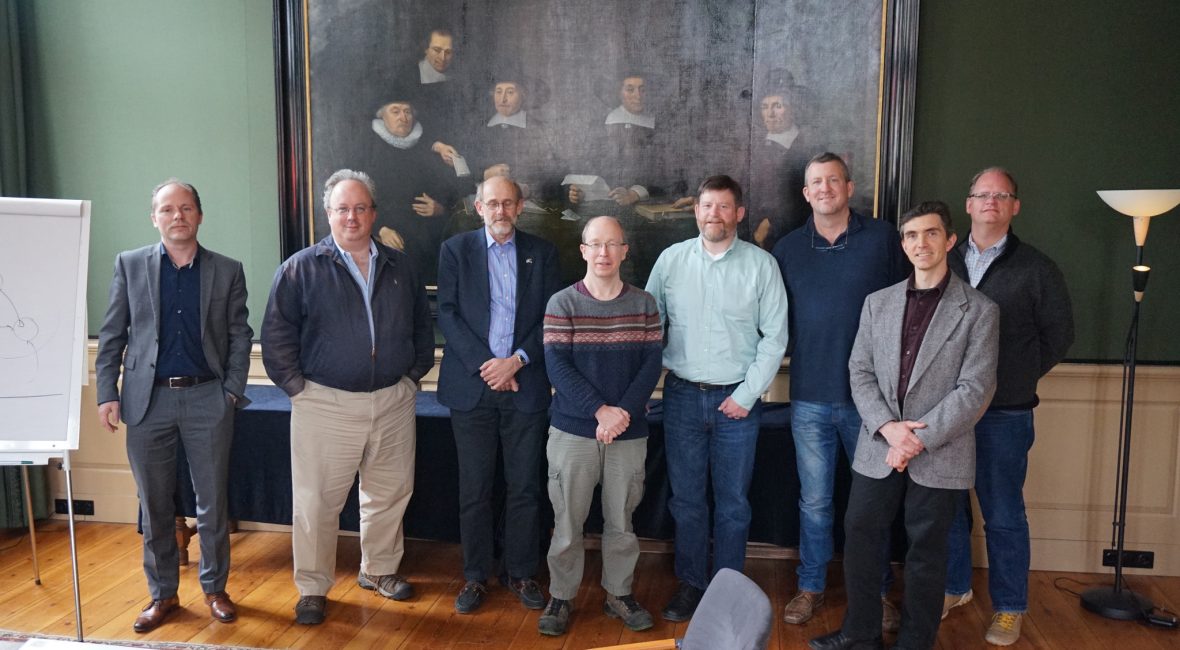
Jeroen Snijders, Bob Corrigan, Peter Schalk, Donald Hobern, Tom Orrell,
David Remsen, Alex Borisenko, Alex Borisenko, Martin Kalfatovic

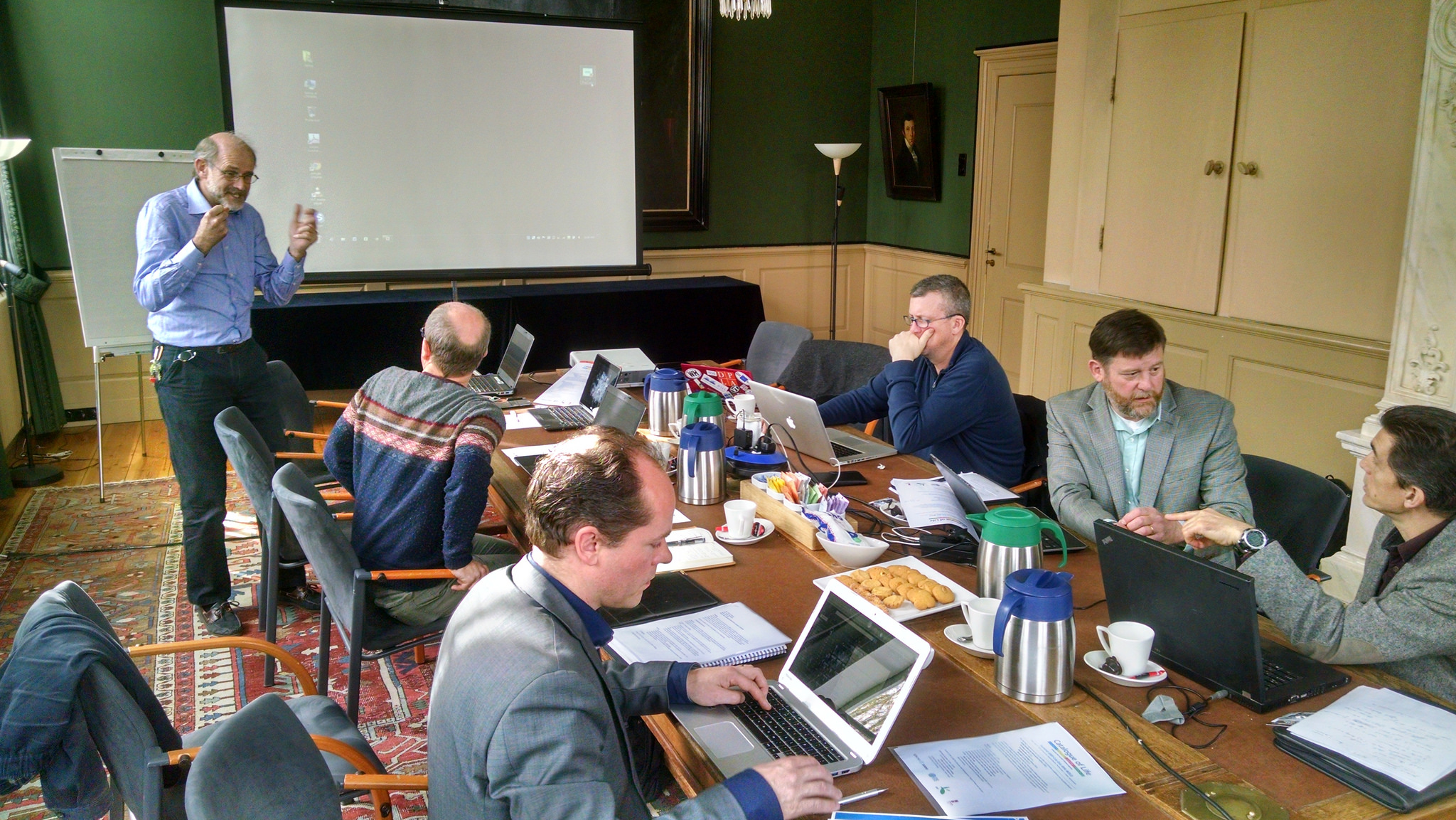
On 13 April 2015, BHL Program Director Martin R. Kalfatovic attended the GBIF-CoL-EOL-BHL-BOLD Summit at Naturalis in Leiden, Netherlands. This meeting followed on the preceding Catalogue of Life meeting in Oostende, Belgium. The meeting took place in the historic Pesthuis on the Naturalis campus.

Other participants were:

  • Donald Hobern, Global Biodiversity Information Facility (GBIF)
  • Peter Schalk and David Remsen, Catalogue of Life (CoL)
  • Tom Orrell, National Museum of Natural History, Smithsonian, Integrated Taxonomic Information System (ITIS)
  • Bob Corrigan, Encyclopedia of Life (EOL)
  • Alex Borisenko, Barcode of Life (BOLD)
  • Jeroen Snijders, Naturalis

The purpose of the meeting was to discuss synergy and explore potential for intensifying collaboration concerning infrastructure, software tools, and services. The aims is to align strategic plans and future developments.

Jeroen Snijders, Naturalis CIO, opened the meeting with an overview of Naturalis IT structure and capacity. He also outlined recent past and upcoming EU funding opportunities.

Each of the participants then gave overviews of their programs and presented opportunities for collaboration and de-duplication of effort.

The Naturalis senior management team from collections, scientific research, and research and education joined the group for lunch.

View Full Size ImageThe meeting concluded with a series of action items focused on aligning programs, developing interoperable resources, and sharing services and software tools.

The successful meeting built on existing partnerships and collaborations of the participants and provided a framework for advancing shared goals.

April 22, 2015by

Help Support BHL

BHL's existence depends on the financial support of its patrons. Help us keep this free resource alive!

search

About BHL

The Biodiversity Heritage Library (BHL) is the world’s largest open access digital library for biodiversity literature and archives. BHL operates as a worldwide consortium of natural history, botanical, research, and national libraries working together to digitize the natural history literature held in their collections and make it freely available for open access as part of a global “biodiversity community.”

Join Our Mailing List

Sign up to receive the latest news, content highlights, and promotions.

Subscribe Now

Subscribe to Blog via Email

Enter your email address to subscribe to this blog and receive notifications of new posts by email.

Join 319 other subscribers

Subscribe to Blog Via RSS

Subscribe to the blog RSS feed to stay up-to-date on all the latest BHL posts.

Access RSS Feed

Inspiring Discovery through Free Access to Biodiversity Knowledge.

The Biodiversity Heritage Library makes it easier than ever for you to access the information you need to study and explore life on Earth…for free, anytime, anywhere.


64+ Million Pages of
Biodiversity Literature Online.

EXPLORE

Tools and Services
to Transform Research.

EXPLORE

300,000+
Illustrations on Flickr.

EXPLORE

ABOUT | HARMFUL CONTENT | PRIVACY | SITE MAP | TERMS OF USE