Biodiversity Heritage Library - Program news and collection highlights from BHL
  • Home
  • News
  • Featured Books
    • All Featured Books
    • Book of the Month Series
    • BHL at 20
  • User Stories
  • Campaigns
    • Fossil Stories
    • Garden Stories
    • Monsters Are Real
    • Page Frights
    • Her Natural History
    • Earth Optimism 2020
  • Tech Blog
  • Visit BHL
Home
News
Featured Books
    All Featured Books
    Book of the Month Series
    BHL at 20
User Stories
Campaigns
    Fossil Stories
    Garden Stories
    Monsters Are Real
    Page Frights
    Her Natural History
    Earth Optimism 2020
Tech Blog
Visit BHL
  • Home
  • News
  • Featured Books
    • All Featured Books
    • Book of the Month Series
    • BHL at 20
  • User Stories
  • Campaigns
    • Fossil Stories
    • Garden Stories
    • Monsters Are Real
    • Page Frights
    • Her Natural History
    • Earth Optimism 2020
  • Tech Blog
  • Visit BHL
Biodiversity Heritage Library - Program news and collection highlights from BHL
BHL News, Blog Reel, Tech Updates

Biodiversity Heritage Library Datasets Now Openly Accessible on the Amazon Web Services Cloud

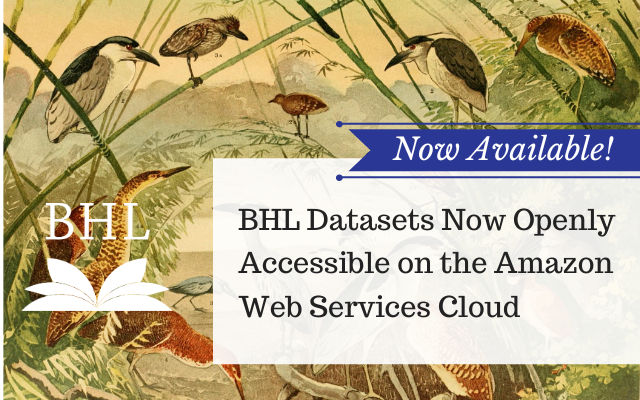
Now Available. BHL Datasets Now Openly Accessible on the Amazon Web Services Cloud. Background image of a variety of herons perching on branches

Sixty-two million pages of scientific text, images, and metadata, representing 500 years of biodiversity data will be openly accessible via the Registry of Open Data on AWS

Washington, DC, November 27, 2024 — The BHL Technical Team is thrilled to announce that Biodiversity Heritage Library (BHL) datasets will be openly accessible on the Amazon Web Services (AWS) cloud, thanks to the AWS Open Data Sponsorship Program. Moving BHL data to the cloud allows researchers globally to explore and analyze over 500 years of biodiversity data, enhancing their ability to derive scientific insights from our shared past to inform future global environmental policy.

BHL data is now hosted on AWS, and comprises over 62 million pages of scientific text from the 15th to the 21st centuries. BHL’s vast collection represents an unparalleled biodiversity resource with enormous potential to be used for longitudinal studies and conservation efforts.

Key Use Cases for BHL’s Data:

  • Historical Baseline Data: Spanning centuries, BHL provides a unique record of biodiversity literature, allowing researchers to establish long-term species baselines and track changes in species distributions and abundances over time.
  • Longitudinal Studies: The dataset supports analysis of biodiversity trends and ecosystem responses to environmental changes, offering valuable insights into historical and contemporary biodiversity dynamics.
  • Rare and Endangered Species: BHL’s historical records include species that may no longer exist or have become rare, aiding in the understanding of past biodiversity and informing current conservation efforts.
  • Taxonomic Stability: The collection includes taxonomic descriptions and classifications from various time periods, essential for understanding species relationships.
  • Cultural and Scientific Heritage: Beyond scientific data, BHL preserves historical texts, scientific illustrations, and annotations, enriching our understanding of past scientific practices and societal attitudes toward nature.

Transitioning to AWS services represents a transformative opportunity for BHL. As BHL currently operates outside a cloud environment, this move will optimize scalability, accessibility, performance, and cost-efficiency. AWS’s advanced computing capabilities will enable faster data processing and analysis, while AWS’s cost management tools will in the long-term help reduce infrastructure costs associated with on-premise storage and upgrades.

As a vital component of the global biodata infrastructure, the demand for BHL’s content and services continues to rise. By leveraging AWS services, we can address several critical needs, including:

  • Complimentary storage and access to a comprehensive suite of AWS cloud computing tools.
  • Ensured page persistence and unique page identifiers essential for biodiversity informatics applications.
  • Enhanced page-serving speeds in low-bandwidth regions where biodiversity research is critical.

BHL’s Data Manager, JJ Dearborn remarked, “Collaborating with AWS unlocks the full potential of BHL data. Cloud hosting not only provides an additional data safe harbor but also makes it accessible to researchers worldwide. We’re excited to democratize access to BHL data and see it used to spark innovative cross-disciplinary research in biodiversity informatics.”

The AWS Open Data Sponsorship Program is committed to making high-value datasets freely available to encourage innovation and collaboration. By supporting the free access to a diverse array of big datasets, AWS helps advance research and development in numerous fields.

To explore the BHL dataset and learn more about its content, visit the AWS Data Exchange.


About the Biodiversity Heritage Library

The Biodiversity Heritage Library (BHL) is the world’s largest open access digital library for biodiversity literature and archives. Headquartered at the Smithsonian Libraries and Archives in Washington, D.C., BHL is a global consortium that digitizes and freely shares natural history literature and archives. By providing open access to critical biodiversity knowledge, BHL addresses major research challenges and supports the global scientific community in understanding and conserving Earth’s species amid climate change and extinction crises. BHL also collaborates with rights holders, volunteers, and international experts to enhance content accessibility and interoperability. Since its inception in 2006, BHL has been working towards a shared future where biodiversity knowledge is globally accessible and supports universal bioliteracy.
Download Press Release

November 27, 2024by mdimeo
BHL News, Blog Reel

BHL Australia Turns 10!

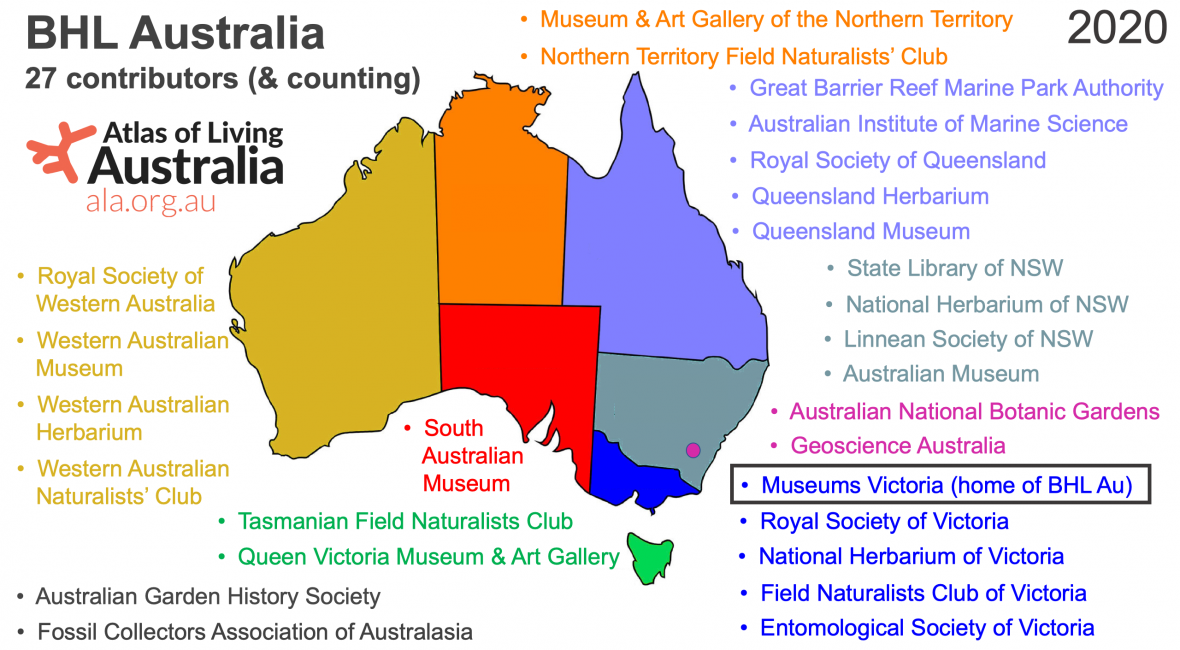
map of australia with BHL Australia contributors highlighted

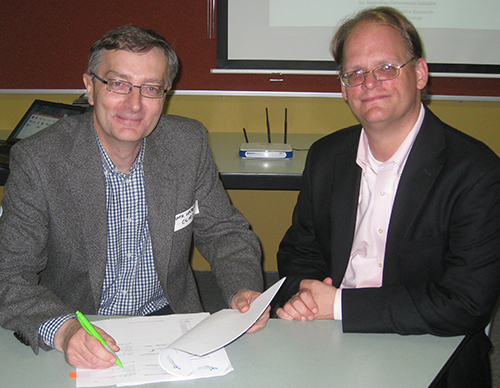
Ten years ago in June 2010, the Atlas of Living Australia and Museums Victoria signed an agreement with the Biodiversity Heritage Library – and BHL Australia was born.

Signing of BHL agreement.jpg

Dr. Mark Lonsdale (left), the then Chief of the Commonwealth Scientific and Industrial Research Organisation’s (CSIRO’s) Entomology Division, and Martin Kalfatovic (right), BHL Program Director, signing the Relationship Agreement between the Atlas of Living Australia, Museums Victoria and BHL. Image sourced from Martin Kalfatovic.

BHL Australia’s mission is to make Australia’s biodiversity literature freely accessible and discoverable. Ten years ago, we started with a single contributing organisation, Museums Victoria, and a team of five incredibly dedicated volunteers.

Over the past 10 years, BHL Australia has grown considerably. Our operation is still hosted by Museums Victoria (at the Melbourne Museum), but we now digitise literature (and ingest born-digital material) on behalf of 27 organisations across the country.

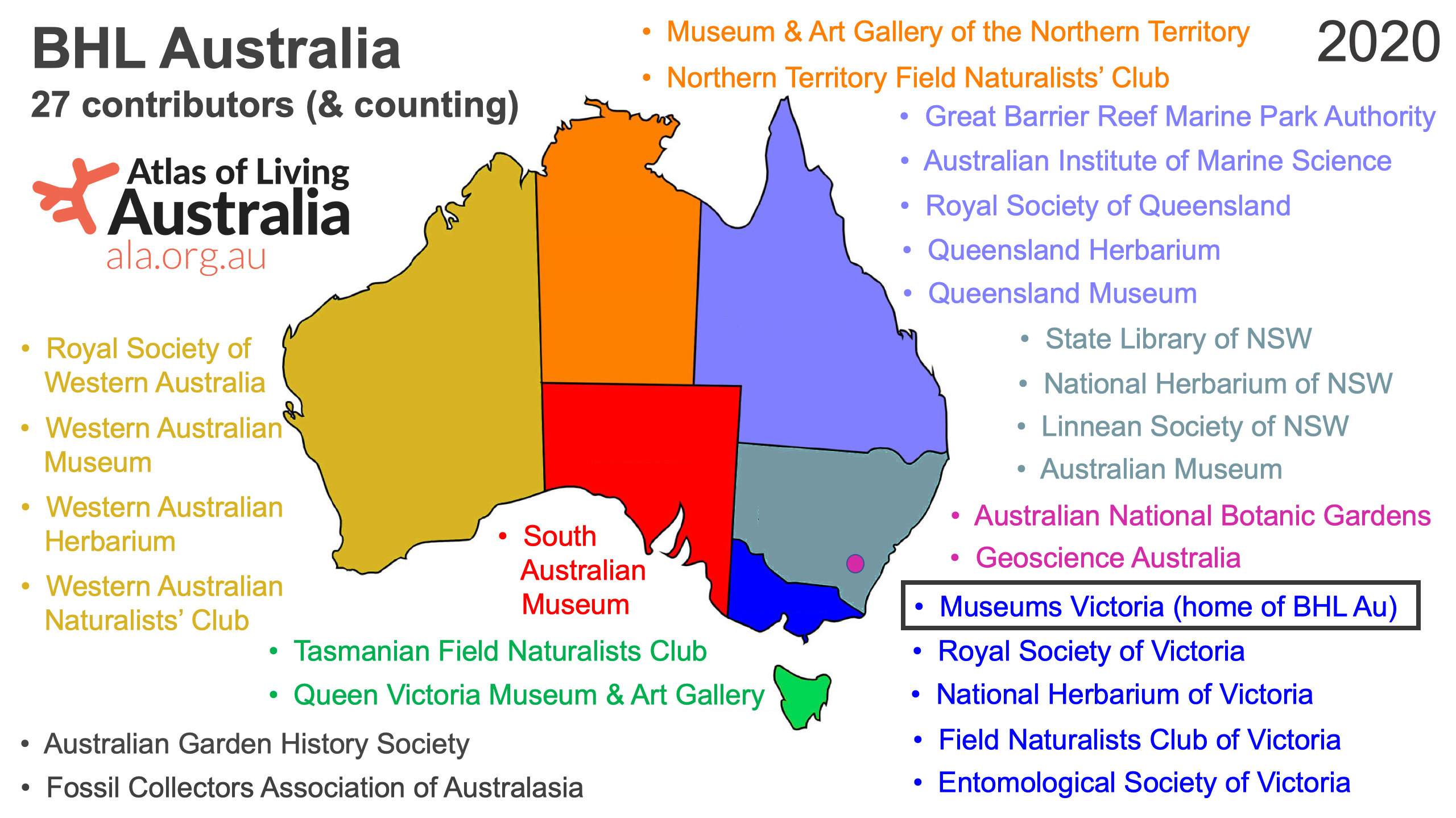
map of australia with BHL Australia contributors highlighted

We are now a truly national project, representing Australia’s state and territory museums, herbaria, royal societies and field naturalists clubs, as well as government agencies and natural history publishers. Together these organisations have contributed more than 350,000 pages from over 2,400 volumes.

Ely with scanner.jpg

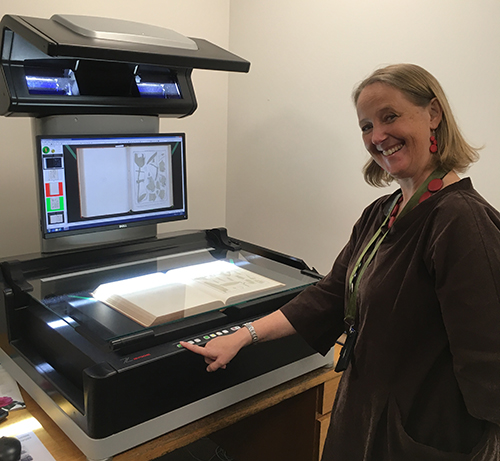
Dr. Elycia Wallis, Project Lead for BHL Australia at the Atlas of Living Australia, with our Zeutschel 16000 Book Scanner, purchased in 2017. Photo Credit: Nicole Kearney.

These volumes include treasures such as George Shaw’s The Naturalist’s Miscellany (1789-1813), Helena Forde and Harriet Scott’s Australian lepidoptera and their transformations, drawn from the life (1890-1898) and John Gould’s A synopsis of the birds of Australia, and the adjacent Islands (1837).

BHL Australia has also uploaded an extensive list of journals onto BHL (they may not be as pretty, but they’re just as important). To peruse all 2,400+ volumes, see our full BHL Australia Collection.

Shaw's Platypus resized.jpg

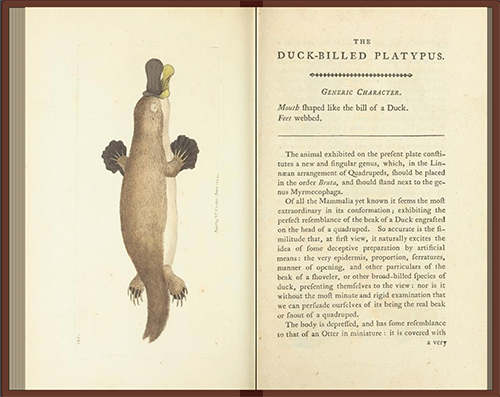
The Naturalist’s Miscellany includes the first published scientific description and illustration of the Duck-billed Platypus (Ornithorhynchus anatinus). Shaw, George. The Naturalist’s Miscellany. Volume 10. 1799. Contributed to  BHL by Museums Victoria. DOI: https://doi.org/10.5962/p.304567. 

Our volunteer team has also grown since 2010; BHL Australia now has 15 amazing volunteers who do the majority of our scanning, cropping, image processing and metadata addition work, as well as three science communication volunteers. (You may have seen their hugely successful takeover of the BHL Instagram account during #BirdWeek last year.)

Tiziana cropped.PNG

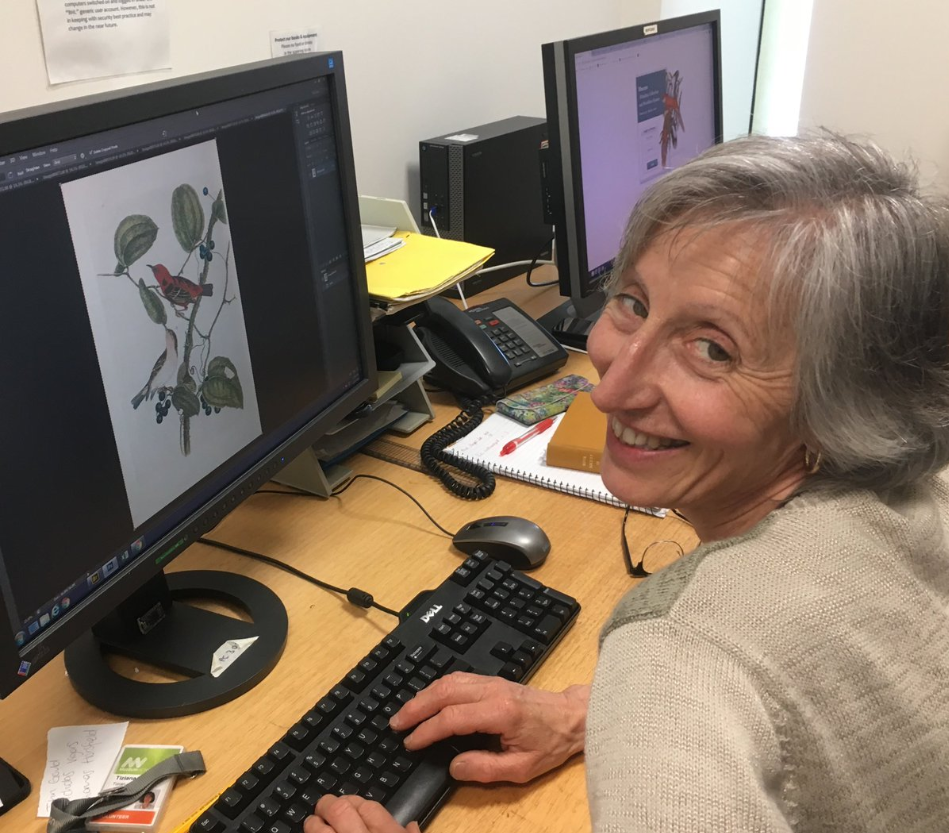
BHL Australia volunteer, Tiziana Tizian, cropping page images in preparation for upload onto BHL. Photo Credit: Nicole Kearney.

Of course, like so many other digitisation operations around the globe, BHL Australia is now in lockdown (and has been since mid-March). But out of adversity comes opportunity. While in lockdown, we’ve switched our focus from physical to born-digital material. We’ve welcomed new contributors and have uploaded journal volumes published as recently as 2020. We’ve also started a major project (in collaboration with BHL superuser Rod Page) to upload article metadata for every Australian journal on BHL (we’re pretty obsessed with discoverability).

Records of WAM.png

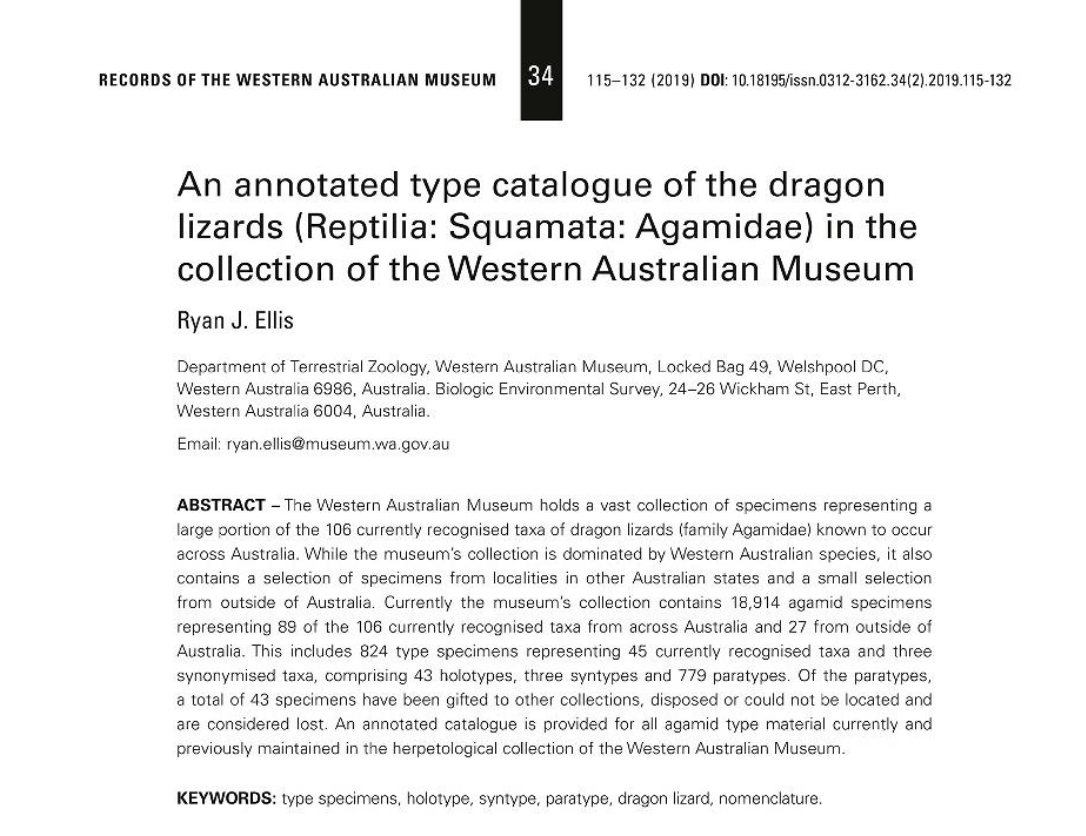
The Records of the Western Australian Museum is now complete on BHL from 1910 to 2019 as a result of our efforts (during our COVID-19 lockdown) to upload born-digital material from Australia’s journals.

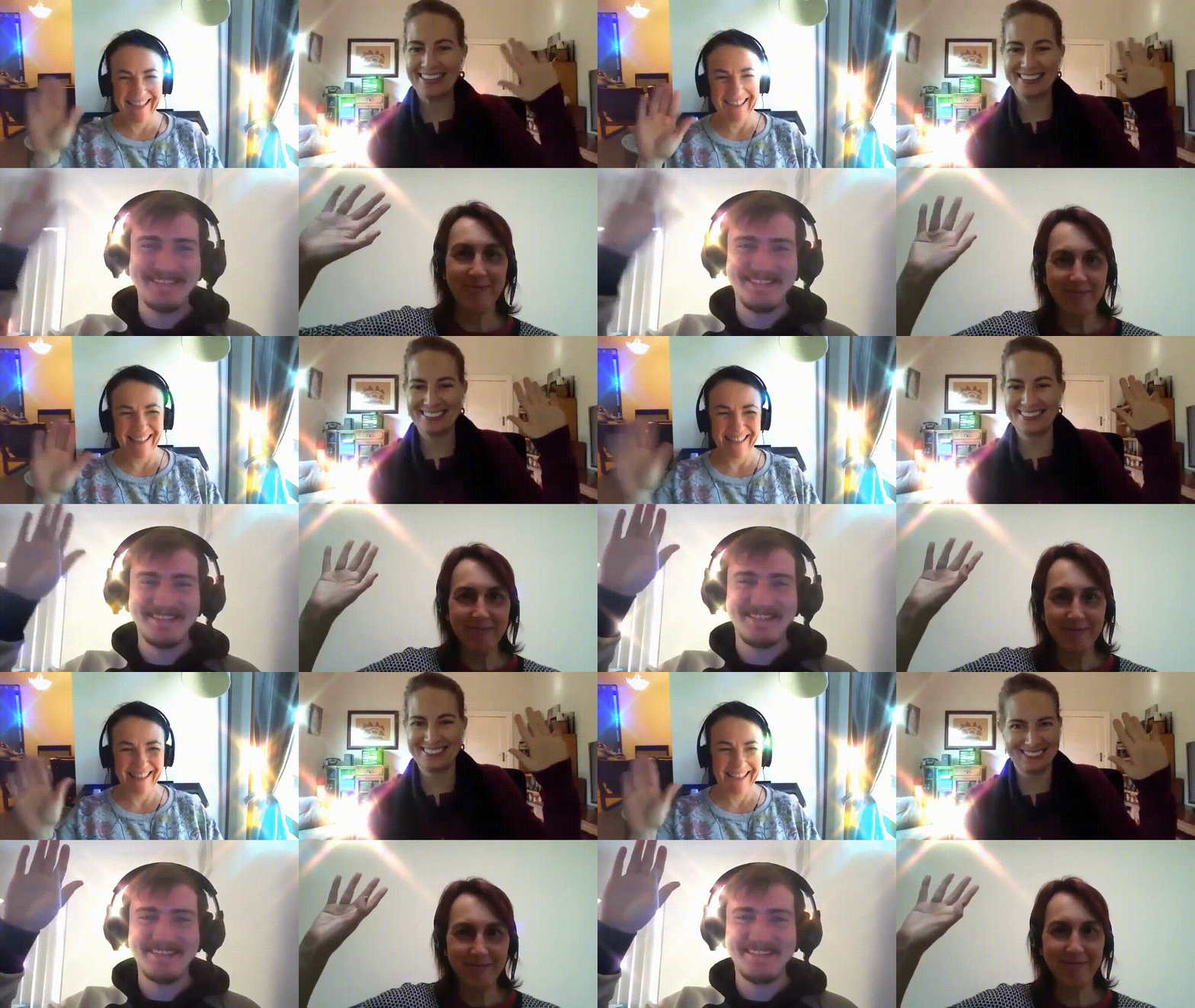
And, like so many others, we’ve also had to postpone our celebrations. We had planned to invite all our Australian contributors and volunteers to a big BHL birthday bash. That’s on hold for now, but in the meantime, here are our BHL staff — Cerise, Chris, Veronica and myself — waving our thanks to all those who support BHL Australia. To our volunteers, our contributors, the Atlas of Living Australia and our BHL community around the world — thank you for a wonderful 10 years!

BHL staff waving for volunteers

The BHL Australia team: Manager Nicole Kearney (top right); Digitisation Coordinators Veronica Scholes (top left) and Cerise Howard (bottom right); and Technician Chris Healey (bottom left).

June 30, 2020by Joel Richard
BHL News, Blog Reel

BHL Resources to Support Distance Learning

yellow and red flower

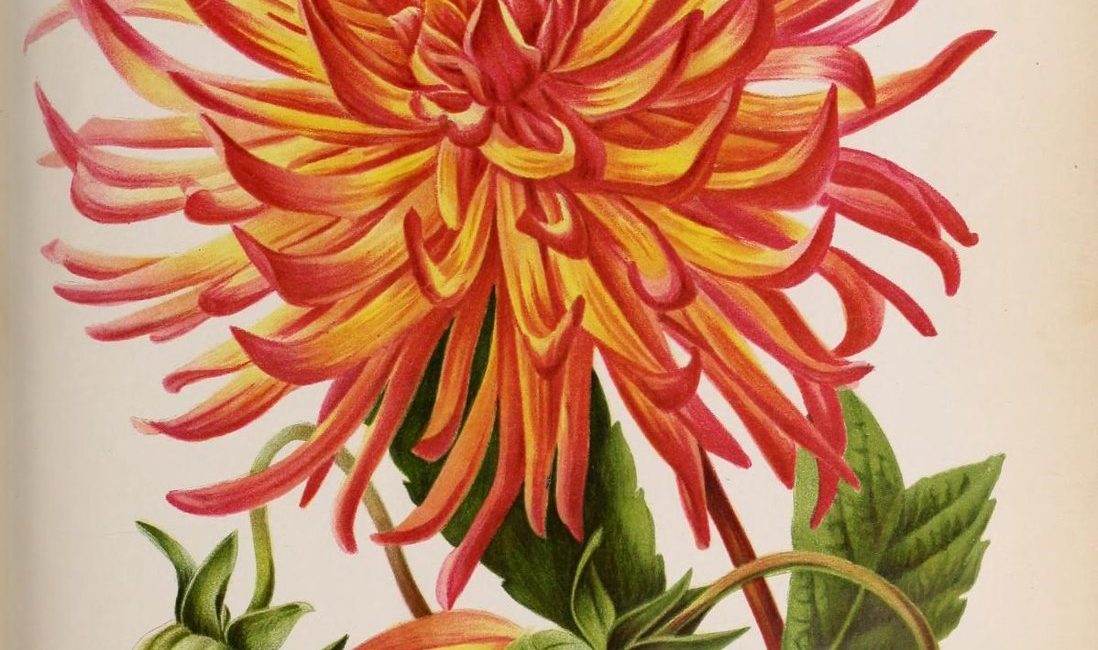
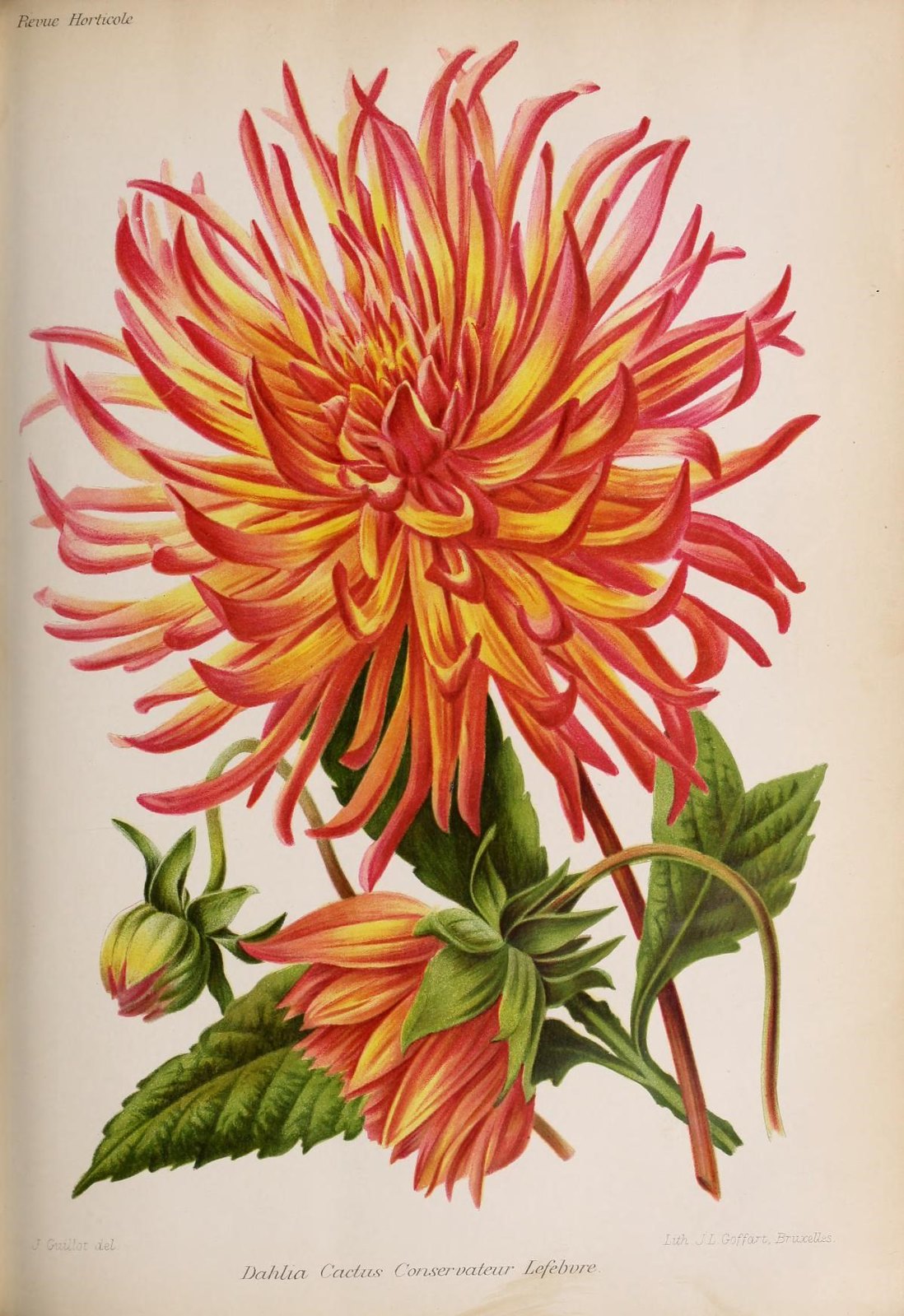
Illustration of a Cactus Dahlia from Revue horticole (1908). Contributed in BHL from the New York Botanical Garden, LuEsther T. Mertz Library. This image is one of over 160,000 that are freely available for download and reuse through the BHL Flickr.

BHL’s digital library provides free and open online access to over 250,000 volumes from the 15th-21st centuries on a wide range of biodiversity subjects. These collections offer great resources to support distance learning.

All of our content can be accessed online for free and in full through our digital library portal at biodiversitylibrary.org. No login, account, or membership is required. You can also freely download anything in our library in a variety of formats. Our FAQ provides information on how to search the library and download content.

In addition to our general collections, we’ve identified a selection of materials that may be of particular interest to educators and students. Explore these resources below.

Thematic Collections

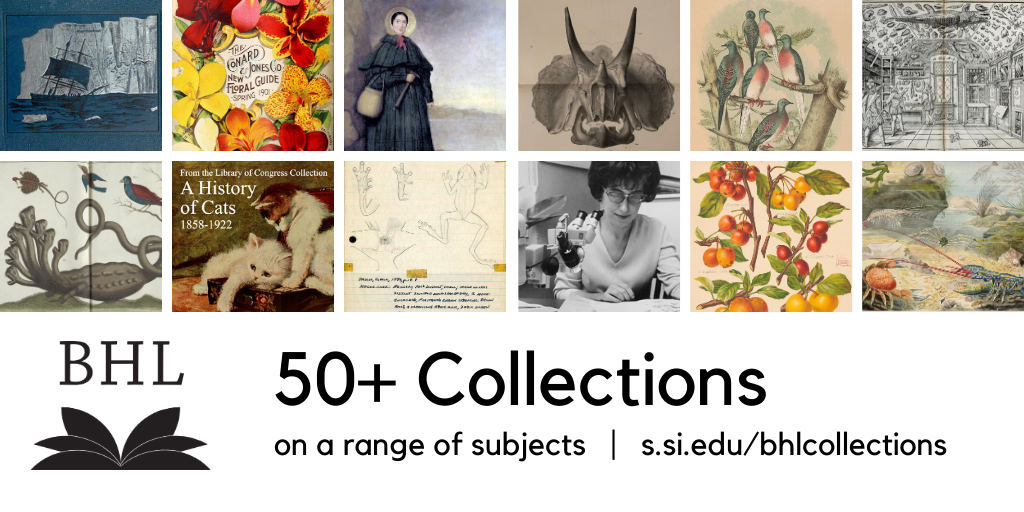
Looking for curated content? Our Collections offer a pre-selected set of materials on a variety of subjects, from Antarctic Exploration & Discovery to Seed & Nursery Catalogs and Latino Natural History.

graphic with BHL collections highlighted

Explore over 50 thematic collections on a range of subjects.

Image Resources

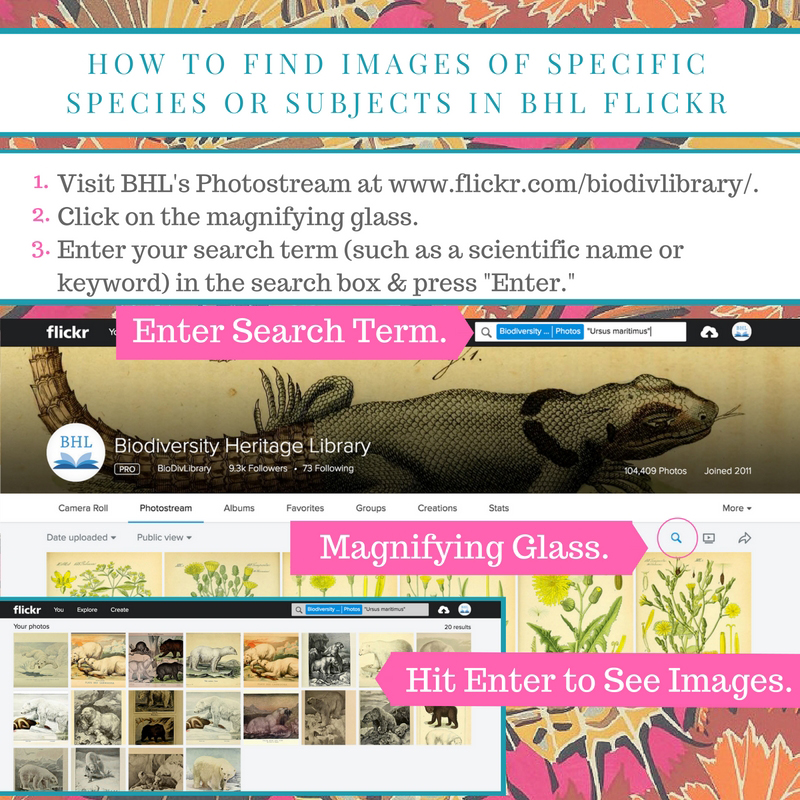
If you need image resources for your distance learning activities, we have a rich collection of over 160,000 free nature images in our Flickr. Here’s how to search and download those collections.

Instructions on how to find images in the BHL Flickr

Instructions on how to search for specific subjects and species in the BHL Flickr.

Looking for an educational activity to do online around nature art? Tagging images in the BHL Flickr with species and artist names is a great option. It’s not only a fun way to learn about taxonomy, investigate individual species, and explore artists and artistic practices, but it also makes these images more accessible and discoverable for others to support their research and educational activities.

Learn more about tagging and get started with our instructional guide.

Coloring Books

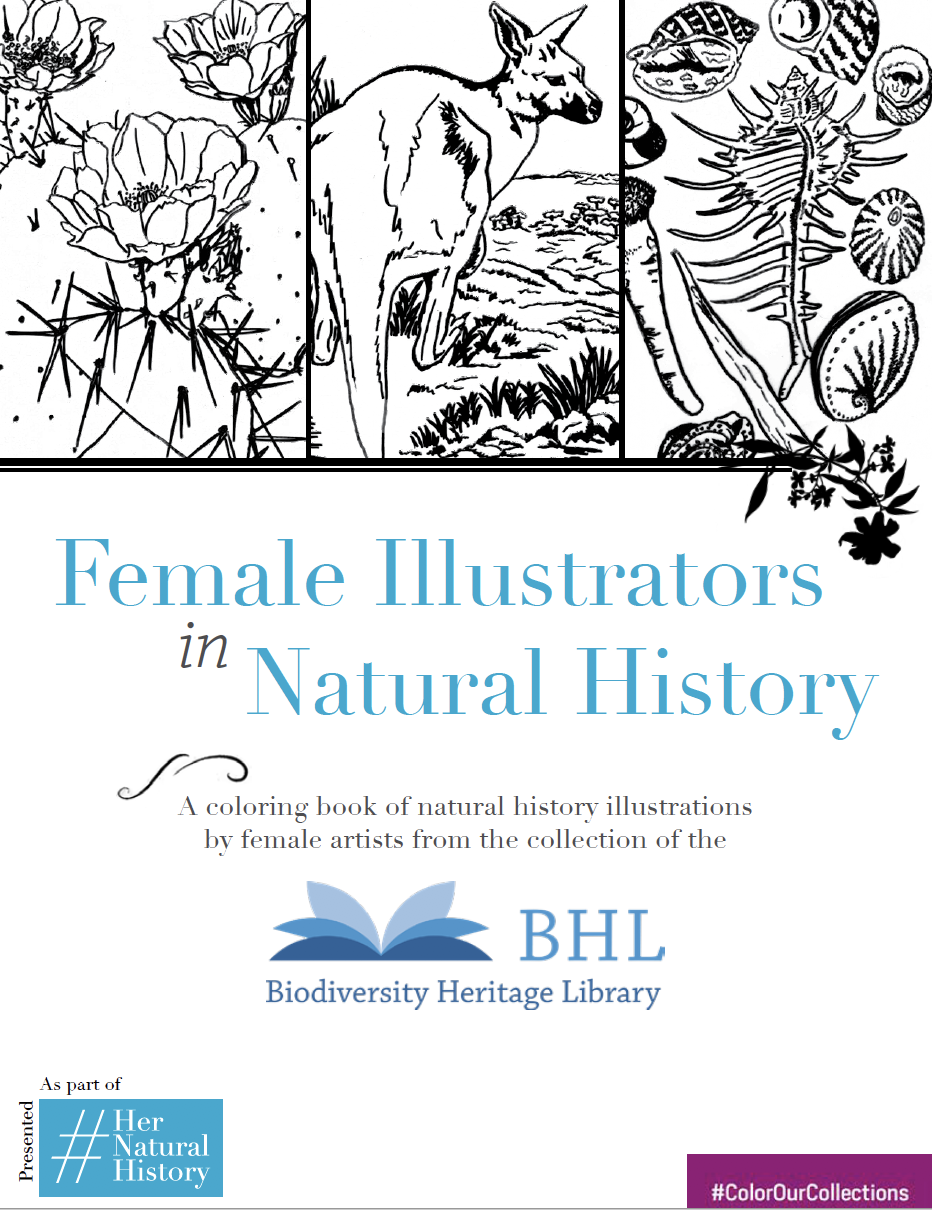
Looking for more hands-on educational resources? Explore and download our free coloring books created from images in our collection.

cover of the female illustrators in natural history coloring book

Our “Female Illustrators in Natural History” coloring book is one of several freely available from BHL. Explore and download our coloring books.

Women’s History Month Educational Resources

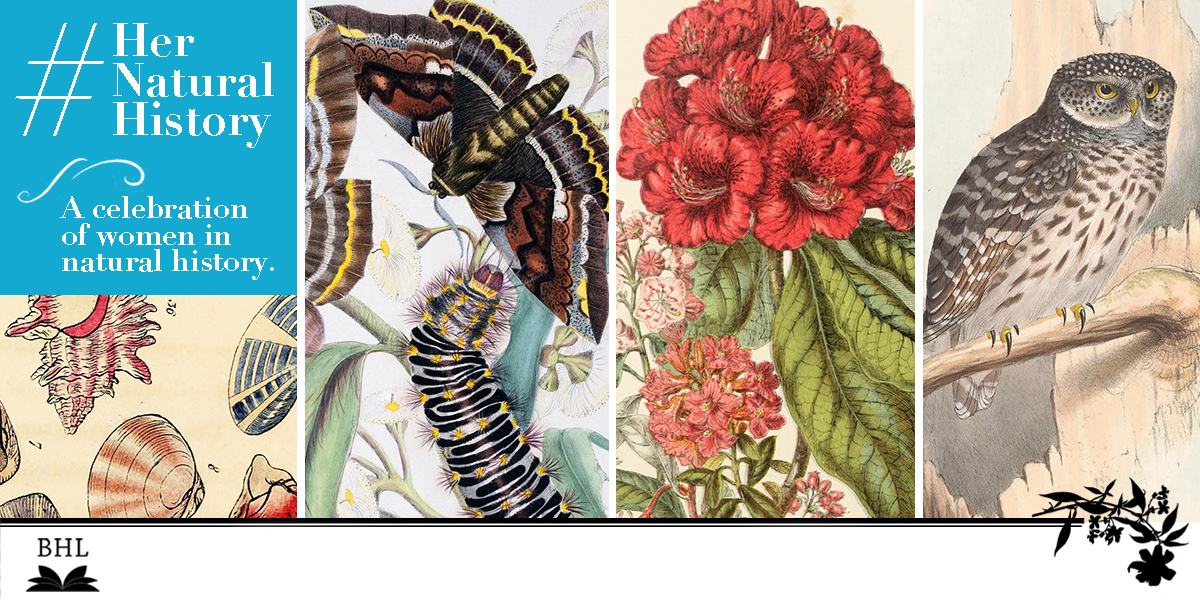
Looking for resources to support educational activities around Women’s History Month? Our #HerNaturalHistory collections offer a range of content related to women’s contributions to natural history. Explore our book and image collections, coloring book, Facebook videos, and blog series.

Her Natural History graphic

Our Her Natural History collections on women in science include book and image collections, a coloring book, Facebook videos, and informative articles.

March 17, 2020by michelle.underhill
BHL News, Blog Reel, Tech Updates

BHL Journal Articles Are Now Discoverable via Unpaywall

Earlier this week, Rod Page and I received an email from Richard Orr, the Lead Developer at Unpaywall, telling us that he had created a work-around that would finally enable the Unpaywall extension to discover content in BHL. And I (Nicole) literally spent the rest of the day jumping for joy. 

Let us explain: 

Firstly, what’s a DOI?

DOIs (Digital Object Identifiers) are used throughout the scholarly research community to uniquely identify academic articles. They help readers locate the definitive version of a published article, and they make linking together the academic literature much easier – look at any recent paper and you’ll see that most of the references cited have DOIs.

DOIs do two things: 1) they uniquely identify an article, and 2) they point to the online location of the definitive version of that article (typically hosted by the article’s publisher). 

Many articles are not free to read: a significant proportion of both recently-published and historic articles are locked behind paywalls. However, with the rise of open access, it’s increasingly the case that there may be a free version of an article available somewhere online. BHL, for example, has scanned and made available tens of thousands of articles that also exist on commercial publishers’ websites. DOIs always direct users to the definitive version of an article. But if the definitive version is behind a paywall (as they so often are), how do we tell users that BHL has a free version available? Enter Unpaywall.

What’s Unpaywall?

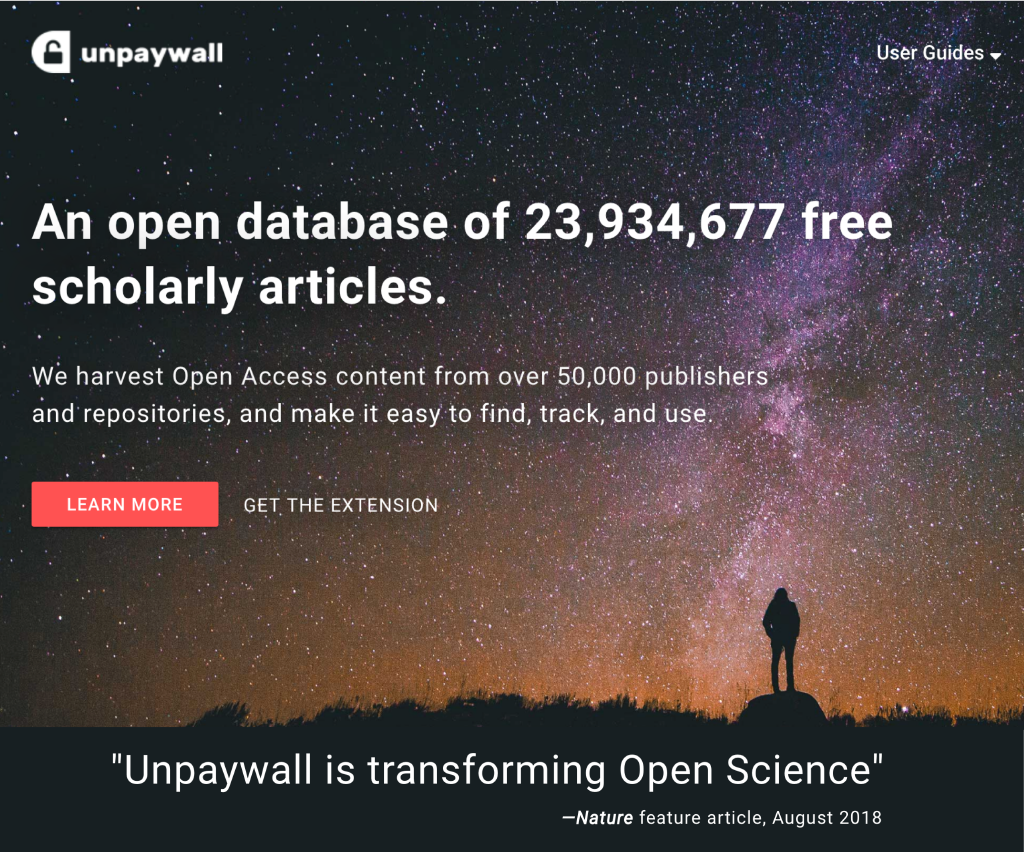
Unpaywall finds (legally) open access versions of paywalled literature. Since its launch in 2016, Unpaywall has become an indispensable tool for scientists  (see “How Unpaywall is transforming open science”). Unpaywall’s free browser extension (downloadable via their website) displays a discrete padlock symbol on the side of your browser whenever you are on a paywalled paper. If Unpaywall is able to locate a freely-accessible copy of the article elsewhere, the padlock symbol appears green and clicking on it will take you directly to the open access version. To discover whether an article is free, Unpaywall scans a database of millions of articles compiled from over 50,000 sources. Until this week, BHL wasn’t one of them. 

Screenshot of Unpaywall homepage

Why couldn’t Unpaywall link to BHL?

BHL contains hundreds of thousands of journal articles. More than a quarter of a million of these articles have been indexed (the vast majority by Rod Page via Biostor), which means that they now have article-level landing pages containing their article-level metadata. Tens of thousands of these article landing pages now have DOIs. This should have made them discoverable, but Unpaywall still couldn’t find them. 

In June, we contacted Unpaywall to find out why. It turns out that the reason BHL content has never been picked up by Unpaywall is because of the way BHL uploads and presents its journal content. Most providers of online journals present each article neatly packaged as an individual PDF. BHL, however, is first and foremost a virtual library. We upload complete volumes of journals made up of individual page images. Our article landing pages don’t link to PDFs; they link to the page in the volume upon which the article starts. Unpaywall looks for a PDF link to confirm that the document is actually available. Thus, the 57 million pages of open access content on BHL was excluded from Unpaywall’s database.  

After we explained to Unpaywall how significant BHL’s content was, Richard Orr, Unpaywall’s Lead Developer, very kindly agreed to create a work-around, specifically for BHL, that would enable Unpaywall to link to BHL article landing pages. The result of this work-around is that (as of this week) 43,000 journal articles on the BHL website are now discoverable via Unpaywall. 

To demonstrate how useful this is, here are two examples:

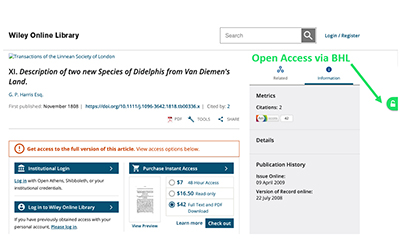
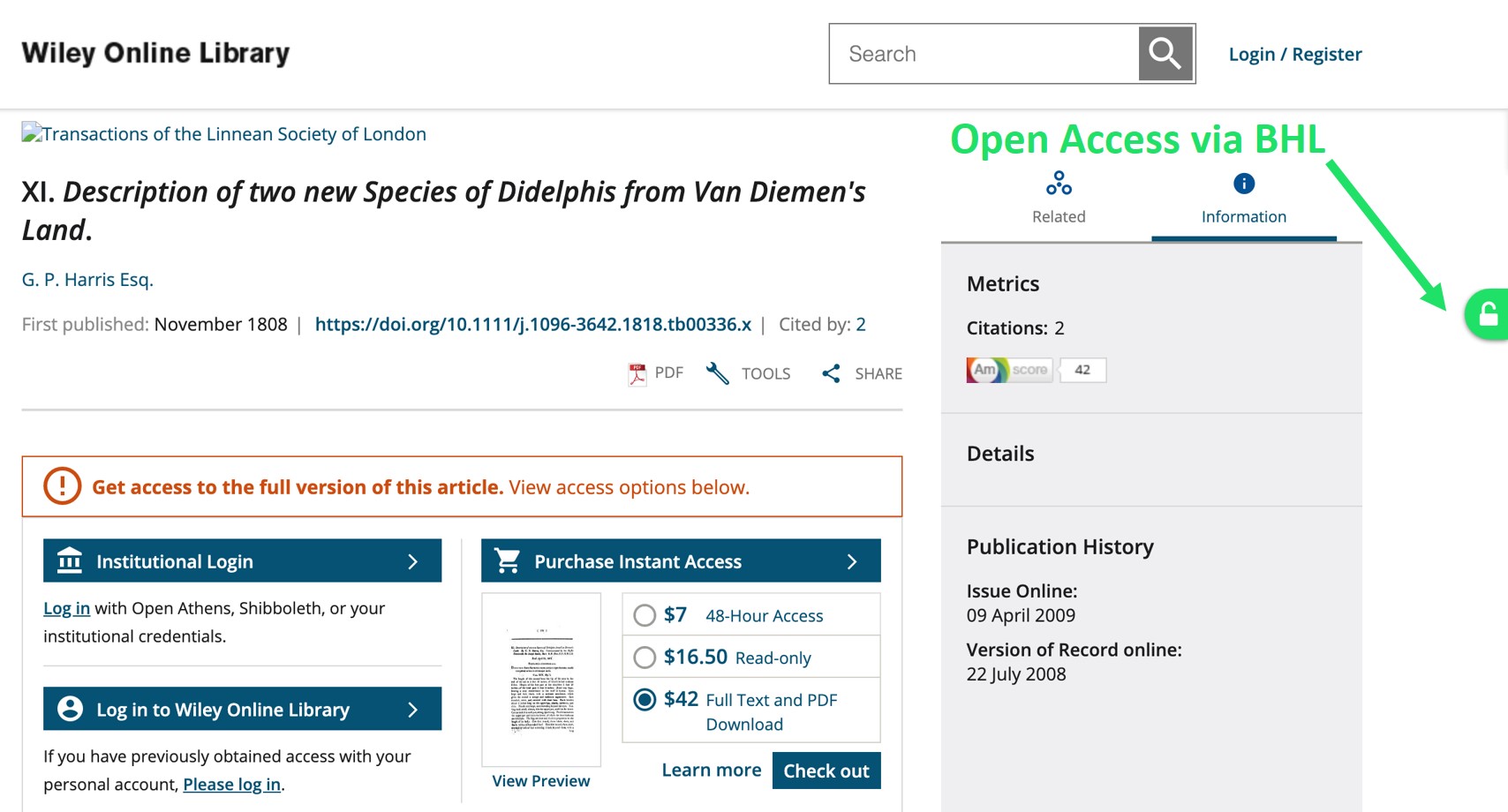
The first description of the iconic (sadly now-extinct) Thylacine (or Tasmanian Tiger) was published in the Transactions of the Linnean Society of London in 1808. This article is well and truly out of copyright and yet the definitive version of this article is behind a paywall on the Wiley Online website: https://doi.org/10.1111/j.1096-3642.1818.tb00336.x. Downloading the PDF of this out-of-copyright article from the Wiley website will cost you $42 USD.

Screenshot of an article landing page on Wiley Online

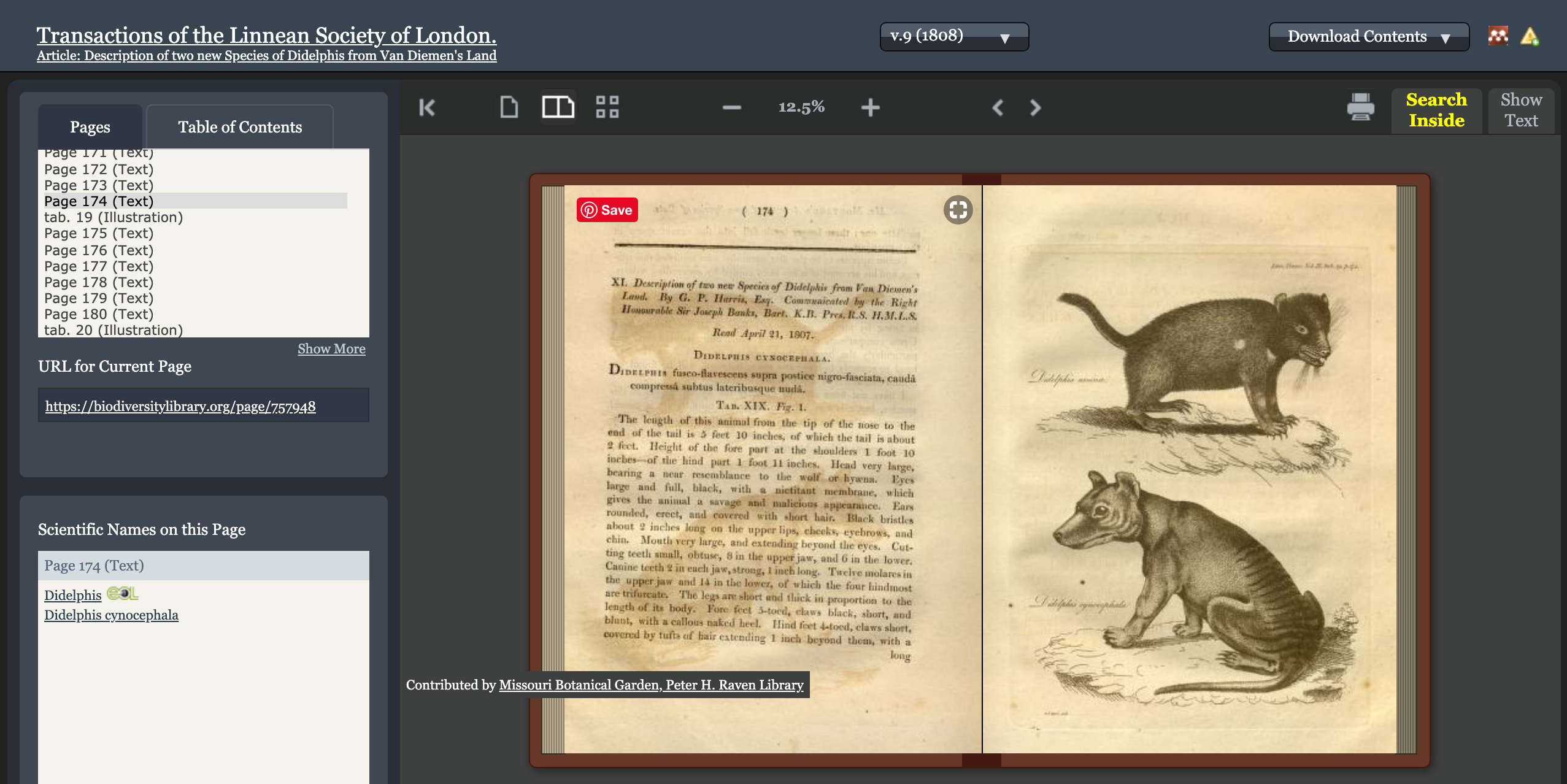
The definitive DOI version of this article is behind a paywall on the Wiley Online website, but it is freely available on the BHL website. With the Unpaywall extension, you can now easily navigate to the free version on BHL.

Now that BHL’s content is discoverable via Unpaywall, anyone directed to the Wiley version via the article’s DOI can discover the free version on BHL (via the Unpaywall extension).

Screenshot of an article in BHL

Article freely available via the Biodiversity Heritage Library.

It’s important to note that making BHL discoverable via Unpaywall doesn’t just enhance access to legacy literature such as the Thylacine paper; it also applies to much more recent research. For example, “The generic relationships of the new endemic Australian ant spider genus Notasteron (Araneae, Zodariidae)” was published in The Journal of Arachnology in 2005. This article has the DOI (https://doi.org/10.1636/04-56.1) and is behind a paywall on BioOne. With Unpaywall’s extension in your browser you can now discover the free version hosted by BHL.

How to make even more BHL content discoverable via Unpaywall

43,000 may seem like a large number, but it’s actually only a tiny fraction of the articles freely available on BHL. For the Unpaywall extension to be able to locate all the journal content on BHL, we need to unlock the rest of the journal articles on BHL by 1) adding more article-level metadata, and 2) ensuring that, for every article on BHL that has an existing DOI, we include that DOI in the article-level metadata. That’s our next task…

We would like to thank Unpaywall for providing access to an ever-increasing number of open access scholarly articles (23,943,966 at 14/8/19) and to particularly thank their Lead Developer, Richard Orr, for making it possible for BHL (a square peg) to fit into their open database (a round hole).  

August 16, 2019by Joel Richard
Blog Reel, Featured Books

BHL Gains Works on the Diverse Plant Genus ‘Hoya’

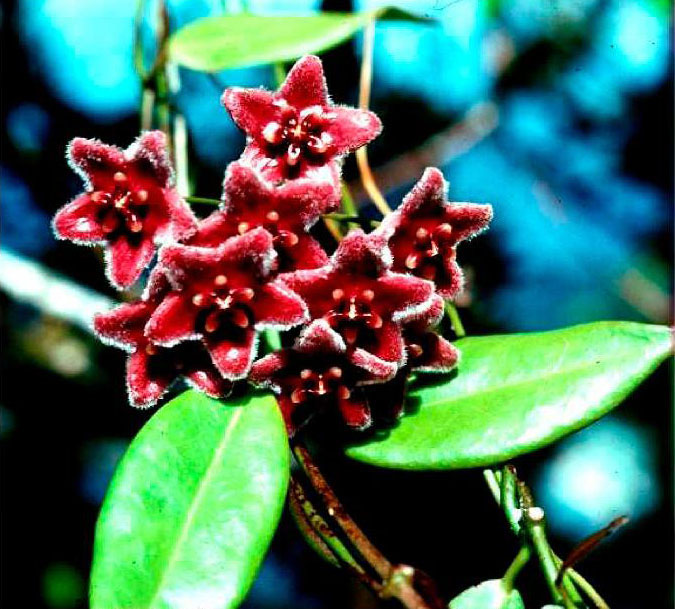
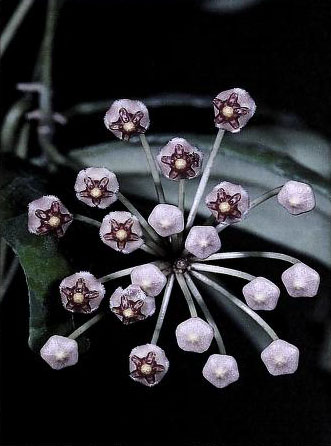
Hoya fetuana on cover of Hoya New, v.6: issue 4, 2017. Photo by Robert Dale Kloppenburg. http://s.si.edu/2BuX7ll.

Robert Dale Kloppenburg is definitely a dedicated botanist. As of January 2018 – when he celebrated his 97th birthday – he has named 234 plant species, mainly in the flowering genus Hoya, which has been his focus for close to forty years since his retirement.

Kloppenburg and the International Hoya Association, of which he is president, have made some generous contributions to the Biodiversity Heritage Library, with funding of the Expanding Access to Biodiversity Literature project. Currently available on BHL are:

  • Fraterna : Official Bulletin for International Hoya Association (1991-2006): Contributed by International Hoya Association and digitized by Harvard University Botany Libraries and The New York Botanical Garden, LuEsther T. Mertz Library.
  • Hoya New (2013-2017): Published and contributed by Robert Dale Kloppenburg.

Fraterna provides a wealth of information on Hoya species and hybrids, for botanists and horticulturalists, as well as the association’s news updates.

Hoya New presents new species descriptions with photos and identification keys.

Also currently available on BHL are Kloppenburg’s titles:

  • Ganges Hoya (2008)
  • Malaysian Hoya Species : A Monograph (2004)
  • Samoan Hoya Species : Preliminary Presentation (2014)
Hoya andalensis on cover of Fraterna v.18: no. 1, 2005. Photo by Kim F. Yap. Contributed by International Hoya Association and digitized by The New York Botanical Garden. http://s.si.edu/2EoGlH0.

The International Hoya Association originated in 1988 as a USA west coast interest group which published a newsletter, first bi-monthly and then quarterly. By the end of their second year, international interest had allowed the group to expand to a non-profit with global membership. An affiliated group, ‘Svenska Hoya Sõllskapet’ based in Borlõnge, Sweden, also publishes a quarterly magazine about hoyas.

What are these plants? The association’s website describes the diverse genus:

“The genus Hoya is found in South East Asia through Australia. They are adaptable plants found everywhere from true rain forests through the slopes of the Himalayas, from semi-arid niches in Australia to damp forests. They range from vines, the most common form, to shrub-like growth. Most are epiphytic [growing on other plants]. Hoyas are in the family commonly known as milkweeds.”

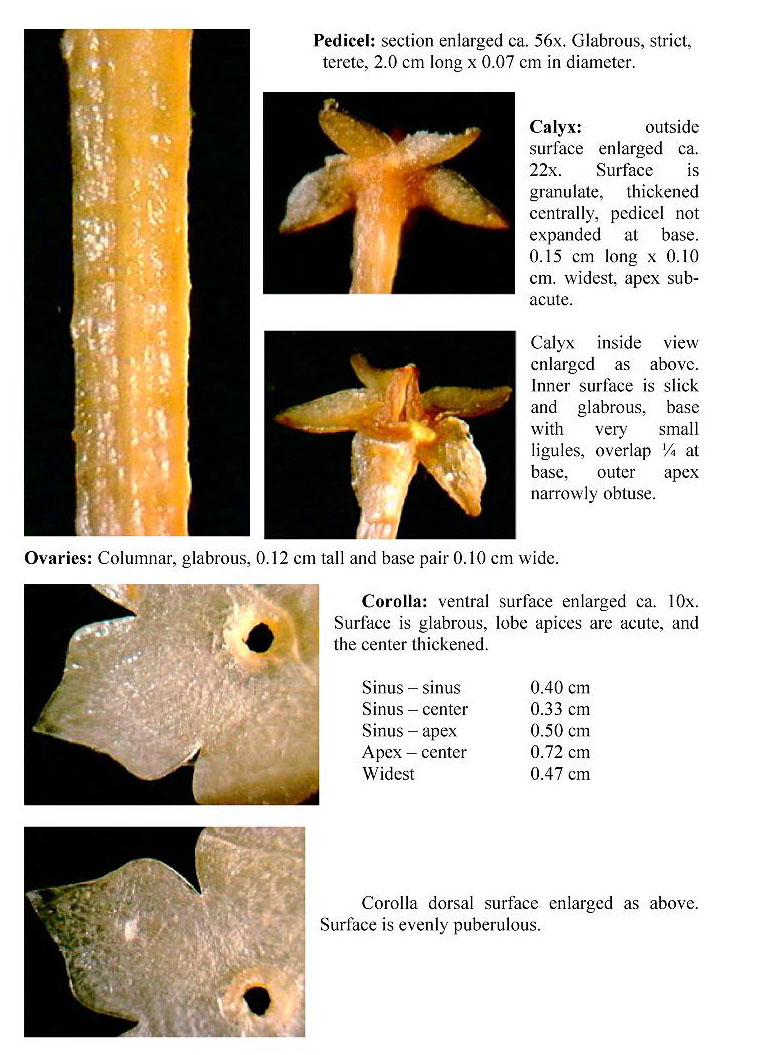
Parts of Hoya bebsguevarre described in Hoya New, v.1: no.4, 2013. http://s.si.edu/2EotCQx.

“What interests me most about hoyas is the vast diversity, the genetic differences and their possible evolutionary significance,” Kloppenburg shared in an interview in Fraterna. “I am of the opinion that we have collected and identified less than 1% of the wild hoya species.”

As an opening message for Hoya New, Kloppenburg explains how the work of horticultural professionals and hobbyists can contribute to the conservation of biodiversity:

“When a species is collected from the wild, I feel it is wise to identify it, propagate it, and name it. In this way it will eventually get into the commercial channels, be distributed to all those interested in the genus and thus be preserved. If in the future the species is lost through natural causes or forest destruction it will still be here on earth in your collection.”

Kloppenburg began studying the genus Hoya in the Philippines in 1981. He had graduated from the University of California, Berkeley, shortly after WWII and worked as a plant breeder research agronomist. Since his retirement in 1986, he has continued to study hoyas, traveling extensively in the South Pacific. His data has been donated to UC Berkeley. In 2016, he reached out to Smithsonian Libraries to offer publications, and agreed to contribute the material to Biodiversity Heritage Library. His assistant, Karen Case, assisted with the permissions process.

“It has been a most exciting journey to be hosted with such a prestigious organization as the Biodiversity Heritage Library, for which I will be eternally grateful,” Kloppenburg says. “I hope my work will help others to become interested in hoyas, and that they will carry on the discovery of new species in the future.”

Meanwhile, he’s still studying plants in the genera Hoya, Dischidia and Eriostemma. “I no longer travel, so I depend on others, mainly in the Philippines, to send me material,” he says.

Many thanks to the International Hoya Association and to Robert ‘Dale’ Kloppenburg for their commitment to sharing biodiversity research, and to Karen Case for helping to facilitate the process.

Sources:

  • International Hoya Association website: http://www.international-hoya.org/aboutus.asp
  • Robert Dale Kloppenburg’s website: http://hoyardk.wixsite.com/kloppenburg
February 15, 2018by ulib-libraryjobs
BHL News, Blog Reel, Featured Books

44 New In-Copyright Titles Coming to BHL!

During the final quarter of 2017 (October to December), BHL received permission for 44 new in-copyright titles, many as part of the Expanding Access to Biodiversity Literature project.
BHL licenses content under a Creative Commons Attribution-NonCommercial-ShareAlike 4.0 license.

Below are the titles added in the fourth quarter, in the order permission was secured. As of the writing of this post, only one has been uploaded; the link is provided. Look for the rest as they’re added to the collection; you can check the recent additions, or see all the permission titles available in BHL on the permissions page.

South African National Biodiversity Institute

  • Fauna and Flora of Transvaal
  • Kirstenbosch Gardening Series
  • Onze Tuinen

Nebraska Ornithologists’ Union

  • Nebraska Bird Review

Delaware Center for the Inland Bays

  • Annual Reports
  • CCMP Addendum
  • Comprehensive Conservation and Management Plan (CCMP)
  • Inland Bays Journal
  • Scientific Publications & Reports
  • State of the Bays
  • Three Year Strategic Plan (April 2015-April 2018)

Texas Academy of Science

  • Transactions of the Texas Academy of Science (Digitized by Smithsonian Libraries)
  • Proceedings and Transactions of the Texas Academy of Science
  • Texas Journal of Science

Native Plant Society of Oregon

  • Bulletin of the Native Plant Society of Oregon
  • Kalmiopsis
  • NPSO Occasional Papers

American Iris Society

  • Irises (Bulletin of the American Iris Society)

Museo de Historia Natural de Valparaíso

  • Anales del Museo de Historia Natural de Valparaíso

KU Biodiversity Institute

  • A Checklist of Linneana, 1735-1835 : in the University of Kansas Libraries

Missouri Native Plant Society

  • Missouriensis

Southern California Association of Marine Invertebrate Taxonomists

  • SCAMIT Newsletter
[IOU Congress XVII] Deutsche Ornithologen-Gesellschaft

  • Acta XVII Congressus Internationalis Ornithologici

North American Mycological Association

  • The Mycophile
  • McIlvainea

Botanical Society of Britain and Ireland

  • BSBI Conference Reports

Virginia Academy of Science

  • Virginia Journal of Science, including Proceedings and Supplements

Societa dei Naturalisti in Napoli

  • Bollettino della Societa dei Naturalisti in Napoli
[IOU Congress XVIII] A.N. Severtzov Institute of Ecology & Evolution

  • Acta XVIII Congressus Internationalis Ornithologici, Moscow.

The Northern Territory Field Naturalists’ Club

  • The Northern Territory Naturalist

The Museum & Art Gallery of the Northern Territory

  • The Beagle, Records of the Museums and Art Galleries of the Northern Territory
  • The Beagle, Records of the Museums and Art Galleries of the Northern Territory, Supplementary Series
  • Technical Reports of the Museums and Art Galleries of the Northern Territory
  • Northern Territory Museum of Arts and Sciences Monograph Series

Nova Scotia Institute of Science

  • Proceedings of the Nova Scotia Institute of Science

Michigan Botanical Club

  • The Michigan Botanist
  • The Great Lakes Botanist

Yale Peabody Museum of Natural History

  • Field Notebooks: Leo Hickey (1940-2013)
  • Field Notebooks: Karl Waage (1915-1999)

Entomological Society of Latvia

  • Biodiversity, biogeography and nature conservation in Wallacea and New Guinea

Virginia Natural History Society

  • Banisteria

Southern Appalachian Botanical Society

  • Castanea
  • Castanea: Occasional Papers

The Arnold Arboretum of Harvard University

  • Contributions of the Arnold Arboretum of Harvard University

BHL thanks the many individuals and organizations who have so generously allowed their publications to be digitized and made available to the world under open access. If there’s a book or journal you would like to see in BHL, please let us know!

And as always, don’t forget to follow BHL on Facebook, Twitter (@BioDivLibrary), Instagram, Flickr, and Pinterest.

January 30, 2018by ulib-libraryjobs
BHL News, Blog Reel, User Stories

Rod Page Talks Bioinformatics, Linked Data, and Primary Literature at the Smithsonian

Portrait version of the Biodiversity Heritage Library logo.

On 22 September, Dr. Rod Page, Professor at the University of Glasgow and creator of BioStor, gave a presentation at the Smithsonian’s National Museum of Natural History Library about ideas for extracting and linking data across biodiversity repositories and primary literature.

The talk, entitled “The Sam Adams Talk,” covered topics including phylogenetics, geophylogeny visualizations, linking article and specimen data across repositories, annotations, the biodiversity knowledge graph, and data as source code. A lively Q&A; session between Rod and the audience followed the presentation.

You can view a recording of the presentation on YouTube.

Rod’s talk at the Smithsonian followed the Scientific Collections International Food Security Symposium at the National Agricultural Library, 19-21 September. At the invitation of BHL, Rod gave a presentation at the symposium about using publication data to support food security research. You can view Rod’s Food Security Symposium presentation, entitled “Unknown Knowns, Long Tails, and Long Data“, on his Slideshare.

Visit Rod’s blog iPhylo and follow him on Twitter at @rdmpage to see more of his thoughts on bioinformatics, linked data, and primary literature.

September 29, 2016by ulib-libraryjobs
Page 1 of 212»

Help Support BHL

BHL's existence depends on the financial support of its patrons. Help us keep this free resource alive!

search

About BHL

The Biodiversity Heritage Library (BHL) is the world’s largest open access digital library for biodiversity literature and archives. BHL operates as a worldwide consortium of natural history, botanical, research, and national libraries working together to digitize the natural history literature held in their collections and make it freely available for open access as part of a global “biodiversity community.”

Join Our Mailing List

Sign up to receive the latest news, content highlights, and promotions.

Subscribe Now

Subscribe to Blog via Email

Enter your email address to subscribe to this blog and receive notifications of new posts by email.

Join 319 other subscribers

Subscribe to Blog Via RSS

Subscribe to the blog RSS feed to stay up-to-date on all the latest BHL posts.

Access RSS Feed

Inspiring Discovery through Free Access to Biodiversity Knowledge.

The Biodiversity Heritage Library makes it easier than ever for you to access the information you need to study and explore life on Earth…for free, anytime, anywhere.


64+ Million Pages of
Biodiversity Literature Online.

EXPLORE

Tools and Services
to Transform Research.

EXPLORE

300,000+
Illustrations on Flickr.

EXPLORE

ABOUT | HARMFUL CONTENT | PRIVACY | SITE MAP | TERMS OF USE