

Once an amazing diversity of birds–some in breathtaking abundance–inhabited the vast forests and plains of North America. But starting around 1600, some species began to disappear, as humans altered habitats, over-hunted, and introduced predators.
A notable extinction occurred 100 years ago, with the death of Martha the Passenger Pigeon, the last member of a species that once filled America’s skies. The story of the last Passenger Pigeon and the disappearance of the Great Auk, Carolina Parakeet, and Heath Hen reveal the fragile connections between species and their environment.
To help tell their story, the Smithsonian Libraries, the Biodiversity Heritage Library, and the National Museum of Natural History have curated a joint exhibit entitled Once There Were Billions: Vanished Birds of North America that will open June 24 in the National Museum of Natural History in Washington D.C. Over the next several weeks, we’ll be highlighting each of the four birds with content from the exhibit and illustrations found in BHL.
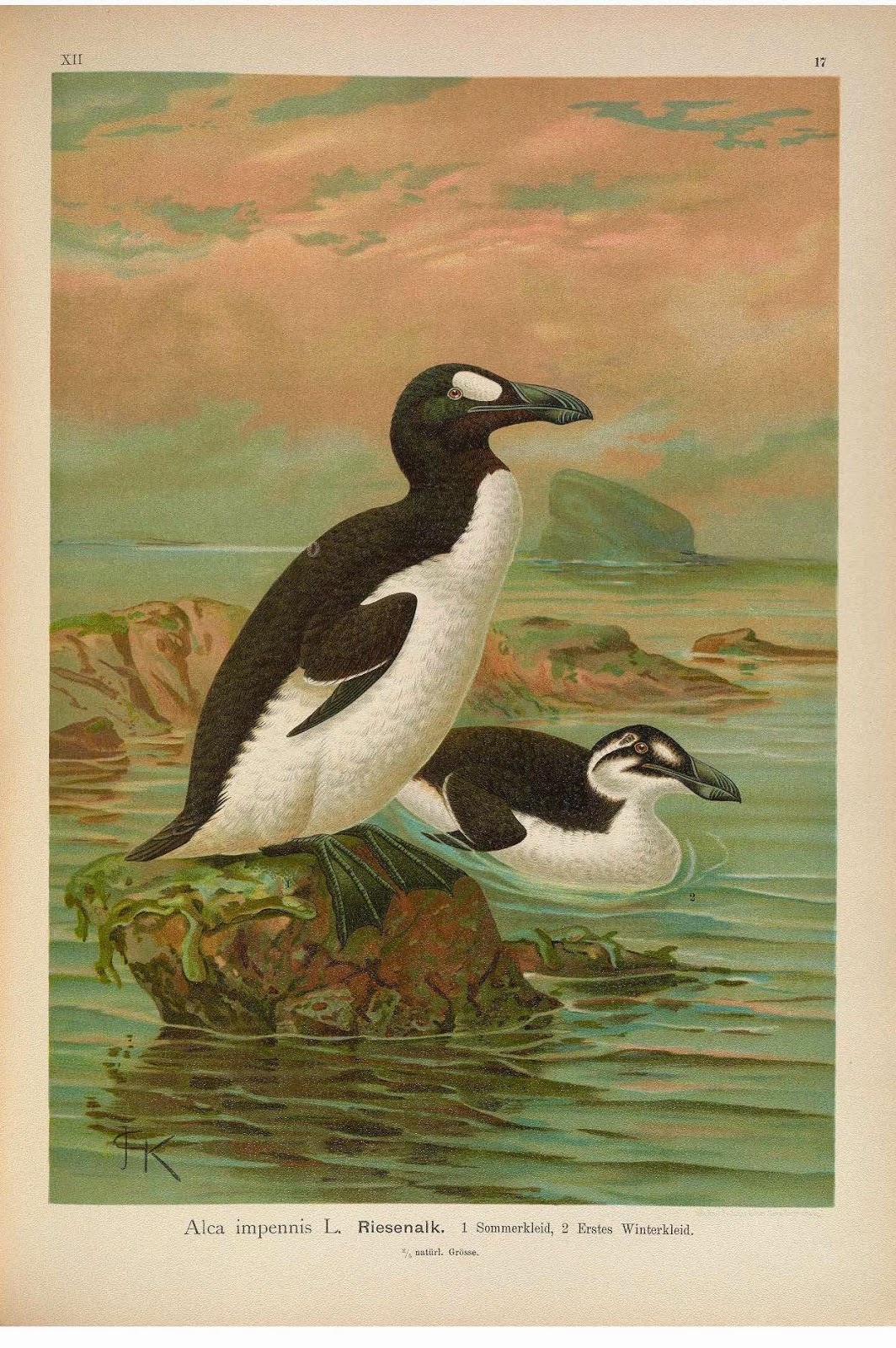 |
| Naturgeschichte der Vögel Mitteleuropas [Natural history of birds of Central Europe] Johann Andreas Naumann et al. Gera-Untermhaus, Germany: F.E. Köhler, 1897–1905 http://biodiversitylibrary.org/item/108804#page/219/mode/1up |
Great Auk: Flightless, Social … and Doomed
The Great Auk (Pinguinus impennis) once lived in large, dense colonies along North Atlantic shores. Clumsy and flightless on land, they were perfectly adapted to “fly” underwater, with their small wings and streamlined bodies.
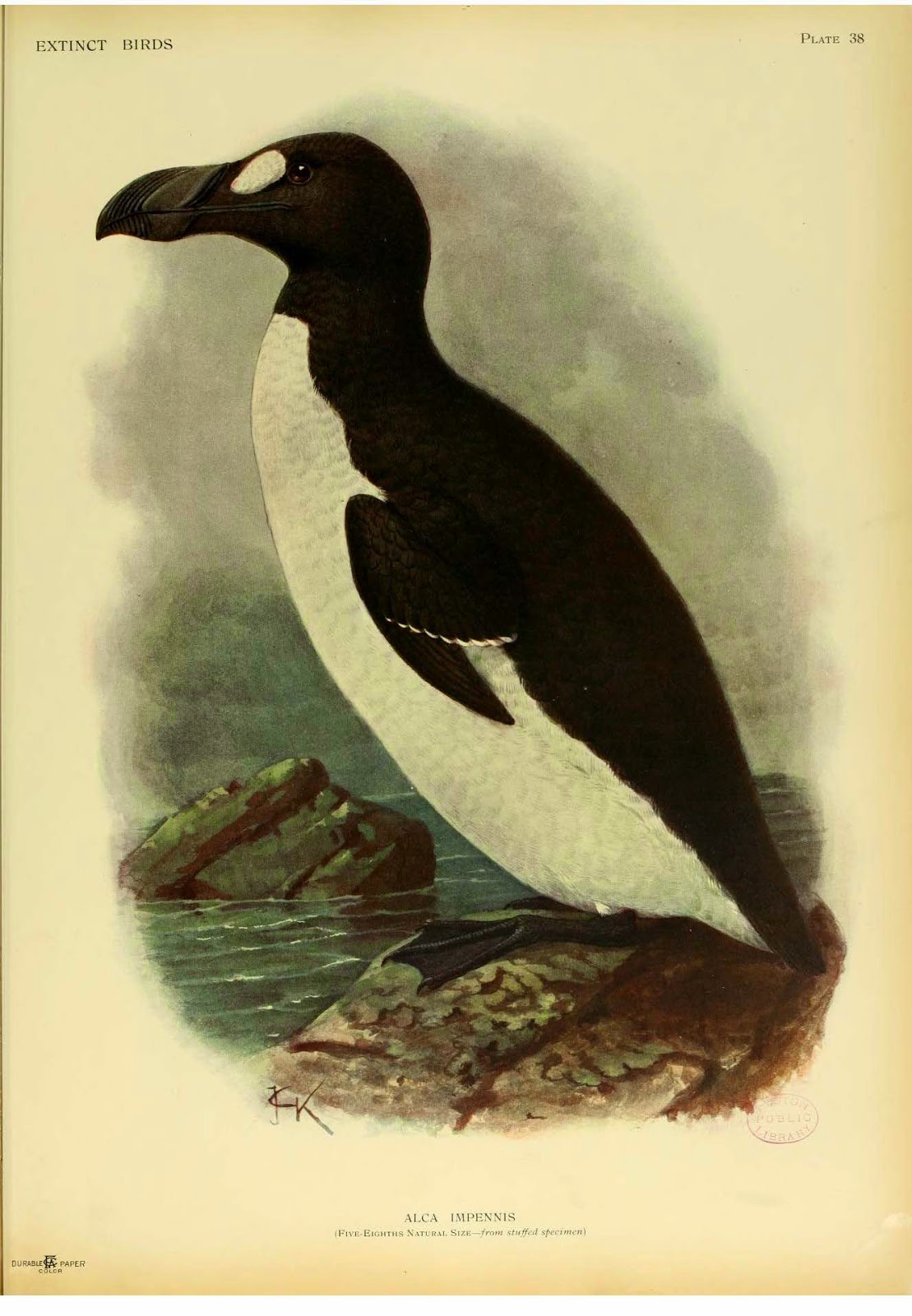 |
| Extinct Birds. Walter Rothschild London: Hutchinson, 1907 Plate 38, Alca impennishttp://biodiversitylibrary.org/ page/38665797#page/367/mode/1up |
The caption for this image of the Great Auk gives its old scientific name, Alca impennis. Now termed Pinguinus impennis, the auk may look penguin-like, but it is related to the puffin. Great Auks mated for life nesting in crowded colonies on rocky islands. Females laid one egg per year on bare rock, and both parents took turns incubating the egg.
Unfortunately, they could not flee human predators. Hunters slaughtered Auks by the thousands for meat, eggs, feathers, and oil. Once the bird’s numbers dwindled precipitously, naturalists hurried to add them as specimens to their collections before they disappeared forever. By the mid-1800s the species went extinct–the final result of centuries of human exploitation.
What can be done to prevent future extinctions? One way is to support researchers who seek a better understanding of the biodiversity of this planet.
The Biodiversity Heritage Library (BHL) is a global project that is changing the way research is done, by digitizing and sharing biodiversity literature online. BHL makes more than 43 million pages and nearly 100,000 scientific illustrations–of animals and plants, living and extinct–freely available to scientists and others around the world.
The Great Auk is documented in over 3,000 pages of the literature found in the BHL corpus. BHL relies on donations from individuals to support scanning of the biodiversity literature held in some of the world’s most renowned natural history and botanical libraries. To learn more about how your donation supports the continued growth of BHL, please visit http://archive.constantcontact.com/fs181/1103622715135/archive/1115465985290.html. We hope you’ll consider making a contribution today!
