Biodiversity Heritage Library - Program news and collection highlights from BHL
  • Home
  • News
  • Featured Books
    • All Featured Books
    • Book of the Month Series
    • BHL at 20
  • User Stories
  • Campaigns
    • Fossil Stories
    • Garden Stories
    • Monsters Are Real
    • Page Frights
    • Her Natural History
    • Earth Optimism 2020
  • Tech Blog
  • Visit BHL
Home
News
Featured Books
    All Featured Books
    Book of the Month Series
    BHL at 20
User Stories
Campaigns
    Fossil Stories
    Garden Stories
    Monsters Are Real
    Page Frights
    Her Natural History
    Earth Optimism 2020
Tech Blog
Visit BHL
  • Home
  • News
  • Featured Books
    • All Featured Books
    • Book of the Month Series
    • BHL at 20
  • User Stories
  • Campaigns
    • Fossil Stories
    • Garden Stories
    • Monsters Are Real
    • Page Frights
    • Her Natural History
    • Earth Optimism 2020
  • Tech Blog
  • Visit BHL
Biodiversity Heritage Library - Program news and collection highlights from BHL
Blog Reel, User Stories

Insects in Amber: Empowering Research on Ancient — and Modern — Insects

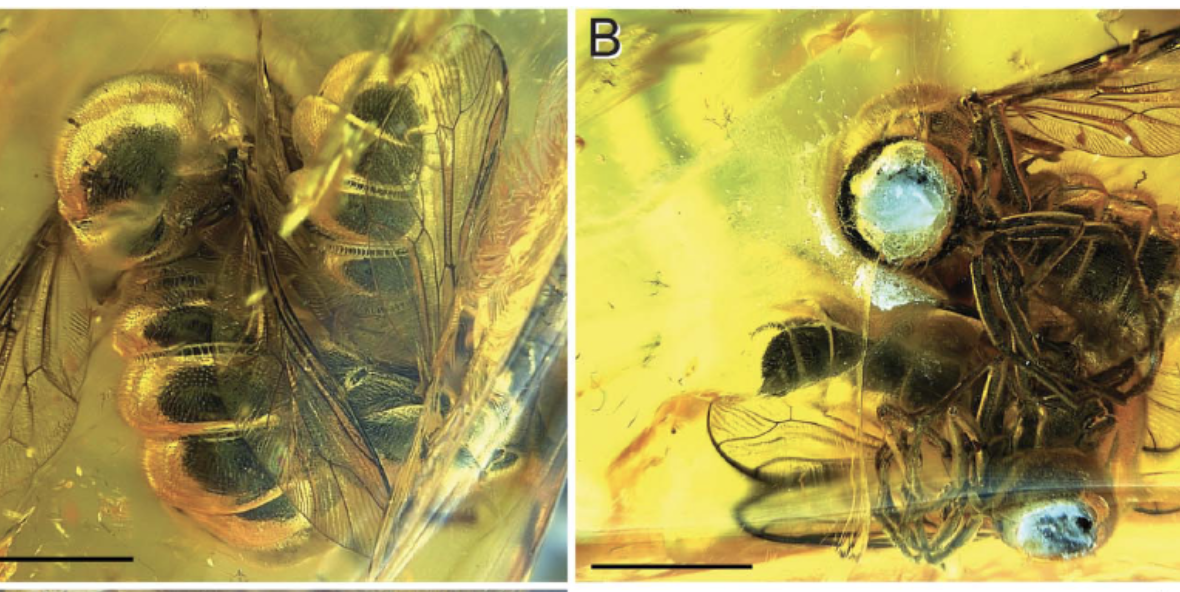
photos of Cyrtinella flavinigra

Insects trapped in amber.

For anyone who has seen Jurassic Park, this description immediately conjures up familiar imagery. In the movie, such a fortuitously-preserved mosquito provided the means to bring dinosaurs back to life. While that may be the realm of science fiction, in the realm of science, such amber time capsules are still a valuable window into the past, allowing scientists today to examine ancient specimens and, sometimes, discover new species.

Take, for example, Cyrtinella flavinigra.
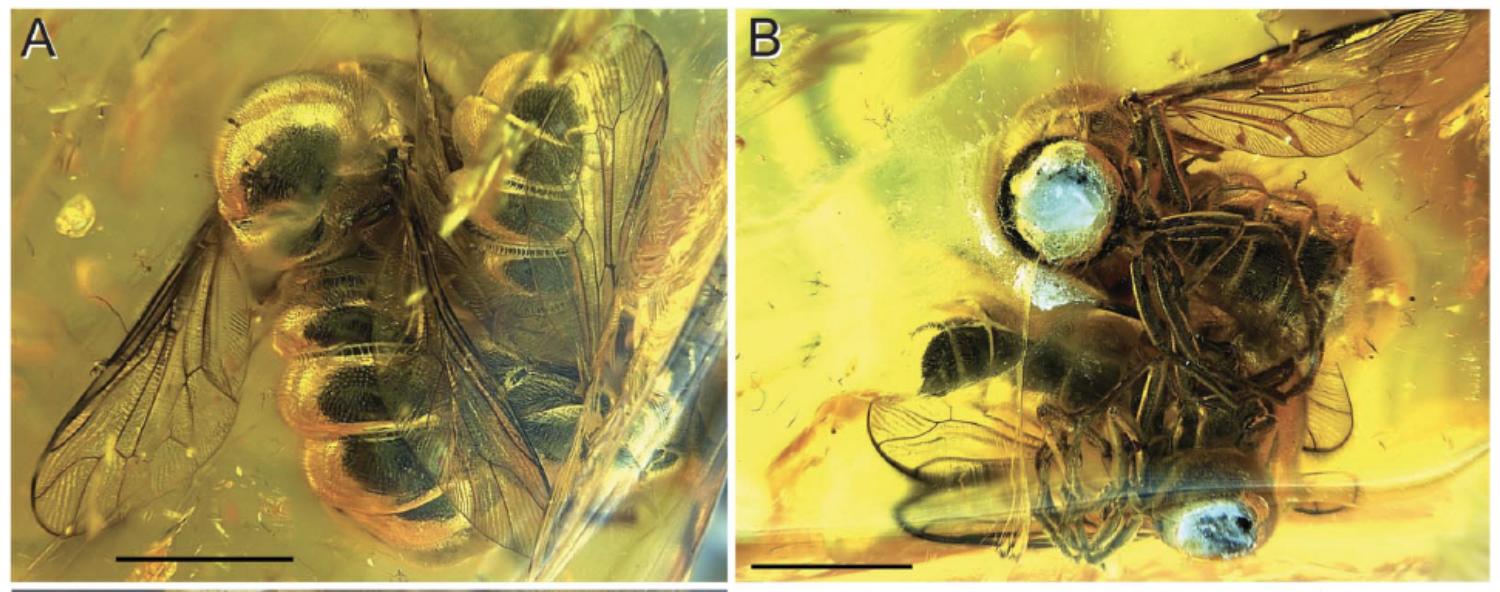
photos of Cyrtinella flavinigra

Cyrtinella flavinigra gen. et sp. nov. A, male (right) and female (left) paratypes (SMF Be 1267a and 1267b), dorsal view, photo: John Martin; B, male (bottom) and female (top) paratypes (SMF Be 1267a and 1267b), ventral view, photo: John Martin. Images from: Jessica P. Gillung & Shaun L. Winterton (2018) A review of fossil spider flies (Diptera: Acroceridae) with descriptions of new genera and species from Baltic Amber, Journal of Systematic Palaeontology, 16:4, 325-350, DOI: 10.1080/14772019.2017.1289566.

This species of spider fly lived during the Eocene Epoch, a major division of the geological timescale that lasted from 56 to 33.9 million years ago. Several specimens of this species were recovered from amber deposits in the Prussian Formation of the Baltic region.

These specimens were used by Drs. Jessica P. Gillung and Shaun L. Winterton to describe a new genus and species with the designation Cyrtinella flavinigra. This was one of three new species described by the duo from specimens preserved in Baltic amber within their review of fossil spider flies (Diptera: Acroceridae) published within the Journal of Systematic Palaeontology in 2017.

Cyrtinella flavinigra is also just one of 30 new insect species described by Gillung, a Postdoctoral Associate at the Danforth Lab at Cornell University. As an evolutionary biologist with a specialization in entomology, Gillung’s research focuses on biodiversity discovery and cataloging and the processes that originate and maintain biodiversity. A major aspect of her work is describing new species.

The Biodiversity Heritage Library (BHL) provides critical resources for this taxonomic work.

“For species discovery and cataloging, I need to be able to track down and understand the species that have already been described,” explains Gillung. “If it wasn’t for BHL, I would not have been able to access many original species descriptions and compare them to the specimens I had at hand. Through those comparisons, mainly, I was able to recognize a new species or identify a previously described one.”
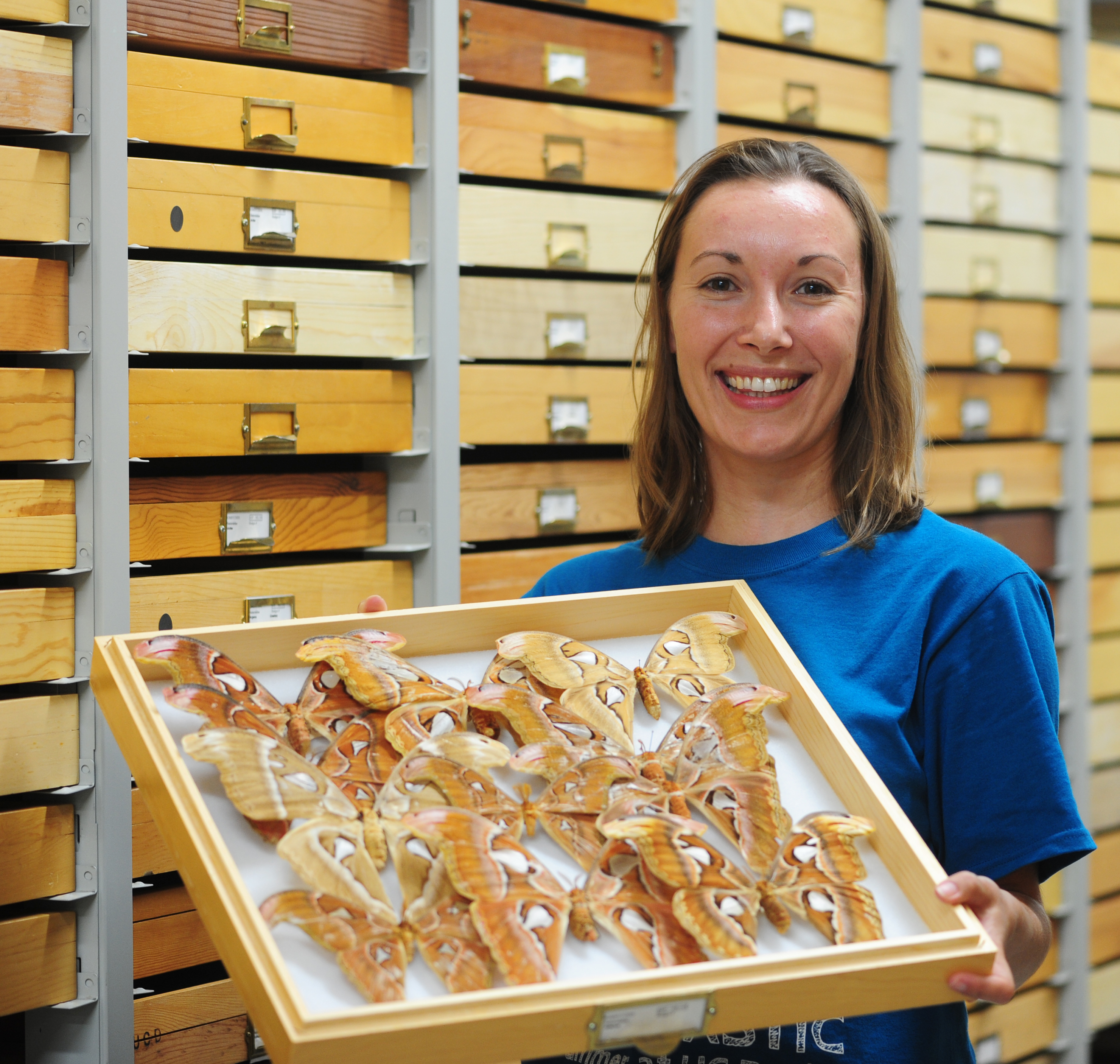
Photo of a woman holding a tray of moths

Jessica Gillung holding Atlas Moths at the Bohart Museum of Entomology. Photo courtesy: Kathy Garvey.

Gillung has been studying evolutionary biology since 2006. As a Master’s student in Brazil, her research focused on the family Acroceridae, or spider flies, which develop almost exclusively as endoparasitoids of spiders, their maggots living within a host spider while feeding on its internal fluids until they metamorphosize into adults, leaving a dead, dry host behind.
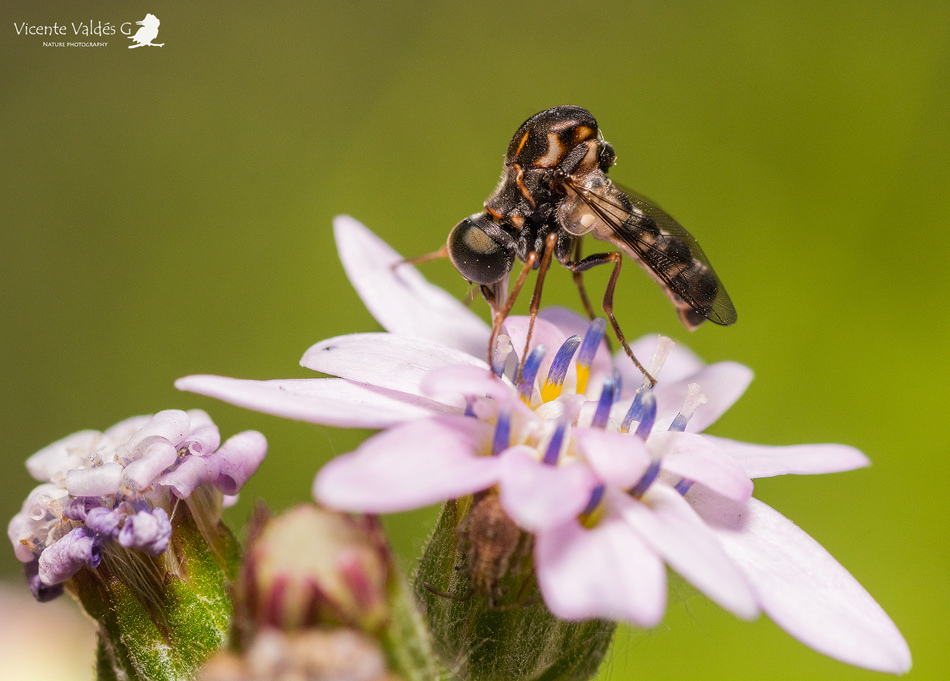
Photo of a spider fly on a flower.

A spider fly with a very hunchbacked appearance (species: Megalybus pictus). Photo courtesy: Vicente Valdés Guzmán.

It was during her time as a Master’s student ten years ago that Gillung first discovered BHL.

“I was looking for some ancient, specialized papers on spider flies, and a colleague sent me the link to the website. It changed my life! I was able to find pretty much EVERY single research paper I ever wanted, and I was able to study that literature very easily.”

Following the completion of her Master’s, Gillung moved to California to begin her PhD in the Department of Entomology & Nematology at University of California – Davis, where she also worked at the Bohart Museum of Entomology, one of the largest and most important natural history collections in the United States. She used BHL almost daily during this period, downloading whole and later custom PDFs of relevant publications and pages to her external hard drive, building a personal library of invaluable reference materials.

As she confided, “I downloaded pretty much EVERY work that has ever been published about the insect group I study.”
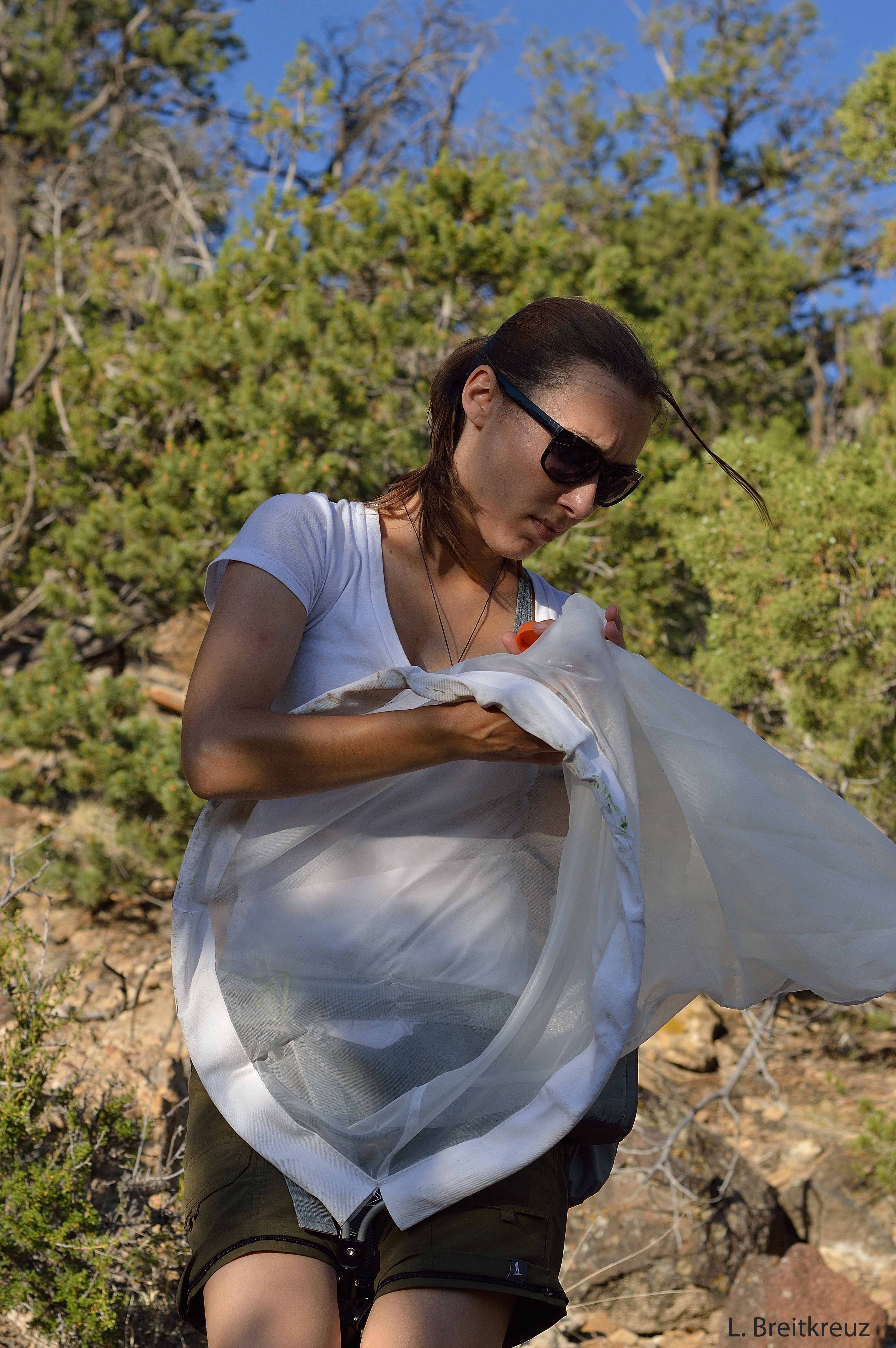
Photo of a woman collecting insects with a net.

Jessica Gillung collecting insects in the field. Photo courtesy: Laura Breitkreuz.

The ability to download PDFs from BHL has allowed Gillung to continue her research anytime, anywhere — even when Internet access is unavailable.

“I specifically remember one time I was stuck at the airport on my way to visit my family in Brazil,” recalls Gillung. “My flights were delayed, and I had long layovers. So, I started working on one of my scientific publications, and I was able to get plenty of work done because I had saved the PDFs beforehand. Had BHL not existed, that would not have been possible.”
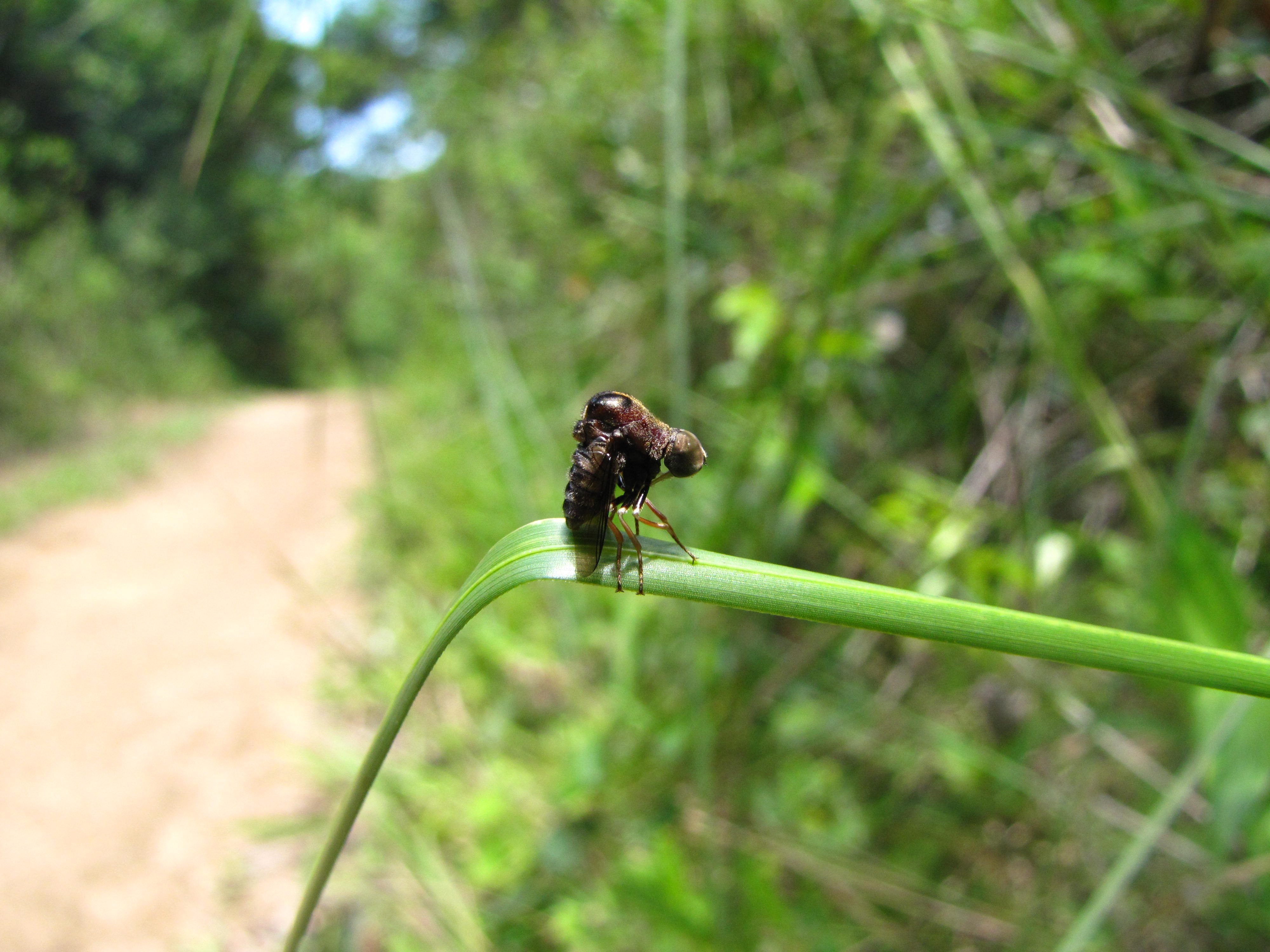
A photo of a spider fly on a blade of grass.

A specimen of Philopota tuberculata. Photo courtesy: Ricardo Kawada.

Of the over 240,000 volumes available in BHL, Gillung’s favorite is Wiedemann’s 1830 monograph on the “Flies from Outside of Europe” (Aussereuropäische Zweiflügelige Insekten). A German historian, physician, naturalist, and entomologist, Wiedemann described many new insect species, including the fly genus Philopota, which Gillung studied for her Master’s, during which she completed a revision of the genus. As part of the revision, Gillung re-described the known species, provided photographs and drawings for their identification, and described 13 new species from throughout Latin America.

“The library at my university did not have a copy of Wiedemann’s monograph,” recalls Gillung. “My progress was hindered until I was able to download the whole PDF from BHL. I fell in love with the website!”
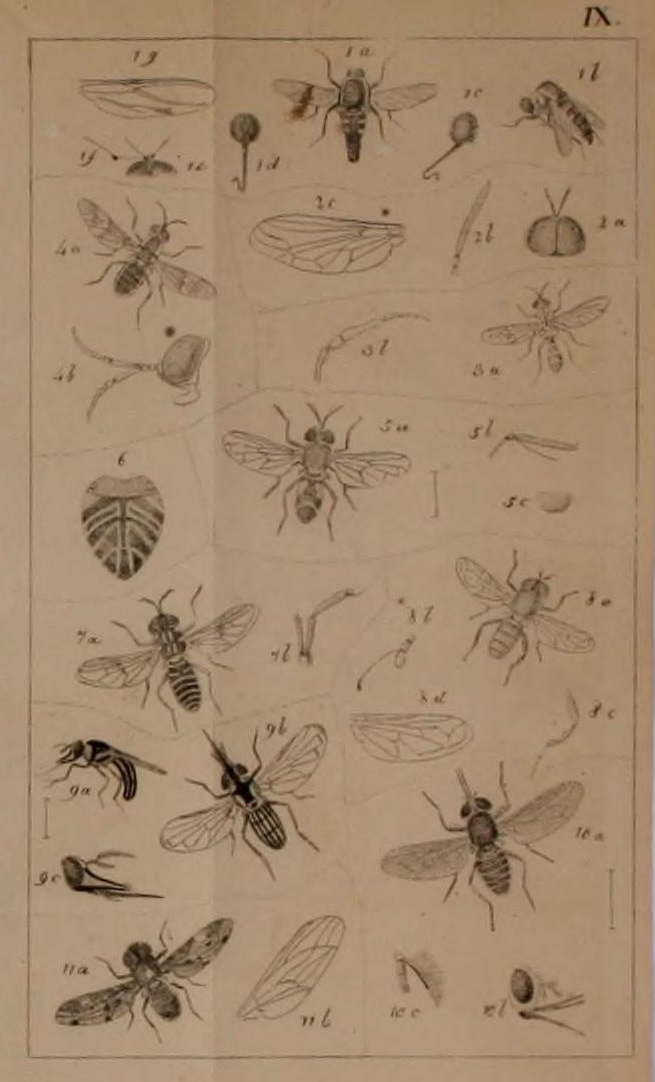
Illustration of flies.

Illustration from Wiedemann’s Aussereuropäische Zweiflügelige Insekten v. 2 (1830). Contributed in BHL from Smithsonian Libraries.

By providing free and open access to critical biodiversity literature, the Biodiversity Heritage Library is empowering global research. From enabling the description of new species to providing access to beautiful scientific illustrations (Gillung confides that one of her favorite pastimes is exploring the plates in the PDFs she’s downloaded), BHL has become an invaluable resource for researchers around the world.

To quote Dr. Gillung: “BHL has made my research possible.”
May 9, 2019by michelle.underhill
BHL News, Blog Reel, Campaigns, Her Natural History

#HerNaturalHistory: Campaign Report and Outcomes

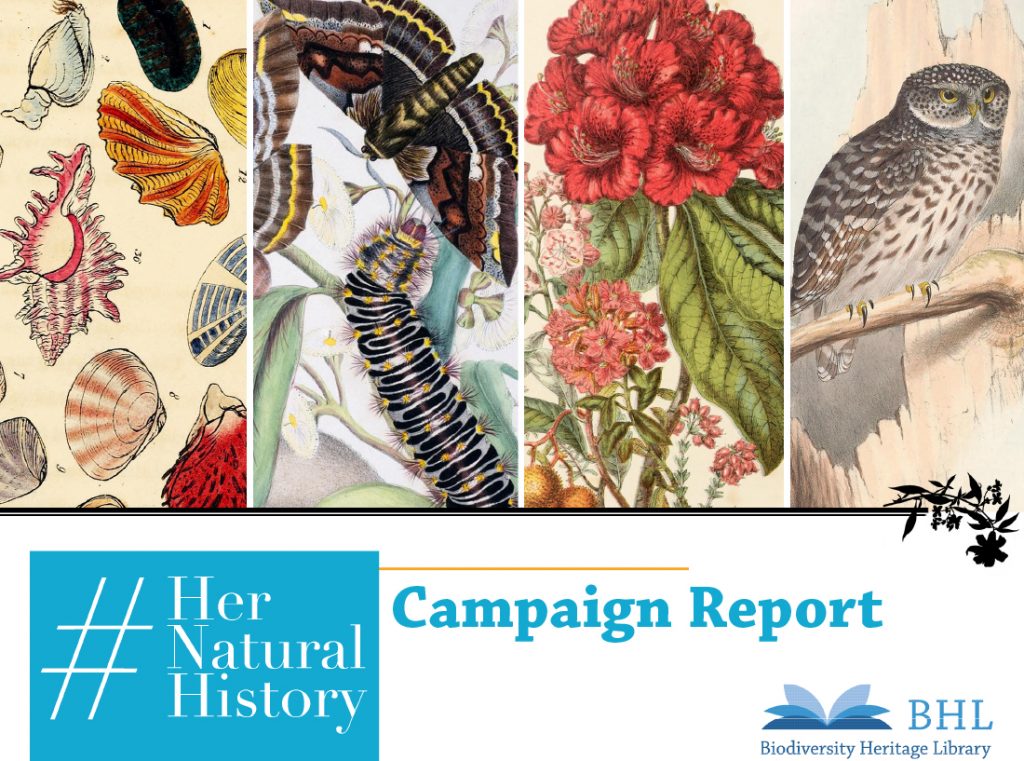
Her Natural History Campaign Report

Her Natural History Campaign Report

This year, the Biodiversity Heritage Library (BHL) and our global partners celebrated Women’s History Month with an international social media campaign: Her Natural History: A Celebration of Women in Natural History.

Kicking-off with an all-day social media blitz on International Women’s Day (8 March) and continuing throughout the month with social media and blog posts, Facebook Live events, and citizen science opportunities, Her Natural History aimed to increase awareness of and information about women in the biodiversity sciences. BHL partners also collaborated to curate the Women in Natural History Book and Female Illustrators in Natural History Flickr Collections for the campaign, featuring publications, archival materials, and illustrations by female naturalists and artists. Audiences could further engage with the work of female illustrators through the Her Natural History Coloring Book.

Extending beyond the BHL consortium, the wider community was invited to participate in the campaign by using #HerNaturalHistory to share stories, collections, publications, artworks, archival materials, exhibits, and other resources highlighting women and their contributions to natural history throughout the month. #HerNaturalHistory was also the #LibrariesOfInstagram challenge topic for March.

We were delighted with the outcomes and impact of the campaign. #HerNaturalHistory reached over 7.5 million people, with over 52 million impressions on content and over 3,100 accounts participating on social media. The campaign allowed BHL to expand its reach and engagement with existing and new audiences in notable ways, resulting in a 35% average increase in overall social reach and a 41% increase in overall social engagements compared to 2018 averages. #HerNaturalHistory also encouraged increased engagement with the works of women in BHL, fostering a 122% increase in views on books in the Women in Natural History Book Collection compared to 2018 monthly averages.

From engaging with worldwide audiences to tell the stories of so many remarkable women in science to working with our community to improve information online about the contributions of women to natural history, Her Natural History was a great example of how collaborative social media campaigns can be used to engage global audiences around important cultural and scientific topics while increasing engagement with library and archival collections.

We invite you to explore the results of the campaign in-depth within the Her Natural History campaign report.

Thank you to everyone who participated in and contributed to #HerNaturalHistory. And thank you to all of the women in science — past, present, and future — who have made such incredible contributions to biodiversity research. Thank you for giving us so many wonderful stories and accomplishments to celebrate!

Thank you graphic for #HerNaturalHistory

May 2, 2019by michelle.underhill
Blog Reel, User Stories

From BHL User to BHL Ambassador: Becca Greenstein Helps Spread the Word about BHL

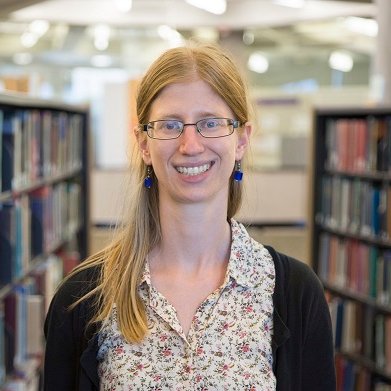
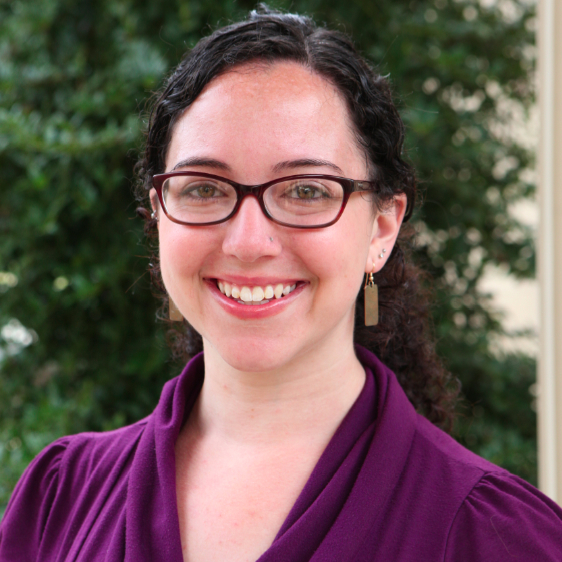
Becca Greenstein, STEM Librarian at Northwestern University Libraries.

A BHL User Story by Becca Greenstein

During the summer of 2016, I had the privilege of working on a collection development project for the Biodiversity Heritage Library (BHL) for a Professional Development Internship with Jacqueline Chapman at Smithsonian Libraries. My task was to refine a collection assessment methodology for BHL using both taxonomic and bibliographic analyses. BHL’s unique features made certain aspects of my project significantly easier to conduct: taxonomic name recognition which pulls scientific names from each page of text, data exports which contain all of the scientific names in the BHL corpus, and searching by scientific name to see if BHL has the initial mentions of various species [1].

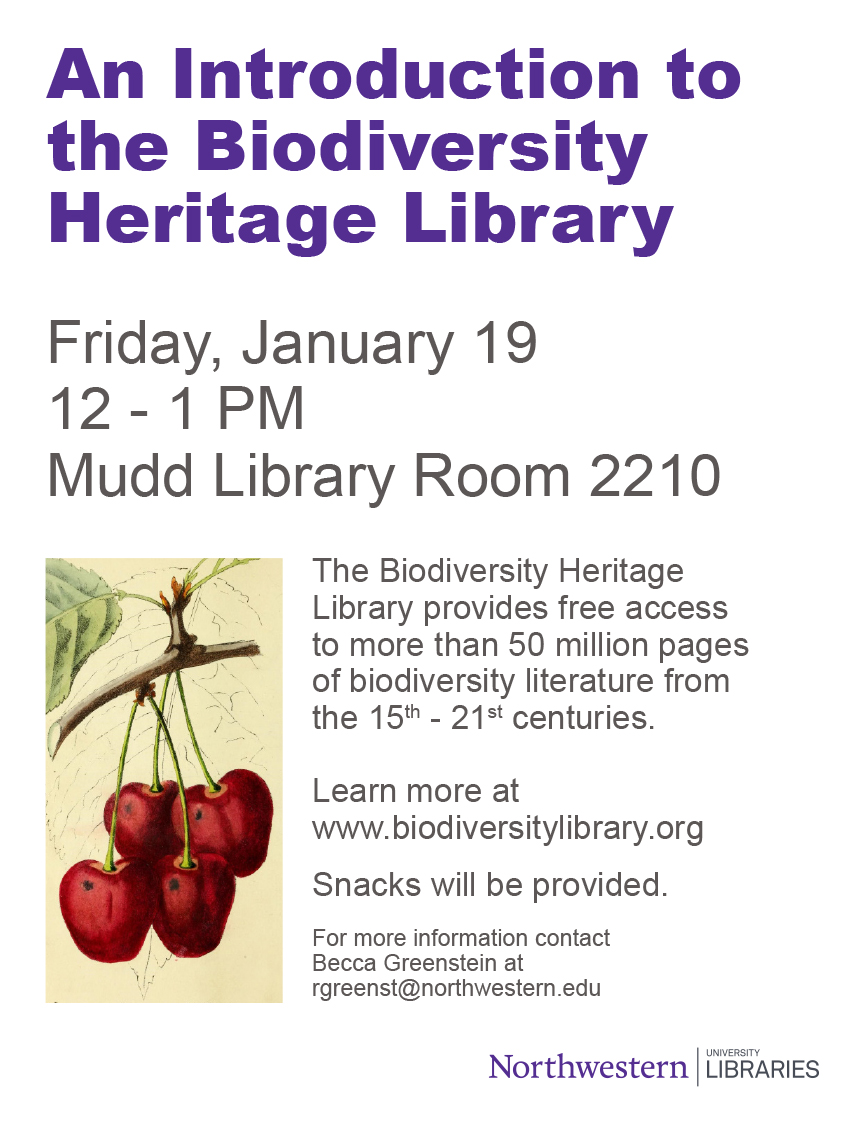
Fast forward to November 2017, when I had been working at the Northwestern University Libraries as a STEM Librarian for four months. I attended a Federal Depository Library Program (FDLP) webinar about BHL, presented by Grace Costantino and Bianca Crowley, in order to reacquaint myself with BHL (and have the excuse to search their Flickr collection for a good image so I could tweet about the webinar later). Afterwards, I was telling my colleagues about the webinar, and a number expressed interest in learning more about BHL. In addition to being a valuable resource for library staff, we thought a one-shot library class on BHL would be a good opportunity for outreach to various academic departments. To promote the class, I designed a poster, wrote a post on our Libraries’ blog, and made plenty of announcements to get the word out to interested library staff and departments.

Poster promoting Becca Greenstein’s BHL class at Northwestern University Libraries. Poster by Becca Greenstein and Clare Roccaforte (Director of Marketing and Communication, Northwestern University Libraries).

During the class, I used the content from the FDLP webinar to talk about BHL’s history, collections, users, social media presence, citizen science projects, and grant-funded projects. I also did a demonstration of the BHL website, conducted a number of searches, and highlighted the features that had helped me during my internship. Participation numbers were lower than I’d hoped, but attendees did ask a lot of good questions. They were relieved to know that one can export BHL item records into EndNote, Zotero, and Mendeley, the three reference management tools we support at the Libraries. They asked how it was used by researchers, and I described the natural history and botany research conducted by subject specialists worldwide on organisms ranging from mosses to turtles to fungi. I also mentioned Vargapupa biheli, the snail species named in honor of BHL, which they were very interested to hear about. They also loved the cards that feature illustrations from the BHL collection, the BHL link, and social media information (images can be found here).

Looking forward, I’ll be presenting a webinar on BHL for the Illinois chapter of the Special Libraries Association in May. Our Life Sciences Librarian told me that researchers in Northwestern’s Plant Biology and Conservation program would also be interested in learning about BHL. Lastly, I’ll hopefully do a presentation about BHL at our orientation for new graduate students next fall. I’d like to continue to spread the word about this collection that has revolutionized natural history and botany research.

[1] More information on my internship can be found in my post on the BHL blog.


March 8, 2018by ulib-libraryjobs
BHL News, Blog Reel

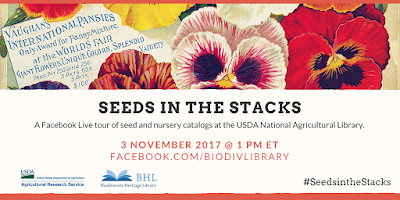
Join us for Seeds in the Stacks!

Find a recording of Seeds in the Stacks on YouTube.
————————————-

Join us for Seeds in the Stacks, a Facebook Live tour at the USDA National Agricultural Library! We’ll go behind-the-scenes to explore selections from the Library’s collection of over 200,000 seed and nursery catalogs.

WHERE?
www.facebook.com/BioDivLibrary
WHEN?
3 November 2017 @ 1pm ET

The USDA National Agricultural Library is the newest BHL Member. Since joining the consortium as an Affiliate in 2014, NAL has contributed over 2 million pages to the BHL collection, including a significant portion of its Henry G. Gilbert Nursery and Seed Trade Catalog Collection. To date, NAL has contributed over 33,000 catalogs from this collection to BHL. The catalogs can be viewed in BHL as part of the Seed & Nursery Catalogs collection.

October 30, 2017by michelle.underhill
BHL News, Blog Reel

Inspiring Discovery at the 2016 BioBlitz and Biodiversity Festival in Washington, D.C.

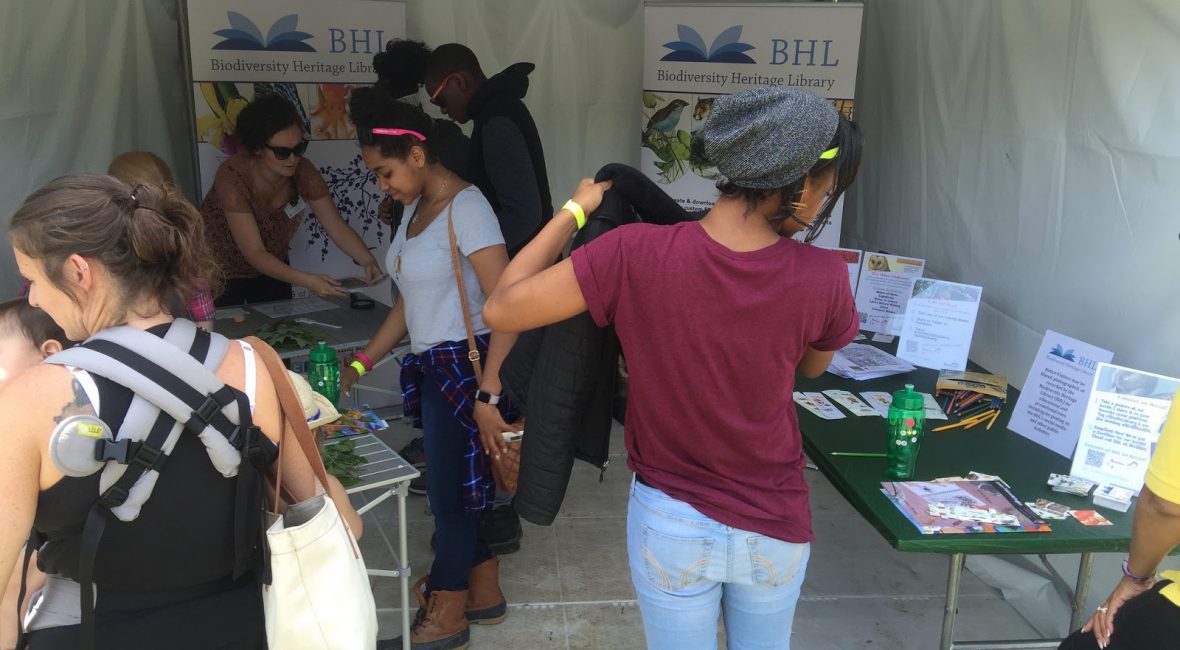
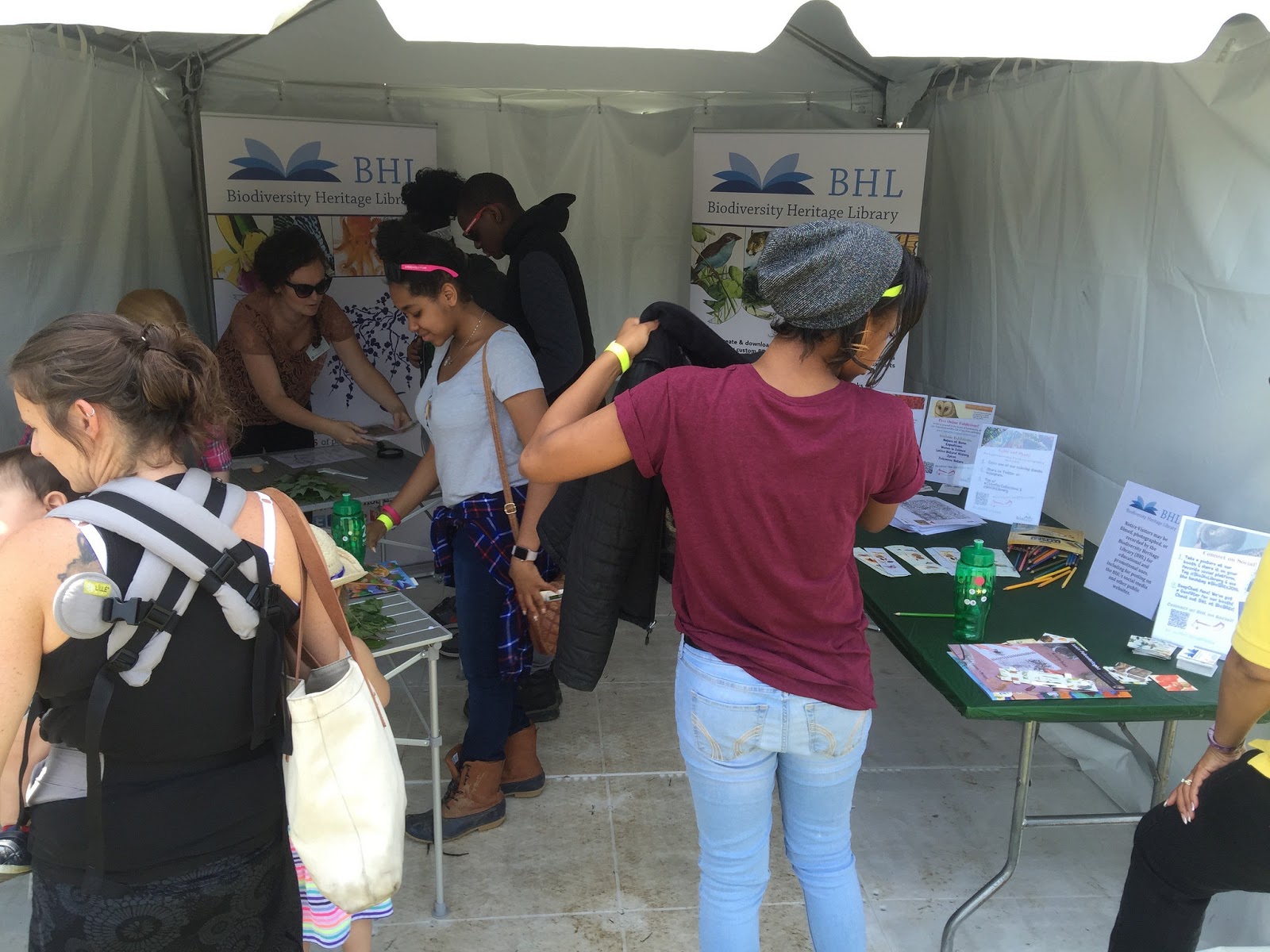
BHL participated in BioBlitz 2016 in Washington, D.C. on 20-21 May. A BioBlitz focuses on finding and identifying as many species as possible in a specific area over a short period of time. In this special edition of the BioBlitz, held in conjunction with the National Park Service’s centenary, the D.C. BioBlitz was accompanied by a two-day Biodiversity Festival on the National Mall at Constitution Gardens. The event was co-hosted by the National Park Service and National Geographic.

View Full Size Image
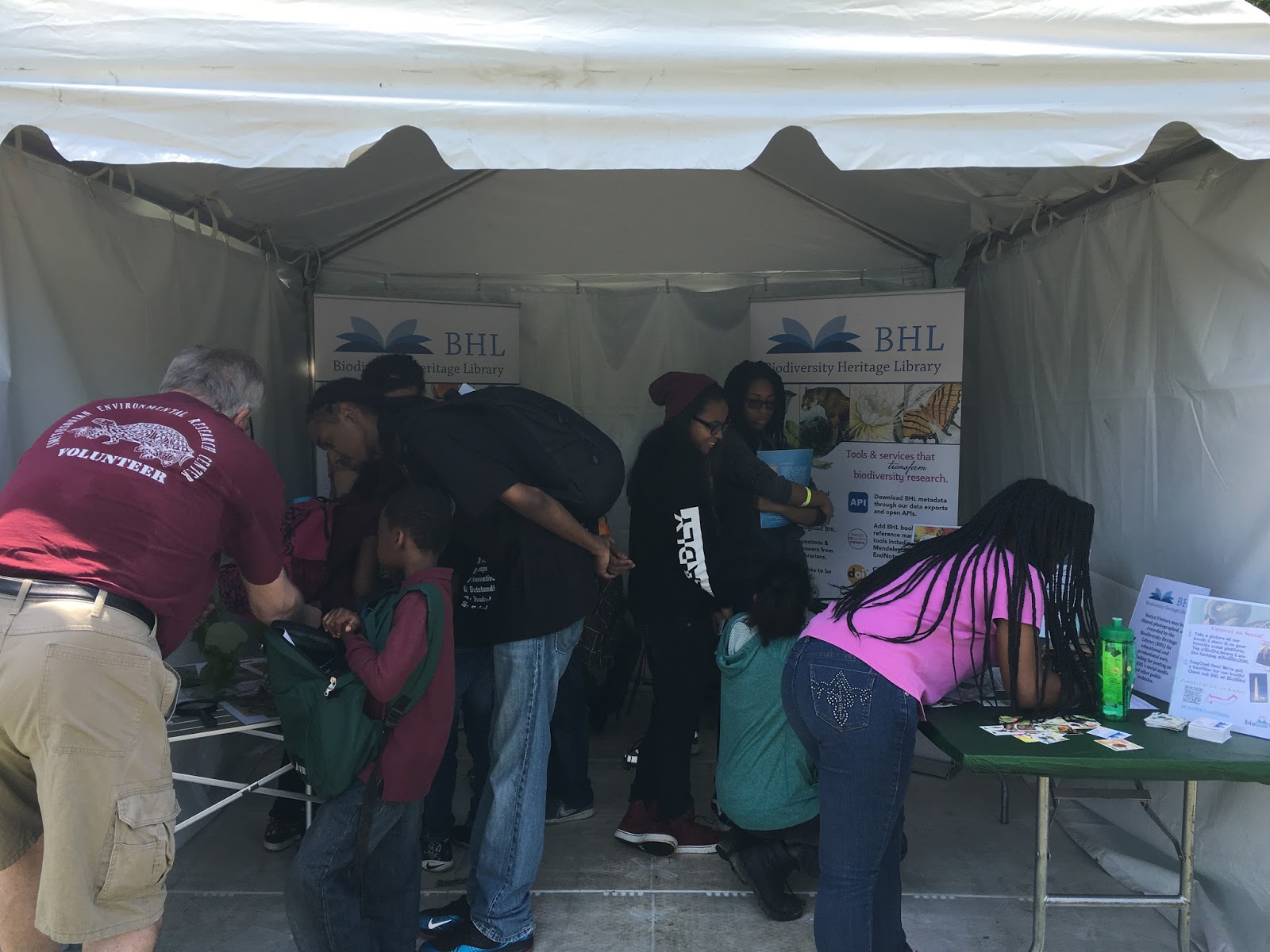
Visitors at the BHL booth at the BioBlitz 2016 Biodiversity Festival on 20 May. Image Credit: Gil Taylor.

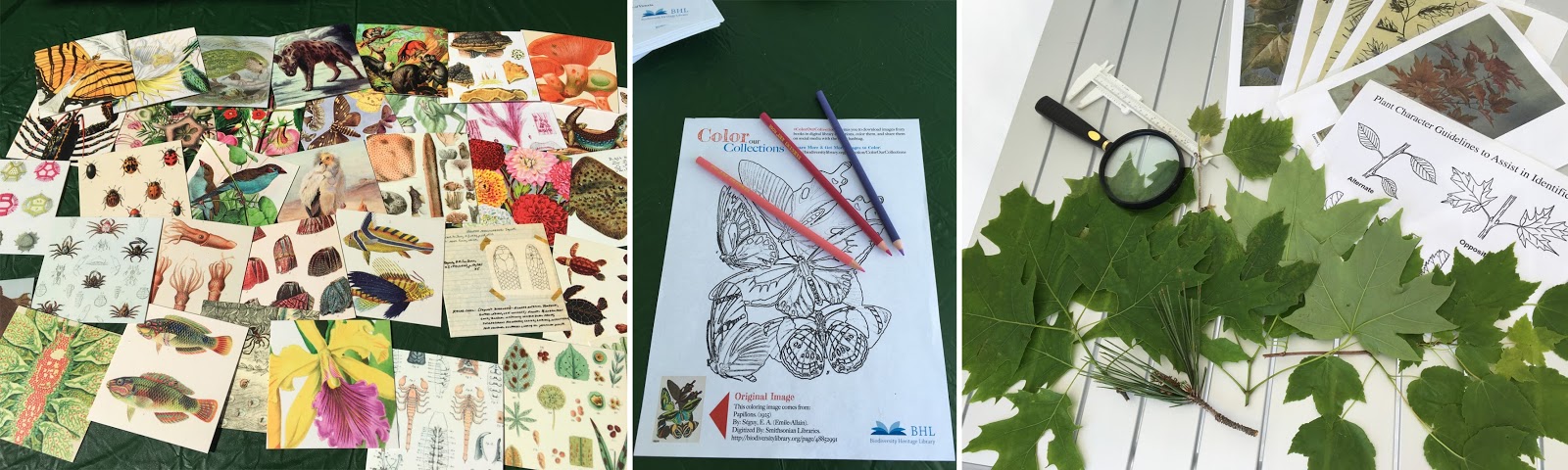
BHL and Smithsonian Libraries’ staff hosted a booth at the Festival that featured hands-on activities including coloring projects, online exhibitions, and a plant ID challenge that demonstrated how BHL can help visitors identify nature around them. Booth volunteers interacted with over 320 people during the course of the 2-day event and had a unique opportunity to expose young people (K-12) to the rich variety of free resources that BHL has to offer.

View Full Size Image
BHL cards, coloring pages, and plant ID challenge at the BioBlitz 2016 Biodiversity Festival booth. Image Credits: Grace Costantino.

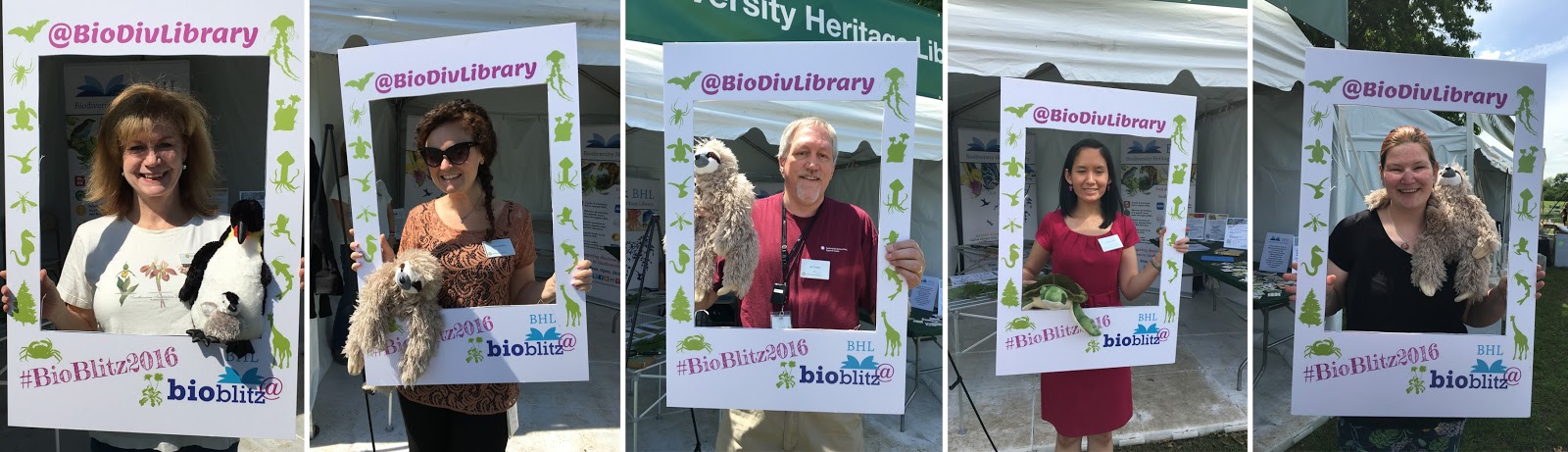
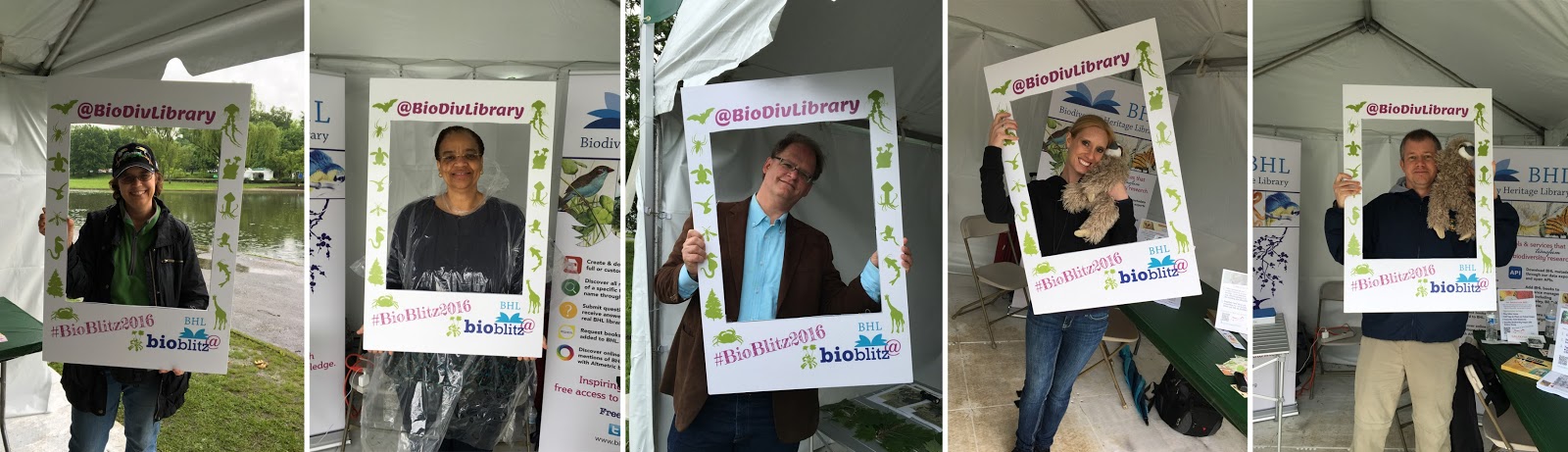
BHL staff at the booth included Martin R. Kalfatovic (BHL Program Director) and Grace Costantino (BHL Outreach and Communication Manager). Smithsonian Libraries staff at the booth included Sara Cardello (Education Specialist), Polly Lasker (Librarian), Gil Taylor (Supervisory Librarian), Bonnie White (Library Technician), Krista Aniel (Management Support Specialist), Barbara Ferry (Department Head, Natural and Physical Sciences Library), Hollis Gentry (Geology Specialist), and Michael O’Connor (Cataloger).

View Full Size Image
Booth Volunteers, from Left to Right: Polly Lasker, Sara Cardello, Gil Taylor, Krista Aniel, Bonnie White. Image Credits: Grace Costantino.
View Full Size Image
Booth Volunteers, from Left to Right: Barbara Ferry, Hollis Gentry, Martin Kalfatovic, Grace Costantino, Michael O’Connor. Image Credits: Grace Costantino.

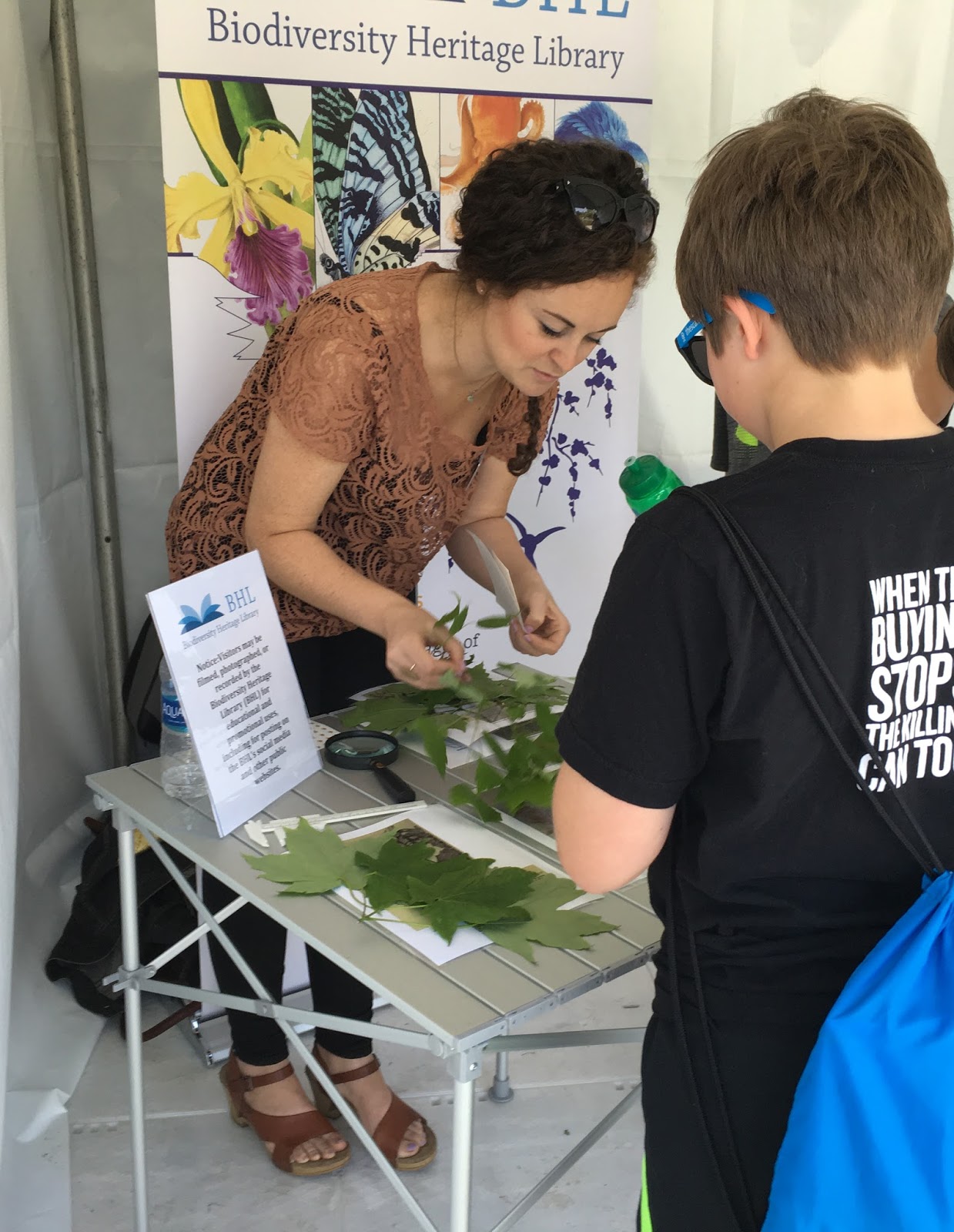
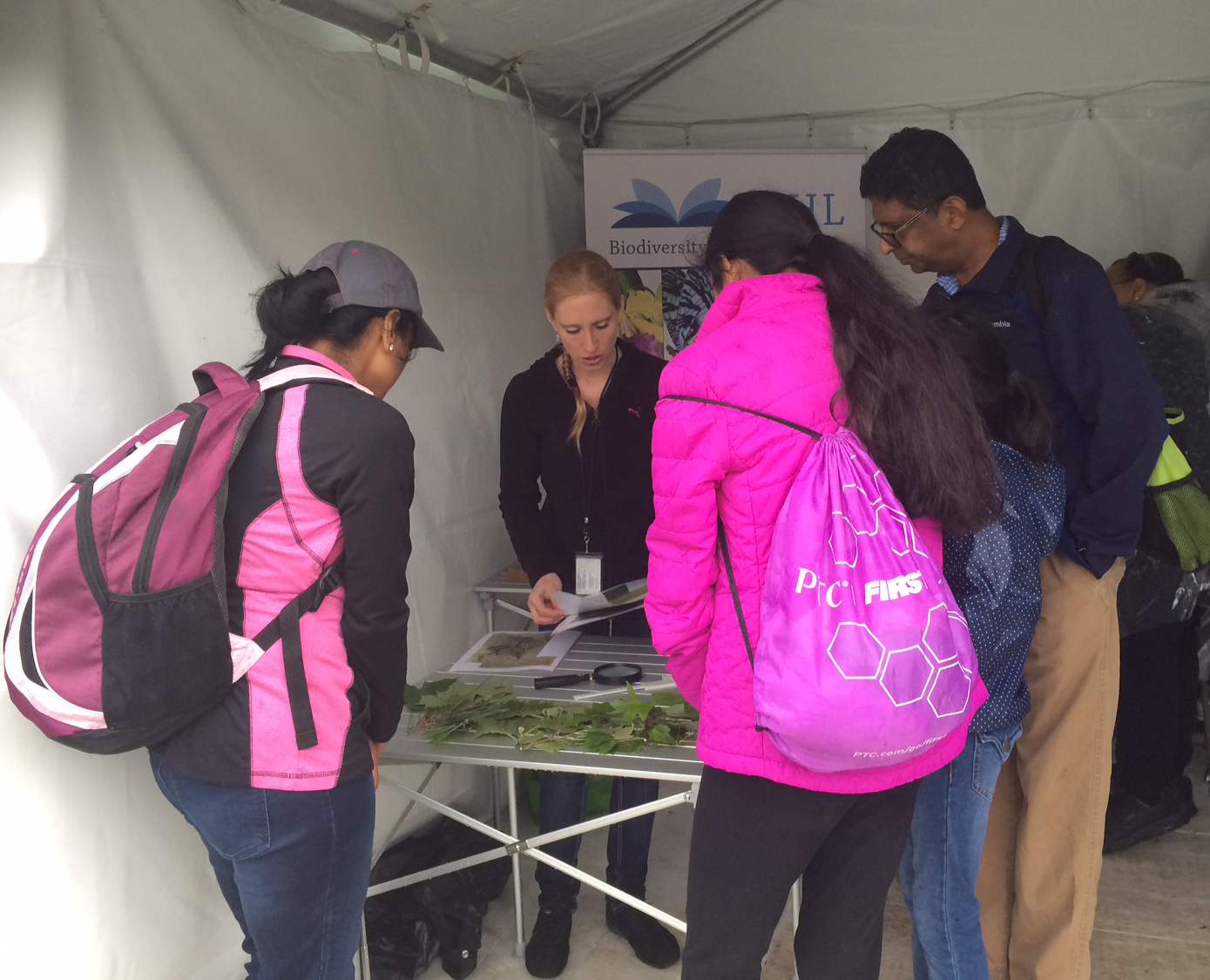
Each booth was instructed to have a hands-on activity that participants could complete as part of the Festival’s Biodiversity University. By completing five activities at the Festival, visitors received their Biodiversity University Bachelor’s degree. Ten activities earned them a Master’s and twenty activities a doctorate. BHL’s activity was a plant ID challenge in which visitors used a book in BHL (A Guide to the Trees by Alice Lounsberry) to identify leaves from five trees native to the D.C. region. Over 200 students completed the activity, earning a sticker towards their Biodiversity University diploma!

View Full Size Image
Sara Cardello guiding visitors through the plant ID challenge at the BHL booth. Image Credit: Grace Costantino.

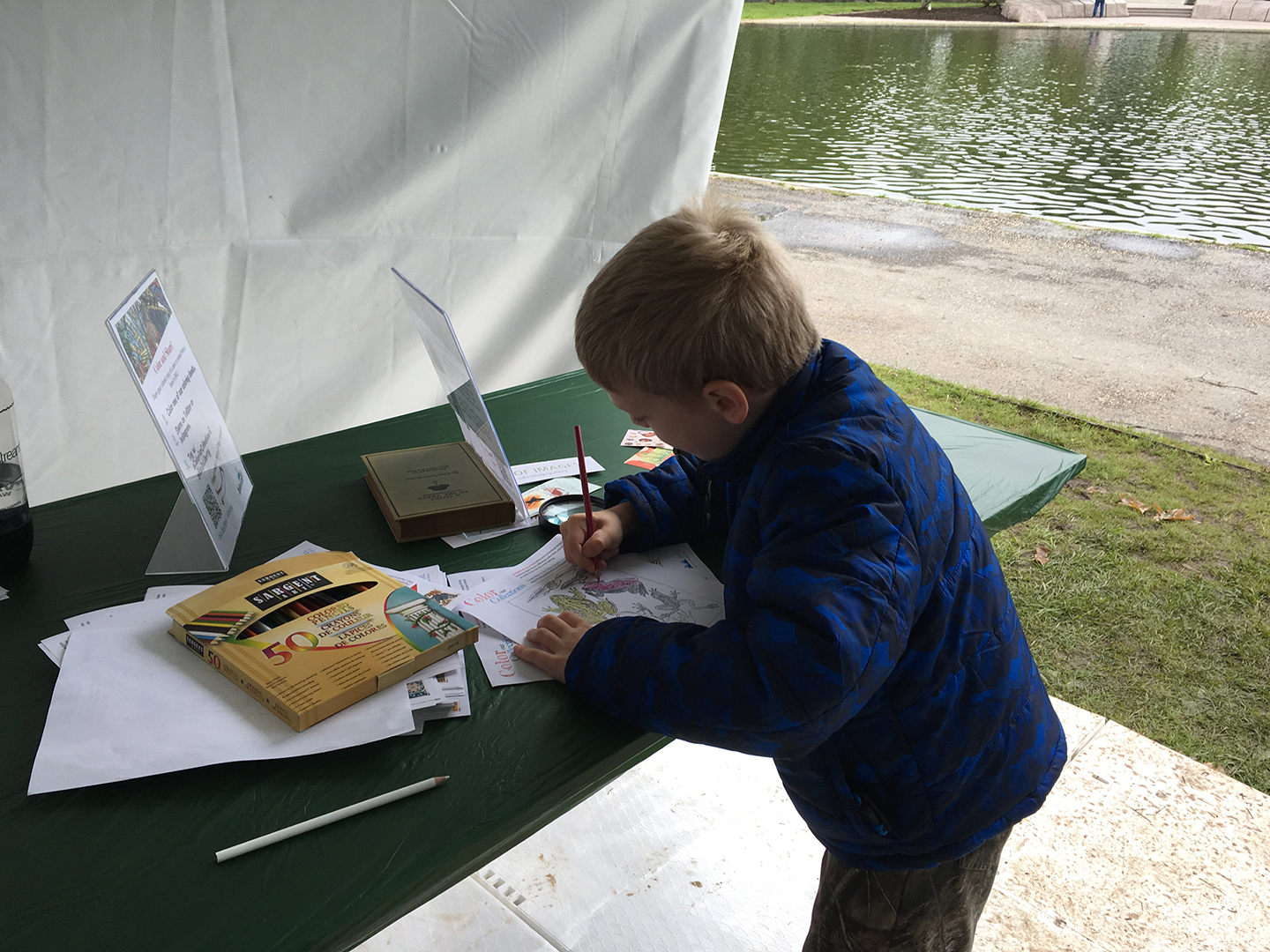
Additional BHL booth activities included coloring pages from BHL’s Color Our Collections coloring book and a chance to explore BHL’s online exhibitions (particularly Early Women in Science) and citizen science opportunities (including Flickr image tagging, field note transcription, Science Gossip, and online games).

View Full Size Image
Visitor coloring a BHL coloring page at the BHL booth. Image Credit: Grace Costantino.

The BioBlitz in D.C. was the cornerstone event of over 250 BioBlitzes happening around the country this year. So far this year, over 61,000 observations of over 6,800 species in 126 parks around the U.S. have been made. The largest percentage of observations were made of plants, followed by birds, insects, fungi, reptiles, mammals, mollusks, arachnids, and amphibians. Learn more about the observations made to date.

View Full Size Image
Grace Costantino guiding visitors through the plant ID challenge at the BHL booth. Image Credit: Barbara Ferry.

We were thrilled to have the opportunity to participate in the BioBlitz and show visitors how BHL’s free resources can be a valuable tool to help them identify and learn more about biodiversity. We’d also like to extend a special thanks to all of the Smithsonian Libraries staff that volunteered at the booth. The BioBlitz and Biodiversity Festival were an excellent opportunity for us to inspire discovery through free access to biodiversity knowledge.

View Full Size Image
Gil Taylor (left) guiding visitors through the plant ID challenge at the BHL booth. Image Credit: Grace Costantino.
View Full Size Image
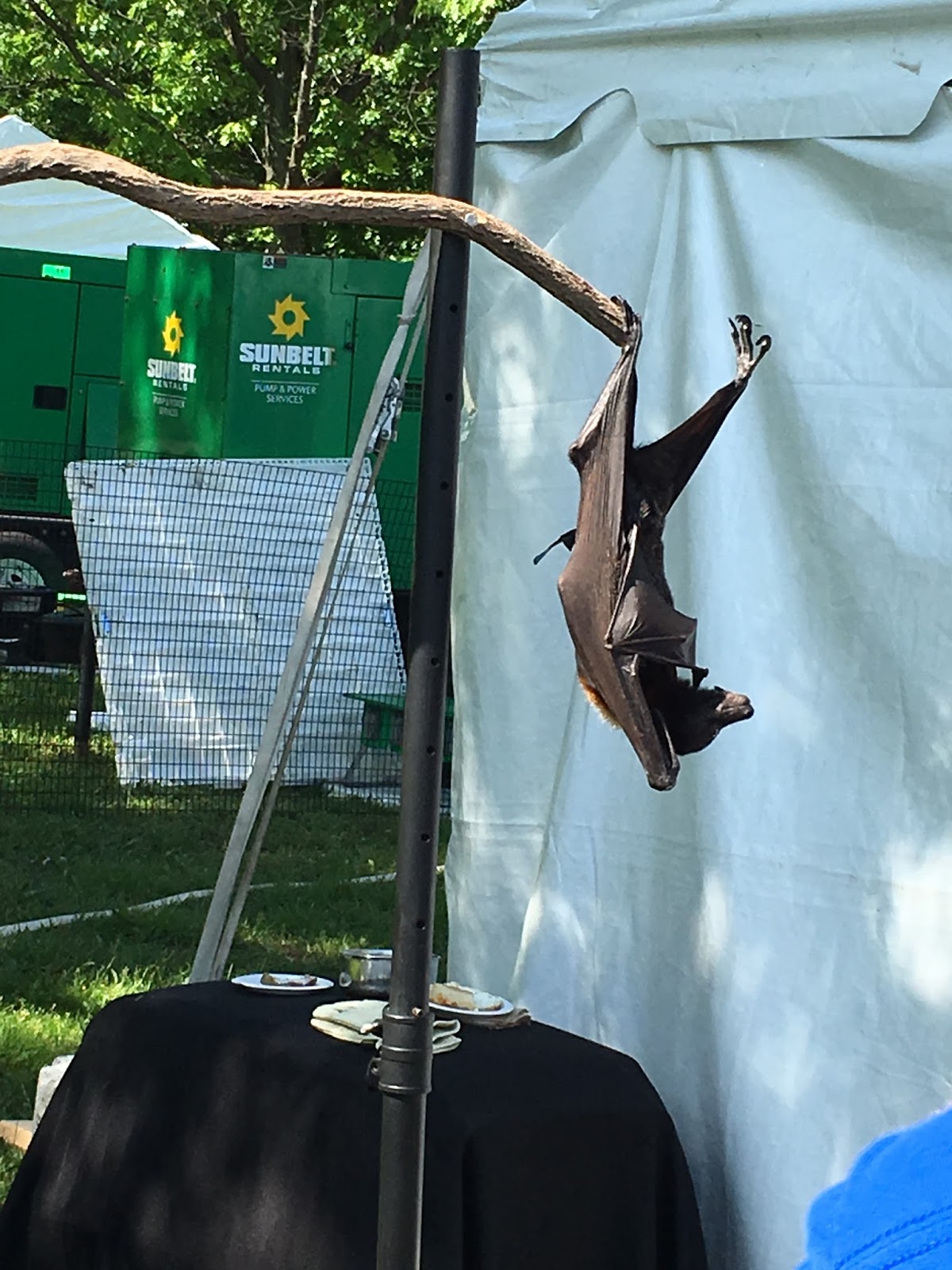
Malayan Flying Fox at the Organization for Bat Conservation #SavetheBats booth at the BioBlitz 2016 Biodiversity Festival. Image Credit: Grace Costantino.
View Full Size Image
Our neighbors at the BioBlitz 2016 Biodiversity Festival booth. Image Credit: Grace Costantino.
May 24, 2016by michelle.underhill
BHL News, Blog Reel

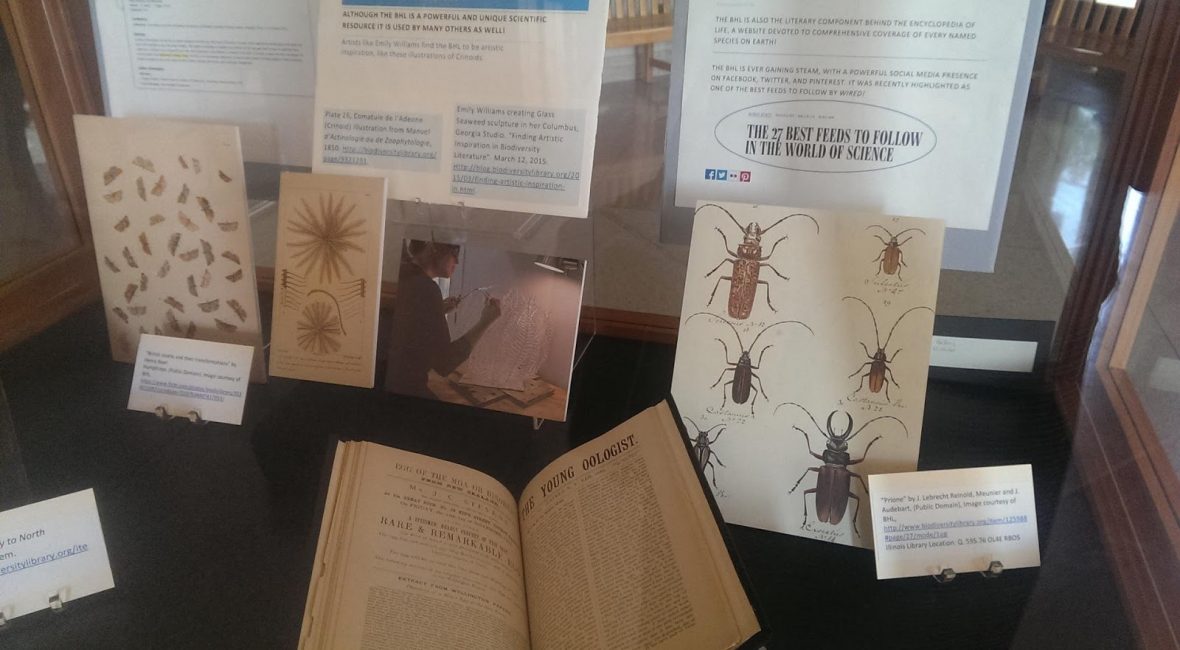
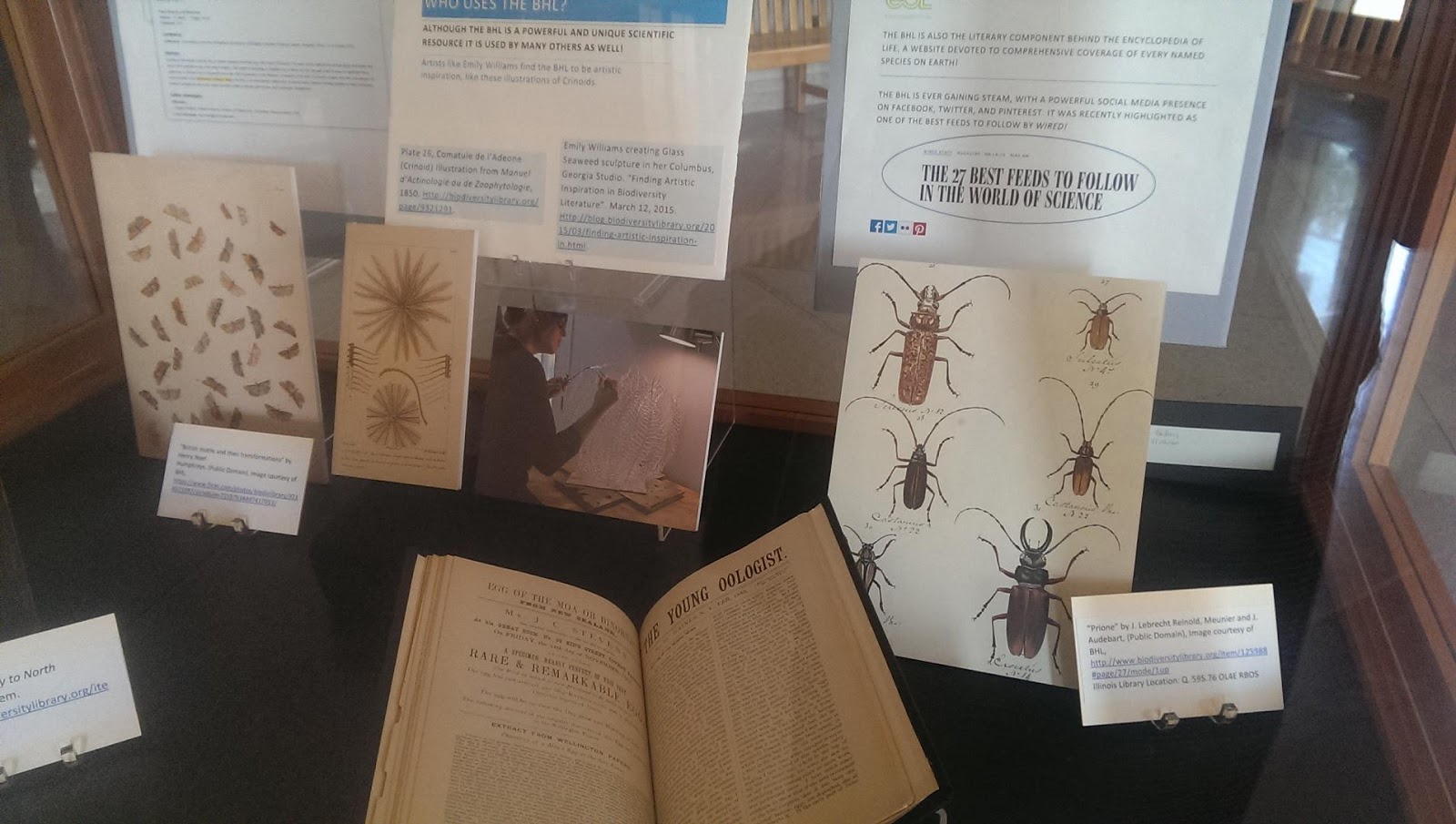
BHL Exhibit at the University of Illinois at Urbana-Champaign

In 2014, BHL welcomed the University of Illinois at Urbana-Champaign as a member. The University’s Library is a campus-wide network of libraries serving programs of learning and research in many disciplines and is the largest public university research library in the country with more than 13 million volumes. The Biology Library collection alone contains over 137,000 volumes.

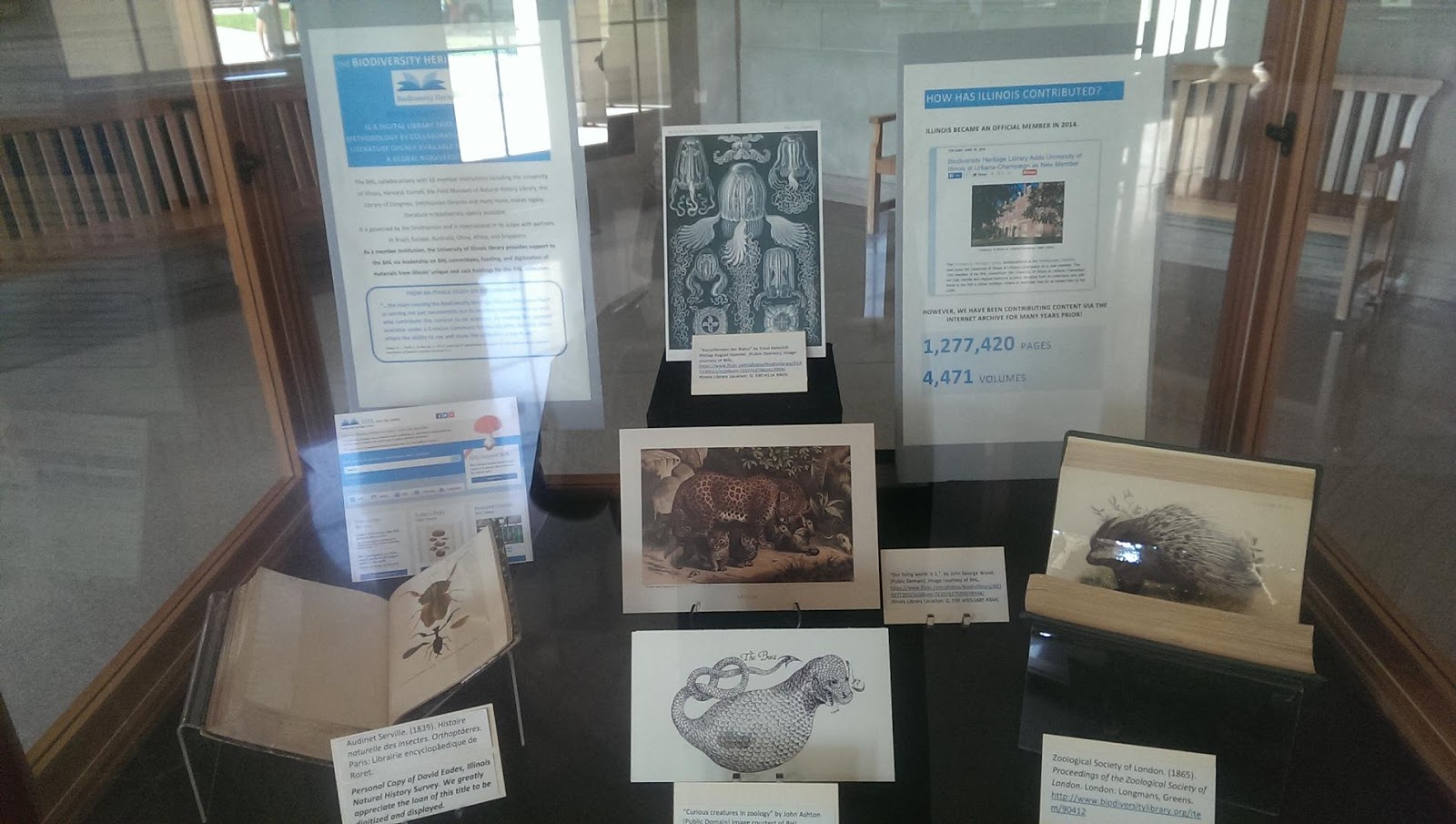
To date, the University Library has contributed over 1.2 million pages from over 4,400 volumes to BHL. Illustrations from many of these books have also been made available in the BHL Flickr. Explore the University of Illinois at Urbana-Champaign Collection in BHL and Flickr.

View Full Size Image
“Celebrating the Biodiversity Heritage Library: Supporting Scientists Worldwide” exhibit at the University of Illinois at Urbana-Champaign’s Main Library Marshall Gallery. Image Credit: Kelli Trei.

On September 1, 2015, the University Library unveiled an exhibit about BHL at the Main Library Marshall Gallery entitled: “Celebrating the Biodiversity Heritage Library: Supporting Scientists Worldwide.” This free exhibit highlights contributed materials from the University as well as the BHL collection itself and draws attention to Library digitization efforts and historic scientific materials on campus. The exhibit runs through September 30, 2015. Learn more.

View Full Size Image
“Celebrating the Biodiversity Heritage Library: Supporting Scientists Worldwide” exhibit at the University of Illinois at Urbana-Champaign’s Main Library Marshall Gallery. Image Credit: Kelli Trei.

Be sure to check out the exhibit if you’re visiting or live near the University of Illinois at Urbana-Champaign, and explore the University Library’s collection on BHL!

September 14, 2015by michelle.underhill
BHL News, Blog Reel

Taming the Wild Social Media Animals: Facebook, Twitter, Blogger… Oh My!

View Full Size Image

As the daughter of a children’s librarian and library branch manager, I grew up in public libraries and have become passionate about the important role a library plays within a community. This has led me down the path of becoming a librarian myself. Originally from California, I’m now living on the east coast and attending graduate school at the University of North Carolina at Chapel Hill pursuing my passion for this institution. This coming year is my last year of school for a dual Master degree program in Library Science and Public Administration. Normally, I work as a Graduate Research Assistant at the Odum Institute for Research in Social Science managing their Twitter account and conducting usage and outreach assessments. However, this summer, I was fortunate to obtain a six week Smithsonian Libraries Professional Development Internship at the Biodiversity Heritage Library. As part of this internship, I had the amazing opportunity to gain experience with evaluating BHL’s outreach strategy and impact, as well as gain a deeper knowledge about the natural sciences and the publications that have shaped biodiversity knowledge.

The first part of my project was to conduct an environmental scan of six similar organizations to BHL and answer the following questions:
  • How does BHL’s social media presence, audience size, posts, and post engagement compare to similar organizations?
    View Full Size Image
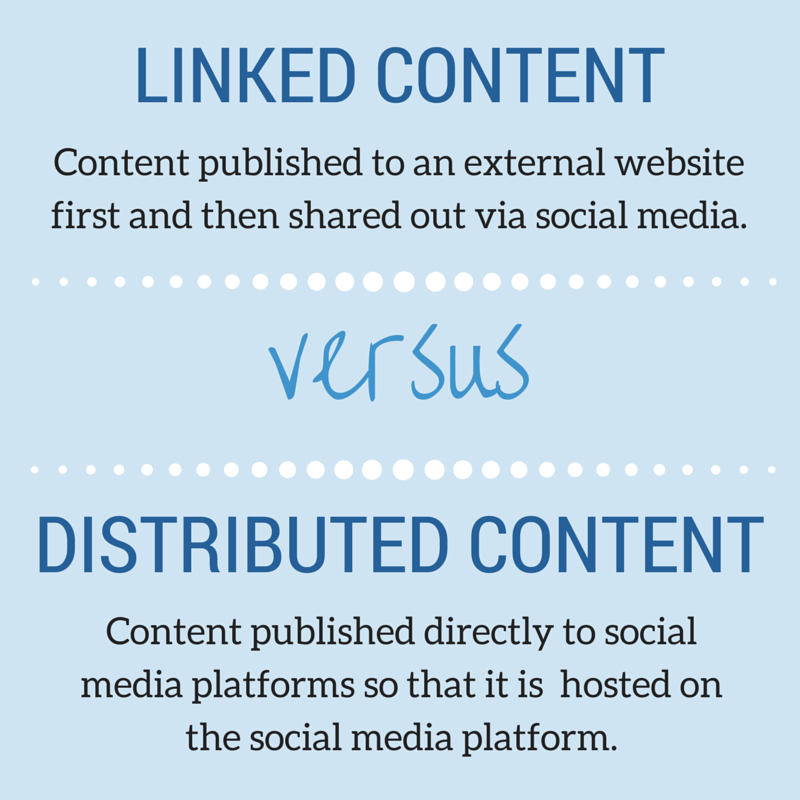
  • Are organizations similar to BHL moving away from driving social media users back to their websites by linking content and instead, simply distributing the content by posting it directly to social media platforms?
    View Full Size Image
The second part of my project was to manage BHL’s social media accounts, test out new outreach strategies, and do a strategy performance comparison to answer the following questions:
  • What are possible new outreach strategies that BHL could implement on Facebook and Twitter?
  • After implementing some of these strategies, what is the impact of these new strategies and how do they compare to BHL’s current strategies on those platforms?
If you’ve interacted with BHL on Facebook, Twitter, or Blogger anytime during the first two weeks of July, then you were talking to me and responding to my posts! Here are some of my favorite posts that I created:
Happy #InternationalPolychaeteDay! Let these amazing creatures make you feel all worm & fuzzy: http://t.co/jUj6lI5N7A pic.twitter.com/e2AiY0sCAP

— BHL (@BioDivLibrary) July 1, 2015

The force is strong with this one. Yoda bat among huge find of new species in 2009. http://t.co/B0SWHJBsIe pic.twitter.com/Zk6nMUKQZP

— BHL (@BioDivLibrary) July 2, 2015

“Uniformity is not nature’s way; diversity is nature’s way.” -Vandana Shiva #WisdomWednesday http://t.co/03hfNSoO5q pic.twitter.com/rrMg1h3zvF

— BHL (@BioDivLibrary) July 8, 2015

How has BHL impacted your work? Let us know! @Fishy_Hayes shared this #BHLimpact. http://t.co/QNWa4UWuV4 pic.twitter.com/M8LizfxvXW

— BHL (@BioDivLibrary) July 3, 2015

After collecting all the performance data and analyzing it, I submitted a final report that summarized BHL’s social media outreach impact in comparison to other organizations, discussed the performance of seven new social media strategies, and made twelve recommendations for BHL’s outreach strategy going forward.

July 30, 2015by tcmart2
Page 1 of 212»

Help Support BHL

BHL's existence depends on the financial support of its patrons. Help us keep this free resource alive!

search

About BHL

The Biodiversity Heritage Library (BHL) is the world’s largest open access digital library for biodiversity literature and archives. BHL operates as a worldwide consortium of natural history, botanical, research, and national libraries working together to digitize the natural history literature held in their collections and make it freely available for open access as part of a global “biodiversity community.”

Join Our Mailing List

Sign up to receive the latest news, content highlights, and promotions.

Subscribe Now

Subscribe to Blog via Email

Enter your email address to subscribe to this blog and receive notifications of new posts by email.

Join 319 other subscribers

Subscribe to Blog Via RSS

Subscribe to the blog RSS feed to stay up-to-date on all the latest BHL posts.

Access RSS Feed

Inspiring Discovery through Free Access to Biodiversity Knowledge.

The Biodiversity Heritage Library makes it easier than ever for you to access the information you need to study and explore life on Earth…for free, anytime, anywhere.


64+ Million Pages of
Biodiversity Literature Online.

EXPLORE

Tools and Services
to Transform Research.

EXPLORE

300,000+
Illustrations on Flickr.

EXPLORE

ABOUT | HARMFUL CONTENT | PRIVACY | SITE MAP | TERMS OF USE