
Biodiversity Heritage Library - Program news and collection highlights from BHL
  • Home
  • News
  • Featured Books
    • All Featured Books
    • Book of the Month Series
    • BHL at 20
  • User Stories
  • Campaigns
    • Fossil Stories
    • Garden Stories
    • Monsters Are Real
    • Page Frights
    • Her Natural History
    • Earth Optimism 2020
  • Tech Blog
  • Visit BHL
Home
News
Featured Books
    All Featured Books
    Book of the Month Series
    BHL at 20
User Stories
Campaigns
    Fossil Stories
    Garden Stories
    Monsters Are Real
    Page Frights
    Her Natural History
    Earth Optimism 2020
Tech Blog
Visit BHL
  • Home
  • News
  • Featured Books
    • All Featured Books
    • Book of the Month Series
    • BHL at 20
  • User Stories
  • Campaigns
    • Fossil Stories
    • Garden Stories
    • Monsters Are Real
    • Page Frights
    • Her Natural History
    • Earth Optimism 2020
  • Tech Blog
  • Visit BHL
Biodiversity Heritage Library - Program news and collection highlights from BHL
Blog Reel, Featured Books

Travelling Plants: A Collaborative Project

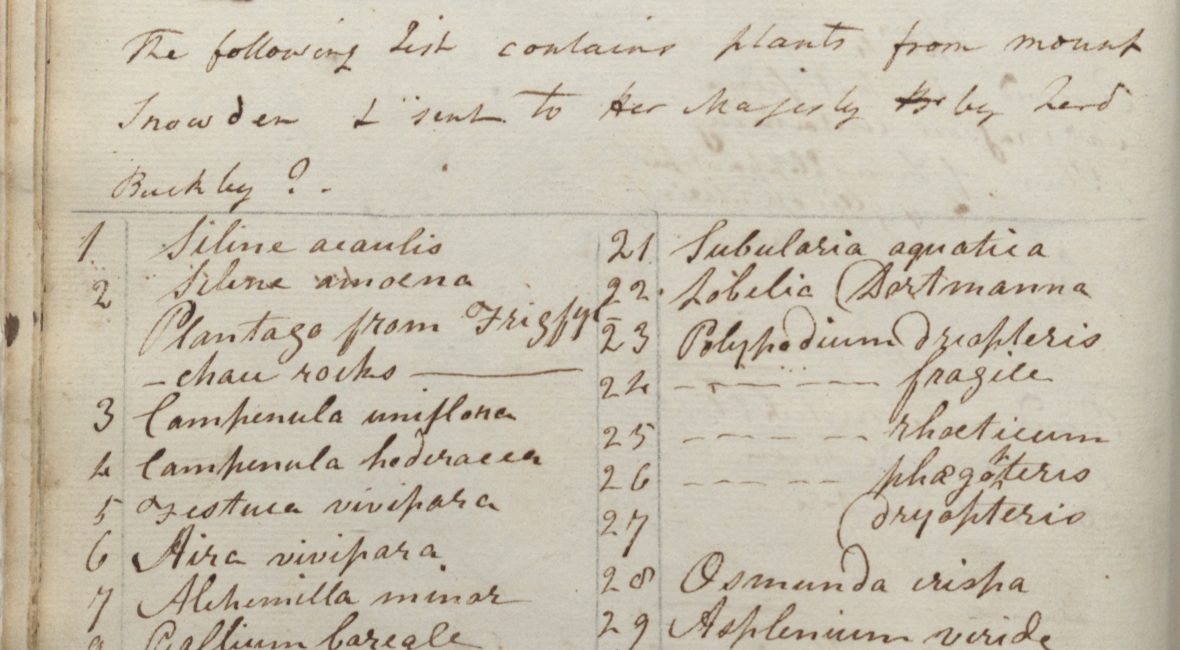
Page 18 of the Kew Record Book with handwritten list of plants

During 2020, the Archives team at the Royal Botanic Gardens, Kew developed a collaboration with the University of Roehampton, the University of the Third Age (U3A), and the Biodiversity Heritage Library (BHL), to create a model for the archive sector, which uses volunteer-driven, remote methods to transcribe and research collections, making them easily shareable and accessible using TEI-XML encoding. We wanted to create ways in which TEI could be embedded in the archive sector and managed by archivists with little experience of textual encoding, or time to carry out encoding themselves. In creating this model, we would also digitise, transcribe, encode, and make accessible in BHL one of Kew’s most important, but inaccessible volumes – the Kew Record Book. For Kew, it was important that the volume would be made fully accessible, as part of our commitment to transparency around our history and involvement in colonialism.

Page 18 of the Kew Record Book with handwritten list of plants

Kew Record Book. Folio 18. Royal Botanic Gardens, Kew. 1793-1809. Contributed in BHL from Royal Botanic Gardens, Kew.

The model we created was timely, as the COVID-19 pandemic meant many institutions could no longer accommodate volunteers on-site, and remote ways of working have persisted. The Travelling Plants project built a community and model of engaging with and developing the digital capacity of older people remotely, a sector of society that particularly felt the impact of social isolation during the pandemic. We received a grant from The National Archives to carry out this project.
We split the project into four phases: transcription, TEI-XML encoding, plant names, and project celebration.

The four phases of the project: transcription, TEI-XML, Plant names, and Project celebration at Kew.

Phases of the Travelling Plants project.

We aimed for the project to be self-supporting, delivering remote training sessions, drop-in Q&As, creating protocols, and using the cloud for sharing documents. The most successful form of support was the small working groups of volunteers that we created, empowering volunteers to help each other. Transcriptions had to be checked by another member in the group, but support went far beyond this, with the groups setting up WhatsApp groups and even meeting in the Gardens once lockdown restrictions lifted.

About the Kew Record Book

Collage of images cropped from the Kew Record Book

Excerpts from the Kew Record Book

The Kew Record Book is a unique document in the history of botany and horticulture. It records incoming and outgoing plants at the Royal Botanic Gardens, Kew, from 1793 to 1809. This was a period of intense activity at Kew, under the informal directorship of Sir Joseph Banks, President of the Royal Society. With the support of King George III and major trading bodies such as the East India Company, Banks sent gardeners from Kew to accompany plant consignments, collect specimens and supervise colonial botanic gardens across the globe. Botanic gardens played a central role in the establishment of British power overseas, facilitating the transfer of food crops and useful plants between colonies, and providing staging posts for horticultural specimens on their way to Kew.

The volume opens in 1793, when William Townsend Aiton succeeded his father as superintendent of Kew. Entries are in a variety of hands, noting donors and recipients of consignments, identifying plants by their Latin botanical names. Also included are a number of copies of letters sent to and from plant collectors overseas. A particular highlight is Francis Masson’s 1798 letter from New York recounting his capture by French pirates when crossing the Atlantic (folio 84).

The volume records plant exchange for a range of commercial, colonial, and diplomatic purposes and Kew’s involvement in colonialism is clearly documented. Among the most active donors to Kew was William Roxburgh, superintendent of the East India Company’s botanic garden in Calcutta (Kolkata). Roxburgh established firm and long-lasting links between the East India Company and Kew.

Regular shipments were received from plant collectors around the world. In 1793, 82 crates arrived from the new penal colony of Botany Bay in Eastern Australia (folio 7). Banks had lobbied hard for the establishment of the colony and supplied the first settlers with seeds and plants. Two Kew-trained gardeners tended the crops and collected Australian plants on behalf of Kew.

Banks was also responsible for organising one of the most well-known – indeed notorious – of plant transfers: that of the breadfruit from Tahiti to the Caribbean (1791-3). The breadfruit, Artocarpus altilis, was proposed as a suitable foodstuff for enslaved people on British-owned plantations in the West Indies (although it only became a staple food in the Caribbean post-emancipation). The Kew Record Book includes a list of plants brought back to Kew from the voyage: from Tahiti, New Guinea, St. Helena, St Vincent and Jamaica (folios 10-16). Heading the list are ‘Otaheita Plants’, some with Tahitian names, but the first entry is for ‘Bread fruit 4 plants’ (folio 10).

Plants were also used to forge diplomatic alliances. In 1795 a shipment of over 300 rare plants was sent to Maria Feodorovna, “the Great Dutchess of Russia” who, the following year, would become Empress consort of Russia (folio 38). The batch was headed by the spectacular bird of paradise Strelitzia regina, named in honour of Queen Charlotte (of the house of Mecklenburg-Strelitz).

With its detailed inventories and multiple correspondents, the volume offers an invaluable resource to reconstruct botanical networks and chart the routes of plants across the globe.

View the complete Record Book in BHL.

The Encoding

To make the Kew Record Book as accessible and searchable as possible, we decided to train volunteers to encode their transcriptions. We chose to follow the guidelines of the Text Encoding Initiative (TEI), an international consortium whose XML standard is used globally to create digital texts. As a markup standard based in natural language, TEI-XML represented a relatively friendly way of enhancing the Travelling Plants volunteers’ digital skillset.

Given the limited timeframe of the project, we didn’t aim to produce a complete digital edition of the Record Book. Instead, our goal was to develop and test a model for engaging volunteers in the encoding of archival texts; to refine the model through testing and dialogue; and to produce guidance that could be used by other archive-based projects. Travelling Plants volunteers were given the option of learning TEI-XML and encoding the text after they had begun transcribing and annotating it. Almost all tried their hand at encoding. Approximately half shifted their focus to encoding during the project’s final phase, while the others completed the transcription and annotation of the volume.

Because TEI-XML was new to all of the volunteers, we created detailed written guidance complemented by ten training videos. Three real-time tech support sessions on Zoom gave volunteers opportunities to share their learning with one another and to ask questions about the most technically challenging aspects of encoding the Record Book’s many types of entries. Volunteers then worked in teams to produce their digital edition.

By the end of the project, approximately 100 pages had been encoded in a way that made the Record Book easily searchable by the names (in all forms) of plants, people, ships, and institutions, as well as by places that can be plotted on digital maps. The digital edition and training materials will be made available via the Travelling Plants website, as soon as final revisions are complete. In the words of one volunteer, “I never thought I would enjoy coding but now I find I don’t want to stop!”

In the end-of-project evaluation, our volunteers said making history accessible and deciphering the handwriting were enjoyable parts of the project. However, the group work was the universally most enjoyed:

“I’ve really enjoyed working on the transcriptions, in particular the research and ‘detective’ work to firstly figure out what a letter or word is and then the investigation into the people and places which really brings the archive alive, and it’s been lovely to work with my group and get to know them.”

“It was a gift in lockdown to have something else to focus on other than the virus, masks, social distancing.”

Word cloud of feedback from volunteers. Most prominent words include: handwriting, reading, people, time, researching, interesting, plants, addictive

What the volunteers found most enjoyable about the Travelling Plants project

The least enjoyable part was unanimously reading the handwriting!

By developing and sharing our protocols and training resources, we aim to empower other archivists to work with volunteers to create open access, shareable transcriptions that will help open their collections to the world.

May 11, 2023by [email protected]
Blog Reel, User Stories

Finding Refuge in the Library: How BHL Inspired the Mycological Book Club

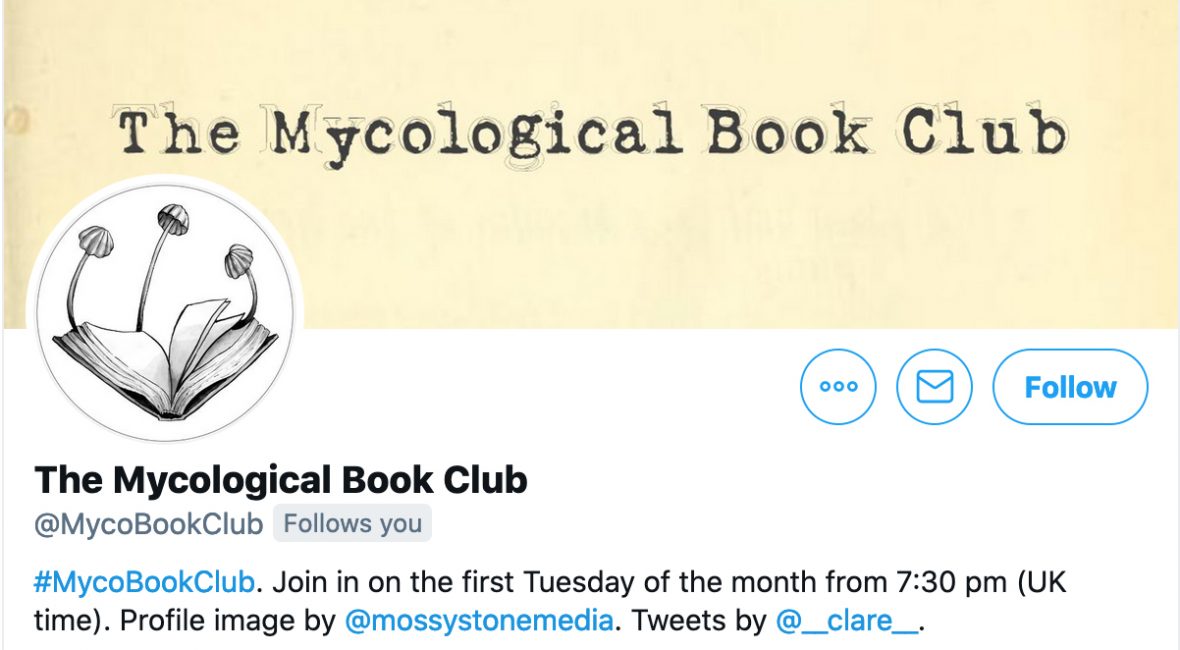
Screenshot of the Twitter profile of @MycoBookClub.

On 23 March 2020, the U.K. went into its first national lockdown in response to the COVID-19 pandemic. Social distancing and teleworking became the norm, and the walls of our homes became, in many ways, the boundaries of our individual worlds.

Amateur mycologist Clare Blencowe was eager to find a positive distraction from the realities of life during a pandemic. The Biodiversity Heritage Library’s open access collections, which for Blencowe had become a welcome refuge from the continuous onslaught of negative news articles, now became the inspiration for a new, socially distanced way to connect with other fungi lovers—in the form of “The Mycological Book Club”, an online, Twitter-based book club with a particular focus on open access literature.

#MycoBookClub logo fungi growing out of a book

#MycoBookClub logo, designed by illustrator Kelsey Sconberg of Mossy Stone Media.

“We were at the beginning of a national lockdown,” recalls Blencowe. “All social events were cancelled, and I found myself endlessly scrolling through increasingly doom-laden news, feeling increasingly doom-y. #MycoBookClub started as a simple distraction, an opportunity for a shared experience: people reading the same book and discussing it on Twitter at an allotted time.”

Screenshot of the Twitter profile of @MycoBookClub.

@MycoBookClub on Twitter.

Blencowe brought her idea to life by founding the @MycoBookClub Twitter account, establishing the #MycoBookClub hashtag to facilitate discussion, and setting a recurring date and time for book club meetings—the first Tuesday of the month at 7:30pm (GMT) on Twitter. She then scheduled the first #MycoBookClub meeting for 5 May 2020.

That first meeting, which brought together just a handful of followers, was dedicated to Mordecai Cubitt Cooke’s Rust, Smut, Mildew & Mould: An Introduction to the Study of Microscopic Fungi (Fifth ed. 1886), which club members accessed through BHL.

Welcome to #MycoBookClub, folks! It’s a pleasant evening here at @MycoBookClub headquarters in Sussex, England.

We’re talking about ‘MICROSCOPIC FUNGI: Rust, Smut, Mildew & Mould’ by M.C. Cooke (1886). You can find it at: https://t.co/7WO005ZS5Q pic.twitter.com/GxWzmYhnxg

— The Mycological Book Club (@MycoBookClub) May 5, 2020

With passages celebrating the beauty and wonder of the often unheeded nature in our own backyards and neighborhoods, the title was a fitting—and motivating—choice for an audience confined to their homes and local natural surroundings.

As Cooke writes,

“We might traverse the primeval forests of the new world, and explore the unknown regions of the old, and not encounter so much to excite our admiration, or cause our wonder, as lies about our feet at home; marvels which we tread beneath our feet, or kick from our path, because they appear to be only rotten sticks, withered grass, and decaying leaves.”

“Cooke’s writing provided inspiration for enjoying nature near home,” shares Blencowe. “I felt myself lifted by his soaring rhetoric.”

Photo of a human with long brown hair in a shirt with fungi images on it.

Amateur mycologist Clare Blencowe, founder of the #MycoBookClub. Photo courtesy of Clare Blencowe.

#MycoBookClub has allowed Blencowe to share and grow her interest in mycology—an interest that began in earnest about five years ago when a new job as manager of the Sussex Biodiversity Record Centre, and the much shorter commute that came with it, provided her with newfound time to pursue her interest in fungi. While she considers mycology a hobby, her involvement in the field has grown over the years through membership in the British Mycological Society, where she was recently elected to their Field Mycology and Conservation Committee.

BHL helped nurture this love of mycology well before the birth of #MycoBookClub. Blencowe’s first in-depth interaction with the Library occurred in April 2019, when her discovery of a small brown fungus cup in the woods led her to seek confirmation of its identity—which she believed to be the Anemone Cup Dumontinia tuberosa—by posting to the British Mycological Society Facebook group. UK-based mycologist Lukas Large responded to her post with the link to a color plate for comparison from Émile Boudier’s Icones Mycologicæ (1905-1910) in BHL.

Illustration of fungi.

Illustration of Dumontinia tuberosa, plate 477. Boudier, Émile. Icones Mycologicæ (1905-1910), v.3. Art by Boudier. Contributed in BHL from the University Library, University of Illinois Urbana Champaign.

“The information contained in this beautiful colour plate far surpassed anything I had access to in my field guides at home,” shares Blencowe. “It helped me to understand the structure and features of this fungus I had in front of me, and spurred me on to take a closer look at it under the microscope. That experience really opened my eyes to what a useful resource the books in BHL can be: to inform observation and help identify species in a present day context. Sure, species concepts and nomenclature may have moved on, but the detail with which mycologists such as Boudier recorded their observations is a lesson in itself.”

Since that eye-opening experience, Blencowe continues to turn to BHL as a resource to support her interests in mycology, reading titles online and downloading select pages and images as needed. Some of her favorite aspects of the Library include a good search functionality, user-friendly online reading and content downloading, high quality scans, clear copyright information, easily-shareable direct page links, and the image collections in Flickr. Since founding #MycoBookClub, she uses BHL almost every week.

We’ve talked already here at #MycoBookClub about M.C. Cooke, but tonight we’re also feasting our eyes on ‘Selecta Fungorum Carpologia’ by The Brothers Tulasne.

You can find their illustrations in the Biodiversity Heritage Library: https://t.co/DN4Hi816XE pic.twitter.com/buaU9fMTa4

— The Mycological Book Club (@MycoBookClub) June 2, 2020

“I love the little bookish details that are preserved in BHL: the gilt decoration on a publication’s cover, ornate book plates, library stamps, barely-decipherable pencil marks and blank pages uniquely speckled with foxing,” shares Blencowe. “The scanned pages hold so much more than simply the words and the illustrations. They do your soul good.”

A reminder that it’s #MycoBookClub night tonight, from 7:30pm UK time.

We’re trying out a theme this evening: illustration ?https://t.co/Bvx0nDHY08

— The Mycological Book Club (@MycoBookClub) November 3, 2020

In the months following the club’s first meeting in May 2020, #MycoBookClub continued to grow, amassing more followers and receiving attention in outlets like The British Mycological Society Newsletter and IMA Fungus. Blencowe established a “virtual bookshelf” to maintain a list of all the books that #MycoBookClub had discussed—many of which were accessed through BHL.

Screenshot of a virtual bookshelf with thumbnails of book covers.

#MycoBookClub “virtual bookshelf.” Source: https://mycobookclub.blogspot.com

“The more time I spend in the Library, the more amazed I am by the vast amount of literature it contains—and the neat way it is organised and presented,” lauds Blencowe. “BHL also provides the opportunity to take a deep dive into the source material for a fascinating glimpse into the machinery of global science in the 19th century.”

While she’s enjoyed many titles in BHL, a recent favorite is Anna Maria Hussey’s Illustrations of British Mycology (1847-55), which was the subject of the July 2020 #MycoBookClub meeting. Published under the name Mrs. T.J. Hussey, the two-volume work illustrates and describes species collected by Hussey and her sister, Frances Reed.

#MycoBookClub returns Tues 7 July, 7:30pm (UK time).

Thought we could take a broader look at the fungal kingdom this month with ‘Illustrations of British Mycology’ by Anna Maria Hussey (1847).

You can read it in the @BioDivLibrary, here: https://t.co/4BPXfDyWhd pic.twitter.com/icBcIRd1xM

— The Mycological Book Club (@MycoBookClub) June 7, 2020

“Hussey writes from the perspective of an enthusiastic amateur which I found both highly relatable and genuinely inspiring,” affirms Blencowe. “She writes in a chatty, conversational style which is peppered with fascinating contemporary details (such as her observation that Boletus subtomentosus has ‘the texture of a Limerick glove’) and timeless wisdom (‘life passes in gaining experience for ourselves…till at last we have acquired the wisdom to guide us safely…’).”

Illustration of fungi.

Illustration of Suillellus luridus, plate 35. Hussey, Anna Maria. Illustrations of British Mycology, ser.2 (1855). Art by Hussey. Contributed in BHL from The New York Botanical Garden, LuEsther T. Mertz Library. Explore all illustrations from Illustrations of British Mycology in the BHL Flickr.

Blencowe has gathered and shared via @MycoBookClub some of her favorite elements from Hussey’s work, including her approach to mycology, her discussion of fungus names, her commentary on fungi in nature, her descriptions of fungal habitats, and miscellaneous myco-chatter. Illustrations of British Mycologyis also noteworthy as a rare female-authored work in the bibliography of historic mycological literature.

“Browsing the historic biodiversity literature, it is very noticeable that certain perspectives predominate,” notes Blencowe. “The books are mostly written by men—white men. So it was a particular joy to come across Hussey’s book. I’m keen to explore ways that @MycoBookClub can provide a platform for different perspectives and respectfully champion Indigenous knowledge of fungi.”

While ours may still be a socially-distanced world, initiatives like #MycoBookClub remind us that there are still opportunities to connect with others, share our passions, and nurture a community. And while the news may still be filled with dire headlines, naturalists like Mordecai Cubitt Cooke and Anna Maria Hussey remind us that we can still find solace in nature close to home and in unexpected places, if we are just willing to look.

To quote Hussey: “The world is full of beauty that we pass by unheeded.”

Illustration of fungi.

Illustration of Crinipellis scabella, plate 68. Hussey, Anna Maria. Illustrations of British Mycology, ser.1 (1847). Art by Frances Reed. Contributed in BHL from The New York Botanical Garden, LuEsther T. Mertz Library. This plate accompanies Hussey’s quote: “The world is full of beauty that we pass by unheeded.”

Everyone is welcome to join the #MycoBookClub. Follow @MycoBookClub for updates and meeting information, and join the discussion the first Tuesday of each month at 7:30pm (GMT) using the #MycoBookClub hashtag on Twitter.

February 1, 2021by michelle.underhill

Help Support BHL

BHL's existence depends on the financial support of its patrons. Help us keep this free resource alive!

search

About BHL

The Biodiversity Heritage Library (BHL) is the world’s largest open access digital library for biodiversity literature and archives. BHL operates as a worldwide consortium of natural history, botanical, research, and national libraries working together to digitize the natural history literature held in their collections and make it freely available for open access as part of a global “biodiversity community.”

Join Our Mailing List

Sign up to receive the latest news, content highlights, and promotions.

Subscribe Now

Subscribe to Blog via Email

Enter your email address to subscribe to this blog and receive notifications of new posts by email.

Join 319 other subscribers

Subscribe to Blog Via RSS

Subscribe to the blog RSS feed to stay up-to-date on all the latest BHL posts.

Access RSS Feed

Inspiring Discovery through Free Access to Biodiversity Knowledge.

The Biodiversity Heritage Library makes it easier than ever for you to access the information you need to study and explore life on Earth…for free, anytime, anywhere.


64+ Million Pages of
Biodiversity Literature Online.

EXPLORE

Tools and Services
to Transform Research.

EXPLORE

300,000+
Illustrations on Flickr.

EXPLORE

ABOUT | HARMFUL CONTENT | PRIVACY | SITE MAP | TERMS OF USE