Biodiversity Heritage Library - Program news and collection highlights from BHL
  • Home
  • News
  • Featured Books
    • All Featured Books
    • Book of the Month Series
    • BHL at 20
  • User Stories
  • Campaigns
    • Fossil Stories
    • Garden Stories
    • Monsters Are Real
    • Page Frights
    • Her Natural History
    • Earth Optimism 2020
  • Tech Blog
  • Visit BHL
Home
News
Featured Books
    All Featured Books
    Book of the Month Series
    BHL at 20
User Stories
Campaigns
    Fossil Stories
    Garden Stories
    Monsters Are Real
    Page Frights
    Her Natural History
    Earth Optimism 2020
Tech Blog
Visit BHL
  • Home
  • News
  • Featured Books
    • All Featured Books
    • Book of the Month Series
    • BHL at 20
  • User Stories
  • Campaigns
    • Fossil Stories
    • Garden Stories
    • Monsters Are Real
    • Page Frights
    • Her Natural History
    • Earth Optimism 2020
  • Tech Blog
  • Visit BHL
Biodiversity Heritage Library - Program news and collection highlights from BHL
Blog Reel, Campaigns, Featured Books

Cats & Dogs: Nineteenth and Early Twentieth Century Perspectives

This blog post incorporates research conducted for the digital exhibition, “Wild Mouser to Household Pet: A History of Cats in Science and Society, 1858 to 1922.” Click here to check out the exhibition and book collection!

View Full Size Image
Dielman, Frederick. “Uncle Tobey and the widow.” Library of Congress Prints & Photographs. http://www.loc.gov/pictures/item/2016652317/.

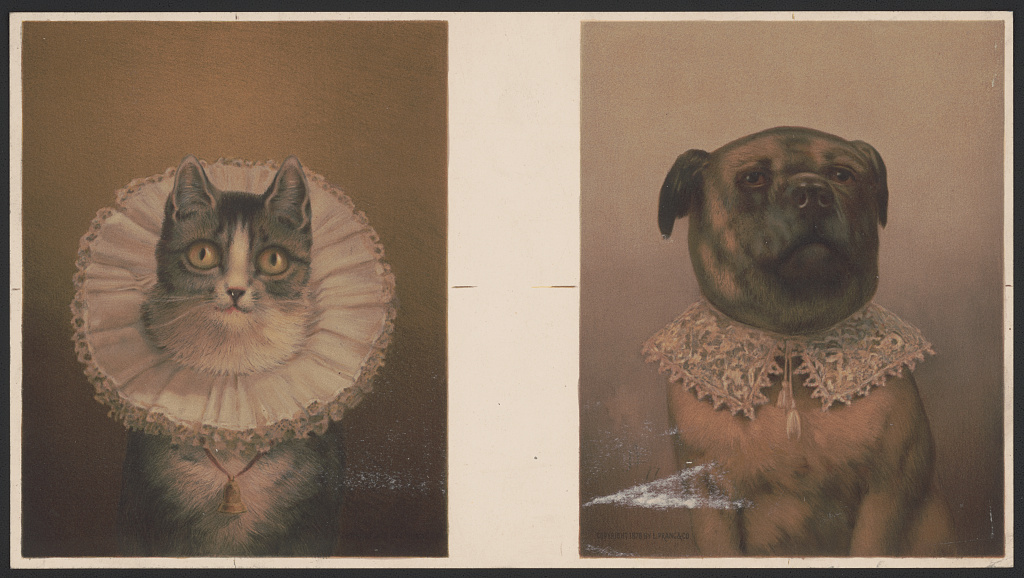
In the nineteenth and early twentieth centuries in the United States and Europe, cats were just beginning to be seen as household pets. Previously, they were viewed as biological specimens for medical study, muses for literature, and mousers that roamed around killing rodents. The way that people saw cats often involved a comparison with dogs. But how different are these two species? How did people perceive of those differences and similarities in the nineteenth and early twentieth centuries?

Usefulness
View Full Size Image
Gos., De Voogt. Our Domestic Animals: Their Habits, Intelligence, and Usefulness (1907). Digitized by the Library of Congress.

Authors compared cats and dogs in order to claim their favorite as superior. For example, in Domesticated Animals, Their Relation to Man and His Advancement in Civilization (1895), Nathaniel Southgate Shaler wrote:

Cats deserve some mention for the reason, that, while they are the least essential, and on the whole the least interesting, of domesticated animals, they have had a certain place in civilization. They afford, moreover, a capital foil by which to set off the virtues of the dog [1].

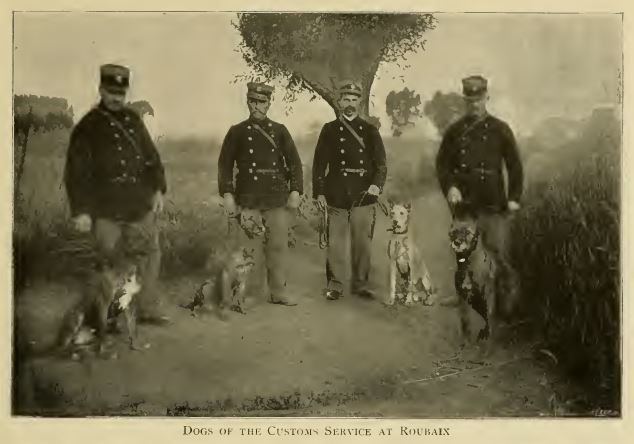
Clearly, Shaler is fond of dogs. He highlights one of the starkest differences between cats and dogs: their usefulness. While dogs were domesticated by humans to perform a variety of tasks such as hunting, cats never had much of a purpose beyond “mousing” (catching rodents, especially on farms with grain storages). This limited purpose led to less variation in cat breeding. However, cat enthusiasts still did breed and exhibit purebred cats.
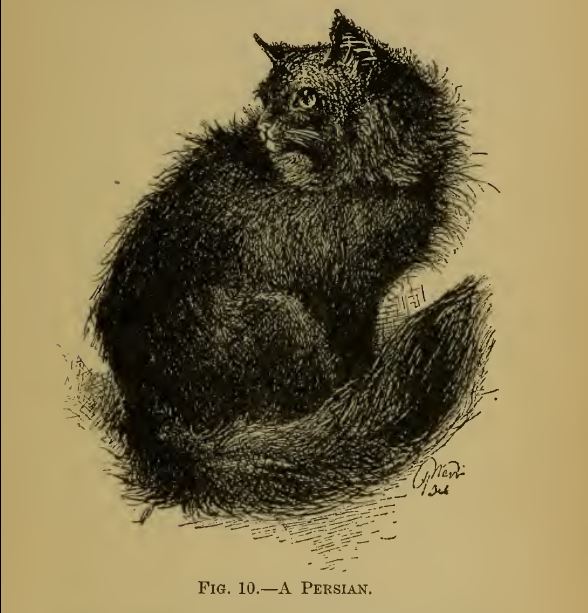
View Full Size Image
Huidekoper, Rush Shippen. The Cat: A Guide to the Classification and Varieties of Cats and a Short Treatise Upon Their Care, Diseases, and Treatment (1895). Digitized by the Library of Congress.
View Full Size Image
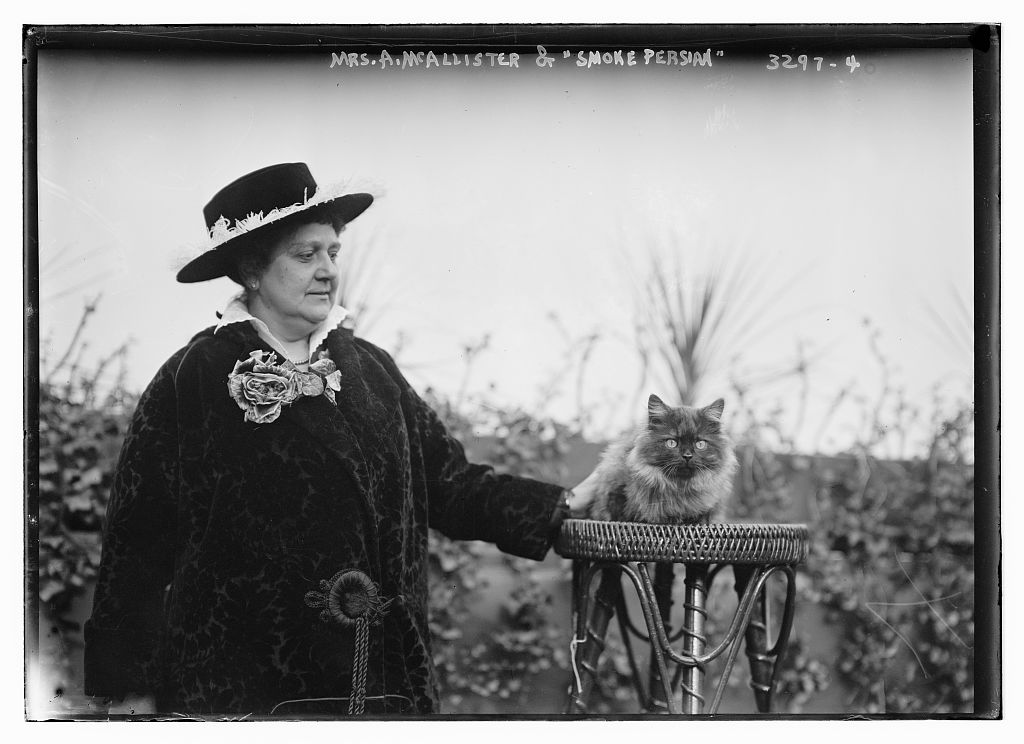
Mrs. A. McAllister and Smoke Persian Cat, Bain news Service Publisher, ca.1910-1915. http://www.loc.gov/pictures/item/ggb2005018109/.

Intelligence

Another point of dissention between cat and dog fans was which was more intelligent. Most believed that dogs were smarter. Author Dorothy Champion sums up the common beliefs and her take:

How often one hears the remark, ‘How stupid cats are!’ or, ‘Cats cannot compare with dogs for cleverness.’ This is a point on which many people make a great mistake… I have come to the conclusion that an uneducated cat has far more brains than an uneducated dog. Doubtless the dog is easier to teach, as he can be made to do things, whereas the cat is of an independent disposition [2].

Those trying to counter the belief that dogs were smarter had to fiercely defend the intellect of the cat and provide examples to bolster their claim. A common way to do so was to cite their ability to remember how to get from one location to another, even across long distances. However this ability was also turned into a fault, with some authors claiming that cats are more attached to locations than they are to people.
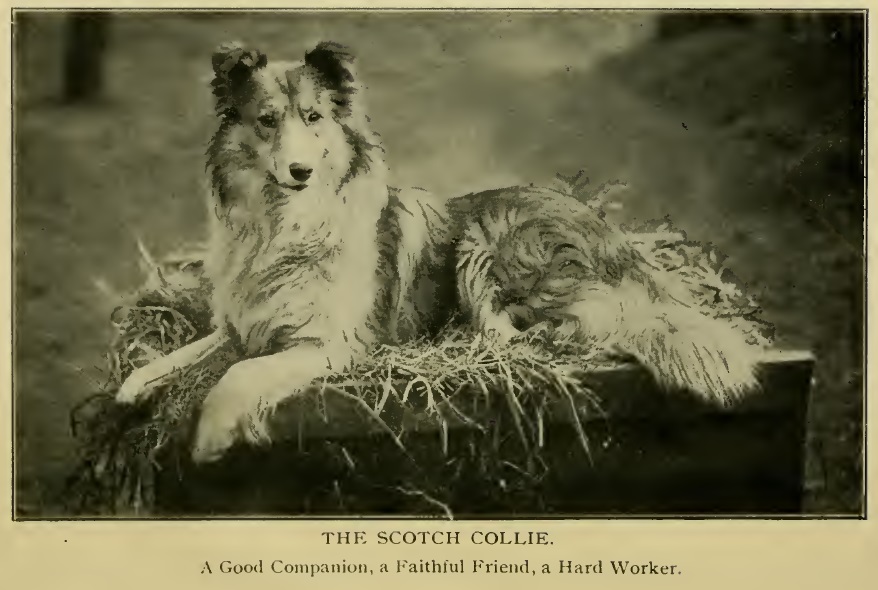
View Full Size Image
Biggle, Jacob. Biggle Pet Book: A Collection of Information for Old and Young Whose Natural Instincts Teach Them to be Kind to All Living Creatures (1900). Digitized by the Library of Congress.

Domestication

Another element of comparison between cats and dogs was the extent of their domestication. There are a few ways to approach this topic. One way is to go back and study their original shift from wild to domesticate. New scientific studies using ancient DNA are uncovering clues about the origins of this shift [3]. While the exact details are debated, everyone agrees that cats were domesticated more recently than dogs. In fact, twentieth century authors questioned whether or not cats really have been domesticated at all:

He never was but half-domesticated at best, and while he is a universal favorite with children because of his furry coat and look of seeming intelligence, he is yet essentially a wild animal, almost incapable of true domestication. He has lost little of his innate savagery, and as a relentless foe of birds he has really become an enemy to our civilization[4].

While this account is definitely one of the more severe critiques of cats, the sentiment that cats remained wild and were posing a threat to wildlife was gaining popularity in the beginning of the 1900s.

Another way to approach the topic of domestication has to do with nineteenth century conceptions of domesticity. Cats were believed to have a particular affinity for the home, and became associated with the household, and by extension, women. Conversely, dogs were known to travel outside with their owners, tagging along for masculine activities like hunting.

For more information on the link between cats and women in this time period, see this blog post.
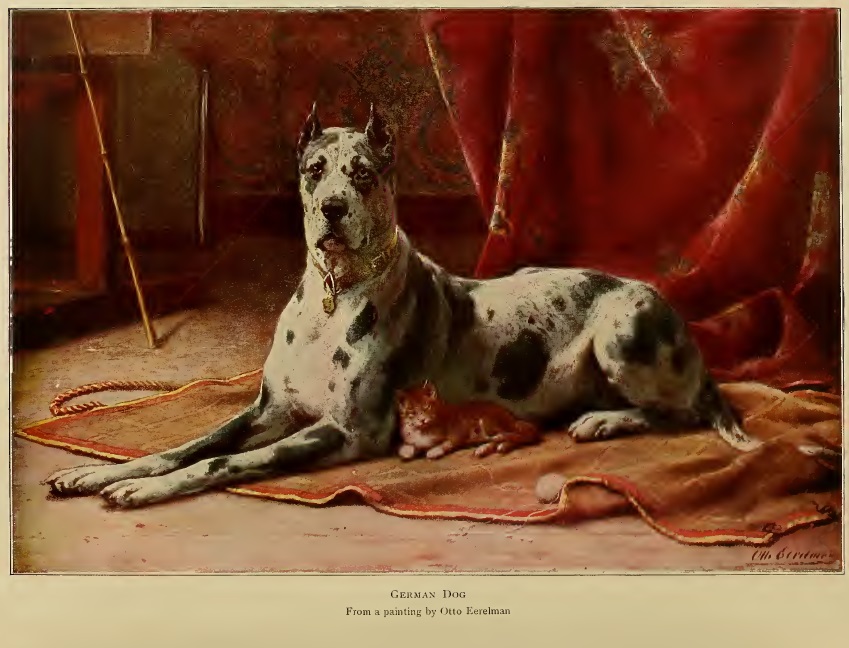
View Full Size Image
Gos., De Voogt. Our Domestic Animals: Their Habits, Intelligence, and Usefulness (1907). Digitized by the Library of Congress. (Look carefully to see the small kitten curled up beside the large dog).

By comparing their usefulness, intelligence, and domestication, nineteenth and early twentieth century authors debated the merits of cats and dogs in very similar ways that we do today.

Click the links below to access fully digitized volumes of the books mentioned in this post:

  • Biggle, Jacob. Biggle Pet Book: A Collection of Information for Old and Young Whose Natural Instincts Teach Them to be Kind to All Living Creatures (1900).
  • Champion, Dorothy Bevill. Everybody’s Cat Book (1909).
  • Davenport, Eugene. Domesticated Animals and Plants: A Brief Treatise (1910).
  • Forbush, Edward Howe. The domestic cat; bird killer, mouser and destroyer of wild life (1916).
  • Shaler, Nathaniel Southgate. Domesticated Animals, Their Relation to Man and His Advancement in Civilization (1895).
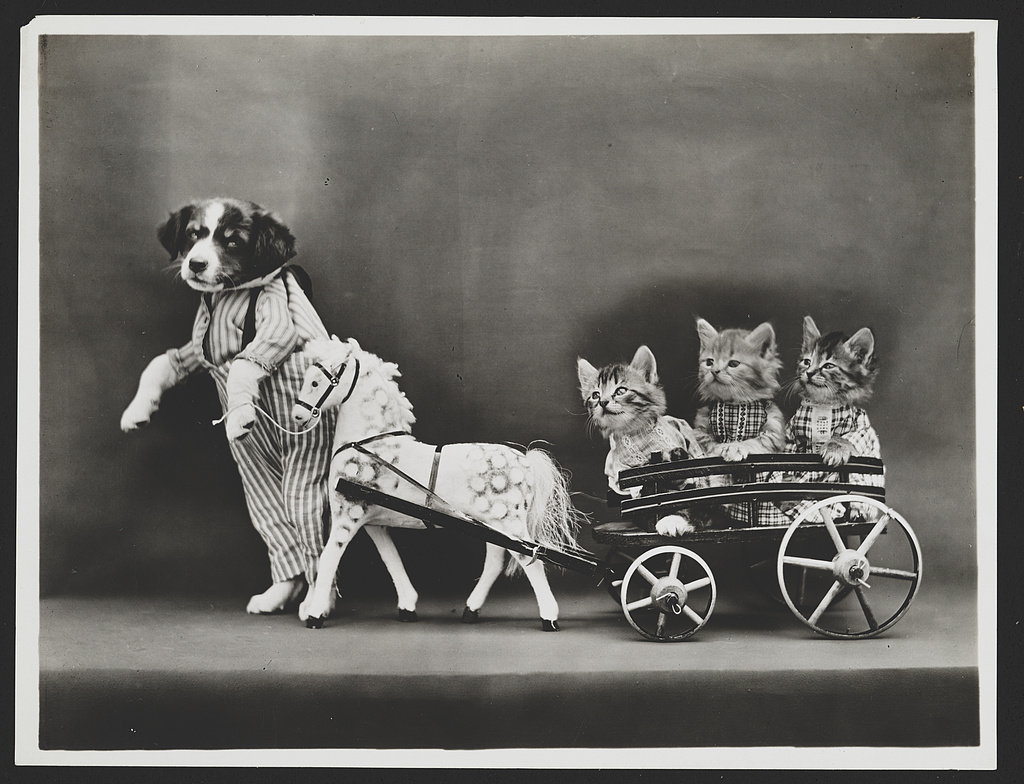
View Full Size Image
Frees, Harry Whittier. “A joy-ride” (1914). Library of Congress Prints & Photographs Division. http://www.loc.gov/pictures/item/2013648296/.


*For more information about domestic cats in the nineteenth and early twentieth centuries, see the digital exhibition “Wild Mouser to Household Pet: A History of Cats in Science and Society, 1858 to 1922.”

[1] Nathaniel Southgate Shaler. Domesticated Animals, Their Relation to Man and His Advancement in Civilization (1895). Page 50. Emphasis added.
[2] Champion, Dorothy Bevill. Everybody’s Cat Book (1909). Page 13. Emphasis added.
[3] See for example, Ottoni, C. et al. The palaeogenetics of cat dispersal in the ancient world. Nat. Ecol. Evol. 1, 0139 (2017).
[4] Davenport, Eugene. Domesticated Animals and Plants: A Brief Treatise (1910). Page 235. Emphasis added.
July 24, 2017by ulib-libraryjobs
Blog Reel

White House Biodiversity: Presidential Pets

Celebrating President’s Day with a Look at Presidential Pets

It’s President’s Day (recognized as Washington’s Birthday – the event for which this holiday was originally established – on the federal calendar) in the United States. We decided to commemorate the day with a look at the varied and sometimes remarkable biodiversity that has graced the White House since our first president in 1789. There are of course the usual suspects – dogs, cats and birds – and some not as readily available in your local pet store, including tigers, elephants, and pygmy hippos!

The Usual Fare: Dogs, Cats, and Birds


View Full Size Image
Some of most popular Presidential dog breeds are Terriers!

By far the most popular type of animal owned by presidents over the years is the dog. Thirty-one of our forty-four presidents owned dogs, breeds of which include Terriers, Labradors, Spaniels, Irish Setters, Collies, Eskimo Dogs, and less-usual breeds like Weimaraners, Mastiffs, Wolfhounds, and Airedales. President Obama’s dogs, Sunny and Bo, both Portuguese Water Dogs, are the current pets-in-residence at the White House.

Significantly less popular among presidential pets are cats (to the chagrin of many a librarian!); only twelve of our Presidents owned them. These cat lovers included Lincoln, Hayes, Theodore Roosevelt, Coolidge, Kennedy, Ford, Carter, Clinton, and George W. Bush. President Hayes, who held office 1877-1881, owned the first Siamese kitten to reach America.

Not all of our presidents preferred four-legged companions. Feathery friends are also popular in Office – more popular, in fact, than cats! Nineteen of our past presidents have owned birds. Some presidents even owned exotic varieties, including a Hyacinth Macaw and Barn Owl (Theodore Roosevelt) and a Bald Eagle (Buchanan). Farmyard-associated Aves have also seen White House time, including a turkey during Lincoln’s tenure and roosters during Theodore Roosevelt’s presidency.

It’s an Equestrian Thing


View Full Size Image
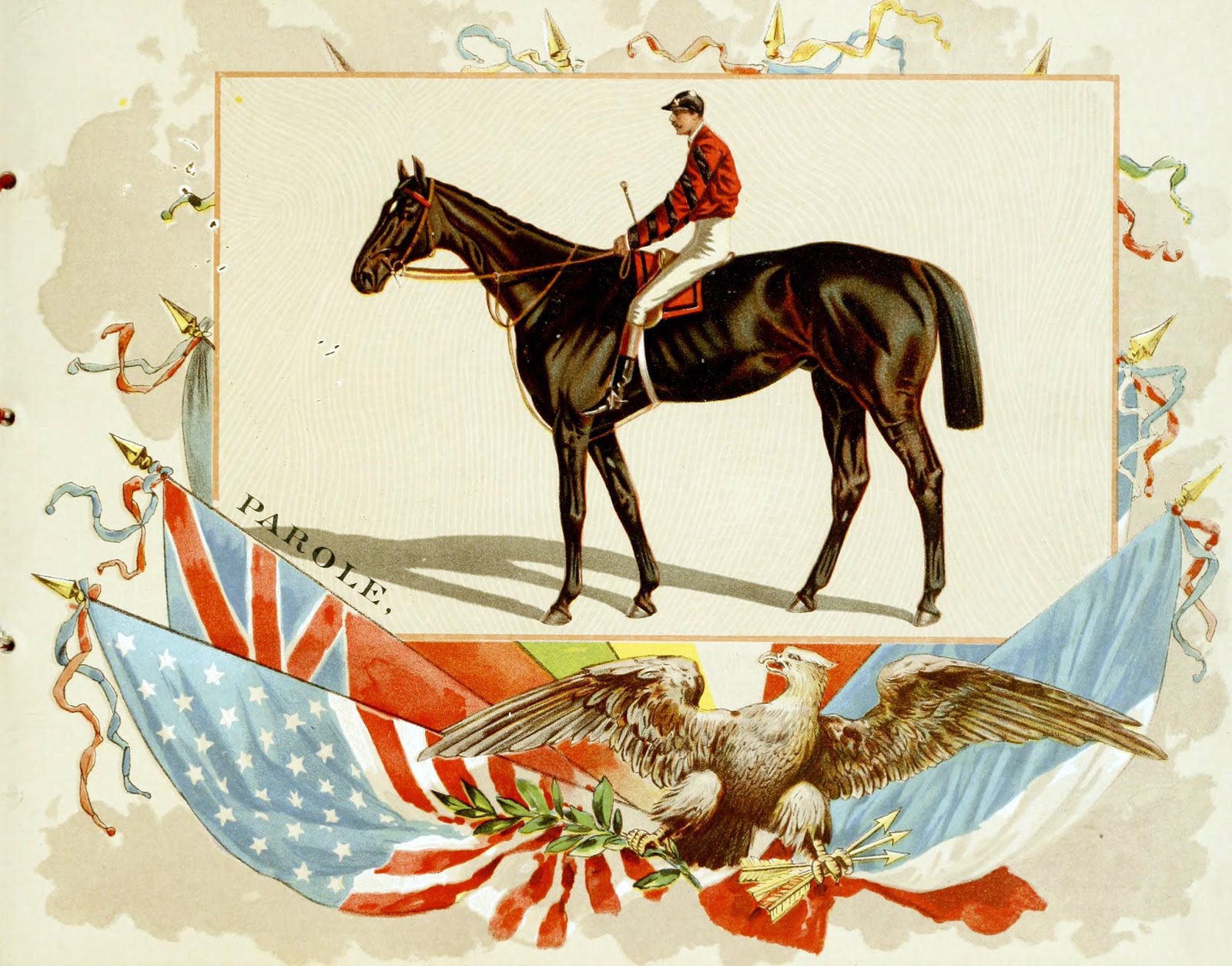
Up until early 1900s, horses were common Presidential Pets.

It should not surprise you that a popular presidential pet was the horse. Up until the early 1900s, when the automobile became king, it was commonplace for influential citizens to own horses. Though President Washington owned many horses, his successor, John Adams, actually built the first White House stables. The most recent president to own a horse was John F. Kennedy, whose daughter Caroline’s pony, Macaroni, roamed freely around the White House grounds and was something of an American celebrity. Kennedy’s wife, Jacqueline, also owned a horse named Sardar.

Other Barnyard Friends

The horse isn’t the only species commonly found on a farm that, at times, has also been a resident at the White House. Many presidents owned cattle, including William Henry Harrison, who kept a Durham variety at the White House, and Rutherford Hayes, who owned pedigreed Jersey Cows. While Taft was the last president to keep a cow at the White House (his cow Pauline provided him with milk during his 1909-1913 presidency), George W. Bush owns a female longhorn named Ofelia, which they keep at the family ranch in Texas. Goats were also popular among Presidents, with both Harrisons, Lincoln, and Hayes claiming them at pets. And let us not forget the Democratic-icon, the donkey! President Coolidge had one named Ebenezer during his 1923-1929 tenure.

Bigger Doesn’t Mean Better


View Full Size Image
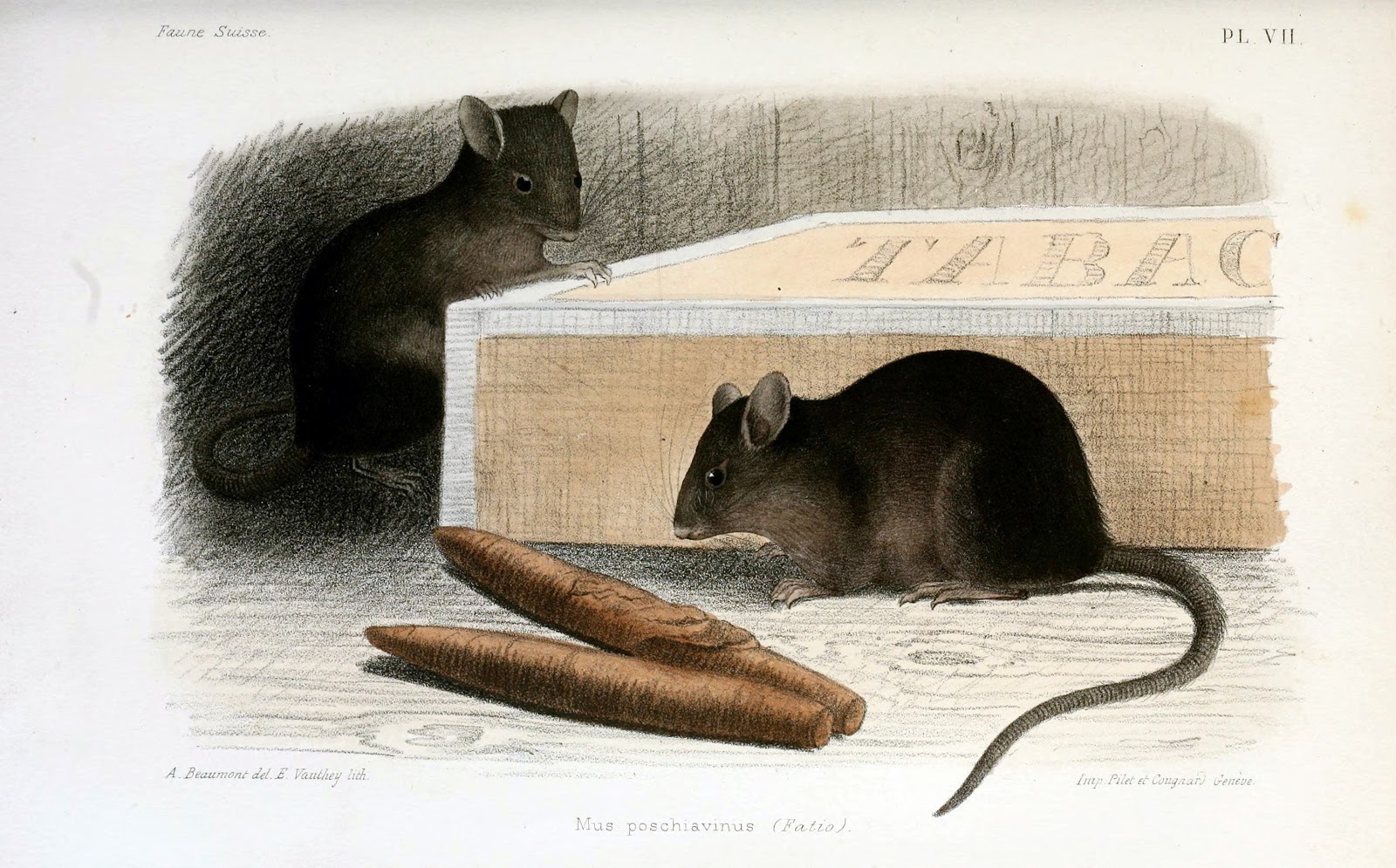
Andrew Johnson left flour on his doorstep to feed mice during his impeachment.

Some Presidents preferred much smaller pets. For example, Coolidge and Theodore Roosevelt had raccoons, while Kennedy and Lyndon B. Johnson owned hamsters. Theodore Roosevelt was also one of only three presidents to own reptiles as pets: he owned snakes and a lizard named Bill. Our favorite small pet story, however, is associated with Andrew Johnson, who left flour on his doorstep at night to feed the local mice population during his impeachment.

A Walk on the Wild Side


View Full Size Image
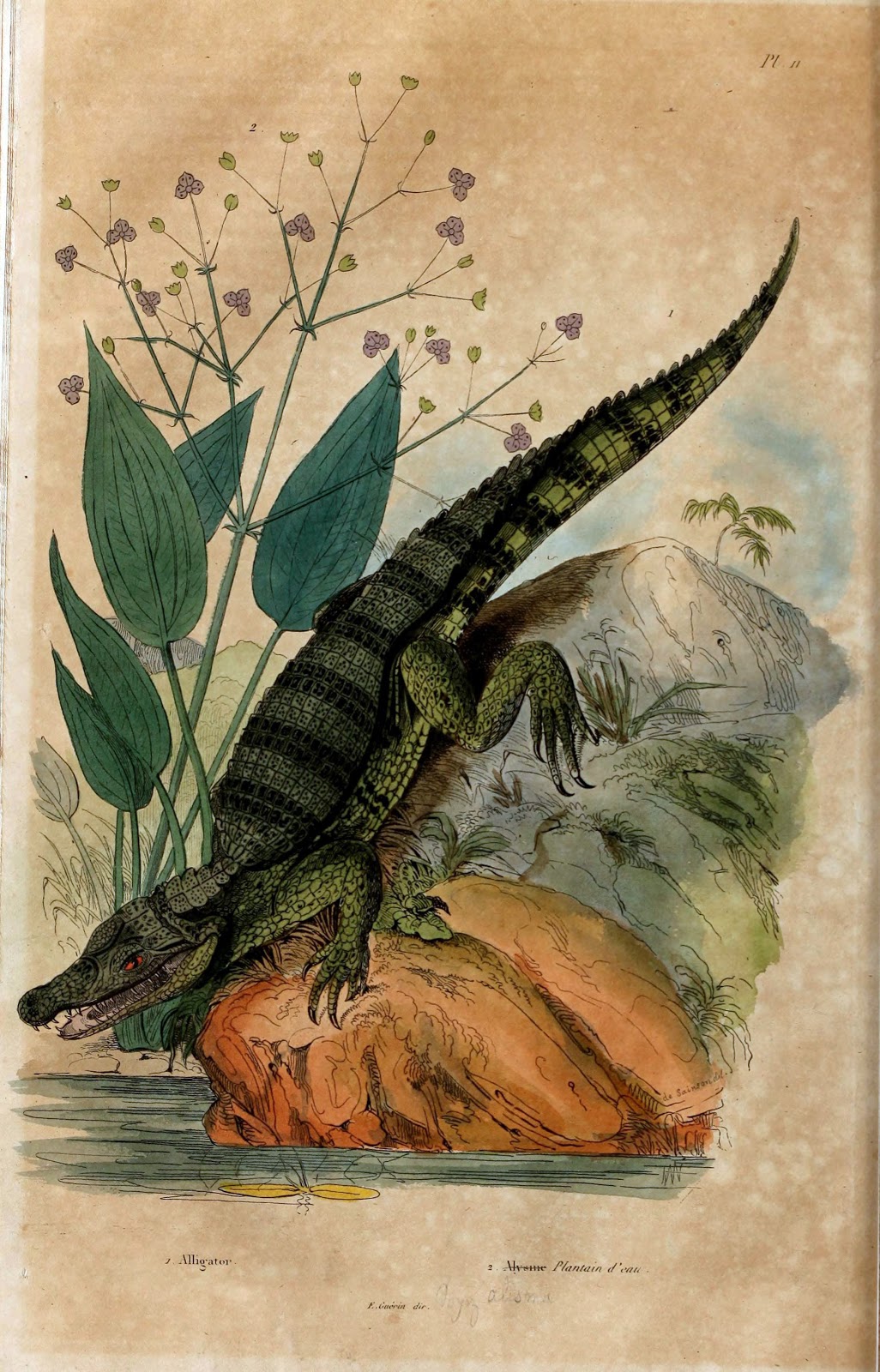
Alligator 1 of 3 reptiles species owned by presidents

Though it has been over 80 year since anything more exotic than a lovebird called the White House home, some of our former presidents certainly had a flare for the unusual when it came to pets. For example, John Quincy Adams and Herbert Hoover owned the only other reptile pets claimed by presidents – Alligators! Adams’ was given to him by the Marquis de Lafayette, and Hoover’s son owned a pair that occasionally wandered around the White House lawn.

Not impressed by an alligator? Well, Martin van Buren received a pair of tiger cubs from the Sultan of Oman. Congress strongly requested the animals be given to the local zoo.

And if you think your pet eats a lot, consider owning something that eats up to 660 pounds of food a day! James Buchanan received a herd of elephants from the King of Siam (he wisely donated them to the zoo).

However, when it comes to the extreme in pet-owning, Coolidge and Theodore Roosevelt take the cake. Among his dogs, cats, birds, donkey, and raccoon, Calvin Coolidge also owned a bobcat, lion cubs, a wallaby, a bear, and even a pygmy hippo! Theodore Roosevelt, whom we featured not long ago in regards to his outspoken love for nature, owned not only the typical dogs, cats, birds, and even horses, but also a badger, lion, hyena, wildcat, coyote, bear, and zebra.

View Full Size Image
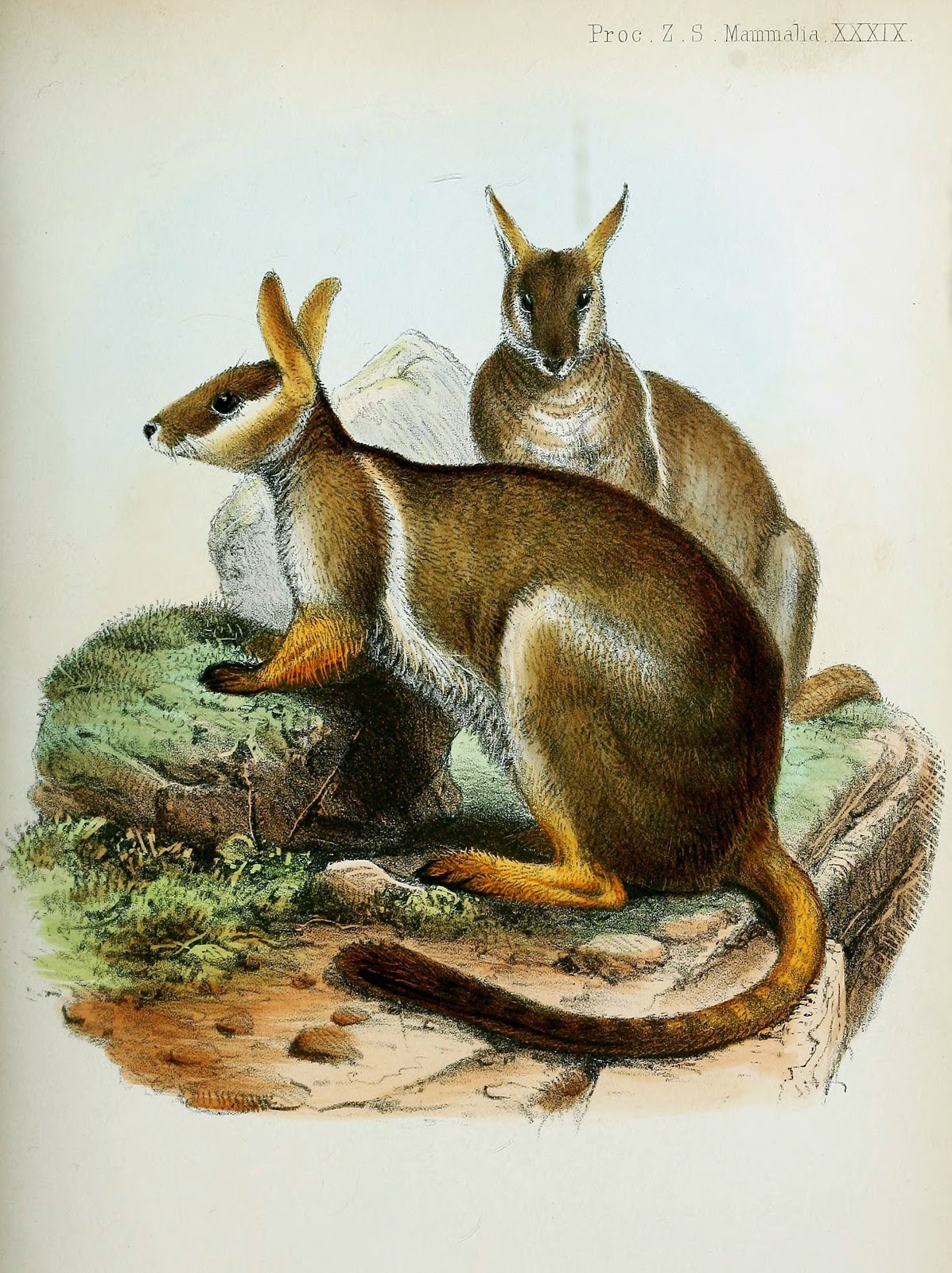
During President Coolidge’s tenure, the White House featured what amounted to a zoo, complete with wallabies!


Outcasts from the Pet Bandwagon

Think every president owned a pet? Think again! James K. Polk (1845-49) left no record of ever owning any pets.

Our Presidents have certainly owned some remarkable species throughout the years. Check out illustrations of the presidential varieties in our BHL Flickr.

We hope you enjoyed this post. Interested in guest-blogging for BHL? We’d love that! Natural history, biodiversity and conservation topics are especially welcomed. Email us your ideas at

[email protected].


February 16, 2015by ulib-libraryjobs
Blog Reel, Featured Books

Celebrating Humankind’s Best Friend, the Dog!

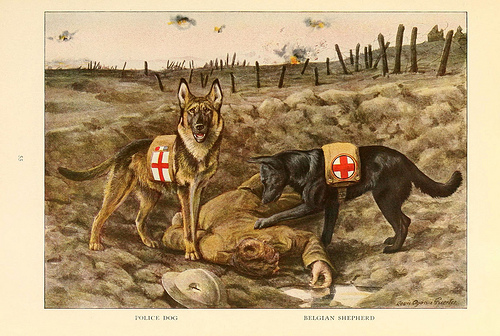
As a bone-a-fide dog lover, it gives me great pleasure to highlight Baynes and Louis Agassiz Fuertes’ beautifully illustrated “The Book of Dogs: an intimate study of mankind’s best friend” as this week’s book of the week. In it, the famous ornithologist and illustrator  lends his hand to the descriptions and art of drawing various breeds of “man’s best friend” while Baynes tells stories of dog fame, adventure, and heroism, such as this one about Red Cross dogs in WWI:

View Full Size Image
pg. 55

“The Red Cross dogs rendered invaluable service in feeding and aiding the wounded. Each one carried a first-aid kit either strapped to its collar or in a small saddle pouch. When they found a soldier who was unconscious, they were taught to bring back his helmet, handkerchief, or some other small article as a token of the discovery. Many of them learned wholly to ignore the dead, but to bark loudly whenever they came upon a wounded man.” [pg. 73]

Published in 1919 by the National Geographic Society, this “study” remarks on the history of dogs but does little to dive deeply into the science behind this subspecies of Canidae. Canis lupus familiaris are a subspecies of Canis lupus or Gray Wolf. Dogs are one of 38 subspecies of C. lupus along with a series of wolves and the feral dog, otherwise known as dingos [1]. Dogs, dingos, and wolves can all interbreed and share morphological and behavioral similarities including being social, highly expressive, and (depending on your dog of course) intelligent animals. It is not certain when exactly dogs were first domesticated but recent evidence points to one of the oldest known domesticated dogs to 33,000 years ago [2]. A study from 2010 points to the Middle East as the most likely locality of origin of the subspecies [3].

View Full Size Image
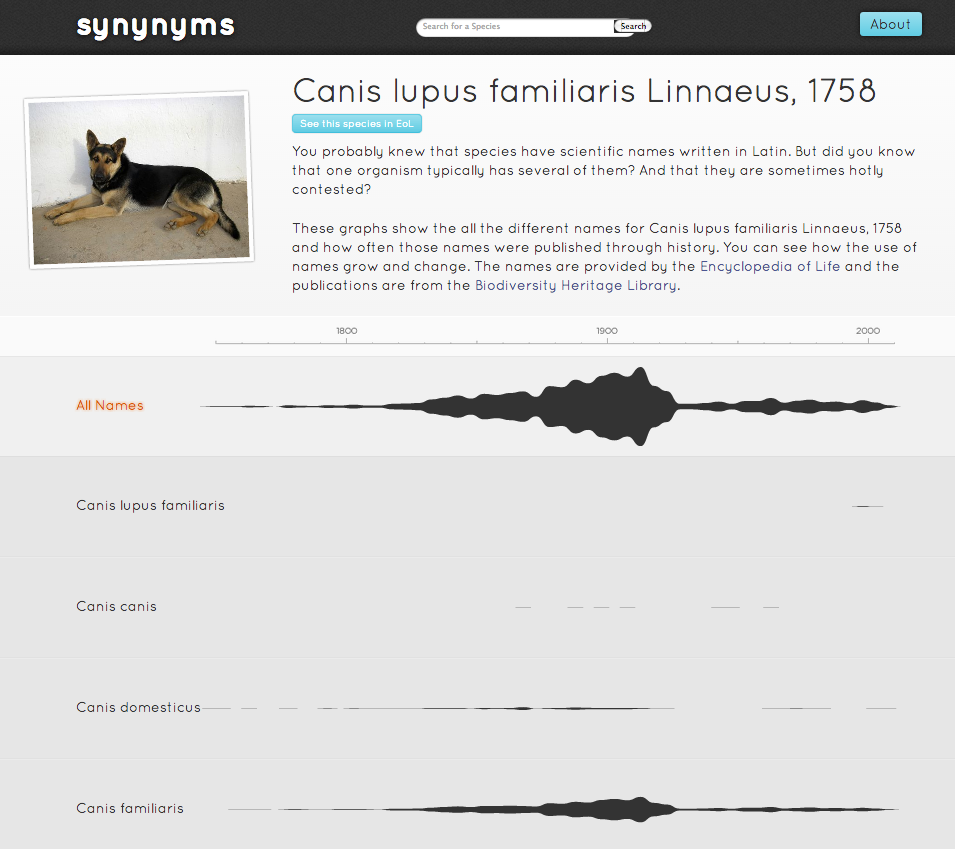
http://synynyms.com/taxon/1228387

With such a rich history of domestication and intimacy with our species, one would think we’d have Canis lupus familiaris figured out, but it was not until recently that dogs’ taxonomy was resolved according to the Integrated Taxonomic Information System’s report. Linnaeus first described the domestic dog as Canis canis in Systema Naturae 1735 and later revised his own classification. As our good friend over at Synynyms.com illustrates, the taxonomic story of the dog has gone through many iterations including C. domesticus and C. familiaris, finally settling as a subspecies of C. lupus.

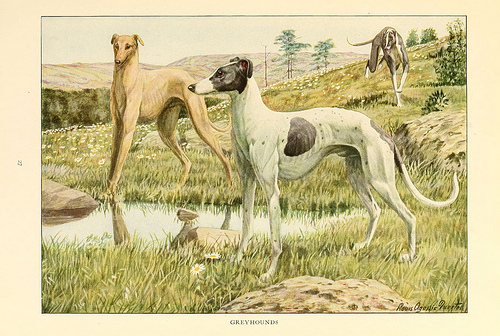
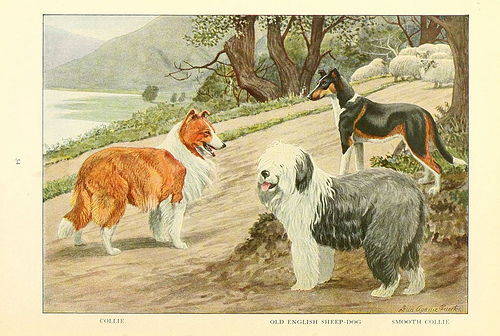
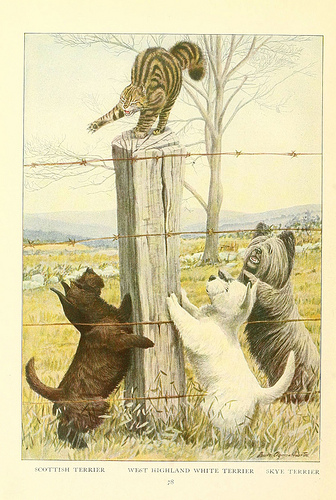
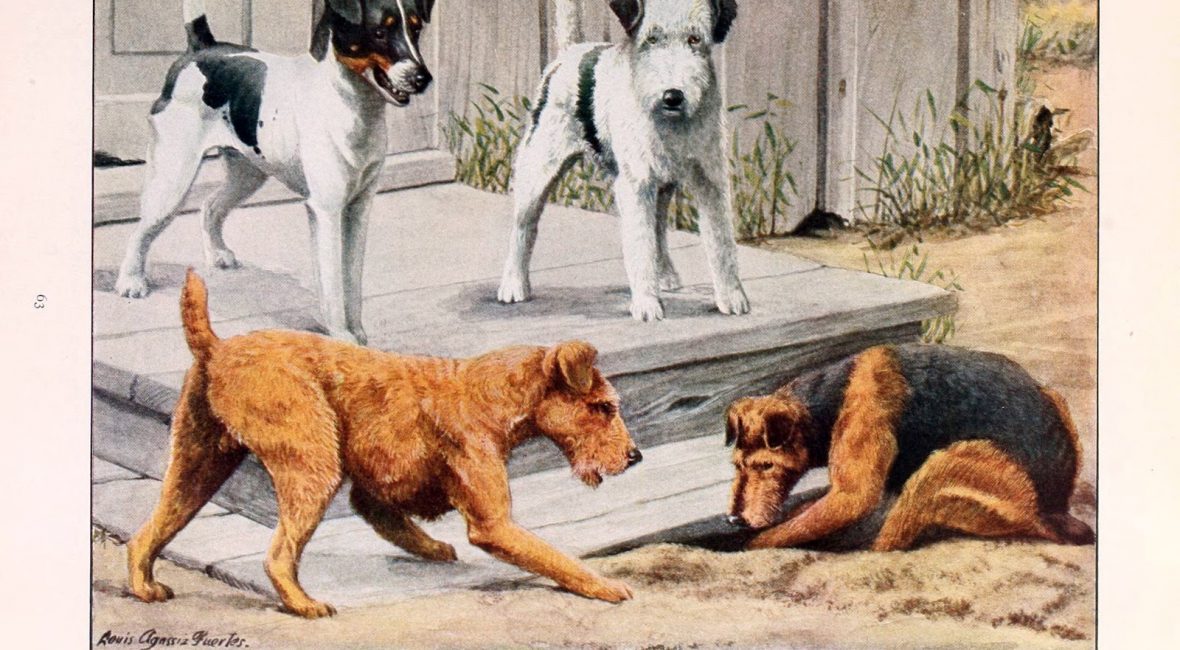
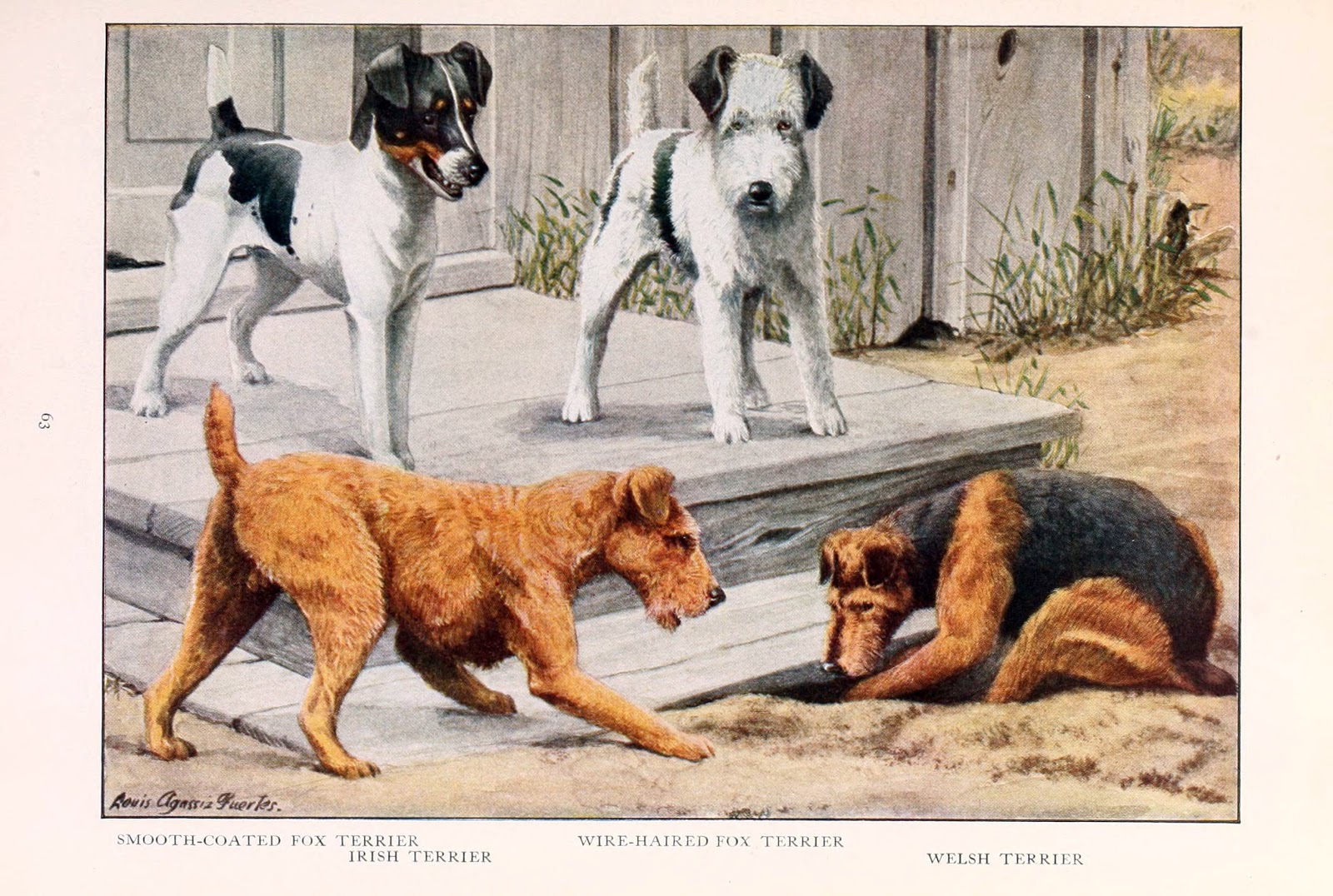
As pack animals, dogs lend themselves well to a close relationship with humans and have been highly selectively bred to serve a variety of roles. From the tiny Chihuahua to the Great Dane, nearly 280 official breeds are recognized by the Kennel Club and the American Kennel Club combined. Baynes and Fuertes discuss over 60 breeds in their book highlighting such classic favorites as the Collies, Greyhound, and Terriers (poor kitty!).

View Full Size Image
pg. 27
View Full Size Image
pg. 54
View Full Size Image
pg. 78

For more of Louis Agassiz Fuertes’ beautiful illustrations of our canine friends, please visit our flickr set for this book.

As all members of the C. lupus group can interbreed there are a wealth of possibilities for mix-breeds and as any “mutt” owner will tell you they make for some fantastic companions, bringing some the of the best of multiple breeds together. Popular mixes of today include Labradoodles (Labrador + Poodle), Puggles (Pug + Beagle), and well you figure it out… (Shih Tzu + Poodle).

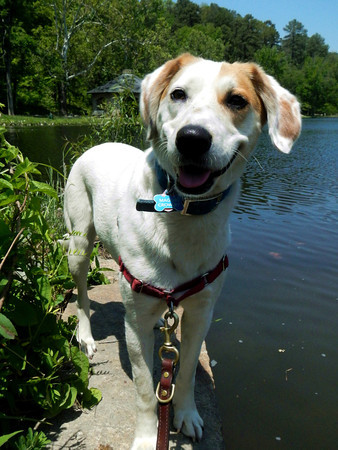
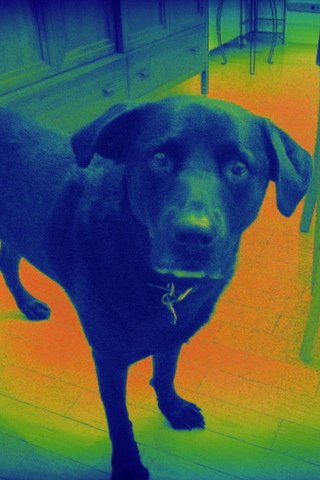
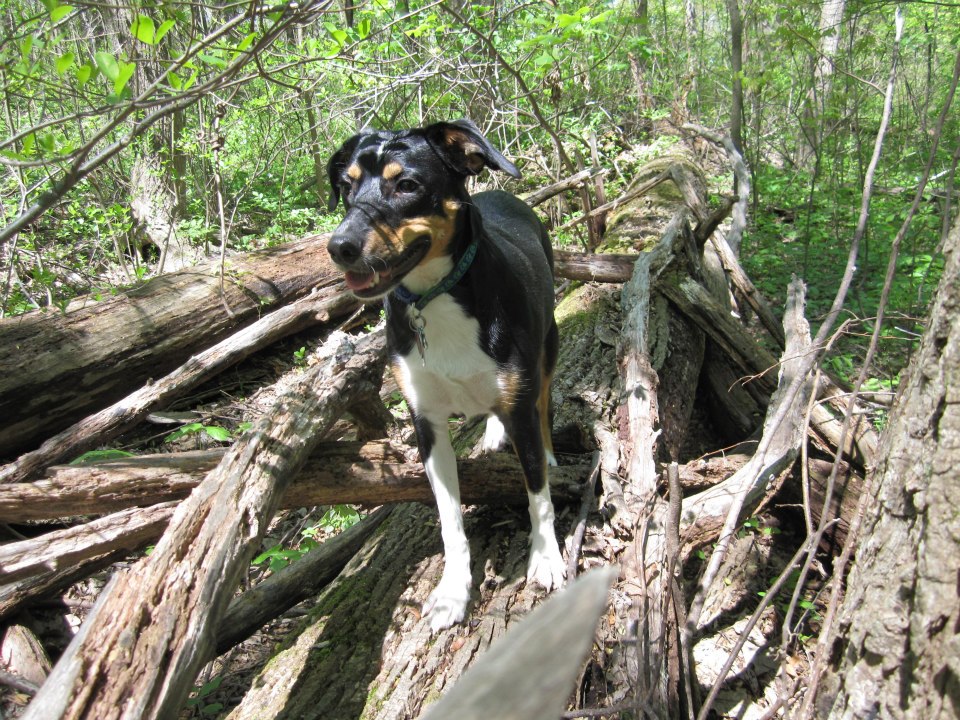
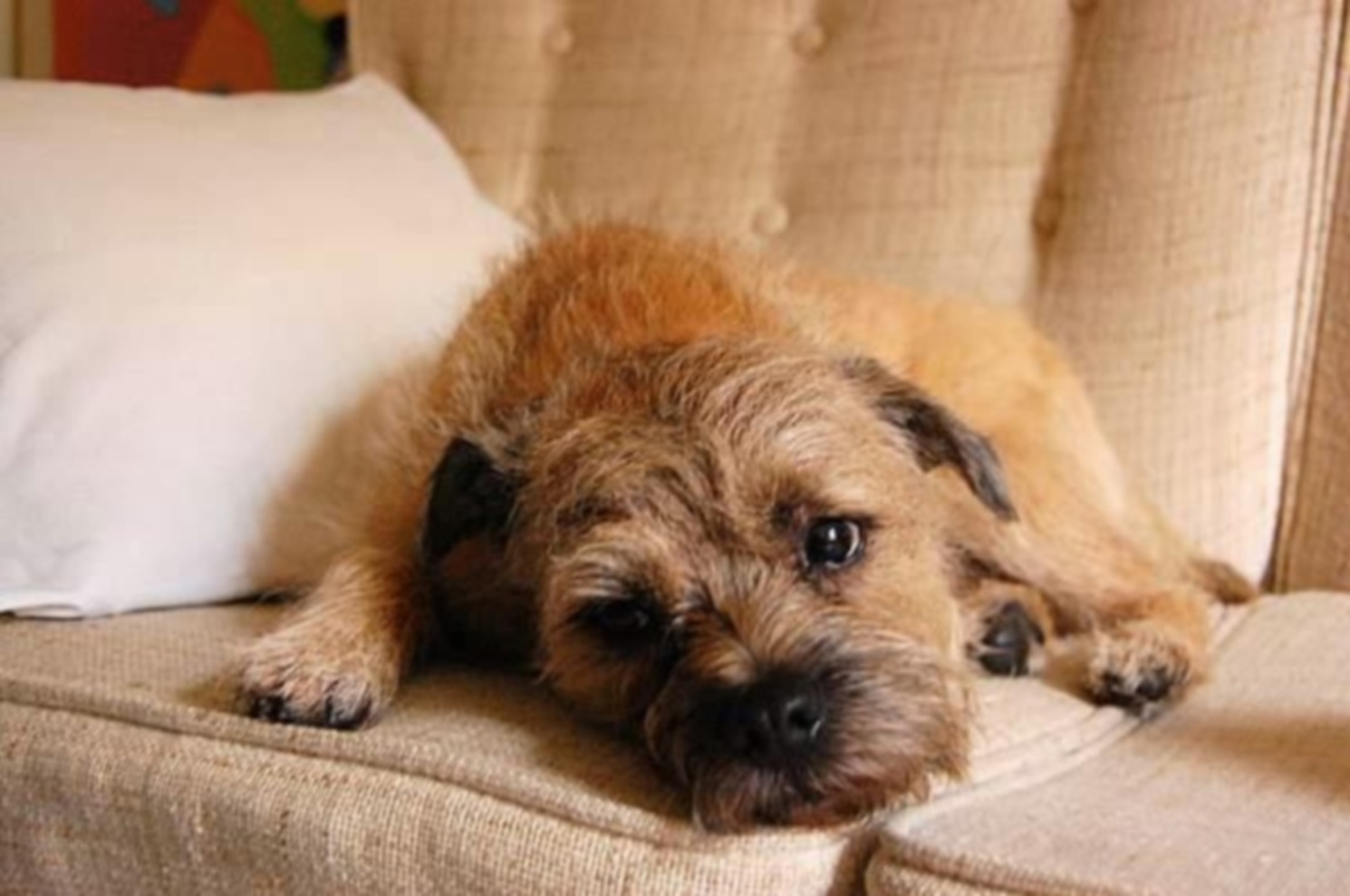
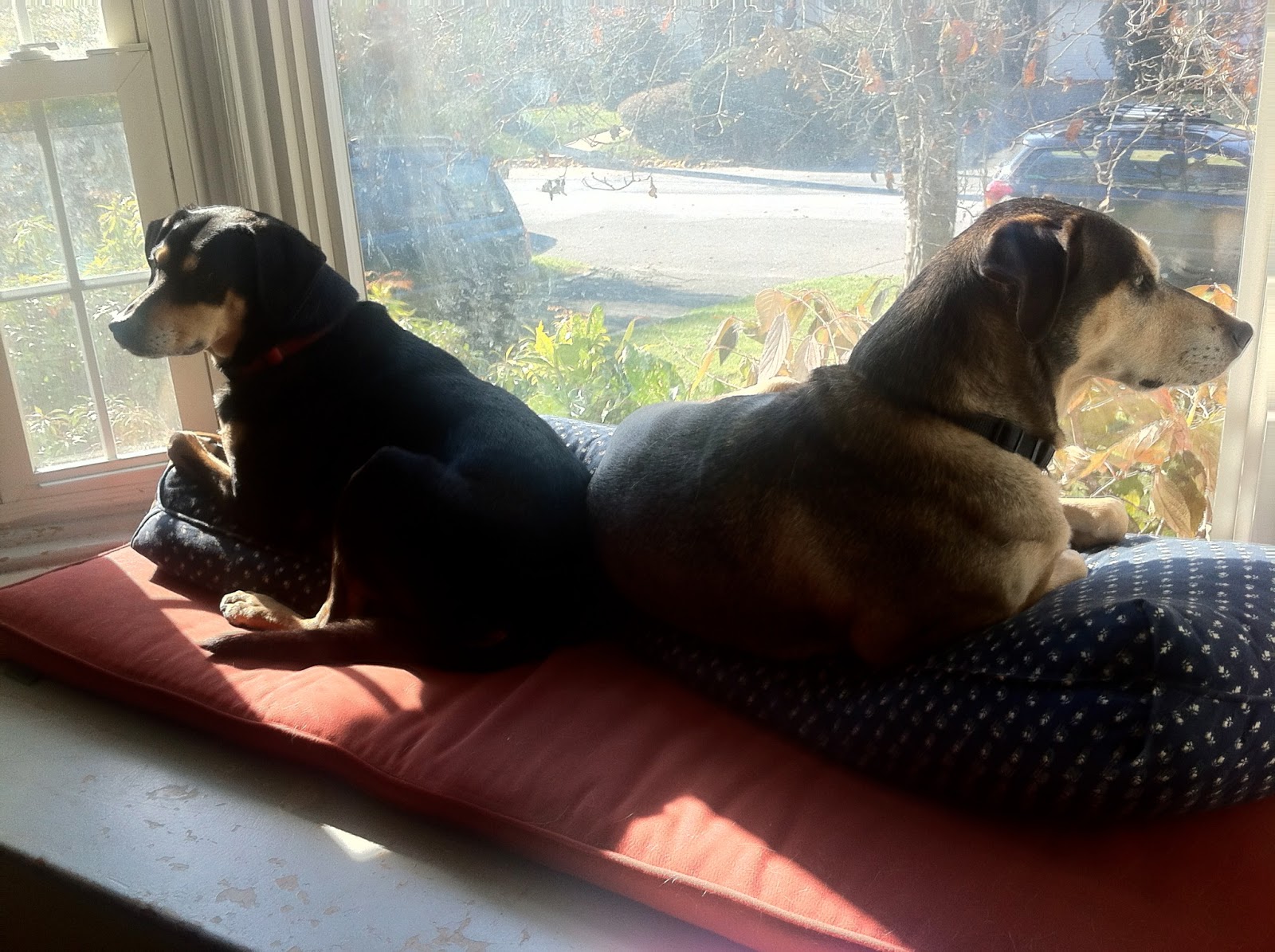
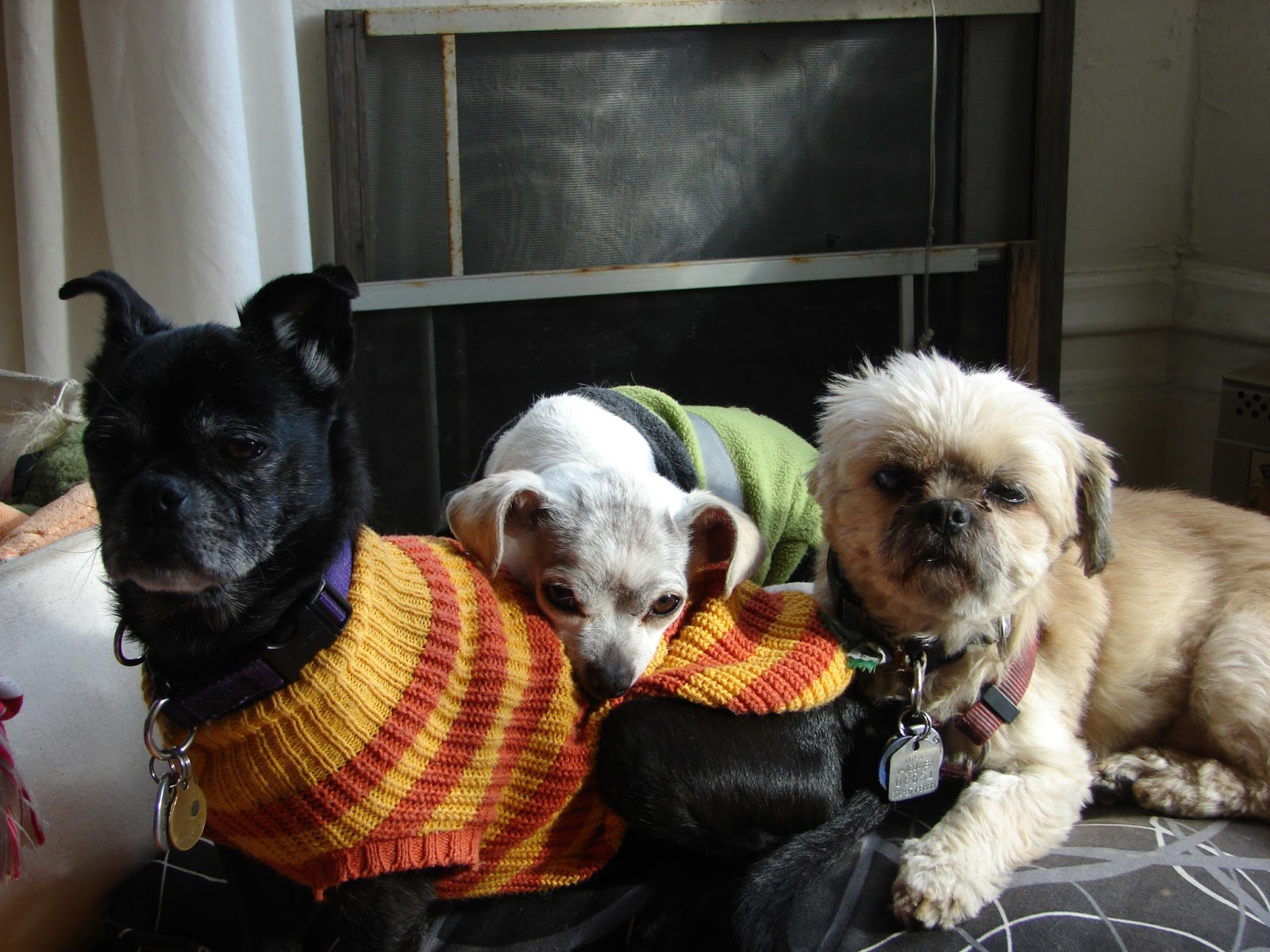
No dog post would be complete without cute pictures, thus I bring you some of the best shots of our very own BHL Staff pooches:

View Full Size Image
Maggie taken by Tim Ashman
View Full Size Image
Rose
View Full Size Image
Rowan
View Full Size Image
Hadrian
View Full Size Image
Crash & Biscuit


View Full Size Image
Lilly, Maddy, & Bertie


View Full Size Image
Franklin
View Full Size Image
Ozzie

References

[1] http://www.itis.gov/servlet/SingleRpt/SingleRpt?search_topic=TSN&search;_value=180596 accessed 6-14-2013.

[2] Druzhkova AS, Thalmann O, Trifonov VA, Leonard JA, Vorobieva NV, et al. (2013) Ancient DNA Analysis Affirms the Canid from Altai as a Primitive Dog. PLoS ONE 8(3): e57754. doi:10.1371/journal.pone.0057754

[3] vonHoldt, Bridgett; et al. (2010-03-17). “Genome-wide SNP and haplotype analyses reveal a rich history underlying dog domestication”. Nature 464 (7290): 898–902. Bibcode:2010Natur.464..898V. doi:10.1038/nature08837. PMID 20237475.

June 14, 2013by SheilaC7108

Help Support BHL

BHL's existence depends on the financial support of its patrons. Help us keep this free resource alive!

search

About BHL

The Biodiversity Heritage Library (BHL) is the world’s largest open access digital library for biodiversity literature and archives. BHL operates as a worldwide consortium of natural history, botanical, research, and national libraries working together to digitize the natural history literature held in their collections and make it freely available for open access as part of a global “biodiversity community.”

Join Our Mailing List

Sign up to receive the latest news, content highlights, and promotions.

Subscribe Now

Subscribe to Blog via Email

Enter your email address to subscribe to this blog and receive notifications of new posts by email.

Join 319 other subscribers

Subscribe to Blog Via RSS

Subscribe to the blog RSS feed to stay up-to-date on all the latest BHL posts.

Access RSS Feed

Inspiring Discovery through Free Access to Biodiversity Knowledge.

The Biodiversity Heritage Library makes it easier than ever for you to access the information you need to study and explore life on Earth…for free, anytime, anywhere.


64+ Million Pages of
Biodiversity Literature Online.

EXPLORE

Tools and Services
to Transform Research.

EXPLORE

300,000+
Illustrations on Flickr.

EXPLORE

ABOUT | HARMFUL CONTENT | PRIVACY | SITE MAP | TERMS OF USE