Biodiversity Heritage Library - Program news and collection highlights from BHL
  • Home
  • News
  • Featured Books
    • All Featured Books
    • Book of the Month Series
    • BHL at 20
  • User Stories
  • Campaigns
    • Fossil Stories
    • Garden Stories
    • Monsters Are Real
    • Page Frights
    • Her Natural History
    • Earth Optimism 2020
  • Tech Blog
  • Visit BHL
Home
News
Featured Books
    All Featured Books
    Book of the Month Series
    BHL at 20
User Stories
Campaigns
    Fossil Stories
    Garden Stories
    Monsters Are Real
    Page Frights
    Her Natural History
    Earth Optimism 2020
Tech Blog
Visit BHL
  • Home
  • News
  • Featured Books
    • All Featured Books
    • Book of the Month Series
    • BHL at 20
  • User Stories
  • Campaigns
    • Fossil Stories
    • Garden Stories
    • Monsters Are Real
    • Page Frights
    • Her Natural History
    • Earth Optimism 2020
  • Tech Blog
  • Visit BHL
Biodiversity Heritage Library - Program news and collection highlights from BHL
Blog Reel, User Stories

Poetic Botany: A Digital Exhibition Celebrating the History of Botany

View Full Size Image
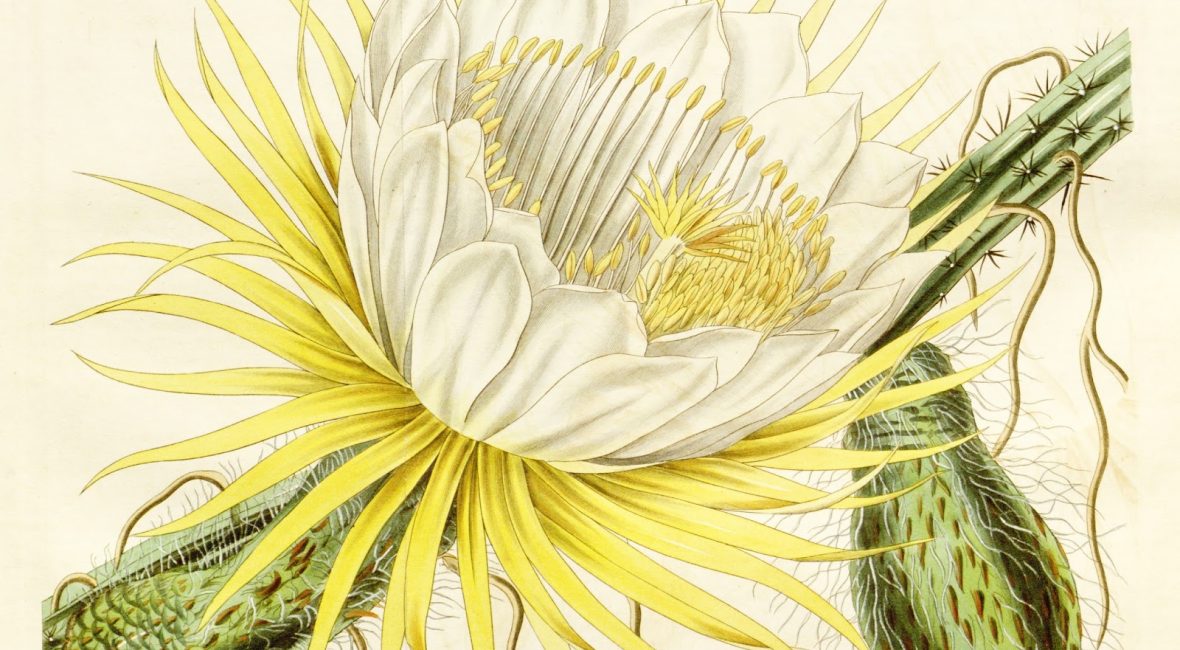
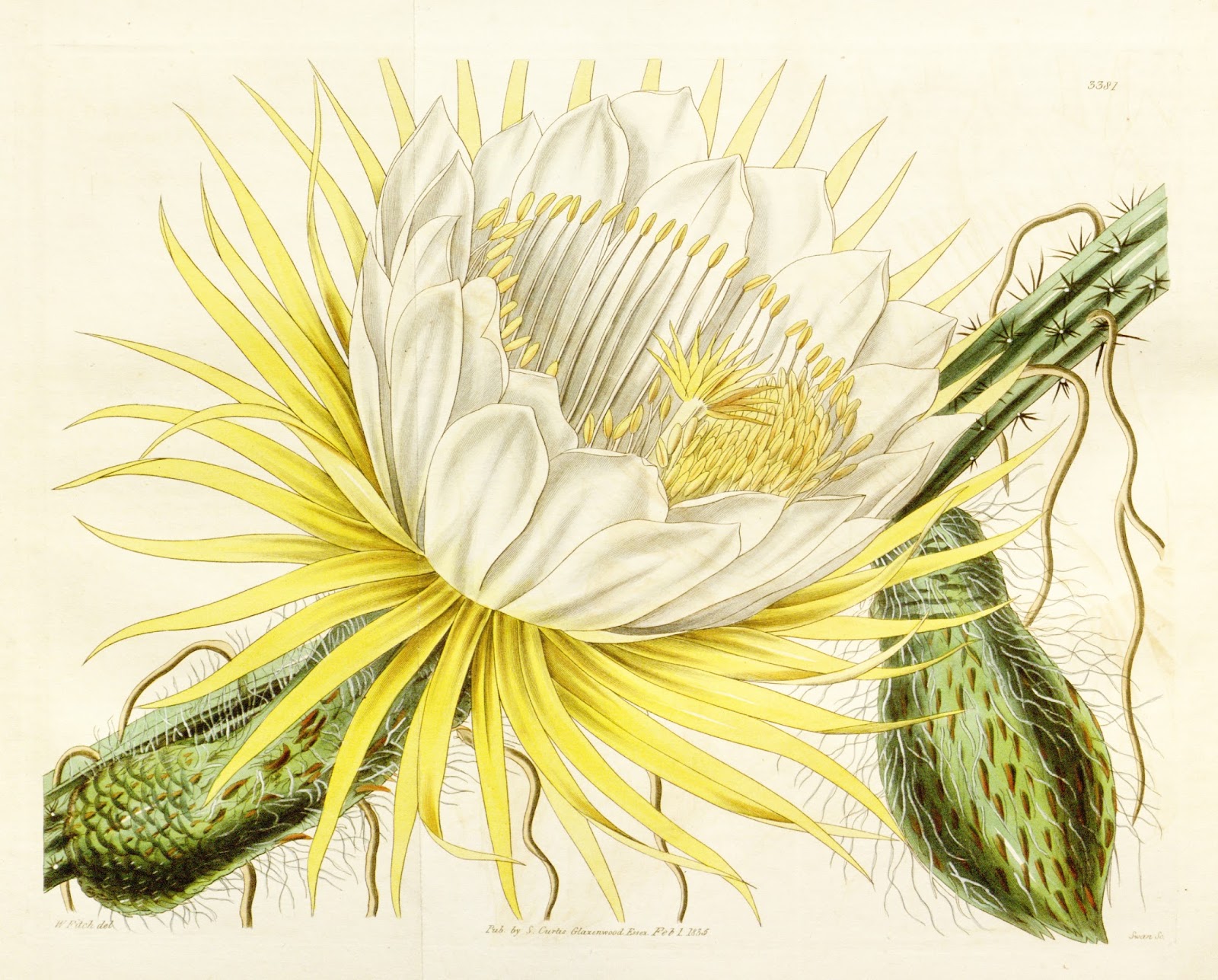
Night-blowing (Blooming) Cereus (Selenicereus grandiflorus). Curtis’s Botanical Magazine. v. 62 (1835). http://www.biodiversitylibrary.org/page/465887. Digitized by the Missouri Botanical Garden, Peter H. Raven Library.

‘Queen of the dark, whose tender glories fade
In the gay radiance of the noon-tide hours.’

‘That flower, supreme in loveliness, and pure
As the pale Cynthia’s beams, through which unveiled
It blooms, as if unwilling to endure
The gaze, by which such beauties are assailed.’

These elegant lines are quoted in Curtis’s Botanical Magazine (v. 62, 1835) as part of the description for the Night-blowing (Blooming) Cereus (Selenicereus grandiflorus) and serve as an artful conveyance of the species’ nocturnal blooming. But these lines represent more than just a whimsical representation of plant behavior. They are a reflection of the eighteenth century Poetic Botany movement that saw botany become the subject of poetry.

The Poetic Botany movement began with Erasmus Darwin, grandfather of Charles Darwin, who, in 1789, published The Loves of the Plants, a poem that in essence was a versification of Linnaean botany, where each plant in the garden is personified as a Greek god or goddess whose characteristics and interactions are meant to elucidate the Linnaean sexual system of plant classification. This highly successful poem was eventually republished along with a second poem by E. Darwin, The Economy of Vegetation, in 1791 as The Botanic Garden, A Poem in Two Parts, thus launching a movement that was proliferated by such authors as Frances Arabella Rowden, Charlotte Smith, and Robert John Thornton.
View Full Size Image
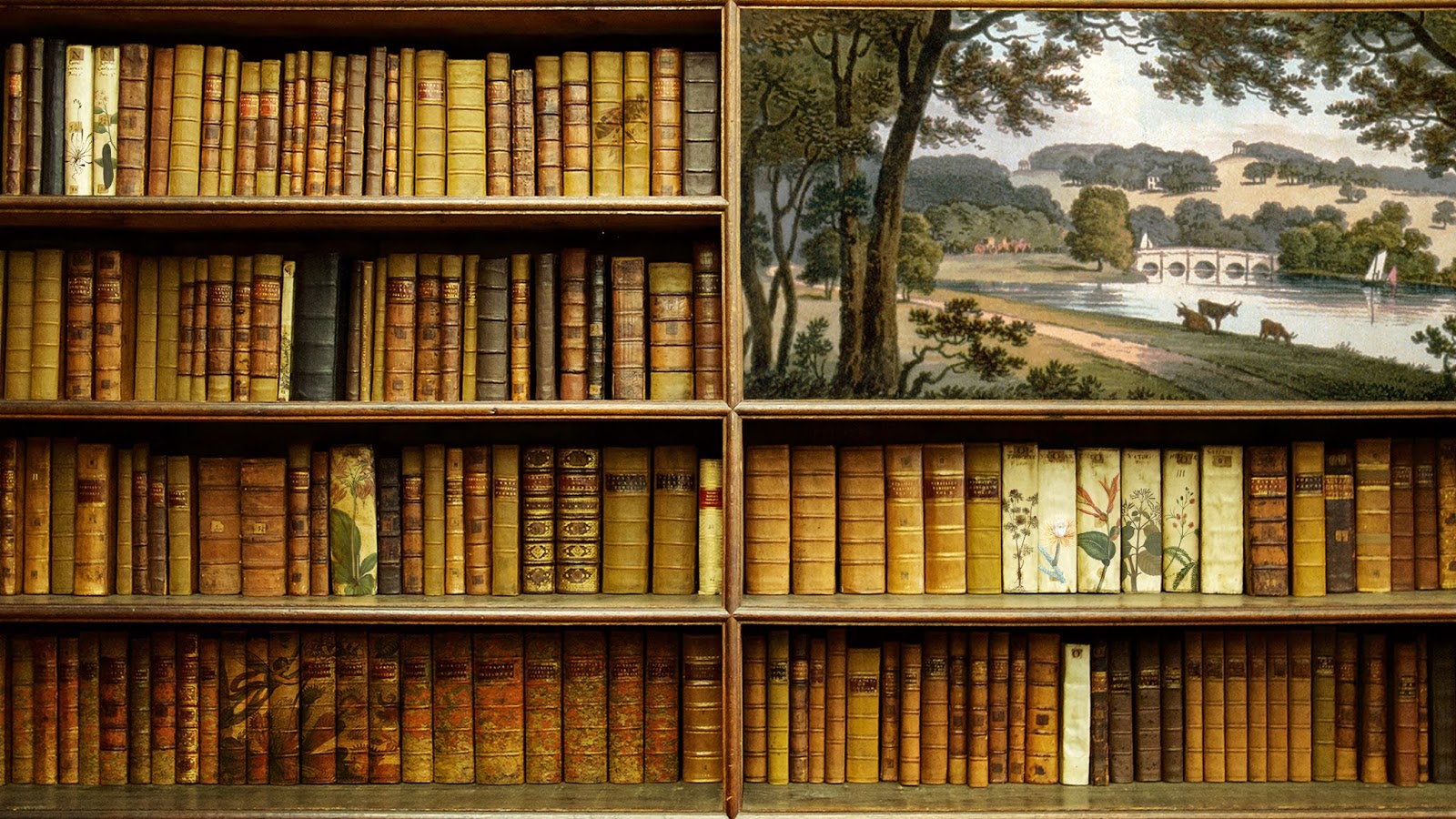
Frontispiece for the Digital Exhibition Poetic Botany: Art and Science of the Eighteenth-Century Vegetable World (2016). Credit: Ryan Feigenbaum.

Selenicereus grandiflorus is one of nine species featured in the online exhibition Poetic Botany. Using these plants as a lens through which to highlight the Poetic Botany movement, the exhibition introduces the botanists and works that constituted this period. These botanists were concerned with not just the art of their verse but also with the scientific study of their plant subjects, and thus the Poetic Botany movement reflects a beautiful union of art and science.

View Full Size Image
Ryan Feigenbaum at the Royal Botanical Gardens in Peradeniya, Sri Lanka. Credit: Madeline Chera, 2016.

The Poetic Botany exhibition was created by Ryan Feigenbaum as part of a 2015-2016 Andrew W. Mellon Fellowship at the Humanities Institute of the LuEsther T. Mertz Library of The New York Botanical Garden. NYBG, a founding BHL Member who has contributed over 3.9 million pages to the BHL collection, hosts the exhibit.

Feigenbaum, who has a BA in philosophy from DePaul University in Chicago, an MA in philosophy from Villanova University, and is currently completing a PhD in philosophy at Villanova University, researches the history and philosophy of biology. As evidenced through Poetic Botany, this research eventually led him down a botanical path.

“My dissertation, ‘The Epistemic Foundations of German Biology, 1790–1802,’ analyzes the emergence of biology as a science by tracing the genealogy of the organism concept,” explains Feigenbaum. “I came to the history of botany as an offshoot of this project; specifically, I was interested in the eighteenth-century opinion of plants, i.e., their ontological status. Whereas plants had long been regarded as devoid of intelligence, sensitivity, and locomotion, naturalists like Erasmus Darwin began to challenge these views, spurred on by the ‘discovery’ of plants like the Drosera and Mimosa pudica that challenged longstanding prejudices.”

Feigenbaum’s interest in the “life sciences” and the history of botany grew naturally out of his research on philosophy, for these two subjects have historically been intimately connected.

“The separation of philosophy and science is a relatively recent phenomenon,” affirms Feigenbaum. “Descartes, for instance, contributed to mathematics and physics beyond his cogito ergo sum, and much of Aristotle’s corpus focuses not on metaphysics or ethics but natural science. In this vein, I’ve been committed to studying not only eighteenth-century philosophy, but also its life science for the past five years or so. I say ‘life science’ because biology did not yet exist; the word ‘biology,’ in fact, was not used in its modern meaning until 1802. The how and why of biology’s emergence at this time is one focus of my dissertation.”

It was this extension into the ‘life sciences’ that eventually brought Feigenbaum to BHL.

“As my study of the history of philosophy incorporated more and more of the study of the history of science, BHL became a resource I relied on time and again,” asserts Feigenbaum. “At first I would search via Google for a particular eighteenth-century text, but I found it so often on BHL that I ended up using its website portal directly, sparing me the trouble of having to sift through Google results.”

BHL played an important role in the development of Poetic Botany, allowing Feigenbaum to discover and access relevant texts, many of which are linked from the exhibit.

“BHL provides smart access to knowledge that wouldn’t be otherwise available,” lauds Feigenbaum. “My favorite feature is the ability search by species. Since the digital exhibition is organized around species, this ability revealed new sources of which I’d been unaware. It is quite amazing that you can instantly see in which texts a species like Canna indica appeared according to date and then be taken to the exact pages of the reference. Without this resource, my workflow would have been much slower; it would’ve required me to visit multiple archives and search through texts one by one. While such an approach isn’t without its benefits, it inevitably limits what the researcher can do and extends the time required to do it.”
View Full Size Image
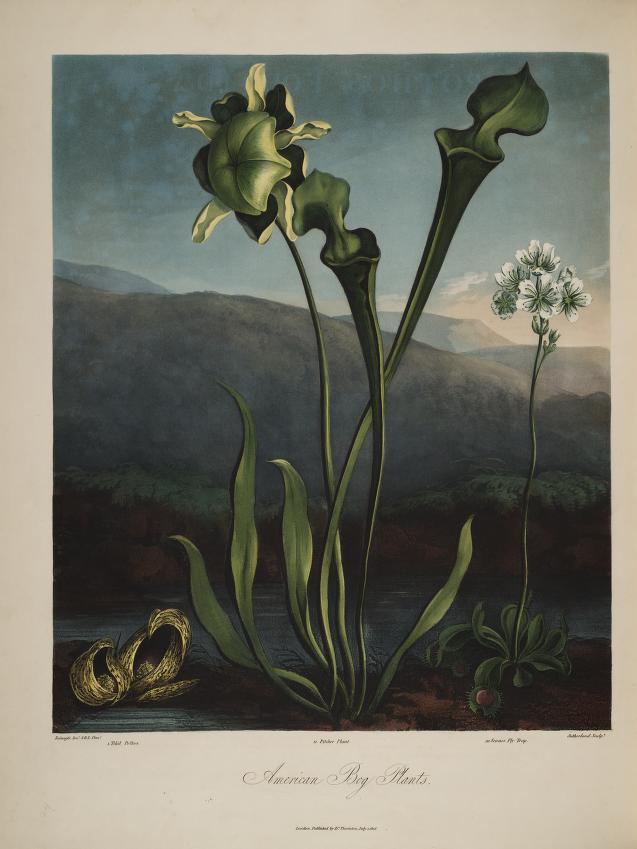
American bog plants: eastern skunk cabbage (Symplocarpus foetidus), yellow pitcherplant (Sarracenia flava), and Venus flytrap (Dionaea muscipula). Thornton, Robert John. New illustration of the sexual system of Carolus von Linnaeus. (1807) http://biodiversitylibrary.org/page/307056. Digitized by the Missouri Botanical Garden, Peter H. Raven Library.

While there are many texts featured in Poetic Botany, one of Feigenbaum’s favorites is John Thornton’s New Illustration of the Sexual System. According to Feigenbaum,

“This perennial favorite is often acclaimed for its indisputably beautiful illustrations, perhaps some of the most iconic in existence. However, the accompanying text is also marvelous, giving the reader insights into eighteenth-century botany, snippets of poetry, and whole disquisitions on culture, religion, and other topics.”

This title is also consistently a favorite among BHL’s online audiences. Thanks to the citizen science efforts of Michelle Marshall, this entire work has also been taxon tagged in Flickr, making it easy for you to identify and search for the species contained within it.

We encourage you to take some time to explore Poetic Botany and marvel at the elegant and profound union of art and science represented in the exhibit and texts. Who would have thought that poetry and science could fit together so naturally?

______________________________________

This post may contain the personal opinions of BHL users or affiliated staff and does not necessarily represent the official Biodiversity Heritage Library (BHL) position on these matters.
December 8, 2016by michelle.underhill
Blog Reel, Featured Books

Of Birds and Poetry: Alexander Wilson and The Foresters

View Full Size Image
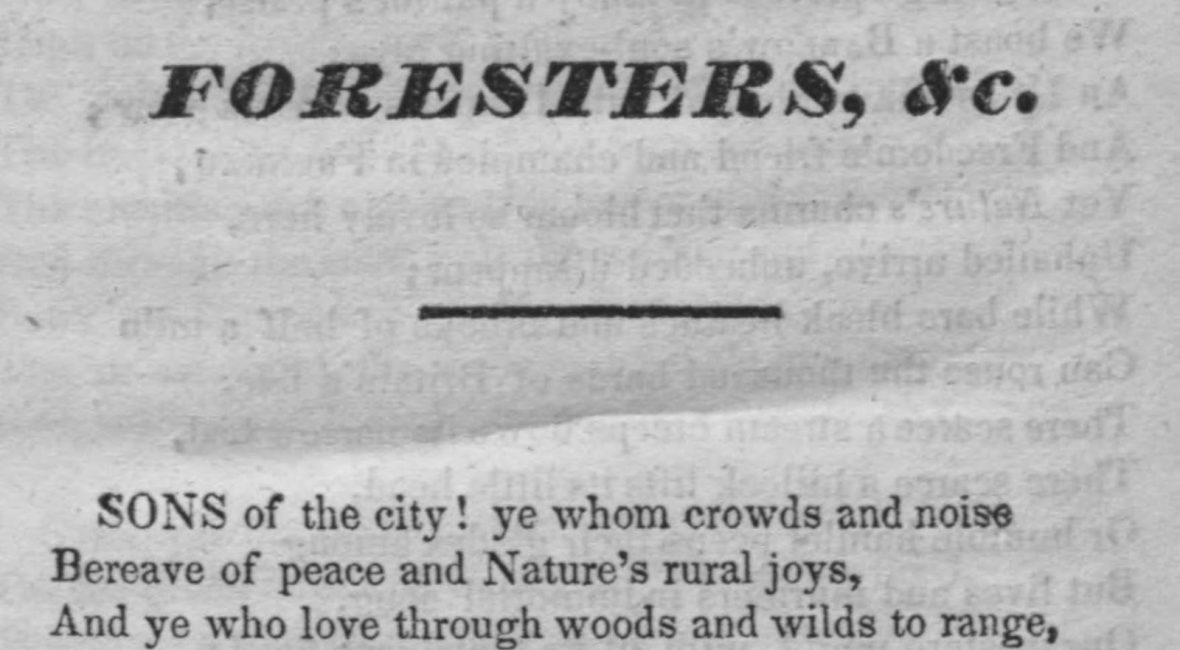
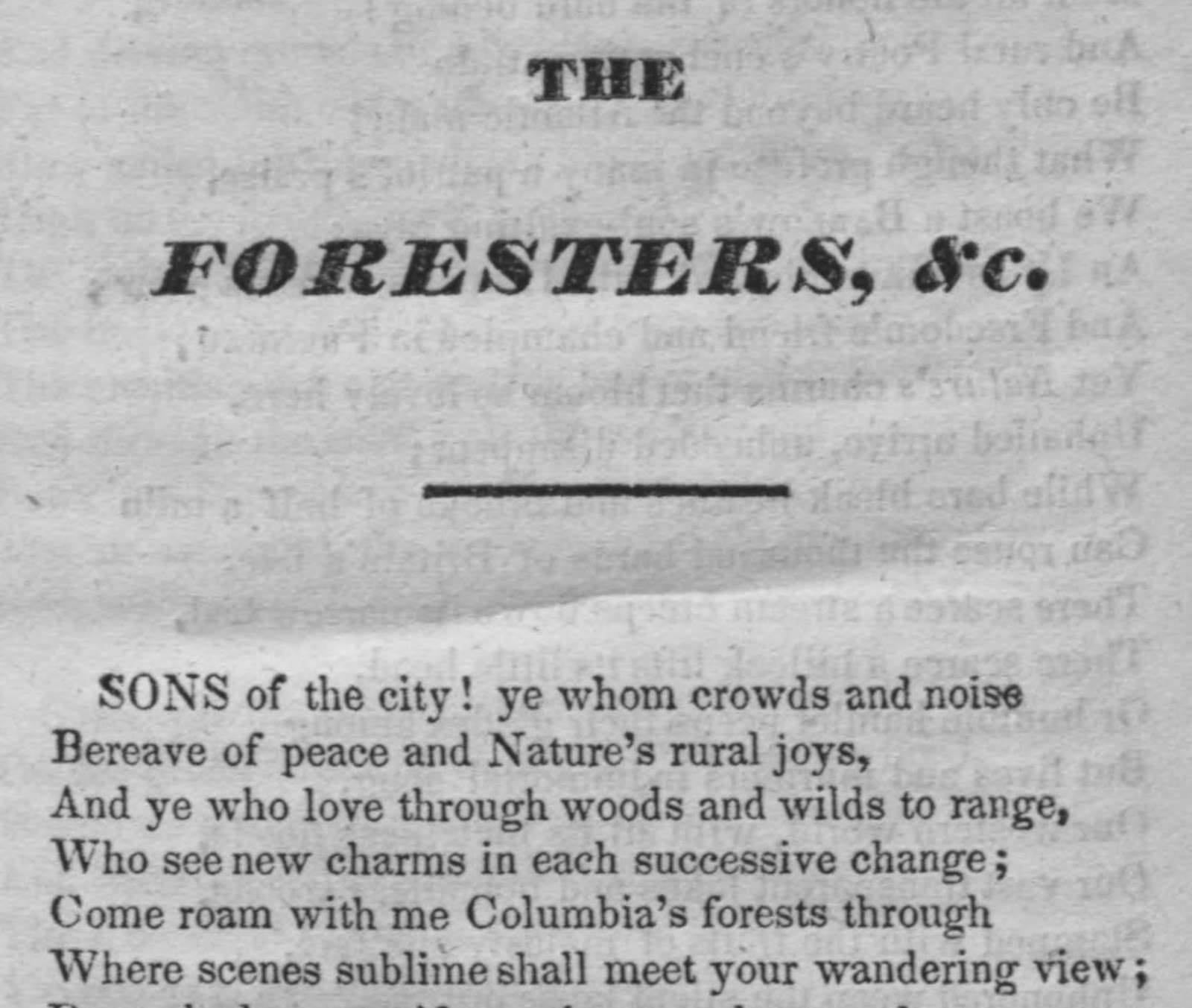
Wilson, Alexander. The Foresters. 1838. http://biodiversitylibrary.org/page/42435615.

210 years ago, in an autumn not unlike our own today, Alexander Wilson set out with two companions on a 1,300 mile trek, mostly on foot, from Philadelphia to Niagara Falls. Enchanted by the natural beauty of his adopted homeland, Wilson, Scottish by birth, detailed his two-month-long adventure in an epic 2,219 line poem entitled The Foresters: A Poem Descriptive of a Pedestrian Journey to the Falls of Niagara in the Autumn of 1804.

View Full Size Image
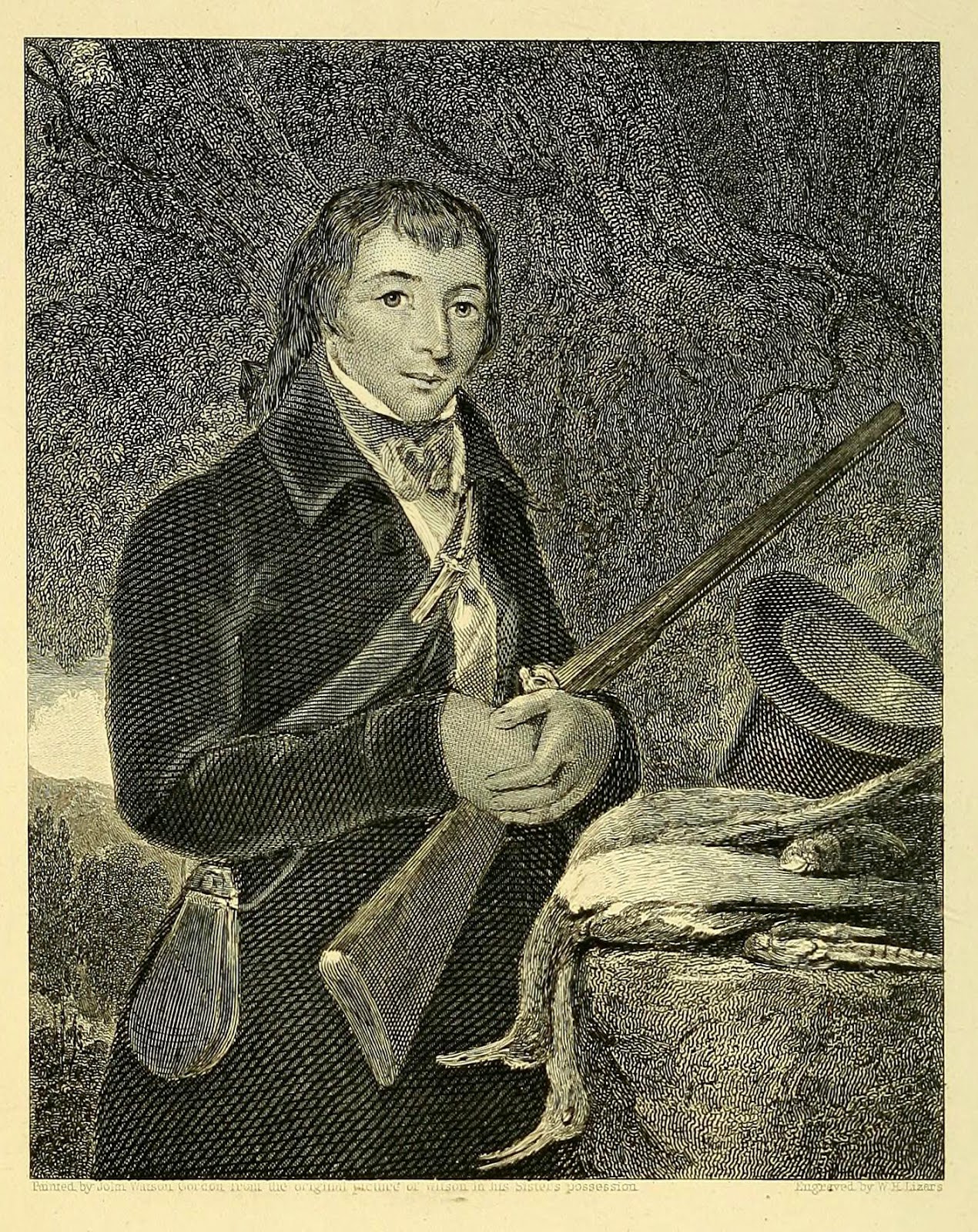
Portrait of Alexander Wilson. American Ornithology. http://biodiversitylibrary.org/page/41411265.

Wilson was born in Paisley, Scotland in 1766, but he emigrated to the United States in 1794 with his nephew, William Duncan. Although today known as one of the greatest ornithologists America has ever seen, Wilson’s interest in poetry was deeply rooted in his youth. During his time in Scotland, he wrote a great deal of poetry, much of which was satirical. In fact, it was after his arrest and imprisonment for writing a severely satirical poem against a local mill owner that Wilson decided to move to America.

Poetry and ornithology were not the only hats Wilson wore throughout his life. He was somewhat of a jack-of-all-trades. He earned his living as a weaver in Scotland, and upon moving to America he worked as a schoolteacher, peddler, engraver, surveyor, and editor. Nature, birds, and poetry, however, were his true passion.

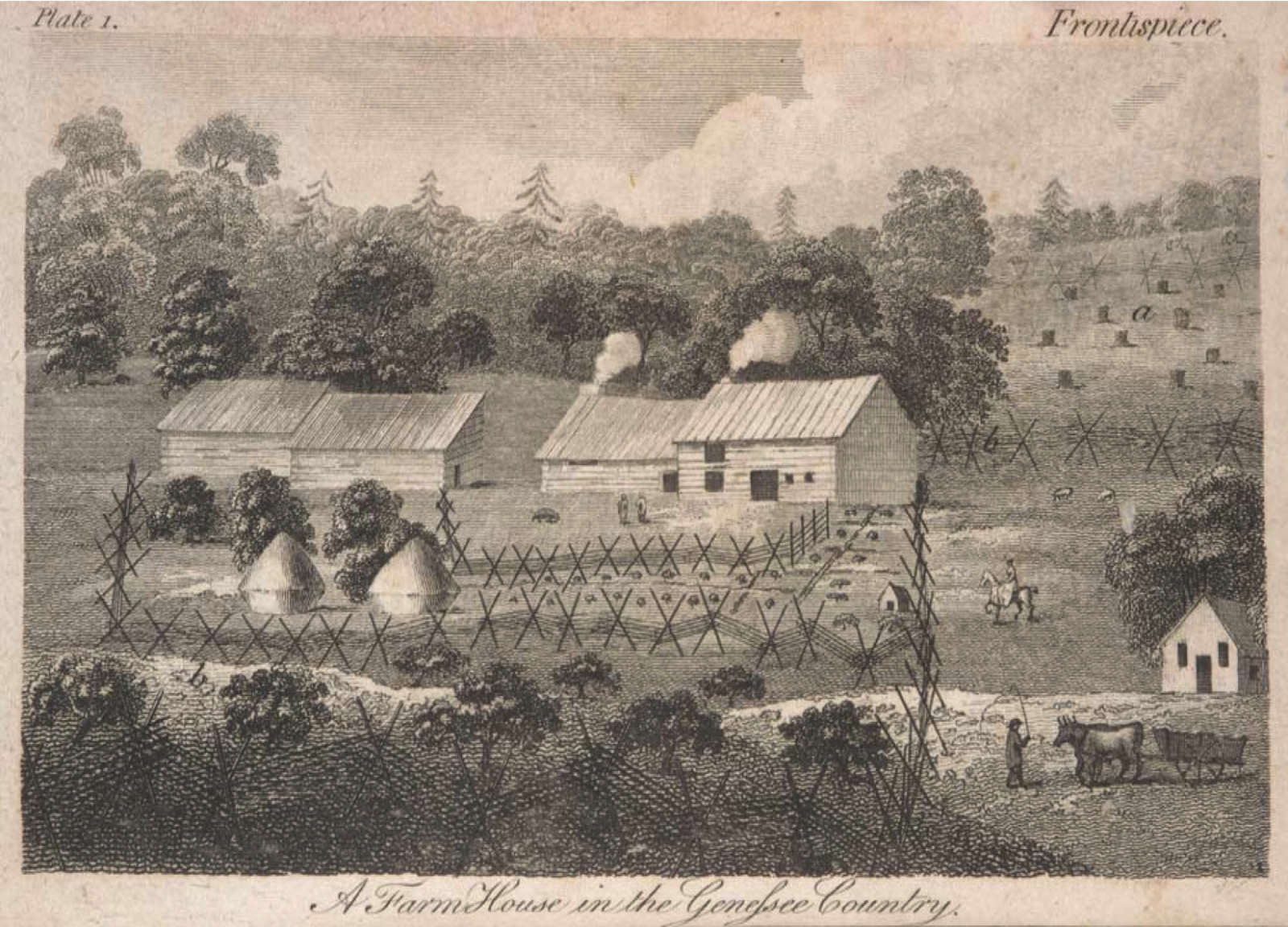
In 1798, four years after they had moved to America, Wilson and his nephew William Duncan, purchased a farm in Ovid between Seneca and Cayuga Lakes, New York, securing 150 acres of uncleared land for $750. Wide-spread outbreaks of yellow fever in Philadelphia, where they had been living, and family ties in upstate New York, prompted their relocation to this rich, largely untapped land in the Finger Lakes region. After the purchase, Duncan began clearing the land for farming while Wilson resumed his teaching activities in a school in Milestown near Philadelphia and accepted odd jobs such as surveying to raise money for the farm.

View Full Size Image
A farmhouse in Genesee Country, perhaps like what Wilson and Duncan would have had. Sutcliff, Robert. Travels In Some Parts of North America, In the Years 1804, 1805 and 1806. York [England]: Printed by C. Peacock … for W. Alexander, and sold by him, 1811.

In late October, 1804, Wilson, Duncan, and one of Wilson’s students, Isaac Leech, embarked on their great adventure through the Western Frontier, leaving from Philadelphia and heading west through Pennsylvania towards Niagara Falls.

The journey was an ambitious, enlightening, and multi-faceted one. Within his Foresters poem, Wilson provides descriptions of the homes, taverns, and inns they stayed in, reflects upon the virtues of teaching (a profession he clearly believes is under-valued), and describes in vivid narrative the natural beauty and wildlife they encounter. His writings also reveal the progression of human settlement and land development along the Susquehanna, with Wilson remarking on how changed the wilderness was since last he visited it.

View Full Size Image
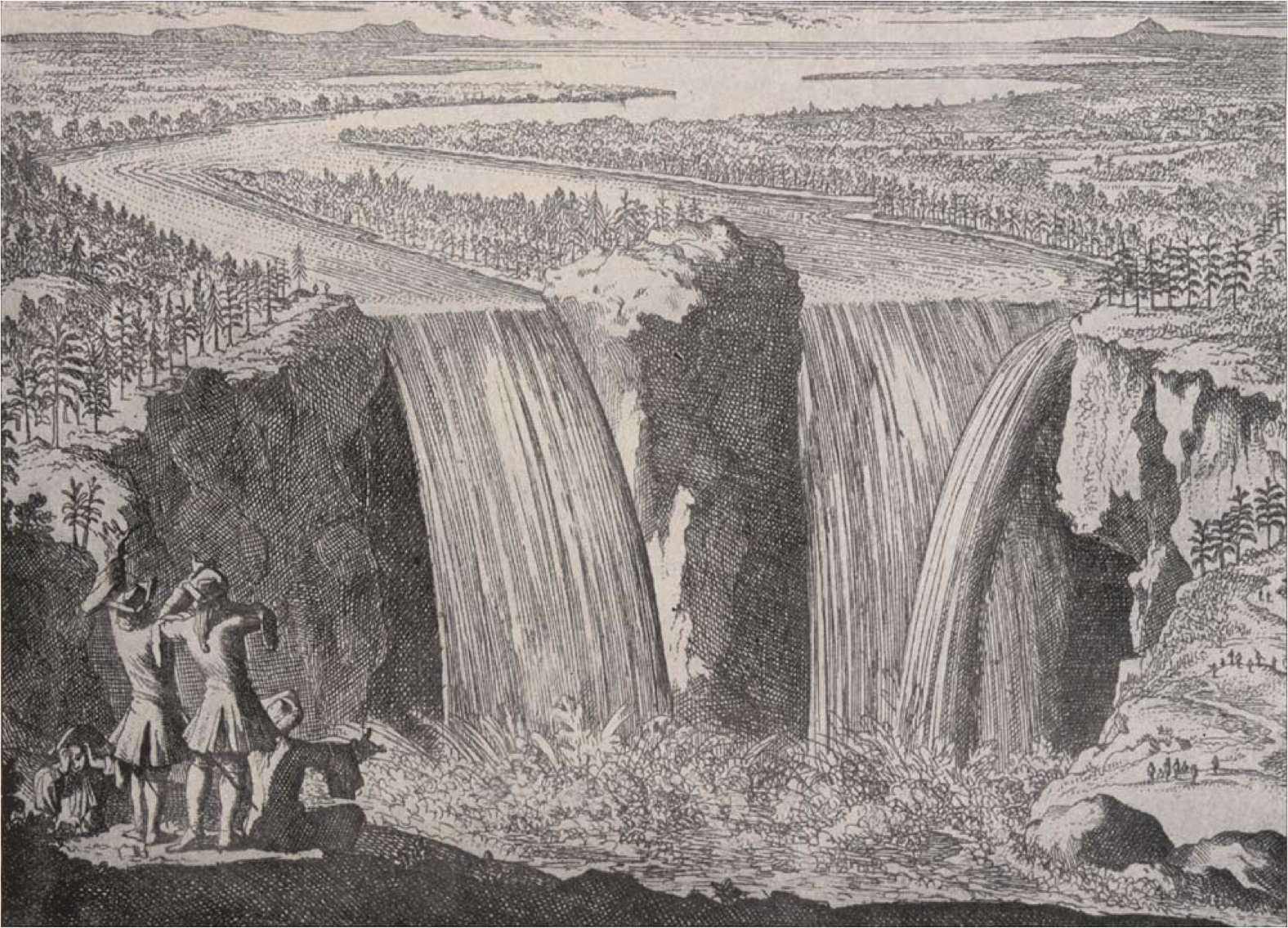
Niagara Falls. Dow, Charles M. Anthology and Bibliography of Niagara Falls. Albany [N.Y.]: State of New York, 1921. Vol 1. http://biodiversitylibrary.org/page/39062520.

Finally, in late November, the travelers reach the climax of their expedition: Niagara Falls. The Falls, a nearly inaccessible wonder of the New World in the early 1800s, is a thing of matchless beauty in Wilson’s mind.

“Fixed to the rock, like monuments we stood,
On its flat face, above th’ outrageous flood,
There, while our eyes th’ amazing whole explored,
The Deep loud roar our loudest voice devoured.
 
High o’er the wat’ry uproar, silent seen,
Sailing sedate, in majesty serene,
Now ‘midst the pillard spray sublimely lost,
And now, emerging, down the rapids tost,
Swept the gray eagles, grazing calm and slow,
On all the horrors of the gulf below;” (pg. 75-76)

With their purpose accomplished, Wilson, Duncan, and Leech set their sights homeward. On December 7, 1804, Wilson returned once again to Philadelphia, penniless but enthused by his adventure. Wilson published his poem in serial form in 10 issues of “The Port Folio,” a leading literary magazine in Philadelphia, from 1809-10. The poem was first published in book format in 1818 and again in 1838, with little difference between the editions. The 1838 edition of The Foresters is available in BHL from Cornell University Library.

The adventure represented not only an important literary venture for Wilson, but solidified in him the desire to pursue his dream to classify, describe, and illustrate all bird species in the United States. Wilson, in fact, viewed this trip as an opportunity to collect and observe American birds. Early on in the poem, Wilson indicates that he came prepared to sketch, bringing along “colors, paper, and pencils.” What’s more, he frequently describes hunting various birds, including ducks, egrets, herons, eagles and geese, which he would later use as reference for his great masterpiece, American Ornithology.

View Full Size Image
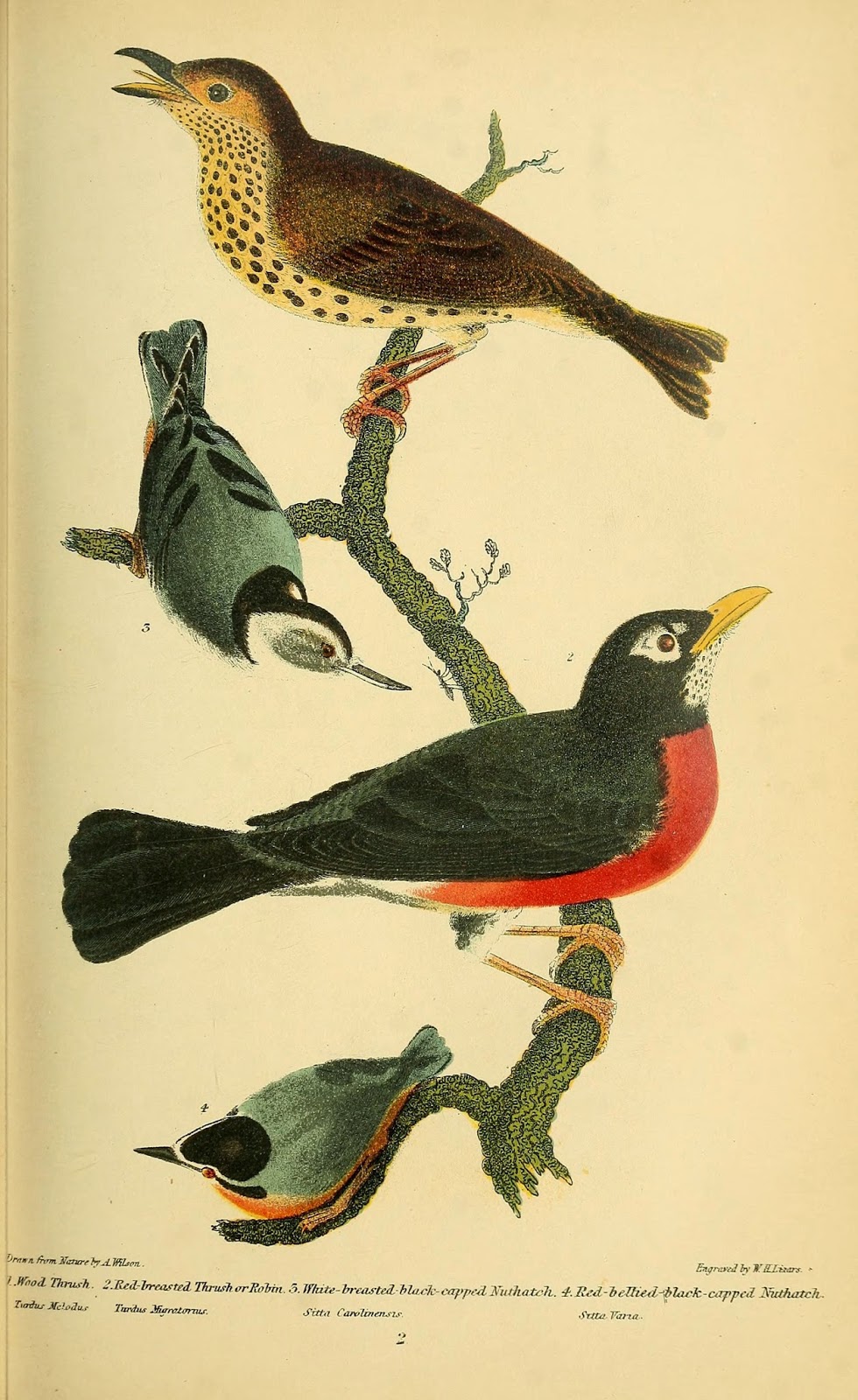
Wood Thrush, Robin and Nuthatches. Wilson, Alexander. American Ornithology. http://biodiversitylibrary.org/page/41411340.

At the age of 40, just seven years before he died of dysentery and exhaustion, Wilson left teaching and spent the rest of his life traveling over 10,000 miles observing and collecting birds, which he chronicled and illustrated in American Ornithology. The publication included over 260 species, 48 of which were new to science, and was published in at least 10 editions over 70 years.

View Full Size Image
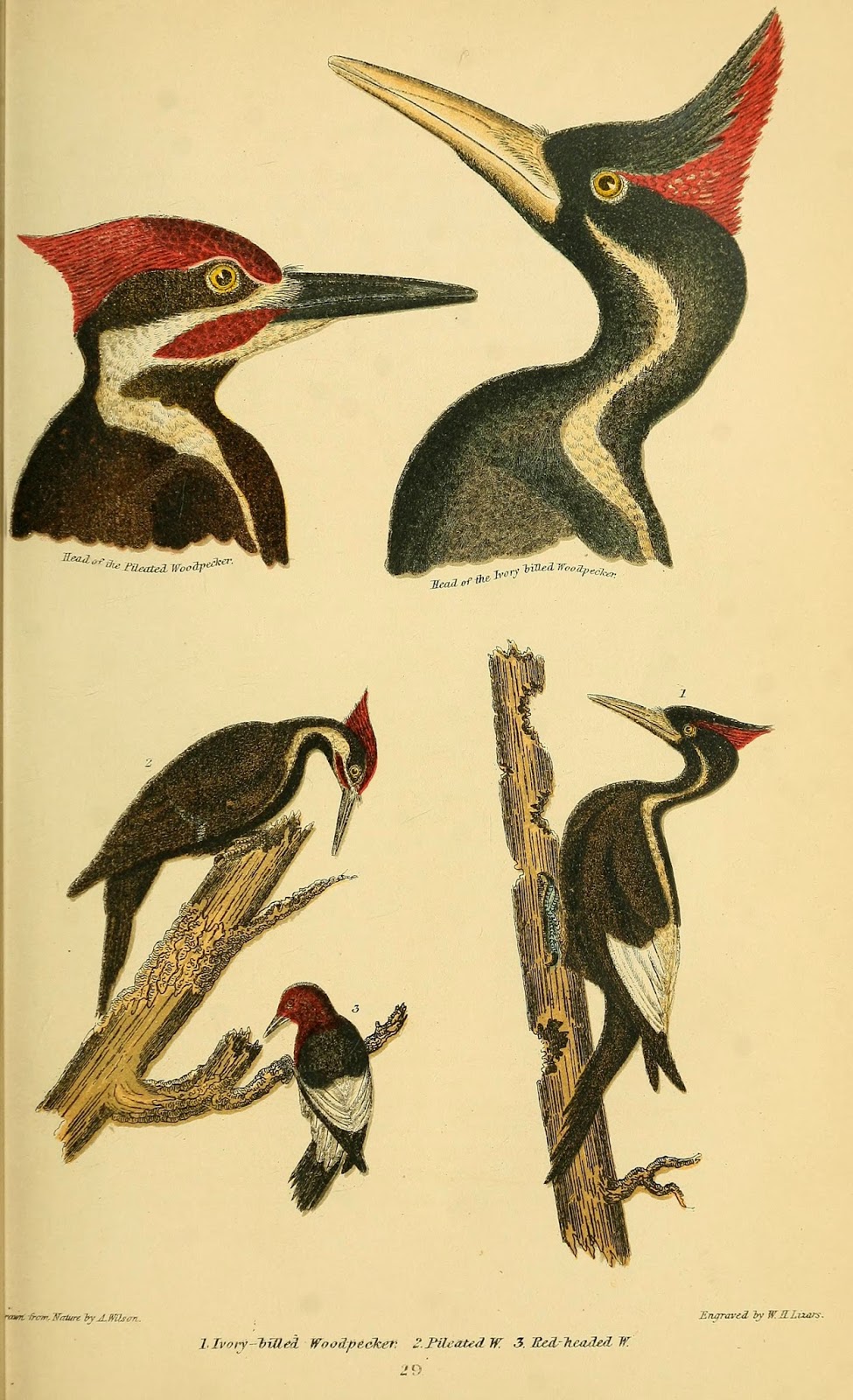
Ivory-Billed, Red-Headed, and Pileated Woodpeckers. Wilson, Alexander. American Ornithology. http://biodiversitylibrary.org/page/41424289.

Alexander Wilson was a remarkable man who laid the foundations for American ornithology. Though his formal education ended at the age of thirteen, his natural intelligence, creativity, and curiosity propelled him to explore his natural world and fueled a thirst for knowledge that rivaled the greatest intellectuals of the day. His wonderful poetic descriptions within The Foresters offer a unique opportunity to experience Wilson at a personal level and appreciate the awestruck wonder he felt within the wilds of America.

Far spreading forests from its shores ascend;
And tow’ring headlands o’er the flood impend;
These, deep below, in softened tints are seen,
Where Nature smiles upon herself serene,
O lovely scenes! In ecstasy I cried,
That sink to nothing all the work of pride! (pg. 52)

Learn more about Alexander Wilson, his Niagara adventure, and ornithological contributions in Cornell University Library’s Majesty Sublime exhibition.

View Full Size Image
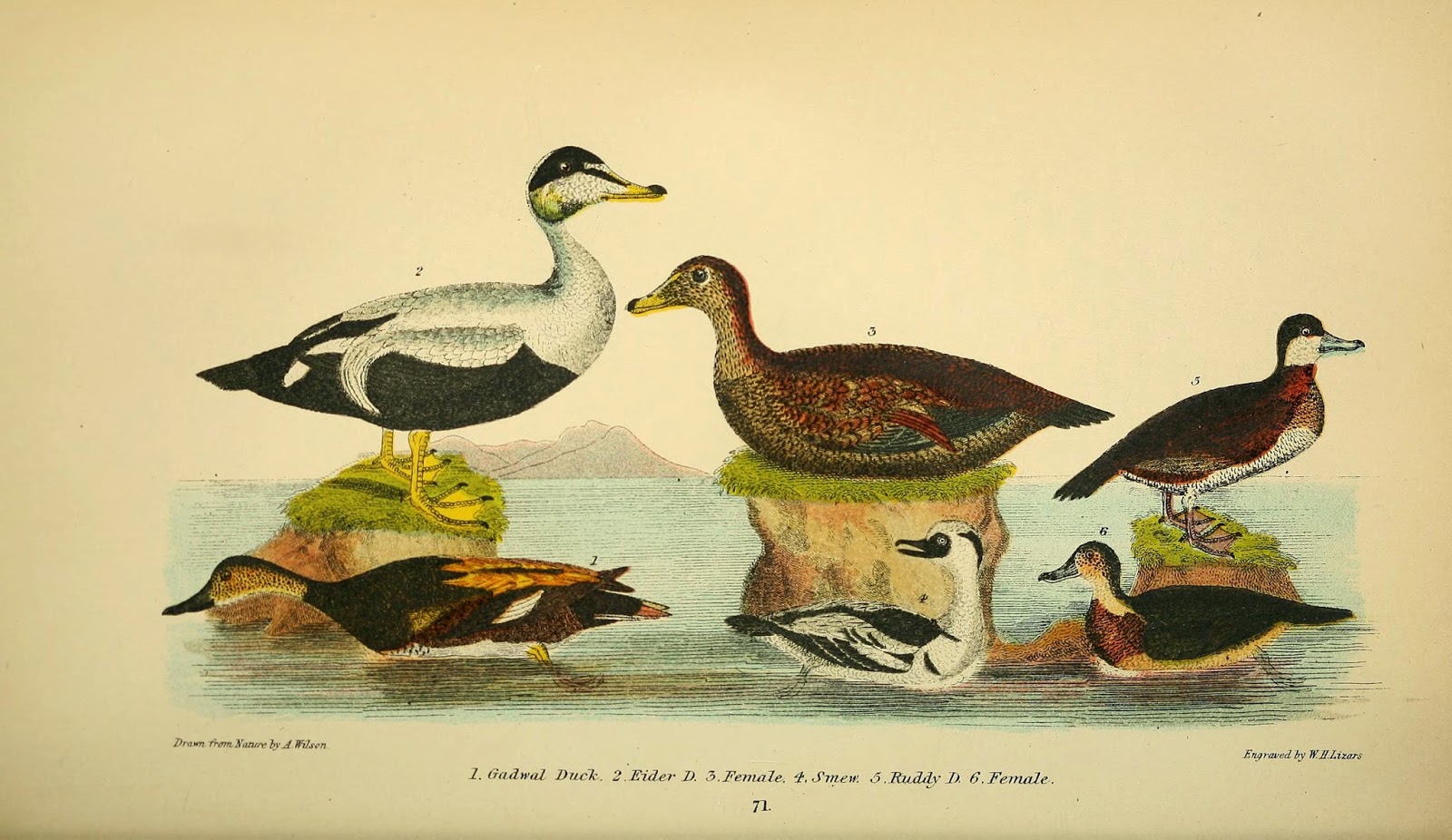
Ducks. Wilson, Alexander. American Ornithology. http://biodiversitylibrary.org/page/41423704.

This post by Grace Costantino based on a presentation by Marty Schlabach (Food and Agriculture Librarian, Mann Library, Cornell University) entitled “Of Birds and Poetry: Alexander Wilson’s 1804 Expedition to Niagara Falls,” presented to the Buffalo Ornithological Society on November 9, 2005. Additional information obtained from the Majesty Sublime exhibition by Ashley Miller (Mann Library, Cornell University).

November 25, 2014by ulib-libraryjobs

Help Support BHL

BHL's existence depends on the financial support of its patrons. Help us keep this free resource alive!

search

About BHL

The Biodiversity Heritage Library (BHL) is the world’s largest open access digital library for biodiversity literature and archives. BHL operates as a worldwide consortium of natural history, botanical, research, and national libraries working together to digitize the natural history literature held in their collections and make it freely available for open access as part of a global “biodiversity community.”

Join Our Mailing List

Sign up to receive the latest news, content highlights, and promotions.

Subscribe Now

Subscribe to Blog via Email

Enter your email address to subscribe to this blog and receive notifications of new posts by email.

Join 319 other subscribers

Subscribe to Blog Via RSS

Subscribe to the blog RSS feed to stay up-to-date on all the latest BHL posts.

Access RSS Feed

Inspiring Discovery through Free Access to Biodiversity Knowledge.

The Biodiversity Heritage Library makes it easier than ever for you to access the information you need to study and explore life on Earth…for free, anytime, anywhere.


64+ Million Pages of
Biodiversity Literature Online.

EXPLORE

Tools and Services
to Transform Research.

EXPLORE

300,000+
Illustrations on Flickr.

EXPLORE

ABOUT | HARMFUL CONTENT | PRIVACY | SITE MAP | TERMS OF USE