Biodiversity Heritage Library - Program news and collection highlights from BHL
  • Home
  • News
  • Featured Books
    • All Featured Books
    • Book of the Month Series
    • BHL at 20
  • User Stories
  • Campaigns
    • Fossil Stories
    • Garden Stories
    • Monsters Are Real
    • Page Frights
    • Her Natural History
    • Earth Optimism 2020
  • Tech Blog
  • Visit BHL
Home
News
Featured Books
    All Featured Books
    Book of the Month Series
    BHL at 20
User Stories
Campaigns
    Fossil Stories
    Garden Stories
    Monsters Are Real
    Page Frights
    Her Natural History
    Earth Optimism 2020
Tech Blog
Visit BHL
  • Home
  • News
  • Featured Books
    • All Featured Books
    • Book of the Month Series
    • BHL at 20
  • User Stories
  • Campaigns
    • Fossil Stories
    • Garden Stories
    • Monsters Are Real
    • Page Frights
    • Her Natural History
    • Earth Optimism 2020
  • Tech Blog
  • Visit BHL
Biodiversity Heritage Library - Program news and collection highlights from BHL
Blog Reel, Featured Books

A Day for Worms on BHL

The Biodiversity Heritage Library (BHL) is replete with publications which have had a seminal influence on their field. A highly-credentialed member of this category is John H. Day’s A Monograph on the Polychaeta of Southern Africa, published in 1967 in two volumes by the (then) British Museum (Natural History) in London. It is timely to celebrate this book now: on 25 August 2019 the author John Day would have had his 110th birthday. And, as of this month, the author’s own copy of the book has been digitised for the BHL.

Years ago, this copy was loaned to me by John Day’s son, Professor Rob Day (also a marine biologist) from the The University of Melbourne — just down the road from my office and from the Australian node of BHL, both at Museums Victoria in Melbourne.  When my librarian colleagues discovered I had the copy, annotated in pencil by the author with a 2nd edition in mind, they were keen to digitise it, even though BHL had previously digitised another copy. (A new version of Day’s monograph was later prepared but never published, perhaps due to lack of funding.)

Polychaetes are important to marine biologists due to their weight of numbers: in nearly all seafloor environments anywhere in the world, polychaetes are just about the most numerous and the most species-rich invertebrate. Therefore, many marine ecologists spend a lot of time identifying polychaetes — usually a difficult task. Which is why John Day’s monograph was so influential. For decades before, and for decades after, there was nothing like it, and so the two volume work, known to most researchers simply as Day, was indispensable.

Day was a comprehensive synthesis of descriptions, diagnoses and drawings of this rich and diverse component of the marine fauna (currently there are about 12,000 described species of polychaetes). And because most polychaete families and genera occur worldwide, and because there was no other equivalent publication anywhere, Day was a vital reference for anybody anywhere who needed to identify their local marine fauna.

Day is still a model for anyone who sets out to write such a monograph, because of the simplicity and clarity of both text and illustrations. In particular, the introductory pages provide a visual overview and key to the numerous families.

day_1967_p23_400px.jpg

Page 23. Day, John H. A Monograph on the Polychaeta of Southern Africa. Volume 1, 1967. Author-annotated copy. Digitized in BHL by Museums Victoria.

These handful of pages encapsulate what would otherwise be an overwhelming variety; even beginners can begin to think that they may one day be able to interpret the myriad forms and structures of polychaetes. Thus, although the documentation of polychaete diversity has marched on, well-thumbed 50 year old copies of Day are still in regular use in marine laboratories world-wide.

It seems to me that John Day must have honed and improved his diagrams over many years of teaching (he was Professor of Zoology at The University of Cape Town) and that he must have given a lot of thought to the layout and presentation. Day had begun annotation of his own copy with species to be added, but he didn’t touch these introductory pages, suggesting that he too was satisfied with the published version. Even today, for me and many of my colleagues, there is nothing quite like it for introducing novices to the mysterious world of polychaetes — there have been numerous revisions and name changes in intervening decades, but the worms themselves still look the same.

JHDay_students_Durban_Bay_1951_400px.jpg

John H. Day (third from right) showing students a tray of specimens collected from an estuary mudflat.  Durban Bay, South Africa, 1951.  Photograph supplied by Rob Day, 2019.

John Day was ahead of his time in other respects too. Our understanding of evolutionary relationships of polychaetes, and how they should be classified within the phylum Annelida, has long seemed an intractable task. Many alternative classifications having been offered up in publications both before and since the publication of Day. The author himself took a purely pragmatic approach and followed earlier workers, arranging the families in two major groups, one per volume: Errantia (mostly mobile worms with similar segments and often with jaws) and Sedentaria (mostly tube dwellers often with a crown of feeding tentacules and modified body regions).

Even though Day only ever claimed this as an arbitrary arrangement, he would have surely been pleased to know that this practical solution has a lot in common with the most recent phylogenetic analyses based on DNA sequence data, which recognise many elements of the old Errantia / Sedentaria scheme and even retain the names! Nor, I think, would he have been dismayed by another discovery confirmed by DNA data: there is no such thing as “Polychaeta”, which is now known to comprise a variety of forms which do not all belong on a single branch of the annelid phylogeny. Furthermore, several other kinds of worms previously known as separate Phyla are now known to belong within the Annelida — a possibility also canvassed by John Day in the introduction to his monograph.  (I’ll nevertheless keep using polychaetes as an informal term.)

I never met John Day, but his no-nonsense attitude was evident in other ways. He had lost a leg when hit by flak on a bombing raid while flying as a navigator for the RAF during the Second World War (he was still able to provide a course before passing out and the tail gunner saved his life by limiting loss of blood until they returned to base). There are unconfirmed stories that after the war, on trips between Cape Town and London, he would bring preserved polychaete specimens for study through customs in his prosthetic leg.

Taxonomists nowadays are wont to criticise Day, and other publications of the era, for accepting as valid many “cosmopolitan species”.

day_1967_p146_400px.jpg

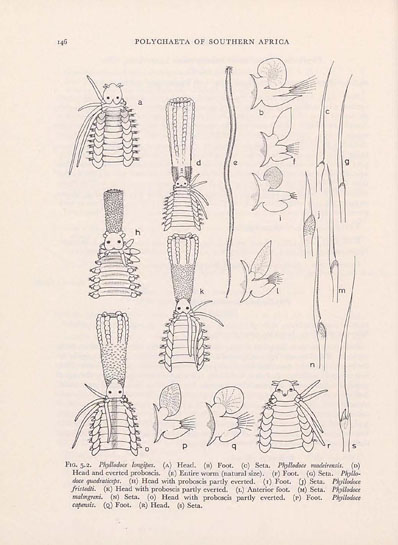
Page 146. Phyllodoce malmgreni and related taxa in the family Phyllodocidae. Page 146 from Day, John H. A Monograph on the Polychaeta of Southern Africa. Volume 1, 1967. Author-annotated copy. Digitized in BHL by Museums Victoria.

Phyllodoce_cf_malmgreni_F135127_dorsal_pharynx_400px.jpg

Phyllodoce malmgreni was described from the Red Sea, but has been much more widely recorded throughout the Indo-Pacific. This museum specimen of Phyllodoce cf. malmgreni is from Australia. Photograph Robin Wilson.

Typically, these were originally described from European localities but subsequently recorded (or rather very similar forms were found) from more widespread regions. If they could not be distinguished, specimens from widespread localities were assigned to a single species.

In recent decades, taxonomists have split many “cosmopolitan species” into a number of new species, each from a different ocean or region.  At first, this seemed an almost routine tidy up task. The advent of molecular systematics has shown that the situation is far more complex and interesting. DNA sequence data has repeatedly demonstrated that even within a region (for example northern Europe), what was thought to represent a single species is often discovered to comprise many species. Usually, these newly recognised species can barely, or not at all, be distinguished morphologically, yet they show very deep genetic divergences.  Understanding of how these taxa have evolved and dispersed (for example, is each instance a single global, monophyletic radiation?) is arguably among the most interesting questions in marine diversity studies today.

Whatever the answers turn out to be, it seems clear that many of these cryptic species will only be distinguishable through genetic analysis. Until such time as rapid genetic diagnoses become routine, ecologists and other non-taxonomists are likely to have to resort to some kind of species-complex definition to cope with messy nature. It seems that such species-complexes might look a lot like the often-maligned “cosmopolitan species” accepted by the pragmatic (and prescient?) John Day.

September 26, 2019by Joel Richard
Blog Reel, Featured Books

These Polychaetes Will Make You Feel All Worm and Fuzzy

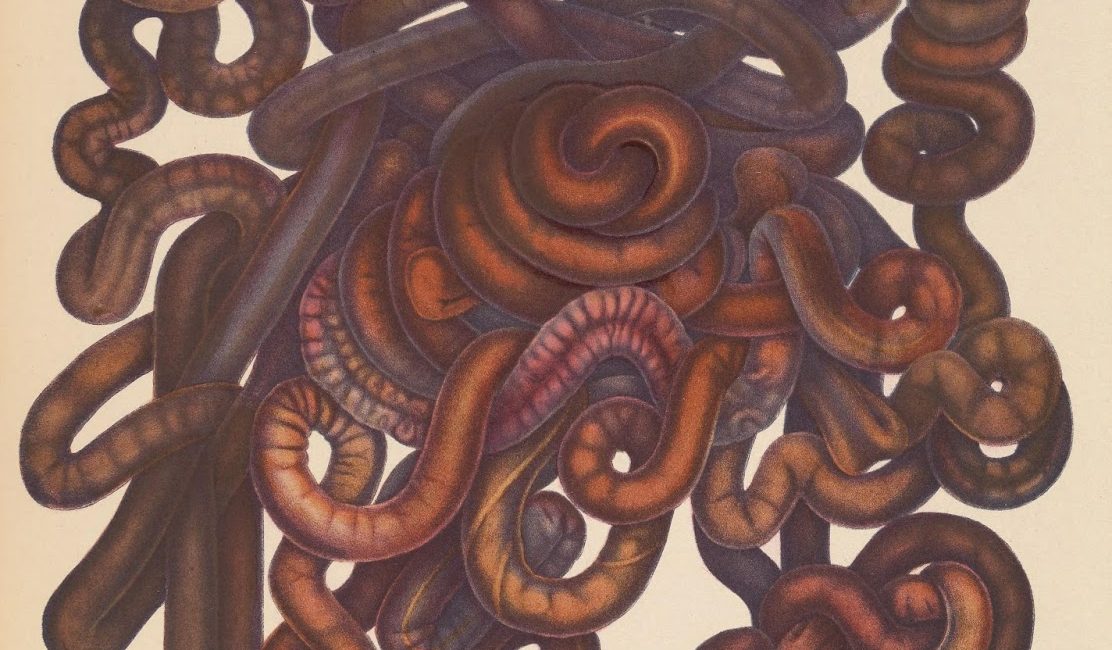
The National Museum of Natural History is hosting its inaugural celebration of International Polychaete Day (July 1, 2015) in the memory of Krisitan Fauchald, a research zoologist at the Smithsonian Institution who dedicated his life to studying and sharing annelid, or segmented, worms with the world. A majority of polychaetes are marine worms, and include common names like bristleworms, lugworms, featherduster worms, and sea mice. However, more familiar types of worms such as earthworms and leeches are also considered polychaetes. The term polychaete means “many bristles” and most of the marine worms reflect this description by bearing numerous bristles along parapods, or segmentally arranged side flaps. Polychaetes are among the most common marine organisms with roughly 10,000 species of polychaetes currently known. This remarkably diverse group of animals comes in a variety of shapes, sizes, colors, and lifestyles and can be found throughout the world living on the sea surface, down in the ocean depths, among rock pools, or in the mud and sand at the seashore. To celebrate International Polychaete Day, we wanted to share a staff favorite from BHL’s collection: A monograph of the British Marine Annelids by William McIntosh.

Illustration of the bootlace worm (Lineus longissimus)

Bootlace worm (Lineus longissimus). McIntosh, William Carmichael. A monograph of the British marine annelids. v. 1, pt. 1 (1873). Contributed in BHL from Smithsonian Libraries.

Illustration of Green-leaf Worm (Eulalia viridis), Eulalia tripunctata, Eumida sanguinea, and Nereiphylla paretti.

Green-leaf Worm (Eulalia viridis), Eulalia tripunctata, Eumida sanguinea, and Nereiphylla paretti. McIntosh, William Carmichael. A monograph of the British marine annelids. v. 2, pt. 1 (1908). Contributed in BHL from Smithsonian Libraries.

William Carmichael McIntosh, an eminent Scottish physician and marine biologist, is best known for being the driving force for establishing the first marine biology station in the British Isles in 1896 and compiling a compendium on marine annelid worms. Interestingly enough, McIntosh’s groundbreaking research on marine worms actually began while he was employed as a psychiatrist and superintendent of the Murthly mental hospital near Perth, Scotland. While McIntosh conducted research in other areas, most of his career was occupied with studying these marine annelids and assembling his monumental monograph. The first volume of his monograph was published in 1873 and described nemertean, or ribbon, worms in great detail. Over the course of the next 50 years, McIntosh published three additional multipart volumes describing numerous other families and species of polychaete.

Illustration of Cirratulus tentaculatus, Bristleworm (Cirratulus cirratus), Dodecaceria concharum, and Scolelepis cirratulus.

Cirratulus tentaculatus, Bristleworm (Cirratulus cirratus), Dodecaceria concharum, and Scolelepis cirratulus. McIntosh, William Carmichael. A monograph of the British marine annelids. v. 3, pt. 2 (1915). Contributed in BHL from Smithsonian Libraries.

Illustration of Amphitrite figulus, Sand Mason (Lanice conchilega), Polycirrus medusa, Amphiglena mediterranea, and Branchiomma argus.

Amphitrite figulus, Sand Mason (Lanice conchilega), Polycirrus medusa, Amphiglena mediterranea, and Branchiomma argus. McIntosh, William Carmichael. A monograph of the British marine annelids. v. 4, pt. 1 (1922). Contributed in BHL from Smithsonian Libraries.

McInstosh believed that these marine worms were the most beautiful of all the invertebrates with their ornamentation and coloring. In his words, they held up against the “gaudy tints of butterflies and birds or the burnished splendor of beetles” (1908, vii). As a result, McIntosh felt it important to accompany his monograph, a major scholarly achievement in its own right, with beautiful illustrations that he hoped would make polychaetes known to a much wider audience. His sister, Roberta who was his workmate on several collection trips, encouraged McIntosh to take on the task of describing the various forms and functions of the marine worms they found from which she would create exquisite drawings. After his sister’s death, another artist, A.H. Walker, took over the task of completing and adding to the beautiful drawings started by Roberta. Each volume of McIntosh’s monograph set is filled with stunning illustrations of marine worms. In his final volume, McIntosh modestly acknowledges that “there are many gaps to fill in literature, anatomy, physiology and development, but he hopes that they are left in a better state than he found them” (Stiassny 2014, 111). We wholeheartedly believe William McIntosh has more than accomplished that endeavor.

Illustration of King Ragworm (Alitta virens).

King Ragworm (Alitta virens). McIntosh, William Carmichael. A monograph of the British marine annelids. v. 2, pt. 2 (1910). Contributed in BHL from Smithsonian Libraries.

Illustration of Eunice, Red Gilled Marphysa (Marphysa sanguinea), Nematonereis unicornis, Opal Worm (Arabella iricolor), Bristleworm (Hyalinoecia tubicola), and Lumbrineris latreilli.

Eunice, Red Gilled Marphysa (Marphysa sanguinea), Nematonereis unicornis, Opal Worm (Arabella iricolor), Bristleworm (Hyalinoecia tubicola), and Lumbrineris latreilli. McIntosh, William Carmichael. A monograph of the British marine annelids. v. 2, pt. 2 (1910). Contributed in BHL from Smithsonian Libraries.

Polychaetes have existed for eons and can be traced back to around 500 million years ago. Researchers have found that polychaetes play a key role in ecosystem functions, as well as  a vital link in the ocean’s natural climate control system. Furthermore, with polychaetes usually being the dominant organism in a sample of mud or sand taken from the ocean floor on any part of the planet, polychaetes are excellent indicators for marine biologists about the effects of pollutants and the natural and human-induced changes in ecosystems. Join us in marveling at these amazing animals and discovering more about why a whole day is devoted to them on this inaugural International Polychaete Day through planned activities and social media using the hashtag: #InternationalPolychaeteDay.

Reference

Stiassny, Melanie L.J. (2014). McIntosh’s Monograph of Marine Worms. Natural Histories Opulent Oceans: Extraordinary Rare Book Selections from the American Museum of Natural History Library (pp. 110-113). New York: Sterling Publishing.

July 1, 2015by tcmart2

Help Support BHL

BHL's existence depends on the financial support of its patrons. Help us keep this free resource alive!

search

About BHL

The Biodiversity Heritage Library (BHL) is the world’s largest open access digital library for biodiversity literature and archives. BHL operates as a worldwide consortium of natural history, botanical, research, and national libraries working together to digitize the natural history literature held in their collections and make it freely available for open access as part of a global “biodiversity community.”

Join Our Mailing List

Sign up to receive the latest news, content highlights, and promotions.

Subscribe Now

Subscribe to Blog via Email

Enter your email address to subscribe to this blog and receive notifications of new posts by email.

Join 319 other subscribers

Subscribe to Blog Via RSS

Subscribe to the blog RSS feed to stay up-to-date on all the latest BHL posts.

Access RSS Feed

Inspiring Discovery through Free Access to Biodiversity Knowledge.

The Biodiversity Heritage Library makes it easier than ever for you to access the information you need to study and explore life on Earth…for free, anytime, anywhere.


64+ Million Pages of
Biodiversity Literature Online.

EXPLORE

Tools and Services
to Transform Research.

EXPLORE

300,000+
Illustrations on Flickr.

EXPLORE

ABOUT | HARMFUL CONTENT | PRIVACY | SITE MAP | TERMS OF USE