Biodiversity Heritage Library - Program news and collection highlights from BHL
  • Home
  • News
  • Featured Books
    • All Featured Books
    • Book of the Month Series
    • BHL at 20
  • User Stories
  • Campaigns
    • Fossil Stories
    • Garden Stories
    • Monsters Are Real
    • Page Frights
    • Her Natural History
    • Earth Optimism 2020
  • Tech Blog
  • Visit BHL
Home
News
Featured Books
    All Featured Books
    Book of the Month Series
    BHL at 20
User Stories
Campaigns
    Fossil Stories
    Garden Stories
    Monsters Are Real
    Page Frights
    Her Natural History
    Earth Optimism 2020
Tech Blog
Visit BHL
  • Home
  • News
  • Featured Books
    • All Featured Books
    • Book of the Month Series
    • BHL at 20
  • User Stories
  • Campaigns
    • Fossil Stories
    • Garden Stories
    • Monsters Are Real
    • Page Frights
    • Her Natural History
    • Earth Optimism 2020
  • Tech Blog
  • Visit BHL
Biodiversity Heritage Library - Program news and collection highlights from BHL
Blog Reel, User Stories

BHL and Our Users: EOL Rubenstein Fellow, Dr. John Sullivan

Portrait version of the Biodiversity Heritage Library logo.

View Full Size Image

Today, we continue with our mini-series featuring EOL Rubenstein Fellows and their research activities. For this installment, meet Dr. John Sullivan, a passionate ichthyologist dedicated to discovering and describing fish species all over the world, but particularly in Africa.

What are your research interests, where you do the bulk of your work (country), and what is your institutional affiliation?

I am an evolutionary biologist who studies the phylogenetic interrelationships and evolution of freshwater fishes. I focus on two groups in particular: weakly electric fishes (Mormyridae and Gymnotiformes) which are found in Africa and South America, respectively, and catfishes (Siluriformes), which are distributed pretty much all over the world. In addition to using molecular techniques to work out phylogenies for these fishes, I describe species and work on the taxonomy of all three groups. My most recent collecting field trips have been to Ethiopia, the Democratic Republic of Congo, and Gabon. I am affiliated with two institutions, the Academy of Natural Sciences in Philadelphia, where I am a Research Associate, and the Cornell University Museum of Vertebrates in Ithaca, New York, where I am a Curatorial Affiliate. I live with my wife in Ithaca.

In the program, Fellowships are expected to serve as a complementary funding source to existing funding you have that supports your primary research activities. Please describe what you primary research activities are.

I used the Rubenstein Fellowship to supplement a nine-month Fulbright Research Fellowship in the Democratic Republic of the Congo. My Fulbright work was to make an inventory of fish species found in the vicinity of Kisangani, a city on the Congo River at the base of the Upper Congo rapids and to help build capacity at the University of Kisangani in ichthyology. As a Rubenstein Fellow, I made creation of EOL species pages for Congo River freshwater fishes a key activity of my time there. And since my return from Congo, I’ve been continuing to add many of the hundreds of photographs of fish specimens I took as we identify the specimens. We’ve already found several undescribed species from our collections, and I and my colleagues are beginning work on their descriptions.

Please describe how you use EOL to disseminate or support your primary research activities, or what your primary duties related to EOL are.

Eventually, I’d like to see great photos, descriptions and keys available online through EOL for all African freshwater fishes. We still have a lot of work to do to get there, but one can now see that this is the future. It still takes a lot of time to do careful taxonomic work, but now as soon as it’s published, we can get the name into a classification and a picture and description up online. For instance, we got the new mormyrid species Petrocephalus similis into EOL the week it was published in July. Taxonomy is a dynamic discipline: names and classifications frequently change to reflect our improving knowledge of the organisms (a sometime annoyance to end-users of taxonomies, but unavoidable). So static books are in some ways poor repositories of this information. Taxonomy and the Web are really made for each other and in hindsight something like EOL was inevitable.

How has the EOL Fellows program made a difference in your career/research?

The Rubenstein EOL Fellows program gave me an easy way to help make knowledge about African fishes available to everyone, including Africans who often have internet access but nothing in the way of libraries. The more informed my African colleagues are about their own fish fauna, the more effective our collaborations can be. While it doesn’t take the place of getting published in the primary literature, contributing to EOL tells your colleagues that you’re committed to the “broader impacts” of what we taxonomists do and that you’re at the forefront of where the field of taxonomy is headed. I am looking forward to the day when publishing a new species description and publishing content on EOL are one and the same thing. In fact, that future is already here with the journal ZooKeys that automatically exports to EOL. We plan to use that journal for our next mormyrid description.

Who is your Mentor, what is their area of interest (research activities), and how have they supported you throughout your Fellowship?

My mentor is Dr. Melanie Stiassny, curator of fishes at the American Museum of Natural History in New York. Melanie has really reinvigorated the study of fish diversity of the Congo River over the past few years and has made a number of stunning discoveries in the rapids area of the Lower Congo. She was great at providing me the logistical and moral support I needed for my project in Kisangani.

How does BHL support your Fellows activities, as well as those research activities that fall outside of your duties as an EOL Fellow?

I tend to think of BHL as my personal ichthyology library (although I know there’s a bit more archived in it than that). I have retrieved dozens and dozens of species descriptions from it that are now on my personal computer for instant reference and also appended to species pages in one of my two EOL Lifedesks: http://mormyrids.lifedesks.org/ and http://congofishes.lifedesks.org/.

I’ll give you a concrete example of how BHL supports my work. In systematics, the old literature is often just as important as the new. For instance, the systematics of a genus of mormyrid fish we work on was really blocked by our inability to establish the identity of Mormyrus sphekodes (now Paramormyrops sphekodes), described in 1879 by French ichthyologist H.E. Sauvage. The type specimen still exists, but is in bad condition in the Paris Museum collection. If we were to describe new species without knowing what P. sphekodes really was, we risked redescribing it under a different name and creating a synonym.

So this past May I arranged to go back to the type locality mentioned by Sauvage, the “Chutes de Doumé” on the Ogooué River in Gabon to make a new collection of it. I’m happy to report I succeeded! Before going there, I had downloaded Sauvage’s description of this fish from BHL, published in the Bulletin de la Société Philomatique de Paris. It had taken me just a few minutes to locate this paper and customize the pdf. I had it on my Kindle as I stood at the site, a place I don’t think ichthyologists had revisited since the 1870s.

When did you first discover BHL?

Some time before I started my Fellowship, probably in 2008.

What are your favorite features/services on BHL?

I love how it takes me no time at all to find a species description in some old serial like the Annals and Magazine of Natural History and, using the web interface, generate a pdf of just those pages that I want. Even if I lived in a library that had these volumes on the shelf, it would take me longer to locate what I was looking for. I can then take those pdfs BHL generates for me and attach them to the species pages I create on my Lifedesks. Now anybody in the world has instant access to the original species description in a couple of clicks!

If you could change one thing about BHL, or suggest one thing to be the next developmental priority for BHL, what would it be?

It seems like you are doing the right thing: continue to expand and add content. It is great to see a number of biodiversity journals allowing BHL to digitize their back catalog, including material still under copyright, and very encouraging to see BHL go international with BHL-Europe and other initiatives. Now that much of the really old stuff is available, it’s the material from the 1930’s – 1970’s that is notably hard to obtain if you don’t have a world-class library, so I hope more of it finds its way onto BHL in the near future.

Please describe why you think services like EOL and BHL are important for today’s scientific community.

Science is all about disseminating knowledge and building upon what has come before, yet so much of our knowledge of plants and animals has remained inaccessible to those who could make use of it. This has been a big part of the “taxonomic impediment.” BHL is radically changing the status quo and democratizing access to knowledge about biodiversity. Now that access to the works of so many great 18th and 19th Century biologists is an easy affair, I expect we’ll see them cited a lot more in the modern literature. In this way, BHL is contributing to the continuity of biodiversity science.

Do you have a favorite book in BHL, or a book that has most supported your research activities or EOL responsibilities?

My favorite book in BHL would have to be the four volumes of George Albert Boulenger’s Catalogue of the Fresh-Water Fishes of Africa, published from 1909 to 1916. This work remains the single-most important publication on African ichthyology. While many more species have been described in the subsequent century and generic names have undergone changes, it is still a remarkably useful resource for identifying African fishes. Until BHL made pdfs of all four volumes freely available, you had to pay dearly even for a reprinted version. Now all my African colleagues who never had these advantages have the pdfs on their laptops.

Thank you, Dr. Sullivan, for taking the time to give us a glimpse into your world and research, and for articulating how important BHL has been to your endeavors. As we continue to grow our collection, we hope to be able to establish more and more relationships with publishers and provide access to a plethora of in-copyright materials, freeing, as you so eloquently describe, this information from the static written page to the future of dynamic electronic access for the world.

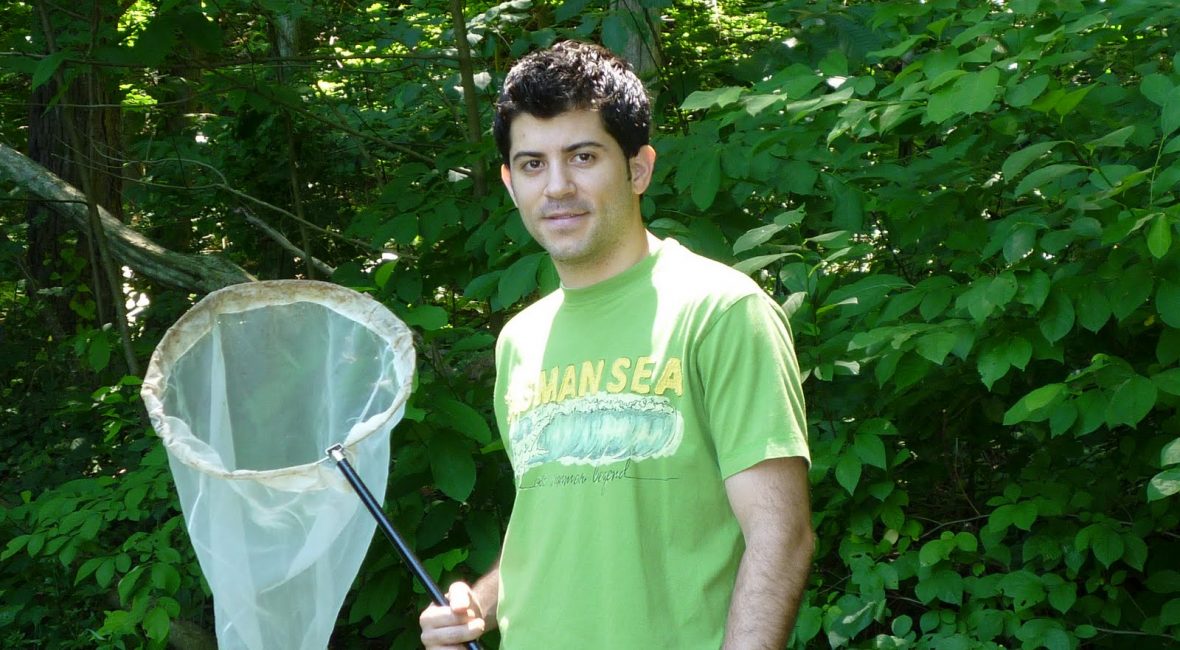
Information on the photo from Dr. Sullivan: “The photo is of me on the Ogooué River in Gabon, Africa in May of this year. The site is a famous one for African ichthyology: it is the “Chutes de Doumé” from which H.-E. Sauvage described the catfish Doumea typica and the mormyrid electric fish Mormyrus sphekodes – now Paramormyrops sphekodes – (among others) in an 1879 publication published in the Bulletin de la Société philomathique de Paris, a pdf of which I downloaded from BHL!”

September 13, 2011by michelle.underhill
Blog Reel, User Stories

BHL and Our Users: EOL Rubenstein Fellow, Dr. Joaquin (Ximo) Mengual

View Full Size Image

Welcome to the second installment of our mini-series featuring EOL Rubenstein Fellows and their use of BHL. This week, we feature Dr. Joaquin (Ximo) Mengual, a postdoctoral fellow at the Smithsonian Institution dedicated to studying Syrphidae!

What are your research interests, where do you do the bulk of your work (country), and what is your institution of affiliation?

My research interests focus on systematics and phylogenetics of the family Syrphidae (Insecta, Diptera), also known as flower flies or hoverflies. I am currently in the USA. I’m a Postdoctoral fellow at the Entomology Department of the National Museum of Natural History, Smithsonian Institution.

In the program, Fellowships are expected to serve as a complimentary funding source to existing funding you have that supports your primary research activities. Please describe what your primary research activities are.

My primary research focuses on the taxonomy of Neotropical and Oriental syrphid genera, with a special interest in cybertaxonomy and the phylogenetic relationships among genera of the subfamily Syrphinae (http://entomology.si.edu/StaffPages/MengualJ.html).

Please describe how you use EOL to disseminate or support your primary research activities, or what your primary duties related to EOL are.

When describing new species in my publications, I always have to mention the differences between new and already described ones. I traditionally use illustrations for the new species but I also like to e-link images and texts already in EOL for those species that were previously described. As an EOL fellow (Rubenstein fellow), my primary duties are to create authoritative pages for all the distinct species groups of flower flies, using images, texts, descriptions, synonyms and references. To achieve this, I have a LifeDesk for flower flies. Everything in this LifeDesk also goes to EOL as a contribution.

How has the EOL Fellows program made a difference in your career/research?

The EOL Fellows program has given me the opportunity to study in detail all the different genera, subgenera and species groups of the family Syrphidae; it has helped me to have a more global vision of this group and to become familiar with a lot of literature that was previously unknown to me. Lastly, the EOL Fellows program has improved my skills to disseminate information and to work on cybertaxonomy.

Who is your Mentor, what is their area of interest (research activities), and how have they supported you throughout your Fellowship?

My Mentor is Dr. F. Christian Thompson. His interests include flower flies and others, their diversity, and cybertaxonomy. Dr. Thompson helped me conceive the design of the project, when it became necessary to find a way to manage a large amount of data by creating a database of the specimens photographed for EOL pages; he also gave me very wise advice about the systematics of Syrphidae. Last, but not least, he contributed with some texts to the LifeDesk and has kindly reviewed my contributions.

How does BHL support your Fellows activities, as well as those research activities that fall outside of your duties as an EOL Fellow?

For all the bibliographic references I have in the LifeDesk, I look for the original publication in BHL to link the species page with the publication. BHL has become an essential part of my daily life and has helped me in finding references, basic not only to my EOL duties, but also to my articles and publications. Very often I have to read old descriptions and texts from rare books, and BHL provides them in electronic format, making my life much easier because I don’t need to carry tons of books with me in order to conduct my research.

When did you first discover BHL?

It was in 2009, when I moved from Spain to Washington, DC, to start my postdoctoral fellowship. Dr. Thompson was the first to introduce me to this project when I needed to consult a publication from 1822 called Systematische Beschreibung der bekannten europaischen zweiflugeligen Insekten, by J. W. Meigen.

What are your favorite features/services on BHL?

As I said, the most important service on BHL is the capability of downloading books and other texts in electronic format. When I’m travelling or visiting museums abroad and I need to check some literature to finish a manuscript, or to check some characters from a described species to identify a specimen, BHL and its electronic texts have an incalculable value for me because I don’t have to carry heavy books and I don’t have to worry if there is not a copy of that rare book in the institution I’m visiting. The fact that you can search by author, by journal or by scientific name is also of great help because sometimes you don’t have the full name of the journal or there is some misspelling in the book’s name.

If you could change one thing about BHL, or suggest one thing to be the next developmental priority for BHL, what would it be?

I would like to be able to search for each article inside a journal. Right now you can only search for the journal and the issue inside the journal. Sometimes, if somebody has tagged an article, you can find it but those are very rare occasions. Normally you have to download the whole issue and then search for your particular article. If the users were able to query BHL with using the article’s title and the article’s author, it would save a lot of time.

Please describe why you think services like EOL and BHL are important for today’s scientific community.

In a digital era, it is essential to have a digital database of our knowledge on natural history. In my opinion BHL changed the way scientists do science, as heavy books are not necessary anymore if they are scanned and their texts and images are available in electronic format. BHL gave us the opportunity to read old literature and do science anywhere, not only in libraries or in your office.

On the other hand, EOL changed the way scientists communicate with the general public and vice versa. Before EOL, citizen-scientists needed to read original publications in journals that most probably were not available to them, and access to museum’s collections were restricted. EOL gave the opportunity to taxonomists, citizen-scientists and public in general, to see images of type material, photographs of animals, fungi and plants in their habitats properly identified, so they can use them to identify and name the nature that surrounds them. It is not only the texts and images, but also the links to important bibliographic references (here it is where BHL comes into play), the security of authoritative species pages and identifications and the possibility to search a particular species within the vast number of described taxa.

Do you have a favorite book in BHL, or a book that has most supported your research activities or EOL responsibilities?

I do not because I find all of them important. If I had to choose one, I would choose one book by the “starters” such as Linnaeus, Fabricius, Scopoli, Fallen, Wiedemann; the feeling of reading a 250 year old book in your computer is beyond words.

Thank you, Dr. Mengual, for taking the time to share your work with us and discuss the importance of both BHL and EOL to your research! We are quite aware of our users’ desire to access items at the article-level in BHL, and with that in mind, we are in the process of developing Citebank, which will serve as an article repository for BHL, allowing users to access not only journal-level items from BHL, but also articles. While it is still in beta, we invite our users to explore this service and provide us feedback about it! And don’t forget to visit Dr. Mengual’s LifeDesk to learn everything you want to know about Syrphidae!

August 30, 2011by ulib-libraryjobs
Blog Reel, User Stories

BHL and Our Users: EOL Rubenstein Fellow, Dr. Breda Zimkus

View Full Size Image

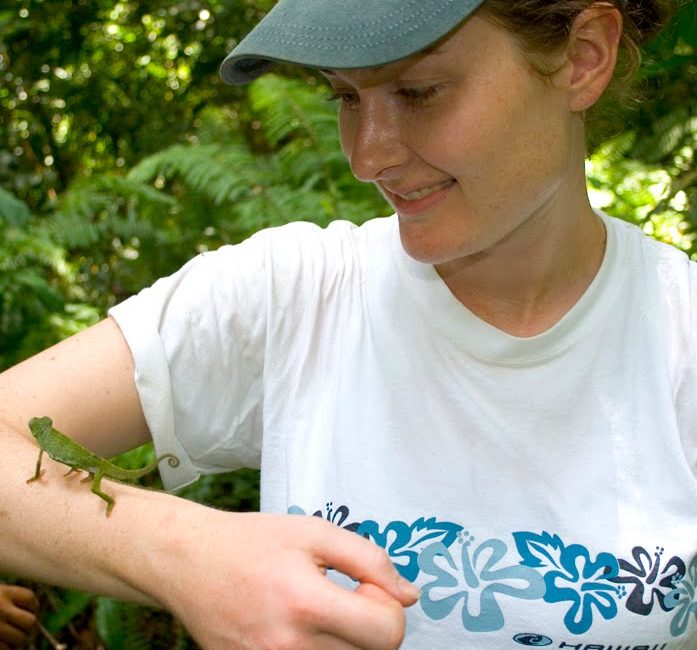
If you caught our blog post yesterday, then you know that this week we’re starting a mini-series within our larger BHL and Our Users series. This mini-series spotlights a few of the EOL Fellows – scientists who have been awarded a fellowship through the EOL Rubenstein Fellows Competition – and discusses not only their work but also how they use BHL to support it. For this, our first post, we feature Dr. Breda Zimkus, a Post-Doctoral Fellow and Genetics Resources Facility Project Manager at the Museum of Comparative Zoology at Harvard University.

Q: What are your research interests/field(s) of study & where do you do the bulk of your work (country)?

A: I am a biologist interested in phylogenetics, biogeography and conservation of amphibians and reptiles. My research integrates a broad range of techniques, including fieldwork, taxonomy and molecular systematics to interpret patterns of speciation and diversity. I am particularly interested in the phylogenetic diversification of African amphibians and use of molecular tools to define species boundaries. I have worked in many East African countries (Ethiopia, Malawi, Tanzania), and my most recent fieldwork in May/June 2011 was in the Central African country of Gabon where I completed a survey of amphibians of the Batéké Plateau National Park, which borders the Republic of Congo.

Q: In the program, Fellowships are expected to serve as a complimentary funding source to existing funding that supports your primary research activities. Please describe what you primary research activities are.

A: I am currently studying a number of frog groups that are distributed across sub-Saharan Africa, including puddle frogs (Phrynobatrachidae), rocket frogs (Ptychadenidae) and sand frogs (Pyxicephalidae: Tomopterna). I am using molecular systematics to identify cryptic species and investigating the complex diversification patterns of these lineages across the continent. In addition to being an Encyclopedia of Life Rubenstein Fellow this past year, I was also the recipient of a Ethel K. Allen, Sigma Delta Epsilon/Graduate Women In Science Fellowship, which funded my post-doctoral work on rocket frogs.

Q: Please describe how you use EOL to disseminate or support your primary research activities, or what your primary duties related to EOL are.

A: Africa still remains one of the most poorly understood areas for amphibians globally, with species rarely collected and basic data on their ecology and distribution incompletely understood. Consequently, conservation status is only adequately known for some species. This lack of knowledge is particularly worrying as concentrations of species are found in a number of sub-Saharan regions seriously threatened by environmental change. There is also a serious conservation risk to amphibians globally with the emerging prevalence of the fungal disease chytridiomycosis, possibly responsible for the extinction of many species. As an EOL fellow, I developed the African amphibian Lifedesk, so basic taxonomic data could be assembled to facilitate research. The website serves as a gateway for information regarding African amphibian species, where participants will write and edit species pages, upload images, and maintain bibliographic resources. In addition to serving as a stand-alone resource, this LifeDesk feeds content directly into the Encyclopedia of Life (EOL) and AmphibiaWeb.

Q: Who is your Mentor, what is their area of interest (research activities), and how have they supported you throughout your Fellowship?

A: I have two mentors for this project. My post-doctoral research, including my EOL work, is currently being conducted in the laboratory of Dr. James Hanken of Harvard University. The Hanken Lab studies the evolution of morphology, developmental biology, and systematics and serves as a community research facility for NSF’s AmphibiaTree project. Most work focuses on amphibians but otherwise addresses a wide range of topics, taxa and methodologies. I am conducting my EOL Fellowship work in collaboration with Dr. Simon Loader, Director of the Molecular Systematics Laboratory and Post-doctoral Researcher at the Institute of Biogeography, University of Basel. His research is specifically focused on the phylogenetic diversification of African amphibians, using an integrative approach to interpret patterns of diversity in Africa.

Q: How does BHL support your Fellows activities, as well as those research activities that fall outside of your duties as an EOL Fellow?

A: BHL has been integral to both my EOL Fellow work and my primary research on discovering African amphibians species because original species descriptions and taxonomic revisions are essential to those working on species identification. One of the major goals of the African amphibians Lifedesk is to make PDFs of all non-copyrighted material available to herpetologists around the world. Many of the most important African amphibian research was done in the early 20th century, and these manuscripts were published in rare journals. Thankfully, BHL has digitized many of these important works, so I was able to assemble PDFs online using the BHL website and upload them to the African amphibians Lifedesk.

Q: When did you first discover BHL?

A: I first heard about BHL from the librarians at the Ernst Mayr Library of the Museum of Comparative Zoology at Harvard University while conducting my PhD research. At that point I used BHL only if I was unable to find a reference in the Ernst Mayr library. When I began my EOL fellowship, I began to use BHL on a daily basis, compiling PDFs to upload to the African amphibians Lifedesk.

Q: What are your favorite features/services on BHL?

A: I am lucky to be at an institution with an amazing library system, but BHL makes biodiversity literature accessible to everyone with an internet connection. It also allows me to have electronic copies of papers on my computer, so I have them whenever I need them.

Q: If you could change one thing about BHL, or suggest one thing to be the next developmental priority for BHL, what would it be?

A: It does take time to assemble PDFs because you must locate the journal, find the issue, select each individual page of that specific issue and then have the document emailed to you. I would love to see a time when I can search for a title of a specific paper and find the PDF already assembled.

Q: Do you have a favorite book in BHL, or a book that has most supported your research activities or EOL responsibilities?

A: George Albert Boulenger (1858-1937) was a zoologist that described an incredible number of amphibians (556 species), reptiles (872 species) and fish (1,096 species). Many of Boulenger’s African amphibian descriptions were published in the Proceedings of the Zoological Society of London. I found his work published in 1900 entitled “A list of the batrachians and reptiles of the Gaboon (French Congo), with descriptions of new genera and species” to be very useful for my recent trip to Gabon.

Thank you, Dr. Zimkus, for all the valuable research you have conducted on amphibians and reptiles, and for your pioneering efforts on the African amphibians Lifedesk for EOL! We are so thrilled that BHL has been a part of the endeavor, particularly as the library at your home institution is one of the key members of BHL (Ernst Mayr Library, Harvard University)! As to your desire to eventually be able to find already-assembled PDF articles from BHL, we have been in the process of creating Citebank for some time now, with just that objective in mind. Citebank will act as an article repository, indexing and providing PDFs to articles found within larger journals and books in BHL. Though still in the developmental stage, Citebank is live on the web and already indexes and provides PDFs for a great deal of articles from BHL. We hope that this, and our other BHL efforts, will continue to play an important role in your vital research and conservation activities!

August 16, 2011by michelle.underhill
Blog Reel, User Stories

BHL and Our Users: Highlighting EOL Fellows!

Portrait version of the Biodiversity Heritage Library logo.

View Full Size Image
(2010 EOL Rubenstein Fellows. Photo Credit: James Di Loreto)

For quite some time now, we’ve been doing a series on our blog entitled BHL and Our Users, in which we feature one of our users in each post and highlight how their work and BHL intersect. We find the users we feature in a variety of ways, such as targeting those users that send us regular feedback, are top content downloaders on our site, are actively involved on our social media platforms, or are curators or researchers at one of the various BHL institutions. One community that we have not yet explored, but that most certainly deserves to be highlighted, considering in particular BHL’s close relationship with it, is the EOL community.

The EOL is “a sweeping global effort to gather and share the vast wealth of information on every creature – animals, plants, and microorganisms – and make it available as a web-based resource.” The goal is to create a web page for every species on the planet, presenting a plethora of information on each species from a variety of sources, all aggregated into one easily-accessible location. And in case you didn’t know, the BHL is one of the five working groups comprising EOL. If you’ve spent any time on EOL, you may have noticed that each species page includes a tab for literature references from the Biodiversity Heritage Library, including links back to pages in BHL mentioning that species.

One of the aspects of the EOL project that is of particular interest to us for the purposes of this blog series is the EOL Rubenstein Fellows program. An international competition, the program supports the work of scientists interested in taking advantage of online collaboration and outreach possibilities for scientific research and information. Each year, the program awards fellowships to a select number of applicants – primarily early-career scientists – providing them with “partial funding for up to one year to translate biodiversity research, databases, and media into rich, online resources through the Encyclopedia of Life.” EOL Fellows are expected to distribute their research through EOL, performing activities that will “add new content, such as images, maps or descriptions, to EOL pages.” Over the four years of the program, which began in 2010, over 60 Fellows are expected to be named. The fellowships are made possible through a donation by David M. Rubenstein to the Smithsonian Institution’s National Museum of Natural History, and Fellows are selected by the Species Pages Group of EOL.

While it is not required for applicants of the 2012 EOL Rubenstein Fellows competition, for which EOL is now taking applications, former Fellows, as part of their fellowship, were required to have a mentor. These mentors were responsible for supporting the Fellows “throughout their fellowship, supervising and reviewing their work and helping them connect with others in their scientific community.” Fellows were instructed to choose mentors with whom they already had a working relationship and were more experienced scientists than themselves.

We were delighted to find that many of the EOL Fellows spend a great deal of time on BHL, taking advantage of the freely-available literature and our various services to support their own research and contribute to the work they do for EOL. This being the case, we thought it only fitting that these Fellows should be highlighted on our blog. Thus, beginning this week, we’re starting a short “mini-series” on EOL Fellows. We hope you’ve enjoyed this brief introduction to EOL and the Fellowship, and be sure to check in tomorrow for the first of our featured Fellows!

August 15, 2011by michelle.underhill

Help Support BHL

BHL's existence depends on the financial support of its patrons. Help us keep this free resource alive!

search

About BHL

The Biodiversity Heritage Library (BHL) is the world’s largest open access digital library for biodiversity literature and archives. BHL operates as a worldwide consortium of natural history, botanical, research, and national libraries working together to digitize the natural history literature held in their collections and make it freely available for open access as part of a global “biodiversity community.”

Join Our Mailing List

Sign up to receive the latest news, content highlights, and promotions.

Subscribe Now

Subscribe to Blog via Email

Enter your email address to subscribe to this blog and receive notifications of new posts by email.

Join 319 other subscribers

Subscribe to Blog Via RSS

Subscribe to the blog RSS feed to stay up-to-date on all the latest BHL posts.

Access RSS Feed

Inspiring Discovery through Free Access to Biodiversity Knowledge.

The Biodiversity Heritage Library makes it easier than ever for you to access the information you need to study and explore life on Earth…for free, anytime, anywhere.


64+ Million Pages of
Biodiversity Literature Online.

EXPLORE

Tools and Services
to Transform Research.

EXPLORE

300,000+
Illustrations on Flickr.

EXPLORE

ABOUT | HARMFUL CONTENT | PRIVACY | SITE MAP | TERMS OF USE