Biodiversity Heritage Library - Program news and collection highlights from BHL
  • Home
  • News
  • Featured Books
    • All Featured Books
    • Book of the Month Series
    • BHL at 20
  • User Stories
  • Campaigns
    • Fossil Stories
    • Garden Stories
    • Monsters Are Real
    • Page Frights
    • Her Natural History
    • Earth Optimism 2020
  • Tech Blog
  • Visit BHL
Home
News
Featured Books
    All Featured Books
    Book of the Month Series
    BHL at 20
User Stories
Campaigns
    Fossil Stories
    Garden Stories
    Monsters Are Real
    Page Frights
    Her Natural History
    Earth Optimism 2020
Tech Blog
Visit BHL
  • Home
  • News
  • Featured Books
    • All Featured Books
    • Book of the Month Series
    • BHL at 20
  • User Stories
  • Campaigns
    • Fossil Stories
    • Garden Stories
    • Monsters Are Real
    • Page Frights
    • Her Natural History
    • Earth Optimism 2020
  • Tech Blog
  • Visit BHL
Biodiversity Heritage Library - Program news and collection highlights from BHL
Blog Reel, Campaigns, Featured Books, Her Natural History

Mary Margaret Smith: Ichthyologist, Artist, and First Director of the JLB Smith Institute of Ichthyology

Margaret and JLB Smith review art proofs

A version of this post was originally published on the blog of the Margaret Smith Library, SAIAB. It is reproduced with permission from the author, Sally Schramm.
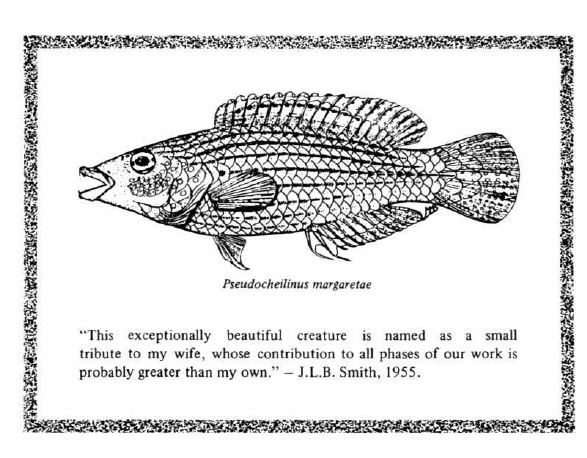
fish

From the cover of The life and work of Margaret M. Smith / Mike Bruton (c.1986)

The Library at the South African Institute for Aquatic Biodiversity is named for Mary Margaret Smith (née Macdonald), the first Director of the JLB Smith Institute of Ichthyology. Macdonald attended Rhodes University College in Grahamstown from 1934 to 1937. She was awarded her B.Sc. degree in 1936, majoring in physics and chemistry (with distinction), and became a senior demonstrator in the Chemistry Department.

James Leonard Brierley (JLB) Smith (1897-1968), Associate Professor of Organic Chemistry, and Mary Macdonald, were married in 1938. With her not liking the new name “Mary Smith”, she was from that time always known as “Margaret Smith”.
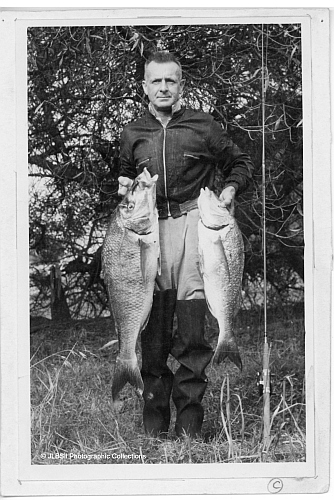
JLB Smith

JLB Smith with White steenbras , Knysna ca. 1950

JLB Smith, a keen angler, developed a more formal interest in ichthyology, the study of fishes. His young wife soon became involved in his hobby and accompanied him on fishing trips and collecting expeditions.
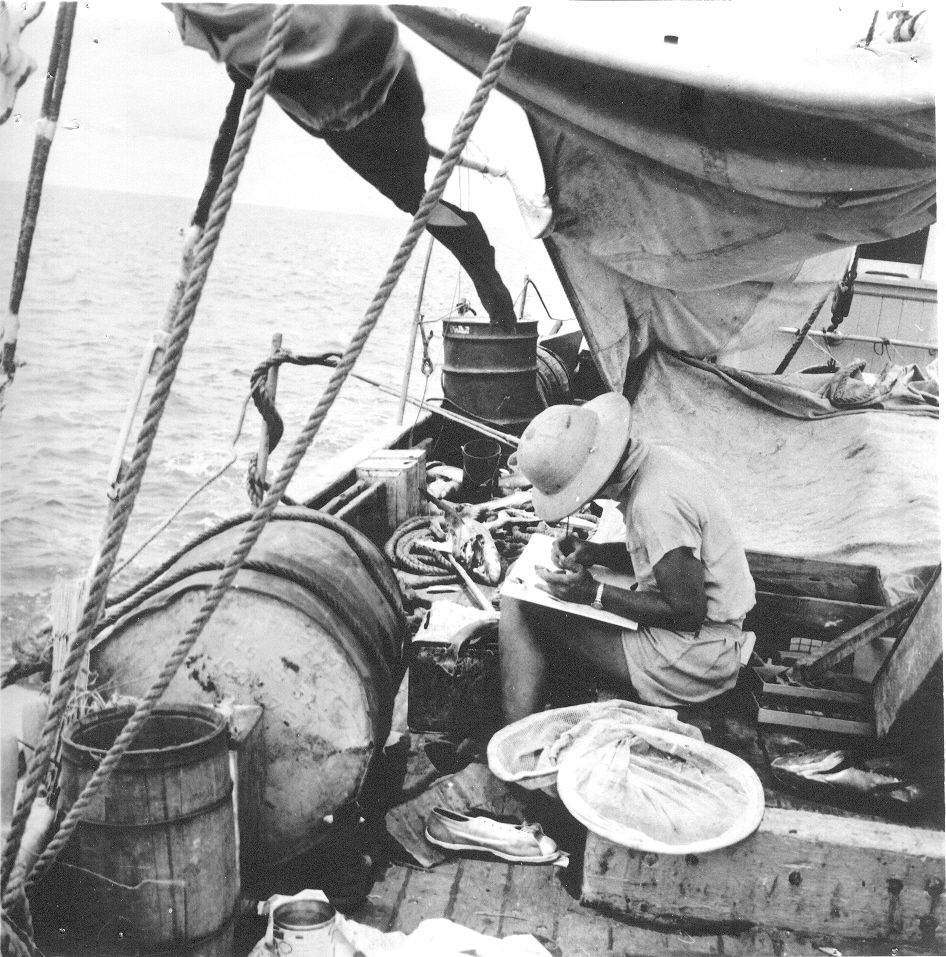
Margaret Smith

Margaret Smith drawing on a boat in the Seychelles.
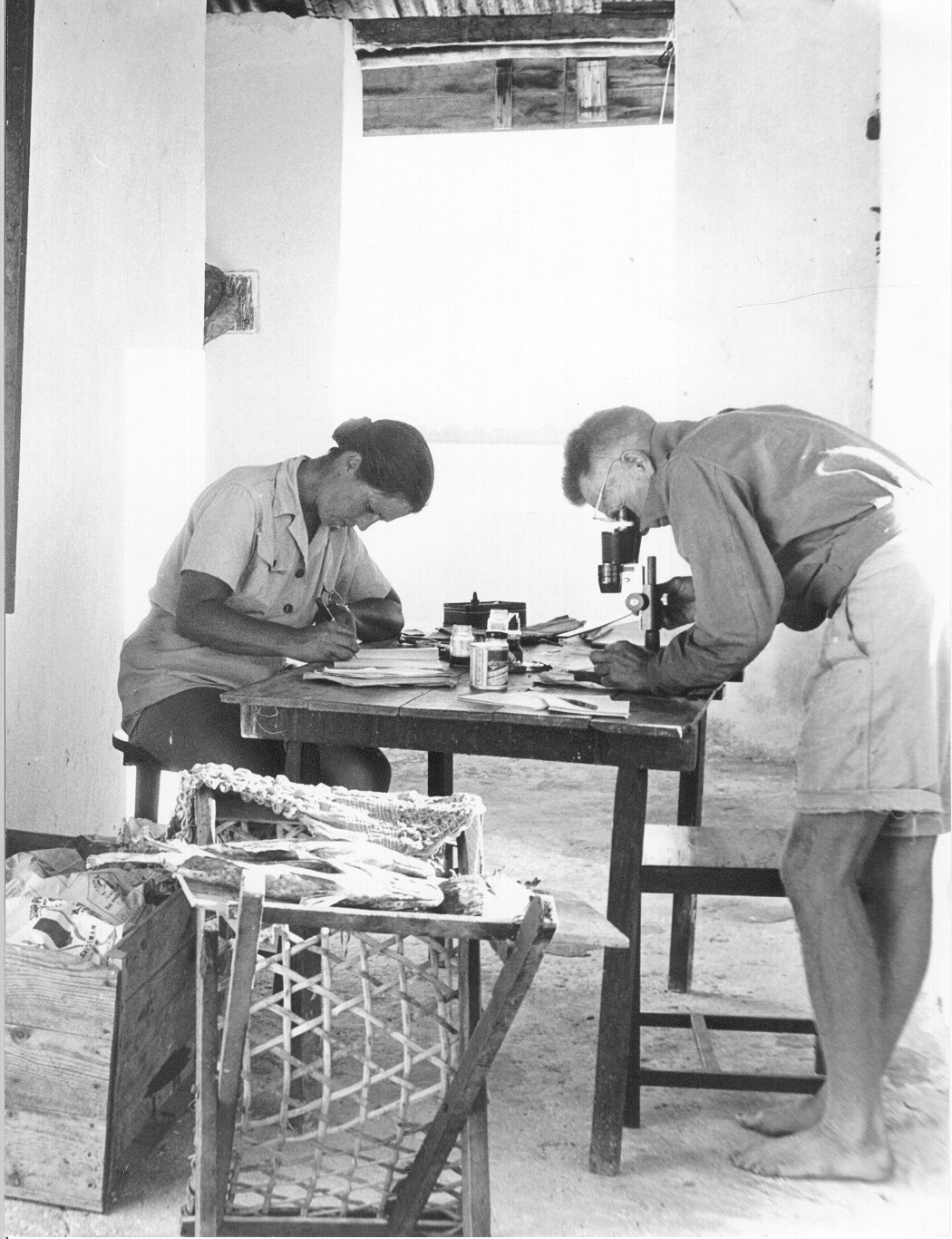
Typical lab conditions, Shimoni, Kenya 1952

Typical lab conditions, Shimoni, Kenya 1952.

In 1946, the Department of Ichthyology was established at Rhodes University and J.L.B and Margaret Smith were able to devote all their energies to the production of an authoritative book on the sea fishes of southern Africa.
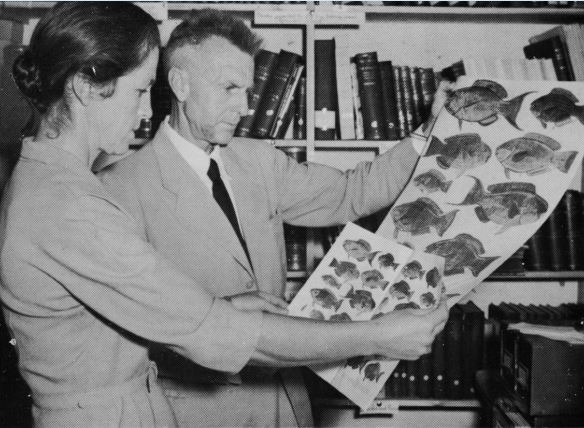
Margaret and JLB Smith review art proofs

Margaret and JLB Smith review art proofs.

One of their greatest problems was a lack of suitable illustrations. Undaunted, despite no artistic training, Margaret Smith, took on the task. The first edition of The Sea Fishes of Southern Africa, published in 1949, contained her exceptional illustrations.
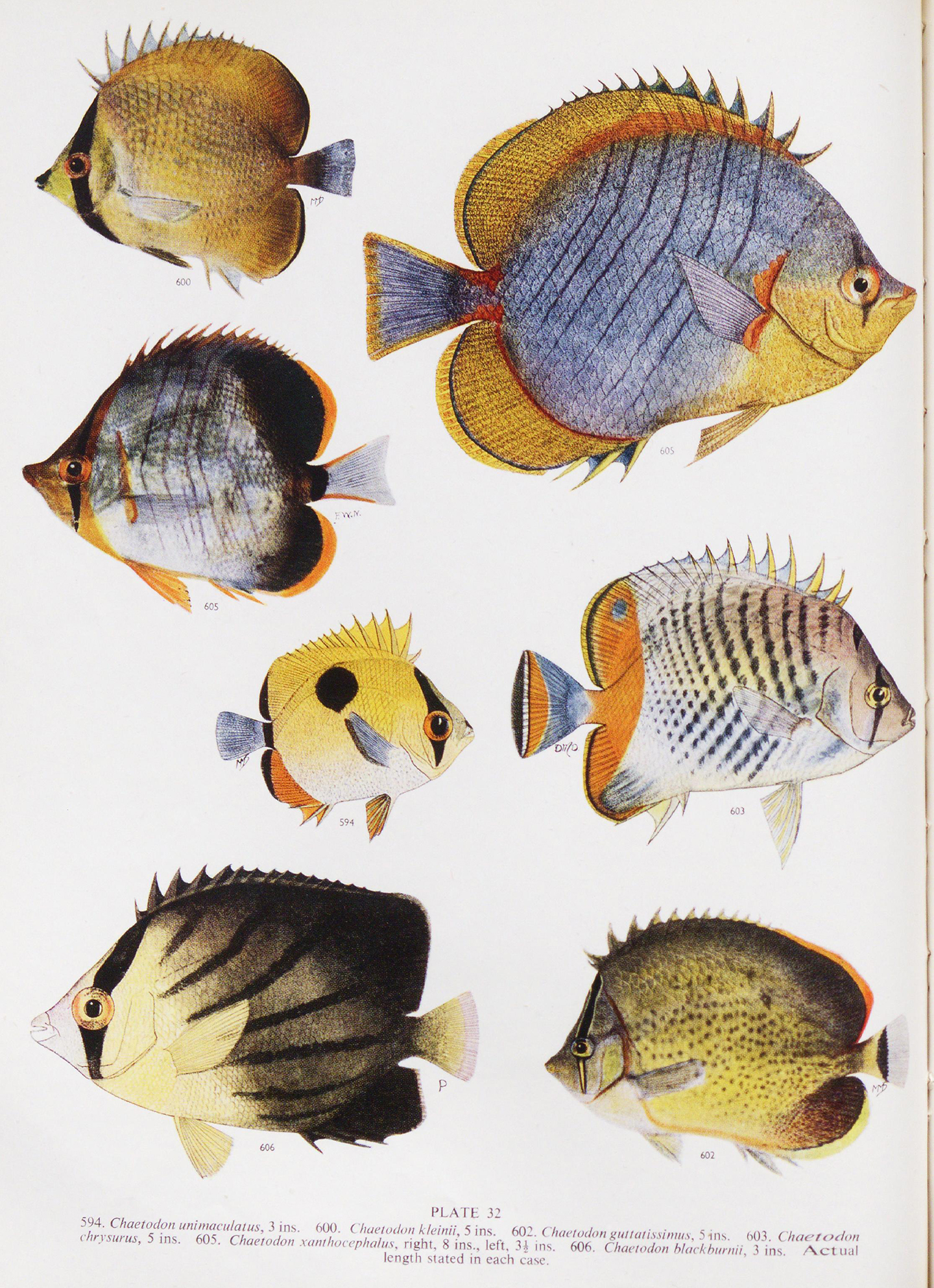
Plate 32. The sea fishes of Southern Africa. 1949. By JLB and Mary Margaret Smith. Art by Mary Margaret Smith. Contributed in BHL from Cornell University Library with permission from the South African Institute for Aquatic Biodiversity. CC-BY-NC-SA.
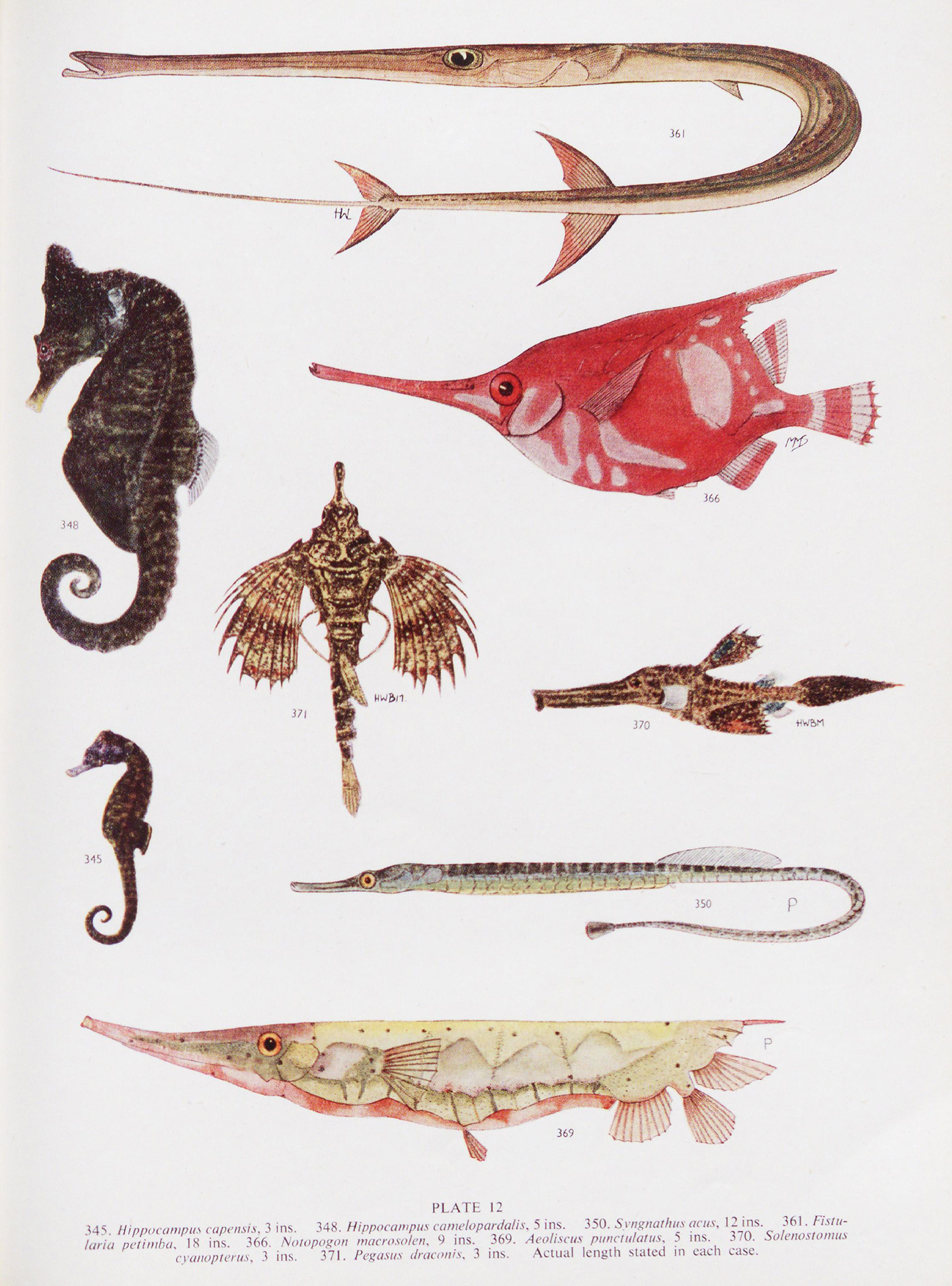
Plate 12. The sea fishes of Southern Africa. 1949. By JLB and Mary Margaret Smith. Art by Mary Margaret Smith. Contributed in BHL from Cornell University Library with permission from the South African Institute for Aquatic Biodiversity. CC-BY-NC-SA.

She in turn taught what was to become a group of acclaimed natural history artists.

After the death of JLB Smith in January 1968, Margaret Smith continued her ichthyological research in Grahamstown. At the end of 1968, the South African Council for Scientific and Industrial Research (CSIR) and Rhodes University decided to establish the J.L.B Smith Institute of Ichthyology. Margaret was appointed the first Director of the new Institute, now the South African Institute for Aquatic Biodiversity (SAIAB).
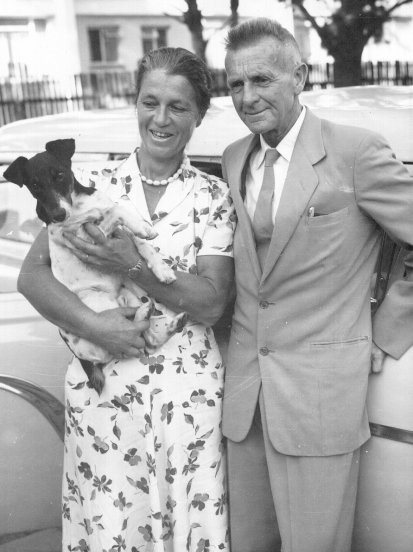
Margaret and JLB Smith with their dog, Marlin.

Margaret and JLB Smith with their dog, Marlin.

The Margaret Smith House, a women’s residence at Rhodes University, likewise honours her contribution to our local university and to international science.

Margaret Smith died in 1987. She had given 49 years of service to ichthyology.

Margaret’s achievements, the fine building, the reference collection of fish which she so adequately preserved, the status of the institute as a museum of international standing, are there for all to see. What is less known is the woman herself in her private life which few could know much about. This may be summed up in two words: for all her public flamboyance, she was a kind woman. Nobody with a hard-luck story was ever turned away … she helped innumerable people. If something was needed and could not otherwise be got she would dip into her pockets, and never say a word. [1]

The Biodiversity Heritage Library holds a collection of JBL Smith’s Ichthyological Papers, edited by his wife, Margaret Smith, and published in 1969, the year after his death. Contributed by the Library of the South African Institute for Aquatic Biodiversity, the two volume work was published by the J.L.B. Smith Institute of Ichthyology.
Coelacanth

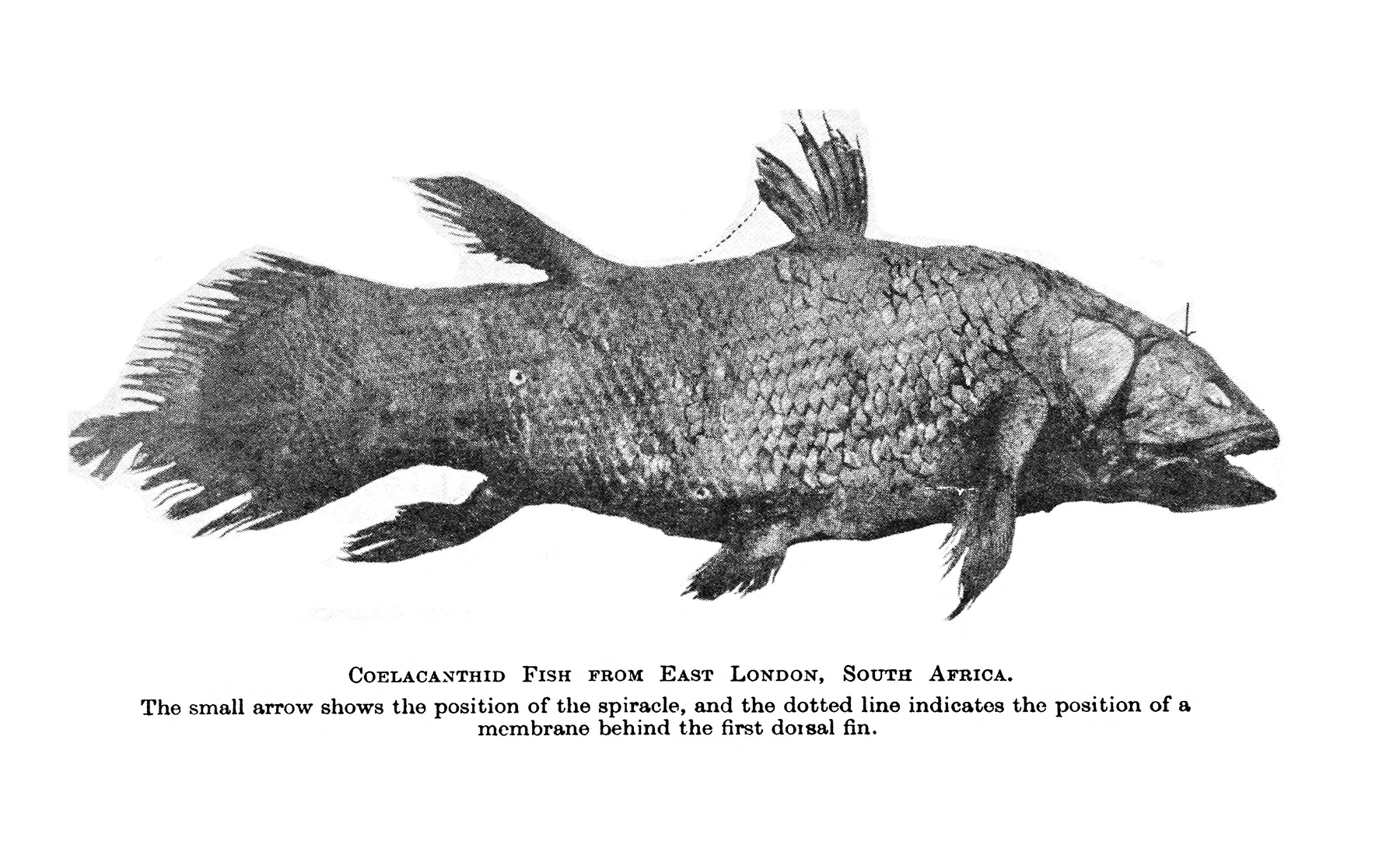
Coelacanth re-discovered off the coast of South African in 1938. Smith, J.L.B. “A Living Fish of Mesozoic Type.” Nature. v. 143 (1939). In: Ichthyological Papers. Ed. Mary Margaret Smith. 1969. Contributed in BHL from the South African Institute for Aquatic Biodiversity.

One of the highlights of the publication is the description of the “re-discovery” of the coelacanth, believed to have become extinct in the Late Cretaceous, around 66 million years ago, but rediscovered off the coast of South Africa in 1938. Marjorie Courtenay-Latimer, curator of the East London Museum, discovered a specimen from amongst the catch of a local trawler, Captain Hendrick Goosen, and contacted J.L.B. Smith regarding the discovery. Smith subsequently named the species Latimeria chalumnae after Courtenay-Latimer.
You can read more about the life and achievements of Marjorie Courtenay-Latimer as part of the #HerNaturalHistory campaign.

Reference

[1] PBN Jackson. 1997. Variations on a theme: the three directors of the first fifty years of the JLB Smith Institute of Ichthyology. Trans. Roy. Soc. S. Afr., 51:40.

March 24, 2019by michelle.underhill
Blog Reel, Campaigns, Her Natural History

Marjorie Eileen Doris Courtenay-Latimer: Beyond the Coelacanth

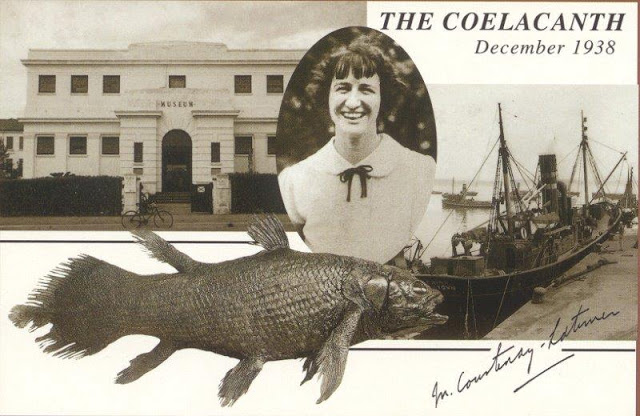
Commemorative postcard

A version of this post was originally published on the blog of the Margaret Smith Library, SAIAB. It is reproduced with permission from the author, Sally Schramm.

Willie and I look forward to our first born towards the end of April/beginning of May and we both pray it will be a lover of all that is beautiful in nature. Willie wants it to be a botanist — I want it to be a lover of birds and animals.
Eric Latimer’s diary, 25th November 1906

Marjorie Eileen Doris Courtenay-Latimer (1907-2004) is ubiquitously remembered and celebrated for her part in recognising that the large fish trawled by Capt. Hendrik Goosen and the crew of the Nerine in December 1938 was an astonishing find. This was to be identified as the first live coelacanth known to Western science. JLB Smith, the ichthyologist who first described it, named it Latimeria chalumnae after Marjorie, and the Eastern Cape river mouth near which it was found.

Commemorative postcard

Commemorative postcard on the “re-discovery” of the coelacanth.

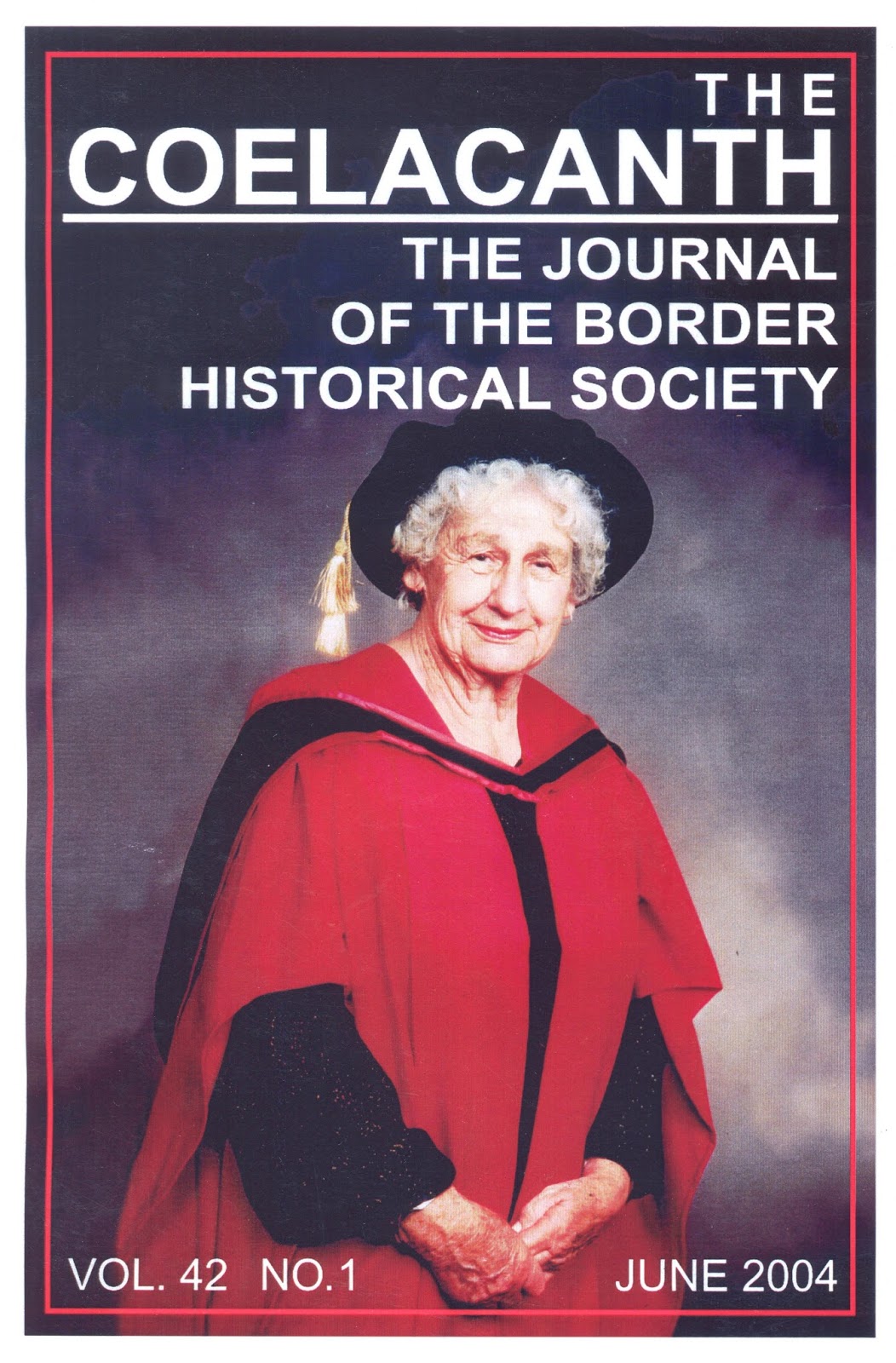
Reading the Border Historical Society’s The Coelacanth journal Commemorative edition in honour of Dr Marjorie Courtenay-Latimer (2004) we find a life dedicated to a great deal more than that single event. Her contributions to the Eastern Cape town of East London, and to the Museum in particular, were immense.

Born two months prematurely, surviving practically every childhood disease known — and the Flu Pandemic (1918-1920) — the apparently frail Marjorie’s interest in “all that is beautiful in nature” intensified as her family followed father Eric Latimer to his postings at a succession of often isolated railway stations in the Free State and Eastern Cape. The entire family walked and picnicked, collected, recorded and illustrated specimens, thoroughly appreciative of the wild areas around them.

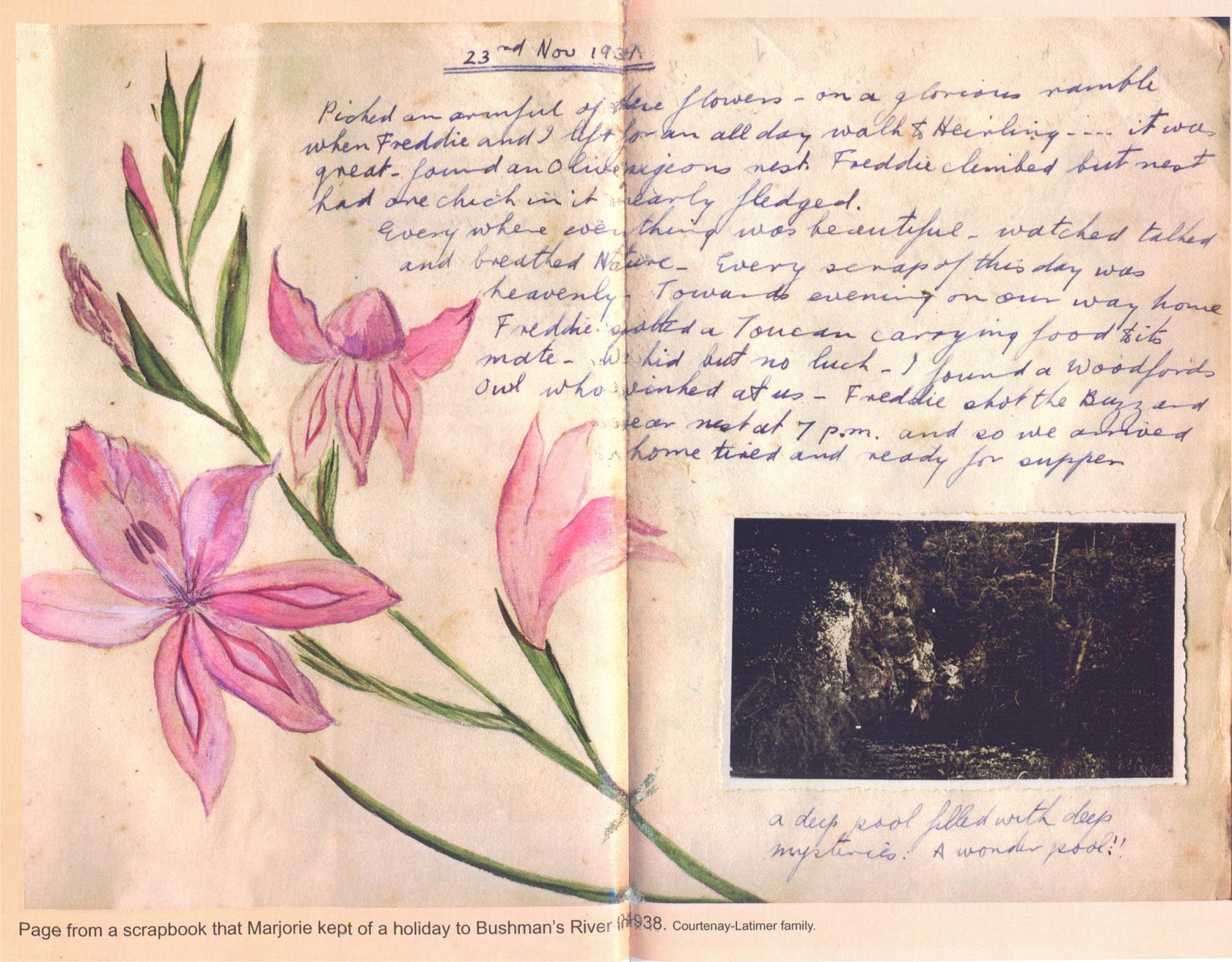
Keeping natural history journals and scrapbooks became a life-long habit for Marjorie. Here we read in 1938, “Every where everything was beautiful — watched, talked and breathed nature. Every scrap of this day was heavenly”.

The Coelacanth Vol. 42 (1) Centrepiece

The Coelacanth Vol. 42 (1) Centrepiece.

We also read of Marjorie, aged 24, as the first curator in 1931 (at £2 a month, with a petty cash allowance of 5/-) of the new and sparsely provisioned East London Museum, with its meagre collections; setting up displays (initially from her family’s own collections) and dioramas; her dedication in building collections both cultural and of natural history; her awareness of the museum’s value and interest to the public and especially to children; and of the planting of the indigenous museum garden. All this was accomplished in the early years with very little help; we read only of one named assistant Enoch [Enoch Elias], who helped Marjorie lug the coelacanth back to the Museum in 1938.

Other contributions tell of her stint on Bird Island in Algoa Bay for six weeks in 1936, with her parents as chaperones (mother enthused, father dreadfully bored); of her botanical and fossil-collecting field trips, often with close friends, specifically of the excavation and mounting of the almost-complete dicnodoni skeleton Kannemeyeria simocephalus.

Marjorie recounts many of these events from her early life and career, and explains how they ultimately contributed to the coelacanth “discovery”, in a 1979 paper published in the Occasional papers of the California Academy of Sciences. For example, it was because of her employment at the East London Museum that she met JLB Smith, with whom she developed a professional relationship that she called upon following her discovery in December 1938. And it was during her time on Bird Island that she met Capt. Hendrik Goosen, who became a regular source of specimens for her collecting activities for the Museum — and ultimately the supplied the famed coelacanth specimen.

Marjorie summarizes her story and the events that culminated in her famed discovery as such:

“This story is one of the most astounding records of a woman’s intuition, for:

had I never gone to Bird Island;
had I never met Dr. JLB Smith who, of all the scientists I met as a young girl struggling with meagre funds in a small Museum, always gave encouragement and never criticism;
and had I not gone to the wharf to wish the men a Happy Christmas,

there never would have been a coelacanth discovery in South Africa, on 22 December 1938.”

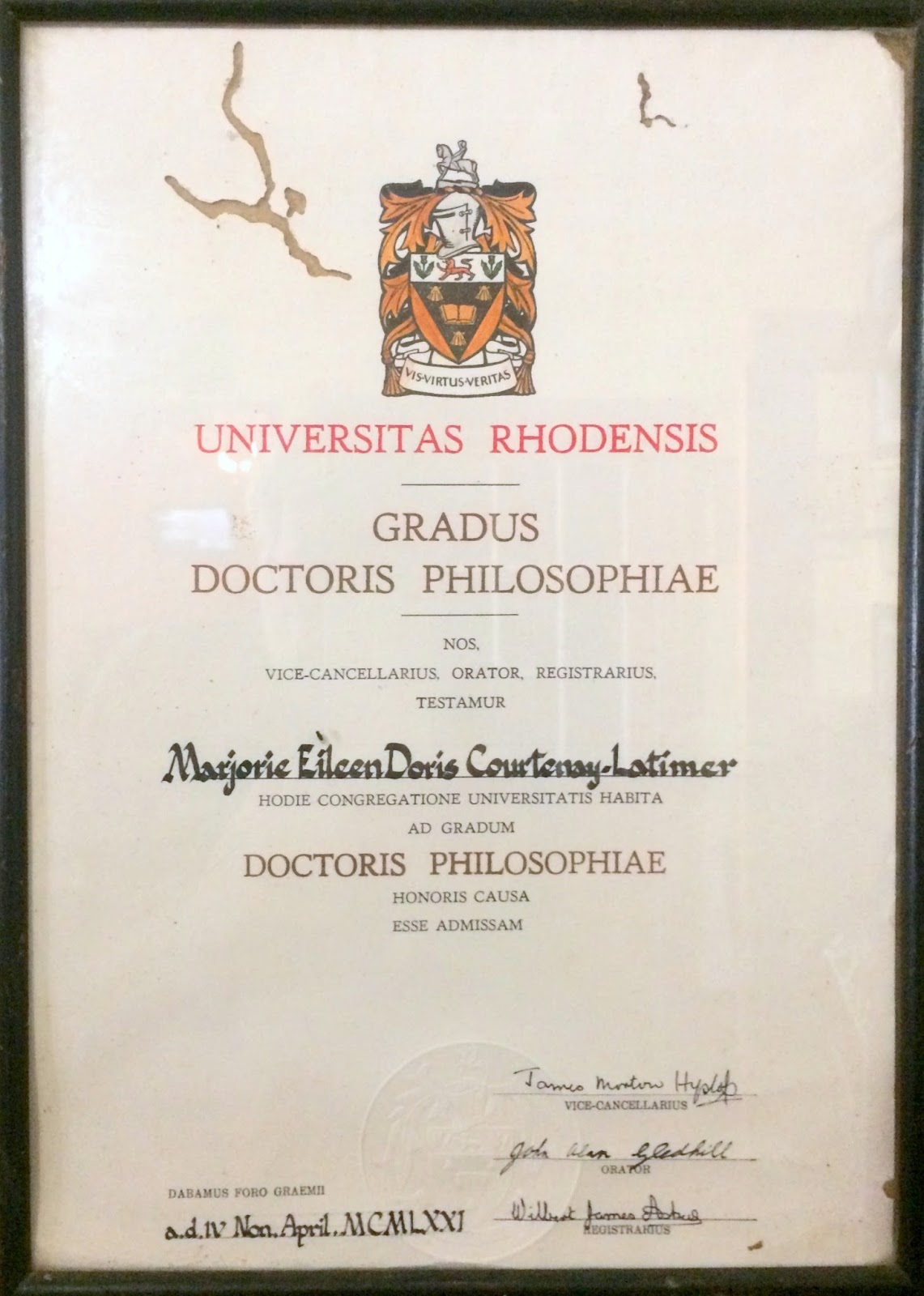
Marjorie was an author of scientific and popular literature on a wide variety of topics and was an active member of diverse museum, historical and natural history societies. She supported conservation and the establishment of nature reserves such as Potters Pass, East London, and Gonubie Nature Reserve. Finally, we read of her numerous civic awards, honorary fellowships, and her Honorary Doctorate from Rhodes University.

Dr Marjorie Courtenay-Latimer

Dr Marjorie Courtenay-Latimer PhD (Honoris Causa) 1971.

Marjorie Courtenay-Latimer Collection Thomas River Historical Village (Pic: Mike Schramm)

Marjorie Courtenay-Latimer Collection. Thomas River Historical Village. (Pic: Mike Schramm)

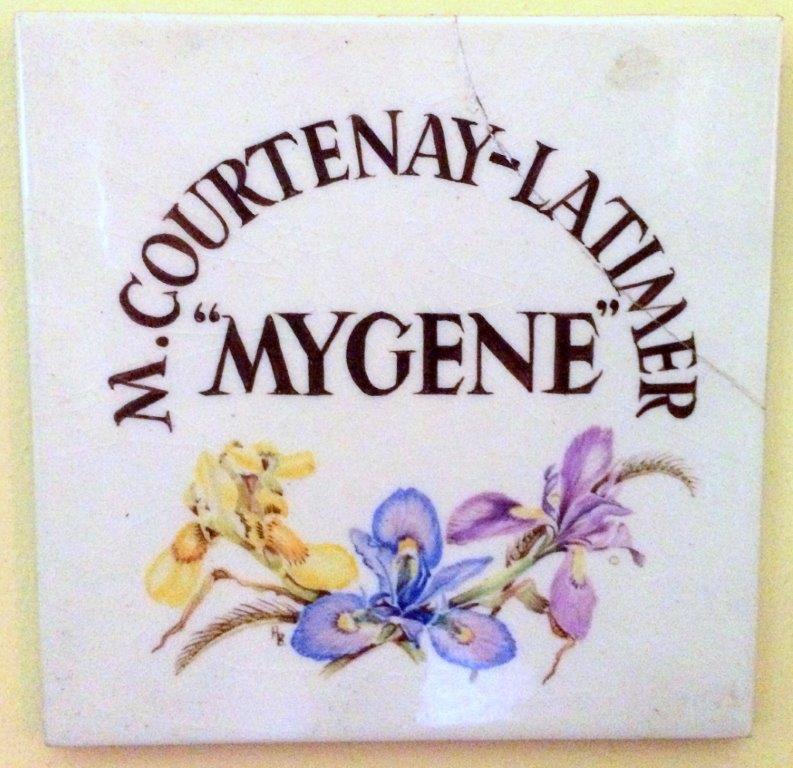
On her retirement as Director from the East London Museum in 1973, Marjorie moved to Witselbos in the Tsitsikamma area. Her house Mygene was named for her childhood nickname “Genie”, from the popular song “Jeanie with the light brown hair”, “… I see her tripping where the bright streams play, Happy as the daisies that dance on her way …”

Having done a brick-laying course at the East London Technical College, she tackled a kitchen extension with aplomb. She painted and sculpted in clay. She still kept in touch with friends and colleagues world-wide. Forays into nature continued as ever.

Marjorie Courtenay-Latimer Collection Thomas River Historical Village (Pic: Mike Schramm)

Marjorie Courtenay-Latimer Collection. Thomas River Historical Village. (Pic: Mike Schramm)

She returned to East London in the 1980s. On her moving to frail-care shortly before her death in 2004, a collection of Marjorie’s personal effects (including the certificate and house plaque above) were left behind in the house which she had recently occupied.

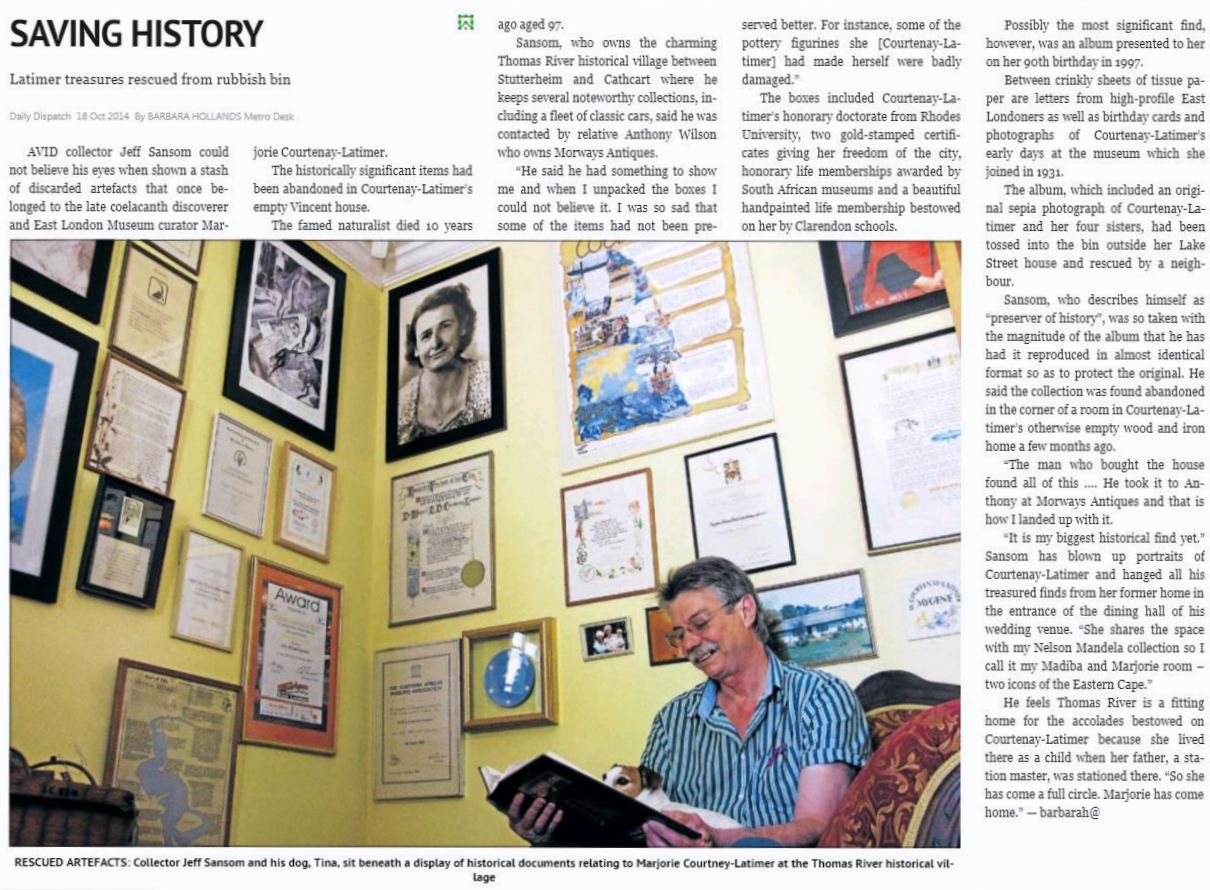
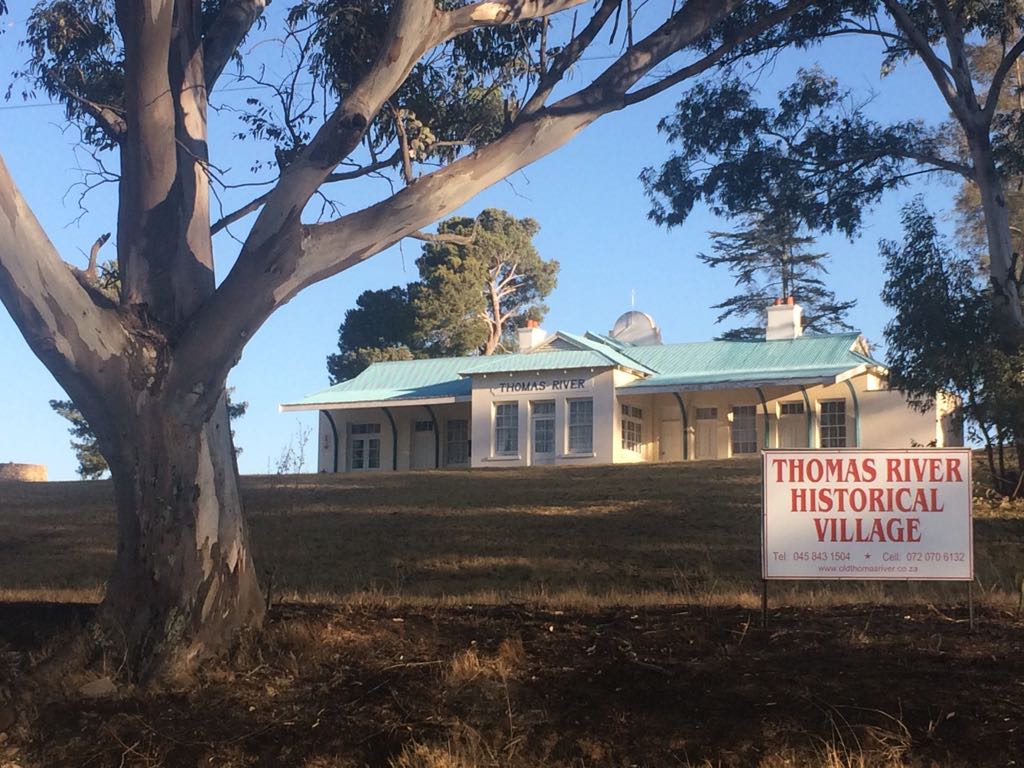
Fortuitously, these were subsequently recovered when the house was sold ten years later. A serendipitous chain of events led to the display of some items at Thomas River Historical Village near Cathcart, Eastern Cape. The Village is the site of the original Thomas River Station — where Eric Latimer and his family had lived in the late 1920s.

Saving History (Daily Dispatch 18th Oct 2014)

Saving History (Daily Dispatch 18th Oct 2014).

The original Thomas River Station, built in the late 1870s. (Pic: Mike Schramm)

The original Thomas River Station, built in the late 1870s. (Pic: Mike Schramm)

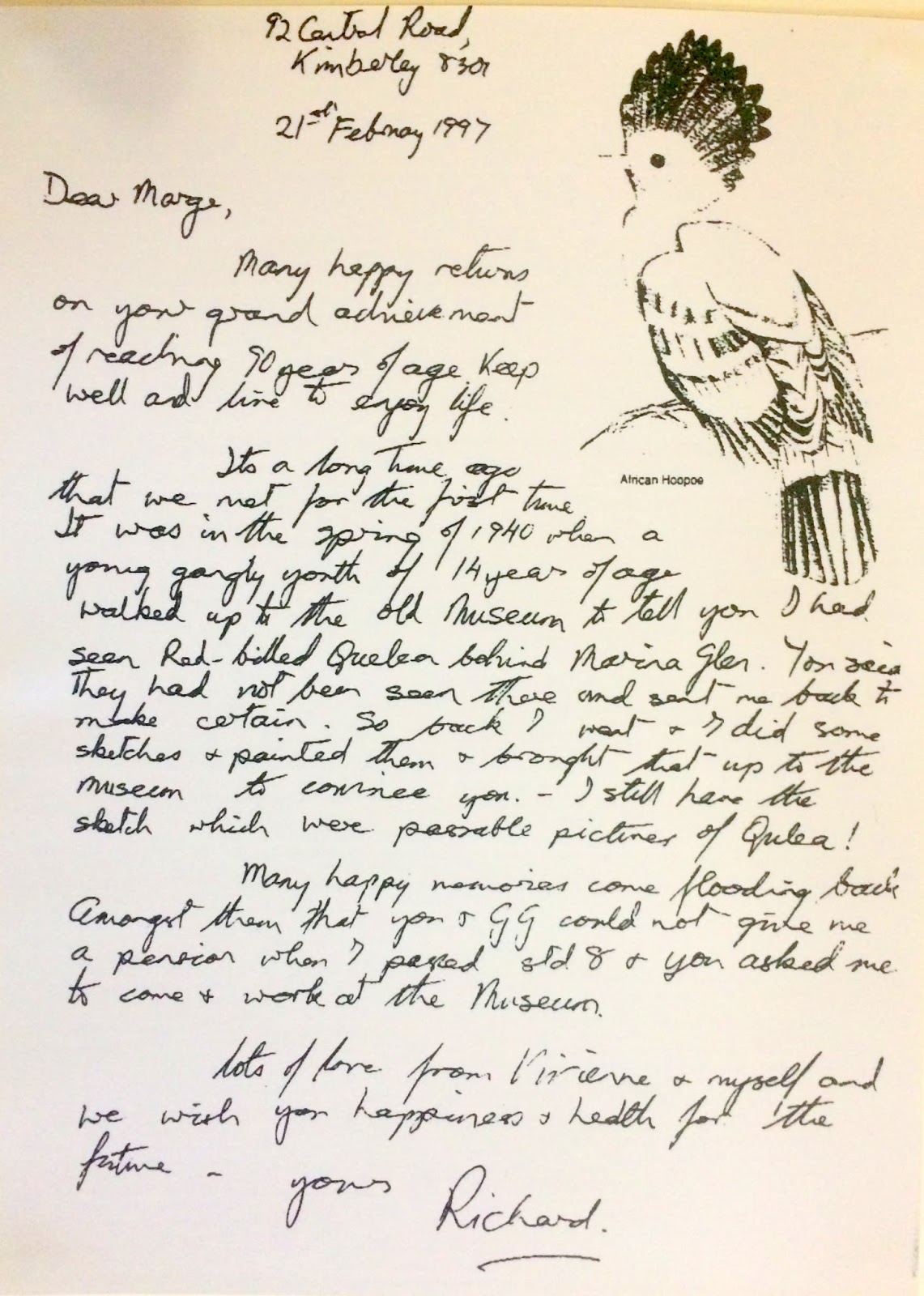
Among the treasures found was the album presented to Marjorie on her 90th birthday in 1997 “with appreciation and admiration” by the South African Museums Association. There is a facsimile copy at Thomas River Historical Village. Many of the contributors are a who’s who of prominent naturalists, authors and artists, all friends and colleagues.

Contribution by Richard Liversidge, ornithologist, previously Director, McGregor Museum, Kimberley Marjorie Courtenay-Latimer Collection,Thomas River Historical Village (Pic: Mike Schramm)

Contribution by Richard Liversidge, ornithologist, previously Director, McGregor Museum, Kimberley. Marjorie Courtenay-Latimer Collection,Thomas River Historical Village. (Pic: Mike Schramm)

The many happy memories recalled through the warm contributions would have delighted Willie and Eric Latimer. Their first child was a daughter who truly was a “lover of all that is beautiful in nature”.

Marjorie Courtney-Latimer — a life lived richly beyond the coelacanth!

March 23, 2019by michelle.underhill

Help Support BHL

BHL's existence depends on the financial support of its patrons. Help us keep this free resource alive!

search

About BHL

The Biodiversity Heritage Library (BHL) is the world’s largest open access digital library for biodiversity literature and archives. BHL operates as a worldwide consortium of natural history, botanical, research, and national libraries working together to digitize the natural history literature held in their collections and make it freely available for open access as part of a global “biodiversity community.”

Join Our Mailing List

Sign up to receive the latest news, content highlights, and promotions.

Subscribe Now

Subscribe to Blog via Email

Enter your email address to subscribe to this blog and receive notifications of new posts by email.

Join 319 other subscribers

Subscribe to Blog Via RSS

Subscribe to the blog RSS feed to stay up-to-date on all the latest BHL posts.

Access RSS Feed

Inspiring Discovery through Free Access to Biodiversity Knowledge.

The Biodiversity Heritage Library makes it easier than ever for you to access the information you need to study and explore life on Earth…for free, anytime, anywhere.


64+ Million Pages of
Biodiversity Literature Online.

EXPLORE

Tools and Services
to Transform Research.

EXPLORE

300,000+
Illustrations on Flickr.

EXPLORE

ABOUT | HARMFUL CONTENT | PRIVACY | SITE MAP | TERMS OF USE