 |
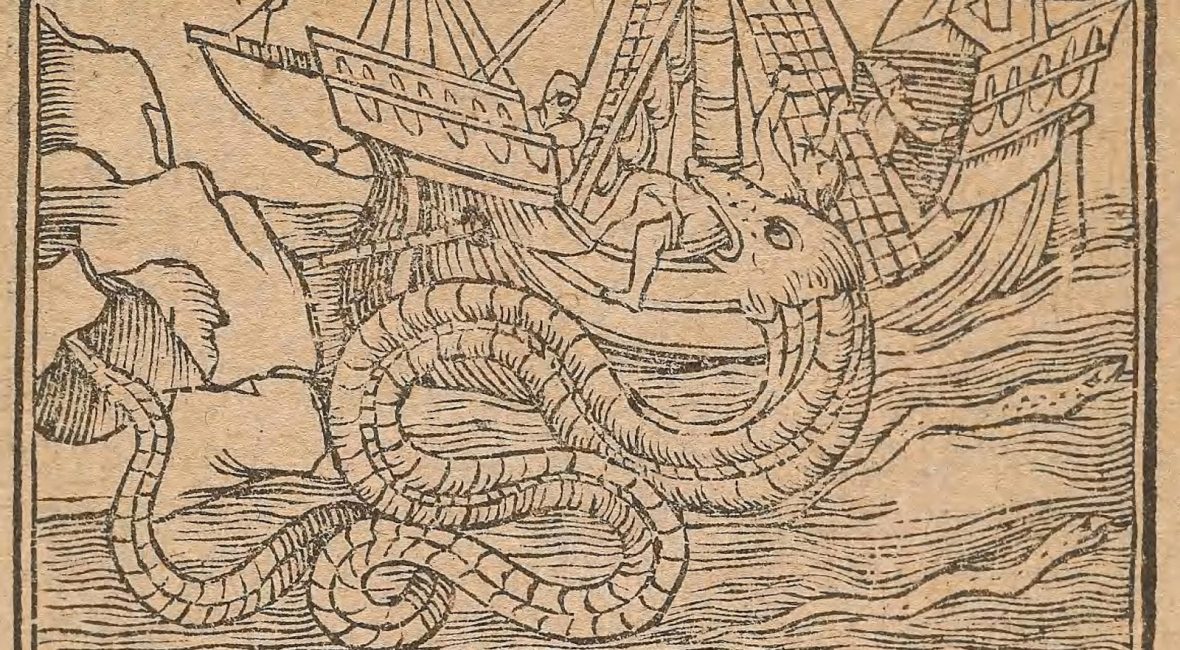
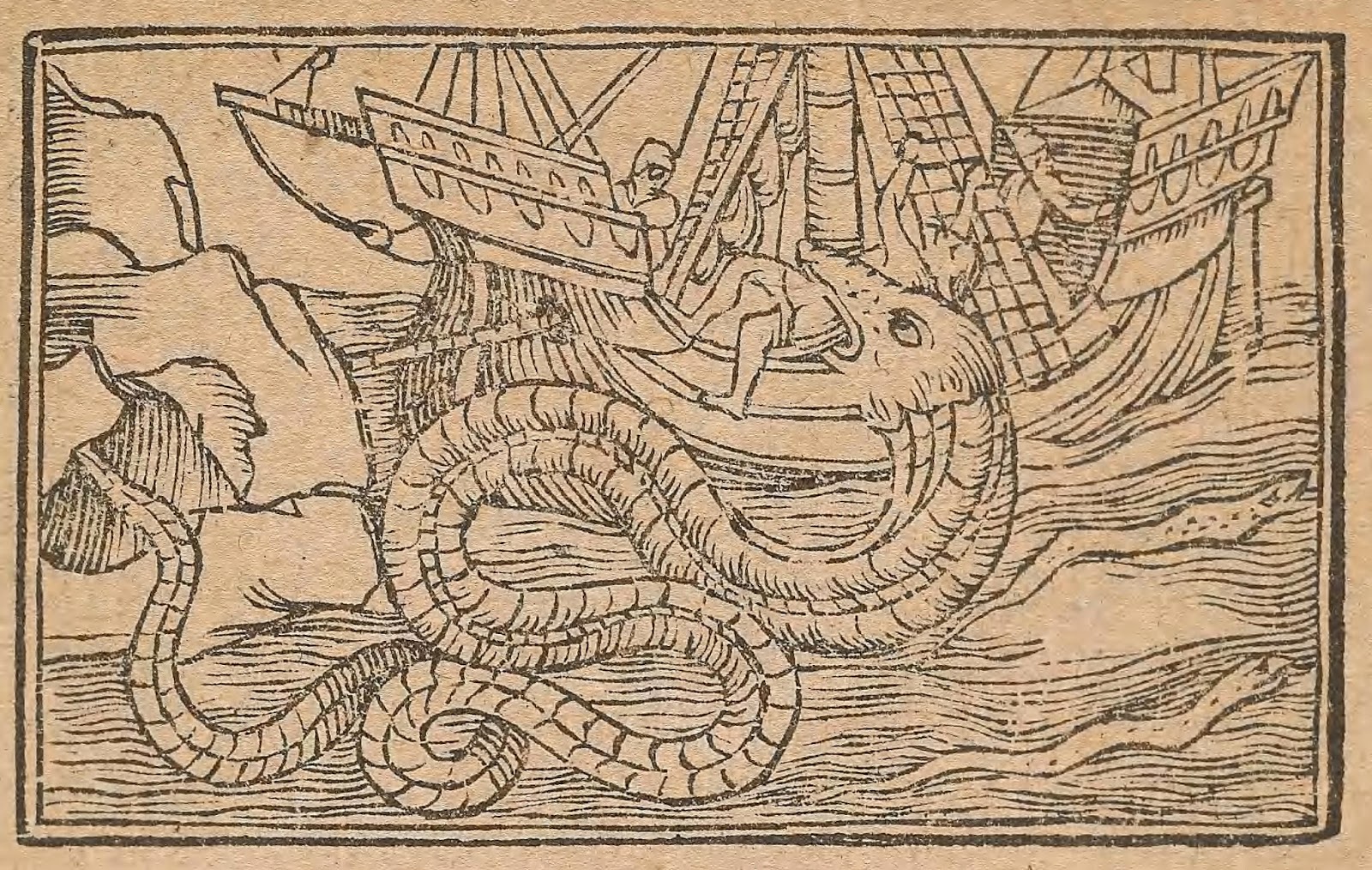
| “Soe Orm.” Magnus, Olaus. Historia de Gentibus Septentionalibus. [ca. 1557 edition]. http://biodiversitylibrary.org/page/41862944. |
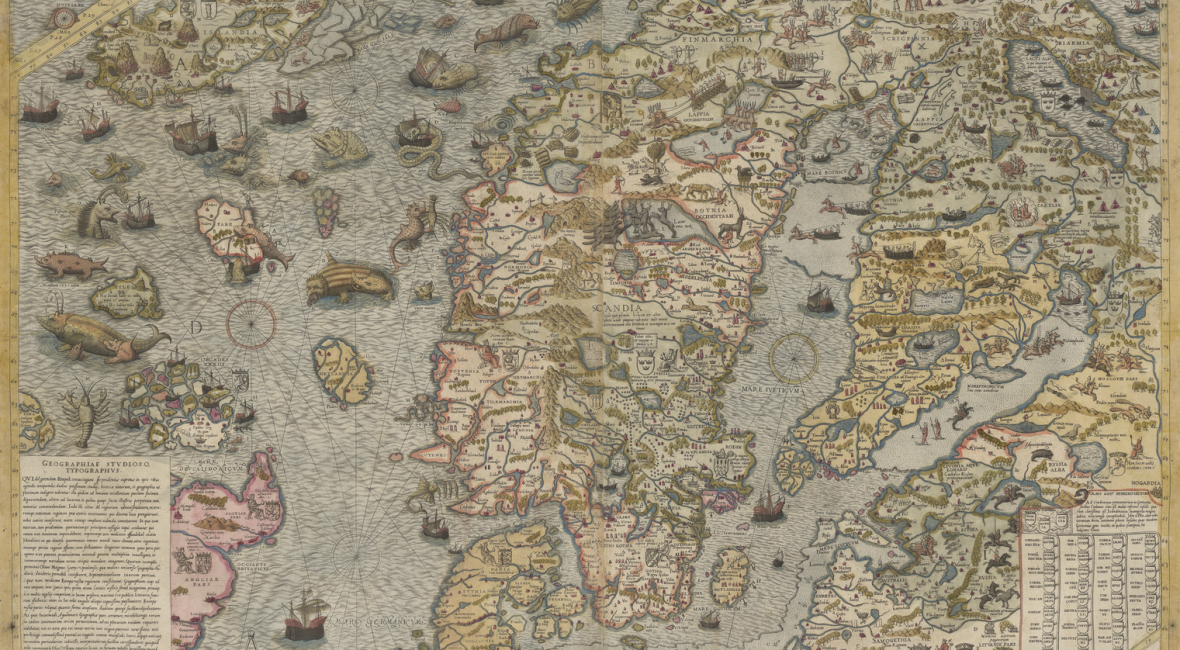
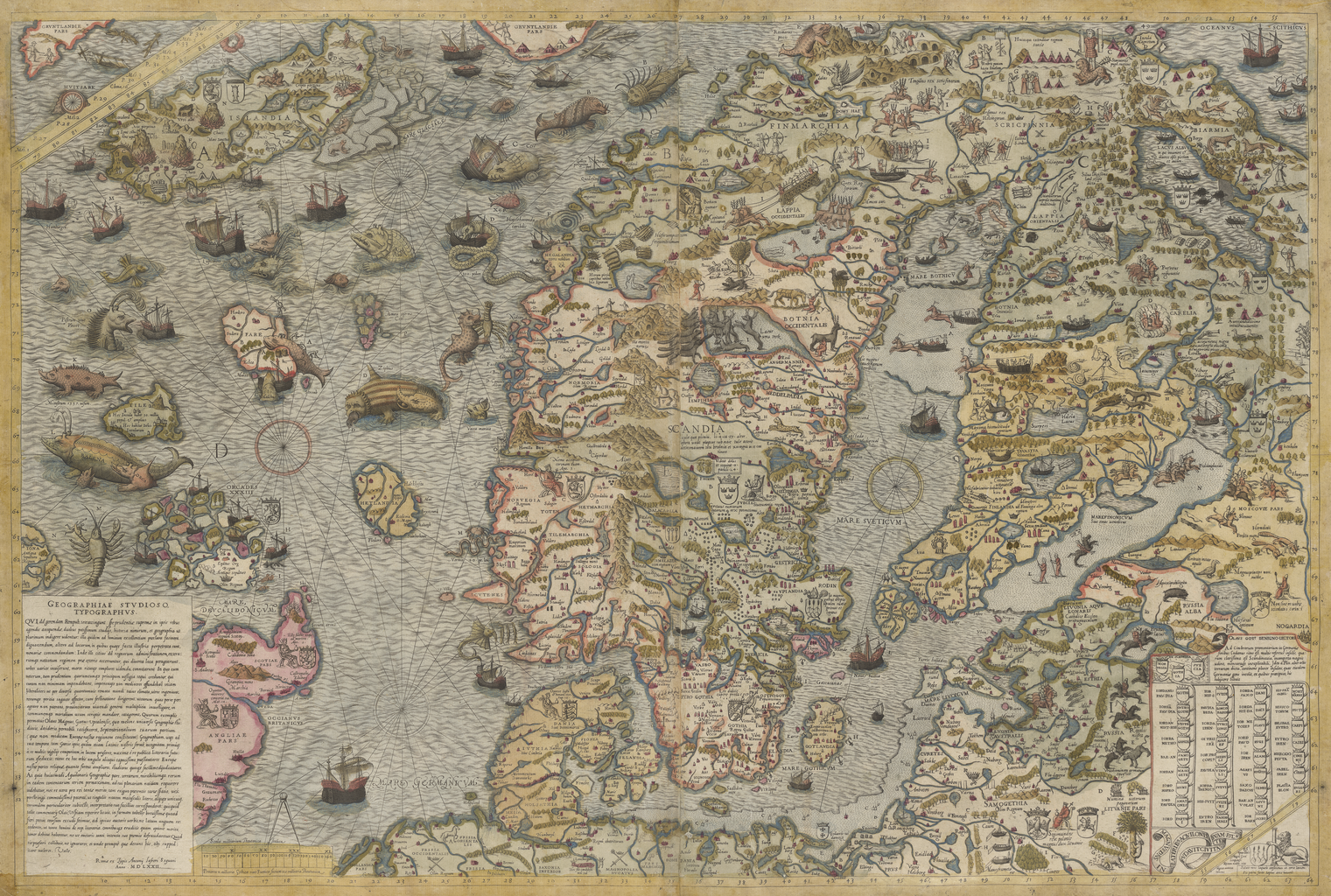
In the 16th century, the ocean was a terrifying place. Creatures of unimaginable size and ferocity stalked the waters. One such beast was Soe Orm.
“A very large sea serpent of a length upwards of 200 feet and 20 feet in diameter which lives in rocks and in holes near the shore of Bergen; it comes out of its cavern only on summer nights and in fine weather to destroy calves, lambs, or hogs, or goes into the sea to eat cuttles, lobster, and all kinds of sea crabs. It has a growth of hairs of two feet in length hanging from the neck, sharp scales of a dark brown color, and brilliant flaming eyes.”
Olaus Magnus gave this gripping description of his sea serpent, accompanied by an equally formidable woodcut, in the 1555 masterpiece Historia de Gentibus Septentrionalibus (ca. 1557 edition available in BHL). Magnus was hardly the first to assert that giant sea serpents existed, but his prestigious reputation (he was, after all, the archbishop of Sweden), and the subsequent recirculation of his descriptions and imagery by other notable historians, solidified a belief in the existence of such monsters.
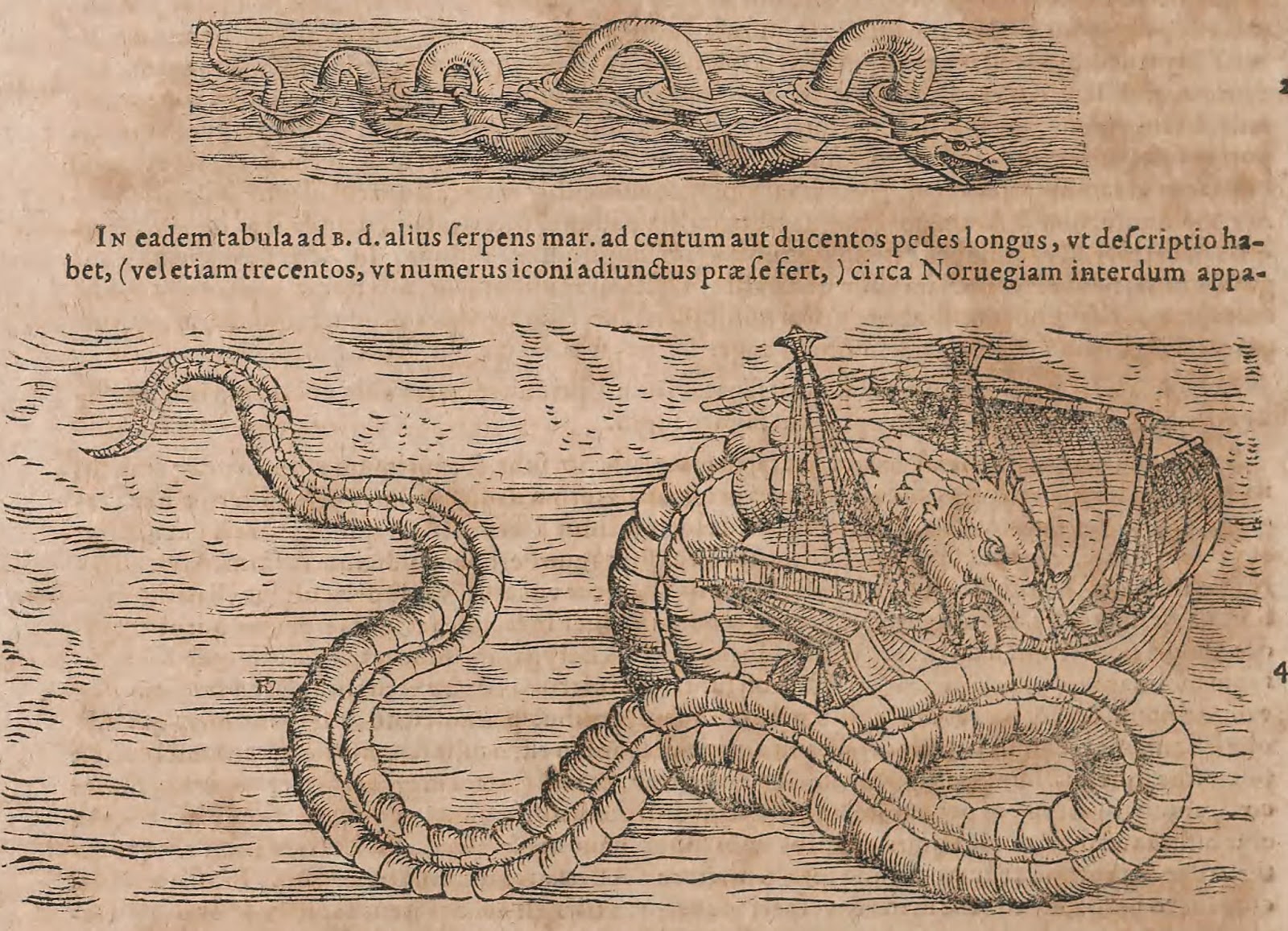 |
| “Sea Serpent, after Magnus.” Gessner, Conrad. Historia Animalium. 2nd ed. 1604. http://biodiversitylibrary.org/page/42166517. |
Magnus, of course, did not come up with the tale of Soe Orm on his own. The creatures he describes are based on accounts from sailors and Scandinavian locales, which in turn were based on encounters with strange aquatic creatures that became immortalized as sea serpents.
One of the earliest illustrations of a sea serpent drawn from an eye-witness account comes from Danish missionary Hans Egede, who claimed to have seen one off the coast of Greenland in 1734.
“The monster was of so huge a size, that coming out of the water its head reached as high as the mast-head; its body was as bulky as the ship, and three or four times as long. It had a long pointed snout, and spouted like a Whale-Fish; great broad paws, and the body seemed covered with shell-work.”
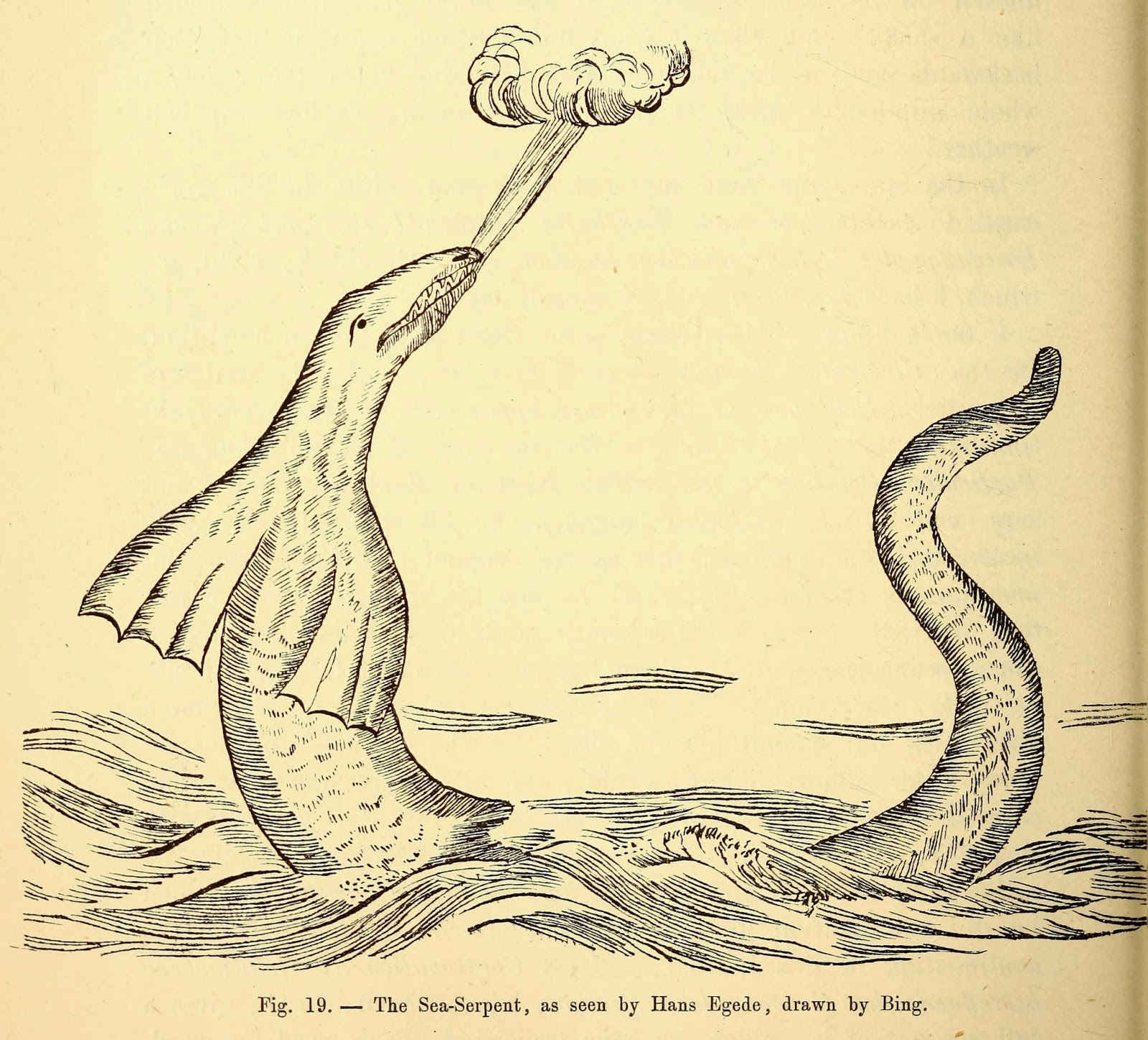 |
| “Sea Serpent drawn after Hans Egede’s description.” Reproduced in: Oudemans, A.C. The Great Sea Serpent. 1892. http://biodiversitylibrary.org/page/41617356. |
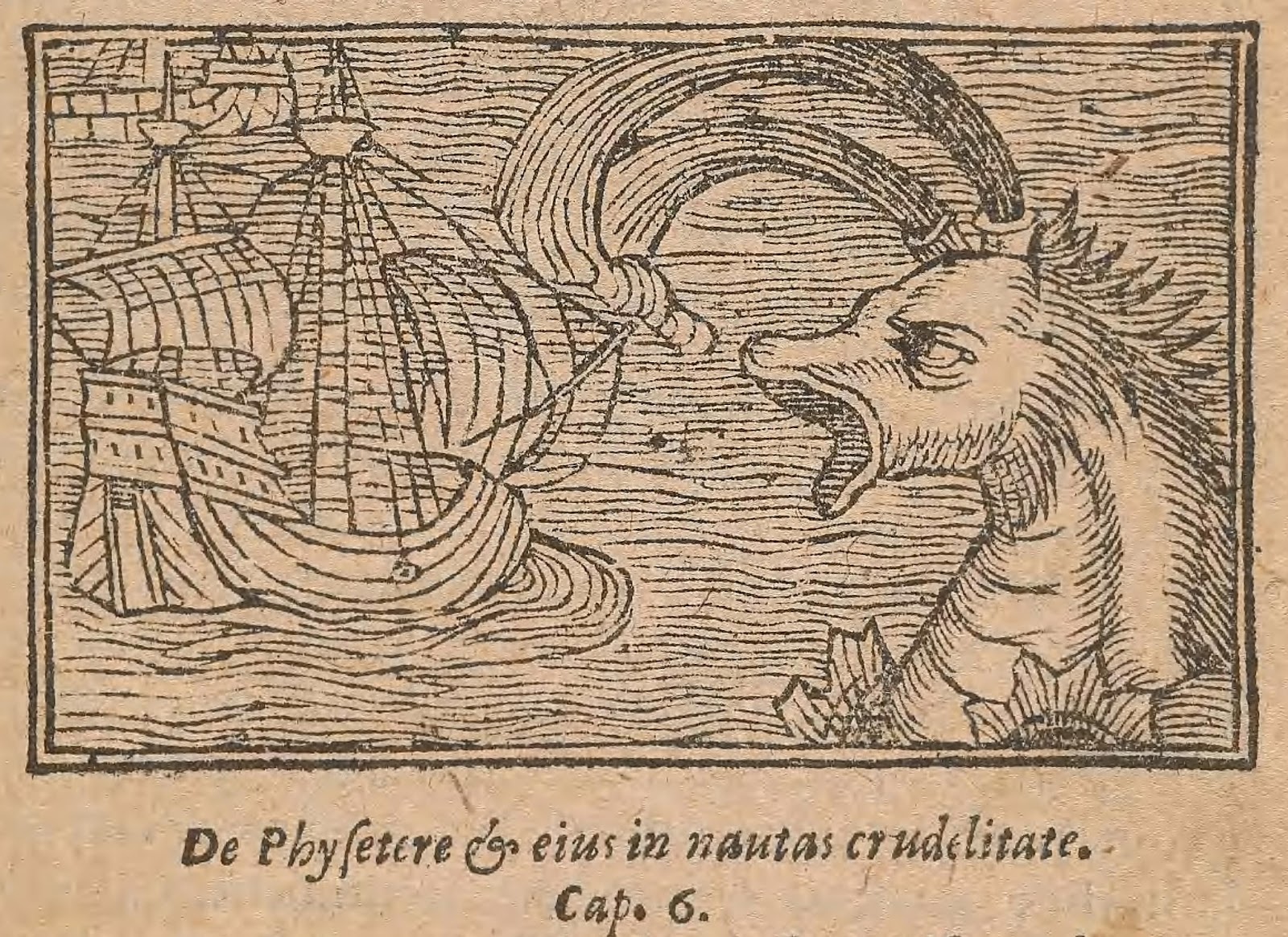
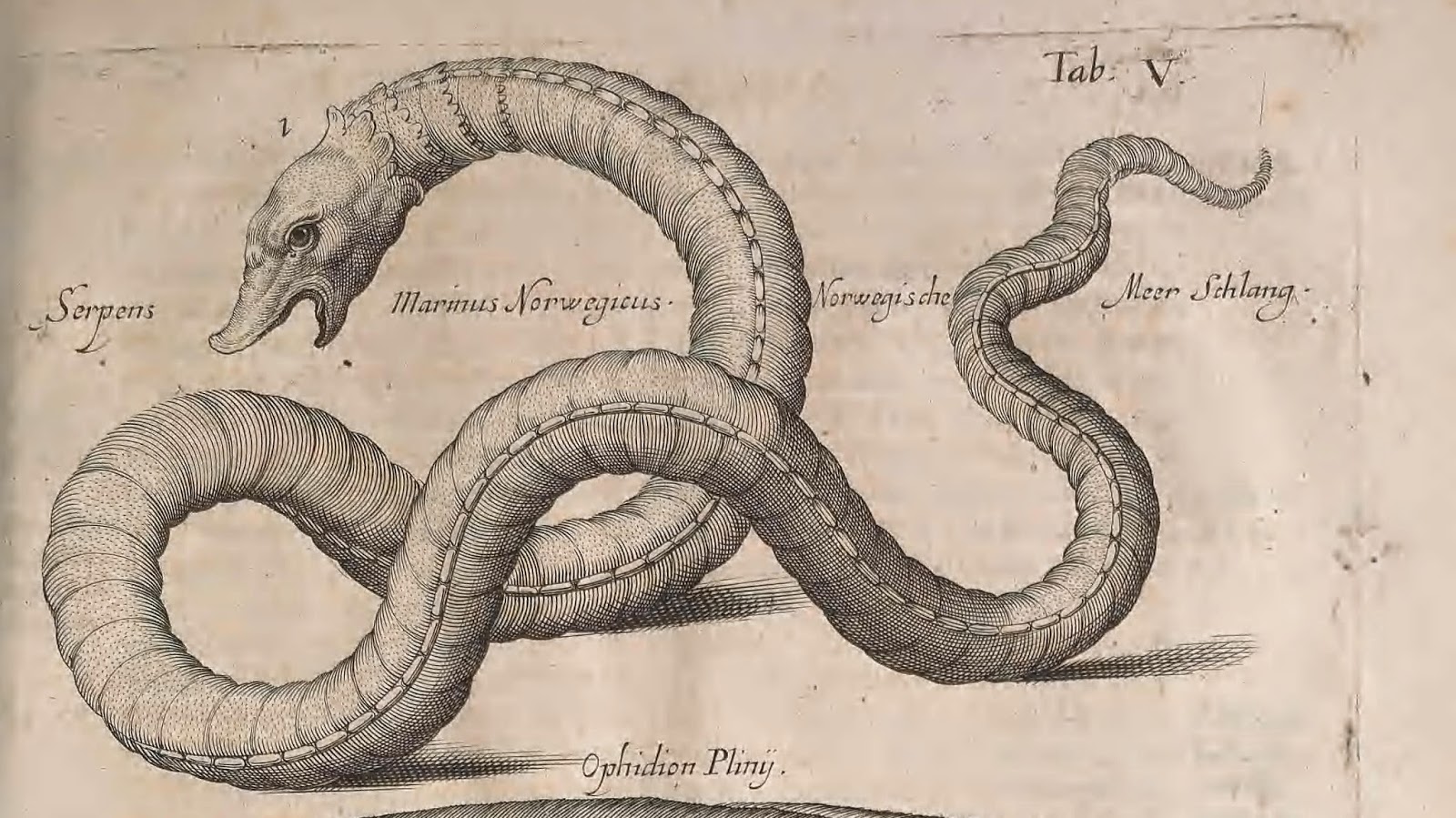
A drawing of Egede’s beast, and this description, was published in Det Gronlands nye Perlustration in 1741. Fourteen years later, Bishop Erik Ludvigsen Pontoppidan of Bergen published The Natural History of Norway, which relates two separate eye witness accounts of a sea serpent, one with a head that resembled a horse, and another with a snake-like body. Pontoppidan asserts that these eye-witness accounts provide “proper authorities for the real existence of this creature.”
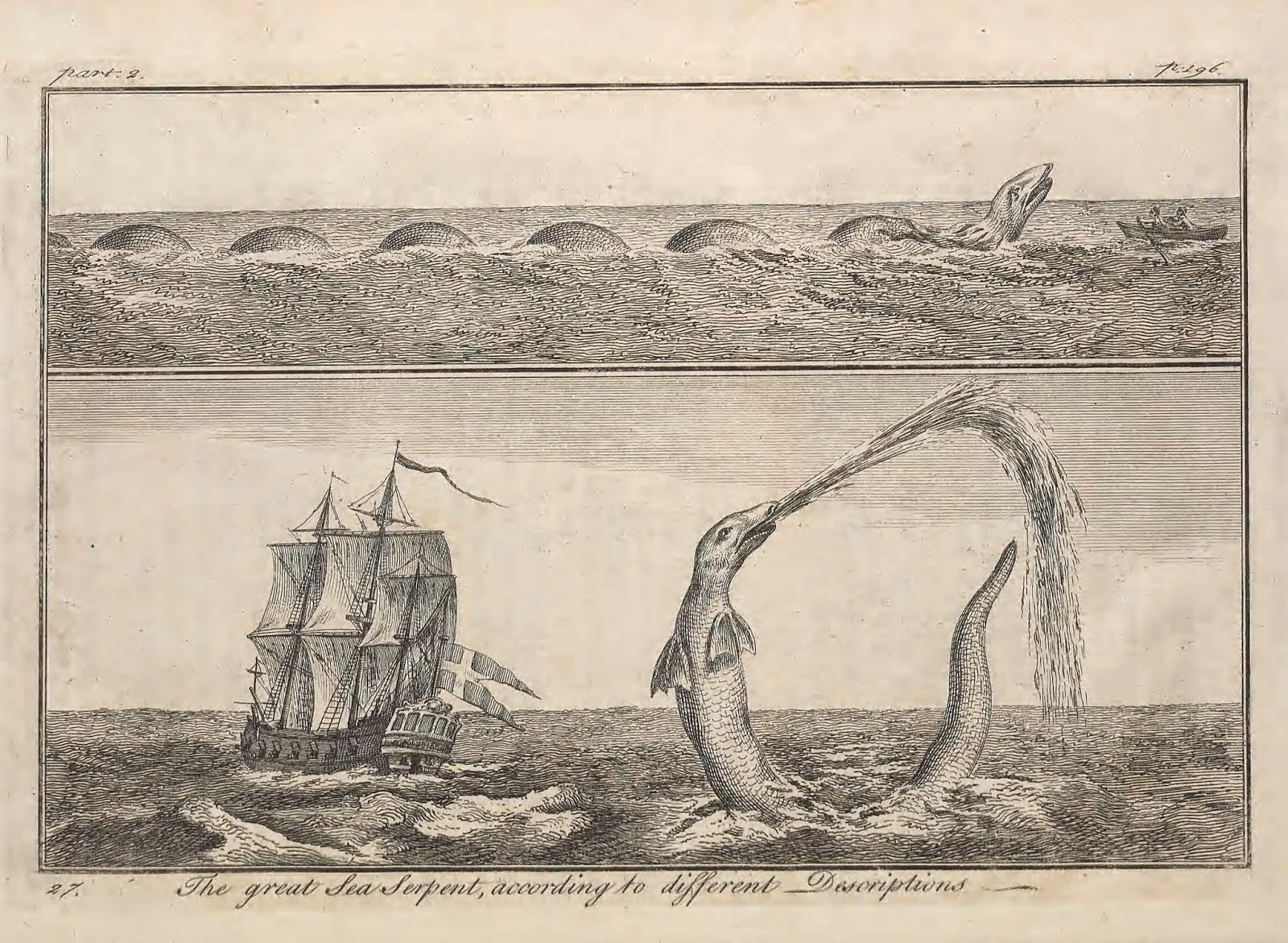 |
| “Sea Serpent representations based on accounts given to Erik Pontoppidan.” The Natural History of Norway. 1755. http://biodiversitylibrary.org/page/41885141. |
Descriptions of sea serpents with manes or growths of hair about their necks (like those of Magnus and Pontoppidan) are common amongst monster lore. This feature provides a clue to one of the animals commonly mistaken for a sea serpent: the Oarfish.
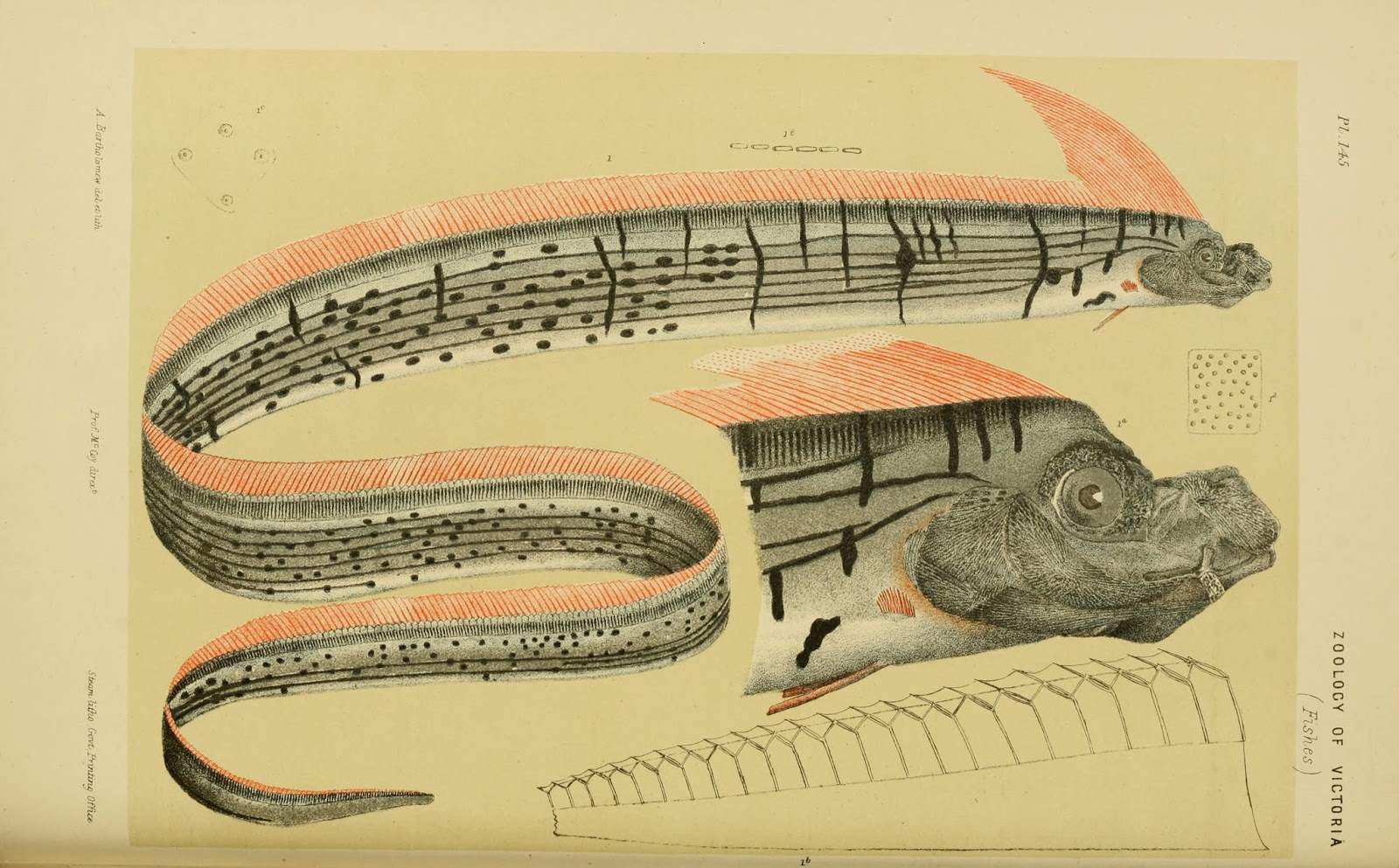 |
| “Oarfish.” Natural History of Victoria. Decades 11-15. 1890. http://biodiversitylibrary.org/page/3828708. See an oarfish on display at Natural History Museum, Los Angeles County. See a video of a real oarfish. |
An enigmatic creature, the oarfish is the longest bony fish alive, possibly measuring as long as 45-50 feet. Human encounters with these fish are rare, but they do have a red cockscomb of spines on their head and a red dorsal fin running the length of their bodies. Fleeting glimpses of oarfish could easily be exaggerated into an encounter with a monstrous sea serpent, and, to an untrained eye, the remains of such a fish washed up on a beach could understandably resemble the sea serpent of legend.
Basking Sharks, the second largest living fish (behind whale sharks) measuring up to 40 feet in length, have also been mistaken for sea serpents. In 1808, a badly decomposed carcass washed up on Stronsay. At a meeting of the Wernerian Natural History Society in Edinburgh, it was asserted that this carcass was the same creature described by Egede and Pontoppidan, and it was given the name Halsydrus (“sea water snake”). Later analysis of the skin and cartilage revealed that the “monster” was in fact a basking shark, and hardly a monster. These gentle giants are passive feeders with a diet of zooplankton and small fish and invertebrates.
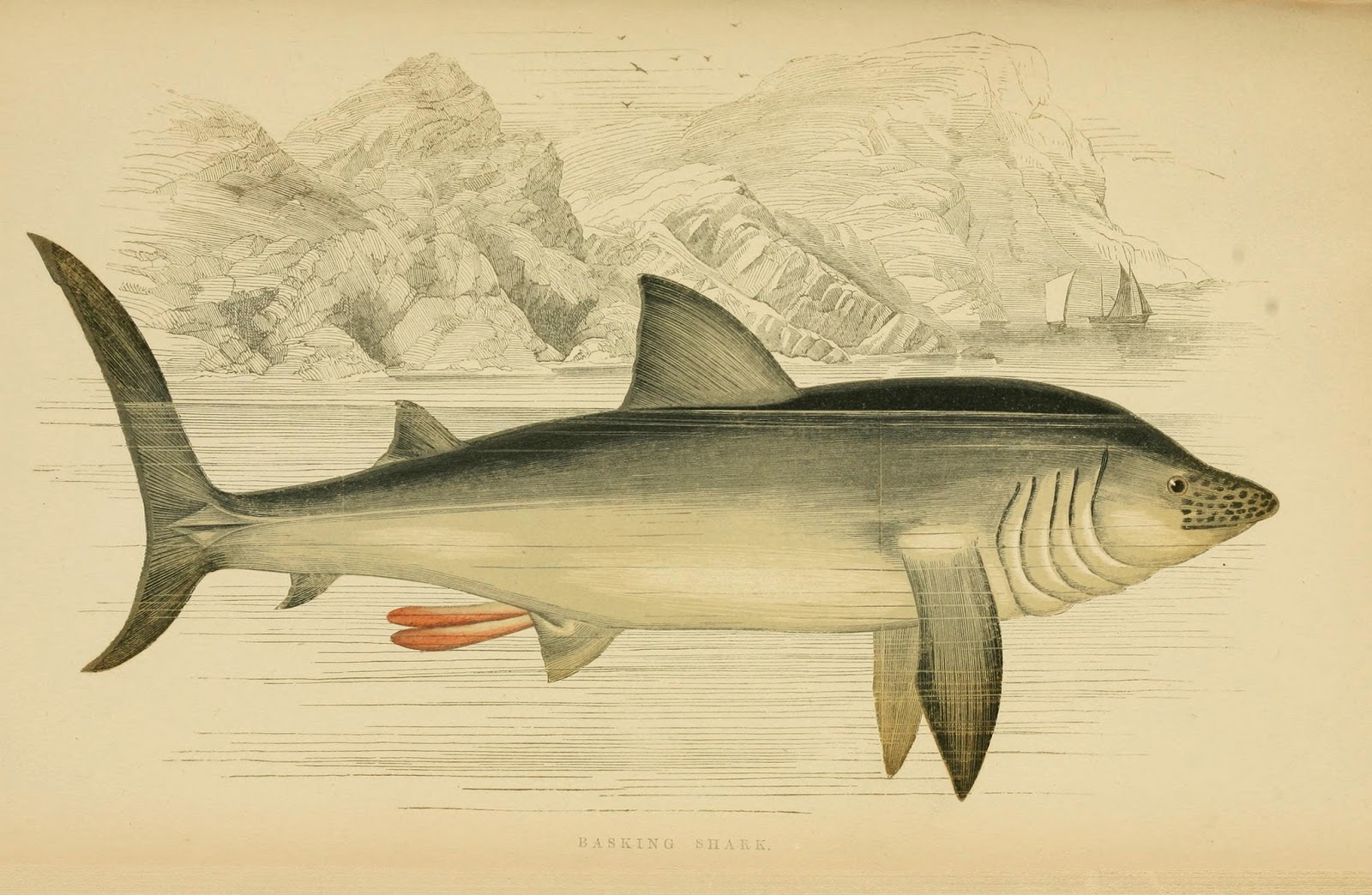 |
| “Basking Shark.” Couch, Jonathan. A History of the Fishes of the British Isles. v. 1. 1868. http://biodiversitylibrary.org/page/13419312. |
One of the most infamous sea serpent episodes spanned decades. From 1817-19, a mass of people, including fishermen, military personnel, and pedestrians, reported seeing a sea monster at least eighty, but perhaps one hundred feet, long, with a head resembling a horse, in the harbor off Gloucester, MA. There were so many eye-witness reports that the Linnaean Society of New England formed a special investigating committee to examine the possibility of such a creature.
 |
| “The Sea Serpent ‘baby’ found in Massachusetts: Scoliopus atlanticus.” Oudemans, A.C. The Great Sea Serpent. 1892. http://biodiversitylibrary.org/page/41617628. Learn more about the Gloucester mystery, and see a digitized letter from Francis Boott describing the events, in a post from Kew Royal Botanic Gardens, by Jon Nicholls. |
Then, in October 1817, two young boys found a three-foot-long, serpent body with humps on a beach not far from where the sightings had occurred. The Linnaean Society declared that the Gloucester sea serpent had visited the harbor in order to lay eggs, and that the specimen the boys had found represented one of its young. They invented an entirely new genus and named the sea serpent Scoliophis atlanticus (“Atlantic Humped Snake”). Shortly thereafter, naturalist Alexandre Lesueur examined the specimen and reported that it was, in fact, a deformed common blacksnake (Coluber constrictor).
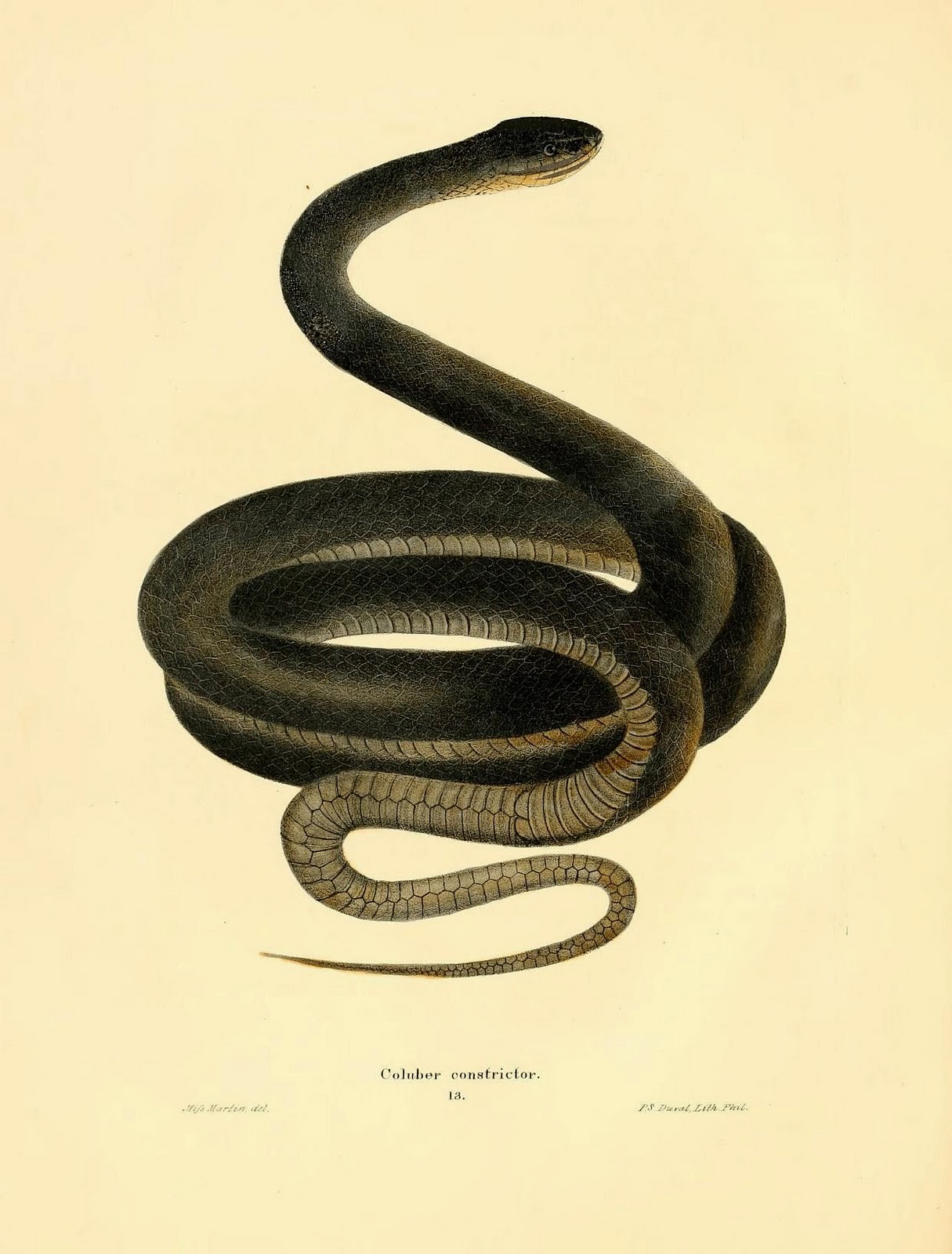 |
| “Common Blacksnake.” North American Herpetology. v. 4. 1840. http://biodiversitylibrary.org/page/3682780. |
In 1819, undaunted by Lesueur’s findings, and still believing the Gloucester serpent to be valid, French-American naturalist Constantin Samuel Rafinesque-Schmaltz gave the creature a scientific name, Pelamis megophias, but admitted that it might constitute its own genus, in which case it should be named Megophias monstrosus.
Enthusiasm and belief in the Gloucester sea serpent continued, with repeated sightings throughout the nineteenth and twentieth centuries (the last documented sighting was in 1962). While the identity of the creature has never been established, several candidates have been proposed, including a row of leaping porpoises, giant eels, sea snakes, whales, seals, and, of course, our good friend the oarfish. The spontaneously-created scientific name Scoliophis atlanticus is now considered a synonym of the basking shark, revealing yet another likely identity for the monster. No evidence confirming the existence of a new-to-science species off the coast of Massachusetts has been found.
Sea Serpent proponents enjoyed a brief moment of triumph in 1845 when Albert C. Koch, a German collector, exhibited a full skeleton of what he called Hydrarchos sillimani at the Apollo Saloon on Broadway. Claiming to have found the entire skeleton in Clarksville, Alabama, his sea serpent was 114 feet in length. The glory was short-lived. Harvard anatomist Jeffries Wyman debunked the skeleton as an “artfully assembled collection of bones from at least five fossil specimens of Basilosaurus, a 45-foot long ancestral whale.” (Ellis, pg. 56).
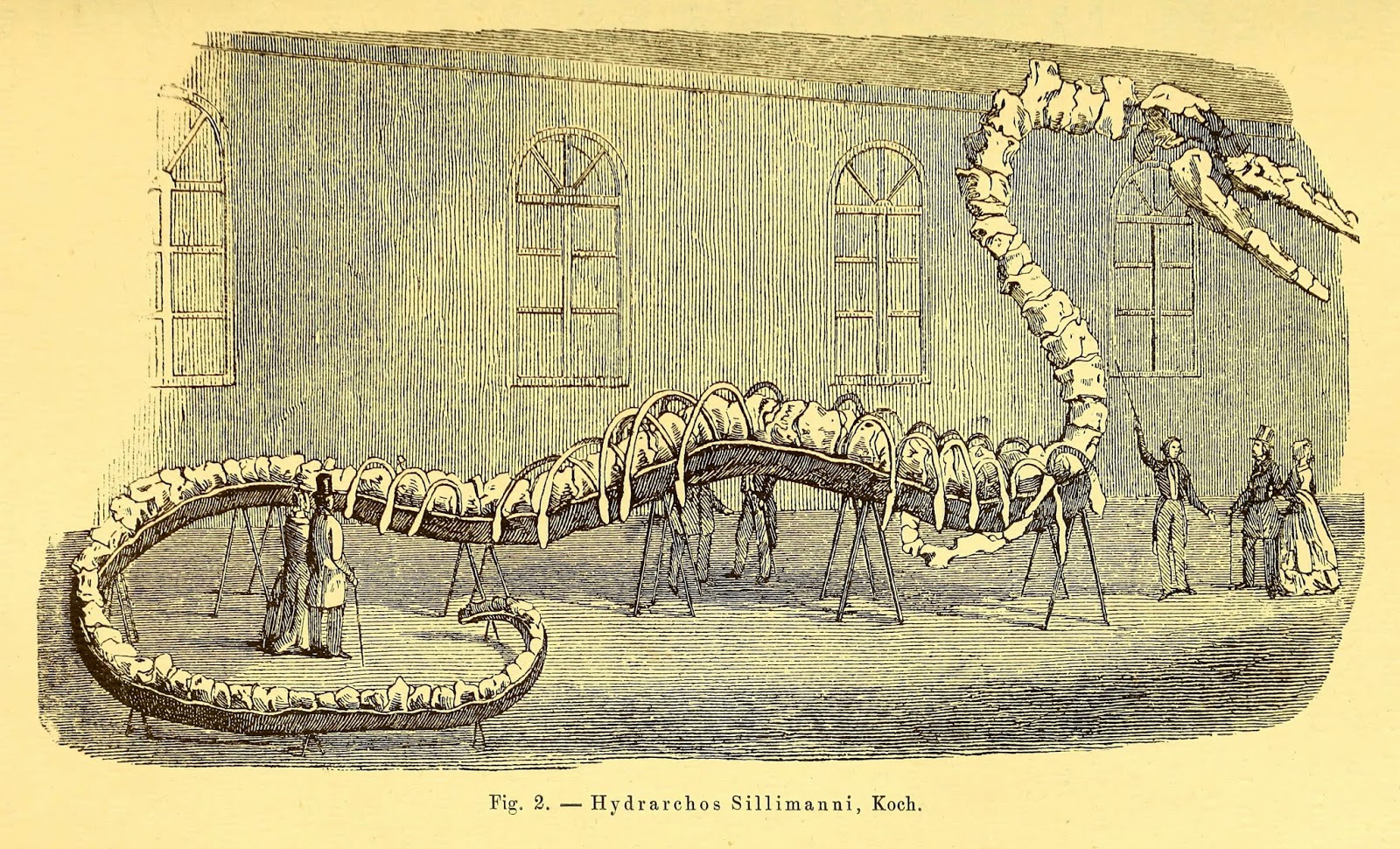 |
| “Albert Koch’s Sea Serpent.” Oudemans, A.C. The Great Sea Serpent. 1892. http://biodiversitylibrary.org/page/41617235. |
In the late nineteenth century, Olaus Magnus’ accounts were again repurposed, this time in Antoon Cornelis Oudemans’ The Great Sea-Serpent. An entomologist by training, Oudemans spent a majority of his free-time amassing a wealth of information on sea serpents, in which he fully believed. His book represents a systematic collection and analysis of the sightings supporting the sea-serpents’ existence. He claimed that all verified sightings of the beast belonged to the creature classified by Rafinesque, but that the monster was not a reptile at all but a mammal that belonged within the order Pinnipedia. Demonstrating some transformation in public opinion by the end of the nineteenth century, Oudemans’ book was highly criticized at its release. Times (London) went so far as to call it “a joke.” Nevertheless, it is an invaluable resource as record of sea serpent lore and sightings.
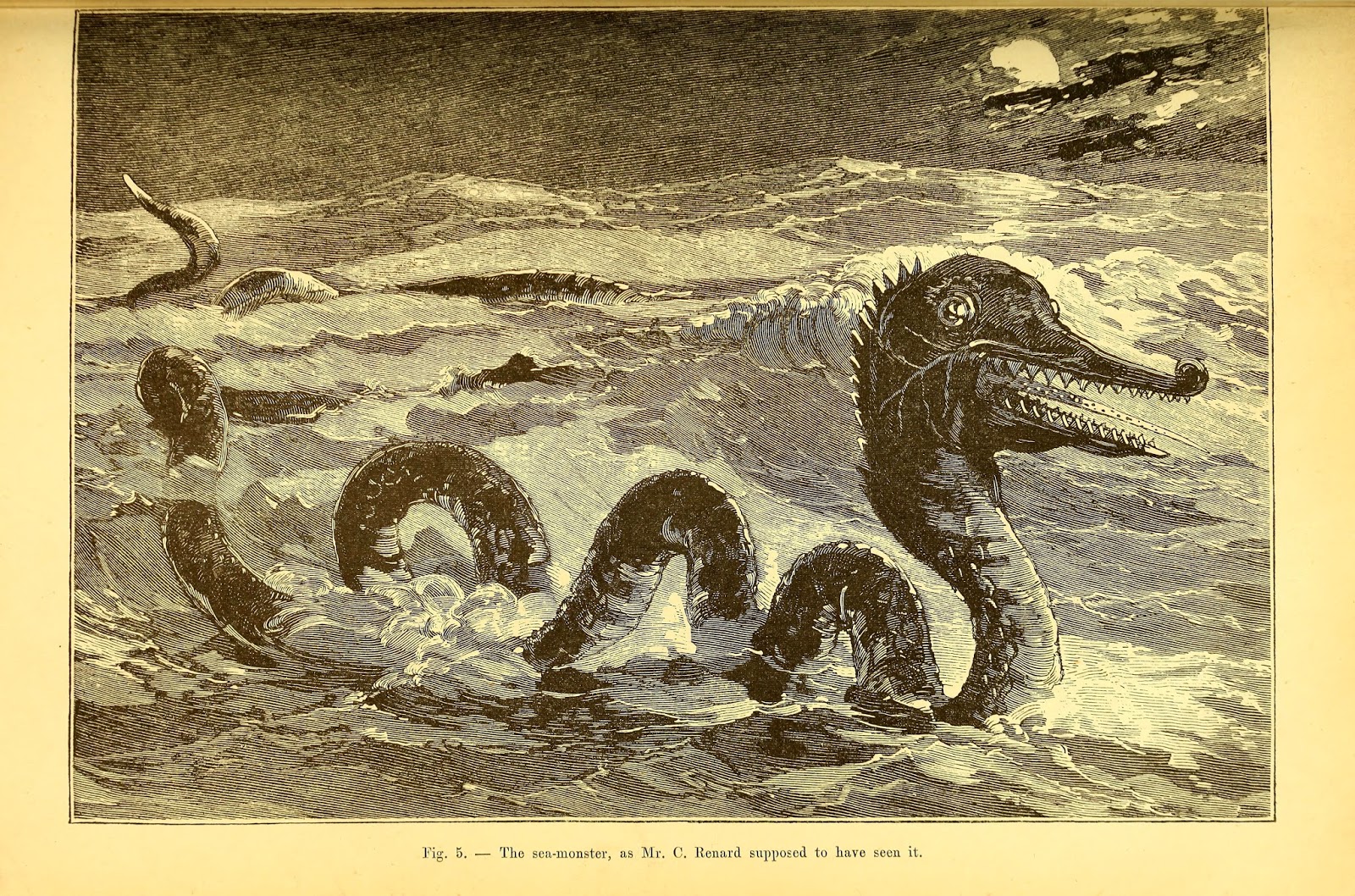 |
| “The Sea Monster.” Oudemans, A.C. The Great Sea Serpent. 1892. http://biodiversitylibrary.org/page/41617299. |
Does the Sea Serpent Exist?
Accounts of sea serpents continue to this day, including the still unresolved debate regarding the Cadborosaurus. Many have been unquestionably linked to known species, while others are associated with likely candidates.
 |
| Reported specimen of Cadborosaurus willsi, an alleged sea serpent from the Pacific Ocean. Over 200 sightings have been attributed to this species. This image captures a carcass taken from a Sperm Whale’s stomach and photographed in October, 1937. Researchers believe this specimen is actually a fetal baleen whale. http://commons.wikimedia.org/wiki/File:Cadborosaurus_October_1937.jpg. |
So, does a sea creature roaming the seas, seen by countless witnesses over the centuries, really exist? Yes. It just goes by the more common name of Oarfish…or Basking Shark…or Humpback Whale…or Eel…It’s just another classic case of mistaken identity flavored with some good-old-fashioned embellishment…
Then again…
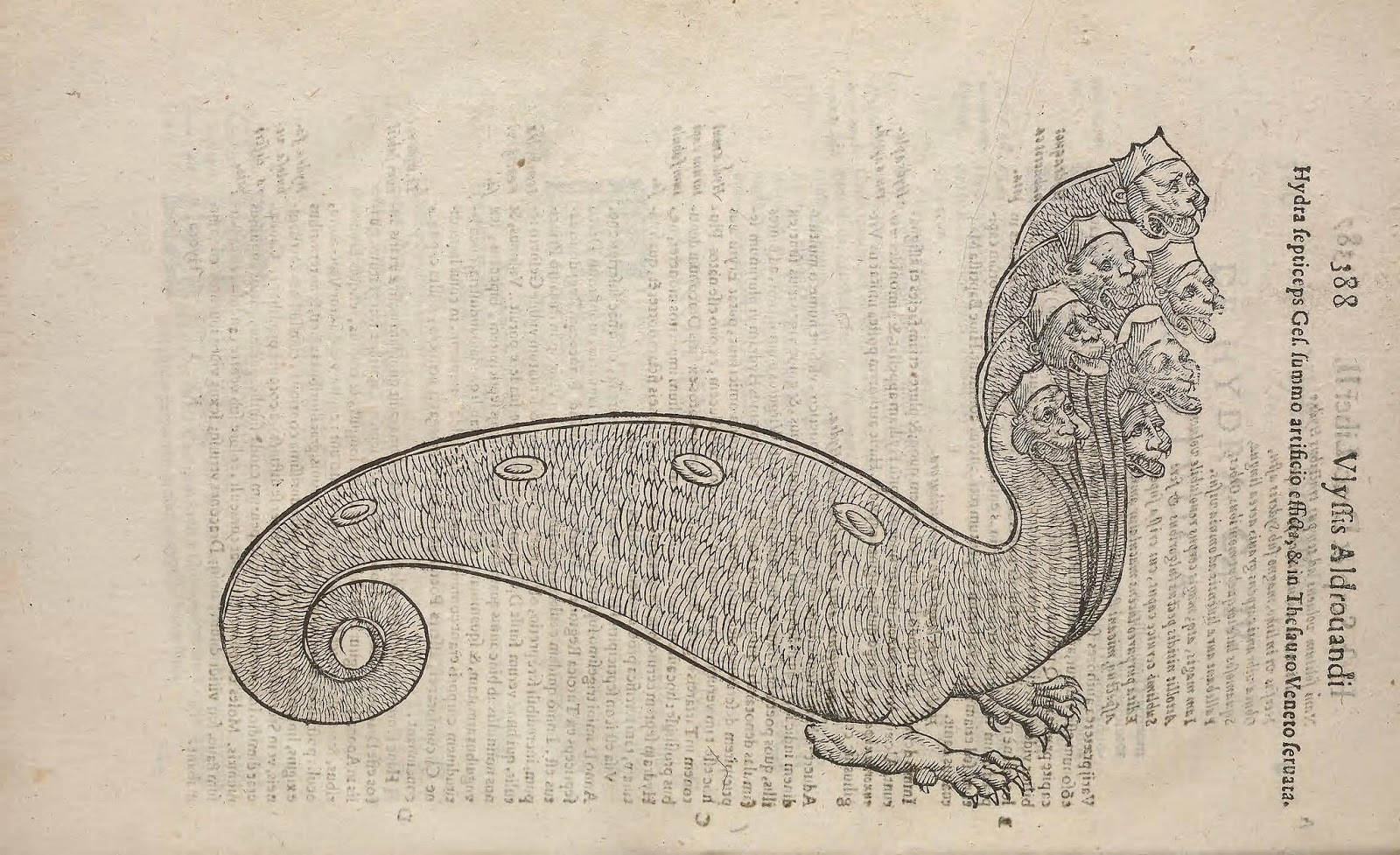
…Unlike the hydra and mermaids, questions as to the existence of the legendary sea serpent still remains. It’s a favorite topic within cryptozoology. The rediscovery of the coelacanth in 1938, believed extinct for 70 million years, and the discovery of the megamouth shark in 1976, leads many proponents to insist that an undiscovered marine titan, or a surviving dinosaur, is yet to be found.
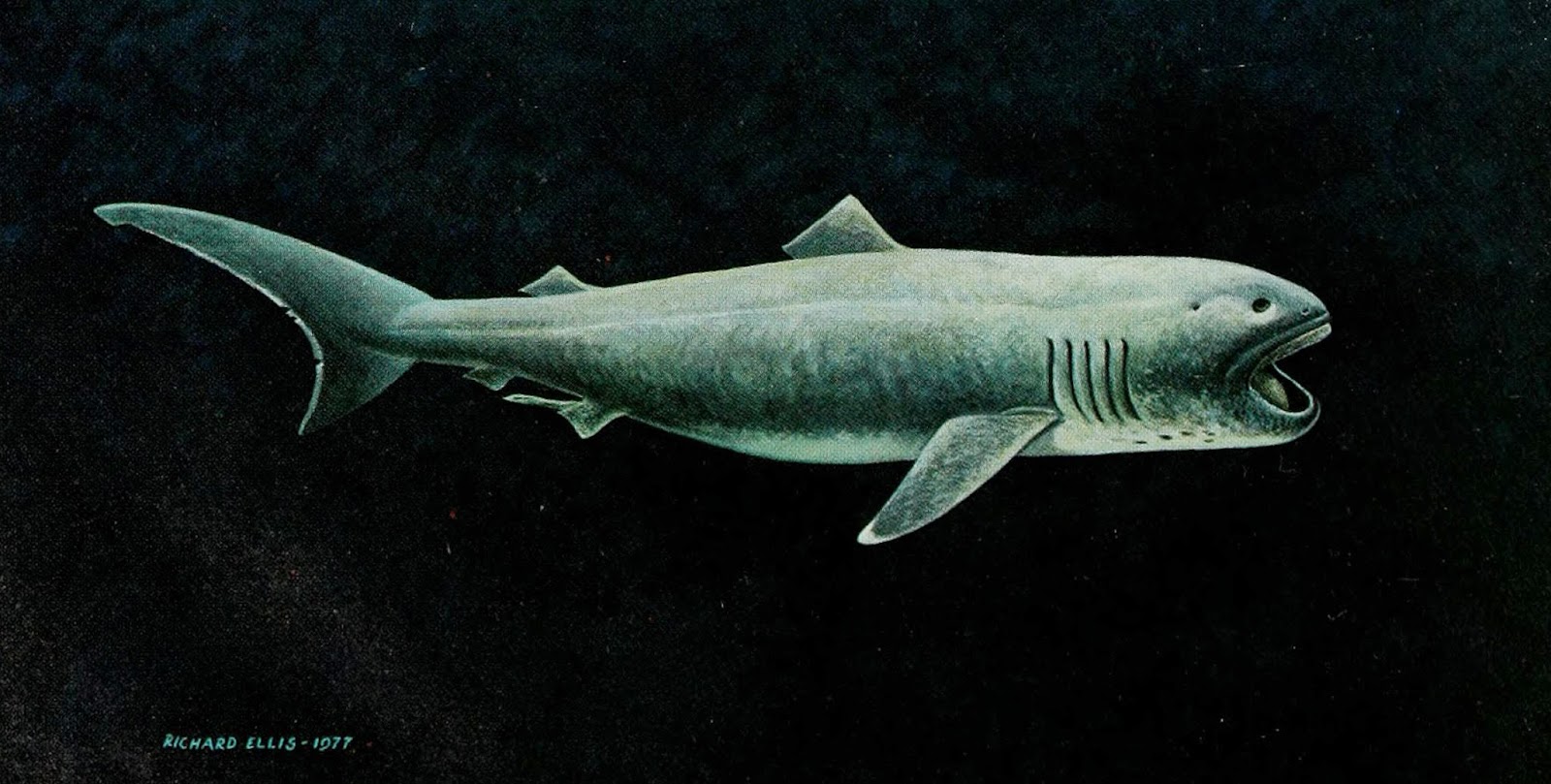 |
| In 1976, an extremely rare deep water shark, the Megamouth, was discovered off the coast of Hawaii. See the description of the new species in Proceedings of the California Academy of Sciences. 4th series, v. 43. 1983. http://biodiversitylibrary.org/page/15775401. See a Megamouth and Coelacanth on display at the Natural History Museum, Los Angeles County. |
Does an unidentified species of untold length, serpentine in appearance, lurk in the ocean depths, waiting to be discovered? Only time will tell…though we’d venture to guess it does not come ashore at night to feast on livestock….
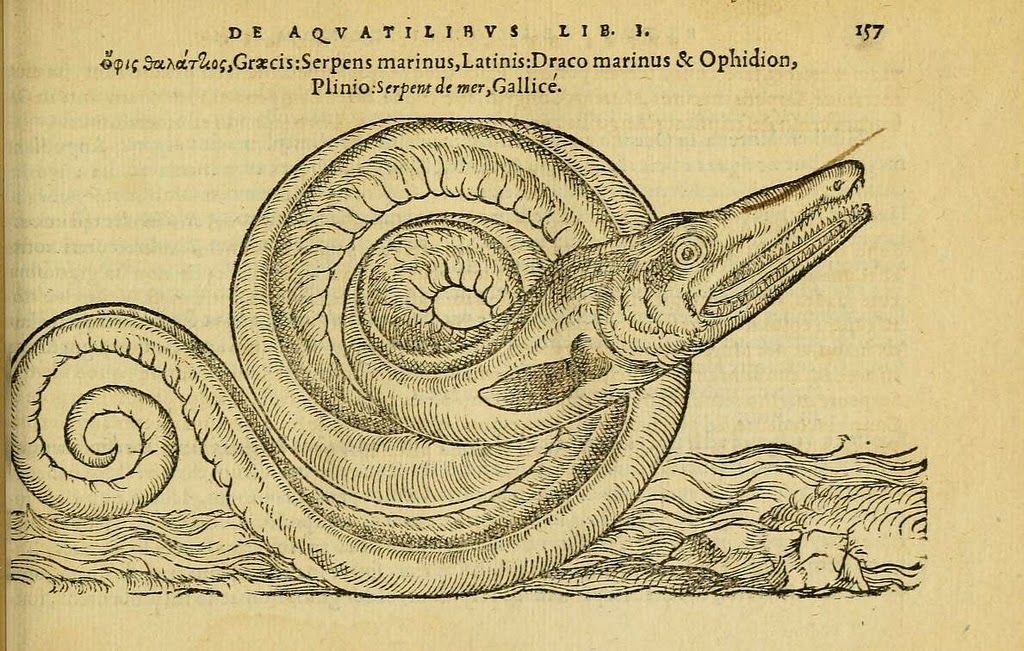 |
| “The Sea Serpent.” Belon, Pierre. Petri Bellonii Cenomani De aquatilibus, libri duo cum [epsilon, iota] conibus ad viuam ipsorum effigiem, quoad eius fieri potuit, expressis. 1553. http://biodiversitylibrary.org/page/4770301. Explore more Sea Serpent lore in the Mythic Creatures online exhibit from the American Museum of Natural History. |
More Monsters Are Real fun!
- Follow our blog and #bhlMonstersRreal on Twitter and Facebook all week to learn more about monsters and the animals that inspired them.
- Browse historic illustrations of sea serpents and animals mistaken for sea serpents on Flickr.
- Browse the books that portray these historic monsters in BHL.
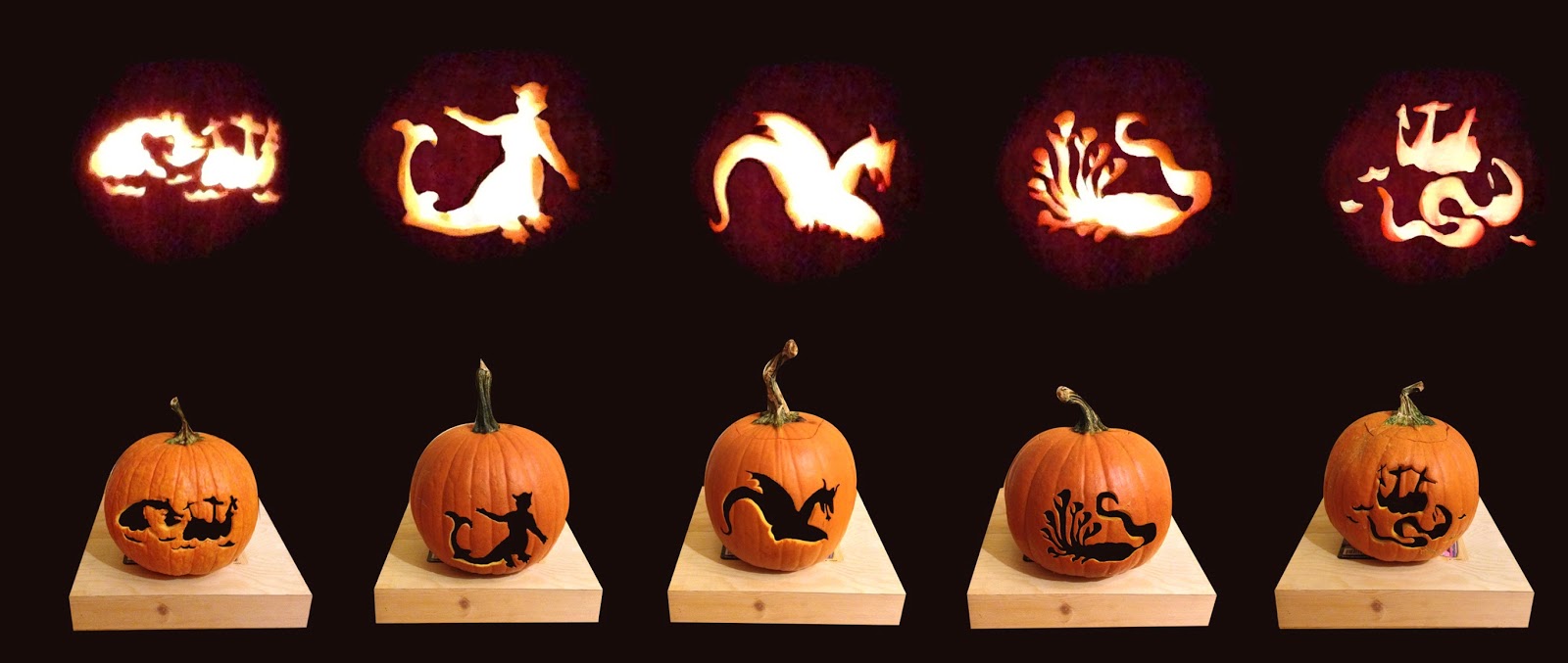
- Carve a Sea Serpent in your Halloween Pumpkin this year! Share your carvings with us on Facebook and Twitter!
- See some of our favorite monsters come to life on the Smithsonian Libraries’ Tumblr!
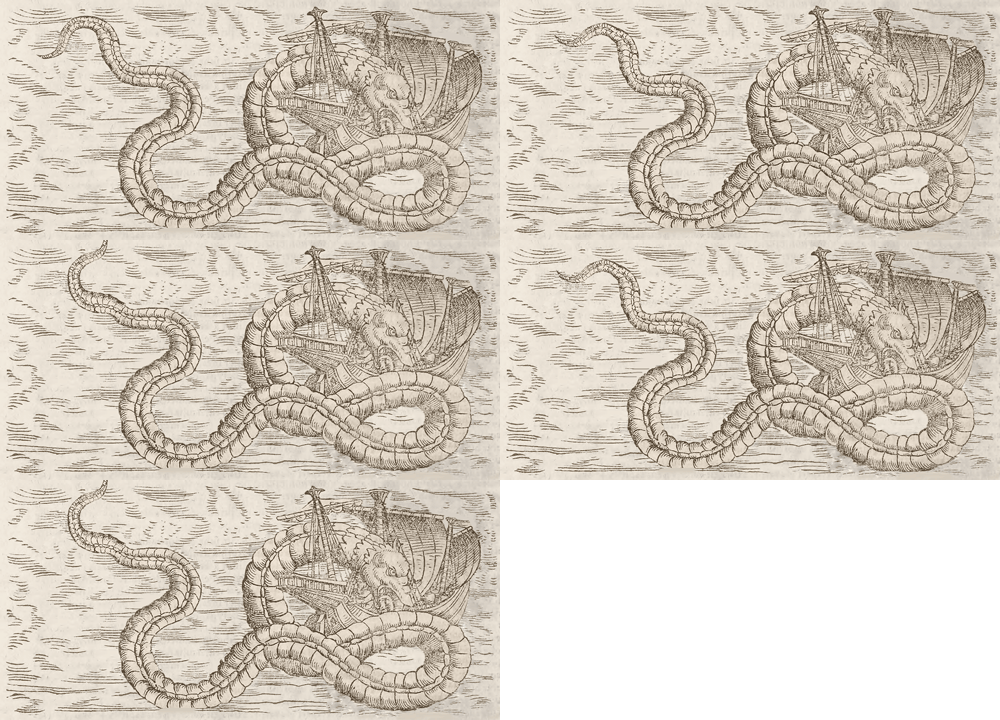 |
| “Attack of the Sea Monster!” In 1555, Olaus Magnus published an image and description of the Soe Orm, which he claimed was a giant sea serpent 200 feet in length that lived near the shore or Bergen and came out at night to eat the farmers’ livestock. His image and description was republished for centuries. See more fantastic historic monsters come to life on the Smithsonian Libraries’ Tumblr. GIF created by Richard Naples (Smithsonian Libraries), based on Gessner, Conrad. Historia Animalium. 2nd ed. 1604. http://biodiversitylibrary.org/page/42166517. |
Reference:
- Ellis, Richard. Monsters of the Sea. New York: Alfred A. Knopp, Inc., 1994. Print.