

50 Fish from American Waters (1870-1900). Allen and Ginter.
The Seafood Picture
 |
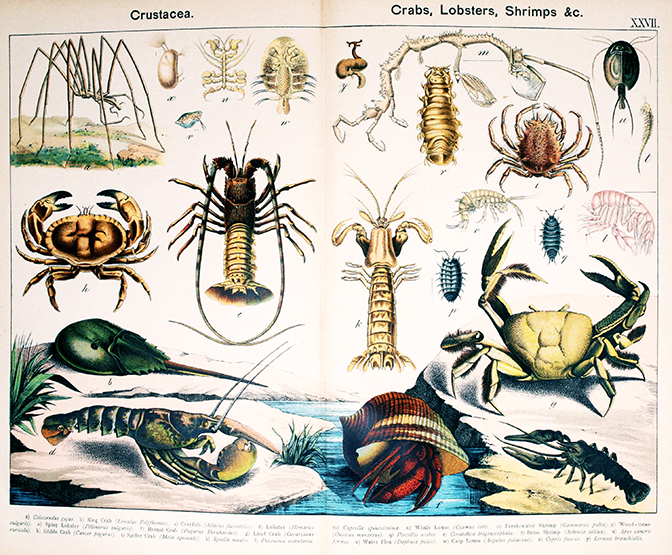
| Shrimp (the most-consumed seafood in America) and other Crustaceans. Natural History of the Animal Kingdom for the Use of Young People. |
This Saturday, June 8, is World Oceans Day, the UN-designated day for the global community to celebrate and take action to protect Earth’s oceans. 71% of the Earth’s surface is covered with water, and every living thing depends on water to survive. Sadly, according to the United Nations, with the world eating more seafood than ever before, approximately 2/3 of the ocean’s species are overfished.
According to NOAA, in 2009, Americans consumed 4.833 billion pounds of seafood – translating to 15.8 pounds of fish and shellfish per person. Approximately 50% of that seafood was wild-caught, and 50% was farm-raised. The top ten most-consumed seafood in the U.S. in 2010 was:
- Shrimp (4.10 lbs)
- Canned Tuna (2.8 lbs)
- Salmon (1.84 lbs)
- Tilapia (1.34 lbs)
- Pollock (1.19)
- Catfish (0.92 lbs)
- Crab (0.61 lbs)
- Cod (0.44 lbs)
- Pangasius (0.43 lbs)
- Clams (0.341 lbs)
50 Fish from American Waters
Have you ever wondered what marine species can be found in American waters? While not exhaustive, 50 Fish from American Waters is a pictorial work that presents a delightful collection of such species through illustrations.
Curiously, the fish illustrations in this book were originally published as individual cigarette cards for collecting and trading. The tobacco firm, Allen and Ginter of Richmond, Virginia, was the first firm to use tobacco trading cards as a means of advertisement in cigarette packages, and, between 1870-1900, select packages of Allen and Ginter Virginia Bright cigarettes contained one of the 50 varieties of American fish trading cards (see the poster advertising the cards from Library of Congress). All of the cards were later published in the book 50 Fish from American Waters.
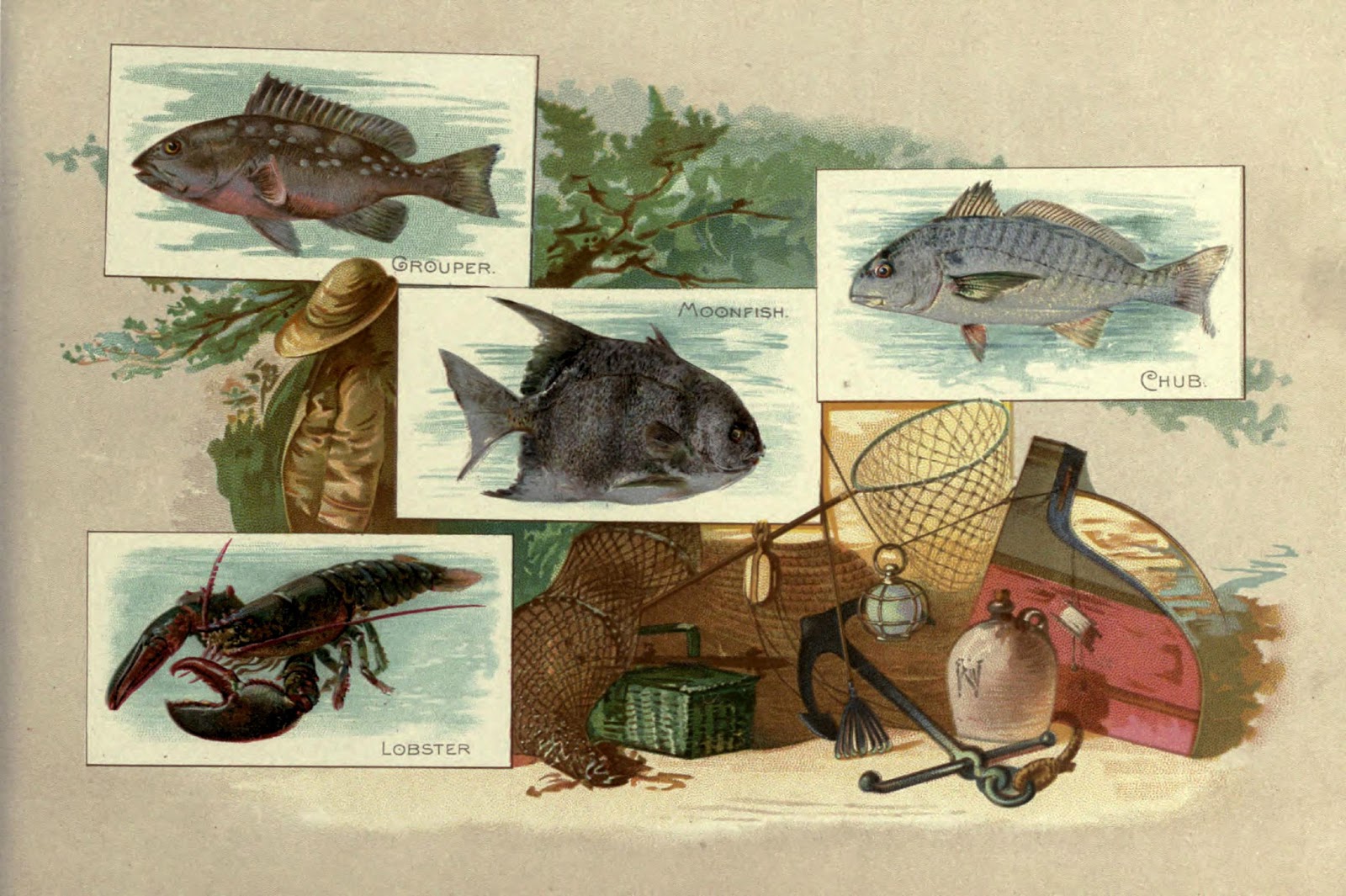 |
| Lobster, Grouper, Moonfish, and Chub. 50 Fish from American Waters. |
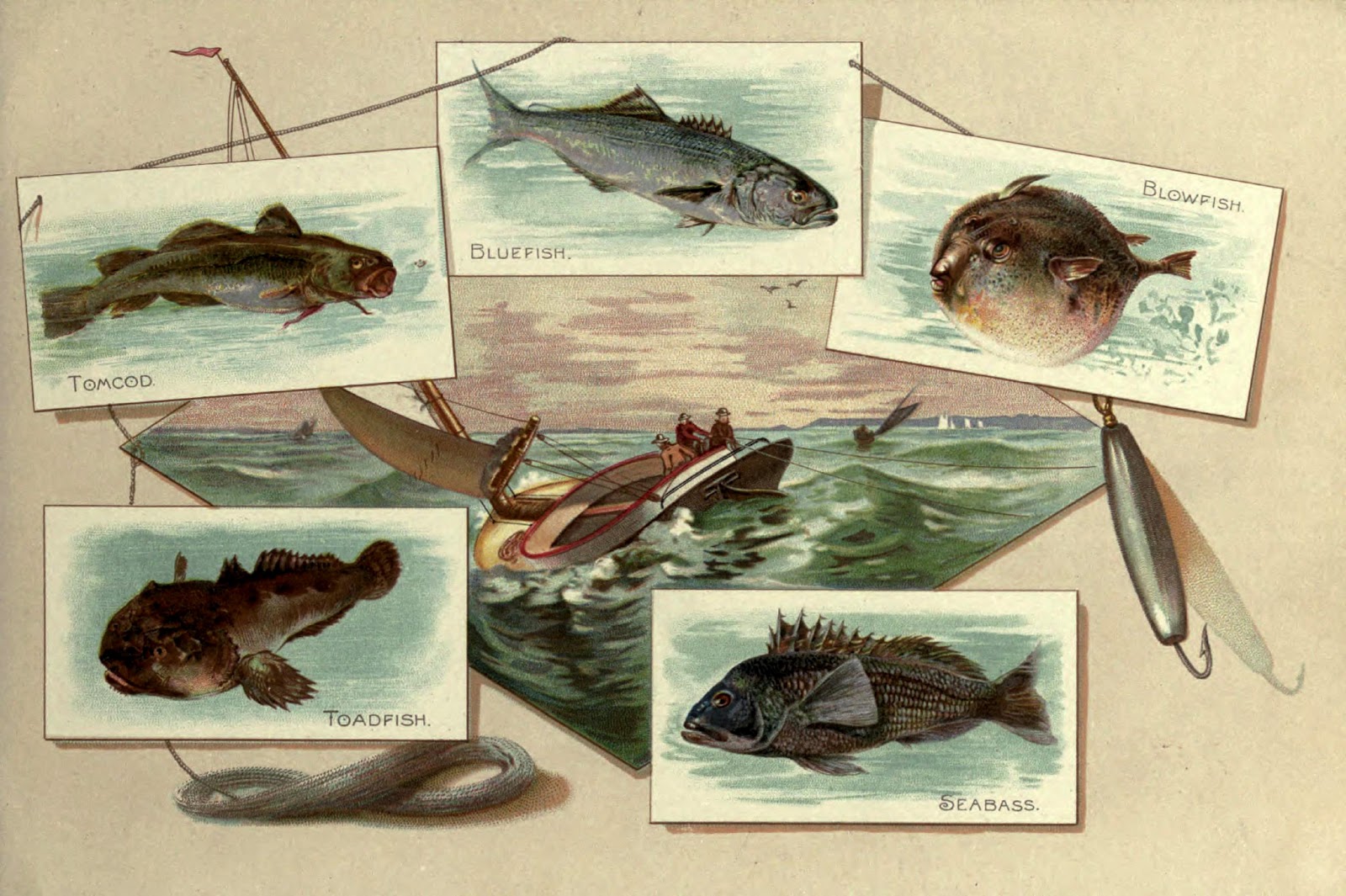 |
| Tomcod, Bluefish, Blowfish, Toadfish, and Seabass. 50 Fish from American Waters. |
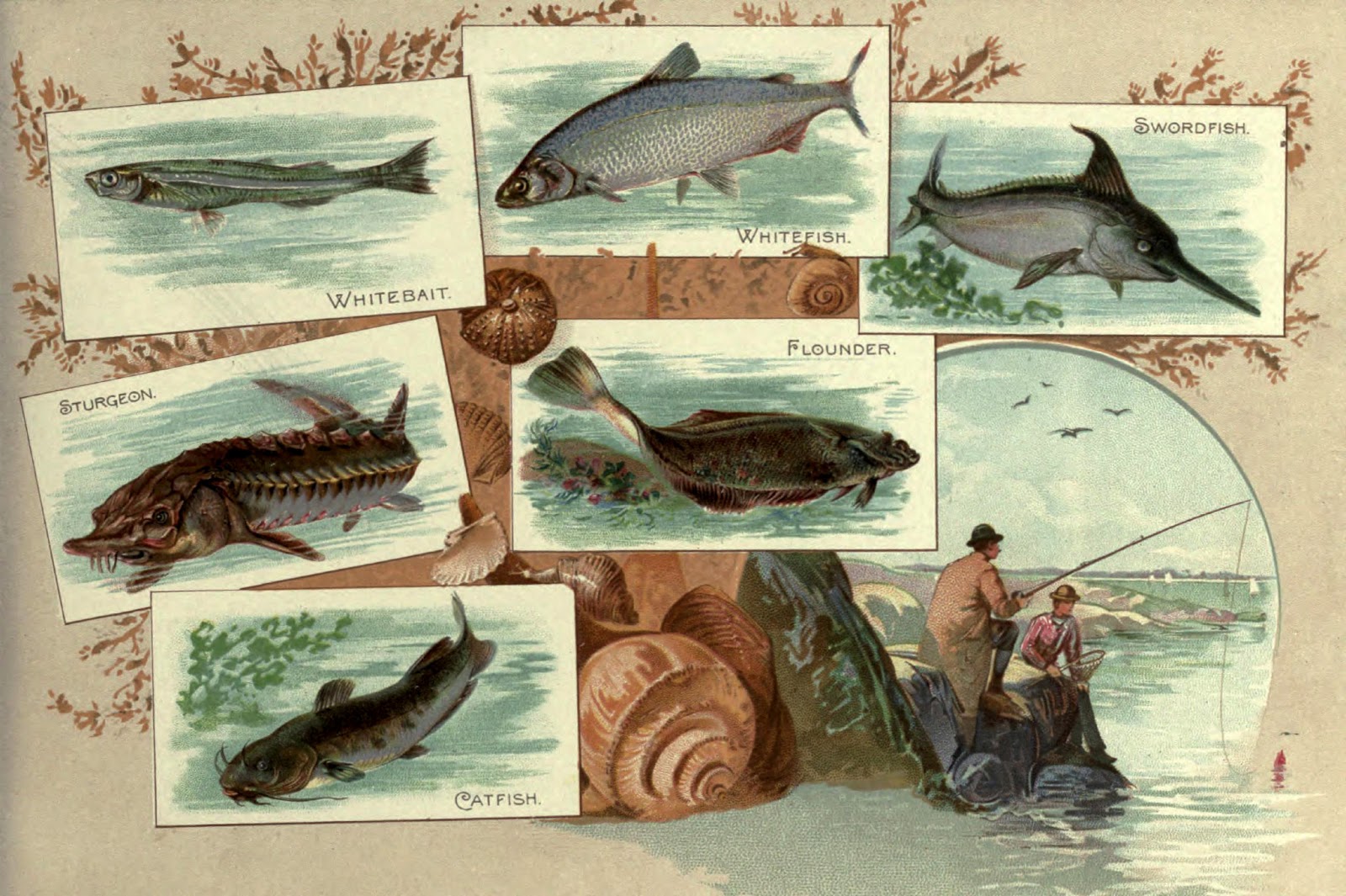 |
| Whitebait, Whitefish, Swordfish, Sturgeon, Flounder, Catfish. 50 Fish from American Waters. |
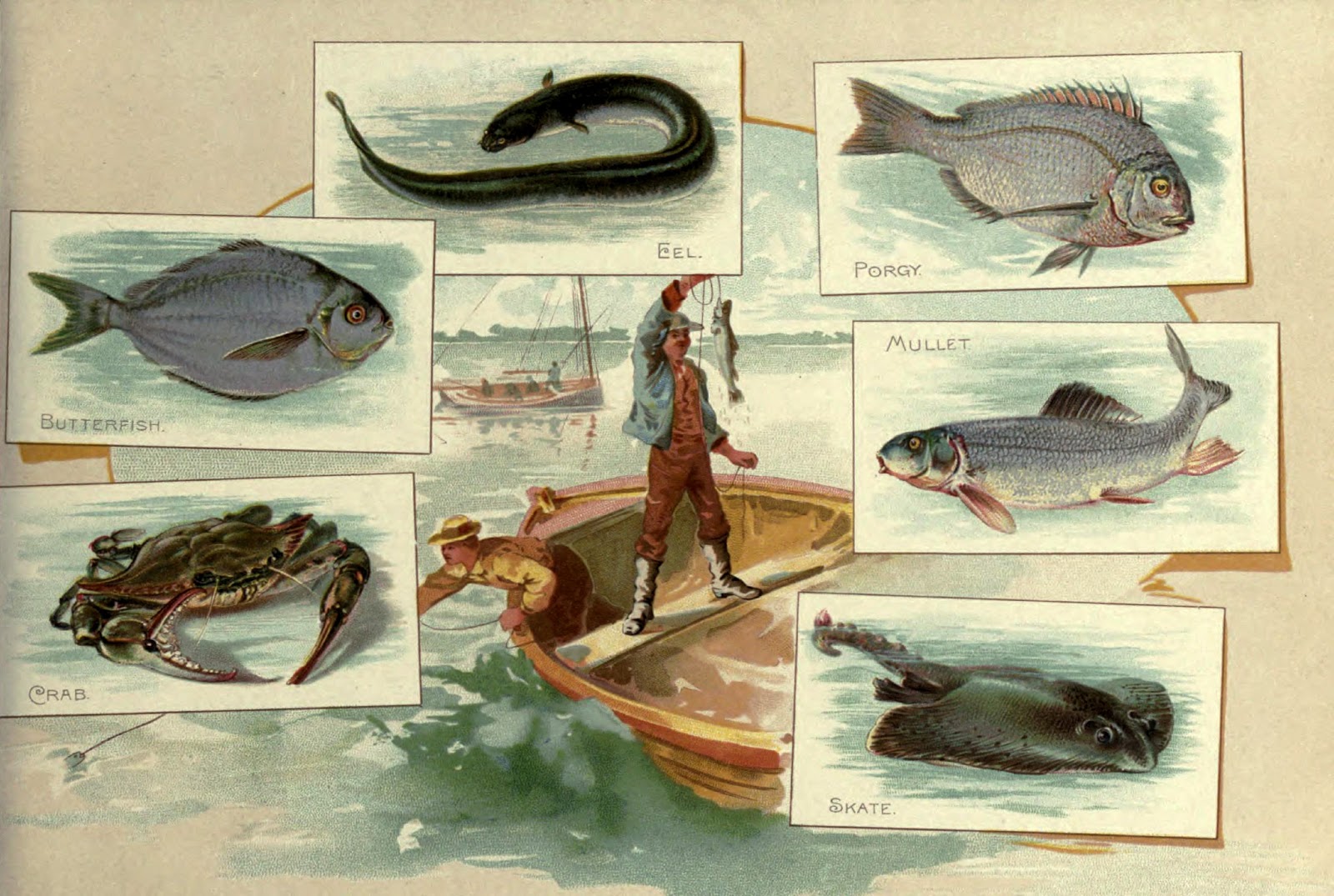 |
| Butterfish, Eel, Porgy, Mullet, Skate, Crab. 50 Fish from American Waters. |
View all images from 50 Fish from American Waters in Flickr.
What can you do to help?
According to the ongoing The Ocean’s Project survey, most Americans care about the ocean and want to protect it, but many feel that they themselves can make little impact on the ocean’s health and, interestingly, that American waters are less imperiled that foreign waters. While these may be somewhat troubling responses, on the bright side, 22% of the 30,000+ people surveyed said that they are active in the environmental movement and 57% expressed sympathy but not active involvement. Most indicated a high willingness to alter their seafood consumption habits to help protect the oceans.
So, what can you do to help? Worldoceansday.org provides some great examples of small actions you can take to help protect our oceans, including reducing seafood consumption in general, using re-usable grocery bags and water bottles, choosing abundant, farmed, and locally-caught species, reducing meat consumption (which reduces the demand for forage fish), and choosing sustainable seafood buyers and sellers.
Marine Biodiversity and BHL
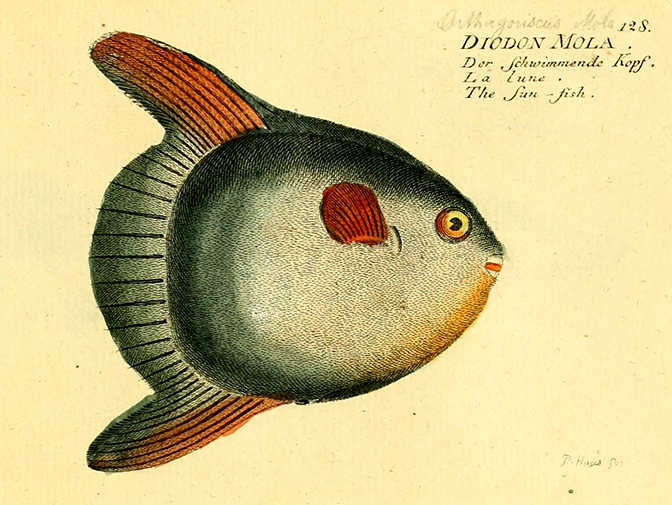 |
| Ocean Sunfish. Ichthyologie. |
BHL is celebrating World Oceans Day by highlighting marine biodiversity on Facebook, Twitter, and Flickr. For instance, did you know that the Gray Whale is more heavily infested with a greater variety of parasites than any other cetacean? Or that the Ocean Sunfish, the heaviest known bony fish, can grow up to 2300 kilograms, and that the Giant Oarfish, at up to 11 confirmed meters (and possibly 17 meters), is the world’s longest bony fish? Or that the adorable Common Blanket Octopus has been known to carry around tentacles of the Portuguese-Man-of-War as a defensive measure and means of capturing prey? Learn more about these species and get other watery factoids on Twitter and Facebook.
Be sure to check out our Marine Biodiversity Flickr collection with free images that you can download and reuse for your own World Oceans Day celebrations!
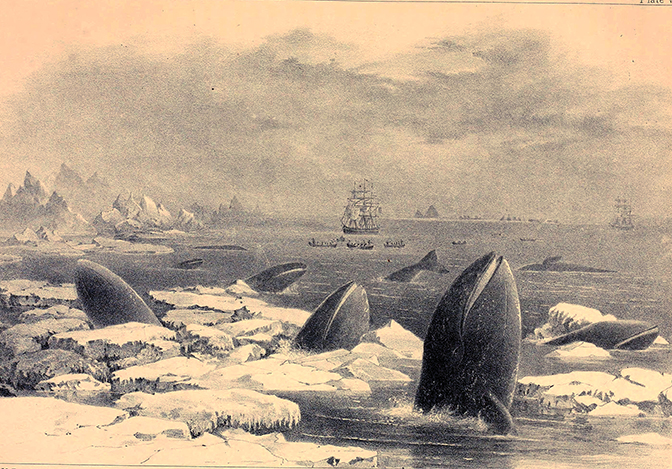 |
| Gray Whales. The Marine Mammals of the North-west Coast of North America. |
Are you a whale-lover? Then Smithsonian Libraries, one of BHL’s founding members, has an exhibit for you! Learn about whale research at the Smithsonian, and how research and fossils are translated into publications, in the new Whales: From Bone to Book exhibit at the National Museum of Natural History in Washington, D.C. Check out the books that support the exhibit in the BHL Collection and get fabulous whale illustrations in Flickr.
Remember, every living species requires water to survive, and our oceans play a huge part in our communal ecosystem. No matter where you live, your local water will eventually make its way to the ocean. We each have a responsibility to protect our oceans. Together, we can make a difference!
- Find some World Oceans Day events near you.
- Get some great promotional materials for World Oceans Day.
- You can even get free Dr. Seuss-themed World Oceans Day materials!
