Biodiversity Heritage Library - Program news and collection highlights from BHL
  • Home
  • News
  • Featured Books
    • All Featured Books
    • Book of the Month Series
    • BHL at 20
  • User Stories
  • Campaigns
    • Fossil Stories
    • Garden Stories
    • Monsters Are Real
    • Page Frights
    • Her Natural History
    • Earth Optimism 2020
  • Tech Blog
  • Visit BHL
Home
News
Featured Books
    All Featured Books
    Book of the Month Series
    BHL at 20
User Stories
Campaigns
    Fossil Stories
    Garden Stories
    Monsters Are Real
    Page Frights
    Her Natural History
    Earth Optimism 2020
Tech Blog
Visit BHL
  • Home
  • News
  • Featured Books
    • All Featured Books
    • Book of the Month Series
    • BHL at 20
  • User Stories
  • Campaigns
    • Fossil Stories
    • Garden Stories
    • Monsters Are Real
    • Page Frights
    • Her Natural History
    • Earth Optimism 2020
  • Tech Blog
  • Visit BHL
Biodiversity Heritage Library - Program news and collection highlights from BHL
Blog Reel, Featured Books

An Imaginative World Found in a Shell Book

This post originally appeared on the Smithsonian Libraries blog and has been republished at the permission of the author, Julia Blakely.

illustration of shells

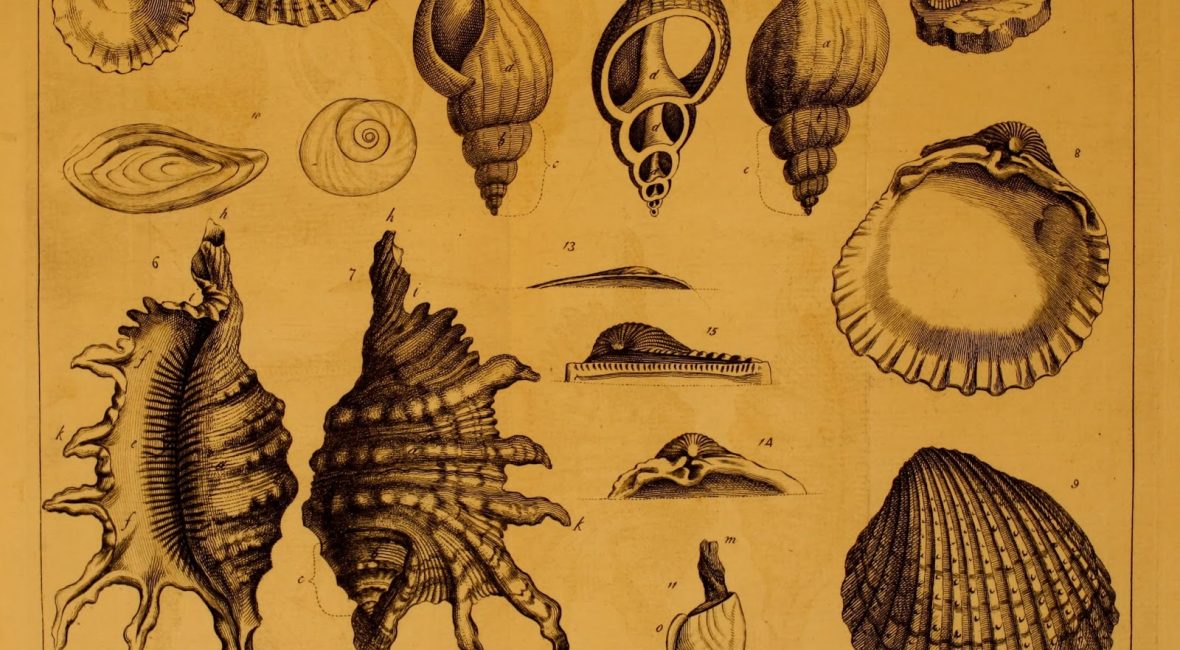
Tab. 6. Born, Ignaz, Edler von. Testacea Musei Caesarei Vindobonensis. 1780. Contributed in BHL from Smithsonian Libraries.

As a commemoration of the Imperial collection of shells in Vienna, the printed folio of Testacea Musei Caesarei Vindobonensis of 1780, is splendid. The eighteen engraved plates, carefully colored by hand, render individual specimens in the Habsburgs’ K.K. Hof-naturalien-Cabinet as if pieces of jewelry, casting shadows on a plain background of the thick, hand-made paper. Dedicated to the Empress of Austria, Maria Theresa (1717-1780), this production was also a work of science, as the task of arranging the shells in the Cabinet and describing them for publication was given to one of the leading scientists of the day, Ignaz Edler von Born (1742-1791).
mermaid illustration

Illustration. Born, Ignaz, Edler von. Testacea Musei Caesarei Vindobonensis. 1780. Contributed in BHL from Smithsonian Libraries.

Born, commissioned by Maria Theresa to arrange the entire royal natural history collections, was principally a mineralogist and metallurgist. But he had a great interest in shells and identified several new species. Systematists in malacology (the study of mollusks, including shells) still examine the originals, now in the Natural History Museum, Vienna (Naturhistorisches Museum), originally built to house the overflowing collections of the Habsburgs. The text of Born’s descriptions are also still used. It was first published in a much smaller format in 1778, in both Latin and German, with one plate as the only illustration. G.C. Kronenberg’s “Born’s strombs (Mollusca: Gastropoda),” a recent article that appeared in Annalen des Naturhistorischen Museums in Wien (2007), is one instance of scholarly work citing Born’s analysis.

illustration of shells

Vignette. Born, Ignaz, Edler von. Testacea Musei Caesarei Vindobonensis. 1780. Contributed in BHL from Smithsonian Libraries.

Also attesting to the importance of Testacea Musei Caesarei Vindobonensis in scientific research, two copies of the folio second edition were once in the Division of Mollusks in the Smithsonian’s National Museum of Natural History, which holds the world’s largest shell collection (link). The books now reside in the Museum’s Joseph F. Cullman 3rd Library of Natural History. Alas, also indicating their scholarly worth, both volumes were rebound for practicality in sturdy library buckram, their original bindings lost (an earlier practice, happily no longer followed).

The second half of the 18th century was a period when books were produced addressing the lack of illustrations in the enormously influential tenth edition of Carl Linnaeus’ Systema Naturae. In this two-volume work of 1758-1759, the Swedish author (now known more often by his modern name form, Linné) introduced binominal nomenclature for animals, but providing visual representations for publication was time-consuming and quite expensive. The Habsburg commission of Testacea Musei Caesarei Vindobonensis, employing the binominal system and current with Linnaean names and descriptions, filled the gap with essential information. The plates were designed by the artist Franz Fuxeder (1725-1797) and engraved by Karl Schütz (1745-1800) and J. Adam. The vignettes are sometimes signed by “Conti,” Schütz, or Johann Ernst Mansfeld (1739-1796).

Illustration of shells

Vignette. Born, Ignaz, Edler von. Testacea Musei Caesarei Vindobonensis. 1780. Contributed in BHL from Smithsonian Libraries.

Apart from the separately printed plates of carefully displayed shells, there are forty-eight small scenes or portraits interspersed in the text, all of them an absorbing delight of this sumptuous work on conchology. Given the royal funding, individually created vignettes, alluding to the subject at hand, were created. This was a significant expense in the hand-press period. Unlike woodcuts that could go through the printing press with the standing type, intaglio plates had to be separately printed after, but carefully registered with, the pages of text. The scenes portray shells in land- and seascape settings or within elaborate frames with lettered identifications matched up to their descriptions, serving the purpose of a visual footnote.

illustration of Venus and Mermen

Venus and Mermen. Born, Ignaz, Edler von. Testacea Musei Caesarei Vindobonensis. 1780. Contributed in BHL from Smithsonian Libraries.

The images are a world of their own. One imagines the artists having fun with their knowledge and creativity. There are representations of cavorting mythological creations; mermen and mermaids make appearances. Two of the sea creatures play the supporting roles in an interesting interpretation of Venus on the Half-Shell, hoisting her aloft. Rather than her flowing hair or hand, a piece of seaweed provides the element of modesty for the nude goddess.

Illustration of woman on throne being handed a shell

Publisher’s device. Born, Ignaz, Edler von. Testacea Musei Caesarei Vindobonensis. 1780. Contributed in BHL from Smithsonian Libraries.

The engraved publisher’s device on the title page is an allegorical vignette, with the god Hermes (Mercury in Roman mythology) presenting a volume to Athena (Minerva), goddess of wisdom, identified by the sacred (if startled) owl peeking over her shoulder. A putto hefts a book among a stack of other folios. The publisher, whose initials appear in a medallion festooned by a laurel adorning a carved platform, was Johann Paul Krauss (1701-1776), whose firm continued in business after his death. Following the dedication page is a more elaborate piece, with Poseidon sitting on an annoyed-looking porpoise (who served as the god’s messenger), presenting a shell to a female figure (representing the Empress?), who sits enthroned between a caryatid made up of shells and a cabinet of drawers from which puttis play with shells. Behind is an open book, with a plate of shells resembling this title. Visual homages to the Habsburg rulers, current and past, are made in here and throughout the work. Poseidon appears again in one small vignette, this time cruising along on a fierce-looking porpoise. His son, Triton (looking a little rough around the edges) emerges from the waves blowing a conch shell. He was known as the Trumpeter of the Sea.

poseidon

Poseidon rides the waves. Born, Ignaz, Edler von. Testacea Musei Caesarei Vindobonensis. 1780. Contributed in BHL from Smithsonian Libraries.

illustration of triton

Illustration of Triton. Born, Ignaz, Edler von. Testacea Musei Caesarei Vindobonensis. 1780. Contributed in BHL from Smithsonian Libraries.

The book also honors the greats in natural history, conveyed in engraved scenes at the beginning of sections of text. The first, in a chapter of Testacea multivalvia, celebrates Pliny, author of the encyclopedic Naturalis Historia. Mermaids and mermen join the tribute to the author, laying seashells at a tomb that bears his name. In the background is the Bay of Naples, with a puffing Mount Vesuvius in the background (Pliny died in AD79 while attempting rescues by ship of those caught by the eruption of the volcano). The second order, Testacea bivalvia, opens with an homage to Ulisse Aldrovandi (1522-1605?), the author of the first important work on shells, De Reliquis Animalibus of 1606. The last, for the third order, Testacea univalvia, is devoted to Linnaeus. There are a few shells scattered about the landscape; guarding the naturalist’s tomb are an eagle and a lion, whose paw rests on an unfortunate turtle. A whale breaches in the background.

Testacea multivalvia section of text, dedicated to Pliny

Testacea multivalvia section of text, dedicated to Pliny. Born, Ignaz, Edler von. Testacea Musei Caesarei Vindobonensis. 1780. Contributed in BHL from Smithsonian Libraries.

Aldrovandi memorial

Aldrovandi memorial. Born, Ignaz, Edler von. Testacea Musei Caesarei Vindobonensis. 1780. Contributed in BHL from Smithsonian Libraries.

Linnaeus’ tribute

Linnaeus’ tribute. Born, Ignaz, Edler von. Testacea Musei Caesarei Vindobonensis. 1780. Contributed in BHL from Smithsonian Libraries.

It is curious that there hasn’t been more published on the literature of shell books. There are legions of fine, detailed bibliographies in several natural history subject areas—birds, botany and horticulture, voyages of exploration, works of Charles Darwin—but little devoted to conchology. S. Peter Dance’s Shell Collecting: an Illustrated History(London, 1966) and a rare book dealer’s catalog by Antiquariaat Junk of the Netherlands, are two of the few resources.

This lack of scholarly studies in conchology publishing is remarkable, given that shells have been collected since the dawn of humankind, either for utilitarian purposes or for their beauty. In the Age of Discovery, European voyagers found an eager market for specimens collected in the South Seas. That the Empress of Austria commanded a publication on shells is an expression and record of her interest in Imperial trade and expansion to far-flung locales as well as a contribution to the science of natural history.

illustration of shells

Tab. 15. Born, Ignaz, Edler von. Testacea Musei Caesarei Vindobonensis. 1780. Contributed in BHL from Smithsonian Libraries.

Past Smithsonian curators, Isaac Lea (1792-1886), conchologist and geologist, and William Healey Dall (1845-1927), a renowned malacology paleontologist, were avid book collectors. The Cullman Library holds many books from their former collections and would be an excellent place to start compiling a bibliography. Dall’s copies of Filippo Buonanni’s Recreatio Mentis, et Oculi (Rome, 1684) and Thomas Martyn’s The Universal Conchologist (London, 1784) would be highlights; Born’s Testacea Musei Caesarei Vindobonensis another, once owned both by Lea and Dall. Many of these titles have already been digitized by the Biodiversity Heritage Library, available for exploring the imaginative worlds found in books on shells.

illustration of shells

Tab. 7. Born, Ignaz, Edler von. Testacea Musei Caesarei Vindobonensis. 1780. Contributed in BHL from Smithsonian Libraries.

All images in this post are from the Cullman’s copy of Testacea Musei Caesarei Vindobonensis, which has been scanned for the Biodiversity Heritage Library. For comparison, below you can see a copy of the above illustration (Tab.7) from the copy held by Naturalis Biodiversity Center, also digitized in BHL, which has, unusually, uncolored plates.

illustration of shells

Tab. 7 (uncolored). Born, Ignaz, Edler von. Testacea Musei Caesarei Vindobonensis. 1780. Contributed in BHL from Naturalis Biodiversity Center.

October 18, 2018by mckenzie.87
Blog Reel, Featured Books

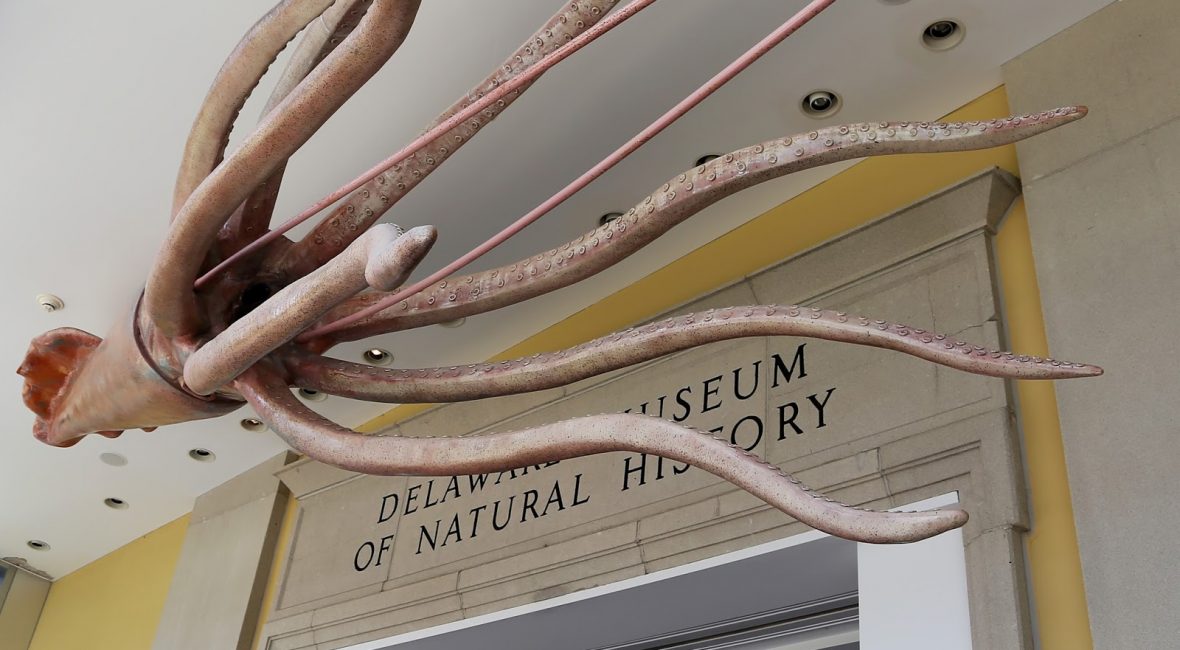
The Delaware Museum of Natural History

View Full Size Image
Image adapted from a photo by Jim, the Photographer. Original on Flickr.
(CC BY 2.0)

History
For over 40 years, the Delaware Museum of Natural History (DMNH) has promoted the study of nature, investigated the planet’s flora and fauna, and educated the public with its world-class collections, which are particularly rich in mollusks and birds (DMNH’s collection of bird eggs is the second-largest in North America).

View Full Size Image
“The Egg Collection”
Photo by Jim, the Photographer
on Flickr (CC BY 2.0)

Founded in 1957, the museum began as an idea in the mind of John duPont, heir to the DuPont Chemical fortune. An avid naturalist, duPont travelled the world and amassed a collection of 113,000 birds and 2 million seashells. He used a portion of land from his family’s estate to found the museum that houses his collections. It opened to the public in 1972.

Long after his involvement with DMNH had ended, duPont moved his attention to athletics. He used some of his fortune to open a training center for Olympic athletes on his sprawling estate in Pennsylvania. The athletes, trainers, and coaches who worked for him were known as Team Foxcatcher and enjoyed considerable success. As years went on, however, duPont’s behavior became increasingly erratic. His deterioration came to a head in January of 1996, when, for reasons unknown, he shot and killed his star wrestling coach, Olympic gold medalist Dave Schultz. This tragic story was (loosely) told in the 2014 film Foxcatcher.

Publications and Rare Books

Birds, shells, and mammals aren’t the only things that John duPont put in the DMNH; he also contributed a library with an excellent collection of rare books. DMNH recently contributed some of these books to BHL through the Expanding Access to Biodiversity Literature (EABL) project, which works with organizations across the U.S. to digitize unique and valuable material. The DMNH-contributed books include rare works from the 18th century and publications by the museum, including several works by duPont himself. Below are some highlights; the complete list can be found here and here.

1. Index testarvm conchyliorvm quae adservantvr in mvseo Nicolai Gvaltieri (1742)

Niccolò Gualtieri was an Italian doctor, malacologist, and professor at the University of Pisa, whose collection of shells is the oldest in the university’s natural history museum. Particularly noteworthy in his Index testarvm conchyliorvm are his descriptions of argonauts, also called paper nautiluses.

View Full Size Image
Plates from Gualtieri’s Index: L: T.36, Conch shells (Strombidae);
R: T.18, Nautilus.

2. Woodpeckers of the World (Monograph Series No. 4, 1982)

Lester L. Short, born in 1933, is one of the world’s foremost experts on woodpeckers (family Picidae). A former curator of birds at the American Museum of Natural History, Short travelled to over 60 countries documenting woodpeckers and in 1986 was one of the last people to see a Cuban Ivory-billed Woodpecker, Campephilus principalis bairdii, in the wild. The bird is now believed to be extinct.

Short’s Woodpeckers of the World was written with the encouragement and support of John duPont; in fact, duPont arranged for his illustrator, George Sandström, to work with Short to produce the 101 color plates in the book.

View Full Size Image
Ivory-billed Woodpeckers, illustrated by George Sandström.
From Woodpeckers of the World (1982), p. 621:
http://biodiversitylibrary.org/page/53631011

3. Philippine Birds (Monograph Series No. 2, 1971)

John duPont wrote this book based on his own expeditions to the Philippines, beginning in 1958. In the foreword to the book, ornithologist Dean Amadon writes that “anyone who knows John duPont will realize that, once in the islands, he heads for the nearest mountains and jungles: he is not one to dawdle about in the gardens of local officials.” Philippine Birds was written as an identification guide rather than a comprehensive work, with brief descriptions accompanying color illustrations by George Sandström.

View Full Size Image
Pittas (family Pittidae), illustrated by George Sandström.
From Philippine Birds (1971), plate 49:
http://biodiversitylibrary.org/page/53630110

Jean Woods, Curator of Birds at DMNH, worked with the EABL team to digitize these titles and get them into the BHL collection. Discussing the importance of putting them online, she said, “We’re excited to have the museum’s publications and rare books available through the Biodiversity Heritage Library to be used by researchers that have not previously had access to them.” She added that some of the titles, like Philippine Birds, have been out of print for years and that “many of the rare mollusk books contain original species descriptions which continue to be essential for taxonomic work.”

We are grateful to Jean and to the Delaware Museum of Natural History for so generously sharing their wealth of publications and rare books with the BHL community.

References

About us. (n.d.). Retrieved from http://www.delmnh.org/about-us-2/
Eckholm, E. (1986, May 5). Woodpecker, believed extinct, seen in Cuba. The New York Times. Retrieved from http://www.nytimes.com/1986/05/05/us/woodpecker-believed-extinct-seen-in-cuba.html
Longman, J. (2010, December 9). John E. du Pont, heir who killed an Olympian, dies at 72. The New York Times. Retrieved from http://www.nytimes.com/2010/12/10/sports/olympics/10dupont.html?_r=0
Niccolò Gualtieri’s splendid seashells. (2016, August 26). Retrieved from http://www.italianways.com/niccolo-gualtieris-splendid-seashells/
August 17, 2017by [email protected]
Blog Reel, Campaigns, Featured Books

Holmes, Shells, and the Intersection of Art & Science

View Full Size Image
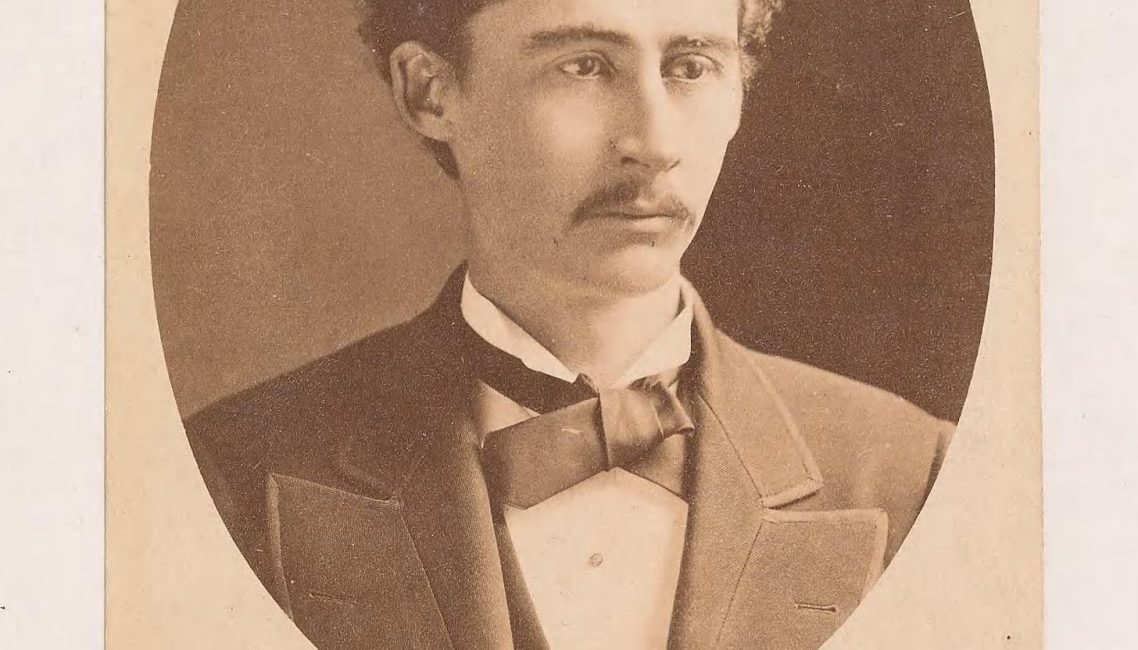
William Henry Holmes, about 1875. Random Records of a Lifetime. v. 1. http://www.biodiversitylibrary.org/page/52009570. Digitized by Smithsonian Libraries.

From November 28th through December 9th, BHL is joining the Smithsonian Libraries, Smithsonian Institution Archives, Smithsonian Field Book Project, and Smithsonian Transcription Center in hosting the #ManyHatsofHolmes transcription event. This event challenges volunteers around the world to help us transcribe William Henry Holmes’ archival materials. Learn more on the Smithsonian Libraries’ blog.

As the hashtag implies, William Henry Holmes (1846-1933) studied a variety of topics throughout his distinguished career, including anthropology, archaeology, art, and geology. He spent much of his career affiliated with the Smithsonian Institution. He studied art under Theodore Kauffman and went on to work as a scientific illustrator with Smithsonian staff. In 1872, he was appointed artist-topographer to the United States survey of the territories under Ferdinand V. Hayden and in 1874 was appointed assistant geologist. He went on to work with the United States Geological Survey (USGS) and the Bureau of American Ethnology (BAE) before returning to the Smithsonian’s United States National Museum (USNM). Holmes eventually became head curator of the Smithsonian Institution’s Department of Anthropology and Director of the National Gallery of Art.

Many of Holmes’ field notes and personal records have been digitized by Smithsonian Libraries and Smithsonian Institution Archives as part of The Field Book Project. These are available in BHL. In addition to these archival materials, BHL also holds a number of publications by Holmes.

View Full Size Image
Top figure: Vessel made from a lightning whelk (Sinistrofulgur perversum) – synonym Busycon perversum – shell. Bottom figure: Earthen vessel made in imitation of a shell. Holmes, William Henry. Art in Shell of the Ancient Americans. 1883. http://biodiversitylibrary.org/page/11258636. Digitized by Smithsonian Libraries.

One of those publications is Art in Shell of the Ancient Americans, which was published in 1883 as part of the second annual report of the Bureau of Ethnology.

Holmes intended this publication to be a preliminary study of the ways in which Native Americans in the distant past used shells as a medium for artistic expression and how this artwork represents a phase in the evolution of human culture. It discusses the use of shells as implements, utensils, and objects of ornamentation (such as jewelry).

Most of the objects presented in the publication were obtained from graves and tumuli (ancient burial mounds), which explains how such delicate pieces survived throughout the centuries. But, while these pieces can be deemed ancient, Holmes did not have enough data to provide a reliable estimation of age.

At this point, you might be wondering why a book about shell art would be relevant for a biodiversity library and what bearing it might have on scientific research. The simple answer is that these shells are remnants of living creatures – mollusks that died long ago but still left behind a legacy in shell. However, Art in Shell has relevance for scientific research beyond this vague connection with the natural world.

View Full Size Image
Shell spoons made from Lampsilis ovata (synonym Unio ovatus) – top and center – and Potamilus alatus (synonym Unio alatus) – bottom. Holmes, William Henry. Art in Shell of the Ancient Americans. 1883. http://www.biodiversitylibrary.org/page/11258608. Digitized by Smithsonian Libraries.

In the publication, Holmes attempts to identify the species (or most-specific taxa possible) to which the shell used for the object belongs. This information provides a valuable record of human interaction with various mollusk species and helps document the diversity of species present in ancient America. The presence of shells in various regions, when coupled with species distribution data that demonstrates the transport of these shells from their source, can also provide insight into historic Native American migration paths, tribal contacts, and trade.

Thus, this book is not just a book about art. It represents a beautiful union of art and science. And considering the many disciplinary hats that Holmes wore throughout his career, it’s no surprise that his publication would bridge these two worlds. Art in Shell is therefore not only a very fitting book to highlight as a representation of the union of Holmes’ many interests, but the insights it provides into Native American culture also make it particularly relevant this month as we celebrate Native American Heritage Month.

View Full Size Image
Implements made from Unio vericosus (figs. 1 and 2), Cyclonaias tuberculata (synonym Unio tuberculosus, figs. 3-5) and Pecten (fig. 6). Holmes, William Henry. Art in Shell of the Ancient Americans. 1883. http://www.biodiversitylibrary.org/page/11258618. Digitized by Smithsonian Libraries.

So, can we tie this publication back to the Random Records of a Lifetime series that is the subject of our #ManyHatsofHolmes transcription event? Holmes’ discussion about his work with shell art in these records seems to be fairly limited, but in his biographical sketch in volume I, Holmes does report that, “The years 1882-3-4 and 5 were devoted largely to Museum work and the study of primitive art in its various branches.” As Art in Shell was published in 1883, this account is likely a reference in part to his work on this publication (as well as the many others on ancient American art that he produced during this time period).

As you participate in the challenge, can you find additional references in the Random Records that can be linked back to Art in Shell? If you do, share them on social media with #ManyHatsofHolmes.

Additionally, if you need a break from transcription or want another challenge, try taxon tagging the illustrations from Holmes’ Art in Shell on Flickr. By tagging the shell art with the taxonomic name of the species to which the shell belongs, you can help researchers more easily discover which species ancient Americans were using to create these objects. Learn more about taxon tagging in this article and see our detailed instructions here. Find the Art in Shell images in Flickr here.

See this video for basic instructions on how to tag the illustrations in Art in Shell:

Holmes was truly a man of many trades and talents. As you dig deeper into his work during the #ManyHatsofHolmes event, be sure to share your findings on social media with the hashtag. Thanks so much for participating in our Holmes extravaganza!

View Full Size Image
Beads and pearls. Figs. 1, 7, 12, and 9: Sinistrofulgur perversum (synonym Busycon perversum); Fig. 2: Crassadoma gigantea (synonym Hinnites giganteus); Fig. 3 and 13: pearls, latter from Haliotis californianus; Fig. 4: unknown univalve; Fig. 5: ivory?; Figs. 6 and 11: unknown dextral whorled shell; Fig. 14: Strombus or Busycon. Holmes, William Henry. Art in Shell of the Ancient Americans. 1883. http://www.biodiversitylibrary.org/page/11258675. Digitized by Smithsonian Libraries.
November 30, 2016by michelle.underhill
Blog Reel, Featured Books

The Conchologists: Searching for Seashells in 19th Century America

This post was originally published on the Inside Adams blog from the Library of Congress. See the original post here.

In the 19th century naturalists and enlightened amateurs in the U.S. cultivated an understanding of the natural world of this new country by documenting new and known varieties of plant and animal species. One of these scientific pursuits was conchology- the study and collection of marine, freshwater and terrestrial shells. The story of American conchology has the makings of a great screenplay – there is adventure, discovery, and a cast of passionate characters who sought to advance science, but also personalities who practiced ‘species- mongry” that sought fame and money.

Conchology was a popular area of study which is evidenced by the large portfolio of published shell indexes, catalogs, and papers in the 19th century. The Library of Congress has a variety of material that traces the history of 19th century U.S. conchology, but it also has earlier titles including the 1684 edition of Filippo Buonanni’s (1638-1725) Recreatio Mentis et Oculi: in Observatione Animalium Testaceorum Curiosis Naturae Inspectoribus considered to be the first book specifically dedicated to conchology, and as a result, the author became known as the father of conchology. We also have a book on conchology owned by Thomas Jefferson (1743-1826) that was part of the collection sold to the Library of Congress in 1815, Elements of Conchology, or, An Introduction to the Knowledge of Shells by Emanuel Mendes da Costa (Ernst Mayr Library, Harvard MCZ copy in BHL here). Thankfully it survived the 1851 Capitol Hill fire and is available for scholars to use.

View Full Size Image
Mendes da Costa, Emanual. Elements of Conchology. pl. 1. 1776. http://biodiversitylibrary.org/page/12926740.

There is such an abundance of individuals associated with early American conchology that mentioning every single one would be a dissertation, not a blog post. Therefore this post will only highlight a selection of characters who helped to lay the foundation of conchology in the U.S. If you want to read more about the early pioneers, see “A Sketch of the History of Conchology in the United States” in American Journal of Science and Arts, March 1862.

First up is Thomas Say (1787-1834) who was one of the earliest noted American conchologists, although he is best known for his work in entomology. He was a founding member of the Philadelphia Academy of Natural Sciences and published some of the first accounts of American shells in the Journal of the Academy of Natural Sciences (1817-1826) as well as American Conchology (1830-1838).

View Full Size Image
Say, Thomas. American Conchology. pl. 29. (1830-38). http://biodiversitylibrary.org/page/7959406.

Next is Timothy Abbott Conrad (1803-1877) who is more known for his work in geology, so his focus was mainly on the Cretaceous and Tertiary mollusks. He helped edit Say’s American Conchology, and authored American Marine Conchology (1831) and the Monography of the Family Unionidae (1836).

Isaac Lea (1792-1886) was another important figure in conchology. He criticized and corrected some of Conrad’s work regarding classification of the Unionidae- see the Lea and Conrad controversy papers. In my opinion these scientific duels makes history all the more interesting.

Amos Binney (1803-1847) and William G. Binney (1825-1909) are two scientists who played significant roles in 19th century conchology. Amos was an avid collector of rocks, birds’ eggs, and shells and was a founding member of the Boston Natural History Society. He is most notable for his work in malacology (study of the Mollusca animals, not just the shells) of land mollusks. His monumental publication The Terrestrial Air-Breathing Mollusks of the United States (1851-1878) was published after his death. His son William followed in his father’s footsteps and continued to collect and document shells in the U.S. He edited the Complete Writings of Thomas Say (1858) and his father’s Terrestrial Air-Breathing Mollusks of the United States, as well as published checklists, and compiled bibliographies of North American shells.

View Full Size Image
Binney, Amos. The Terrestrial Air-Breathing Mollusks of the United States. v. 5 (1878). pl. 66. http://biodiversitylibrary.org/page/1869243.

The history of U.S. conchology would not be complete without mentioning Augustus Addison Gould (1805-1866) who described nearly 1,100 molluscan species. He was a physician, as well as a conchologist, whose research on Massachusetts invertebrates remains a standard reference still used today. He helped found the Boston Society of Natural History with Amos Binney and was a curator for its mollusk collection for many years. He helped to identify and describe the new shells collected during the Wilkes (or U.S.) Exploring Expedition to the Pacific (1838-1842), which was published in Atlas Mollusca and Shells (volume 12 of the Expedition series).

View Full Size Image
Gould, Augustus. Atlas Mollusca and Shells. pl. 17. 1852. http://biodiversitylibrary.org/page/32033215.

Another figure in 19th century conchology is Constantine S. Rafinesque (1783-1840) who embodied the definition of a passionate 19th century naturalist. He was well-traveled and liberally documented the natural history of the animal and plant kingdom in the Americas and Europe. While many of his contemporaries suspected him of “species-mongry” – creating imagined species to gain fame and money – he was a significant, albeit intense, character among the early 19th century naturalists. To get an impression of his immense body of work related to conchology see The Complete Writings of Constantine Smaltz Rafinesque, on Recent and Fossil Conchology (1864) and for a biography see Constantine Samuel Rafinesque: A Voice in the American Wilderness by Leonard Warren (2004).

The practice of conchology was not limited to those formally educated in the sciences, but also included enlightened amateurs.

In 1839 Edgar Allan Poe (1809-1849) – yes that Edgar Allan Poe – “wrote” The Conchologist’s First Book. In reality, while his name is on title page, he only created a less expensive copy of an existing book to “offer to the public” in which he contributed an original introduction and rearranged the illustrated plates. To learn more about the history of this book see the Poe Museum’s website.

View Full Size Image
Poe, Edgar Allan. The Conchologist’s First Book. 1839. pl.1. http://biodiversitylibrary.org/page/16087743.

There were also important 19th century government figures such as Senator Benjamin Tappan (1773-1857) and Major-General Joseph G. Totten (1788-1864) who practiced conchology. Major- General Totten, a founding member of the National Academy of Sciences and a regent at the Smithsonian (National Museum), published and described many new species of New England marine Mollusca.

While researching for this post I found that many of the wives or sisters of these conchologists assisted with collecting and documenting specimens. Timothy Abbott Conrad’s sister hand colored many of his illustrations in American Marine Conchology (1831). Thomas Say’s wife Lucy illustrated numerous plates in American Conchology (1830-1838?). The website for the library at the Academy of Natural Sciences of Philadelphia has more on Lucy including images of her work.

View Full Size Image
Conrad, T.A. American Marine Conchology. 1831. pl. 2. http://biodiversitylibrary.org/page/11115892.

Beginning in the 20th century, American women conchologists and malacologists began to publish their own research. Ida Shepard Oldroyd (1856-1940), a pioneer of West Coast conchology, authored The Marine Shells of the West Coast of North America (1924-27) that documented 2,000 species of mollusks from the West Coast. Martha Burton Woodhead Williamson (1843-1922) published “An Annotated List of the Shells of San Pedro Bay and the Vicinity” in the Proceedings of the United States National Museum, 1892: 179-220. Along with reviewing books for Nautilus, Woodhead became a member of the national executive committee of the Isaac Lea Conchological Chapter of the Agassiz Association and was involved with conservation measures related to the abalone industry.

Many of the Library of Congress’s 19th century conchology materials are part of the Rare Books and Special Collections because they contain valuable beautiful illustrated plates or are deemed prized rare items that need special care. However, there are also wonderful examples that can be accessed from the Science and Business Reading Room. Beyond the Library of Congress, there are other resources to explore, including The Academy of Natural Sciences of Philadelphia malacology/conchology resources, which was established in 1812 and is now at Drexel University. Of course, many of the items mentioned above can be found in the Biodiversity Heritage Library (BHL) – they are linked in this blog post where appropriate.

View Full Size Image
Swainson, William. Exotic Conchology. 1841. pl. 33. http://biodiversitylibrary.org/page/28629375. More illustrations from this work in Flickr: https://www.flickr.com/photos/biodivlibrary/sets/72157636324706083.

I hope I have piqued your interest in the history of American conchology, so much so that you want to explore more and, perhaps, do some shell documenting of your own. So channel the spirit of a 19th century naturalist – collecting or documenting shells is easy. You don’t even need to be near the ocean because you can also find shells near other bodies of water such as rivers and lakes, and you can also discover shells on the land (terrestrial shells). You can draw and color what you collect like a 19th century naturalist or be a 21st century naturalist by photographing them. For inspiration see the BHL Flickr album from Exotic Conchology, Conchologist’s Textbook, and Conchological Manual. Also, your local library will have field guides to help you identify shells in your location or more general shell field guides that will help you identify the classes of shells.

July 23, 2015by ulib-libraryjobs

Help Support BHL

BHL's existence depends on the financial support of its patrons. Help us keep this free resource alive!

search

About BHL

The Biodiversity Heritage Library (BHL) is the world’s largest open access digital library for biodiversity literature and archives. BHL operates as a worldwide consortium of natural history, botanical, research, and national libraries working together to digitize the natural history literature held in their collections and make it freely available for open access as part of a global “biodiversity community.”

Join Our Mailing List

Sign up to receive the latest news, content highlights, and promotions.

Subscribe Now

Subscribe to Blog via Email

Enter your email address to subscribe to this blog and receive notifications of new posts by email.

Join 319 other subscribers

Subscribe to Blog Via RSS

Subscribe to the blog RSS feed to stay up-to-date on all the latest BHL posts.

Access RSS Feed

Inspiring Discovery through Free Access to Biodiversity Knowledge.

The Biodiversity Heritage Library makes it easier than ever for you to access the information you need to study and explore life on Earth…for free, anytime, anywhere.


64+ Million Pages of
Biodiversity Literature Online.

EXPLORE

Tools and Services
to Transform Research.

EXPLORE

300,000+
Illustrations on Flickr.

EXPLORE

ABOUT | HARMFUL CONTENT | PRIVACY | SITE MAP | TERMS OF USE