Biodiversity Heritage Library - Program news and collection highlights from BHL
  • Home
  • News
  • Featured Books
    • All Featured Books
    • Book of the Month Series
    • BHL at 20
  • User Stories
  • Campaigns
    • Fossil Stories
    • Garden Stories
    • Monsters Are Real
    • Page Frights
    • Her Natural History
    • Earth Optimism 2020
  • Tech Blog
  • Visit BHL
Home
News
Featured Books
    All Featured Books
    Book of the Month Series
    BHL at 20
User Stories
Campaigns
    Fossil Stories
    Garden Stories
    Monsters Are Real
    Page Frights
    Her Natural History
    Earth Optimism 2020
Tech Blog
Visit BHL
  • Home
  • News
  • Featured Books
    • All Featured Books
    • Book of the Month Series
    • BHL at 20
  • User Stories
  • Campaigns
    • Fossil Stories
    • Garden Stories
    • Monsters Are Real
    • Page Frights
    • Her Natural History
    • Earth Optimism 2020
  • Tech Blog
  • Visit BHL
Biodiversity Heritage Library - Program news and collection highlights from BHL
Blog Reel, Featured Books

The Power of Community Science: How Smithsonian Volunpeers Transform Scientific Field Notes

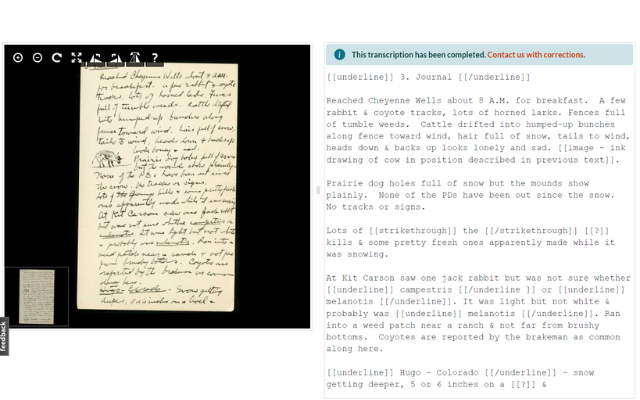
Screenshot of Smithsonian Transcription Center displaying handwritten journal next to transcribed text

Last month, Smithsonian Libraries and Archives (SLA), Smithsonian Transcription Center (STC), and the Biodiversity Heritage Library (BHL) celebrated a significant milestone – technical staff worked collaboratively to integrate over 43,000 pages of transcription materials from STC into BHL. An additional 151,362 scientific name access points have now been added to the BHL search index for SLA archival field notes. These transcriptions enhance BHL’s full-text search, enable taxonomic name recognition, improve accessibility for vision-impaired users, and support climate research.

The Smithsonian Field Books Collection
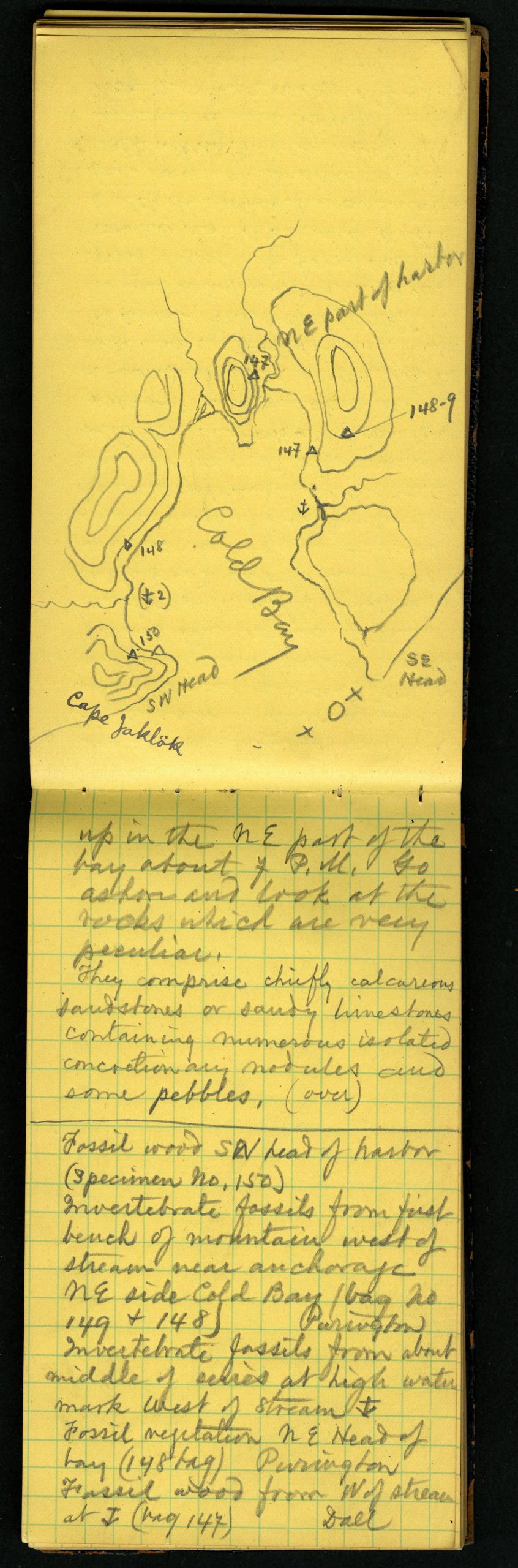
Yellow notebook with handwritten text and handdrawn map

Dall, William Healey. (1895). Alaska Coal Fields, Bogosloff Volcano, Corral Hollow, California, 1895 (Vol. 1, pp. 81 and 82).

The Smithsonian Field Books Collection is a set of primary source archival records selected from the Smithsonian Libraries and Archives (SLA). This material dates from the late nineteenth century and the first comprehensive biological survey of the continental United States to the most recently accessioned materials at the Smithsonian Institution Archives.

The collection includes personal records of naturalists and scientists such as William Healey Dall (1845 – 1927) and Cleofe Calderon (1929 – 2007) at work around the world and expedition records such as the Western Union Telegraph Expedition (1865 – 1867) of Russian America and the United States Exploring Expedition (1838 – 1842) of the Pacific Ocean.

Naturalists and scientists in the field recorded their firsthand observations and data in a wide variety of forms including diaries and journals, hand-drawn maps and tables of data, observation logs and specimen catalogs, correspondence and reports, manuscripts, sketches, photographs, even audio recordings.

Recognizing the Value of Accurate Transcription

Mining the rich information embedded in these field notes depends on accurate transcription. The majority of the field notes are handwritten – even the most recent ones. Digital surrogates provide high resolution images but fail to afford anything beyond visual accessibility. Transcription, however, opens up this material to full-text searching, pattern recognition, visual accessibility aids, and more.

Beyond the handwriting itself, the field notes also contain other non-textual information that can only be captured through transcription. Examples include ornithologist Martin Moynihan’s notations of bird song in remote regions of Central America or Charles Dolittle Walcott’s sketches and diagrams of sedimentary stratification where his fossil specimens were found in the canyons of the American Southwest.
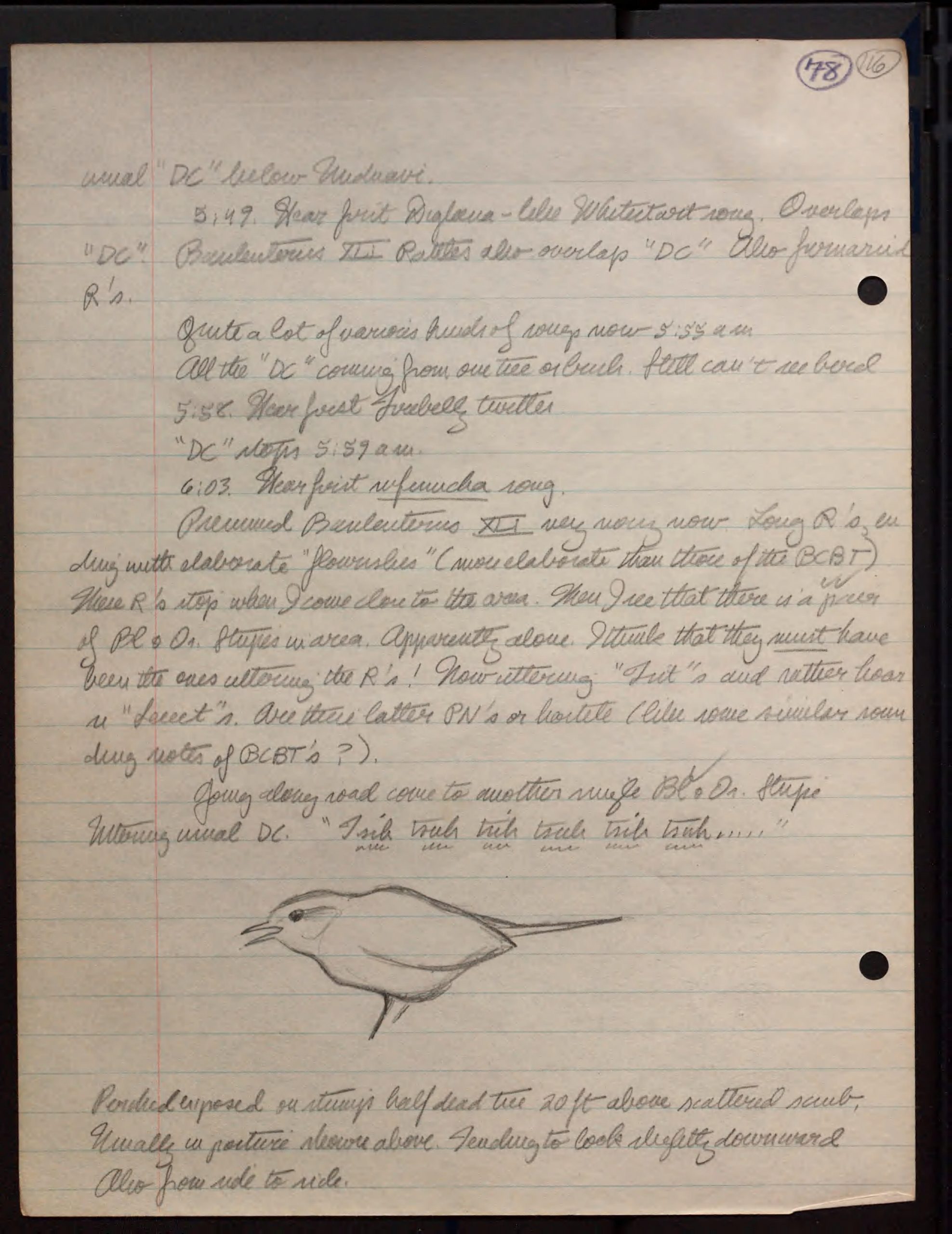
Handwritten notes with a drawing of a bird

Moynihan, M. (1963). 1962-1965 Andean Birds Mixed Flocks, Colombia, (4 of 4) (p. 78).

Chief naturalist with the U.S. Department of Agriculture, Vernon Orlando Bailey’s “Journal kept by Bailey on field trip to Wyoming and New Mexico, March 15-June 1906” focused on extermination techniques of gray wolves that would bring them to near extinction in the continental United States not long afterwards. The transcript includes descriptions of the sketches he included in his notes.
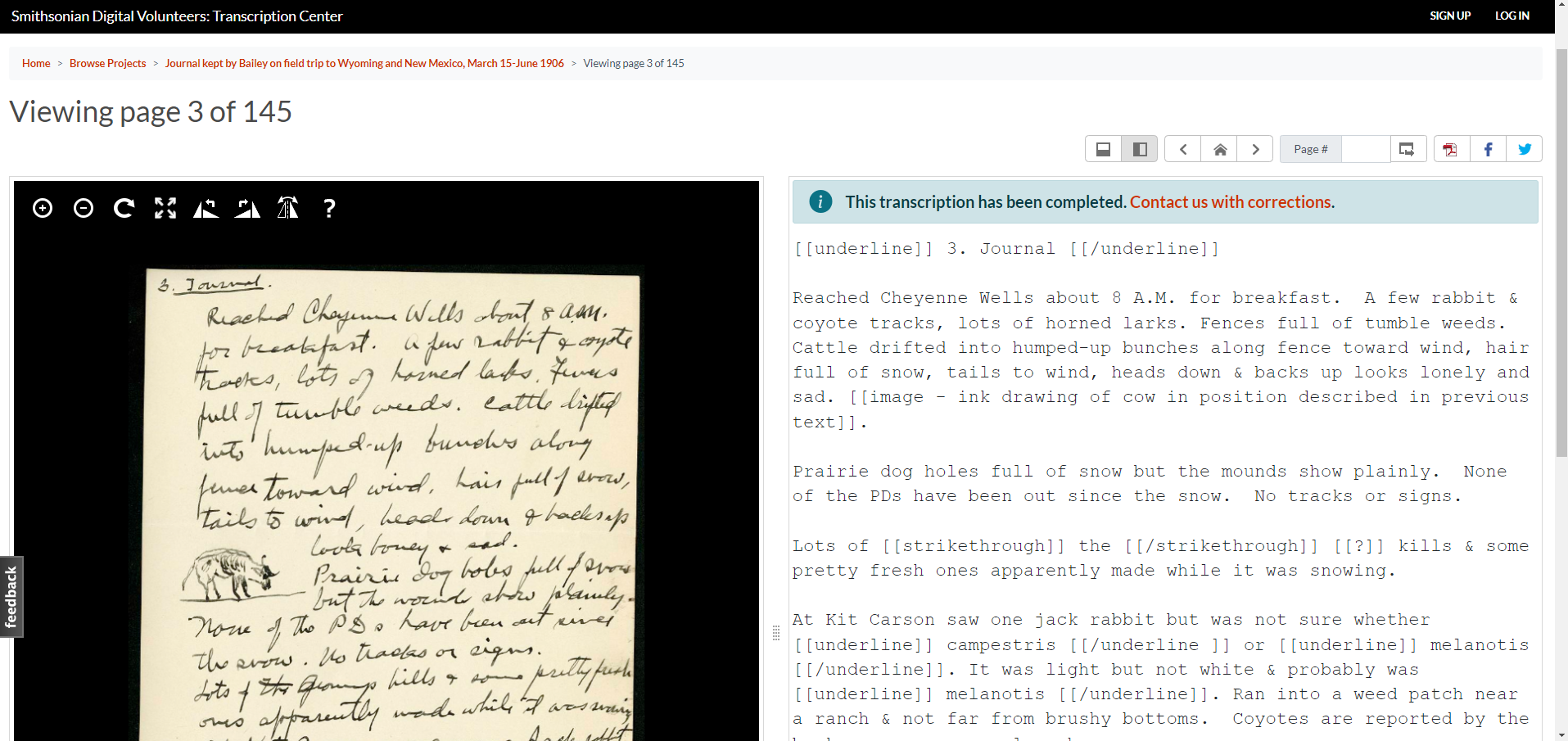
Screenshot of Smithsonian Transcription Center displaying handwritten journal next to transcribed text

Smithsonian Transcription Center image with corresponding transcription, including a text description of an ink drawing of a cow. https://transcription.si.edu/view/6656/EBOtg

The Smithsonian Field Book Project’s initial goal was to catalog these hidden biodiversity research material, improving discoverability in keeping with FAIR (Findable Accessible Interoperable Reusable) Data Principles. Doing so quickly resulted in additional researcher demand for more access and usability – first to view the field notes online (digitization) and then to examine them more closely (transcription). Grant funding assisted in a major rapid-capture digitization effort. However when it came to transcribing the digitized field notes, the Archives simply lacked the capacity to meet the level of researchers’ demand.

Turning to digital volunteers and the just-launched Smithsonian Transcription Center in 2013 changed the transcription equation beyond our best expectations both in volume and in accuracy. We quickly came to recognize these community scientists as collaborators, “volunpeers”, in the effort to advance and disseminate knowledge.

We are far from the end of this journey. More than half the collection remains to be digitized, and over two thousand digitized field notes still need transcription.

Inspired to Transcribe

These archival field notes contain vital historic biodiversity information. By transcribing the handwriting into machine readable text, volunpeers can help inform current day scientists and assist with their research on a multitude of topics such as climate change, the extinction crisis, or the spread of invasive species. Transcribing field notes can also take volunpeers on an adventure across time and distance, accompanying the writer on their journey. Having these adventures transcribed in machine readable text can also help inform science historians assisting them by making these historic documents more easily findable, searchable, and reusable.

Volunpeers collaborate to transcribe as accurately as possible the pages of the field journals provided. Multiple volunpeers will work on each project page transcribing the hard-to-read handwriting into machine readable text. Once satisfied the transcription is as complete as possible, a volunpeer will mark the transcribed page as complete. The volunpeers will then move onto the next page of the field notes until the project is finished.
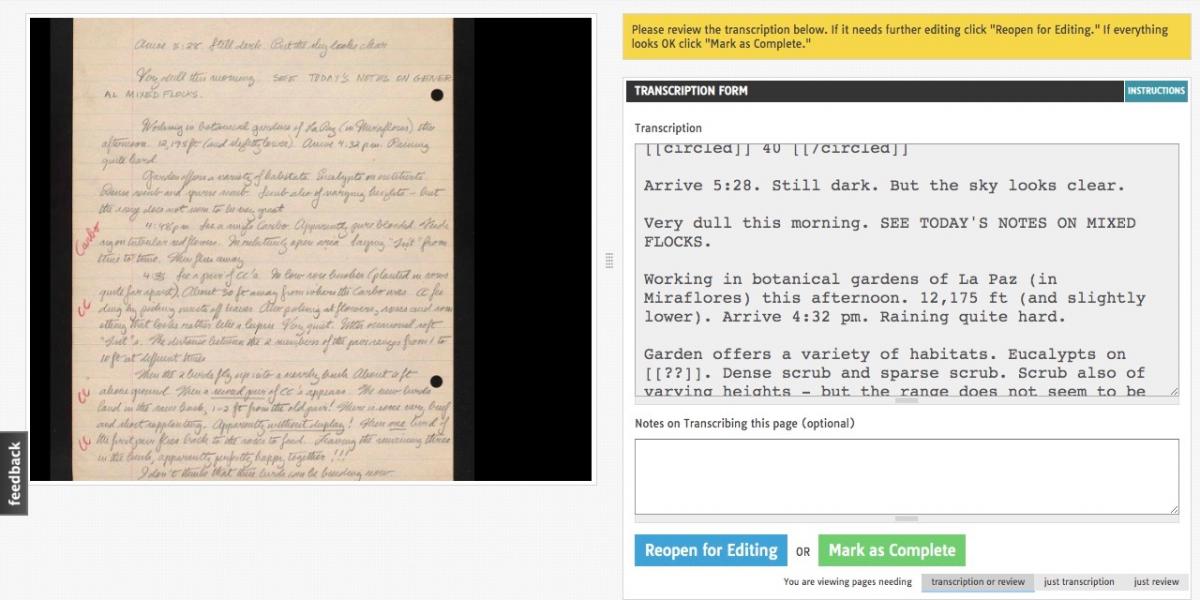
Approval workflow for Smithsonian Transcription Center

Review is the second step in the transcription process.

Having many volunpeers working on one project helps ensure the quality of the transcription. What one volunpeer finds illegible, others may be able to read, especially as all the volunpeers working on a particular project become more familiar with the handwriting.

Volunteers have transcribed hundreds of field journals over the years. Two favorite examples have been the field journals of Vernon Orlando Bailey, a field naturalist who journeyed throughout the U.S. midwest studying and collecting mammals. Another volunpeer favorite were the papers of Arctic explorer and naturalist Robert Kennicott. Read more about these volunpeer experiences on the STC blog.

The Power of the Smithsonian Transcription Center

When the first of the field books were added to Smithsonian Transcription Center (STC), the program was still available only as a beta version. Approximately 450 volunpeers were transcribing on the site (co-author Siobhan Leachman among them), with the first 6,000 completed pages under their belt. Even during this moment of immense energy and fresh connections, it must have been difficult to imagine what STC would become. Today, a little over a decade later, more than 91,000 individual volunpeers have worked together to transcribe and review over 1.4 MILLION (!) pages of historic and scientific collections.

STC is the largest digital volunteering and crowdsourcing program at the Smithsonian Institution, and provides opportunities to engage with and contribute to digitized materials from across the full breadth of content areas represented by its museums, archives, and libraries. Through collaborative transcription and review, Smithsonian staff and digital volunteers work together to ensure that this content is more readable, accessible, and text-searchable across Smithsonian data systems and beyond.

Currently, the most active and popular projects are the Freedmen’s Bureau Transcription Project, a collaboration with the National Museum of African American History and Culture that deepens insight into the Reconstruction period and empowers African American genealogical research, and Project PHaEDRA, a collaboration with the Harvard-Smithsonian Center for Astrophysics that illuminates the work and discoveries of early women computers at the Harvard College Observatory.

If you feel inspired by this data access success story, consider joining the digital volunteer community, or sign up for our newsletter to stay up-to-date on upcoming projects.

Reusing the Liberated Data

The successful integration of transcription materials into BHL makes historical scientific data more accessible and useful. Through the collaborative efforts of technical staff from the Biodiversity Heritage Library, Smithsonian Libraries and Archives, and the Smithsonian Transcription Center and dedicated volunpeers, over 151,362 scientific name access points were added to the BHL search index, greatly enhancing search capabilities over the digitized corpus of Smithsonian field notes and archives. Out of the 556 eligible items reviewed, 522 were uploaded, contributing 43,460 pages of improved OCR text. These contributions not only improve BHL’s full-text search and taxonomic name recognition services but also provide better accessibility for vision-impaired users, and support ongoing biodiversity and climate change research.
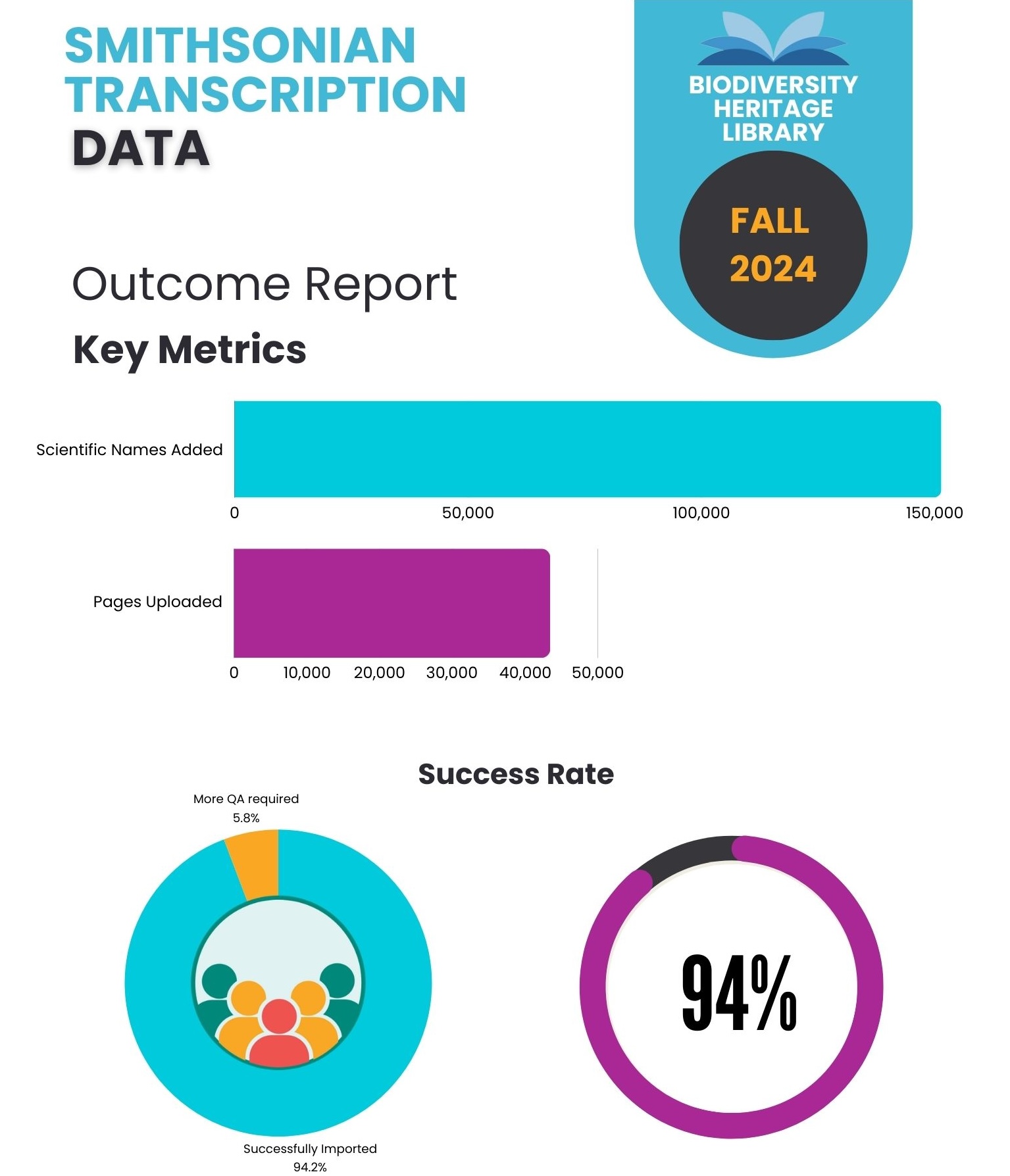
Smithsonian Transcription Data outcomes report

A special thanks goes to Mike Lichtenberg, BHL’s Lead Developer and Systems Architect and Paul Day, Lead Developer at Smithsonian Transcription Center. As with many data improvement and platform enhancement projects, the requisite technical expertise is pivotal in ensuring the success of our collective efforts!


References and Resources

Dearborn, J., Lichtenberg, M., Richard, J. M., deVeer, J., Trizna, M., & Mika, K. 2023. [Presentation] Unearthing the Past for a Sustainable Future: Extracting and Transforming Data in the Biodiversity Heritage Library for Climate Action. Presented virtually at TDWG, Tasmania, Australia 2023. https://www.youtube.com/watch?v=8sGssyrpuJw

Trizna, M., & Dearborn, J. June 2023. [Poster] AI Models Are Getting Better at Reading Handwriting, but How Can We Find Handwritten Text to Begin With?. 7th Annual Digital Data Conference, Leveraging Digital Data for Conservation, Ecology, Systematics, and Novel Biodiversity Research, Tempe, Arizona, United States of America. https://doi.org/10.25573/data.23523495.v1

Dearborn, J., & Mika, K. June 5, 2022. [Poster] Extracting Expedition Log Data Found in the Biodiversity Heritage Library. Through the Door and Through the Web: Releasing the Power of Natural History Collections Onsite and Online, Edinburgh, Scotland, United Kingdom: Society for the Preservation of Natural History Collections (SPNHC). https://doi.org/10.5281/zenodo.6593457
September 30, 2024by mdimeo
Blog Reel, Campaigns, Featured Books, Her Natural History

Margaret S. Collins: A Legend in Termite Field Biology

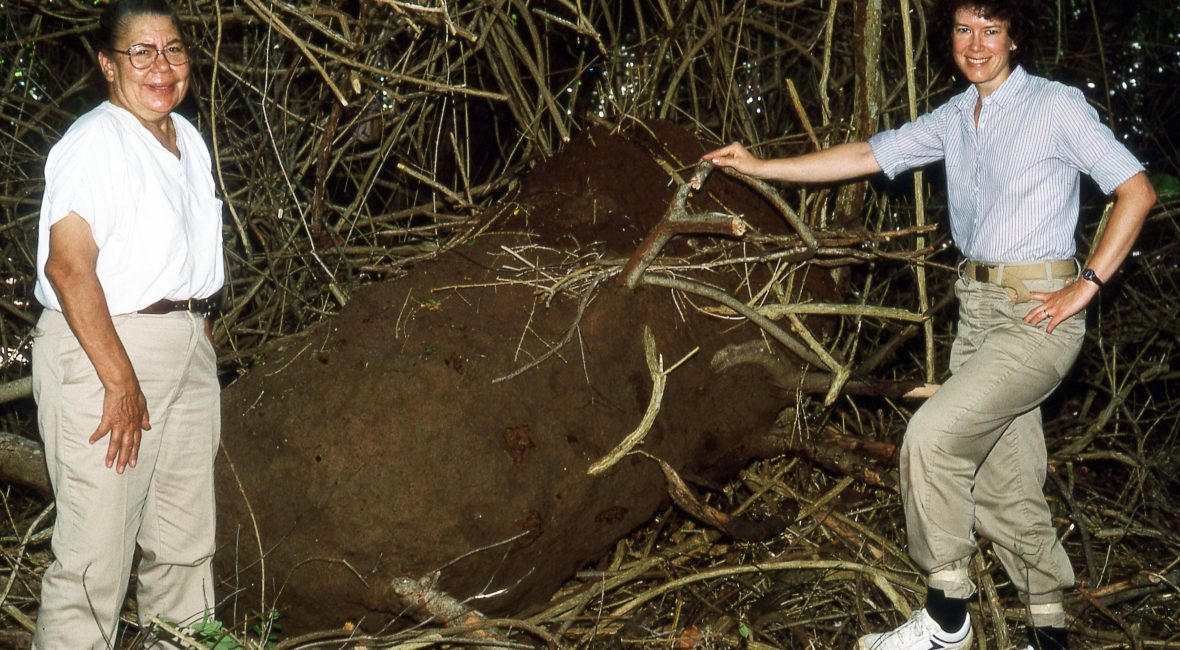
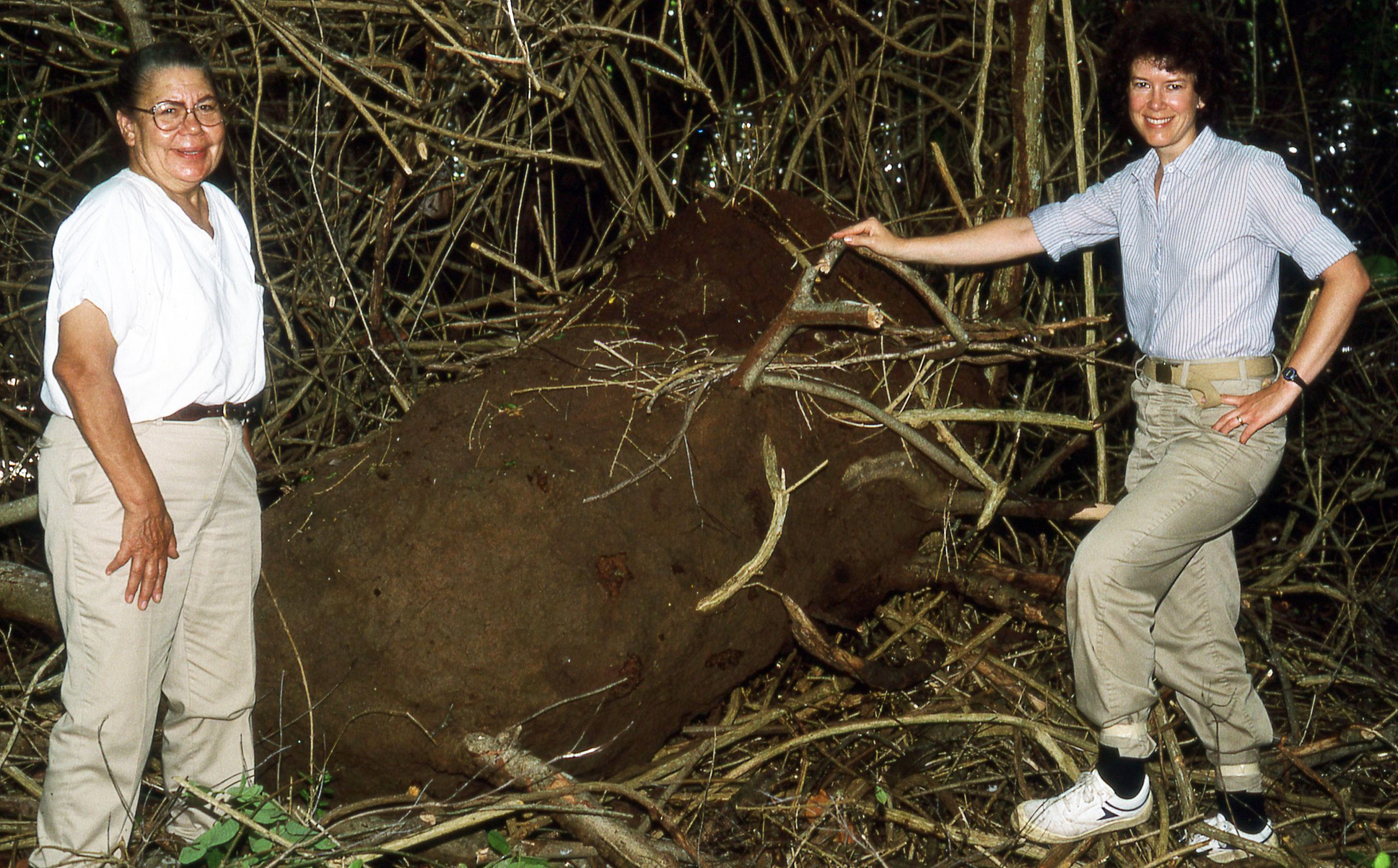
Two scientists researching termites in the British Virgin Islands stand together with a huge termite nest in between them. Photo taken in 1986.

This post was originally published on 2 March 2021 on the Smithsonian Institution Archives blog.

Two scientists researching termites in the British Virgin Islands stand together with a huge termite nest in between them. Photo taken in 1986.

Dr. Margaret S. Collins and Dr. Barbara L. Thorne standing next to a termite (Nasutitermes acajutlae) nest on Guana Island in the British Virgin Islands while studying a variety of termites in 1986. © Dr. Barbara L. Thorne.

Dr. Margaret S. Collins (1922-1996), a renowned expert on termite ecology and distribution, taught as a professor and administrator at Howard University, Florida A&M University, and Federal City College (now University of The District of Columbia) for over 35 years. Upon her retirement from teaching, Collins continued her work on termites at the Smithsonian National Museum of Natural History as a research associate from 1983 to 1996.

Over the course of her career, Collins published more than forty articles spanning the biogeography, physiology, chemical defenses, and taxonomy of termites. Collins also collected specimens in the United States, Mexico, Costa Rica, Colombia, Barbados, Belize, Suriname, the Cayman Islands, Guyana, Guatemala, and Panama. When she contracted dengue fever on an expedition in Guyana in 1983-1984 and was forced into a long hiatus from field work, she turned her focus to updating and preserving the termite specimens at the Smithsonian National Museum of Natural History. Eventually Collins returned to field research in 1994 when she once again traveled to Guyana to collect termites. In April 1996, Collins died while conducting field work in the Cayman Islands.

Collins’ biographers, such as Wini Warren and Vernard R. Lewis, have documented how she faced racism and sexism in her work and life. As one of the first African American women to earn a Ph.D. in entomology, she had to fight to find advisers as an undergraduate at West Virginia State College and to fund her field research during her early career. Additionally, Collins worked in the face of bomb threats and racist remarks as she pursued her career and advocated for equal rights during the civil rights movement.

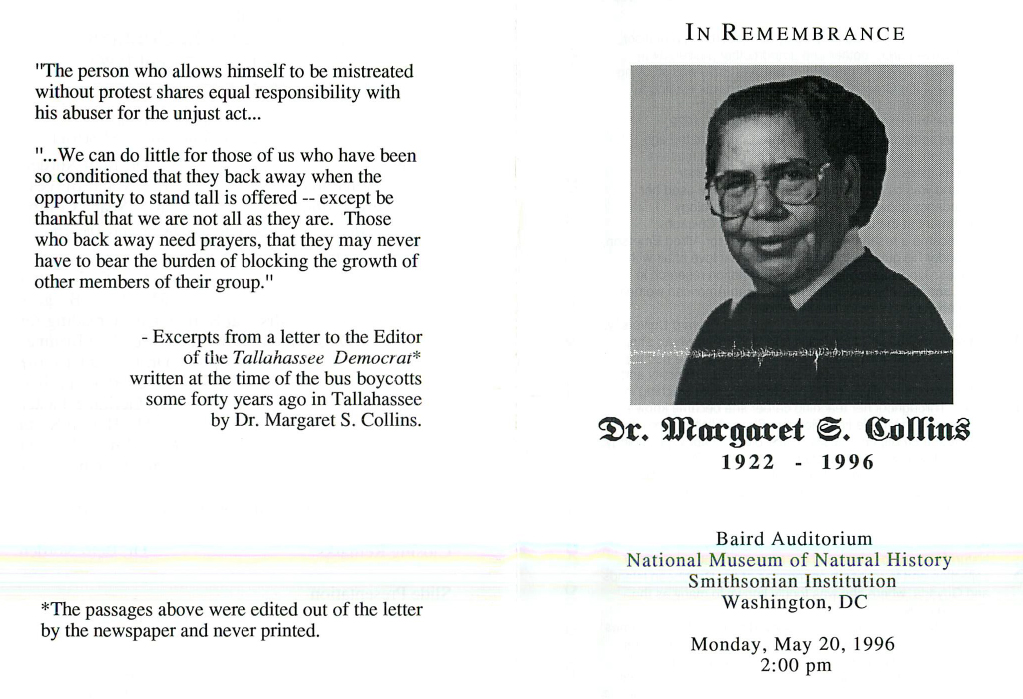
In fact, Collins’ memorial service pamphlet begins with excerpts from a letter she wrote to the editor of the Tallahassee Democrat during the 1956 Tallahassee bus boycott. During the boycott, sometimes chased by police, Collins drove protestors to and from work. The excerpts included:

The Person who allows himself to be mistreated without protest shares equal responsibility with his abuser for the unjust act…

…We can do little for those of us who have been so conditioned that they back away when the opportunity to stand tall is offered—except be thankful that we are not all as they are. Those who back away need prayers, that they may never have to bear the burden of blocking the growth of other members of their group.

These passages were edited out of Collins’ letter by the newspaper and never printed, but their inclusion in her memorial service offers a sense of the importance Collins placed on standing tall against the challenges she faced in her own life.

The first page of Margaret S. Collins’ memorial service pamphlet.

The first page of Margaret S. Collins’ memorial service pamphlet. Courtesy of Dr. Barbara L. Thorne.

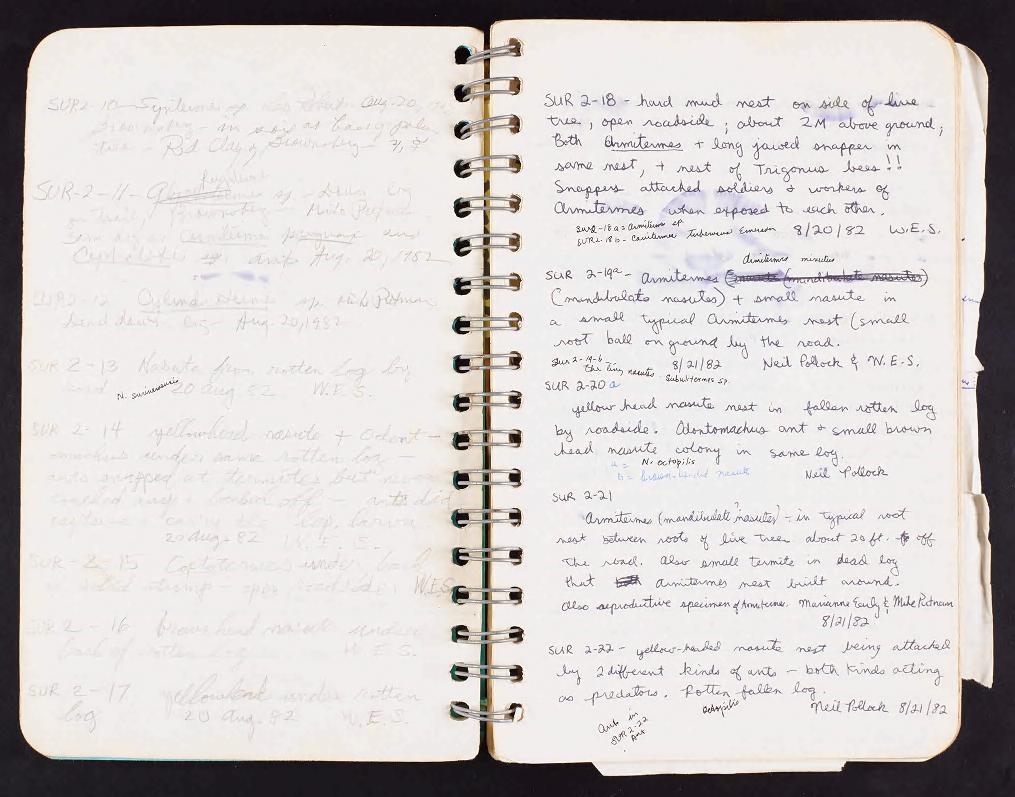
In the face of those challenges, Collins developed a love for field research. To learn more about Margaret Collins’ research, see a selection of her field notebooks, archived at the Smithsonian and digitized in the Biodiversity Heritage Library (BHL), the world’s largest open access digital library for biodiversity literature and archives. Headquartered at the Smithsonian, BHL works with libraries and archives around the world to revolutionize global research by providing free, worldwide access to knowledge about life on Earth.

An open spiral notebook with handwritten notes only on the right page.

Pages 6 and 7 from Margaret S. Collins’ Field Notes: “Combat Data,” Suriname, 1982: SIA Acc. 01-038. Contributed in BHL from Smithsonian Institution Archives.

Collins’ field notebooks were digitized and transcribed with the Smithsonian Transcription Center as part of the Smithsonian Field Book Project. Field notes can provide rich data for researchers to understand how biodiversity has changed over space and time. For example, field notebooks may describe habitats, meteorological events, and personal observations that allow us to reconstruct historical ecologies. The Archives has contributed over 300,000 pages of field notes to the Biodiversity Heritage Library as part of the Smithsonian Field Book Project. Some of Collins’ field books are part of that collection.

There are so many inspiring stories, like Dr. Collins’, about women in science at the Smithsonian in its 175-year history that can educate and embolden future generations, but only if their legacies are discoverable. On Thursday, 25 March 2021 from 1-3pm ET, join us for Wikipedia & Women in Science: Smithsonian Groundbreakers Edit-a-thon, an online Wikipedia editing workshop hosted in conjunction with the Smithsonian American Women’s History Initiative and the Smithsonian Institution Archives, part of Smithsonian Libraries and Archives.

During this training, attendees of all experience levels will learn the basics of how to edit Wikipedia by updating articles related to the history of women in science at the Smithsonian Institution in connection with the Funk List. Presenters will share how editors might research the work of these women in the absence of personal papers and institutional records. Learn more and register.

March 22, 2021by michelle.underhill
BHL News, Blog Reel

Wikipedia & Women in Science: Smithsonian Groundbreakers Edit-a-thon

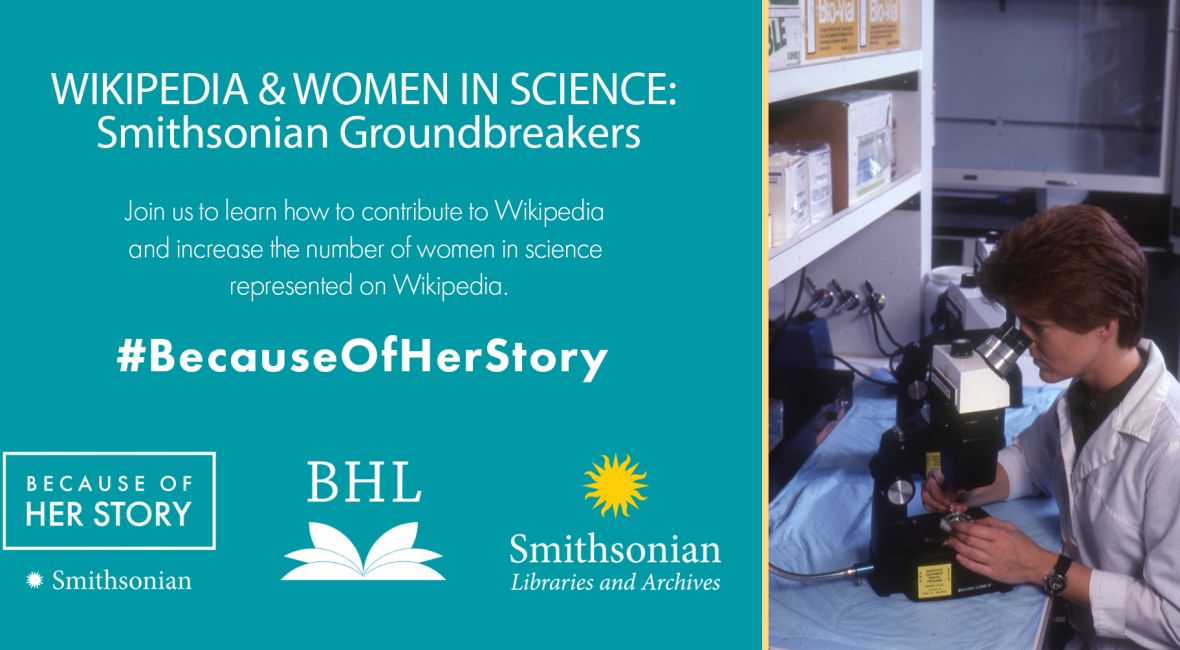
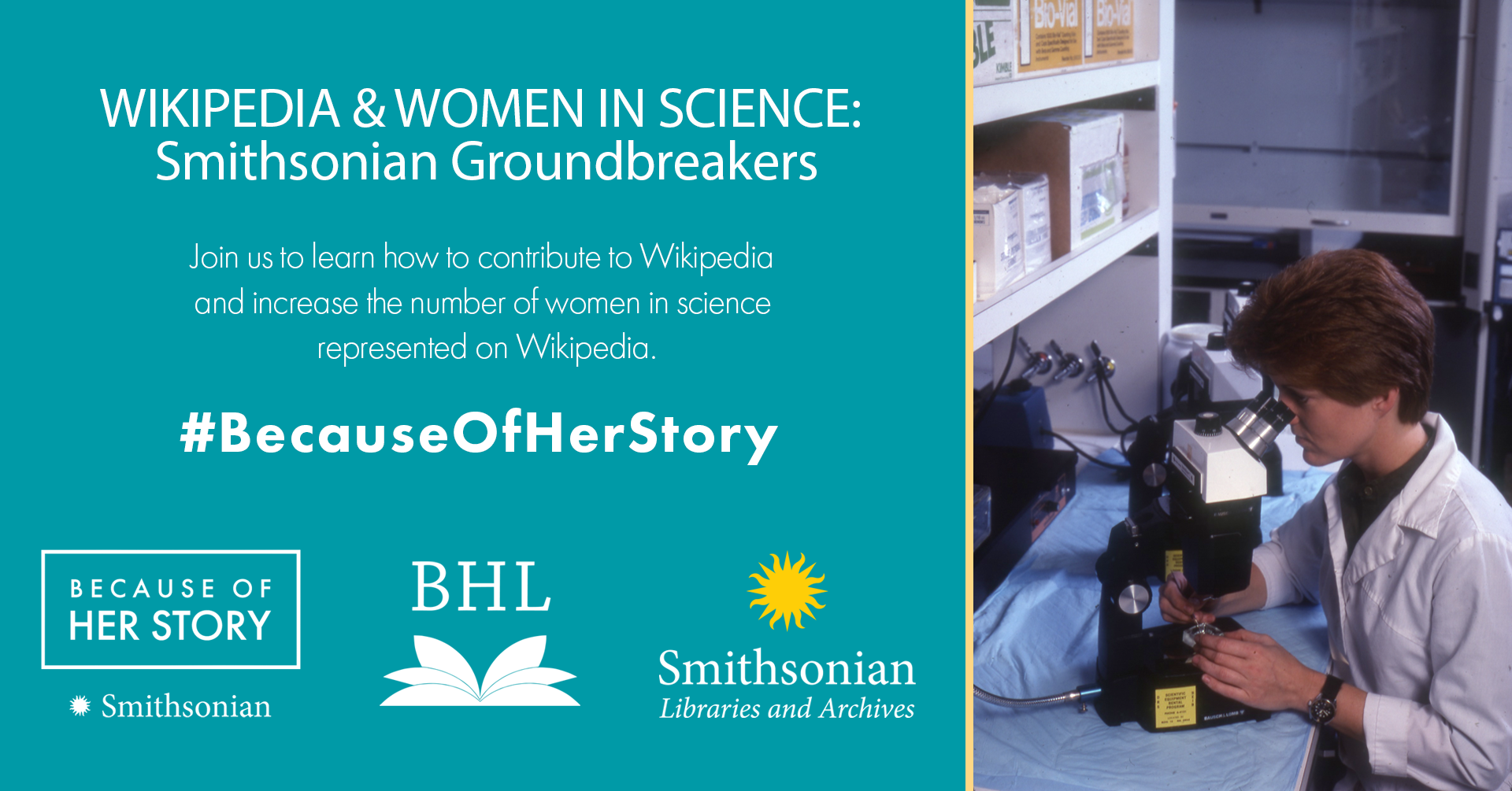
graphic for women in science wikipedia workshop

Photo in graphic shows Dr. JoGayle Howard working with embryos from the National Institutes of Health at the dissecting microscope in 1982. Photo Credit: Smithsonian Institution Archives.

Join us on 25 March 2021 (1-3pm ET) for Wikipedia & Women in Science: Smithsonian Groundbreakers Edit-a-thon, an online Wikipedia editing workshop hosted in conjunction with the Smithsonian American Women’s History Initiative and the Smithsonian Institution Archives, part of Smithsonian Libraries and Archives.

When? 25 March 2021, 1-3pm ET

Where? Online

Register Today!

During this training, attendees of all experience levels will learn the basics of how to edit Wikipedia by updating articles related to the history of women in science at the Smithsonian Institution in connection with the Funk List. Presenters will share how editors might research the work of these women in the absence of personal papers and institutional records.

As one of the web’s most visited reference sites, Wikipedia serves as a starting point for many individuals looking to learn about art, history, and science. However, less than 19% of Wikipedia biographies in English represent women, and less than 10% of Wikipedia editors identify as women. By increasing representation of women scientists on the site, your impact can spark the curiosities of future generations who see themselves in these Smithsonian groundbreakers.

This event is planned in conjunction with the Smithsonian Institution Archives, the Biodiversity Heritage Library, and the Smithsonian American Women’s History Initiative, a multiyear undertaking to document, research, collect, display, and share the history of women in the United States.

March 8, 2021by michelle.underhill
Blog Reel, Campaigns, Her Natural History

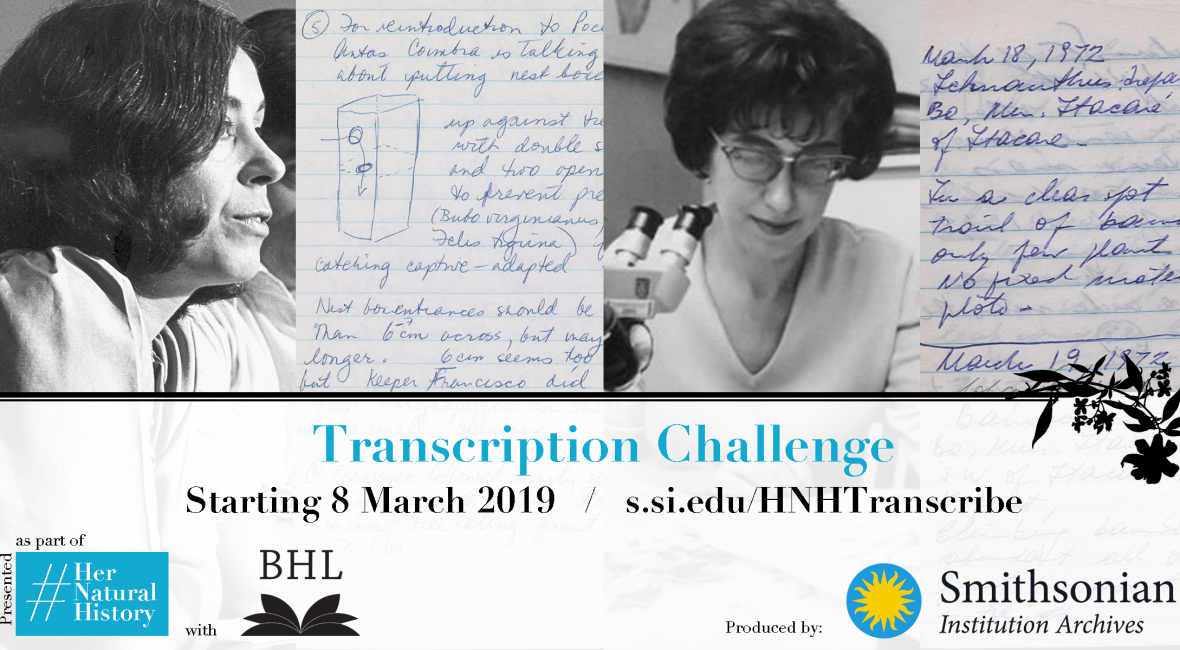
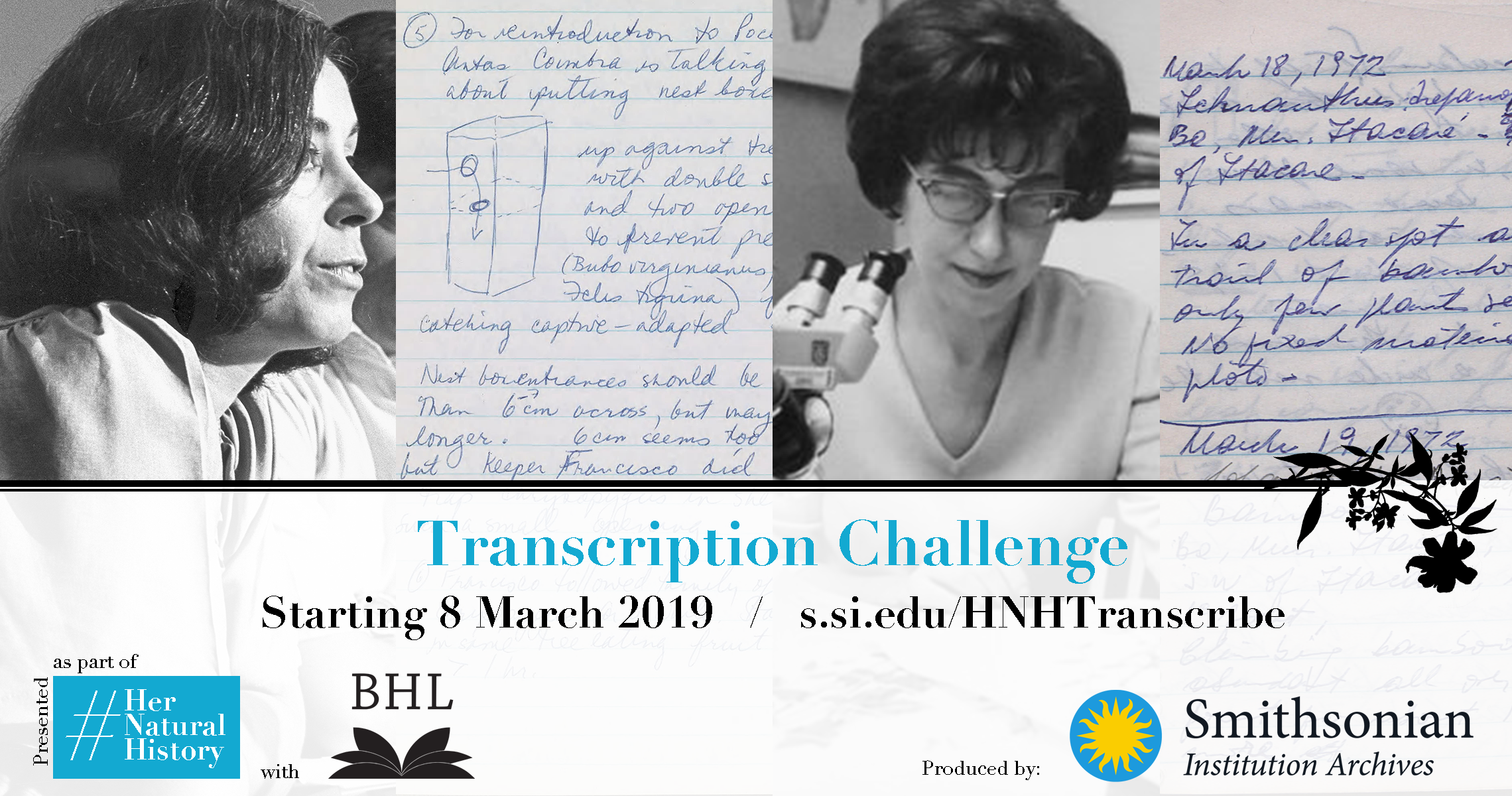
Transcribe Field Notes by Female Naturalists with the #HerNaturalHistory Transcription Challenge

L to R: Photo of Devra Kleiman by Hirshfeld, Max, 1978, Smithsonian Archives – History Div, 94-8340; Page from Kleiman field book (Brazil notebook, 1975-1982); Photo of Cleofé E. Calderón, Smithsonian Institution Archives, SIA Acc. 11-008, Box 02, Image No. OPA-90; Page from Calderón field book (Brasil 1972, 1).

Looking for a challenge? The Smithsonian Institution Archives and the Smithsonian Transcription Center are teaming up for a #HerNaturalHistory-themed transcription challenge. Starting today (8 March), help a team of #volunpeers transcribe field notes from conservation biologist Devra Kleiman and botanist Cleofé Calderón. Dive into observations of golden lion tamarins with Kleiman, who worked at Smithsonian’s National Zoological Park from 1972 to 2001. And head to South America with Calderón to collect grasses for Smithsonian’s Department of Botany.

When? Starting TODAY, 8 March 2019
Where? Smithsonian Transcription Center. The field notes are available on the Smithsonian Institution Archives project page.

The Smithsonian Institution Archives has launched 11 field books on the Smithsonian Transcription Center. Throughout the month, additional field books will be added as others are completed. Our goal is to fully transcribe 18 field books in total (9 from each woman) by the end of March.

These transcriptions will also make the corresponding digitized field books in the Biodiversity Heritage Library more discoverable, as they can be uploaded in place of the automatically-generated OCR text in BHL to allow the field books to be full-text searchable. This will make it easier for researchers and the public to explore these valuable primary source materials and access specific information from their pages.

We hope you’ll join our #HerNaturalHistory transcription challenge to help improve access to and discoverability of the primary research of two female naturalists. Continue reading to learn more about Kleiman and Calderón.

This challenge is presented as part of the #HerNaturalHistory campaign — an international social media campaign produced in collaboration with BHL partners to celebrate women in natural history. Visit the Her Natural History webpage to learn more about this and other events and programming occurring all month long.

Devra Kleiman

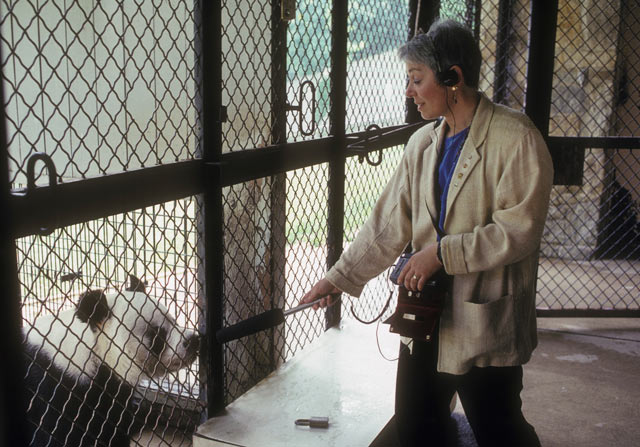
Giant Panda researcher Devra Kleiman records Hsing-Hsing’s vocalizations during breeding season, 1991, by Jessie Cohen, C-type print, National Zoo, Image ID: 614-95JC.

Conservation biologist Devra G. Kleiman (1942-2010) was the first female scientist at the National Zoological Park (NZP). She was hired by NZP in 1972 to manage the zoo’s captive breeding program. Much of her research focused on the captive breeding of giant pandas and the reintroduction of golden lion tamarins to the wild. Over her career at the zoo, she served as Assistant Director for Animal Programs, Assistant Director of Zoological Research and Education, Assistant Director of Research, Assistant Director of Zoological Research, and Senior Scientist. She authored approximately 150 manuscripts and two books.[1]

Smithsonian Institution Archives holds a large collection of archival materials documenting Kleiman’s research and professional activities. Many of her field books have been digitized in the Biodiversity Heritage Library as part of the Smithsonian Field Book Project.

Cleofé Calderón

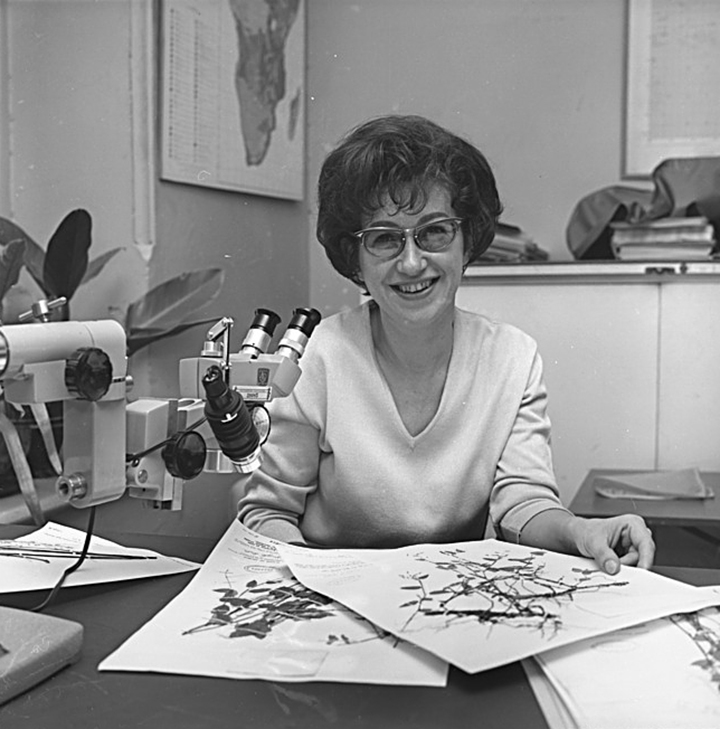
Visiting Argentine botanist Cleo Calderón with plant specimens and microscope. 1965.
From 120mm black and white negative. Smithsonian Institution Archives, SIA Acc. 11-008, Box 02, Image No. OPA-90.

Botanist Cleofé Calderón (1929-2007), born in Buenos Aires, Argentina, studied with renowned agrostologist Prof. Ing. Lorenzo Parodi at the University of Buenos Aires. She was introduced to Dr. Thomas R. Soderstrom, Curator of Grasses in the Department of Botany at the U.S. National Herbarium at the Smithsonian, during a trip to Washington, D.C. in 1961-62. The two began a close collaboration, and Calderón became a prominent botanist specializing in bamboo. With support from the Smithsonian, the Office of Scientific Affairs of the Organization of American States, and the National Geographic Society, Calderón conducted extensive field work in Central and South America, collecting plant specimens in Panama, Costa Rica, Ecuador, Colombia, and Brazil between 1966 and 1982. One of her most significant finds was the “re-discovery” of Anomochloa marantoidea, a small species of bamboo last seen in the late 1840s.[2]

Smithsonian Institution Archives holds a collection of field books documenting Calderón’s botanical research in Brazil, Panama, and Colombia between 1967 and 1981. Many of these have been digitized in the Biodiversity Heritage Library as part of the Smithsonian Field Book Project.

References

[1] Smithsonian Institution Archives. 2018. “Kleiman, Devra G.” Finding Aid, November 5. Accessed on February 28, 2019. https://siarchives.si.edu/collections/siris_arc_302446.

[2] Smithsonian Institution Archives. 2019. “Calderón, Cleofé E.” Collections. Accessed on February 28, 2019. https://siarchives.si.edu/collections/auth_per_fbr_eacp248.

March 8, 2019by michelle.underhill

Help Support BHL

BHL's existence depends on the financial support of its patrons. Help us keep this free resource alive!

search

About BHL

The Biodiversity Heritage Library (BHL) is the world’s largest open access digital library for biodiversity literature and archives. BHL operates as a worldwide consortium of natural history, botanical, research, and national libraries working together to digitize the natural history literature held in their collections and make it freely available for open access as part of a global “biodiversity community.”

Join Our Mailing List

Sign up to receive the latest news, content highlights, and promotions.

Subscribe Now

Subscribe to Blog via Email

Enter your email address to subscribe to this blog and receive notifications of new posts by email.

Join 319 other subscribers

Subscribe to Blog Via RSS

Subscribe to the blog RSS feed to stay up-to-date on all the latest BHL posts.

Access RSS Feed

Inspiring Discovery through Free Access to Biodiversity Knowledge.

The Biodiversity Heritage Library makes it easier than ever for you to access the information you need to study and explore life on Earth…for free, anytime, anywhere.


64+ Million Pages of
Biodiversity Literature Online.

EXPLORE

Tools and Services
to Transform Research.

EXPLORE

300,000+
Illustrations on Flickr.

EXPLORE

ABOUT | HARMFUL CONTENT | PRIVACY | SITE MAP | TERMS OF USE