Biodiversity Heritage Library - Program news and collection highlights from BHL
  • Home
  • News
  • Featured Books
    • All Featured Books
    • Book of the Month Series
    • BHL at 20
  • User Stories
  • Campaigns
    • Fossil Stories
    • Garden Stories
    • Monsters Are Real
    • Page Frights
    • Her Natural History
    • Earth Optimism 2020
  • Tech Blog
  • Visit BHL
Home
News
Featured Books
    All Featured Books
    Book of the Month Series
    BHL at 20
User Stories
Campaigns
    Fossil Stories
    Garden Stories
    Monsters Are Real
    Page Frights
    Her Natural History
    Earth Optimism 2020
Tech Blog
Visit BHL
  • Home
  • News
  • Featured Books
    • All Featured Books
    • Book of the Month Series
    • BHL at 20
  • User Stories
  • Campaigns
    • Fossil Stories
    • Garden Stories
    • Monsters Are Real
    • Page Frights
    • Her Natural History
    • Earth Optimism 2020
  • Tech Blog
  • Visit BHL
Biodiversity Heritage Library - Program news and collection highlights from BHL
BHL News, Blog Reel, User Stories

A New Snail Species Named in Honor of BHL!

A new land snail species from Laos has been named in honor of the Biodiversity Heritage Library!

View Full Size Image
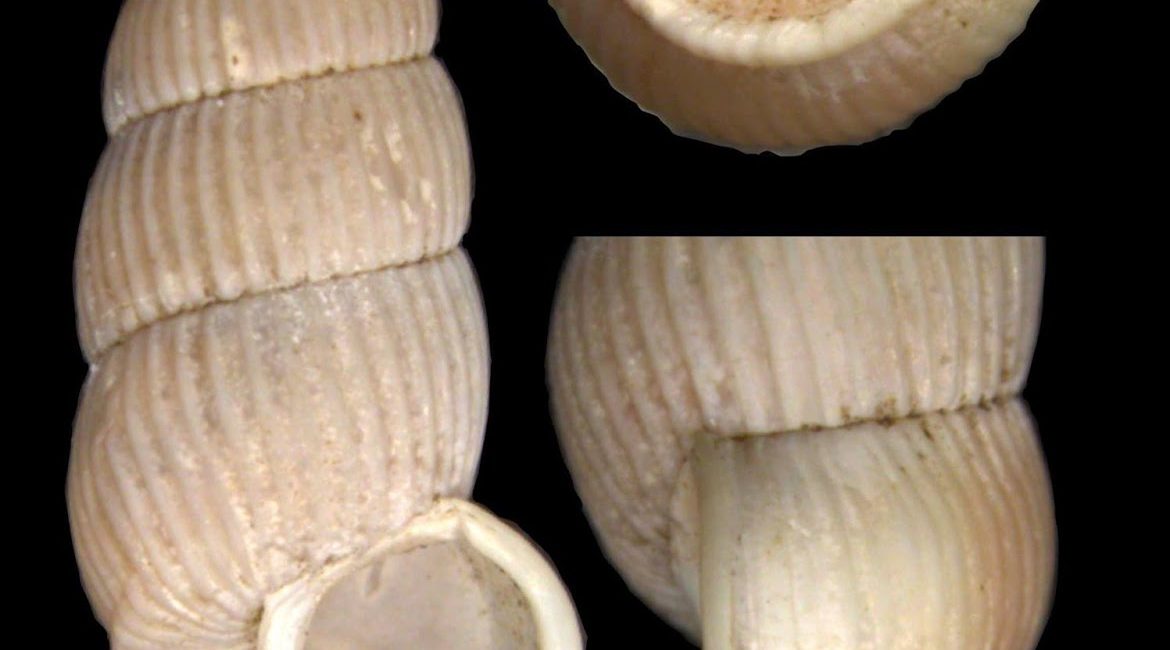
Vargapupa biheli, named in honor of BHL. Image courtesy Dr. Barna Páll-Gergely.

Vargapupa biheli, a medium-sized, slender turriform species with a well developed basal keel, was described in the article “Revision of the Genus Pseudopomatias and its Relatives (Gastropoda: Cyclophoroidea: Pupinidae” in Zootaxa: 3937(1), 2015, by Barna Páll-Gergely, Zoltán Fehér, András Hunyadi, and Takahiro Asami.

The species is part of a newly-described genus, also articulated within this article, Vargapupa, which includes this and one other newly-described species, Vargapupa oharai, both species of which are known from the northern Annamese Mountains in Northern Vietnam and Laos.

Dr. Barna Páll-Gergely, the lead author on the paper and a Biologist in the Department of Biology at Shinshu University in Japan, uses BHL as part of his daily work and has been profiled in the past on our blog. Deeply appreciative of the services BHL provides, Páll-Gergely decided to dedicate the new species to the Biodiversity Heritage Library, writing in the Zootaxa paper:

“The new species is named after the Biodiversity Heritage Library (www.biodiversitylibrary.org) to thank the multitude of rare literature made available to us. The name “biheli” is an acronym derived from the name BIodiversity HEritage Library.”

Dr. Páll-Gergely’s current research focuses on the taxonomy of some land snail groups (genera and families) of East Asia. According to Páll-Gergely,

“Most species of this area were described at the end of the 19th and the beginning of the 20th centuries…with poor locality data, based on a few empty shells, and many of them have not been sufficiently illustrated. Therefore, whenever I want to describe new species, I have to examine the type specimens of every known species in museum collections and compare [them] with the material I have. My aim is to accumulate as many information on a particular group of snails as possible. I try to find morphological characters which help to distinguish species from each other and to categorized them into genera, tribes and families properly.”

The story of Páll-Gergely’s discovery of Vargapupa biheli began with the examination of a few shells of a Pseudopomatias species that his friend, András Hunyadi, collected in Vietnam. As Páll-Gergely explained:

“[András] told me they were possibly new species, so I started to compile all [available] literature about this genus. During my investigation I found a publication written by the French geologist and archaeologist Edmond Saurin (1904 -1977) in 1953 about some Laotian land snails. In the introduction, he mentioned that he collected Pseudopomatias fulvus in Laos, but no other information was written about that sample. I knew that Pseudopomatias fulvus was known from a small area in northeastern Vietnam, so the Laotian sample mentioned by Saurin was important to examine. I loaned it from the Paris museum, and when I first saw Saurin’s sample, later named Vargapupa biheli, it was immediately clear that it was new to science.”

According to Páll-Gergely, both new Vargapupa species differ from other members of the Pseudopomatias genus due to the presence of keels in their shells. Vargapupa biheli has a strange keel on the basal part of its shell, while Vargapupa oharai displays this and a second, lower keel. The keel is absent in the genus Pseudopomatias, thus indicating the need for a new genus: Vargapupa. External morphological and locality data is currently the only information available for these two new species; nothing is known of their behavior, diet, etc.

View Full Size Image
Left: A Pseudopomatias species without a basal keel (P. amoenus); Middle: Vargapupa oharai; Right: Vargapupa biheli. Both Vargapupa species possess a basal keel (indicated with an arrow). Image courtesy Dr. Barna Páll-Gergely.

While Páll-Gergely’s confirmation of Vargapupa biheli as a new species involved an examination of a specimen labeled as Pseudopomatias fulvus, which he loaned from the Muséum National d’Histoire Naturelle in Paris, the story of how that specimen came to be in the museum’s collection is quite a tale!

In the 1970s, Dr. Philippe Bouchet, a biologist at the Muséum National d’Histoire Naturelle, stumbled upon four obscure articles on the Pyramidellidae (a family of microgastropods that parasitize other marine invertebrates) of Vietnam by Edmond Saurin, published between 1958-62. The articles together described 210 new species of Pyramidellidae, but the type specimens that those species were based upon were missing. Bouchet set out to track them down, and through various communications finally discovered an old address for Edmond Saurin at the Château du Roussier in France. Bouchet wrote a letter to the address, inquiring after the types and whether Saurin would be willing to deposit them at the museum. Two weeks later, he received a reply from Madame Saurin, indicating that her husband had died two years earlier and that, while she did not know where the types might be, Bouchet was welcome to visit her home and comb through the attic in search of them.

Two months later, Bouchet and a museum technician named Annie arrived at the Château du Roussier, where they were warmly greeted by Madame Saurin, who, over a glass of port, told them of her trip with her husband to Indochina in 1937 – an adventure that involved crossing the Red Sea with the infamous French adventurer and arms smuggler, Henry de Monfreid! In the 1950s, Saurin became fascinated with microsnails, and it was during this period that he collected the many specimens described in his papers. Following her tales, as Bouchet related to Páll-Gergely,

“[Madame Saurin] said, ‘time is running and you would like to see if you can find the Pyramidellid types before it gets dark, wouldn’t you?’ She took me to the very large attic of their very large mansion. It was full of cabinets, crates and boxes, and she said she had no idea if it would be there. It was like searching for a pin in a haystack. So, I started searching cabinets with small drawers and, knowing the habits of collectors of the time, small boxes, like cigar boxes etc. In fact I found the Pyramidellid types in less than 10 minutes! Some tubes had suffered, but overall I rescued about 80% of Saurin’s Pyramidellid types, and at this occasion discovered that he had also amassed land snails, which Mme Saurin was happy to donate as well to Muséum National d’Histoire Naturelle. All the material was wrapped in newspaper cuts with place names scribbled in almost illegible handwriting across the print: clearly valuable scientific material but difficult to use! So we employed a Vietnamese student to curate this material, i.e. read place names, transcribe them on proper museum labels, and the result is what you have on loan.”

In total within the Zootaxa article, Páll-Gergely and his co-authors describe eleven species new to science, nine of which were found in the collection of the Natural History Museum, London, and in the Muséum National d’Histoire Naturelle, Paris. Eight of those nine were collected over a century ago, while Vargapupa biheli was collected, as described above, in the 1950s. Thus, this paper demonstrates the extreme importance of museum collections, not only for preserving known specimens but also as repositories of unknown new species. As Páll-Gergely expressed, “These century-old shells are not only important pieces for natural science, but in the same time, they are interesting pieces of human history.”

Going forward, Páll-Gergely plans to continue the revision of other south-east Asian land snail genera, examining type specimens, comparing them with newly collected specimens, and finally “describing species which are the result of millions of years of evolution on Earth.” Museum collections, and the historic literature contained in BHL, will continue to constitute a major part of that work.

View Full Size Image
Dr. Barna Páll-Gergely.

We at BHL are deeply humbled at Páll-Gergely’s recognition of BHL’s contributions through his newly-described species, Vargapupa biheli. According to Páll-Gergely, this is a well-deserved recognition:

“Simply speaking we need three main things for a taxonomy: (1) type specimens of known species deposited in museums, (2) previously not examined material, and (3) literature. BHL provided nearly all the literature we needed, because in most south-east Asian land snails groups most species were described before 1920. We may think it is natural to have old literature online, but if we didn’t, we would have serious trouble finding the relevant publications. Therefore I thought BHL definitely deserves a new species named after it for the help it provided.”

We are pleased to say that BHL not only hosts a vast library of life on Earth, it is now a part of that library.

Special thanks to Dr. Barna Páll-Gergely and Dr. Philippe Bouchet for their significant contributions to this post, and especially to Dr. Páll-Gergely for his recognition of BHL. The information about the discovery of Saurin’s type specimens was relayed by Dr. Bouchet to Dr. Páll-Gergely and gleaned from Dr. Bouchet’s book: Bouchet, P. and G. Mermet, 2008. Shells. Abbeville Press, New York. 164 pp.

April 16, 2015by ulib-libraryjobs
Blog Reel, User Stories

BHL and Our Users: Dr. Thomas Carefoot

View Full Size ImageAfter a short break during which we featured various posts related to the Life and Literature conference, we again resume our BHL and Our User series, kicking things off again with Dr. Thomas Carefoot, a marine biologist and the author of the delightful educational website on west-coast marine invertebrates, A Snail’s Odyssey.

What is your title, institutional affiliation, and area of interest?

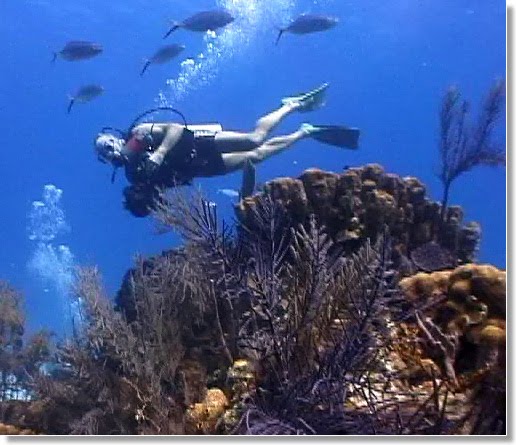
I am retired from a 35-year teaching and research position in marine biology at the University of British Columbia, Canada. My research specialties include the study of a group of marine snails known as sea hares, and I have sought them out in many tropical areas of the world. I am well versed on invertebrate marine life, most notably on the Pacific west coast, but also throughout the Caribbean, Indo- Pacific, and other tropical areas. I enjoy talking and lecturing about marine invertebrates, and a few years before retirement was awarded the University’s prestigious Master Teacher Award. I have written 2 books on marine ecology, authored some 90 research papers, and have recently produced a large educational website on west-coast marine invertebrates called A Snail’s Odyssey. I am currently working on an equally large educational website called the Biology of Caribbean Coral Reefs.

How long have you been in your field of study?

For over 50 years, from commencement of an Honours BSc programme at the University of British Columbia (UBC), leading to an MSc degree at the same institution, and followed by a doctorate at the University of Wales, all in the field of marine biology. My first job was at the Marine Sciences Centre, McGill University, followed by an appointment to the Zoology Department at UBC in 1969. As part of the McGill experience was one year’s appointment as Director of the Bellairs Research Institute in Barbados. In total, I have spent about 3 years in the Caribbean, have visited all but a handful of the major islands, and have SCUBA-dived on most Caribbean reef systems.

When did you first discover BHL?

Several years ago when I first started researching scientific articles on west-coast marine invertebrates for my website A Snails’ Odyssey.

What is your opinion of BHL and how has it impacted your research?

BHL provides an excellent service for studies of marine and other biodiversity. However, as my research interests are not in biodiversity per se, I use the service only for accessing pertinent literature on west-coast and coral-reef marine invertebrates for inclusion in my educational websites.

How often do you use BHL?

About once a week.

How do you usually use BHL (read the titles online/download whole PDFs/Selecting Pages to Download for a custom PDF/etc.)

For downloading articles from journals.

What are your favorite features/services on BHL?

The only one that I have regularly used is the PDF downloading privilege.

If you could change one thing about BHL, what would it be, or what developmental aspect would you like the BHL team to focus on next?

I would streamline the system for downloading PDFs. It is currently time-consuming and “out of synch” with similar accessing systems for other scientific journals. For example, the journal I most access at BHL is the Journal of Shellfish Research (JSR), which is presently most easily “downloadable” as entire volumes. It would be a relatively easy job to split each volume into its component research papers, format these as PDFs, and have an accessing system along the lines of other journal publishers. I realize that JSR is just one of the many journals in the BHL, but it would be a start.

Thank you, Dr. Carefoot, for sharing your experience and resources with us! Be sure to check out A Snails’ Odyssey, which chronicles the whimsical story of an upper intertidal snail who, finding himself mistakenly cast into the deep waters of the ocean, slowly but steadily makes his way back home to shallower waters. Along the way he encounters many different marine species, which offer a plethora of opportunities for discovery for both the snail and the reader. For each species, there is a short cartoon animation meant to give a light-hearted introduction to the animal, and a scientific Learnabout, which offers more in-depth information, including summaries of a multitude of scientific papers written about the invertebrates. It’s a fun, educational site for all ages.
December 6, 2011by ulib-libraryjobs

Help Support BHL

BHL's existence depends on the financial support of its patrons. Help us keep this free resource alive!

search

About BHL

The Biodiversity Heritage Library (BHL) is the world’s largest open access digital library for biodiversity literature and archives. BHL operates as a worldwide consortium of natural history, botanical, research, and national libraries working together to digitize the natural history literature held in their collections and make it freely available for open access as part of a global “biodiversity community.”

Join Our Mailing List

Sign up to receive the latest news, content highlights, and promotions.

Subscribe Now

Subscribe to Blog via Email

Enter your email address to subscribe to this blog and receive notifications of new posts by email.

Join 319 other subscribers

Subscribe to Blog Via RSS

Subscribe to the blog RSS feed to stay up-to-date on all the latest BHL posts.

Access RSS Feed

Inspiring Discovery through Free Access to Biodiversity Knowledge.

The Biodiversity Heritage Library makes it easier than ever for you to access the information you need to study and explore life on Earth…for free, anytime, anywhere.


64+ Million Pages of
Biodiversity Literature Online.

EXPLORE

Tools and Services
to Transform Research.

EXPLORE

300,000+
Illustrations on Flickr.

EXPLORE

ABOUT | HARMFUL CONTENT | PRIVACY | SITE MAP | TERMS OF USE