Biodiversity Heritage Library - Program news and collection highlights from BHL
  • Home
  • News
  • Featured Books
    • All Featured Books
    • Book of the Month Series
    • BHL at 20
  • User Stories
  • Campaigns
    • Fossil Stories
    • Garden Stories
    • Monsters Are Real
    • Page Frights
    • Her Natural History
    • Earth Optimism 2020
  • Tech Blog
  • Visit BHL
Home
News
Featured Books
    All Featured Books
    Book of the Month Series
    BHL at 20
User Stories
Campaigns
    Fossil Stories
    Garden Stories
    Monsters Are Real
    Page Frights
    Her Natural History
    Earth Optimism 2020
Tech Blog
Visit BHL
  • Home
  • News
  • Featured Books
    • All Featured Books
    • Book of the Month Series
    • BHL at 20
  • User Stories
  • Campaigns
    • Fossil Stories
    • Garden Stories
    • Monsters Are Real
    • Page Frights
    • Her Natural History
    • Earth Optimism 2020
  • Tech Blog
  • Visit BHL
Biodiversity Heritage Library - Program news and collection highlights from BHL
BHL News, Blog Reel

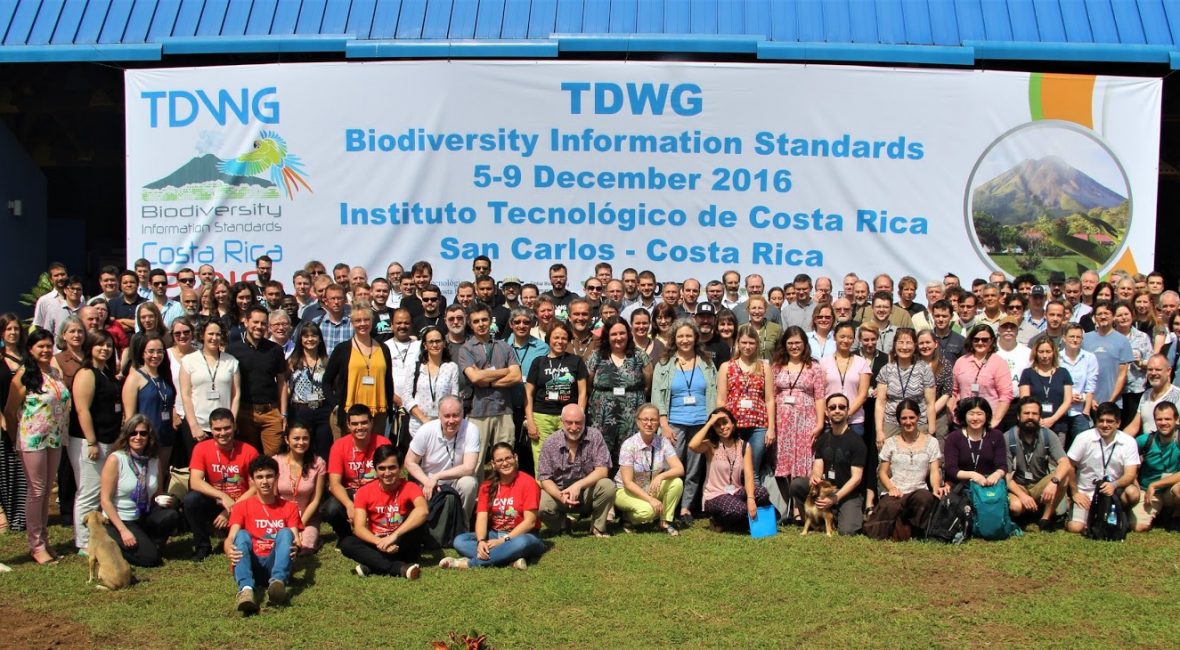
TDWG 2016 meeting, La Fortuna & Alajuela Province, San Carlos, Costa Rica

View Full Size Image
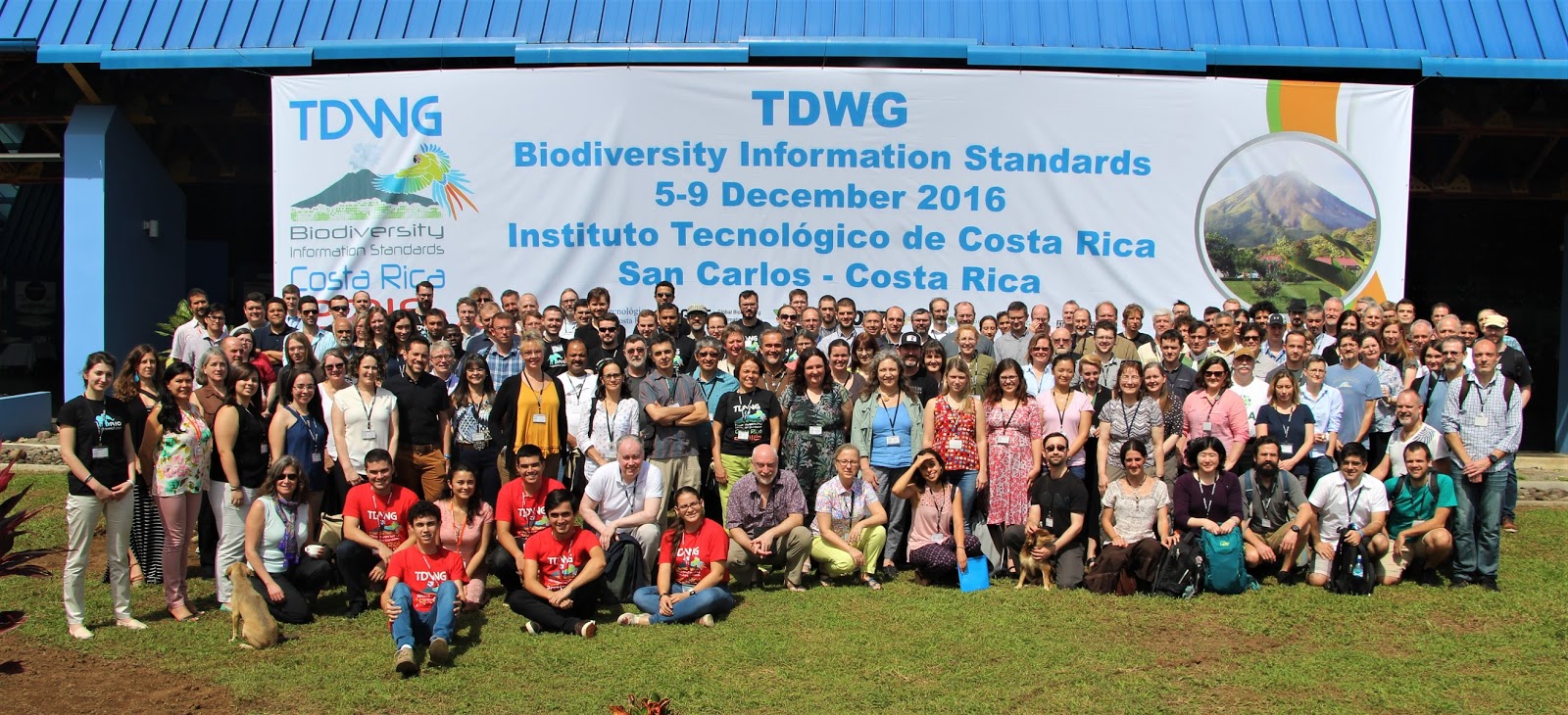
Official Photo by Denisse Vargas

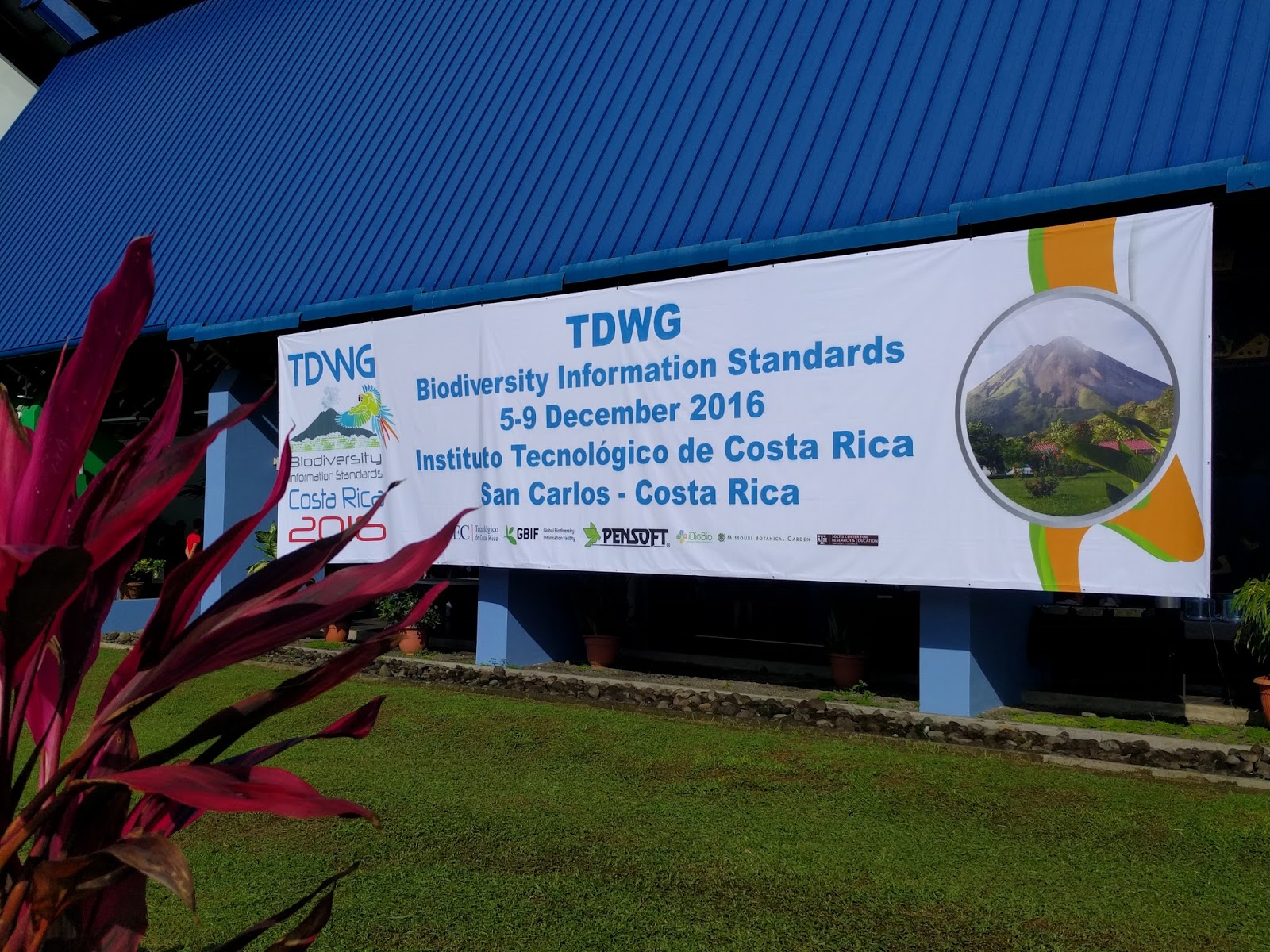
The 2016 TDWG Biodiversity Information Standards meeting was held at the Centro de Transferencia Tecnológica y Educación Continua (CTEC) in San Carlos, Costa Rica. Hotels and other activities were in La Fortuna, about a 45 minute bus ride from CTEC.

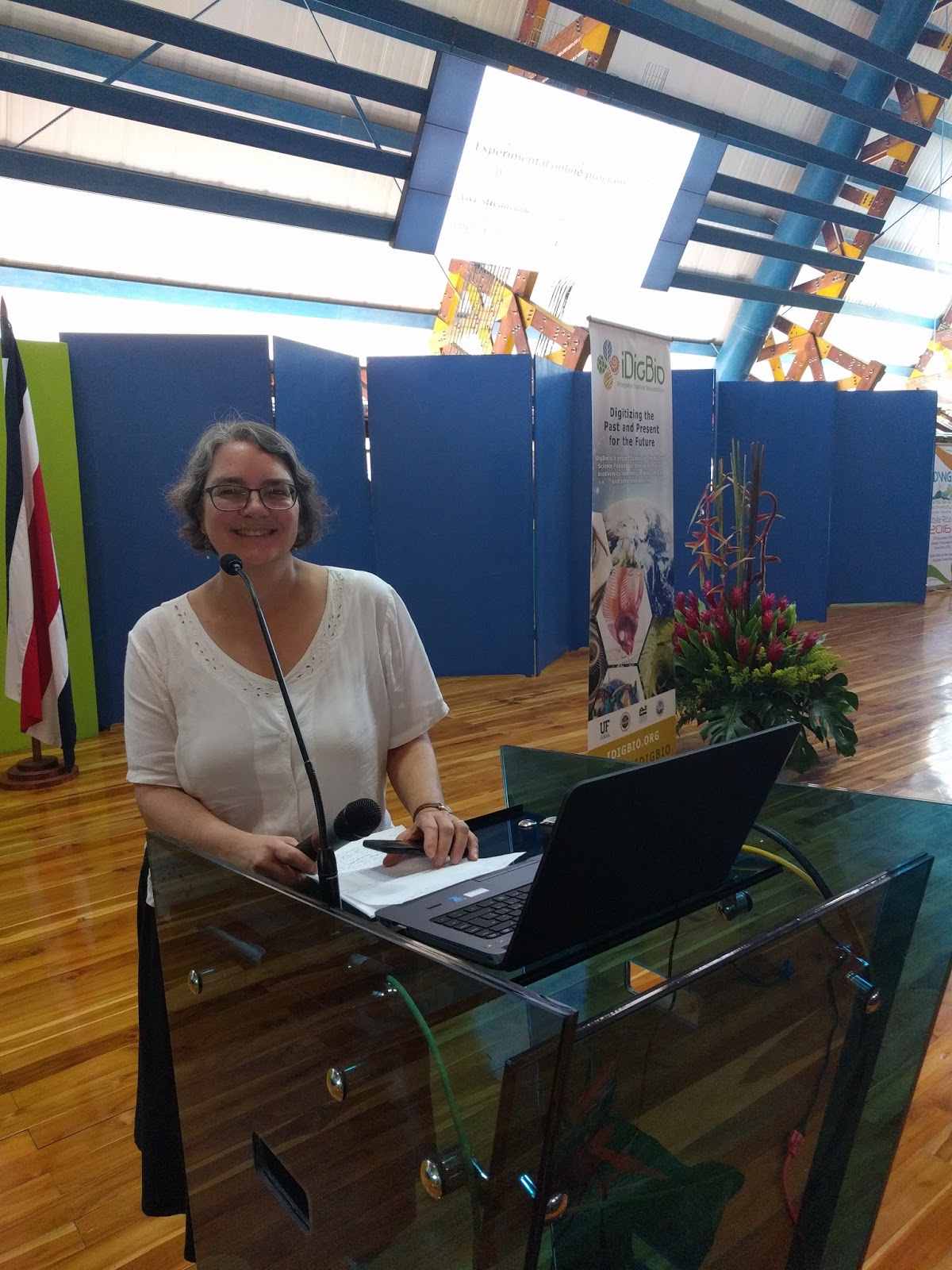
BHL was represented at the TDWG 2016 conference with a symposium, “BHL: 10 Years of Innovation and Growth”. The panel consisted of:
View Full Size Image
Constance Rinaldo
  • BHL – 10 Years and More! (Martin R. Kalfatovic)
  • BHL: Grants and Growth (Constance Rinaldo)
  • BHL-SciELO Network (Henrique Rodrigues)
  • Towards extracting occurrence data from biodiversity literature (Dmitry Schigel)
  • Questions: BHL – 10 years of innovation & growth (Discussion led by Constance Rinaldo)

The session was attended by about 70 people. The conclusion of the session was a discussion with the audience about desires for the future direction of BHL and features or services that could be implemented as BHL explores refactoring the BHL platform. Among the topics mentioned by the audience were: integration of visual resources in BHL and expanding in-copyright material.
View Full Size Image
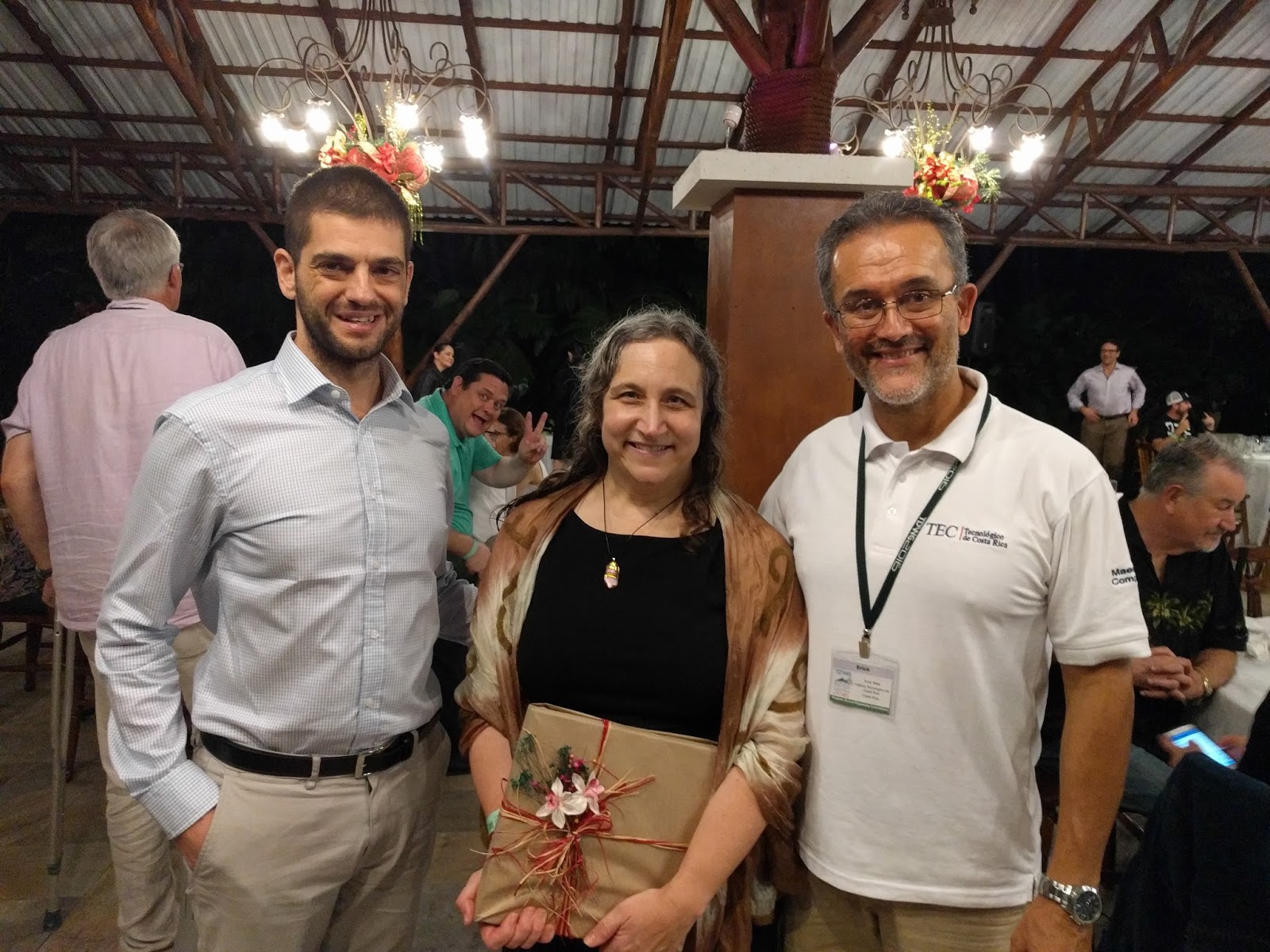
Dimitris Koureas, Cynthia Parr, Erick Mata

The TDWG organizers, led by the program committee – Dr. Erick Mata Montero (Professor, School of Computing, Costa Rica Institute of Technology); Gail Kampmeier (Prairie Research Institute, Illinois Natural History Survey, University of Illinois, USA); Francisco (“Paco”) Pando (Real Jardín Botánico-CSIC, Spain); Maria Mora Instituto (Nacional de Biodiversidad, Costa Rica); Joel Sachs (Agriculture and Agri-Food, Canada); Manuel Vargas (Instituto Nacional de Biodiversidad, Costa Rica); Stan Blum (ex-officio TDWG Coordinator); and William Ulate (ex-officio TDWG Treasurer, Missouri Botanical Garden) – delivered an excellent program.

The keynote, by Dr. Rodrigo Gámez Lobo (founder and former Director General and President of the National Biodiversity Institute) explored the future of Costa Rican biodiversity as exemplified in his work On Biodiversity, People and Utopias (1999). His talk addressed the theme of this work, in which he states, “Our real goal is to make the society come to the understanding that, because of being something that directly affects quality of life, materially, intellectually and spiritually, we must preserve at all costs the rich biodiversity of the country”.

Former BHL Technical Director William Ulate led a symposium on Semantics for Biodiversity Science: Challenges & Solutions. Ulate and co-author Riza Batista-Navarro spoke on “Real use cases for Semantic Information from the Mining Biodiversity project.”

Another important symposium was Semantics for Biodiversity Science: Text Mining & Semantic Role Tagging. Key papers included:

  • Enhancing semantic search through the automatic construction of a Biodiversity Terminological Inventory (Nhung T.H. Nguyen, Georgios Kontonatsios, Axel J. Soto, Riza Batista-Navarro, Sophia Ananiadou)
  • Geographic entities extraction from biological textual sources (Moisés Alberto Acuña-Chaves)

Another symposium of note was Semantics for Biodiversity Science: Taxon Names & Traits. Key papers included:

  • What’s in a name? Sense and reference in digital biodiversity information (Joakim Philipson)
  • Creating computable definitions for clades using the Web Ontology Language (OWL) (Gaurav Vaidya, Hilmar Lapp, Nico Cellinese)
Globally Unique Identifiers for Names (organized by Chuck Miller and Richard Pyle) included papers of interest to BHL:
  • Reviewing data integration and mobilisation using name reconciliation and identifier services (Nicky Nicolson, Robert Turner, Abigail Barker)
  •  Implementing Name Identifiers for the World Flora Online (Chuck Miller)
  • Identifiers for Biodiversity Informatics: The Global Names Approach (Dmitry Y. Mozzherin, Richard Pyle)
  • The Catalogue of Life Editor’s View on Globally Unique Identifiers for Names (Yuri Roskov)
  • Names and identifiers in the CyVerse cyberinfrastucture (Ramona L. Walls)
  • Utilizing Unique Identifiers for Taxonomic Concepts (Jeff Gerbracht)
View Full Size ImageTwo papers of interest in the contributed papers session were  a historical review of TDWG and a paper  describing a new publishing practice that relies on extraction of highly relevant details (species descriptions, for example) from longer publications.

  • TDWG Then and Now (Arturo H. Ariño, Anabel Pérez de Zabalza)
  • Nanopublications for biodiversity: concept, formats and implementation (Lyubomir Penev, Éamonn Ó Tuama, Viktor Senderov, Pavel Stoev, Teodor Georgiev)
 

View Full Size Image
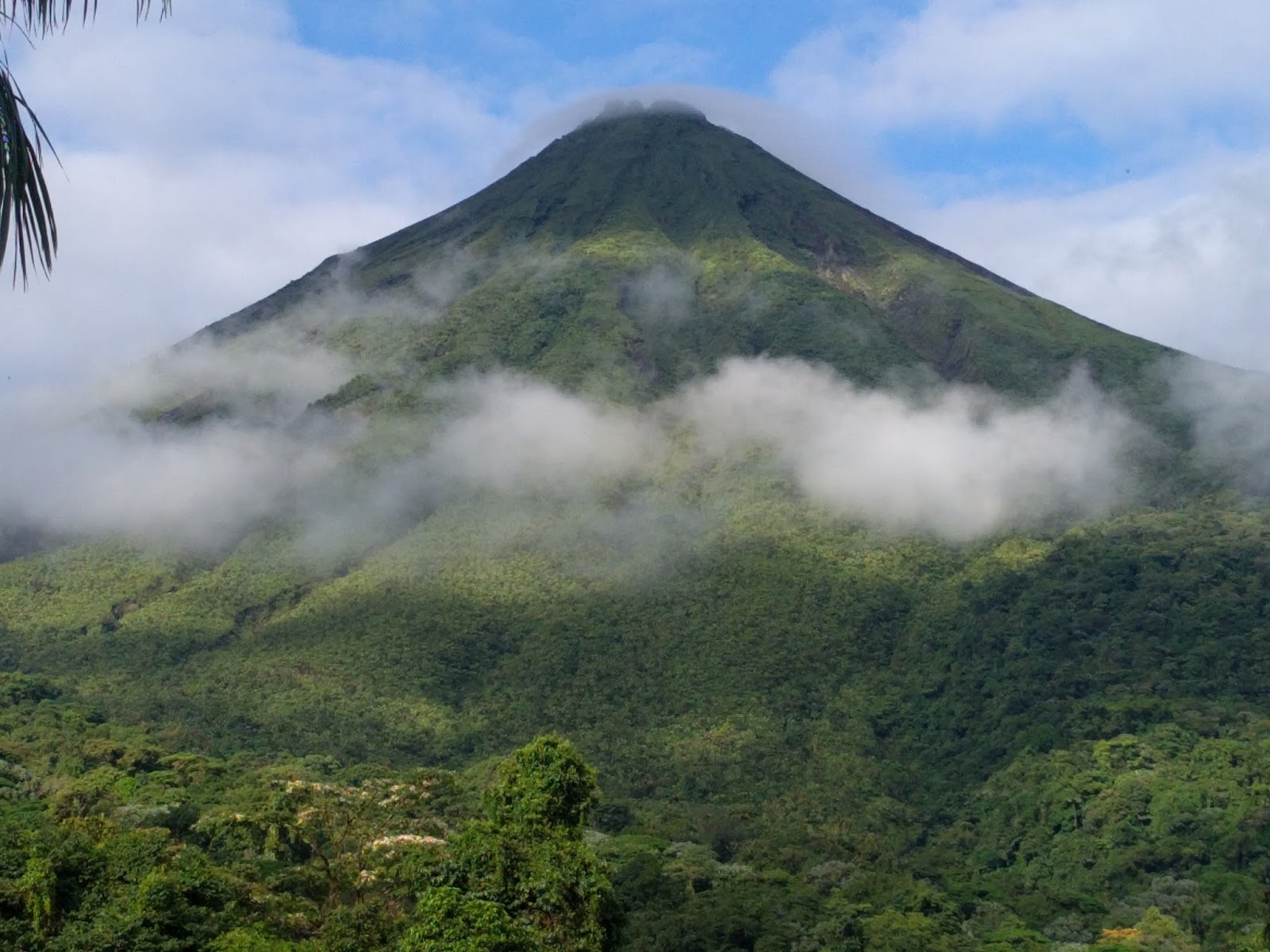
Volcán Arenal

A highlight of the meeting was the TDWG 2016 Bioblitz at the nearby Texas A&M; Soltis Center. The bioblitz helped to create a biodiversity snapshot of TDWG 2016. Participants were encouraged to take the opportunity to observe and to post their pictures of local biodiversity. The event took place in a torrential rainstorm, but the event still provided some observations and camaraderie.

There were other opportunities to see some of Costa Rica’s amazing biodiversity, among those sighted were:
View Full Size Image
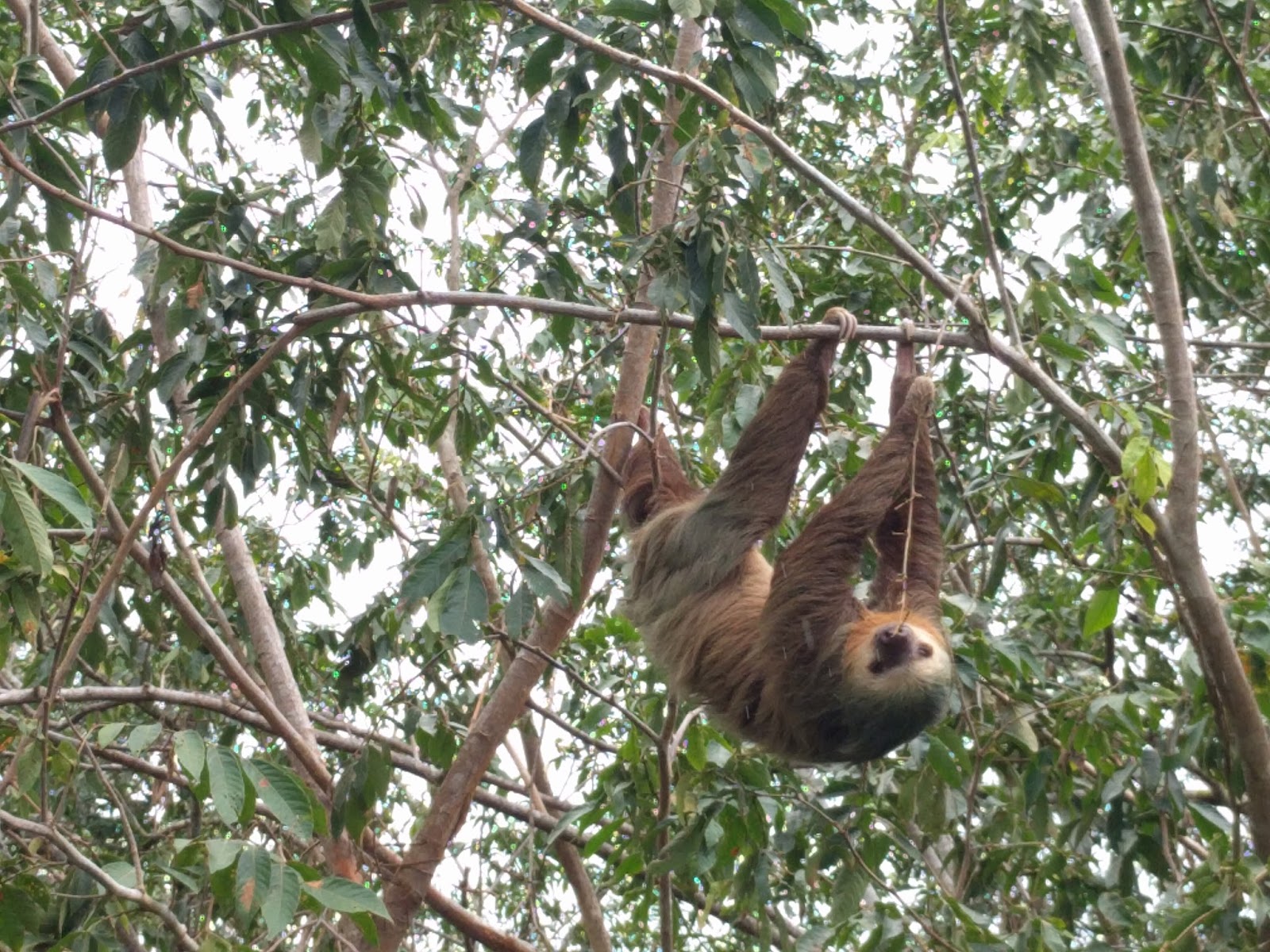
Two-toed Sloth
(Choloepus hoffmanni)

Mammals

  • Three-toed Sloth (Bradypus variegatus)
  • Two-toed Sloth (Choloepus hoffmanni)
  • White-nosed Coati (Nasua narica)
  • Mantled Howler Monkey (Alouatta palliata)
  • Spider Monkey (Ateles geoffroyi)
  • White-throated Capuchin (Cebus capucinus)
  • Long-nosed bat (Rhynchonycteris naso)
View Full Size Image
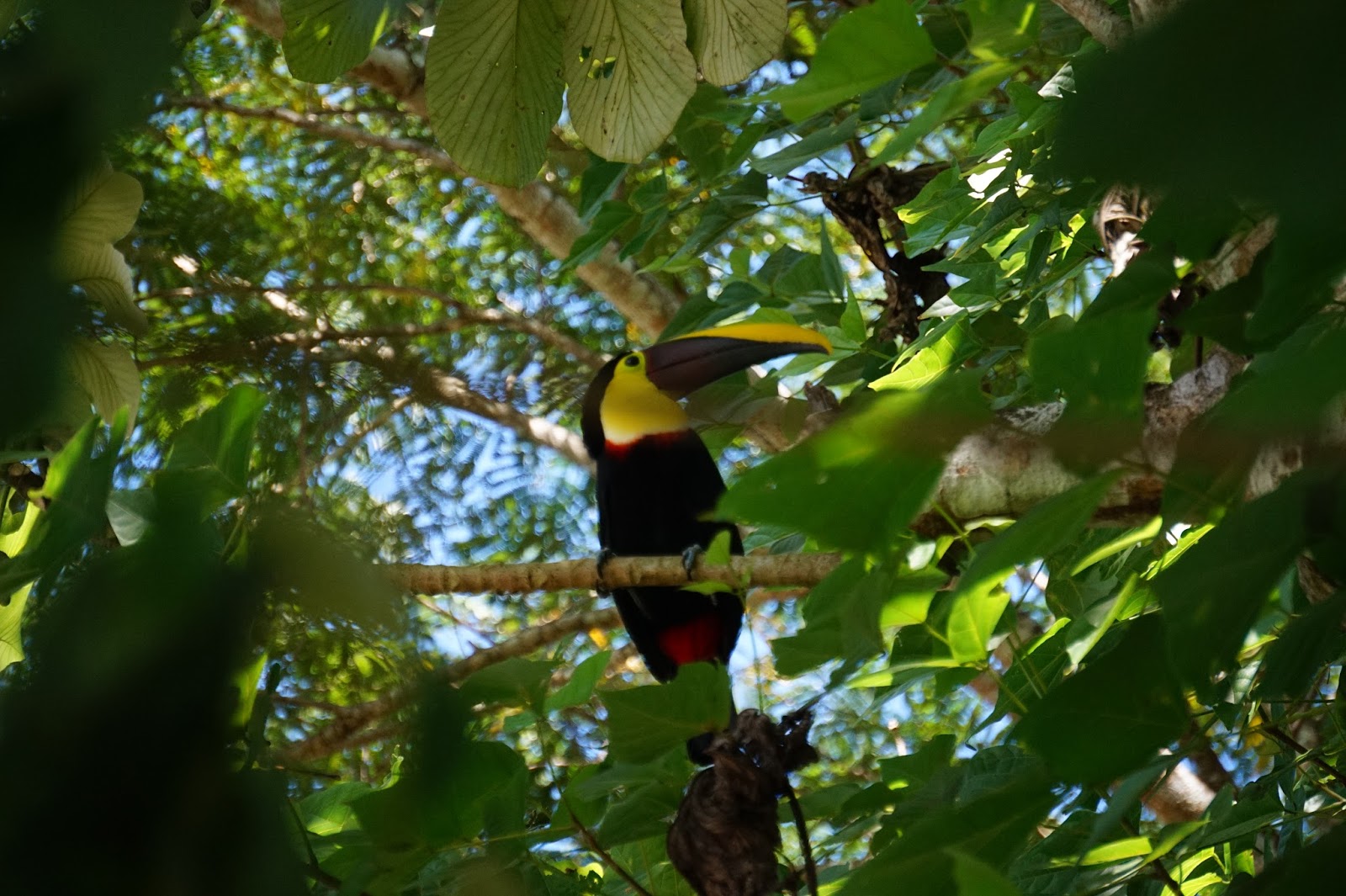
Yellow-throated Toucan
(Ramphastos ambiguus)

Birds

  • Wood Stork (Mycteria americana)
  • Little Blue Heron (Egretta caerulea)
  • Cattle Egret (Bubulcus ibis)
  • Snowy Egret (Egretta thula)
  • Northern Jacana (Jacana spinosa)
  • Turkey Vulture (Cathartes aura)
  • Groove-billed Ani (Crotophaga sulcirostris)
  • Yellow-throated Toucan (Ramphastos ambiguus)
  • Green Kingfisher (Chloroceryle americana)
  • Anhinga (Anhinga anhinga)
  • White Ibis (Eudocimus albus)
  • Boat-billed Heron (Cochlearius cochlearius)
View Full Size Image
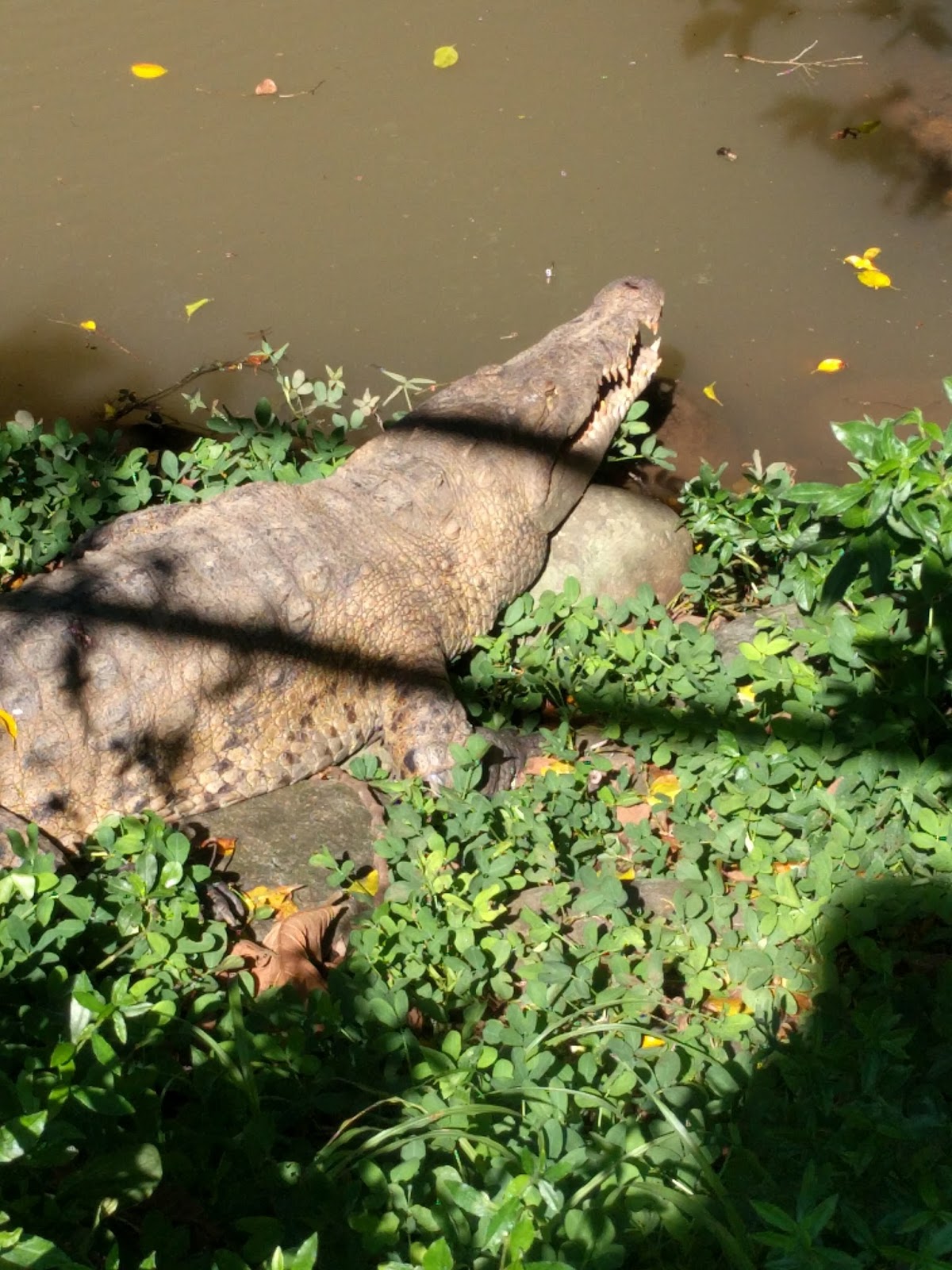
American Crocodile
(Crocodylus acutus)

Reptiles

  • Spectacled Caiman (Caiman crocodilus)
  • American Crocodile (Crocodylus acutus)
  • Emerald Basilisk (Basiliscus plumifrons)
  • Black River Turtle (Rhinoclemmys funerea)
  • Common Snapping Turtle (Chelydra serpentina)
  • Green Iguana (Iguana iguana)


December 26, 2016by joelrichard
BHL News, Blog Reel

Celebrating the Life and Contributions of Charles Davies Sherborn

View Full Size Image
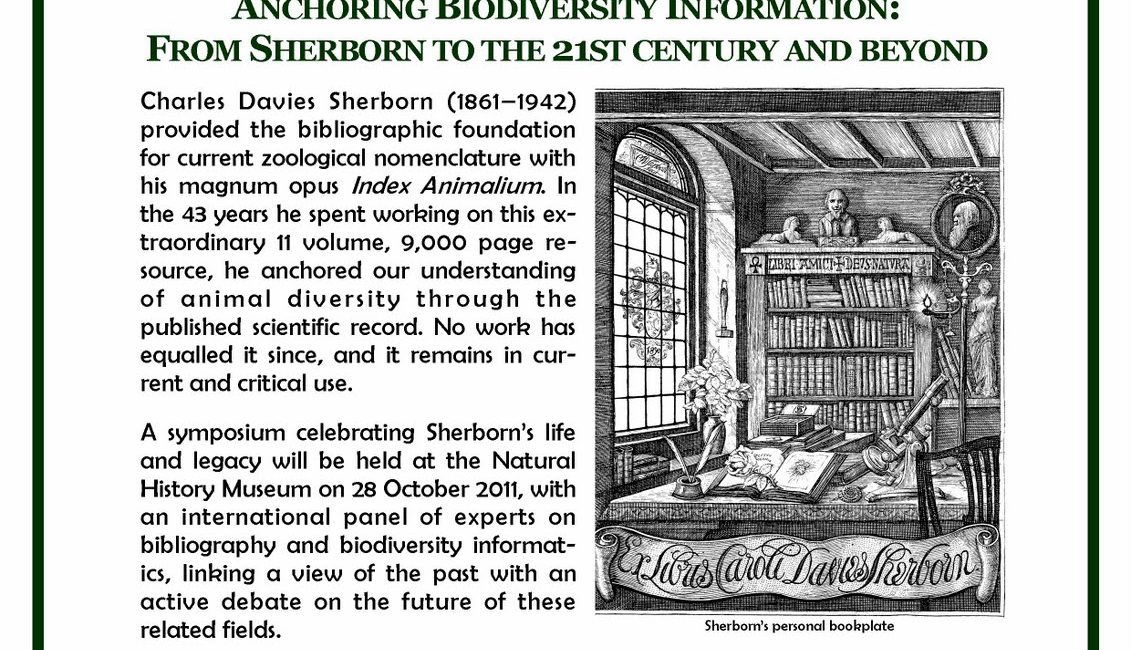
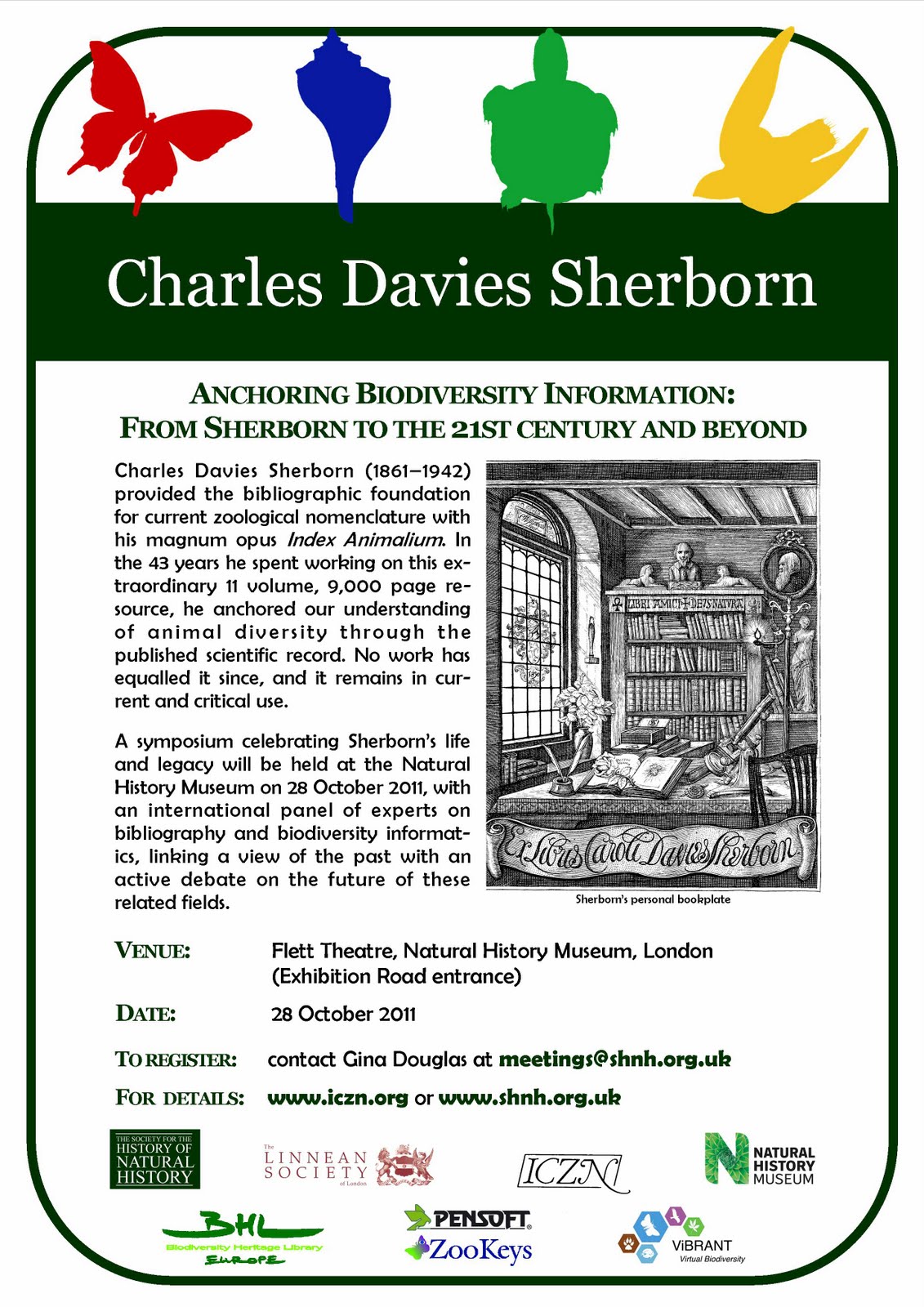
On October 28, 2011, the ICZN (International Commission on Zoological Nomenclature), in collaboration with the Society for the History of Natural History and others, hosted a symposium at the Natural History Museum, London, “Anchoring Biodiversity Information: From Sherborn to the 21st century and beyond,” honoring the 150th anniversary of the birth of Charles Davies Sherborn. Sherborn, 1861-1942, played a critical role in the biodiversity world by being the first to successfully index every living or extinct animal discovered and documented between 1758 and 1850. His greatest work, Index Animalium, took over 43 years to complete but is still referred to by taxonomist around the world. The one-day event, held at the Flett Theatre at the Natural History Museum, London, celebrated the incredible achievements of Sherborn and the ramifications for taxonomic research yesterday, today, and tomorrow.

Several BHL-affiliated staff members presented at the symposium, including BHL Technical Director Chris Freeland and Smithsonian Institution Libraries’ (SIL) staff member and BHL metadata guru Suzanne Pilsk. SIL staff members Grace Costantino (Digital Collections Librarian for BHL) and Leslie Overstreet (Curator of the Joseph F. Cullman 3rd Library at SIL, from which many BHL rare books have been scanned) also presented a poster at the event.

Approaches to preserving digitized taxonomic data

View more presentations from Chris Freeland

Chris Freeland’s presentation (pictured above) at the symposium, entitled “Approaches to preserving digitized taxonomic data: prints, manuscripts, specimens,” addressed methodologies for responsible curation of digitized prints, manuscripts, and specimens, and outlined best practices for safeguarding digitized taxonomic data to ensure longevity of resources. Such discussions are timely, as the availability of digitized taxonomic data has increased dramatically over the past twenty years as a result of increased support from national funding agencies and the declining cost of scanning devices. As such, natural history museums and libraries have taken on new responsibilities for managing electronic information as ways of providing enhanced opportunities for educational outreach and scholarly dissemination. Museums and libraries have to consider how best to create and care for electronic resources given a volatile technology landscape with rapidly changing file formats and display devices.

Unlocking indexanimaliumstatic

View more presentations from SCPilsk

SIL’s Suzanne Pilsk explained the role Smithsonian Libraries has played in bringing the critical work Index Animalium out of the library and off the page with a talk titled “Unlocking the Index Animalium: From paper slips to bytes and bits” (pictured above). Pilsk represented the work done to date by SIL staff, interns and volunteers to create an online version of the work. Smithsonian Libraries’ goal was to provide better access to the Index than was previously available and connect the researcher to the level of information needed. Over the span of years, staff has evolved the project from the initial vision of discovering where the text was located within the library walls, to linking to the scanned text via BHL.

View Full Size Image

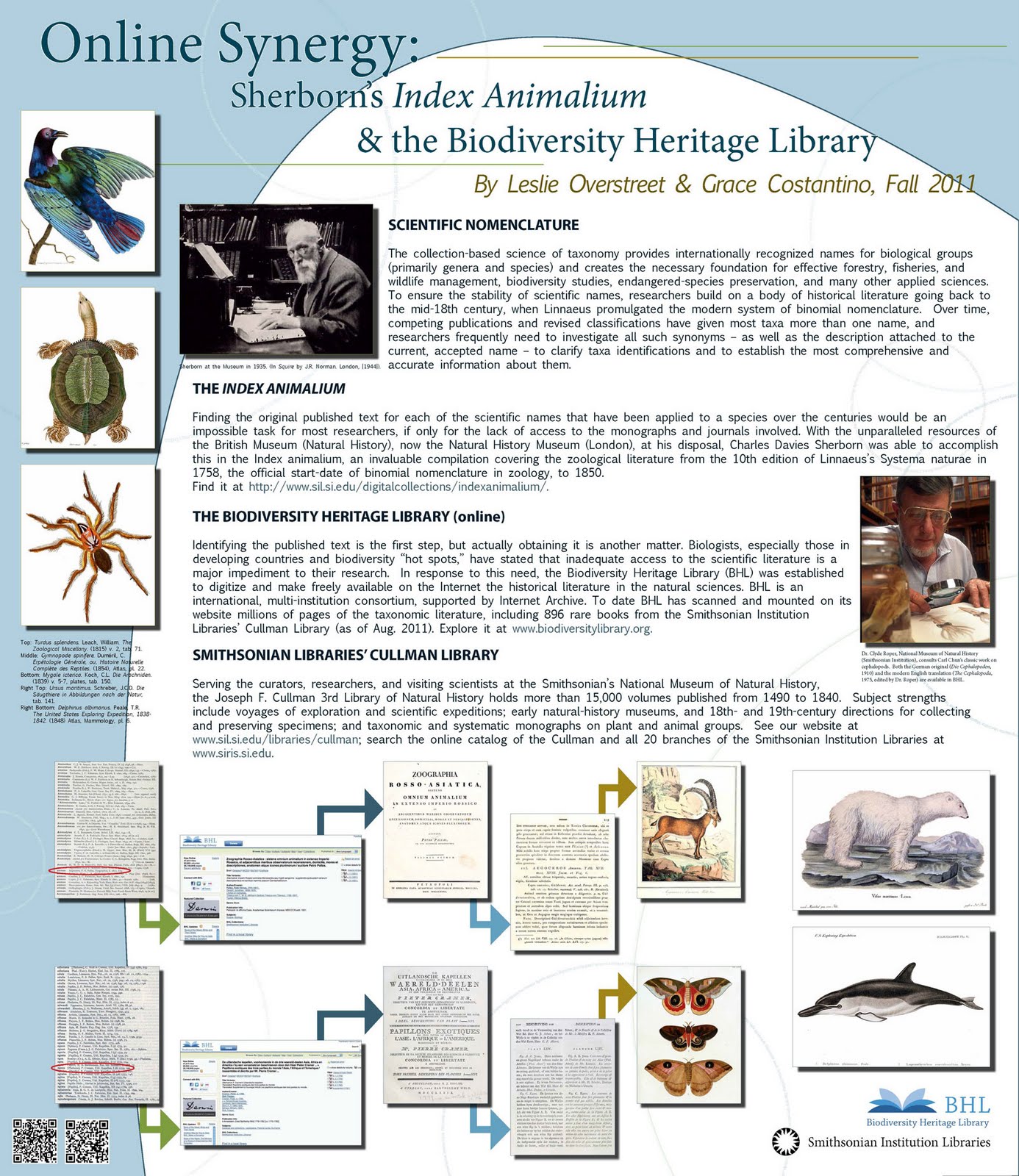
Finally, the poster presented by Grace Costantino and Leslie Overstreet, entitled “Online Synergy: Sherborn’s Index Animalium and the Biodiversity Heritage Library,” delved into the link between SIL’s online version of Index Animalium and the digitized volumes within BHL. SIL’s online version of the Index Animalium allows researchers to search the entire multi-volume work by name, epithet, or other keyword. With the citation thus provided, researchers can then access the cited text itself on BHL, finding not only the species citation but, in many cases, remarkable illustrations as well.

The talks and posters from the symposium can be viewed here, and to find out more about the incredible life of Charles Davies Sherborn, take a look at the feature on him and the symposium in The Telegraph. You can also view photos from the event on Flickr.

December 22, 2011by michelle.underhill

Help Support BHL

BHL's existence depends on the financial support of its patrons. Help us keep this free resource alive!

search

About BHL

The Biodiversity Heritage Library (BHL) is the world’s largest open access digital library for biodiversity literature and archives. BHL operates as a worldwide consortium of natural history, botanical, research, and national libraries working together to digitize the natural history literature held in their collections and make it freely available for open access as part of a global “biodiversity community.”

Join Our Mailing List

Sign up to receive the latest news, content highlights, and promotions.

Subscribe Now

Subscribe to Blog via Email

Enter your email address to subscribe to this blog and receive notifications of new posts by email.

Join 319 other subscribers

Subscribe to Blog Via RSS

Subscribe to the blog RSS feed to stay up-to-date on all the latest BHL posts.

Access RSS Feed

Inspiring Discovery through Free Access to Biodiversity Knowledge.

The Biodiversity Heritage Library makes it easier than ever for you to access the information you need to study and explore life on Earth…for free, anytime, anywhere.


64+ Million Pages of
Biodiversity Literature Online.

EXPLORE

Tools and Services
to Transform Research.

EXPLORE

300,000+
Illustrations on Flickr.

EXPLORE

ABOUT | HARMFUL CONTENT | PRIVACY | SITE MAP | TERMS OF USE