Biodiversity Heritage Library - Program news and collection highlights from BHL
  • Home
  • News
  • Featured Books
    • All Featured Books
    • Book of the Month Series
    • BHL at 20
  • User Stories
  • Campaigns
    • Fossil Stories
    • Garden Stories
    • Monsters Are Real
    • Page Frights
    • Her Natural History
    • Earth Optimism 2020
  • Tech Blog
  • Visit BHL
Home
News
Featured Books
    All Featured Books
    Book of the Month Series
    BHL at 20
User Stories
Campaigns
    Fossil Stories
    Garden Stories
    Monsters Are Real
    Page Frights
    Her Natural History
    Earth Optimism 2020
Tech Blog
Visit BHL
  • Home
  • News
  • Featured Books
    • All Featured Books
    • Book of the Month Series
    • BHL at 20
  • User Stories
  • Campaigns
    • Fossil Stories
    • Garden Stories
    • Monsters Are Real
    • Page Frights
    • Her Natural History
    • Earth Optimism 2020
  • Tech Blog
  • Visit BHL
Biodiversity Heritage Library - Program news and collection highlights from BHL
BHL News, Blog Reel

Supporting the Biodiversity Community: BHL Engages in Global Biodiversity Projects

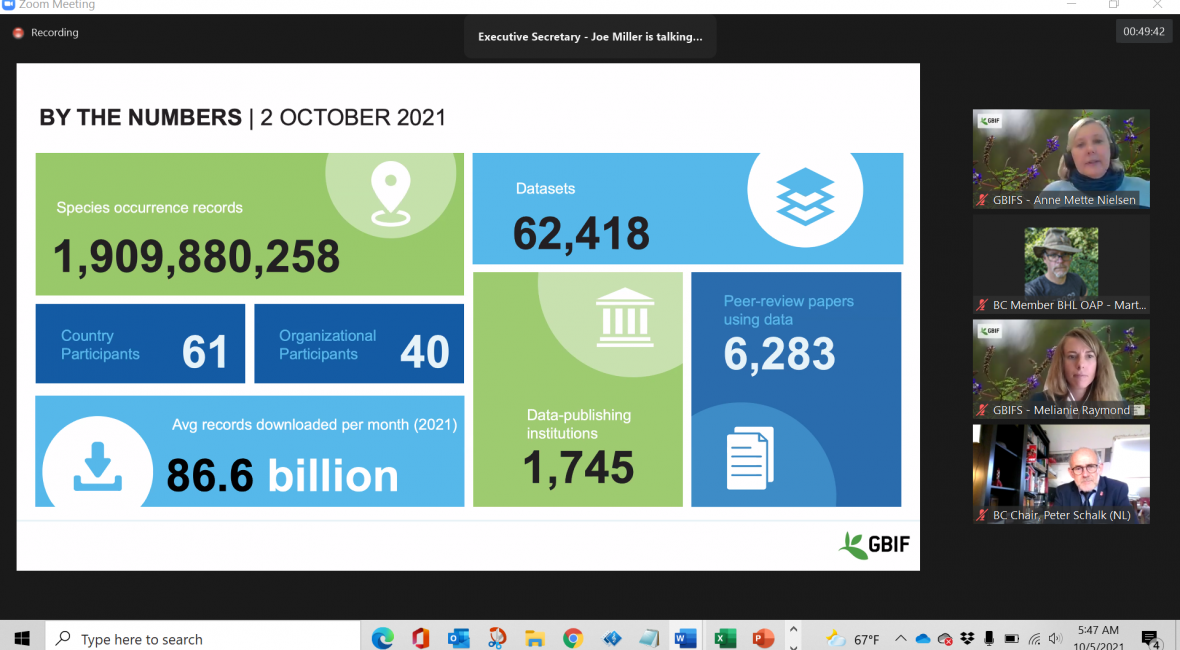
Screenshot of GBIF GB28 meeting with speakers and slides

The Biodiversity Heritage Library thrives on international partnerships and collaborative projects. In the fall of 2021, representatives from BHL participated in a number of planning meetings and conferences in support of global biodiversity projects.

BiCIKL (Biodiversity Community Integrated Knowledge Library)

BiCIKL is a European-funded partnership with 14 partners from 10 countries. The objective is to improve infrastructure to create a Biodiversity Knowledge Hub that provides a full set of linked, open biodiversity data, including names, genetics, occurrence data, natural history, authors and publications. The end result will be access to data at all points in the research cycle. The underpinnings of BiCIKL are Open Science and FAIR (Findable, Accessible, Interoperable and Reusable) data practices.

Within the BiCIKL project, there are 12 work packages. While most of the work packages are of some interest to BHL, BHL Chair Constance Rinaldo is participating most consistently in Work Package 6: “Liberation of data from literature, next-generation semantic publishing and delivery of FAIR data.” The main goals are to rapidly find, extract and link information in published literature during as well as after publication. Plazi and Pensoft are key participants in organizing how literature and snippets of literature (location, taxonomic treatments, occurrence notation, figures and tables for instance) can be integrated into the Global Biodiversity Information Facility (GBIF) and made easily accessible in context.

During the week of 20-24 September, several teams from the BiCIKL technical community attended a hybrid hackathon, hosted virtually and at Meise Botanic Garden in Belgium. Teams worked on small pilot projects to extract data and test linkages among existing infrastructures. Constance Rinaldo and Martin Kalfatovic, BHL Program Director, attended the introductory and final sessions virtually. There were nine projects overall. The pilots that potentially reflect BHL interests included: Linking specimens with material citation and vice versa; Hidden women in science; and Enriching Wikidata with information from OpenBiodiv about type specimens in context from different literature sources. The higher level conclusions were: harmonizing APIs across platforms; the shared cloud facilitates collaboration; wikidata is very useful for connecting different infrastructures; and scalability/granularity will be ongoing issues. A summary of the hackathon was presented by Quentin Groom at the TDWG 2021 conference.

Global Biodiversity Information Facility 2021 Governing Board Meeting (GB28)

The GBIF GB28 was once again held virtually from 5-7 October 2021. GB28 brought together delegates and other representatives from GBIF participating countries and organizations. BHL Chair Constance Rinaldo represented BHL as Head of Delegation (non-voting), and BHL Program Director Martin Kalfatovic is the BHL Node representative.

Tanya Abrahamse, Chair of the GBIF Governing Board, opened the meeting and presented a welcome from Joanne S. Tornow, Assistant Director, National Science Foundation, USA.

Over the course of the meeting, reports from the GBIF Executive Secretary (Joe Miller), the Budget Committee, Science Committee, and Nodes Committee were presented. Updates from the GBIF Secretariat were delivered as well as the GBIF 2022 Work Programme and draft budget.
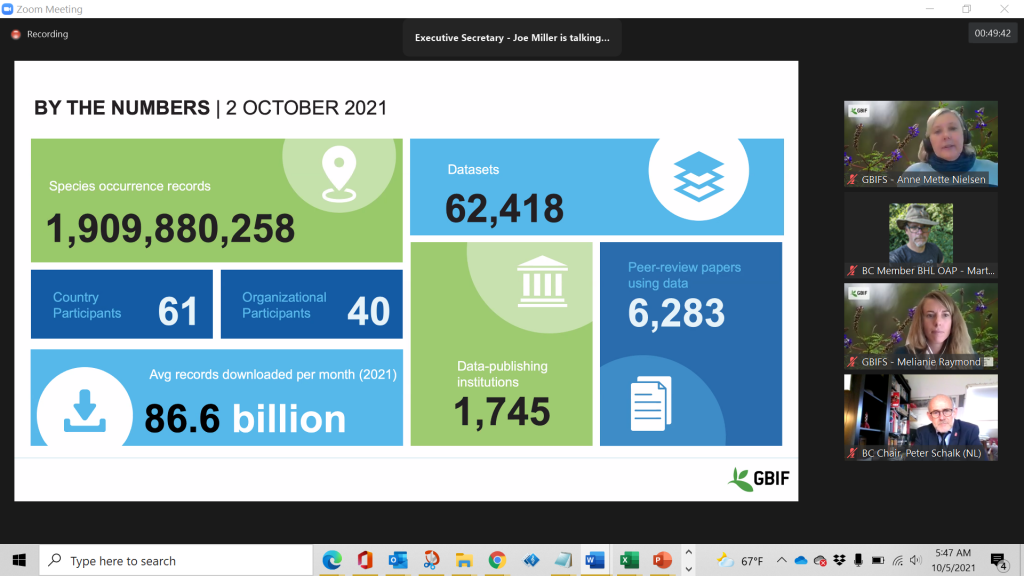
Screenshot of GBIF GB28 meeting with speakers and slides

GBIF Executive Secretary, Joe Miller, presents GBIF By the Numbers at the annual GBIF Governing Board Meeting (GB28).

A highlight of the Governing Board meeting included the presentation of the winner of the Ebbe Nielsen Challenge. This year, an International team led by Alexander Zizka of iDiv won for creating a web-based tool linking natural science and political science. The tool, Bio-Dem, is an open-source web-app for exploring temporal and spatial relationships between the availability of biodiversity data and the dimensions of democracy.

The Young Researcher Awards this year went to:

  • Michael Belitz, a PhD candidate from the United States, selected for work on linking new analytical approaches aimed at advancing understanding of phenological impacts of climate change; and
  • Julen Torrens Baile, a Master’s student at the University of Navarra, selected for research into improving methods of modelling species distributions for invasive freshwater fish.

In other actions, Belgium was selected as the host for the 2023 Governing Board meeting, and Martin Kalfatovic was elected as 2nd Chair of the Budget Committee.

BHL Symposium at TDWG 2021

Biodiversity Information Standards (TDWG) hosted its virtual annual conference from 18-22 October with a theme of “Connecting the world of biodiversity data: uniting people, processes, and tools.” Hosted by the University of Florida Biodiversity Institute along with the Florida Museum of Natural History and iDigBio, TDWG 2021 brought more than 400 attendees together via the Whova virtual conference platform. The community engaged in online discussions, interactive workshops, in-depth symposia, contributed oral presentations, and a TDWG 2021 Worldwide Bioblitz.
TDWG 2021 conference logo: Connecting the world of biodiversity data: standards uniting people, processes, and tools

TDWG 2021 Virtual Annual Conference. Connecting the world of biodiversity data: standards uniting people, processes, and tools

On 21 October, BHL hosted a symposium titled “SYM11 Building collaborative resiliency through the Biodiversity Heritage Library,” organized by Constance Rinaldo (BHL Chair) and Colleen Funkhouser (BHL Program Manager, Smithsonian Libraries and Archives).

Moderated by Constance Rinaldo, the symposium included six talks from speakers around the world.

  • Cultivating Resilience in the Biodiversity Heritage Library During the Global Pandemic: Improving access to existing content – Colleen Funkhouser (BHL Secretariat, Smithsonian Libraries and Archives)
  • BHL and the Pandemic: An accelerator of digital advances and transformation – Alice Lemaire (Muséum national d’Histoire naturelle, Paris)
  • Algorithms for connecting scientific names with literature in the Biodiversity Heritage Library via the Global Names Project and Catalogue of Life – Geoffrey Ower (University of Illinois)
  • Biodiversity Heritage Library and Global Names: Successes, opportunities and the challenges for the future collaboration – Dmitry Mozzherin (University of Illinois Urbana-Champaign)
  • #RetroPIDs: The missing link to the foundation of biodiversity knowledge – Nicole Kearney (BHL Australia)
  • The BHL-Plazi Partnership: Getting data from the 1800s directly into 21st century, reused digital accessible knowledge – Donat Agosti (Plazi)

Discussions throughout the conference emphasized the need for better ways to extract and connect data from historic literature including the collections within BHL.

You can view a complete list of symposia, workshops, and discussion session descriptions on the TDWG conference website. All conference abstracts are published in the TDWG Proceedings 2021 in Biodiversity Information Science and Standards.
November 10, 2021by
BHL News, Blog Reel

BHL at TDWG 2020

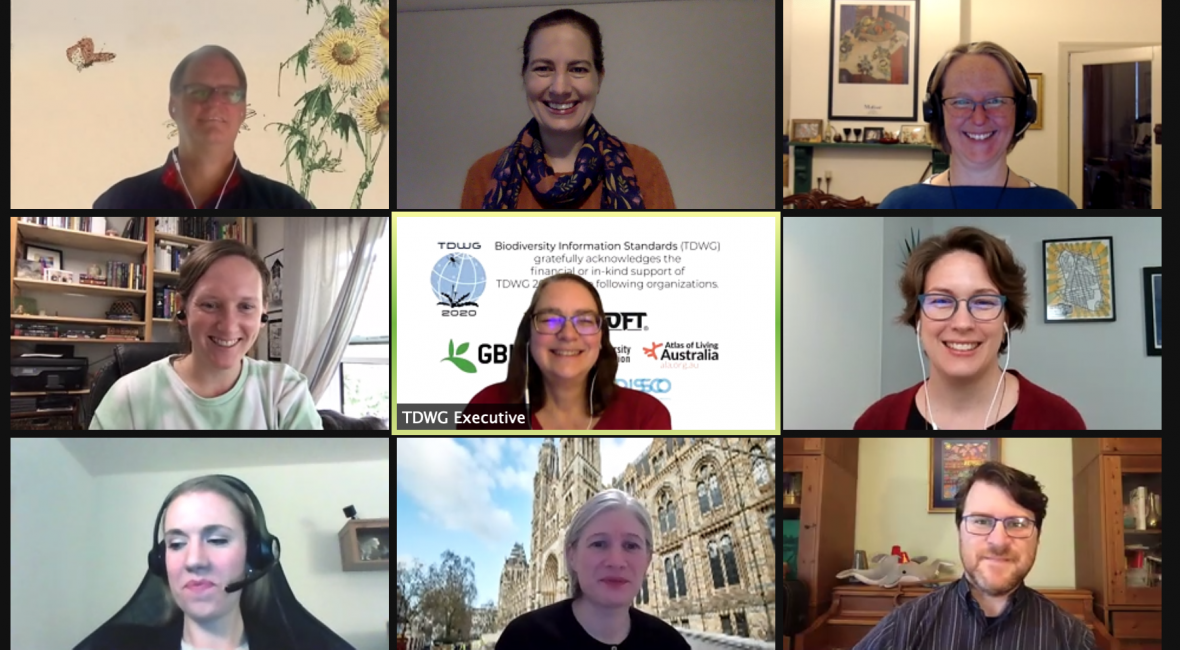
Screenshot of a Zoom call with a collage of various people's faces.

logo for TDWG 2020 conferenceThis year, as organizations around the world have done in response to the global COVID-19 pandemic, Biodiversity Information Standards (TDWG) held its annual conference virtually. With a mix of online working sessions, webinar-style symposia, presentations, panel discussions, and recorded presentations, this year’s conference was held across two separate periods—the first dedicated to working sessions during the week of 21-25 September 2020 and the second to symposia and panel sessions the week of 19-23 October 2020.
As the TDWG 2020 Annual Conference website states, the conference “serve two purposes:

  • to provide a forum for developing, refining, and extending standards in response to new challenges and opportunities;
  • and to provide a showcase for biodiversity informatics – much of which relies on the standards created by TDWG and other organizations.”

You can view the complete list of working session and symposia and discussion session descriptions on the TDWG website. Conference sessions were also recorded and are available for viewing on the TDWG YouTube channel.

BHL Symposium at TDWG 2020

On 20 October 2020 as part of the TDWG 2020 virtual conference, BHL hosted a symposium, “SYM03 Enhancing Connections With the Global Neighbourhood Through Expanding Partnerships”, organized by Constance Rinaldo (Librarian of the Ernst Mayr Library, Harvard and Chair of the BHL Executive Committee) and Colleen Funkhouser (BHL Program Manager, Smithsonian Libraries).

The symposium consisted of four talks, covering topics including building BHL’s technical strategy, digital object identifiers (DOIs), taxonomic name finding services, and BHL’s response to the global COVID-19 pandemic. See more details about the symposium and each talk below.

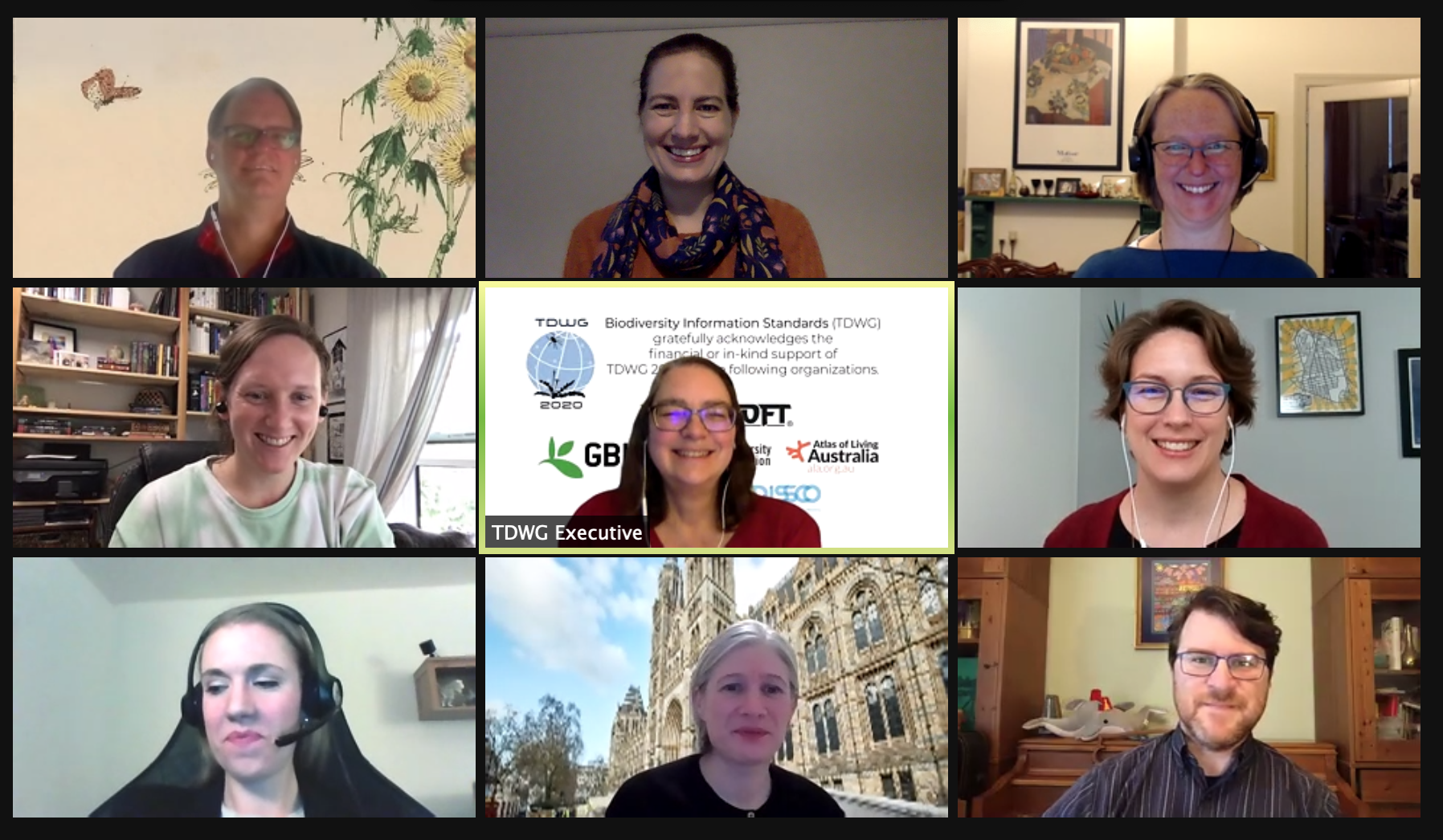
Screenshot of a Zoom call with a collage of various people's faces.

Organizers, presenters, and facilitators for the BHL Symposium at TDWG 2020. Top, L to R: Martin Kalfatovic, Nicole Kearney, Ely Wallis; Middle, L to R: Holly Little, Constance Rinaldo, Colleen Funkhouser; Bottom, L to R: Elisa Herrmann, Jane Smith, Joel Richard. Image courtesy of Nicole Kearney.

SYM03 Enhancing Connections With the Global Neighbourhood Through Expanding Partnerships
Abstract: The Biodiversity Heritage Library (BHL) is more than a digital library, it is a key resource for data related to biodiversity. Data such as museum specimens, taxonomic names, environmental and geolocation variables is embedded in the published and unpublished literature found in BHL. Over the past year, BHL has developed a five year strategic plan designed to bring more focus on data, technology and partnerships. BHL is already well-established within the global bibliographical knowledge base. The plan for the symposium is to highlight some new directions and identify synergies and connections with current, new and potential partners in the biodiversity knowledge infrastructure.

  • Building the Biodiversity Heritage Library’s Technical Strategy — Elisa Herrmann (Museum für Naturkunde Berlin)
    • Presentation Slides
  • Discovering the Platypus: From Its Scientific Description to Its DOI — Nicole Kearney (BHL Australia, Museums Victoria)
    • Presentation Slides
  • Improving Taxonomic Name Finding in the Biodiversity Heritage Library — Joel Richard (Smithsonian Libraries)
    • Presentation Slides
  • The Biodiversity Heritage Library Response to the Global COVID-19 Pandemic — Delivered by Martin Kalfatovic (BHL Secretariat, Smithsonian Libraries). Co-authors: Constance Rinaldo (Ernst Mayr Library, Harvard); Jane Smith (Library and Archives, Natural History Museum, London); David Iggulden (Library, Art & Archives at the Royal Botanic Gardens, Kew); Colleen Funkhouser (BHL Secretariat, Smithsonian Libraries).
    • Presentation Slides
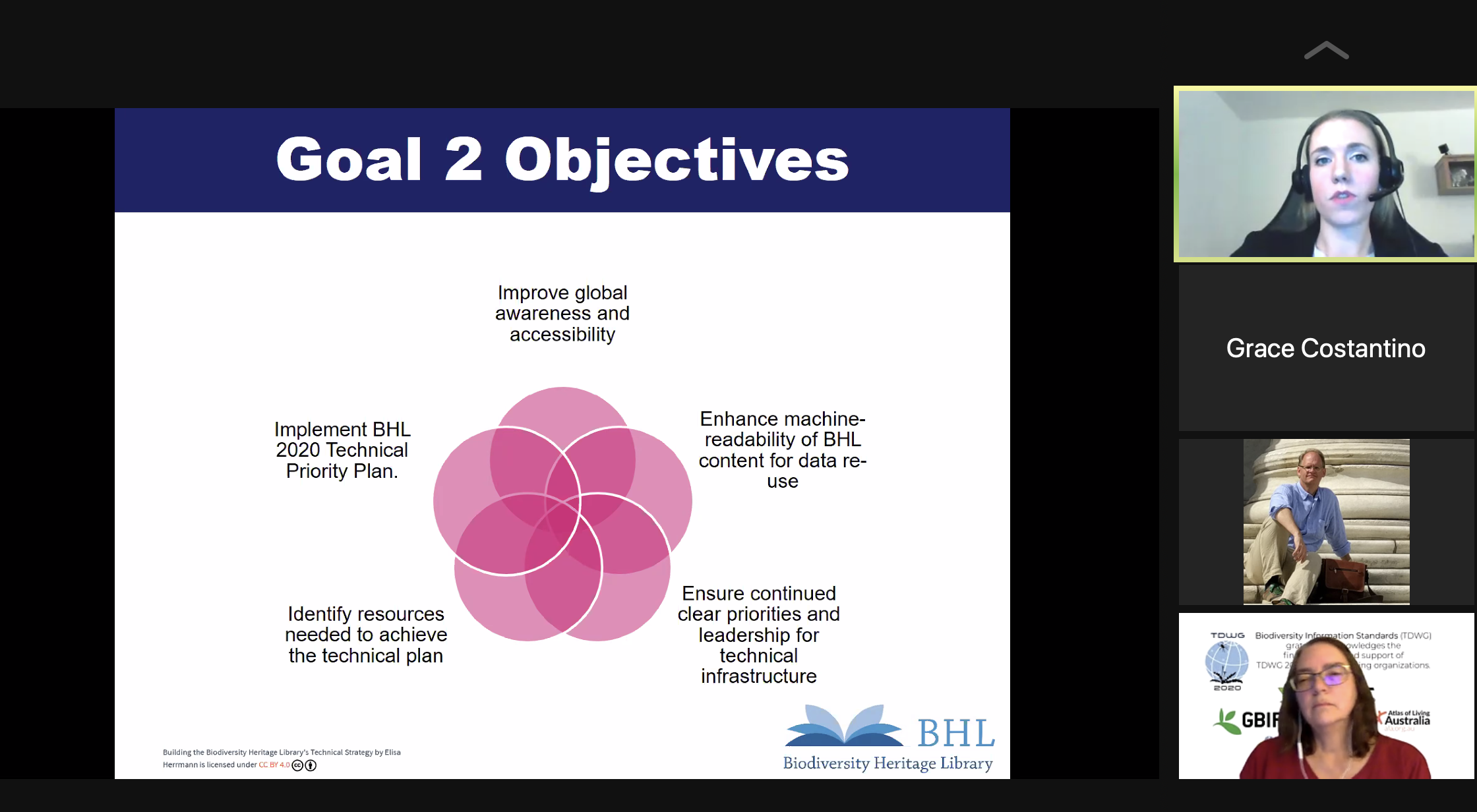
Screenshot of a slide discussing BHL's objectives for its technical development goal.

Goal 2 of BHL’s 2020-2025 Strategic Plan focuses on developing the Library’s tools and services. During her talk, Building the Biodiversity Heritage Library’s Technical Strategy, Elisa Herrmann (Museum für Naturkunde Berlin) discussed the five objectives of that goal and BHL’s plans to implement those objectives. Image courtesy of Grace Costantino.

Screenshot of a Zoom call showing a slide with the BHL digital library interface on the landing page for the DOI of the platypus.

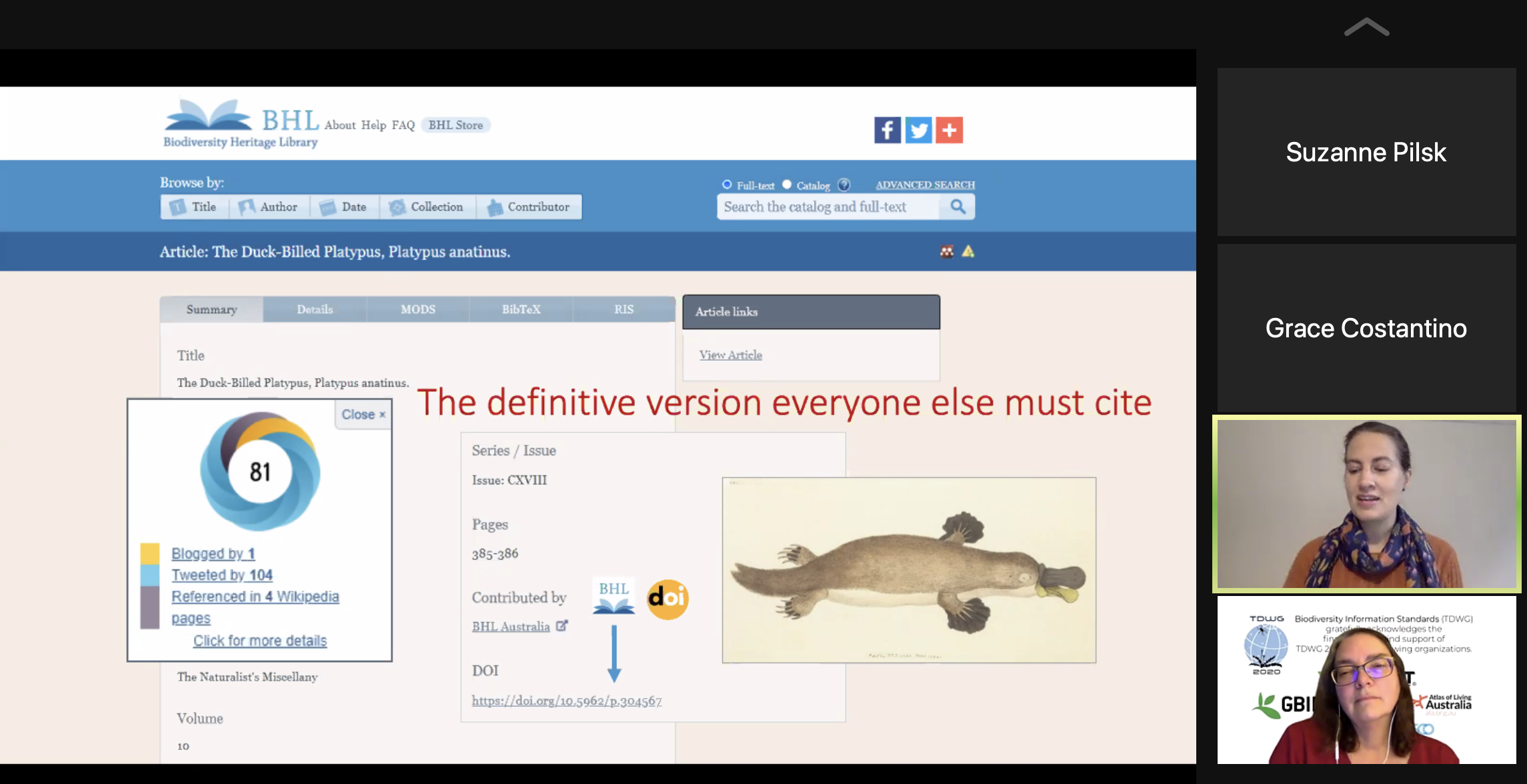
As Nicole Kearney (BHL Australia, Museums Victoria) shared during her talk, Discovering the Platypus: From Its Scientific Description to Its DOI, the first scientific description of the platypus (Ornithorhynchus anatinus) now has a DOI (https://doi.org/10.5962/p.304567), assigned by BHL. This allows anyone to easily cite this description directly and enables easier tracking of those citations. Image courtesy of Grace Costantino.

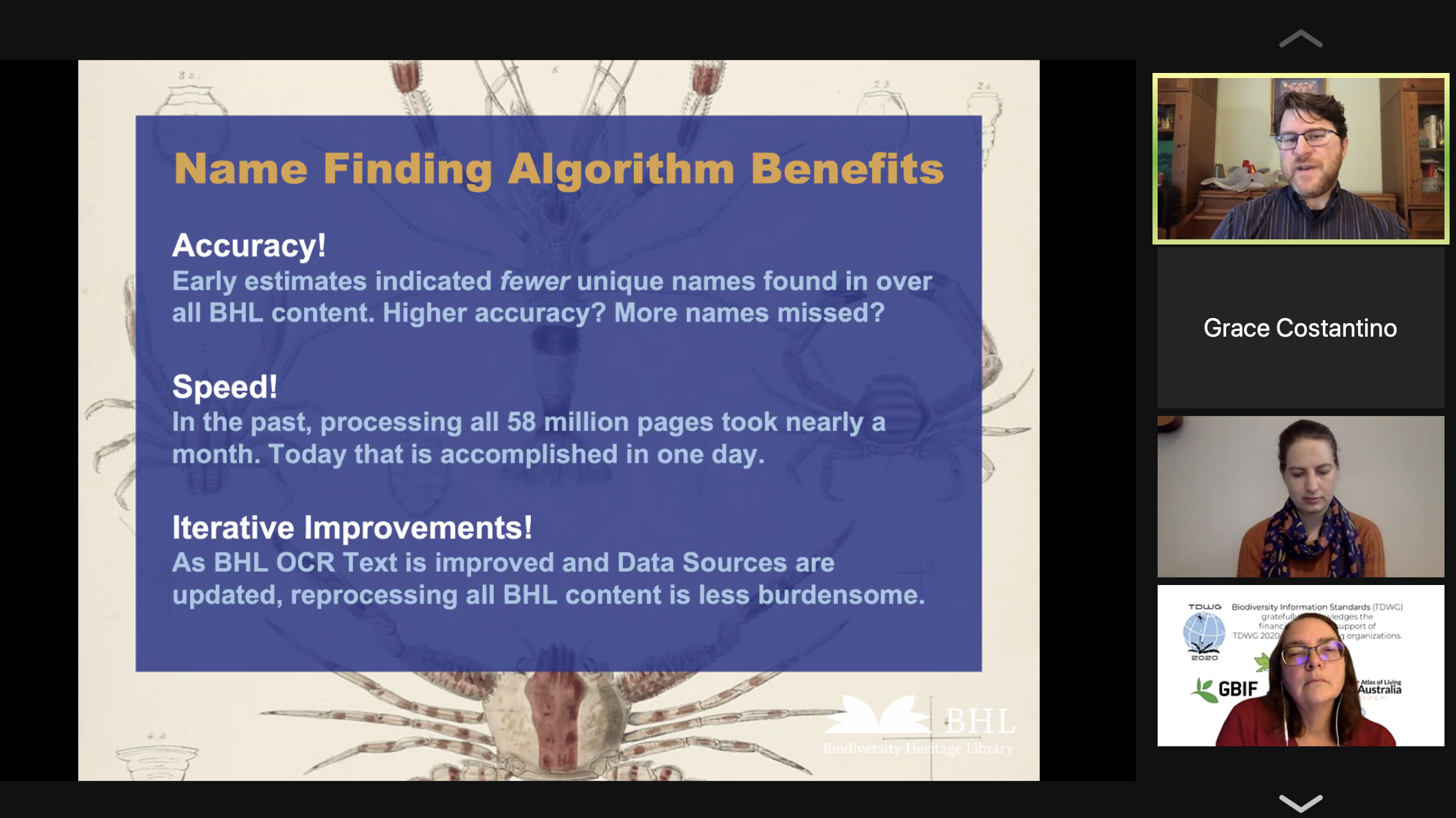
Screenshot of a Zoom call with a slide showing benefits of BHL's new name finding algorithm.

During his talk, Improving Taxonomic Name Finding in the Biodiversity Heritage Library, Joel Richard (Smithsonian Libraries) shared some of the benefits of implementing the new Global Names gnfinder tool to support taxonomic name finding in BHL. Image courtesy of Grace Costantino.

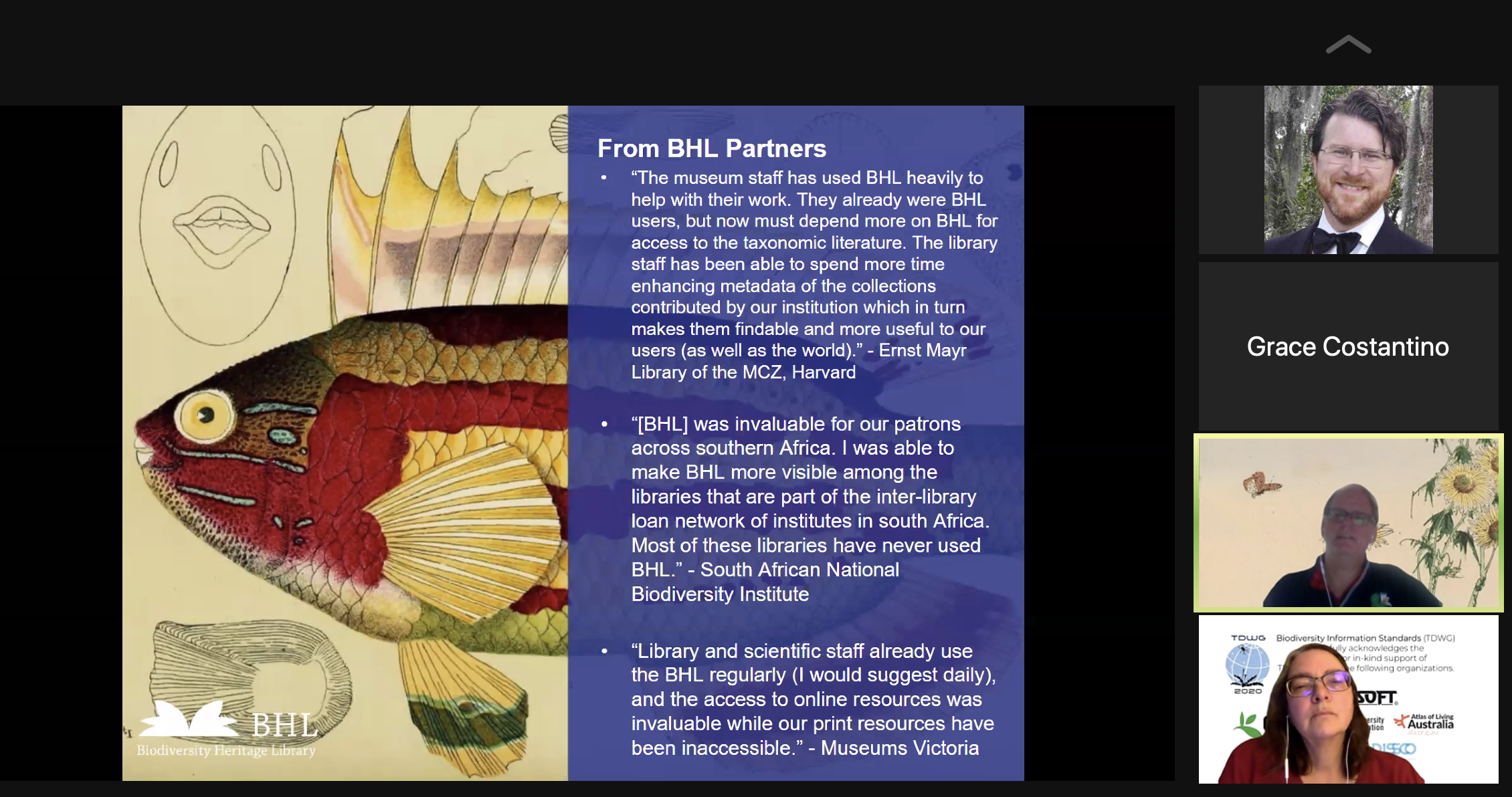
Screenshot of a Zoom call with a slide stating quotes from partners about BHL's impact during the COVID-19 pandemic.

During the presentation The Biodiversity Heritage Library Response to the Global COVID-19 Pandemic, Martin Kalfatovic (BHL Secretariat, Smithsonian Libraries) shared statements from partners about BHL’s impact during the pandemic. Image courtesy of Grace Costantino.

The symposium was well-received, with approximately 100 people attending. The talks sparked interesting discussions, with questions around such topics as opportunities for Wikidata integration; supporting annotations as part of a future IIIF integration; strategies for improving optical character recognition (OCR); development of visualizations using BHL data; identification of additional useful data access points, such as collection and specimen codes and locality names; and potential strategies for supporting third-party application development using BHL data, such as through researcher prizes and challenges.

You can view a recording of the symposium on YouTube and all session presentation files in this Google folder.

October 30, 2020by michelle.underhill
BHL News, Blog Reel

BHL at Biodiversity Next

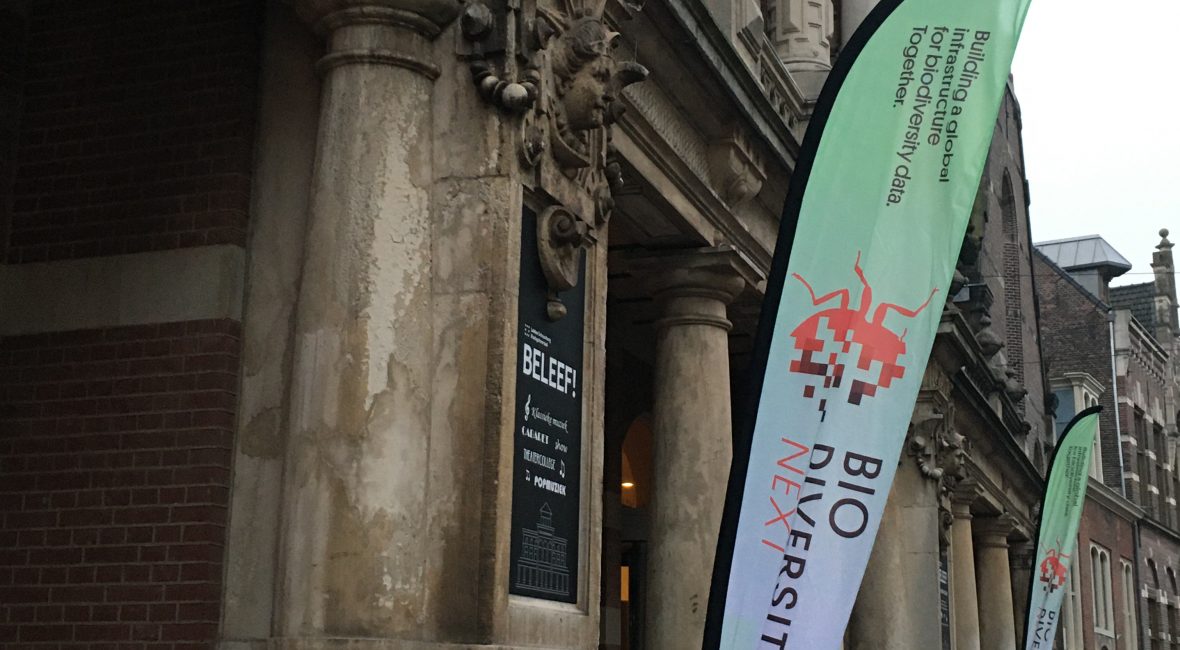
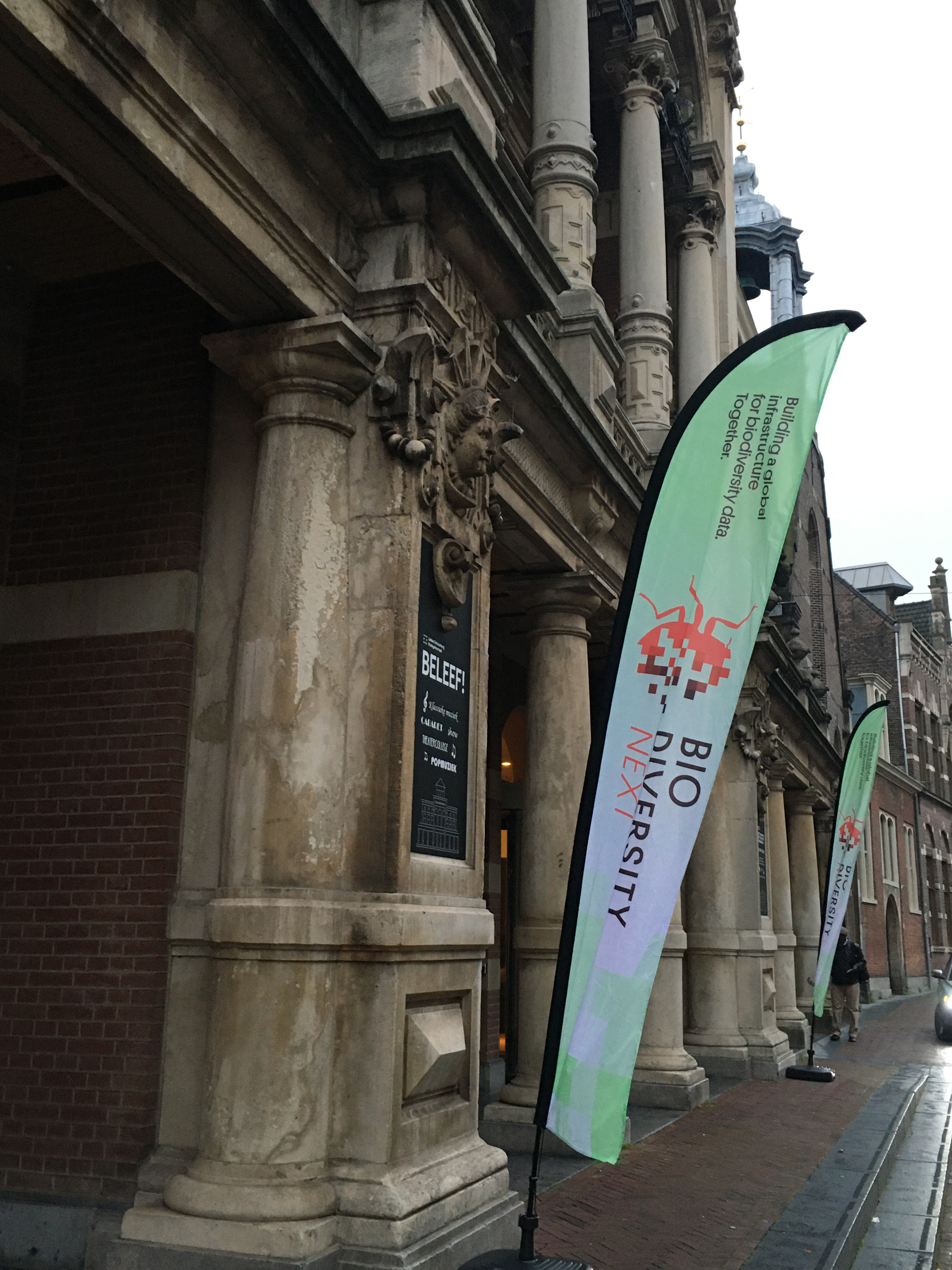
Biodiversity_Next banners

Biodiversity_Next main conference venue, Stadsgehoorzaal, in Leiden, Netherlands. Photo Credit: Grace Costantino.

In October 2019, more than 700 people from over 75 countries gathered in Leiden, the Netherlands for Biodiversity_Next, a joint conference by GBIF, DISSCo, iDigBio, CETAF, TDWG, and LifeWatch Eric. The first conference of its kind to bring together so many major international biodiversity organizations, the conference aimed to promote innovation in biodiversity and geodiversity information management and applications; encourage collaboration across these communities to enhance data standards and management practices; and foster the development of the skill sets necessary to embark on data-intensive scientific research and solutions.

Hosted by the Naturalis Biodiversity Center, a BHL Affiliate, in collaboration with the Netherlands Biodiversity Information Facility, the main conference ran from 22-25 October 2019, with pre-conference workshops occurring 20-21 October, as well as organization-specific meetings for GBIF, CETAF, and TDWG being held in conjunction with the conference.

BHL colleagues from around the world traveled to Leiden for Biodiversity_Next. Eighteen BHL-affiliated representatives from our partner community, representing 13 institutions from nine countries, attended the conference. Dr. Elycia Wallis, Engagement Manager at the Atlas of Living Australia and the BHL Member representative for BHL Australia, served as a key member of the Programme Committee.

Each conference day began with a plenary session featuring diverse speakers ranging from scientists to policy makers and even artists. From the policy perspective, Ana Maria Hernandez Salgar outlined major findings from the recent IPBESGlobal Assessment, while Jorge Soberón described efforts by the Mexican biodiversity agency CONABIO (a BHL Member) to make data useful for politicians and policy makers, and Maxwell Gomera of the UN Environment Program examined the importance of finding solutions that protect both wildlife and people and the value of using storytelling to reach policy makers in profound ways. On the science side, Paul Hebert of the International Barcode of Life Consortium described advances and ambitions in DNA barcoding and global bio-surveillance, while Carrie Seltzer spoke about the diverse and impactful ways that iNaturalist engages people in the biodiversity data system through citizen science.

The plenary sessions also brought in representatives from the world of art and design. Dutch artist Theo Jansen shared his work for the past 30 years creating “beach animals” constructed of PVC pipes that move using wind energy, while Dutch artist Jalila Essaidi described her work to create bio-art, from “bulletproof human skin” created using synthetic spider silk to clothing made from fabric produced from manure.

Beyond the plenary sessions, more than 300 speakers presented over 350 talks as part of over 60 sessions and workshops related to science, policy, standards, and infrastructure. Several major themes emerged across many of the sessions, including the importance of adopting FAIR data principles; the need to link together the many diverse biodiversity data systems; the importance of unique identifiers for data, including DOIs and ORCIDs; and the possibilities of using Wikidata as a source of and way to connect various identifiers.

BHL colleagues were very active in the conference, with 11 BHL-affiliated staff presenting or moderating 16 talks or sessions. See the full list of BHL-affiliated staff presentations at the end of this post. Additionally, members of the BHL Executive Committee (EC), including Constance Rinaldo (EC Chair, Ernst Mayr Library, Harvard University) and Martin Kalfatovic (BHL Program Director, Smithsonian Libraries), as well as colleagues from the Muséum national d’Histoire naturelle, represented BHL at the various organizational meetings, including GBIF, TDWG, and CETAF.

BHL was also highlighted frequently throughout the conference, with many talks discussing the importance of historic literature for science today, the need to integrate BHL data into other biodiversity data services like GBIF and the Catalogue of Life, and the importance of incorporating reciprocal links between BHL and these various data systems. These concepts were distinguished as a high value priority by many of the session presenters.

“Biodiversity_Next was an inspiring and exciting opportunity to hear from more than 700 colleagues representing organizations all over the world,” said Constance Rinaldo, Chair of the BHL Executive Committee. “As a representative to GBIF and TDWG and by leading a symposium, I came away fully understanding the impact of collaboration among biodiversity organizations and data integration: this is the key to the future of biodiversity science.”

BHL Symposium

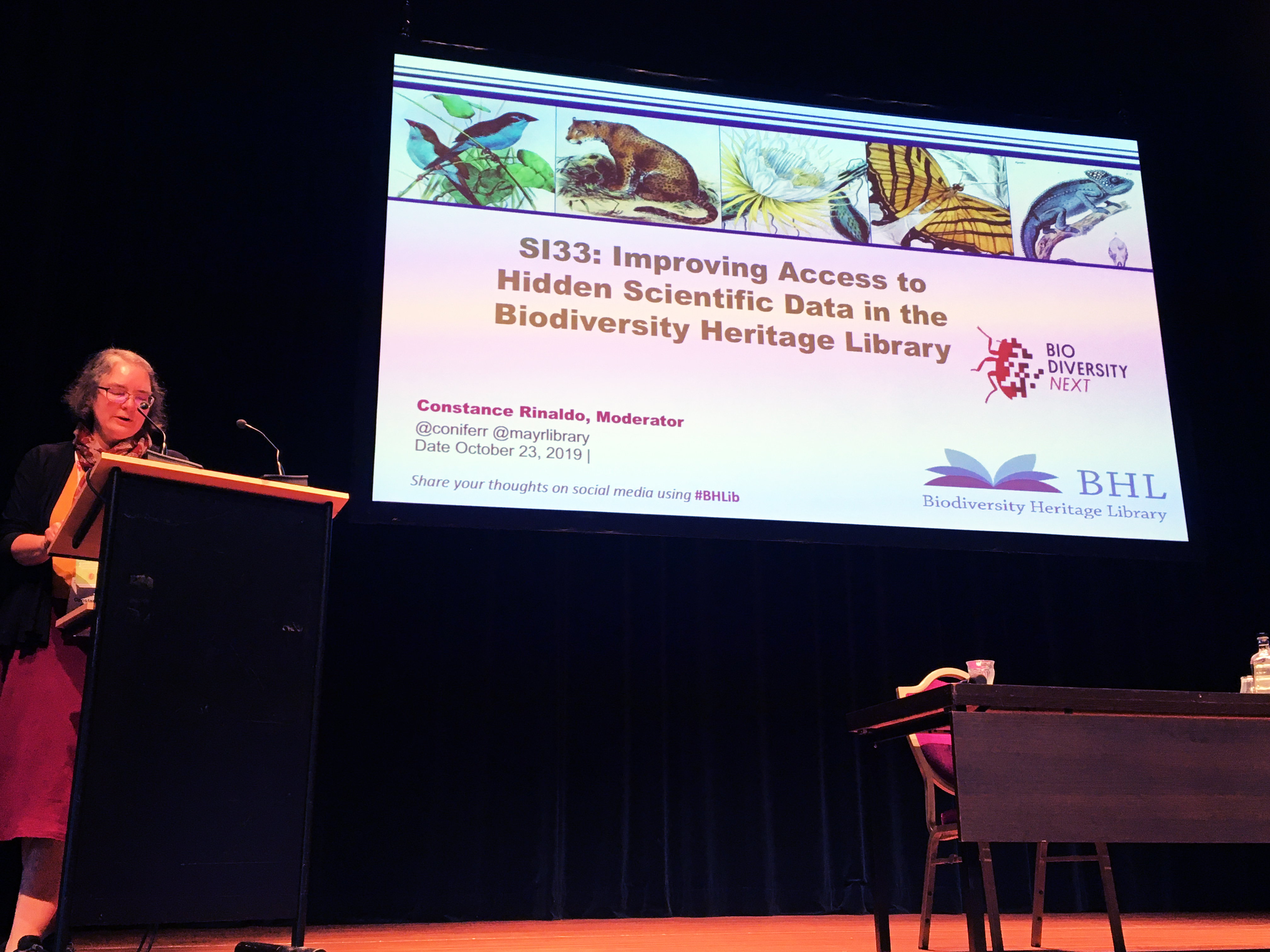
The Biodiversity Heritage Library organized a Symposium as part of Biodiversity_Next. Entitled Improving Access to Hidden Scientific Data in the Biodiversity Heritage Library, the session featured presentations offering examples of and ideas about how BHL data can be used to empower research and how enhanced data delivery methods can facilitate real-time computing.

Woman standing at a podium

Constance Rinaldo introducing the BHL Symposium at Biodiversity_Next. Photo Credit: Grace Costantino.

The Symposium was moderated by Constance Rinaldo (Chair, BHL Executive Committee) and included the following presentations:

  • “Introduction to the Symposium: Improving Access to Hidden Scientific Data in the Biodiversity Heritage Library” (Presented By: Constance Rinaldo — Ernst Mayr Library, Harvard University). Abstract | Slides
  • “BioStor Next (a.k.a. Text-Mining BHL: Towards New Interfaces to the Biodiversity Literature” (Presented By: Roderic Page — University of Glasgow | BioStor). Abstract | Slides
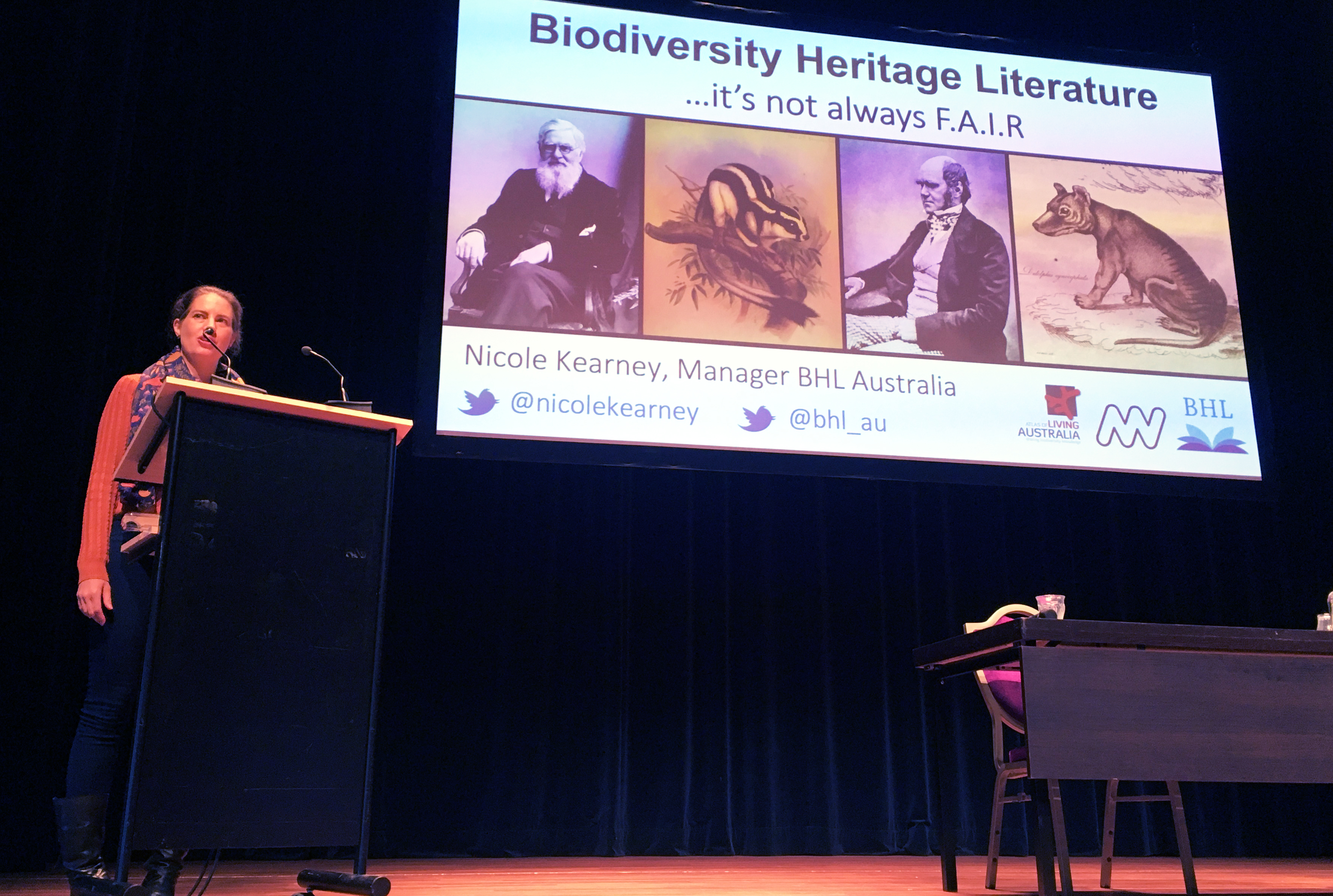
  • “It’s Not Always FAIR: Choosing the Best Platform for Your Biodiversity Heritage Literature” (Presented By: Nicole Kearney — BHL Australia, Museums Victoria). Abstract | Slides
  • “Finding Scientific Names in Biodiversity Heritage Library, or How to Shrink Big Data” (Presented By: Dmitry Mozzherin — University of Illinois, Champaign). Abstract | Slides
  • “Extracting Data From Legacy Taxonomic Literature: Applications for Planning Field Work” (Presented By: Francisco Andres Rivera-Quiroz — Naturalis Biodiversity Center). Abstract | Slides
  • “BHL and Specimen Collection Data: The Needle in the Festuca Stack” (Presented By: Martin Kalfatovic — Smithsonian Libraries). Abstract | Slides
Woman standing at a podium.

Nicole Kearney presenting during the BHL Symposium at Biodiversity_Next. Photo Credit: Grace Costantino.

Topics covered within the Symposium presentations included exploring the types of data—from scientific names and geographic localities to species treatments and specimen codes—that can be extracted from the literature; methods to extract that data, including recent work to improve the speed and effectiveness of the Global Names algorithm for identifying taxonomic names in the BHL corpus; applications for that data, including helping to inform field work; recent work by BHL to improve access to the content in its collection, including full text search and the utilization of transcriptions for archival materials; the value of linking BHL literature collections with other databases like GBIF; and the importance of and the role BHL can play in the assignment of DOIs for historic literature.

You can explore more details about each of the presentations in this @BioDivLibrary Twitter thread.

Beyond the Conference

Beyond the sessions and workshops, there were several opportunities for networking and tours around the conference.

people gathered in a cafe

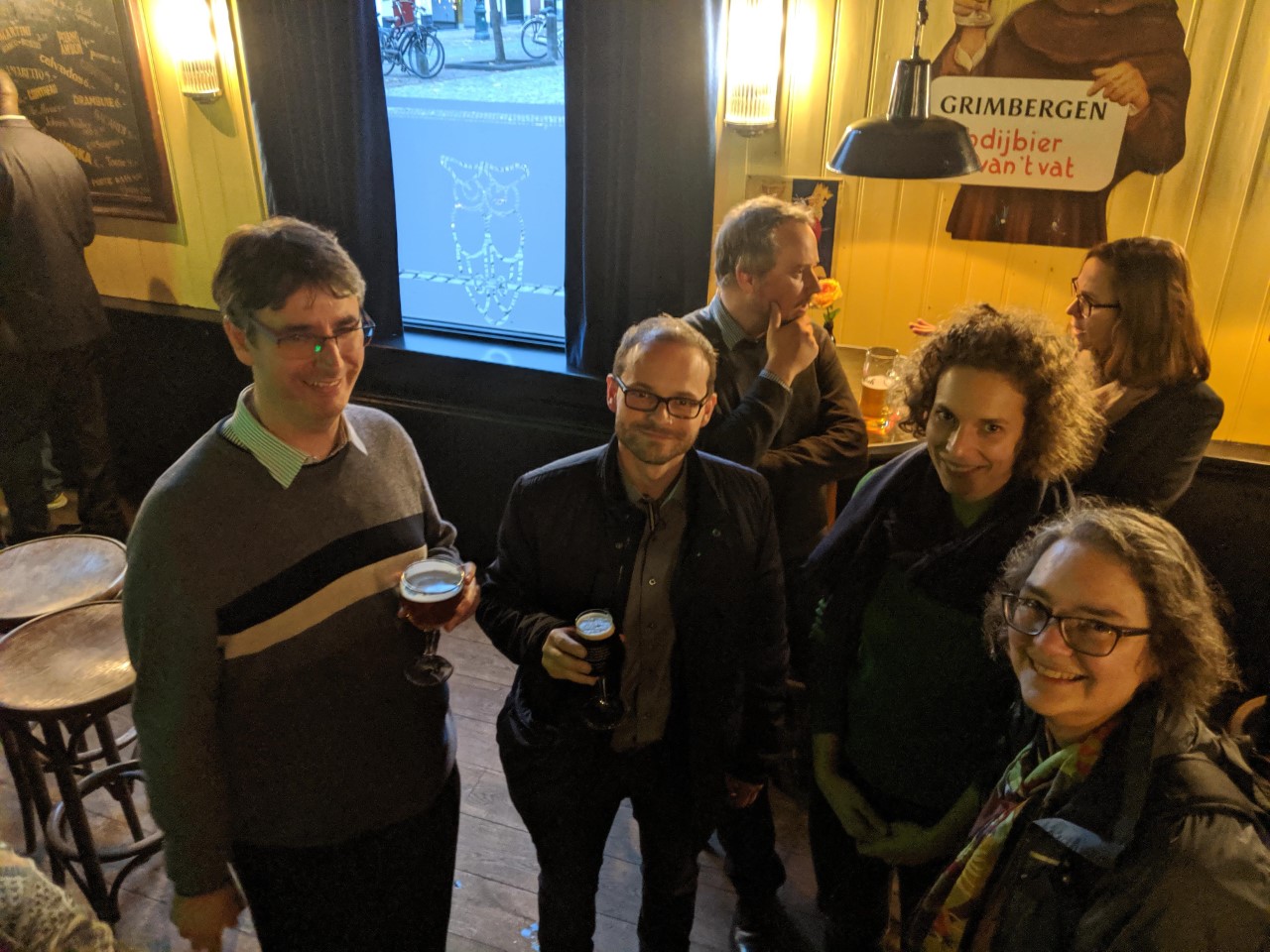
BHL colleagues gathered for the informal get-together at a local Leiden venue. Left to Right: David Iggulden (Library, Art & Archive, Royal Botanic Gardens, Kew); Clément Oury (Muséum national d’Histoire naturelle); Jiří Frank (National Museum, Prague); Chloé Besombes (Muséum national d’Histoire naturelle); Jana Hoffmann (Museum für Naturkunde Berlin); Constance Rinaldo (Ernst Mayr Library, Harvard University). Photo Credit: Martin Kalfatovic.

On Monday, 21 October, the day before the start of the main conference, BHL colleagues gathered for an informal get-together at a local Leiden venue. The gathering was an excellent opportunity for colleagues—some of which had never met in person—to connect.

large group of people at a party

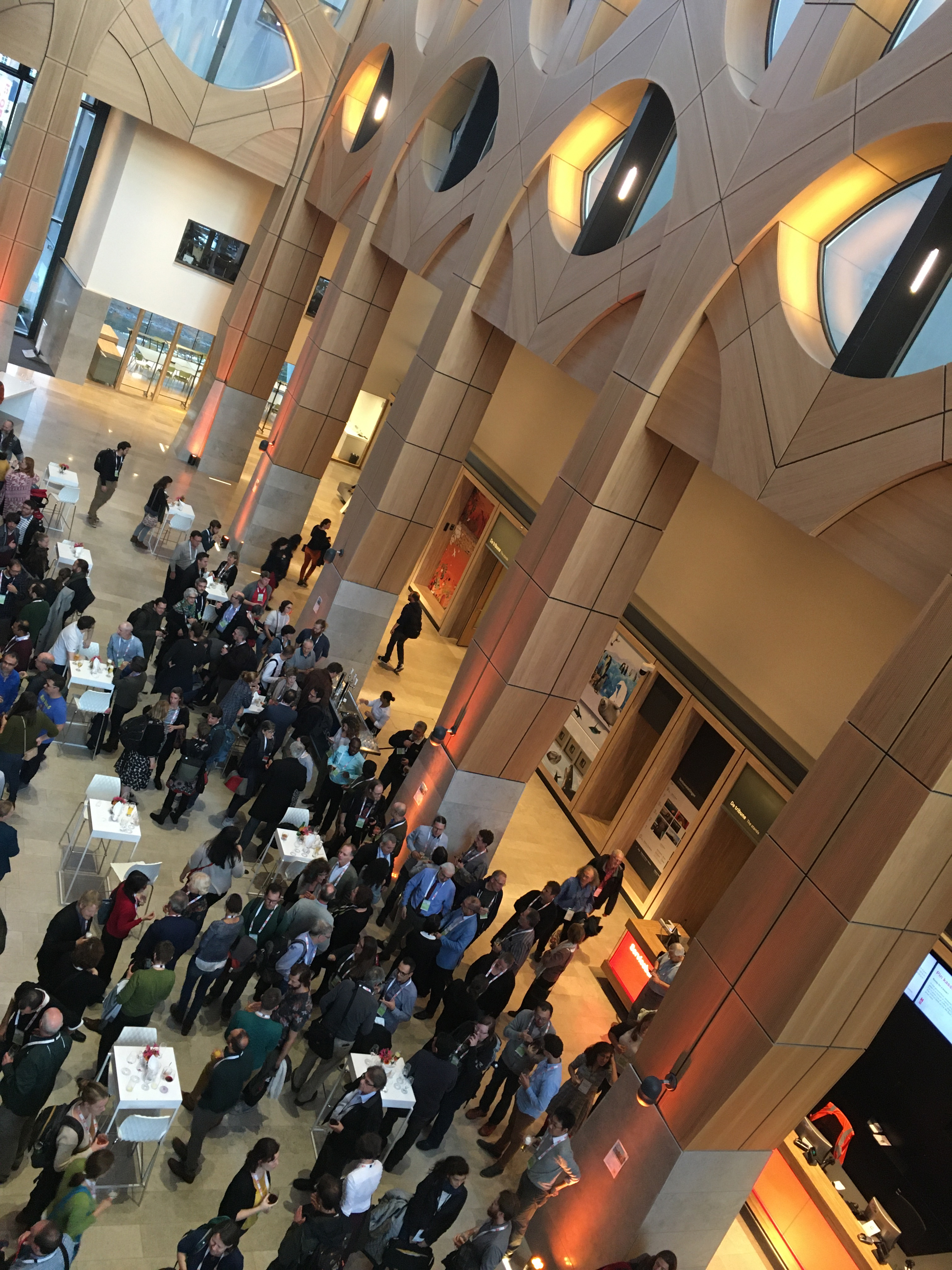
Attendees at the Biodiversity_Next reception hosted in the Naturalis Biodiversity Center. Photo Credit: Grace Costantino.

Biodiversity_Next also hosted a reception the evening of the first conference day at the newly-opened Naturalis Biodiversity Center. Hundreds of attendees had a unique opportunity to explore the museum’s exhibits and network with representatives from around the world.

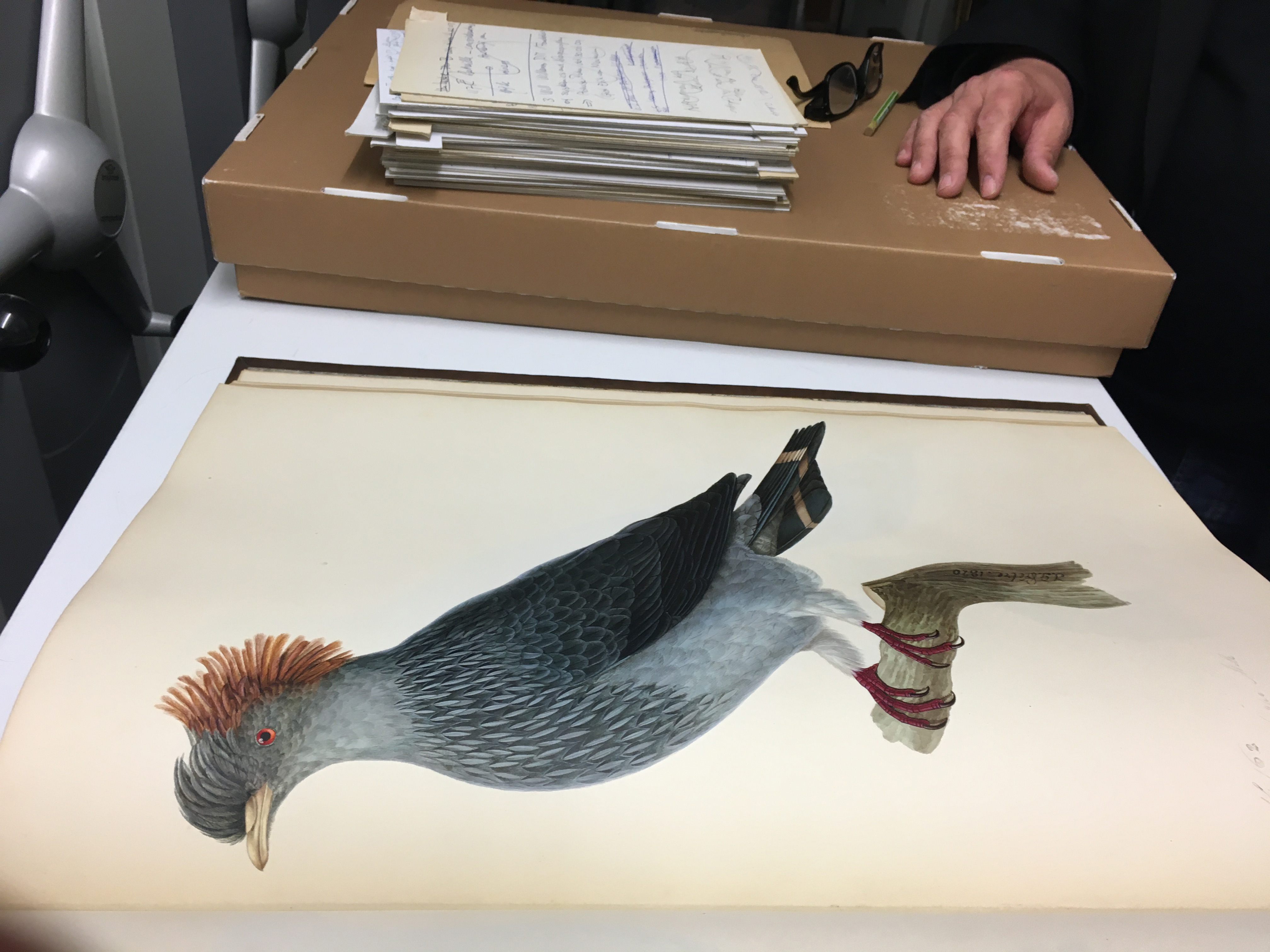
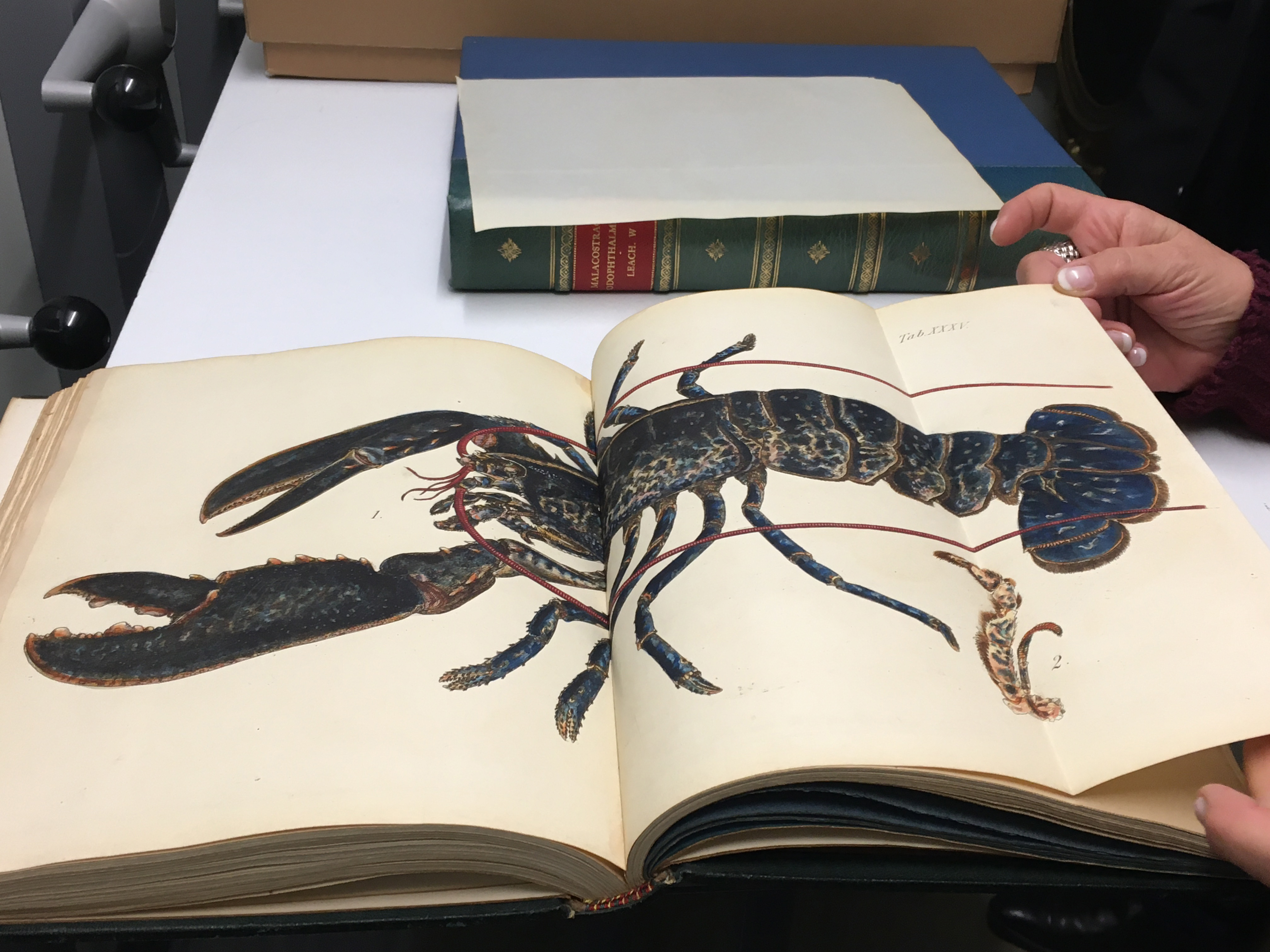
The Library of the Naturalis Biodiversity Center, a BHL Affiliate, also arranged tours of the general and special collections for several BHL colleagues. Godard Tweehuysen, Librarian and Information Specialist at Naturalis, showcased several special and unique items from the collection, including a copy of Les Pigeons (1808) by Coenraad Jacob Temminck (the first director of Rijksmuseum van Natuurlijke Historie—today Naturalis) with the original artwork by Pauline Courcelles and a special proofprint copy of Malacostraca Podophthalmata Brittanniae (1815-1875), which Naturalis has digitized for BHL and featured on the BHL blog.

drawing of a pigeon in a book

Original artwork from Les Pigeons (1808) in the Naturalis Library collection. Photo Credit: Grace Costantino.

drawing of a lobster in a book,

Proofprint copy of Malacostraca Podophthalmata Brittanniae (1815-1875) in the Naturalis Library collection. Photo Credit: Grace Costantino.

Looking ahead, during the Biodiversity_Next closing ceremony, conference organizers made an exciting announcement. A follow-up to the Biodiversity_Next conference will be held in Arlington, Virginia, USA in September 2020. The Biodiversity Summit is a joint meeting organized by iDigBio, GBIF, TDWG, and the Smithsonian’s National Museum of Natural History. Scheduled for 20-25 September 2020, the Summit will be an excellent opportunity to reconnect, continue the momentum fueled by Biodiversity_Next, and further strengthen collaborations to advance biodiversity information science and offer real, innovative, and attainable solutions to tackle today’s climate and environmental challenges.
We were privileged to be a part of such an exciting, constructive, and collaborative opportunity as Biodiversity_Next and look forward to coming together again in 2020 for the Biodiversity Summit! Until then, we’ll continue to work with the biodiversity community to incorporate data from the literature into the broader network of systems and services supporting the work of researchers, policy makers, citizen scientists and beyond.

Presentations and Moderated Sessions by BHL-Affiliated Staff from BHL Consortium Institutions

  • “The European Journal of Taxonomy: Enhancing Taxonomic Publications for Dynamic Data Exchange and Navigation” (Presented By: Laurence Bénichou — Muséum national d’Histoire naturelle). Abstract
  • “People of Collections: Facilitators of Interoperability?” (Presented By: Chloé Besombes — Muséum national d’Histoire naturelle). Abstract
  • “Hazards and Disasters in the Geological and Geomorphological Record: A Key to Understanding Past and Future Hazards and Disasters and Their Impact on Life” (Presented By: Jiří Frank — National Museum, Prague). Abstract
  • BHL Presentation as part of “Biodiversity Informatics 101: Preparing for Biodiversity_Next and Beyond” (Presented By: David Iggulden — Library, Art & Archives, Royal Botanic Gardens, Kew). Abstract
  • “BHL and Specimen Collection Data: The Needle in the Festuca Stack” (Presented By: Martin Kalfatovic — Smithsonian Libraries). Abstract | Slides
  • “It’s Not Always FAIR: Choosing the Best Platform for Your Biodiversity Heritage Literature” (Presented By: Nicole Kearney — BHL Australia, Museums Victoria). Abstract | Slides
  • “If Wikipedia Is the Gateway to Biodiversity Knowledge, How Do We Open the Gate?” (Presented By: Nicole Kearney — BHL Australia, Museums Victoria). Abstract | Slides
  • “Mesoamerica’s Crop Wild Relatives: A New Approach for Conservation Planning” (Presented By: Patricia Koleff — CONABIO). Abstract
  • “Planning Landscape Connectivity in Mexico Under Global Change” (Presented By: Patricia Koleff — CONABIO). Abstract
  • “Biodiversity Data Management: Regional Challenges” (Presented By: Lawrence Monday — National Museums of Kenya). Abstract
  • “Introduction to the Symposium: Improving Access to Hidden Scientific Data in the Biodiversity Heritage Library” (Presented By: Constance Rinaldo — Ernst Mayr Library, Harvard University). Abstract | Slides
  • “Lessons Learned From Managing Millions of Records to Create the World Flora Online” (Presented By: William Ulate — Missouri Botanical Garden). Abstract
  • “Sharing Species Pages in the Atlas of Living Costa Rica Using Plinian Core” (Presented By: William Ulate — Missouri Botanical Garden). Abstract
  • “Building a Global Infrastructure for Biodiversity Data. Together” — Plenary Panel Discussion (Moderated By: Elycia Wallis — BHL Australia, Atlas of Living Australia). Abstract
  • “A Fireside Chat – Reflections on the Conference” — Closing Ceremony Panel Discussion (Moderated By: Elycia Wallis — BHL Australia, Atlas of Living Australia). Abstract
  • “Contributed Papers: Data Extraction, Literature and Collections” (Moderated By: Elycia Wallis — BHL Australia, Atlas of Living Australia). Abstract
November 12, 2019by michelle.underhill
BHL News, Blog Reel

BHL at the Joint Society for the Preservation of Natural History Collections (SPNHC) and Biodiversity Information Standards (TDWG) Conference in Dunedin, New Zealand

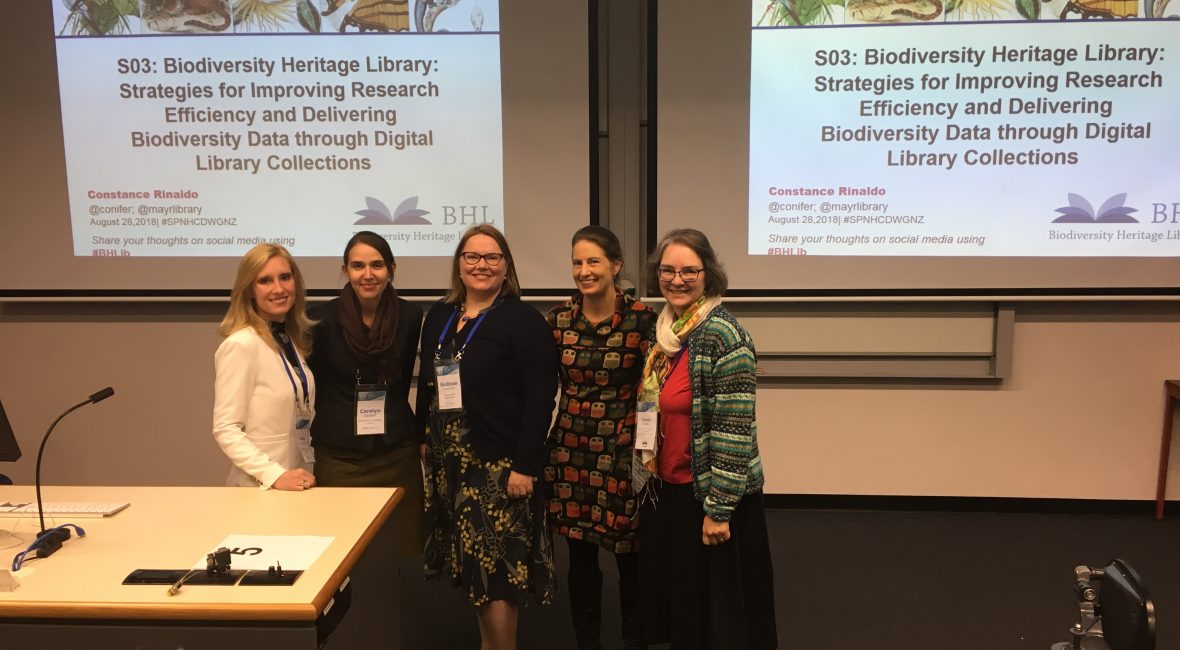
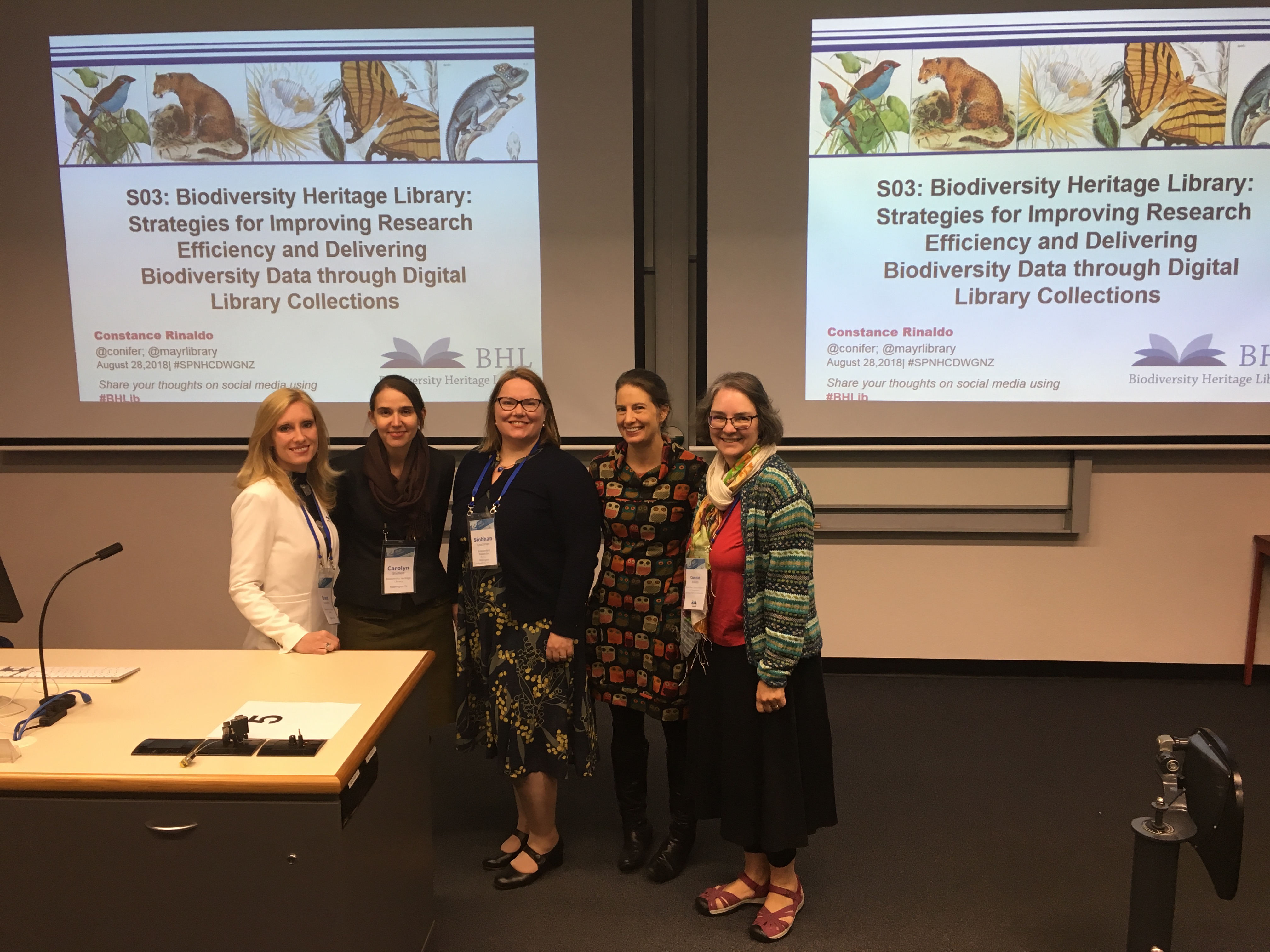
BHL representatives preparing to deliver talks as part of the BHL Symposium. Left to right: Grace Costantino, Carolyn Sheffield, Siobhan Leachman, Nicole Kearney, Constance Rinaldo.

logo for the joint TDWG/SPNHC conference

On 25 August – 1 September 2018, BHL representatives from around the world traveled to Dunedin, New Zealand to attend the joint Society for the Preservation of Natural History Collections (SPNHC) and Biodiversity Information Standards (TDWG) conference. Hosted by the Otago Museum and the University of Otago, the conference represented several firsts, including the first joint meeting of these two organizations plus the first SPNHC meeting in the Southern Hemisphere.

With the theme “Collections and Data in an Uncertain World”, the conference was an opportunity for bioinformatics and natural science collections professionals to exchange ideas and expertise as they explored the myriad intersections between collections and the data generated from them. BHL, an institutional member of TDWG, was proud to be a conference partner for this important event.

Explore the full conference program.

Keynotes

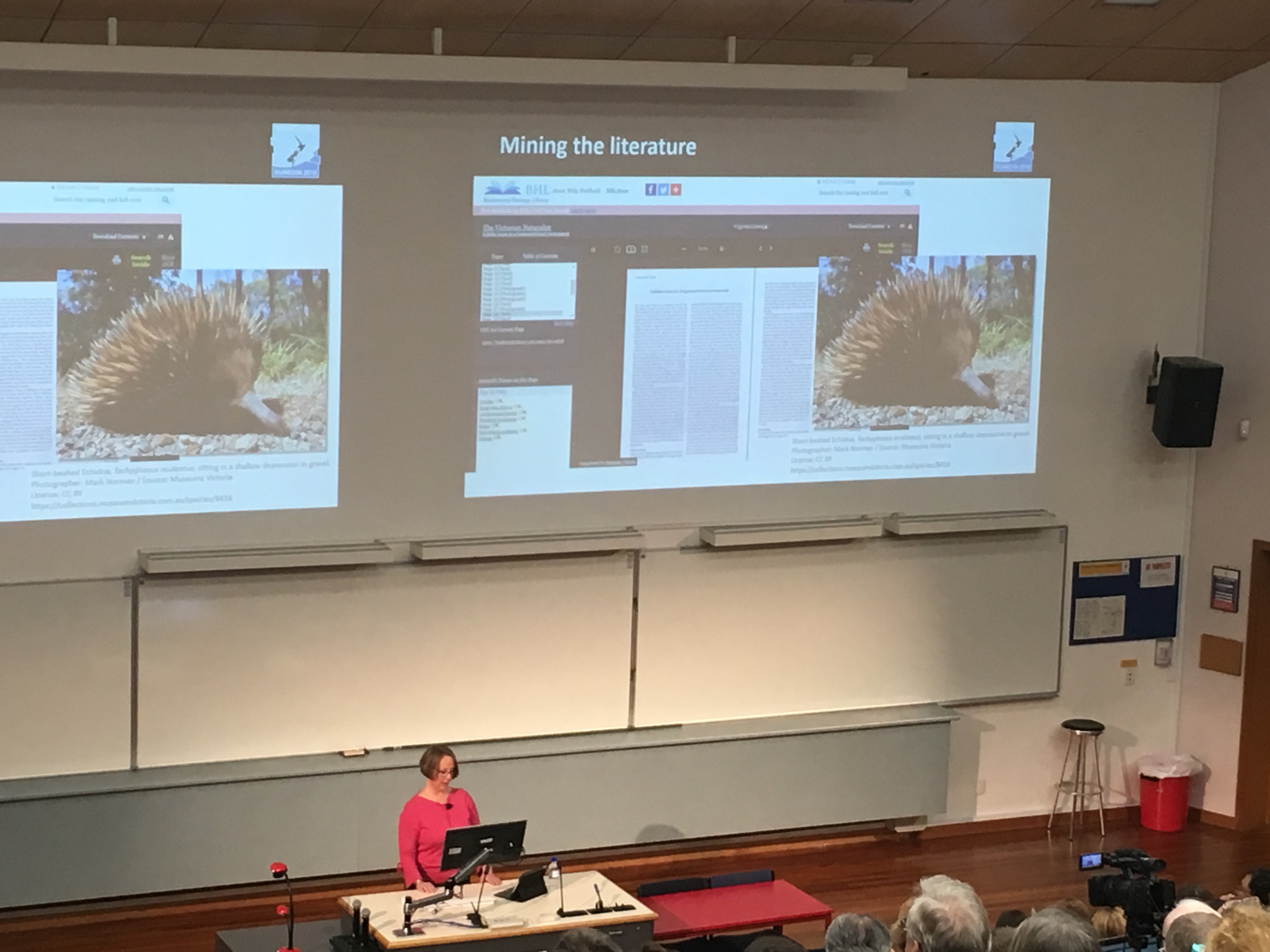
Dr. Elycia Wallis delivering a keynote address (with a highlight of BHL!) as part of the joint SPNHC/TDWG Conference.

Dr. Elycia Wallis delivering a keynote address (with a highlight of BHL!) as part of the joint SPNHC/TDWG Conference. Photo credit: Grace Costantino

In addition to over seventy sessions featuring multiple speakers in several concurrent tracks, the conference also included many fascinating keynote addresses (including one from Dr. Elycia Wallis, Member representative for BHL Australia).

Explore the abstracts for each keynote address below:

  • Building, Growing and Sustaining Global Collaborative Communities (Jonah Duckles, Director of Membership and Technology at The Carpentries)
  • The Change Imperative: Accelerating the pace of Biodiversity Discovery and Documentation (Dr. Elycia Wallis, Collections Community Engagement Manager for Atlas of Living Australia and project leader for the Australian Biodiversity Heritage Library project; Lee Belbin, geoscience graduate and IT postgraduate)
  • Promoting Public Engagement of Natural History Collections Through Science Communication (Dr. Bryan Lessard, entomologist at CSIRO’s Australian National Insect Collection)
  • Collections in an Uncertain World: The Impact of Earthquakes on Canterbury Museum (Anthony Wright, Director of Canterbury Museum)
  • If Only They Could Speak (Dr. Priscilla Wehi, conservation biologist and Rutherford Discovery Fellow at Manaaki Whenua Landcare Research in Dunedin)

BHL Symposium

BHL representatives preparing to deliver talks as part of the BHL Symposium. Left to right: Grace Costantino, Carolyn Sheffield, Siobhan Leachman, Nicole Kearney, Constance Rinaldo.

BHL representatives preparing to deliver talks as part of the BHL Symposium. Left to right: Grace Costantino, Carolyn Sheffield, Siobhan Leachman, Nicole Kearney, Constance Rinaldo.

BHL hosted a symposium at the conference, “Strategies for Improving Research Efficiency and Delivering Biodiversity Data through Digital Library Collections”, organized by Carolyn Sheffield (BHL Program Manager, Smithsonian Libraries) and moderated by Constance Rinaldo (Librarian of the Ernst Mayr Library, Harvard and Chair of the BHL Executive Committee).

The Symposium consisted of four talks, covering topics including citizen science, linking specimen records to literature, DOIs, and recent efforts to improve search efficiencies in BHL, from full text search to extracting georeference data. Explore the abstracts for each talk in the links below:

  • Outreach Strategies to Engage Citizen Scientists: Insights from the Biodiversity Heritage Library – Grace Costantino (BHL Secretariat, Smithsonian Libraries)
    • See slides
  • How A Citizen Scientist Can Reuse & Link Biodiversity Heritage Library Data – Siobhan Leachman (BHL Citizen Scientist)
    • See slides
  • What are we DOIng about the Missing Links? Connecting Taxonomic Names to the Linked Network of Scholarly Research – Nicole Kearney (BHL Australia, Museums Victoria)
    • See slides
  • Improving Search Efficiency in the Biodiversity Heritage Library Corpus – Carolyn A. Sheffield (BHL Secretariat, Smithsonian Libraries)
    • See slides

The Symposium was attended by about 100 people and was well-received. The session stimulated lively discussion regarding the lack of regulations around assigning DOIs to legacy literature, the ethics of publishers assigning DOIs to versions of out-of-copyright publications locked behind paywalls, and the need for museums to release collections-related data and images openly so that they may be reused for citizen science or on such platforms as Wikipedia (a point eloquently emphasized by Siobhan Leachman as part of a memorable Q&A exchange that was heralded and much-discussed throughout the remainder of the conference).

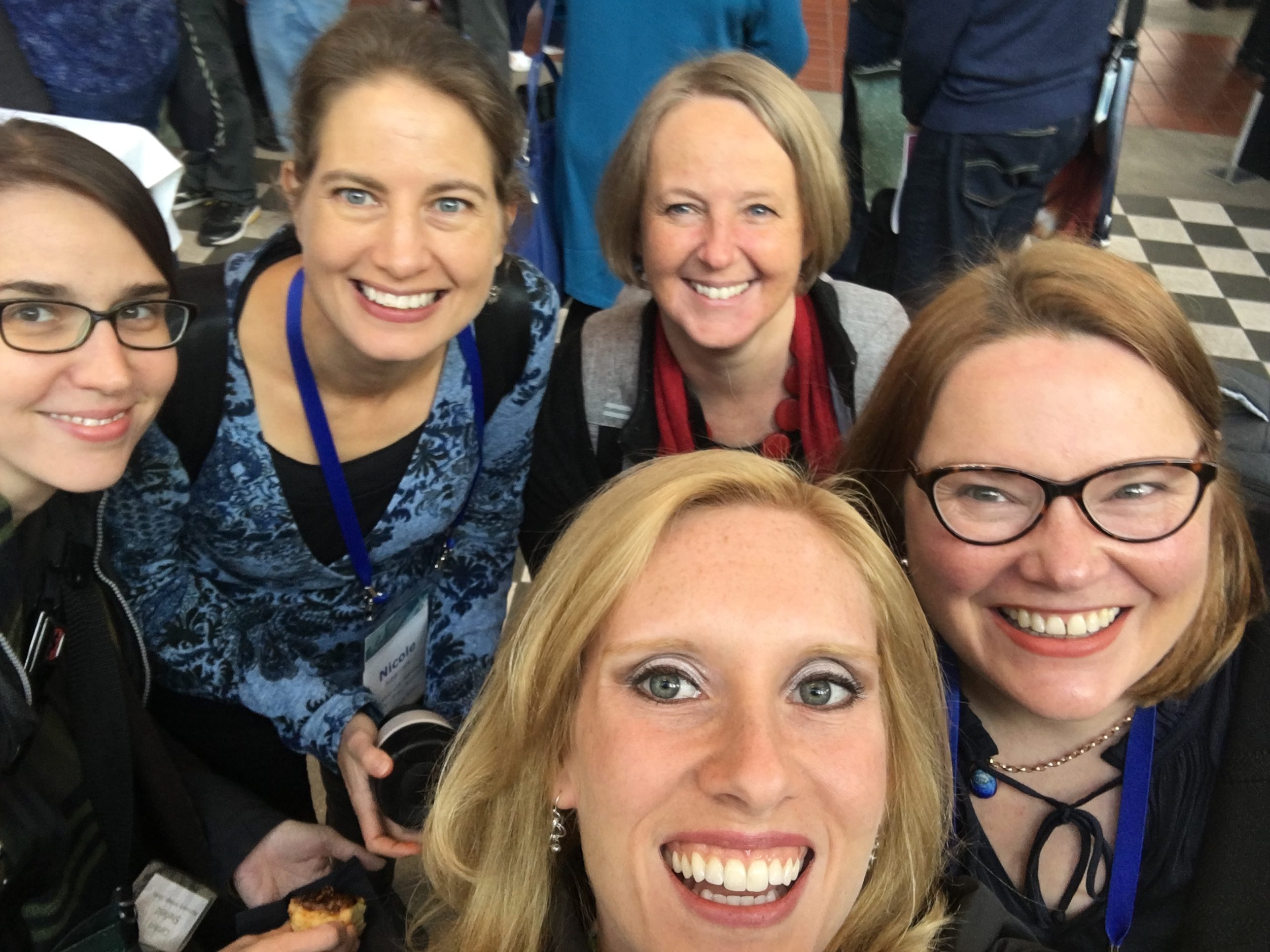
A group selfie with some of the excited BHL representatives! Left to right background: Carolyn Sheffield, Nicole Kearney, Elycia Wallis, Siobhan Leachman. Foreground: Grace Costantino

A group selfie with some of the excited BHL representatives! Left to right background: Carolyn Sheffield, Nicole Kearney, Elycia Wallis, Siobhan Leachman. Foreground: Grace Costantino. Photo credit: Grace Costantino

Conference Impact for BHL

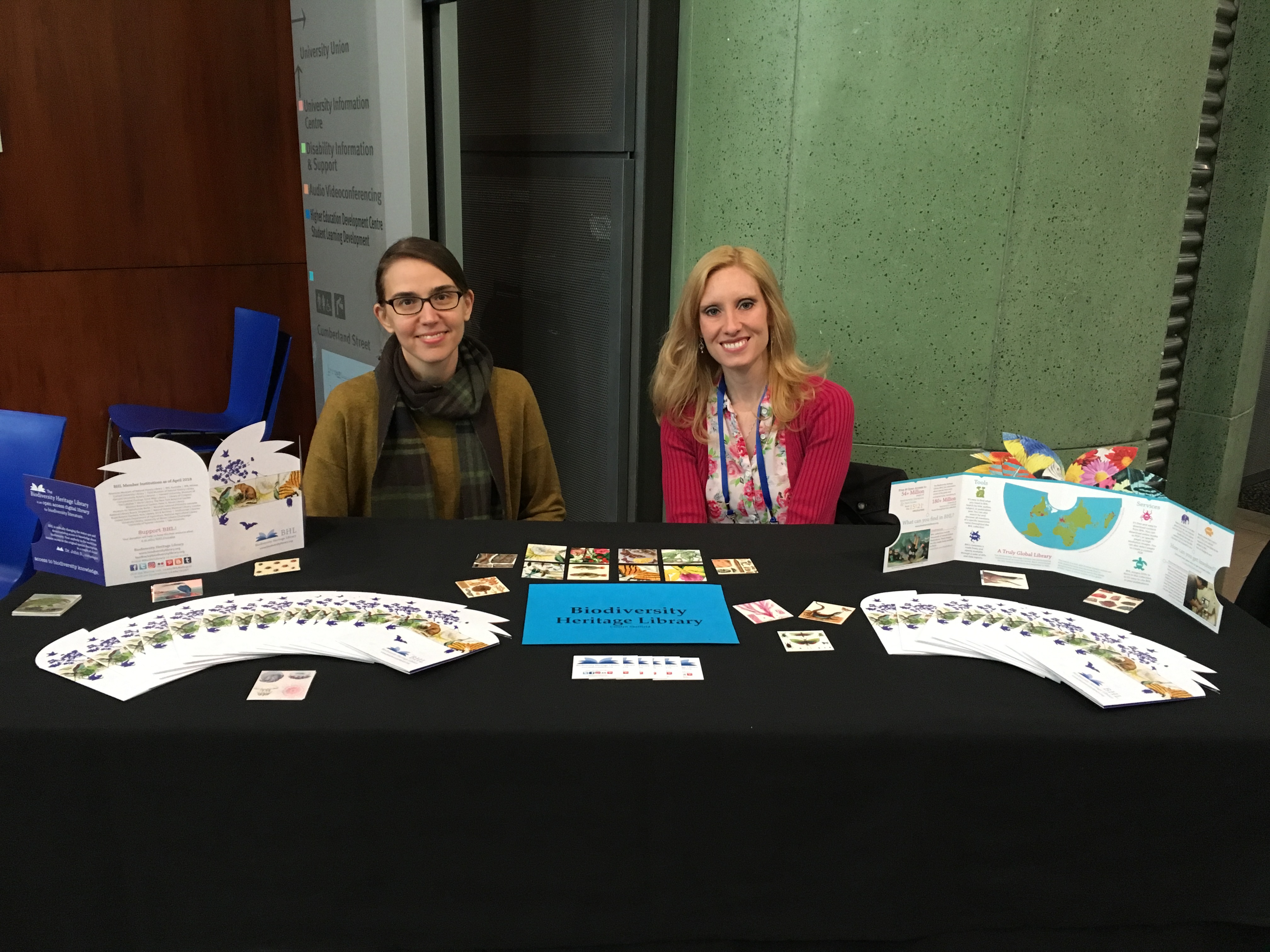
Carolyn Sheffield (left) and Grace Costantino (right) at the BHL table.

Carolyn Sheffield (left) and Grace Costantino (right) at the BHL table.

As a conference partner, BHL hosted a table during the event, which provided a valuable opportunity for representatives to talk with attendees. While most had already heard of BHL, the library was still new to some. The BHL brochure and cards were also very popular, with all supplies of each (including over 250 cards) being distributed by the end of the conference.

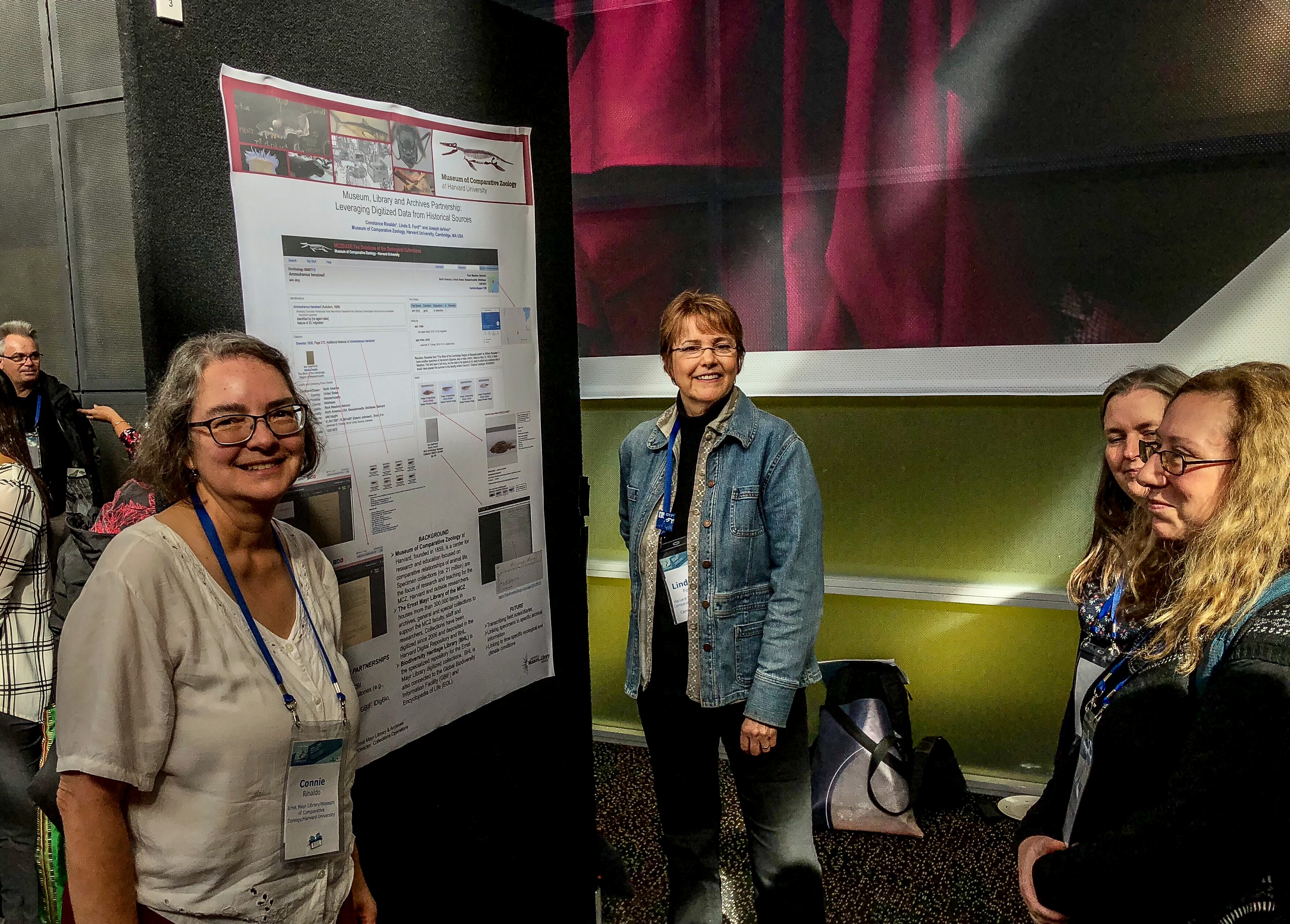
Rinaldo also presented a poster, “Museum, Library and Archives Partnership: Leveraging Digitized Data from Historical Sources”, with co-authors Linda S. Ford (Museum of Comparative Zoology, Harvard) and Joseph deVeer (Ernst Mayr Library, MCZ, Harvard) discussing projects to digitize specimen ledger pages/cards and field books and link them to relevant specimen records in order to enhance discoverability of hidden data and promote cross-discipline research with interrelated historical resources. In particular, the poster highlighted work to digitize ornithologist William Brewster’s notebooks and correspondence, make these available via BHL, and ultimately cross-link the data with the related specimen records. You can see the poster via Dropbox.

Constance Rinaldo (left) with Linda S. Ford (right) presenting their poster: “Museum, Library and Archives Partnership: Leveraging Digitized Data from Historical Sources”.

Constance Rinaldo (left) with Linda S. Ford (right) presenting their poster: “Museum, Library and Archives Partnership: Leveraging Digitized Data from Historical Sources”. Photo credit: Jeremiah Trimble.

The conference also enabled representatives to learn more about BHL’s impact on research. Many attendees shared examples of how BHL has empowered their own research, with several agreeing to share their experience as part of the BHL User series (so be sure to follow the series to learn more!).

Several attendees were also inspired to explore ways that they could contribute to BHL, such as by uploading field notes from their institution, working with the API to add literature links to collections databases, or encouraging their institutions to join BHL.

Excursions

BHL representatives had a chance to enjoy New Zealand’s amazing landscapes, culture, and wildlife through a variety of excursions.

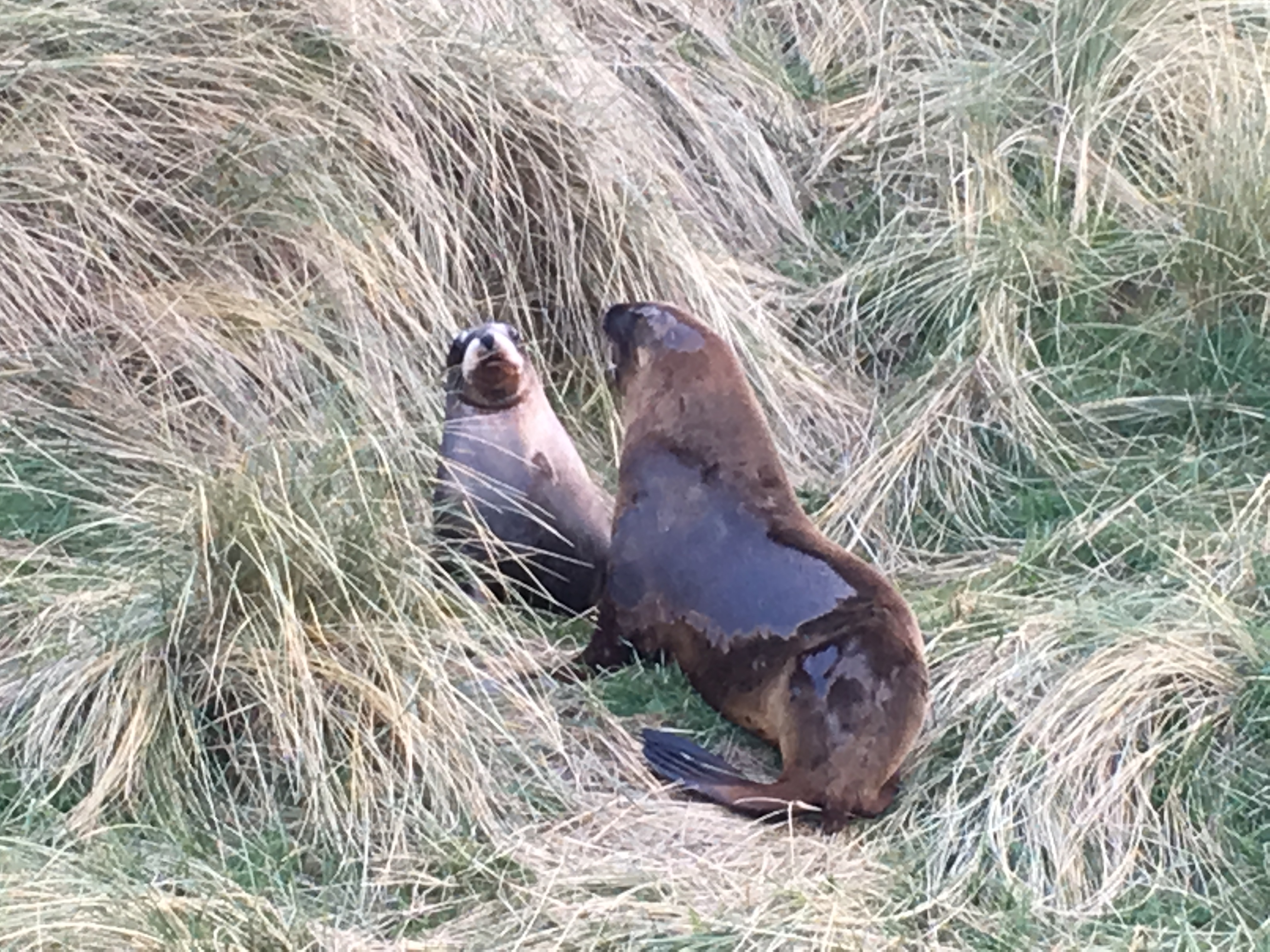
Costantino enjoyed a tour of the Otago Peninsula, where she saw New Zealand sea lions (Phocarctos hookeri), believed to be the world’s rarest sea lion, and yellow-eyed penguins (Megadyptes antipodes), an endangered species endemic to New Zealand.

Yellow-eyed penguin (Megadyptes antipodes).

Yellow-eyed penguin (Megadyptes antipodes). Photo credit: Grace Costantino

New Zealand sea lions (Phocarctos hookeri).

New Zealand sea lions (Phocarctos hookeri). Photo credit: Grace Costantino

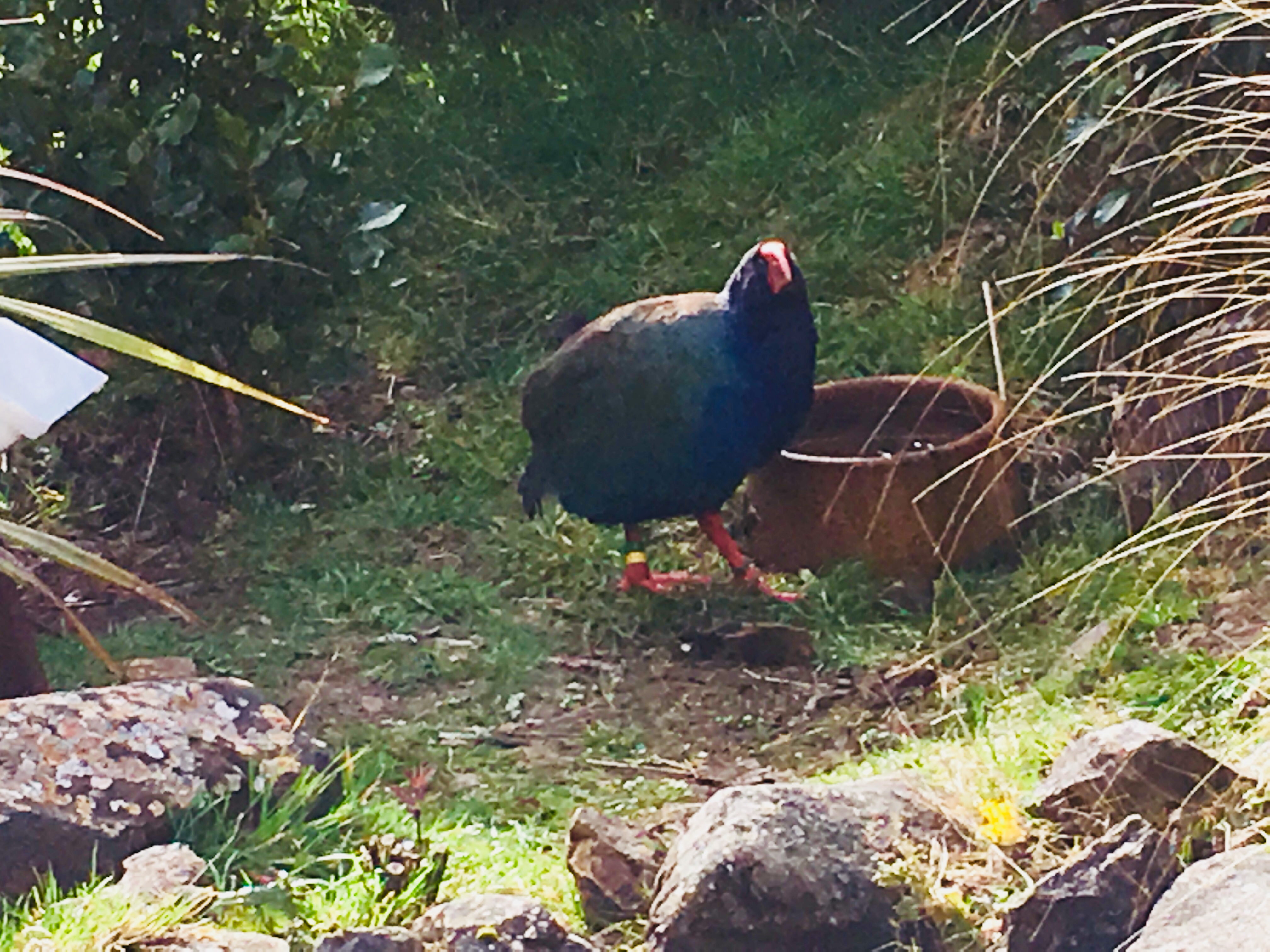
Several BHL representatives also enjoyed a visit to the Orokonui Ecosanctuary, which is home to a wide variety of New Zealand flora and fauna, including kiwis, jewelled geckos, fungi like stinkhorns, New Zealand pigeons (kererūs), kākās, tuataras, and takahēs.

Takahē (Porphyrio hochstetteri) observed at the Orokonui Ecosanctuary.

Takahē (Porphyrio hochstetteri) observed at the Orokonui Ecosanctuary. Photo credit: Constance Rinaldo.

About TDWG

Biodiversity Information Standards, also known as the Taxonomic Databases Working Group, is a not-for-profit scientific and educational association that is affiliated with the International Union of Biological Sciences. TDWG was formed to establish international collaboration among biological database projects. TDWG promoted the wider and more effective dissemination of information about the Earth’s heritage of biological organisms for the benefit of the world at large. Biodiversity Information Standards (TDWG) now focus on the development of standards for the exchange of biological/biodiversity data.

About SPNHC

The Society for the Preservation of Natural History Collections (SPNHC) is an international society whose mission is to improve the preservation, conservation and management of natural history collections to ensure their continuing value to society.

Post with contributions from Carolyn Sheffield, Constance Rinaldo, Siobhan Leachman, and Nicole Kearney.

September 20, 2018by michelle.underhill
BHL News, Blog Reel

TDWG 2017 Annual Conference: Data Integration in a Big Data Universe: Associating Occurrences with Genes, Phenotypes, and Environments

The Biodiversity Heritage Library is an institutional member of TDWG. TDWG was formed to:

establish international collaboration among biological database projects. TDWG promoted the wider and more effective dissemination of information about the World’s heritage of biological organisms for the benefit of the world at large. Biodiversity Information Standards (TDWG) now focuses on the development of standards for the exchange of biological/biodiversity data.

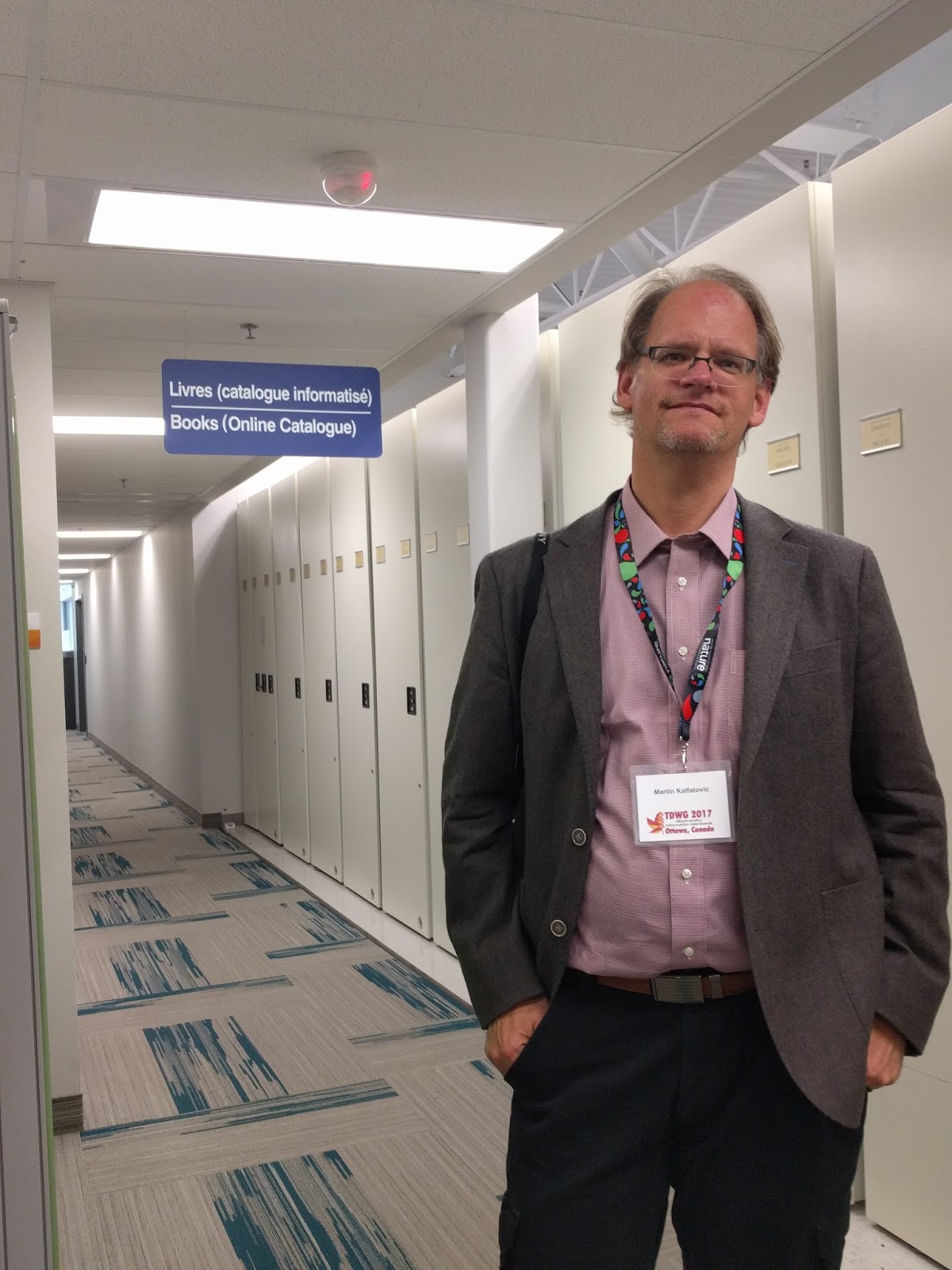
The TDWG 2017 Annual Conference, the theme of which was “Data Integration in a Big Data Universe: Associating Occurrences with Genes, Phenotypes, and Environments” (see the full program here),  provides the opportunity for bioinformatics professionals to meet and exchange a wide variety of ideas. Held in Ottawa, Ontario, the conference was hosted by Agriculture and Agri-Food Canada and the Canadian Museum of Nature (a BHL Affiliate).

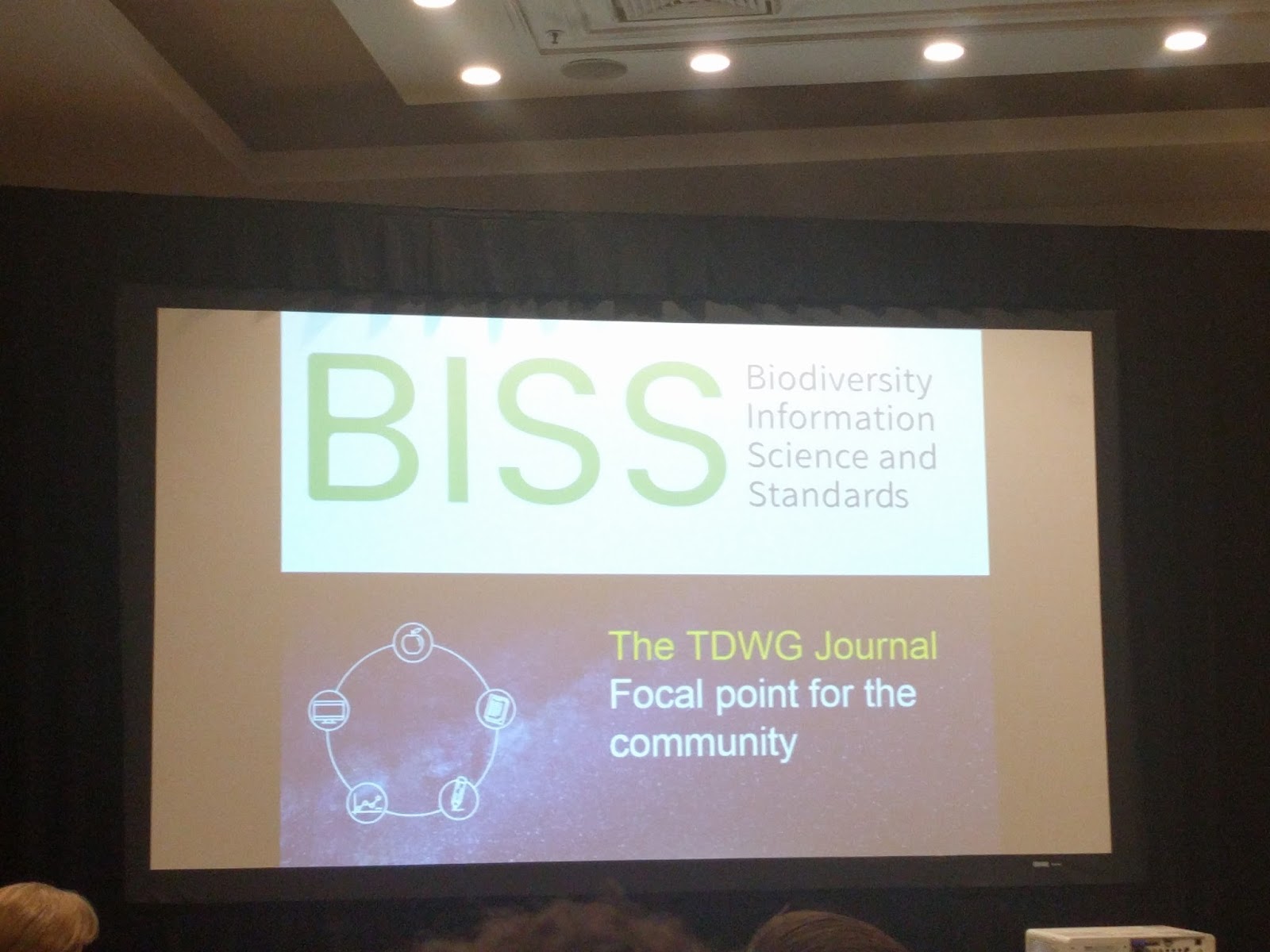
This year, The Biodiversity Heritage Library organized a symposium, “500 Years of Big Data from the Biodiversity Heritage Library”, organized by BHL Program Director Martin R. Kalfatovic and BHL Program Manager Carolyn A. Sheffield. In addition to the BHL symposium, BHL web developer Mike Lichtenberg participated in the symposium “Using Big Data Techniques to Cross Dataset Boundaries – Integration and Analysis of Multiple Datasets”, organized by Kalfatovic, Matthew Collins, and Robert Guralnick.

See details about the symposiums below:

BHL Symposium (abstracts found in the links below)

  • A path to continuous reindexing of scientific names appearing in Biodiversity Heritage Library data / Dmitry Mozzherin, Alexander A Myltsev. Biodiversity Information Science and Standards 1: e20186 (11 Aug 2017)
  • Expanding Access to Biodiversity Literature / Mariah Lewis. Biodiversity Information Science and Standards 1: e20146 (10 Aug 2017)
  • BHL’s Feedback Tools and User Surveys: Investigating User Needs for Data in Digital Libraries / Carolyn A. Sheffield, Pamela McClanahan. Biodiversity Information Science and Standards 1: e20003 (03 Aug 2017)
  • How Did BHL Get to Big Data / Martin R. Kalfatovic. Biodiversity Information Science and Standards 1: e20002 (03 Aug 2017)
  • Scientific Names: Linking the Past to Provide Context for Knowledge / Thomas M. Orrell, David Mitchell. Biodiversity Information Science and Standards 1: e19937 (01 Aug 2017)
  • Crowdsourcing Data Enhancements to Improve Named Entity Recognition in the Biodiversity Heritage Library / Katie Mika. Biodiversity Information Science and Standards 1: e17354 (25 Jul 2017)
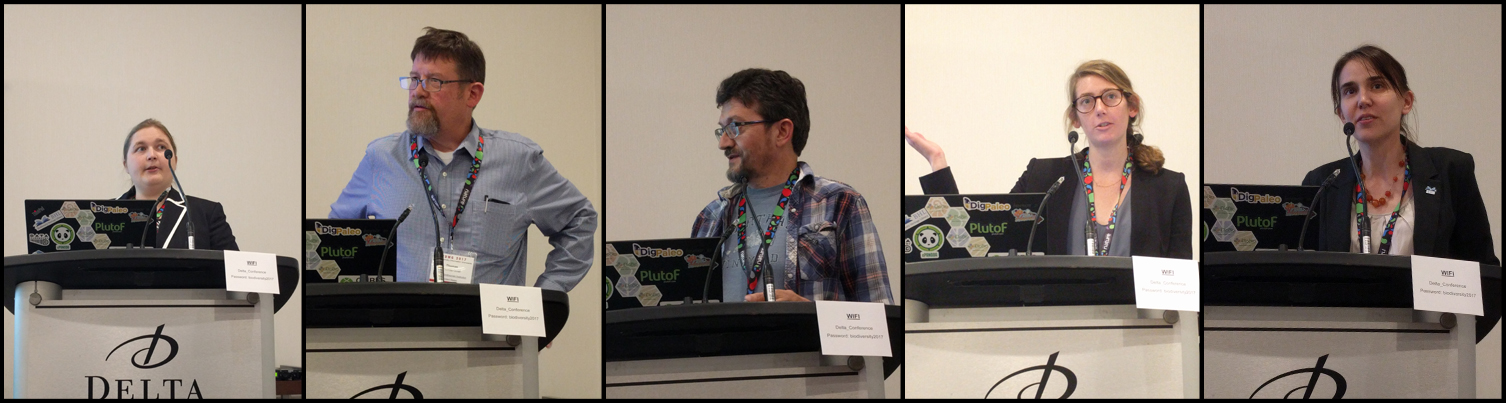
From left: Lewis, Orrell, Mozzherin, Mika, Sheffield

Symposium: Using Big Data Techniques to Cross Dataset Boundaries – Integration and Analysis of Multiple Datasets

  • BHL: A Source for Big Data Analysis / Mike Lichtenberg. Biodiversity Information Science and Standards 1: e20339 (16 Aug 2017).

Excursion

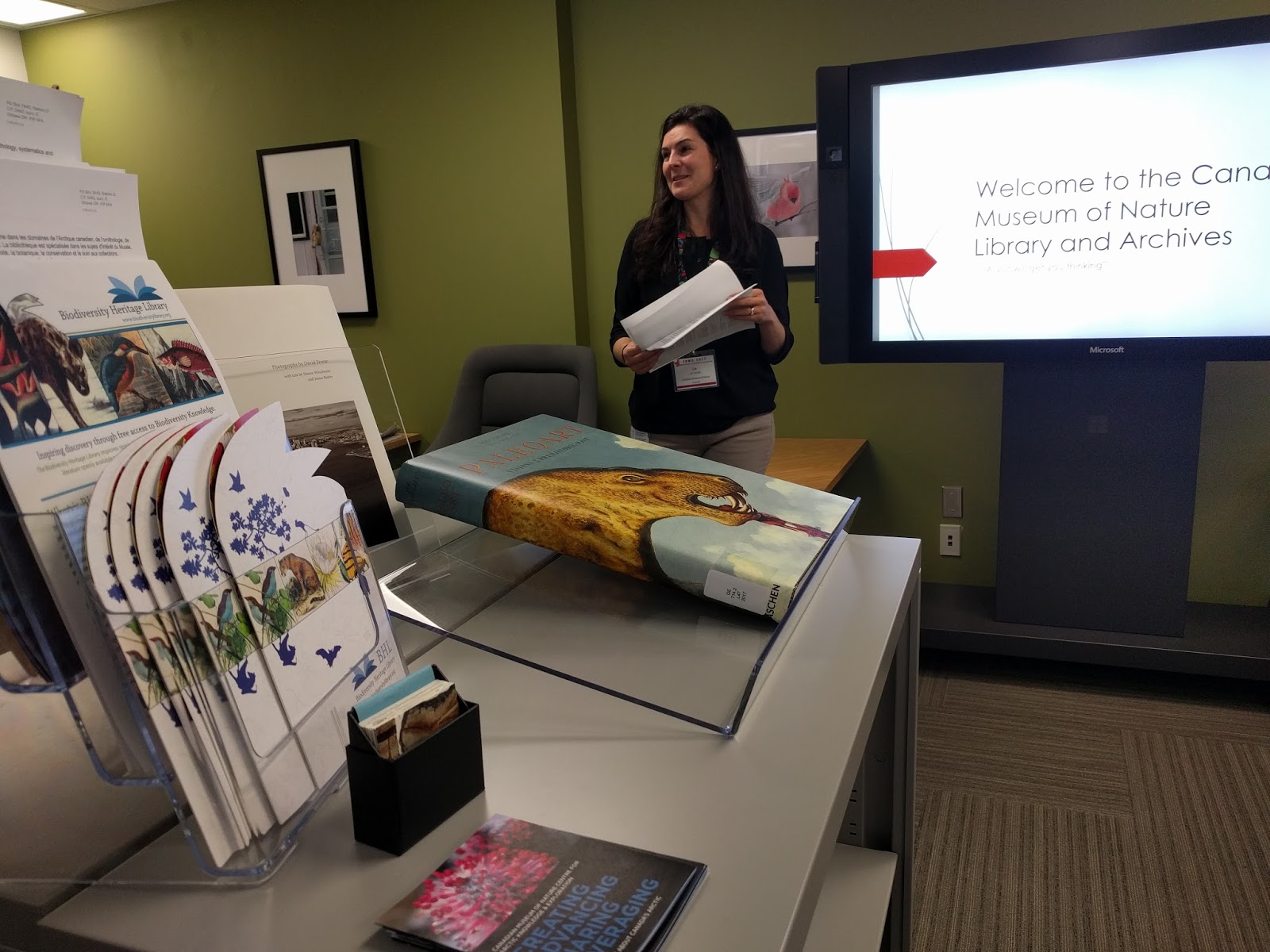
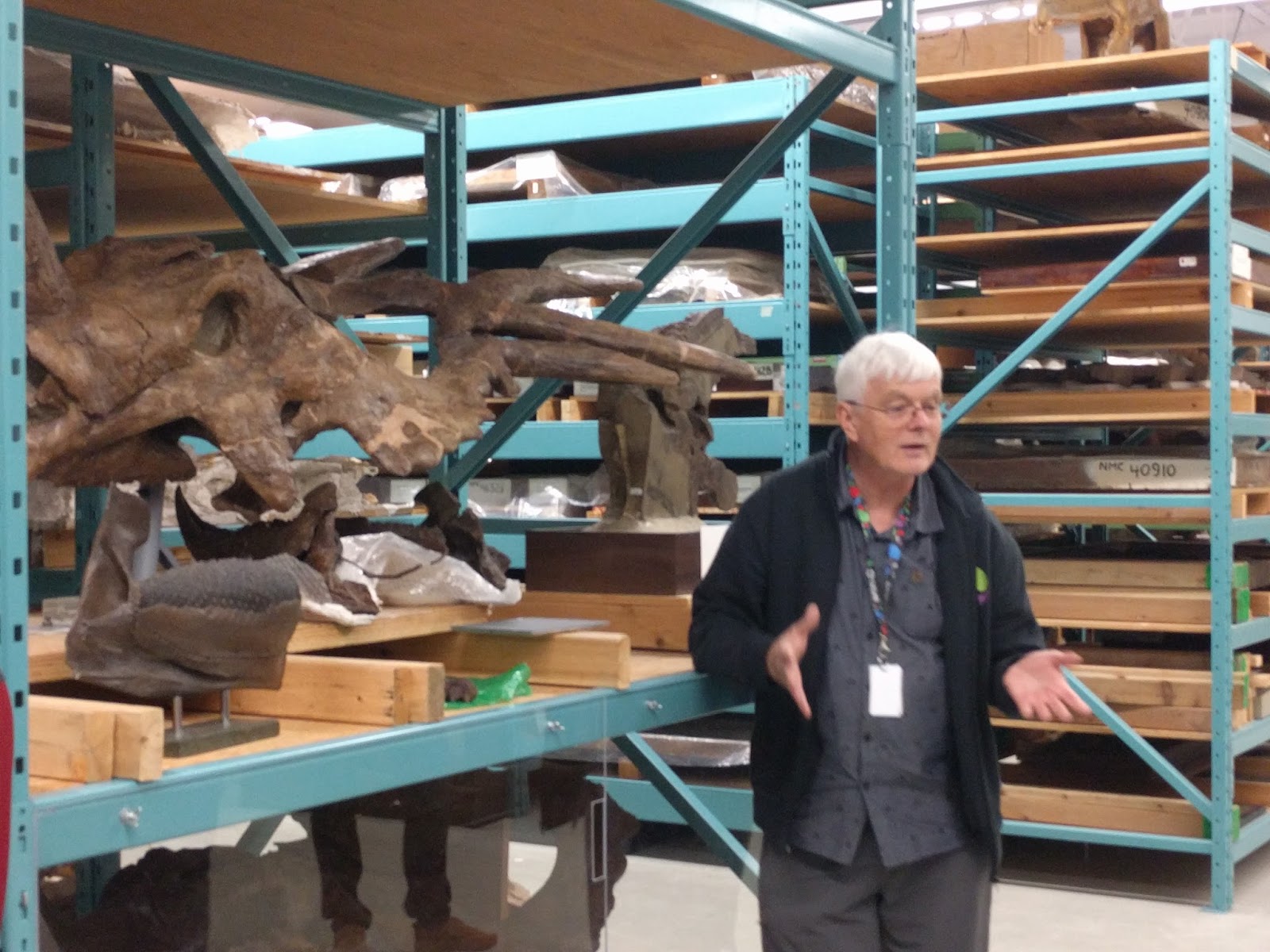
TDWG also offered the opportunity for excursions. The Canadian Museum of Nature (CMN) provided an amazing tour of their collections facilities located just outside the city. The CMN library is also located at this facility and it was great to meet with the library staff and see their collections.
November 17, 2017by
BHL News, Blog Reel

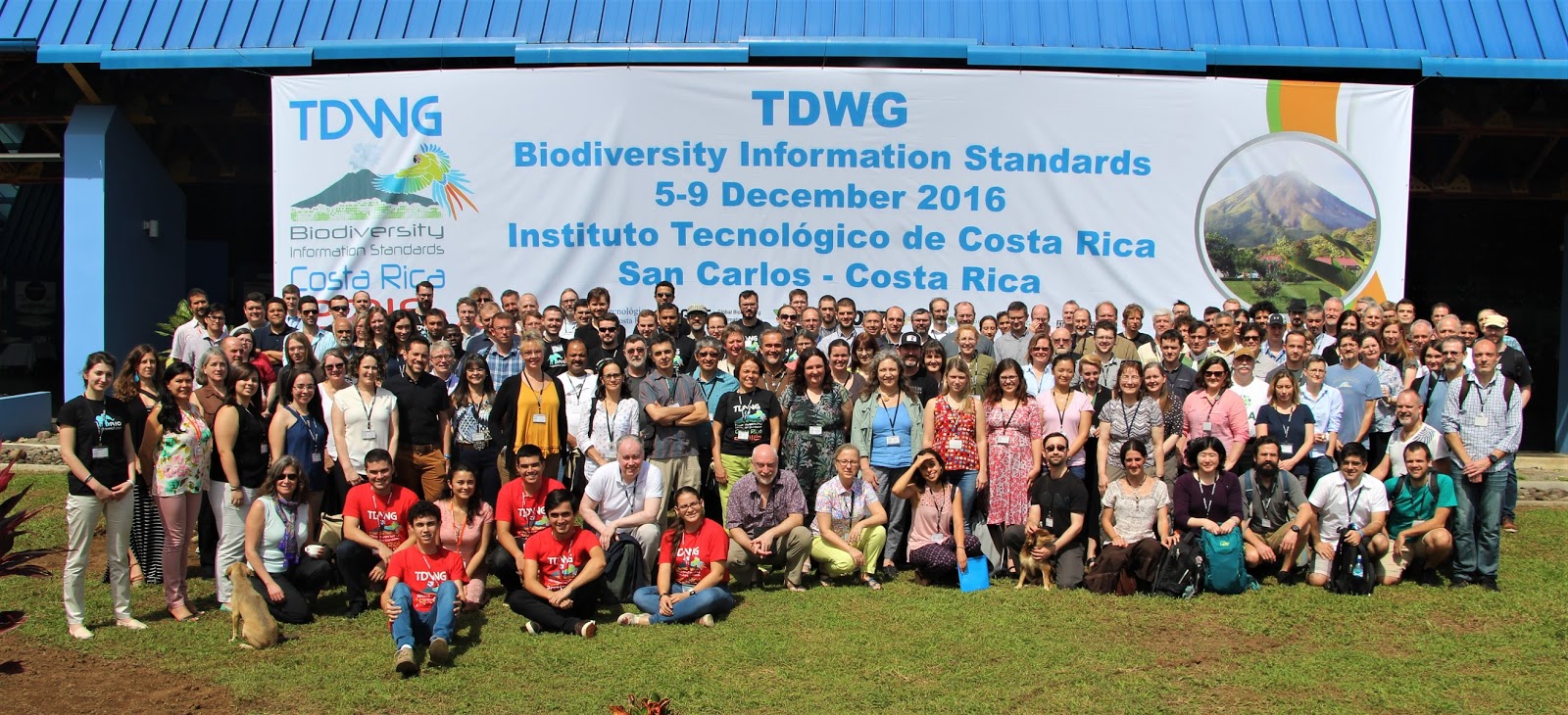
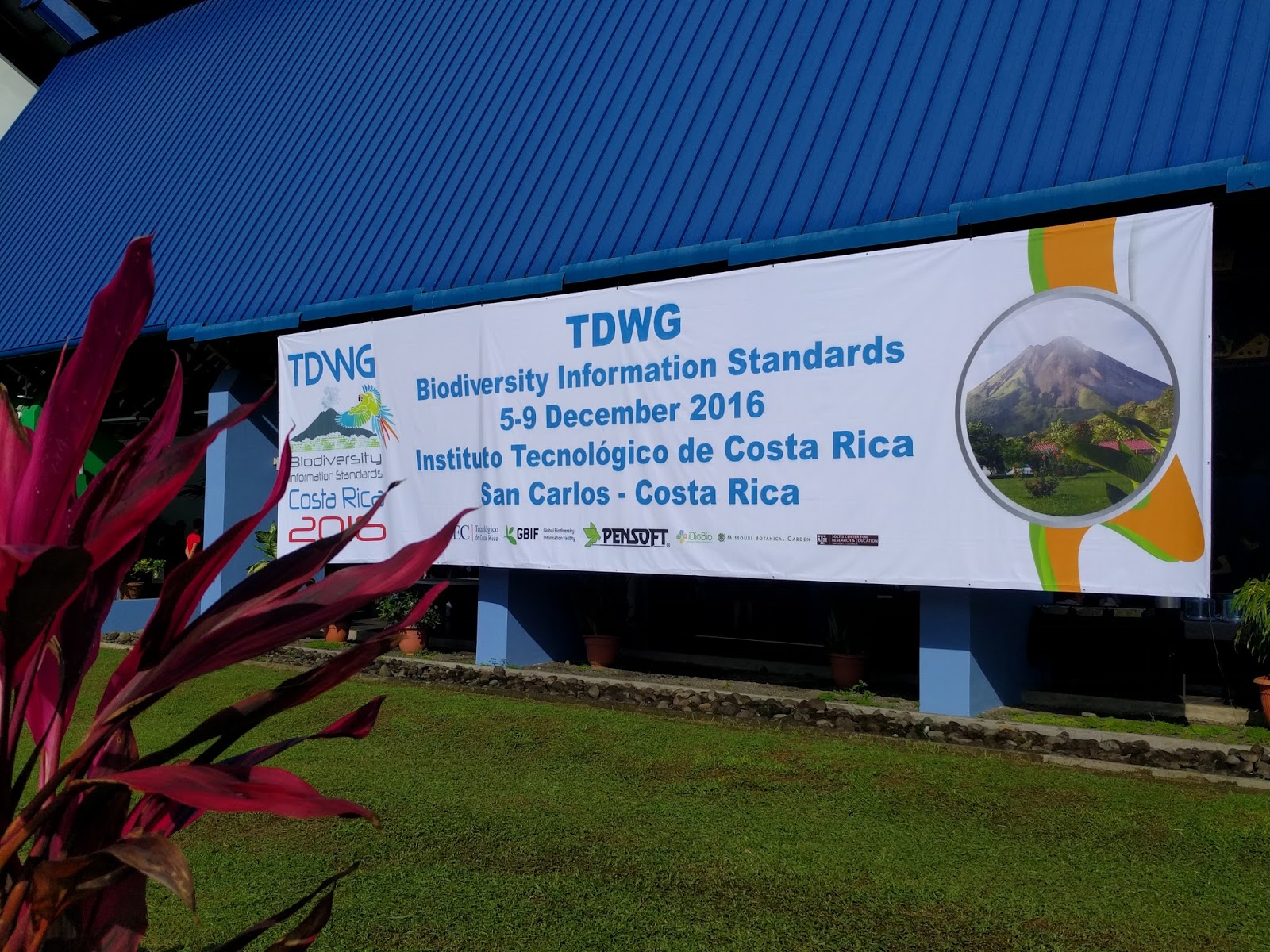
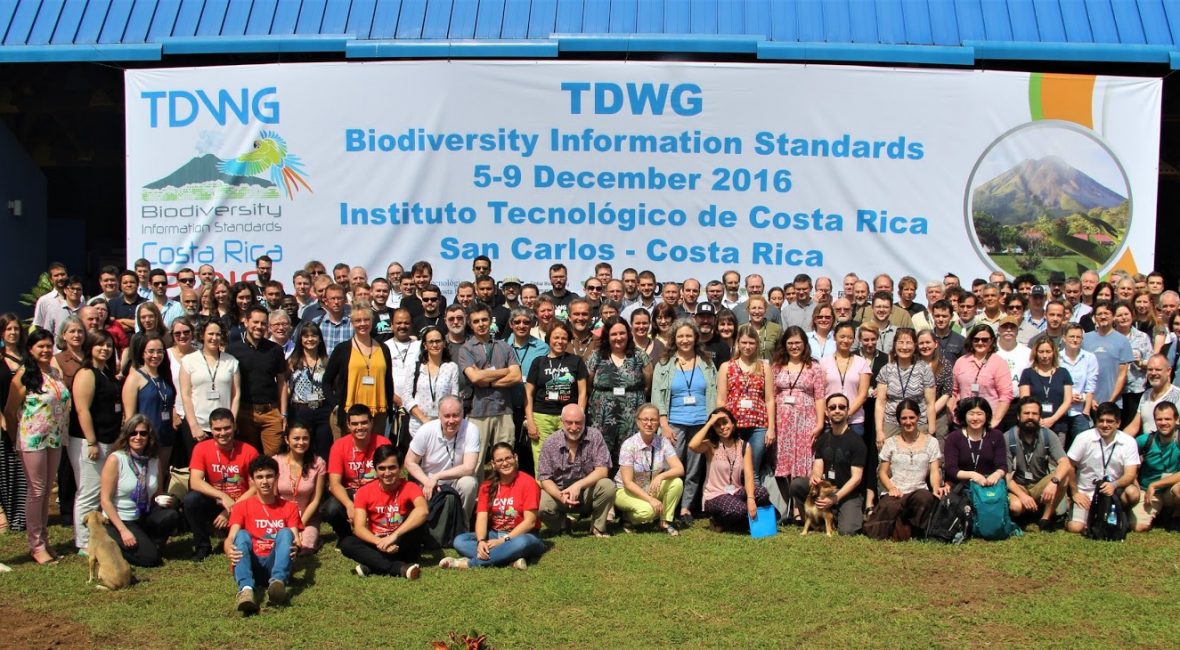
TDWG 2016 meeting, La Fortuna & Alajuela Province, San Carlos, Costa Rica

View Full Size Image
Official Photo by Denisse Vargas

The 2016 TDWG Biodiversity Information Standards meeting was held at the Centro de Transferencia Tecnológica y Educación Continua (CTEC) in San Carlos, Costa Rica. Hotels and other activities were in La Fortuna, about a 45 minute bus ride from CTEC.

BHL was represented at the TDWG 2016 conference with a symposium, “BHL: 10 Years of Innovation and Growth”. The panel consisted of:

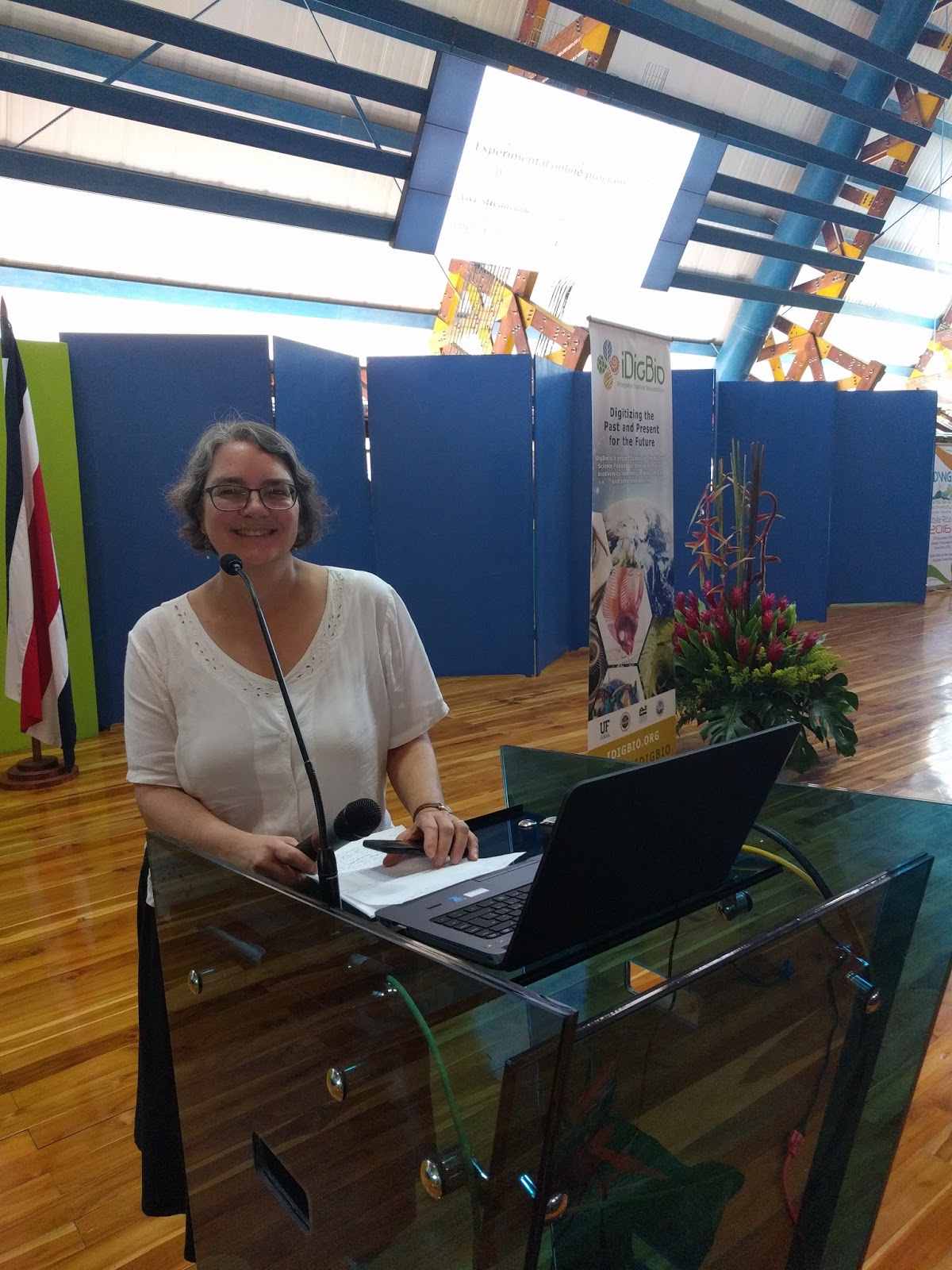
View Full Size Image
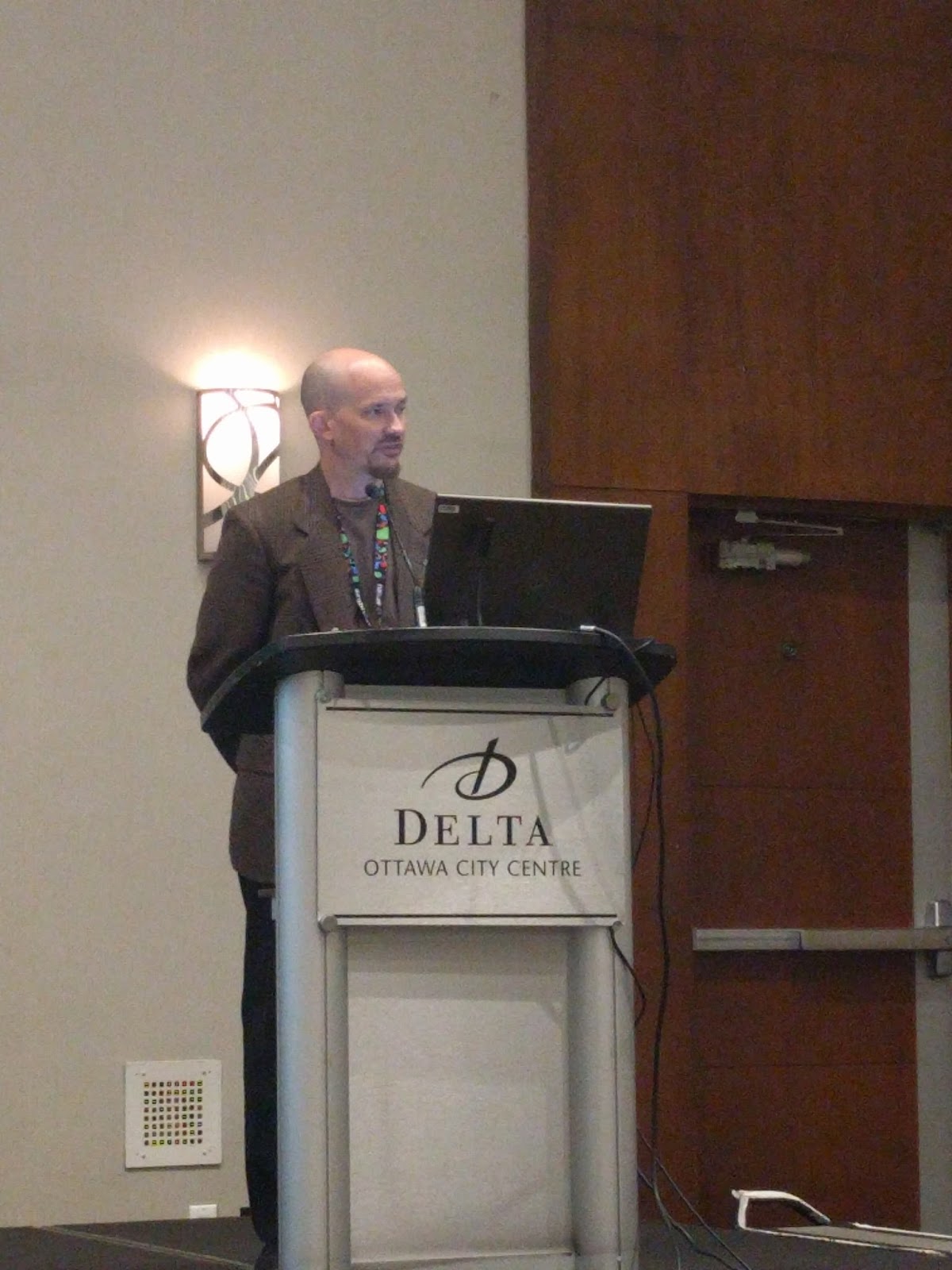
Constance Rinaldo
  • BHL – 10 Years and More! (Martin R. Kalfatovic)
  • BHL: Grants and Growth (Constance Rinaldo)
  • BHL-SciELO Network (Henrique Rodrigues)
  • Towards extracting occurrence data from biodiversity literature (Dmitry Schigel)
  • Questions: BHL – 10 years of innovation & growth (Discussion led by Constance Rinaldo)

The session was attended by about 70 people. The conclusion of the session was a discussion with the audience about desires for the future direction of BHL and features or services that could be implemented as BHL explores refactoring the BHL platform. Among the topics mentioned by the audience were: integration of visual resources in BHL and expanding in-copyright material.

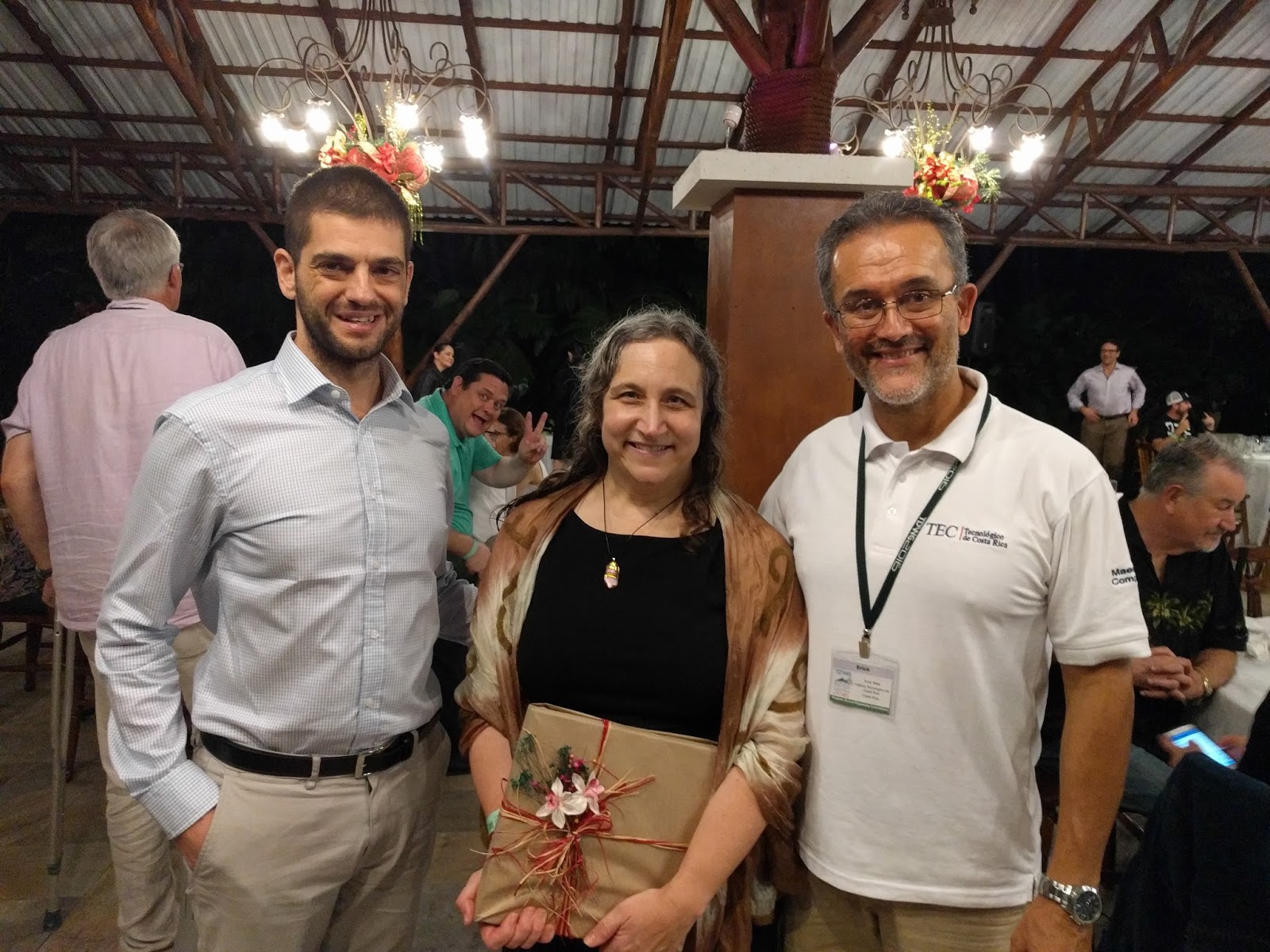
View Full Size Image
Dimitris Koureas, Cynthia Parr, Erick Mata

The TDWG organizers, led by the program committee – Dr. Erick Mata Montero (Professor, School of Computing, Costa Rica Institute of Technology); Gail Kampmeier (Prairie Research Institute, Illinois Natural History Survey, University of Illinois, USA); Francisco (“Paco”) Pando (Real Jardín Botánico-CSIC, Spain); Maria Mora Instituto (Nacional de Biodiversidad, Costa Rica); Joel Sachs (Agriculture and Agri-Food, Canada); Manuel Vargas (Instituto Nacional de Biodiversidad, Costa Rica); Stan Blum (ex-officio TDWG Coordinator); and William Ulate (ex-officio TDWG Treasurer, Missouri Botanical Garden) – delivered an excellent program.

The keynote, by Dr. Rodrigo Gámez Lobo (founder and former Director General and President of the National Biodiversity Institute) explored the future of Costa Rican biodiversity as exemplified in his work On Biodiversity, People and Utopias (1999). His talk addressed the theme of this work, in which he states, “Our real goal is to make the society come to the understanding that, because of being something that directly affects quality of life, materially, intellectually and spiritually, we must preserve at all costs the rich biodiversity of the country”.

Former BHL Technical Director William Ulate led a symposium on Semantics for Biodiversity Science: Challenges & Solutions. Ulate and co-author Riza Batista-Navarro spoke on “Real use cases for Semantic Information from the Mining Biodiversity project.”

Another important symposium was Semantics for Biodiversity Science: Text Mining & Semantic Role Tagging. Key papers included:

  • Enhancing semantic search through the automatic construction of a Biodiversity Terminological Inventory (Nhung T.H. Nguyen, Georgios Kontonatsios, Axel J. Soto, Riza Batista-Navarro, Sophia Ananiadou)
  • Geographic entities extraction from biological textual sources (Moisés Alberto Acuña-Chaves)

Another symposium of note was Semantics for Biodiversity Science: Taxon Names & Traits. Key papers included:

  • What’s in a name? Sense and reference in digital biodiversity information (Joakim Philipson)
  • Creating computable definitions for clades using the Web Ontology Language (OWL) (Gaurav Vaidya, Hilmar Lapp, Nico Cellinese)
Globally Unique Identifiers for Names (organized by Chuck Miller and Richard Pyle) included papers of interest to BHL:
  • Reviewing data integration and mobilisation using name reconciliation and identifier services (Nicky Nicolson, Robert Turner, Abigail Barker)
  •  Implementing Name Identifiers for the World Flora Online (Chuck Miller)
  • Identifiers for Biodiversity Informatics: The Global Names Approach (Dmitry Y. Mozzherin, Richard Pyle)
  • The Catalogue of Life Editor’s View on Globally Unique Identifiers for Names (Yuri Roskov)
  • Names and identifiers in the CyVerse cyberinfrastucture (Ramona L. Walls)
  • Utilizing Unique Identifiers for Taxonomic Concepts (Jeff Gerbracht)

View Full Size ImageTwo papers of interest in the contributed papers session were  a historical review of TDWG and a paper  describing a new publishing practice that relies on extraction of highly relevant details (species descriptions, for example) from longer publications.

  • TDWG Then and Now (Arturo H. Ariño, Anabel Pérez de Zabalza)
  • Nanopublications for biodiversity: concept, formats and implementation (Lyubomir Penev, Éamonn Ó Tuama, Viktor Senderov, Pavel Stoev, Teodor Georgiev)


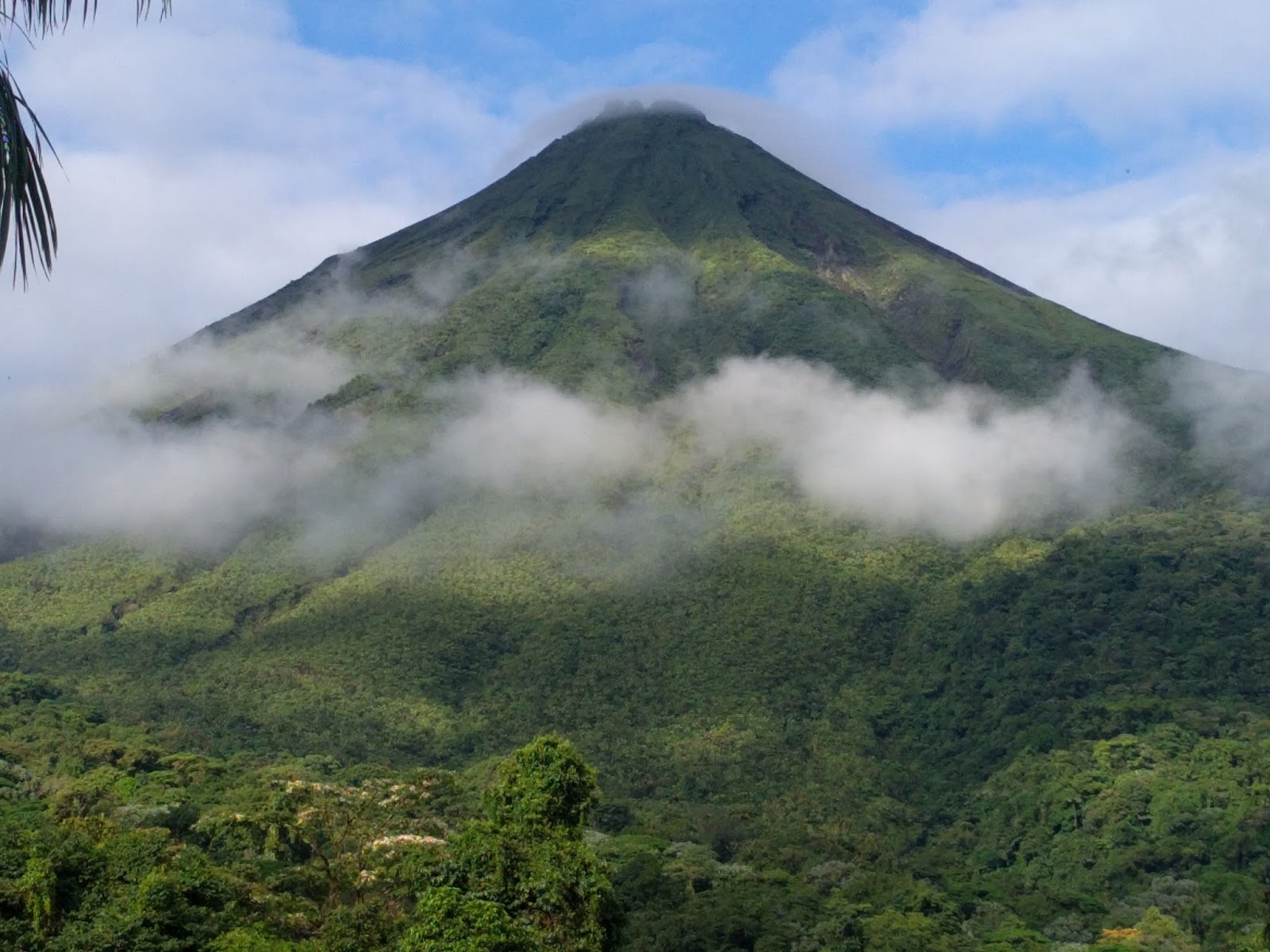
View Full Size Image
Volcán Arenal

A highlight of the meeting was the TDWG 2016 Bioblitz at the nearby Texas A&M; Soltis Center. The bioblitz helped to create a biodiversity snapshot of TDWG 2016. Participants were encouraged to take the opportunity to observe and to post their pictures of local biodiversity. The event took place in a torrential rainstorm, but the event still provided some observations and camaraderie.

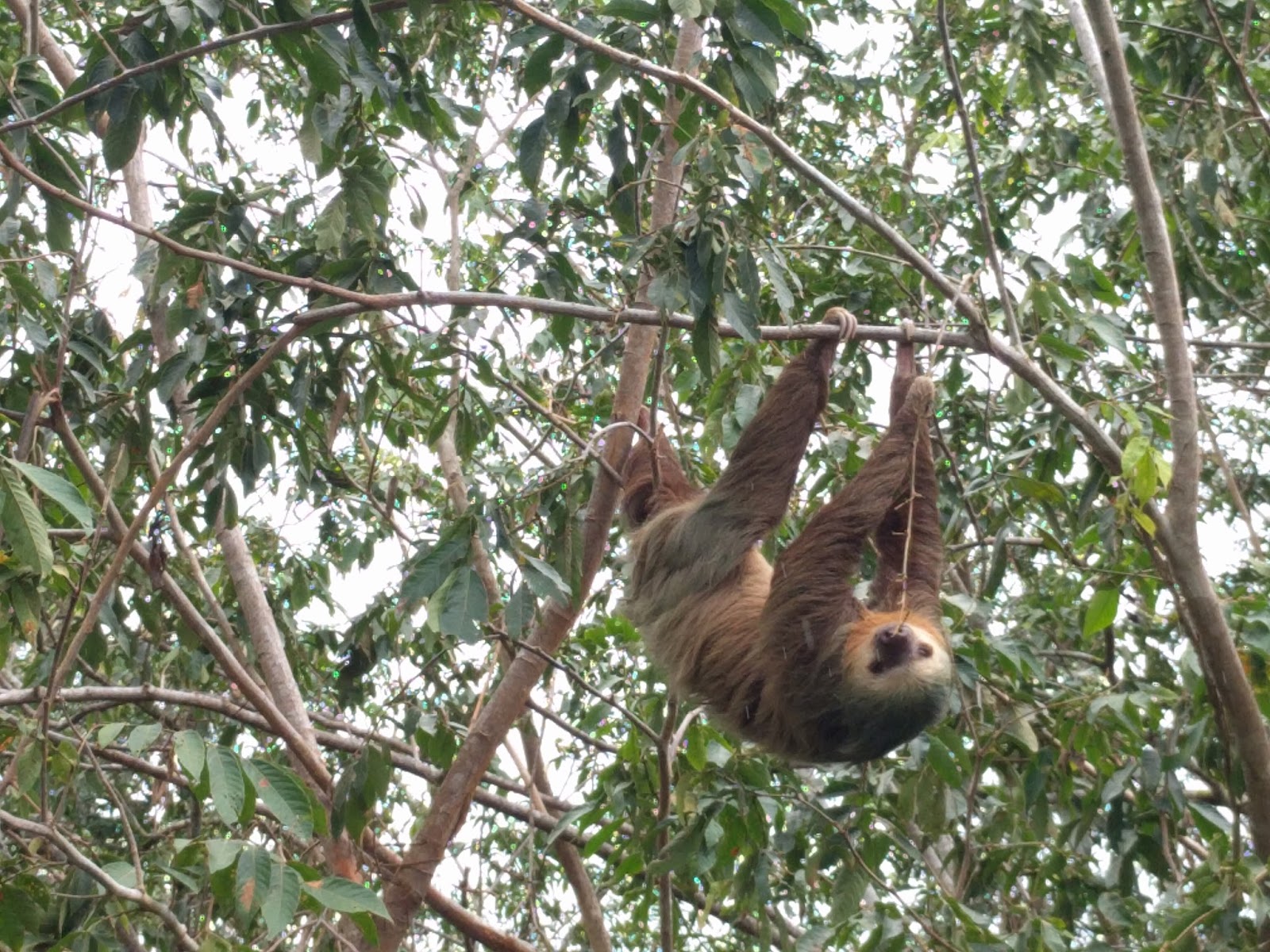
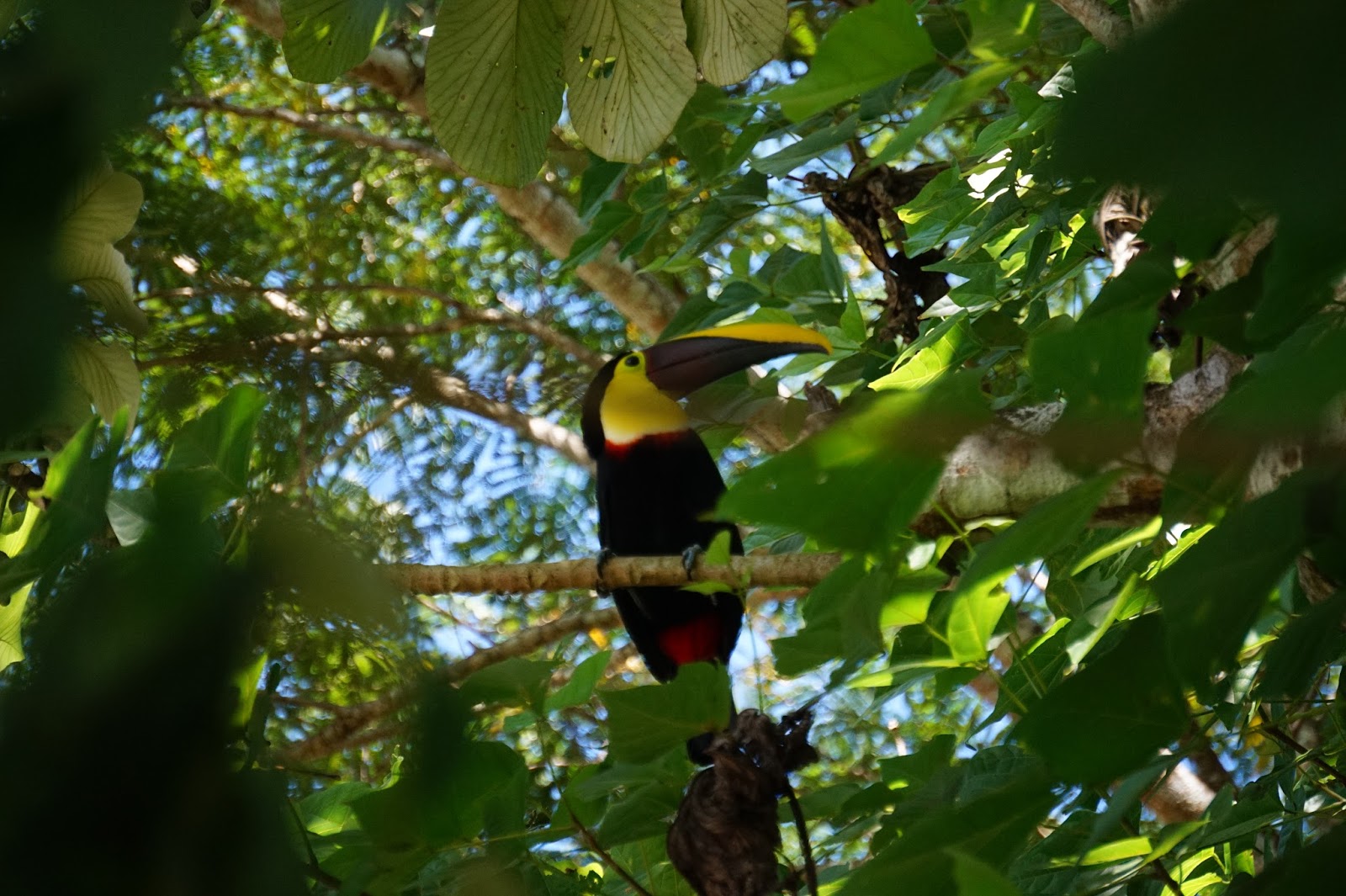
There were other opportunities to see some of Costa Rica’s amazing biodiversity, among those sighted were:

View Full Size Image
Two-toed Sloth
(Choloepus hoffmanni)

Mammals

  • Three-toed Sloth (Bradypus variegatus)
  • Two-toed Sloth (Choloepus hoffmanni)
  • White-nosed Coati (Nasua narica)
  • Mantled Howler Monkey (Alouatta palliata)
  • Spider Monkey (Ateles geoffroyi)
  • White-throated Capuchin (Cebus capucinus)
  • Long-nosed bat (Rhynchonycteris naso)
View Full Size Image
Yellow-throated Toucan
(Ramphastos ambiguus)

Birds

  • Wood Stork (Mycteria americana)
  • Little Blue Heron (Egretta caerulea)
  • Cattle Egret (Bubulcus ibis)
  • Snowy Egret (Egretta thula)
  • Northern Jacana (Jacana spinosa)
  • Turkey Vulture (Cathartes aura)
  • Groove-billed Ani (Crotophaga sulcirostris)
  • Yellow-throated Toucan (Ramphastos ambiguus)
  • Green Kingfisher (Chloroceryle americana)
  • Anhinga (Anhinga anhinga)
  • White Ibis (Eudocimus albus)
  • Boat-billed Heron (Cochlearius cochlearius)
View Full Size Image
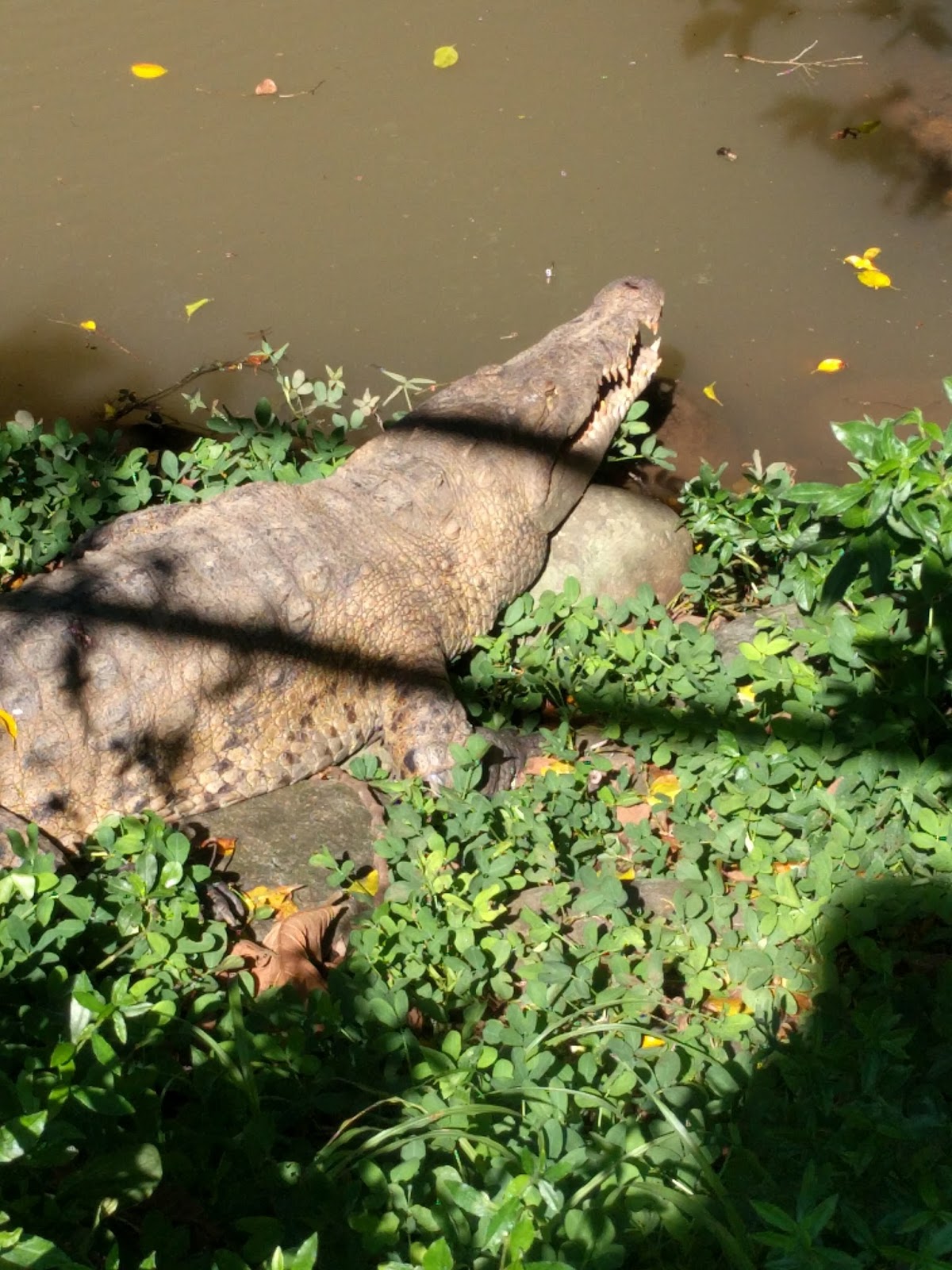
American Crocodile
(Crocodylus acutus)

Reptiles

  • Spectacled Caiman (Caiman crocodilus)
  • American Crocodile (Crocodylus acutus)
  • Emerald Basilisk (Basiliscus plumifrons)
  • Black River Turtle (Rhinoclemmys funerea)
  • Common Snapping Turtle (Chelydra serpentina)
  • Green Iguana (Iguana iguana)


December 26, 2016by joelrichard
BHL News, Blog Reel

BHL in Africa! Workshop & TDWG

Portrait version of the Biodiversity Heritage Library logo.

An international ensemble of biodiversity-minded professionals recently gathered in Nairobi, Kenya for two weeks of trainings and conferences. From 24-26 September, 2015, fifteen representatives from eleven institutions throughout South Africa, Kenya, and Uganda attended a BHL Africa training workshop at the National Museums of Kenya. Following the workshop, 28 September – 1 October, 2015, the TDWG Annual Conference was held at the Windsor Golf Hotel and Country Club in Nairobi.

The BHL Africa Workshop was an opportunity to provide training and help build capacity amongst the current signatories of the BHL Africa MOU. The workshop was funded as part of the 2015 JRS Biodiversity Foundation grant, awarded to the South African National Biodiversity Institute (SANBI), to facilitate the growth of BHL Africa.

“This workshop is yet another example of the exciting strides the BHL Africa libraries are making towards digitizing and providing open access to their unique and important collections,” said Robert Guralnick of the Board of Trustees, JRS Biodiversity Foundation.

View Full Size Image
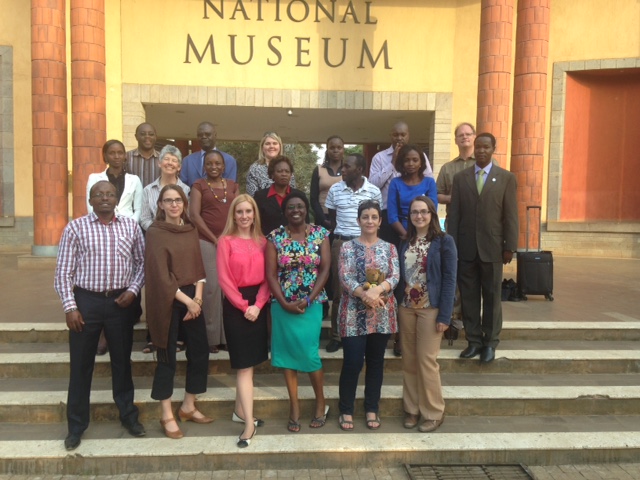
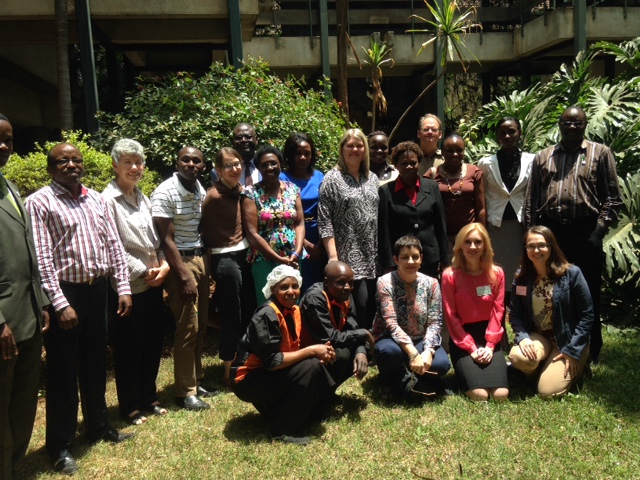
Attendees at the BHL Africa Workshop at the National Museums of Kenya in Nairobi.

Representatives from the National Museums of Kenya, the University of Nairobi, the International Centre of Insect Physiology and Ecology, the African Conservation Centre, the Kenya Wildlife Service, the Uganda National Council for Science and Technology, The Uganda Society, the National Library of Uganda, the South African National Aquatic Biodiversity Institute, the South African National Biodiversity Institute, and the University of Pretoria attended the workshop. Training was provided by four BHL representatives from the U.S., including BHL’s Program Director, Martin Kalfatovic, Program Manager, Carolyn Sheffield, Outreach and Communication Manager, Grace Costantino, and Smithsonian Digital Collections Librarian, Jacqueline Chapman.

Trainings included an overview of the structure and governance of BHL; demoes of the BHL website and administrative functions; in-depth discussions about BHL collection scope, development, digitization and curation workflows, and metadata requirements; guidance on copyright and permissions issues; methods for communication and outreach collaboration; and intensive hands-on training for several BHL tools, including the issue tracking system Gemini and the digitization workflow tool Macaw.

View Full Size Image
BHL Africa workshop attendees enjoying the beautiful grounds at the National Museums of Kenya during a lunch break.

Chief among the discussion topics was a focus on building capacity within Africa and amongst current and future participating institutions. The goal of the workshop was to not only train attendees on the many aspects of BHL participation and workflows, but to ensure that attendees could return to their own institutions and provide training to their colleagues. There was also extensive discussion on the various ways that participants could share digitization equipment amongst institutions, ensuring efficiency and a responsible use of funds.

Following the workshop, Martin Kalfatovic, Anne-Lise Fourie (Head of BHL Africa and Assistant Director of SANBI Libraries), Carolyn Sheffield, and Jacqueline Chapman continued on to the TDWG 2015 conference where they were joined by BHL Technical Director William Ulate and the Vice Chair of the Global BHL Executive Committee, Dr. Jiri Frank.  On 1 October, BHL hosted a Symposium that provided updates on the BHL consortium in general; BHL Africa’s JRS-funded capacity-building initiatives; BHL workshops; BHL projects; and a special guest, Prabhakar Rajagopal, who presented on the participation in the India Biodiversity Portal.  The session was well-attended with 137 conference attendees in the audience.

We are excited to see such wonderful progress from our colleagues in Africa, and look forward to the growth of BHL Africa content in and contributions to BHL.

October 7, 2015by michelle.underhill
Page 1 of 212»

Help Support BHL

BHL's existence depends on the financial support of its patrons. Help us keep this free resource alive!

search

About BHL

The Biodiversity Heritage Library (BHL) is the world’s largest open access digital library for biodiversity literature and archives. BHL operates as a worldwide consortium of natural history, botanical, research, and national libraries working together to digitize the natural history literature held in their collections and make it freely available for open access as part of a global “biodiversity community.”

Join Our Mailing List

Sign up to receive the latest news, content highlights, and promotions.

Subscribe Now

Subscribe to Blog via Email

Enter your email address to subscribe to this blog and receive notifications of new posts by email.

Join 319 other subscribers

Subscribe to Blog Via RSS

Subscribe to the blog RSS feed to stay up-to-date on all the latest BHL posts.

Access RSS Feed

Inspiring Discovery through Free Access to Biodiversity Knowledge.

The Biodiversity Heritage Library makes it easier than ever for you to access the information you need to study and explore life on Earth…for free, anytime, anywhere.


64+ Million Pages of
Biodiversity Literature Online.

EXPLORE

Tools and Services
to Transform Research.

EXPLORE

300,000+
Illustrations on Flickr.

EXPLORE

ABOUT | HARMFUL CONTENT | PRIVACY | SITE MAP | TERMS OF USE