Biodiversity Heritage Library - Program news and collection highlights from BHL
  • Home
  • News
  • Featured Books
    • All Featured Books
    • Book of the Month Series
    • BHL at 20
  • User Stories
  • Campaigns
    • Fossil Stories
    • Garden Stories
    • Monsters Are Real
    • Page Frights
    • Her Natural History
    • Earth Optimism 2020
  • Tech Blog
  • Visit BHL
Home
News
Featured Books
    All Featured Books
    Book of the Month Series
    BHL at 20
User Stories
Campaigns
    Fossil Stories
    Garden Stories
    Monsters Are Real
    Page Frights
    Her Natural History
    Earth Optimism 2020
Tech Blog
Visit BHL
  • Home
  • News
  • Featured Books
    • All Featured Books
    • Book of the Month Series
    • BHL at 20
  • User Stories
  • Campaigns
    • Fossil Stories
    • Garden Stories
    • Monsters Are Real
    • Page Frights
    • Her Natural History
    • Earth Optimism 2020
  • Tech Blog
  • Visit BHL
Biodiversity Heritage Library - Program news and collection highlights from BHL
Blog Reel, User Stories

19th Century Butterflies: Reconstructing a Collection’s History with BHL

The Naturalis Biodiversity Center, a recent BHL Affiliate, is home to one of the largest natural history collections in the world, consisting of over 37 million specimens. Additionally, Naturalis has contributed nearly 200,000 pages to the BHL collection since 2016.

Over 900,000 of the museum’s 37+ million specimens are butterflies, some dating back to the 18th century. Approximately 18,000 drawers are required to store this vast Lepidoptera collection.

The Naturalis butterfly collection is not only vast, it is also rich in type specimens, which are indexed through type catalogs combining historical and taxonomical research. Recently, researchers set about compiling such a catalog for the museum’s South East Asian Adoliadini (Lepidoptera, Nymphalidae) type specimens.

In order to create this catalog, which was published last year (Gassó Miracle, M.E. & T. Yokochi, 2016, Lepidoptera Science 67(2)), the authors needed to access and compare all existing taxonomic descriptions for the specimens, identify synonyms, contrast plates and photographs, and verify geographic distribution.

“For all of this, specialized literature is essential,” asserts Eulàlia Gassó Miracle, Curator of Butterflies at the Naturalis Biodiversity Center and co-author of the Adoliadini type catalog.

In order to sort out confusion regarding the origin, labeling, and taxonomy for the specimens, Eulàlia and her co-authors consulted more than 80 journals and books. More than half of them were available through the Biodiversity Heritage Library.

“BHL helped us to revise the taxonomy and the history of the specimens,” explains Eulàlia.
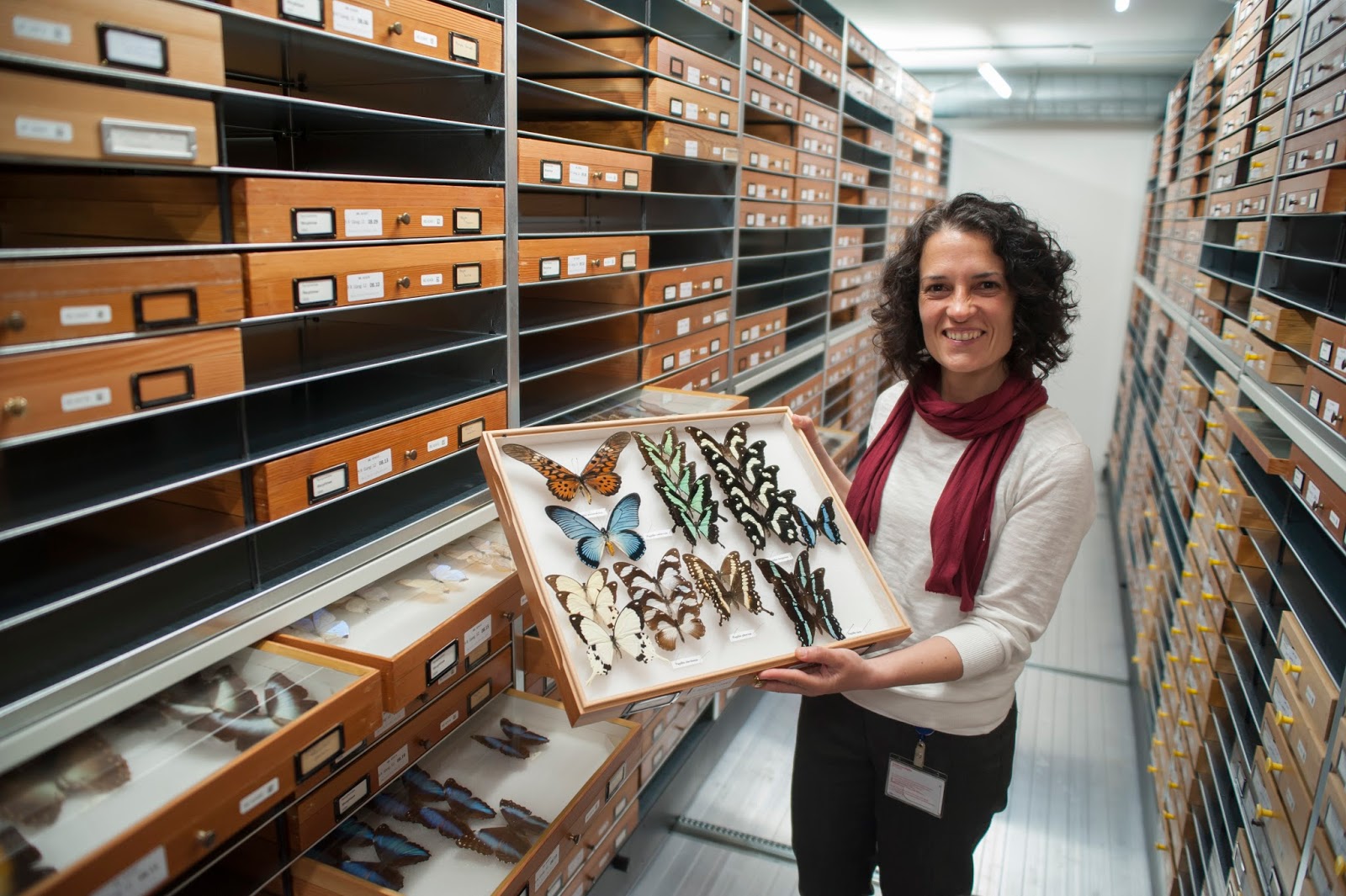
View Full Size Image
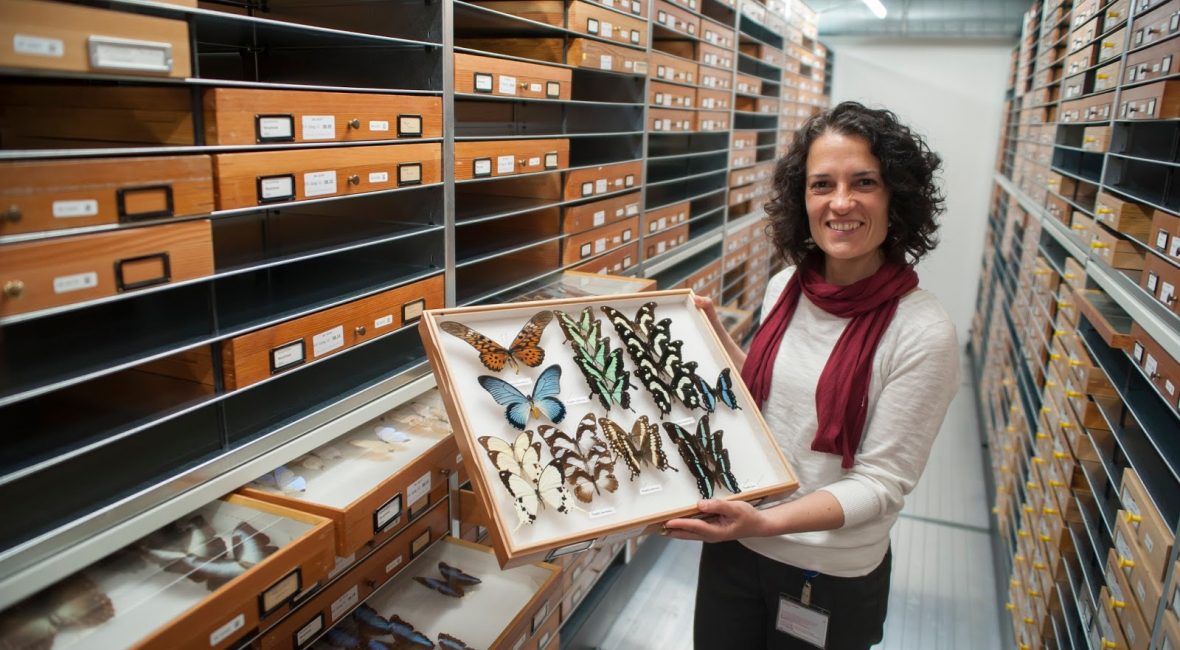
Eulàlia Gassó at the Naturalis butterfly collection. Photo by Henk Caspers.

BHL has been one of Eulàlia’s “most valued research tools” for the past decade.

“Although I have the privilege of access to most of the literature I need, either at the library of the Naturalis Biodiversity Center or the Leiden University Library, the BHL collection allows me to work in a flow from…well, anywhere,” explains Eulàlia. “BHL has also made available rare and unique publications from the 18th and 19th century, much needed for my research, that I cannot find in The Netherlands.”

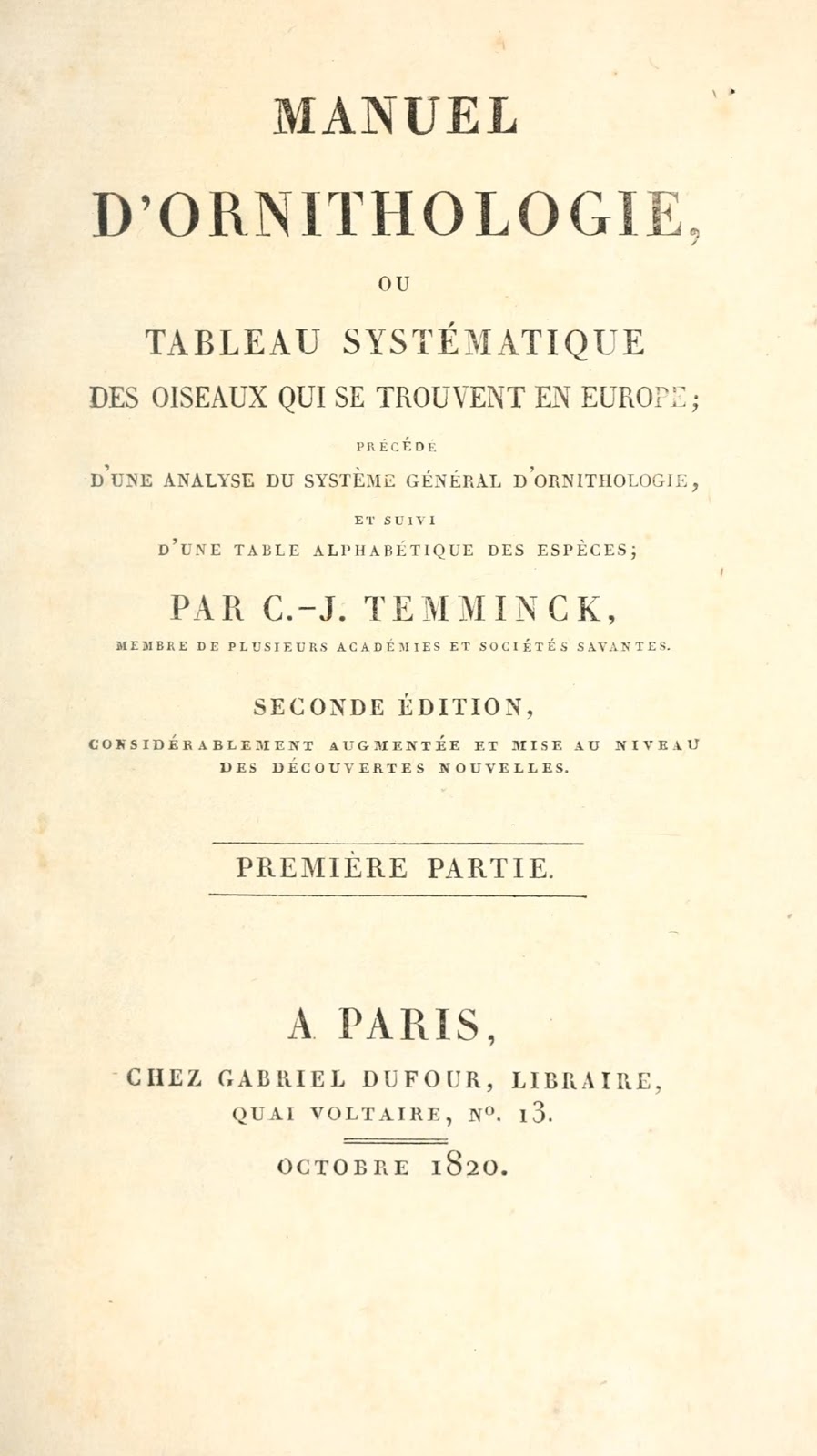
Eulàlia first discovered BHL while looking for works by C.J. Temminck, zoologist and first director of the Rijksmuseum van Natuurlijke Historie (RMNH, now Naturalis Biodiversity Center). Since then, she has used it to support her work as collections manager in various departments at the museum as well as her research on the history of 19th century natural history.
View Full Size Image
Title page of Manuel d’ornithologie, ou Tableau systématique des oiseaux qui se trouvent en Europe (Vol. 1, 2nd ed., 1820), by C.J. Temminck. Digitized by University Library, University of Illinois Urbana Champaign. http://biodiversitylibrary.org/page/33457859.

“As the curator of a natural history collection that is centuries old, I am also terribly curious about its former curators and curatorial practices,” says Eulàlia. “For this, again, BHL is a constant source of information and images. I share some of my findings and musings in my personal blog, the Museum Chronicles. For my historical research on the life and work of Temminck, accessing online his works and those of his peers has uncluttered my desk, helped organize my thoughts, given me access to new works – and with them, new insights – In a word, BHL helps me progress.”

Eulàlia uses BHL daily, either reading titles online or taking advantage of the custom PDF generation feature to download content. BHL’s high resolution image download feature, which Eulàlia discovered thanks to an @BioDivLibrary tweet, helps her compare illustrations with specimens. To further facilitate her research, Eulàlia is anxious to see full text search added to the BHL website. Happily, this is a feature that is currently in development.

BHL’s collections not only serve as a daily resource for Eulàlia’s research, but they also help her start each day with a little piece of natural history beauty.
View Full Size Image
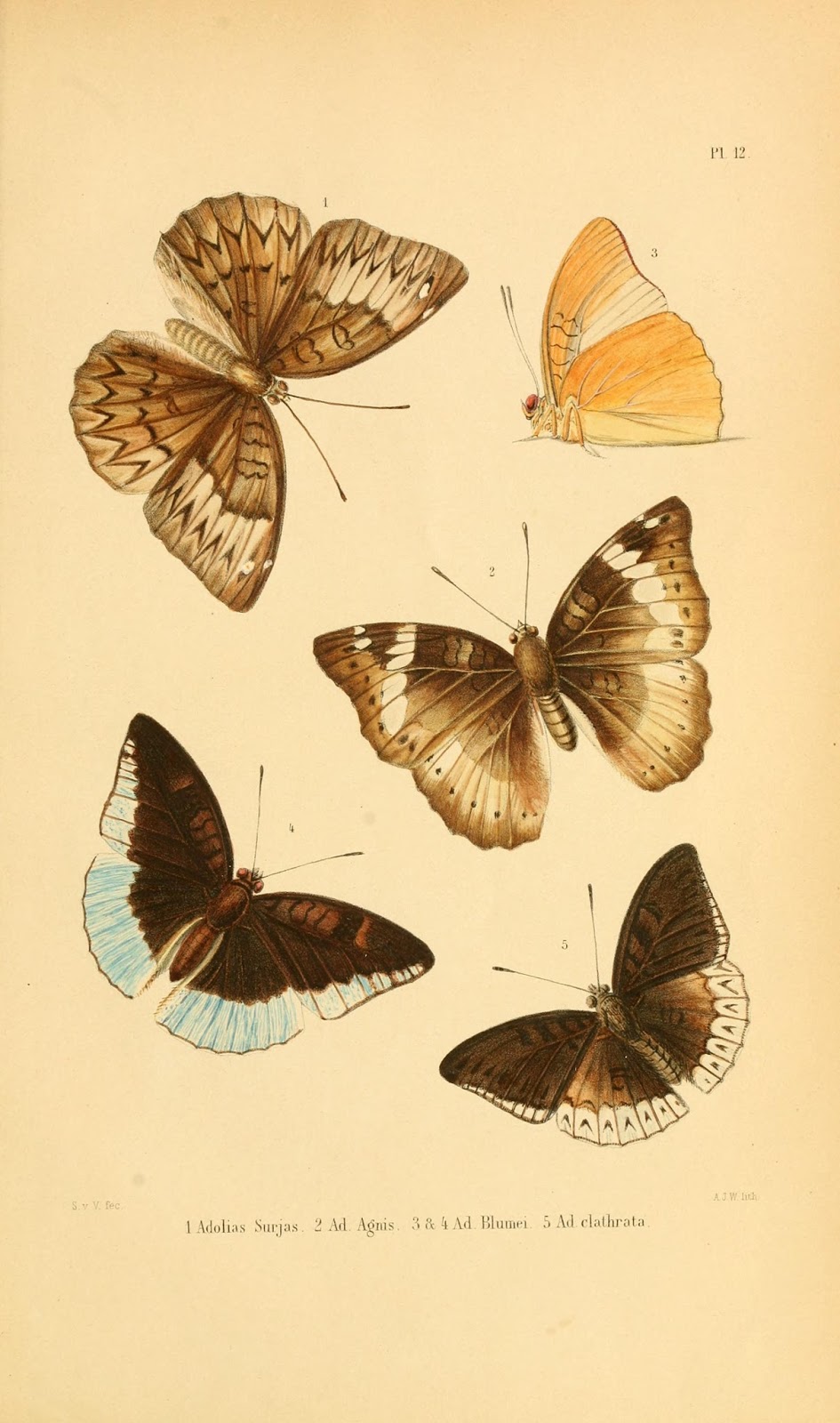
Plate 12 of Snellen van Vollenhoven’s work on Adolias butterflies. The type specimens are deposited at Naturalis Biodiversity Center. Digitized by Smithsonian Libraries. http://biodiversitylibrary.org/page/10840001.

“Recently, one of my favorite items is the article of Snellen van Vollenhoven on Adolias butterflies, one that I have read and examined repeatedly while validating the status of his type specimens,” says Eulàlia. “Plate 12 is so beautiful, it is the first thing I see when starting my computer.”

Indeed, we’re firm believers that every day is better with a little bit of #SciArt. So, whether you need to brighten your day with a little natural history eye candy or reconstruct the history of a type collection, BHL has you covered.

______________________________________

This post may contain the personal opinions of BHL users or affiliated staff and does not necessarily represent the official Biodiversity Heritage Library (BHL) position on these matters.

March 9, 2017by ulib-libraryjobs
Blog Reel, User Stories

The scientific and historical importance of small, old collections

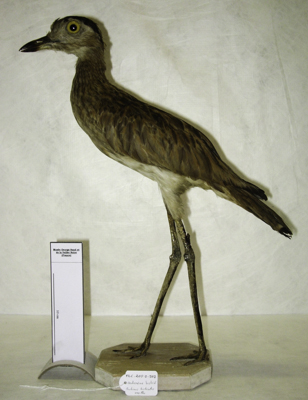
In 1838, Ferdinand Joseph L’Herminier, a French botanist and zoologist born in Basse-Terre, Guadeloupe, published the first description of the Double-striped Thick-knee (vocifer), today known by the scientific name Burhinus bistriatus vocifer [1]. L’Herminier used six specimens to describe the species, which he originally named Ædicnemus vocifer.

View Full Size Image
Specimen MLC.2011.0.907 (syntype). Double-striped Thick-knee (Burhinus bistriatus) collected by Dr Beauperthuy and used by L’Herminier to describe his Ædicnemus vocifer in 1838. © Christophe Gouraud, Musée George Sand et de la Vallée Noire, La Châtre, France.

One of the specimens that L’Herminier used for his description is housed in the Baillon Collection at the Musée George Sand et de la Vallée Noire, La Châtre, France. The Baillon’s inscription for the specimen indicates that it was sent by Florent Prévost, assistant naturalist at the Paris Museum, to Louis Antoine François Baillon, whose father started the Baillon Collection. The available information indicated that Prévost received the specimen from L’Herminier himself, but it was unknown who originally provided the specimen to L’Herminier. This question becomes even more intriguing when you consider that the Baillon specimen is the only surviving type specimen of the six originally used by L’Herminier for his 1838 description.

View Full Size Image
Christophe guiding on a Zodiac cruise in Antarctica (February 2015). © Lorraine Turci.

Christophe Gouraud is an expert at solving the mysteries surrounding historic specimens. With a Masters degree in ecology and a specialty in ornithology, Gouraud spends much of his time working as a Polar guide on expedition ships that cruise in Spitsbergen, Greenland, Nunavut, the Russian Arctic, the South Atlantic islands and Antarctica, but before becoming a guide, he took part in many scientific expeditions related with birds in Alaska, Morocco, Kazakhstan, and Peru. Today, he still finds time to pursue his ornithological passion. Between the Arctic and Antarctic seasons, he works with bird collections in France, particularly within the Caire-Chabrand Collection at the Musée de la Vallée, Barcelonnette, France, and the Baillon Collection of La Châtre.

View Full Size Image
Christophe working on the Caire-Chabrand Collection, Musée de la Vallée, Barcelonnette, France. © Claude Gouron, http://www.claude-gouron.fr, https://500px.com/claudegouron/sets.

Discovering information about historic specimens can be a difficult task. Access to historic literature is essential to successful investigations, and thus, Gouraud has found BHL an invaluable ally in his hunt for information.

“BHL is such a great, impressive and useful tool,” lauds Gouraud. “As I am not working in an institution with access to huge libraries, BHL has made possible what I have achieved so far. I don’t know if my work would have been possible without BHL, but for sure it is unbelievable the time that can be saved.”

Gouraud uses BHL to search for the original descriptions of bird species (most of which were described in the 18th and 19th centuries), to locate accounts of early voyages of exploration and discovery (during which many of the specimens he researchers were collected), and to explore references cited by the authors of the publications he consults for his research. When working on the history of a collection, he consults BHL daily, exploring multiple documents during each visit.

“In a few clicks, you can access, read and download (for free!!!) most of the documents you need,” exclaims Gouraud. “All that is needed is a good Internet connection. Through BHL, I can easily access so many old and rare books deposited in just a few institutions worldwide while simply sitting at home drinking a good coffee!”

Gouraud’s favorite BHL feature is the custom PDF download, which allows him to select specific pages of interest for his research and save them for future consultation. His extensive use of the library also revealed some areas where he believes improvements can be made. These include adding a full text search option to BHL, allowing users to search within the contents of a book; improving the OCR, allowing more scientific names to be discovered; and merging the redundant author and title names sometimes displayed throughout BHL.

Full text search is a high priority for future BHL development, with prototypes currently being investigated. BHL crowdsourcing games, Smorball and Beanstalk, are one method we are currently using to improve BHL’s OCR. Multiple instances of the same author or title in BHL result from differences in the library catalogs contributing information to BHL. While we try to automatically de-duplicate entries as they are ingested, not all duplicates can be merged automatically. We rely on feedback from our users to help us identify and allow us to correct duplications that do occur. Use our feedback form to alert us of any errors that should be corrected in the BHL portal.

BHL allowed Gouraud to solve the mystery of the origin of the Double-striped Thick-knee specimen housed in the Baillon Collection. By consulting L’Herminier’s original description in BHL, Gouraud discovered that the specimen was originally collected by Doctor Louis Daniel Beauperthuy, a physician and scientist born in Basse Terre, Guadeloupe, and the discoverer of the transmitting agent of yellow fever. Beauperthuy gave the specimen to L’Herminier, who used it for his description and then sent it on to the Paris Museum.

“I completed the story and linked Dr. Beauperthuy to L’Herminier only because I had access to the original description by L’Herminier,” explains Gouraud. He published his findings in the Bulletin of the British Ornithologists’ Club.

View Full Size Image
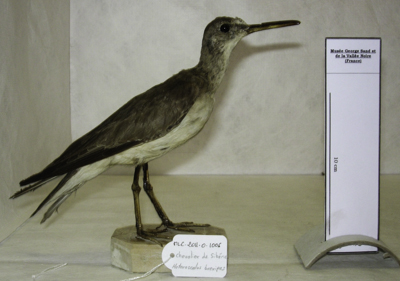
Specimen MLC.2011.0.1006. Grey-tailed Tattler (Heteroscelus brevipes) collected on Mariana Islands during the Freycinet’s circumnavigation that survived the wreckage of L’Uranie in the Falkland Islands in 1820. © Christophe Gouraud, Musée George Sand et de la Vallée Noire, La Châtre, France.

BHL has allowed Gouraud to uncover many fascinating details about the Baillon Collection. As another example, the Baillon Collection contains specimens collected during Louis Claude de Saulces de Freycinet’s three year voyage (1817-20) that cruised about the Pacific, visiting Australia, the Mariana Islands, Hawaiian Islands, other Pacific islands, and South America. One such specimen is a Grey-tailed Tattler (Heteroscelus brevipes), collected at the Mariana Islands. Sadly, the expedition met with tragedy when Freycinet’s ship, L’Uranie, wrecked in the Falkland Islands on 15 February, 1820, resulting in the loss of almost all of the expedition’s natural history collections. By consulting the account of the expedition in BHL, Gouraud discovered that specimens from 313 species survived the wreckage, and 12 specimens are now in the Baillon Collection.

Gouraud’s experiences demonstrate the multi-layered value of BHL’s collections. They are useful not only for providing information about species, ecosystems, habitats, and taxonomies, but also for historical investigations, such as uncovering the origins of museum collections. Gouraud has used BHL to uncover many other fascinating details about the Baillon Collection. You can explore some of these findings in his publications:

  • Gouraud C., 2014: Eighteenth century bird specimens in the Baillon Collection, La Châtre, France. – In: Mlíkovský, J. (Ed.) Proceedings of the 8th Meeting of European Bird Curators, Journal of the National Museum (Prague), Natural History Series. 183: 19-28.
  • Gouraud C., 2014: Extinct and endangered species and subspecies of birds in the Baillon Collection, La Châtre, France. – In: Mlíkovský, J. (Ed.) Proceedings of the 8th Meeting of European Bird Curators, Journal of the National Museum (Prague), Natural History Series. 183: 29-38.
  • Gouraud C., 2014: The authorship of the name Ornismya Parzudaki (Aves: Trochilidae). – Zoological Bibliography 3(4): 63-68. 
  • Mearns R., Gouraud C., and Chevrier L., 2015: The identity of Richard of Richard’s Pipit (Anthus richardi Vieillot, 1818). – Archives of natural history 42(1): 85-90.
  • Gouraud C., 2015: List of the type specimens of birds in the Baillon Collection (La Châtre, France). Part 1. Non-Passerines. – Bulletin of the British Ornithologists’ Club 135(2): 131-153.

Gouraud emphasizes that his research is made possible not only by BHL, but also thanks to Annick Dussault, director of the Musée George Sand et de la Vallée Noire (La Châtre, France) that houses the Baillon Collection, as well as the city of La Châtre, that gave him the opportunity of working with the Baillon Collection.

We would like to extend a special thanks to Gouraud for sharing his incredible work with us and demonstrating how BHL supports that work. Do you use BHL to support your own work? Want to be featured on our blog? Then send us a message to [email protected]!

[1] Dickinson E.C., Overstreet L.K., Dowsett R.J. and Bruce M.D., (Eds.) 2011: Priority! The Dating of Scientific Names in Ornithology: a Directory to the literature and its reviewers. Northampton, U.K., Aves Press.

October 8, 2015by ulib-libraryjobs

Help Support BHL

BHL's existence depends on the financial support of its patrons. Help us keep this free resource alive!

search

About BHL

The Biodiversity Heritage Library (BHL) is the world’s largest open access digital library for biodiversity literature and archives. BHL operates as a worldwide consortium of natural history, botanical, research, and national libraries working together to digitize the natural history literature held in their collections and make it freely available for open access as part of a global “biodiversity community.”

Join Our Mailing List

Sign up to receive the latest news, content highlights, and promotions.

Subscribe Now

Subscribe to Blog via Email

Enter your email address to subscribe to this blog and receive notifications of new posts by email.

Join 319 other subscribers

Subscribe to Blog Via RSS

Subscribe to the blog RSS feed to stay up-to-date on all the latest BHL posts.

Access RSS Feed

Inspiring Discovery through Free Access to Biodiversity Knowledge.

The Biodiversity Heritage Library makes it easier than ever for you to access the information you need to study and explore life on Earth…for free, anytime, anywhere.


64+ Million Pages of
Biodiversity Literature Online.

EXPLORE

Tools and Services
to Transform Research.

EXPLORE

300,000+
Illustrations on Flickr.

EXPLORE

ABOUT | HARMFUL CONTENT | PRIVACY | SITE MAP | TERMS OF USE