

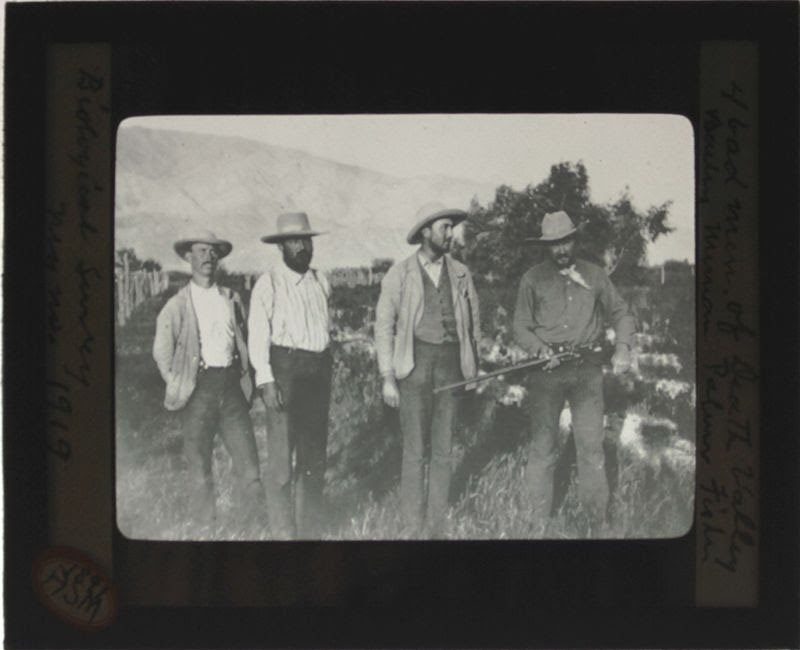
This is the first of a joint blog series by the Field Book Project (FBP) and the Biodiversity Heritage Library (BHL), showcasing examples of digital connections between collectors, field book catalog records, and the resulting publications of collecting events.
Over the summer the Field Book Project and Biodiversity Heritage Library examined some of the fascinating stories and natural history documentation that resulted from major expeditions. In the past, expeditions were the best way to expediently collect in many regions of the world. Expeditions still occur today, but they were far more common before the advent of major changes in transportation. Expeditions tend to generate great stories; the mix of personalities, challenges, and exotic locations seem to make it inevitable. For much of the nineteenth century, expeditions were often organized as needed; they could be heavily influenced by the temperaments of the people leading them. Strong personalities among the leaders sometimes led to serious conflicts (curious to learn more? Check out the US Geological Survey’s (USGS) biography on John Wesley Powell, the Survey’s second director, and its discussion of the Powell, Hayden, King, and Wheeler Surveys). These conflicts and the US government’s growing need for more consistent information about its natural resources eventually led to fundamental changes in the way collecting was completed. Eventually the US federal government established organizations like the US Bureau of Fisheries, US Geological Survey, US Biological Survey whose primary purpose was to routinely collect, document, and eventually oversee some of the nation’s natural resources.
These organizations and their first collectors often involve great stories, but also provide wonderful examples of the types of field work documented. Additionally, their efforts were for the United States’s benefit, and the resulting reports and publications are now available through resources like the Biodiversity Heritage Library. This new blog series is a chance to highlight the different types of collectors that formed these organizations.
United States Biological Survey (USBS)
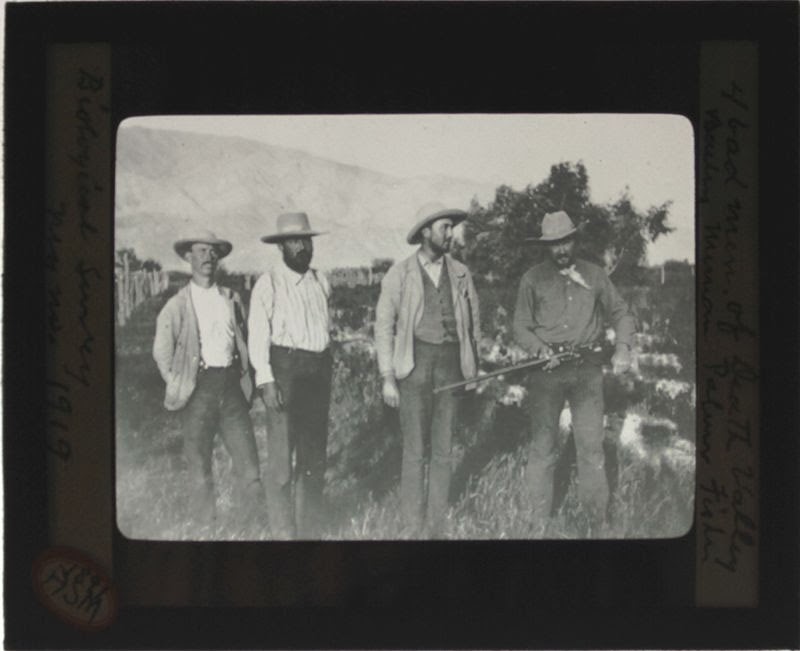
The first story highlights the beginnings of the US Biological Survey (USBS), originally formed by C. Hart Merriam under the US Department of Agriculture (USDA). The story forms around two individuals of note—C. Hart Merriam (first chief of USBS) and Vernon Bailey (USBS’s first major specimen collector and naturalist). These individuals each had unique ways of coming to their field of study, method of work, and differing output, but each was an important contributor to their discipline. Their catalog records and publications are also available through FBP and BHL (see content links below).
 |
|
US Biological Survey staff, including Vernon O. Bailey and C. Hart Merriam, 1919.
|
C. Hart Merriam was a biologist, whose work at the end of the 19th century was instrumental in the emerging field of ecology. His field work and affiliation with the USDA led to his “life zones” concept. In 1885 he was chosen to head the Section of Economic Ornithology in the USDA. His vision for the section eventually shifted its focus from only birds to include mammals. By 1896 it became the USBS, later merging with other federal entities to form the US Fish and Wildlife Service.
In 1883, C. Hart Merriam began corresponding with a young man in Minnesota with an interest in collecting, named Vernon Bailey. This relationship developed over the decades, and proved an important influence on the shaping and growth of the USBS. Merriam had a strong educational background in science and was well established in the USDA. But for the USBS to develop, he needed people in the field. Bailey did not have a formal education in the sciences, but showed a natural aptitude for collecting that Merriam mentored through their correspondence. In 1885, Bailey began sending collections to Merriam, and in 1887, Merriam hired Bailey as the first field agent for Division of Economic Ornithology and Mammalogy (what would become USBS). Bailey went on to collect for over 50 years, and became the first and only chief field naturalist of the USBS in 1890, a position he held until his death in 1933.
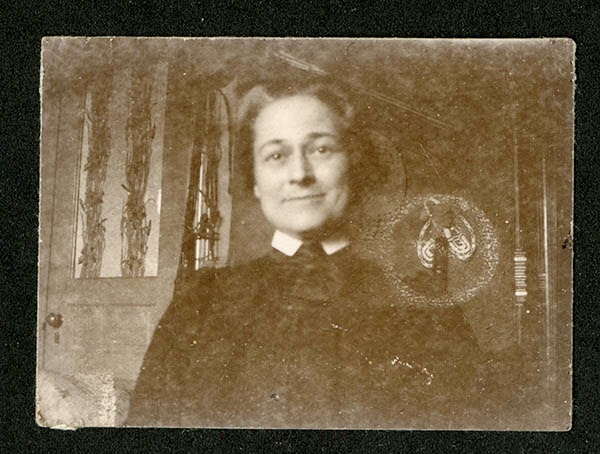 |
| Florence Merriam Bailey, taken shortly after her wedding, March 1900. Smithsonian Institution Archives. SIA 007267, Box 2, Folder 14. |
Their relationship proved important on a personal level as well. During one of Bailey’s visits to Washington, DC, he stayed at Merriam’s home. This provided a chance to meet Merriam’s sister, Florence Merriam Bailey, who was a distinguished naturalist in her own right. Vernon and Florence would marry in 1899. Throughout their marriage they completed field work together and co-wrote natural sciences publications.
Perhaps the best way to see how these individuals’ styles of work and interests differed, is to examine their field books and publications.
Field Books from the Field Book Project:
- US Biological Survey (its subsequent iteration as US Fish and Wildlife)
- C. Hart Merriam
- Vernon O. Bailey
- Florence Merriam Bailey
Publications at Biodiversity Heritage Library:
- US Biological Survey
- C. Hart Merriam (includes correspondence housed at the Bancroft Library, University of California, Berkeley
- Vernon O. Bailey
- Florence Merriam Bailey
We invite you to check out our next post, and find out more the background of these fascinating individuals, organizations, and how you can learn more about their research online.
