Biodiversity Heritage Library - Program news and collection highlights from BHL
  • Home
  • News
  • Featured Books
    • All Featured Books
    • Book of the Month Series
    • BHL at 20
  • User Stories
  • Campaigns
    • Fossil Stories
    • Garden Stories
    • Monsters Are Real
    • Page Frights
    • Her Natural History
    • Earth Optimism 2020
  • Tech Blog
  • Visit BHL
Home
News
Featured Books
    All Featured Books
    Book of the Month Series
    BHL at 20
User Stories
Campaigns
    Fossil Stories
    Garden Stories
    Monsters Are Real
    Page Frights
    Her Natural History
    Earth Optimism 2020
Tech Blog
Visit BHL
  • Home
  • News
  • Featured Books
    • All Featured Books
    • Book of the Month Series
    • BHL at 20
  • User Stories
  • Campaigns
    • Fossil Stories
    • Garden Stories
    • Monsters Are Real
    • Page Frights
    • Her Natural History
    • Earth Optimism 2020
  • Tech Blog
  • Visit BHL
Biodiversity Heritage Library - Program news and collection highlights from BHL
Blog Reel, Featured Books

The Worcester Country Horticultural Society

In the fall of 1840, in Worcester, Massachusetts, two dozen attendees of the Worcester Agricultural Society’s Annual Cattle Show put on a display of local fruits and flowers. The attention it received led to the creation, in 1842, of the Worcester County Horticultural Society (WCHS), the third oldest active society of its kind in the United States.

View Full Size Image
The logo of the WCHS, from Transactions, 1912
(image in the public domain,
from Wikipedia)

Today, the WCHS is based at Tower Hill Botanic Garden, which it established in 1986. While many things have changed since the era of its founding 175 years ago, the WCHS continues to “inspire the use and creation of horticulture to improve lives, enrich communities and strengthen commitment to the natural world.” The history of this effort is documented in the Transactions of the Worcester County Horticultural Society, which is available in BHL’s collection through the work of the Expanding Access to Biodiversity Literature project. Thank you to the WCHS for sharing this valuable publication with BHL and its users.

History of the WCHS
 

“It is truth, TRUTH—and the Universe was framed to corroborate it—that of all employments, none is better than the Culture of the Earth, none more independent, none more pleasant, none more worthy the dignity of Man!”
-George Jaques, Transactions of the Worcester County Horticultural Society, p.11 (1847)
On September 19, 1840, several men gathered for the purpose of establishing a society that would do for horticulture what the Worcester Agricultural Society had done for agriculture: the “mutual improvement in [its] theoretical and practical branches.” The Agricultural Society’s Annual Cattle Show was chosen as the venue for an initial exhibition. Prior to the show itself, ads were placed in area newspapers soliciting contributions from the gardens and orchards of the public. The exhibit opened the day before the Cattle Show, to popular acclaim and the chagrin of the elder society, which was in danger of being upstaged. A host of new members was admitted (membership was $1), and the nascent horticultural society entered a period of steady growth.
View Full Size Image
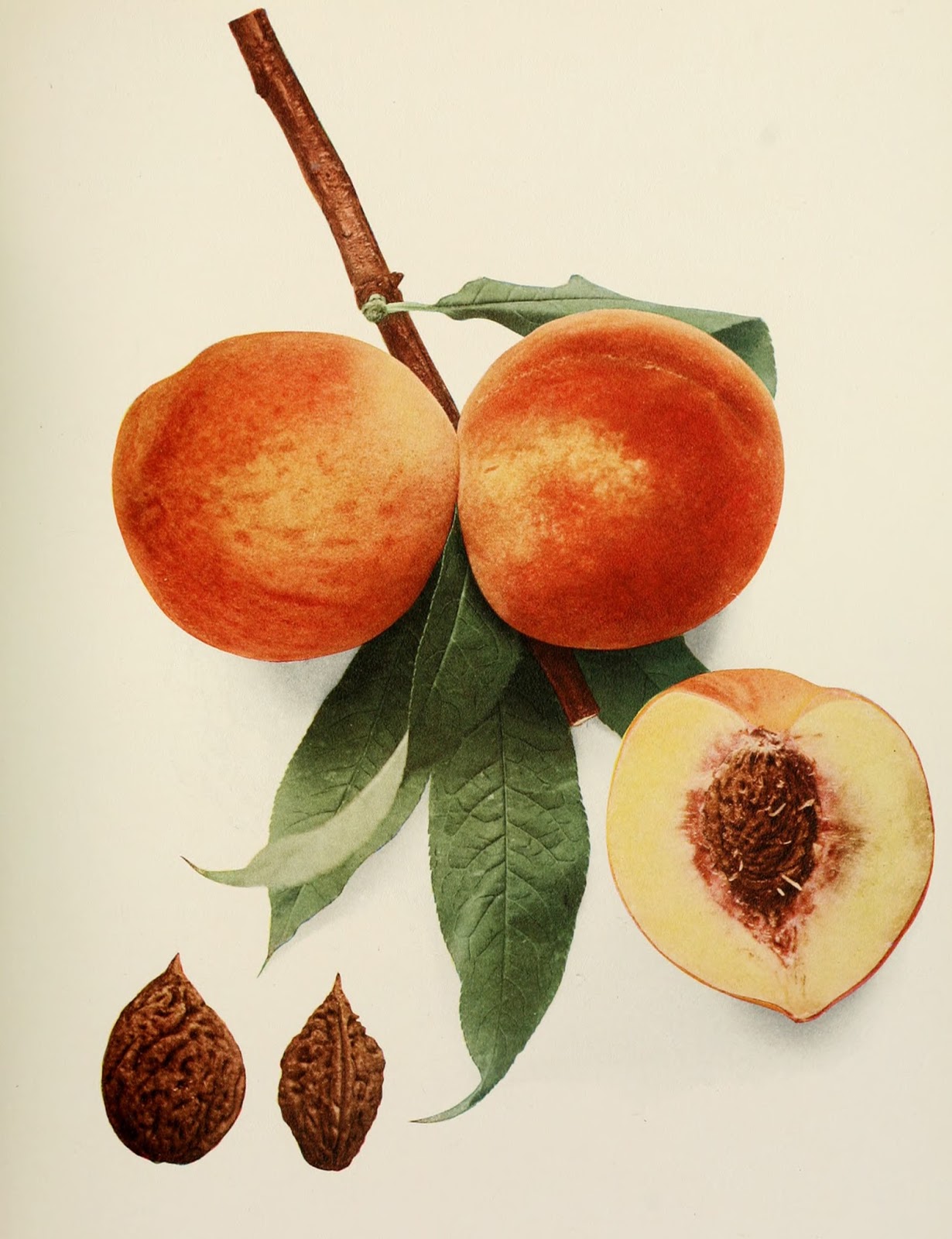
The “Surpasse,” one of the peaches on display at
the Exhibition of 1846, from
The Peaches of New York (1917)

From the beginning, regular exhibitions were the main occupation of the WCHS. Strict rules governed the creation of these exhibits and the conduct of the committees appointed to organize them. Nevertheless, George Jaques lamented in the Transactions (1847):
It may pour balm into some wounds, in certain quarters—wounds which Time—that physician, so eminent for the thorough course that he pursues with his patients—may have failed of healing, to acknowledge the sinfulness of some of the Committees, in venturing upon an infringement of the above Rules, in so far, as to procure the concurrent testimony of the palate, as well as that of the eye, in regard to the character of the subjects of their examination.
 
What Mr. Jaques was admitting, however obliquely, is that committee members were tasting the wares meant for display—bad behavior that, according to the Report on Fruit for the Annual Exhibition of 1847, was not evident in the public:
 
Notwithstanding the hall was constantly thronged with visitors, and many hundreds of samples of beautiful and tempting fruit within reach of every one, yet all seemed to feel and act as if it was placed there to be examined with the eye only. No instance of pilfering, and but little unnecessary handling of the fruit, was known to occur.
View Full Size Image
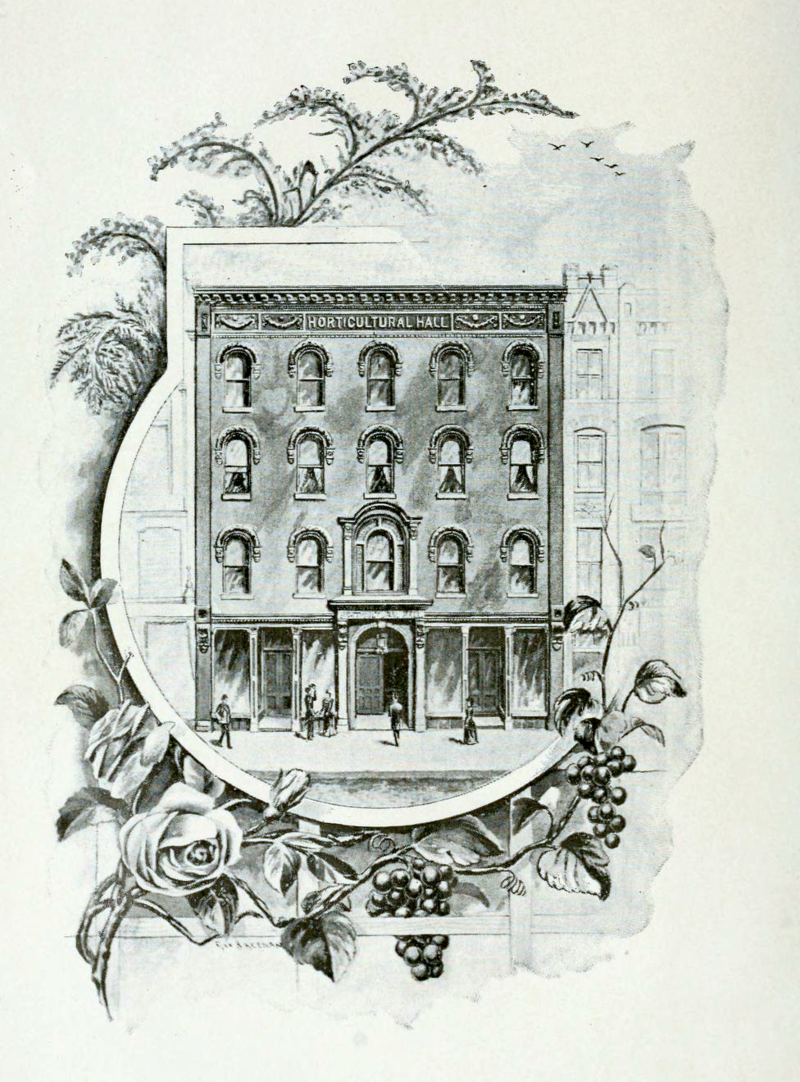
The first Horticultural Hall, from
Transactions, 1891-1892
(image in the public domain,
from Wikipedia)

In 1851, the WCHS built Horticultural Hall, its first permanent residence, on Front Street in the heart of Worcester. Horticultural Hall served as the home of the society until 1928, when the society built a larger structure—with the same name—on Elm Street, just a few blocks away. The second hall served the society until 1983, when it purchased a 132-acre parcel of land in Boylston. Here, at Tower Hill Farm, it created Tower Hill Botanic Garden, its present home.

Exhibits were the primary activity of the WCHS in its first century. While many of the varieties of fruits and vegetables named in the Transactions are no longer familiar, a few have become staples in the U.S. The Report on Vegetables for the Annual Exhibition of 1847 notes the presence of a novel cultivar: 

A solitary specimen of the Cauliflower, as a peculiar species of the Cabbage, was introduced by Mr. D.W. Lincoln, probably to remind the spectators of that esculent, which is said by a recent author, to have “furnished epicures of all countries with some of their greatest luxuries.” 

Similarly, the Committee was pleased to see common potatoes, which were not yet a mainstay of the American diet.

In addition to detailed accounts of each year’s Exhibition, the Transactions records the effects of larger historical and climatological events on horticulture: the Annual Report of 1864 reports that owing to the outbreak of the American Civil War, there was no Annual Exhibition in 1861; the Transactions of 1942 documents the effects of rationing during World War II; and the Report of Judge of Plants and Flowers of 1963 records the effects of the severe drought that gripped Massachusetts for most of that decade. 
View Full Size Image
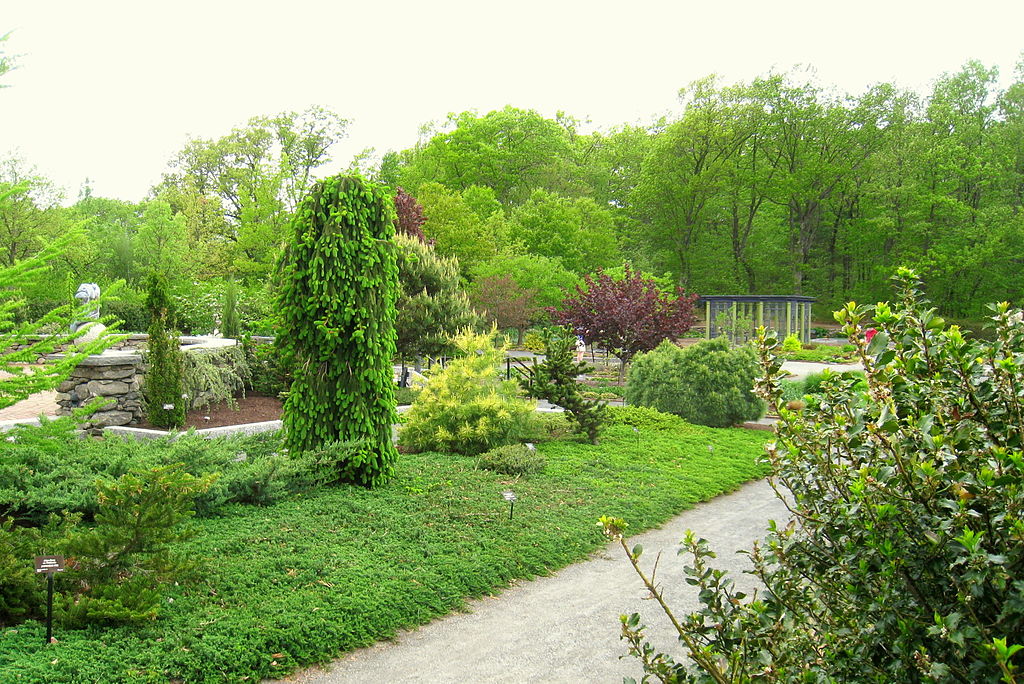
Photo of the Systematic Garden at Tower Hill
(image in the public domain, from Wikipedia)

The Transactions also documents the decline of estate gardens (and the exhibitions they supported) in the 1940s commensurate with the rise of industrial agriculture, large-scale co-ops, and decreasing barriers to foreign imports. Changing with the times, the WCHS eventually shifted its focus to the smaller gardens that most people cultivate today. Tower Hill Botanic Garden still hosts flower shows and grows vegetables and fruit, but it also offers year-round educational programming, including a variety of gardening classes.

In the preface to the Transactions of 1847, George Jaques wrote, “The Horticultural Association, it should be borne in mind, is still but a nursery plant, and these few leaves can give only a faint idea of what its foliage, flowers, and ripened fruits may be in the years to come.” He could not have imagined that 170 years later, the work of the WCHS continues, and that the “nursery plant” has become a garden.

Reference

“Farming in the 1940s.” Wessels Living History Farm. Accessed April 19, 2017. http://www.livinghistoryfarm.org/farminginthe40s/farminginthe1940s.html

“History and Mission.” Tower Hill Botanic Garden. Accessed April 19, 2017. http://www.towerhillbg.org/history-and-mission/

“Life in the year 1842, when the Worcester County Horticultural Society began.” Tower Hill Botanic Garden. (March 1, 2017). http://www.towerhillbg.org/2017/03/01/year-1842-founding-worcester-horticultural-society/
April 20, 2017by [email protected]
BHL News, Blog Reel

Happening NOW! Latin American Orchid Exhibition

View Full Size Image
Click here for Full Event Details

Did you know that orchids are the national flower of Belize, Brazil, Colombia, Costa Rica, Guatemala, Honduras, and Venezuela? Or that an estimated 25,000 species live in almost every type of environment and continent except Antarctica? The Orchidiceae is one of the most iconic, beloved, and studied flower families in the world, particularly in Latin America where many species of orchid are found in large numbers and are entwined in local folklore, religious ceremonies, and cultural traditions.

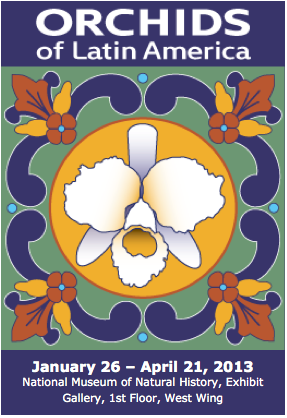
To celebrate this fact, the Smithsonian National Museum of Natural History (NMNH), in collaboration with Smithsonian Gardens and U.S. Botanic Garden, is currently hosting a three-month-long Orchids of Latin America Exhibition that explores the connections between orchid botany, horticulture, and Latin American culture. The exhibition will be open and free to the public until April 21st at the NMNH’s Exhibit Gallery, 1st Floor, West Wing. If you happen to be in DC during this time, this event should not be missed.  It will be an oasis of color and warmth, providing visitors with a much needed respite from the bleak winter weather. Families should make special note to mark their calendars for Saturday, February 23, 2012 and attend !Fiesta de las Or-KID-eas! which will give kids the opportunity to make an orchid garland or pot their own orchid plant, learn to care for it, and even bring it home.


BHL Book of the Week Celebrates Orchids!

To coincide with Orchids of Latin America Exhibition that just opened over the weekend, the Biodiversity Heritage Library wanted to highlight one of the most comprehensive resources on Orchids in its corpus as this week’s book of the week. Orchidologists and orchid enthusiasts alike, will appreciate the breadth of this sixteen volume work as well as the enchanting illustrations that it contains:


Dictionnaire Iconographique des Orchidées by Alfred Cogniaux

Although the BHL has a voluminous selection of some absolutely fabulous orchid books, folios, and journals, the Dictionnaire Iconographique des Orchidées is truly a stand-out resource. Originally, the work was issued in no particular order but, the intent of the author was that subscribers would eventually rearrange the plates and their descriptions by genera and bind the work after all of the parts had been issued. Unfortunately, the work was never completed. However, the copy in the BHL digitized by partner library Missouri Botanical Garden, has indeed been arranged by genera as the Belgian Botanist and author Alfred Cogniaux would have wanted. This arrangement makes the tome very user-friendly and allows readers to easily compare and contrast the many different varieties of orchids. Today, around 25,000 orchid species have been documented and over 70,000 hybrids have been cultivated by horticulturists!  Orchids truly are one of the most beautiful and diverse flower families in the world.

Peruse the BHL’s Orchids of Latin America Flickr Collection

As mentioned earlier, the national flower of many Latin American countries is some variety of orchid. In addition to highlighting our favorite orchid tome, we wanted to bring your attention to a special collection of orchid illustrations that Gilbert Borrego our Flickr guru curated to coincide with the ongoing exhibition happening at the National Museum of Natural History. The “Orchids of Latin America Flickr Collection” brings together some of the most beautiful Latin American orchid illustrations in the BHL — including many of the national flower specimens. As always, these illustrated plates are open, free, and available for download by users everywhere to enjoy!

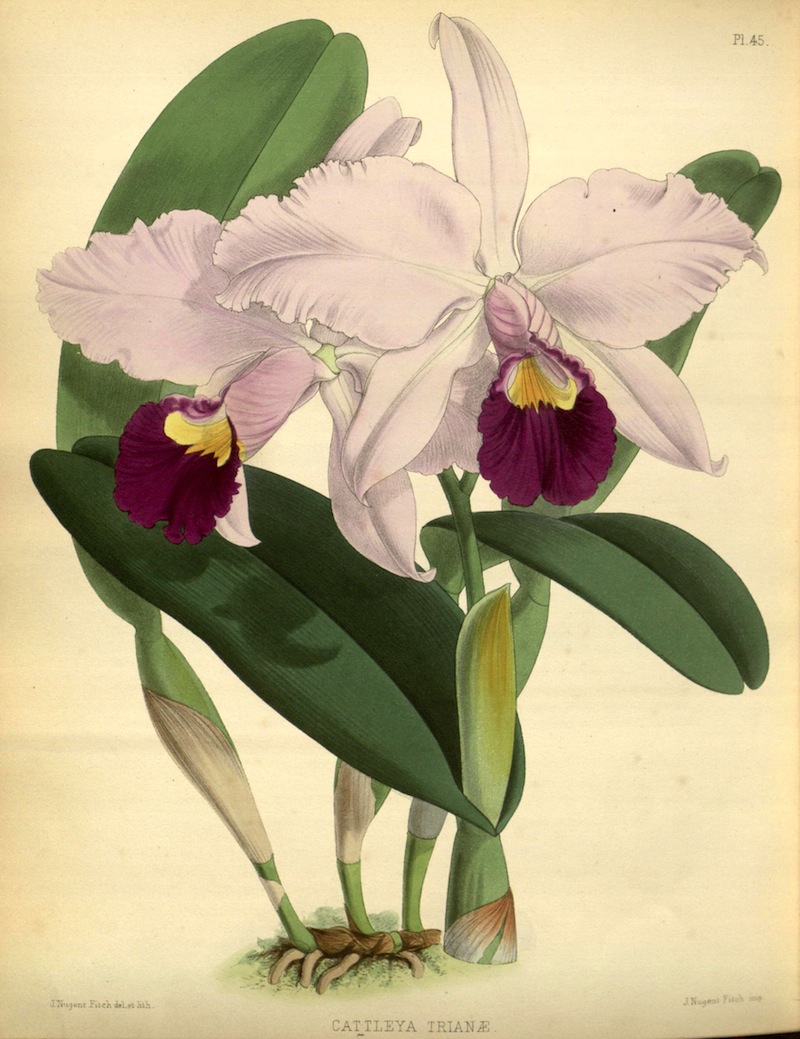
Columbia’s National Flower – Cattleya trianae, The Christmas Orchid

View Full Size Image

This variety of orchid has been Colombia’s national flower since 1834 and was named after the Colombian naturalist José Jerénimo Triana.

 
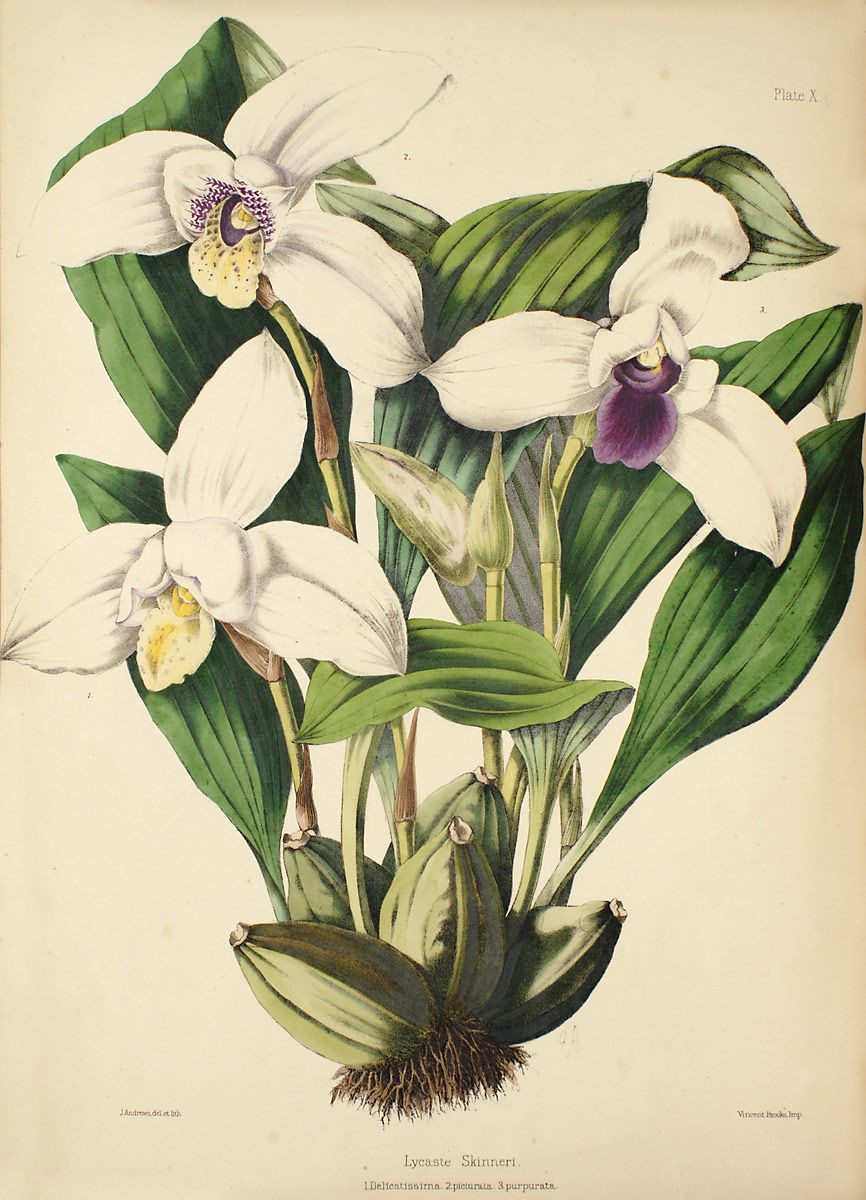
Guatemala’s National Flower – Lycaste skinneri,  Monja Blanca (White Nun)
View Full Size Image

The Lycaste skinneri is a hermaphrodite plant capable of producing millions of seeds within a fruit in capsule form. In 1934 the President of Guatemala issued a decree naming the Monja Blanca the official national flower. It was chosen for its exceptional rarity and beauty.

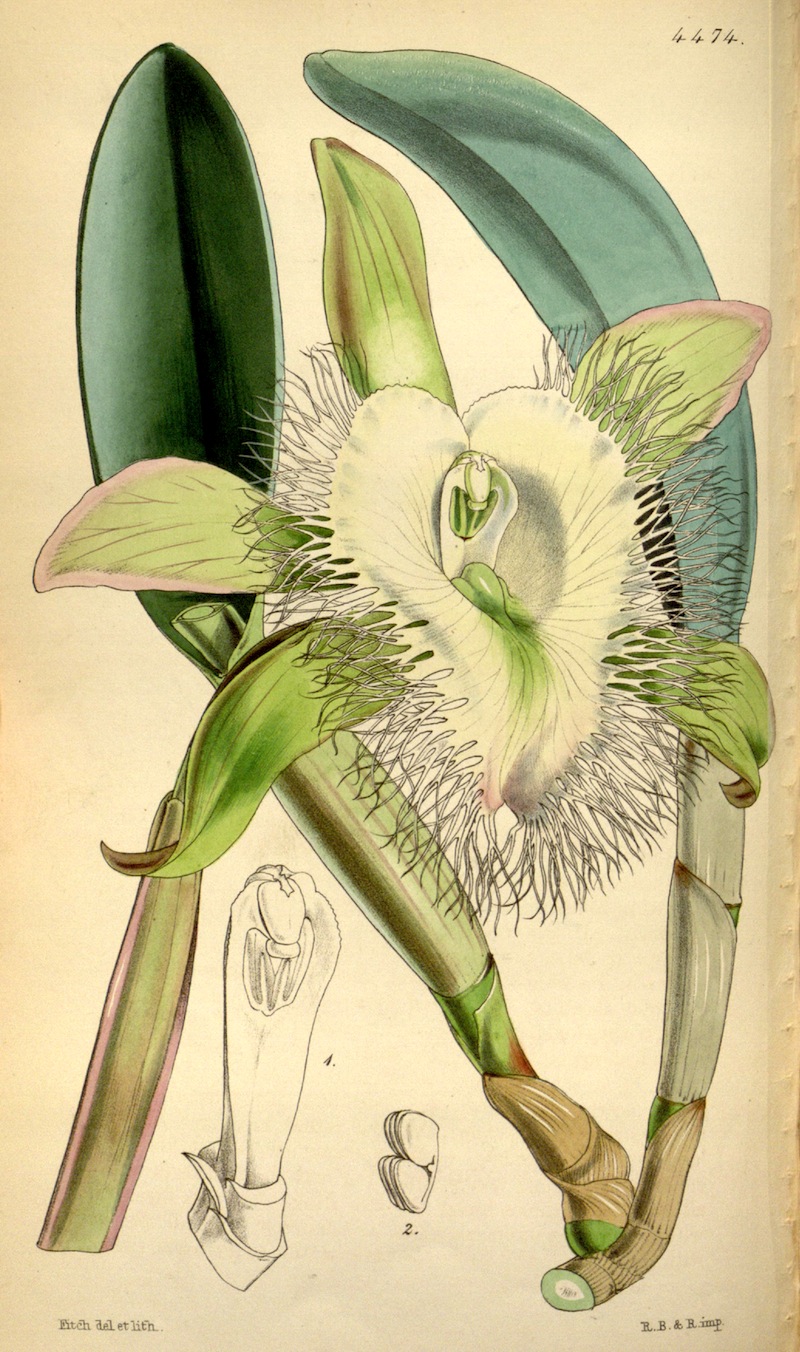
Honduras’ National Flower – Rhyncholaelia digbyana, Digby’s Beaked Laelia

View Full Size Image,

Formerly named Brassavola digbyana, Honduras’ National Flower has been used more in hybridizing than almost any other orchid. It has been known to grow in extreme conditions and can withstand long periods of dryness. Some sightings of this specimen have been seen growing on cacti!

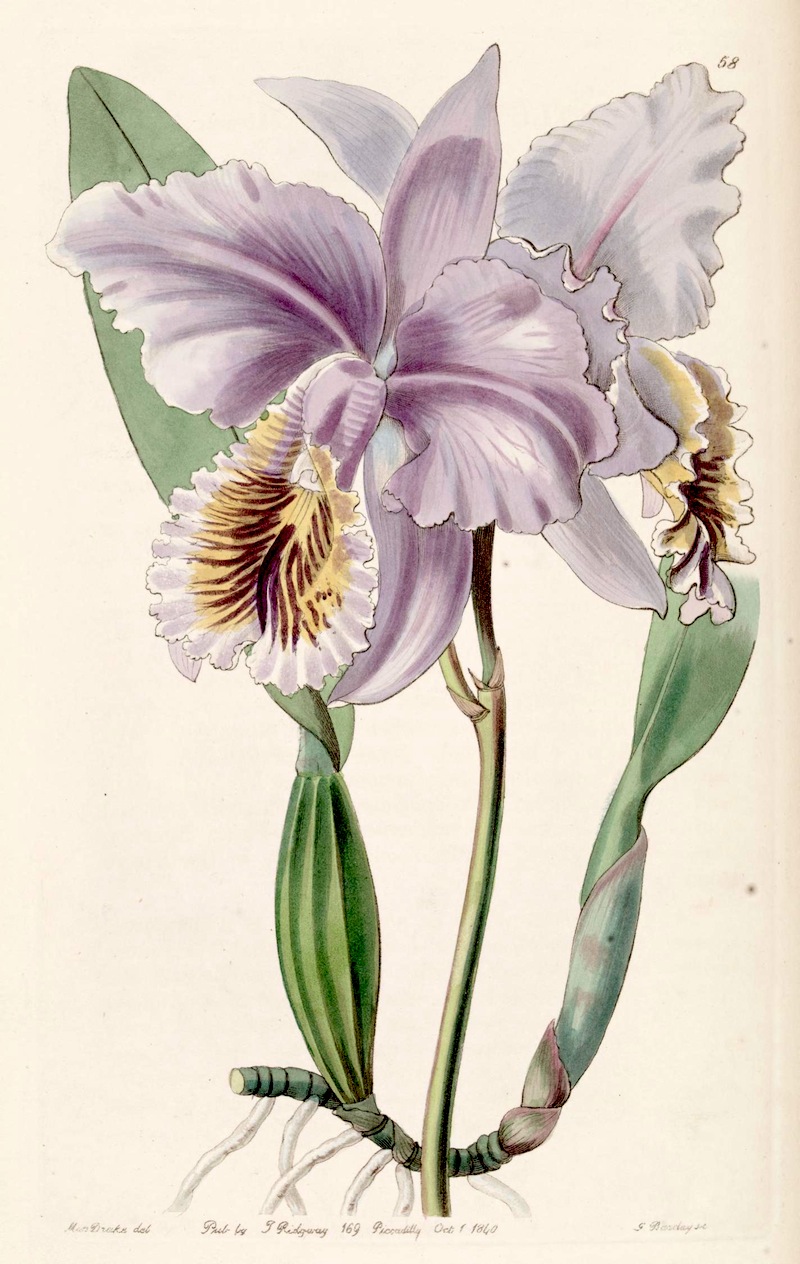
Venezuela’s National Flower – Cattleya mossiae, Mrs. Moss’s Cattleya

View Full Size Image

This kind of orchid is also commonly known as Flor de Mayo (May Flower). It was given the status as Venezuela’s National Flower on 23 May 1951. Venezuela lays claims to eight Cattleya species so becoming its national flower was quite a feat. This flower is most beloved by the Venezuelan people.

All of these orchids and MANY more are available in the BHL Orchid Flickr Collection. Don’t forget to check them out!

We hope you enjoyed this post. Interested in guest-blogging for BHL? We’d love that! Natural history, biodiversity and conservation topics are especially welcomed. Email us your ideas at [email protected].


Orchid Links

BHL Orchid Flickr Collection

BHL Orchid Resource Bibliography

SI Gardens: Orchid Exhibition  

Opulent Orchids: Smithsonian Associates Tour 

Facebook Event Details: !Fiesta de las Or-KID-eas!

EOL: The Smithsonian Orchid Collection Watchlist

Highlights of Orchid History,  by R. Rigby

January 31, 2013by BeccaQ_92

Help Support BHL

BHL's existence depends on the financial support of its patrons. Help us keep this free resource alive!

search

About BHL

The Biodiversity Heritage Library (BHL) is the world’s largest open access digital library for biodiversity literature and archives. BHL operates as a worldwide consortium of natural history, botanical, research, and national libraries working together to digitize the natural history literature held in their collections and make it freely available for open access as part of a global “biodiversity community.”

Join Our Mailing List

Sign up to receive the latest news, content highlights, and promotions.

Subscribe Now

Subscribe to Blog via Email

Enter your email address to subscribe to this blog and receive notifications of new posts by email.

Join 319 other subscribers

Subscribe to Blog Via RSS

Subscribe to the blog RSS feed to stay up-to-date on all the latest BHL posts.

Access RSS Feed

Inspiring Discovery through Free Access to Biodiversity Knowledge.

The Biodiversity Heritage Library makes it easier than ever for you to access the information you need to study and explore life on Earth…for free, anytime, anywhere.


64+ Million Pages of
Biodiversity Literature Online.

EXPLORE

Tools and Services
to Transform Research.

EXPLORE

300,000+
Illustrations on Flickr.

EXPLORE

ABOUT | HARMFUL CONTENT | PRIVACY | SITE MAP | TERMS OF USE