

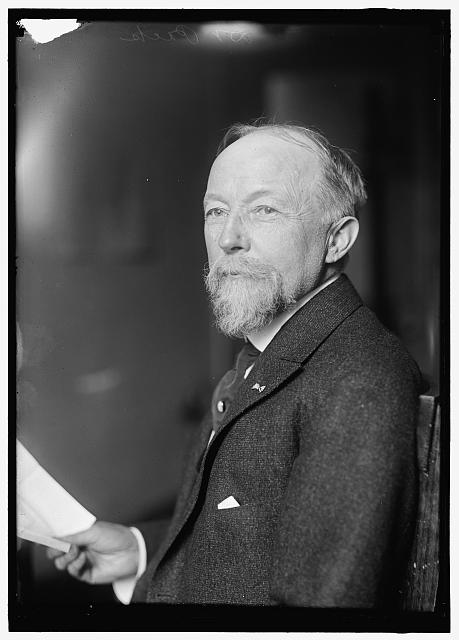
Charles Lathrop Pack, President, U.S. National War Garden Commission. Source: https://loc.gov/pictures/resource/hec.08264/.
Charles Lathrop Pack (May 7, 1857 – June 14, 1937) was a forestry expert and third-generation businessman. Both his father, George Willis Pack, and grandfather, George Pack, Jr., were in the forestry business. Charles continued this successful forestry dynasty by investing in the timber business as well as banking and real estate. By the time World War I started in Europe, he was a multi-millionaire and was named one of the five wealthiest men in America.
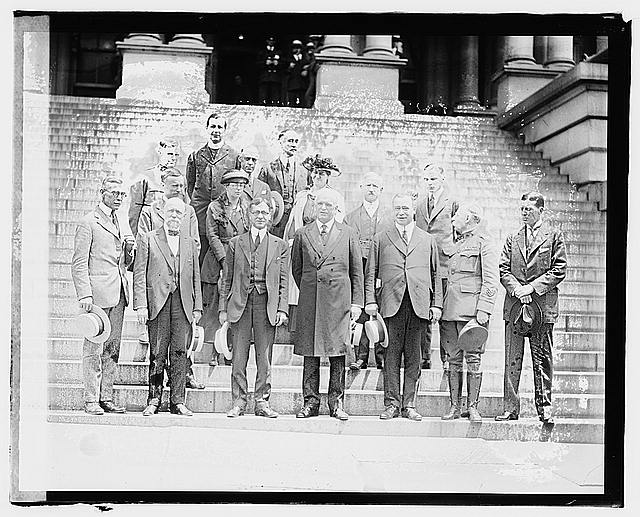
War Memorial Committee. Source: https://loc.gov/pictures/resource/npcc.01780/.
In addition to being an outstanding businessman, Charles Pack was keen about public education and wrote several instructional books and manual. During World War I, he was eager to promote the importance of self-sustainability of food supplies in the United States and went on to become the President of the U.S. National War Garden Commission.
Pack was a principal organizer of the Victory Garden movement. Victory gardens, war gardens, or, as they were sometimes called, “food gardens for defense,” are gardens meant to be supplement and even improve upon the food supply in times of shortage and rationing due to war, providing a variety of home-grown vegetables, fruits, and herbs. Not limited to typical farming areas or countryside, Victory Gardens were planted in urban areas as well. They sprang up at private homes and in public parks and allotments in the United States, the United Kingdom, Canada, Australia, and Germany during World War I and again in World War II.
Charles Pack helped to promote the understanding that the war efforts were not just frontline battles, but that it is crucial to strengthen the home front of the country by producing healthy food to feed the nation — a concept that has endured into the present.
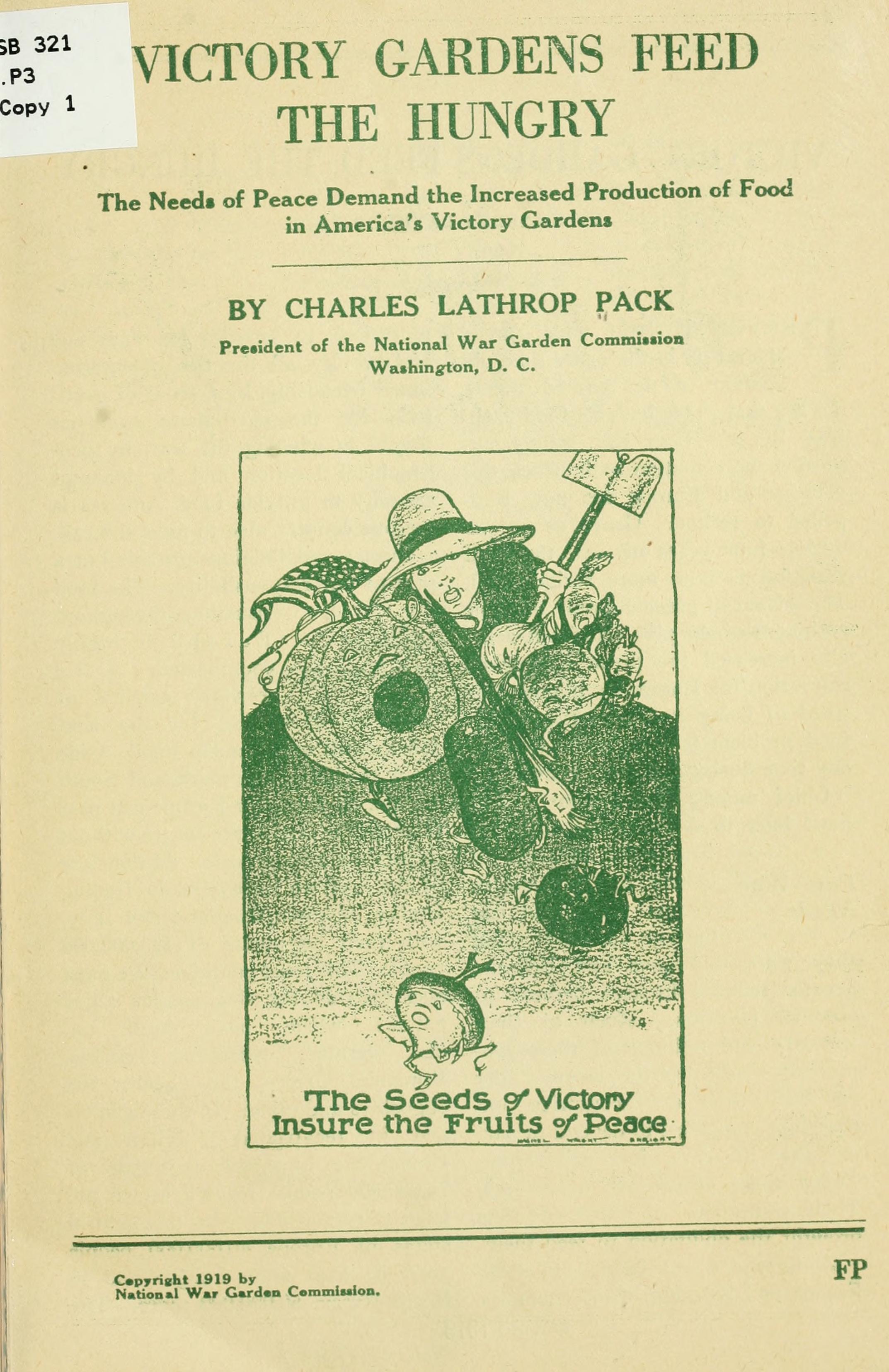
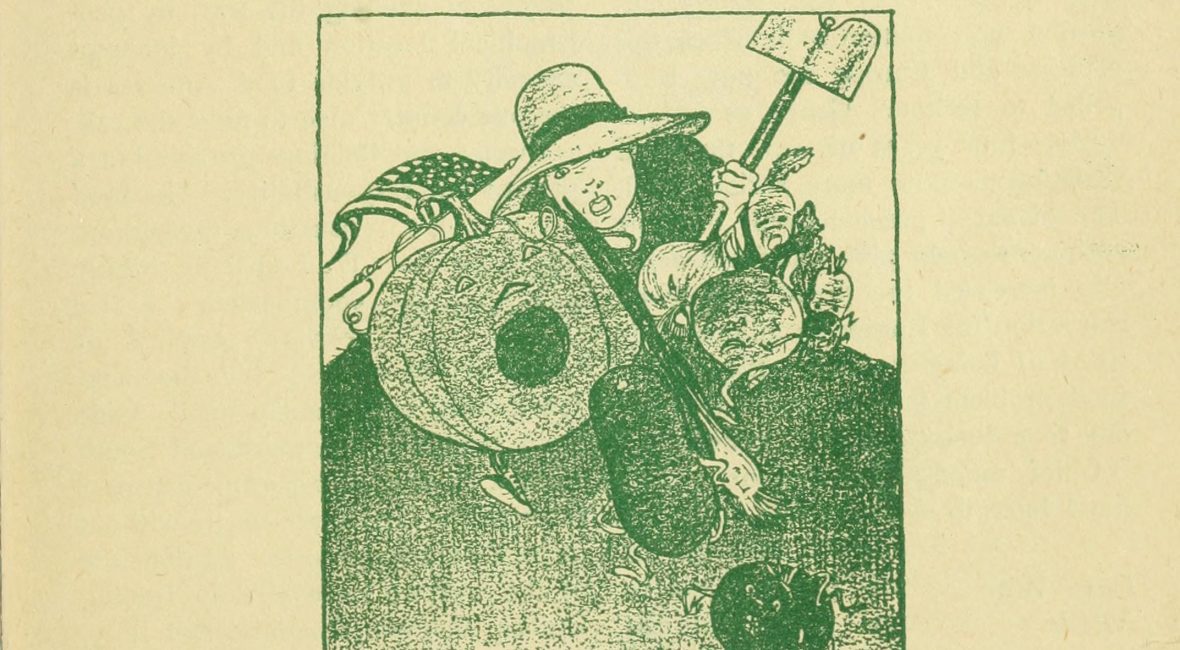
Pack, Charles Lathrop. Victory Gardens Feed the Hungry. c1919. Contributed in BHL from The Library of Congress.
The highlighted book, Victory gardens feed the hungry: the needs of peace demand the increased production of food in America’s victory gardens, is one of the leading monographs in the campaign for the Victory Garden program. In it, Pack also talks about the unfortunate conditions in some European countries (Ex. Belgium and France) due to the ongoing war and the need for Americans to come to their aid by providing seeds for food products and trees.
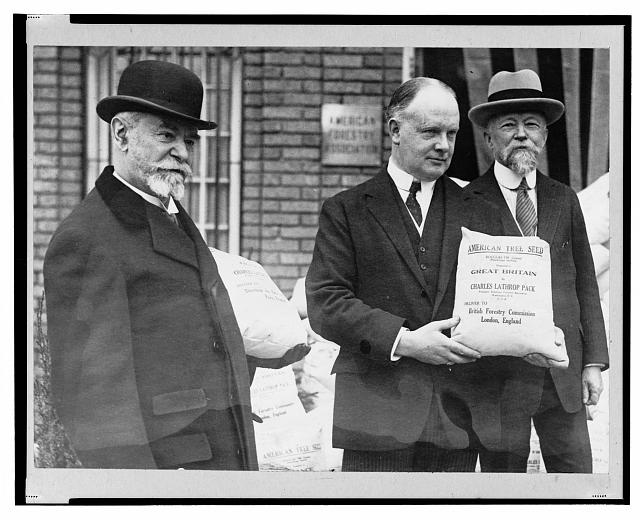
American seeds to reforest France and Great Britain. Source: https://loc.gov/pictures/resource/cph.3c33281/.
A statement at the bottom of the cover page of Victory gardens feed the hungry sums up his philosophy: “The Seeds of Victory Insure the Fruits of Peace.”
If you are in Washington, please visit the Library of Congress and see the “Victory Garden” at the side of the James Madison Building on First Street between C Street and Independence Ave.
Referenced Works
Victory gardens feed the hungry: the needs of peace demand the increased production of food in America’s victory gardens. By Pack, Charles Lathrop, 1857-1937 National war garden commission. Washington: National War Garden Commission, 1919. Holding Institution: Library of Congress. DOI: https://doi.org/10.5962/bhl.title.41724
The school book of forestry, By Pack, Charles Lathrop, Washington, D.C., The American Tree Association [1922]. Holding Institution: Library of Congress. DOI: https://doi.org/10.5962/bhl.title.49097.
