

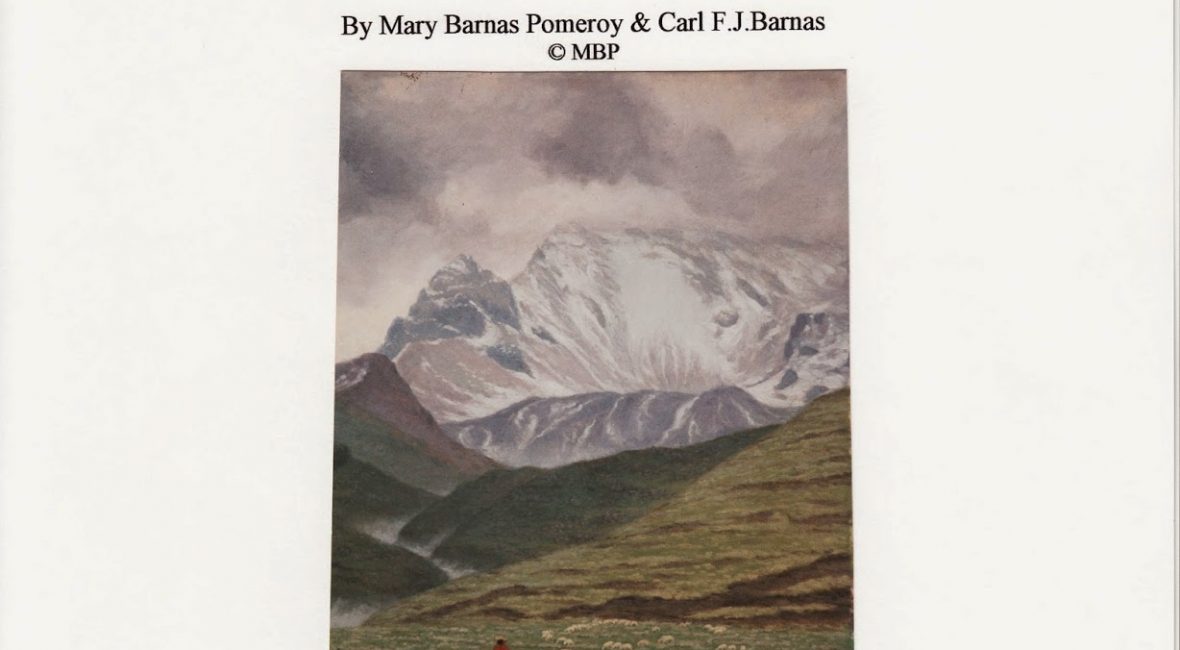
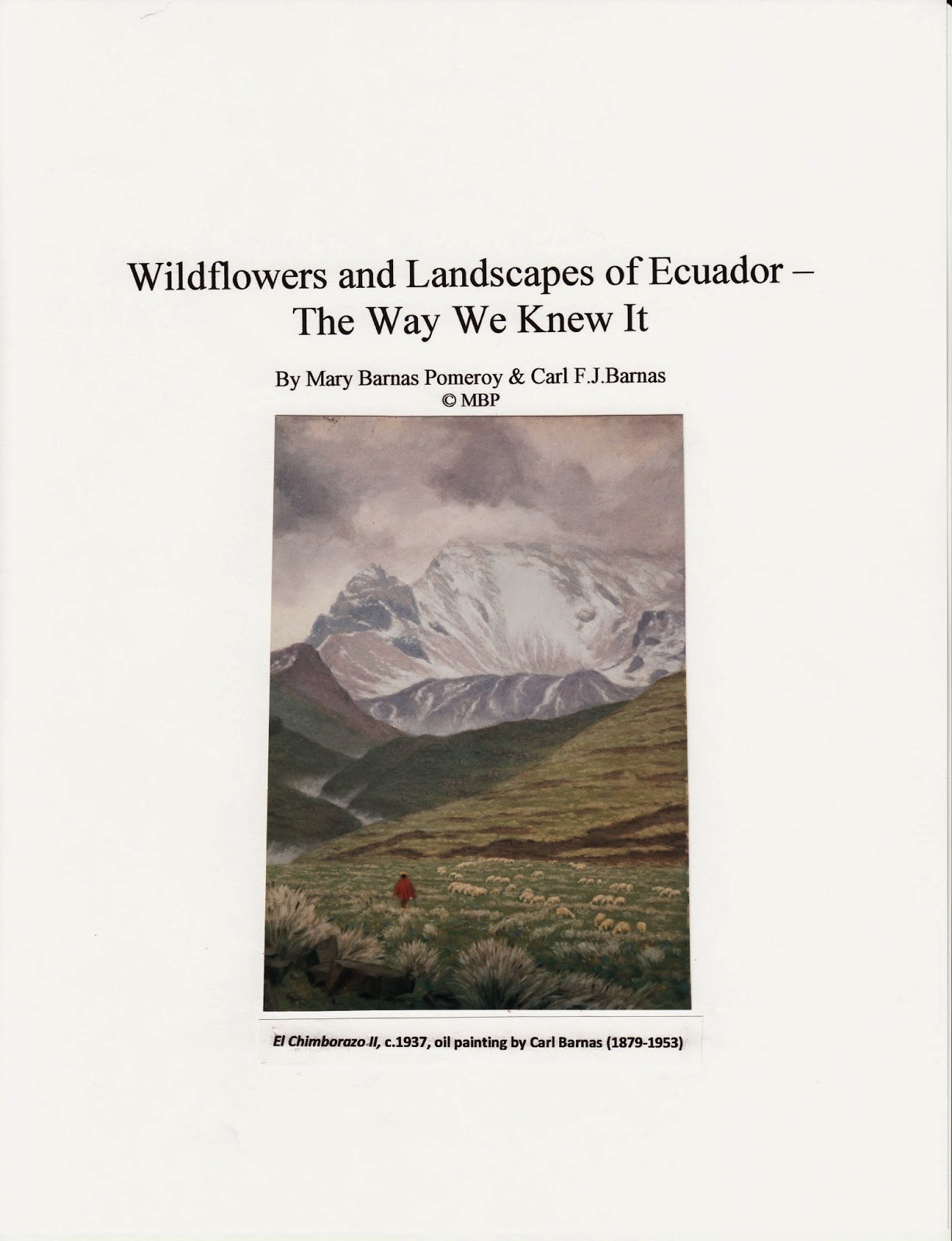
 |
| Missouri Botanical Garden, Peter H. Raven Library’s first eBook: Wildflowers and Landscapes of Ecuador: The Way We Knew It. |
Every now and then an unusual and exciting opportunity arises to digitize a very unique item. Such an opportunity arrived in the email box of Doug Holland, the director of the Peter H. Raven Library at the Missouri Botanical Garden, one afternoon in January 2014. Anne Hess, daughter of artist Mary Barnas Pomeroy and grand-daughter of artist/teacher Carl Barnas, had decided to donate a collection of artwork and her mother’s unfinished manuscript to the library. It was with great honor that the Raven Library accepted this collection. Not only are the paintings themselves beautiful, but the backdrop to history that this collection provides is also fascinating.
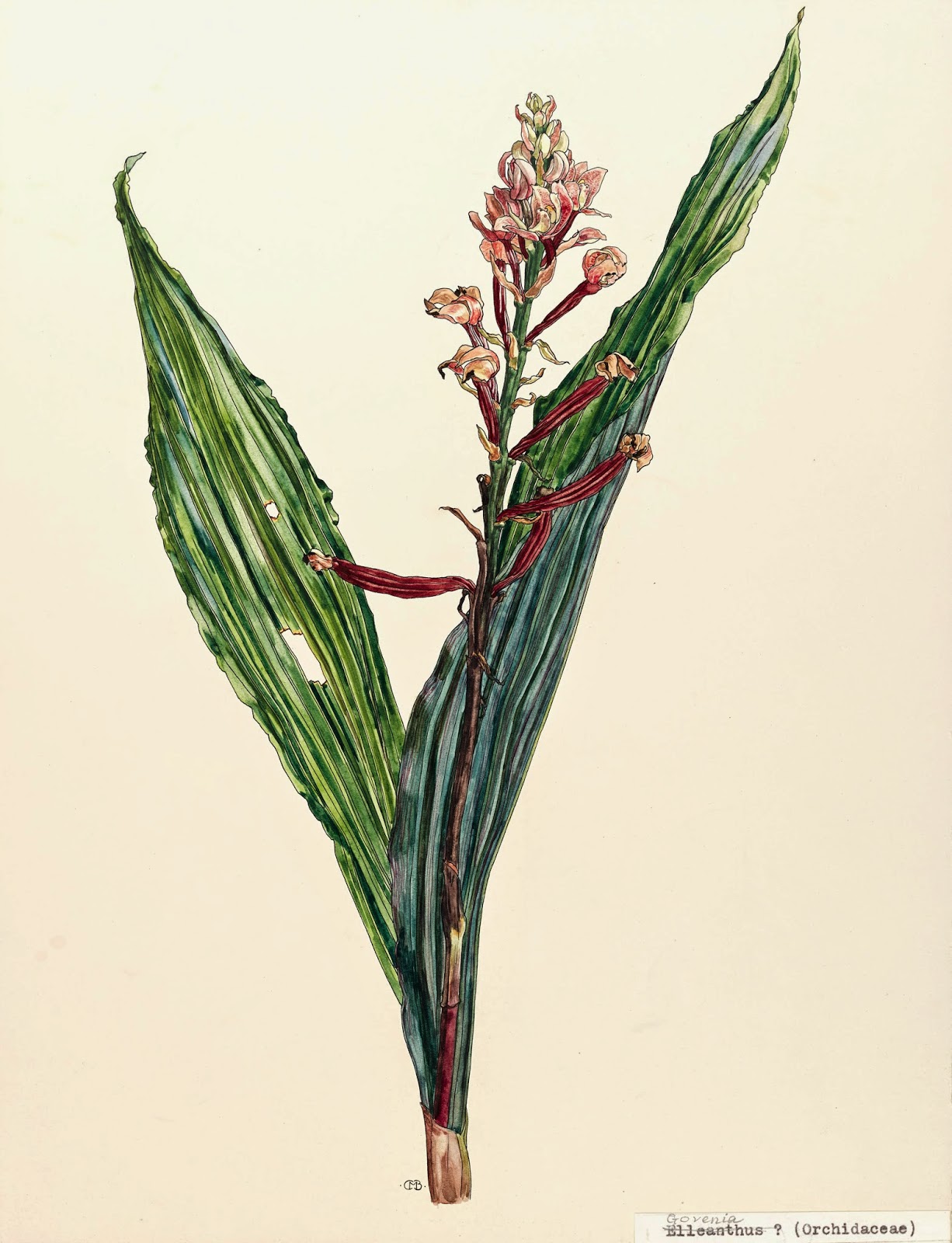 |
| Orchidaceae. Pomeroy, Mary Barnas. Wildflowers and Landscapes of Ecuador: The Way We Knew It (2015). http://biodiversitylibrary.org/page/46381682. |
Escaping the rise of Nazism in 1930s Laubach, Germany, the Barnas family travelled to Quito, Ecuador, after a one-year stay in Czechoslovakia. It is in Ecuador that most of the artwork was created. Ms. Pomeroy created detailed watercolors of many botanical specimens, but she also labeled their location and sought to identify each specimen.
Ms. Pomeroy’s interest in botanical illustrations piqued at the suggestion of her father. In 1938, she began the first of what would become more than 200 illustrations, when she decided to start compiling all the information six years later for a book that would contain her numerous illustrations. She decided to focus on illustrating smaller plants and fungi with the thought that the larger specimens might have already been described as “the more attractive ones might have been easier noticed and better known to science.” The 41 different botanical families were examined under a magnifying glass to be able to replicate all visible details.
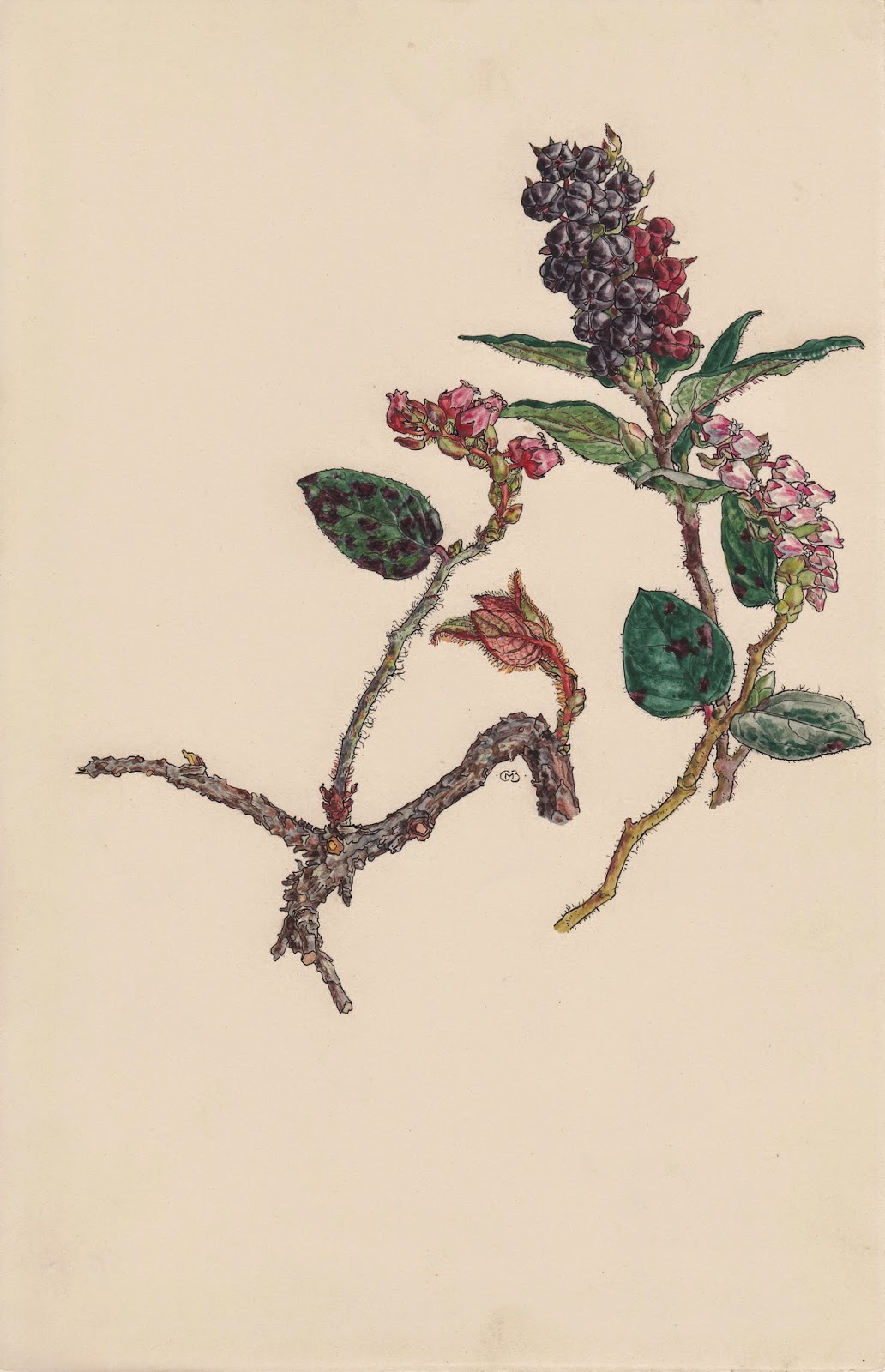 |
| Ericaceae. Pomeroy, Mary Barnas. Wildflowers and Landscapes of Ecuador: The Way We Knew It (2015). http://biodiversitylibrary.org/page/46381572. |
As her portfolio kept increasing, she thought it prudent to try to identify and label each of the specimens she had already painted. Although never formally trained as a botanist herself, she enlisted the assistance of many other botanists, such as Dr. Alfredo Paredes of the Universidad Central del Ecuador and Dr. Francis Pennel of the Academy of Natural Sciences of Philadelphia, to help identify or confirm the identity of various specimens to label each one as accurately as possible. Ms. Pomeroy was also employed at various times as a botanical illustrator; for instance, she worked for the University of California – Berkeley’s Herbert L. Mason who was laboring on A Flora of the Marshes of California.
After a more than 50-year hiatus, Ms. Pomeroy returned to her book of botanical illustrations of plants and fungi from Ecuador. Unfortunately, she passed away before being able to complete her book.
During her life, Ms. Pomeroy enthralled Dr. Peter H. Raven, former president of the Missouri Botanical Garden, with her early Ecuadorian illustrations. This led to a showing of the artwork both at the Missouri Botanical Garden in St. Louis and in various other cities.
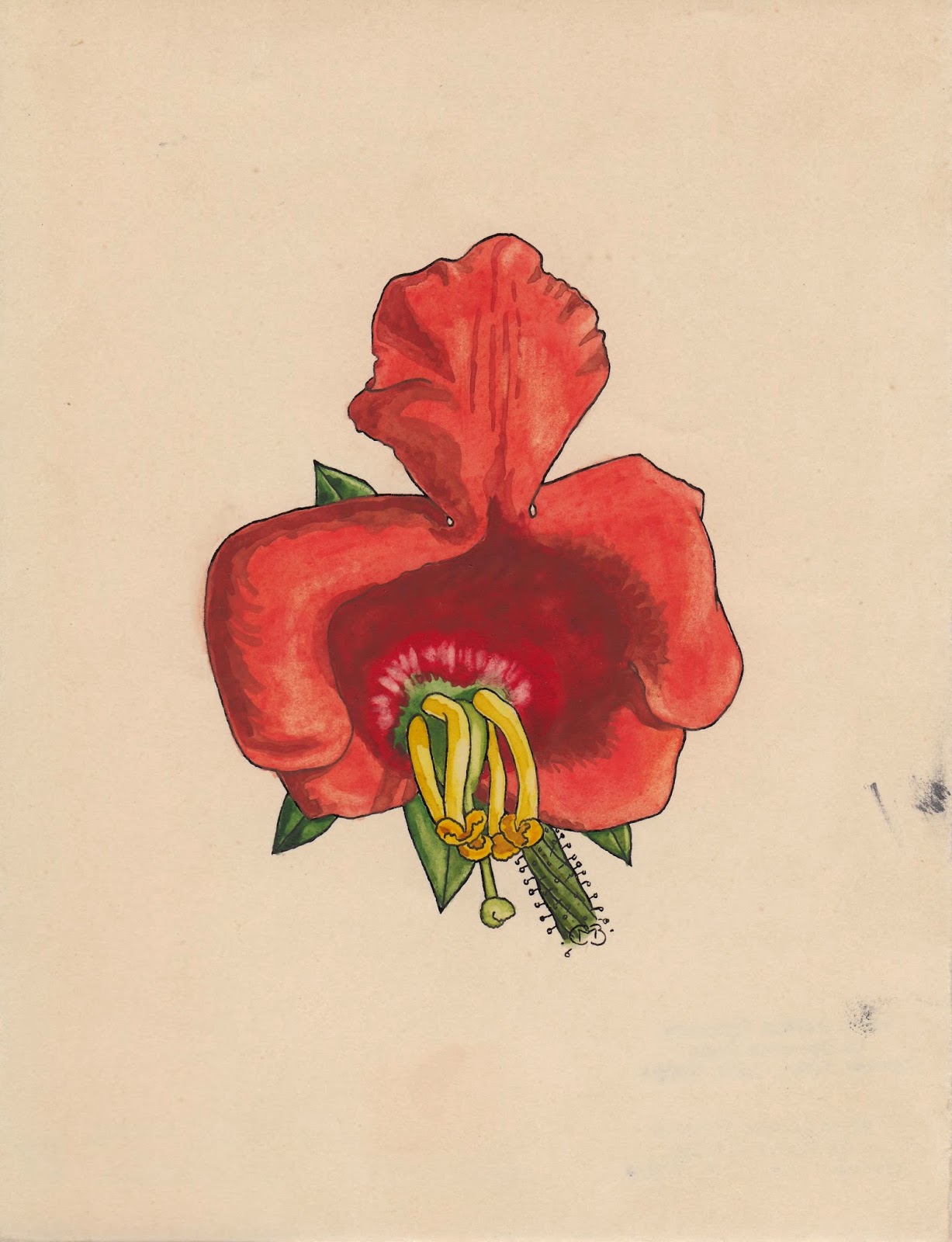 |
| Caritas rojas / Alonsoa meridionalis. Pomeroy, Mary Barnas. Wildflowers and Landscapes of Ecuador: The Way We Knew It (2015). http://biodiversitylibrary.org/page/46381921. |
This is where Ms. Pomeroy’s daughter, Anne Hess, stepped into the foreground and offered her mother’s collection to the Raven Library. Upon learning that most of the artwork was meant to tie-in with an unpublished manuscript, suggestions arose that the unpublished manuscript should evolve into the library’s first e-book publication entitled Wildflowers and Landscapes of Ecuador: The Way We Knew It.
Ms. Pomeroy had already sorted all the images into major categories, which facilitated easy pairing of the images with their respective chapters and descriptions.
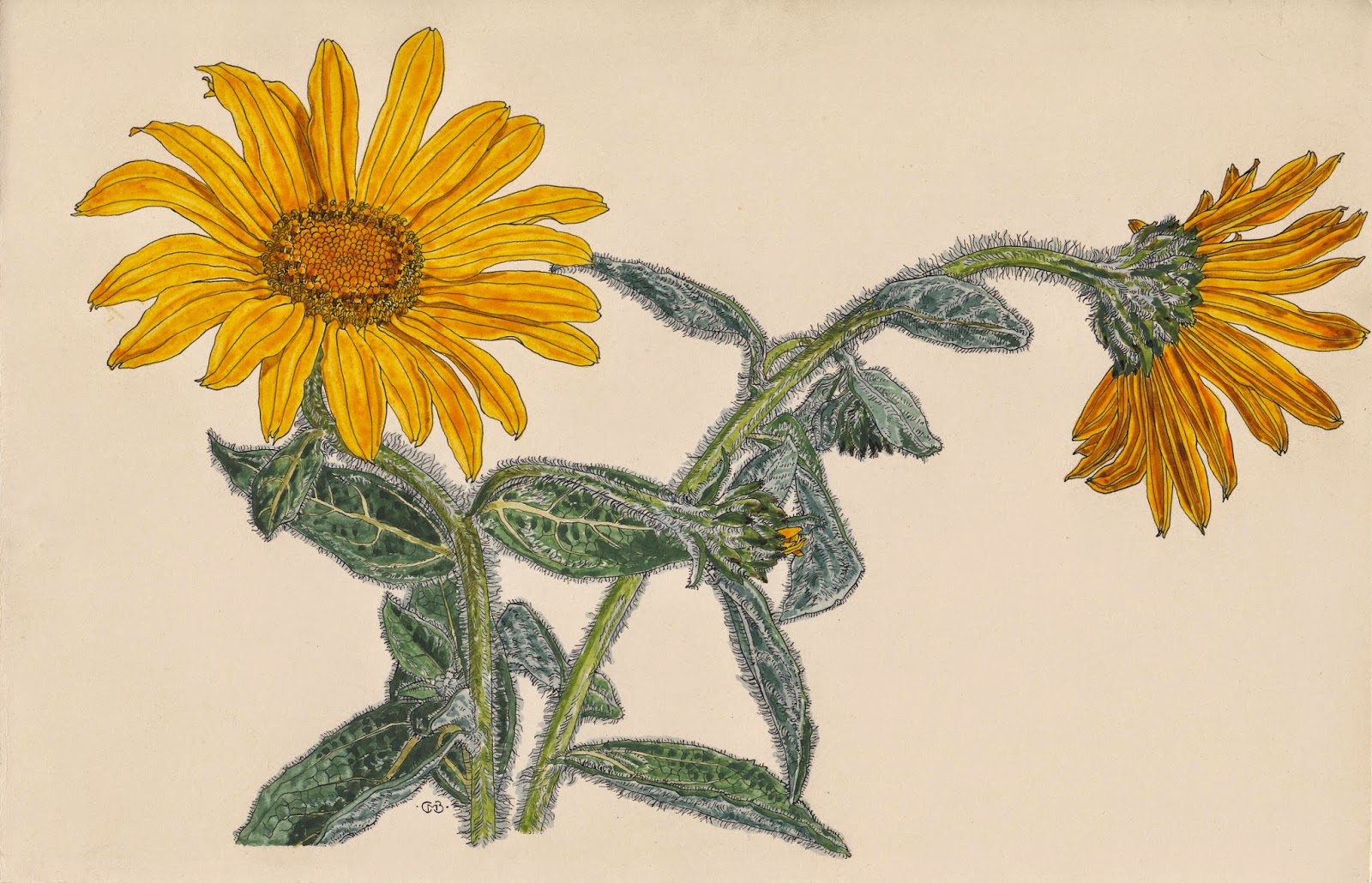 |
| Viguiera sodiroi. Pomeroy, Mary Barnas. Wildflowers and Landscapes of Ecuador: The Way We Knew It (2015). http://biodiversitylibrary.org/page/46381524. |
In addition, Ms. Pomeroy had written a short fictional story titled “An Indian boy meets Mount Pichincha’s flowers,” which is included toward the end of the book. The reader is taken on an expedition through the eyes of a young boy, Hilario, as he collects botanical specimens with a botanist named Professor Flores.
View Mr. Barnas’ landscapes and Ms. Pomeroy’s enchanting botanical illustrations, as well as relive her experiences when you peruse this wonderful work on the Biodiversity Heritage Library’s website.
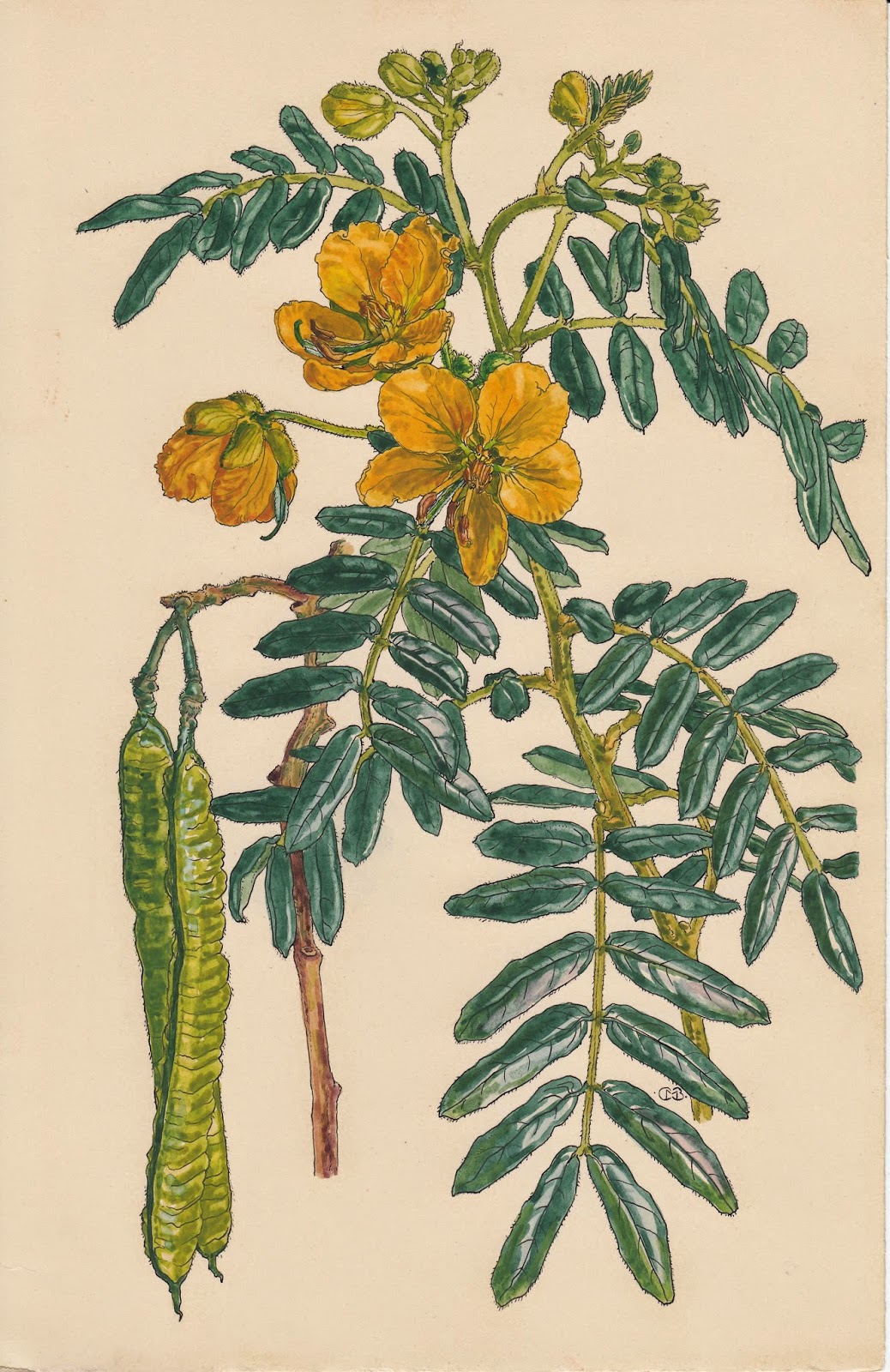 |
| Senna hirsuta. Pomeroy, Mary Barnas. Wildflowers and Landscapes of Ecuador: The Way We Knew It (2015). http://biodiversitylibrary.org/page/46381304. |
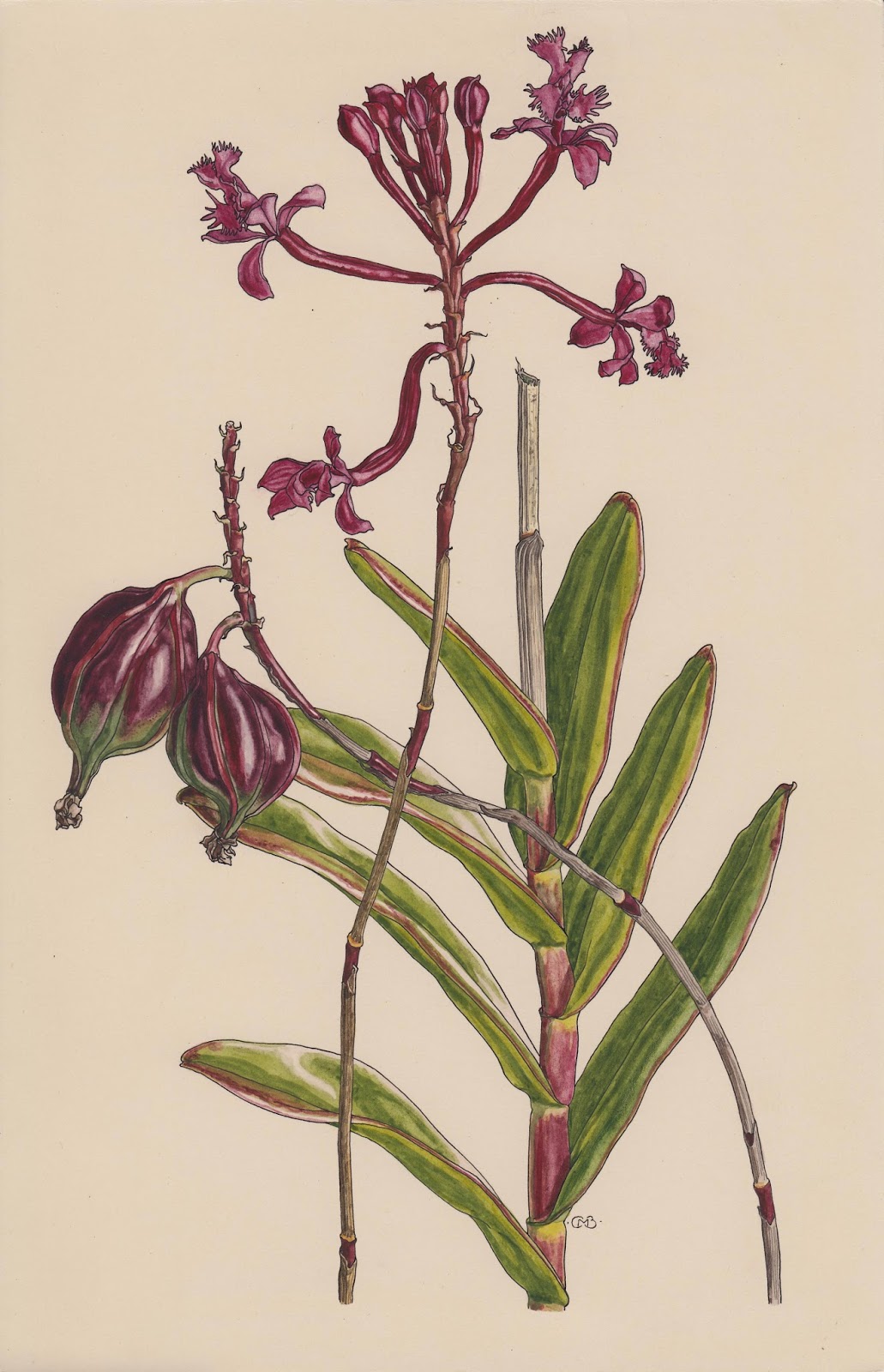 |
| Epidendrum secundum. Pomeroy, Mary Barnas. Wildflowers and Landscapes of Ecuador: The Way We Knew It (2015). http://biodiversitylibrary.org/page/46381402. |
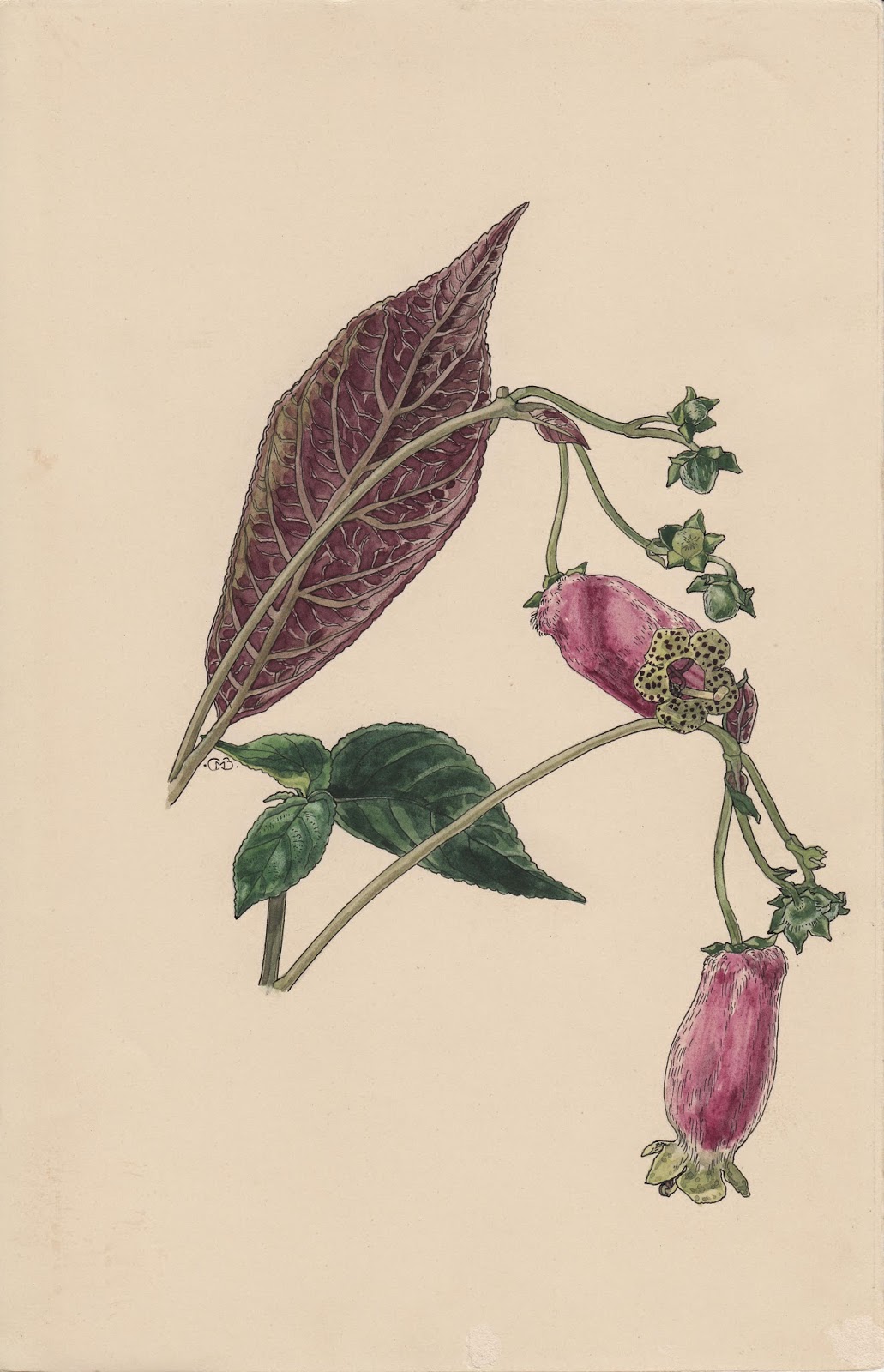 |
| Campanea sp. Pomeroy, Mary Barnas. Wildflowers and Landscapes of Ecuador: The Way We Knew It (2015). http://biodiversitylibrary.org/page/46381463. |
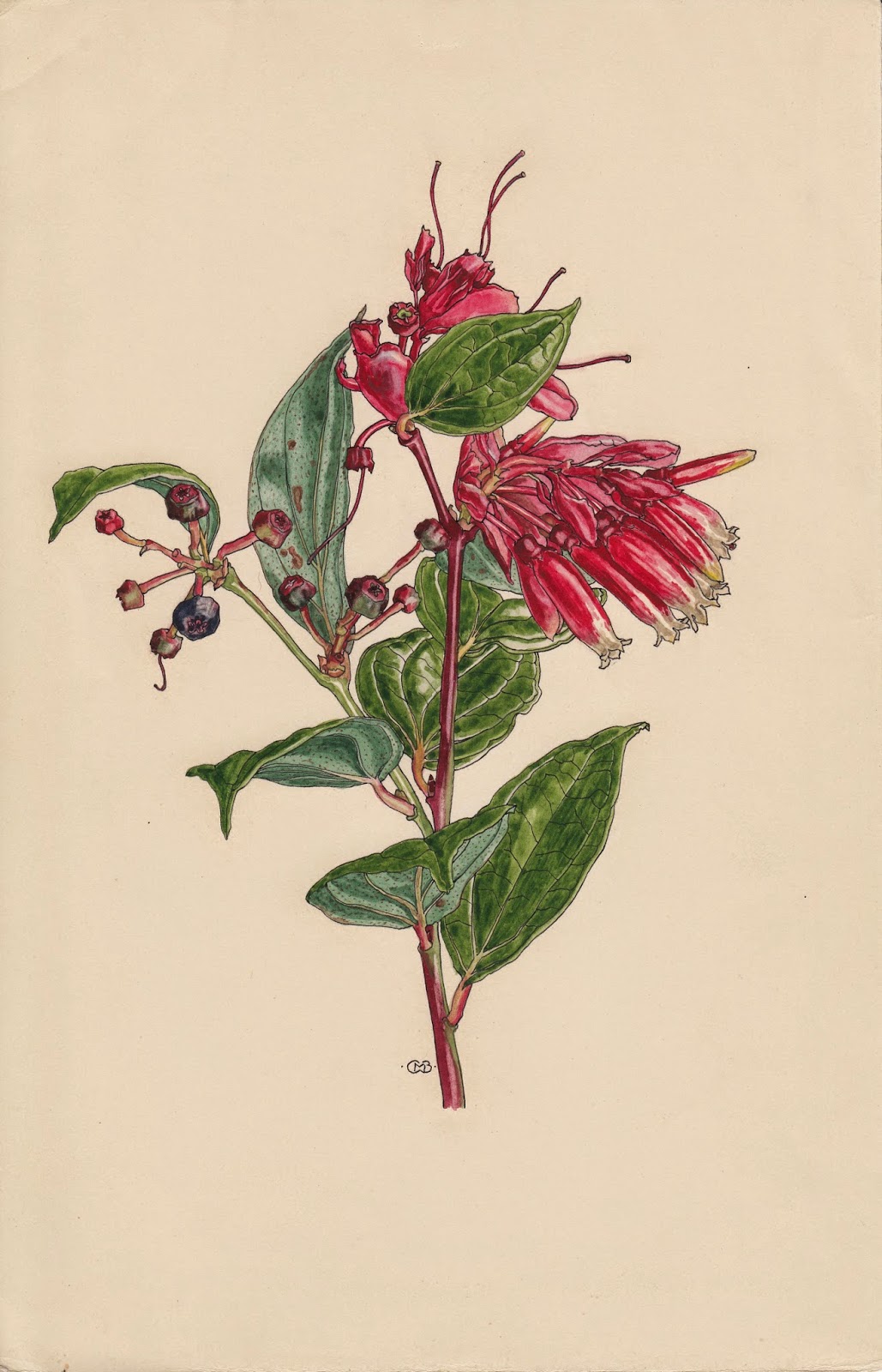 |
| Cavendishia gilgiana. Pomeroy, Mary Barnas. Wildflowers and Landscapes of Ecuador: The Way We Knew It (2015). http://biodiversitylibrary.org/page/46381804. |
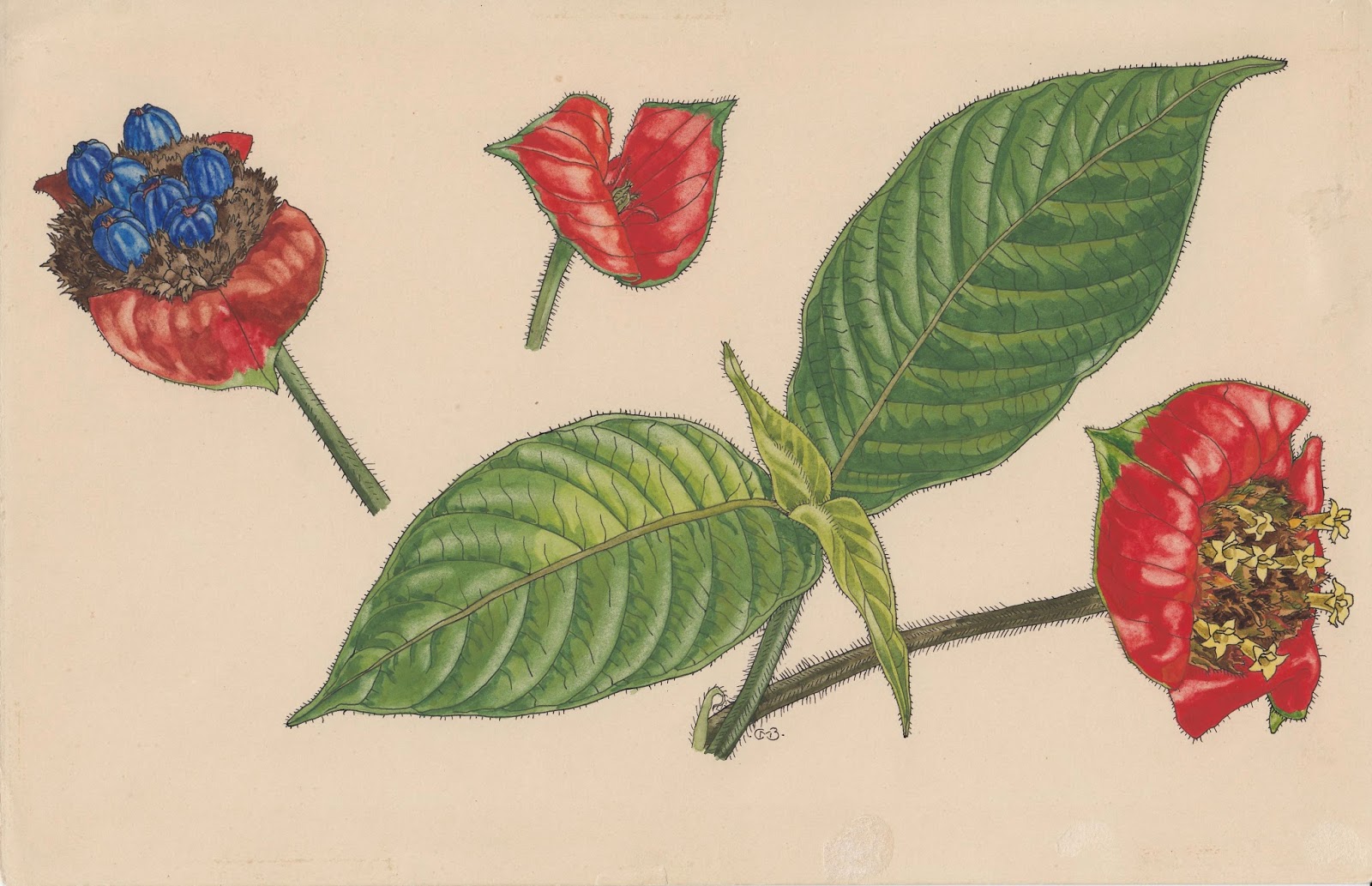 |
| Cephalis tomentosa. Pomeroy, Mary Barnas. Wildflowers and Landscapes of Ecuador: The Way We Knew It (2015). http://biodiversitylibrary.org/page/46381241. |
