Biodiversity Heritage Library - Program news and collection highlights from BHL
  • Home
  • News
  • Featured Books
    • All Featured Books
    • Book of the Month Series
    • BHL at 20
  • User Stories
  • Campaigns
    • Fossil Stories
    • Garden Stories
    • Monsters Are Real
    • Page Frights
    • Her Natural History
    • Earth Optimism 2020
  • Tech Blog
  • Visit BHL
Home
News
Featured Books
    All Featured Books
    Book of the Month Series
    BHL at 20
User Stories
Campaigns
    Fossil Stories
    Garden Stories
    Monsters Are Real
    Page Frights
    Her Natural History
    Earth Optimism 2020
Tech Blog
Visit BHL
  • Home
  • News
  • Featured Books
    • All Featured Books
    • Book of the Month Series
    • BHL at 20
  • User Stories
  • Campaigns
    • Fossil Stories
    • Garden Stories
    • Monsters Are Real
    • Page Frights
    • Her Natural History
    • Earth Optimism 2020
  • Tech Blog
  • Visit BHL
Biodiversity Heritage Library - Program news and collection highlights from BHL
BHL News, Blog Reel, Tech Updates

Interlinking BHL Data in the Wikimedia Project Ecosystem

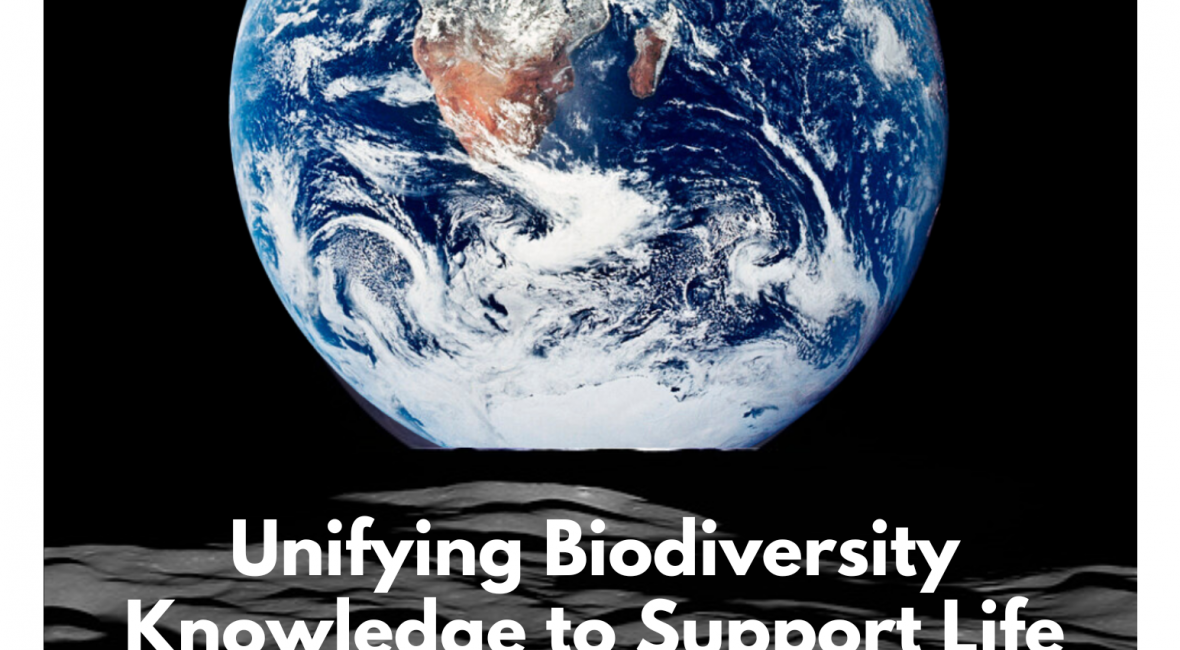
Cover of white paper with image of earth from space

The planet is at a critical juncture, where urgent action is required to combat climate change, biodiversity loss, and secure a sustainable future for our planet. With the release of the recent BHL Wikimedia white paper entitled Unifying Biodiversity Knowledge to Support Life on a Sustainable Planet, the Biodiversity Heritage Library Secretariat hopes that an expanded data vision for the BHL community presents new opportunities to take bold steps forward into Wikimedia projects and the emergent semantic web.

Cover of white paper with image of earth from space

Dearborn, J. (2023). Unifying Biodiversity Knowledge to Support Life on a Sustainable Planet. Biodiversity Heritage Library. https://doi.org/10.21428/bcf8962c.699434fb

The white paper sheds light on BHL’s crucial role as a member of the biodiversity informatics community and reveals a series of key use cases and big data challenges that, if addressed, could be opportunities to enhance global biodiversity data infrastructure.

Addressing BHL’s Big Data Challenges

Three significant challenges remain for BHL to solve in the era of big data:

  1. correcting and transcribing OCR text;
  2. improving search precision and retrieval within the BHL interface; and
  3. expanding interlinkages and deposits of data from BHL into global knowledge bases, e.g. depositing species occurrence data in Global Biodiversity Information Facility (GBIF).

Example of handwritten observation data with poor quality OCR and no scientific names found on the page

By working to address these challenges, BHL aims to ensure data accuracy, enhance user experience, and forge stronger connections within the global biodiversity data infrastructure.

If liberated, the data in BHL’s collection will:

  1. improve scientific understanding of ecological change, deeper into time;
  2. assist decision-makers in shaping global environmental policy informed by the historical record; and
  3. bridge knowledge gaps and facilitate information exchange regarding our planet’s history.

Unlocking BHL’s Power with Wikimedia Projects

Within the white paper, Wikimedia’s core projects, particularly Wikidata, take center stage. BHL is already engaged in projects to load title, author and article metadata into Wikidata. By integrating more of BHL’s biodiversity and climate-related data into the collaborative and unified ecosystem of Wikidata, BHL can unlock new opportunities for data-driven insights.

Thumbnails of each chapter and appendix in the white paper

Call to Action: Vote for the Most Impactful Use Cases!

BHL partners, Wikimedians, and key BHL collaborators are encouraged to actively participate in shaping the future of BHL by voting and commenting on which use cases the community believes will have the most significant impact. Your input and insights are invaluable in guiding the direction of BHL’s Wikimedia projects. Visit the voting platform to share your thoughts, provide feedback, and cast your vote to take action on 25 recommended use cases. Let’s work together to identify the areas of maximum impact for BHL that will help transform BHL’s data into interlinked knowledge in the semantic web.

Screenshot of 25 BHL wikimedia recommendations on voting platform

VOTE NOW!

Through a range of potential applications for BHL data in the Wikimedia ecosystem and the pursuit of solutions for BHL’s big data challenges, BHL is making the case for deeper integration of its collection into biodiversity knowledge networks. The release of the white paper demonstrates unique opportunities for BHL to improve biodiversity research infrastructure, increase understanding of our planet’s biodiversity and impact climate policy.

August 25, 2023by mdimeo
BHL News, Blog Reel

Wikimania 2012!

Two missions collide: Free, Open, and Global! Wikipedia we love you.

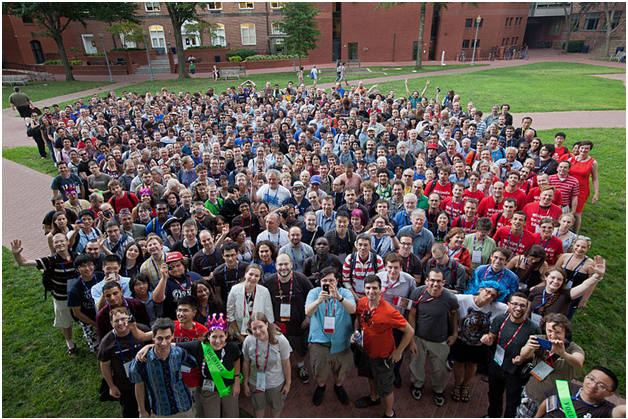
Since 2009, we have been looking at Wikipedia as a way to drive new user traffic to the Biodiversity Heritage Library while improving the content and accuracy of Wikipedia’s articles. This symbiotic relationship has had a few bumps along the way but, our recent attendance at the  8th Annual Wikimania Conference held in Washington, DC, reaffirmed our commitment to increase our Wikipedia efforts which include adding our Flickr images to the Wikimedia commons file repository as well as inserting species citations, and external links to auto-generated BHL taxon name bibliographies. During this week-long conference, we were inspired by the sense of mission, ingenuity and passion that our fellow Wikipedians demonstrated.

 
View Full Size Image
Photographed by Adam Novak

Early on, we ran into some obstacles with our Wikipedia edits. It seems we lacked the user “clout” necessary to add BHL links en masse. As newcomers who had not been “validated” by the Wikipedia community, we found that many of our citations were subsequently deleted which proved a tad bit frustrating since we had no idea why this was happening! At this year’s conference, we learned that Wikipedia is subject to rampant vandalism and many links from unverified or new users will be deleted. You must earn authority over time in Wikipedia. Top users are awarded virtual honors dubbed “barnstars.” Yes, anyone may edit but, in Wikipedia only the unbiased vetted truth sticks.

View Full Size Image
Wikipedia’s Article Quality Rubric

Contrary to popular derision, Wikipedia’s standards for trusted citations, fact checking and article quality are intensely rigorous. They have developed rubrics for quality, tutorials for writing articles, and lists of articles that need user help. Wikipedia is built upon the hard-work of a global network of altruistically motivated (as opposed to financially), passionate and tech savvy people who have developed a highly complex information ecosystem. Frankly, we were in awe at the spirit Wikipedians had for Open Knowledge not to mention the amount of free work they seemed willing to do. Beyond traditional editing efforts, Team BHL has also been exploring potential tech developments for two out of the ten official Wikimedia foundation projects; those being, Wikisource and Wikimedia Commons.

Wikisource
Wikisource is a project that gives users the opportunity to augment open content texts with corrections, hyperlinks and notes. This really piqued our interest because free-text searching in the BHL has been one of the most requested improvements for functionality by our users and remains on our tech development to-do list. The main obstacle that we face is that optical character recognition software (OCR) is marginally accurate at best and the errors present in uncorrected OCR texts remain one of the insurmountable hindrances to free-text searching of the BHL corpus.

After sitting-in on the Wikisource presentation given by Andrea Zanni, a Wikisource sysop, advocate, and volunteer, we were extremely impressed by this project and its potential future application for BHL text files. Finally: a platform that opens up the possibility of crowd-sourcing BHL user-generated corrections for OCR text! Moreover, the multi-layered djvu file format that Wikisource accepts allows users to add their own links into the text’s OCR, further augmenting the usefulness of the original resource.

Lastly, perhaps the most exciting application of Wikisource is its potential use with manuscripts. For instance, handwritten scientific field notes or Linnaeus’ personal letters are not accompanied by a text file; these invaluable scholarly resources could be transcribed by Wikisource users and thus exposed to user search and discovery.

View Full Size Image
Users can correct OCR using Wikisource’s dual-pane interface. Also, they have linked the term “cattle-plague” to the Wikipedia article “Rinderpest.” Linked data or Wikisourcery?!

Currently, there are still few options for extracting the corrections and re-integrating them into the BHL. Nevertheless, the Wikisource developers were among the most enthusiastic and driven folks at the conference; we will be watching them closely for future improvements to Wikisource that might help make the “Full-text Search Dream” a reality. As users, how likely would it be for you to help make corrections to BHL texts using the Wikisource interface?  (Screenshot above)

Wikimedia Commons

Another project already in the works as part of our recent NEH grant is to batch upload our 37,595 Flickr images into the Wikimedia Commons. The Commons provides Wikipedians with a central repository that stores photographs, diagrams, maps, videos, animations, music, sounds, spoken texts, and other free media, all of which can be re-purposed and reused for Wikipedia articles and projects. For our purposes here at BHL, we just see this as another avenue to expose the fabulous illustrations that we already have in our Flickr account and have them used  for article creation and species description in the future. We are particularly interested in providing images to species that have been identified in Wikipedia that are lacking illustrations.

Stay tuned for more information in the future about the progress of our Wikimedia Commons work.

Current State of Team BHL’s Efforts

As of yesterday, there were 3,181 BHL links in Wikipedia. We can only hope that this number continues to grow as word about BHL spreads. Our continued efforts are only a small piece of the pie. We count on our users to help us vet Wikipedia’s biodiversity articles, all of which benefit from citations pulled from the BHL. Please help us spread knowledge about life on Earth to new user communities by becoming a Wikimanian yourself. We may hold an “edit-a-thon” in the future for interested users — if the idea takes hold.

In the meantime, feel free to sail solo by adding BHL links and citations to Wikipedia. For helpful tips on how to do this, our Technical Director, Chris Freeland put together a presentation that offers a quick primer on Wikipedia editing for BHL.

We depend on user feedback to drive our technical development efforts, so please let us know what you think about our involvement with Wikipedia and the two aforementioned projects.

July 30, 2012by BeccaQ_92

Help Support BHL

BHL's existence depends on the financial support of its patrons. Help us keep this free resource alive!

search

About BHL

The Biodiversity Heritage Library (BHL) is the world’s largest open access digital library for biodiversity literature and archives. BHL operates as a worldwide consortium of natural history, botanical, research, and national libraries working together to digitize the natural history literature held in their collections and make it freely available for open access as part of a global “biodiversity community.”

Join Our Mailing List

Sign up to receive the latest news, content highlights, and promotions.

Subscribe Now

Subscribe to Blog via Email

Enter your email address to subscribe to this blog and receive notifications of new posts by email.

Join 319 other subscribers

Subscribe to Blog Via RSS

Subscribe to the blog RSS feed to stay up-to-date on all the latest BHL posts.

Access RSS Feed

Inspiring Discovery through Free Access to Biodiversity Knowledge.

The Biodiversity Heritage Library makes it easier than ever for you to access the information you need to study and explore life on Earth…for free, anytime, anywhere.


64+ Million Pages of
Biodiversity Literature Online.

EXPLORE

Tools and Services
to Transform Research.

EXPLORE

300,000+
Illustrations on Flickr.

EXPLORE

ABOUT | HARMFUL CONTENT | PRIVACY | SITE MAP | TERMS OF USE