Biodiversity Heritage Library - Program news and collection highlights from BHL
  • Home
  • News
  • Featured Books
    • All Featured Books
    • Book of the Month Series
    • BHL at 20
  • User Stories
  • Campaigns
    • Fossil Stories
    • Garden Stories
    • Monsters Are Real
    • Page Frights
    • Her Natural History
    • Earth Optimism 2020
  • Tech Blog
  • Visit BHL
Home
News
Featured Books
    All Featured Books
    Book of the Month Series
    BHL at 20
User Stories
Campaigns
    Fossil Stories
    Garden Stories
    Monsters Are Real
    Page Frights
    Her Natural History
    Earth Optimism 2020
Tech Blog
Visit BHL
  • Home
  • News
  • Featured Books
    • All Featured Books
    • Book of the Month Series
    • BHL at 20
  • User Stories
  • Campaigns
    • Fossil Stories
    • Garden Stories
    • Monsters Are Real
    • Page Frights
    • Her Natural History
    • Earth Optimism 2020
  • Tech Blog
  • Visit BHL
Biodiversity Heritage Library - Program news and collection highlights from BHL
Blog Reel, Campaigns, Featured Books, Her Natural History

Mary Margaret Smith: Ichthyologist, Artist, and First Director of the JLB Smith Institute of Ichthyology

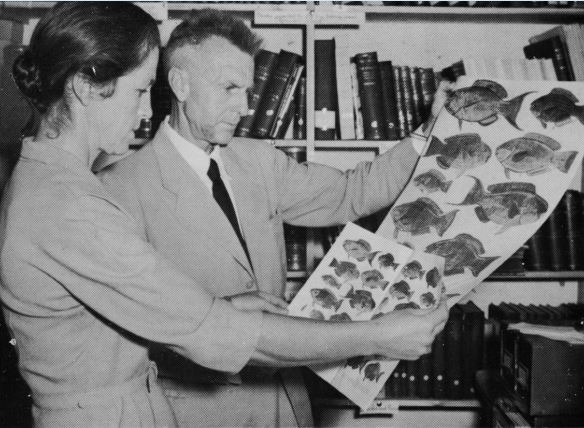
Margaret and JLB Smith review art proofs

A version of this post was originally published on the blog of the Margaret Smith Library, SAIAB. It is reproduced with permission from the author, Sally Schramm.

fish

From the cover of The life and work of Margaret M. Smith / Mike Bruton (c.1986)

The Library at the South African Institute for Aquatic Biodiversity is named for Mary Margaret Smith (née Macdonald), the first Director of the JLB Smith Institute of Ichthyology. Macdonald attended Rhodes University College in Grahamstown from 1934 to 1937. She was awarded her B.Sc. degree in 1936, majoring in physics and chemistry (with distinction), and became a senior demonstrator in the Chemistry Department.

James Leonard Brierley (JLB) Smith (1897-1968), Associate Professor of Organic Chemistry, and Mary Macdonald, were married in 1938. With her not liking the new name “Mary Smith”, she was from that time always known as “Margaret Smith”.

JLB Smith

JLB Smith with White steenbras , Knysna ca. 1950

JLB Smith, a keen angler, developed a more formal interest in ichthyology, the study of fishes. His young wife soon became involved in his hobby and accompanied him on fishing trips and collecting expeditions.

Margaret Smith

Margaret Smith drawing on a boat in the Seychelles.

Typical lab conditions, Shimoni, Kenya 1952

Typical lab conditions, Shimoni, Kenya 1952.

In 1946, the Department of Ichthyology was established at Rhodes University and J.L.B and Margaret Smith were able to devote all their energies to the production of an authoritative book on the sea fishes of southern Africa.

Margaret and JLB Smith review art proofs

Margaret and JLB Smith review art proofs.

One of their greatest problems was a lack of suitable illustrations. Undaunted, despite no artistic training, Margaret Smith, took on the task. The first edition of The Sea Fishes of Southern Africa, published in 1949, contained her exceptional illustrations.

Plate 32. The sea fishes of Southern Africa. 1949. By JLB and Mary Margaret Smith. Art by Mary Margaret Smith. Contributed in BHL from Cornell University Library with permission from the South African Institute for Aquatic Biodiversity. CC-BY-NC-SA.

Plate 12. The sea fishes of Southern Africa. 1949. By JLB and Mary Margaret Smith. Art by Mary Margaret Smith. Contributed in BHL from Cornell University Library with permission from the South African Institute for Aquatic Biodiversity. CC-BY-NC-SA.

She in turn taught what was to become a group of acclaimed natural history artists.

After the death of JLB Smith in January 1968, Margaret Smith continued her ichthyological research in Grahamstown. At the end of 1968, the South African Council for Scientific and Industrial Research (CSIR) and Rhodes University decided to establish the J.L.B Smith Institute of Ichthyology. Margaret was appointed the first Director of the new Institute, now the South African Institute for Aquatic Biodiversity (SAIAB).

Margaret and JLB Smith with their dog, Marlin.

Margaret and JLB Smith with their dog, Marlin.

The Margaret Smith House, a women’s residence at Rhodes University, likewise honours her contribution to our local university and to international science.

Margaret Smith died in 1987. She had given 49 years of service to ichthyology.

Margaret’s achievements, the fine building, the reference collection of fish which she so adequately preserved, the status of the institute as a museum of international standing, are there for all to see. What is less known is the woman herself in her private life which few could know much about. This may be summed up in two words: for all her public flamboyance, she was a kind woman. Nobody with a hard-luck story was ever turned away … she helped innumerable people. If something was needed and could not otherwise be got she would dip into her pockets, and never say a word. [1]

The Biodiversity Heritage Library holds a collection of JBL Smith’s Ichthyological Papers, edited by his wife, Margaret Smith, and published in 1969, the year after his death. Contributed by the Library of the South African Institute for Aquatic Biodiversity, the two volume work was published by the J.L.B. Smith Institute of Ichthyology.

Coelacanth

Coelacanth re-discovered off the coast of South African in 1938. Smith, J.L.B. “A Living Fish of Mesozoic Type.” Nature. v. 143 (1939). In: Ichthyological Papers. Ed. Mary Margaret Smith. 1969. Contributed in BHL from the South African Institute for Aquatic Biodiversity.

One of the highlights of the publication is the description of the “re-discovery” of the coelacanth, believed to have become extinct in the Late Cretaceous, around 66 million years ago, but rediscovered off the coast of South Africa in 1938. Marjorie Courtenay-Latimer, curator of the East London Museum, discovered a specimen from amongst the catch of a local trawler, Captain Hendrick Goosen, and contacted J.L.B. Smith regarding the discovery. Smith subsequently named the species Latimeria chalumnae after Courtenay-Latimer.

You can read more about the life and achievements of Marjorie Courtenay-Latimer as part of the #HerNaturalHistory campaign.

Reference

[1] PBN Jackson. 1997. Variations on a theme: the three directors of the first fifty years of the JLB Smith Institute of Ichthyology. Trans. Roy. Soc. S. Afr., 51:40.

March 24, 2019by michelle.underhill
Blog Reel, Campaigns, Featured Books, Her Natural History

Elizabeth Gould: An Accomplished Woman

Elizabeth Gould

This post was originally published on the Smithsonian Libraries’ blog. It is reproduced with permission from the Author, Alexandra K. Newman.

Be sure to join Alexandra Newman for a behind-the-scenes look at Elizabeth Gould’s work in the Natural History Rare Book Library at the Smithsonian Libraries during a Facebook Live broadcast produced as part of the #HerNaturalHistory campaign: 22 March @ 1pm ET via https://www.facebook.com/SmithsonianLibraries.

Elizabeth Gould

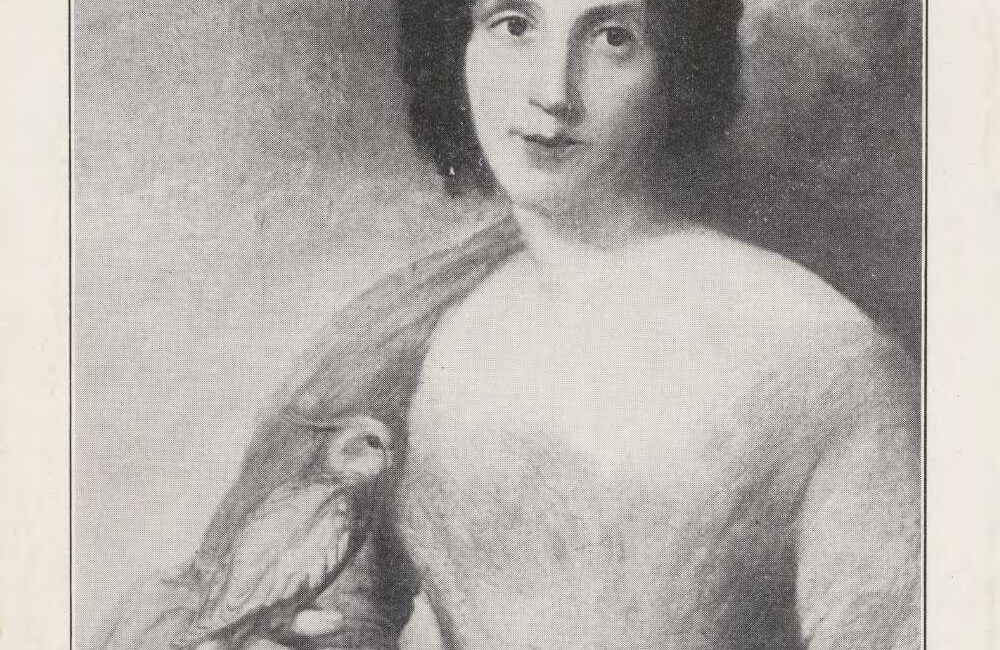
Portrait of Elizabeth Gould. National Library of Australia.

Author’s note: Elizabeth Gould was a 19th century artist responsible for some of the most historically significant images of birds ever published. She was also a devoted wife and mother. It is sometimes difficult to reconcile both of these aspects of her life through our modern lens of 21st century social issues and feminism; it can be tempting to paint her story as that of a woman repressed by antiquated gender roles, and to speculate on her career trajectory had she not tragically died shortly after the birth of her eighth child. However, while history strives to be objective, it impossible to completely purge our modern sentiments from the retelling of her story, so it is important to strive to tell it based on documentary evidence rather than speculation. Elizabeth’s life was very eventful for being so short, as we shall soon see, so it is not difficult to craft an exciting biographical narrative for her. The difficulty comes, instead, from trying to ensure that she maintains a degree of agency in her own story. I have tried to write this post in such a way that is respectful to both Elizabeth and the time in which she lived.

The beautiful lithographs produced by Elizabeth Gould show lively birds of all shapes and colors performing mating displays, protecting their young, and interacting with their environments. A far cry from the dead-bird-on-stick approach to book illustration of the 18th century and prior, Elizabeth’s birds are reminiscent of the more dynamic figures depicted by John James Audubon; in fact, distinguished ornithologist Prideaux John Selby proclaimed “I like [Elizabeth’s illustrations] as well as Audubon’s.”[1] However, it is not Elizabeth’s name on the title page of A Century of Birds from the Himalaya Mountains (for which she lithographed 80 plates) or on the ‘Birds’ volume of The Zoology of the Voyage of the H. M. S. Beagle (for which she lithographed all 50 plates); rather, it is that of her husband, John. A respected taxidermist and ornithologist, John was also a master of marketing, putting out numerous large-format lithography plate books over the course of his career. But John’s artistic skill was not up to the task of such a grand undertaking; instead, he relied on the artistic talents of others, including his wife, to carry his work to new heights.

Lophophorus impeyanus. Art by Elizabeth Gould. A century of birds from the Himalaya Mountains. 1831. Contributed in BHL from Smithsonian Libraries.

Elizabeth Gould, nee Coxen, was born in 1804 to a military family in Ramsgate, England. One of eleven children, and the only daughter to survive to maturity, information on how she and her siblings spent their childhood is unfortunately sparse; however, by age 22, Elizabeth had obtained a position as governess to the 9-year-old daughter of the Chief of the Office of the King’s Proctor in London. Being able to work as a governess for aristocracy implies that Elizabeth was highly educated, which was not unusual for middle- and upper-class women of the period: as part of this education, she would have been taught foreign languages, music, as well as to draw and paint in watercolor, genteel pursuits that earned a young lady the epithet of being “accomplished.”

However, the fact that she had to seek employment also implies that her family could not financially support an unmarried daughter. Indeed, she was not overly fond of the job—between teaching the young girl French, Latin, and music, Elizabeth wrote to her mother that her duties as a governess were “miserably-wretched dull,” and that she feared she would soon become “very melancholy.”[2] Thus, her marriage to John Gould when she was 24 in 1829 has been characterized as a “rescue” by some authors.[3] In reality, the rescuing went both ways.

John’s career in ornithology was on the rise at the time of his and Elizabeth’s wedding—by 1828, he had been appointed Curator and Preserver at the Museum of the Zoological Society of London. In 1830, a collection of Himalayan bird skins came across his desk for preservation, which his colleague, N. A. Vigors, was in the process of describing. Familiar with the new printing technology of lithography through the work of one Edward Lear, John put forward a proposal for an illustrated book to show off the new and interesting species contained in the collection. Fully aware that his own artistic abilities did not lend themselves to the subtle medium of lithography, John brought the project to Elizabeth, who at first did not grasp the gravity of her husband’s request. “But who will do the plates on stone?” she reportedly asked. “Why you, of course!” John replied matter-of-factly.[4]

No record exists of how Elizabeth felt about suddenly being designated the family draughtswoman. However, executing her new role cannot have been easy for her from a purely physiological standpoint: pregnant with her and John’s first child, she nevertheless spent hours transferring her specimen drawings onto stone in anticipation of the publication of the first batch of plates for the work. She gave birth to a son, John Henry, only days after the plates were sent to subscribers.[5]

Tragopan hastingsii. Art by Elizabeth Gould. A century of birds from the Himalaya Mountains. 1831. Contributed in BHL from Smithsonian Libraries.

As previously stated, Elizabeth’s name is absent from the title page of what became A Century of Birds from the Himalaya Mountains; her contribution is briefly mentioned in the preface of the work, which simply states that her “well-known abilities” were employed in “delineating these birds.”[6] Each of the plates bears a small artist’s credit on the lower left—“Drawn from nature on stone by E. Gould”—but none of them feature her signature. Edward Lear, who John enlisted to teach Elizabeth lithography methods, incorporated his signature into much of his work, so it is somewhat curious that she elected not to sign her pieces.

Her work was well-received in ornithological circles, and N. A. Vigors was so impressed by her artistry that he named a species of colorful sunbird in her honor. But it was John who received the lion’s share of professional accolades. The success of Century spurred John to undertake a much larger survey of European birds, which he initiated while the final parts of Century were still being delivered to subscribers. This ambitious publication, which became the 448-plate Birds of Europe, required John and Elizabeth to travel extensively in continental Europe, visiting natural history collections and observing and collecting specimens in the wild. Being able to see living, moving birds enabled Elizabeth’s artistic talent to improve immensely; it is during this publication that she truly began to show the lively interactions between males and females of species, and incorporating movement into her figures that made them look as though they could fly off of the page at any moment.

Red Footed Falcon. Art by Elizabeth Gould. The Birds of Europe. v. 1 (1837). Contributed in BHL from Smithsonian Libraries.

However, the artist credit on the lower left corner of the plates of Birds of Europe does not just bear Elizabeth’s name. Instead, her initial E. is preceded by a J., as John claimed artistic credit for the composition of the designs.

This line would remain the norm throughout the rest of the publications they worked on together. In his preface to Birds of Europe, John describes how Elizabeth drew and lithographed the pieces, but credits himself for the “sketches and designs.”[7] Documentary evidence tells a different story. The Ralph Ellis Collection, housed at the University of Kansas’ Kenneth Spencer Research Library, contains a number of sketches that indicate that, rather than arranging the composition, John would either make minor changes to or simply approve Elizabeth’s sketches that became the final designs.[8]

Observation, drawing, printing, and publication of Birds of Europe took a total of five years, during which Elizabeth gave birth to five more children, only three of whom survived infancy. Also during this time, John employed Elizabeth to draw the plates to accompany his text on the bird specimens brought back by the young naturalist Charles Darwin from the voyage of the H. M. S. Beagle. Among these specimens were the now-famous Galapagos finches, which Darwin referred to when formulating his theory of natural selection in his 1859 On the Origin of Species. Elizabeth’s name is completely absent from the plates.

Finches. Art by Elizabeth Gould. The Zoology of the Voyage of the H.M.S. Beagle. pt. 3 (1841). Contributed in BHL by Smithsonian Libraries.

The work that truly established John Gould as a master of ornithological publication was Birds of Australia, published over eight years from 1840-1848. After his experience with Birds of Europe, John had realized the importance of field observation to the quality of his publications. He subsequently arranged for Elizabeth, their eldest child John Henry, their nephew Henry Coxen, zoologist John Gilbert, servants, and himself to make the voyage to Australia in 1838, a trip that was in part made possible by Elizabeth’s family. Her two brothers, Charles and Stephen, had established farms in New South Wales, and had already sent a number of Australian bird specimens back to the Goulds for description and lithography, and the Gould party even used their property as a base for the latter months of their two year stay in the colony.

It is this period of Elizabeth’s life that is most well-documented, thanks to the letters she wrote to her mother in England, as well as her travel diaries. It was also likely one of the most difficult periods of her life. Forced to leave three of her children behind to accompany John on his scientific pursuits, she was distraught; she was so emotionally plagued by the prospect that she was nearly unable to board the ship on the day of their embarkation.[9] It is unclear how John finally managed to persuade her to go up the gangplank, but it is clear from her correspondence that she remained deeply concerned about the wellbeing of the children, the youngest of whom was only six months, as well as her mother.

Rather than being entirely maudlin, her letters also contain anecdotes of John’s collecting prowess (“he has already shown himself a great enemy of the feathered tribe”), her reluctance to participate in a ball held for the Queen’s birthday (“Don’t fancy I attempt dancing—no, no. I am well content to look on.”), and the ambiance of a campsite in New South Wales (“where nature appeared in her wild luxuriance”).[10] What they do not discuss, unfortunately, is her art. Her surviving sketches and the lithographs they became have been left to speak for themselves.

Superb Fairy Wren. Art by Elizabeth Gould. The birds of Australia. v. 3 (1848). Contributed in BHL from Smithsonian Libraries.

When the Goulds returned to England in August 1840, they brought back sketches, specimens, and another child—Elizabeth gave birth to a son, Franklin, in Tasmania. The first part of Birds of Australia was due to be published in December of that year, so John and Elizabeth quickly got to work on the text and lithography. Elizabeth had managed to transfer 84 of her drawings onto stone by August 1841, but tragically, she would not live to see the project through to completion. A few days after giving birth to an eighth child, Sarah, Elizabeth was struck by puerperal fever and passed away. She left John with multitudinous sketches and six children. There is no record of how this affected John emotionally. However, he memorialized her in the best way he knew how: he named a multicolored finch in her honor, and described her devotion to the family publication pursuit in the accompanying text.

Amadina gouldiae. Art by Elizabeth Gould. The Birds of Australia. v. 3 (1848). Contributed in BHL from Smithsonian Libraries.

Elizabeth’s life is inexorably linked and influenced by that of her husband John. The way he credited (or rather, failed to credit) her contributions is objectively bad practice, and some of John Gould’s other collaborators denounced him years later; notably, upon hearing of John’s death in 1881, Edward Lear wrote that John “owed everything to his excellent wife, and to myself, without whose help in drawing he had done nothing.” However, researchers combing Elizabeth’s correspondence and diaries have found no record of her dissatisfaction with the process. It is frustrating that such a talented woman has left behind so little in the way of information about her feelings toward her art; but the delicacy and care by which she portrayed her subjects can convey nothing else than love.

The Biodiversity Heritage Library holds many of Elizabeth Gould’s works, including the Smithsonian Libraries’ copies of A Century of Birds from the Himalaya Mountains, The Birds of Australia, and The Birds of Europe, for anyone to view and appreciate for themselves. You can also browse a collection of her artworks in the BHL Flickr.

Facebook Live at Smithsonian Libraries: The Art of Elizabeth Gould

You can learn more about Elizabeth Gould and see a selection of her works during a behind-the-scenes tour at the Natural History Rare Book Library at the Smithsonian Libraries with Alexandra Newman.

When? Friday, 22 March @ 1pm ET

Where? https://www.facebook.com/SmithsonianLibraries

References

[1] Isabella Tree. The Bird Man: The Extraordinary Story of John Gould. London: Ebury Press. 2004.

[2] Chisolm, Alec. 1964. “Elizabeth Gould: Some “New” Letters.” Journal of the Royal Australian Historical Society 49(5): 10.

[3] Roslyn Russel. The Business of Nature: John Gould and Australia. Canberra: The National Library of Australia, 2011.

[4] Richard Bowdler Sharpe. An Analytical Index to the Works of the Late John Gould, F. R. S., with a Biographical Memoir and Portrait. London: Henry Sotheran, 1893.

[5] Russel, 2011.

[6] John Gould. A Century of Birds from the Himalayas. London, 1831.

[7] John Gould. The Birds of Europe. London, 1837.

[8] Melissa Ashley. “Elizabeth Gould.” John Gould: Bird Illustration in the Age of Darwin. 2014. https://exhibits.lib.ku.edu/exhibits/show/gould/about/elizabeth_gould

[9] Ibid.

[10] Russel, 2011.

March 18, 2019by michelle.underhill
BHL News, Blog Reel, Campaigns, Her Natural History

Coming This March! Her Natural History: A Celebration of Women in Natural History

Her Natural History
Her Natural History

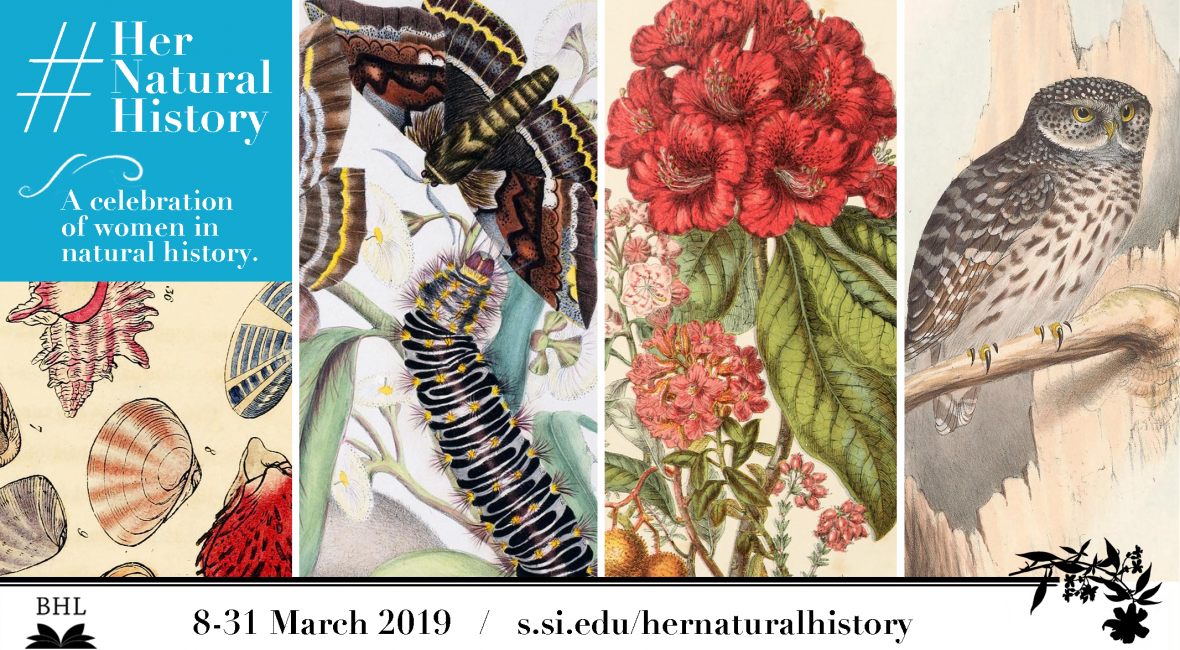
Illustrations in this graphic created by female artists who will be featured during #HerNaturalHistory. L to R: Maud Horman Fisher, Aid to the Identification of Insects, v. 2 (1882-90); Louise-Cécile Descamps-Sabouret, Revue Horticole (1899); Emma Kissling, Poissons provenant des campagnes du yacht Princesse-Alice (1911); Frances Reed, Illustrations of British Mycology, ser. 1 (1847). Illustrations digitized by Smithsonian Libraries, Harvard Botany Libraries, and The New York Botanical Garden.

This Women’s History Month, we invite you to join us in celebrating women in natural history as part of an international social media campaign produced in collaboration with our partners — Her Natural History: A Celebration of Women in Natural History.

Through social media and blog posts, interactive programming and citizen science opportunities, Her Natural History aims to increase awareness of and information about women in the biodiversity sciences.

The campaign will kick-off with an all-day social media blitz on Friday, 8 March 2019 (International Women’s Day) and continue throughout the month with additional posts and programming, including a Wikipedia Editing Workshop on 13 March. #HerNaturalHistory is also the @iglibraries #LibrariesOfInstagram challenge topic for March.

We hope you’ll join us for the social media blitz on 8 March and throughout the month by following #HerNaturalHistory on Twitter, Facebook, and Instagram and using the hashtag to share stories, collections, publications, artworks, archival materials, exhibits, and other resources highlighting women and their contributions to natural history.

Learn more about the campaign on the Her Natural History webpage, and stay tuned for more information in the coming weeks. We look forward to celebrating #HerNaturalHistory with you in March!

Her Natural History: A Celebration of Women in Natural History

When? 8-31 March, 2019
Where? Social Media (Twitter, Facebook, Instagram)
What? Join us in celebrating women in natural history this Women’s History Month! Follow along and join the campaign using #HerNaturalHistory.
More Information: s.si.edu/hernaturalhistory

February 11, 2019by michelle.underhill
Blog Reel, User Stories

Women in Enlightenment Science

Photo of a woman standing in front of foliage.
Illustration of fig tree

“The Fig Tree”. Blackwell, Elizabeth. A Curious Herbal. v. 1 (1737). Contributed in BHL from the Peter H. Raven Library of the Missouri Botanical Garden.

In 1737, Elizabeth Blackwell published the first weekly installment of a very ambitious project. The final work, entitled A Curious Herbal (1737-39), ultimately consisted of 500 plates of plants alongside 111 pages of text providing descriptions of their medicinal uses. Endorsed by the Royal College of Physicians, the publication helped satisfy the need for an up-to-date reference work for apothecaries.

The motivation to produce this remarkable herbal arose from equally remarkable circumstances.

The daughter of a successful merchant, Elizabeth married Alexander Blackwell at the age of 28. Her husband had a long history of operating outside of the law, and his shady business dealings resulted in huge debts that ultimately landed him in debtor’s prison.

With her husband in prison and a child to support, Elizabeth decided to use her artistic skills to produce a new herbal to support herself and pay her husband’s debts. Using specimens from the Chelsea Physic Garden as models for her illustrations, Elizabeth drew, engraved, and colored all 500 plates herself and used Joseph Miller’s Botanicum Officinale (1722) as a point of reference for the text, while her husband provided the translated names of the plants.

The Herbal’s income secured Alexander’s release from prison. Sadly, he soon accumulated more debts, which required Elizabeth to sell some of the rights to her publication in order to raise additional funds. Ultimately, her husband left his family for Sweden, where he served as a court physician to the Swedish king until his involvement in a political conspiracy resulted in his execution. [1]

Little else is known of Elizabeth’s life, but her herbal is a lasting testament to her artistic skill and entrepreneurial prowess.

A Curious Herbal is the subject of a chapter in Dr. Anna K. Sagal’s first monograph project, Botanical Entanglements: Women, Plants, Literature, and Artwork in the Eighteenth Century, which will be published by the University of Virginia Press in fall 2021.

The book, which has been generously supported by the Newberry Library’s Monticello College Foundation & Audrey Lumsden-Kouvel Fellowship, explores how women — who were always considered amateur naturalists — participated in discourses which were often culturally barred to them. By engaging in literary and artistic projects that intersected with scientific discourse, these women made space for themselves in what was otherwise an overwhelmingly male-dominated conversation. The monograph features several women writers and artists, including Eliza Haywood, Charlotte Lennox, Mary Delany, Maria Edgeworth, Maria Jacson, Priscilla Wakefield, and Henrietta Maria Moriarty, along with Blackwell herself.

By providing free, online access to relevant literature, such as Blackwell’s Herbal, the Biodiversity Heritage Library has been an important resource for Sagal’s research on the project.

“Thanks to BHL, which provides access to texts by little-known women-naturalists and the male-authored texts that influenced them, I can conduct research around the globe without leaving my office,” shares Sagal. “Although I do have access to some research libraries and archives, many botanical texts are held by overseas libraries, which I do not have the funds to travel to.”

Photo of a woman standing in front of foliage.

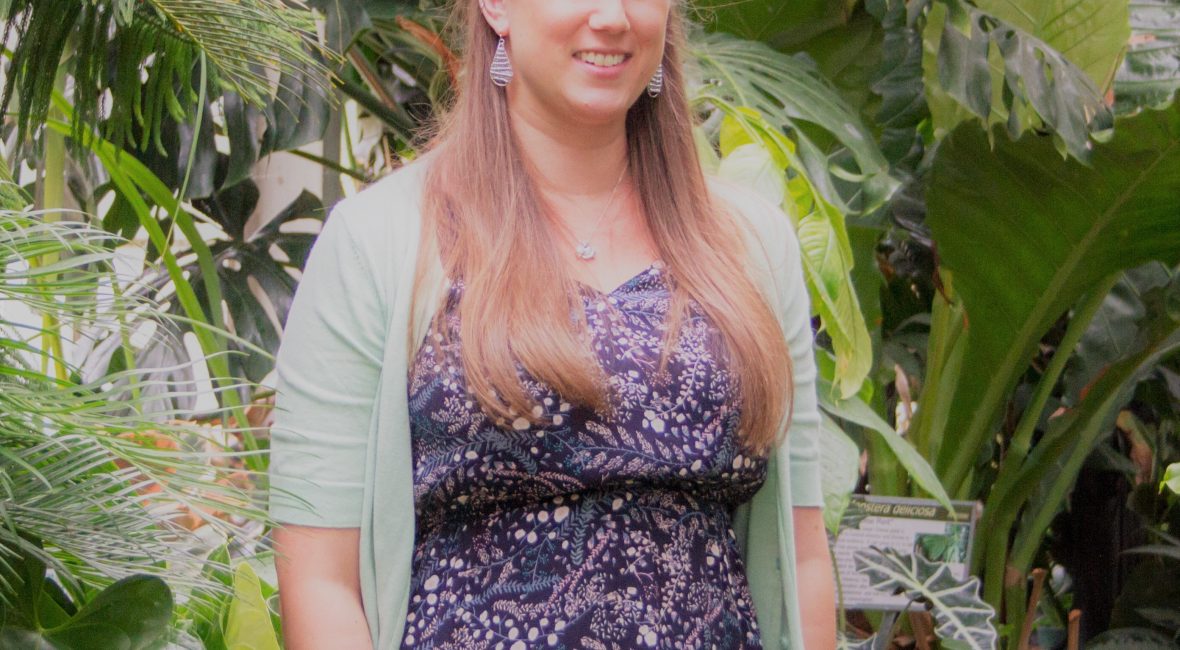
Dr. Anna K. Sagal. Image credit: McMaster University

Sagal, a Teaching Fellow at Cornell College, has been studying eighteenth century British literature for eleven years. She first discovered BHL about a year ago, while searching the Internet for botanical texts. Now, when actively working on her monograph project, she uses BHL daily, most often reading titles online, but sometimes downloading select pages for later offline reference.

“I really appreciate the breadth and depth of resources pertaining to eighteenth-century botany,” affirms Sagal. “Much of the content from the Peter H. Raven Library at the Missouri Botanical Garden is very useful to me, and a lot of it is available via the BHL. I also really like that you can download files and images to look at later.”

Many works accessed through BHL beyond Blackwell’s Herbal have informed sections of Sagal’s monograph. According to Sagal, perhaps the most influential title, used in multiple contexts within several chapters of her book, is The Botanical Magazine, or Flower-Garden Displayed, published from 1787-1800. First published by William Curtis, a botanist at Kew Gardens, the name of the publication was changed in his honour to Curtis’s Botanical Magazine following his death in 1799. Still published today by Kew Gardens, it is the world’s longest running botanical magazine illustrated in color, representing two centuries of botanical history and discovery. [3]

Illustration of flowers

“Daphne collina”. The Botanical Magazine, or, Flower-Garden Displayed. v. 11-12 (1797-98). Contributed in BHL from the Peter H. Raven Library of the Missouri Botanical Garden.

The Magazine was also an incredibly important resource to women naturalists of the eighteenth and nineteenth centuries. An affordable work with frequent rates of publication, it was often an excellent way to keep up-to-date with botanical developments, and to learn about the global world of plants from the comfort of home. Especially for women without access to prestigious physic gardens or botanical research centers like Kew, The Botanical Magazine could be a vital conduit to the enchanting world of botany.

Illustration of a flower

“Indian Chrysanthemum”. Moriarty, Henrietta Maria. Fifty Plates of Green-House Plants, Drawn and Coloured from Nature. 1807. Contributed in BHL from the Lenhardt Library of the Chicago Botanic Garden.

The Botanical Magazine was also a crucial resource for Sagal’s research on another subject for her monograph project, Henrietta Maria Moriarty and her Fifty Plates of Green-House Plants, Drawn and Coloured from Nature.

Moriarty’s work was “intended for those who take delight in plants, but have not the advantage of a gardener who understands them”. Along with her fifty illustrations of plants selected for “their beauty, their odour, or some peculiarity in their economy”, Moriarty also included each plant’s Linnaean binomial and brief cultivation information. [2]  

Fifty Plates of Green-House Plants is central to Sagal’s research because of Moriarty’s unique artistic vision and her somewhat complicated legacy. Often accused of copying images from Curtis’s Botanical Magazine, Moriarty has long been dismissed from the history of botanical illustration. However, with the help of the BHL, Sagal has been able to compare plates of Moriarty’s work with the contemporary runs of Curtis’s publication to find several plates which she clearly drew from nature or another source, rather than mimicking the composition of a plate from the Botanical Magazine. This allows modern audiences to revisit the question of Moriarty’s artistic originality and to appreciate her work as a hybrid of both unique and sourced images.

As Sagal completes her research on Botanical Entanglements: Women, Plants, Literature, and Artwork in the Eighteenth Century, we are thrilled to know that BHL has been such an important asset for the project. We look forward to learning more about the role of women in Enlightenment science thanks to Sagal’s work.

[1] The British Library. 2018. “A Curious Herbal.” Collection Items. Accessed on September 27, 2018. https://www.bl.uk/collection-items/a-curious-herbal-dandelion.

[2] Oak Spring Garden Foundation. 2018. “Women Botanical Artists, Part 2.” Google Arts and Culture. Accessed on September 27, 2018. https://artsandculture.google.com/exhibit/oQIi52WKeTK5KA.

[3] Royal Botanic  Gardens, Kew. 2018. “Curtis’s Botanical Magazine.” Accessed on September 27, 2018. https://www.kew.org/science/who-we-are-and-what-we-do/publications/curtiss-botanical-magazine.

October 11, 2018by michelle.underhill
Blog Reel, Campaigns, Featured Books

Cats & Women: Why the Connection?

This blog post incorporates research conducted for an upcoming digital exhibition called “Wild Mouser to Household Pet: A History of Cats in Science and Society, 1858 to 1922.” Click here to check out the exhibition and book collection! 

Cats and women have long been connected in the public imagination. From ancient Egypt, to the Middle Ages, to the turn of the twentieth century, to the present – there has been an association between felines and femininity.

View Full Size Image
Gos., De Voogt. Our Domestic Animals: Their Habits, Intelligence, and Usefulness (1907). Painting by Henriette Ronner-Knip. Digitized by the Library of Congress.

Pronouns

One of the most glaring examples of this connection is the choice of pronouns used to describe cats. These examples from nineteenth and early twentieth century books illustrate the tendency to use feminine pronouns for cats:

“If a cat is seen to wash her face with vigor, it is going to be stormy, and if she sits with her back to the fire, it predicts cold weather.” [1]

“The cat has been called the ‘perfect pet,’ and not without justice. Pussy has always had her friends and her foes; her ardent admirers and her extreme detestors. Faults she has, no doubt, but the lack of an affectionate regard for the person who befriends her is not, as has been alleged, one of them. Though less demonstrative than the dog, the quiet rubbing of her fur against one’s person is no less indicative of supreme regard.” [2]

Conversely, dogs were usually referred to with masculine pronouns.

“Crazy Cat Lady” Trope

Another example of the link between cats and women is in the ‘crazy cat lady’ trope. In Our Domestic Animals, Their Habits, Intelligence, and Usefulness (1907), the phenomenon is described:

“Yet in certain cities of every country we find persons who push their passion for cats to excess; generally, it must be said, they are elderly dames [women], who establish asylums where neglected, lost, or sick cats may find a refuge. Sometimes these asylums are organized in a practical and sufficient manner, in which case the motive that provided them is laudable; but often they are mere nests of disease and objects of scandal to the neighborhood.” [3]

This ‘crazy cat lady’ troupe is linked to earlier beliefs in the connection between femininity, witchcraft, and cats. The tradition has also continued on into the twenty-first century: it is common for people to joke about single women who live with cats as crazy or scandalous.

View Full Size Image
James, Robert Kent. The Angora Cat; How to Breed, Train and Keep It. (1898). Digitized by the Library of Congress.

Cat Shows

View Full Size Image
Evening public ledger. (Philadelphia [Pa.]), 12 Dec. 1921. Chronicling America: Historic American Newspapers. Lib. of Congress.

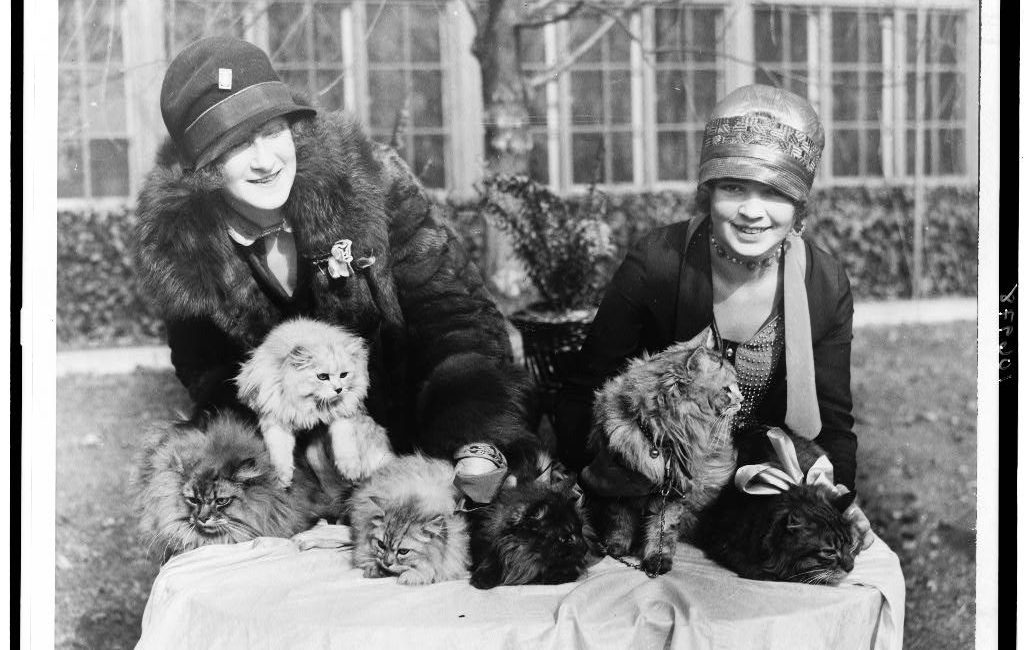
On the other side of the spectrum, women have also been associated with cat shows. The first United States National Cat Show took place in 1871. Women’s societies organized cat shows to raise money for charities, often animal welfare organizations. Newspaper articles from the time announce the upcoming shows and list the names of the exhibitors and organizers, who were mainly women. These shows also incorporated new scientific theories about heredity and breeding, as cat enthusiasts sought to selectively breed cats to develop particular traits, especially coat length and color.

View Full Size Image
Edna B. Doughty and Louise Grogan with Persian cats. 1920s. Library of Congress Prints and Photographs Division. https://lccn.loc.gov/93502603.
View Full Size Image
Mrs. A.McAllister and “Smoke Persian” cat. Ca. 1910-1915. Library of Congress Prints and Photographs Division. http://www.loc.gov/pictures/item/ggb2005018109/.

Another interesting visual representation of the connection between women and cats comes in the photography of Arnold Genthe (1869-1942). In the early twentieth-century, Genthe photographed many celebrities in his studio, posing them with his cat Buzzer. Click here to check out more photographs of Buzzer.

View Full Size Image
Miss Anna Holch with Buzzer the cat, portrait photograph. Ca 1913. Library of Congress Prints and Photographs Division. http://www.loc.gov/pictures/item/agc1996003492/PP/.

But why was there a connection between women and cats?

In his book, The Cat: An Introduction to the Study of Backboned Animals, Especially Mammals (1881), St. George Jackson Mivart shares one theory:

“The cat also is favoured by that half of the human race which is the more concerned with domestic cares; for it is a home-loving animal and one exceptionally clean and orderly in its habits, and thus naturally commends itself to the good will of the thrifty housewife.” [4]

He highlights aspects of cat’s behavior that are seen as feminine in his day: domestic tendencies and cleanliness.

Another possible interpretation involves the intelligence and disposition of cats. In her text, Everybody’s Cat Book (1909), Dorothy Bevill Champion hints at a relationship between women and cats. She writes:

“Cats are very sensitive in disposition, and can easily be frightened by harsh treatment…” [5]

This description would have been in line with stereotypical descriptions of women. On that same page she writes:

“After the many cases I have seen of cat intelligence, I can only say, if a cat is stupid it is want of education.” [6]

Reading these two quotes together, we see that Champion is making a claim about both cats and women. A central debate of the women’s movement during this time was whether women were as intelligent as men. Many argued that women’s shortcomings were due to less access to education, and not because they were less intelligent. Champion’s claim can therefore be read as a defense of both women and cats.

View Full Size Image
James, Robert Kent. The Angora Cat; How to Breed, Train and Keep It. (1898). Digitized by the Library of Congress.

Also, cats and women tended to be linked and compared with dogs and men.

“I class the Cat and the Dog to be as distinct in their individuality and with as much difference as you see existing between man and woman.” [7]

For more information about comparisons between cats and dogs, see this blog post.

In the end, these examples show that by the start of the twentieth century, the connection between women and cats was prevalent.

Here are some books about cats written by women in the nineteenth and early twentieth centuries. They are digitized on the Biodiversity Heritage Library.

  • Lucy Ellen Guernsey. Meat-Eater: With Some Account of Their Haunts and Habits. 1858.
  • Harriet Mann Miller. Funny Friends; or, Queens Pets at Marcy’s. 1892.
  • Helen M. Winslow. Concerning Cats; My Own and Some Others. 1907.
  • Dorothy Bevill Champion. Everybody’s Cat Book; Containing Chapters on “colour breeding”, “showing”, “conditioning”, “judging”, “diseases and their treatment”, “how to raise and treat the show and pet cat”, and Many Valuable Prescriptions. 1909.
  • Jeanie Oliver Davidson Smith. The Story of Zephyr; A Christmas Story. 1917.
  • Ellen Celty and Anna Ray. Feeding and Care of the Domestic and Long-haired Cat. 1922.

*For more information about domestic cats in the nineteenth and early twentieth centuries, see the digital exhibition “Wild Mouser to Household Pet: A History of Cats in Science and Society, 1858 to 1922.” 

[1] Jacob Biggle. Biggle Pet Book: A Collection of Information for Old and Young Whose Natural Instincts Teach Them to be Kind to All Living Creatures. 1900. Page 56.
[2] Thomas Earl. Pets of the Household; Their Care in Health and Disease. 1895. Page 155.
[3] Gos. De. Voogt. Our Domestic Animals, Their Habits, Intelligence and Usefulness. 1907. Page 83.
[4] St. George Jackson Mivart. The cat: an introduction to the study of backboned animals, especially mammals. 1881. Page 1.
[5] Dorothy Bevill Champion. Everybody’s Cat Book. 1909. Page 15.
[6] Dorothy Bevill Champion. Everybody’s Cat Book. 1909. Page 15.
[7] Marvin Clark. Pussy and her language. 1895. Page 51.

July 26, 2017by ulib-libraryjobs
BHL News, Blog Reel

Celebrating Women In Science and Museum Day Live

March is Women’s History Month, a month dedicated to celebrating the contributions of women to events in history and contemporary society. In recognition of this celebration, the Smithsonian is coordinating a special edition of its signature Museum Day Live! event in a nationwide effort with museums and cultural institutions around the country to reach women and girls in underserved communities.

View Full Size Image

Held on March 12, 2016, Museum Day Live! will encourage all people, and particularly women and girls of color, to explore their nation’s museums, cultural institutions, zoos, aquariums, parks and libraries—which will offer free admission for the day.

The event is also intended to encourage people, especially young women, to think about careers in museums, libraries, and research. To this end, there will be a special career-focused event on March 12 in the Smithsonian Castle Commons in Washington, DC, consisting of lightning round discussions with museum professionals about careers in museums, a mix and mingle, and information tables. The discussions will be at 11:30am and 2:30pm EST; the mix and mingle will be from 1-2:30pm EST; the tables will be open from 12:30-3pm EST.

The Biodiversity Heritage Library is partnering with the Smithsonian Libraries, one of its founding Members, to host one of the information tables at the Museum Day Live! career event. The purpose of the tables is to expose people, especially students, to the wide range of careers and units within the Smithsonian, as well as any opportunities that they may be able to participate in.

If you’re in the area, we encourage you to stop by the Smithsonian Castle Commons (1000 Jefferson Drive, SW Washington, DC 20560) anytime between 12:30-3pm EST to talk with staff from both BHL and the Smithsonian Libraries about careers in libraries and ways that you can get involved with our organizations today. The Smithsonian Libraries is also hosting another fun event during the day called “Explore the Four,” which encourages visitors to explore all four of the Libraries’ current exhibits.

Celebrating Women in Natural History, BHL-Style

To celebrate both Women’s History Month and in recognition of the event’s mission to reach young women in particular, we’ll be handing out special cards at the information table highlighting BHL’s Notable Women in Natural History collection. This collection includes links to our Early Women in Science online exhibition (curated by Laurel E. Byrnes and funded by a grant from the Smithsonian Women’s Committee), our collection of books authored, edited, or illustrated by women, and our Women Illustrators in Natural History Flickr collection containing over 1,500 biodiversity images illustrated by women. All images in the Flickr collection have also been tagged with the name of the artist (Check out the “tags” section and you’ll see entries for “artist:name=[Insert Artist Name]”).

View Full Size Image
The Notable Women in Natural History cards we’ll be handing out at the Museum Day Live! information table on 12 March.

Additionally, since the Museum Day Live! event is also focused on sharing ways that people can get involved with libraries and cultural institutions around the country, we’re encouraging visitors (and all of our online audiences!) to add species name machine tags to the images in the Women Illustrators in Natural History Flickr collection. These tags describe the species illustrated in each image and allow scientists and people all over the world to more easily discover visual resources about plants and animals of interest. Learn how you can help add tags to BHL images today.

View Full Size Image
King ragworm (Alitta virens) illustrated by Roberta McIntosh. A monograph of the British marine annelids. v. 2, pt. 2 (1910). http://biodiversitylibrary.org/page/38533302. Digitized by Smithsonian Libraries.

We hope you’ll visit us at the Smithsonian Libraries information table on March 12, from 12:30-3pm EST, at the Smithsonian Castle Commons. If you can’t make it in person, we encourage you to explore our Notable Women in Natural History collection on BHL and find out how you can get involved in BHL no matter where you live.

View Full Size Image
Monsonia speciosa illustrated by Henrietta Maria Moriarty. Fifty plates of green-house plants, drawn and coloured from nature (1807). http://biodiversitylibrary.org/page/48345267. Digitized by Chicago Botanic Garden, Lenhardt Library.

We’re excited to celebrate all women and girls, past and present, at Museum Day Live!, all this month, and everyday of the year. Happy Women’s History Month!

View Full Size Image
Various Callia, Helix and Helicina species illustrated by Harriet Scott. A monograph of Australian land shells (1868). http://biodiversitylibrary.org/page/1034564. Digitized by the MBLWHOI Library.


March 3, 2016by ulib-libraryjobs
BHL News, Blog Reel

Smithsonian Libraries hosts Biodiversity Library Exhibition Training

Earlier this year, the Smithsonian Women’s Committee awarded a one-year grant to Smithsonian Libraries (SIL) to build online exhibitions to showcase the scientific and historical contributions of Women and Latino naturalists and illustrators. The project, entitled Notable Women and Latinos in Natural History, will draw from content in the Biodiversity Heritage Library (BHL) and use the Biodiversity Library Exhibition (BLE) platform developed by BHL Europe.

As part of this project, SIL hosted a workshop on the BLE platform on 22-26 September 2014.

View Full Size Image
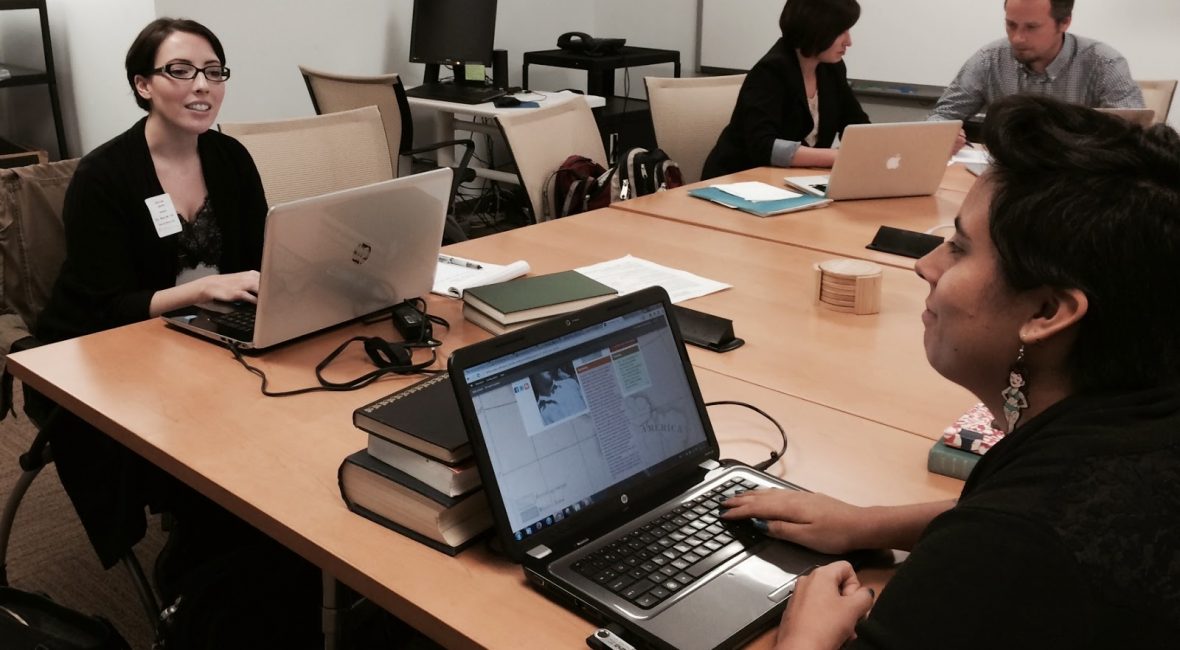
Workshop participants, clockwise from left foreground:
Laurel Byrnes, Bianca Crowley, Jiri Frank, and Adriana Marroquin

On September 22, BHL Program Manager Carolyn Sheffield kicked off the meeting with an introduction to the Notable Women and Latinos project and an overview of the goals for the week.  Jiři Frank, of the National Museum of Prague and a developer of the BLE, presented an overview of the platform and then provided an in-depth demonstration of how to design exhibits in BLE.

Over the next three days, Jiři led a hands-on workshop that provided an opportunity for the project’s Digital Exhibition Coordinators, Adriana Marroquin and Laurel Byrnes, to build experience working directly in BLE. BHL staff, including Grace Costantino, Bianca Crowley, and Joel Richard, also attended portions of the workshop to gain familiarity with the platform.

All in all, it was a highly successful workshop with Adriana and Laurel creating preliminary versions of the exhibitions that they will build for the Smithsonian Women’s Committee project. On the last day of the workshop, SIL staff were invited to attend a demonstration of the BLE platform and to provide feedback on the initial designs that were compiled over the last couple of days. Both Adriana and Laurel received valuable feedback and there was some great discussion at the end. At least one attendee expressed interest in contributing additional content to existing exhibits or creating new ones.

We extend a big thank you to Jiři Frank for lending all of his time and experience to making the workshop a great success and kudos to Adriana and Laurel on the impressive progress that they made over the course of the week! We are also very grateful for the support from the Smithsonian Women’s Committee that made this possible, and we look forward to seeing these digital exhibitions take shape over the next couple of months!

View Full Size Image


October 6, 2014by sayeedmd
Page 1 of 212»

Help Support BHL

BHL's existence depends on the financial support of its patrons. Help us keep this free resource alive!

search

About BHL

The Biodiversity Heritage Library (BHL) is the world’s largest open access digital library for biodiversity literature and archives. BHL operates as a worldwide consortium of natural history, botanical, research, and national libraries working together to digitize the natural history literature held in their collections and make it freely available for open access as part of a global “biodiversity community.”

Join Our Mailing List

Sign up to receive the latest news, content highlights, and promotions.

Subscribe Now

Subscribe to Blog via Email

Enter your email address to subscribe to this blog and receive notifications of new posts by email.

Join 319 other subscribers

Subscribe to Blog Via RSS

Subscribe to the blog RSS feed to stay up-to-date on all the latest BHL posts.

Access RSS Feed

Inspiring Discovery through Free Access to Biodiversity Knowledge.

The Biodiversity Heritage Library makes it easier than ever for you to access the information you need to study and explore life on Earth…for free, anytime, anywhere.


64+ Million Pages of
Biodiversity Literature Online.

EXPLORE

Tools and Services
to Transform Research.

EXPLORE

300,000+
Illustrations on Flickr.

EXPLORE

ABOUT | HARMFUL CONTENT | PRIVACY | SITE MAP | TERMS OF USE