
Biodiversity Heritage Library - Program news and collection highlights from BHL
  • Home
  • News
  • Featured Books
    • All Featured Books
    • Book of the Month Series
    • BHL at 20
  • User Stories
  • Campaigns
    • Fossil Stories
    • Garden Stories
    • Monsters Are Real
    • Page Frights
    • Her Natural History
    • Earth Optimism 2020
  • Tech Blog
  • Visit BHL
Home
News
Featured Books
    All Featured Books
    Book of the Month Series
    BHL at 20
User Stories
Campaigns
    Fossil Stories
    Garden Stories
    Monsters Are Real
    Page Frights
    Her Natural History
    Earth Optimism 2020
Tech Blog
Visit BHL
  • Home
  • News
  • Featured Books
    • All Featured Books
    • Book of the Month Series
    • BHL at 20
  • User Stories
  • Campaigns
    • Fossil Stories
    • Garden Stories
    • Monsters Are Real
    • Page Frights
    • Her Natural History
    • Earth Optimism 2020
  • Tech Blog
  • Visit BHL
Biodiversity Heritage Library - Program news and collection highlights from BHL
Blog Reel, Featured Books

Book of the Week: Cuvier and Classification


View Full Size Image
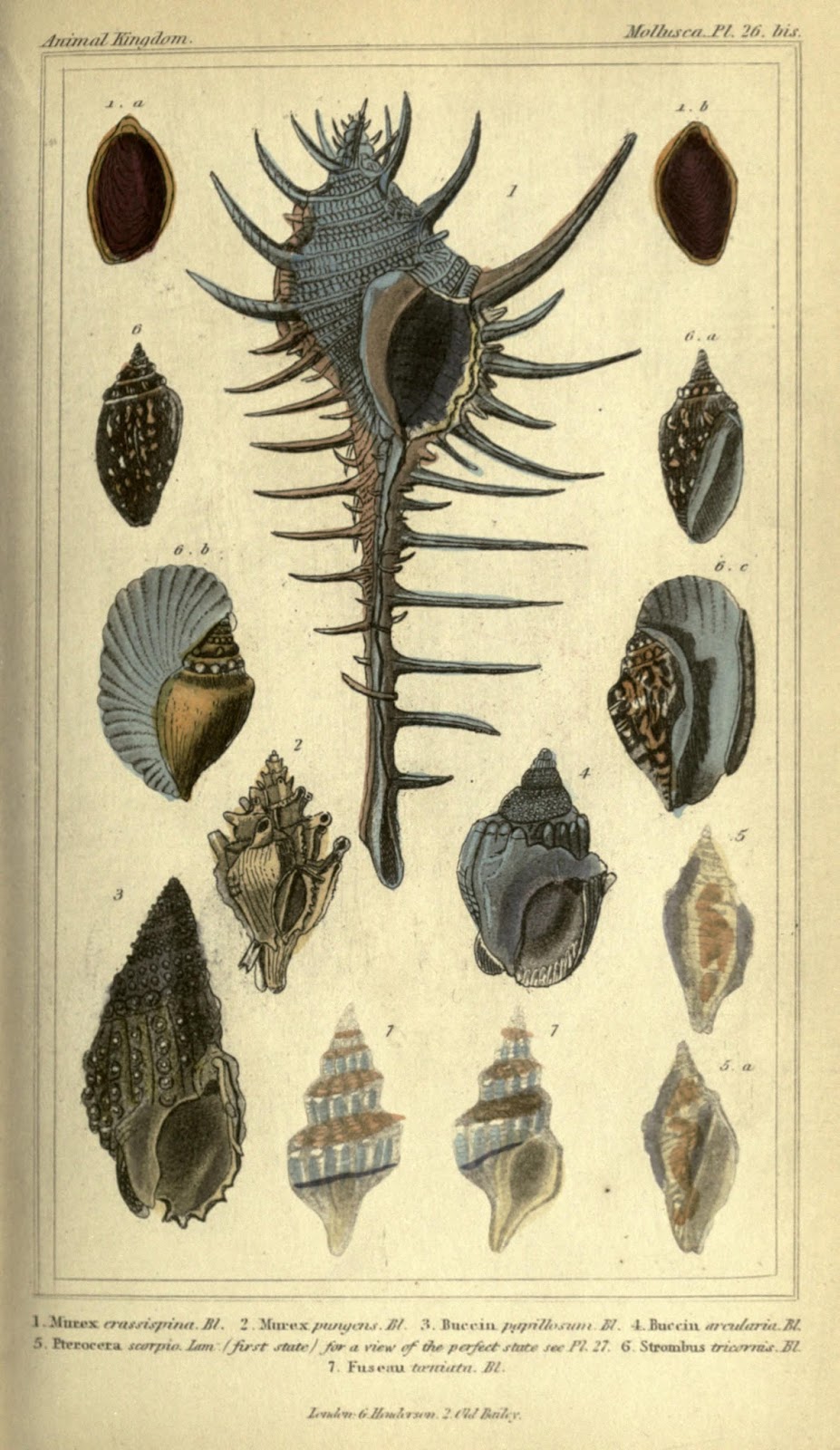
Cuvier, Georges. The animal kingdom, arranged according to its organization, serving as a foundation for the natural history of animals : and an introduction to comparative anatomy. Vol. 3, Mollusca, Annelides, Crustacea, Arachnides and Insecta. (1834). v. 3 (plates). http://www.biodiversitylibrary.org/page/2459069. Digitized by Natural History Museum Library, London.

This week’s book of the week relates yet another milestone in the development of a classification system for life on earth. Cuvier’s The Animal Kingdom, Arranged According to its Organization, Serving as a Foundation for the Natural History of Animals, was an attempt to classify the animal kingdom on the basis of comparative anatomy, of which Cuvier’s entire classification schema was centered.

Cuvier was heavily influenced by Xavier Bichat, the “father of modern histology and pathology,” and adapted the principle expounded by this naturalist that articulated two levels of natural existence: vie animale and vie organique. The first referred to an organism’s relationship with the environment, including perception, voluntary movement, and sensibility. The second dealt with the faculties that upheld the “inner existence” of the organism, such as the respiratory system. 

This distinction differed from that purported by Linnaeus, which divided life into animal, vegetable, and mineral. Instead, Cuvier followed a conviction that divided natural objects into living (plant and animal) and non-living (mineral) existences. Cuvier’s definition of life, influenced by the above mentioned distinction, was thus the ability to “resist for a certain time, the laws which govern inorganic bodies, and even to act on the environment in a way which is entirely contrary to those laws; we use the terms ‘life’ and ‘vital force’ to designate these apparent exceptions to the general laws of nature” ( Lecons d’Anatomie Comparée).

Thus, Cuvier’s classification of life hinged on an understanding of the internal relationships among constituent parts of an organism that produced life, which in turn was involved in constant conflict with the laws of chemistry and physics that attempted to break it apart. Using these principles, Cuvier established a taxonomic approach based on comparative anatomy that established correlations between the inner systems that maintained life within an organism. While this approach worked well for the formation of higher-level classification schemes, such as at the order level, it did not translate as well to lower groups where the internal system functions did not differ much from organism to organism. Nevertheless, Cuvier is remembered as an important naturalist who attempted to understand and establish a system on which to build the study of nature and life.

This week’s book of the week, The Animal Kingdom, Arranged According to its Organization, Serving as a Foundation for the Natural History of Animals : And an Introduction to Comparative Anatomy, by Georges Cuvier (1834), volume 3 (plates), was contributed by the Natural History Museum, London.

July 27, 2009by ulib-libraryjobs
Blog Reel, Featured Books

Book of the Week: Taxonomy Before Linnaeus

Portrait version of the Biodiversity Heritage Library logo.

Taxonomic literature can be divided into Pre-Linnaean and Post-Linnaean literature, with Post-Linnaean literature being those works published after Carl Linnaeus developed his famous naming and classification schema, binomial nomenclature. This week’s book of the week, Historia Vermium, is an interesting example of a Pre-Linnaean text. The Smithsonian’s copy, pictured here, is one of only two copies in the Western Hemisphere, according to OCLC, and one of only twelve in the world. The author, Joachim Jung, was known chiefly as a mathematician and astronomer, being considered on par with the likes of Galileo. He also focused many of his studies on natural history, particularly in the realm of botany. Historia Vermium, like many of Jung’s works, was published posthumously.

Jung is significant when exploring the development of the Linnaean taxonomic system because, first in his botany works and later in additional works, such as Historia Vermium, he introduced a classification system that was based upon a genera and species naming schema. In fact, Jung created a naming terminology that was later perfected by Linnaeus in his binomial nomenclature. To classify and group species, Jung attempted to understand the analogies between the organs and anatomical features of the species he studied, rather than focusing on some of the more surface-related features that other scientists of his time were focused on. (To learn more about Joachim Jung, click here).

Building on the important studies done by Jung and other scientists, Linnaeus would later introduce one of the most significant contributions to the study of like on earth at that time: binomial nomenclature. Although the Linnaeus system has been modified over time to reflect the theory of evolution, it is still remembered as the building block upon which taxonomy was founded.

To view this week’s book of the week, Historia Vermium, (1691) by Joachim Jung, contributed by the Smithsonian Institution Libraries, click here.

July 20, 2009by michelle.underhill
Blog Reel, Featured Books

Book of the Week: Aesthetics Edition

Portrait version of the Biodiversity Heritage Library logo.

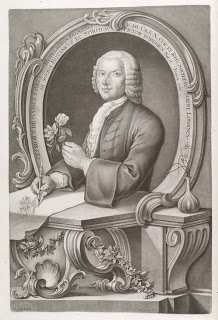
View Full Size ImageThis week, we highlight the botanical illustrations of Georg Dionysius Ehret.

Active during the 18th century, his illustrations became the must-have accompaniment for scientists interested in precise rendering of the species at hand. Born into a modest family of gardeners, his achievements (as they so often do) result from a combination of talent and circumstance.

Carl Linneaus was one of his first collaborative partners, who almost certainly helped shape Ehret’s attention to botanical detail. “For instance, the botanist criticized the artist for failing to include items like the stamen, pistil and other small details, which Ehret argued, would spoil the illustration. In the end Ehret gave in. In fact he became so fond of detailing that this viewpoint became a trademark of his illustrations from then on.”

Plate from Missouri Botanical Garden’s Plantae selectae quarum imagines ad exemplaria naturalia Londini 1750.

July 13, 2009by [email protected]
BHL News, Blog Reel, Tech Updates

New book viewer available – your feedback wanted!

Portrait version of the Biodiversity Heritage Library logo.

BHL developers have incorporated the Internet Archive’s open source book viewing application into the BHL portal, providing a new interface for using BHL’s digital books. Check out last week’s BHL Book of the Week, The Edible Mollusca of Great Britain and Ireland with Recipes for Cooking Them, online through the BHL portal at:
http://www.biodiversitylibrary.org/item/46647

Now try out the new book viewer:
http://www.archive.org/stream/ediblemolluscaof00love
*This is also available underneath the “Download/About this book” link on each book. Click “Alternate Page Viewer (beta)”.

There are some key pieces of information missing from the book viewer display that are important for BHL users, like the corresponding volumes if the book is a journal/series, lists of names, view of all page numbers & page descriptions, etc. Those have been documented and discussed at:
http://blog.chrisfreeland.com/2008/10/internet-archives-new-book-viewer.html

Look for these improvements to be incorporated into the viewer in the coming months, as the viewer code is open and available for enhancement. For now, the BHL development team would appreciate your feedback on this new viewing option via comments on this post. Let us know what you like, dislike, want larger/smaller, wish would go away and never return, find confusing, find useful…everything – all feedback is useful for improving the display.

July 7, 2009by oneclickorders

Help Support BHL

BHL's existence depends on the financial support of its patrons. Help us keep this free resource alive!

search

About BHL

The Biodiversity Heritage Library (BHL) is the world’s largest open access digital library for biodiversity literature and archives. BHL operates as a worldwide consortium of natural history, botanical, research, and national libraries working together to digitize the natural history literature held in their collections and make it freely available for open access as part of a global “biodiversity community.”

Join Our Mailing List

Sign up to receive the latest news, content highlights, and promotions.

Subscribe Now

Subscribe to Blog via Email

Enter your email address to subscribe to this blog and receive notifications of new posts by email.

Join 319 other subscribers

Subscribe to Blog Via RSS

Subscribe to the blog RSS feed to stay up-to-date on all the latest BHL posts.

Access RSS Feed

Inspiring Discovery through Free Access to Biodiversity Knowledge.

The Biodiversity Heritage Library makes it easier than ever for you to access the information you need to study and explore life on Earth…for free, anytime, anywhere.


64+ Million Pages of
Biodiversity Literature Online.

EXPLORE

Tools and Services
to Transform Research.

EXPLORE

300,000+
Illustrations on Flickr.

EXPLORE

ABOUT | HARMFUL CONTENT | PRIVACY | SITE MAP | TERMS OF USE
