

 Living biodiversity may be the most common topic of discussion in most books found within BHL, but BHL also contains some gems discussing extinct animals as well. One such books is Palaeontology, or, A systematic summary of extinct animals and their geological relations (1860). This important work was written by Sir Richard Owen, an English botanist, comparative anatomist and paleontologist.
Owen is credited with coining the phrase ‘Dinosauria,’ meaning ‘Terrible Reptile’ or ‘Fearfully Great Reptile.’ Furthermore, he is well remembered for his opposition to Charles Darwin’s evolution by natural selection. While agreeing that evolution did, in fact, occur, Owen purported that it was much more complex than the discussion of natural selection presented by Darwin in Origin of Species. Furthermore, he is well remembered for his distinctive contribution to the establishment of the British Museum of Natural History in London in 1881.
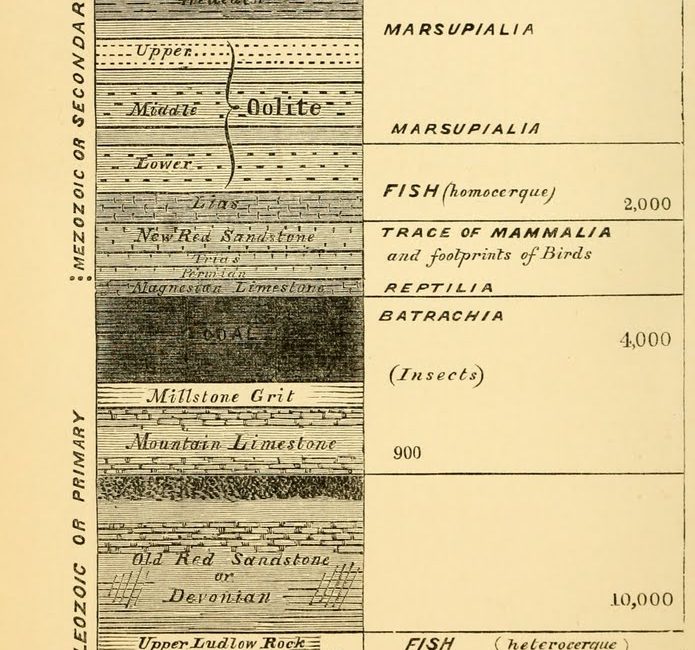
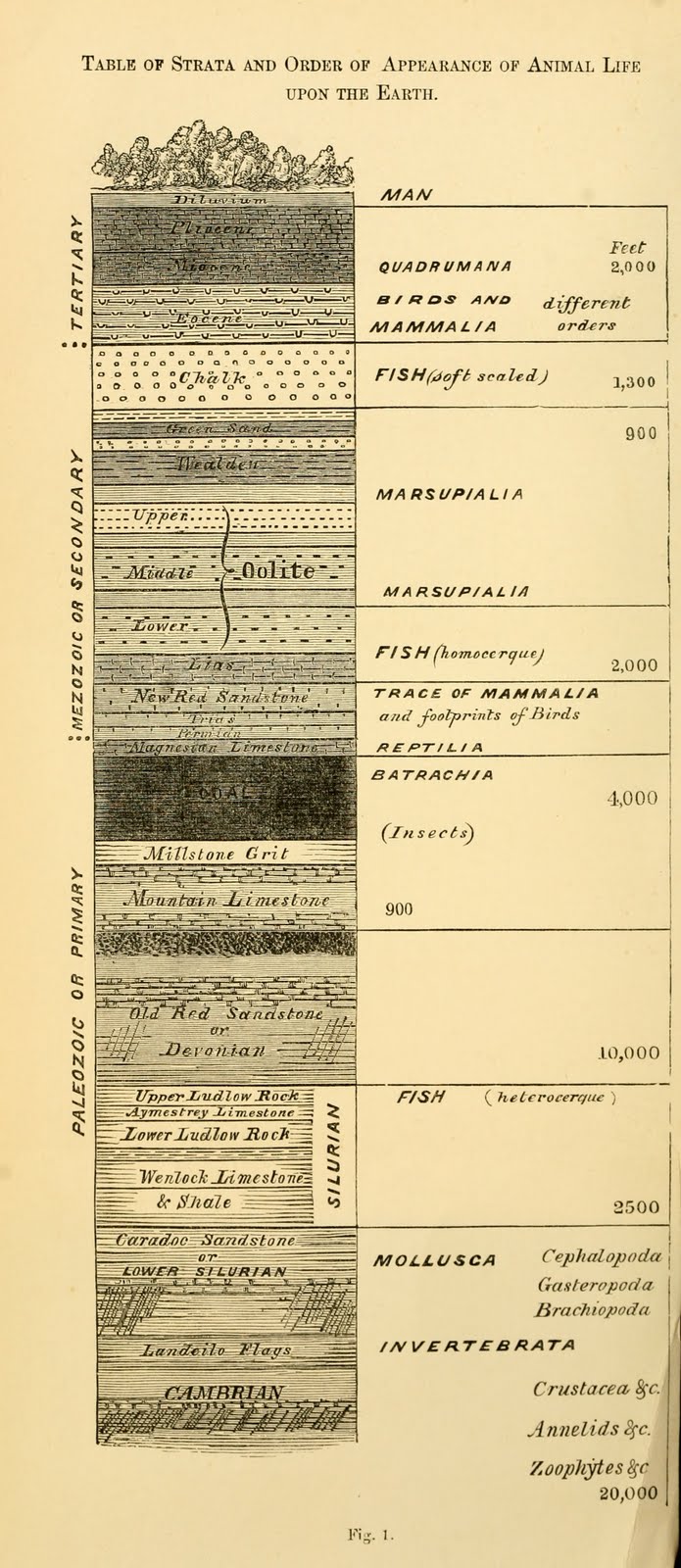
Among the thorough discussion of extinct animals from various kingdoms, Owen’s Palaeontology, or, A systematic summary of extinct animals and their geological relations contains geological studies of these various extinct animals, with an estimation of their appearance on earth based on their fossil occurrences in the strata of the earth. Drawing on his work in comparative anatomy, Owen explains that it is by comparing the forms and structures of existing plants and animals, and how these relate to function, to those discovered in fossil remains that an “idea of the food and habits of such species” can be obtained.
Take a look at this fascinating work on extinct creatures, ranging from Protozoa to Animalia and everything in between! The text is rich with highly detailed illustrations complementing the research presented by the author. Through detailed descriptions of the forms, structure, and proposed habits of such creatures, this work transports the reader back to a time when the Terrestrial Sloth, Mastodon, or even the famous Ichthyosaurus, among others, might well have walked (or swam, as the case may be) the earth.
Palaeontology, or, A Systematic Summary of Extinct Animals and their Geological Relations (1860), by Sir Richard Owen, was contributed by the Ernst Mayr Library at Harvard University, Museum of Comparative Zoology.
