
Biodiversity Heritage Library - Program news and collection highlights from BHL
  • Home
  • News
  • Featured Books
    • All Featured Books
    • Book of the Month Series
    • BHL at 20
  • User Stories
  • Campaigns
    • Fossil Stories
    • Garden Stories
    • Monsters Are Real
    • Page Frights
    • Her Natural History
    • Earth Optimism 2020
  • Tech Blog
  • Visit BHL
Home
News
Featured Books
    All Featured Books
    Book of the Month Series
    BHL at 20
User Stories
Campaigns
    Fossil Stories
    Garden Stories
    Monsters Are Real
    Page Frights
    Her Natural History
    Earth Optimism 2020
Tech Blog
Visit BHL
  • Home
  • News
  • Featured Books
    • All Featured Books
    • Book of the Month Series
    • BHL at 20
  • User Stories
  • Campaigns
    • Fossil Stories
    • Garden Stories
    • Monsters Are Real
    • Page Frights
    • Her Natural History
    • Earth Optimism 2020
  • Tech Blog
  • Visit BHL
Biodiversity Heritage Library - Program news and collection highlights from BHL
Blog Reel, Featured Books

Book of the Week: Another Peek at Conservation

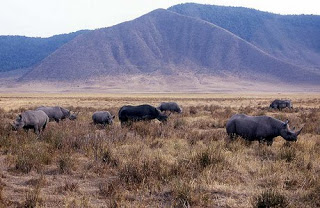
View Full Size ImageOne of the most endangered species on the planet is Diceros bicornis, commonly known as the Black Rhinoceros. Distributed throughout Africa, south of the Sahara, the “current range of black rhinoceroses is bounded by Cameroon, Kenya, and South Africa but their distribution within those limits is fragmented.” The threat to the Rhino population is largely due to a demand for the species’ horns, “both for use in Chinese traditional medicine and for traditional dagger handles in Yemen.” The demand for these horns increased significantly in the 1970s as the “oil-rich Gulf States” experienced increased income. “It is estimated that between 1970 and 1992, around 96 percent of the black rhinoceros population was lost.” Three subspecies of the Black Rhinoceros – the eastern, southwestern and southern central subspecies – are listed as Critically Endangered in the IUCN (World Conservation Union) Red List. The fourth subspecies of the Black Rhinoceros – the western subspecies – is listed as Probably Extinct. The total population of Black Rhinoceros today is approximately 3,725 individuals.

Fortunately, there are ongoing efforts to protect this species, and it now looks as though most black rhino populations are increasing. Nevertheless, populations still comprise only a fraction of what they were only fifty years ago. “Conservation efforts to preserve black rhinos include establishing a ban against the horn trade, creating fenced sanctuaries for black rhinos to better protect them from poachers, and dehorning black rhinos to decrease incentive for poaching.”

The Black Rhinoceros was first described by Carl von Linné in volume 1 of Systema naturae per regna tria naturae :secundum classes, ordines, genera, species, cum characteribus, differentiis, synonymis, locis (1758), this week’s book of the week. Volume 1 of this work describes the Animal Kingdom, while volume 2 describes the Plant Kingdom. Linné, also commonly known as Carl Linnaeus, the famous Swedish botanist, physician and zoologist, is best known for laying the schema for binomial nomenclature, the naming convention used to identify species. His numerous works include the first descriptions of many, many species, and serve as the foundation by which modern scientists describe life as they continue to increase our knowledge about it.

For more information about the conservation of the Black Rhinoceros, and what you can do to help, see the Black Rhinoceros page at the World Wildlife Fund website.

To find more information about the Black Rhinoceros species, take a look at the species page on EOL.

For a look at the listing of the Black Rhinoceros on the endangered species list in BHL, see page 25 of the 1994 IUCN Red List of Threatened Animals.

And finally, take a look at this week’s book of the week, Systema naturae per regna tria naturae :secundum classes, ordines, genera, species, cum characteribus, differentiis, synonymis, locis (1758), volume 1, by Carl von Linné, in which you can see the first description of both the Black Rhinoceros and many other species.

July 28, 2010by michelle.underhill

Help Support BHL

BHL's existence depends on the financial support of its patrons. Help us keep this free resource alive!

search

About BHL

The Biodiversity Heritage Library (BHL) is the world’s largest open access digital library for biodiversity literature and archives. BHL operates as a worldwide consortium of natural history, botanical, research, and national libraries working together to digitize the natural history literature held in their collections and make it freely available for open access as part of a global “biodiversity community.”

Join Our Mailing List

Sign up to receive the latest news, content highlights, and promotions.

Subscribe Now

Subscribe to Blog via Email

Enter your email address to subscribe to this blog and receive notifications of new posts by email.

Join 319 other subscribers

Subscribe to Blog Via RSS

Subscribe to the blog RSS feed to stay up-to-date on all the latest BHL posts.

Access RSS Feed

Inspiring Discovery through Free Access to Biodiversity Knowledge.

The Biodiversity Heritage Library makes it easier than ever for you to access the information you need to study and explore life on Earth…for free, anytime, anywhere.


64+ Million Pages of
Biodiversity Literature Online.

EXPLORE

Tools and Services
to Transform Research.

EXPLORE

300,000+
Illustrations on Flickr.

EXPLORE

ABOUT | HARMFUL CONTENT | PRIVACY | SITE MAP | TERMS OF USE