Biodiversity Heritage Library - Program news and collection highlights from BHL
  • Home
  • News
  • Featured Books
    • All Featured Books
    • Book of the Month Series
    • BHL at 20
  • User Stories
  • Campaigns
    • Fossil Stories
    • Garden Stories
    • Monsters Are Real
    • Page Frights
    • Her Natural History
    • Earth Optimism 2020
  • Tech Blog
  • Visit BHL
Home
News
Featured Books
    All Featured Books
    Book of the Month Series
    BHL at 20
User Stories
Campaigns
    Fossil Stories
    Garden Stories
    Monsters Are Real
    Page Frights
    Her Natural History
    Earth Optimism 2020
Tech Blog
Visit BHL
  • Home
  • News
  • Featured Books
    • All Featured Books
    • Book of the Month Series
    • BHL at 20
  • User Stories
  • Campaigns
    • Fossil Stories
    • Garden Stories
    • Monsters Are Real
    • Page Frights
    • Her Natural History
    • Earth Optimism 2020
  • Tech Blog
  • Visit BHL
Biodiversity Heritage Library - Program news and collection highlights from BHL
Blog Reel, Featured Books

Book of the Week: Frogs in Trousers?

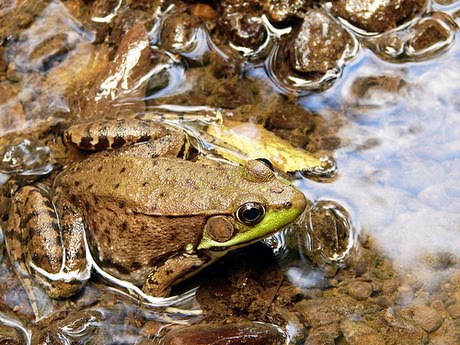
View Full Size ImagePer our user feature earlier this week on Dr. Charlotte Sleigh of the University of Kent, we feature a book that has been particularly important for Dr. Sleigh’s recent work: Dissertations relative to the natural history of animals and vegetables , volume 2 (1789), by Lazzaro Spallanzani. Dr. Sleigh’s current activities involve writing a book on the cultural history of frogs for Reaktion Books’ Animal series. In Dr. Sleigh’s own words regarding the importance of this title for her current endeavors:

“I had come across a reference to this book in relation to a strange experiment in which Spallanzani dressed his frogs in waxed taffeta trousers, to understand how fertilization took place. As hoped, I found the account of this curious experiment, alongside many more scientifically and culturally rich accounts of his work on frogs: a jumping-off point (if you’ll pardon the pun) for further research.”

Indeed, Lazzaro Spallanzani (1729-1799), an Italian Catholic priest, biologist and physiologist, made important contributions to the world of science with his work on animal reproduction, proving that it required both semen and an ovum in order to prosper. This discovery is in part due to his experiments with frogs and trousers. With such a curious experiment leading to such an important discovery, there was no doubt that this book should be featured, in all its glory, as our book of the week, and that the passage regarding frogs and trousers should be particularly highlighted.

Spallanzani had been experimenting on animal reproduction for some time before the incident with the trousers. His experiments were confined to a particular species of frog, which he identified as the “Green Aquatic Frog.” During his course of study, involving experimenting with various environmental and conditional effects on frogs for the success of fertilization, he received a letter from abbe Nollet regarding his work. In it, Nollet wrote,

“About thirty years ago, Mr. Reaumur and myself made many researches relative to this subject…I remember putting breeches of waxed taffeta on the male [frog], and watching a long time, without perceiving any appearance that denoted an act of secundation.”

Spallanzani was intrigued by the account given him by Nollet, and decided to reproduce the experiment. By his account,

“The idea of the breeches, however whimsical and ridiculous it may appear, did not displease me, and I resolved to put it in practice. The males, notwithstanding this incumbrance, seek the females with equal eagerness, and perform, as well as they can, the act of generation; but the event is such as may be expected: the eggs are never prolific, for want of having been bedewed with semen, which sometimes may be seen in the breeches in the form of drops. That these drops are real seed, appeared clearly from the artificial secundation that was obtained by means of them.”

By such means were the facts of reproduction secured, and we have the delightful image of frogs in trousers to thank for it.

Take some time to explore Spallanzani’s work on reproduction in this volume, and consider reading up on his important work on digestion, which is recounted in the first volume of this title. And let us praise the ingenuity of our forefathers, without which we might never have the opportunity to feature such delightful accounts of experiments in our books of the week!

February 28, 2011by michelle.underhill
Blog Reel, User Stories

BHL and Our Users: Dr. Charlotte Sleigh

View Full Size ImageContinuing with our new series on our users and their interaction with BHL, this week we feature Dr. Charlotte Sleigh, Senior Lecturer in History of Science, University of Kent (UK), which we present in a typical question and answer interview style. So without further ado, meet Dr. Sleigh, and read what she has to say about how BHL has impacted her work, and what she would like to see from BHL in the future.

Q: What is your particular area of interest/study?

A: Historian of science with a special interest in natural history.

Q: How long have you been in your field of study?

A: 12 years

Q: When did you first discover BHL?

A: About a year ago.

Q: What is your opinion of BHL and how has it impacted your research?

A: BHL makes many old, rare or hard-to-access science and natural history texts available at the click of a mouse. In the past, if I was not sure whether or not a book was relevant to my research, I would have to make a trip to London or other major archive, and seek it out, perhaps spending a whole day only to find it was not relevant. Now I can check quickly and easily online, flicking through texts. Nine times out of ten I can get what I want from relevant texts by reading online; sometimes I supplement this by looking at another copy or edition in the flesh. Even in this latter case, however, reading online first (and re-checking afterwards) is an integral part of the research. My research has been enhanced in that I am quickly able to cross-reference the work of many scientists and naturalists against one another.

Q: How often do you use BHL?

A: It depends on whether I am in a research-intensive phase; if so, maybe average 2-4 texts per week.

Q: How do you usually use BHL (downloading whole PDFs/reading online/selecting pages to download/etc.)?

A: Read online. I also go to the text-only version at archive.org to search the text for key words, then go back to read the relevant pages at BHL online.

Q: What are your favorite features/services on BHL?

A: As above, the ability to search for key words, though this is a bit of a clunky, multi-stage process.

Q: If you could change one thing about BHL, what would it be, or what developmental aspect would you like the BHL team to focus on next?

A:

  • Easier access to text-only version.
  • My browser (Explorer) sometimes struggles with magnification and gets stuck on a super-enlarged corner of the page.
  • Search facility can be a bit hit and miss.
  • Otherwise – I would just like to see more titles continuing to be added!

Thank you, Dr. Sleigh, for taking the time to tell us about your experience with BHL. At BHL, we particularly appreciate honest feedback about how we can best focus our resources for further development. The best way to determine this is, of course, to ask those who use our services. So, if you have suggestions on how to improve BHL, or if you would like to be featured in our BHL User series on this blog, let us know via our feedback form, send a tweet to @BioDivLibrary, or post on our Facebook wall. We look forward to hearing from our user community, and also to future opportunities to feature our users.

February 28, 2011by ulib-libraryjobs

Help Support BHL

BHL's existence depends on the financial support of its patrons. Help us keep this free resource alive!

search

About BHL

The Biodiversity Heritage Library (BHL) is the world’s largest open access digital library for biodiversity literature and archives. BHL operates as a worldwide consortium of natural history, botanical, research, and national libraries working together to digitize the natural history literature held in their collections and make it freely available for open access as part of a global “biodiversity community.”

Join Our Mailing List

Sign up to receive the latest news, content highlights, and promotions.

Subscribe Now

Subscribe to Blog via Email

Enter your email address to subscribe to this blog and receive notifications of new posts by email.

Join 319 other subscribers

Subscribe to Blog Via RSS

Subscribe to the blog RSS feed to stay up-to-date on all the latest BHL posts.

Access RSS Feed

Inspiring Discovery through Free Access to Biodiversity Knowledge.

The Biodiversity Heritage Library makes it easier than ever for you to access the information you need to study and explore life on Earth…for free, anytime, anywhere.


64+ Million Pages of
Biodiversity Literature Online.

EXPLORE

Tools and Services
to Transform Research.

EXPLORE

300,000+
Illustrations on Flickr.

EXPLORE

ABOUT | HARMFUL CONTENT | PRIVACY | SITE MAP | TERMS OF USE