

We often take it for granted that humans have always known about the existence of the dinosaurs, and that there was never a dispute that they could be anything but the prehistoric giants that we now know them to be. However, this is not the case. As far back as the early 1800s, people had no idea that an entire era of awe-inspiring creatures had lived and died on their planet. Dinosaur fossils that were discovered were attributed to other things, such as the 1676 discovery of most probably a Megalosaurus thigh bone by English museum curator Robert Plot, who believed that thigh bone belonged to a giant man. The first true breakthrough for the dinosaurs, however, occurred in 1822 when Gideon Mantell and his wife discovered and identified the first fossil teeth, which belonged to the dinosaur Mantell named Iguanodon.
Gideon Mantell, thanks to this discovery and his tireless work in geology and paleontology, is now recognized as the man who started the scientific study of dinosaurs. Beginning life as a doctor, Mantell spent his free time collecting and studying fossils that he found in the marl pits of Hamsey. His hobby became more than a pastime when, in 1813, he began corresponding and sharing his fossil shell discoveries with acclaimed naturalist and illustrator, James Sowerby. In December of 1813, Mantell was elected as a fellow of the Linnean Society of London, and in 1815, he published his first paper on the characteristics of fossils discovered in the Lewes area.
It was 1822, however, when the important discovery of the Iguanodon teeth occurred. Encouraged by the stunning success of his publications to date (including a book on the geology of Sussex, for which King George IV of England requested four copies), Mantell began showing other scientists and naturalists the fossil teeth he had found. Most believed they were simply fairly recent fish or mammal teeth, and Mantell was mocked for his assertions to the contrary. Even Georges Cuvier mis-identified the fossils, claiming that they were the teeth of a rhinoceros. Eventually, however, Mantell was vindicated, and the great human love affair with the dinosaurs began.
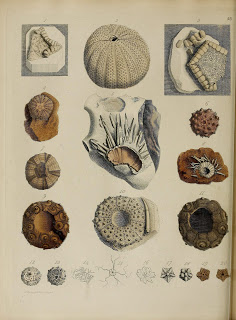
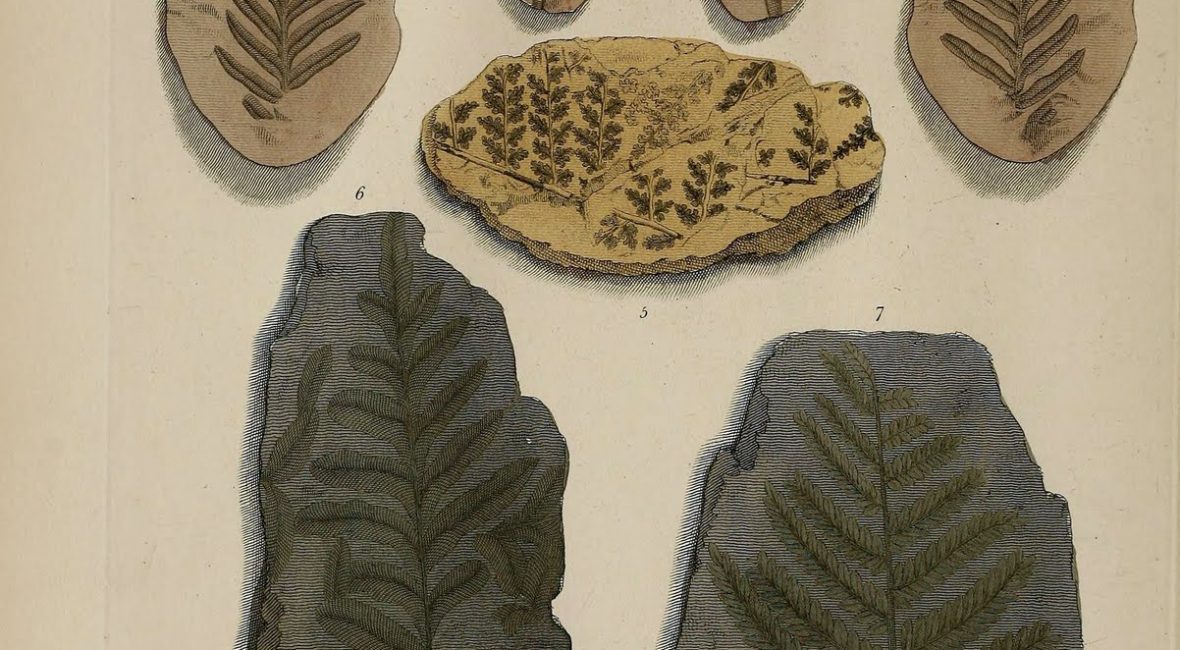
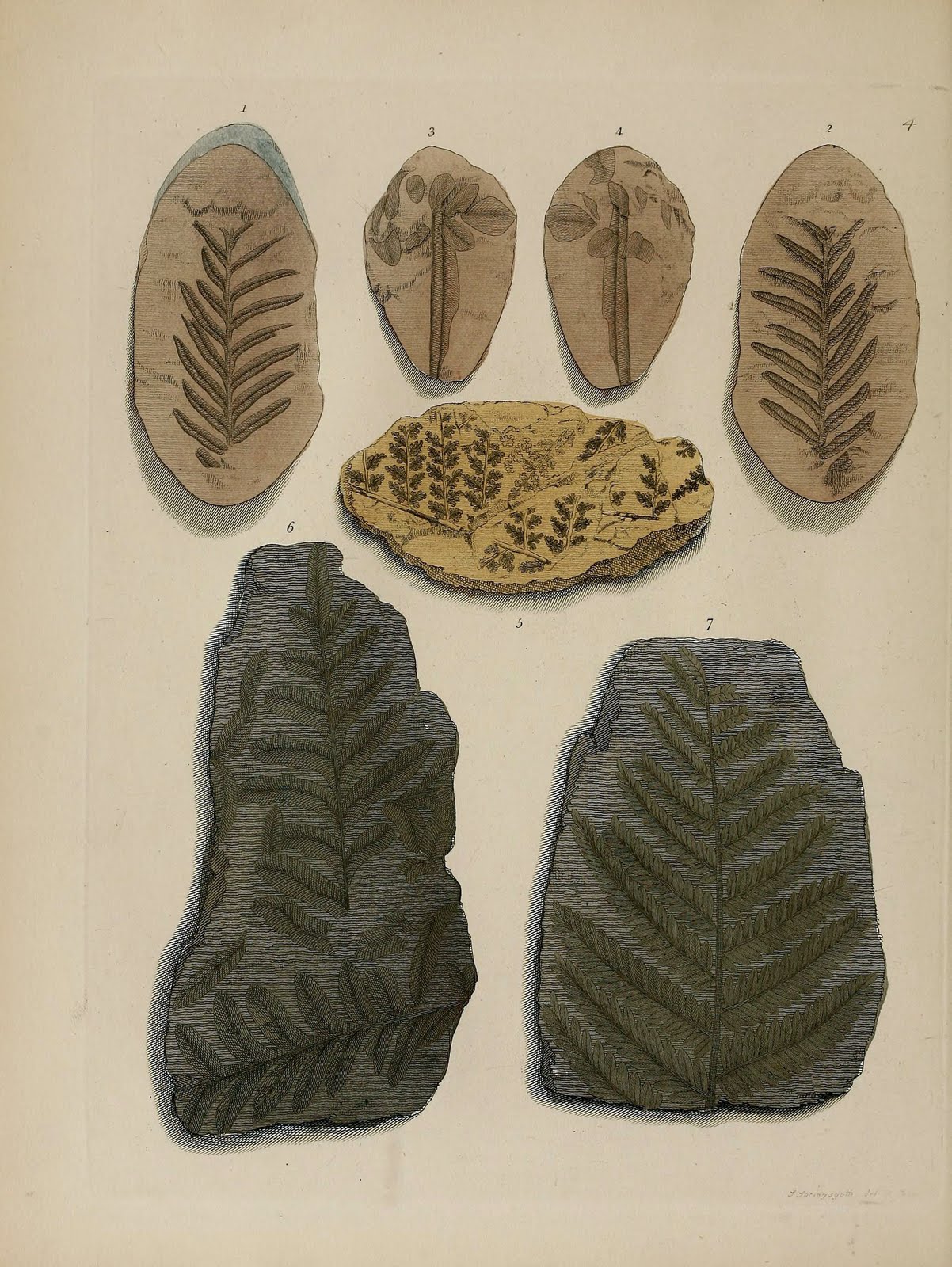
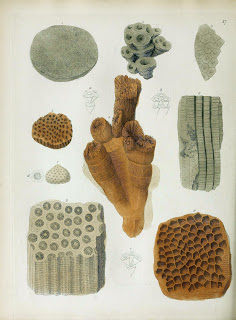
One of Mantell’s many important works was A Pictorial Atlas of Fossil Remains (1850), which consists of 74 hand-colored engraved plates selected from James Parkinson’s Organic Remains of a Former World and Edmund Artis’ Antediluvian Phytology. Mantell wrote the descriptions for the plates, which include illustrations of fossilized wood, plants and fruits, corals, shells, insects, turtles, sharks, elk, and many more. While you can see just four of the many lovely illustrations from our book of the week in this post, be sure to check out our Flickr site to see all of the illustrations!
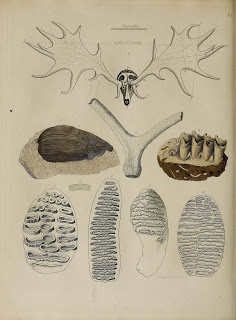
Sadly, the later years of Mantell’s life were not entirely happy. In 1833, when Mantell relocated to Brighton, his medical practice suffered, rendering him almost destitute. His house was turned into a museum in hopes of securing additional financial support, but Mantell’s habit of waiving the entrance fee doomed the museum to failure. In 1841, Mantell suffered serious injuries as a result of a carriage accident which left him crippled and in constant pain. As might be expected from a true scientist, he continued his studies diligently despite the accident, publishing many more books and papers until his death in 1852 due to an overdose of Opium. His legacy, however, remains, and thanks to his tireless perseverance and refusal to accept the dismissive opinions of others, we can now stand in awe of the magnificent era of the dinosaurs.
This week’s book of the week, A Pictorial Atlas of Fossil Remains (1850), with descriptions by Gideon Mantell, was contributed by Harvard University, MCZ, Ernst Mayr Library.
