
Biodiversity Heritage Library - Program news and collection highlights from BHL
  • Home
  • News
  • Featured Books
    • All Featured Books
    • Book of the Month Series
    • BHL at 20
  • User Stories
  • Campaigns
    • Fossil Stories
    • Garden Stories
    • Monsters Are Real
    • Page Frights
    • Her Natural History
    • Earth Optimism 2020
  • Tech Blog
  • Visit BHL
Home
News
Featured Books
    All Featured Books
    Book of the Month Series
    BHL at 20
User Stories
Campaigns
    Fossil Stories
    Garden Stories
    Monsters Are Real
    Page Frights
    Her Natural History
    Earth Optimism 2020
Tech Blog
Visit BHL
  • Home
  • News
  • Featured Books
    • All Featured Books
    • Book of the Month Series
    • BHL at 20
  • User Stories
  • Campaigns
    • Fossil Stories
    • Garden Stories
    • Monsters Are Real
    • Page Frights
    • Her Natural History
    • Earth Optimism 2020
  • Tech Blog
  • Visit BHL
Biodiversity Heritage Library - Program news and collection highlights from BHL
Blog Reel, Featured Books

Book of the Week: Birds and Their Nests

View Full Size Image

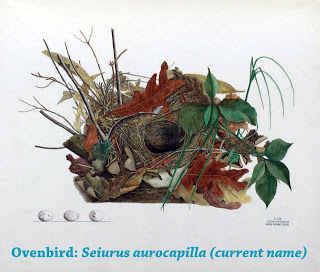
Have you ever been out and about, enjoying the beauty of nature, looked up in a tree, noticed a bird’s nest, and wondered what species of bird made the nest? If so, and if you happen to live in Ohio, or somewhere close to it, we’ve got the book for you: Illustrations of the Nests and Eggs of Birds of Ohio (1886), v.1–2, text by Howard Jones and illustrations by a variety of artists, including Miss Genevieve Estelle Jones, Miss Eliza J. Schulze, Mrs. N. E. Jones, Miss Nellie D. Jacob, Miss Josephine Klippart and Miss Kate Gephart. What really struck us about this book was the charming nature of the illustrations. And after reading the preface, it became quite clear that obtaining these illustrations for the work was no easy task.

View Full Size Image

In 1877, Genevieve Jones decided to create a series of plates for a publication depicting the nests and eggs of Ohio birds. She enlisted the help of close friend Eliza Schulze, and together the two women, amateur artists but having no formal training, embarked on the

venture. To make matters more complicated, the plates themselves needed to be completed as lithographs so that they could be printed for mass production – a method that neither lady was familiar with. However, after many months of practice, Miss Jones and Miss Schulze produced plates 1-3, and these, along with the accompanying text by Howard Jones, were sent to publication in 1879. Favorably received, the ladies continued their partnership.

Unfortunately, on August 17th, 1879, Genevieve Jones died of typhoid fever. Desiring to continue the work, Miss Schulze enlisted the help of Genevieve’s mother, Mrs. N. E. Jones. Eventually, Miss Schulze relinquished all of her interests in the title to Mrs. Jones. Determined to move forward, Mrs. Jones undertook the responsibility for all of the illustrations herself, eventually employing three additional artists, Miss Nellie D. Jacob, Miss Josephine Klippart, and Miss Kate Gephart. Despite all the hardships encountered over the life of this publication, the authors and artists were thankful and proud of the work, remarking,

View Full Size Image

“Aside from the entertainment and instruction accompanying the study of birds in their homes, and the delineation of their various styles of architecture, it has been a great pleasure to us to continue to completion an undertaking so unfortunately interrupted at almost its very beginning. It has also been a satisfaction to us to know that, however poor our efforts, we were breaking new ground in a field, which, with the cultivation of time, will yield a rich and beautiful harvest.”

For our post, we’re featuring a few of the nest illustrations found in this title, identifying them for the bird species to which they correlate. However, we’ll leave the last picture unidentified. Can you tell which bird species made the nest below (of course, you could always just check in the book, but where’s the fun in that)? Let us know what species you think it is via Twitter (@BioDivLibrary), Facebook, or by leaving a comment on this blog. To see all of the images from this title, visit the set in Flickr: v. 1 and v. 2.

View Full Size Image

September 22, 2011by michelle.underhill

Help Support BHL

BHL's existence depends on the financial support of its patrons. Help us keep this free resource alive!

search

About BHL

The Biodiversity Heritage Library (BHL) is the world’s largest open access digital library for biodiversity literature and archives. BHL operates as a worldwide consortium of natural history, botanical, research, and national libraries working together to digitize the natural history literature held in their collections and make it freely available for open access as part of a global “biodiversity community.”

Join Our Mailing List

Sign up to receive the latest news, content highlights, and promotions.

Subscribe Now

Subscribe to Blog via Email

Enter your email address to subscribe to this blog and receive notifications of new posts by email.

Join 319 other subscribers

Subscribe to Blog Via RSS

Subscribe to the blog RSS feed to stay up-to-date on all the latest BHL posts.

Access RSS Feed

Inspiring Discovery through Free Access to Biodiversity Knowledge.

The Biodiversity Heritage Library makes it easier than ever for you to access the information you need to study and explore life on Earth…for free, anytime, anywhere.


64+ Million Pages of
Biodiversity Literature Online.

EXPLORE

Tools and Services
to Transform Research.

EXPLORE

300,000+
Illustrations on Flickr.

EXPLORE

ABOUT | HARMFUL CONTENT | PRIVACY | SITE MAP | TERMS OF USE