
Biodiversity Heritage Library - Program news and collection highlights from BHL
  • Home
  • News
  • Featured Books
    • All Featured Books
    • Book of the Month Series
    • BHL at 20
  • User Stories
  • Campaigns
    • Fossil Stories
    • Garden Stories
    • Monsters Are Real
    • Page Frights
    • Her Natural History
    • Earth Optimism 2020
  • Tech Blog
  • Visit BHL
Home
News
Featured Books
    All Featured Books
    Book of the Month Series
    BHL at 20
User Stories
Campaigns
    Fossil Stories
    Garden Stories
    Monsters Are Real
    Page Frights
    Her Natural History
    Earth Optimism 2020
Tech Blog
Visit BHL
  • Home
  • News
  • Featured Books
    • All Featured Books
    • Book of the Month Series
    • BHL at 20
  • User Stories
  • Campaigns
    • Fossil Stories
    • Garden Stories
    • Monsters Are Real
    • Page Frights
    • Her Natural History
    • Earth Optimism 2020
  • Tech Blog
  • Visit BHL
Biodiversity Heritage Library - Program news and collection highlights from BHL
Blog Reel, Featured Books

Happy Birthday John James Audubon

View Full Size Image
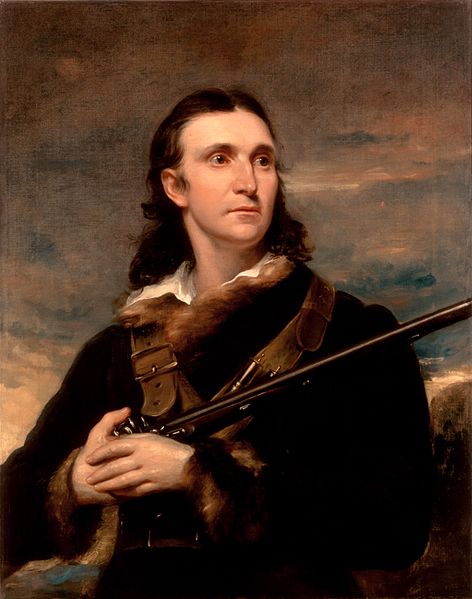
John James Audubon, by John Syme, 1826

Today in 1785, John James Audubon was born. A famous French-American ornithologist, naturalist, and painter, Audubon is responsible for one of the most celebrated ornithological books ever published, Birds of America. Baron Cuvier praised this work as “the most splendid monuments which art has erected in honor of ornithology.”

Audubon was born Jean Rabin, the illegitimate son of French naval officer Lieutenant Jean Audubon, in Les Cayes, Saint-Domingue on his father’s sugar plantation. In 1803, after living in France with his father for his youth, Audubon immigrated to the United States, changing his name to John James Audubon. During his early years in America, though pursuing several business ventures with his father and other partners, Audubon continuously honed his natural history skills, painstakingly studying nature and drawing his observations, with a particular affinity for birds. Though his business success was tumultuous (he even landed in debtor’s prison in 1819 and earned barely enough money to support his family through his sketches), in 1820 Audubon finally started an expedition up the Mississippi in an endeavor to paint all the birds of North America for eventual publication. This ambition later became Birds of America.

Birds of America represents more than 14 years of field observations and drawings by Audubon. In 1826, unable to gain support for publication in America, Audubon traveled to England, where his work was a great success, and he was able to raise enough funds to begin publication. Birds of America contains 435 hand-colored, life-sized prints of 497 bird species and presents a total of more than 700 North American bird species. The cost of printing the entire work was $115,640, the equivalent of more than $2,000,000 today. Published in sections from 1827-38, it includes illustrations of 6 now-extinct birds species, including the Passenger Pigeon and Great Auk. 119 copies of the work are known to survive, and The Economist estimates that 5 of the 10 highest prices ever paid for printed works were paid for copies of this title. The most recent sale of a complete set occurred in 2010 for approximately $11.5 million.

Several titles by Audubon or based on his journals can be found in BHL. One of our favorites, and our book of the week, is The Life of John James Audubon, the Naturalist, a biography of his life, edited by his widow, Lucy Bakewell Audubon. Audubon’s memoir, the title consists largely of abstracts from his journals. Today, a century and a half after this great man’s death, we salute his accomplishments and the contributions he made to natural history. We hope you’ll enjoy learning about him in our book of the week as much as we have. 

You can see digital versions of the 435 elephant folios and the accompanying text in Birds of America from the University of Pittsburgh. Explore the 1840-44 edition of the work, digitized by Smithsonian Libraries, in BHL.
April 26, 2012by Grace Costantino
BHL News, Blog Reel

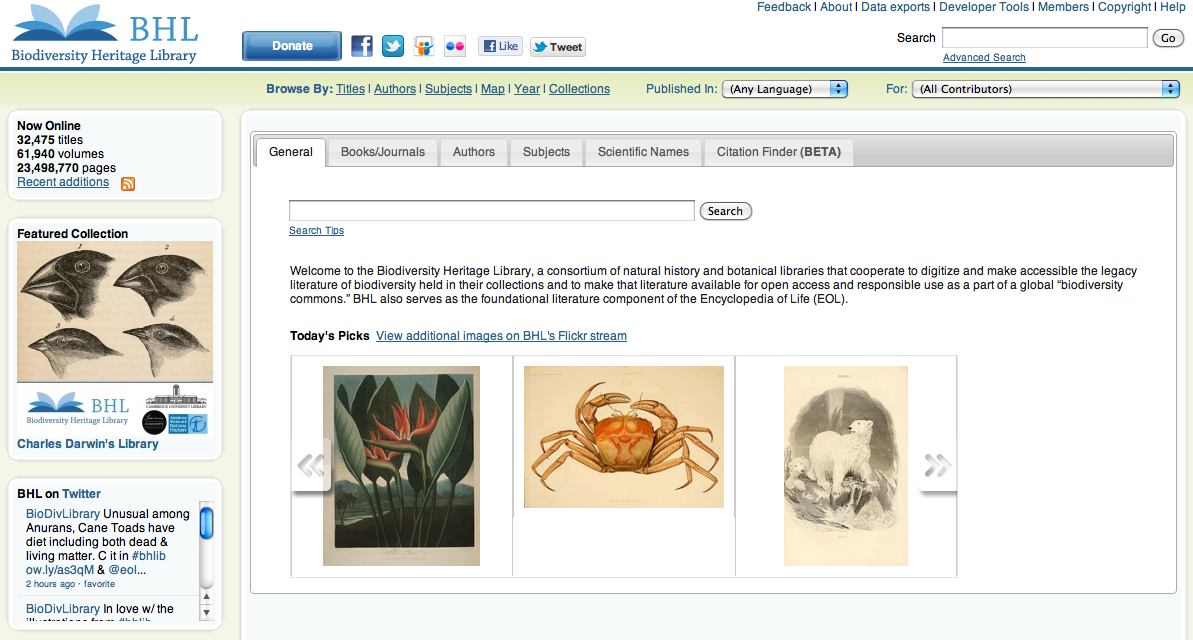
A New & Improved BHL Search & Interface

In October, 2011, BHL Staff conducted a usability test of the BHL US/UK portal, assessing its functionality and comparing it with that of the BHL-Australia portal. While several recommendations arose from that exercise, two of the most emphatic were a need to improve the BHL search functionality and a desire to make the BHL US/UK portal more aesthetically pleasing.

You spoke, and we listened. Today, we’re excited to announce the release of a new and improved BHL interface and search capability! 

View Full Size Image

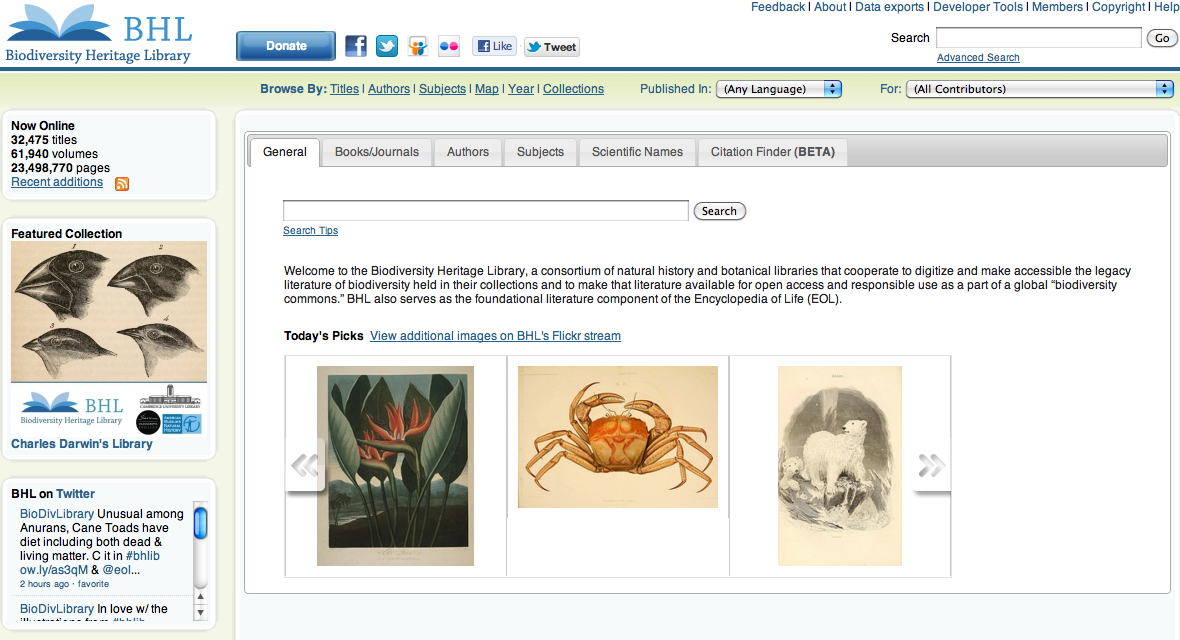
As far as improving the aesthetics of our site go, we couldn’t think of a better approach than incorporating some of the amazing Flickr images our users have grown to love. On the new BHL homepage, you’ll now see a selection of the over 29,000 illustrations in the BHL Flickr, with the option to view more of the collection in Flickr (by clicking on the “View Additional Images” link) or the specific image within BHL (by clicking on the actual image).

We’ve also updated the social aspect of the site by including our @BioDivLibrary Twitter stream and relocating our social media buttons for Twitter, Facebook, Slideshare, and Flickr to the homepage header for better accessibility. You’ll also find a new and improved Featured Collections box, which will highlight special collections of BHL materials, particularly those included in the BHL iTunes U.

Search Improvements

While we know aesthetics are important, we also know that the meat and potatoes of the recommendations from our usability test center around a need to improve the BHL search.

The new enhanced search addresses metadata only, not OCR text within a book or scientific names.  Think of this as a better search across library metadata.  The search function is a Google-like search that provides fuzzier searching across titles, authors, subjects and dates, while still allowing the exact searches that many of our users have come to love, as indicated in user surveys. Search results are returned according to a relevance ranking, and can be sorted by that ranking, by year, by author, or by date published.

Some example searches now enabled include:

  • Keyword searches:
    • annals missouri
  • Exact search:
    • “annals of the missouri botanical garden” (include quotes)
  • Complex searches:
    • annals or missouri (note the use of “or”)
    • “Charles Darwin” letters (combination of exact phrase and keywords)
    • darwin descent 1871 (author, title keywords, year published)
  • Abbreviations:
    • proc boston soc nat hist
    • sys nat 1758 (abbreviation and year published)

You can also do more complicated searches by clicking on the “Books/Journals” search tab to include volume information and editions into your search criteria.

These search improvements have also been made to BHL’s APIs, including its OpenURL resolver, enabling developers easier access to BHL’s data for inclusion in third party applications.

Spend some time with our new site and feel free to give us your feedback by commenting on this post, sending us website feedback, or sending messages to us on Twitter or Facebook! We know you’ll be as excited about these improvements as we are.

April 23, 2012by michelle.underhill
BHL News, Blog Reel

Happy Earth Day 2012!

Portrait version of the Biodiversity Heritage Library logo.

Happy Earth Day 2012!

Here at BHL, we believe we can all make a difference to improve the health of our planet and its biodiversity. By providing researchers (and the public) with free access to literature about the world’s species, we’re empowering them with the knowledge necessary to better understand and protect life on earth. If you believe in the importance of this mission as much as we do, consider giving a gift to BHL. Together, we can make a difference for generations to come.

We couldn’t think of a better way to celebrate Earth Day than by showcasing its rich diversity of life, particularly through the brilliant illustrations we have in our collection. Thus, below we present some of our favorite (and most popular) images. You can find these, and nearly 30,000 more, free images by visiting our Flickr profile.

Now it’s your turn. How are you celebrating Earth Day this year?

April 22, 2012by ulib-libraryjobs
Blog Reel, Featured Books

Book of the Week: The Birth of Microscopic Plant Anatomy

Portrait version of the Biodiversity Heritage Library logo.
View Full Size Image
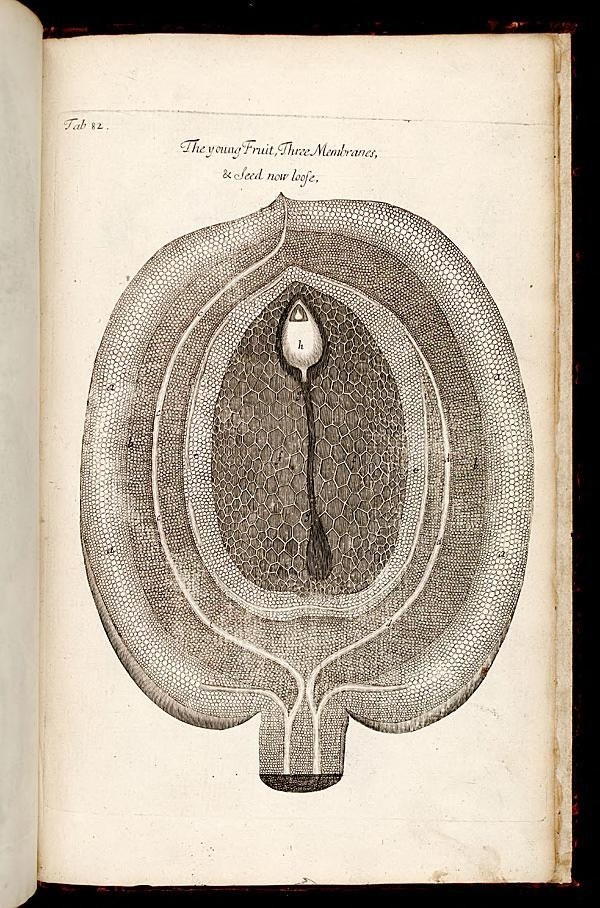
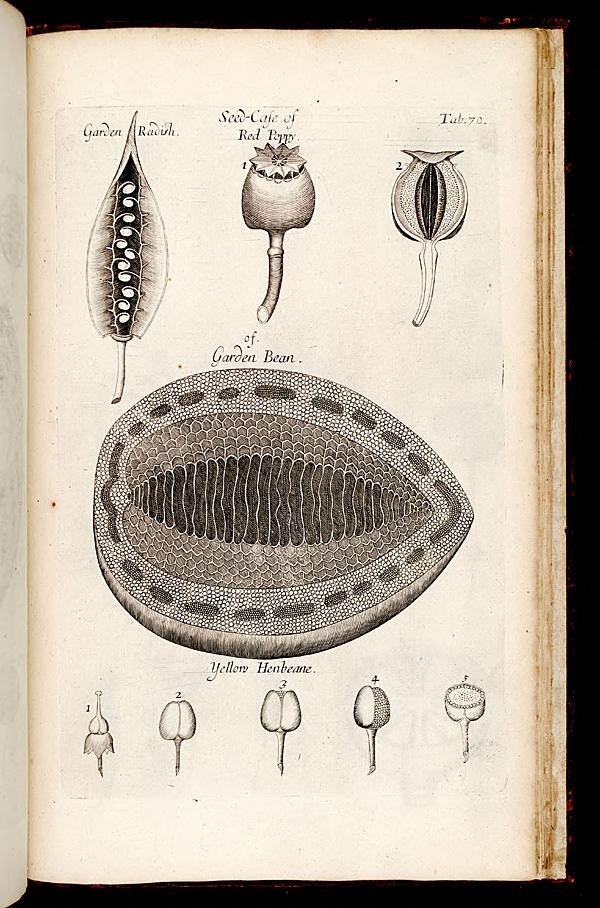
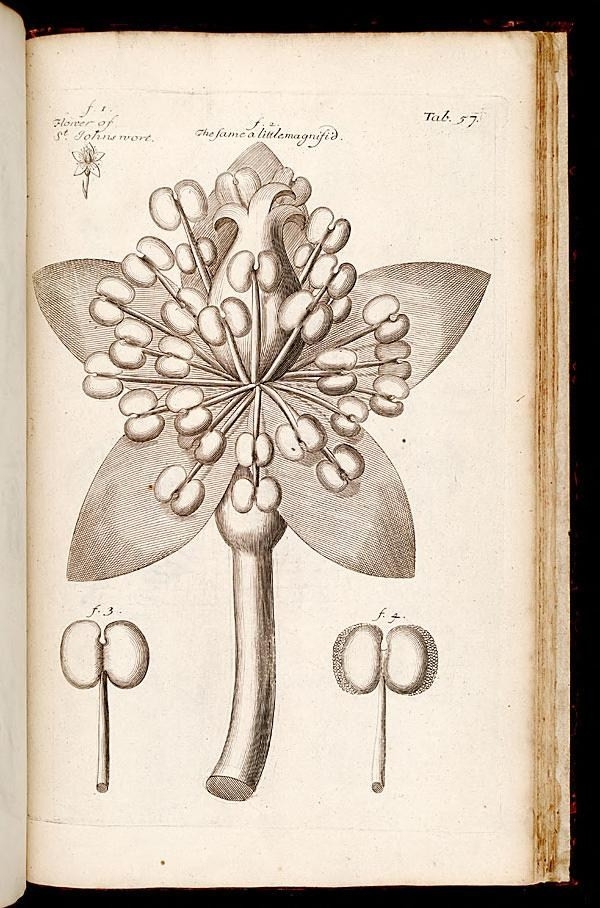
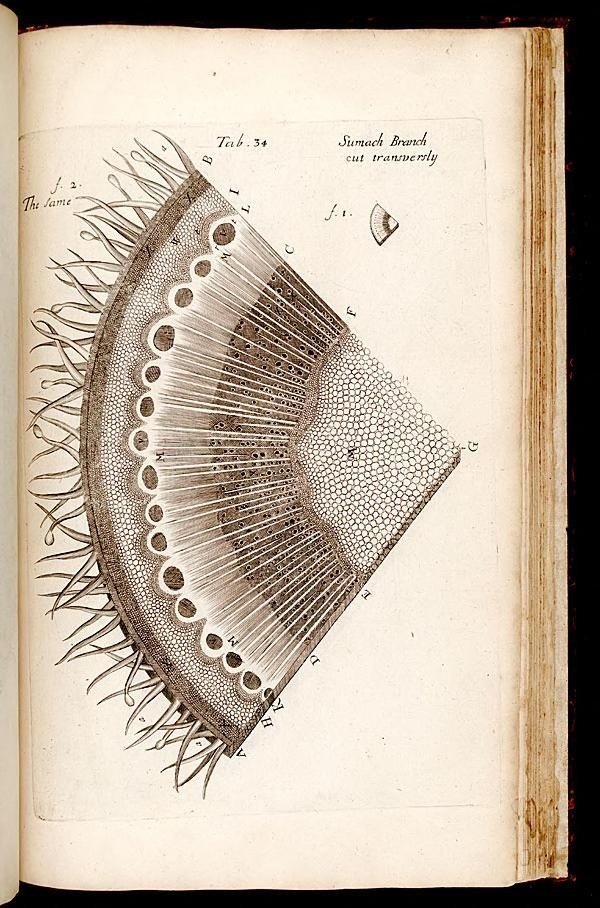
There are groundbreaking biodiversity works that most of us are familiar with, including Systema Naturae and On the Origin of Species. Then there are other works that, though just as monumental for their impact on scientific knowledge, are less universally known than others. One such book is Anatomy of Plants, a seventeenth century work by Nehemiah Grew.

Many people have probably never heard of this work, and most probably have no idea what contribution it made to scientific discovery. Grew’s masterpiece, however, is significant not just because it depicts the first microscopic descriptions of pollen, but also because it is the first publication to note that a plant’s stamen is a male organ, with pollen as the seed. In fact, this work earned Grew, who was given the title “The Father of Plant Physiology,” the distinction of being one of the most celebrated scientists of the seventeenth century, and, together with Malpighi, he is considered the co-founder of plant anatomy.

Anatomy of Plants, published in 1682, was divided into four books, entitled Anatomy of Vegetables Begun, Anatomy of Roots, Anatomy of Trunks, and Anatomy of Leaves, Flowers, Fruits and Seeds. The work was largely a collection of Grew’s previous publications, many of which were presented to the Royal Society in the 1670s. Within the work, Grew describes the key differences between the morphology of stem and root, and, as previously mentioned, details the microscopic characteristics of pollen and hypothesized that stamen are the male organs of plants.

Despite the critical importance of the discoveries presented in this work, what is more likely to draw your attention to Grew’s Anatomy are the 82 exquisite engravings contained within. The illustrations depict in unprecedented detail the internal subtleties of roots, stems, tree trunks, and, not least of all, seeds. We’ve presented a few of our favorites in this post, but be sure to check out the entire collection on our Flickr account.

In 2006, a copy of Anatomy of Plants sold at auction for $7,557, nearly $5,000 over the estimate. Fortunately, you don’t have to have the budget of a used car to enjoy this work. As you’ve come to expect, it’s freely available in beautiful high resolution quality from the Biodiversity Heritage Library (in fact, it’s title #4 in BHL!). So be sure to spend some time with this title and add it to your repertoire of critical natural history works. It deserves to be among the Greats, keeping Darwin and Linnaeus company.

View Full Size Image
April 19, 2012by michelle.underhill
Blog Reel, User Stories

BHL and Our Users: Anders Hagborg

Portrait version of the Biodiversity Heritage Library logo.
View Full Size Image

This week, we’re proud to feature Anders Hagborg, an associate at the Field Museum with an academic background in theoretic and applied physics. Though his professional career centered on information technology, he took up an interest in botany after retirement and currently applies this newfound passion to work at the Field Museum. As an additional note of interest, Anders grew up, studied and worked in Sweden until moving to Chicago in 1985.

What is your title, institutional affiliation (or alternative place of employment), and area of interest?

I am an (unpaid) associate at the Botany department at the Field Museum, Chicago. I work gathering data about liverworts and hornworts. I am part of a team that is producing a global checklist for these phyla.

How long have you been in your field of study?

Since 2005

When did you first discover BHL?

Probably in 2007 (It seems that I have always used it)

What is your opinion of BHL and how has it impacted your research?

It is one of the repositories that I frequently use. BHL is probably the most important one – the others are Reál Jardin Botanico, Madrid, Gallica (Bibliothéque numérique), Google books, and some others less frequently.

How often do you use BHL?

At least a few times every month – sometimes much more than that.

How do you usually use BHL (read the titles online/download whole PDFs/Selecting Pages to Download for a custom PDF/Downloading High Resolution Images/Generating Taxonomic Bibliographies/etc.)

Almost exclusively PDF download.

If you could change one thing about BHL, what would it be, or what developmental aspect would you like the BHL team to focus on next?

It would be great if BHL could include other repositories in the search so I don’t have to search Madrid, Gallica, Google books and other sites separately. I like the BHL feedback format better than the other ones, especially better than Google books, which doesn’t handle periodicals well.

If you had to choose one title/item in BHL that has most impacted your research, or one item that you prefer above any other in BHL, what would it be and why?

That is really not the way I look at it. I have accessed and used several hundred different items at BHL and use many of them over and over again, but it does not make sense to single any of them out.
__________________________________________

Thank you, Anders, for taking the time to share some of your professional life with us. We appreciate feedback from our users, as we repeatedly use it to improve our services and guide our developmental priorities.

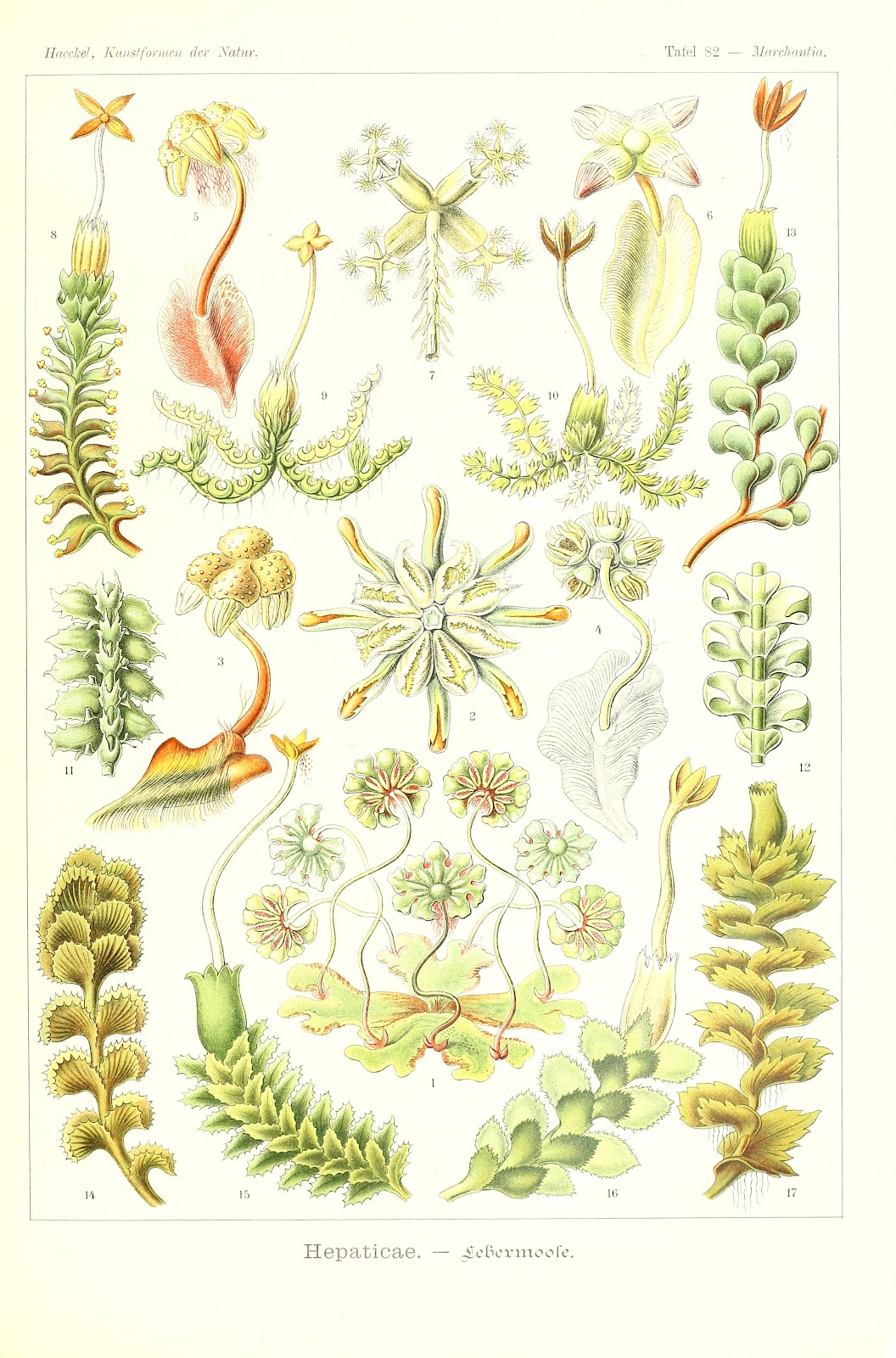
Learn more about Anders’ passions, liverworts (Marchantiophyta) and hornworts (Anthocerotophyta), in EOL, and check out this lovely illustration of liverworts from Kunstformen der Natur in BHL:

View Full Size Image
April 17, 2012by ulib-libraryjobs
BHL News, Blog Reel

BHL featured in Digital Public Library of America Hackathon

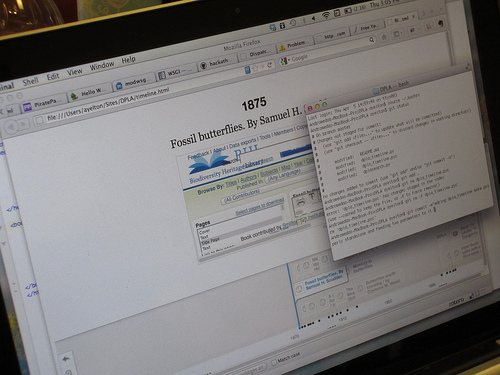
View Full Size Image
BHL is one of the first key data sets that is being used in the test bed for the Digital Public Library of America (DPLA). Not sure what the DPLA is? Well, it’s a bold initiative to create a large scale digital library for the United States and the world.

Why is BHL involved in DPLA? Well, BHL is all about access, so as many platforms as we can distribute BHL is important. Also, Chris Freeland and I share duties as co-chairs of the DPLA’s Technical Aspects Workstream. Our work with DPLA has brought together a number of BHL threads, including our work with the Internet Archive (a provider of content to DPLA) and  Europeana (associated with DPLA and a key partner for our global BHL member, BHL Europe).

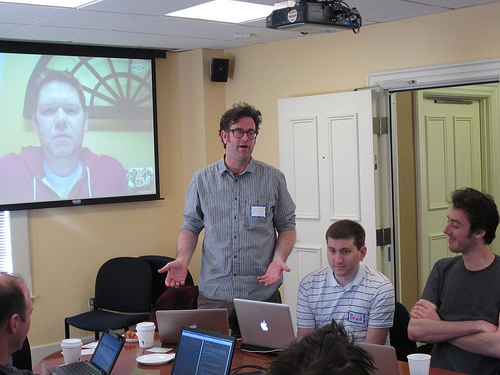
Also, BHL content will be an important part of DPLA and, for the purpose of the launch of the initial DPLA platform, BHL records were a key data set. About 20 hackers, coders and associated geeks joined the fun. In addition to the invited hackers, the DPLA Tech Dev team (see members below ).

Notes from the meeting can be found on Pirate Pad). Alessandra Morgan also did a great blog post for the DPLA blog. A quick quote:

The DPLA technical development team and Technical Aspects workstream hosted the first DPLA Hackathon yesterday, bringing together a group of approximately twenty programmers, developers, and hackers to begin testing the prototype DPLA platform and building apps on top of it. The hackathon will continue as a virtual event; everyone is invited to build something using the DPLA platform. Materials can be found at the DPLA Hackathon Github, and notes from yesterday’s event can be found on PiratePad. Technical questions regarding the DPLA Platform can be directed at the dev team, which can be reached at [email protected].

View Full Size Image

Rachel Frick (Digital Library Federation) and Margy Avery (MIT Press) joined us for the day as observers from the Content and Scope workstream of the DPLA. Maura Marx and Rebekah Heacock (from the DPLA Secretariat) were also in attendance.

The Dev core team at DPLA consists of:

  • Nick Caramello, Pod Consulting
  • Daniel Collis-Puro, Berkman Center for Internet & Society
  • Paul Deschner, Harvard Library Innovation Lab
  • Sebastian Diaz, Berkman Center for Internet & Society
  • Kim Dulin, Harvard Library Innovation Lab
  • Matt Phillips, Harvard Library Innovation Lab
  • David Weinberger, Harvard Library Innovation Lab/Berkman Center
April 8, 2012by joelrichard
BHL News, Blog Reel

Introducing the Theodore Roosevelt iTunes U Collection

View Full Size Image

When most people think of Theodore Roosevelt, they think of the twenty-sixth President of the United States. Taking office in 1901 at the age of 42 after the assassination of William McKinley, he is the youngest president in American history. As President, Roosevelt is known for his work in the Progressive Movement, completing the Panama Canal, and negotiating an end to the Russo-Japanese War. However, while many remember him as the politician, Theodore Roosevelt was also an accomplished natural historian, touring in Africa and Europe and leading a major expedition to the Amazon jungles.

To honor this remarkable man, we’ve dedicated our newest iTunes U collection to him. Our iTunes U provider page, which offers free access to a selection of BHL books organized according to theme, previously consisted of 8 collections, including Extinct Species and The Curious and the Bizarre. We’re thrilled to add the Theodore Roosevelt collection, containing 18 titles by Roosevelt, to our repertoire. To celebrate this release, we’re featuring one of the books as our Book of the Week: African Games Trails (1910).

View Full Size Image
Roosevelt’s expedition to Africa in 1909 was a major endeavor, conducted in large part to collect specimens for the Smithsonian and American Museum of Natural History. During the venture, Roosevelt and his team collected more than 11,397 animals, ranging from insects to big game animals. Roosevelt also used the expedition to interact with many native people and local leaders. A detailed account of the expedition, including descriptions of the flora and fauna he collected, are presented in his book African Game Trails, published in 1910.

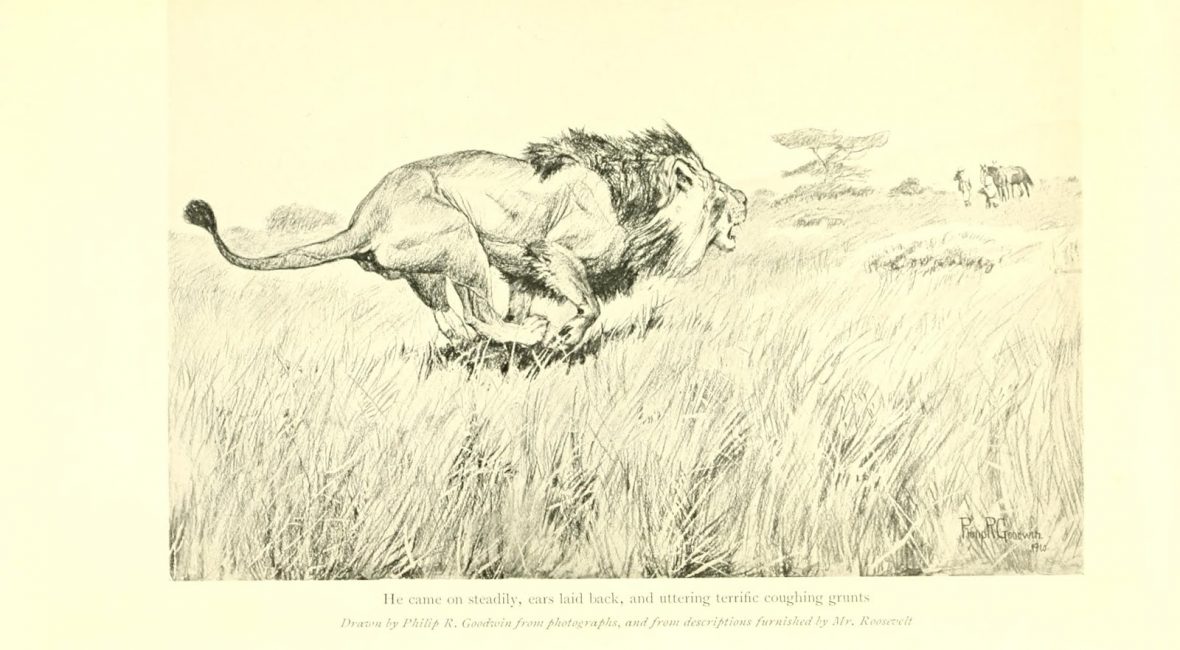
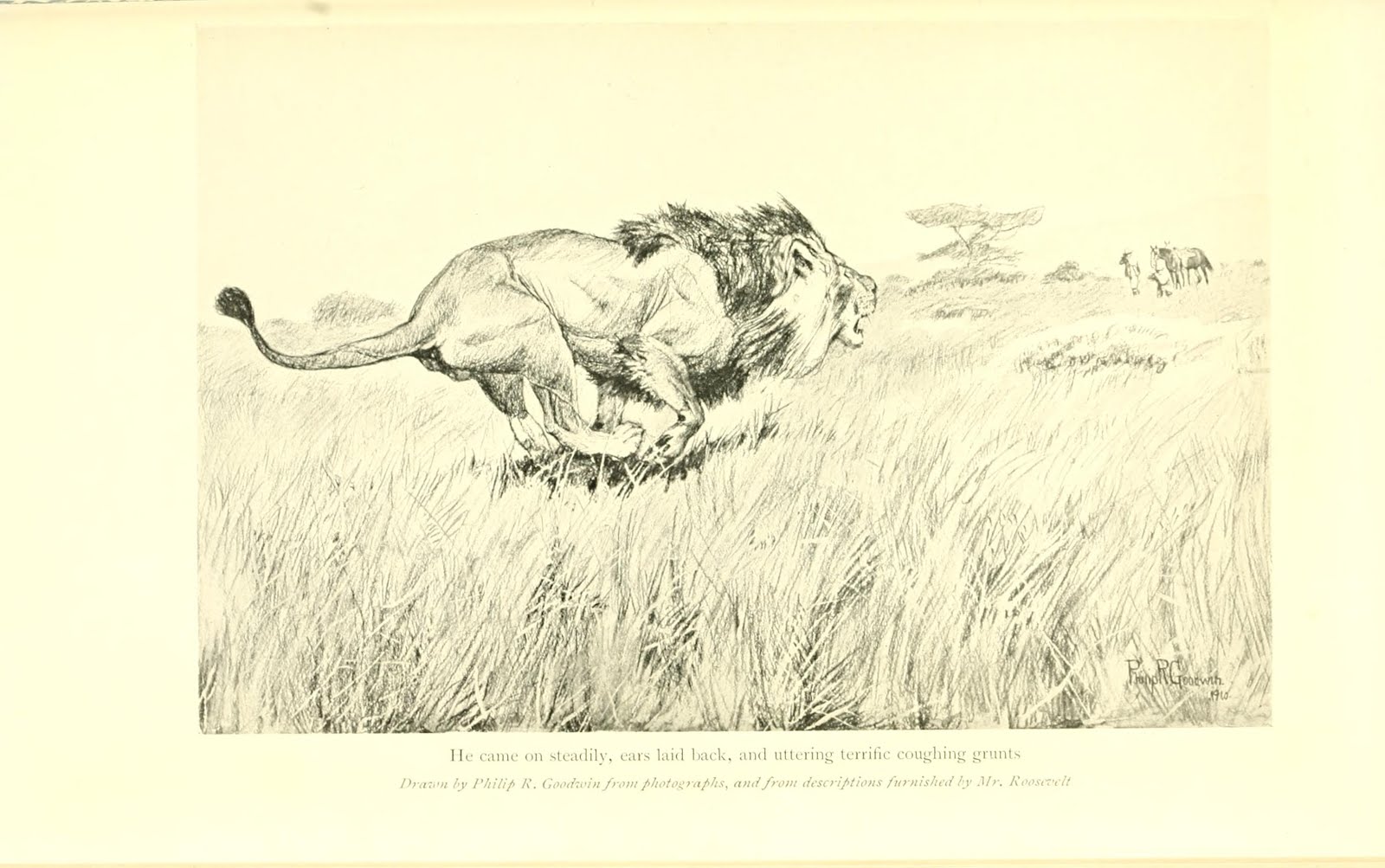
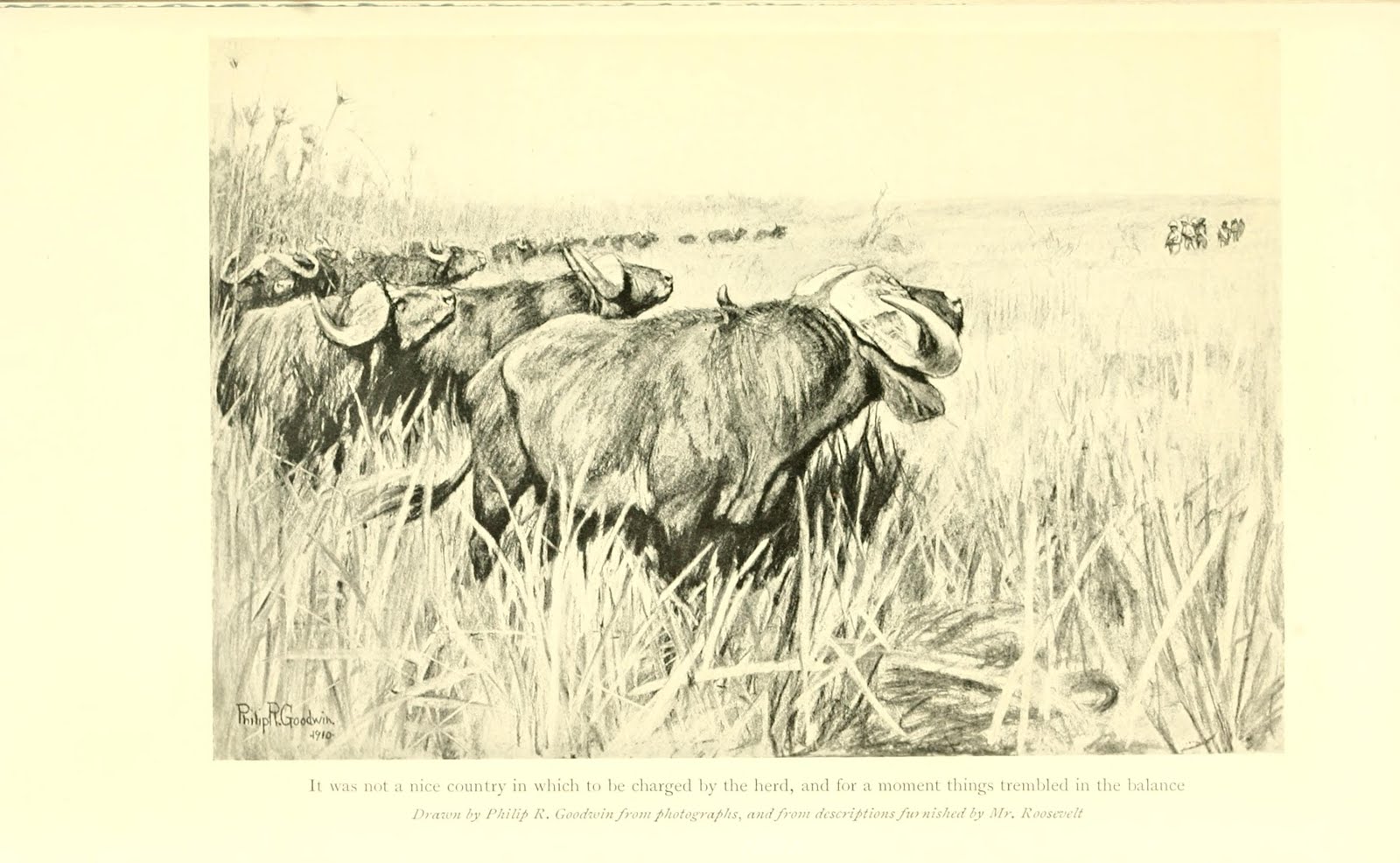
The work includes photographs taken by Roosevelt’s son, Kermit (to whom it is dedicated), as well as drawings by Philip R. Goodwin, an American artist best known for illustrating The Call of the Wild. African Game Trails contains accounts of such activities as lion hunting on the Kapiti Plains, encounters with the giant rhinoceros of the Lado, and the expedition’s trek down the Nile. Some of our favorite illustrations from the title include a herd of buffalo gazing with curiosity at the expedition team and a lion charging across the plain. A final item of interest worth noting is a map detailing the expedition’s route.

April 6, 2012by michelle.underhill
Page 1 of 212»

Help Support BHL

BHL's existence depends on the financial support of its patrons. Help us keep this free resource alive!

search

About BHL

The Biodiversity Heritage Library (BHL) is the world’s largest open access digital library for biodiversity literature and archives. BHL operates as a worldwide consortium of natural history, botanical, research, and national libraries working together to digitize the natural history literature held in their collections and make it freely available for open access as part of a global “biodiversity community.”

Join Our Mailing List

Sign up to receive the latest news, content highlights, and promotions.

Subscribe Now

Subscribe to Blog via Email

Enter your email address to subscribe to this blog and receive notifications of new posts by email.

Join 319 other subscribers

Subscribe to Blog Via RSS

Subscribe to the blog RSS feed to stay up-to-date on all the latest BHL posts.

Access RSS Feed

Inspiring Discovery through Free Access to Biodiversity Knowledge.

The Biodiversity Heritage Library makes it easier than ever for you to access the information you need to study and explore life on Earth…for free, anytime, anywhere.


64+ Million Pages of
Biodiversity Literature Online.

EXPLORE

Tools and Services
to Transform Research.

EXPLORE

300,000+
Illustrations on Flickr.

EXPLORE

ABOUT | HARMFUL CONTENT | PRIVACY | SITE MAP | TERMS OF USE