
Biodiversity Heritage Library - Program news and collection highlights from BHL
  • Home
  • News
  • Featured Books
    • All Featured Books
    • Book of the Month Series
    • BHL at 20
  • User Stories
  • Campaigns
    • Fossil Stories
    • Garden Stories
    • Monsters Are Real
    • Page Frights
    • Her Natural History
    • Earth Optimism 2020
  • Tech Blog
  • Visit BHL
Home
News
Featured Books
    All Featured Books
    Book of the Month Series
    BHL at 20
User Stories
Campaigns
    Fossil Stories
    Garden Stories
    Monsters Are Real
    Page Frights
    Her Natural History
    Earth Optimism 2020
Tech Blog
Visit BHL
  • Home
  • News
  • Featured Books
    • All Featured Books
    • Book of the Month Series
    • BHL at 20
  • User Stories
  • Campaigns
    • Fossil Stories
    • Garden Stories
    • Monsters Are Real
    • Page Frights
    • Her Natural History
    • Earth Optimism 2020
  • Tech Blog
  • Visit BHL
Biodiversity Heritage Library - Program news and collection highlights from BHL
Blog Reel, Featured Books

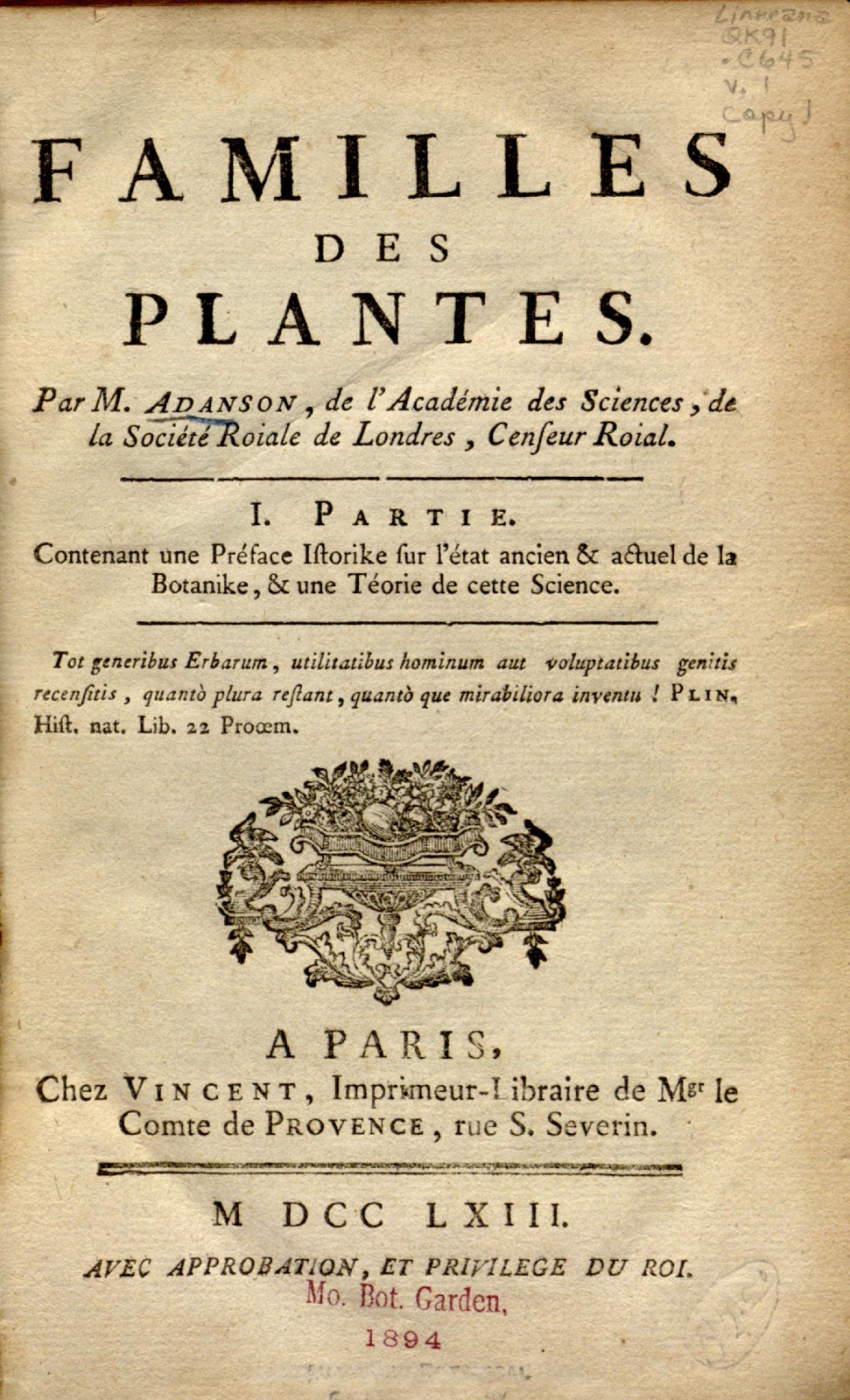
Book of the Week: Familles des Plantes

View Full Size Image

One of the defining characteristics of the scientific method is the gathering of empirical data.

While Carl Linnaeus’ binomial nomenclature technique for systematic naming took hold of scientist, his system of classification based on the artificial sexual system did not. Linnaeus, however, was not the only person crafting classification systems. Some taxonomists, such as Michel Adanson, Jean Baptiste Pierre Antoine de Monet Lamarck, and Antoine Laurent de Jussieu, devised a natural system of classification. Adanson’s Familles des Plantes presents one such alternative system, which was based on the similarity of organs among organisms. Those displaying the greatest number of similar organs were grouped together in divisions, with the degree of relatedness increasing or decreasing depending on the number of similar or dissimilar organs.

Michel Adanson’s Familles des Plantes was published in 1763. Much of this work was influenced by Joseph Pitton de Tournefort’s system of natural classification from 1694, published within the work Eléments de botanique, ou Méthode pour reconnaître les Plantes. Tournefort was the first to articulate in a concise manner the concept of genus for plants. By basing his system on a greater number of shared characteristics, Adanson’s work is considered the basis for the empirical method.
View Full Size Image

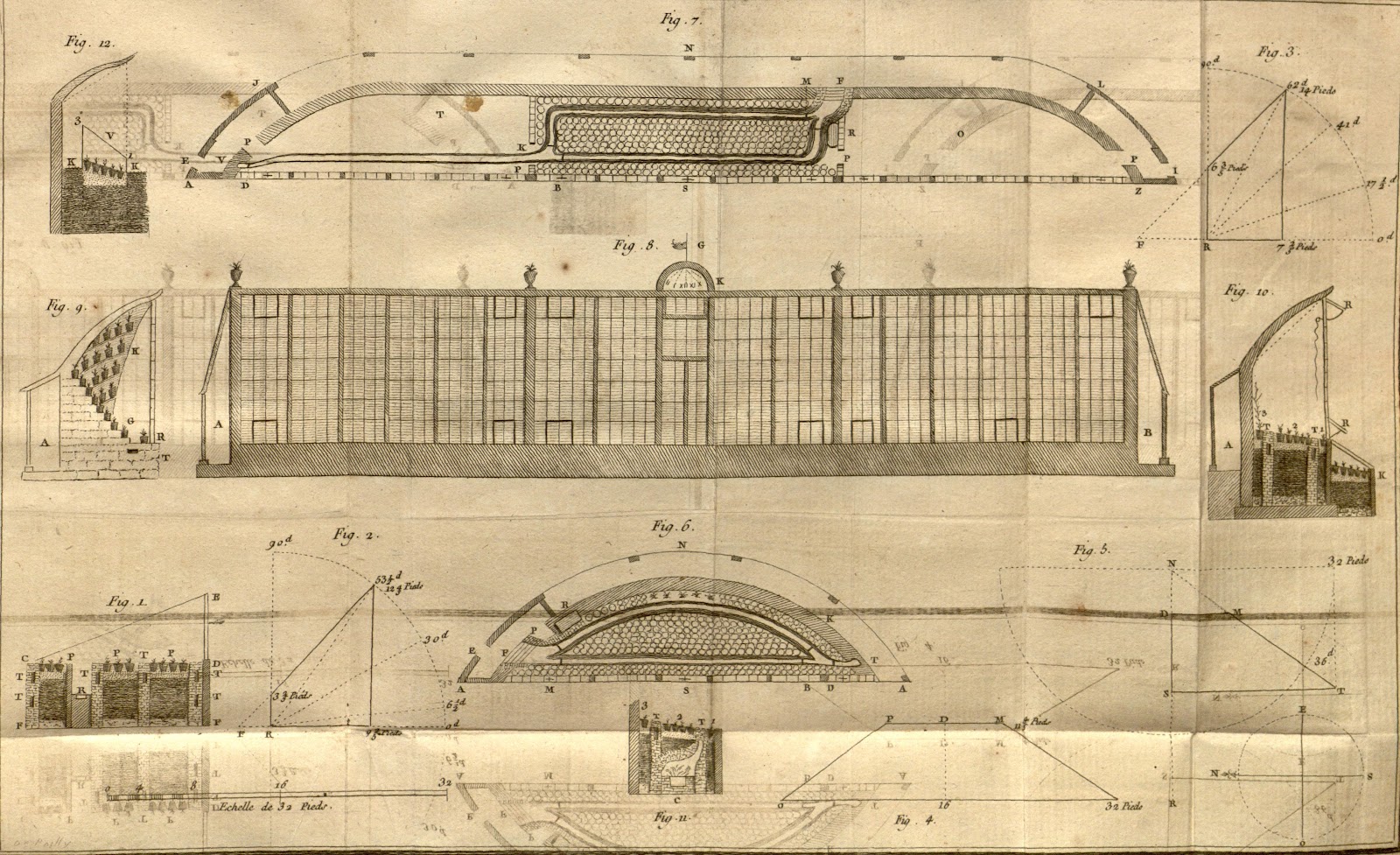
While Adanson’s work was highly regarded for his more thorough classification approach than Linnaeus’ sexual system, he refused to take advantage of Linnaeus’ binomial system. This created criticism for Familles des Plantes which ultimately alienated botanists from fully adopting Adanson’s methods.

Though Adanson’s system may not be in use today, it was important for the evolution of the field, paving the way for the natural classification of plants and particularly influencing Antoine Laurent de Jussieu’s Genera Plantarum. You can enjoy Familles des Plantes in all its glory in BHL. Its contribution serves as a reminder that the taxonomic method was influenced by many minds, not just that of Carl Linnaeus.

June 15, 2012by ulib-libraryjobs

Help Support BHL

BHL's existence depends on the financial support of its patrons. Help us keep this free resource alive!

search

About BHL

The Biodiversity Heritage Library (BHL) is the world’s largest open access digital library for biodiversity literature and archives. BHL operates as a worldwide consortium of natural history, botanical, research, and national libraries working together to digitize the natural history literature held in their collections and make it freely available for open access as part of a global “biodiversity community.”

Join Our Mailing List

Sign up to receive the latest news, content highlights, and promotions.

Subscribe Now

Subscribe to Blog via Email

Enter your email address to subscribe to this blog and receive notifications of new posts by email.

Join 319 other subscribers

Subscribe to Blog Via RSS

Subscribe to the blog RSS feed to stay up-to-date on all the latest BHL posts.

Access RSS Feed

Inspiring Discovery through Free Access to Biodiversity Knowledge.

The Biodiversity Heritage Library makes it easier than ever for you to access the information you need to study and explore life on Earth…for free, anytime, anywhere.


64+ Million Pages of
Biodiversity Literature Online.

EXPLORE

Tools and Services
to Transform Research.

EXPLORE

300,000+
Illustrations on Flickr.

EXPLORE

ABOUT | HARMFUL CONTENT | PRIVACY | SITE MAP | TERMS OF USE