

Deep sea dredging in the twilight zone with Teuthologist Carl Chun
 |
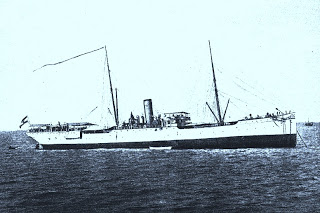
| The Valdivia |
Deep sea dredging, as a means of scientific discovery, was popularized after the Challenger Expedition (1872-1876) came back to port in Spithead, Hampshire in the United Kingdom. In four years, the scientifically outfitted steamboat had circumnavigated the globe, traveled a total distance of 68,890 nautical miles, and along the way had picked-up 4,700+ previously unobserved and unnamed species.
The study of these biological treasures produced about 50 tomes of scientific publications penned by the scientists on the voyage. The Challenger Expedition was the foundation of modern Oceanography. It prompted many other nationally and privately funded expeditions to begin dredging the deep-sea in the pursuit of describing new and exotic species.
The intense fascination with deep sea organisms during this time period was not very surprising, considering the fact that it controverted the widely accepted mid-19th century, Abyssal Theory which, held that life could not exist at more than 300 fathoms under the sea. (~1800 ft.) Carl Chun, famed marine biologist specializing in cephalopods, was among a growing faction of scientists who had a deep conviction that there must be life, a prolific amount of it, deep in the unexplored nether regions of the ocean.
It was this belief along with the desire to further delve into areas previously neglected by the Challenger Expedition that led him to propose the first German Deep Sea expedition, nationally funded with the good graces of Germany’s last Kaiser, Wilhelm II.
The Valdivia Expedition
With plans in place, Chun and his scientific team were granted 300,000 marks that would fund the Valdivia Expedition. The steamboat was outfitted with dredging gear, specimen jars, deep sea traps and oceanographic equipment. The Valdivia set sail on July 31, 1898; it would be a journey that would take its crew to 268 stations around the West Coast of South Africa, the Gulf of Guinea, the Antarctic Sea, and a large portion of the Indian Ocean.
They would cover over 32,000 nautical miles and come back with so many new specimens that they would continually publish their findings over the span of 4 decades. The resulting 24 volumes comprises this week’s lengthy Book of the Week:Wissenschaftliche Ergebnisse der Deutschen Tiefsee-Expedition auf dem Dampfer “Valdivia” 1898-1899″ (Scientific results of the German deep-sea expedition on the steamer “Valdivia” 1898-1899). This multi-volumed set includes Chun’s visually stunning Die Cephalopoden; the English translated version is also available on BHL.
It was on this voyage that Chun first observed and described the “Vampire Squid” or Vampyroteuthis infernalis, which means “vampire squid from hell.” (This is one of the most favorited images on Flickr, so be sure to have a look)
The main goals for the expedition were to collect as many biological samples as possible and focus on the adaptation of organisms to the extreme conditions of their environment. This resulted in many anatomical studies of light organs. One stand-out publication comes from Dr. August Brauer, a german zoologist who was among the many scientists on the Valdivia.
With the editorial review of Chun, Brauer producedVolume 15: Die Tiefsee-Fische which is a systematic and anatomical study of the deep sea fish specimens brought back from their journey. The illustrations were done by zoologist and expedition artist Fritz Winter. It is clear from Fritz’s drawings that deep sea fish rely heavily on senses other than vision. Many produce their own light, which has the effect of making the deep sea look like a starry night, filled with bioluminescent organisms — thus the bathypelagic (1000-4000m) and (700-1000m) abyssopelagic zones in the ocean have aptly been nicknamed the “twilight zone.”
Dr. August Brauer’s Deep Sea Fish, Illustrated by Fritz Winter
Winter was an incredibly talented man: 100+ years later these deep sea fish are still jumping off of the page.
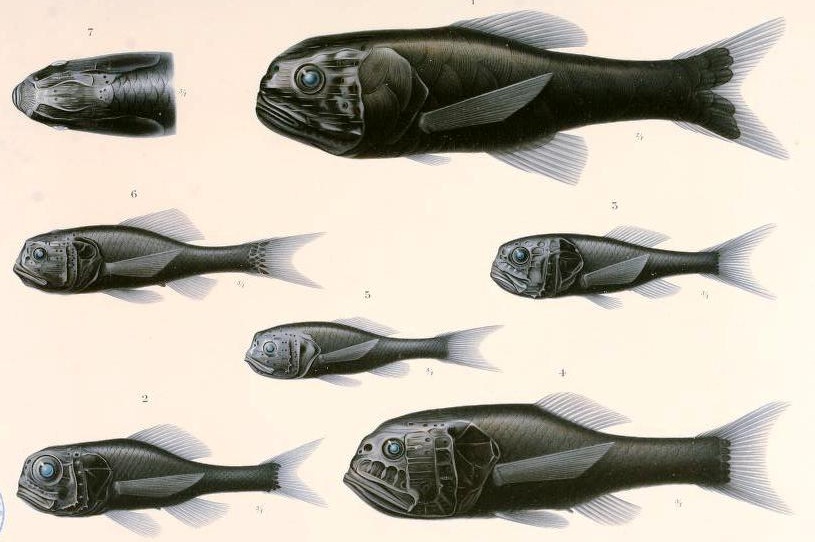 |
| Various (Melaphaes Genus) |
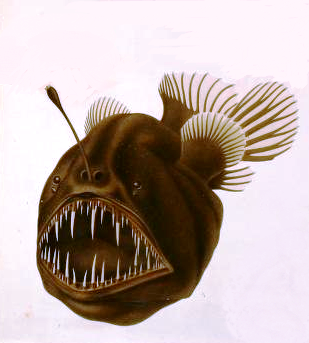 |
| Humpback anglerfish (Melanocetus johnsonii) |
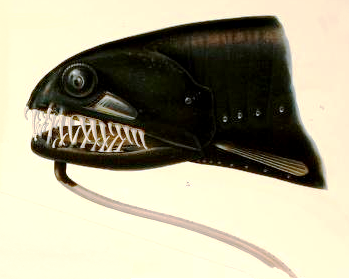 |
| Valdivia Black Dragon Fish (Melanostomias valdiviae) |
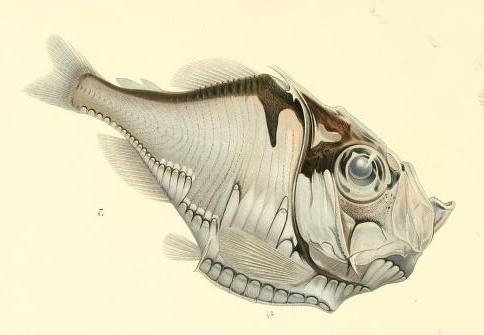 |
| Spicy Hatchet Fish (Polyipnus spinosus) |
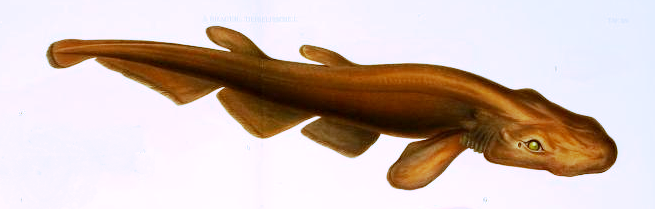 |
| Smallbelly Catshark (Apristurus indicus) |
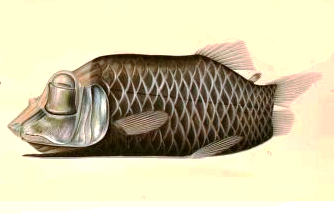 |
| Barrel-eye (Opisthoproctus soleatus) |
Fritz Winter on Flickr
Two sets of illustrations by Fritz Winter from the Valdivia Expedition are now on Flickr: Brauer’s Deep Sea Fish and Chun’s Cephalopoda. These should simply not be missed. Look out for more images from this expedition in the future!
And don’t forget that it is still National Oceans month. We should remember the spirit of these men who ventured forth in to the unknown as some of the world’s first oceanographers. They taught us that we shouldn’t overlook the deep sea. It may be invisible, inhospitable and completely foreign to humans yet, it is home to the largest habitat on the planet and still remains largely undiscovered.
Dive in to the Deep Sea: Resources for the Interested
