Biodiversity Heritage Library - Program news and collection highlights from BHL
  • Home
  • News
  • Featured Books
    • All Featured Books
    • Book of the Month Series
    • BHL at 20
  • User Stories
  • Campaigns
    • Fossil Stories
    • Garden Stories
    • Monsters Are Real
    • Page Frights
    • Her Natural History
    • Earth Optimism 2020
  • Tech Blog
  • Visit BHL
Home
News
Featured Books
    All Featured Books
    Book of the Month Series
    BHL at 20
User Stories
Campaigns
    Fossil Stories
    Garden Stories
    Monsters Are Real
    Page Frights
    Her Natural History
    Earth Optimism 2020
Tech Blog
Visit BHL
  • Home
  • News
  • Featured Books
    • All Featured Books
    • Book of the Month Series
    • BHL at 20
  • User Stories
  • Campaigns
    • Fossil Stories
    • Garden Stories
    • Monsters Are Real
    • Page Frights
    • Her Natural History
    • Earth Optimism 2020
  • Tech Blog
  • Visit BHL
Biodiversity Heritage Library - Program news and collection highlights from BHL
BHL News, Blog Reel

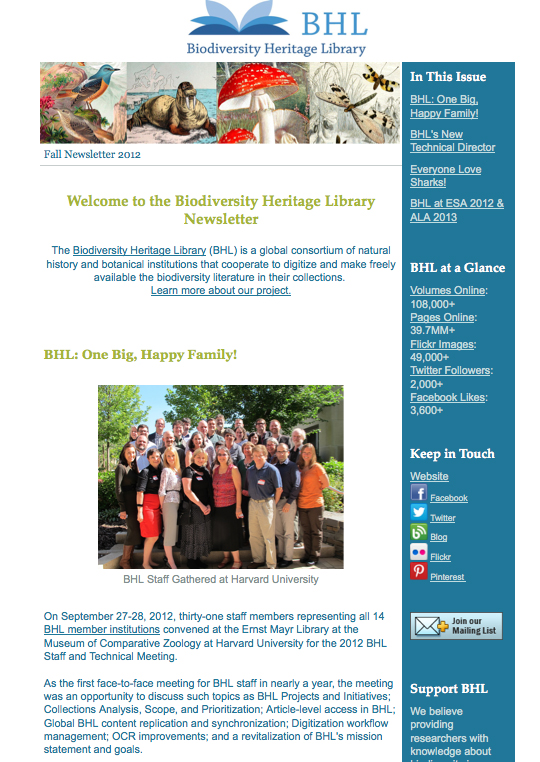
Fall 2012 BHL Newsletter

Want to keep up with all the latest BHL project updates? Then subscribe to our quarterly newsletter! It’s full of great information about all the fun things BHL is doing. The Fall 2012 Newsletter (excerpt below) highlights the 2012 BHL Staff and Technical Meeting; our new Technical Director, William Ulate, and the formation of the Technical Advisory Group; BHL’s Shark Week campaign; and BHL at ESA 2012 and ALA Midwinter 2013.

Click here to subscribe to the BHL Newsletter.

Newsletters will be archived on our public wiki.

View Full Size Image
November 14, 2012by Grace Costantino
Blog Reel, Featured Books

This Means War! A History of the Bone Wars

View Full Size Image
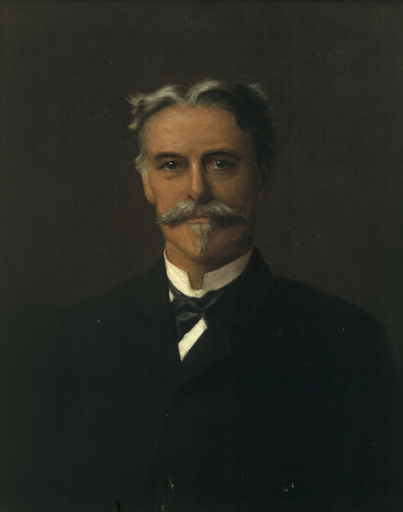
Edward Drinker Cope

Here at the Academy of Natural Sciences of Drexel University in Philadelphia, the story of the so-called Bone Wars is well known.

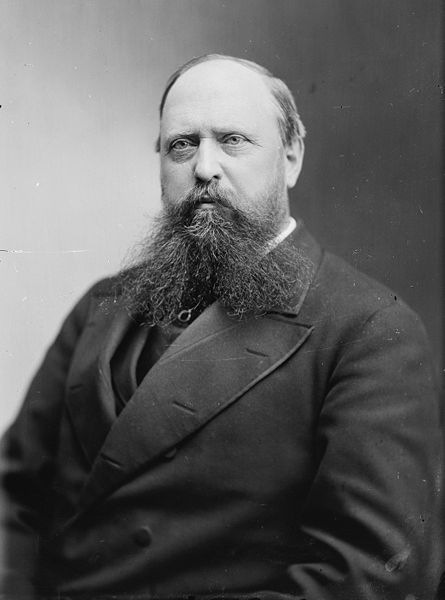
In short, the Academy’s Edward Drinker Cope (1840-1897), also affiliated with U. Penn, and Yale University’s Othniel Charles Marsh (1831-1899), also affiliated with the United States Geological Survey, were both prolific, well respected paleontologists. Both unearthed, described, and published their finds of fossil fauna in the post-Civil War era when the discipline of vertebrate paleontology was quite young in the U.S.

Though the two initially enjoyed each others’ company, a scientific rivalry kicked in whose results were protracted and nasty. Each scientist ridiculed the other’s published works; each endeavored to damage the other’s reputation; each supposedly sent thugs to the other’s fossil-bone quarries to raid, if not destroy, what lay therein.

But why? Briefly, it was all about priority: who had the published privilege to name which species first. In the end, all this rushing and competitiveness resulted, according to Jaffe (2000: 100) in, for example, at least 16 taxonomic names for the same extinct mammal Uintathere. Quoting the current analysis of Walter Wheeler, Jaffes (ibid) reported, “Neither [Cope nor Marsh] paid any attention to the priority of the other’s scientific names, and they both virtually ignored the priority of Leidy’s. The result was nomenclatural chaos.”

View Full Size Image
Othniel Charles Marsh

Fortunately much has been published about the intellectual combats between Cope and Marsh, yet the public never seems to tire of the Bone Wars. Science writer Mark Jaffe (2000) in his comprehensive The Gilded Dinosaur described Marsh and Cope as writing rebuttals to rebuttals within the pages of The American Naturalist. For several seasons the pages of that journal, whose gentle appellation is An Illustrated Magazine of Natural History, were replete with both paleontologists’ accusations of blunders, errors, and recklessness. Buckets of ink were spilled on their defenses, disputes, rejections, ridicules, taunts, and vengeances.

Finally the editors of this had had enough (June 1873), informing subscribers:

WE regret that Professors Marsh and Cope have considered it necessary to carry their controversy to the extent that they have. Wishing to maintain the perfect independence of the NATURALIST in all matters involving scientific criticism, we have allowed both parties to have their full say, but feeling that now the controversy between the authors in question has come to be a personal one and that the NATURALIST is not called upon to devote further space to its consideration, the continuance of the subject will be allowed only in the form of an appendix at the expense of the author.

That expensive appendix followed (June 1873) as Marsh’s Reply to Professor Cope’s Explanation, whose opening lines indicate the flavor of his nine-page thesis:

THE May NATURALIST (p. 290) contains Professor Cope’s long promised “explanation” of the many errors and false dates in his recent publications, and a most remarkable document this explanation is. As a sleight-of-hand performance with names and dates, it shows practice, and is amusing; but to those familiar with the subject, and to moralists, it suggests sad reflections. [et cetera, et cetera, et cetera…]

Cope chimed in again (July 1873) with On Professor Marsh’s Criticisms:

THE recklessness of assertion, the erroneousness of statement, and the incapacity of comprehending our relative positions, on the part of Professor Marsh, render further discussion of the trivial matters -upon which we disagree unnecessary; and my time is too fully occupied on more important subjects to permit me to waste it upon personal affairs which are already sufficiently before the public. Professor M. has recorded his views “cgre perenne,” and may continue to do so without personal notice by E. D. COPE.

Nearly 20 years after these words were published, the bitter battle for buried treasure between two 19th century vertebrate paleontologists continued to have all the intrigues of tabloid magazines today, only based on fossil finds and published claims instead of Hollywood machinations.

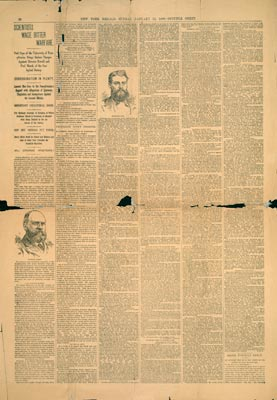
After all, when’s the last time you read a newspaper article began with SCIENTISTS WAGE BITTER WARFARE followed by eight subtitles? That’s what readers of the New York Herald encountered when they opened its pages on Sunday, January 21, 1890:

View Full Size Image
Page from New York Herald

SCIENTISTS WAGE BITTER WARFARE.
—
Prof. Cope of the University of Pennsylvania, Brings Serious Charges
Against Director Powell and Prof. Marsh, of the Geological Survey.
—
CORROBORATION IN PLENTY.
—
Learned Men Come to the Pennsylvanian’s Support with Allegations of Ignorance, Plagiarism and Incompetence Against the Accused Officials.
—
IMPORTANT COLLATERAL ISSUE.
—
The National Academy of Sciences, of Which Professor Marsh is President, is Charged with being Packed in the Interests of the Survey.
—
RED HOT DENIALS PUT FORTH.
—
Heavy Blows Dealt in Attack and Defence (sic) and Lots of Hard Nuts Provided for Scientific Digestion
—
WILL CONGRESS INVESTIGATE?

View Full Size Image
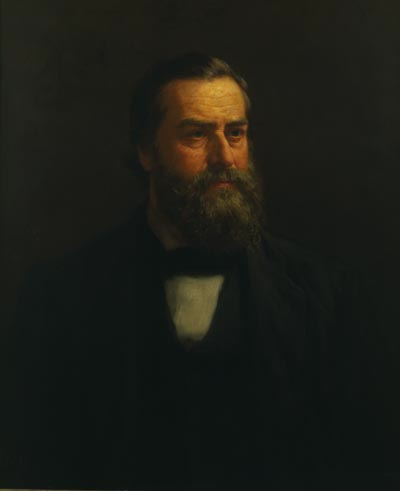
Joseph Leidy

Things got so bad that the pre-eminent natural historian of the day, the Academy of Natural Sciences’ Joseph Leidy (1823-1891), the Father of American Vertebrate Paleontology himself, decided to step out of the discipline he helped to found. This was saying a lot: among Leidy’s famous firsts he described Deinondon horridus, the first dinosaur discovered in the new world — a handful of teeth found by the Survey near the source of the Missouri River in 1856 — and Hadrosaurus folkii, the first articulated dinosaur ever — a nearly complete specimen unearthed in Haddonfield, NJ, in 1858. The remains of both of these animals are carefully curated under lock and key in the Academy’s Vertebrate Paleontology Department to this day.

Despite the intervening 140 years since the Bone Wars raged, the topic has been the Number One subject of Academy Archives researchers in recent years. That research resulted recently in an engaging documentary film in the new series O’Hanlon’s Heroes (see http://programma.vpro.nl/ohanlonshelden/afleveringen/de-bottenoorlog.html), just one example.

In 2012, the Bone Wars has been eclipsed only by Samuel G. Morton (1799-1851) as the most requested archival subject for researchers at the Academy Archives. Morton, certainly deserving of his own blog post, is renowned for having amassed the largest collection of human crania in the 19th century (see Morton, 1839). Like others in this story, Morton was a giant at the Academy of Natural Sciences, serving as its President from 1849 until his death. His skull collection now resides in good hands at the U. Penn Museum of Archeology and Anthropology.

View Full Size Image
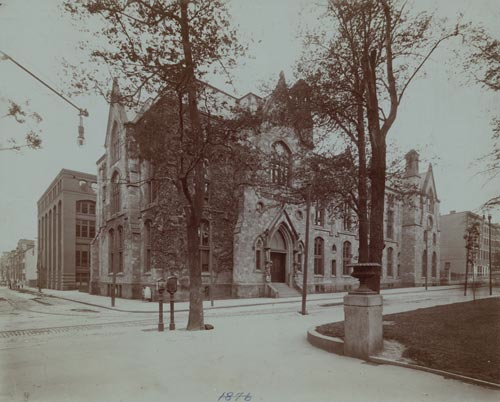
1870s exterior of the Academy of Natural Sciences, Philadelphia
View Full Size Image
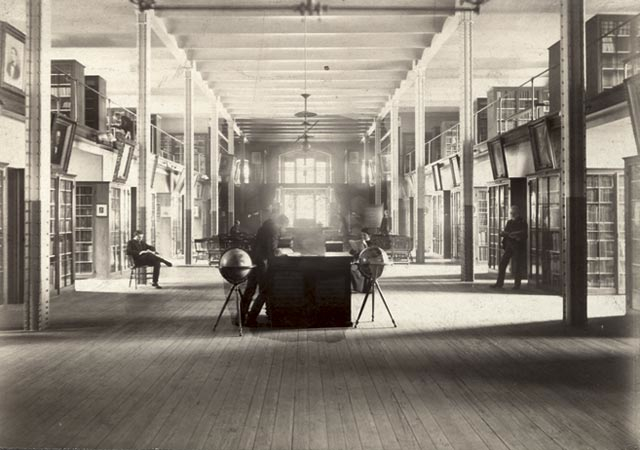
1901 interior of the Academy of Natural Sciences, Philadelphia

We here in the Academy Library & Archives are fortunate to be able to walk up to the stacks, survey entire runs of the American Naturalist, Transactions of the American Philosophical Society, Proceedings of the Academy of Natural Sciences, where the Bone Wars played out in print, among 250,000 other titles on site.

Thanks to the efforts of the Biodiversity Heritage Library, you can access — free — any of 57,000+ titles from the comfort of your own space. See what discoveries you might ignite as you browse the virtual pages at www.biodiversitylibrary.org.

We hope you will enjoy the selection of BHL-digitized works presented in the Bone Wars Collection. You can also download select books by Marsh and Cope for free from within the iTunes environment through our new Bone Wars iTunes U collection!

References and Further Reading

  • American Naturalist, An Illustrated Magazine of Natural History. 1873: Vol 7. Salem, MA: Peabody Academy of Sciences.
  • Cope, E. D., 1870. Synopsis of the Extinct Batrachia, Reptilia and Aves of North America. Transactions of the American Philosophical Society, New Series, Vol. 14, No. 1, pp. 1-252+i-viii
  • Jaffe, M. 2000. The Gilded Dinosaur: The Fossil War Between E. D. Cope and O. C. Marsh and the Rise of American Science. New York: Crown Publishers, 424 pp.
  • Leidy, J., 1860. Extinct Vertebrate from the Judith River and Great Lignite Formations of Nebraska. Transactions of the American Philosophical Society, New Series, Vol. 11, pp. 139-154.
  • Morton, S. G., 1839. Crania Americana ; or, a comparative view of the skulls of various aboriginal nations of North and South America. J. Dobson, [and] Simpkin, Marshall & co: Philadelphia, London.
November 13, 2012by ulib-libraryjobs
Blog Reel

Digitizing Catesby’s Magnum Opus

The Catesby Tercentennial Celebration
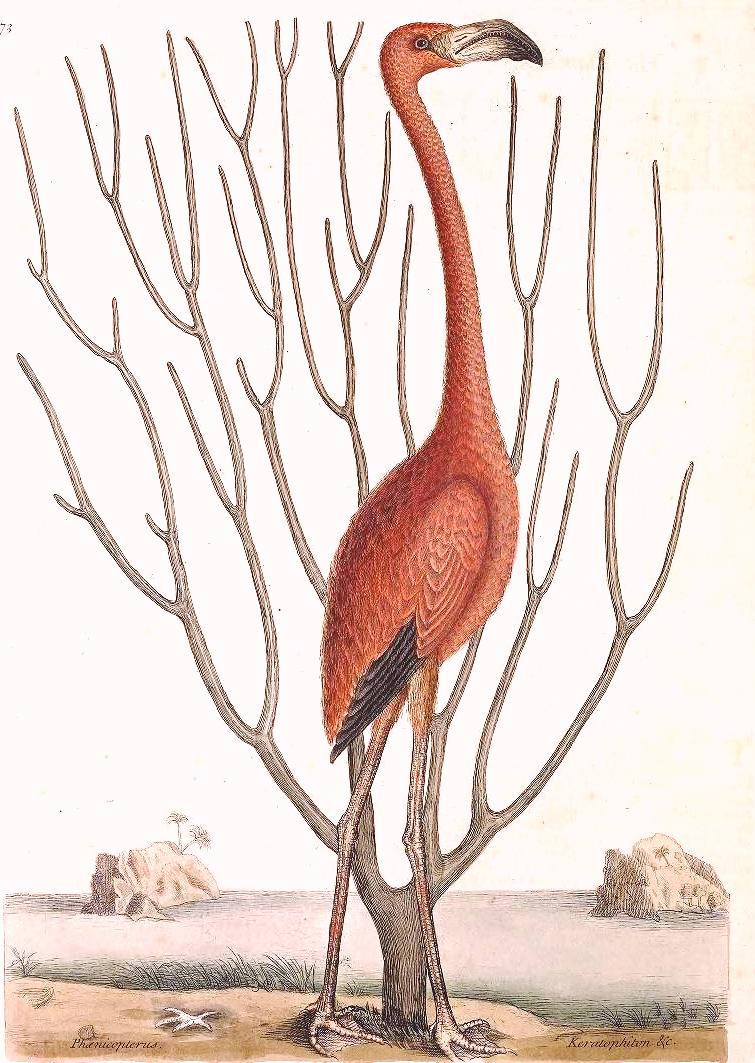

The blogosphere is abuzz with tributes and commendations for famed artist Mark Catesby. Why?

We are in the midst of celebrating the three hundred year anniversary of Mr. Catesby’s journey to America. Like so many well-known naturalists, Catesby was an intrepid young man with an insatiable curiosity for Nature’s Kingdom. He was particularly entranced with new, unknown, and exotic species and it was precisely for this reason that he was so determined to make his way across the Atlantic and be the very first man to observe, catalog, and illustrate the teeming plant and animal life from the New World. Though he lacked a formal scientific background, the monetary means, the artistic skill and the knowledge of engraving necessary to produce a natural history pictorial book covering the species of North America, he was not deterred from his dream to complete just such a tome. So one might easily guess what this week’s book of the week is. Our selection this week represents Mark Catesby’s life work:
The Natural History of the Carolina, Florida and Bahama Islands.

In 1747, Catesby happily finished his book. It took two trips to America and almost 20 years of effort to be completed but, Catesby died a happy and accomplished man just two years later, in 1749.

Appreciating Catesby
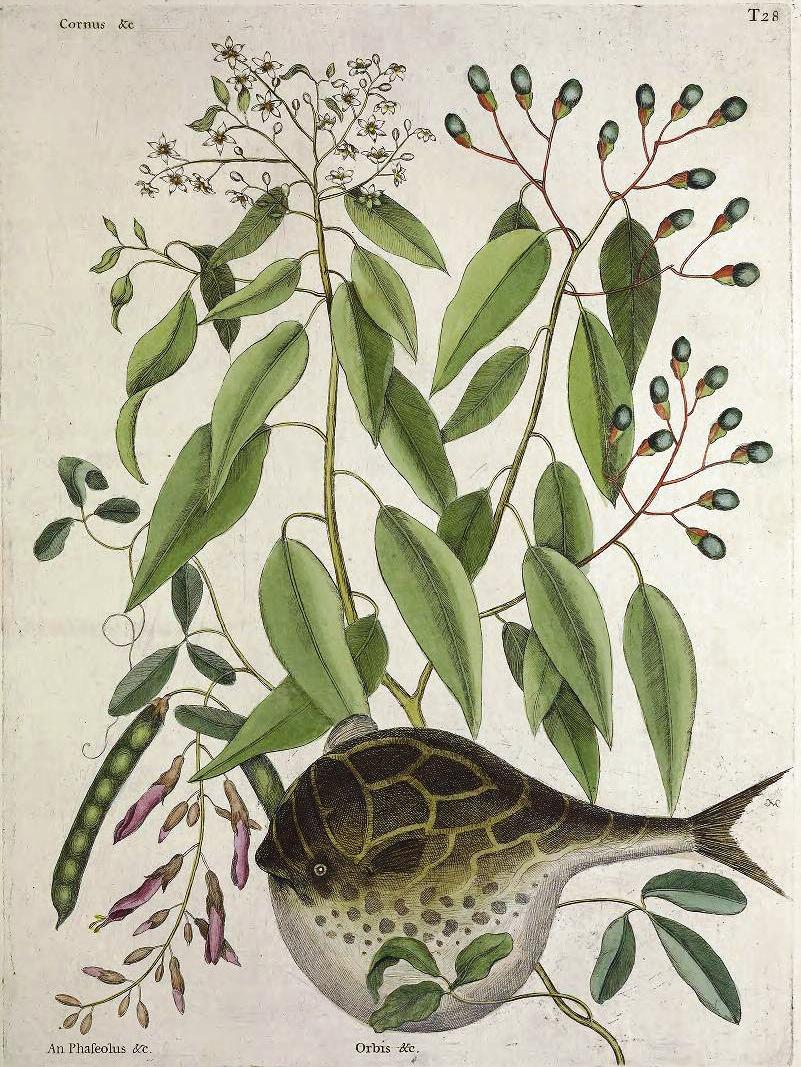
Like a fish out of water?

Over the course of those twenty years, with much patience and persistence, Catesby gathered the money, the skills and the scientific knowledge necessary to achieve his goal. He made use of the libraries of wealthy scientifically minded men from London’s Royal Society, studied the work of some of the best natural history artists at the time (notably

Georg Ehret, George Edwards and Maria Sibylla Merian), learned to engrave plates himself to curtail the costs of producing his publication and gathered funding from generous patrons who were interested in having specimens sent back to them from America. He was a determined do-it-yourself (DIY) kind of man. It would take Catesby the better half of his life to accomplish what he had initially set out to do but, he had a dream that he was insistent on making a reality. The fruition of his efforts was truly monumental at the time. When his work was presented to the Royal Society in London, Secretary Cromwell Mortimer remarked that it is “the most magnificent work I know since the Art of printing has been discovered.”

Not a bad review for a quiet man who was in the habit of disparaging his own talents:

“I was not bred a painter and I hope some faults in perspective and other niceties may [therefore] be more readily excused.” ~Mark Catesby.

Mr. Catesby, you are most definitely excused. The feigned modesty is not necessary. While some have said that Catesby’s flat style is less realistic, that his whimsical juxtaposition of plants and animals are environmentally inaccurate and that his illustrations are sometimes downright bizarre, we think it’s for these very reasons that we find Catesby’s work so intriguing, refreshing, and moving.

Coinciding serendipitously with Catesby’s Tercentennial celebrations has been the final completion, after months of anticipation, of the digitization of the Smithsonian’s very special first edition copy of Catesby’s The Natural History of the Carolina, Florida and Bahama Islands. This particular copy is considered a “perfect copy” and belonged to none other than Secretary Mortimer himself.

Let’s repeat that. Yes. It’s free. It’s online. It’s available. Where? On the BHL of course.

Catesby went beyond documenting and illustrating North America’s species as he sought to ignite our imagination with his peculiar and unique perception of the natural world. Today, we are re-introducing Mark Catesby’s magnum opus in digital form, so that it can be enjoyed by everyone as we think Catesby would have wanted.

8 things to look for when examining Cromwell Mortimer’s copy

Want to know what you should be looking for in this week’s book of the week? Leslie Overstreet, Curator of Natural History Rare books and Head of the Smithsonian’s Joseph F. Cullman Library, gives us expert tips on what readers should notice when examining this prized book held in the rare book vault at the National Museum of Natural History.

Cromwell’s Arms

1) Cromwell’s Coat of Arms

How do we know that this particular copy was originally owned by Secretary Cromwell Mortimer of the Royal Society? Expert on British Armorial Bindings, Philip Oldfield of the University of Toronto has verified that the covers have been stamped in gold with the
arms of Secretary Mortimer. Mortimer is listed in the book as an original subscriber of Catesby’s work.


Click to enlarge the Proposal

2) Catesby’s Proposal

It was in Catesby’s Proposal to the Royal Society of London, that he first announced his plans for his work and outlined the parts to be published and subscription costs. Subscriptions would be issued quarterly, containing twenty plates a piece. Subscribers had the option to purchase black and white plates at one guinea per part or color plates at two guineas per part.


3) The overall arrangement of the work

The book includes 220 plates, illustrating 109 birds, 33 amphibians and reptiles, 46 fishes, 31 insects, nine quadrupeds, and 171 plants.
The high cost of producing such a work in the 1700’s meant that Catesby would publish it in installments. Therefore, the work was originally issued in 11 parts, each including 20 plates. Volume One was issued in parts one through five, between 1729-1732; Volume Two was issued in parts six through ten, between 1734-1743; and lastly the Appendix and the final part 11 were issued in 1747.

4) The evolution of the work

Under the tutelage of talented artist Georg Ehret, Catesby learned a more three dimensional and rotund style that gave a life-like feel to his drawings. Take a close look. Do you see how Catesby’s artistic abilities evolved? Which picture do you think came later?

Flat or Rotund?

You be the judge

5) Catesby’s Binders Notes

The copy held at the Smithsonian has a few added tidbits that no other copy in the world has. It includes a note from Catesby that asks his subscribers to be patient and to hold off on the binding of the entire work until all of the sets have been finished, so that it may be arranged as originally intended. The owner of this copy was patient and he followed Catesby’s advice which is why it is perfectly bound. Of the 180-200 remaining copies in the world, there are less than half a dozen that are as complete and perfectly bound as the Mortimer copy.
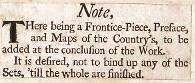
The note states,

“There being a Frontice-Piece, Preface, Maps of the Country’s to be added a the conclusion of the Work. It is desired, not to bind up any of the Sets, ’till the whole are finished.”

Catesby never issued a frontispiece but, the rest of the added material does appear in the book.

6) Extinct Species

In Catesby’s work are some species that none of us will ever have the opportunity to observe in life—the now extinct Carolina Parakeet, Passenger Pigeon, and Ivory-billed Woodpecker:

The Passenger Pigeon
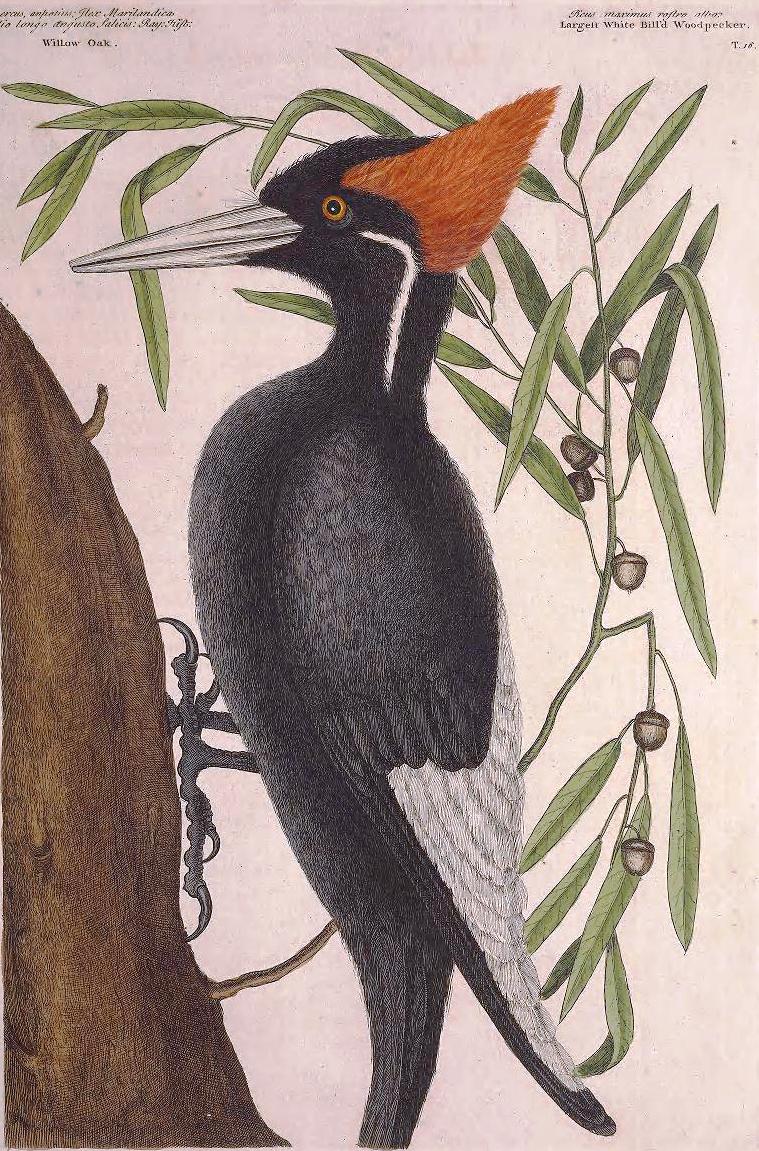
The Ivory-billed Woodpecker

The Carolina Parakeet
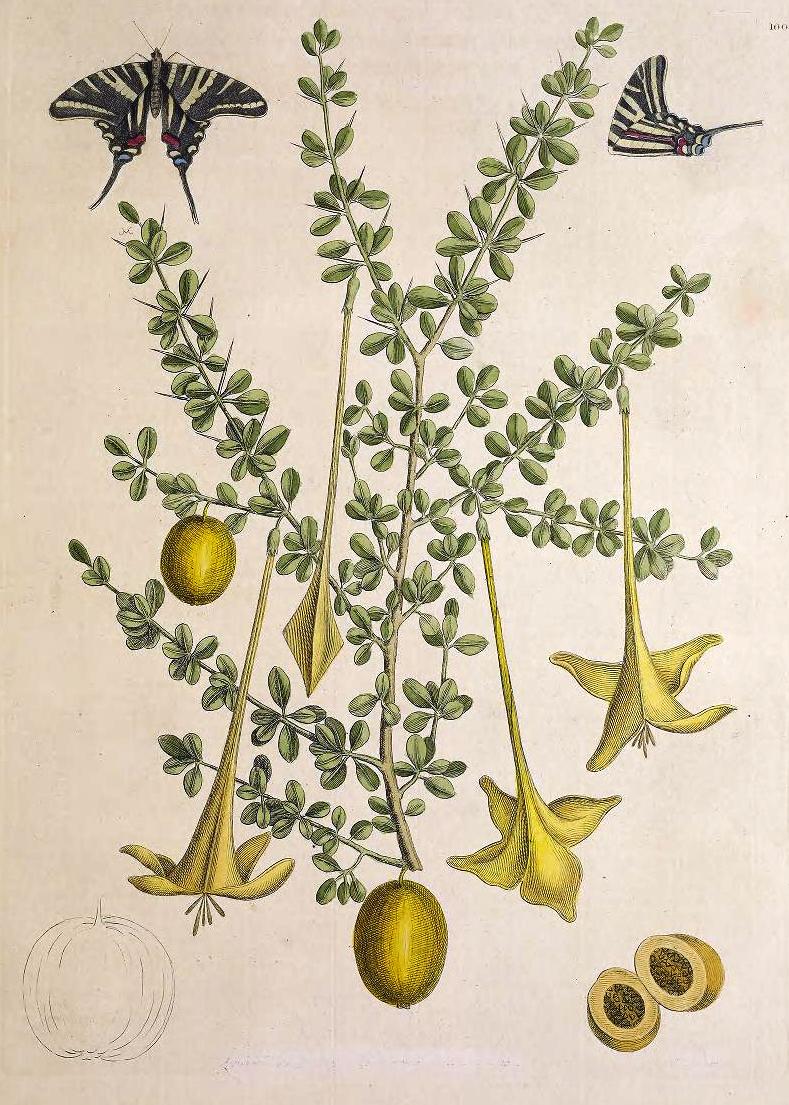
7) Linnaeus’ homage to Catesby

Linnaeus, father of taxonomy, was also a fan of Catesby and studied his work intently. In 1753, he named the lily-thorn Catesbaea in his “Species plantarum” (volume 1, pp 108-109). This is based on plate 100 in volume two of this week’s book of the week.
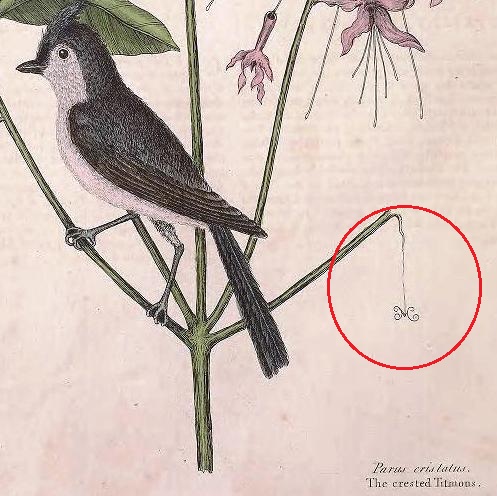
 

8) Catesby’s initials

If you look closely you can find Catesby’s initials in his illustrations. Sometimes he added a bit of whimsy by including them as part of the scene. To the right you can see that he has signed his work by dangling his personal mark off of a botanical as a spider might have left remnants of its web.

Where are Catesby’s original illustrations now?

In 1768, the drawings were bought by King George III for 120 pounds and have remained in Royal Collection ever since. They have been beautifully preserved and the colors are still remarkably bright. Catesby’s work will live on indefinitely; after the first iteration of his Natural History, 2nd and 3rd editions were published, followed by translations into other languages. Posthumously, in 1767, another work by Catesby was published titledHortus Europae Americanus, or A Collection of 85 Curious Trees and Shurbs. If you are interested in learning more about that work you can read the blog post here. In modern times, a film titled The Curious Mr. Catesby featuring Ms. Leslie Overstreet was made and documents the life and times of Catesby. Additionally, several publishers have revived his work by reprinting some of his engravings. If you would like to own Catesby facsimiles to enjoy in your own home check-out Catesby’s Birds of Colonial America and Henrietta McBurney Ryan’s Mark Catesby’s Natural History of America.

Nonetheless, there has never been a modern reprinting of the original work in its entirety. Luckily, you can enjoy them today on the BHL along with the Flickr sets of volume 1 and volume 2 that we have put together from the various editions of Catesby’s magnum opus.

—Jacqueline Ford, Biodiversity Heritage Librarian

We hope you enjoyed this post. Interested in guest-blogging for BHL? We’d love that! Natural history, biodiversity and conservation topics are especially welcomed. Email us your ideas at [email protected].

November 8, 2012by [email protected]
BHL News, Blog Reel, Tech Updates

Introducing the BHL Technical Advisory Group

Portrait version of the Biodiversity Heritage Library logo.
William Ulate, BHL Technical Director and I are pleased to announce the creation of the BHL Technical Advisory Group (BHL TAG). The BHL TAG will work with William and the Technical Development team at the Missouri Botanical Garden (Mike Lichtenberg and Trish Rose-Sandler) in an advisory capacity.
Members of the BHL TAG are:
  • Joe de Veer, Museum of Comparative Zoology, Erst Mayr Library, Harvard University
  • Chris Freeland, Washington University
  • Jenna Nolt, United States Geological Survey
  • John Mignault, New York Botanical Garden
  • Joel Richard, Smithsonian Libraries
  • Keri Thompson, Smithsonian Libraries (official lurker)
  • Frances Webb, Cornell University
View Full Size Image
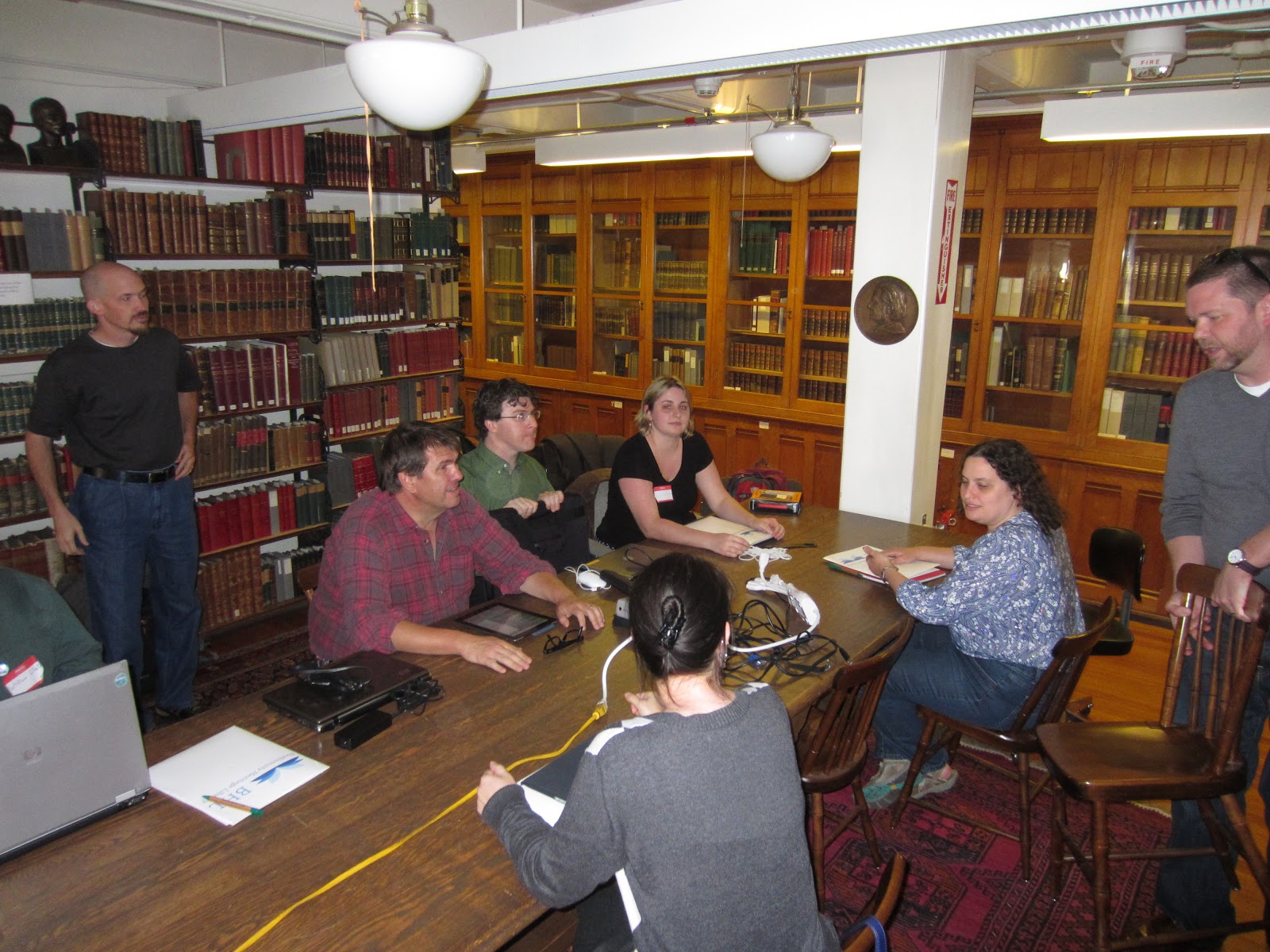
(From left, Mike Lichtenberg, John Mignault, Joel Richard, Jenna Nolt, Frances Webb, Chris Freeland, Keri Thompson, not pictured, Joe de Veer)
November 7, 2012by
BHL News, Blog Reel

Internet Archive scanning: Behind the scenes at the Biodiversity Heritage Library

View Full Size Image
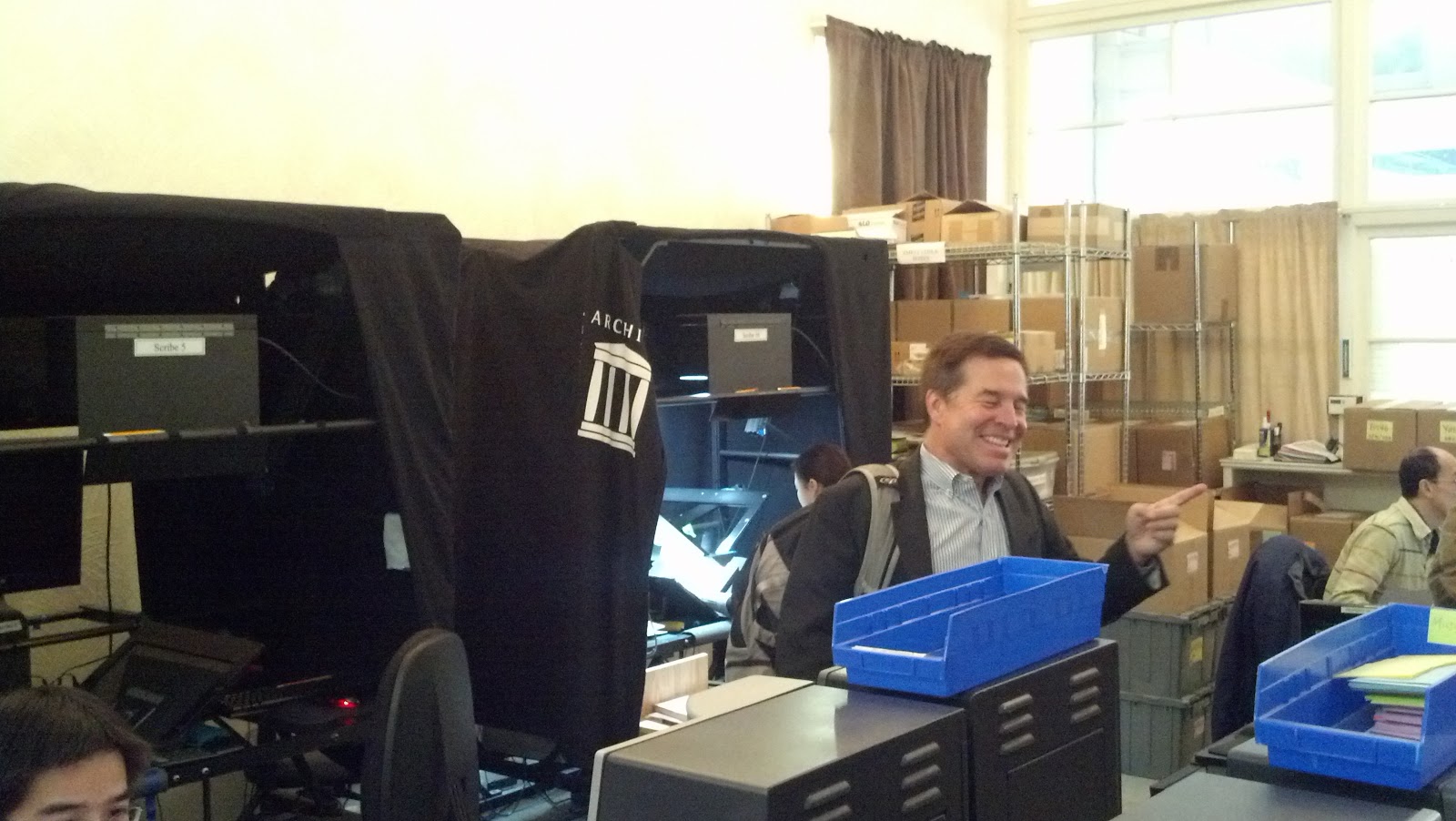
Robert Miller at the Internet Archive
San Francisco

These days with digital cameras built into your phone, most everyone has some first hand experience creating digital images. Creating the nearly 40 million page images on BHL is in many ways similar what you probably do on a daily basis with your phone – it’s really just a matter of scale in terms of the technology used for the digitization and the special care taken with the books.

The most important part of the process, however, are the people behind the cameras that take the pictures. Today we want to focus on a key group of those people. As many know, the Internet Archive is a not-for-profit founded by Internet pioneer Brewster Kahle and based in San Francisco. Since 2007, the Internet Archive has been the primary digitization partner of the BHL. The Internet Archive has facilities around the world. Those that the BHL has used include:

Large scanning facilities (with multiple “Scribe” scanning machines) in:

  • San Francisco (Internet Archive)
  • Washington, DC (Library of Congress/FedScan)
  • Northern New Jersey
  • Boston (Boston Public Library)

Smaller facilities in:

  • Ft. Wayne, Indiana
  • University of Illinois, Urbana-Champaign

And “satellites”, single Scribe machines, in:

  • Natural History Museum, London
  • Smithsonian Libraries, Washington, DC

Managing these (and a number more around the world) is the Internet Archive’s Director for Books, Robert Miller. Assisting Robert with that task are the team of scanning center coordinators that manage the workflow and keep our materials safe while putting them online for our worldwide user community.

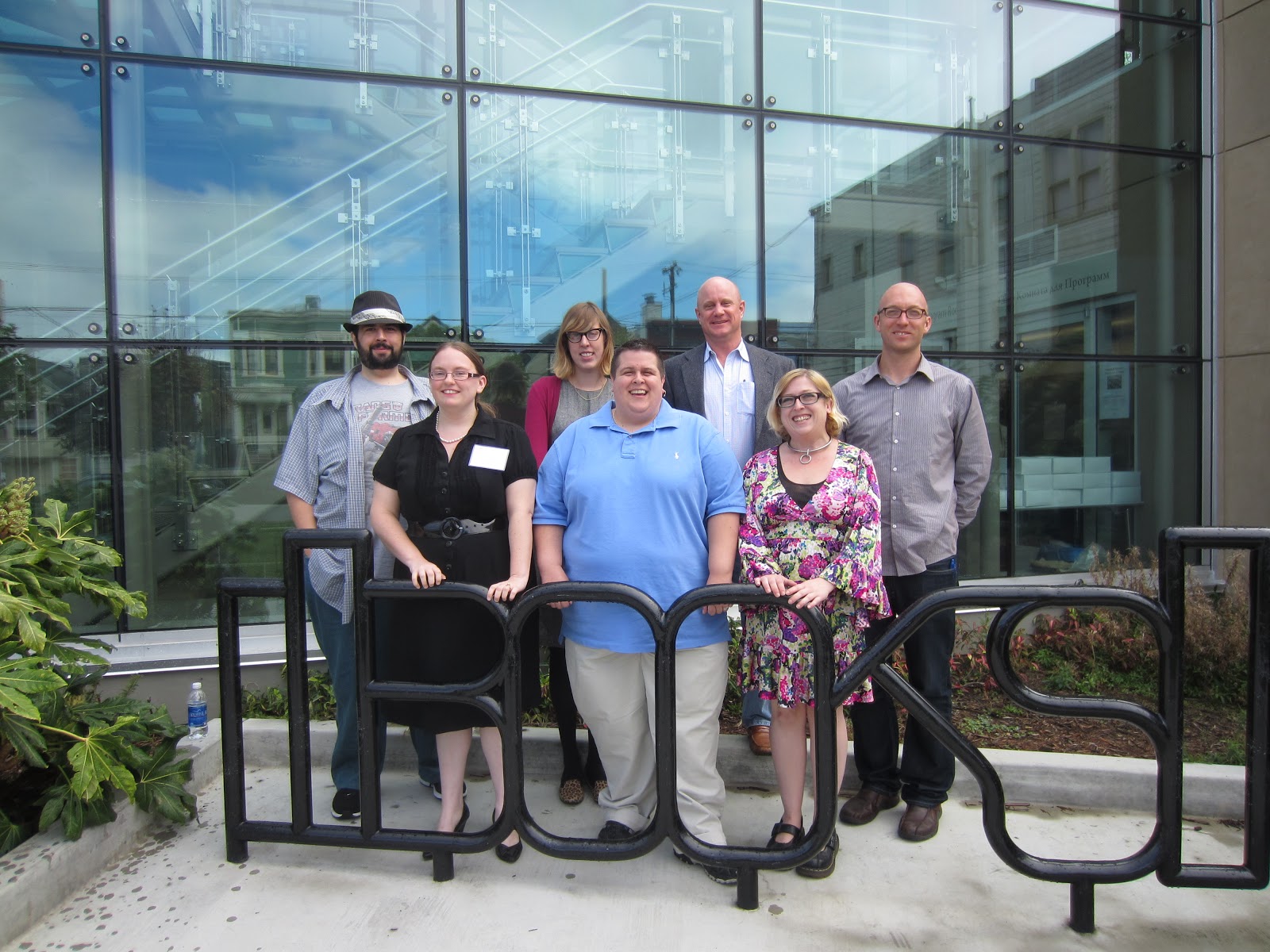
Pictured below are seven scanning center coordinators gathered for the Internet Archive’s Leaders’ Forum (at the Richmond Branch, SFPL), 24-25 November 2012 (from left):

  • Jude Coelho (Open Library)
  • Shelia De Roche (FedScan)
  • Gemma Waterston (satelites)
  • Stacy Argondizzo (Princeton, NJ)
  • Jeff Sharpe (ACPL Fort Wayne, IN)
  • Stacey A. Seronick (Boston Scan Center)
  • Jesse Bell (San Francisco Center)
View Full Size Image
November 5, 2012by joelrichard
BHL News, Blog Reel

BHL, Internet Archive, and the eBook

View Full Size Image
BHL at the IA Leaders Forum, with Brewster Kahle presenting in background.

On October 24-25, BHL Program Director Martin Kalfatovic and BHL Program Manager Grace Costantino attended the Internet Archive Leaders Forum in San Francisco, CA. The meeting, attended by 23 representatives from projects partnering with Internet Archive, provided attendees with a chance to showcase their projects, discuss their collaborations with IA, and nurture ideas associated with eBooks.

Since BHL’s inception, we have partnered with Internet Archive for digitization services. Whether by sending large shipments of books to local IA mass scanning centers, or by operating a single scanning machine provided by IA within their own institution, most BHL members have contributed material to BHL via IA collaborations. While we ingest, store, and serve book metadata via our own hardware, the page images on BHL are served directly from Internet Archive. As such, even books scanned outside of IA are ultimately ingested into the Archive (via a software developed by Joel Richard at the Smithsonian Libraries) so they can be served via the BHL portal.

The Internet Archive was founded in 1996 by Brewster Kahle as a non-profit digital library that provides free, unrestricted access to digitized materials, including not only books but also music and images and, through the Way Back Machine, an archive of the Internet itself. The Archive recently began work in television, archiving all news produced over the past three years on twenty news channels. On the last day of the IA Leaders Forum, the Archive announced that they now house over 10 petabytes of digitized material.


View Full Size Image
Robert Miller with his terracotta surrogate.

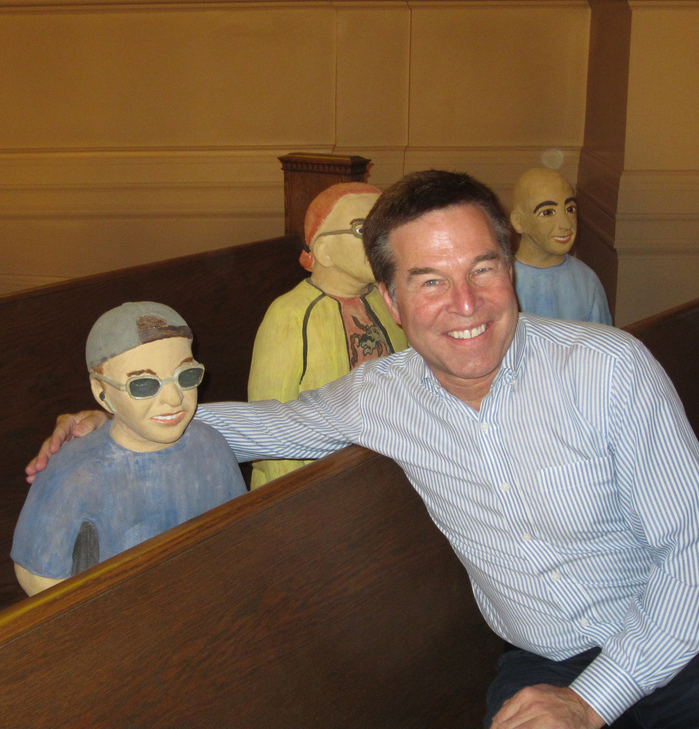
Though the meetings took place at the San Francisco Public Library Richmond Branch just a few blocks from the IA headquarters, Robert Miller, IA’s Global Director of Books and the meeting’s emcee, gave attendees a tour of the main IA building – a repurposed former Christian Science facility. Though transformed to meet the needs of a digital archive, the building still maintains the charms of the 100-year-old church, including marble drinking fountains, stained glass, and a massive auditorium whose pews are replete with statues crafted in the likeness of IA employees that have been with the project at least three years – a practice modeled after the famous “Terracotta Army” of China’s first emperor, Qin Shi Huang.

The theme of this year’s meeting was “eBook Lending Library: the 2nd Million eBooks.” In early 2011, IA launched an In-Library Lending Program through their OpenLibrary project. The project now provides access to over 1,000,000 free eBooks, 250,000 of which are contemporary (post-1923), with another 200,000 contemporary titles available in DAISY format for the print disabled. These eBooks are freely available to all participating libraries and OpenLibrary users and can be downloaded directly to your computer or eReader, such as a Kindle. For more information about the OpenLibrary project, visit this website. IA is working diligently to provide another 1,000,000 eBook titles in OpenLibrary, and has already obtained funding for 500,000 of those titles.

This meeting was an opportunity for IA’s stakeholders (those of us who partner with IA for digitization services) to help shape the future of the OpenLibrary lending program. 11 states, representing 110 million people, are currently members of the program (meaning residents in those states can freely “check out” the contemporary eBooks in OpenLibrary), and IA hopes to extend that access to another 50 million people by Q1 of 2013. IA also has an MOU in place with COSLA (Chief Operating State Librarians Association) to implement the eBook lending program in all 50 states and the District of Columbia. For many libraries, particularly smaller state libraries, OpenLibrary may constitute the only eLending program available to patrons.

IA hopes particularly to build the contemporary collection in OpenLibrary, and discussions at the meeting were focused on brainstorming ways to encourage participation among the organizations represented around the table. Of particular concern for many present were the legal implications of participation, as well as ensuring adequate access to popular titles within the collection, which essentially constitutes ensuring that multiple copies of each eBook are available.

View Full Size Image
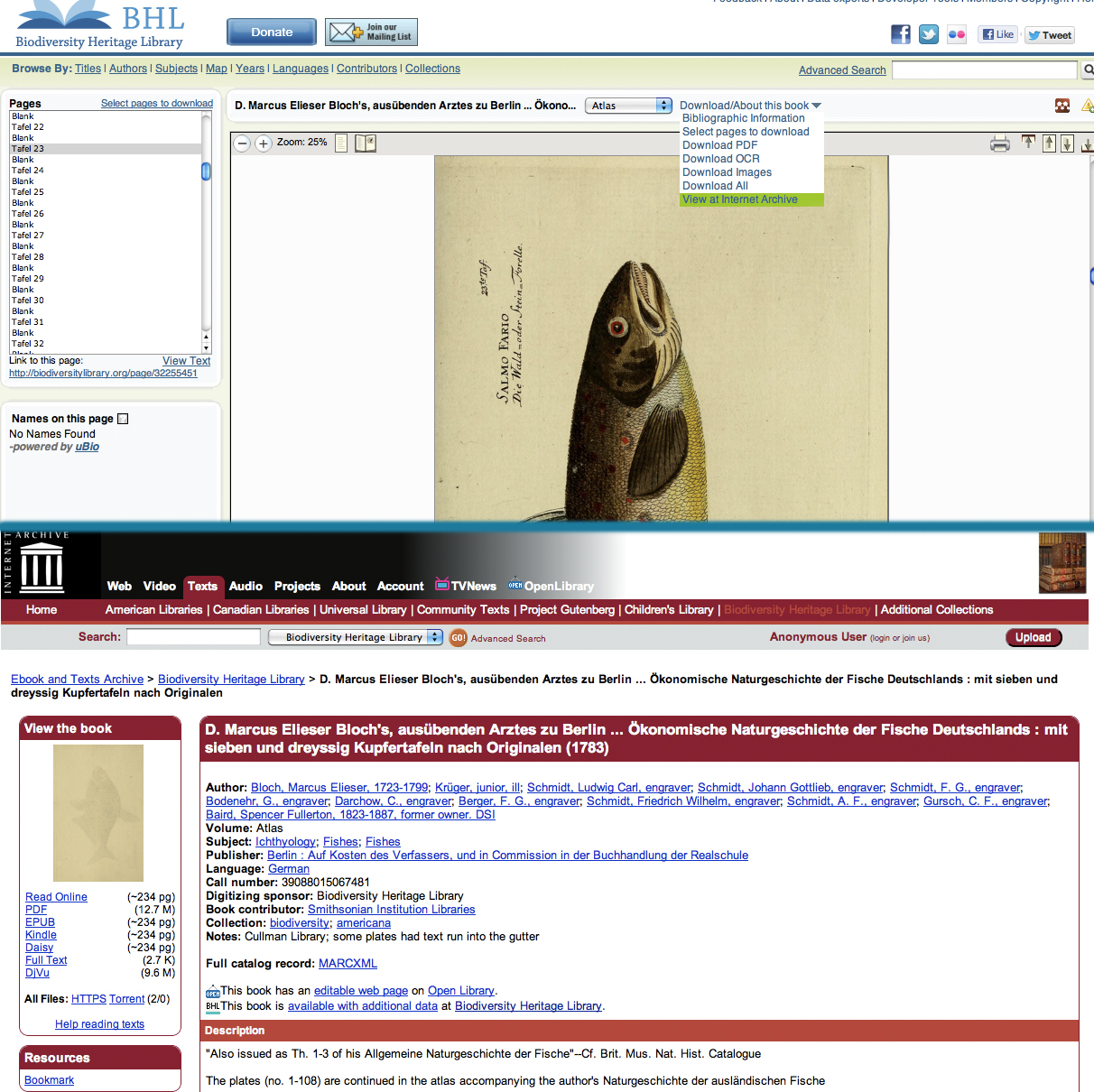
Fig. 1: “View at IA” provides access to other eBook formats

Each participant also had a chance to talk about eBooks in the context of their own project, and elaborate on their requirements for such a program. Grace Costantino provided an overview of the BHL project, highlighting that users can freely download PDFs, custom PDFs, OCR, and high resolution images from BHL. The “View at Internet Archive” option in BHL also allows users to download additional eBook formats generated by IA and based on uncorrected OCR. BHL has also expanded eBook possibilities with their recent collections in iTunes U. However, what makes BHL particularly invaluable for users are the additional services we provide on top of the digitized texts, chiefly our name finding technology, which locates species names throughout the entire corpus. As Costantino articulated, if eBooks are going to work for the science community, they must be openly available, users must be able to “mine” them for the data required, and name finding services and linked data options must be supported.

We are entering an exciting time in this digital era. Open access projects like Internet Archive and BHL are providing unprecedented access to materials formerly confined to physical availability in select libraries. Such projects remove the barriers to research and repatriate knowledge to all parts of the world. As we explore ways to make this content even more usable and accessible, it’s exciting to know that projects like IA are listening to the needs of their stakeholders and striving to build programs that fulfill those requirements. While BHL’s primary eBook efforts will continue to revolve around improving PDF download functionality (with various other eBook options available through the IA link in BHL – see fig. 1 above), and expanding collaborations with iTunes, we’re invested in exploring eBook options with IA and OpenLibrary, and are anxious to see where these initiatives take us!


November 1, 2012by ulib-libraryjobs
Page 2 of 2«12

Help Support BHL

BHL's existence depends on the financial support of its patrons. Help us keep this free resource alive!

search

About BHL

The Biodiversity Heritage Library (BHL) is the world’s largest open access digital library for biodiversity literature and archives. BHL operates as a worldwide consortium of natural history, botanical, research, and national libraries working together to digitize the natural history literature held in their collections and make it freely available for open access as part of a global “biodiversity community.”

Join Our Mailing List

Sign up to receive the latest news, content highlights, and promotions.

Subscribe Now

Subscribe to Blog via Email

Enter your email address to subscribe to this blog and receive notifications of new posts by email.

Join 319 other subscribers

Subscribe to Blog Via RSS

Subscribe to the blog RSS feed to stay up-to-date on all the latest BHL posts.

Access RSS Feed


64+ Million Pages of
Biodiversity Literature Online.

EXPLORE

Tools and Services
to Transform Research.

EXPLORE

300,000+
Illustrations on Flickr.

EXPLORE

ABOUT | HARMFUL CONTENT | PRIVACY | SITE MAP | TERMS OF USE