For this week’s BHL Book of the Week, I’d like to highlight a book that is all about one of my favorite plant species, Humulus lupulus, better known as hops.
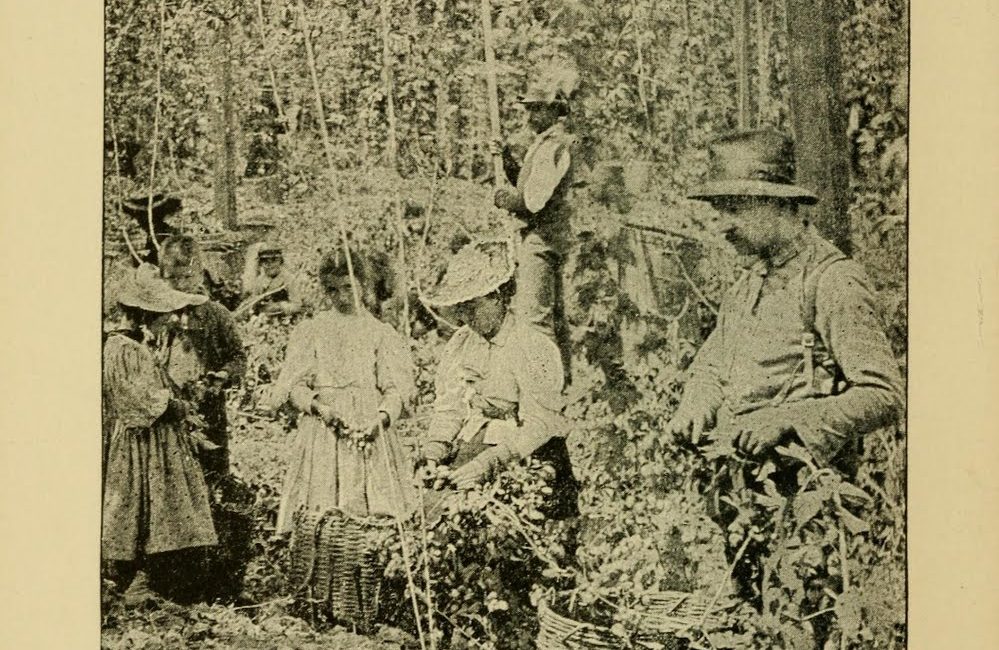
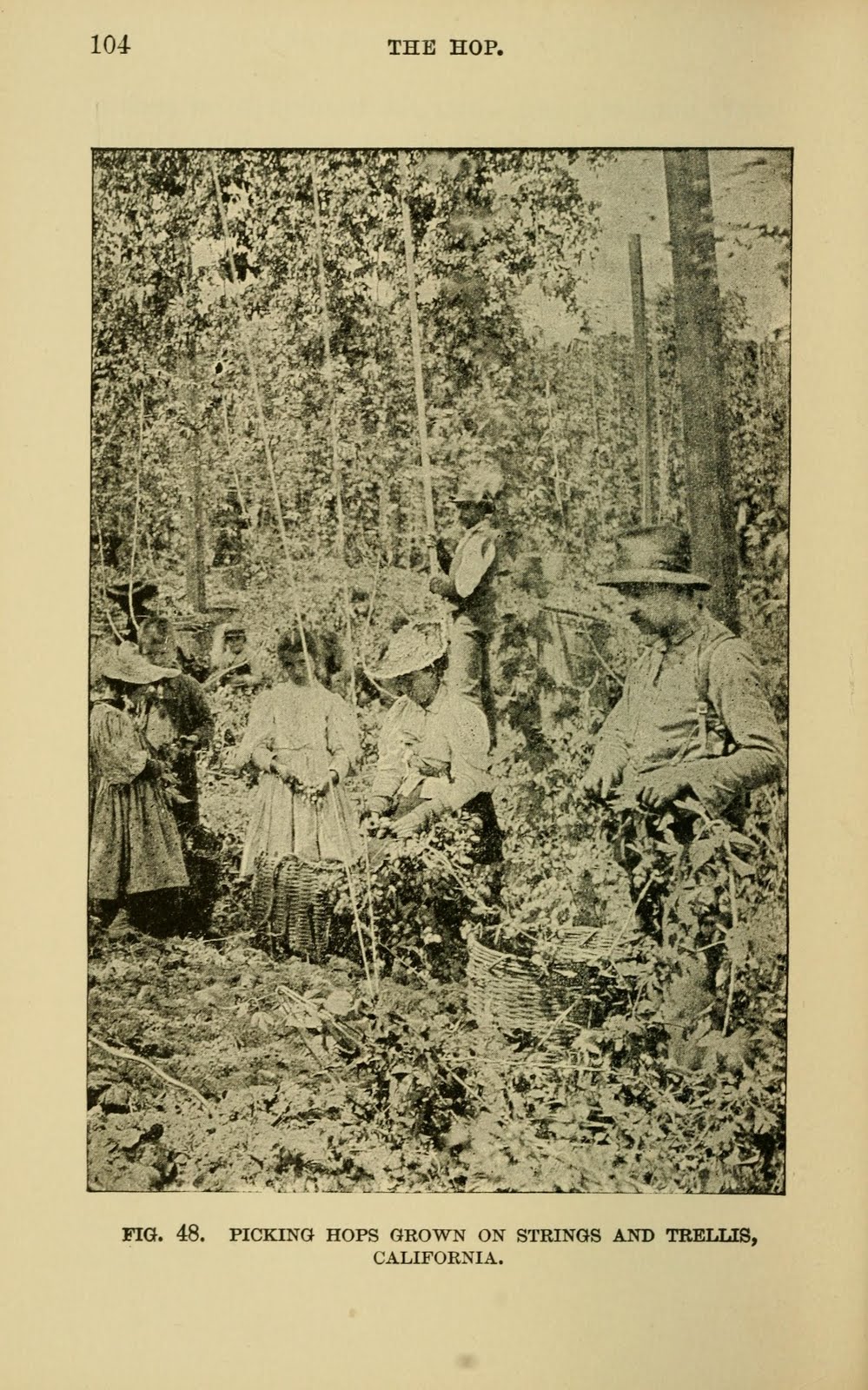
In 1909, Herbert Myrick published: The hop; its culture and cure, marketing and manufacture; a practical handbook on the most approved methods in growing, harvesting, curing and selling hops, and on the use and manufacture of hops. This treatise on hop culture provides a detailed account of the industry as it existed in the early 20th Century. In these pre-Prohibition days, the number of breweries in the United States was comparable to what it is today and the US was a significant contender in the global hops market alongside Great Britain and Germany [1]. Major hop growing states were New York, Washington, California, and Oregon. Just look at these happy hoppers pickin away in California:
And why do I love hops so much? Because I am a beer lover and an American and over the past few decades, the American craft beer revolution has carved out a beer style that is serious about its hops [2]. Even the American staple, Miller Lite, has jumped onto the hoppy band wagon touting itself as “triple hops brewed.” Please. Anyone who drinks that swill doesn’t understand the first thing about Humulus lupulus and the magical qualities of the lupulin glands which give real beer, real flavor.
Lupulin glands contain the resins and oils which impart the distinctive flavor, aroma, and bitter qualities associated with beer. Only female plants produce the familiar cone-like hop flowers (aka catkins or strobiles) used in brewing and the lupulin glands are located at the base of the scales, or bracts, that make up the cones. The better the lupulin, the better the quality of the hop. See Myrick’s drawings of hop cone shapes and magnified lupulin “grains”:
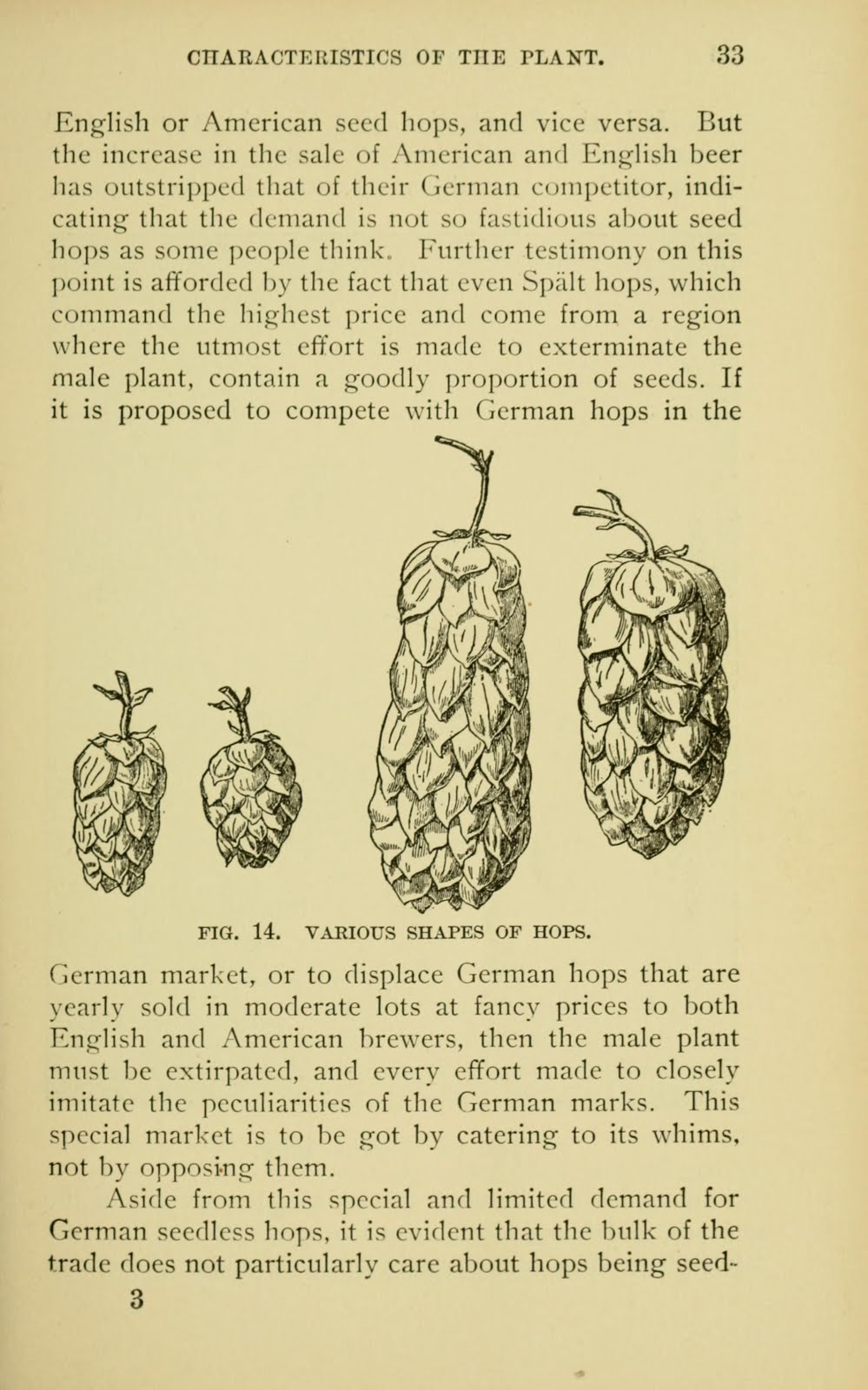 |
| Pg. 33 Fig. 14 |
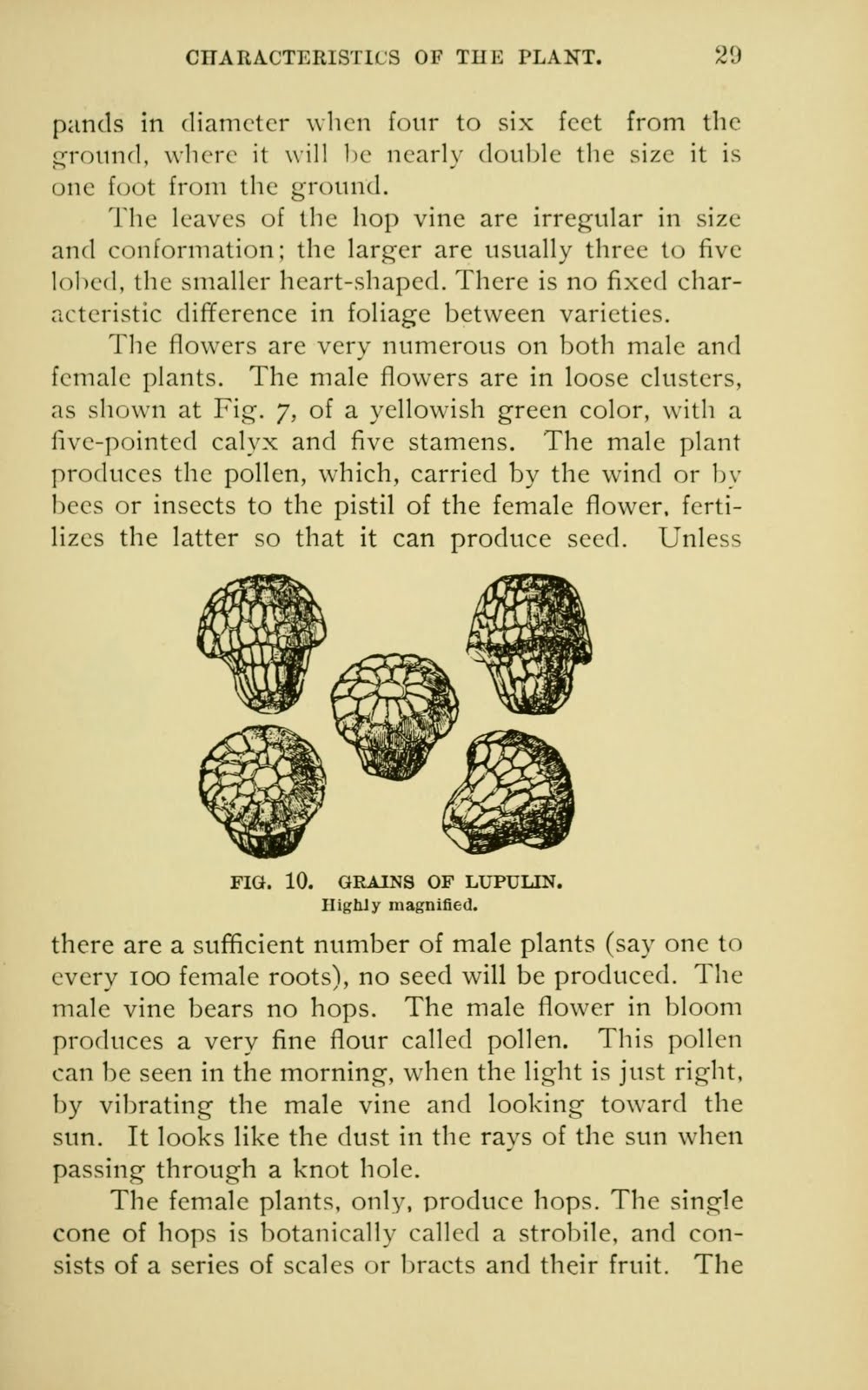 |
| Pg. 29 Fig. 10 |
Carl Linnaeus lists Humulus lupulus in his quintessential 1753 Botany tome, Species Plantarum, vol. 2 pg. 1028. H. lupulus is a member of the Cannabaceae family best known for Cannabis sativa or marijuana plant. Unfortunately, there appears to be much debate over the speciation of the Humulus genus. According to The Plant List, H. lupulus is one of 5 species of hop plant with H. cordifolius, H. neomexicanus, H. scandens, and H. yunnanensis [3]. But the predominant species used to impart the flavor balance and antiseptic qualities civilization has come to know and love in its beer is Humulus lupulus.
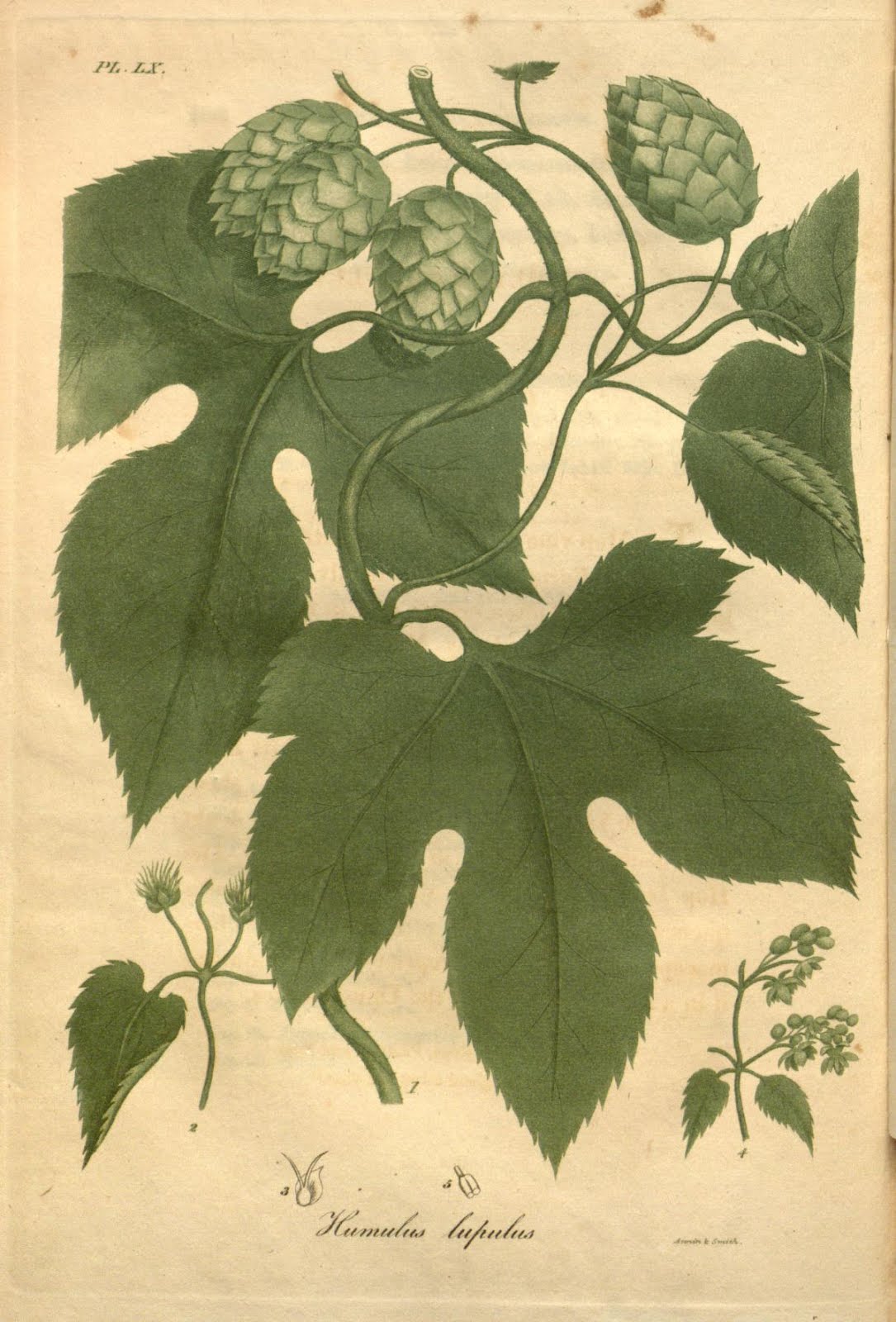 |
| H. lupulus from American Medical Botany vol. 3 (1820) |
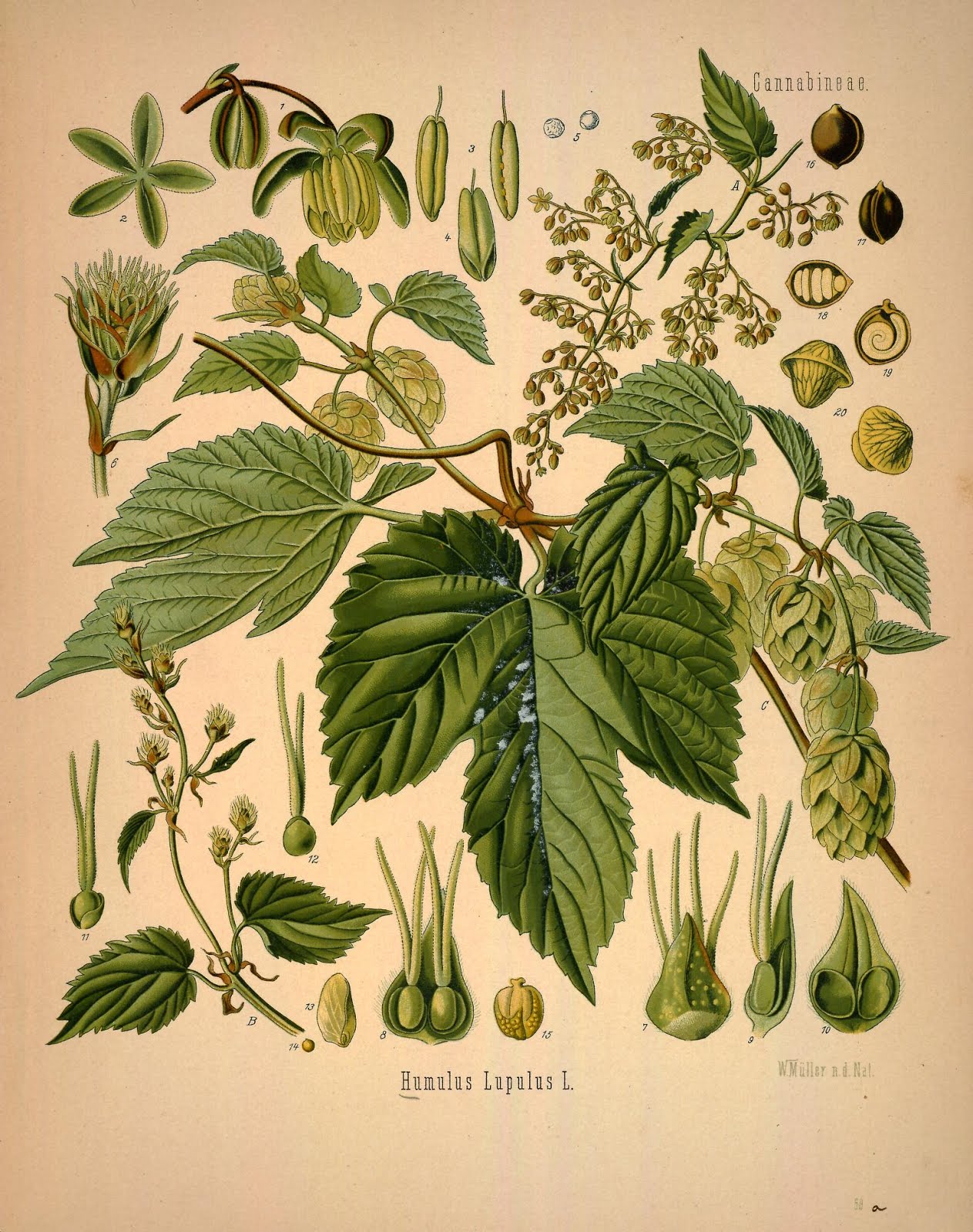 |
| H. lupulus from Köhler’s Medizinal-Pflanzen vol. 1 (1887) |
One species, but countless varieties (read cultivars, not taxonomic varieties) of tasty flowers with varying degrees of alpha acidity used for imparting flavor, aroma, and bitterness. Hops can be as mild as the delicate Saaz hops used in Pilsner Urquell at 3-5% avg. alpha acidity, all the way to the American Apollo hop packed with a walloping 16-20% avg. alpha acidity [4].
Myrick details the hop varieties on the market in the early 20th Century, pgs. 35-45. Today’s hop varieties include the old standards such as English Goldings and the German Hallertau, but also include a growing list of premium American hops clearly cultivated for a stronger bitterness character than their European counterparts. Relatively new to the hop variety show are players from Australia, New Zealand, and Japan [5].
It should be noted that hops are a more recent ingredient in beer’s long history since its first recorded evidence of being brewed back in 3500 BCE [6]. Prior to the wide use of hops, beer was flavored with a variety of herbs in an attempt to balance out the sweetness of the fermented grains. There are conflicting reports about the first use of hops in beer making but I found this rather thorough post, “A short history of hops” by Martyn Cornell with more information.
Yet hops are just one of beer’s 4 staple ingredients along with malted barley, yeast, and water. With so many varieties of hops and various impacts on the taste of a beer contributed by its other ingredients, it is impossible to truly capture the full cornucopia of beer flavor possibilities. Just as sophisticated and nuanced as fine wine, craft beer is a careful and creative expression of chemistry, biodiversity, and culture.
I recommend drinking your beer with the seasons. Enjoy yourself a roasty porter in the winter and a crisp pale ale in the summer. But no matter the weather there is always an opportunity to appreciate H. lupulus in your glass. Some of my favorite signature American hoppy brews, like Oskar Blues’ Dale’s Pale Ale and Laguanitas IPA showcase some of the best and most accessible floral citrus flavor with a refreshing pucker tinge that have come to signify American beer.
Care to help me further my “research”? It’s 5 o’clock in the world somewhere. Tell me about your favorite beers!
References
[1] http://www.craftbeer.com/beerology/history-of-beer/craft-beer-today [2] http://www.craftbeer.com/styles/american-ales [3] http://www.theplantlist.org/tpl/search?q=Humulus [4] http://www.usahops.org/graphics/File/HGA%20BCI%20Reports/Variety%20Manual%207-24-12.pdf [5] http://en.wikipedia.org/wiki/List_of_hop_varieties [6] http://www.craftbeer.com/beerology/history-of-beer/early-times