
Biodiversity Heritage Library - Program news and collection highlights from BHL
  • Home
  • News
  • Featured Books
    • All Featured Books
    • Book of the Month Series
    • BHL at 20
  • User Stories
  • Campaigns
    • Fossil Stories
    • Garden Stories
    • Monsters Are Real
    • Page Frights
    • Her Natural History
    • Earth Optimism 2020
  • Tech Blog
  • Visit BHL
Home
News
Featured Books
    All Featured Books
    Book of the Month Series
    BHL at 20
User Stories
Campaigns
    Fossil Stories
    Garden Stories
    Monsters Are Real
    Page Frights
    Her Natural History
    Earth Optimism 2020
Tech Blog
Visit BHL
  • Home
  • News
  • Featured Books
    • All Featured Books
    • Book of the Month Series
    • BHL at 20
  • User Stories
  • Campaigns
    • Fossil Stories
    • Garden Stories
    • Monsters Are Real
    • Page Frights
    • Her Natural History
    • Earth Optimism 2020
  • Tech Blog
  • Visit BHL
Biodiversity Heritage Library - Program news and collection highlights from BHL
BHL News, Blog Reel

BHL hosts our 1st UMich Alt. Spring Break Intern: Irina Zeylikovich

View Full Size Image
Irina Zeylikovich

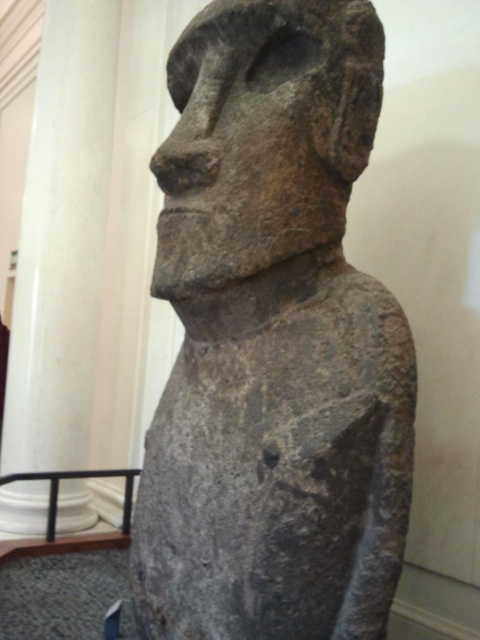
I knew I was going to have a good University of Michigan School of Information Alternative Spring Break when my project mentor, Bianca Crowley, told me to meet at the Easter Island head. But that’s just how the Biodiversity Heritage Library rolls.
View Full Size Image
Not a Dum-Dum!

Part of BHL is currently housed in the Smithsonian’s National Museum in Natural History, so on Monday March 4, I purposefully strode through it’s grand doors to begin my weeklong project on creating social media campaigns that would cast a wider net and draw more people to the amazing content that the Biodiversity Heritage Library has online.

My project involved a dual approach – I would work on both a sustainable workflow that made sense for the BHL staff to actively utilize and continue after my departure, as well as a list of topics that had the potential to pique the interest of lots of people and also had relevant content in BHL. I began with an environmental scan to understand how other peer institutions were engaging audiences on social media, as well as locating storytelling best practices and effective marketing tools for BHL’s ready reference later. Then came the bulk of the project: establishing the workflow and generating campaign ideas.

After looking at several options, my project mentors and I decided on two types of shared documents: a high-level list of campaign ideas that included additional information such as date dependencies (for example, if the campaign was tied to a commemorative month, such as the recent Women’s History Month campaign). Each of the campaigns listed in that document would also link to a much more detailed campaign file that would hold resources – factoids, links to BHL images, peer organizations, hashtags, relevant Facebook pages, etc. – to assist in creating content for the campaign itself. The remainder of my time was spent fleshing out one of the campaigns, but I won’t spoil the surprise – you’ll just have to wait to read it!

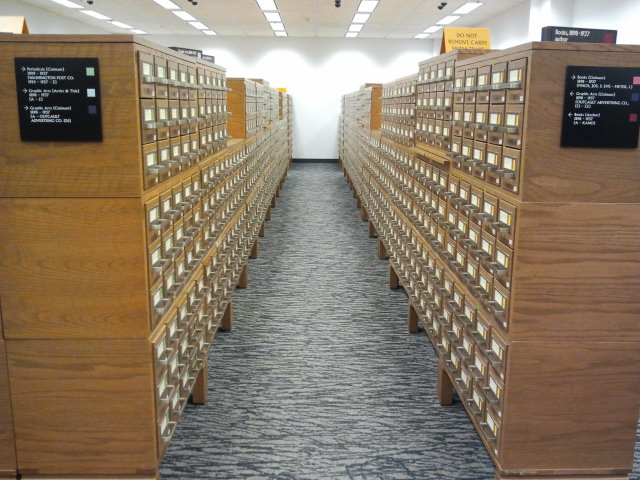
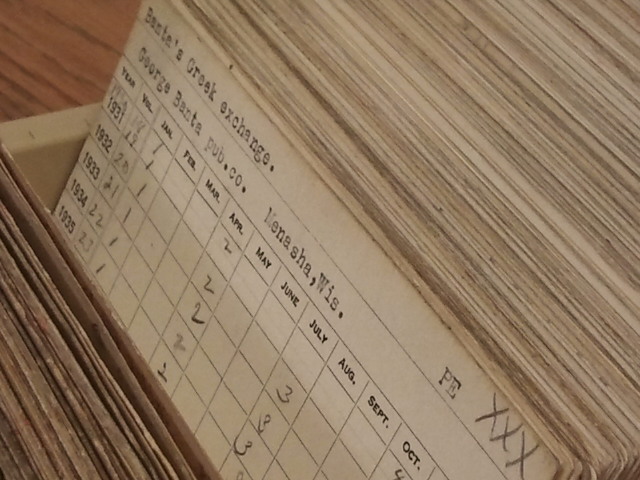
Bianca also treated me to a phenomenal last day fit for every (future) librarian: a visit to the Library of Congress for a lecture by the director of the Bibliotheca Alexandria, Ismail Serageldin – a truly gifted speaker and inspiration to all librarians (and in my opinion, all educators in general). We followed this with a visit to the US Copyright Office to doublecheck the copyright status of a work that was likely going to be digitized and added to the BHL online collection. This was truly a revelation for me since the copyright claims before 1978 have not been digitized yet, so we sought our claimants amidst rooms of card catalogs.

View Full Size Image
Inside the US (C) Office Catalog Room
View Full Size Image
Copyright register card example
View Full Size Image
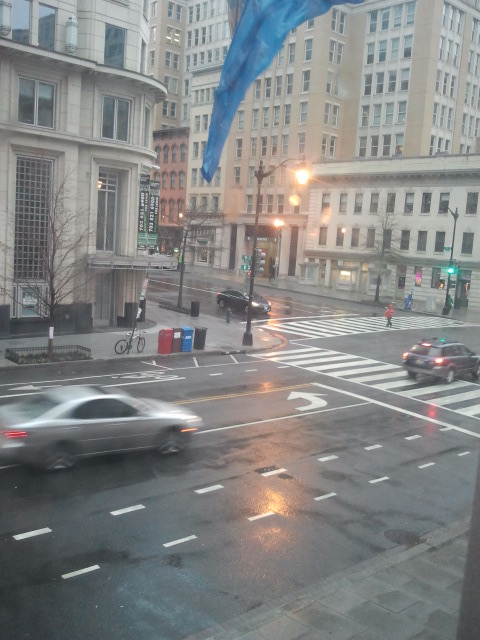
“Snowquester” but where’s the snow?

I learned quite a bit in my brief (even a little briefer than normal thanks to Wednesday’s “Snowquester”) week with BHL. I manage a blog as my role at the Taubman Health Sciences Library, but am far less involved on other social media, so this was a great addition to my professional experience, and I hope that my efforts help a truly wonderful organization with incredibly dedicated staff. I know I’m in the right field when I hear colleagues discussing the amazing power of metadata and when I can witness the discovery of hidden collections. I was also able to see the amount of labor required to make this process a reality. Having so much of the content users normally interact with being born digital, I think we forget that for every page of a hand-printed/illustrated work that goes online, someone had to find the work, check its copyright status, scan it carefully page by page, tag as much with metadata (otherwise how would you have found that there is a gorgeous illustration of a lemur on that page?) as is feasible, create a platform to keep all of these pages online, and lastly get you to actually see it.

The most rewarding aspect of my time at BHL is undoubtedly seeing how people far and wide use these collections in ways the original creators could never have anticipated: in art, historical analysis, biodiversity research, and climate change tracking. If my efforts over Alternative Spring Break can lead even one additional person to BHL’s content where they may not have known about it before, that’ll make for a pretty thrilled (future) librarian.

-Irina Zeylikovich @sfobound

March 26, 2013by [email protected]
BHL News, Blog Reel

BHL Named a 2013 Computerworld Honors Program Laureate!

View Full Size Image
Image from: http://www.cwhonors.org/2013/honorsprogram2013.htm

IDG’s Computerworld Honors Program announced on March 19, 2013 The Biodiversity Heritage Library (BHL) as a 2013 Laureate. The annual award program honors visionary applications of information technology promoting positive social, economic and educational change.

“Technology continues to play a pivotal role in transforming how business and society functions. For the past 25 years the Computerworld Honors Program has had the privilege of celebrating innovative IT achievements,” said John Amato, vice president & publisher, Computerworld. “Computerworld is honored to recognize the outstanding accomplishments of the 2013 class of Laureates and to share their work. These projects demonstrate how IT can advance organizations’ ability to compete, innovate, communicate and prosper.”

“The BHL,” said Martin R. Kalfatovic, BHL Program Director, “has been a leader in the world of digital libraries since its founding in 2006. To have the collaborative and innovative nature of the now global partnership in the pursuit of an open and accessible resource for the literature of life recognized with this award is a tribute to the staff of the many institutions that have participated in the BHL program since its inception.”

The Computerworld Honors Program awards will be presented at the Gala Evening and Awards Ceremony on June 3, 2013 at the Andrew W. Mellon Auditorium in Washington, D.C.

About The Computerworld Honors Program

Founded by International Data Group (IDG) in 1988, The Computerworld Honors Program is governed by the not-for-profit Computerworld Information Technology Awards Foundation. Computerworld Honors is the longest running global program to honor individuals and organizations that use information technology to promote positive social, economic and educational change. Additional information about the program and a Global Archive of past Laureate case studies, as well as oral histories of Leadership Award recipients can be found at the Computerworld Honors website.

About Computerworld

Computerworld is the leading source of technology news and information for IT influencers, providing peer perspective, IT leadership and business results. Computerworld’s award-winning website, bi-weekly publication, focused conference series, custom solutions and custom research forms the hub of the world’s largest (40+ edition) global IT media network and provides opportunities for IT solutions providers to engage this audience. Computerworld leads the industry with an online audience of over 3.5 million unique, monthly visitors (Omniture, August 2012) and was recognized as the Best Website by ASBPE and TABPI in 2012. Computerworld is published by IDG Enterprise, a subsidiary of International Data Group (IDG), the world’s leading media, events and research company. Company information is available at http://www.idgenterprise.com/.

March 22, 2013by ulib-libraryjobs
Blog Reel, Featured Books

The Woman Naturalist: Mary Anning

View Full Size Image
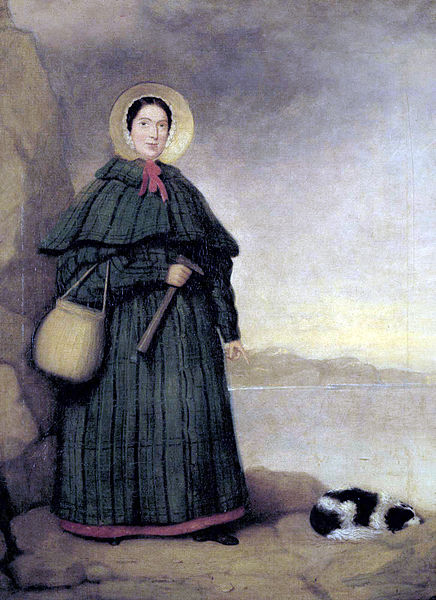
Portrait of Mary Anning with her dog Tray and the Golden Cap outcrop in the background, Natural History Museum, London. This painting was owned by her brother Joseph, and presented to the museum in 1935 by Miss Annette Anning.

On March 9th, the world marked the 166th anniversary of the death of Mary Anning, one of the bravest and most diligent amateur naturalists in history. Despite remarkable discoveries for which she was well compensated, her status as a self-taught, working-class woman meant that Mary Anning’s existence in the published record of science is spotty at best. Her story is nearly unbelievable from the start.

Mary Anning was born on May 21, 1799, in the seaside community of Lyme Regis, in the south of England. From the outset, she had an eventful life; she was named after an older sister who perished in a house fire, and at the age of 14 months, young Mary was the sole survivor of a lightening strike that claimed three members of her community. Her father, Richard, was a cabinetmaker, but also a fossil collector who sold his finds to the visitors of Lyme Regis beaches. When he died in 1810, the Anning family fell into debt. It was in 1811 that Mary’s older brother Joseph found the skull of a “crocodile” in the cliffs near their home, prompting Mary to investigate further. Nearly one year later, she had located the complete skeleton and hired help to free the fossil from the cliff. This specimen is usually considered the first Ichthyosaurus to be found (although reexamination of the historical shows that earlier specimens were discovered earlier), and its description and image were published in the Philosophical Transactions of the Royal Society in 1814. Noticeably absent from this paper is any credit due to Mary Anning or her brother.

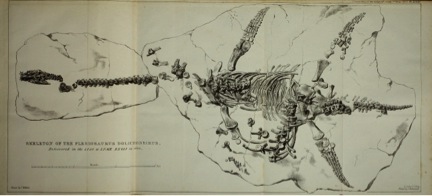
Mary sold the famous Ichthyosaur skeleton for a handsome sum, following in her father’s footsteps and quickly becoming the family breadwinner. In December 1823, Mary’s next major discovery came to light; it was the nearly complete Plesiosaurus described in the Transactions of the Geological Society of London; once again, Mary Anning is not credited by name in the paper.

View Full Size Image
Image of Mary Anning’s Plesiosaur from Transactions of the Geological Society of London. ser. 2 vol. 1.

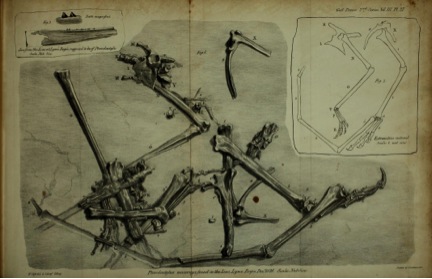
It is around this time that Mary Anning became an object of fascination to the scientific community. Visitors came to Lyme Regis to meet her, including scientists and collectors from around Europe and the United States. The next decade continued to be a productive one, as she found the first Pterosaur ever discovered in Great Britain; the flying reptile captured the public imagination and her fame spread outside of scientific circles, possibly because she was named in the paper. She also unearthed more complete Plesiosaur and Ichthyosaur specimens, correctly identified coprolites as fossil feces, discovered a remarkable fossil fish named Squaloraja, a creature illustrating the link between sharks and rays, and found specimens of the invertebrate Belemnosepia with intact fossil ink sacs, containing viable ink that could be used for drawing. By the late 1820s, Mary’s work was recognized and her new discoveries often published by William Buckland, the great geologist who described the bones of the giant reptile he dubbed Megalosaurus, which we now recognize as the first published description of a dinosaur.

View Full Size Image
Image of Mary Anning’s Pterosaur from Transactions of the Geological Society of London. ser. 2 vol. 3.
View Full Size Image
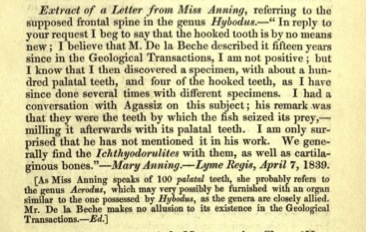
Mary Anning’s letter to the Magazine of Natural History. n.s. vol. 3, 1839.

Mary’s fame continued to grow, and she continued to operate her fossil shop in Lyme Regis, selling significant specimens to scientists, collectors, and museums. In 1838, she was recognized by the British Association for the Advancement of Science with a special yearly stipend of £25. In 1846, the Geological Society of London arranged further funds for her welfare. Sadly, in 1847, Mary Anning died of breast cancer at the age of 47. She was honored with an obituary published in the Quarterly Journal of the Geological Society of London, a particularly remarkable tribute given that the Society was not open to women at this time.

I mentioned that Mary Anning is not well represented in the published literature. In fact, there is only one item known to be authored by her, a letter she wrote to The Magazine of Natural History, published in 1839 and available here in the Biodiversity Heritage Library.

March 21, 2013by ulib-libraryjobs
Blog Reel, Featured Books

Shaping Public Perception of Africa: David Livingstone

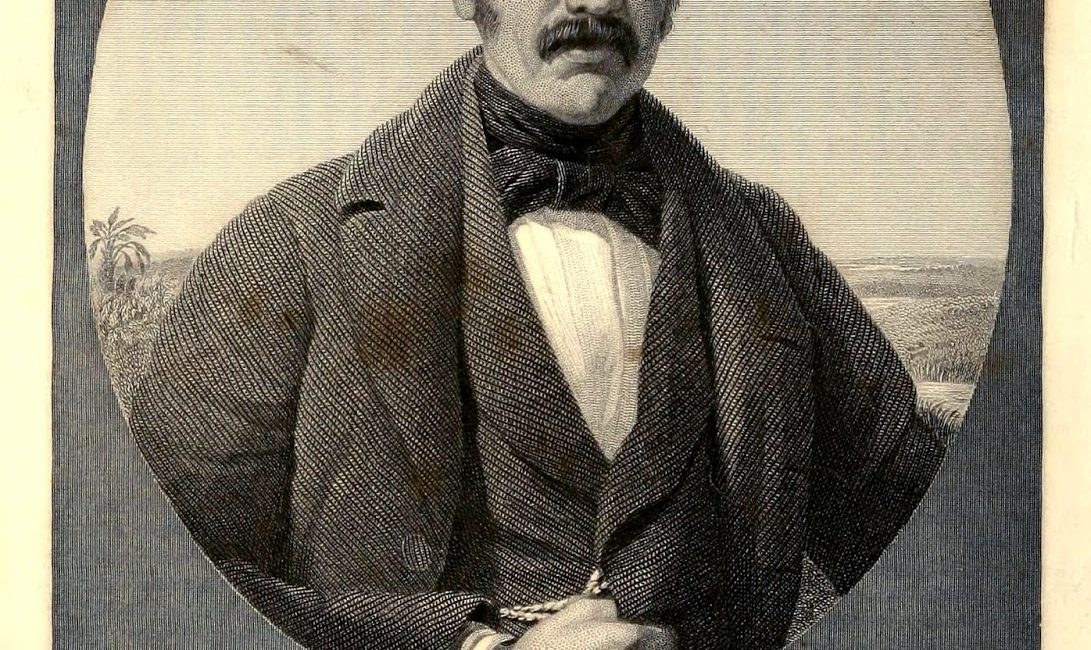
Happy Birthday, David Livingstone!

View Full Size Image
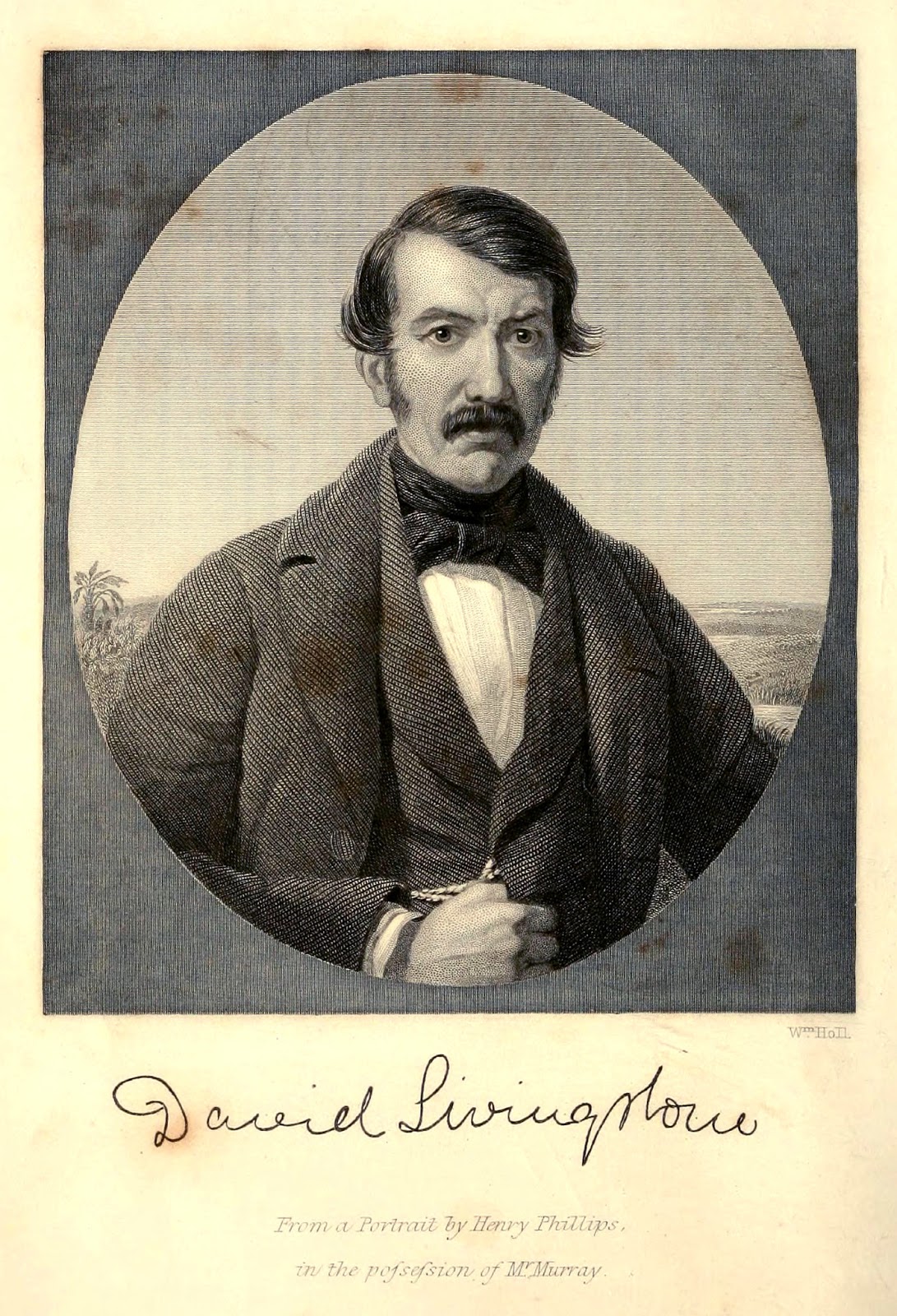
David Livingstone. Missionary Travels.

“Dr. Livingstone, I presume?”

Most of us have heard that famous phrase, uttered by Henry Morton Stanley of the New York Herald upon finding David Livingstone in Ujiji, Tanzania, on November 10, 1871.  However, just because you know the phrase doesn’t mean you know the man. Come with us as we explore this legendary explorer and celebrate his birthday!

Humble Origins

David Livingstone was the second of seven children born to a tea salesman in Blantyre, Scotland in 1813. From the age of ten, he worked in a cotton mill spending twelve hours a day tying broken threads on spinning machines. Fortune, however, had him destined for much greater things. At 23 years old, he entered Anderson’s University in Glasgow to study medicine, and in 1840, after completing his studies in London, he was licensed as a physician and ordained as a missionary. Originally intending to serve in China, Livingstone was inspired by the convictions of Robert Moffet, a missionary stationed at Kuruman, a missionary outpost in South Africa. Thus, Livingstone began his lifelong affair with Africa and set out in 1840 as a medical missionary to South Africa. He would spend the rest of his life exploring Africa, with only two visits to England over the subsequent 32 years.

An Account of More than a Decade in Africa

Livingstone, David. Missionary Travels and Researchers in South Africa. (1857). Contributed by Smithsonian Libraries.

Livingstone recounted his explorations and experience in Africa between 1840 and 1856 in his acclaimed publication Missionary Travels and Researches in South Africa. One of the nineteenth century’s best-selling books, Missionary Travels established Livingstone’s reputation as not only an exciting explorer, but also a kind-hearted humanitarian aching to improve conditions for Africans.

Missionary Travels is a narrative compilation of Livingstone’s personal field diaries.  Livingstone was careful to construct the composition to appeal to both scientific and religious readers, hoping to encourage further positive involvement in Africa. The work also includes 47 illustrations – most crafted by Captain Henry Need and Joseph Wolf.

Livingstone published the work with John Murray, one of the era’s most renowned publishers of geographical books. Murray was so anxious to secure the publication that he offered to finance all expenses in return for only one-third of the profit obtained.  

View Full Size Image
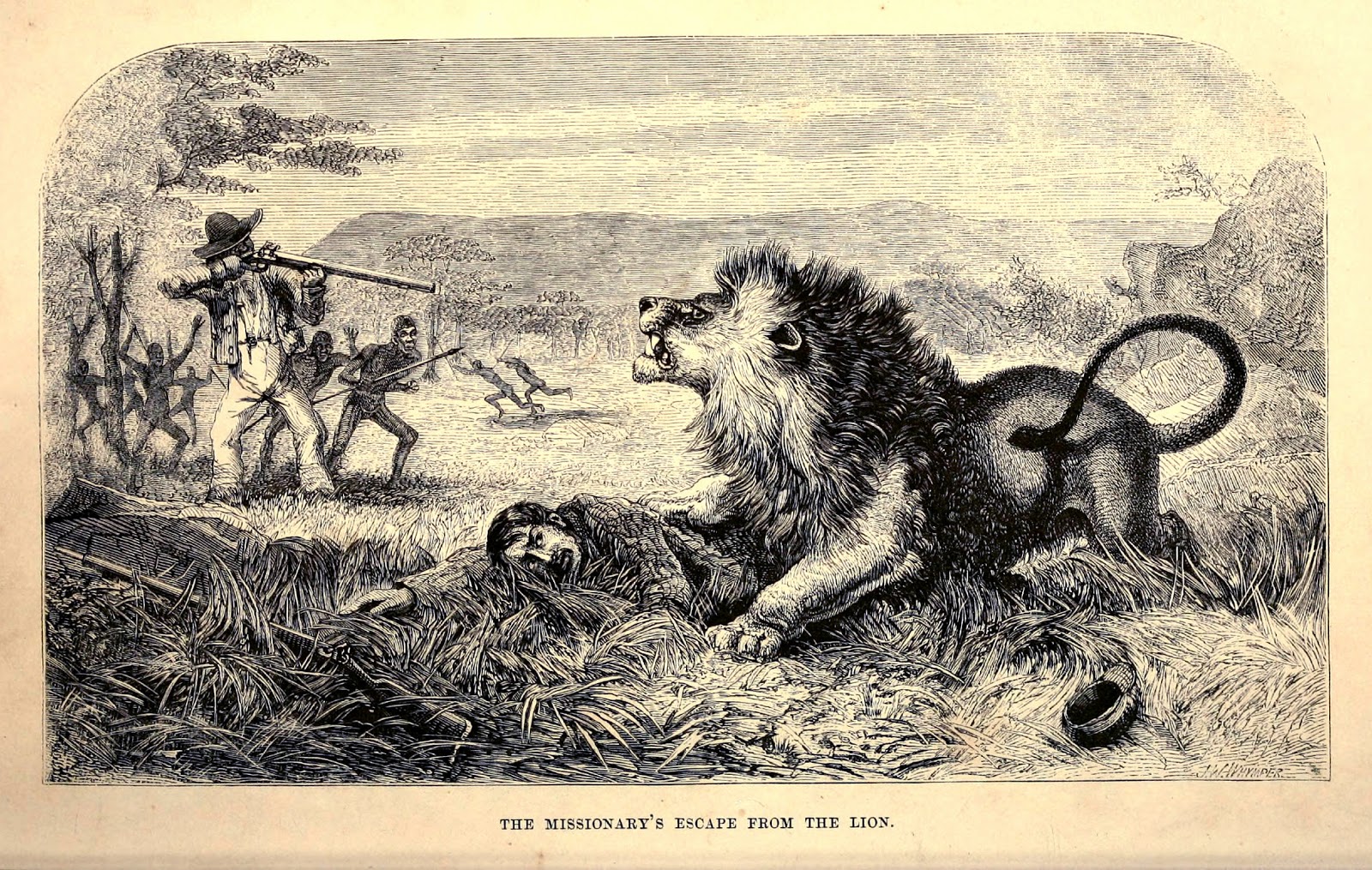
The Missionary’s Escape from the Lion. Missionary Travels.

The most famous illustration in Missionary Travels is entitled “The Missionary’s Escape from the Lion,” which depicted Livingstone pinned by a lion with his fellow travelers attempting to rescue him. Livingstone called the illustration “abominable,” asserting that “[e]veryone who knows what a lion is will die with laughing at it.” Murray ignored Livingstone’s dissatisfaction and included the illustration, knowing that most people reading Missionary Travels would not have the knowledge necessary to detect its absurdity. Furthermore, Murray understood that many audiences might never actually read the book but experience it only through illustrations. Thus, it was necessary to craft a dramatic story through images alone.

12,000 copies of the first edition of the book published in 1857, and, even at a price of one guinea each, sold out immediately. Several additional printings were ordered, selling with such success that Murray did not publish a cheaper, abridged version of the work (A Popular Account of Missionary Travels in South Africa) until 1861.

An Explorer at Heart

View Full Size Image
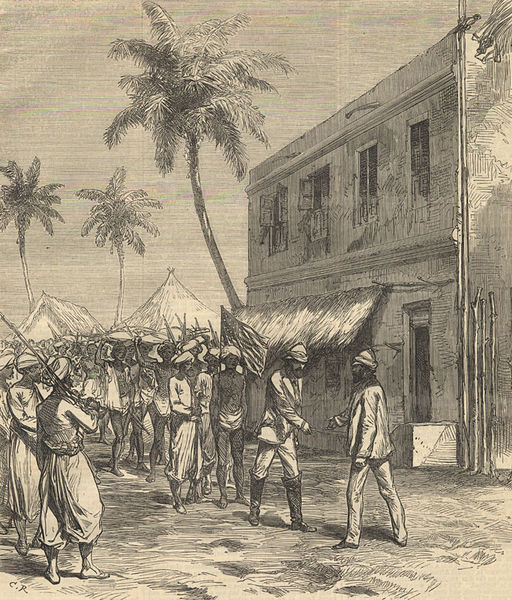
Stanley and Livingstone meet. Illustration from The Illustrated London News, 1872

As Missionary Travels and Researches in South Africa confirms, though a missionary, Livingstone spent much of his career exploring the wilds of Africa. Enthused by Livingstone’s discoveries as related in his book, the British government funded an expedition up the Zambezi River (1858-64), tasked with uncovering a route between the upper Zambezi and the coast. Extensive rapids past Cabora Bassa unfortunately made negotiating the river to the coast impossible, and the British government recalled the expedition 1864. Though unsuccessful, naturalists in the expedition party collected a wealth of valuable specimens during the six years of the expedition.

From 1866-67, Livingstone led a privately-funded expedition to discover the source of the Nile, which was debated at that time to be either Lake Albert or Lake Victoria. Arriving at Lake Bangweulu on November 8, 1867, Livingstone mistakenly asserted it as the upper reaches of the Nile. In truth, the source of the Nile lies in the high mountains of Burundi.

By the end of the Nile expedition, Livingstone’s public image was suffering due to the failures of his expeditions and reports that Livingstone was a poor leader and manager. After 1867, Livingstone’s health failed and he lost contact with the outside world completely, prompting the New York Herald to send Henry Morton Stanley in search of him in 1869. Stanley located him in Ujiji in 1871, and the article he later published about Livingstone restored public opinion of him, casting him as a great hero of adventure and discovery. However, despite Stanley’s urging to return to England to recover his health, Livingstone refused. He died in 1873 in present-day Zambia. His heart was buried under a Mvula tree and his body was transported to England, where it was interred at Westminster Abbey.

Though many of the expeditions that Livingstone undertook were unsuccessful at achieving the undertakings’ primary goals, the discoveries made along the way, and the natural riches recorded – many for the first time for Western people – made a monumental impact on the future of African exploration, understanding, and native relations.

A Monumental Legacy

View Full Size Image
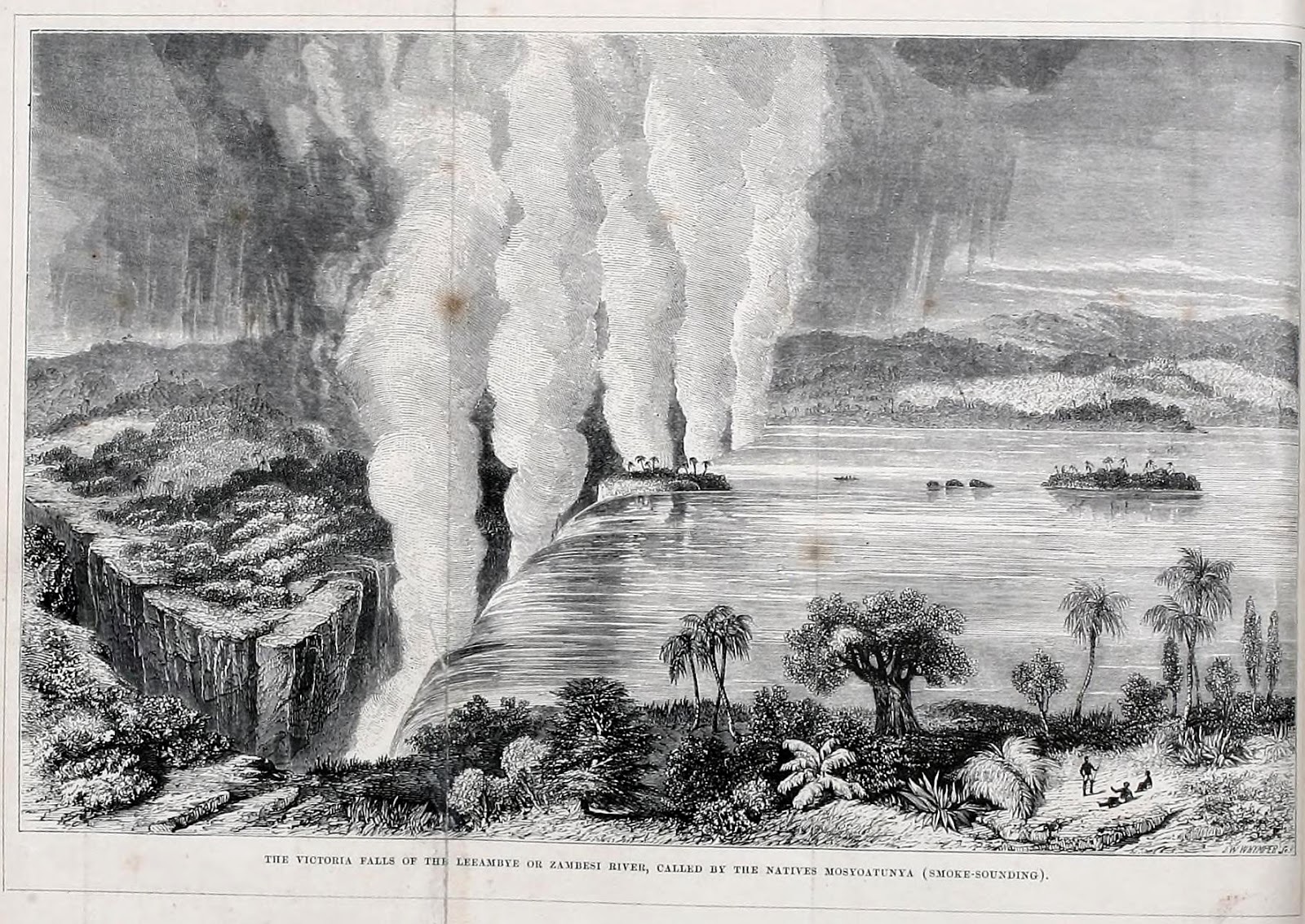
Victoria Falls. Based on sketches by David Livingstone. Missionary Travels.

David Livingstone left behind an impressive legacy. He was the first European to successfully complete a transcontinental journey across southern Africa. He was the first European to see Victoria Falls, which he named after the British Monarch of the time. He discovered for Western science many locales throughout Africa, including Lake Tanganyika, Lake Ngami, Lake Mweru, Lake Bangweulu, and the upper Zambezi River. He was instrumental in increasing European awareness of the horrors of the slave trade in Africa and encouraging equitable, rather than dictatorial, European relations and fair commercial interactions with Africa. His explorations and zeal for Africa inspired and enabled future missionaries to serve in Africa, providing valuable medical and educational support.

He was awarded the Gold Medal of the Royal Geographical Society and memorials exist for him throughout Africa, the United Kingdom, and North America. Today, we celebrate the scientific contributions, as well as the humanitarian considerations, of this icon of nineteenth century science and exploration. Happy Birthday, David Livingstone!

Additional Livingstone Resources

  • View more of Livingstone’s publications in BHL.
  • Explore Livingstone’s 1871 field diary, made digital by the David Livingstone Spectral Imaging Project in November, 2011.
  • Learn more about the history of publishing Missionary Travels.
  • Learn more about Livingstone’s life through Livingstone Online

We hope you enjoyed this post. Interested in guest-blogging for BHL? We’d love that! Natural history, biodiversity and conservation topics are especially welcomed. Email us your ideas at [email protected].

March 19, 2013by ulib-libraryjobs
BHL News, Blog Reel

Announcing the New Biodiversity Heritage Library!

View Full Size Image
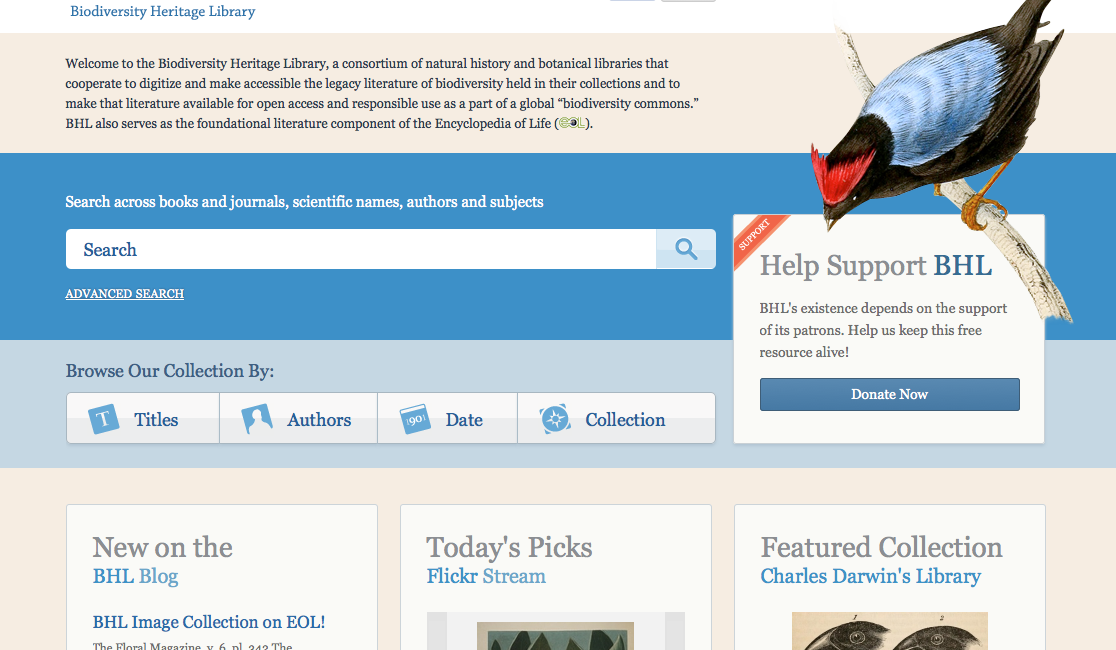
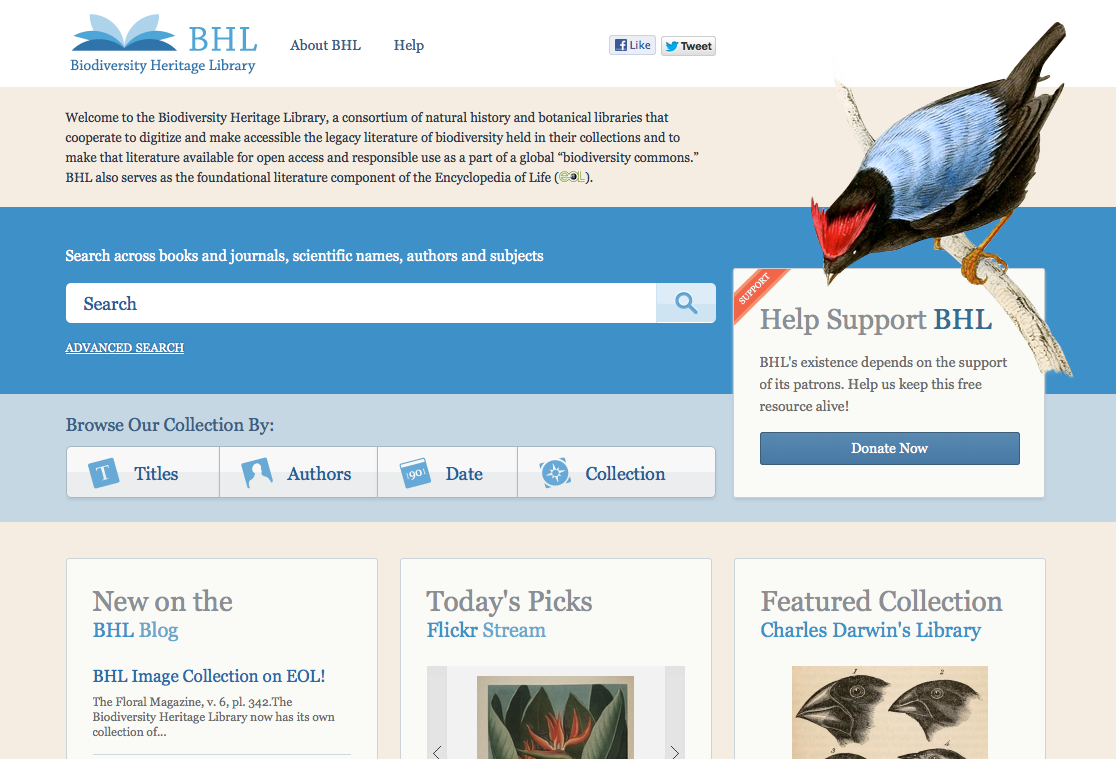
The Homepage of the New BHL! Click image to enlarge.

Today the Biodiversity Heritage Library released a new user interface, including an updated website design, improved book navigation, and article-level access to collections. The new interface was informed by usability studies and is based on the design and functionality of the BHL-Australia portal.

Current Improvements Include:

  • Updated Design: The website’s design has been upgraded to reflect the celebrated aesthetics of the BHL-Australia portal. 
  • Article and Chapter Access: The ability to search BHL by article or chapter titles has been implemented. To date, over 81,000 articles and chapters have been indexed and are searchable within BHL. Additional articles and chapters will become available as the collections continue to be indexed.
  • Open Data Enhancements: BHL’s APIs, OpenURL interface, and Data Exports have been modified to include available article and chapter information.
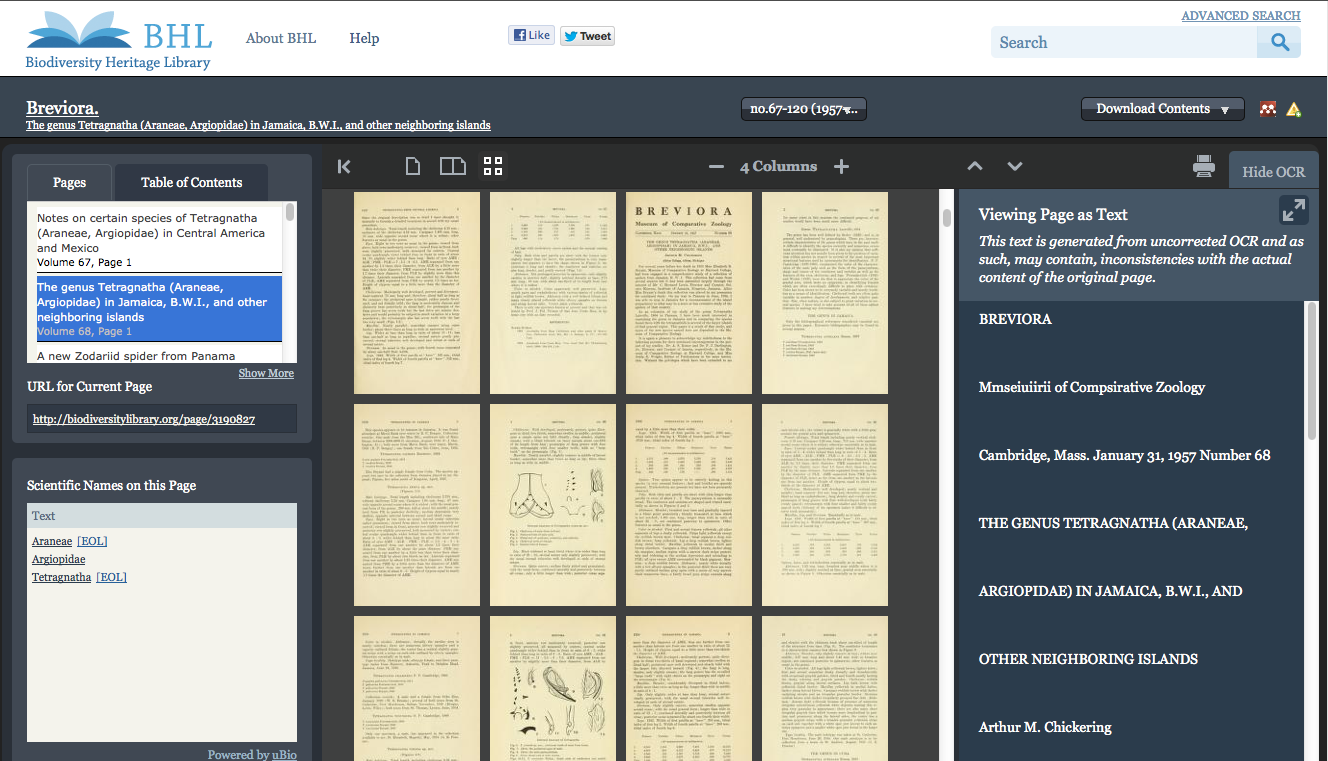
  • Book Viewer Updates: The BHL book viewer has been updated, allowing users to view multiple columns of pages on screen at once and more easily navigate to a specific page within a book. Users can also view OCR text alongside page images, and, where the books have been indexed, users can navigate directly to the articles or chapters within using a new Table of Contents feature.
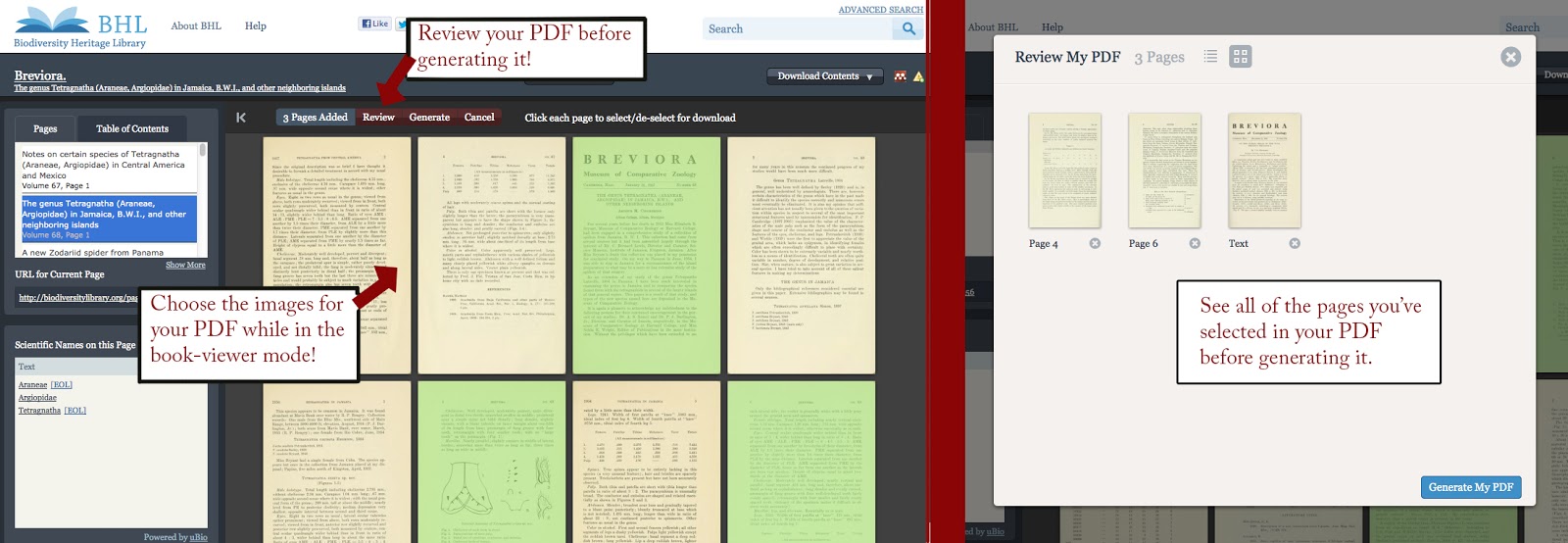
  • PDF Creation Improvements: The custom PDF creation process has been improved, allowing users to select pages for their PDF while in the book-viewer mode and more easily review the PDF before creation. Learn more about the new creation process in our Guide!


View Full Size Image
New and Improved BHL Book Viewer, with option to view multiple columns of pages at once and view OCR text alongside page images. Select books also have a Table of Contents feature which displays the articles/chapters identified within the text, with the ability for users to click on each to navigate directly to the corresponding part. Click image to enlarge.
View Full Size Image
New custom-PDF creation process, with ability to select pages for your PDF while viewing them and review your PDF before generation. Click image to enlarge.

Upcoming Improvements Include:

  • Improved Taxon Name Finding Algorithms: BHL will soon implement a new algorithm capable of identifying previously undiscovered taxon names throughout the BHL corpus. Test applications of this algorithm have already resulted in an increase of nearly 50 million names instances in BHL, translating to over 20 million unique names identified. These newly-identified names are currently available in BHL.

These developments follows BHL’s December, 2012, milestone achievement of providing access to over 40 million pages and over 110,000 volumes of freely-available biodiversity literature.

Explore the changes to BHL in-depth in our Guide to the New BHL.

We’d like to send a special thanks to everyone who made the new BHL possible. To start, thanks to the BHL-Australia team for their contributions to the process. First, to those who designed and developed the original BHL-Australia portal on which our new website is based, we thank Simon O’Shea (Designer) and Michael Mason (Developer). Secondly, to the BHL-Australia staff that worked with the US staff to merge the two UIs, we thank Simon Sherrin and Ajay Ranipeta (Developers) and Simone Downey (Designer – design based on original design by Simon O’Shea). And finally, a special thanks to Ely Wallis, BHL-Australia Director and Chair of the Global BHL Executive Committee, who selflessly supported the dedication of her staff’s time to this process.

Secondly, thanks to all of the members of the BHL TAG (Technical Advisory Group), including William Ulate (BHL Technical Director, Missouri Botanical Garden), Joe deVeer (Harvard-MCZ), John Mignault (The New York Botanical Garden), Joel Richard (Smithsonian Libraries), Jenna Nolt (United States Geological Survey), Francis Webb (Cornell University), Keri Thompson (Smithsonian Libraries), and Chris Freeland (Washington University). Furthermore, thanks to the Missouri Botanical Garden for hosting the BHL Technical Team, whose hard work made this vision a reality!

Thirdly, we would like to thank everyone who helped alpha and beta test the new site to ensure that our users’ experience would be the best that it could possibly be. Specifically, thanks to Rod Page, Pat LaFollette, and Francisco Welter-Schultes, BHL superstar users, for the valuable user-perspective input they provided.

Finally, we’d like to give a standing ovation to BHL’s Lead Developer, Mike Lichtenberg (Missouri Botanical Garden), who has dedicated countless hours over the past year to creating, with the support of all mentioned above, the new Biodiversity Heritage Library!

Big News Across the Pond: Launching BHL-Europe

Coinciding with the launch of our new portal, the BHL-Europe portal is also officially launching today. Providing access to material scanned from 92 content providers in Europe and the United States (including a subset of the BHL-US/UK corpus), the BHL-Europe collection currently comprises over 6,000 items, constituting over 1 million pages, of open access biodiversity literature, with more content being added daily. BHL-Europe’s content is also available through the Europeana portal. And, while you’re exploring BHL-Europe, be sure to check out Biodiversity Library Exhibitions (BLE), online exhibitions from BHL-Europe featuring books, images, stories and factoids about such topics as expeditions, spices, and poisonous nature.

Congratulations to all of our colleagues at BHL-Europe on the exciting launch of your new portal! Click here to learn more about the BHL-Europe launch.

We hope you’ll be as excited about all of these changes as we are! Visit the new and improved Biodiversity Heritage Library today! Explore the improvements in the “Guide to the New BHL.” Also, be sure to check out the new BHL-Europe portal and their online exhibitions! Tell us what you think of our improvements by sending us feedback, writing to [email protected], or leaving a comment on this post.

March 18, 2013by michelle.underhill
Blog Reel

A Consortium that Scans Together, Bands Together

Portrait version of the Biodiversity Heritage Library logo.

Over the years, the BHL consortium has grown from its initial core of 10 members to now 15 member institutions across the United States and the United Kingdom.

While each institution contributes its own unique set of materials to the BHL collection, many of our collections share similar materials. Thank goodness we do because we rely on each other to help fill in gaps in the BHL corpus. But this is easier said than done. Have you ever tried to amass a complete set of 90+ year old objects into one place?!

The quick and dirty explanation of our digitization process is as follows — BHL consortium libraries:

  1. Work together to select books for scanning
  2. Do our best to make sure we don’t send the same materials for scanning, i.e. “de-duplication”
  3. Send the books from our shelves for scanning to various Internet Archive locations or to our own institutional scanning centers
  4. Send the bibliographic data from our library catalogs
  5. Render derivative files, such as the OCR (optical character recognition) text files
  6. Aggregate the data files and images for every page of every book scanned into our back-end database managed by the Missouri Botanical Garden
  7. Serve it all up via our website: http://biodiversitylibrary.org

And for those of us who prefer visuals:

BHL: Disseminating Content Beyond the Silo from Bianca Crowley and Grace Costantino

Steps 1 and 2 can get complicated. Fast. Which is why we need the tools to help us coordinate who’s scanning what, when. To manage our communications we use an issue tracking system, in our case Countersoft’s Gemini system. Whenever you submit feedback via our website, a new issue, or ticket, is created in our system which we route to the appropriate BHL Staff for follow up. Send us feedback telling us something’s missing from our collection and we’ll try to find the BHL library who can send it for scanning. Sounds easy enough, right?

Wrong. Enter an old journal series which over the course of decades, centuries even, can modify its scope, alter its publication title and alter it again (and again…). Combine this with the changing practices of the printing, bookbinding, and library industries over the course of history and you have quite the task to gather the various pieces of the puzzle and arrange them into the complete picture of a publication.

View Full Size Image
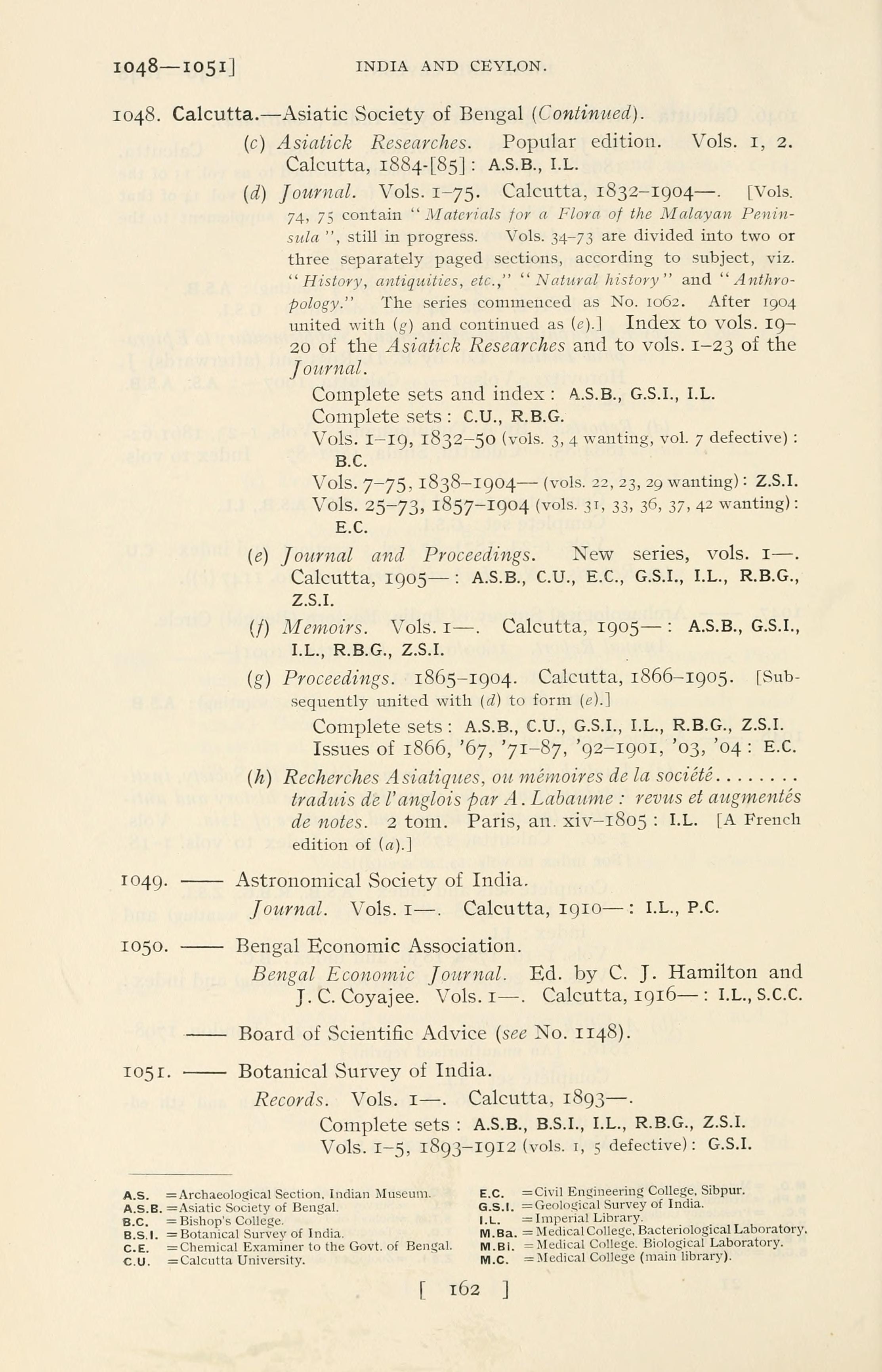
Bibliography of Asiatic Society publications,

The Journal of the Asiatic Society is one of my favorite examples of how the BHL member libraries work together to accomplish this task.  The Journal changed its title various times since the late 18th Century and we have 4 of them in the BHL starting with Asiatick Researches (1788-1849) to the Journal and the Proceedings of the Asiatic Society (1905-1934). Since we started digitizing books for the BHL in 2007, this series has called on 7 different libraries to send various volumes for scanning in an effort to complete the digital set. The work still continues today. With so many libraries involved, it is not uncommon for there to be 3 different ways the titles were cataloged and 5 different ways the volumes were bound, for example, making the work of selection and de-duplication rather tricky.

Without systems that allow us to communicate in detail about who’s scanning precisely what, when, we’d have no way to aggregate 15 different physical library collections into a single BHL collection online. Our issue tracking system is just one of many tools that we use to communicate across various aspects of our digitization workflow. However, the tools would not mean anything if it were not for the hard work and collaborative spirit of the librarians throughout our consortium.

March 15, 2013by [email protected]
BHL News, Blog Reel

BHL Image Collection on EOL!

View Full Size Image
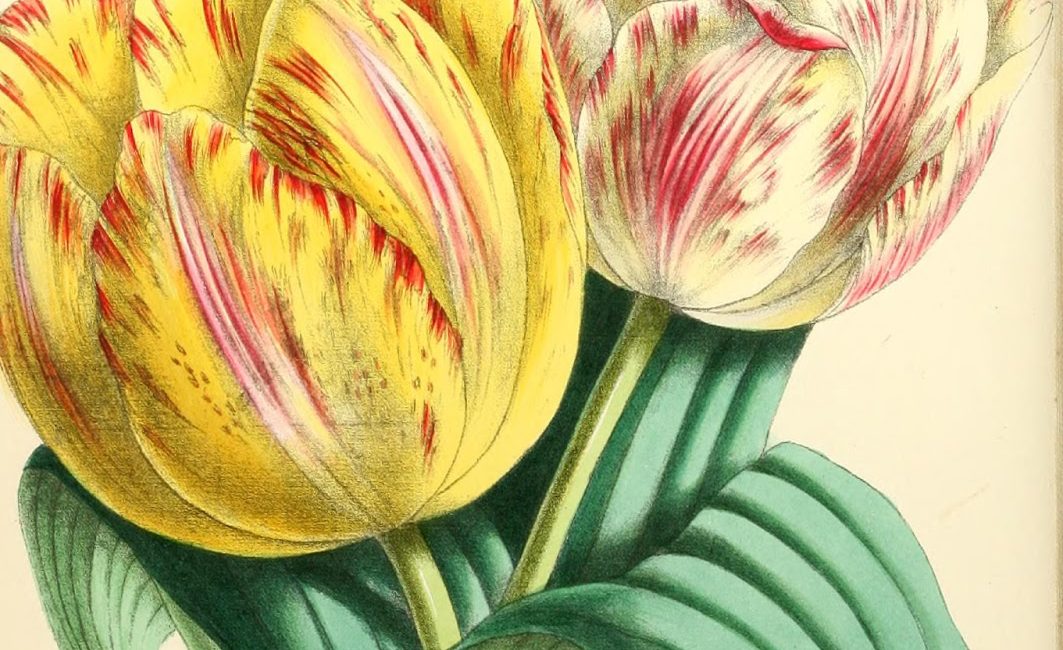
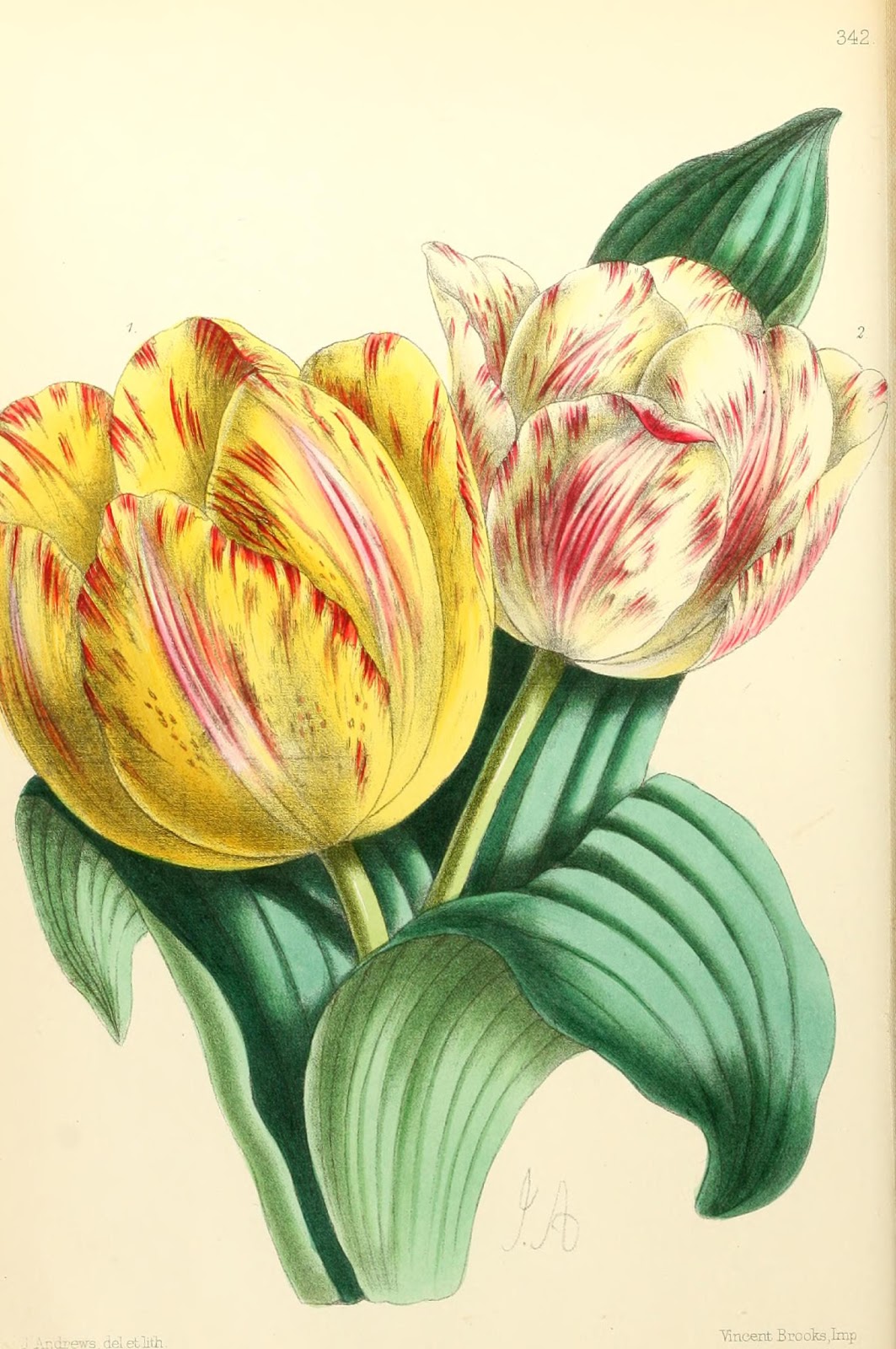
The Floral Magazine, v. 6, pl. 342.

The Biodiversity Heritage Library now has its own collection of images in the Encyclopedia of Life! This collection is comprised of images that have been tagged with species name machine tags, relating the species depicted in each image. The collection currently comprises over 11,000 images representing over 10,000 taxa, and will continue to grow as additional illustrations are tagged in the BHL Flickr.

The BHL Flickr

By now, you’re no doubt aware of the Biodiversity Heritage Library Flickr, which provides free access to over 104,000 illustrations gleaned from the BHL collections. These images span over five hundred years and range in topic from fish to reptiles, mammals to birds, insects to mollusks, and everything in between!

Building the Collection: Tagging Images

To make it easier for you to search our Flickr collection and for us to share images with external websites like EOL, we’re adding species name machine tags to our images, and we’ve been encouraging you to help us do this.

A tag is basically a searchable keyword that you can add to an image to describe it, and a machine tag is a tag with special formatting to allow it to be read by computers. Thus, a species name machine tag is a tag that describes the species depicted in an image in a format that can be understood by computers.

When you add species name machine tags to our images, you as a user can not only search the BHL Flickr and retrieve any images tagged with a desired name, but these images can also automatically be uploaded to EOL and associated with the corresponding species page.

View Full Size Image
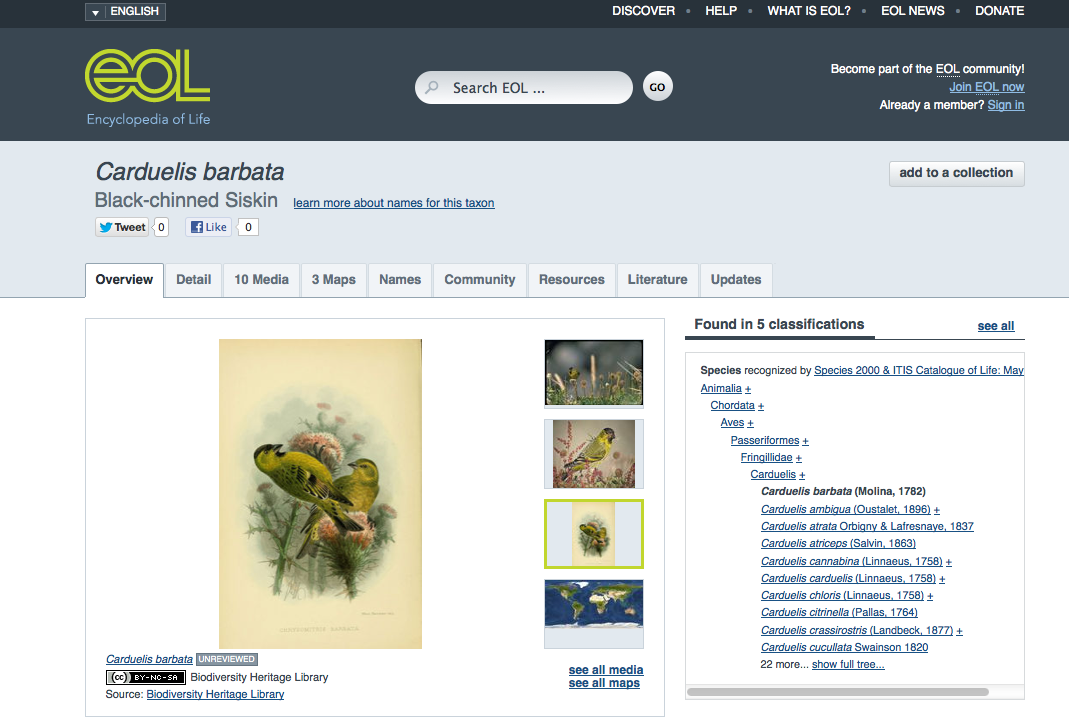
Example of an image from the BHL Flickr automatically associated with the EOL species page for Carduelis barbata, the Black-chinned Siskin, because a species name machine tag was added to the image in Flickr.

The format for species name machine tags is “taxonomy:binomial=Genus species,” where “Genus” and “species” are replaced with the particulars of the organism you’re describing. You can replace “binomial” with another taxonomic tag, such as “genus” or “family”, if you can only identify the organism at that level. Learn more about the Flickr tagging process and machine tag formats in our previous blog post.

The images in the new EOL Collection are images from the BHL Flickr that have a species name machine tag associated with them. Each time new images are tagged in the BHL Flickr, they will automatically be added to our collection in EOL, as well as associated with appropriate species pages.

You Can Help us Grow this Collection!

With over 104,000 images in our Flickr collection to date, and that number growing daily, it’s impossible for BHL staff to tag all of our images by ourselves. That’s why we need your help! You can help us by adding species name machine tags to our images in Flickr. All you have to have is a free Flickr account to add tags to BHL images.

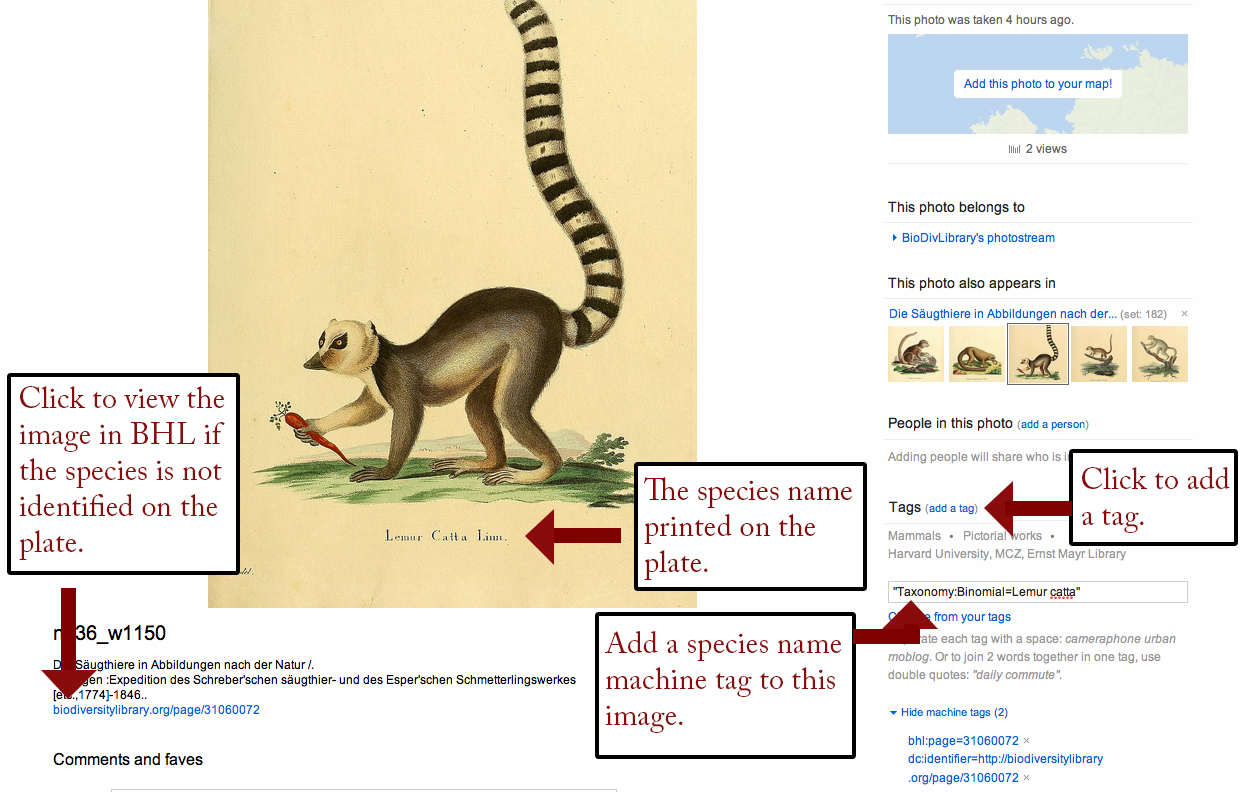
Once you’re signed in to Flickr, browse our collection of images and when you see some with species you can identify, simply click “add a tag” and add the species name in the machine tag format (“Taxonomy:Binomial=Genus species”). Be sure to include the quotation marks around your machine tag.

Many images actually have the species name printed on the plate itself. In these cases, you can simply transcribe that name as a tag for the image. If the species is not identified on the plate, navigate to the book in BHL to find the associated description pages outlining the species depicted. We encourage you to tag the image with the species name provided by the book itself, but if that name is no longer valid, and you know the current, accepted name, feel free to add that name as an additional tag to the image.

View Full Size Image
Adding a species name machine tag to an image in the BHL Flickr. Click this image to enlarge for better viewing.

If there are multiple species depicted on an image, add a separate tag for each species depicted (or as many as you can identify). Learn more about tagging BHL images, and get additional tips, in our Guide.

Every time you add a species name machine tag to an image in our Flickr, you’re growing the BHL EOL Collection, as your tagged images will automatically be added to that collection.

We hope we’ve inspired you to help us identify life on earth, as portrayed through some of the most incredible scientific illustrations ever created! Keep exploring, and keep tagging!

Visit the BHL Image Collection on EOL today!

March 11, 2013by Grace Costantino
Page 1 of 212»

Help Support BHL

BHL's existence depends on the financial support of its patrons. Help us keep this free resource alive!

search

About BHL

The Biodiversity Heritage Library (BHL) is the world’s largest open access digital library for biodiversity literature and archives. BHL operates as a worldwide consortium of natural history, botanical, research, and national libraries working together to digitize the natural history literature held in their collections and make it freely available for open access as part of a global “biodiversity community.”

Join Our Mailing List

Sign up to receive the latest news, content highlights, and promotions.

Subscribe Now

Subscribe to Blog via Email

Enter your email address to subscribe to this blog and receive notifications of new posts by email.

Join 319 other subscribers

Subscribe to Blog Via RSS

Subscribe to the blog RSS feed to stay up-to-date on all the latest BHL posts.

Access RSS Feed

Inspiring Discovery through Free Access to Biodiversity Knowledge.

The Biodiversity Heritage Library makes it easier than ever for you to access the information you need to study and explore life on Earth…for free, anytime, anywhere.


64+ Million Pages of
Biodiversity Literature Online.

EXPLORE

Tools and Services
to Transform Research.

EXPLORE

300,000+
Illustrations on Flickr.

EXPLORE

ABOUT | HARMFUL CONTENT | PRIVACY | SITE MAP | TERMS OF USE