

Tagging BHL Marine Images at the Smithsonian
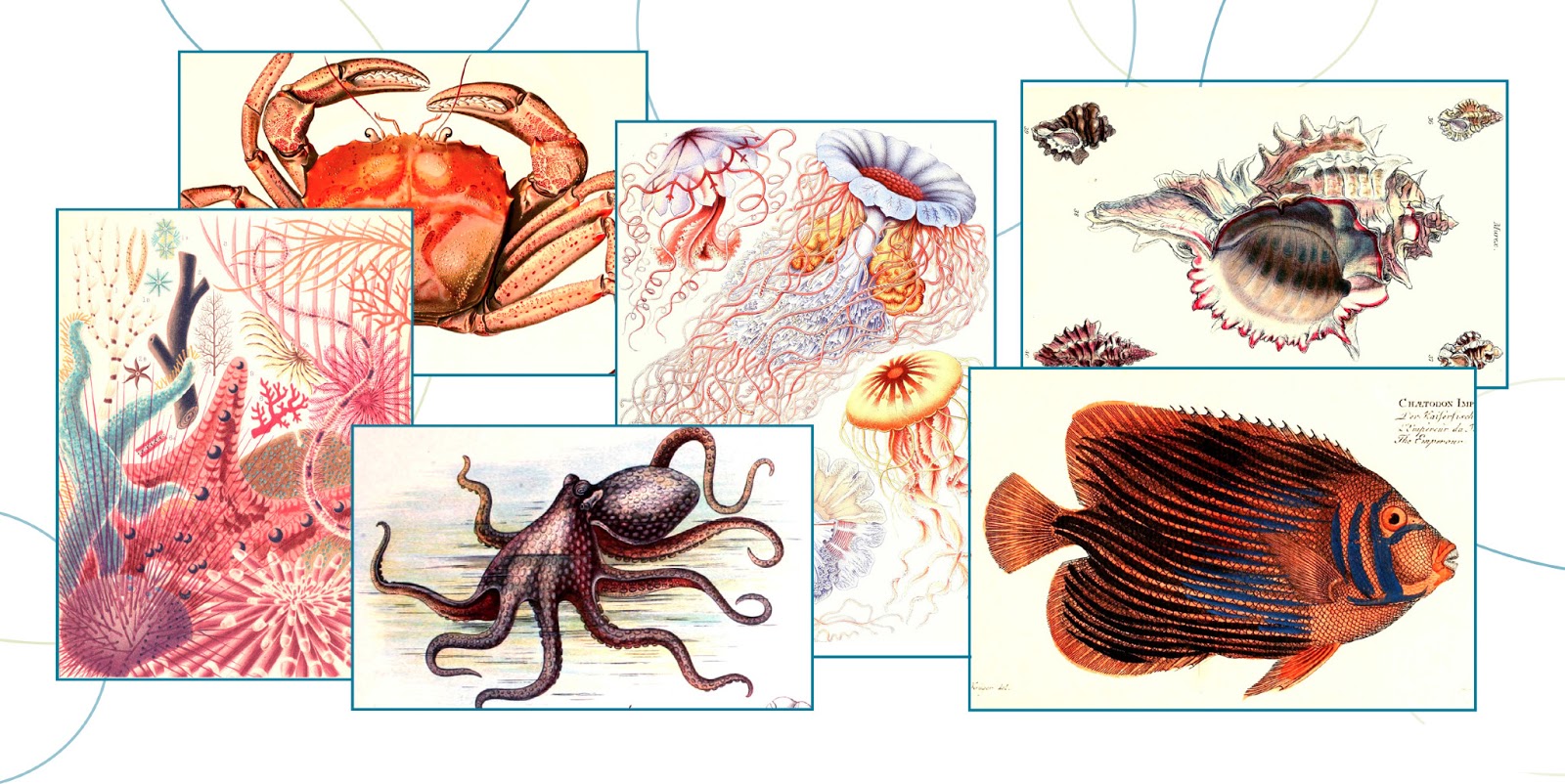
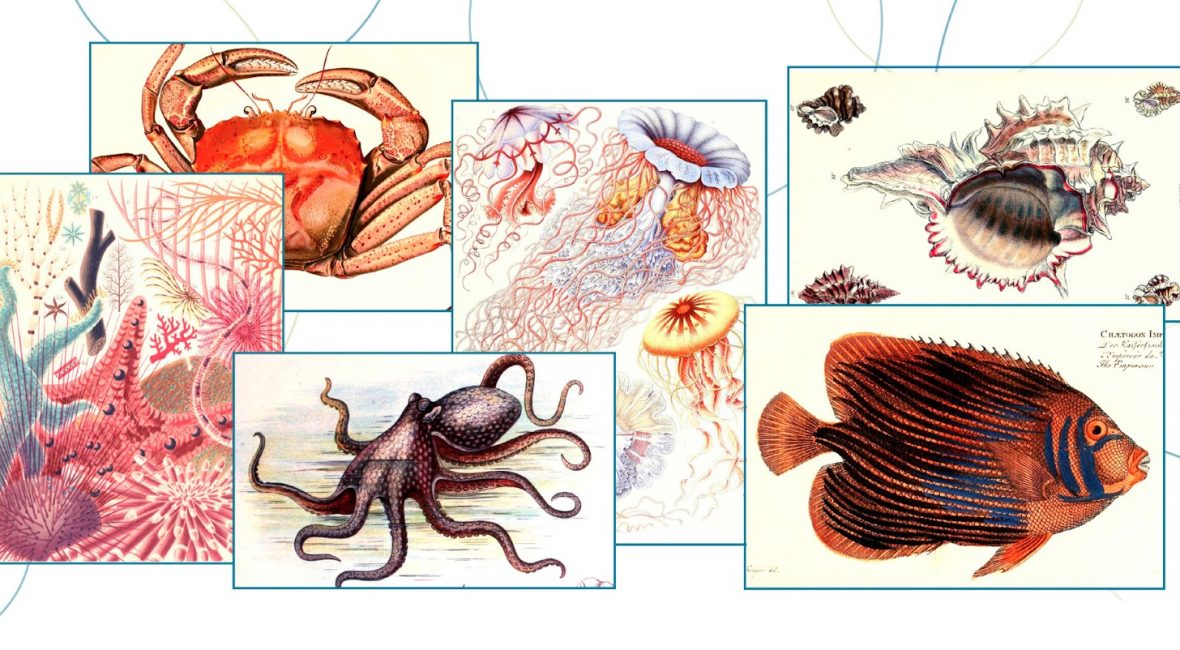
There are approximately 32,000 species of fish, representing the greatest species diversity of any vertebrate group. Mollusks, with around 85,000 extant species, constitute the largest marine phylum and about 23% of all named marine organisms. Crustaceans, with about 67,000 described species, are arthropods that range in size from .004 inches (Stygotantulus stocki) to over 12.5 feet (Japanese Spider Crab). The diverse algae group includes unicellular and multicellular organisms, such as seaweeds, dinoflagellates, red, green, brown, yellow and golden algae, and diatoms, to name a few.
Looking at the big picture, we know of over 210,000 marine species, though it is estimated that there are more than one million in total. It should come as no surprise to you that BHL has millions of pages of literature related to the topic of marine biodiversity. What you may not know is that we also have thousands of images of marine species in our Flickr.
We’ve written before about our mission to add species name tags to the images in our Flickr account so that users can not only search for and find illustrations of specific organisms, but also so that we can easily share these images with external projects like the Encyclopedia of Life. To accomplish this goal, we’ve not only created instructional material and encouraged our user community to take up the charge, but we’ve also hosted two tagging parties at the Smithsonian Libraries. On April 2, 2013, we hosted our third tagging party at the Smithsonian, in conjunction with both the Encyclopedia of Life and Smithsonian’s Ocean Portal. This time, we focused our event on a theme: Marine Biodiversity.
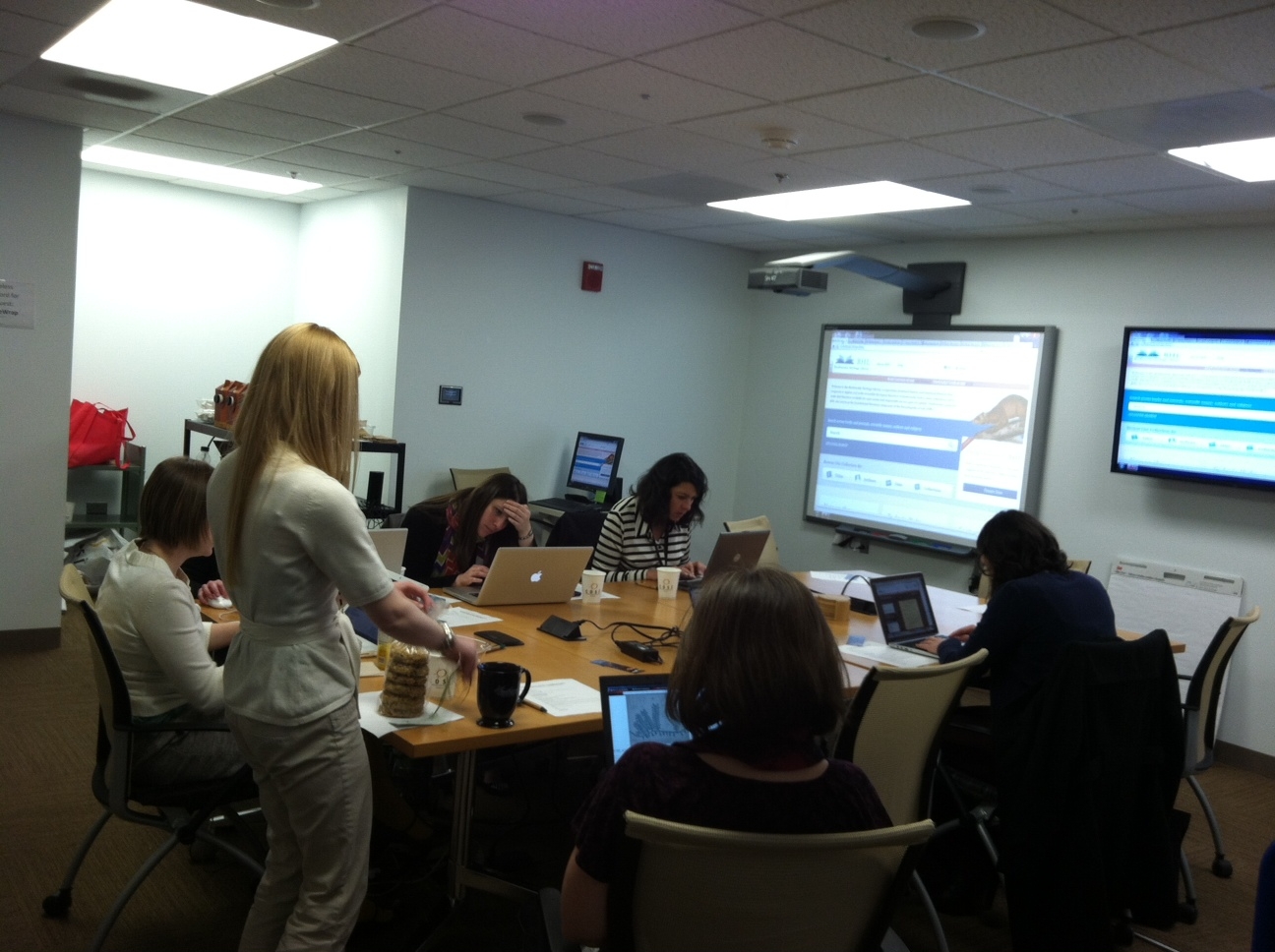 |
| Attendees at the Tagging Party, adding tags! Photo by Gilbert Borrego. |
At our tagging parties, we invite Smithsonian staff, including curators, volunteers, interns, fellows, and librarians, to gather in person for an hour and a half to help us add tags to images in a group setting. Since this was a themed event, we directed attendees to specific sets of marine images in need of tagging. We’re happy to say that the 17 people that attended the party made some good headway on the thousands of marine images that need tagging!
You can Help!
As mentioned, all of our tagging events thus far have been staff-only occasions. While we hope to hold public events in the future, hosted at various BHL member institutions, you can actually help us tag our images right now!
How?
If you’re looking at an image in Flickr for which you know the species name, simply click “add a tag” and input the name in the following format:
Taxonomy:Binomial=”Genus species”
Replace the “Genus Species” text with the actual binomial for the creature you are identifying and be sure to put quotation marks around the name as shown above. So, a complete tag would look like:
Taxonomy:Binomial=”Zea mays”
How can you identify the species if you don’t recognize it on sight? Many of our illustrations actually have the species name printed on the image itself. Simply transcribe that name into the machine tag format. If the name isn’t printed on the illustration, you may be able to find an identification in BHL. Click on the link below each image to view the book in BHL, then navigate through the text pages surrounding the image to see if the species identification is given. If so, input the name into the machine tag format in Flickr.
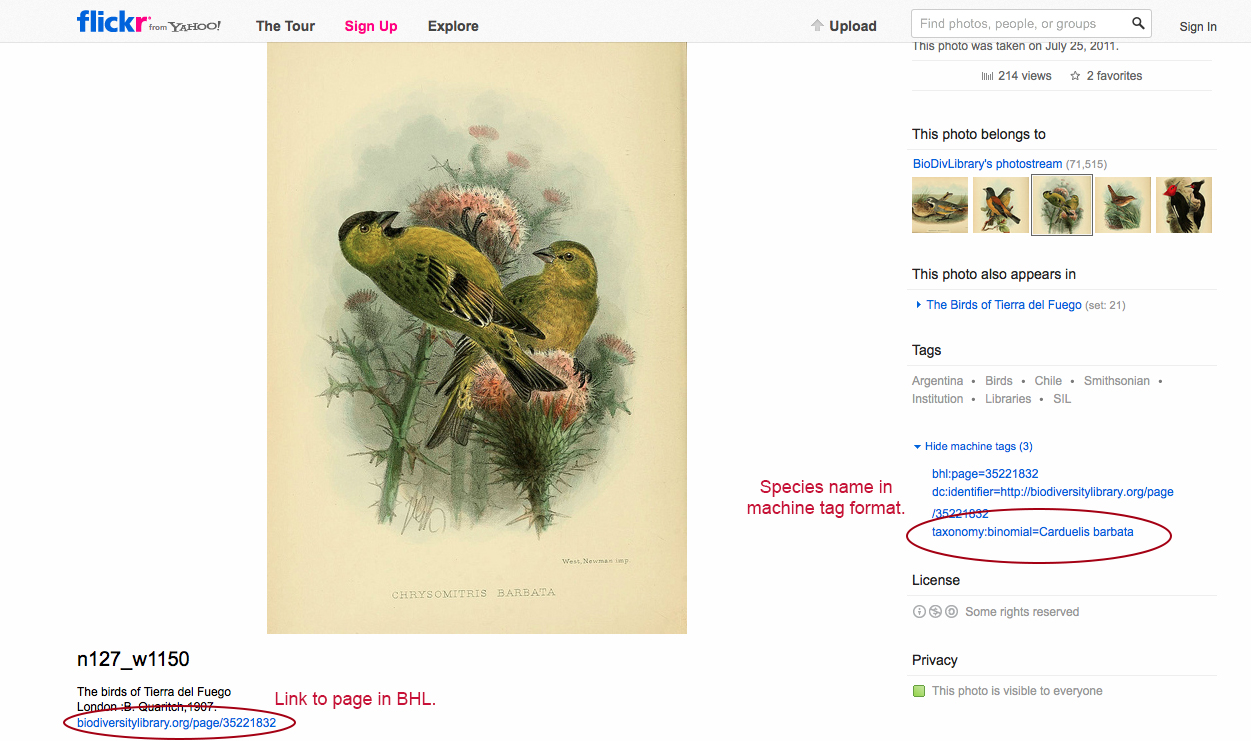 |
| Example of an image with a machine tag and the link to that image in BHL. Click this image to enlarge. |
Every image that is tagged with a species name machine tag will automatically be added to the BHL Collection in EOL and associated with the corresponding EOL species page.
Need more help? Check out the Tagging Instructions composed by the Encyclopedia of Life, send us feedback, post a comment on this blog, or write to us at [email protected]. We’d also love to hear from you about your experience adding tags and/or suggestions for making our instructional materials or process better!
